


Work-Life Balance Signs Your Wellness Ring Detects Before You Do
Signs of poor work-life balance that your ring can detect through sleep, stress, and recovery data.
Signs of poor work-life balance that your ring can detect through sleep, stress, and recovery data.
%402x.svg)
You pour the coffee, the same mug you’ve used for years, but your hand trembles slightly. You stare at the screen, the words blurring into a gray haze. You tell yourself it’s just a busy period, that you’ll catch up on sleep this weekend, that everyone feels this frayed. You've normalized the fatigue, the low-grade anxiety, the constant mental static. Your mind has learned to override the whispers of burnout, but your body keeps the receipts. And now, for the first time, there's a silent, intelligent witness on your finger that won't let you ignore them.
Welcome to the new frontier of self-awareness. The modern wellness smart ring, like the advanced models developed by leaders in the field, isn't just a sleep tracker or a step counter. It’s a continuous, biometric seismograph, reading the subtle tremors of imbalance long before they erupt into the earthquakes of burnout, chronic stress, or illness. While you're powering through your to-do list, your ring is compiling a different list—a data-driven narrative of your nervous system, your recovery, and your hidden physiological costs.
This article isn't about generic wellness tips. It's a deep dive into the specific, pre-conscious signatures of work-life imbalance that these sophisticated devices can detect. We’ll move beyond "get more sleep" to understand why you can’t sleep. Beyond "you're stressed" to see how that stress is silently restructuring your biology hour by hour. This is the intelligence you’ve been missing: the objective, irrefutable data that reveals the truth your conscious mind has been editing out.
Before you dismiss that afternoon slump as a carb-heavy lunch, or that nighttime restlessness as too much screen time, let’s explore what your wellness ring might already know. These are the ten critical signs it detects, often weeks before you have a name for the growing dissonance in your life.
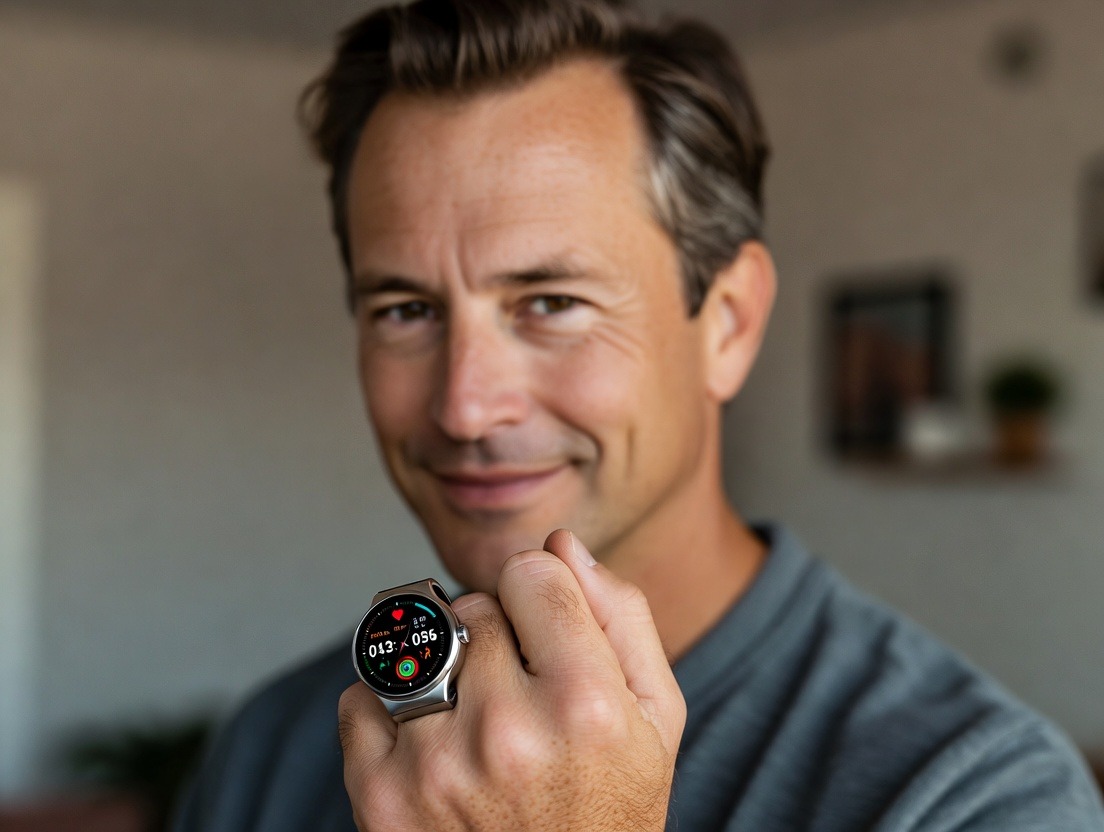
To understand the warnings, we must first understand the instrument. A cutting-edge wellness ring is a master of passive, multimodal sensing. Unlike a smartwatch you charge nightly and may forget to wear, a ring is designed for 24/7 wear, capturing a continuous, unbroken stream of biometric data. This is crucial, because imbalance doesn't keep office hours; it leaks into your nights, your weekends, your moments of supposed rest.
The primary metrics form an interconnected web:
The magic isn't in any single data point, but in the trends. Your ring establishes a personalized baseline—your unique "normal." The early warnings of work-life imbalance aren't one-off bad nights; they are consistent, multi-day deviations from your normal. It sees the pattern you cannot, because you're living inside the pattern. This is the foundation for every sign we're about to explore. For those new to this level of data, understanding these sleep health foundations what science says works is the first step to decoding your ring's messages.
You nailed the presentation. You responded to all 127 emails. You’re "productive." Yet, your wellness ring shows a weeks-long, steady decline in your Heart Rate Variability (HRV). This is the first and most sensitive alarm. HRV is the metric of your biological flexibility. Think of it as your body's capacity to smoothly shift gears between effort and ease, between challenge and recovery.
In a state of good work-life balance, your HRV graph should show healthy oscillations—dips during demanding work sprints or tough workouts, followed by robust rebounds during downtime, relaxation, and sleep. The system is responsive.
The primary sign of imbalance is a parasympathetic plunge—a sustained suppression of HRV where those rebounds stop happening. Your nervous system gets "stuck" in a sympathetically dominant state (fight-or-flight). Even when you're watching Netflix or lying in bed, your biology is still idling like a race car. Your ring detects this state of covert hyper-arousal.
Why You Miss It: The mind is a brilliant rationalizer. You attribute the feeling of being "wired but tired" to too much coffee, to an engaging show, to just "having a lot on your mind." You mistake this constant, low-level activation for alertness or dedication. The ring removes the narrative. It shows you the objective truth: your body's recovery system is offline.
The Story in the Data: John, a software developer, noticed his "Readiness Score" was consistently low despite good sleep numbers. Drilling into the data, he saw his HRV had been on a shallow but persistent downward slope for 18 days. This trend started not during a major deadline, but two weeks after it ended. His body was still paying the physiological debt from that crunch period, long after his mind had moved on. The ring prompted him to prioritize true recovery—like mindful breathing and nature walks—instead of just trying to sleep more, helping him reverse the trend.
This foundational metric impacts everything else. A suppressed nervous system directly sabotages your sleep, which is the cornerstone of resilience. To understand this critical link, explore the connection between sleep health and mental wellness.
Your resting heart rate (RHR) is the idle speed of your body's engine. For a healthy, balanced adult, it’s a relatively stable number, best measured first thing in the morning. A wellness ring automates this, giving you a precise, daily RHR reading free from the variables of a manual check.
The warning sign here is the creep. A rise of 5-10 beats per minute (BPM) above your personal baseline, sustained over a week or more, is a major red flag. It means your cardiovascular system is under increased load. This can be due to psychological stress (cortisol and adrenaline), physiological stress (like fighting off an impending illness), dehydration, or chronic inflammation from poor lifestyle choices.
In the context of work-life imbalance, the RHR creep is often the companion to the HRV plunge. As your nervous system stays in a stressed state, it signals your heart to work harder, even at rest. It’s a less sensitive but more concrete metric than HRV—a clear signal that your body is operating at a higher, less efficient cost.
Why You Miss It: You might feel a little more "jittery" or aware of your heartbeat occasionally, but you likely dismiss it. You certainly aren't taking your pulse every morning to track the trend. The physical sensation is easy to ignore until it becomes pronounced. The ring captures the incremental daily increase that is invisible to casual perception.
The Story in the Data: Maria, a teacher and mother, started her school year strong. By mid-October, she felt persistently drained. Her ring data revealed the story: her average RHR had crept up from 58 BPM to 66 BPM over six weeks. The increase correlated perfectly not with her work hours, but with the cumulative effect of early mornings, evening lesson planning, and weekend grading that left no true downtime. The data was the objective proof she needed to institute a hard "8 PM work curfew" and delegate more at home, which gradually brought her RHR back down.
Managing this physiological stress is key, and often begins with addressing the core recovery process: sleep. If budget is a concern, effective strategies don't require expensive gear, as outlined in sleep health on a budget free improvement strategies.
This is where the most profound disconnect between perception and reality occurs. You might be clocking 7.5 hours in bed and think, "My sleep is fine." But your wellness ring’s sleep staging analysis tells a different, more precise story. It measures the architecture of your sleep: the cyclical journey through light, deep, and REM stages.
Each stage has a vital function:
The sign of imbalance is a disproportionate collapse of these critical stages. You might be getting duration, but not quality. Common patterns include:
Why You Miss It: Subjectively, "bad sleep" to most people means lying awake for hours. The silent erosion of sleep architecture is not something you can feel in the moment. You only experience the downstream effects: grogginess, poor focus, and cravings. The ring gives you an architectural blueprint, showing you exactly which pillar of your recovery is cracked.
The Story in the Data: David, an entrepreneur, was proud of his ability to function on 6 hours of sleep. His ring showed he was actually in bed for 6.5 hours, but his deep sleep was consistently below 10% (optimal is 15-25%), and his REM was highly fragmented. He was essentially running a sleep deficit in the most valuable currencies. After seeing the data, he focused not on adding time, but on improving the quality by creating a strict wind-down routine and managing evening stress. His deep sleep percentage increased, and his daytime energy transformed.
Understanding these stages is the first step to fixing them. Beginners can start by learning how to measure sleep health without fancy devices to build awareness, before leveraging the ring's advanced analytics.
Your body runs on a master 24-hour clock called your circadian rhythm. It governs not just sleepiness and wakefulness, but also hormone release (cortisol, melatonin), digestion, body temperature, and cellular function. A stable rhythm is foundational to energy, mood, and metabolic health.
Your wellness ring detects circadian disruption through several synchronized metrics:
Work-life imbalance directly attacks circadian stability. Inconsistent work hours, late-night screen-based work, "revenge bedtime procrastination" (staying up late to reclaim personal time), and weekend overcompensation all send chaotic signals to your internal clock.
Why You Miss It: You feel "off" but blame it on Monday. You need an alarm clock every day, even after a "full" night's sleep. You rely on caffeine to artificially simulate a morning alertness signal your body isn't producing naturally. The ring connects the dots between your inconsistent habits and the biological confusion they create.
The Story in the Data: Chloe, a freelance graphic designer, had a flexible schedule but found her energy was wildly unpredictable. Her ring data showed a body temperature rhythm that was nearly flat, with minimal nocturnal dip. Correlating this with her sleep logs revealed she had no consistent bedtime, varying by 3-4 hours nightly based on her workload. She was giving her body no reliable timekeeper. Using the ring's data, she committed to a 60-minute bedtime window seven days a week. Within two weeks, her temperature rhythm showed a clearer dip, and her subjective morning alertness improved dramatically.
Technology is a double-edged sword for our rhythms. To navigate this, it's helpful to understand how technology helps and hurts sleep health.
You go to bed exhausted. You sleep for 8 solid hours. You wake up... still exhausted. This frustrating experience has a clear biometric signature: the ineffective recovery night.
Your wellness ring identifies this through a mismatch between sleep data and morning readiness metrics. The sleep summary might look decent on duration and even stages, but key indicators show your system did not fully downshift:
This pattern indicates that while you were unconscious, your body was still in a state of heightened alert. This can be caused by processing the previous day's intense cognitive or emotional stress, consuming alcohol or a heavy meal too close to bedtime, or sleeping in a disruptive environment (too hot, noisy, etc.).
Why You Miss It: You log the hours, so you assume the recovery must have happened. The profound fatigue is a mystery, leading you to blame aging, a lack of vitamins, or an unknown illness. The ring shows you the truth: the conditions for recovery were not met, even though the opportunity (time in bed) was.
The Story in the Data: Alex, a financial analyst, had a major quarterly report due. The night after submitting it, he slept a full 9 hours. To his dismay, his ring gave him a "Poor Recovery" score. The data showed his nighttime heart rate averaged only 8 BPM lower than his daytime resting rate, and his HRV barely budged. His body was still metabolizing the stress of the previous week. This insight stopped him from forcing an intense workout that day. Instead, he opted for gentle movement and meditation, allowing his nervous system to finally catch up the following night.
Recognizing these ineffective nights is a skill. Beginners often benefit from learning about common sleep health red flags beginners should watch for.

Many advanced wellness rings synthesize heart rate, HRV, and activity data into a proprietary "Stress Score" or "Stress Level" metric. This isn't measuring emotional feelings, but physiological strain—the load on your system.
In a balanced life, this score should show clear peaks and valleys. It spikes during a difficult meeting, a workout, or a challenging commute. Crucially, it should then return to a low baseline during periods of calm, like a quiet evening at home, a walk in nature, or during sleep.
The critical warning sign is a consistently elevated background stress score. The valleys disappear. The score might drop from a peak of 85 (high stress) to 65 (medium stress), but it rarely dips into the green zone (low stress). This indicates a persistent, allostatic load—your body is constantly adapting to a perceived threat, never getting the clear signal that it's safe to fully rest and repair.
Why You Miss It: You adapt to a "new normal" of low-grade tension. The clenched jaw, the tight shoulders, the shallow breathing become your default state. You may not even label it as "stress" anymore; it's just how you feel. The ring quantifies this background hum, showing you that your relaxation isn't deep enough to trigger a true physiological shift.
The Story in the Data: Priya, a nonprofit manager, considered her evenings of scrolling through social media and watching TV as "unwinding." Her stress score data told a different story. While it dropped from her workday highs, it plateaued at a "moderate" level all evening and only dipped to "low" during the last few hours of sleep. This revealed her "downtime" wasn't actively restorative. Experimenting with the data, she replaced 30 minutes of scrolling with reading a physical book and 10 minutes of guided breathing. Her evening stress scores began to dip into the "low" zone, signaling a more profound recovery state.
Building new, genuinely de-stressing habits is key to resetting this score. A great starting point is how to build sleep health habits that last, as sleep habits are often the gateway to broader lifestyle change.
The ethos of high performance often glorifies "pushing through." Your wellness ring provides the crucial intelligence to know when a push is productive and when it's destructive. It does this by highlighting the mismatch between your activity load and your recovery capacity.
This is often visualized in a "Balance" or "Readiness" feature that compares your previous day's activity/exhaustion (based on heart rate data and movement) against your measured recovery (based on HRV, RHR, and sleep). A green "Ready" score suggests your body has the resources to take on strain. A red "Recover" score is a direct recommendation that your system is depleted and needs a lighter day.
Ignoring these signals is a direct path to overtraining, burnout, and injury. The warning sign here is a consistent pattern of imposing high strain on days of low recovery. You decide to do that intense spin class because it's on your schedule, despite your ring suggesting you need a rest day. You pull a late night to finish work, then force an early morning meeting.
Why You Miss It: You are guided by your calendar, your ambitions, and your rigid routines, not by your body's real-time readiness. You subscribe to the "no days off" mentality. The ring acts as an objective coach, interrupting this autopilot with data that says, "Based on your physiology, today's plan is suboptimal."
The Story in the Data: Marcus, a dedicated athlete and busy professional, followed a strict 6-day workout regimen. After three weeks, he hit a performance wall and felt irritable. Reviewing his ring data, he saw that for the last 10 days, his "Recovery" score had been in the yellow or red before 80% of his workouts. He was consistently taxing a system that hadn't replenished itself. By using the ring's advice to swap two intense sessions for yoga or walking on low-recovery days, he broke through his plateau and felt better overall, with his performance actually improving on his hard training days.
This balance is a lifelong learning process. It's important to approach it with the sleep health mindset why belief matters, understanding that honoring your body's signals is a strength, not a weakness.
For many, the weekend is a chance to "catch up." You sleep in, maybe take a nap, and relax. Your wellness ring can detect if this pattern is a healthy recharge or a desperate—and ultimately disruptive—attempt to pay off a massive sleep debt accrued during the week.
The signature of an unhealthy weekend rebound crash looks like this:
This pattern reveals that your weekday routine is unsustainable. The weekend isn't providing quality restoration; it's a physiological rollercoaster that further destabilizes your circadian rhythm while only partially paying down your debt.
Why You Miss It: Sleeping in feels like a treat, a reward for a hard week. You believe you are "banking" sleep. In reality, you are confusing your internal clock and often waking up with "sleep drunkenness" (grogginess from too much sleep). The ring shows you the jagged, unhealthy waveform of your sleep schedule versus the smooth rhythm you should be targeting.
The Story in the Data: Lena, a consultant, slept 6-6.5 hours during the week, relying on caffeine. Every Saturday, she'd sleep until noon, logging 10+ hours. Her ring data showed her Sunday night sleep latency (time to fall asleep) was triple her weekly average, and her deep sleep was minimal. She started Monday exhausted. Using the ring, she focused on adding just 30-45 minutes to her weekday sleep and limiting her weekend sleep-in to no more than 90 minutes past her weekday wake time. This smoother rhythm eliminated the Sunday night insomnia and made her Monday mornings more bearable.
Creating a personal, sustainable plan is essential to break this cycle. A foundational guide can be found in sleep health for beginners creating your personal plan.
We often think of work-life balance in terms of time: hours at the desk versus hours at home. But the greater imbalance is often emotional and cognitive load—the constant problem-solving, the worrying, the mental simulations of future scenarios, the unresolved tensions.
Your wellness ring can detect the somatic footprint of this emotional load, primarily through its impact on REM sleep and sleep continuity.
This data reveals that you are "carrying" your work—not in your briefcase, but in your nervous system—straight into your bed. The boundary between work stress and personal restoration has completely dissolved at a biological level.
Why You Miss It: You might notice you're dreaming more or having weird dreams, but rarely connect it directly to daytime stress. You accept a restless night as random. The ring correlates daytime stress events (marked manually or inferred from elevated daytime heart rate) with specific nighttime disturbances, creating a clear cause-and-effect map.
The Story in the Data: Sam, a project manager in a conflict-heavy environment, started having intense, argumentative dreams. His ring showed his REM sleep was not only longer but more fragmented, with his heart rate spiking during these periods. The data timeline showed this pattern began when a difficult stakeholder was assigned to his project. This objective evidence prompted Sam to institute a "brain dump" journaling practice 60 minutes before bed, literally downloading his worries onto paper. Within a week, his REM fragmentation decreased and his dream intensity lessened, even though the work situation was ongoing.
Troubleshooting these sleep disturbances is a critical skill. For common issues, see how to troubleshoot common sleep health problems.
This final sign is a macro-view of all the others. Autonomic flexibility is your body's overall ability to respond and adapt to changing demands smoothly. A flexible system can ramp up cortisol for a morning challenge, then transition seamlessly to a state of calm focus, then to deep relaxation in the evening, and into restorative sleep at night.
Work-life imbalance, over time, robs you of this flexibility. Your system becomes rigid. It's either stuck "on" (anxious, wired, unable to relax) or stuck "off" (lethargic, depleted, unable to mobilize energy).
Your wellness ring detects this rigidity in the loss of dynamic range in your data:
This is the biometric signature of burnout in its later stages. The system has lost its resilience, its bounce. It’s a state of biological exhaustion where both performance and well-being are chronically diminished.
Why You Miss It: This state feels like your "new normal." You assume this is just what adulthood, or your career, feels like. The spark is gone, but you can't pinpoint when it left. The ring's longitudinal data is devastatingly clear: it shows the gradual flattening of your physiological waveforms over months, a graph of your diminishing capacity. It provides the undeniable proof that you are not just "tired," but in a state of chronic dysregulation.
The Story in the Data: Anita, a dedicated healthcare worker, felt a pervasive numbness and lack of joy. Looking back at a full year of her ring data, she could see the steady decline. The beautiful, clear daily oscillations in her HRV from her first months with the ring had, over the course of a punishing year, compressed into a nearly flat line. Her nighttime heart rate was almost identical to her daytime resting rate. This data visualization was the catalyst she needed to seek a prolonged leave and professional support, recognizing this was not a motivational issue but a systemic health one.
Understanding that this is a long-term process can provide both context and hope. The journey back to flexibility is an investment with profound returns, as detailed in the long-term benefits of investing in sleep health.

You now hold the map—a detailed, biometric cartography of your hidden imbalances. The gentle hum of your elevated resting heart rate, the flatline of your heart rate variability, the fractured architecture of your sleep—these are no longer mysteries. They are intelligible signals, a language your body has been speaking all along, now translated by the silent observer on your finger. But a map is only as valuable as the journey it inspires. Data without action is just a more sophisticated form of worry.
This transition is the pivot point from passive victim of your schedule to active architect of your well-being. The modern wellness ring shifts from a diagnostic tool to a guidance system. It provides the real-time, objective feedback loop that our intentions so desperately need. You intend to wind down, but does your physiology follow? You intend to work out hard, but does your body have the reserves? Intention meets verification.
The following sections are not generic lifestyle advice. They are a tactical, data-driven framework for responding to the ten signs we've just decoded. This is about creating a symbiotic relationship with your technology, where it informs your choices and your choices, in turn, train the algorithm to understand your unique path to resilience. We move from detecting problems to implementing personalized, measurable solutions.
The most pernicious aspect of modern work-life imbalance is the porous boundary. Work bleeds into the evening via emails on your phone, late-night brainstorming, and the constant cognitive rehearsal of tomorrow's tasks. Your ring likely shows this as the "Stress Score That Never Resets" or the "Ineffective Recovery Night." The solution is not just a mental decision to stop working; it's a physiological ritual that tells your nervous system the workday is conclusively over. We call this the "Work-End" Ritual, a series of actions designed to trigger a parasympathetic shift, marked by a measurable drop in your stress score and heart rate.
The Science of the Transition: The human nervous system doesn't respond well to abrupt, binary switches. You can't jump from intense cognitive focus directly into deep rest. It requires a transition period—a "ramp down." This ritual leverages conditioned responses and sensory cues to initiate the downshift.
Your Data-Informed Ritual (Tailor with Metrics):
This ritual creates a biometric boundary far stronger than a mere time boundary. It’s not about when you stop, but how you transition. For more on how evening habits form the bedrock of good sleep, which is the ultimate recovery boundary, integrate lessons from how to build sleep health habits that last.
The cult of constant hustle insists that discipline means sticking to the plan no matter what. Your wellness ring champions a more intelligent form of discipline: the discipline of strategic recovery. This means dynamically adjusting your activity load—both mental and physical—based on your body's readiness, not your calendar's demands. This directly addresses the "Activity-Recovery Mismatch" and helps reverse the "Parasympathetic Plunge."
Moving Beyond the Binary: A "Low Readiness" or "Recover" score is not a command to lie on the couch all day (which can sometimes be counterproductive). It's an instruction to choose activities that actively support restoration without adding strain.
Creating Your Recovery Response Menu:
Use your ring's daily readiness metric to choose from one of three tiers:
The Data Feedback Loop: The true power emerges over weeks. By following this menu, you should see your "High Readiness" days become more frequent and your recovery from strain faster (indicated by quicker rebounds in HRV). You are training your body that strain will be followed by appropriate rest, which increases its willingness to engage fully. To understand the timeline for such physiological improvements, it's helpful to reference a sleep health improvement timeline when youll see results, as sleep is the core of recovery.
You are no longer just tracking sleep; you are engineering it. The goal is to move from observing the "Sleep Architecture Implosion" to actively rebuilding it. This requires a shift from focusing solely on duration to aggressively optimizing the preconditions for deep and REM sleep.
The Pre-Sleep Protocol (The 90-Minute Engineer):
Your actions in the 90 minutes before bed are the levers you pull to influence your sleep stages. Use your ring's detailed sleep breakdown to run experiments.
Managing the Weekend Rebound: To fix the "Weekend Rebound Crash," use your ring's data to cap your weekend sleep-in. If your weekday wake time is 6:30 AM, set a weekend alarm for 8:00 AM—a 90-minute maximum shift. This minimizes social jet lag. Observe how this affects your Sunday night sleep latency and your Monday morning resting heart rate. The goal is a smooth, stable circadian wave, not a jagged spike. For a deeper understanding of what constitutes normal, healthy sleep at different life stages, you can consult sleep health standards whats normal and whats not.
We think of recovery as something that happens after work or on weekends. But the most potent form of recovery is intra-day recovery—strategic micro-breaks that prevent your stress accumulation from reaching toxic levels. This combats the "Resting Heart Rate Creep" and the rising background "Stress Score."
The concept is simple: your autonomic nervous system needs frequent cues of safety to counterbalance the cues of demand. A micro-break is a 1-5 minute deliberate pause to provide that cue.
Data-Validated Micro-Break Techniques:
Implementing the System: Schedule these breaks in your calendar like critical meetings. Start with two per day: one mid-morning and one mid-afternoon. Your ring's stress score graph will begin to show small dips corresponding to these breaks, preventing the line from climbing relentlessly throughout the day. For more on easy, high-impact changes, explore sleep health quick wins easy changes with big impact, as these micro-habits often translate directly to better sleep.
What you eat, and when you eat it, directly influences every metric your ring tracks. It affects inflammation (elevating RHR), digestion (disrupting sleep if late), blood sugar stability (causing energy crashes and stress spikes), and even HRV. You can use your ring to become a nutritional detective.
Conduct a Food-Metric Audit:
You are not looking for calories, but for biometric responses. For one week, maintain a simple log. Note what and when you eat, especially larger meals or unusual foods.
Actionable Guidelines from the Data:
The "Emotional Load Biomarker" showed up in your REM sleep and nighttime fragmentation. To address this, you need a daily practice of emotional detoxification—a process of offloading the cognitive and emotional weight of the day before you bring it to bed.
The Evening Download Practice:
This is a non-negotiable 15-minute practice done after your Work-End Ritual but before you begin your final pre-sleep routine.
Measuring the Impact: The success of this practice is measured in your sleep data. After one week of consistent Evening Downloads, look for:
This practice builds the mental hygiene necessary for the physical restoration of sleep. For a deeper look at the science behind this mind-body sleep connection, the connection between sleep health and mental wellness provides essential context.
To heal "Circadian Rhythm Disruption," you must become a relentless defender of consistency. Your goal is to turn the erratic, jagged waveform of your sleep-wake times into a smooth, predictable sine wave. Your ring is your tuning fork.
The Two-Point Anchor System:
This is the simplest, most effective method for circadian health. You anchor your rhythm at two points each day, and let everything else flex as needed.
Using Your Ring to Enforce the Anchor:
By mastering these two anchors, you directly support every other metric: better HRV, lower RHR, more effective sleep, and a more resilient stress response. The power of a simple, consistent routine cannot be overstated, much like the simple sleep health formula everyone can follow.
Ultimately, all these strategies converge on a single, supreme goal: increasing your autonomic flexibility. This is the antidote to the rigidity and "Loss of Autonomic Flexibility" that characterizes chronic imbalance. Flexibility is the capacity to be strong under stress and soft in recovery, to be energetically engaged when needed and profoundly calm when not.
How Your Ring Measures Progress in Flexibility:
You are not looking for a single number, but for evidence of a dynamic, responsive system.
The Mindset of Flexibility: This is not about avoiding stress. It's about developing a resilient relationship with it. You expose yourself to measured strain (physical, cognitive, emotional) and then you provide the conditions for superior recovery. The ring validates this cycle. It shows you that you are not being worn down; you are being built up. This long-term perspective is crucial, and understanding the long-term benefits of investing in sleep health reinforces why this journey is worth the daily commitment.
You possess the map and the navigation tools. You’ve learned to read the subtle biometric warnings of imbalance and have built a personalized toolkit of rituals, recovery strategies, and circadian anchors to address them. Your wellness ring has transformed from a passive tracker into an active guide, a co-pilot on your journey toward resilience. But there is a final, crucial stage of mastery: integration. This is where data-driven awareness seamlessly blends into lived experience, where conscious effort gives way to intuitive habit, and where the pursuit of balance evolves into the cultivation of a deeply sustainable vitality.
This final section moves beyond the mechanics of personal optimization. We confront the human challenges that data alone cannot solve: the risk of obsession, the friction of social and professional expectations, and the need for a philosophy that sustains you for decades, not just weeks. Here, we build the container that holds all your new practices—a resilient mindset and a flexible lifestyle that allows you to thrive amid the inevitable chaos of a full, ambitious life.
The great paradox of self-tracking is that it can become a new source of the very stress it seeks to alleviate. Checking your HRV score obsessively, feeling defeated by a "poor recovery" readout, or rigidly adhering to protocols at the expense of spontaneity and joy—this is the quantification trap. It replaces the external pressure of performance with an internal pressure of perfect metrics. Your ring should be a liberating tool, not a digital taskmaster.
Principles for a Healthy Data Relationship:
Cultivating this wise relationship with data is part of the foundational mindset required for lasting change. It aligns with the principle of the sleep health mindset why belief matters, which emphasizes self-compassion and trust in the process over rigid fixation on outcomes.
As you institute Work-End rituals, decline late-night events to protect sleep, or take a micro-break during a busy day, you will inevitably face questions. Colleagues, friends, and family may perceive your new habits as aloofness, a lack of commitment, or even eccentricity. Without clear communication, your hard-won boundaries can create social friction. The key is to frame your actions not as rejections, but as affirmations of your capacity to show up fully.
Effective Framing for Different Audiences:
The Power of "I" Statements and Shared Goals: Always lead with your own experience and goals. "I've found I function so much better when I..." is more effective than "You shouldn't expect me to..." Connect your habit to a shared positive outcome: "...so I can be a better partner/parent/colleague/friend."
For those struggling to articulate the importance of these changes, having a clear explanation of the underlying science is invaluable. Resources like how to explain sleep health to friends and family can provide the simple, relatable language needed to bridge the understanding gap.
Your life is not static. You will change jobs, relationships, locations, and fitness levels. You will face periods of grief, intense joy, illness, and growth. A rigid wellness plan will shatter under these pressures. Your approach must be adaptive, and your ring is the perfect tool to guide these adaptations.
How to Pivot Using Your Data:
This adaptive skill is the hallmark of true resilience. It requires letting go of a fixed ideal and engaging in a continuous, compassionate dialogue with your own changing biology. For inspiration on building a plan that can withstand life's changes, the principles in sleep health for beginners creating your personal plan are designed for flexibility and personalization.
The work of restoring balance through biometric awareness is rarely an end in itself. It serves a larger purpose. This foundational well-being is the platform upon which you build your most meaningful achievements and experience your deepest joys. Your ring’s data provides concrete proof of this synergy.
The Data-Driven Ripple Effect:
The final, somewhat ironic, goal of this entire journey is to reach a stage where you rely on the ring less. This doesn't mean you stop wearing it, but that its primary function shifts from teacher to validator.
Signs You Are Nearing This Stage:
At this stage, the ring is a silent partner. It’s there to catch early deviations if you start to slide, to provide hard data during life transitions, and to offer a quiet confirmation that your lifestyle is working. It has fulfilled its highest purpose: it has taught you to listen to yourself so deeply that you no longer need the translation.
We began this exploration with a simple premise: that a sophisticated wellness ring can detect the signs of work-life imbalance long before your conscious mind is willing to admit them. We've journeyed through the ten silent alarms—from the parasympathetic plunge to the loss of autonomic flexibility—and understood the language of our own stress.
We then moved from diagnosis to a proactive framework, building biometric boundaries, strategic recovery menus, and sleep engineering protocols. We learned to dose our days with micro-recovery and eat for our metrics, transforming data into daily action.
Finally, we addressed the human element: avoiding data obsession, communicating our needs, adapting to life's seasons, and recognizing how this foundational work creates ripples of positive effect across every domain of our lives.
This is not a prescription for a sterile, risk-averse life of perfect metrics. It is the opposite. It is a masterclass in building resilience so that you can engage with the world more boldly, love more deeply, work more creatively, and play more freely. It’s about having the energy to say "yes" to what matters and the discernment to say "no" with grace. It's about replacing the brittle exhaustion of chronic overextension with the supple, durable vitality that comes from a life in rhythm.
Your wellness ring is the tool that makes the invisible visible. But the art of balanced living—the conscious, courageous, and compassionate crafting of a life that energizes rather than depletes you—that remains, wonderfully and irrevocably, human. Let the data inform you, but let your wisdom, your values, and your joy guide you. That is the ultimate balance.
Your Trusted Sleep Advocate: Sleep Foundation — https://www.sleepfoundation.org
Discover a digital archive of scholarly articles: NIH — https://www.ncbi.nlm.nih.gov/
39 million citations for biomedical literature :PubMed — https://pubmed.ncbi.nlm.nih.gov/
Experts at Harvard Health Publishing covering a variety of health topics — https://www.health.harvard.edu/blog/
Every life deserves world class care :Cleveland Clinic - https://my.clevelandclinic.org/health
Wearable technology and the future of predictive health monitoring :MIT Technology Review — https://www.technologyreview.com/
Dedicated to the well-being of all people and guided by science :World Health Organization — https://www.who.int/news-room/
Psychological science and knowledge to benefit society and improve lives. :APA — https://www.apa.org/monitor/
Cutting-edge insights on human longevity and peak performance:
Lifespan Research — https://www.lifespan.io/
Global authority on exercise physiology, sports performance, and human recovery:
American College of Sports Medicine — https://www.acsm.org/
Neuroscience-driven guidance for better focus, sleep, and mental clarity:
Stanford Human Performance Lab — https://humanperformance.stanford.edu/
Evidence-based psychology and mind–body wellness resources:
Mayo Clinic — https://www.mayoclinic.org/healthy-lifestyle/
Data-backed research on emotional wellbeing, stress biology, and resilience:
American Institute of Stress — https://www.stress.org/


