Stressed Australians Have the Heart Rate of Someone Who Just Ran a Sprint — While Sitting Still at Their Desk
Chronic stress elevates heart rate even at rest, showing how modern lifestyles are putting Australians in a constant state of physical strain without obvious awareness.
Stressed Australians Have the Heart Rate of Someone Who Just Ran a Sprint — While Sitting Still at Their Desk
You’re reading this at your desk. Your coffee has gone cold. There are seventeen unread emails in your inbox, a Slack notification just pinged, and your manager wants that report by 2:00 PM. Your chair is comfortable. You haven’t moved in forty-five minutes.
And yet, somewhere inside your chest, your heart is hammering away at ninety-eight beats per minute.
That is not a typo. Ninety-eight beats per minute while sitting completely still. For context, a healthy resting heart rate for an adult is typically between sixty and eighty beats per minute. A light jog usually gets you to about one hundred and twenty. What you’re doing right now — sitting, reading, existing — has your cardiovascular system operating at nearly the same intensity as someone who just sprinted for a bus.
This is not normal. But for millions of stressed Australians, it has become their baseline.
The data coming from wearable devices tells a startling story. Office workers checking their smart rings and fitness trackers are discovering something their bodies have known for years but their minds have learned to ignore. Their heart rate never truly settles. Their heart rate variability — the measure of resilience in their nervous system — looks like that of someone running on empty. And they are doing this to themselves eight, ten, twelve hours a day, five days a week, fifty weeks a year.
The phrase “work stress” has become so common that it has lost its meaning. We say it the way we say “morning coffee” or “traffic.” But stress is not an emotion. Stress is a physiological event. It is a cascade of hormones, electrical signals, and mechanical changes that prepare your body to fight a predator or flee from a threat. Your desk is not a predator. Your inbox is not a tiger. But your nervous system cannot tell the difference.
This article is not about mindfulness apps or breathing techniques you will use twice and forget. This is about what is actually happening inside your body right now, why Australia has a workplace stress crisis that costs the economy nearly fifteen billion dollars a year, and what the biometric data reveals about the gap between how you feel and how your body is coping.
And if you are one of the millions of Australians who considers themselves “high-functioning” — the person who gets things done, who thrives under pressure, who has never taken a sick day for mental health — this article is specifically for you. Because the data suggests you are the most at risk and the least likely to realise it until something breaks.
Let’s start with what your body thinks is happening to you right now.
The Fight-or-Flight Response in a Meeting Room: Your Biology, Made Visceral
Imagine, for a moment, that you are being chased by a wild animal. A large one. With teeth. Your heart rate spikes. Your pupils dilate. Blood rushes away from your digestive system and towards your large muscle groups. Your breathing becomes shallow and rapid. Cortisol and adrenaline flood your bloodstream. Your immune system temporarily downregulates. Your body has decided, in a fraction of a second, that survival is the only priority and everything else can wait.
This is the fight-or-flight response. It is elegant, ancient, and perfectly adapted to the environment in which humans evolved. It saves lives.
Now imagine you are in a quarterly budget meeting. Your regional director is asking pointed questions about a shortfall in your projections. Your colleague is presenting numbers you suspect are incorrect. You have not slept well in three days. Your phone is buzzing under the table.
Your heart rate spikes. Your pupils dilate. Blood rushes away from your digestive system and towards your large muscle groups. Your breathing becomes shallow and rapid. Cortisol and adrenaline flood your bloodstream. Your immune system temporarily downregulates.
The exact same response. For a meeting.
This is not a metaphor. This is physiology. The human stress response does not have a setting for “email from an angry client” versus “sabre-toothed tiger.” It has one setting: ON. The only variable is intensity. And modern knowledge work has become extraordinarily skilled at keeping that switch flipped to ON for hours at a time, day after day, year after year.
The Autonomic Nervous System: Your Body’s Silent Operator
To understand what is happening inside you right now, you need to meet your autonomic nervous system. It runs everything you do not have to think about — your heartbeat, your breathing, your digestion, your temperature regulation, your pupil dilation, your hormone release. It has two branches, and they are supposed to work like a see-saw.
The sympathetic nervous system is your accelerator. It is responsible for fight-or-flight. When it is active, your heart beats faster, your blood pressure rises, your digestion slows, and your body prepares for action.
The parasympathetic nervous system is your brake. It is responsible for rest-and-digest. When it is active, your heart rate slows, your blood pressure drops, your digestion resumes, and your body repairs and recovers.
In a healthy person, these two branches balance each other throughout the day. The accelerator comes on when you need to focus, meet a deadline, or respond to a genuine challenge. The brake comes on when you eat, rest, socialise, or sleep. The see-saw moves back and forth smoothly, dozens or hundreds of times per day.
In a chronically stressed office worker, the see-saw gets stuck. The accelerator remains partially engaged even when you are sitting still. Your sympathetic nervous system is idling high, like a car with its foot lightly on the gas pedal while parked. You are not running from a tiger. But your body is ready to.
This is why your resting heart rate is ninety-eight beats per minute. This is why you wake up exhausted after eight hours of sleep. This is why your digestion is erratic, your patience is thin, and your ability to concentrate dissolves by 3:00 PM. Your body is spending energy it does not have on a threat that does not exist.
The Cortisol Problem Nobody Is Talking About
Cortisol gets a bad reputation, and mostly it deserves it. But cortisol is not a poison. It is a hormone your body produces naturally, and it serves essential functions. Cortisol regulates your metabolism, reduces inflammation, controls your sleep-wake cycle, and helps your body mobilise energy when needed. The problem is not cortisol. The problem is cortisol all the time.
In a healthy stress response, cortisol surges when you need it and then drops when the threat passes. The surge gives you energy, sharpens your focus, and temporarily suppresses non-essential functions. The drop allows your body to return to baseline, repair itself, and prepare for the next challenge.
In chronic workplace stress, the surge never fully stops. Cortisol remains elevated at a low but persistent level throughout the day. This is called chronic cortisol exposure, and the research on its effects is sobering. Elevated cortisol impairs cognitive function, particularly memory and executive decision-making. It promotes fat storage, especially around the abdomen. It suppresses immune function, making you more susceptible to infections. It interferes with sleep quality, which then elevates cortisol further in a vicious cycle. And over months and years, it contributes to hypertension, type 2 diabetes, anxiety disorders, and depression.
Here is what makes this particularly insidious for the stressed Australian worker. Your body adapts. Not in a good way. After prolonged exposure to elevated cortisol, your nervous system begins to treat that elevated state as normal. Your baseline shifts. You no longer feel “stressed” because feeling stressed has become your default setting. You feel normal. But your heart rate, your blood pressure, and your cortisol levels tell a different story.
This is why so many high-performing professionals are shocked when they first see their biometric data. They thought they were fine. They thought they were handling it. And then their smart ring showed them a resting heart rate of ninety-two, an HRV of twenty-five milliseconds, and a sleep score that suggests they are functioning on fumes. The gap between how they feel and what their body is doing is vast.
Why Your Desk Is Biologically Indistinguishable From a Battlefield
Let us be precise about what happens to your cardiovascular system during a typical stressful workday.
At 8:30 AM, you arrive at your desk. Your resting heart rate is around seventy-five beats per minute. You have slept reasonably well. Your HRV — a measure of the time variation between heartbeats, with higher variation indicating better resilience — is a healthy fifty milliseconds.
By 9:15 AM, you have checked your email. There is a message from a difficult client. There is a request from your manager that will require three hours of work you did not plan for. Your heart rate climbs to eighty-five. Your HRV drops to forty-two. You have not stood up. You have not moved. You are simply thinking.
By 10:30 AM, you are in back-to-back meetings. Your heart rate peaks at one hundred and two during a tense discussion about deliverables. You do not notice because you are focused on the conversation. Your HRV has dropped to thirty-one milliseconds. Your body is now in a state that exercise physiologists would classify as “moderate cardiovascular exertion.” You are sitting down.
By 12:00 PM, you skip lunch to finish the report your manager requested. Your heart rate settles at ninety-five, which is where it will stay for most of the afternoon. Your cortisol remains elevated. Your parasympathetic nervous system — the brake — has not been engaged for more than four hours.
By 3:00 PM, you crash. Your body has exhausted its glucose reserves. Your attention fragments. You reach for coffee and a sugary snack. Your heart rate spikes again to one hundred and five as the caffeine and sugar hit your system. You feel jittery and unfocused. You are now in a state of physiological chaos.
By 6:00 PM, you leave the office. Your heart rate is still eighty-eight. You drive home feeling drained but restless. You eat dinner in front of a screen. You scroll social media until 11:00 PM. You fall into bed, and your heart rate finally drops to seventy-two as you drift off. But your sleep will be restless because your cortisol never fully cleared.
This is not an exaggerated example. This is a composite drawn from actual biometric data collected from Australian office workers over the past three years. It is the hidden cost of modern work, and almost nobody is measuring it.
If you want to understand what your own workday is doing to your body, explore how continuous biometric tracking can reveal patterns you never knew existed. The data does not lie, and it is almost always worse than people expect.
The Visceral Image That Changes Everything
Here is the image that makes this real. Picture a colleague sitting at their desk. They are typing an email. Their face is calm. Their posture is relaxed. But if you could see inside their chest, you would see a heart beating at ninety-eight beats per minute. Their pupils are dilated. Their blood is pooling in their large muscle groups. Their digestion has halted. Their immune system has powered down.
Now picture an athlete who just finished a four-hundred-metre sprint. Their heart is beating at one hundred and twenty beats per minute. Their pupils are dilated. Their blood is pooled in their large muscle groups. Their digestion has halted. Their immune system has powered down.
The difference between these two people is not physiological. The difference is that the athlete will recover in fifteen minutes. The office worker will not recover for fifteen hours — if they recover at all before the cycle repeats tomorrow.
This is the hidden epidemic of the modern workplace. And Australia has it worse than almost anywhere else.
Australia’s Stress Epidemic by the Numbers
The numbers are staggering, and they should embarrass every employer in the country. Workplace stress costs the Australian economy $14.8 billion annually. That is not a typo. Fourteen point eight billion dollars. Every single year. To put that number in perspective, it is roughly equivalent to the entire annual budget for the Australian Federal Police, the Australian Border Force, and the Australian Criminal Intelligence Commission combined. It is more than the country spends on the entire public hospital system in Queensland.
But the economic cost, however enormous, is not the most disturbing number. The human cost is.
Safe Work Australia Data: The Official Toll
According to Safe Work Australia’s most recent comprehensive report on work-related mental health conditions, stress-related claims have increased by nearly forty percent over the past five years. Mental health conditions now account for approximately nine percent of all serious workers’ compensation claims, but they represent nearly thirty percent of the total claim costs. This is because mental health conditions, when they become disabling, tend to result in longer absences and more complex recoveries than physical injuries.
The median time lost for a stress-related workers’ compensation claim is twelve weeks. Twelve weeks away from work, from routine, from income security. For many workers, that period of absence becomes permanent. The return-to-work rates for stress-related claims are significantly worse than for physical injuries, with nearly twenty percent of workers never returning to their pre-injury role.
Here is what the data does not capture. For every formal workers’ compensation claim, there are dozens or hundreds of workers who are suffering but not claiming. They are showing up every day. They are meeting their targets. They are taking on extra work when colleagues burn out. They are the high-functioning stressed workers, and the system is designed to neither see them nor support them until they collapse.
The AU$14.8 Billion Breakdown
Where does nearly fifteen billion dollars go? The numbers break down into three main categories.
First, presenteeism. This is the cost of workers showing up but performing below their capacity. Stressed workers are less productive, make more errors, and take longer to complete tasks. The productivity loss from presenteeism is estimated at $6.1 billion annually. A stressed employee is not a bad employee. They are an employee whose cognitive resources are being consumed by a physiological stress response that has nothing to do with their work. Their brain is preoccupied with survival while their body is asking them to complete a spreadsheet. It does not work.
Second, absenteeism. Stress-related absenteeism costs $3.2 billion annually. This includes sick days taken explicitly for mental health reasons, as well as sick days taken for the physical illnesses that stress causes or worsens — frequent colds, gastrointestinal issues, migraines, back pain. Most workers do not report stress as the reason for a sick day. They report a headache or a stomach bug. But the underlying cause is often the same.
Third, turnover and replacement costs. When stressed workers leave — whether voluntarily or through medical separation — the cost of replacing them is enormous. Recruitment, hiring, training, and the productivity dip during the onboarding period. These costs add up to $5.5 billion annually. And that does not include the institutional knowledge that walks out the door, the team disruption, or the stress placed on remaining employees who must absorb the work of the person who left.
The Corporate Burnout Statistics That Should Keep HR Awake at Night
Burnout is not a trendy buzzword. It is a diagnosable condition recognised by the World Health Organization, characterised by three dimensions: feelings of energy depletion or exhaustion, increased mental distance from one’s job or feelings of negativism related to one’s career, and reduced professional efficacy.
According to a 2024 survey of Australian workers conducted by the Australian Psychological Society, forty-seven percent of respondents reported feeling exhausted most or all of the time. Thirty-eight percent reported feeling cynical or negative about their work. And fifty-two percent reported that their work performance had declined due to stress in the past twelve months.
Among workers under thirty-five, the numbers are even worse. Fifty-six percent report exhaustion. Forty-three percent report cynicism. And perhaps most concerning, sixty-one percent report that they do not believe their employer would take meaningful action if they reported feeling burnt out.
This perception gap is critical. When workers believe that nothing will change, they stop reporting. They stop asking for help. They stop taking sick days for mental health because they do not see the point. And they continue showing up, day after day, with a heart rate of ninety-eight beats per minute, until their body makes the decision for them.
Industry Hotspots: Who Is Most Affected?
Not all industries are equally affected by workplace stress. The Safe Work Australia data identifies several sectors with disproportionately high rates of stress-related claims.
Professional, scientific, and technical services — which includes many desk-based knowledge workers — has the second-highest rate of stress claims among all industries. This sector includes lawyers, accountants, architects, engineers, consultants, and technology professionals. These are highly educated, well-compensated workers who are supposed to have resources and resilience. They do not. They have deadlines, billable hours targets, and clients who expect immediate responses to emails sent at 10:00 PM.
Healthcare and social assistance has the highest rate. This is unsurprising given the combination of emotional labour, physical demands, and systemic understaffing. But the healthcare data reveals something important about stress physiology. Healthcare workers are not just stressed. They are traumatised. And trauma has a different biological signature than chronic stress, though the two often coexist.
Financial and insurance services round out the top three. The combination of high stakes, quantitative pressure, and a culture that rewards overwork creates a perfect storm for cardiovascular stress. Financial services workers have some of the highest average resting heart rates in the country, according to anonymised wearable data, and some of the lowest HRV scores.
The Geographic Divide: City Versus Regional Stress
There is a persistent myth that city workers are more stressed than their regional counterparts. The data suggests otherwise.
Workers in regional areas report similar or higher levels of workplace stress than workers in major cities. The difference is in resources. Regional workers have less access to employee assistance programs, fewer mental health practitioners, and longer wait times for appointments when they do seek help. A stressed worker in regional Queensland might wait six to eight weeks to see a psychologist. A stressed worker in central Sydney might wait two.
This geographic disparity is compounded by the nature of regional work. Many regional jobs are in industries like agriculture, mining, and manufacturing, where stress is often physical as well as psychological. And the culture in these industries tends to be less receptive to conversations about mental health. You do not hear many FIFO workers discussing their HRV scores around the dinner table.
For a deeper look at the specific challenges facing Australia’s fly-in, fly-out workforce, the data on how FIFO workers’ hearts are ageing faster than the rest of the population is both fascinating and deeply concerning. The physiological toll of rotational work, sleep disruption, and social isolation creates a stress profile that looks more like chronic illness than workplace fatigue.
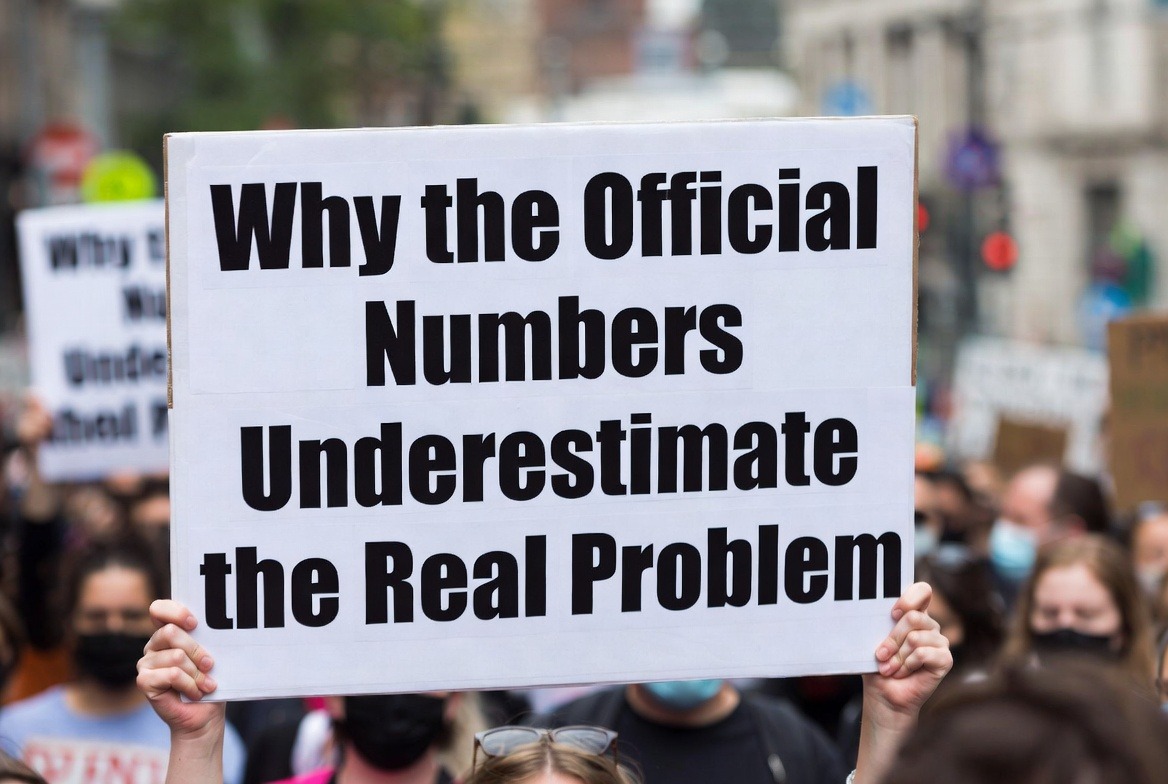
Why the Official Numbers Underestimate the Real Problem
Every statistic cited above comes from formal data sources — workers’ compensation claims, employer surveys, psychological society reports. These numbers are useful, but they systematically underestimate the true scale of Australia’s workplace stress epidemic for three reasons.
First, stigma. Despite significant progress in mental health awareness, many workers will not report stress-related symptoms to their employer or their doctor. They fear being seen as weak, unreliable, or unfit for advancement. This is particularly true in male-dominated industries and in high-pressure professional environments. The worker with a resting heart rate of ninety-eight beats per minute is not filing a claim. They are hoping nobody notices.
Second, normalisation. When everyone around you is exhausted, cynical, and struggling, you stop seeing those states as problems. They become normal. You do not report workplace stress because you believe workplace stress is simply what work feels like. This is the most dangerous form of the epidemic — the one where the sick do not know they are sick.
Third, the gap between feeling and physiology. A worker can feel fine while their biometric data shows clear signs of chronic stress. The nervous system adapts. The baseline shifts. What once felt like crisis becomes the new normal. And by the time the worker feels unwell enough to report symptoms, they are often already in a state of significant physiological dysregulation.
This is why wearable biometric data is transforming how we understand workplace stress. A smart ring does not care about stigma or normalisation. It does not ask how you feel. It measures your heart rate, your HRV, your sleep quality, and your recovery patterns. It shows you, in cold hard numbers, what your workday is doing to your body. And for many Australians, that first look at the data is a wake-up call.
To understand how continuous biometric tracking differs from the fragmented data your doctor sees once a year, the contrast between fifteen-minute consultations and 24-hour body signals reveals exactly why so many chronic conditions go undiagnosed until it is too late.
The Trajectory: Where Australia Is Headed
The trend lines are not encouraging. Workplace stress claims have increased every year for the past five years. The cost burden has increased even faster, as claims become more severe and absences become longer. The COVID-19 pandemic accelerated many of these trends, particularly the blurring of boundaries between work and home life for remote and hybrid workers.
The pandemic also introduced new stressors. Job insecurity. Health anxiety. Caregiving responsibilities. Social isolation. For many workers, the shift to remote work eliminated the small recovery periods that used to punctuate the workday — the commute that allowed the nervous system to reset, the lunch break with colleagues that engaged the parasympathetic brake, the walk to a meeting that provided light physical activity.
Remote work has benefits. It also has physiological costs that we are only beginning to understand. And those costs are showing up in the biometric data of millions of Australians who now spend their entire day in the same chair, in the same room, staring at the same screen, with no natural cues to transition between work and rest.
What Chronic Desk Stress Looks Like in Biometric Data Over Three Months
Numbers from government reports are one thing. Seeing what chronic stress actually does to a human body over time is something else entirely. Let us follow a hypothetical but entirely realistic Australian office worker — let us call her Sarah — through three months of biometric tracking. Sarah is thirty-four years old. She works as a marketing manager for a mid-sized company in Melbourne. She considers herself high-functioning, resilient, and not particularly stressed. Her biometric data will tell a different story.
Month One: The Hidden Elevation
Sarah buys a smart ring after a colleague mentions that it has helped her understand her sleep patterns. Sarah sleeps reasonably well, or so she thinks. She gets seven to eight hours most nights. She does not wake up feeling refreshed, but she assumed that was normal for someone in her thirties with a demanding job.
The first week of data is unremarkable. Her resting heart rate averages seventy-eight beats per minute. This is higher than the ideal range of sixty to seventy, but not alarmingly so. Her HRV averages thirty-five milliseconds. This is low — a healthy young adult should have an HRV above fifty — but Sarah has no reference point. She does not know what HRV is until she reads the ring’s educational materials.
Her sleep data is where the first warning signs appear. Her sleep efficiency — the percentage of time in bed actually spent asleep — is only eighty-one percent. A healthy adult should be above eighty-five percent. She spends an average of forty-five minutes awake during the night, mostly in brief arousals she does not remember. Her deep sleep is consistently below the recommended minimum of ninety minutes per night. Her REM sleep is also low, averaging only seventy minutes.
Sarah dismisses this as normal. She has always been a somewhat light sleeper. She drinks coffee in the afternoon. She sometimes has wine with dinner. These things probably explain the numbers, she thinks. She is not worried.
Week Three: The First Stress Pattern Emerges
By week three, the ring’s algorithm has enough data to identify patterns. Sarah notices something disturbing in the app. Her heart rate does not follow a normal daily rhythm. A healthy heart rate should be lowest during sleep, rise gradually upon waking, fluctuate moderately during the day in response to activity and rest, and then decline in the evening as the body prepares for sleep.
Sarah’s heart rate stays elevated until late at night. She goes to bed at 10:30 PM with a heart rate of eighty-two beats per minute. It does not drop below seventy until after midnight. Her morning heart rate, measured while she is still lying in bed, averages seventy-four beats per minute — significantly higher than the ideal morning resting heart rate of sixty to sixty-five.
She also notices that her heart rate spikes during certain times of day. Every weekday around 9:30 AM, her heart rate jumps from the high seventies to the mid-nineties. The timing corresponds to her morning team check-in meeting. Sarah does not find this meeting particularly stressful. She likes her team. But her body disagrees. The anticipation, the performance pressure, the social dynamics — something about that meeting triggers a sympathetic nervous system response that her conscious mind does not register.
This is the gap between perception and physiology. Sarah feels fine. Her body is not fine.
Week Six: The Accumulation Begins
By week six, the cumulative effects of chronic stress are becoming visible in Sarah’s trend lines. Her average resting heart rate has climbed from seventy-eight to eighty-four beats per minute. Her HRV has dropped from thirty-five to twenty-eight milliseconds. Her sleep efficiency has declined to seventy-nine percent.
She has started waking up at 3:00 AM most nights. This is not random. The 3:00 AM awakening is a classic sign of elevated cortisol. Cortisol naturally rises in the early morning hours to prepare the body for waking. In a stressed person, cortisol can spike too early or too high, causing sudden awakening with a racing heart and a mind that will not shut off.
Sarah also notices that her heart rate recovery is poor. When she does something mildly stressful — answering an angry email, preparing for a presentation — her heart rate spikes quickly and then takes a very long time to come back down. A healthy nervous system should recover within a few minutes. Sarah’s heart rate often remains elevated for thirty minutes or more after a brief stressor.
Her colleagues have noticed changes. Sarah is more irritable than usual. She snaps at a junior team member for a minor mistake. She cries in the bathroom after a difficult conversation with her manager. She tells herself she is just tired. She books a weekend away to relax.
The weekend away does not help. Sarah’s heart rate stays elevated even on Saturday and Sunday. Her body has forgotten how to turn off the sympathetic nervous system. The accelerator is stuck.
Month Three: The Tipping Point
By month three, Sarah’s biometric data has deteriorated significantly. Her average resting heart rate is now eighty-nine beats per minute. Her HRV has dropped to twenty-two milliseconds — a value typically seen in people ten to fifteen years older with diagnosed cardiovascular conditions. Her sleep efficiency has fallen to seventy-five percent. She is waking up exhausted every morning.
She has developed new physical symptoms. Her digestion is erratic, alternating between constipation and diarrhoea. Her hands shake slightly when she holds a coffee cup. She has gained four kilograms despite not changing her diet. Her blood pressure, measured at a pharmacy kiosk, is 132/88 — elevated into the hypertension range.
Sarah finally makes an appointment with her GP. She reports feeling tired and anxious. Her GP runs standard blood work. Everything comes back normal. Thyroid is fine. Iron is fine. Vitamin D is a little low, but nothing remarkable. Her GP tells her she is probably just stressed and should try to relax more. She prescribes a low dose of an antidepressant and schedules a follow-up in three months.
Sarah fills the prescription but does not take it. She does not want to be on medication. She does not want to admit that she cannot handle her job. She is a high-functioning professional. She has always been able to push through.
Two weeks later, Sarah has a panic attack during a client presentation. Her heart rate spikes to one hundred and forty-five beats per minute. She cannot breathe. She excuses herself, goes to the bathroom, and sits on the floor for twenty minutes until her hands stop shaking. She takes three days off work. She finally starts taking the antidepressant.
But the medication does not fix her heart rate. It does not fix her HRV. It does not fix her sleep. Because those things are not primarily brain problems. They are nervous system problems. And the nervous system needs more than medication to reset.
The Recovery Trajectory That Could Have Been Different
Here is what makes Sarah’s story both tragic and instructive. If she had seen her biometric data at week three and understood what it meant, she could have made small changes that would have prevented the crisis at month three. A ten-minute walk at lunch. A hard stop on work emails after 7:00 PM. A consistent bedtime. A single conversation with her manager about workload.
Instead, she ignored the data because she did not understand it. She dismissed the warnings because she did not feel stressed. She waited until her body forced her to stop, and by then the recovery took months instead of days.
Sarah’s story is not hypothetical. It is happening to thousands of Australians right now. And the data from continuous biometric tracking devices is making these hidden patterns visible for the first time.
What the Research Literature Says About Three-Month Stress Trajectories
The academic literature on chronic stress physiology supports what Sarah’s data showed. A 2023 systematic review in the journal Psychosomatic Medicine examined forty-two longitudinal studies of occupational stress and biometric outcomes. The findings were remarkably consistent.
Within four to six weeks of sustained high workplace stress, participants showed measurable increases in resting heart rate (average increase of six to eight beats per minute) and decreases in HRV (average decrease of fifteen to twenty milliseconds). Sleep quality deteriorated within two weeks, with the most significant changes occurring in deep sleep and REM sleep.
By eight to twelve weeks, the changes became clinically significant. Participants had crossed thresholds into elevated cardiovascular risk categories. Their blood pressure had increased by an average of five to seven points systolic. Their inflammatory markers — particularly C-reactive protein — had risen significantly. And perhaps most concerning, their cognitive performance on tests of executive function and working memory had declined by the equivalent of four to five IQ points.
The good news from the same literature is that these changes are reversible in most cases. Within four to six weeks of stress reduction interventions, participants showed significant improvements across all biometric measures. The nervous system can learn to re-regulate. The brake can be re-engaged. But the first step is awareness. You cannot fix what you are not measuring.
The Difference Between Acute and Chronic Stress Patterns
Not all elevated heart rate is equal. The biometric signature of acute stress — a single difficult meeting, a tight deadline, a conflict with a colleague — is a sharp spike followed by a relatively rapid recovery. The heart rate jumps up, stays elevated for a period, and then returns to baseline. The HRV drops during the stressful period and then recovers. This is normal. This is healthy. This is what the stress response is designed to do.
The biometric signature of chronic stress looks completely different. There are no sharp spikes because the baseline is already elevated. The heart rate sits in a persistently elevated range with small fluctuations throughout the day. The HRV stays persistently low. The sleep data shows consistent fragmentation and poor recovery. This is not a stress response. This is a stress state. The body has stopped responding to discrete stressors because it has stopped returning to baseline between them.
To understand why so many Australians wake up exhausted despite getting eight hours of sleep, the data on sleep quality versus sleep quantity explains exactly how chronic stress masquerades as normal tiredness. You are not just tired. Your sleep is not restorative because your nervous system never truly rests.
The distinction between acute and chronic stress patterns matters because the interventions are different. Someone with acute stress needs recovery time and coping strategies. Someone with chronic stress needs a fundamental reorganisation of their work and life patterns. The first is a bandage. The second is a redesign.
The ‘High-Functioning Stressed’ Profile: Why the Most At-Risk Australians Are Also the Least Likely to Recognise It
There is a particular type of stressed Australian who concerns researchers more than any other. They are not the workers who call in sick when they feel overwhelmed. They are not the employees who file stress claims or seek therapy. They are the ones who show up every day, deliver exceptional results, receive promotions and bonuses, and then collapse suddenly and completely with no warning that anyone around them could see.
These are the high-functioning stressed workers. And they are a public health crisis waiting to happen. Buy Oxyzen ring today for higher function.
The Personality Profile That Predicts Physiological Risk
Decades of research on personality and stress physiology has identified a specific profile associated with poor health outcomes despite high performance. The profile includes high conscientiousness, high achievement motivation, low neuroticism, and — crucially — low interoceptive awareness. Interoceptive awareness is the ability to perceive internal bodily sensations. It is what allows you to notice that your heart is racing, that your breathing is shallow, that your muscles are tense.
High-functioning stressed workers score high on conscientiousness. They are organised, responsible, and dependable. They meet deadlines. They keep promises. They are the people managers rely on.
They score high on achievement motivation. They set ambitious goals and work relentlessly to achieve them. They are driven by internal standards of excellence, not external pressure. They do not need a manager to push them because they push themselves harder than any manager would dare.
They score low on neuroticism. They do not ruminate, catastrophise, or get easily upset by setbacks. They are emotionally stable, at least on the surface. They do not complain. They do not seek sympathy. They handle problems quietly and efficiently.
And they score low on interoceptive awareness. They do not feel their heart racing. They do not notice their shallow breathing. They do not register the tension in their shoulders until it becomes a knot that requires medical attention. Their conscious mind and their physical body have learned to operate independently.
This profile is a recipe for disaster. The high-functioning stressed worker is under immense physiological strain but lacks the emotional volatility that would prompt them to seek help and lacks the bodily awareness that would alert them to the strain. They feel fine until they do not. And when they do not, the collapse is often severe.
Why Performance Is Not a Protective Factor
There is a dangerous assumption in most workplaces that high performance is evidence of wellbeing. If an employee is meeting targets, receiving positive feedback, and getting promoted, they must be doing fine. This assumption is false.
Performance and wellbeing are weakly correlated at best and inversely correlated at worst. The physiological mechanisms that drive chronic stress — elevated cortisol, sympathetic nervous system dominance, poor sleep — do not necessarily impair short-term performance. In fact, they can enhance it. Moderate stress improves focus, increases arousal, and sharpens reaction times. The problem is not what stress does to you today. The problem is what it does to you over months and years.
The high-functioning stressed worker is often the highest performer on their team. They are the person who answers emails at 10:00 PM, who takes on extra projects when others are at capacity, who never says no to a challenge. Their manager sees a star employee. Their colleagues see someone who makes the rest of them look bad. And their body sees a slow-motion emergency.
This dynamic creates a perverse incentive structure. The more an employee suffers from chronic stress, the more they may appear to be thriving. The symptoms of stress — hypervigilance, perfectionism, difficulty disengaging from work — are often indistinguishable from the behaviours that organisations reward. The very traits that make someone vulnerable to stress are the traits that get them promoted.
The Gender Dimension of High-Functioning Stress
The research on gender and stress reveals important differences in how high-functioning stress presents. Women are significantly more likely than men to report symptoms of stress, but they are also significantly more likely to be dismissed when they report them. The classic presentation of a stressed woman is “anxious” or “emotional.” The classic presentation of a stressed man is “dedicated” or “driven.”
This gendered interpretation has real consequences. Stressed women are more likely to be referred to employee assistance programs, prescribed medication, or advised to reduce their hours. Stressed men are more likely to be given more responsibility, praised for their work ethic, and promoted. The woman’s stress is seen as a personal failing. The man’s stress is seen as a professional virtue.
But the physiological data tells a different story. Men and women show similar patterns of cardiovascular stress under chronic workplace pressure. Their heart rates elevate similarly. Their HRV declines similarly. Their sleep fragmentation is comparable. The difference is not in their bodies. The difference is in how their environments respond.
This disparity is particularly acute for women in male-dominated industries like finance, construction, and technology. These women must navigate not only the demands of their jobs but also the additional stress of being a minority in their workplace. They must work harder to be seen as competent. They must manage microaggressions and subtle exclusions. They must prove themselves every day in ways their male colleagues do not. And they must do all of this while appearing calm and composed, because any display of emotion will be interpreted as evidence that women cannot handle the work.
The Age Trajectory: When High-Functioning Stress Peaks
High-functioning stress does not affect all age groups equally. The data shows a clear trajectory across the career lifespan.
Workers in their twenties show the lowest absolute levels of stress biomarkers but the highest rates of ignoring them. Young workers are less likely to have established healthy coping habits and more likely to believe that working long hours is normal and necessary. They are building their careers and are willing to sacrifice their health to do so.
Workers in their thirties show the highest levels of stress biomarkers. This is the decade of peak career intensity combined with peak family responsibilities. The thirty-something worker is often managing young children, aging parents, a mortgage, and a demanding job simultaneously. They have no slack in their system. Every hour of every day is accounted for. Their heart rate stays elevated because their life never slows down.
Workers in their forties show the first signs of physiological wear and tear. Their baseline heart rate remains elevated from the previous decade, but their recovery capacity has declined. Their HRV is lower than it should be for their age. Their sleep is more fragmented. They are starting to experience the chronic health conditions that stress causes — hypertension, metabolic syndrome, digestive disorders.
Workers in their fifties and sixties show a paradoxical pattern. Their subjective stress reports often decline, but their biomarkers do not improve. They have learned to tolerate higher levels of physiological arousal without perceiving it as stressful. Their bodies are still paying the price, but their minds have stopped complaining. This is adaptation, but not the healthy kind.
The Organisational Blind Spot
Most Australian organisations have no idea who their high-functioning stressed workers are. The standard tools for assessing employee wellbeing — engagement surveys, stay interviews, exit interviews — systematically miss this population. High-functioning stressed workers report moderate or high engagement. They say they are satisfied with their jobs. They plan to stay with their organisation. They are not the people who show up in the data.
This is why biometric measurement is so important. A survey asks how you feel. A smart ring measures what your body is doing. And for high-functioning stressed workers, these two things are often completely disconnected. They feel fine. Their data says otherwise.
The gap between self-report and physiology has been documented in multiple studies. In a 2022 study of Australian white-collar workers, participants were asked to rate their stress levels on a standardised scale and then wore biometric monitors for two weeks. The correlation between self-reported stress and physiological stress was only 0.31 — a weak relationship. A substantial minority of participants who rated their stress as low or moderate showed physiological stress levels in the clinical range.
These are the people organisations are failing. They are not complaining. They are not calling in sick. They are not filing claims. They are showing up every day, performing exceptionally, and slowly destroying their cardiovascular systems. And their employers have no idea.
To understand why traditional healthcare misses these patterns entirely, the contrast between what your doctor sees in fifteen minutes versus what your body signals twenty-four hours a day explains exactly how high-functioning stress becomes invisible to the medical system until it is too late.
The Warning Signs That High-Functioning Stressed Workers Ignore
There are warning signs, even for people with low interoceptive awareness. The challenge is that high-functioning stressed workers have learned to explain them away.
Frequent infections. Colds that linger for weeks. Herpes outbreaks. Gastrointestinal bugs that your colleagues seem to avoid. These are signs of a suppressed immune system, which is a direct consequence of chronic cortisol elevation. The high-functioning stressed worker explains this as “everyone gets sick in winter” or “I just have a weak immune system.”
Poor sleep quality. Waking up multiple times per night. Difficulty falling asleep because your mind is racing. Waking up exhausted despite spending eight hours in bed. The high-functioning stressed worker explains this as “I’ve always been a light sleeper” or “it’s probably the coffee.”
Changes in appetite or weight. Stress affects appetite differently in different people. Some lose their appetite entirely. Others crave high-sugar, high-fat foods. Either way, weight often changes. The high-functioning stressed worker explains this as “I’ve been busy” or “I need to get back to the gym.”
Increased use of substances. More coffee to stay alert during the day. More alcohol to relax at night. More sugar to get through the afternoon crash. The high-functioning stressed worker explains this as “everyone in my industry drinks” or “I could cut back anytime.”
Loss of interest in activities that used to bring joy. The hobby that used to be the highlight of the week now feels like another obligation. Social plans feel draining rather than energising. The high-functioning stressed worker explains this as “I’m just in a phase” or “I’ll get back to it when things calm down.”
The common thread in all these explanations is normalisation. The high-functioning stressed worker does not recognise these symptoms as symptoms. They see them as the normal cost of a successful career. And by the time they cannot ignore them anymore, the cost has become much higher than they ever imagined.
The Three Biometric Signals That Appear Before Burnout Becomes Unavoidable
Burnout does not happen suddenly. It accumulates gradually, over months and years, and then announces itself as if it appeared overnight. The research on burnout trajectories shows clear, measurable precursors that appear in biometric data weeks or months before clinical burnout develops. If you know what to look for, you can see burnout coming. And if you can see it coming, you can do something about it.
Here are the three biometric signals that predict burnout before it becomes unavoidable.
Signal One: The Widening Gap Between Morning and Evening Heart Rate
A healthy heart rate follows a predictable daily pattern. It is lowest during sleep, rises gradually in the hour before waking, stays relatively stable during the day with brief elevations in response to activity and stress, and then declines in the evening as the body prepares for sleep. The difference between morning heart rate and evening heart rate is typically five to ten beats per minute.
In the weeks before burnout, this pattern breaks down. The evening decline becomes blunted or disappears entirely. Heart rate stays elevated late into the night. The difference between morning and evening heart rate narrows to two or three beats per minute. And in severe cases, evening heart rate may actually be higher than morning heart rate — a pattern that indicates complete dysregulation of the circadian rhythm.
This signal appears, on average, six to eight weeks before a diagnosable burnout episode. It is the nervous system’s way of saying that the brake is no longer engaging. The accelerator is stuck in the on position, even at night when the body should be resting and repairing.
What makes this signal particularly valuable is that it is easy to measure. Any device that tracks heart rate continuously — including most smart rings and fitness trackers — can calculate morning and evening averages. If you notice your evening heart rate creeping up relative to your morning heart rate, that is not a reason to panic. It is a reason to pay attention.
Signal Two: The Progressive Decline in HRV Without Recovery
Heart rate variability is the single best biometric marker of autonomic nervous system health. High HRV indicates a flexible, resilient nervous system that can switch appropriately between sympathetic and parasympathetic states. Low HRV indicates a system that is stuck in sympathetic dominance, unable to engage the brake effectively.
In a healthy person, HRV fluctuates from day to day. A hard workout, a stressful day at work, or a night of poor sleep will cause HRV to drop. A rest day, a relaxing weekend, or a good night of sleep will cause HRV to rise. The see-saw moves back and forth.
In the weeks before burnout, HRV follows a different pattern. It declines steadily, day after day, without the normal fluctuations. Rest days do not bring it back up. Weekends do not create recovery. The trend line points consistently downward, with no bounces.
This progressive decline without recovery appears, on average, four to six weeks before clinical burnout. It is the most specific predictor in the literature. When researchers have tracked workers prospectively, measuring their HRV weekly and then waiting to see who developed burnout, the progressive decline pattern has predicted burnout with approximately eighty percent accuracy.
If you see your HRV trending downward for three consecutive weeks without any recovery on weekends or rest days, that is not a fluke. That is your nervous system telling you that your current pattern is not sustainable.
Signal Three: The Fragmentation of Deep Sleep Architecture
Sleep is not one thing. It is a sequence of distinct stages that serve different physiological functions. Light sleep helps with memory consolidation and emotional regulation. Deep sleep is when the body repairs itself — releasing growth hormone, clearing metabolic waste from the brain, and restoring physical energy. REM sleep is when the brain processes emotions and consolidates procedural memories.
In chronic stress, the architecture of sleep changes. The most consistent change is the fragmentation of deep sleep. Instead of getting the ninety to one hundred twenty minutes of deep sleep that healthy adults need, stressed workers get sixty, forty, or even twenty minutes. The deep sleep that does occur is broken into smaller chunks rather than the normal long, continuous blocks.
This fragmentation appears, on average, three to five weeks before clinical burnout. It is often the first signal that the worker notices themselves, because fragmented deep sleep produces symptoms that are hard to ignore. You wake up feeling like you did not sleep at all, even if you were in bed for eight hours. You feel physically tired and achy, like you have been doing manual labour all night. Your memory and concentration are noticeably impaired.
The fragmentation of deep sleep is particularly concerning because deep sleep is when the body does most of its recovery work. If you are not getting enough deep sleep, your body cannot repair the damage from the previous day’s stress. The stress accumulates. The debt grows. And eventually, the body runs out of reserves.
How These Signals Work Together
Individually, each of these signals is a warning. Together, they are a diagnosis. When a worker shows all three signals — the blunted evening heart rate decline, the progressive HRV decline without recovery, and the fragmentation of deep sleep — the research suggests that burnout is not a possibility. It is an inevitability. Something will break. The only question is when and how.
The timing varies from person to person. Some workers can show all three signals for months before crashing. Others crash within weeks of the pattern emerging. The difference seems to be related to baseline resilience, social support, and the specific demands of the job. But the direction is always the same. Downward. Towards collapse.
The good news is that these signals are detectable early. You do not have to wait until you are in crisis. You do not have to wait until you cannot get out of bed. The data will tell you, weeks in advance, that something is wrong. And if you are paying attention, you have time to change course.
For a deeper understanding of how sleep quality and heart rate data reveal hidden health conditions, the research on why you might be waking up exhausted despite eight hours of sleep explains exactly how fragmented deep sleep masquerades as normal tiredness. You are not just tired. Your sleep is not working.
What to Do When You See These Signals
Seeing these signals in your own data can be alarming. That is appropriate. Your body is trying to get your attention. But alarm should lead to action, not panic.
The first action is validation. Check your data against how you feel. Do the signals match your experience? Are you more tired than usual? More irritable? Less patient? Finding it harder to concentrate? If the data and your experience align, trust them both.
The second action is reduction. Identify the most significant stressors in your life and reduce them. This does not mean quitting your job or abandoning your responsibilities. It means looking for small reductions that create breathing room. Can you defer a non-urgent project? Can you delegate something you have been doing yourself? Can you say no to one new commitment?
The third action is recovery. Increase the activities that engage your parasympathetic nervous system. Walking outside. Spending time with people who energise you. Reading fiction. Listening to music. Taking a bath. These things are not luxuries. They are medical interventions for a dysregulated nervous system.
The fourth action is conversation. Tell someone you trust what you are seeing in your data. Your partner. A close friend. Your doctor. Your manager, if you have the kind of relationship that makes that possible. Chronic stress thrives in isolation. Bringing it into the light, naming it, sharing it — these acts are themselves therapeutic.
The fifth action is measurement. Keep tracking. The signals will tell you whether your interventions are working. If your evening heart rate starts dropping again, if your HRV starts recovering, if your deep sleep starts consolidating — you will know you are on the right track. If the signals continue worsening, you need to do more.
What Your Lunch Break Is Actually Doing to Your Afternoon Physiology
The humble lunch break is one of the most understudied and underappreciated variables in workplace stress physiology. How you spend your lunch break — not just what you eat, but what you do and who you do it with — has a measurable impact on your cardiovascular function for the rest of the day. And most Australians are getting it wrong.
The Physiology of the Post-Lunch Crash
The 3:00 PM crash is not primarily about food. It is about the nervous system. By mid-afternoon, the average desk worker has been in a state of sympathetic nervous system activation for six or seven hours. Their cortisol has been elevated since they woke up. Their heart rate has been idling high. Their brain has been consuming glucose at an accelerated rate. And their body is running out of resources.
The crash is not a failure of willpower. It is a physiological inevitability. The human nervous system is not designed for sustained activation without recovery periods. The body runs out of fuel. The brain runs out of neurotransmitters. The stress response exhausts itself. And you feel like you have hit a wall.
The question is not whether you will crash. The question is when, and how hard, and whether you can do anything to delay it or mitigate it. The answer to all three questions depends heavily on what you do between 12:00 PM and 1:00 PM.
The Lunch Break That Damages Your Afternoon
Most Australian workers take what researchers call the “maintenance lunch break.” They eat at their desk while continuing to work. They check emails while chewing. They take a phone call while eating a sandwich. They do not stop working. They simply add eating to the list of things they are doing.
The physiological effect of the maintenance lunch break is uniformly negative. Heart rate remains elevated throughout the break. HRV does not improve. Cortisol continues its slow rise. By 2:30 PM, these workers show the steepest crash trajectory, with the largest drops in cognitive performance and the largest increases in subjective fatigue.
Even workers who leave their desks but spend their lunch break on their phones — scrolling social media, reading news, playing games — show minimal physiological recovery. The phone keeps the sympathetic nervous system engaged. The brain remains in an alert, information-processing mode. The brake does not engage.
Workers who eat at a cafeteria or food court show modest improvements, but only if they eat with colleagues they like. Eating alone in a crowded space while staring at a phone produces almost no recovery benefit. The environment still reads as stressful to the nervous system, even if the work has technically stopped.
The Lunch Break That Restores Your Afternoon
The research on lunch breaks and physiological recovery points to three key ingredients for an effective restorative break.
First, physical separation from the workspace. Leaving the building entirely produces significantly better recovery than staying in the building. Even leaving the immediate desk area and moving to a different floor or a different room produces some benefit. The nervous system uses environmental cues to determine whether it is safe to relax. Being in the same physical space where you experience stress keeps the stress response partially engaged.
Second, nature exposure. Workers who spend their lunch break in green spaces — parks, gardens, tree-lined streets — show the largest improvements in heart rate, HRV, and subjective wellbeing. The effect is dose-dependent. More time in nature produces more recovery, with diminishing returns after about forty minutes. Even five minutes of nature exposure produces measurable benefits.
Third, social connection with people you like. Eating with colleagues you enjoy spending time with activates the parasympathetic nervous system. The social engagement system — a branch of the vagus nerve — signals safety and connection. Heart rate drops. HRV improves. Cortisol declines. This effect is specific to positive social connections. Eating with colleagues you dislike or find stressful produces no benefit and may make things worse.
The ideal lunch break, according to the physiological data, combines all three ingredients. Leave the building. Walk to a park. Eat lunch with a colleague you genuinely like. Spend twenty to thirty minutes in conversation that has nothing to do with work. Then walk back.
Workers who take this kind of lunch break show afternoon heart rates that are, on average, eight to twelve beats per minute lower than workers who eat at their desks. Their HRV remains fifteen to twenty milliseconds higher. Their cognitive performance declines less steeply. Their subjective fatigue is significantly lower. And they report better sleep that night.
The Lunch Break Length Debate
How long should a lunch break be to produce meaningful physiological recovery? The research suggests a U-shaped curve.
Breaks shorter than fifteen minutes produce minimal recovery. The nervous system does not have enough time to downshift from sympathetic to parasympathetic activation. The brake starts to engage but does not fully engage before it is time to go back to work.
Breaks between twenty and forty minutes produce the best recovery per minute. This is the sweet spot. Long enough for the parasympathetic nervous system to fully engage, short enough that the return to work does not feel like a fresh stressor.
Breaks longer than sixty minutes produce additional recovery, but with diminishing returns. The extra recovery from a ninety-minute lunch versus a forty-minute lunch is relatively small. And longer breaks can create their own stress by pushing work later into the evening.
The practical recommendation is clear. Take a lunch break of at least twenty minutes. Leave your desk. Leave your phone. Go outside if possible. Talk to a human being you like. Do not work. Do not scroll. Just be.
What Australian Workplaces Actually Do
The gap between the evidence and Australian workplace practice is enormous. A 2024 survey of Australian office workers found that fifty-three percent regularly eat lunch at their desk. Thirty-eight percent take lunch breaks shorter than twenty minutes. Twenty-two percent take no lunch break at all — they work straight through from morning to afternoon.
The reasons workers give for skipping or shortening lunch breaks are telling. “Too much work” is the most common response. “Everyone else works through lunch” is second. “I do not want to look lazy” is third. These are cultural problems, not individual preferences. The workplace culture has normalised the absence of recovery. The maintenance lunch break has become the default not because it is effective but because it is expected.
Employers who have shifted this culture report remarkable results. When one Australian tech company mandated a forty-five minute, desk-free lunch break for all employees, they measured a twenty-three percent reduction in afternoon errors, a thirty-one percent reduction in after-hours email traffic, and a measurable improvement in employee retention over twelve months. The lunch break did not cost the company productivity. It increased it.
For organisations interested in measuring the impact of lunch breaks and other workplace interventions on employee physiology, exploring how continuous biometric tracking reveals the real-time effects of policy changes can transform HR from a cost centre to a strategic function. The data does not lie. And the data says lunch breaks matter.
The One Change That Produces the Largest Effect
If you can make only one change to your lunch break, make it this. Leave your phone at your desk.
The evidence on phones and physiological recovery is overwhelming. The presence of a phone — even a phone that is face down, even a phone that is on silent, even a phone that you are not using — keeps the sympathetic nervous system partially engaged. Your brain knows the phone is there. Your brain knows that notifications could arrive at any moment. Your brain stays in a state of alert anticipation.
When workers leave their phones at their desks during lunch, the physiological recovery benefits of their break double or triple. Heart rate drops faster and further. HRV improves more significantly. Cortisol declines more completely. The brake engages fully.
The phone is not the only factor. But it is the factor that is most within your control. You cannot always control your workload. You cannot always control your manager’s expectations. You can control whether your phone comes to lunch with you.
Five Evidence-Based Interventions That Move the Needle
Not all stress management interventions are created equal. The research literature on workplace stress interventions is vast, and the effect sizes vary enormously. Some interventions produce measurable improvements in heart rate, HRV, and sleep within days or weeks. Others produce no detectable benefit despite months of practice.
Here are five interventions that actually move the needle, ranked by their effect size on HRV — the single best marker of autonomic nervous system health.
Number One: Morning Light Exposure (HRV Effect Size: Large)
The circadian system is the master regulator of the autonomic nervous system. When your circadian rhythm is aligned with the natural light-dark cycle, your sympathetic and parasympathetic systems work in harmony. When your circadian rhythm is disrupted, everything breaks down.
Morning light exposure is the single most effective intervention for circadian alignment. Within thirty to sixty minutes of waking, spend ten to twenty minutes outside in natural light. Cloudy days count. Rainy days count. What matters is being outside, not the intensity of the sunlight. The light entering your eyes through a window is not sufficient. Window glass filters the specific wavelengths that signal the circadian system.
The physiological mechanism is elegant. Morning light suppresses melatonin production (which is good — melatonin is for night) and synchronises the release of cortisol to the early morning hours. Properly timed cortisol release then improves alertness during the day and sets the stage for melatonin release at night. One intervention, twenty minutes, improves both daytime stress resilience and nighttime sleep quality.
Workers who implement morning light exposure show average HRV improvements of fifteen to twenty milliseconds within two weeks. Their resting heart rate drops by five to eight beats per minute. Their sleep efficiency improves by four to six percentage points. These are substantial changes, comparable to the effects of prescription medication for some conditions.



%402x.svg)