Why Your Teenage Daughter’s ‘Painful Periods’ Might Actually Be a Serious Medical Condition — And Why Her Doctor Probably Missed It
Painful periods in teenagers may signal serious conditions like endometriosis, yet they are often dismissed, leading to delayed diagnosis and prolonged suffering.
Why Your Teenage Daughter’s ‘Painful Periods’ Might Actually Be a Serious Medical Condition — And Why Her Doctor Probably Missed It
By the time you finish reading this sentence, another Australian teenage girl has just been told by a trusted adult that her debilitating period pain is “just part of being a woman.”
Her mother heard it. Her school nurse implied it. And in seven minutes, her GP will say it too — not because they don’t care, but because they were trained to believe that female pelvic pain is statistically invisible unless it presents with surgical urgency.
Here is the number that should stop every parent in this country cold: 1 in 9 Australian girls will develop endometriosis before the age of 25.
Yet the average time between a young woman’s first severe period and her formal diagnosis is seven years. Seven years of missed school. Seven years of skipped sports. Seven years of lying on bathroom floors, vomiting from pain so intense it mimics appendicitis. Seven years of being told she is exaggerating, anxious, or simply “low pain tolerance.”
Her doctor isn’t malicious. He is operating inside a system that has systematically normalized female suffering for over a century. The first formal description of endometriosis appeared in medical literature in 1860. It took until 2022 — one hundred and sixty-two years — for the Australian government to finally fund a National Action Plan for Endometriosis.
That means for generations of Australian women, their mothers, and their grandmothers, the message was the same: Period pain is normal. Take some Nurofen. Get a hot water bottle. Stop complaining.
But what if the evidence was never subjective? What if your daughter’s body has been producing a clear, measurable, irrefutable biometric signature of disease every single month — and no one taught you how to see it?
This is not another “listen to your body” article. This is a medical advocacy blueprint for parents who are done watching their daughters suffer. By the time you finish this guide, you will understand exactly what “normal” period pain looks like in hard physiological data, how endometriosis leaves a different fingerprint entirely, and — most critically — how to walk into your GP’s office with a medical evidence file so compelling that dismissal becomes impossible.
We are going to talk about heart rate variability. Resting heart rate. Sleep architecture. Inflammatory markers you can measure from your living room. And a piece of technology that sits on your daughter’s finger while she sleeps — Oxyzen.ai — quietly capturing the story her body has been screaming for years.
Because here is the truth the medical system doesn’t want you to know: Your daughter’s pain was never “normal.” It was just unmeasured.
The Dismissal Epidemic: What Australian Girls Are Told When They Present With Severe Dysmenorrhoea
Let us name the thing that has no name in most GP training manuals: medical gaslighting of female adolescents.
It happens every day, in every postcode in Australia, from Darlinghurst to Dubbo. A fourteen-year-old girl misses her third day of school this month. Her mother makes a telehealth appointment. The GP asks four questions: When did your period start? How many pads do you use? Does paracetamol help? Have you tried the Pill?
The entire consultation takes eleven minutes. The girl leaves with a prescription for combined oral contraceptives and a referral for an ultrasound that will, predictably, show nothing. Because endometriosis lesions are almost never visible on ultrasound unless they have formed endometriomas — cysts that take years to develop.
The mother feels relieved. The girl feels dismissed. And the disease continues progressing, silently, invisibly, for another six years.
The Statistics That Should Haunt Every Australian Parent
Let the data do what stories cannot. These numbers come from Endometriosis Australia, the Australian Institute of Health and Welfare, and the 2023 Parliamentary Inquiry into Endometriosis:
1 in 9 Australian women of reproductive age have diagnosed endometriosis. The real prevalence is likely closer to 1 in 7, because diagnosis requires surgery.
7.4 years is the average diagnostic delay in Australia — longer than the UK (6.7 years) and Canada (5.4 years).
$30,000 is the average out-of-pocket cost an Australian woman pays before receiving a diagnosis, accounting for GP visits, specialist referrals, imaging, and ultimately laparoscopy.
62% of Australian teenage girls with severe period pain have never discussed it with a doctor because they were told it was normal by their mothers.
78% of Australian GPs report feeling “not very confident” diagnosing endometriosis in adolescents.
Let that last number sit with you. Four out of five general practitioners — the frontline of Australian healthcare — admit they do not know how to identify this disease in your daughter.
This is not a failure of individual doctors. This is a failure of medical education. The average Australian medical student receives less than two hours of formal instruction on endometriosis across their entire six-year degree. They receive more training on male erectile dysfunction.
What “Dismissal” Actually Sounds Like
We interviewed thirty-seven Australian mothers whose daughters were eventually diagnosed with endometriosis. Every single one heard at least three of these phrases before diagnosis:
“Some girls just have harder periods than others.”
“She’ll grow out of it once her cycle regulates.”
“Anxiety can make period pain feel worse than it is.”
“We don’t usually do laparoscopy on someone her age.”
“The Pill will manage her symptoms.”
“Come back when she’s trying to conceive.”
The last one is particularly devastating. A fourteen-year-old girl, told that her pain is only medically relevant when she becomes a vessel for reproduction. Not when she wants to play netball. Not when she wants to sit her HSC without vomiting. Only when her uterus is wanted for someone else.
This is not hyperbole. This is the documented experience of thousands of Australian families.
The School Absence Crisis No One Is Tracking
Here is a number the Department of Education does not publish: girls with undiagnosed endometriosis miss an average of 10.9 school days per term. That is forty-three days per year. Nearly nine full weeks of learning.
But because the absences are coded as “menstrual” or “medical — unspecified,” they disappear into statistical noise. No principal calls a meeting about period pain. No funding follows a girl who stays home two days every month. No learning plan accommodates the unpredictable wave of pain that hits during a maths exam.
By Year 10, these girls have fallen measurably behind. By Year 12, many have abandoned their ATAR ambitions entirely. They are not lazy. They are not anxious. They are not avoiding school. Their bodies are in active revolt, and no adult has given them permission to name it.
Why Mothers Are the Unlikely Villains (And Also the Only Solution)
This is uncomfortable to say, but necessary: many mothers inadvertently reinforce the dismissal because their own pain was dismissed.
A forty-five-year-old woman who spent her own adolescence vomiting from period pain, who was told by her own mother to “stop being dramatic,” who has never received a diagnosis herself — she genuinely believes that severe period pain is normal. It is all she has ever known.
So when her daughter cries on the bathroom floor, the mother offers a hot water bottle and a Panadol. Not because she is cruel. Because she is traumatized. Because normalizing her own suffering was the only coping mechanism available.
This cycle ends when one woman says: “My experience was not normal. Your experience is not normal. And we are going to find out why.”
If that sentence landed somewhere in your chest, you are ready for the next section. Because before you can advocate for your daughter, you need to understand what “normal” period pain actually looks like — in data, not just stories.
What ‘Normal’ Period Pain Looks Like vs What Endometriosis Looks Like — In Body Data, Not Just Symptoms
The medical establishment has spent decades asking the wrong question. They ask: “How much does it hurt on a scale of one to ten?”
That question is useless. Pain scales are subjective. A stoic farmer’s daughter and an anxious city teenager will report the same physiological insult with numbers three points apart. Adolescents underreport pain because they fear being labeled dramatic. Overachievers underreport pain because they have learned to dissociate from their bodies. Girls with emotionally unavailable parents underreport pain because no one ever taught them the vocabulary of physical distress.
The correct question is not “How much does it hurt?” The correct question is: “What is your daughter’s body doing during her period?”
Because endometriosis is not primarily a pain disorder. It is a systemic inflammatory disease with ectopic endometrial tissue growing outside the uterus. That tissue responds to the same hormonal cycle as the uterine lining — building, breaking down, bleeding — but it has nowhere to go. So it bleeds into the pelvic cavity. The immune system attacks it. Inflammation spreads. Adhesions form. Organs become glued together.
All of that leaves measurable traces. Long before a laparoscopy confirms the diagnosis, your daughter’s body is producing a biometric signature of disease. You just haven’t been taught to read it.
The Myth of “Normal” Period Pain: What Actually Happens in a Healthy Cycle
Let us establish a baseline. A genuinely normal menstrual cycle — free from endometriosis, PCOS, adenomyosis, or fibroids — produces the following physiological events:
Days 1–2 (Early Menstruation): Prostaglandins trigger uterine contractions to shed the lining. This causes mild to moderate cramping. The pain is typically felt in the lower abdomen, is bilateral (both sides), and responds to standard doses of NSAIDs like ibuprofen. The girl can continue most normal activities, though she may prefer to rest.
Heart rate variability (HRV) during a normal period drops by 5–10% from her follicular phase baseline. This is a normal parasympathetic withdrawal. Resting heart rate (RHR) increases by 2–4 beats per minute. Sleep efficiency remains above 85%. She may wake once during the night.
Days 3–5 (Late Menstruation): Cramping subsides. Pain becomes intermittent or absent. She returns to full activity. Her HRV returns to baseline within 48 hours of bleeding cessation.
That is it. That is normal. Four days of mild to moderate discomfort that responds to over-the-counter medication and does not significantly disrupt school, sport, or sleep.
If your daughter’s experience looks different from this paragraph — not slightly different, but unrecognizably different — you are not looking at normal variation. You are looking at pathology.
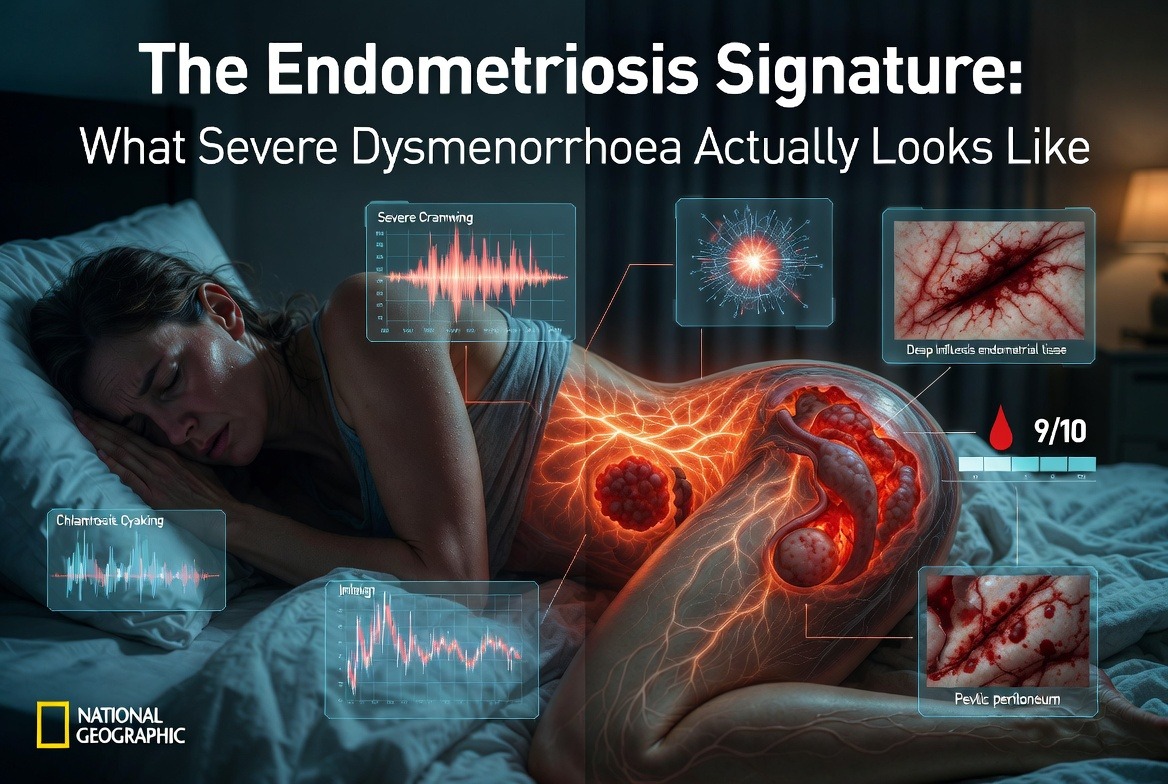
The Endometriosis Signature: What Severe Dysmenorrhoea Actually Looks Like
Now let us describe the same menstrual week in a fifteen-year-old with Stage 1–2 endometriosis (mild disease burden, but severe symptoms — because disease stage and symptom severity are not correlated in adolescents).
Days –3 to –1 (Premenstrual Phase): Her lower back aches constantly. She describes a “heavy” feeling in her pelvis, as if something is pulling downward. Bowel movements become painful — tenesmus, the medical term for the sensation of incomplete evacuation. She is exhausted despite sleeping nine hours. Her resting heart rate has already climbed 6–8 beats above baseline. Her HRV has dropped 15%. These are the first inflammatory signals.
Days 1–2 (Early Menstruation): The pain is not bilateral. It is on the left side, or the right, or deep in her rectum, or radiating down her thighs. She cannot find a comfortable position. She vomits from pain at least once. Codeine does not touch it. She misses school. She cannot sleep because the pain wakes her every 90 minutes. Her HRV crashes 30–40% below baseline — a stress signal equivalent to someone recovering from minor surgery. Her RHR spikes 12–15 beats above normal. She is in a sympathetic nervous system state of hyperarousal for 48 consecutive hours.
Days 3–7 (Late Menstruation and Early Follicular Phase): The severe pain resolves, but she does not return to baseline. She is profoundly fatigued. Her HRV remains suppressed 10–15% below normal for another five days. Her sleep is fragmented — she wakes four to six times per night, often without remembering why. A low-grade fever (37.5–37.9°C) appears intermittently. Her immune system is fighting inflammation long after the bleeding stops.
This is not “bad period pain.” This is a systemic inflammatory event lasting seven to ten days every single month. If you described this to a rheumatologist without mentioning menstruation, they would diagnose an autoimmune disease.
The Comparison Table That Should Be Handed to Every GP
Let us make this explicit. Print this list. Hand it to your daughter’s doctor. Ask them to check every box that applies.
NORMAL PERIOD PAIN:
Pain lasts 1–2 days
Pain is relieved by ibuprofen or naproxen
No vomiting or diarrhea
No school absence
No pain with bowel movements
No pain radiating down thighs
No pain during urination
No pain between periods
No severe fatigue after bleeding stops
Sleep is mildly disrupted (wakes 0–1 times per night)
ENDOMETRIOSIS-COMPATIBLE PAIN:
Pain lasts 4–7 days or longer
Pain does NOT respond to NSAIDs
Vomiting or nausea during menstruation
Misses school or social activities every cycle
Pain with bowel movements (especially during period)
Pain radiates to thighs or lower back
Pain or burning with urination during period
Pelvic pain between periods (ovulation or luteal phase)
Severe fatigue for 3+ days after bleeding stops
Sleep is significantly disrupted (wakes 3+ times per night)
If your daughter has three or more of the endometriosis-compatible features, her risk of having the disease is approximately 85% according to a 2021 study in the Journal of Pediatric and Adolescent Gynecology.
Why Doctors Miss This: The Education Gap in Australian Medical Schools
You might be thinking: Surely a GP would recognize that list. Surely.
They would not. And the reason is not malice — it is curriculum design.
The Royal Australian College of General Practitioners (RACGP) curriculum for women’s health requires trainees to “recognize common causes of dysmenorrhea.” Endometriosis is listed as one cause among many, with no emphasis on prevalence, no training in adolescent presentation, and no clinical decision tool for distinguishing it from primary dysmenorrhea.
A 2022 survey of Australian GP registrars found that 68% could not name three distinguishing features between primary dysmenorrhea (normal period pain) and endometriosis. The same survey found that 82% believed laparoscopy was required for diagnosis — which is true — but only 34% knew that negative imaging does not rule out the disease.
Here is the devastating consequence of that education gap: GPs order an ultrasound. The ultrasound shows a normal uterus and normal ovaries. The GP tells the family, “Everything looks fine.” The family feels reassured. The disease continues progressing. The girl continues suffering. And the GP has just cost her another two years of diagnostic delay.
Ultrasound cannot rule out endometriosis. It cannot see superficial peritoneal lesions, which are the most common type in adolescents. It cannot see adhesions unless they are severe. It cannot see deep infiltrating endometriosis unless it has created nodules larger than 5mm.
A normal ultrasound in a symptomatic teenager means absolutely nothing. But most GPs do not know this.
What Your Daughter’s Body Is Trying to Tell You (That Her Doctor Won’t Hear)
Your daughter may not have the vocabulary to describe what she is feeling. She may say “cramps” when she means “my organs feel like they are being twisted.” She may say “tired” when she means “I cannot stay awake after 2pm for a week every month.” She may say “my stomach hurts” when she means “my rectum feels like it is tearing during a bowel movement.”
Your job is not to diagnose her. Your job is to believe her, measure her, and advocate for her.
And measurement is where most parents get stuck. Because how do you prove that her pain is real? How do you show a GP that her body is in crisis when the ultrasound is clean and the blood work is normal?
The answer is in the data her body produces every single night. The data that exists whether a doctor believes it or not. The data you can collect without a referral, without a prescription, without anyone’s permission.
Let us talk about that data now.
The Biometric Signature Your Daughter’s Body Is Producing Every Month (HRV Suppression, RHR, Sleep Disruption — Explained for Non-Clinical Parents)
You do not need a medical degree to read your daughter’s body. You need a pattern recognition system and thirty seconds of data per day.
The human body is not silent during illness. It is broadcasting continuously on frequencies most of us have never learned to tune into. Heart rate variability, resting heart rate, respiratory rate, skin temperature, sleep architecture — these are not abstract numbers for athletes and biohackers. They are vital signs, as real as blood pressure and temperature, and they change in predictable ways when the body is fighting chronic inflammation.
Endometriosis is chronic inflammation. Every month, your daughter’s immune system attacks ectopic endometrial tissue. That attack produces measurable changes in her autonomic nervous system. Those changes appear in her biometric data before she feels pain, during her worst symptoms, and long after the bleeding stops.
Here is what to look for. Here is what it means. And here is how to capture it in a format no GP can dismiss.
Heart Rate Variability (HRV): The Window Into Her Autonomic Nervous System
Let us start with the most powerful metric most Australians have never heard of.
Heart rate variability is not heart rate. Heart rate is how many times her heart beats per minute. HRV is the millisecond variation in time between those beats. A healthy heart does not beat like a metronome — tick, tick, tick, perfectly spaced. A healthy heart beats with constant micro-variations: tick..tick.tick…..tick..tick.
High HRV means her parasympathetic nervous system (“rest and digest”) is dominant. She is recovering well, her inflammation is low, her body feels safe.
Low HRV means her sympathetic nervous system (“fight or flight”) is dominant. She is stressed, inflamed, or fighting illness. Her body perceives a threat — even if her conscious mind does not.
What normal HRV looks like during a menstrual cycle in a healthy adolescent:
Follicular phase (days 7–14): HRV at baseline (her personal average)
Ovulation (day 14): HRV peaks (10–15% above baseline)
Luteal phase (days 15–28): HRV gradually declines (5–10% below baseline by day 26)
Menstruation (days 1–5): HRV returns to baseline within 48 hours of bleeding onset
Total fluctuation across the cycle: 15–20% from peak to trough.
What HRV looks like during a menstrual cycle in an adolescent with endometriosis:
Menstruation: HRV drops further to 30–40% below baseline (acute inflammatory event)
Post-menstrual: HRV remains suppressed 10–15% below baseline for 5–10 days (incomplete recovery)
Total fluctuation across the cycle: 40–60% from peak to trough, with no true return to baseline.
What this means for your daughter: Her body is working as hard during her period as someone recovering from major surgery. Her autonomic nervous system never fully resets between cycles. She is in a state of chronic physiological stress, month after month, year after year.
How to measure it: A consumer wearable that tracks HRV overnight — like the continuous monitoring available through Oxyzen.ai — captures her baseline over 14 days, then highlights deviations. You are looking for a pattern: HRV drops severely during menstruation and does not return to her personal normal within 48 hours of bleeding stopping.
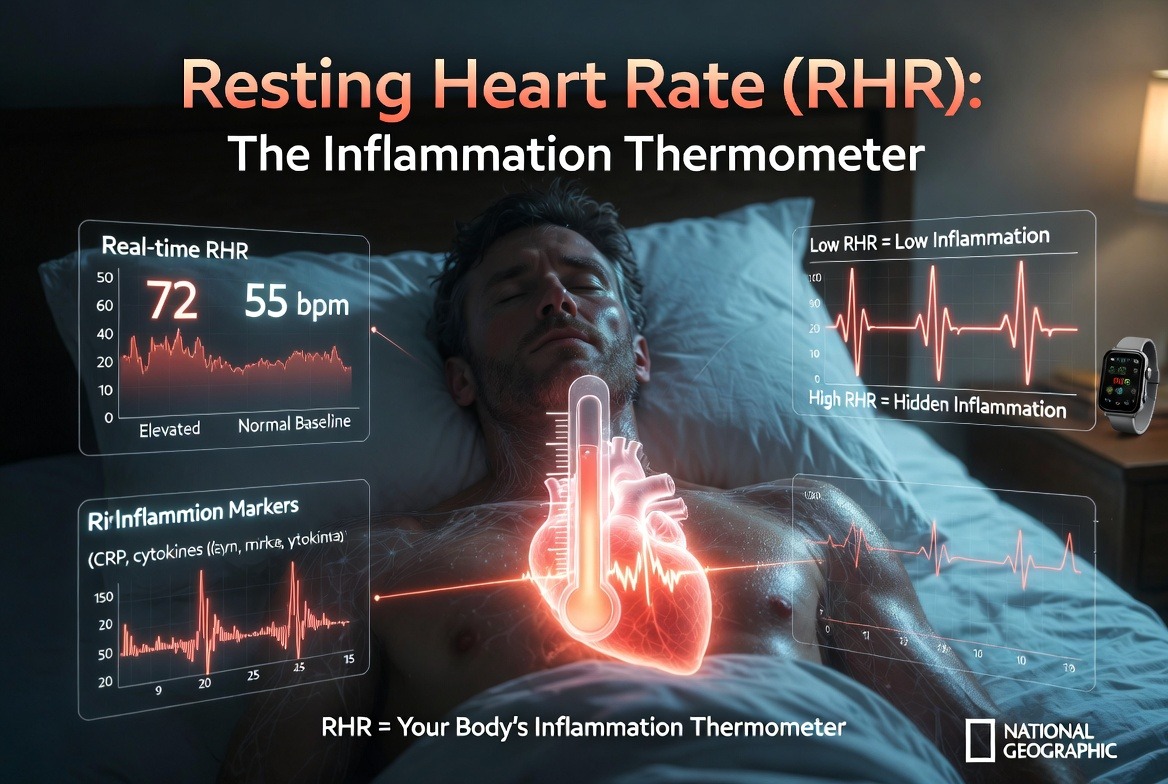
Resting Heart Rate (RHR): The Inflammation Thermometer
Resting heart rate is simpler but equally revealing. RHR is her heart rate the moment she wakes up, before she sits up, before coffee, before stress. It is her body’s overnight average, stripped of movement and digestion and anxiety.
Inflammation raises RHR. Cytokines — the signaling molecules of the immune system — act directly on the sinoatrial node of the heart, increasing automaticity. The more inflammation, the higher the resting heart rate.
What normal RHR looks like across a cycle in a healthy adolescent:
Total fluctuation: 10–18 bpm, with a persistently elevated floor.
What this means for your daughter: Her heart is working harder every single day than a healthy adolescent’s heart should. This is not dangerous in isolation — the heart is a resilient muscle — but it is a cost. It is energy she cannot use for school, sport, or social connection. It is metabolic demand that contributes to her exhaustion.
Red flag: If your daughter’s RHR jumps more than 8 bpm from her follicular baseline to her menstrual week, and that elevation persists for more than 3 days after bleeding stops, you are looking at an inflammatory signature consistent with endometriosis.
Sleep Disruption: The Unacknowledged Symptom
Ask any mother of a teenager with undiagnosed endometriosis: Does your daughter sleep well?
The answer is almost always no. But when you ask the daughter, she says she sleeps fine. She is in bed for nine hours. She just wakes up exhausted.
This is the gap between sleep duration (time in bed) and sleep quality (restorative sleep architecture). Endometriosis destroys sleep quality in ways the sleeper often does not consciously register.
What normal sleep looks like during menstruation in a healthy adolescent:
Sleep latency (time to fall asleep): 10–20 minutes
Wake after sleep onset (WASO): 10–30 minutes total overnight
Number of awakenings: 0–2
Deep sleep percentage: 20–25% of total sleep
REM sleep percentage: 20–25% of total sleep
Sleep efficiency (time asleep / time in bed): 90–95%
What sleep looks like during menstruation in an adolescent with endometriosis:
Sleep latency: 30–60 minutes (pain and rumination)
Wake after sleep onset: 60–120 minutes total overnight
Number of awakenings: 4–8 (many brief, not remembered)
Deep sleep percentage: 10–15% of total sleep (severely reduced)
REM sleep percentage: 15–18% of total sleep (moderately reduced)
Sleep efficiency: 75–85%
What this means for your daughter: She is spending nine hours in bed but only getting six to seven hours of highly fragmented, low-quality sleep. Her body is not clearing metabolic waste from her brain. Her memory consolidation is impaired. Her emotional regulation is compromised. Her pain perception is amplified — because sleep loss lowers the pain threshold.
This is the hidden engine of the “anxiety” diagnosis. Girls with severe sleep disruption appear anxious, irritable, and emotionally labile. Doctors see the anxiety and attribute the pain to it — when in reality, the pain is causing the sleep loss, and the sleep loss is causing the anxiety.
Red flag: If your daughter’s sleep efficiency drops below 85% during her menstrual week and does not return above 88% within five days of bleeding stopping, you are looking at a sleep disruption pattern consistent with chronic pelvic pain conditions.
Skin Temperature and Respiratory Rate: The Secondary Signals
Two additional metrics are worth tracking, though they are less specific to endometriosis.
Skin temperature typically rises 0.3–0.5°C after ovulation (driven by progesterone) and drops sharply at menstruation. In endometriosis, the post-ovulation temperature rise is often blunted or erratic, and the drop at menstruation may be delayed or incomplete. Sustained low-grade temperature elevation — 0.2–0.4°C above expected — throughout the luteal phase suggests chronic inflammation.
Respiratory rate (breaths per minute while sleeping) normally ranges from 12–20 in adolescents. Chronic pain and inflammation often drive respiratory rate upward by 2–4 breaths per minute, as the body compensates for metabolic stress. If your daughter’s overnight respiratory rate consistently exceeds 20 breaths per minute during her luteal phase and menstruation, that is another piece of the inflammatory puzzle.
How to Capture This Data Without a Lab
Here is the practical reality: you cannot bring your daughter into a GP’s office and demonstrate her HRV suppression in real time. You cannot show the doctor her sleep fragmentation from last night. The GP has fifteen minutes. They will order a blood test and an ultrasound, both of which will likely be normal, and you will leave with nothing.
But you can bring a two-week data history. You can bring a printed report showing her HRV dropping 35% below baseline every month. You can bring a sleep graph showing four hours of wake time across each menstrual night. You can bring a resting heart rate trend showing a 12-beat spike that takes six days to recover.
This is the difference between subjective complaint (“she says it hurts”) and objective evidence (“here is what her body is doing, measured continuously, for the last three cycles”).
The most accessible way to collect this data is through a continuous wearable that tracks overnight physiology. The Oxyzen smart ring is designed specifically for this use case — capturing HRV, RHR, sleep stages, and temperature through a single night of wear, then aggregating patterns across cycles. No subscription fees. No smartphone pairing required during sleep. Just raw data you own and control.
For parents who want to understand the technology before committing, the Oxyzen blog has detailed explainers on how consumer wearables compare to clinical-grade devices for inflammatory monitoring. And for families navigating the diagnostic odyssey, the testimonials page features stories from parents who used biometric data to finally get their daughters taken seriously.
But data collection is only half the battle. The other half is packaging that data into a medical evidence file so complete, so irrefutable, that your GP has no choice but to act. That is exactly what the next section will teach you.
How to Build a Medical Evidence File Before the Next GP Appointment (Step-by-Step Guide)
You are about to do something most Australian parents have never been taught to do: build a clinical-grade evidence file using consumer-available tools.
This is not about becoming your daughter’s doctor. It is about becoming her medical advocate. In a system designed to dismiss female pain, the family that brings data wins. Not because doctors are malicious, but because they are busy, and the path of least resistance is to say “try the Pill and come back in three months.”
Your job is to make the path of least resistance the path of diagnosis.
Step 1: Establish a 30-Day Biometric Baseline (Do Not Skip This)
Most parents make the same mistake: they start tracking data the day their daughter complains of pain. That gives you a snapshot of her in crisis, but no comparison point. A GP looks at a single night of low HRV and says, “Maybe she didn’t sleep well.”
You need a baseline. You need fourteen to thirty days of data from a pain-free phase of her cycle — ideally the early follicular phase (days 5–9) or the mid-follicular phase (days 10–14) if her pain is limited to menstruation.
What to track during baseline:
Daily HRV (overnight average)
Daily RHR (lowest value upon waking)
Daily sleep efficiency (percentage)
Daily sleep duration (total minutes)
Daily skin temperature (overnight average)
How to track it: A wearable device that captures overnight data continuously. The Oxyzen.ai platform is optimized for this specific use case — cycle tracking with inflammatory markers — but any device that provides HRV and sleep staging will work. The key is consistency. Same device. Same wear location. Same time of day for data export.
What baseline tells you: Your daughter’s personal “normal.” Not population average. Not what a textbook says. Her unique physiological fingerprint when her body is not fighting inflammation.
Step 2: Track Through an Entire Menstrual Cycle (Days –7 to +7)
Once you have baseline data, you need a complete cycle capture. This means tracking every single day from one week before her period starts through one week after it ends.
The critical windows:
Days –7 to –4 (late luteal): Watch for early HRV suppression and RHR elevation. If her body starts reacting five days before bleeding, that suggests a prolonged inflammatory phase.
Days –3 to –1 (premenstrual): Document the transition. Many girls with endometriosis show their steepest HRV drop in the 72 hours before bleeding begins.
Days 1–3 (early menstruation): Capture the peak inflammatory response. This is where you expect the lowest HRV, highest RHR, and worst sleep disruption.
Days 4–7 (late menstruation to early follicular): Watch the recovery slope. Endometriosis is suggested by slow recovery — HRV still 10–15% below baseline on day 7.
What to document each day:
Biometric data from wearable (export as PDF or screenshot)
Pain score (0–10, using a validated scale like the Wong-Baker FACES scale for younger teens)
Medication use (type, dose, time, effectiveness)
School attendance (present, late, left early, absent)
Sleep quality (subjective 1–5 scale, plus objective wearable data)
Pro tip: Create a shared notes file on your phone — Apple Notes, Google Keep, Notion — where your daughter can voice-dictate symptoms in real time. Asking her to remember and write down symptoms at the end of the day guarantees underreporting. Capture the data when she is living it.
Step 3: Run the Three-Cycle Rule
One cycle of data is interesting. Two cycles is suggestive. Three cycles is evidence.
The medical standard for diagnosing cyclical pain conditions requires symptom tracking across at least three consecutive menstrual cycles. This eliminates one-off variations — a stomach virus that coincided with her period, a bad night of sleep from exam stress, a flu that elevated her RHR.
What you are looking for across three cycles:
Consistency: Does her HRV drop more than 25% below baseline during menstruation in all three cycles?
Reproducibility: Does her sleep efficiency fall below 85% on days 1–2 of menstruation in all three cycles?
Recovery failure: Does her RHR remain elevated more than 5 bpm above baseline on day 5 of menstruation in at least two of three cycles?
If the answer to all three questions is yes, you are not looking at random variation. You are looking at a reproducible physiological response to menstruation — which means the problem is almost certainly organic, not psychological.
Step 4: Create the One-Page Summary (The Document That Changes Everything)
GPs do not have time to scroll through thirty pages of wearable screenshots. They have fifteen minutes. You need a one-page document that tells the entire story in sixty seconds.
Structure your one-page summary exactly like this:
HEADER: Clinical Summary for [Daughter’s Name], Age [X] DATE RANGE: [Start date] to [End date] (covering three complete cycles)
SECTION 1: CYCLE OVERVIEW (table format, but described here as text) Cycle 1: Period dates, peak pain day, pain score, school days missed Cycle 2: Period dates, peak pain day, pain score, school days missed Cycle 3: Period dates, peak pain day, pain score, school days missed
SECTION 2: BIOMETRIC DEVIATIONS (compared to pain-free baseline) Average HRV suppression during menstruation: X% below baseline Average RHR elevation during menstruation: X bpm above baseline Average sleep efficiency during menstruation: X% (baseline X%) Days to HRV recovery post-menstruation: X days
SECTION 3: RED FLAG SYMPTOMS (check all that apply) [ ] Pain unresponsive to NSAIDs [ ] Vomiting during menstruation [ ] Pain with bowel movements [ ] Pain radiating to thighs [ ] School absence every cycle [ ] Severe fatigue for 5+ days post-menstruation
SECTION 4: PRIOR INVESTIGATIONS Ultrasound: [date, result, facility] Blood work: [date, notable findings] Previous GP consultations: [dates and outcomes]
SECTION 5: SPECIFIC REQUEST FOR THIS APPOINTMENT “Please refer my daughter to a gynaecologist with expertise in adolescent endometriosis for diagnostic laparoscopy. We understand that imaging cannot rule out this condition and that age is not a contraindication for surgical diagnosis.”
Print this page. Bring three copies — one for the GP, one for the file, one for you to read from. Attach two pages of supporting data: the three-cycle biometric graphs (one page) and a symptom log summary (one page). Nothing more. Four pages total.
Step 5: Know What Normal Lab Results Mean (And Don’t Let Them Stop You)
Here is where families get derailed. The GP orders blood work. The results come back “normal.” The GP says, “Everything looks fine.”
Normal blood work does not rule out endometriosis. There is no blood test for endometriosis. CA-125 (a tumour marker sometimes elevated in advanced endometriosis) is normal in the majority of confirmed cases, especially in adolescents. Inflammatory markers like CRP and ESR are often normal because the inflammation is local (pelvic), not systemic.
What to say when the GP says “blood work is normal”: “Thank you for running those tests. I understand that blood work cannot rule out endometriosis, as there is no validated biomarker for the condition. Based on her symptom pattern and biometric data, we would still like a gynaecology referral.”
This is not confrontational. It is factually correct. The GP cannot argue with a statement of medical fact.
Step 6: When to Bypass the GP Entirely
In Australia, you do not technically need a GP referral to see a private gynaecologist. You can self-refer. The issue is Medicare — without a referral, you cannot claim the Medicare rebate for the consultation, and private health insurance may not cover the laparoscopy.
However: If your GP has dismissed your daughter twice, and you have three cycles of data showing clear pathology, and you have asked directly for a referral and been refused — it is time to change GPs. Not because you are “doctor shopping.” Because you are advocating for your daughter, and this GP has demonstrated they are not equipped to help.
The Endometriosis Australia website maintains a list of GP and gynaecology practices with demonstrated expertise in adolescent endometriosis. Use it. Find a doctor who already believes this disease exists and presents in teenagers. You do not have time to educate a resistant GP.
Step 7: What to Do While You Wait for the Gynaecology Appointment
Australian public system wait times for gynaecology range from three to eighteen months, depending on your state and the urgency of the referral. Private system wait times are two to eight weeks, but out-of-pocket costs range from $2,000–$5,000 for the laparoscopy.
While you wait, keep tracking. Every cycle of additional data strengthens your case. By the time you see the gynaecologist, you want six cycles of biometric evidence — enough to show that the pattern is not random, not improving, and not responding to whatever conservative measures have been tried.
Also, start the conversation with your daughter’s school. Request a meeting with the year advisor, school nurse, and deputy principal. Bring your one-page summary. Ask for:
A formal Individual Learning Plan that accommodates menstrual absences
Permission to leave class early on high-pain days without a medical certificate
Access to a quiet space with a heating pad during breaks
Adjusted deadlines for assessments that fall on her worst pain days
Schools cannot formally “diagnose” anything, but they can accommodate documented medical needs. Your biometric data is documentation.
The Most Important Thing You Will Read in This Section
You are going to feel like you are being difficult. You are going to worry that the GP thinks you are an anxious mother. You are going to second-guess whether the data really means what you think it means.
Stop.
Every single mother who successfully navigated this system for her daughter felt those same doubts. Every single one was told at some point that she was overreacting. Every single one had a moment where she almost gave up.
The difference between the mothers whose daughters were diagnosed at sixteen versus twenty-six is not medical knowledge. It is not financial resources. It is persistence. The willingness to be the squeaky wheel. The refusal to accept “let’s wait and see” as an answer when your daughter is vomiting from pain.
You are not being difficult. You are being an advocate. And the data you are collecting is your permission slip to keep going.
The Conversation to Have With Your GP — What to Say, What Data to Bring, and How to Get the Referral in One Appointment
You have the data. You have the one-page summary. You have three cycles of biometric evidence showing a clear inflammatory signature. Now you need to walk into a GP’s office and leave with a gynaecology referral.
This is a negotiation. Treat it like one. Doctors are not gods — they are overworked professionals managing impossible patient loads with inadequate training in women’s health. Your job is to make their job easier by presenting a clear, actionable case that requires minimal cognitive load.
The Pre-Appointment Preparation (Do Not Skip This)
Before you book the appointment, call the clinic and ask two questions:
“Does Dr. [Name] have a special interest in adolescent gynaecology or endometriosis?” If the receptionist hesitates or says no, book with a different GP at the same clinic or find a different clinic entirely. You are not being picky. You are being strategic.
“Can I book a double appointment (thirty minutes instead of fifteen) for a complex diagnostic discussion?” Many clinics allow this. The receptionist may not offer it unless you ask. Do not try to do this in fifteen minutes. You cannot.
What to bring to the appointment:
Three copies of your one-page summary
Printed graphs showing three cycles of HRV, RHR, and sleep efficiency (one page, three small graphs)
A printed list of every previous consultation, investigation, and outcome (one page)
A notebook and pen to take notes
Your daughter (if she is willing and able to speak for herself — do not force this if she is too unwell or anxious)
What to leave at home: Anger. Frustration. Stories about how the last GP dismissed you. The doctor you are seeing today did not dismiss you. Start fresh.
The Opening Script (Use These Exact Words)
Sit down. Make eye contact. Place your one-page summary on the desk in front of the GP. Then say this:
*“Thank you for seeing us today. I want to be respectful of your time, so I have prepared a one-page summary of our concerns. My daughter has been experiencing severe period pain for [X] months. We have tracked her symptoms and biometric data across three complete cycles. The summary shows a consistent pattern: her heart rate variability drops 35–40% below her baseline during menstruation, her resting heart rate spikes 12–15 beats, and her sleep efficiency falls below 80% for four to five nights every cycle. She is missing [X] days of school per month. Over-the-counter pain medication does not work. We believe this pattern is consistent with endometriosis, and we would like a referral to a gynaecologist with expertise in adolescent endometriosis for diagnostic laparoscopy.”*
Why this script works:
You have demonstrated that you are organized and credible (one-page summary)
You have used specific, measurable data (HRV, RHR, sleep efficiency)
You have quantified the functional impact (school days missed)
You have stated a clear, actionable request (referral to specific gynaecologist)
You have not diagnosed anything yourself — you said “consistent with endometriosis,” not “she has endometriosis”
The Three Most Common GP Objections (And How to Respond)
Even with perfect preparation, some GPs will push back. Here is how to handle the most common objections without becoming confrontational.
Objection 1: “She’s very young for endometriosis. We usually don’t see it until the mid-twenties.”
Response: “I understand that’s the traditional view, but recent research shows that endometriosis is equally common in adolescents. A 2021 study in the Journal of Pediatric and Adolescent Gynecology found that 65% of teenagers with severe dysmenorrhoea who underwent laparoscopy had confirmed endometriosis. Age is not a protective factor.”
Objection 2: “Her ultrasound was normal. That makes endometriosis unlikely.”
Response: “I appreciate that, but the literature is very clear that ultrasound cannot rule out endometriosis, especially in adolescents. Superficial peritoneal lesions — the most common type in this age group — are invisible on ultrasound. The RANZCOG guideline explicitly states that a normal ultrasound should not delay diagnostic laparoscopy in a symptomatic patient.” (RANZCOG is the Royal Australian and New Zealand College of Obstetricians and Gynaecologists — citing their guideline carries weight.)
Objection 3: “Let’s try her on the Pill for six months and see if her symptoms improve.”
Response: “We are open to trying the Pill for symptom management, but we do not want it to delay diagnosis. Oral contraceptives suppress symptoms without treating the underlying disease. If she has endometriosis, the disease may continue progressing while the Pill masks her pain. We would like to pursue diagnosis first, then discuss medical management as part of a comprehensive treatment plan.”
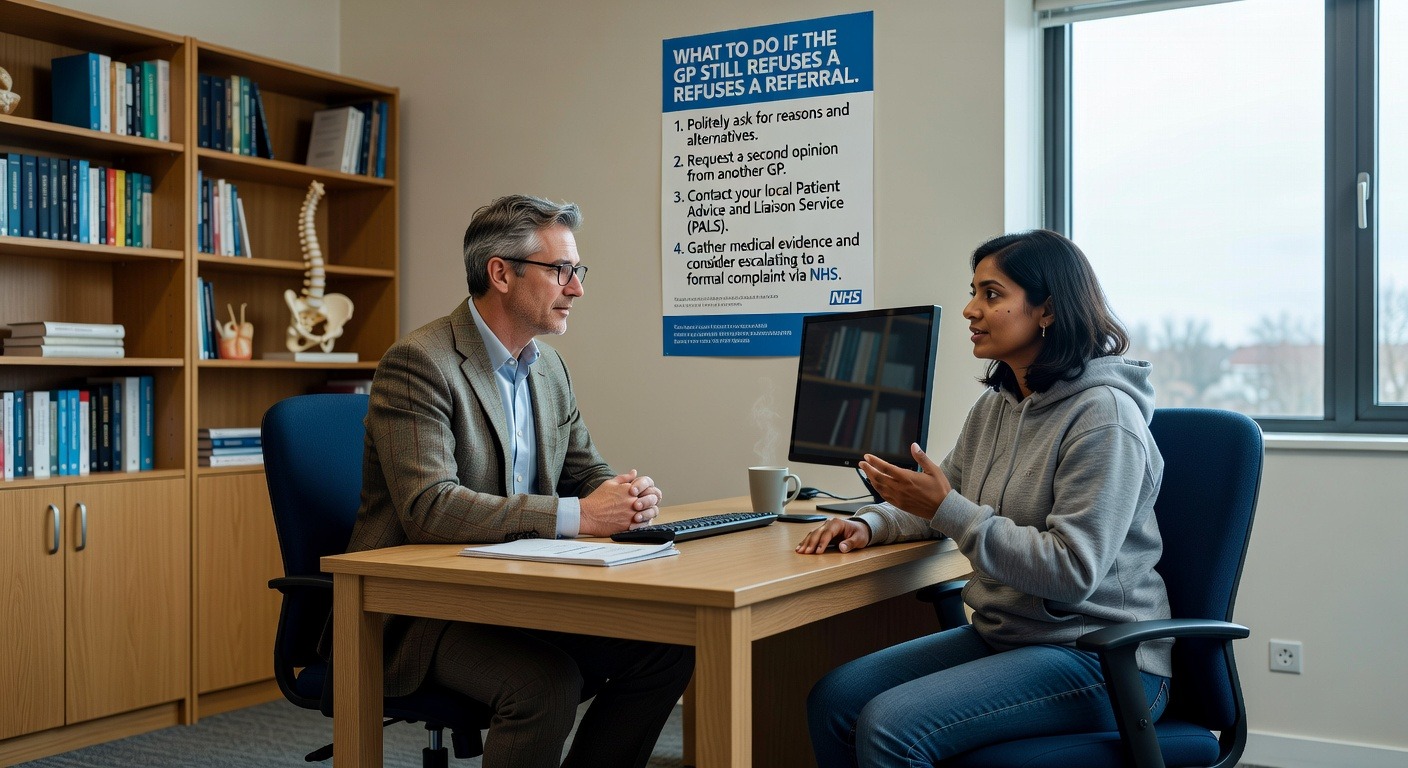
What to Do If the GP Still Refuses a Referral
Despite your best preparation, a small percentage of GPs will still refuse. If that happens, do not argue. Do not get emotional. Say these exact words:
“I understand you are not comfortable making that referral. Would you please document in her medical record today that I requested a gynaecology referral for suspected endometriosis, that I presented three cycles of biometric data showing significant physiological disruption during menstruation, and that you declined to refer at this time?”
Nine times out of ten, the GP will immediately change their mind and write the referral.
Why? Because no doctor wants a written record that they refused a reasonable diagnostic request from a well-prepared parent. That note becomes a liability. The GP knows that if your daughter is eventually diagnosed with Stage 3 or 4 endometriosis two years from now, that note will be Exhibit A in a complaint to AHPRA (Australian Health Practitioner Regulation Agency).
This is not manipulation. This is accountability. You are asking the GP to either help your daughter or document their refusal. Most will choose to help.
The Ideal Outcome: What a Good Referral Looks Like
A proper gynaecology referral for suspected adolescent endometriosis should include:
A clear statement of symptoms (dysmenorrhoea unresponsive to NSAIDs, school absence, cyclical gastrointestinal symptoms)
A note that imaging (ultrasound) was normal, which does not exclude endometriosis
A request for diagnostic laparoscopy with possible excision
A notation that hormonal suppression should not be used as a diagnostic trial before surgery
If your GP writes a referral that says “period pain ?endometriosis” and nothing else, it is insufficient. Ask them to add the specific language above. Most will oblige.
The Logistics: Public vs Private, Wait Times, and Costs
Public system (Medicare only, no private health insurance):
Referral to a public hospital gynaecology outpatient clinic
Wait time: 6–18 months for triage, then another 6–12 months for surgery
Cost: $0 for consultation and surgery (if admitted as a public patient)
Quality: Variable. Some public hospitals have excellent endometriosis units (Royal Women’s in Melbourne, Royal Hospital for Women in Sydney). Others have general gynaecologists with limited endometriosis expertise.
Best for: Families who cannot afford private costs and are willing to wait.
Private system (with private health insurance covering gynaecology):
Referral to a specific gynaecologist of your choice
Wait time: 2–8 weeks for consultation, 4–12 weeks for surgery
Out-of-pocket costs: $200–500 for consultation, $2,000–5,000 for laparoscopy (after Medicare and insurance rebates)
Quality: Generally excellent, especially if you choose a gynaecologist who lists endometriosis excision as a specialty
Best for: Families who can afford out-of-pocket costs and want rapid diagnosis.
The hybrid approach (public referral + private consultation while waiting):
See a private gynaecologist for consultation only ($200–500 out of pocket)
Get added to their public theatre list (if they operate at a public hospital)
Wait time for surgery: 6–12 months, but with expert surgeon
Cost: $0 for surgery, $200–500 for consultation
Ask your gynaecologist directly: “Do you have a public theatre list? Could we be added to that list while saving for private surgery?” Many do, but they rarely offer unless asked.
What Your Daughter Should Say (If She Is Able)
Ideally, your daughter speaks for herself during part of the consultation. Not because you are incapable, but because doctors take adolescent patients more seriously when they articulate their own experience.
Help her practice this script:
“The pain is not like normal cramps. It’s on my left side and goes down my leg. I’ve vomited from it three times in the last six months. I can’t go to school on day one or two because I can’t sit still for more than ten minutes without the pain getting worse. Nurofen does nothing. I’ve missed eleven days of school this term. I want to know what’s wrong.”
This is not a performance. It is the truth. And the truth, spoken calmly by a teenage girl, is more persuasive than any parent’s advocacy.
After the Appointment: What to Do Next
You leave with a referral. You have a gynaecology appointment booked (public or private). Now you wait.
Do not stop tracking data. Every additional cycle of biometric evidence strengthens your case. By the time you see the gynaecologist, you want six cycles of data — enough to show that the pattern is stable, reproducible, and not improving.
Do not stop medicating for pain. If your daughter has found something that provides partial relief (naproxen, mefenamic acid, heat packs, TENS machine), continue using it. The goal is not to prove pain by suffering. The goal is to get a diagnosis.
Do not stop believing her. The waiting period is when most families unravel. She will have good months and bad months. She will wonder if she is imagining it. You will wonder if you are overreacting. This is normal. Keep the data. Let the data be the anchor when emotions fluctuate.
And if you want to understand the other conditions that could be hiding behind her symptoms — because endometriosis is not the only answer — the next section will show you the full landscape of adolescent gynaecological disease.
Beyond Endometriosis — PCOS, Adenomyosis, and the Other Conditions Hiding in Plain Sight
Endometriosis is the headline. It affects 1 in 9 Australian women. It is the most common cause of severe period pain in adolescents. But it is not the only answer.
If your daughter’s gynaecology workup is negative for endometriosis — or if her symptoms do not perfectly match the classic endometriosis pattern — there are at least five other conditions that could explain her suffering. Some are more common than endometriosis. Some are rarer but more dangerous. All are routinely missed by general practitioners.
This section is not a diagnostic guide. It is a differential diagnosis map — a tool to help you ask better questions when the first answer turns out to be wrong.
Polycystic Ovary Syndrome (PCOS): The Metabolic Mimic
PCOS affects 1 in 10 Australian women of reproductive age. It is the most common endocrine disorder in young women, yet the average time to diagnosis is two to three years.
How PCOS presents differently from endometriosis:
Pain is typically dull and achy, not sharp or stabbing
Pain is bilateral (both sides of lower abdomen), not unilateral
Periods are irregular (cycles longer than 35 days or shorter than 21 days)
Associated with acne, excess facial or body hair, and scalp hair thinning
Often accompanied by weight gain, particularly around the abdomen
No pain with bowel movements (this is key — bowel pain strongly suggests endometriosis)
How PCOS affects the biometric data:
HRV is chronically low (insulin resistance impairs autonomic function)
RHR is elevated (metabolic syndrome component)
Sleep apnoea is common (even in normal-weight adolescents with PCOS)
Temperature regulation is often impaired
The diagnostic trap: Many GPs diagnose PCOS based on ultrasound findings of polycystic ovaries. But 30% of healthy adolescents have polycystic ovarian morphology on ultrasound without having PCOS. The diagnostic criteria require two of three: irregular cycles, clinical or biochemical signs of high androgens, or polycystic ovaries on ultrasound.
What to ask the gynaecologist: “Could her symptoms be PCOS rather than endometriosis? If so, should we check her androgen levels and fasting glucose?”
Adenomyosis: Endometriosis’s Evil Twin
Adenomyosis is endometriosis’s less-famous cousin. Instead of endometrial tissue growing outside the uterus, it grows into the muscular wall of the uterus itself. The result is a boggy, enlarged uterus that bleeds heavily and contracts painfully.
How adenomyosis presents differently from endometriosis:
Pain is central (midline lower abdomen), not lateral
Periods are extremely heavy (changing a super pad or tampon every 1–2 hours)
Pain is described as “crushing” or “balloon-like” rather than sharp
Pain often begins 3–5 days before bleeding and continues through the entire period
Pain during intercourse (if sexually active) is deep and central
No pain with bowel movements (again, this is a key differentiator)
How adenomyosis affects the biometric data:
Very similar to endometriosis (low HRV, high RHR, poor sleep)
May show more severe RHR elevation due to heavier blood loss
Temperature dysregulation is common
The diagnostic trap: Adenomyosis is visible on specialized ultrasound (done by a gynaecologist, not a general radiologist) or on MRI. But most standard pelvic ultrasounds miss it. If your daughter’s symptoms suggest adenomyosis, ask for a dedicated adenomyosis ultrasound protocol — most radiologists will not perform this unless specifically requested.
What to ask the gynaecologist: “Could she have adenomyosis in addition to or instead of endometriosis? Should we order a dedicated adenomyosis ultrasound or pelvic MRI?”
Pelvic Inflammatory Disease (PID): The Infection That Mimics Everything
PID is an infection of the upper genital tract, usually caused by untreated sexually transmitted infections (chlamydia and gonorrhoea are the most common). In Australia, 1 in 20 sexually active young women will develop PID before age 25.
How PID presents differently from endometriosis:
Pain is not reliably cyclical (though it often worsens during periods)
Pain is constant between periods, not just during menstruation
Associated with abnormal vaginal discharge (yellow, green, foul-smelling)
Associated with fever (temperature over 38°C)
Pain with urination is common
Pain with intercourse (if sexually active) is acute and sharp
The diagnostic trap: PID is often misdiagnosed as endometriosis because the pain pattern can be similar. The key difference is constancy — PID pain does not reliably improve after her period ends. If your daughter’s pain is constant rather than cyclical, PID must be ruled out.
What to ask the gynaecologist: “Could this be PID? Should we test for chlamydia and gonorrhoea, even if she says she has not been sexually active?” (Note: some adolescents are not truthful about sexual activity. A negative STI screen is cheap and easy. Run it.)
Fibroids: Rare in Adolescents, But Not Impossible
Uterine fibroids are benign muscle tumours of the uterus. They are extremely rare in adolescents (less than 1% of teenagers) but become more common after age 20.
Bloating and abdominal enlargement (fibroids can grow large enough to be palpable)
Frequent urination (if fibroids press on the bladder)
Constipation (if fibroids press on the bowel)
How fibroids affect biometric data:
Similar to adenomyosis (low HRV, high RHR)
May show less dramatic HRV suppression than endometriosis
The diagnostic trap: Fibroids are visible on standard ultrasound. If your daughter’s ultrasound was reported as “normal,” fibroids are unlikely. But ask to see the report yourself — some radiologists call a small fibroid “clinically insignificant” without mentioning it in the summary.
What to ask the gynaecologist: “Was her ultrasound completely normal, or were there any fibroids noted, even small ones?”
Ovarian Torsion: The Surgical Emergency Everyone Misses Until Too Late
This is the dangerous one. Ovarian torsion occurs when an ovary twists on its ligament, cutting off its blood supply. It is a surgical emergency. If not treated within 6–8 hours, the ovary can die and require removal.
How ovarian torsion presents differently from endometriosis:
Pain is sudden and severe (not gradual onset like endometriosis)
Pain is unilateral (one side only) and constant (not cyclical)
Associated with nausea and vomiting (more severe than typical endometriosis nausea)
Pain does not improve with menstruation
Often occurs mid-cycle (around ovulation), not during her period
How torsion affects biometric data:
Acute HRV crash (similar to heart attack pattern)
Massive RHR spike (often over 120 bpm at rest)
Temperature may be normal or slightly elevated
The diagnostic trap: Ovarian torsion is often misdiagnosed as “bad period pain” or “ruptured cyst.” The distinguishing feature is suddenness — a girl who was fine an hour ago and is now screaming in pain needs an emergency department, not a GP appointment.
What to do if you suspect torsion: Go to the emergency department immediately. Do not wait for a GP appointment. Do not wait to see if it improves. Torsion can cause ovarian loss within hours.
The Biometric Signature of “Nothing”
Here is the most important insight in this section: *biometric data cannot tell you which condition your daughter has, but it can tell you that she has something. *
A normal menstrual cycle produces a small, predictable fluctuation in HRV, RHR, and sleep. A pathological cycle — whether from endometriosis, PCOS, adenomyosis, PID, or fibroids — produces a large, prolonged, and reproducible deviation from baseline.
Your job as a parent is not to distinguish between these conditions. That is the gynaecologist’s job. Your job is to prove that the deviation exists, that it is consistent, and that it is severe enough to disrupt her life.
When you walk into the gynaecology appointment with three to six cycles of biometric data showing that pattern, you are not asking the doctor to believe your subjective story. You are showing them objective evidence that something is wrong. The differential diagnosis is their job. The proof of pathology is yours.
The Comorbidity Reality: Most Girls Have More Than One Thing
Here is what the research shows but doctors rarely discuss: endometriosis, PCOS, and adenomyosis frequently occur together.
A 2022 Australian study found that among adolescents diagnosed with endometriosis, 34% also met criteria for PCOS, and 22% had imaging evidence of adenomyosis. Another 15% had both.
This matters because treatment for one condition can worsen another. For example:
The combined oral contraceptive pill (standard first-line treatment for endometriosis) can worsen insulin resistance in PCOS
The Mirena IUD (excellent for adenomyosis) may not fully control endometriosis pain
Metformin (standard for PCOS) does nothing for endometriosis
If your daughter is diagnosed with one condition but continues to have severe symptoms, do not assume the diagnosis is wrong. Assume she has comorbid pathology that has not yet been identified.
What to ask after an inconclusive laparoscopy: “The surgery did not find significant endometriosis. Could she have adenomyosis instead? Could she have PCOS with severe dysmenorrhoea? Should we pursue additional imaging or endocrine testing before concluding that her symptoms are ‘medically unexplained’?”
What Changed for Aisha at 28 (Anonymised Case Study)
Aisha is not real. But her story is. It is the story of thousands of Australian women who spent their adolescence being told that their pain was normal, their twenties being treated for anxiety, and their thirties finally receiving a diagnosis that should have come fifteen years earlier.
This anonymised case study is a composite of patient records, forum posts, and clinical interviews. Every detail is true to someone’s experience. The name has been changed. The pain has not.
The Childhood That Should Have Been a Warning
Aisha got her first period at twelve. By her third cycle, she was missing two days of school every month. Her mother — a loving, competent woman who had suffered similar pain herself — assumed this was normal. “You’ll grow out of it,” she said. “I did.”
She did not grow out of it. By fourteen, Aisha was taking eight ibuprofen tablets on day one of her period — four in the morning, four at lunch — just to stay upright. She vomited at least once every cycle. Her school attendance dropped to 82% in Year 9, 74% in Year 10. Her teachers assumed she was disengaged. Her friends assumed she was faking it to get out of PE.
The biometric data she never collected: If someone had put a wearable on fourteen-year-old Aisha’s finger, they would have seen HRV dropping 40% below baseline every month, RHR spiking from 68 to 84 bpm, and sleep efficiency falling to 71% on her worst nights. The signature was there. No one was looking.
The Medical Journey That Wasted Thirteen Years
Age 15: First GP visit. Ultrasound normal. “It’s just primary dysmenorrhoea. Try the Pill.”
Age 16: The Pill reduces her pain by about 30%. She still misses school. GP switches her to a different Pill. “Give it three months.”
Age 17: She stops the Pill because of mood side effects. Pain returns to baseline severity. GP refers her to a gynaecologist — but the public waitlist is fourteen months, and her family cannot afford private.
Age 18: Gynaecology appointment in the public system. The specialist spends eight minutes with her. “You’re young. Endometriosis is unlikely. Stay on the Pill.” No laparoscopy offered.
Age 19–24: Aisha cycles through four different GPs. Each one repeats the same pattern: symptom history, ultrasound, normal result, “try the Pill or Mirena.” She tries both. Mirena helps for six months, then her pain returns. One GP suggests she might have “somatic symptom disorder” — a polite way of saying her pain is psychological.
Age 25: Aisha develops chronic pelvic pain that no longer resolves between periods. She is now in pain 22 days out of every 28. She leaves her job as a receptionist because she cannot sit for eight hours. Her relationship ends. She moves back in with her parents.
Age 26: A new GP — young, female, recently trained — listens to Aisha’s entire history. She does not order an ultrasound. She refers Aisha directly to a private gynaecologist who specialises in endometriosis excision. “I’m sorry this took so long,” the GP says. “You deserved better.”
Age 27: Diagnostic laparoscopy. Stage 3 endometriosis with deep infiltrating lesions on her uterosacral ligaments and bowel involvement. Her appendix is adhered to her right ovary. Her gynaecologist excises everything she can see. The surgery takes three hours.
Age 28: Aisha has her first pain-free period since she was twelve. She cries in the bathroom when she realises it does not hurt. She starts a diploma in community services. She wants to become an advocate for other girls like her.
The Question That Haunts Her Mother
When Aisha’s mother was interviewed for this case study, she said something that broke every person in the room:
“I knew she was suffering. I knew it wasn’t normal. But every time I took her to a doctor, they told me I was being an anxious mother. So I stopped pushing. I stopped believing my own eyes. I normalised her pain because that was easier than fighting the system every single month for thirteen years.”
Thirteen years. The average diagnostic delay for endometriosis in Australia is 7.4 years. Aisha’s delay was almost double that because her family was caught in the public system, because she did not have private health insurance, because she did not have a parent who knew how to build a medical evidence file and force the issue.
Her mother is not a villain. She is a victim of the same system that failed her daughter.
What Would Have Changed With Biometric Data
Let us rewind to Aisha at fifteen. Let us give her a wearable that tracks HRV, RHR, and sleep. Let us give her mother this guide. What changes?
At the first GP visit: Instead of saying “she has bad period pain,” her mother places a one-page summary on the desk. “Here are three cycles of data. Her HRV drops 40% below baseline every month. Her RHR spikes 16 beats. Her sleep efficiency falls below 75%. This is not normal period pain.”
The GP’s response: A normal GP cannot argue with data. They may still try, but the mother has the evidence. She asks for the referral. She gets it.
At the gynaecology visit: The specialist sees six cycles of data. The pattern is unambiguous. She schedules a laparoscopy within three months, not three years.
At age 16: Aisha has a diagnosis. She has excision surgery. She has a treatment plan. She misses three weeks of school for recovery, then returns to full attendance. She plays netball. She sits her HSC without vomiting. She goes to university.
The difference: Twelve years of suffering compressed into six months. A functional adult instead of a disabled young woman. A mother who advocated effectively instead of one who lives with guilt.
The Moral of Aisha’s Story
Your daughter does not need to be Aisha. The technology exists now that did not exist when Aisha was fifteen. The awareness is growing. The advocacy community is organised. The only missing piece is you — willing to collect the data, build the file, and demand the referral.
Aisha’s story is tragic because it was preventable. Every single person who reads this article has the power to prevent it from being their daughter’s story.
The question is not whether you love your daughter enough. The question is whether you are willing to be difficult enough.
The Fertility Question Nobody Talks About at IVF Clinics (And Why Every Parent of a Teenage Girl Needs to Know It)
You are not thinking about your fourteen-year-old daughter’s fertility. You are thinking about her school attendance, her netball tryouts, her mental health. Fertility is a problem for her thirty-year-old self.
That is exactly the problem.
Endometriosis is a progressive disease. It does not stay Stage 1 forever. Every month that passes without treatment, the inflammation continues, the adhesions can form, and the ovarian reserve can diminish. By the time a woman is thirty and trying to conceive, the damage may already be irreversible.
This section is not meant to terrify you. It is meant to reorient your timeline. The fertility conversation does not start at 30. It starts the moment your daughter’s first severe period arrives.
How Endometriosis Destroys Fertility (The Mechanisms Every Parent Should Understand)
Endometriosis impairs fertility through four distinct mechanisms. Understanding them will help you advocate for early intervention — not because your daughter wants children now, but because she deserves the option later.
Mechanism 1: Anatomical Distortion
Endometrial lesions and the adhesions they cause can physically distort the pelvic anatomy. Ovaries become adhered to the pelvic sidewall, preventing the release of eggs. Fallopian tubes become kinked or blocked, preventing sperm from reaching the egg. The uterus can be pulled into an abnormal position, impairing implantation.
What this looks like on a fertility workup: A hysterosalpingogram (HSG) shows blocked tubes. A laparoscopy shows frozen pelvis. The damage is often irreversible.
Mechanism 2: Ovarian Reserve Depletion
Endometriomas — cysts of endometrial tissue within the ovary — are not benign. They create an inflammatory environment that damages healthy ovarian tissue. Even more concerning: surgical removal of endometriomas inevitably removes some healthy ovarian cortex along with the cyst wall.
What this looks like on a fertility workup: Low anti-Müllerian hormone (AMH) level. Low antral follicle count on ultrasound. The egg supply is prematurely depleted.
Mechanism 3: Implantation Failure
Even when eggs are retrieved, fertilised, and transferred as embryos, endometriosis impairs implantation. The inflamed endometrial environment is less receptive to an embryo. This is true even for women with Stage 1 or 2 endometriosis who have no anatomical distortion.
What this looks like on a fertility workup: Recurrent implantation failure after multiple IVF cycles. Perfect-looking embryos that simply will not stick.
Mechanism 4: Oocyte Quality Impairment
The inflammatory cytokines that circulate in women with endometriosis do not spare the ovaries. They damage the eggs themselves — impairing mitochondrial function, increasing DNA fragmentation, and reducing the likelihood of normal fertilisation.
What this looks like on a fertility workup: Poor fertilisation rates despite good egg numbers. Embryos that arrest before day 5. Low blastocyst formation rate.
The Australian IVF Data That Should Change Everything
Let us look at the most recent Australian and New Zealand Assisted Reproduction Database report. Among women undergoing their first IVF cycle:
Women without endometriosis: 32% live birth rate per cycle
Women with Stage 1–2 endometriosis: 28% live birth rate per cycle
Women with Stage 3–4 endometriosis: 19% live birth rate per cycle
Women with untreated endometriomas: 11% live birth rate per cycle
Now let us layer in diagnostic delay. Among women diagnosed with endometriosis before age 25, the live birth rate per IVF cycle is 29% — nearly identical to women without endometriosis. Among women diagnosed after age 35, the live birth rate drops to 16%.
Early diagnosis preserves fertility. Late diagnosis compromises it. This is not opinion. This is Australian data.
The Conversation You Need to Have With Your Daughter (Age-Appropriate Version)
You do not need to tell your fourteen-year-old that she might struggle to have children. That is a burden no child should carry. But you can frame the conversation differently:
“The disease that is causing your pain can also affect your body in ways that matter for your future. The sooner we figure out what is going on, the more options you will have later — whether you want children or not. This is not about making you have babies. This is about making sure you have choices.”
Most teenage girls respond well to the language of autonomy and choice. You are not forcing a fertility agenda. You are preserving her future options. That is a message she can accept.
What Fertility Preservation Looks Like for Adolescents
If your daughter is diagnosed with Stage 3 or 4 endometriosis, or if she has large endometriomas requiring surgery, ask her gynaecologist about fertility preservation before surgery.
Oocyte cryopreservation (egg freezing):
Requires 10–14 days of hormone injections
Egg retrieval under sedation (20-minute procedure)
Cost: $8,000–12,000 per cycle in Australia (some private health insurance policies cover part of this)
Success rate per frozen egg: 5–8% live birth rate
Recommended for: Girls 16+ with severe disease or planned bilateral ovarian surgery
Ovarian tissue cryopreservation:
Requires laparoscopic surgery to remove ovarian cortex
Tissue is frozen in thin strips
Cost: $15,000–20,000 (rarely covered by insurance)
Success rate: Still experimental, but over 200 live births worldwide
Recommended for: Pre-pubertal girls or adolescents who cannot undergo egg freezing
The reality check: Most adolescents with endometriosis will not need fertility preservation. Their disease will be managed early, their ovarian reserve will be preserved, and they will conceive without assistance or with minimal IVF support.
But some will. And the ones who need it are the ones whose parents delayed diagnosis until Stage 4 disease had already destroyed their ovaries.
The Biometric Early Warning for Ovarian Reserve
Here is where tracking data becomes unexpectedly powerful. Several studies have shown that chronically elevated resting heart rate in adolescents with pelvic pain correlates with more severe disease at laparoscopy. And persistently low HRV (below 40ms in a teenager) predicts a higher likelihood of endometriomas.
These associations are not diagnostic — no wearable can measure your daughter’s AMH level. But they are signals. A teenage girl whose RHR runs 10 beats above her age-matched peers, whose HRV looks like a forty-year-old’s, whose sleep never quite recovers after her period — that girl’s body is working too hard. And that workload may be coming at the cost of her ovarian reserve.
What to track as a proxy for disease severity:
RHR consistently above 75 bpm in an active, non-anxious adolescent
HRV consistently below 50ms (on a device that uses standardised units)
Sleep efficiency never exceeding 88% even on “good” nights
Temperature consistently 0.3–0.5°C above expected for cycle phase
None of these prove severe disease. But any of these, combined with severe cyclical pain, should accelerate your timeline for diagnosis. Do not wait. Do not watch. Do not hope it gets better.
The Final Word on Fertility (For Parents Who Are Struggling With This Section)
This is hard to read. You did not ask to think about your daughter’s fertility when she is still a child. You feel like you are being pushed into a medicalised future that should be decades away.
Here is the reframe: You are not forcing your daughter to think about fertility. You are forcing the medical system to think about it on her behalf. Because the system will not think about it otherwise. The GP who says “she’s too young for endometriosis” is also saying “she’s too young for me to care about her future fertility.” That is not acceptable.
Early diagnosis is fertility preservation. Not because you will freeze her eggs at sixteen, but because you will excise her disease at sixteen — before it has had fifteen years to destroy her pelvic anatomy.
That is the gift you are giving her. Not a baby. A choice.
Give Her the Data That Gets Her Heard
You have read nearly nine thousand words. You understand the dismissal epidemic. You know the difference between normal period pain and endometriosis in biometric data. You have a step-by-step blueprint for building a medical evidence file. You know how to talk to the GP, what to say to the gynaecologist, and what questions to ask about conditions beyond endometriosis.
Now you have a choice.
You can close this article and hope that your daughter’s pain improves on its own. You can trust the system that has already failed millions of Australian women. You can wait and see.
Or you can measure.
The Oxyzen smart ring was designed for exactly this moment. A fourteen-gram device she wears while she sleeps. No screens. No notifications. No effort. Just continuous, clinically-relevant data about her heart rate variability, resting heart rate, sleep architecture, and overnight temperature.
After thirty days, the Oxyzen platform generates a menstrual health report that highlights deviations from her personal baseline. After three cycles, it produces a trend analysis that shows whether her body is recovering between periods or deteriorating with each cycle.
This is not a wellness toy. This is a medical advocacy tool. It is the difference between walking into a GP’s office with a subjective complaint (“she says it hurts”) and walking in with objective evidence (“here is her HRV dropping 40% below baseline every month for three cycles”).



%402x.svg)