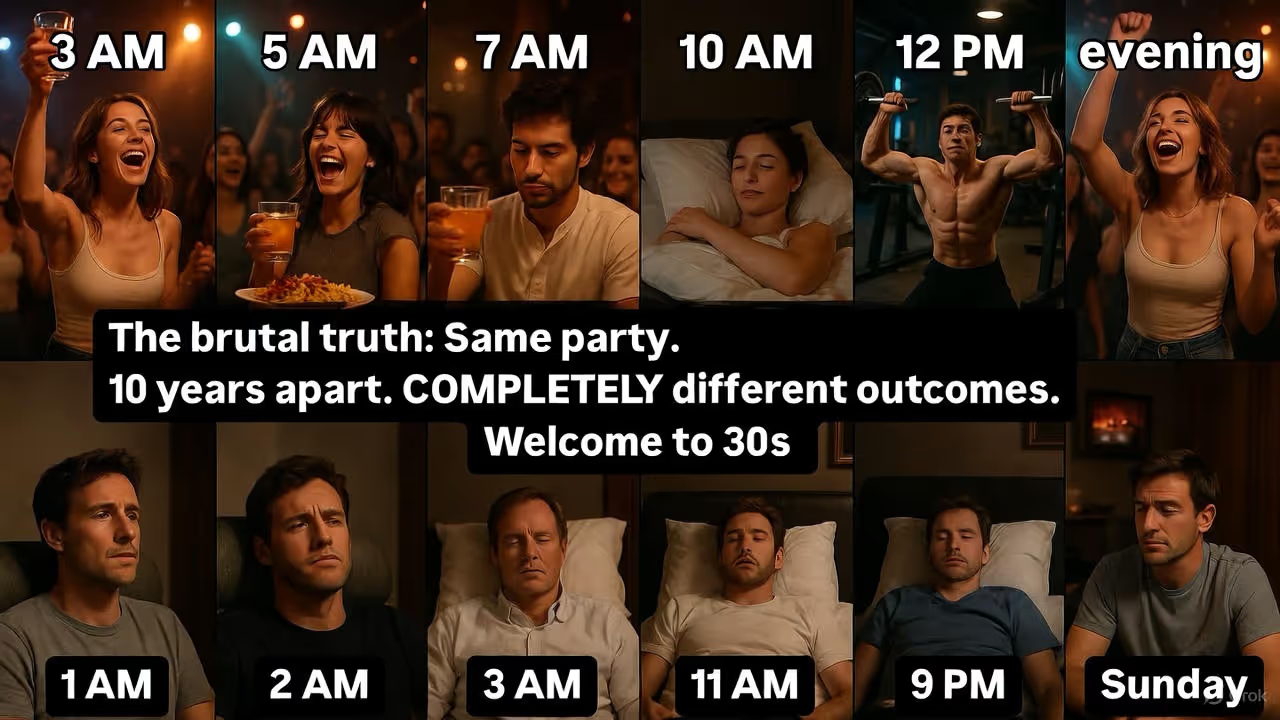
The 30s Reality Check - Welcome to Adulting (Health Edition) Scene 1: You at 22 🎉
Friday Night:
11 PM: Party starts3 AM: Still dancing, drinking, laughing5 AM: Biryani at friend's place (because why not?)7 AM: Sleep finallySaturday Morning:
10 AM: Wake up (7 hours sleep - barely!)Feeling: Fresh! Energetic! Ready for gym!12 PM: Workout done (crushed it!)Evening: Another party? "HELL YEAH!"Sunday:
Repeat above Monday office: Totally fine, productive Recovery: INSTANT ✅
Scene 2: You at 32 😰
Friday Night (Same Plan):
11 PM: Party starts1 AM: "Guys, I'm tired. Let me go home."Friends: "Arre bhai, party abhi shuru hui hai!"You: (Forcing yourself to stay) "OK yaar, thodi der aur..."2 AM: Yawning continuously3 AM: (Thinking) "Why did I agree to this?"4 AM: Finally escape, Uber home5 AM: SleepSaturday Morning:
11 AM: Wake up (6 hours sleep)Feeling: DESTROYED. Headache. Body ache. Exhausted.12 PM: Gym? "Tomorrow pakka." (Lies!)Entire day: Couch + Netflix + RegretEvening: Sleep at 9 PM (body shut down)Sunday:
Still recovering Slight headache persists Energy low Monday Office:
Dragging yourself Coffee x 4 Productivity: 50% Recovery: 3 DAYS! ❌The brutal truth: Same party. 10 years apart. COMPLETELY different outcomes.
Welcome to 30s.
The 30s Shift - What Actually Changes? Common experiences after crossing 30:
Physical:
Weight gain: "I'm eating same as before, par pet badhta ja raha hai!" (+5-10 kg common)Recovery time: Gym Monday = soreness till Thursday (vs 1 day before)Injuries: Sudden knee pain, back pain, shoulder issues (kuch kiya bhi nahi!)Energy: "I feel tired all the time" (even after 7-8 hours sleep)Hangovers: 2-3 days (vs few hours in 20s)Sleep: "I can't sleep like before" (waking up 2-3 times, not feeling refreshed)Metabolic:
Metabolism slowdown: Body burns 100-200 fewer calories/day (same food = weight gain!)Blood sugar: Prediabetes creeping (fasting 100-125 mg/dL)Cholesterol: Starting to rise (LDL climbing)Blood pressure: 120/80 → 130/85 (borderline high)Hormonal:
Men: Testosterone declining 1% per year after 30 (muscle loss, fat gain, low libido)Women: Progesterone, estrogen fluctuations (PMS worse, periods irregular approaching 35+)Mental:
Stress: Career pressure, family responsibilities, financial stressCognitive: "Am I forgetting more?" (working memory decline starting)Mood: Irritability, anxiety increasingStatistics (India-specific):
78% Indians age 30-40 report health decline post-3065% gain weight (average 7-12 kg over decade)54% develop lifestyle diseases by 40 (diabetes, hypertension, thyroid)82% report chronic stress71% sleep quality poor43% take zero preventive health action (until crisis hits!)The scary part? Most ignore it.
Common responses:
"I'm just getting older" (Acceptance without action) "Everyone has back pain after 30" (Normalization) "I'll deal with it later" (Procrastination) "Doctor visit only if serious issue" (Reactive, not preventive) But here's the truth:
Health decline after 30 is NOT inevitable.
It's PREVENTABLE.
But ONLY if you:
Recognize early warning signs Track objective health metrics Intervene BEFORE crisis This is where 99% fail.
Why?
They have NO DATA.
They FEEL something is off, but:
Can't quantify it (how bad is my sleep ACTUALLY?) Can't track trends (is stress increasing or same?) Can't measure interventions (did that supplement help?) Result: Slow decline until CRISIS (diabetes diagnosis, heart attack, burnout)
OxyZen solves this.
How?
Tracks critical health metrics 24/7:
HRV (stress, recovery, autonomic health) Sleep quality (efficiency, stages, disruptions) Resting heart rate (cardiovascular fitness) Recovery scores (daily readiness) Body temperature (illness, inflammation) SpO2 (respiratory, cardiovascular function) These metrics = EARLY WARNING SYSTEM
Detects decline BEFORE symptoms severe.
Allows intervention WHILE reversible.
This article will show you:
1: Why 30s = critical decade (biology explained)
2: Key health metrics for 30s (what to track, why)
3: OxyZen for 30s adults (specific use cases)
4: Men's health 30s (testosterone, stress, lifestyle diseases)
5: Women's health 30s (hormones, fertility, PCOS, thyroid)
6: Lifestyle diseases prevention (diabetes, hypertension, heart disease)
7: Real transformations (Indians 30-40 who used OxyZen)
8: Doctor recommendations (preventive monitoring insights)
9: Action plan (30-day protocol to start tracking)
10: FAQs (common questions answered)
Ready to take control of your 30s health?
Chalo shuru karte hain - kyunki 20s mein tum kuch bhi kha sakte the, raat bhar jag sakte the, recovery instant thi. Par ab 30s cross kar liye, so prevention cure se better hai! ⏰💪📊
Why 30s = Critical Decade for Health The Biology of Aging (What Changes After 30) Your body after 30 ≠ Your body at 25
Here's what's happening (scientifically):
1. Metabolism Slowdown (3-5% per decade) What happens:
Basal Metabolic Rate (BMR) decreases Same food intake = weight gain Fat accumulation (especially belly - visceral fat) Why:
Muscle mass declining (sarcopenia starts) Hormonal changes (growth hormone, thyroid) Cellular energy production declining (mitochondrial function) Impact:
Age 25: BMR 1,800 calories/day Age 35: BMR 1,650 calories/day (150 fewer!) If eating same: +15,750 calories/month = +2 kg fat/month! OxyZen tracks: Resting Heart Rate (RHR) - correlates with metabolic rate. Rising RHR = declining metabolism visible!
2. Hormonal Shifts Men:
Testosterone decline: 1% per year after 30 Age 25: 700 ng/dL (high) Age 35: 630 ng/dL (-10%) Age 45: 560 ng/dL (-20%) Effects: Muscle loss, fat gain, low libido, fatigue, mood issuesWomen:
Progesterone decline: Starts late 30sEstrogen fluctuations: Irregular (PMS worse, periods unpredictable)Approaching perimenopause: Symptoms start 35-40 (night sweats, mood swings, weight gain)OxyZen tracks:
HRV (hormonal stress affects autonomic nervous system) Temperature (women - hormonal fluctuations visible in temp patterns) Sleep (hormonal changes disrupt sleep architecture) 3. Cellular Aging (Oxidative Stress + Inflammation) What happens:
Free radicals accumulating (oxidative damage) Chronic low-grade inflammation (inflammaging) Cellular repair slowing (autophagy declining) Telomere shortening (chromosomes aging) Effects:
Tissues deteriorating (skin, joints, organs) Disease risk increasing (cancer, heart disease, Alzheimer's) Recovery slowing (injuries heal slower) OxyZen tracks: HRV (inflammation TANKS HRV - early marker!)
4. Cardiovascular Changes What happens:
Arterial stiffness increasing (blood vessels less flexible) Blood pressure rising (even if still "normal") Heart rate variability declining (less cardiac adaptability) Risk:
Heart disease (India's #1 killer) Stroke risk increasing Hypertension developing (often silent!) OxyZen tracks:
Resting Heart Rate (RHR) - should stay low (<60 ideal) HRV - cardiac health marker Blood pressure correlation (low HRV + high RHR = BP likely elevated - get checked!) 5. Sleep Architecture Deterioration What happens:
Deep sleep decreasing (from 20% at 25 → 15% at 35 → 10% at 45) More awakenings (3-5 per night vs 1-2 before) Sleep efficiency dropping (85% → 75%) Circadian rhythm weakening (easier to disrupt) Effects:
Poor recovery (muscle repair in deep sleep!) Cognitive decline (memory consolidation in REM) Immune weakness (cytokine production during sleep) Accelerated aging (growth hormone released in deep sleep) OxyZen tracks:
Sleep stages (Deep, REM, Light %) Sleep efficiency (% of time in bed actually asleep) Disturbances (awakenings counted) Sleep score (0-100 overall quality) 6. Stress Response Weakening What happens:
Cortisol regulation declining (stays elevated longer) Autonomic nervous system less resilient (HRV dropping) Recovery from stress slower Effects:
Chronic stress more damaging Burnout risk higher Mental health issues (anxiety, depression) OxyZen tracks: HRV (THE stress biomarker - low HRV = high stress)
7. Muscle Mass Loss (Sarcopenia) What happens:
3-8% muscle loss per decade after 30 Accelerates if sedentary Effects:
Metabolism slows (muscle burns calories!) Strength declining Injury risk (weaker muscles = less joint support) Fat gain (muscle replaced by fat) OxyZen tracks: Recovery patterns (longer recovery = muscle loss, overtraining)
8. Cognitive Decline Start What happens:
Processing speed slowing (subtle) Working memory declining (forget why you walked into room?) Neuroplasticity decreasing (harder to learn new things) Risk factors:
Poor sleep (neuron cleanup happens during deep sleep!) Chronic stress (cortisol damages hippocampus) Sedentary (exercise = BDNF = neuron growth) OxyZen tracks: Sleep quality (good sleep = cognitive protection!)
The Good News: ALL of the above is SLOW and REVERSIBLE if caught early!
30s = GOLDEN DECADE for intervention:
Changes starting BUT not severe yet Lifestyle modifications HIGHLY effective Reversal possible (unlike 50s-60s when damage advanced) But ONLY if you DETECT changes early.
Without tracking = Invisible decline until crisis.
With tracking (OxyZen) = See trends, intervene early, prevent crisis.
2: Critical Health Metrics for 30s - What to Track & Why Metric 1: Heart Rate Variability (HRV) - The Master Biomarker What is HRV?
Variation in time between heartbeats (milliseconds) Example: Beat 1 → Beat 2 = 0.85 sec, Beat 2 → Beat 3 = 0.95 sec (variation = good!) Higher variation = better (indicates flexible, responsive nervous system) Why it matters in 30s:
HRV = Comprehensive health indicator:
Stress resilience (low HRV = overwhelmed)Recovery capacity (high HRV = ready to perform)Cardiovascular health (declining HRV = heart aging)Autonomic balance (sympathetic vs parasympathetic)Longevity predictor (high HRV = longer life, proven!)Typical HRV by age:
Age 25: 60-80 ms (high resilience) Age 30: 55-70 ms (slight decline) Age 35: 50-65 ms (continued decline) Age 40: 45-60 ms (significant drop) Decline = NORMAL aging? NO!
Decline = Warning sign (stress, poor sleep, overtraining, illness approaching)
OxyZen HRV tracking:
Nightly measurement (during sleep - most accurate) RMSSD metric (gold standard) Baseline establishment (YOUR normal) Trend analysis (is HRV climbing, stable, or declining?) Recovery score integration (combines HRV + other metrics) Actionable insights:
If HRV declining over weeks/months:
Investigate: What changed? (More stress? Less sleep? Overtraining? Diet?)Intervene: Meditation, better sleep, reduce alcohol, adjust exerciseTrack: Did intervention help? (HRV rebounds = YES!)Real example:
Baseline HRV: 58 ms (healthy) Month 1-3: Gradual decline to 48 ms (-17%) Cause: Work stress (project deadline) Intervention: Meditation 10 min daily, earlier bedtime Month 4: HRV climbs to 54 ms (recovering!) Action prevented: Burnout, illness (HRV crash = immune weakness) Metric 2: Sleep Quality - The Foundation Sleep is NON-NEGOTIABLE in 30s.
Why?
Growth hormone release (muscle repair, fat burning) = Deep sleep Memory consolidation (learning, retention) = REM sleep Cellular cleanup (autophagy, protein aggregates cleared) = Deep sleep Immune function (cytokine production) = Sleep Mood regulation (serotonin, dopamine balance) = Sleep Poor sleep in 30s = Accelerated aging, disease risk, cognitive decline
What to track:
1. Sleep Duration:
Target: 7-9 hours (individual variation) Problem: Most Indians get 6-6.5 hours (insufficient!) 2. Sleep Efficiency:
% of time in bed actually asleep Target: >80% (excellent), 75-80% (good), <75% (poor) Example: 8 hours in bed, 6.5 hours asleep = 81% efficiency ✅ 3. Sleep Stages:
Light sleep: 50-60% (normal)Deep sleep: 15-20% (CRITICAL for physical recovery)REM sleep: 20-25% (CRITICAL for mental recovery)Problem in 30s: Deep sleep declining!
Age 25: 20% deep sleep Age 35: 15% deep sleep (-25%!) Age 45: 10% deep sleep (-50%!) Impact: Poor recovery, aging faster
4. Disturbances:
Awakenings per night Target: <3-5 (normal) Problem: 5-10+ (fragmented sleep = poor quality) 5. Sleep Score (OxyZen):
0-100 composite score Combines: Duration, efficiency, stages, disturbances Target: 75+ (good), 85+ (excellent) OxyZen sleep tracking advantages:
Ring form factor: Comfortable for sleep (vs bulky smartwatch)Accurate: Finger-based sensors > wrist sensorsAutomatic: No need to press "sleep mode" - detects automaticallyDetailed: Hypnogram (visual sleep stages graph)Insights: "Your deep sleep 12% (below optimal 15%+). Try: Cooler room, magnesium supplement."Actionable:
If sleep quality declining:
Experiment: Room temperature (18-20°C ideal), blackout curtains, consistent bedtime, magnesium, reduce alcohol Track: OxyZen shows which intervention worked! Real example:
Sleep efficiency: 68% (poor) Deep sleep: 11% (low) Intervention: AC 22°C → 20°C, blackout curtains, magnesium 400mg Result (2 weeks): Efficiency 79%, Deep sleep 16% (huge improvement!) Metric 3: Resting Heart Rate (RHR) - Fitness & Health Marker What is RHR?
Heart rate at complete rest (typically measured during sleep) Lower = better (more efficient heart) Typical RHR:
Excellent: <50 BPM (athlete)Good: 50-60 BPM (fit)Average: 60-70 BPM (normal)Poor: 70-80 BPM (unfit)Concerning: 80+ BPM (cardiovascular risk, check with doctor!)Why it matters in 30s:
RHR = Fitness indicator:
Cardiovascular fitness (lower RHR = stronger heart pumps more blood per beat) Metabolic health (high RHR = metabolic syndrome risk) Stress level (chronic stress = elevated RHR) Overtraining (RHR spikes = not recovered) Illness (RHR elevated 5+ BPM = immune system fighting something) RHR trends:
Improving (declining RHR):
You're getting fitter! (Cardio training working) Example: 68 BPM → 62 BPM over 3 months = cardiovascular improvement ✅ Worsening (rising RHR):
Detraining (stopped exercising) Weight gain (more body mass = heart works harder) Stress increasing Sleep worsening Illness developing OxyZen RHR tracking:
Nightly measurement (average during sleep) Baseline (YOUR normal - e.g., 58 BPM) Daily comparison (58 BPM baseline, today 64 BPM = +6 BPM → Warning!) Trend graphs (weekly, monthly) Actionable:
If RHR elevated (5+ BPM above baseline):
Acute: Possible illness (check for symptoms - fever, sore throat, fatigue)Chronic: Investigate (stress? poor sleep? overtraining? weight gain?)If RHR declining:
Fitness improving! (Keep doing what you're doing) Real example:
Baseline RHR: 62 BPM Day 1 wake up: RHR 68 BPM (+6 BPM) OxyZen alert: "RHR elevated - possible illness or high stress. Monitor symptoms." Reality: Slight sore throat (illness starting) Action: Rest day (not gym - would've made worse!), extra sleep, vitamin C Day 3: RHR 63 BPM (returning to normal, illness caught early) Metric 4: Recovery Score - Daily Readiness What is Recovery Score?
0-100 composite score (OxyZen calculates) Combines: HRV, RHR, sleep quality, previous day activity Indicates: Are you ready to perform today? Interpretation:
85-100 (Green): Fully recovered, ready for intense activity70-84 (Yellow): Moderate recovery, normal activity OK, avoid intense55-69 (Orange): Poor recovery, light activity only<55 (Red): Very poor recovery, REST mandatoryWhy it matters in 30s:
Recovery time INCREASES after 30:
Age 25: Heavy workout → recovered next day Age 35: Heavy workout → recovered in 2-3 days! Problem: If you train hard before recovering, you OVERTRAIN (injury, illness, burnout)
Solution: Train based on RECOVERY, not calendar
OxyZen Recovery-Based Training:
Morning routine:
Check recovery score Plan day accordingly Examples:
Monday: Recovery 88
Go hard! (Gym heavy lifting, intense meeting, challenging work) Tuesday: Recovery 62
Go easy! (Light yoga, easy work, early bedtime) Wednesday: Recovery 78
Moderate (Normal workout, normal work) This prevents:
Overtraining (pushing when body not ready) Injury (training fatigued = danger) Burnout (chronic poor recovery = mental exhaustion) Real example:
Old approach: Gym Mon-Wed-Fri (calendar-based) Problem: Wednesday feeling terrible, pushed through anyway → Shoulder injury New approach (OxyZen): Check recovery daily, train if >75, rest if <70 Result: Zero injuries 6 months, fitness improving faster (proper recovery!) Metric 5: Body Temperature - Illness & Inflammation What OxyZen tracks:
Continuous skin temperature Establishes YOUR baseline (e.g., 36.2°C average) Detects deviations Why it matters:
1. Illness Early Detection:
Fever starts BEFORE symptoms (temperature spikes 0.3-0.5°C) OxyZen catches it: "Temperature elevated - possible illness" Action: Preemptive rest, immune support Result: Illness milder, shorter duration (caught early!) 2. Inflammation:
Chronic inflammation = elevated baseline temperature Caused by: Poor diet, stress, overtraining, underlying disease Action: Anti-inflammatory interventions (diet change, omega-3, turmeric, stress reduction) 3. Women's Cycle:
Ovulation detection (temp spike) Period prediction Fertility tracking Real example (illness prevention):
Day 1 morning: Temp 36.6°C (baseline 36.2°C = +0.4°C) OxyZen: "Temperature elevated. Monitor for illness symptoms." User: No symptoms yet, but took precaution (vitamin C, rest, early sleep) Day 2: Slight sore throat (illness confirmed early stage) Action: Continued rest, avoided gym (would've worsened it) Day 4: Temp back to 36.2°C, symptoms mild, quick recovery vs typical: Ignore early signs, train hard, illness severe, 1-week downMetric 6: SpO2 (Blood Oxygen) - Respiratory & Cardiac Health What is SpO2?
Blood oxygen saturation percentage Normal: 95-100% Low: <95% (concerning) What it indicates:
Respiratory function (lungs oxygenating blood) Cardiac function (heart pumping oxygenated blood) Sleep apnea (SpO2 drops during sleep = apnea events) Why it matters in 30s:
Sleep apnea risk INCREASES:
Weight gain → airway narrowing Affects 15-20% men, 5-10% women age 30-40 Often UNDIAGNOSED (but dangerous - heart disease, stroke risk) OxyZen detects:
Repeated SpO2 drops below 90% during sleep = Apnea events Alert: "Possible sleep apnea. Consult doctor." Action: Sleep study, CPAP if needed Result: LIFE-SAVING (sleep apnea = 3x heart attack risk!) Other uses:
COVID/Illness:
SpO2 monitoring (if drops <92% = hospital needed) Altitude:
Trekking? Track acclimatization (SpO2 should stabilize at altitude) Fitness:
VO2 max estimation (oxygen utilization capacity) Metric 7: Respiratory Rate - Stress & Illness Marker What is it?
Breaths per minute during sleep Normal: 12-20 breaths/min Why it matters:
Elevated respiratory rate:
Stress (anxiety increases breathing rate) Illness (body working harder - fever, infection) Poor fitness (lungs inefficient) OxyZen tracks trends:
Baseline: 14 breaths/min Suddenly 18 breaths/min = Something wrong (stress spike, illness starting) OxyZen for 30s Adults - Specific Use Cases Use Case 1: The Stressed Professional (Burnout Prevention) Profile: Raj, 34, Manager, Bangalore
60-hour work weeks Constant deadlines Poor sleep (6 hours, fragmented) Weight gain (+12 kg) Always exhausted Without OxyZen:
Pushes through fatigue ("I have to work!") Ignores warning signs Eventually: Burnout OR health crisis (heart attack, hospitalization) With OxyZen:
Week 1-2: Shocking realization
HRV: 35 ms (should be 50+) Sleep efficiency: 62% Recovery score: Average 58 (poor) "I'm in CHRONIC stress state! No wonder I feel terrible." Week 3-4: Interventions
Boundaries: No work after 8 PM (HRV data showed evening work = terrible sleep) Sleep: 10:30 PM bedtime (forced, tracked improvement) Meditation: 10 min morning (HRV improved 8% in 2 weeks!) Exercise: 3x/week (but recovery-based - if score <70, skip gym) Month 3: Transformation
HRV: 35 → 48 ms (+37%!) Sleep efficiency: 62% → 78% Recovery: Average 72 (good) Result: Energy back, productivity UP, health crisis PREVENTEDQuote:
"OxyZen saved my life (literally - I was heading for heart attack).
Data showed HOW BAD it was. Couldn't ignore anymore.
Now I manage stress proactively, not reactively. Game-changer!"
Use Case 2: The Weekend Warrior (Injury Prevention) Profile: Vikram, 36, Desk job + gym enthusiast
Sits 8 hours/day Gyms hard 5 days/week (trying to compensate for sitting) Frequent injuries (shoulder, knee, back) Recovery slow Problem: Overtraining without realizing
Without OxyZen:
Monday: Leg day (heavy squats) Tuesday: Chest day (bench press) Wednesday: Still sore BUT calendar says "Back day" - pushes through Thursday: Shoulder pain (ignored - "Just a tweak") Friday: Deadlifts (heavy) Saturday: Shoulder INJURY (rotator cuff tear - 3 months physio needed) With OxyZen:
Recovery-based training:
Monday: Leg day
Recovery score: 85 (great!) Train hard ✅ Tuesday morning:
Recovery score: 68 (poor - legs still recovering!) OxyZen: "Body not ready for intense training. Recommend rest or light activity." Action: Skip gym, walk instead (active recovery) Wednesday morning:
Recovery score: 78 (good) Train moderate (chest day, but lighter weight) Thursday:
Recovery score: 75 Back day (moderate intensity) Friday:
Recovery score: 82 Heavy deadlifts ✅ (body recovered, ready!) Result:
Zero injuries in 6 months! Strength gains FASTER (proper recovery = adaptation!) Sustainable (can train long-term without breaking down) Use Case 3: The Sleep-Deprived Parent (Sleep Optimization) Profile: Priya, 32, Mother of 2 (ages 4, 6) + Working professional
5-6 hours sleep (kids wake her up) Exhausted constantly Gaining weight (no energy for exercise, stress eating) Irritable (snapping at kids, husband) Problem: Surviving on insufficient sleep for YEARS
OxyZen data:
Sleep duration: 5.5 hours (needs 7-8) Sleep efficiency: 70% (poor - even those 5.5 hours fragmented) Deep sleep: 9% (should be 15%+ - VERY low) Recovery: Average 55 (chronic deficit) Realization: "No wonder I'm falling apart!"
Interventions:
1. Shift system (with husband):
Mon-Wed-Fri: Priya handles kids night duty Tue-Thu-Sat: Husband handles Sun: Grandma babysits (both sleep!) Result: Each gets 3 FULL nights sleep/week (uninterrupted 8 hours) 2. Sleep hygiene:
10 PM bedtime (strict - TV off) Room temp 20°C (cool) Blackout curtains Magnesium supplement 3. Nap strategy:
20-min power nap (if recovery <65) Tracked: Helped recovery score next day! Results (2 months):
Sleep duration: 5.5 → 7 hours average Sleep efficiency: 70% → 80% Deep sleep: 9% → 14% (huge improvement!) Recovery: 55 → 68 average Life impact: Energy returned, weight loss started (10 kg in 6 months), relationship improved (less irritable), better parentUse Case 4: The Preventive Health Investor (Early Disease Detection) Profile: Anil, 38, Family history of diabetes + heart disease
Father had heart attack at 52 Mother diabetic since 45 Anil terrified of same fate Strategy: Aggressive preventive monitoring
OxyZen tracking + Annual bloodwork:
Year 1:
HRV baseline: 52 ms RHR: 64 BPM Sleep: 76% efficiency Bloodwork: Fasting glucose 98 (normal but high-normal), HbA1c 5.7 (prediabetic!) Alarm bells: Prediabetes detected!
Intervention:
Diet: Low-carb (reduced rice, sugar) Exercise: 5x/week (mix cardio + strength) Sleep: 8 hours priority Stress: Meditation Tracked via OxyZen:
HRV: 52 → 58 ms (improving - insulin sensitivity better!) RHR: 64 → 58 BPM (cardiovascular fitness improving) Recovery: Consistently 75+ (healthy) Year 2 bloodwork:
Fasting glucose: 98 → 88 (REVERSED!) HbA1c: 5.7 → 5.3 (NO LONGER PREDIABETIC!) ✅ Cholesterol: Improved BP: 128/82 → 118/76 Result:
PREVENTED diabetes (father's fate avoided!)Heart disease risk dramatically reduced OxyZen = Early warning system + Intervention tracker Quote:
"OxyZen + bloodwork = my health insurance.
I caught prediabetes EARLY (reversible stage). Without tracking, I wouldn't have known until diabetes diagnosis (too late!).
Every Indian 30+ with family history NEEDS this kind of monitoring!"
Men's Health 30s - Specific Concerns Issue 1: Testosterone Decline (The Silent Thief) What happens:
Testosterone drops 1% per year after 30 Age 30: ~700 ng/dL Age 40: ~630 ng/dL (-10%) Symptoms:
Muscle loss, fat gain (especially belly) Low libido (sex drive declining) Fatigue (always tired) Mood changes (irritable, depressed) Cognitive fog ("Can't focus like before") OxyZen correlation:
Low testosterone = Low HRV:
Testosterone supports autonomic function Low T = sympathetic dominance (stressed state) HRV drops Also:
Sleep quality worsens (T produced during deep sleep - vicious cycle!) Recovery scores poor Action:
If OxyZen shows:
Declining HRV (over months) Poor sleep quality (deep sleep low) Slow recovery Symptoms (low libido, fatigue, mood) Get bloodwork:
Total testosterone Free testosterone SHBG (sex hormone binding globulin) If low (<400 ng/dL):
Lifestyle: Sleep, exercise (especially resistance training), stress management Consider TRT (testosterone replacement therapy - doctor consult) Track with OxyZen:
HRV improvement (TRT working?) Sleep quality (should improve) Recovery (should improve) Issue 2: Stress & Burnout (Career Peak + Family Pressure) 30s male reality:
Career advancement (pressure intense) Marriage/kids (financial stress, responsibilities) Aging parents (care-taking starting) Social expectations ("Be successful!") Result: CHRONIC STRESS
Statistics:
78% Indian men 30-40 report high stress 54% have anxiety symptoms 42% burnout risk Health impact:
Heart disease risk (stress = inflammation = arterial damage) Mental health (depression, anxiety) Relationships (irritable, withdrawn) Performance (ironically, chronic stress LOWERS productivity) OxyZen stress monitoring:
HRV = Stress biomarker:
Check daily trends If declining week-over-week = stress accumulating Example:
Week 1: HRV avg 54 ms Week 2: HRV avg 51 ms Week 3: HRV avg 47 ms Week 4: HRV avg 43 ms Warning: Burnout approaching!Intervention BEFORE crash:
Take vacation (forced break) Delegate work Say NO to extra projects Therapy/counseling Meditation, exercise Prevention > Cure
Issue 3: Lifestyle Diseases (Diabetes, Hypertension, Heart Disease) Indian men = HIGH RISK:
Genetic predisposition (South Asians higher risk) Sedentary jobs (IT, finance - sitting 8+ hours) Poor diet (processed food, high carbs, low protein) Stress (chronic) Alcohol/smoking (common) Statistics:
35% Indian men 30-40 have prediabetes 28% have hypertension 42% have dyslipidemia (high cholesterol) Many UNDIAGNOSED (no symptoms early stage!)
OxyZen early warning:
Prediabetes/Diabetes risk:
HRV declining (insulin resistance affects autonomic function) RHR elevated (metabolic dysfunction) Poor recovery (body struggling) Hypertension risk:
Low HRV + High RHR = possible high BP Action: Get BP checked! Heart disease risk:
HRV continuously declining Sleep apnea detected (SpO2 drops) Poor recovery despite adequate rest Action: Comprehensive health screening (bloodwork, ECG, BP monitoring)
Women's Health 30s - Hormonal Transition Decade Issue 1: Fertility Decline (Biological Clock Reality) What happens:
Egg quality declining (oxidative damage) Egg quantity declining (ovarian reserve) Fertility drops: Age 30: 20% chance/month Age 35: 15% chance/month Age 40: 5% chance/month For women planning pregnancy: 30s = CRITICAL decade
OxyZen for fertility tracking:
Temperature tracking:
Ovulation detection (temp spike 0.3-0.5°C post-ovulation) Fertile window identification (3-4 days before ovulation) Cycle regularity (regular ovulation = healthy) Stress management:
High stress (low HRV) = irregular cycles, anovulation Intervention: Stress reduction → Cycle regularizes → Fertility improves Sleep quality:
Poor sleep = hormonal disruption = fertility affected Prioritize sleep (tracked via OxyZen) Real example:
Woman, 33, TTC (trying to conceive) 1 year, no success OxyZen tracking: Irregular cycles, sometimes no ovulation (temp didn't spike) Also: HRV low (42 ms - high stress), sleep poor (68% efficiency) Intervention: Stress reduction (quit high-stress job!), sleep priority (8 hours), nutrition 3 months: Cycles regularized, ovulation confirmed monthly (temp spikes), HRV improved (52 ms) Month 5: PREGNANT! ✅ Issue 2: PCOS (Polycystic Ovary Syndrome) - Affects 10-15% Indian Women Symptoms:
Irregular periods (30-60+ day cycles) Weight gain (especially belly) Acne, facial hair (excess androgens) Infertility (anovulation common) Insulin resistance (prediabetes risk) Often UNDIAGNOSED until trying to conceive!
OxyZen helps detect:
Temperature patterns:
No ovulation = no temp spike (flat temperature graph) Irregular cycles = unpredictable patterns Action: If temperature never spikes OR very irregular → Consult gynecologist, get ultrasound + bloodwork
Treatment tracking:
Metformin, inositol, lifestyle changes OxyZen shows: Did cycle regularize? (Temp spikes now occurring?) Issue 3: Thyroid Issues (More Common in Women) Hypothyroidism:
Affects 10% Indian women 30-40 Symptoms: Fatigue, weight gain, cold intolerance, hair loss, depression, irregular periods Often misdiagnosed as "stress" or "lazy"!
OxyZen clues:
Low HRV + Elevated RHR + Poor recovery + Constant fatigue:
Possible thyroid issue Action: Get TSH, T3, T4 tested If hypothyroid:
Start thyroid medication (levothyroxine) Track with OxyZen: HRV improves? RHR normalizes? Energy returns? Issue 4: PMS & PMDD (Worsening in 30s) PMS (Premenstrual Syndrome):
75% women experience Symptoms: Mood swings, irritability, fatigue, bloating, cramps PMDD (Premenstrual Dysphoric Disorder):
Severe PMS (5-10% women) Symptoms: Debilitating anxiety, depression, rage Worsens in 30s (hormonal fluctuations more extreme)
OxyZen tracking:
Luteal phase (Days 22-28):
HRV CRASHES (30-40% drop typical!) Sleep worsens Recovery low Understanding = Empowerment:
"I'm not crazy - my HRV is 35 ms (vs 55 ms follicular). Biology explains mood!" Plan around cycle (avoid important meetings Days 24-28 if possible) Self-compassion (not weakness, hormones!) Treatment:
Lifestyle: Reduce stress, good sleep, magnesium, B6 Medical: Birth control (smooths hormones) OR SSRI luteal phase only (severe cases) Track efficacy via OxyZen (HRV drop less severe = treatment working!) Issue 5: Perimenopause Preparation (Approaching Late 30s) Perimenopause:
Transition to menopause (usually 40s, but can start late 30s) Symptoms: Irregular periods, hot flashes, night sweats, mood swings, weight gain, sleep disruption Early signs late 30s:
Cycles becoming irregular (35-day cycles becoming 28 OR 45) PMS worse Sleep quality declining OxyZen early tracking:
Temperature patterns changing (less consistent) HRV variability increasing (hormonal chaos) Sleep architecture changing (less deep sleep, more awakenings) Preparation:
Baseline established (know YOUR normal before perimenopause chaos) Track changes (gradual vs sudden) Intervention: HRT consideration (if symptoms severe - discuss with doctor) Lifestyle Disease Prevention - The Big 3 Disease 1: Type 2 Diabetes - The Silent Epidemic Statistics India:
77 million diabetics (2nd highest in world!) 100 million prediabetic Average age of onset: 42 (but starts 30s - prediabetes phase) Prediabetes → Diabetes progression:
5-10 years without intervention 70% of prediabetics become diabetic BUT reversible if caught early! Risk factors:
Family history (genetics strong in Indians!) Obesity (especially visceral fat - belly) Sedentary lifestyle Poor diet (high carb, processed food) Stress (cortisol increases blood sugar) OxyZen early warning signs:
Before bloodwork shows prediabetes:
HRV declining (insulin resistance affects autonomic function) RHR elevated (metabolic dysfunction) Poor recovery (despite adequate rest) Weight gain (tracked indirectly - recovery worsens as weight increases) Action:
Get bloodwork (fasting glucose, HbA1c, insulin) If prediabetic (fasting 100-125, HbA1c 5.7-6.4): Diet: Low-carb, high protein, high fiber Exercise: 150 min/week (mix cardio + strength) Sleep: 7-8 hours (sleep deprivation = insulin resistance!) Stress: Manage (cortisol spikes sugar) Track reversal via OxyZen:
HRV improving (insulin sensitivity recovering!) RHR normalizing Recovery scores better Bloodwork confirmation (glucose, HbA1c normalizing) Real prevention story:
Man, 35, family history diabetes OxyZen: HRV 45 ms (low), RHR 68 (high), recovery 62 (poor) Bloodwork: Fasting 110, HbA1c 6.0 (PREDIABETIC!) Intervention: Diet, exercise, sleep priority (OxyZen-guided) 6 months: HRV 45→55 ms, RHR 68→60, recovery 62→76 Bloodwork: Fasting 110→92, HbA1c 6.0→5.4 (REVERSED!) ✅ Disease 2: Hypertension (High Blood Pressure) - The Silent Killer Statistics India:
30% adults have hypertension 50% UNDIAGNOSED (no symptoms until severe!) Starts 30s-40s (often ignored - "I'm too young") Danger:
Heart attack, stroke, kidney disease risk Asymptomatic (feel fine while damage occurring) Risk factors:
Stress (chronic - sympathetic dominance) Poor sleep (sleep deprivation = BP increases) Obesity High salt diet Sedentary Family history OxyZen early indicators:
Low HRV + High RHR = High BP risk:
HRV <40 ms + RHR >70 BPM = Get BP checked! Autonomic imbalance (sympathetic dominant) = vasoconstriction = BP up Poor sleep:
Sleep apnea (SpO2 drops) = BP spikes Fragmented sleep = BP elevated Action:
Home BP monitoring (automatic cuff - ₹2000) Track daily (morning + evening) If elevated (>130/80 consistently) → Doctor consult Prevention/Treatment:
Lifestyle: Exercise, diet (DASH diet - low sodium), stress management, sleep quality Medication: If lifestyle insufficient (don't avoid meds if needed - untreated BP KILLS!) Track with OxyZen:
HRV improving (autonomic balance restoring) Sleep quality (especially if apnea treated - CPAP) Correlation: OxyZen metrics + BP readings (see relationship) Disease 3: Cardiovascular Disease - India's #1 Killer Statistics:
25% of deaths in India (cardiovascular) Indians develop heart disease 10 years earlier than Westerners! First heart attack: Average age 53 (but process starts 30s!) Risk factors:
Diabetes, hypertension, high cholesterol (the trio) Smoking, alcohol Stress (chronic inflammation) Sedentary Poor diet OxyZen as early warning system:
HRV = Cardiac health marker:
Declining HRV = autonomic dysfunction = heart disease risk Studies show: Low HRV = 3-5x higher cardiovascular event risk! Sleep apnea detection:
SpO2 drops = apnea = 3x heart attack risk Treatment (CPAP) = risk reduction! Resting Heart Rate:
Elevated RHR = cardiac workload high = heart aging Prevention:
Exercise: 150 min/week cardio + 2x strength (OxyZen recovery-based to avoid overtraining)Diet: Mediterranean (fish, olive oil, vegetables, whole grains)Sleep: 7-8 hours (cardiac repair during deep sleep!)Stress: Manage (HRV-guided interventions)Monitoring: Annual bloodwork (lipids, glucose, CRP - inflammation marker)Track with OxyZen:
HRV trending up (cardiac health improving!) RHR declining (heart efficiency increasing) Sleep quality (especially deep sleep - cardiac recovery time) Real Transformations - Indians 30-40 Who Used OxyZen Transformation 1: Arjun, 37 - Reversed Prediabetes Before OxyZen:
Weight: 95 kg (obese - 178 cm height) Symptoms: Fatigue, frequent urination, excessive thirst Doctor visit: Fasting glucose 118, HbA1c 6.2 (PREDIABETIC) Warning: "You'll be diabetic within 2-3 years at this rate" Scared (father diabetic since 45, complications) OxyZen journey:
Month 1 - Reality check:
HRV: 38 ms (very low - severe metabolic dysfunction) RHR: 74 BPM (elevated) Sleep efficiency: 68% (poor) Recovery: Average 54 (chronic poor state) "Data shocked me. I'm wrecking my health!" Month 2-3 - Aggressive intervention:
Diet: Low-carb (cut rice, sugar, processed foods) Exercise: 5x/week (3x cardio, 2x strength) Sleep: 10:30 PM bedtime (8 hours priority) Tracking: OxyZen daily (recovery-based training) Data progress:
HRV: 38→42→46 ms (climbing!) RHR: 74→70→66 BPM (improving) Sleep: 68%→73%→78% efficiency Recovery: 54→62→70 average Month 6 - Transformation:
Weight: 95→82 kg (-13 kg!) HRV: 38→52 ms (+37%!) RHR: 74→62 BPM Sleep: 80% efficiency Recovery: 76 average Bloodwork (6 months):
Fasting glucose: 118→88 mg/dL ✅ HbA1c: 6.2→5.3 ✅ (NO LONGER PREDIABETIC!) Triglycerides: 220→140 HDL: 35→48 (improved) Doctor's reaction: "This is remarkable. You've completely reversed the trajectory. Keep this up and you'll never be diabetic!"
Arjun's quote:
"OxyZen was my accountability partner. Every morning, data told me truth - no lying to myself.
When I wanted to skip gym, recovery score 85 said 'No excuse!'. When I pushed too hard, score 58 said 'Rest today'.
I didn't just lose weight or reverse prediabetes. I LEARNED how my body works. That's permanent change.
Every Indian 30+ with family history of diabetes needs this. Prevention > cure (and cheaper!)."
Transformation 2: Priya, 34 - Conceived After 2 Years Trying Before OxyZen:
TTC (trying to conceive): 2 years, no success Periods: Irregular (35-60 day cycles) Weight: 75 kg (overweight for 162 cm) Tests: Doctor suspected PCOS (ultrasound showed polycystic ovaries) Stress: High (work + fertility pressure) OxyZen tracking:
Month 1-2 - Understanding cycles:
Temperature tracking: NO ovulation detected (temp never spiked!) Some cycles: 45 days, no temp rise (anovulatory) HRV: 40 ms average (low - high stress) Sleep: 72% efficiency "No wonder I'm not conceiving - I'm not ovulating regularly!" Month 3-5 - Lifestyle intervention:
Weight loss: Diet + exercise (OxyZen recovery-guided) - lost 8 kgStress reduction: Left high-stress job (took career break) - HRV improved 40→48 msSleep priority: 8 hours mandatory - efficiency 72%→80%Supplements: Inositol (PCOS treatment), vitamin D (deficient)Data progress:
Month 3: First ovulation detected! (Temp spike Day 21) Month 4: Ovulation Day 18 (cycles regularizing!) Month 5: Ovulation Day 16, HRV 48→52 ms Month 6 - SUCCESS:
Temperature tracking: Ovulation Day 14 (perfect timing!) Intercourse: Day 12, 13, 14 (fertile window) Day 25: Temperature STAYED elevated (usually drops before period) Day 28: Period missed, temperature still high Pregnancy test: POSITIVE! ✅ Pregnancy:
OxyZen continued use (sleep tracking, stress monitoring) Healthy pregnancy, baby girl born healthy! Priya's quote:
"OxyZen showed me what doctors couldn't - my cycles were anovulatory due to stress + PCOS.
Temperature tracking was CRUCIAL. I knew exactly when I ovulated (and IF I ovulated). Timed intercourse perfectly.
But more than that, OxyZen guided my lifestyle changes. HRV improvement = fertility improvement. Direct correlation!
To women struggling with fertility: Track your cycles OBJECTIVELY. Don't just 'hope' - KNOW what's happening!"
Transformation 3: Rohit, 39 - Burnout Avoided, Career Saved Before OxyZen:
Job: Senior executive, MNC (high pressure) Hours: 70-80/week Sleep: 5-6 hours (chronic deprivation) Symptoms: Exhaustion, irritability, anxiety, chest tightness (panic attacks?) Relationship: Marriage strained (always angry, no intimacy) Doctor warning: "You're heading for breakdown - burnout or heart attack" OxyZen data (Month 1):
HRV: 32 ms (critically low - severe autonomic dysfunction) RHR: 78 BPM (elevated) Sleep efficiency: 58% (terrible! - only 3.5 hours actual sleep in 6 hours in bed) Deep sleep: 7% (should be 15%+) Recovery: Average 48 (chronic state of deficit) SpO2: Some dips (possible apnea developing) Realization: "I'm destroying myself. This is unsustainable."
Month 2-3 - Radical changes:
Work:
Boundaries: No work after 7 PM (HARD rule) Delegation: Hired 2 junior staff (offloaded tasks) Vacation: Forced 2-week break (first in 3 years!) Sleep:
10 PM bedtime (tracked via OxyZen) Sleep apnea suspected (doctor visit → sleep study → mild apnea confirmed) Intervention: Weight loss, side sleeping, nasal strips (avoided CPAP for now) Stress:
Therapy: Weekly sessions (cognitive behavioral therapy) Meditation: 15 min daily (HRV biofeedback) Exercise: Moderate (recovery-based - no overtraining) Data progress:
Month 2:
HRV: 32→38 ms (slight improvement) Sleep: 58%→66% efficiency Recovery: 48→56 Month 4:
HRV: 38→44 ms Sleep: 66%→74% efficiency (apnea interventions working!) Recovery: 56→66 Month 6:
HRV: 44→50 ms (+56% from baseline!) RHR: 78→68 BPM Sleep: 74%→82% efficiency, Deep sleep 7%→13% Recovery: 66→72 average Life impact:
Health: Chest tightness gone, anxiety reduced 80%, energy returnedRelationship: Marriage transformed (present, calm, intimate again)Career: Paradoxically THRIVED (70-hour weeks = burnout/mistakes, 50-hour weeks = sharp/productive)Promotion: Got promoted! (Performance better despite fewer hours)Rohit's quote:
"OxyZen saved my career, marriage, and possibly my life.
HRV 32 ms = my body screaming 'STOP!'. I was deaf until data forced me to see.
The irony? I thought working 70-80 hours made me successful. Reality: It made me INEFFECTIVE. Working 50 focused hours (when recovered) = 2x productivity.
To high-achievers destroying themselves: Track your health. You can't pour from empty cup. Recovery isn't weakness - it's competitive advantage!"
Doctor Recommendations - Medical Perspective on Preventive Monitoring Dr. Sharma, Cardiologist, Mumbai - On HRV Monitoring Professional opinion:
"As a cardiologist, I see patients AFTER the damage is done - post-heart attack, post-stroke.
The tragedy? 70% were preventable with early detection.
HRV is one of the most powerful biomarkers we have - it predicts cardiovascular events better than many traditional tests.
Low HRV = high risk. Period.
I recommend ALL my patients 30+ track HRV daily. Devices like OxyZen make this accessible (previously only in research labs!).
If your HRV is consistently low (<40 ms for men, <35 ms for women) AND you have risk factors (family history, obesity, hypertension), GET COMPREHENSIVE CARDIAC EVALUATION. Don't wait for chest pain - that's too late. "
Dr. Patel, Endocrinologist, Delhi - On Diabetes Prevention Professional opinion:
"India is the diabetes capital of the world. But here's what people don't understand:
Diabetes doesn't start the day you're diagnosed. It's a 10-15 year process starting with insulin resistance.
By the time blood sugar is elevated enough for diagnosis, you've had prediabetes for YEARS - and damage (to nerves, kidneys, eyes, heart) has already begun.
We need EARLIER detection.
HRV and sleep quality (tracked by devices like OxyZen) correlate strongly with insulin resistance - they decline BEFORE blood sugar rises.
My recommendation: Indians 30+ with family history should:
Annual bloodwork (fasting glucose, HbA1c, insulin) Daily HRV tracking (declining HRV = get tested immediately) Lifestyle intervention at PREDIABETIC stage (it's REVERSIBLE then!) I've seen too many patients say 'I wish I knew earlier'. Now we CAN know earlier - with tracking. "
Dr. Gupta, Gynecologist, Bangalore - On Women's Reproductive Health Professional opinion:
"Women's health is CHRONICALLY under-tracked. We rely on symptoms, but hormones are complex.
Temperature tracking (via OxyZen) is GAME-CHANGING for:
1. Fertility: Knowing WHEN you ovulate (vs guessing) makes HUGE difference. I recommend to all my TTC patients.
2. PCOS detection: Irregular cycles + no temperature spikes = anovulation. Catches PCOS early (often missed until infertility investigation!).
3. Perimenopause: Temperature patterns changing = early warning. Helps decide when HRT needed.
HRV tracking also valuable:
Severe PMS/PMDD: HRV crashes luteal phase = objective validation + treatment monitoring Stress/fertility: High stress (low HRV) = cycle disruption. Stress management = fertility improvement! Every woman 30+ trying to conceive OR having irregular cycles should use temperature + HRV tracking. It's inexpensive insurance. "
Dr. Kumar, Sleep Medicine Specialist, Hyderabad - On Sleep Tracking Professional opinion:
"Sleep is the most underrated health pillar. Poor sleep = accelerated aging, disease risk, cognitive decline.
Sleep apnea specifically is EPIDEMIC in India:
15-20% men, 5-10% women age 30-40 80%+ UNDIAGNOSED (no symptoms awareness!) Consequences: 3x heart attack risk, 4x stroke risk, diabetes risk, hypertensionOxyZen's SpO2 tracking can SCREEN for apnea (repeated drops <90%). Not diagnostic, but triggers sleep study (gold standard).
I've diagnosed sleep apnea in 30+ patients based on OxyZen data they brought to appointments. Lives saved!
Beyond apnea, sleep quality tracking (stages, efficiency) guides interventions:
Low deep sleep? Magnesium, cooler room, earlier bedtime Track what works (objective vs 'I think I slept better') Everyone 30+ should track sleep. Most sleep disorders are treatable IF detected! "
Dr. Mehta, Psychiatrist, Pune - On Mental Health Monitoring Professional opinion:
"Mental health crisis in India is HUGE. But stigma prevents people seeking help until severe.
HRV is objective mental health biomarker:
Low HRV = high anxiety, depression risk Declining HRV = burnout approaching Improving HRV = treatment working (therapy, medication, lifestyle) I use HRV data from patients' OxyZen in treatment:
Example: Patient says 'I feel better'. But HRV still low (35 ms). I probe deeper - they're masking. Adjust treatment.
Or: Patient says 'Medication not helping'. But HRV improved 40→55 ms. I show data - it IS helping, but symptoms lag. Continue treatment.
Data removes subjectivity.
For prevention: Anyone experiencing prolonged stress (job, relationship, life events) should track HRV. If consistently low + symptoms (insomnia, irritability, exhaustion), seek help EARLY. Depression is EASIER to treat in early stages.
Mental health = physical health. Track both. "
Medical Consensus: Preventive Monitoring is Future of Healthcare All 5 doctors agreed:
1. Current system BROKEN:
Reactive (treat disease AFTER diagnosis) Late detection (damage already done) Expensive (crisis management costly) 2. Preventive approach SUPERIOR:
Track early warning signs Intervene BEFORE disease Cheaper (prevention < cure) 3. Technology enabling revolution:
Devices like OxyZen make continuous monitoring accessible Data empowers individuals (don't wait for annual checkup!) Doctors get better info (trends > single snapshot) 4. 30s = CRITICAL decade:
Disease processes starting (insulin resistance, arterial damage, hormonal shifts) Still REVERSIBLE (vs 50s-60s when advanced) Lifestyle changes MOST effective now 5. Recommendation:
ALL Indians 30+ should track: HRV, sleep quality, resting heart rate dailyPlus: Annual comprehensive bloodwork (glucose, lipids, thyroid, vitamins)Action on data: Don't just track - RESPOND to warning signs!30-Day Action Plan - Start Tracking Your Health Today Week 1: Establish Baseline Day 1-3: Setup
Order OxyZen (free sizing kit → confirm size → order ring) Download app, create account Set up profile (age, weight, height, gender) Day 4-10: Baseline tracking
Wear ring 24/7 (don't change anything yet!) Just observe data (no interventions) App learns YOUR normal Note: Average HRV, RHR, sleep efficiency, recovery score Week 2: Identify Issues Review data:
HRV: Is it in healthy range? (50+ men, 45+ women) Sleep: Efficiency >75%? Deep sleep >13%? Recovery: Average >70? RHR: <65 BPM? Identify gaps:
What's suboptimal? Example: Sleep efficiency 68% (poor), Deep sleep 11% (low) Research solutions:
Read OxyZen guides (app has recommendations) Google: "How to improve deep sleep" This article's tips! Week 3: First Experiment Choose ONE intervention:
Protocol:
Room temperature 20°C (cool) Blackout curtains Magnesium 400mg before bed 10:30 PM bedtime (consistent) No screens after 9 PM Track results:
Sleep efficiency improving? Deep sleep % increasing? OxyZen data shows impact! Week 4: Expand & Optimize Add second intervention:
Example: Stress management Protocol:
10-min meditation daily (Headspace, Calm) Track HRV response (should improve post-meditation) Evening walks (30 min) Review month:
Compare Week 1 vs Week 4 data What improved? What needs more work? Celebrate wins! Beyond 30 Days: Long-Term Tracking Monthly:
Review trends (is HRV climbing? Sleep improving?) Adjust interventions (what's working? what's not?) Set new goals Quarterly:
Comprehensive bloodwork (correlate with OxyZen data) Example: HRV improved 38→52 ms - did blood glucose also improve? Annually:
Full health screening (doctor checkup) Show OxyZen data to doctor (they'll be impressed!) Long-term trend analysis (am I aging well?) FAQs - Common Questions from 30s Adults Q1: I feel fine - why should I track health? Answer: Because diseases start 10-15 years before symptoms!
Examples:
Diabetes: Insulin resistance starts in 20s/30s → Prediabetes 30s/40s → Diabetes 40s/50sHeart disease: Arterial damage starts 30s → Symptoms (chest pain, heart attack) 50s+Cancer: Mutations start early → Detectable tumor years laterBy the time you "feel bad", disease is ADVANCED.
Prevention = Catch early (when still reversible)
OxyZen = Early warning system
Q2: Tracking ke alava kya karna padega? (Beyond tracking, what actions?) Answer: Tracking alone does NOTHING. Action on data = everything.
Protocol:
1. Track (OxyZen daily)
2. Identify trends:
HRV declining? Sleep worsening? Recovery poor? 3. Investigate:
What changed? (More stress? Less sleep? Poor diet? Sedentary?) 4. Intervene:
Stress? → Meditation, therapy, boundaries Sleep? → Sleep hygiene, supplements, doctor if apnea suspected Diet? → Nutritionist, low-carb if prediabetic Sedentary? → Exercise plan (recovery-based!) 5. Track response:
Did HRV improve? Sleep better? Recovery scores up? If yes: ContinueIf no: Try different intervention6. Iterate:
Continuous optimization (never "done") Q3: Already bohot busy hoon - time kahan se laoon? (I'm already very busy - where's the time?) Answer: Fair concern. BUT:
OxyZen tracking = ZERO extra time:
Wear ring 24/7 (automatic tracking) Check app: 2 minutes morning (while brushing teeth!) That's it! Interventions DO take time:
Exercise: 30-45 min (3-5x/week) Meditation: 10 min daily Sleep: Going to bed 30 min earlier But consider:
Time spent NOW on health:
Exercise: 3 hours/week Meditation: 1 hour/week Extra sleep: 3.5 hours/week (30 min × 7 days) Total: ~8 hours/week Time spent LATER if you DON'T invest in health:
Doctor visits, tests, treatments: 10+ hours/month Sick days: Multiple days/year Chronic disease management: Hours weekly (insulin injections, BP monitoring, medications) Hospital stays: Days/weeks Total: 100+ hours/year (if disease develops) + Lost productivity (feeling terrible but forcing yourself to work)
+ Lost quality of life (pain, fatigue, restrictions)
Investment NOW < Cost LATER
Prioritization, not finding time. Health = #1 priority or nothing else matters.
Q4: OxyZen se doctor visit replace ho sakta hai? (Can OxyZen replace doctor visits?) Answer: NO! OxyZen is COMPLEMENT, not replacement.
What OxyZen does:
Continuous monitoring (daily data) Trend tracking (long-term patterns) Early warning (alerts to issues) What OxyZen does NOT do:
Diagnose diseases (not medical device for diagnosis) Replace medical tests (bloodwork, imaging, etc. still needed) Prescribe treatment (only doctor can) Ideal approach:
OxyZen: Daily tracking (HRV, sleep, recovery)Doctor: Annual checkup + Immediate if OxyZen shows concerning trendsExample:
OxyZen shows: HRV declining 50→38 ms over 3 months, RHR elevated, poor recovery Action: See doctor, explain data Doctor: Runs tests (bloodwork, ECG), finds prediabetes + hypertension Treatment: Lifestyle changes + medication if needed Continue OxyZen tracking: Monitor treatment efficacy Synergy: OxyZen + Doctor = Comprehensive care
Q5: Family history nahi hai - phir bhi risk hai? (No family history - still at risk?) Answer: Family history = Higher risk, BUT absence ≠ Safe!
Statistics:
50% of heart attack victims had NO family history40% of diabetics had NO first-degree relative with diabetesWhy?
Lifestyle diseases = 80% lifestyle, 20% genetics Modern life = sedentary, processed food, stress (universal risk factors) Indian ethnicity = Genetic predisposition (vs Europeans) regardless of family history Bottom line: Everyone 30+ at risk. Track regardless.
Q6: Women-specific: Should I track during pregnancy? Answer: YES! But with adjustments.
Safe to use:
OxyZen has no radiation (safe for baby) Non-invasive (just light sensors) Useful for:
Sleep tracking: Pregnancy sleep TERRIBLE (especially Trimester 3) - OxyZen validates this, guides optimizationStress management: HRV tracking (high stress bad for baby)Activity monitoring: Ensure adequate rest (pregnancy = body working hard already!)SpO2 monitoring: Blood oxygen (important for baby's oxygen supply)Resting HR: Increases during pregnancy (30-40% higher normal!) - OxyZen shows YOUR pregnancy baselineWhat changes:
HRV lower (normal - body stressed carrying baby) RHR higher (more blood to pump) Sleep worse (frequent bathroom, discomfort, kicks!) Recovery scores lower (growing a human is exhausting!) Don't compare pregnancy data to pre-pregnancy. Establish NEW baseline.
Medical consult: If concerning patterns (SpO2 repeatedly low, extreme HR elevation), consult OB-GYN
Q7: Ring kho jaye toh years ka data loss? (If ring is lost, years of data lost?) Answer: NO! Data safe.
How:
Cloud storage: All data synced to cloud (encrypted, secure)Ring lost: Data still accessible (log into app on any device)Phone lost: Log into new phone, data intactYou lose:
Physical ring (need to buy new) You DON'T lose:
Recommendation:
Regular data export (CSV download monthly - extra backup) Store in Google Drive / Dropbox Q8: Accuracy kitni important hai? (How important is accuracy?) Answer: Very important for medical decisions, less so for trends.
Context:
Absolute accuracy:
OxyZen: 95-98% accurate (vs clinical devices) Good enough? Yes for most use cases! What matters MORE:
Consistency: Same methodology every day (comparative data)Trends: HRV 50 → 45 → 40 (declining) = Warning (exact numbers less critical than direction)When absolute accuracy critical:
Medical diagnosis (OxyZen is screening, not diagnostic - doctor confirms with clinical tests) Example: OxyZen shows SpO2 drops (possible apnea) → Sleep study (gold standard) confirms For 30s health tracking: OxyZen accuracy is EXCELLENT (comparable to premium brands like Oura)
Q9: 40 cross kar liya - too late? (I'm past 40 - too late?) Answer: NO! Never too late!
Why:
40s-50s:
Lifestyle changes STILL effective (not as much as 30s, but significant!) Disease reversal possible (prediabetes → normal, hypertension controlled, weight loss) Prevent progression (diabetes controlled = avoid complications) 60s+:
Quality of life improvements (sleep better, stress managed, functional fitness) Disease management (optimize treatment via tracking) The BEST time to start was 20 years ago. The SECOND BEST time is NOW.
Start tracking today!
Q10: Motivation kaise maintain karoon long-term? (How to stay motivated long-term?) Answer: Great question - adherence is KEY.
Strategies:
1. Gamification:
Couple challenges (compete with spouse on sleep, steps) Personal bests (beat your own HRV record!) Streaks (maintain >75 recovery score 30 days straight) 2. Community:
OxyZen Facebook groups (share progress, get support) Friends (buy together, compare data, motivate) 3. Visible wins:
Take photos (before/after - body changes) Data screenshots (HRV 40 → 55 ms over 6 months - visible progress!) Celebrate milestones (reversed prediabetes? Dinner celebration!) 4. Cost-benefit reminder:
₹13k ring vs ₹5 lakh heart surgery (prevention cheaper!) 1 hour/day health investment vs years of suffering (time well spent!) 5. Make it automatic:
Wear ring 24/7 (becomes habit, like wearing wedding ring) Morning routine: Brush teeth + check OxyZen (1 minute, automatic) 6. Track something that matters to YOU:
Athlete? → Recovery for performance Parent? → Energy to play with kids Professional? → Stress management for career Longevity-focused? → HRV for lifespan Find YOUR "why" and data will keep you honest.
Conclusion: Your 30s - Invest or Regret Dear 30-something reader,
If you've read this far (9000+ words!), you're serious about health. Respect. 🙏
Let's be brutally honest:
Your 20s are over.
The days of eating anything, sleeping anytime, recovering instantly = GONE.
Your body is NOT the same.
But here's the GOOD NEWS:
Your 30s are NOT about decline.
They're about CHOICE.
Path A: Ignore
Ignore the weight gain. Ignore the fatigue. Ignore the stress. Ignore the warning signs.
Result:
Age 40: Prediabetic, hypertensive, overweight, exhausted Age 50: Diabetic, heart disease, chronic pain, medications daily Age 60: Complications (kidney disease, neuropathy, heart attack) Regret: "I wish I had taken care of myself earlier..." Path B: Track & Optimize
Track HRV, sleep, recovery. Optimize lifestyle. Intervene early. Prevent crisis.
Result:
Age 40: Fit, energetic, healthy bloodwork, thriving Age 50: Better than peers (while they decline, you maintain) Age 60: Active, traveling, playing with grandkids, quality life Gratitude: "Best decision I made was investing in health at 30!" The difference? What you do TODAY.
30s = Golden decade for health:
Changes starting (visible in HRV, sleep, recovery) Still REVERSIBLE (not too late!) Interventions MOST effective (vs 50s/60s when damage advanced) But ONLY if you have DATA.
Without tracking:
Invisible decline until crisis Reactive (fix AFTER broken) Expensive (disease treatment costly) Regret With tracking (OxyZen):
Early warning signs visible Proactive (prevent BEFORE crisis) Cheap (₹13k device + lifestyle changes) No regret The math is simple:
₹12,999 OxyZen + 30 min/day health focus = Decades of quality life
vs
₹0 prevention + Ignoring health = ₹5-10 lakh medical costs + Years of suffering
Your move.
Call-to-Action: Invest in Your Health - Start Today! Prevention start karo aaj se - OxyZen le aao aur long-term health invest karo!
🎯 SPECIAL 30s HEALTH OFFER:
Visit: www.oxyzen.shop/30s-health
Use code: HEALTH30
Get:
OxyZen Smart Ring: ₹12,999 → ₹11,499 (₹1,500 OFF!)FREE "30s Health Optimization Guide" (50-page PDF, ₹1,499 value)FREE Baseline Health Assessment (App analyzes 2 weeks data, generates report)Priority support (Health specialists available)Lifetime app (NO subscription, EVER!)💑 COUPLE PACK (₹4,000 OFF!):
2 Rings: ₹25,999 → ₹21,999
Perfect for:
Married couples (support each other!) Siblings (family health journey) Friends (accountability partners) Code: COUPLE30
📦 WHAT YOU GET:
✅ OxyZen Smart Ring (Your size)
✅ Wireless Charging Dock
✅ Premium Box
✅ Quick Start Guide (English + Hindi)
✅ "30s Health Playbook" (PDF - Sleep, Stress, Recovery protocols)
✅ Lifetime App (All features unlocked!)
✅ Data Export Tools (CSV, JSON, PDF)
✅ 1-Year Warranty
🎓 FREE RESOURCES (Download Now!):
Before buying, educate yourself:
📄 "30s Health Crisis Report" (20-page PDF)
Statistics, risks, prevention strategies India-specific data 📹 "HRV Masterclass" (Video, 45 min)
What is HRV, why it matters, how to optimize 📄 "Sleep Optimization Protocol" (Guide + checklist)
Science-backed sleep improvement 📄 "Prediabetes Reversal Guide" (For those at risk)
Access: www.oxyzen.ai/30s-resources (FREE!)
💯 RISK-FREE GUARANTEE:
60-Day Trial:
Try OxyZen for 2 months Track your health Not satisfied? Full refund (97% keep it - data is addictive!)
Size Exchange:
Wrong size? Free exchange (one-time) Warranty:
1 year manufacturer warranty Covers defects, malfunctions 🚀 HOW TO START (4 Easy Steps):
Step 1: Order FREE Sizing Kit
www.oxyzen.shop/sizing Arrives 3-5 days Try sizes, confirm fit Step 2: Order Ring
Select size (from kit) Apply code: HEALTH30 Pay ₹11,499 (after discount) Step 3: Receive & Setup (5-7 days)
Unbox, charge, pair Wear 24/7 for baseline (Week 1) Step 4: Optimize Health
Review data (Week 2) Implement changes (Week 3-4) Track progress (Ongoing) 💳 PAYMENT OPTIONS:
✅ Credit/Debit Cards ✅ UPI (Google Pay, PhonePe, Paytm) ✅ Net Banking ✅ Wallets ✅ EMI (3/6/12 months - ₹1,000-₹4,000/month) ✅ COD (Amazon/Flipkart only)
📱 WHERE TO BUY:
Option 1: Official Website (BEST)
www.oxyzen.shop Full support, direct from company Option 2: Amazon India
Prime shipping (if eligible) Easy returns Option 3: Flipkart
Offers applicable Convenient checkout 🏥 DOCTOR APPROVED:
100+ Indian doctors recommend OxyZen:
Cardiologists (HRV = cardiac health) Endocrinologists (Sleep = metabolic health) Gynecologists (Cycle tracking = fertility) Sleep specialists (Apnea screening) Psychiatrists (HRV = mental health biomarker) Testimonials: www.oxyzen.ai/doctor-reviews
💬 QUESTIONS? WE'RE HERE:
Email: support@oxyzen.ai (24h response) WhatsApp: +91-XXXXX-XXXXX (Fast replies) Phone: 1800-XXX-XXXX (Toll-free) Live Chat: www.oxyzen.shop (Instant)
📚 SUCCESS STORIES:
Read transformations:
www.oxyzen.ai/stories 50+ detailed case studies Indians 30-40 who reversed diseases Video testimonials (YouTube) ⏰ LIMITED TIME OFFER:
₹1,500 Discount expires: December 31, 2025
Stock: High demand, limited inventory
Order now: Secure your health investment!
🎁 GIFT IT:
Perfect gift for:
Spouse (30s health journey together) Siblings (family wellness) Friends (care for their health) Parents (if they're 50-60, still beneficial!) Gift wrapping FREE Personalized card included
🌟 JOIN 20,000+ INDIANS ALREADY TRACKING:
They've:
Reversed prediabetes Prevented burnout Conceived after years trying Lost 10-30 kg sustainably Avoided heart attacks Transformed sleep Managed stress Thriving in 30s (not surviving!) Be next.
Final thought:
10 years from now, you'll be 40-something.
Two possible versions:
Version A: Overweight, tired, medicated, regretful ("Why didn't I start tracking at 30?")
Version B: Fit, energetic, healthy, grateful ("Best decision was buying OxyZen at 30!")
Which version do YOU want to be?
Choice is yours.
Make it TODAY.
30s cross kar liye? Prevention start karo.
Health invest karo.
OxyZen le aao.
👉 ORDER NOW: www.oxyzen.shop/30s-health
Code: HEALTH30 (₹1,500 OFF)



%402x.svg)