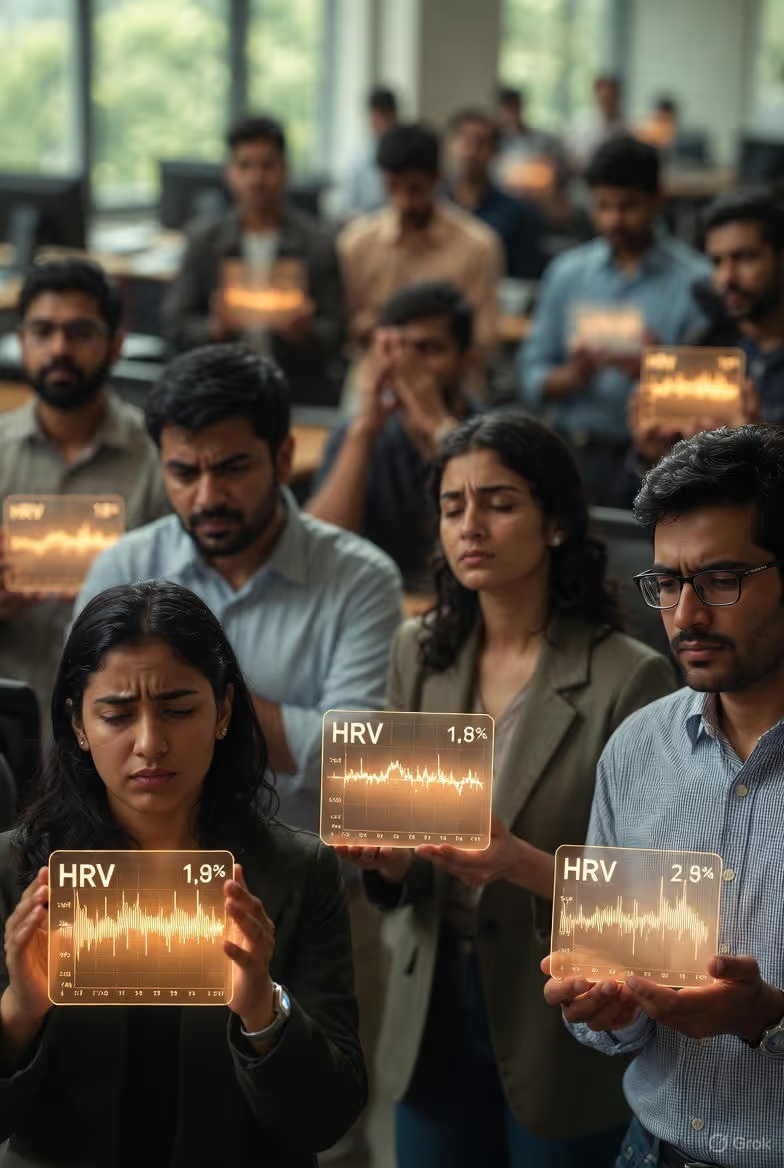
10 PM: Laptop khol liya phir se - "Kal subah deliverable toh ready karna hai"
12 AM: Bed pe collapse - but neend nahi aa rahi, kal ki anxiety
3 AM: Aankh khul gayi - heart racing, mind mein kaam ka stress
6 AM: Alarm - "Uff, already tired hoon aur din shuru bhi nahi hua"
Ye sirf ek din nahi hai. Ye har din hai.
Ye sirf aapki story nahi hai. Ye 67% Indian corporate professionals ki reality hai.
Aur sabse badi tragedy? Hum ise "normal" maan chuke hain.
Par ye normal nahi hai. Ye chronic stress hai. Ye burnout ki taraf jaane wala path hai. Ye ek silent killer hai jo tumhari health, relationships, aur career - sab kuch barbad kar raha hai.
Aur tumhe pata bhi nahi chal raha kyunki:
Symptoms gradual hain - ek din mein overnight nahi hote
Warning signs ignore kar rahe ho - "Sab ke saath hota hai yaar"
Measurement nahi hai - kitna stress hai, ye quantify nahi kar paa rahe
Par ab solution hai.
Meet OxyZen Smart Ring - tumhara personal stress detective jo 24x7 tumhare body ke stress signals monitor karta hai aur burnout se pehle warning deta hai.
Ye article tumhe batayega:
Corporate stress ka real science - body pe kya ho raha hai
HRV (Heart Rate Variability) - stress ka sabse powerful indicator
OxyZen kaise track karta hai stress levels real-time
Burnout symptoms jo OxyZen detect kar leta hai
Real case studies - Bangalore, Mumbai, Delhi ke corporate warriors
Action plan - stress se recovery ka roadmap
Ready? Chalo shuru karte hain - kyunki your health can't wait for your next appraisal cycle!
Corporate stress literally killing you - slowly, silently, systematically.
The Burnout Stages - Where Are You?
Stage 1: Honeymoon Phase ✅
New job excitement
High energy and optimism
Willing to take extra work
"Main sab handle kar lunga"
Stage 2: Onset of Stress ⚠️
Initial signs appear
Occasional bad days
Sleep slightly affected
"Thodi stress hai par manage ho jayega"
Stage 3: Chronic Stress ⚠️⚠️
Stress now constant
Procrastination increases
Physical symptoms regular
Social withdrawal begins
"Main thak gaya hoon par break nahi le sakta"
Stage 4: Burnout 🔴
Complete exhaustion (physical + emotional)
Cynicism about work
Feeling incompetent
Physical health deteriorating
"Main nahi kar sakta ab"
Stage 5: Habitual Burnout 🔴🔴
Depression sets in
Chronic mental and physical issues
Career in danger
Relationships damaged
"Mujhe nahi pata kaise bahar niklun"
Most people realize at Stage 4-5. By then, damage was done.
OxyZen detects at Stage 2-3 - BEFORE irreversible damage!
HRV - The Secret Weapon for Stress Management
What is Heart Rate Variability (HRV)?
Simple explanation: Aapka heart ek metronome ki tarah perfectly regular nahi behta. Beats ke beech time slightly vary hota hai. Ye variation hi HRV hai.
Example:
Beat 1 to Beat 2: 0.85 seconds
Beat 2 to Beat 3: 0.92 seconds
Beat 3 to Beat 4: 0.78 seconds
Higher variation = BETTER = Healthy, resilient body
Lower variation = WORSE = Stressed, exhausted body
Why HRV is THE Most Important Stress Metric
HRV reflects autonomic nervous system balance:
Autonomic Nervous System 2 parts:
1. Sympathetic (Gas Pedal) ⚡
Fight or flight
Stress response
Heart rate increase
Energy mobilization
2. Parasympathetic (Brake Pedal) 🧘
Rest and digest
Recovery mode
Heart rate decrease
Relaxation
Healthy Balance: Car smoothly chalti hai - jab zarurat gas, jab zarurat brake.
Stressed State: Gas pedal always pressed, brake barely working - car crash hoga eventually!
HRV measures this balance!
HRV Numbers - What's Good, What's Bad?
HRV measured in milliseconds (ms) - RMSSD method common
Age-based averages (approximate):
20-25 years:
Excellent: 60+ ms
Good: 45-60 ms
Average: 35-45 ms
Below average: 25-35 ms
Poor: <25 ms
30-35 years:
Excellent: 55+ ms
Good: 40-55 ms
Average: 30-40 ms
Below average: 20-30 ms
Poor: <20 ms
40-45 years:
Excellent: 50+ ms
Good: 35-50 ms
Average: 25-35 ms
Below average: 18-25 ms
Poor: <18 ms
Important: Your TREND matters more than absolute number!
HRV and Corporate Stress - The Connection
Research findings:
High HRV indicates:
✅ Low stress levels
✅ Good recovery
✅ Resilience to stressors
✅ Better emotional regulation
✅ Higher cognitive performance
✅ Stronger immune system
Low HRV indicates:
⚠️ High chronic stress
⚠️ Poor recovery
⚠️ Burnout risk
⚠️ Emotional exhaustion
⚠️ Decision fatigue
⚠️ Increased illness susceptibility
Corporate Warriors with Low HRV:
45% more sick days
60% higher attrition rate
70% more errors at work
3x more likely to burnout within 6 months
OxyZen HRV Tracking - Your 24x7 Stress Monitor
How OxyZen measures HRV:
1. Continuous Monitoring
PPG sensor tracks every heartbeat
Calculates beat-to-beat intervals
Records 24 hours (not just snapshots)
2. Nighttime Focus
Most accurate HRV during sleep (no external stress)
Deep sleep HRV = true recovery indicator
Morning HRV = readiness for day
3. Daytime Tracking
Stress moments detection
Recovery from stressful events
Pattern identification
4. Trend Analysis
Weekly averages
Monthly patterns
Declining trends = early warning
5. Personalized Baseline
YOUR normal vs stressed states
Not comparing with population average
Algorithms learn YOUR patterns
The Morning HRV Score - Your Daily Compass
Every morning, OxyZen gives you HRV-based scores:
1. Recovery Score (0-100)
85-100 (Green) ✅ "CRUSH IT!"
Fully recovered
Ready for high-intensity work
Push for important deliverables
Tackle challenging tasks
70-84 (Yellow) ⚠️ "PROCEED WITH CAUTION"
Moderate recovery
Normal workday OK
Avoid unnecessary stress
Evening pe relaxation priority
50-69 (Orange) ⚠️⚠️ "RECOVERY NEEDED"
Poor recovery
Light work only
Delegate where possible
Early sleep tonight
Below 50 (Red) 🔴 "SERIOUS WARNING"
Body in distress
Work from home if possible
Inform manager (health priority)
Medical consultation consider
2. Readiness Score (0-100)
Combines HRV + Sleep + Activity + Recovery
What it tells: "Aaj ka din handle karne ke liye physically aur mentally ready ho?"
High Readiness (80+):
"Go for that presentation!"
"Difficult conversation with boss - you can handle"
"Gym mein personal best ka try karo"
Low Readiness (<60):
"Postpone major decisions"
"Avoid conflict situations"
"Easy tasks pe focus karo"
3. Stress Load Score
Real-time stress tracking throughout day:
Low Stress (Green): Smooth sailing ⛵
Moderate Stress (Yellow): Elevated but manageable 🌊
High Stress (Orange): Intervention needed soon 🌊🌊
Critical Stress (Red): IMMEDIATE break required 🚨
OxyZen alerts: "Your stress level has been elevated for 3 hours. Consider a 10-minute break."
OxyZen for Corporate Warriors - Features Deep Dive
Feature 1: Real-Time Stress Detection
How it works:
HRV drops detected instantly:
Stressful meeting starts → HRV drops within 2 minutes
Difficult email received → Stress spike visible
Deadline pressure → Sustained low HRV
App notifications:
"Stress level elevated. Breathe for 2 minutes?" (with guided breathing)
"You've been stressed for 90 minutes. Walk break suggested."
Communication with team - transparent about workload
Quarterly goals renegotiated (realistic, not kill-yourself targets)
Therapy started (addressing perfectionism, people-pleasing)
Physical Changes:
Weight loss: 8 kg
BP: 150/95 → 125/80 (normal!)
Chest pain: Gone
Panic attacks: Zero in last 2 months
Energy levels: Transformed
HRV Journey:
Week 1: 22 ms 🔴
Month 1: 28 ms ⚠️
Month 2: 38 ms ⚠️
Month 3: 45 ms 📈
Month 6: 52 ms ✅ (Excellent for age!)
Career Impact:
Productivity INCREASED (less time, better output)
Team happiness improved (cascading effect)
Promotion discussion initiated (manager impressed by sustainable performance)
Personal Impact:
Relationship: Back on track, planning engagement
Hobbies resumed: Guitar (abandoned 3 years)
Social life restored: Weekend plans with friends
Arjun's Testimonial:
"OxyZen didn't just save my health - it saved my career and relationship. Pehle main sochta tha 'work hard' hi success hai. Ab samajh aaya - work smart aur recover well - yahi sustainable success hai.
Sabse bada lesson? Data doesn't lie. Feelings lie. Main sochta tha I'm fine, just need to push more. Numbers showed - tu mar raha hai, buddhu!
Ab HRV check karne bina main important decision nahi leta. Low readiness day? Difficult conversations postpone. High stress week? Weekend mein full disconnect.
₹13,000 ki ring ne ₹13 lakh ka medical bill bachaya, aur shayad meri life bhi. Best ROI ever."
Case Study 2: Meera - The Silent Sufferer
Profile:
Age: 29
City: Gurgaon
Company: Consulting firm
Role: Senior Consultant
Nature: High-achiever, people-pleaser, can't say NO
Work reputation: From "always available" to "highly effective"
Health Restoration:
Migraines: Rare (once in 2-3 months)
IBS: Under control
Periods: Regular
Hair fall: Stopped
No more frequent illnesses
Anti-anxiety meds: Tapered off (doctor-supervised)
Meera's Reflection:
"OxyZen gave me the EVIDENCE I needed to validate what my body was screaming but my mind was denying.
Indian culture teaches us - especially women - to be accommodating, selfless, never cause trouble. I thought setting boundaries = being difficult = career suicide.
The data showed - no boundaries = health suicide.
HRV of 24 at age 29? That's a 55-year-old chronic stress patient's number! My therapist said I was heading towards clinical burnout or worse.
Now I use readiness score as my permission slip. Low score? I don't feel guilty about light day. High score? I confidently take on challenges.
The irony? I'm MORE productive now working LESS. Because I'm working when my body is READY, not forcing through exhaustion.
To every corporate woman reading this: Your health is not negotiable. Period. Data-based self-advocacy is powerful - use it."
Case Study 3: Rajesh - The Returning Champion
Profile:
Age: 42
City: Mumbai
Industry: Finance (Investment Banking)
Role: VP, Mergers & Acquisitions
History: Burnout survivor (2019), trying comeback
The Backstory:
2019 Crisis:
90-100 hour work weeks
Closed 3 major deals (₹5000 Cr+ each)
Massive bonuses, promotions
Then: Complete breakdown
Hospitalized (exhaustion, irregular heartbeat)
6 months medical leave
Diagnosis: Severe burnout, anxiety disorder, early-stage hypertension
2020-2021:
Sabbatical
Therapy intensive
Lifestyle overhaul
Slow recovery
2022 - Return to Work (With Fear): "Can I sustain career without destroying health again?"
OxyZen as Prevention Tool:
Why Rajesh Got OxyZen: "I don't trust my own judgment anymore. In 2019, I thought I was fine till I wasn't. I need objective monitoring."
Initial Baseline (Post-Recovery, 2022):
HRV: 42 ms (acceptable for age, post-burnout)
Recovery: 70 (good)
Sleep: 7 hours
Stress load: 35 (low-moderate - sabbatical still)
Goal: Maintain/improve these as work intensity increases
Year 1 With OxyZen - The Sustainable Approach:
Q1 (Light workload):
Metrics stable
Building confidence
Using readiness scores to pace
Q2 (Major deal starts):
Workload spike: 45 → 60 hours/week
HRV: 42 → 36 ms (dropping - ALERT!)
Recovery: 70 → 58 (concerning trend)
OxyZen Warning (Week 3 of deal): "Your HRV has declined 15% over 3 weeks. This mirrors patterns preceding health issues. Intervention recommended."
Rajesh's Response (OLD): Would have ignored, pushed through, collapsed later
Rajesh's Response (NEW - Data-Informed): Immediate action:
Weekend disconnect (completely offline)
Delegate portions of deal (junior team)
Therapy booster session
Manager conversation: "I need support resources"
Result:
Deal closed successfully
HRV recovered: 36 → 40 ms
No health crisis
Precedent set: "I can handle big deals AND protect health"
Q3 (Two Simultaneous Deals):
The Test: Two major deals, overlapping timelines. Old Rajesh = martyr mode, kill himself.
New Rajesh = OxyZen-Guided:
Strategy:
Daily morning HRV check determines intensity
Green days (HRV >40): Full intensity, important meetings
Yellow days (HRV 32-40): Moderate, delegate where possible
Red days (HRV <32): Light work, admin tasks only, early finish
Weekly Check-Ins: Self + Manager: Review OxyZen weekly report "HRV trending down? Let's redistribute work NOW, not when I'm hospitalized."
1. Negotiated Flexibility: "Boss, I deliver results. But I need autonomy on HOW. Some weeks I work 70 hours, next week 40. Average matters, not daily."
2. Team Building: "I'm not superman. Let's build redundancy - I train others, deals don't depend on ONLY me."
3. Client Expectation Management: "I'm available 9 AM - 7 PM, emergencies excepted. Better than 2019 me who was 'available' 24/7 but delivered poor quality from exhaustion."
4. Vacation Non-Negotiable: "I take my 25 days. Fully. Phone off. Deal can wait or someone else handles. I'm useless if I burnout again."
Anxiety: Under control (therapy monthly, not weekly)
Confidence: "I can sustain this"
Relationships: Rebuilt with family (had suffered in 2019)
Career:
Performance: Top 10% (despite "working less")
Deals: 5 major closures (vs 3 in 2019 burnout year)
Reputation: "The sustainable high-performer" (inspired others)
Team: Built strong team (not one-man show)
Rajesh's Wisdom:
"Burnout taught me I'm not invincible. OxyZen taught me I can be high-performing WITHOUT self-destruction.
The corporate world glorifies suffering. 'Look how late I stayed!' 'I worked through vacation!' Bullshit. That's not dedication - that's poor self-management heading towards disaster.
Real strength? Knowing your limits and working WITHIN them smartly.
OxyZen is my early warning system. When HRV drops, I don't ignore it like 2019. I act:
Take a day off
Delegate
Reset boundaries
Recover
My operating principle now: 'Marathon, not sprint.'
I tell young bankers in my team: Get OxyZen. Learn your patterns. 20 years of mediocre health is not worth 5 years of glory then collapse.
And to leadership: Support data-driven self-management. I'm MORE valuable now - sustainable, strategic, mentoring others. Win-win.
₹13K ring vs ₹13 lakh medical bills + career lost? Easy choice."
How to Use OxyZen for Stress Management - Action Plan
Step 1: Establish Your Baseline (Week 1)
Just observe. Don't judge, don't change anything yet.
Daily Check:
Morning HRV and readiness score
Sleep quality metrics
Daytime stress patterns
Questions to Ask:
Kab stress highest hota hai?
Kaun se meetings/tasks spike trigger karte hain?
Recovery rate kya hai? (stress ke baad kitni der mein normal)
Weekend recovery adequate hai?
Monday mornings kaisa lagta hai?
Document:
Work schedule
Sleep patterns
Energy levels (subjective)
Mood variations
Step 2: Identify Stress Triggers (Week 2)
Pattern Recognition:
Work-Related Triggers:
Specific meetings/people
Certain types of tasks
Time of day patterns
Deadline approaches
Email avalanches
Personal Triggers:
Commute
Financial worries
Relationship issues
Health anxiety
FOMO (social media)
Physical Triggers:
Poor sleep night before
Missed meals
Caffeine overload
Dehydration
Lack of movement
OxyZen Data Helps: "Your HRV drops 30% during sprint planning meetings. Maybe meeting structure needs change?"
Step 3: Quick Wins - Immediate Changes (Week 3-4)
Low-Hanging Fruit:
1. Meeting Hygiene:
5-minute buffer between back-to-back meetings (walk, breathe, reset)
No meetings before 10 AM or after 5 PM (negotiate)
Meeting-free blocks (deep work time)
Stand-up/walking meetings where possible
2. Micro-Recovery:
OxyZen break alerts enabled
90-minute work sprint → 5-minute break
Breathing exercises during stress spikes
Hydration tracking (8 glasses minimum)
3. Boundary Setting:
No work emails after 8 PM (auto-responder)
Weekend work = exceptional, not default
Lunch away from desk (20 minutes minimum)
4. Sleep Hygiene Basics:
Bedroom temperature cooled
Phone out of bedroom (alarm clock use)
Screen cutoff 1 hour before bed
Expected Impact: HRV improvement 5-10% in 2 weeks
Step 4: Medium-Term Strategies (Month 2-3)
1. Communication Revolution:
With Manager:
Weekly check-in: workload vs capacity
OxyZen data share (optional but powerful)
"I'm at 80% capacity, can't take new project right now"
Request reasonable deadlines
With Team:
Delegate effectively (stop being bottleneck)
Empower others (builds team, reduces your load)
Say NO to non-essential tasks
With Clients:
Manage expectations (under-promise, over-deliver)
Response time boundaries
Escalation process (not everything YOUR emergency)
2. Lifestyle Integration:
Exercise:
Start small: 15-minute daily walks
Build to: 30 minutes, 5x/week
Type: Whatever you ENJOY (sustainability key)
OxyZen will show impact: Exercise days = better next-day HRV!
Nutrition:
Breakfast non-negotiable (protein-rich)
Packed lunch or healthy takeout (not random junk)
Snack smart (nuts, fruits vs chips, biscuits)
Caffeine strategy (2 cups max, before 2 PM)
Alcohol moderation (OxyZen shows impact!)
Social Connection:
Weekly friend/family time (non-negotiable)
Hobby revival (that guitar, painting, cycling you abandoned)
Community (sports club, interest group)
3. Mental Health:
Therapy/Counseling (if needed - no shame!)
Meditation app (Headspace, Calm - 10 min daily)
Journaling (evening brain dump)
Gratitude practice (research-backed mood booster)
Step 5: Advanced Optimization (Month 4+)
1. Readiness-Based Planning:
Use morning readiness score to structure day:
High Readiness Day (85+):
✅ Difficult conversations (boss, clients)
✅ Creative work (presentations, proposals)
✅ Important decisions
✅ Networking events
✅ Challenging workouts
Medium Readiness (70-84):
✅ Routine tasks
✅ Email management
✅ Team meetings (less demanding)
✅ Moderate workload
⚠️ Avoid major conflicts
Low Readiness (<70):
✅ Admin work
✅ Planning/organizing
✅ Learning (low-pressure)
⚠️ Early finish time
❌ No difficult conversations
❌ No overtime
2. Stress Load Management:
Daily Stress Budget: Think of stress like money - you have limited capacity daily.
Morning Readiness = Your Daily Budget
High-cost activities (only when high readiness):
Conflict resolution
Performance reviews
Client pitches
Tight deadlines
Low-cost activities (OK even when low readiness):
Collaboration
Routine execution
Documentation
Learning
Overspend = Burnout risk!
Step 6: Long-Term Career Sustainability
1. Role Fit Assessment:
Hard questions:
Is this role chronically exceeding my capacity?
Are expectations reasonable or toxic?
Is company culture supportive or exploitative?
Am I growing or just surviving?
OxyZen data helps: If HRV consistently poor despite all interventions, maybe ROLE is problem, not YOU.
Options:
Negotiate role change (lateral move, different team)
Seek new opportunity (sustainable culture)
Entrepreneurship (control your pace)
2. Financial Cushion:
Why it matters: Health-first decisions easier with financial buffer.
Strategy:
Emergency fund: 6 months expenses
Reduce lifestyle inflation
Multiple income streams if possible
Gives you negotiating power ("I can walk if needed")
3. Continuous Learning:
Stress management as skill:
Courses on resilience
Leadership training (managing energy, not just time)
Emotional intelligence development
Boundary-setting workshops
4. Pay It Forward:
Become advocate:
Share your journey (permission for others)
Mentor juniors (prevent their burnout)
Push for org culture change (data-backed proposals)
Support team members' boundaries
Chapter 6: OxyZen Data Interpretation for Corporate Users
"Manager, I'd like to discuss sustainable performance."
Show:
HRV trend (declining)
Medical/health concerns (if any)
Research on burnout costs (to company)
Proposal: Boundaries + sustained high performance
Example Data: "My HRV has dropped 35% over 3 months with 24x7 availability. This indicates chronic stress linked to burnout risk, errors, and eventual medical leave. Research shows boundaries INCREASE productivity long-term."
Step 3: Propose Solution
Not: "I refuse to be available" Instead: "I propose:
Core hours: 9 AM - 7 PM (fully available)
Evening: Available for TRUE emergencies (define: client escalation, production critical issue)
Weekends: Emergency only
Response time: Emails within 24 hours (business days)
This allows me to recover, maintain health, and deliver sustainable high-quality work."
Step 4: Negotiate
If manager reasonable:
Will see logic, agree (especially with data)
May need HR policy backup
Trial period (1 month, evaluate)
If manager unreasonable:
Escalate to their manager or HR
Document everything (email trail)
Consult employment lawyer if needed
Start looking for healthier workplace
Reality Check: Some cultures/companies are toxic. If after genuine effort, no change → your health > any job. Start exit planning.
Q5: OxyZen se motivation milta hai ya extra stress (data obsession)?
Answer:Can be BOTH - depends on usage approach!
Healthy OxyZen Use (Motivating):
✅ Weekly review: Trends, not daily panic
✅ Actionable insights: Use data to improve
✅ Celebrate wins: "HRV improved 20%!"
✅ Balanced perspective: One bad day ≠ disaster
✅ Tool, not judge: Data informs, doesn't define worth
Unhealthy OxyZen Use (Stressful):
❌ Hourly checking: Obsessive monitoring
❌ Anxiety triggers: "Why is HRV low today?!"
❌ Perfectionism: Chasing perfect scores
❌ Self-blame: "I'm failing at health too"
❌ Ignoring feelings: "Data says I'm fine but I feel horrible"
Finding Balance:
1. Set Check-In Schedule
Morning: Quick readiness check (2 minutes)
Evening: Optional brief review
Weekly: Deeper analysis (15 minutes)
Monthly: Trends and adjustments
2. Context Matters
Low score ONE day? Could be anything (poor sleep, ate heavy dinner)
Low score TREND? Time for action
Don't panic over single data point
3. Trust Your Body
Data + feelings should align
If data says "fine" but you feel terrible → investigate further
If data says "stressed" but you feel OK → maybe measurement error, retest
4. Take Breaks from Tracking
If obsessing → week off from checking
Vacation → don't analyze daily
Focus on living, not measuring
5. Remember the Goal
OxyZen = tool for BETTER LIFE
Not goal = perfect HRV score
Quality of life > quantity of data
Red Flag - Stop If:
OxyZen causing anxiety (defeating purpose!)
Obsessing over numbers hourly
Relationship with food/exercise becoming disordered
Feeling controlled by device
Seek help: If technology use becoming compulsive, therapy can help
Q6: Company culture bahut toxic hai. OxyZen se kuch hoga?
Answer:OxyZen can HELP but can't FIX toxic culture alone.
What OxyZen CAN Do:
1. Validate Your Experience "I'm not weak. Data shows - this environment IS harmful."
2. Empower Decisions "My health deteriorating. Data proves it. Time to leave."
3. Document Issues "HRV dropped 40% since joining this team. Hostile environment documented."
4. Self-Protection
Identifies when you're approaching breakdown
Forces boundaries (even in toxic place)
Tracks if coping strategies working
5. Legal Documentation (if needed)
Evidence of health impact
Can support harassment/hostile environment claims
Useful in labor disputes
What OxyZen CANNOT Do:
❌ Change toxic boss
❌ Fix dysfunctional organization
❌ Make unreasonable workload reasonable
❌ Create work-life balance if culture doesn't support
Honest Reality Check:
Toxic workplace = leaving is often ONLY solution.
OxyZen helps you:
Realize severity (data doesn't lie)
Protect health WHILE you're stuck (short-term)
Make informed decision (stay vs leave)
Build case (if legal action needed)
Action Plan:
Phase 1: Awareness (OxyZen data collection)
Quantify health impact
Document patterns
Phase 2: Mitigation (Damage control)
Boundaries (whatever possible)
Therapy/support
Job search start
Phase 3: Exit Planning
Financial cushion build
Resume update
Network activation
Interviews attend
Phase 4: Leave
Health > money
No job worth destroying yourself
New opportunity find
Remember:
You can't fix systemic issues alone
Self-preservation first
Toxic culture = organizational problem, not YOUR failure
Q7: Performance review mein kya bolun? "I need less work because HRV low"?
Answer:CAREFUL! Frame strategically, not as weakness.
❌ WRONG Approach: "I can't handle work. My HRV is low. Please reduce my load."
Sounds like: Incompetent, weak, making excuses
Career risk: Negative perception
✅ RIGHT Approach: "I'm committed to sustainable high performance. Here's my optimization strategy."
Frame as STRENGTH:
Version A (Proactive Professional):
"I've been using data-driven health tracking to optimize my performance. I've identified that my most productive, creative work happens when I maintain certain wellness metrics.
To deliver highest quality consistently:
I need realistic deadlines (not arbitrary)
I need manageable project load
I need boundaries for recovery time
This isn't about doing LESS - it's about delivering BETTER. Data shows my output quality and quantity IMPROVE when I manage my energy scientifically."
Version B (Business Case):
"I've been tracking my performance patterns. Research (and my own data) shows:
Sustainable workload = 20% higher quality work
Regular recovery = fewer errors, rework
Healthy employees = lower company costs
I'm proposing we shift from 'hours worked' to 'outcomes delivered'. I'm confident I can exceed targets while maintaining health - win-win for everyone."
Version C (Boundary Setting):
"I'm very results-focused. To deliver consistently:
Core hours: Fully available, high productivity
Boundaries: Allow me to recover, come back stronger
Outcome: Sustainable high performance
I've seen too many colleagues burn out and become liabilities. I'm committed to being a long-term asset."
Key Principles:
1. Frame as OPTIMIZATION, not LIMITATION2. Show business benefit (company wins too)3. Emphasize SUSTAINABLE performance4. Be confident, not apologetic5. Propose solutions, don't just complain
When to Mention Health Data:
If performance review already positive → Can share wellness optimization
If supportive culture → Can be transparent
If manager empathetic → Data can help them understand
When NOT to mention:
Toxic environment (will be used against you)
Performance review already negative (looks like excuse)
Unsupportive manager (keep data private)
Remember: Your health is private. You're not obligated to share medical/health data in performance reviews. Strategic disclosure only if it HELPS you.
Q8: Remote work vs Office - OxyZen data mein difference hai?
Answer:HUGE individual variation, but patterns emerge!
Most Common Pattern (60% of users):
WFH = Better HRV
Lower average stress
Better recovery
More sleep (no commute time)
Comfortable environment
Flexibility for breaks
Office = Higher Stress
Commute exhaustion
Constant interruptions
Performative work (looking busy)
Less autonomy
Rigid schedule
HOWEVER, Some Users Opposite:
WFH = Worse HRV
No boundary (work 24x7)
Isolation, loneliness
Poor home office setup
Distractions (family, chores)
No structure
Office = Better HRV
Clear boundaries (leave office = done)
Social connection
Structured day
Separation of work/home
Energy from colleagues
OxyZen Reveals YOUR Pattern:
Track for 2-4 weeks:
WFH days vs Office days
Compare: Average HRV, Recovery, Sleep, Stress
Example Insight: "Your HRV averages:
WFH: 48 ms
Office: 42 ms
Hybrid (2-3 office): 52 ms (BEST!)
Conclusion: Full remote or full office both suboptimal. Hybrid optimal for YOU."
Actionable Optimization:
If WFH better for you:
Advocate for remote work
Show productivity data (if available)
OxyZen data supports request
If Office better for you:
Request more in-office days
Explain: "I'm more productive in collaborative environment"
If Hybrid best:
Most companies offer 2-3 days office now
Structure: Office for collaboration, WFH for deep work
OxyZen helps optimize which days office (team meetings) vs home (focus work)
Pro Tip - Travel Days:
Analyze: Office commute stress vs WFH productivity
Long commute (>1 hour each way):
OxyZen will likely show: stress spike during commute
Sleep loss (waking earlier)
Less recovery time
Consider: Move closer OR negotiate full remote
Short commute (<30 minutes):
Might be manageable
Use commute as transition (podcast, music, relax)
Q9: Promotion mil gaya par responsibility bahut zyada. Kya karun?



%402x.svg)