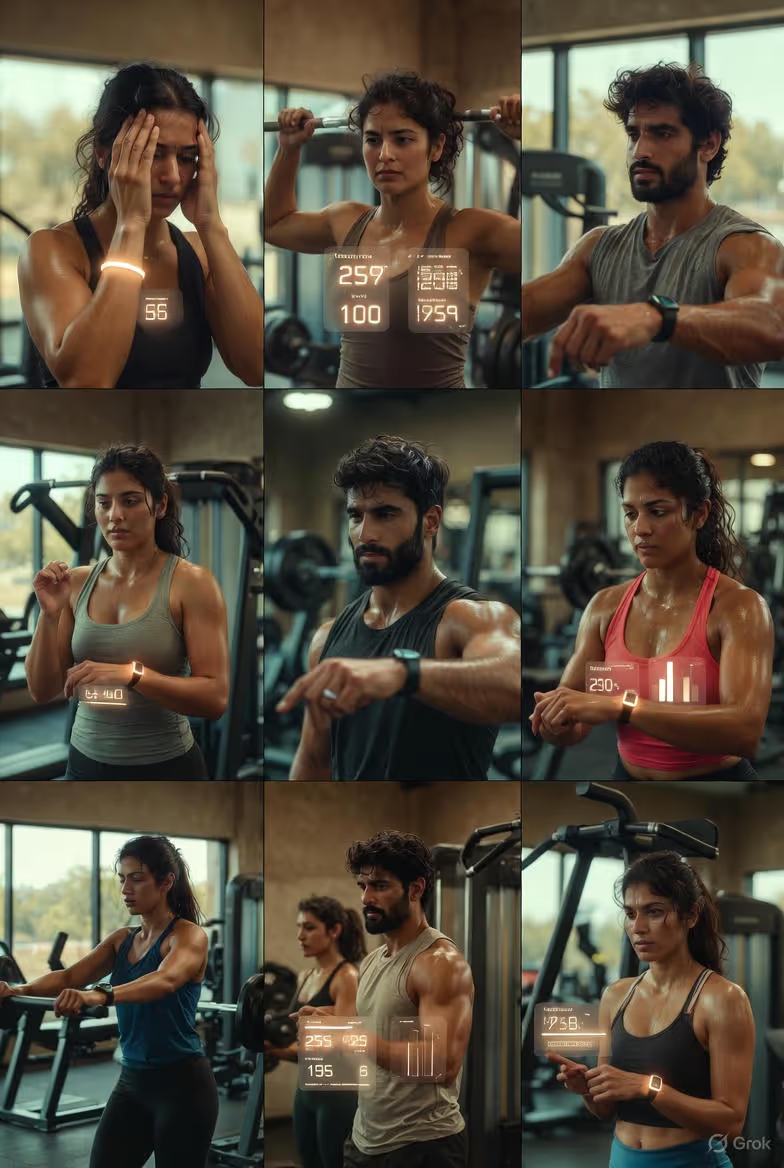
The Recovery Revolution - India's Fitness Game Changer Scene 1: Typical Indian Gym Bro
Monday: Chest day - bench press till failure, 100% intensity
Tuesday: Back day - deadlifts, pull-ups, lat pulldowns - crush it!
Wednesday: Legs - squats till legs shake, lunges till death
Thursday: Shoulders - military press, lateral raises, HIIT cardio
Friday: Arms - biceps, triceps, forearms - pump chase
Saturday: Full body - kyunki "rest is for the weak"
Sunday: "Active recovery" matlab 10km run + abs workout
Result after 3 months?
❌ Expected: Muscle gain, strength increase, body transformation
✅ Reality: Plateau, chronic fatigue, injuries, frustration
Sound familiar?
Bhai, tu kitna bhi gym jaa le, agar recovery theek nahi hai toh results zero!
Ye sirf gym bros ki problem nahi - ye runners, cyclists, athletes, CrossFitters, yoga enthusiasts - sabki same kahani hai.
The brutal truth fitness industry won't tell you:
"You don't grow in the gym. You grow AFTER the gym - during recovery."
Training = BreakdownRecovery = Growth
No recovery = No gains. Period.
Athletes ka sabse bada mistake? OVERTRAINING.
Tu sochta hai: "Aaj bhi heavy workout karunga, grind mindset!"
Tera body chilla raha hai: "BHAI REST DE! Main repair nahi kar pa raha!"
Par tu sun nahi raha. Kyunki "no pain, no gain" ka galat interpretation.
Pain during workout = OK (muscle breakdown, lactic acid)
Pain after 48 hours = NOT OK (inadequate recovery, inflammation)
Chronic fatigue = ALARM (overtraining syndrome approaching)
Par kaise pata chalega ki recovery theek hai ya nahi?
Old method (guesswork):
"Feeling good today" → Train "Thoda thakaan hai" → Still train (ego) "Body dukh raha hai" → Train through it (dumb) New method (science):
OxyZen Smart Ring tumhe exact recovery score deta hai har subah:
🟢 Green Light (85-100): Body fully recovered - PUSH HARD, PR attempt karo!
🟡 Yellow Light (70-84): Moderate recovery - Normal training OK, avoid maxing out
🟠 Orange Light (55-69): Poor recovery - Light workout only, deload week consider
🔴 Red Light (<55): Critical - REST DAY mandatory, body repair mode mein hai
This is GAME-CHANGING.
Imagine:
No more guessing No more overtraining No more wasted workouts (training when body can't adapt) No more injuries from pushing when exhausted Maximum gains from optimized training Ye article tumhe batayega:
Recovery science - kya hota hai body mein Workout recovery tracker India - OxyZen kaise kaam karta haiAthlete smart ring metrics explained (HRV, RHR, sleep stages)Overtraining symptoms - early detection Real athlete transformations - data-driven results OxyZen vs Whoop vs others - honest comparison Action plan - train smarter, not just harder Ready to unlock your true potential?
Chalo shuru karte hain - kyunki your next PR depends on your recovery, not just your effort! 💪📊
The Recovery Science - Gym Ke Baad Kya Hota Hai What Actually Happens When You Train Workout = Controlled Damage
Jab tum heavy squats karte ho, deadlifts uthate ho, ya 10km run karte ho:
Immediate Effects:
1. Muscle Fiber Damage (Micro-tears)
Muscles literally tear hoti hain (microscopic level) Ye GOOD hai - repair process se growth hoti hai Par repair ke liye TIME aur RESOURCES chahiye 2. Energy Depletion
Glycogen stores (muscle fuel) depleteATP (cellular energy) exhausted Body's battery drains 3. Metabolic Waste Accumulation
Lactic acid buildup (burn feeling)Ammonia, urea - byproducts of protein breakdownInflammatory markers increase 4. Nervous System Fatigue
Central Nervous System (CNS) exhaustedNeural drive decreases Coordination, focus impaired 5. Hormonal Shifts
Cortisol ↑ (stress hormone - catabolic)Testosterone ↓ temporarilyGrowth hormone pulses (but needs sleep to maximize)6. Immune Suppression
Intense training = temporary immunity drop "Open window" for infections (1-3 hours post-workout) Ye sab NORMAL hai! Training ka natural consequence.
Problem kab hoti hai?
When recovery < damage = Downward spiral
The Recovery Process - Body Rebuild Kaise Karti Hai Recovery is not passive rest. It's ACTIVE REBUILDING.
Phase 1: Immediate Recovery (0-2 hours post-workout) Kya hota hai:
Heart rate normalizes Breathing returns to resting state Body temperature regulation Initial metabolic waste clearance Glycogen replenishment starts (if you eat!) What you should do:
Cool-down (light cardio, stretching) Hydrate Post-workout nutrition (protein + carbs within 30-60 min) Gentle movement (walk, don't collapse on couch immediately) OxyZen tracks: Heart rate recovery speed (faster = better fitness)
Phase 2: Short-term Recovery (2-48 hours) Kya hota hai:
Muscle protein synthesis peak (24-48 hours) - GROWTH WINDOW!Inflammation response (necessary for healing) Immune system rebound Glycogen stores fully replenished (if diet adequate) Hormone balance restoration What you should do:
Sleep 7-9 hours (most critical!)Adequate protein (1.6-2.2g per kg body weight) Hydration maintain Light activity (active recovery - walking, yoga) Manage stress (cortisol control) OxyZen tracks:
Sleep quality (deep sleep % - growth hormone release) HRV recovery (nervous system restoration) Resting heart rate (back to baseline?) Phase 3: Training Adaptation (48 hours - 2 weeks) Kya hota hai:
Supercompensation - body adapts to become STRONGERMuscle fibers repair + thicker (hypertrophy) Mitochondria increase (endurance) Neural pathways strengthen (strength, skill) Connective tissue adaptation (tendons, ligaments) This is where GAINS happen!
But ONLY if:
✅ Recovery adequate
✅ Nutrition sufficient
✅ Sleep quality high
✅ Stress managed
If NOT:
❌ No adaptation
❌ Stagnation
❌ Overtraining risk
OxyZen tracks: Long-term HRV trends (improving = adapting, declining = overreaching)
The Supercompensation Curve - Timing is Everything Training Science 101:
Fitness Level
Ideal scenario:
Train hard → Fitness temporarily dips (fatigue) Recover properly → Fitness rebounds ABOVE baseline (supercompensation) Train again at peak → Progressive overloadWhat most people do (WRONG):
Scenario A: Overtrain
Train → Don't recover enough → Train again (still fatigued) → Accumulate fatigue → Plateau/injury
Scenario B: Undertrain
Train → Recover fully → Wait too long → Back to baseline → Train → Minimal progress
OxyZen helps: Identifies exact supercompensation window - "Aaj train karo, body ready hai!"
Recovery Types - Different Approaches 1. Passive Recovery Complete rest Sleep Relaxation When: After very intense training, illness, injury
2. Active Recovery Light activity (30-50% max intensity) Walking, easy cycling, swimming, yoga Increases blood flow without additional stress When: Between hard training days
Benefit: Faster waste removal, reduced soreness (DOMS)
OxyZen insight: "Recovery score 68 - active recovery workout recommended, not intense training"
3. Sleep Recovery Most powerful recovery tool Deep sleep = Growth hormone release REM sleep = Mental recovery, skill consolidation Critical for athletes!
OxyZen tracks: Sleep stages, efficiency, disturbances
4. Nutritional Recovery Protein (muscle repair) Carbs (glycogen replenishment) Healthy fats (hormone production, inflammation management) Micronutrients (vitamins, minerals - biochemical reactions) Hydration (cellular function) Not tracked by OxyZen directly, but impact visible in recovery metrics
5. Psychological Recovery Mental fatigue real (CNS fatigue) Stress management Enjoyment, fun (motivation maintenance) Burnout = physical + mental exhaustion
OxyZen tracks: HRV reflects psychological stress too!
Recovery Killers - What Destroys Your Gains Even if you're training perfectly, these sabotage recovery:
1. Poor Sleep 🛌
Less than 7 hours Poor quality (fragmented, not deep) Impact: 80% of growth hormone released during deep sleep!OxyZen shows: Sleep score correlation with recovery score
2. Inadequate Nutrition 🍔
Low protein (muscle repair impossible) Low calories (deficit too large) Poor timing (not eating post-workout) Impact: Catabolism (muscle breakdown) > Anabolism (muscle growth)
3. Chronic Stress 😰
Work pressure Relationship issues Financial worries Cortisol elevation = Anti-anabolic (prevents growth)OxyZen shows: Low HRV despite adequate sleep/rest
4. Dehydration 💧
Even 2% dehydration = performance drop Muscle cramps Delayed recovery 5. Alcohol 🍺
Disrupts sleep (especially REM) Inhibits protein synthesis Dehydration Hormone disruption OxyZen data: Alcohol night = sleep quality ↓40%, recovery score ↓30%
6. Overtraining 🏋️
Too much volume Too much intensity Too little rest Downward spiral OxyZen detects: Before clinical overtraining syndrome (early warning!)
OxyZen for Athletes - Complete Guide Why Athletes Need Dedicated Recovery Tracking Regular fitness tracker (Fitbit, Mi Band):
Tracks activity ✅ Counts steps ✅ Estimates calories ✅ Basic sleep tracking ⚠️ Missing for athletes:
❌ Precise recovery metrics ❌ Training readiness assessment ❌ Overtraining detection ❌ HRV tracking (gold standard) ❌ Deep physiological insights OxyZen = Athlete-grade recovery intelligence
Key Metrics Explained - Simple Hindi Mein 1. HRV (Heart Rate Variability) - The Master Metric Kya hai? Heartbeats ke beech time variation. Higher variation = Better recovery
Why it matters for athletes:
High HRV indicates:
✅ Nervous system recovered (parasympathetic dominance)
✅ Body ready for stress (training stimulus)
✅ Good adaptation happening
✅ Low injury risk
✅ Optimal performance state
Low HRV indicates:
⚠️ Still fatigued (sympathetic dominance - fight/flight)
⚠️ Body stressed (cannot handle more load)
⚠️ Poor adaptation or overreaching
⚠️ Injury risk elevated
⚠️ Performance compromised
OxyZen measures: Nighttime HRV (most accurate - no external stressors)
Normal ranges (age 25-35):
Elite athletes: 60-80+ ms Trained athletes: 50-70 ms Recreational: 40-55 ms Untrained: 30-45 ms YOUR baseline matters more than absolute number!
Real Athlete Example:
Rahul, Marathon runner:
Baseline HRV: 58 ms (well-recovered)
After easy 10km run: 56 ms (slight dip, normal)
After interval training (10x400m hard): 48 ms (significant fatigue)
Next day:
If HRV recovered to 54-56 ms → Ready for next hard session If HRV still 48-50 ms → Need more recovery, easy run only This precision = No guessing!
2. Resting Heart Rate (RHR) - Simple But Powerful Kya hai? Heart rate when completely rested (ideally during sleep or just after waking)
Normal range: 40-60 BPM for athletes (60-100 general population)
Why it matters:
RHR Elevated (5+ BPM above baseline):
Overtraining Illness developing (early sign - before symptoms!) Dehydration Heat/altitude stress Poor sleep quality Overreaching RHR Decreased (over weeks/months):
Fitness improving! (Adaptation happening) Cardiovascular efficiency increasing OxyZen tracks: Trend over time + nightly variations
Red Flag Example:
Priya, CrossFit athlete:
Normal RHR: 48 BPM
After competition weekend: 55 BPM (elevated!)
OxyZen alert: "Resting heart rate 7 BPM above baseline. Recovery needed."
Priya's choice:
Old mindset: Ignore, train hard anyway → Risk injury/illness Data-driven approach: Rest day, hydrate, sleep extra → Back to 48 BPM in 2 daysPrevented: Potential 2-week setback from overtraining!
3. Sleep Stages - Where Magic Happens Athletes need QUALITY sleep, not just duration!
Critical stages:
Deep Sleep (15-20% ideal):
Growth hormone release (peak during deep sleep!)Physical recovery Muscle repair Immune system boost Glycogen restoration Athletes with low deep sleep (<12%):
Slow recovery Reduced strength gains Higher injury risk Frequent illness REM Sleep (20-25% ideal):
Mental recovery Skill consolidation (motor learning - technique improvement!) Emotional regulation Cognitive function Athletes with low REM (<15%):
Poor technique retention Mental fatigue Mood issues Reduced focus/coordination OxyZen shows:
Each stage duration Efficiency Disturbances Trends over time Actionable: "Deep sleep only 10% last 3 nights - recovery compromised. Adjust training load or sleep hygiene."
4. Recovery Score (0-100) - The Daily Dashboard OxyZen's algorithm combines:
HRV (40% weightage) Sleep quality (30%) Resting heart rate (20%) Previous day activity (10%) Output: Single score showing readiness
85-100 (Green): 🟢
Fully recovered Body ready for hard training PR attempts OK High-intensity intervals Heavy lifting Long endurance 70-84 (Yellow): 🟡
Moderate recovery Normal training OK Avoid maxing out Technical work fine Moderate intensity Volume over intensity 55-69 (Orange): 🟠
Poor recovery Light training only Active recovery (walk, swim easy, yoga) Skill practice (low intensity) Avoid hard efforts Below 55 (Red): 🔴
Critical - REST! Complete rest day OR very light activity Focus on sleep, nutrition, hydration Massage, stretching, sauna (if available) Do NOT train hard This is POWERFUL because:
No guesswork No ego ("I feel fine, let me train" when data says NO) Prevents overtraining Maximizes adaptation (train when body READY to adapt) 5. Respiratory Rate - Subtle But Important Normal during sleep: 12-20 breaths/minute
Elevated respiratory rate:
Illness developing Overtraining Stress Altitude adjustment Heat stress OxyZen tracks: Trend + sudden changes
Example: Respiratory rate 18 → 22 over 2 nights = Early warning (rest, monitor)
6. SpO2 (Blood Oxygen Saturation) - For Endurance Athletes Normal: 95-100%
Important for:
Altitude training (monitors acclimatization)Sleep apnea detection (performance killer!)Respiratory fitness Low SpO2 during sleep:
Breathing issues Sleep apnea (must address - destroys recovery!) Altitude sickness 7. Body Temperature - Overtraining Indicator Slight elevation in resting temperature:
Overtraining Illness developing Inflammation Women athletes: Cycle tracking (ovulation, period phases)
How OxyZen Differs from Regular Trackers Comparison Table:
Feature
HRV tracking
✅ Medical-grade ⚠️ Basic/none ✅ Good ✅ Excellent
Recovery score
✅ Advanced algorithm ❌ No ⚠️ Basic ✅ Excellent
Sleep stages
✅ Detailed ⚠️ Basic ✅ Good ✅ Excellent
Form factor
Ring (comfortable) Wrist (bulky for sleep) Wrist (bulky) Wrist strap
Battery life
7-10 days 5-7 days 18 hours 4-5 days
Subscription
❌ NO! ❌ No ❌ No ✅ Required ($30/mo)
Price (3 years total)
₹12,999 ₹3,000 ₹40,000+ ₹90,000+
Athlete-specific
✅ Yes ❌ No ⚠️ Partial ✅ Yes
Training readiness
✅ Daily score ❌ No ⚠️ Basic ✅ Detailed
Overtraining detection
✅ Early warning ❌ No ❌ No ✅ Strain tracking
Verdict for Indian Athletes:
OxyZen vs Whoop:
Similar in recovery featuresOxyZen wins: No subscription (₹90,000 savings over 3 years!)Whoop wins: Slightly more detailed analytics, larger communityRecommendation: For 95% Indian athletes, OxyZen better valueOxyZen vs Fitbit/Mi Band:
Completely different category Fitbit = Activity tracker OxyZen = Recovery intelligence system Not competitors - different purposesOxyZen vs Apple Watch:
Apple Watch = All-rounder (notifications, apps, etc.) OxyZen = Sleep + recovery specialist Can use both! Watch for daily, Ring for sleep/recoveryOvertraining Syndrome - The Silent Killer of Gains What is Overtraining? Definition: Chronic imbalance between training stress and recovery, leading to decreased performance and physiological harm.
Simple Hindi: Training bahut zyada kar rahe ho, recovery bahut kam ho rahi hai - result: Gains nahi, destruction.
The Overtraining Spectrum Stage 1: Functional Overreaching (Planned, Short-term) ✅
What: Intentionally increasing training load for 1-3 weeks, then deload
Signs:
Temporary performance decrease Fatigue But recovers with rest week OxyZen shows: HRV dips, recovery scores low, BUT rebounds after deload
This is OK! Part of periodization (planned training cycles)
Example: Marathon training - 3 weeks high mileage, 1 week taper
Stage 2: Non-Functional Overreaching (Accidental) ⚠️
What: Pushed too hard, recovery inadequate, but still reversible
Signs:
Performance plateau or decline (2-3 weeks) Persistent fatigue Sleep issues Mood changes Loss of motivation Needs 2-4 weeks recovery to restore OxyZen shows:
HRV declining trend (2+ weeks) Poor recovery scores consistently RHR elevated Sleep fragmented Action: Immediate deload or rest week
Stage 3: Overtraining Syndrome (Clinical Condition) 🔴
What: Chronic, severe imbalance - can take MONTHS to recover
Signs:
Significant performance drop (despite training) Chronic fatigue (not relieved by rest) Hormonal dysfunction (low testosterone, high cortisol) Immune suppression (constant illness) Depression, anxiety Insomnia or hypersomnia Loss of appetite Persistent low HRV (won't recover even with rest week)OxyZen shows:
HRV chronically suppressed (30-40% below baseline) Recovery score rarely above 60 RHR consistently elevated (10+ BPM) Sleep severely disrupted Action: STOP training, medical consultation, extended recovery (2-6 months!)
This is SERIOUS. Careers ended by OTS.
Early Warning Signs - OxyZen Catches These Before you feel overtrained, OxyZen shows:
Week 1-2 of Overreaching:
HRV drops 10-15% below baseline Recovery scores in 60-75 range (yellow) RHR up 3-5 BPM Sleep efficiency decreases slightly At this stage: Easily reversible! Just need extra rest day or deload.
Week 3-4 (Non-functional overreaching):
HRV drops 20-30% below baseline Recovery scores consistently <65 RHR up 5-8 BPM Deep sleep drops below 12% Mood changes (app surveys can track) At this stage: Need 1-2 weeks off or very light training.
Month 2+ (Overtraining syndrome risk):
HRV drops 30-40% and NOT recovering Recovery scores <55 persistently RHR up 10+ BPM Sleep completely disrupted Performance tanking At this stage: Medical help needed. Long recovery ahead.
The OxyZen Advantage:
Traditional approach: Wait till you feel like shit → Damage done
OxyZen approach: Detect at Stage 1 → Prevent progression → Maintain health + performance
Common Overtraining Scenarios Scenario 1: The Bulk-Up Bro Amit, 25, Mumbai:
Goal: Gain 10kg muscle in 3 months (unrealistic!) Training: 6 days/week, 2 hours, very heavy Diet: Force-feeding (calorie surplus extreme) Sleep: 5-6 hours (works late shifts) Week 1-4: Initial gains (newbie gains, water, glycogen)
Week 5-8: Plateau
Week 9-12:
Strength declining Always tired Getting sick frequently Injuries (shoulder pain, knee pain) OxyZen would have shown (if he had it):
Week 3: HRV declining, recovery scores dropping Week 5: Red flags - RHR elevated, sleep poor Week 7: Critical - overtraining imminent Intervention: Deload weeks, more sleep, moderate volume
Result: Could have gained 5kg quality muscle instead of burnout + 2kg random weight
Scenario 2: The Marathon Maniac Sneha, 32, Bangalore:
Goal: First marathon (6 months timeline - reasonable) Training: Follows aggressive plan found online Mileage: 30km → 70km/week in 8 weeks (too fast!) Cross-training: None (running only) Strength: Neglected Week 1-6: Feeling great, fitness improving
Week 7-10:
Knee pain develops Always exhausted Colds/infections (3 times in 4 weeks!) Running times getting SLOWER despite more mileage Week 12: Stress fracture (forced stop, 3 months recovery)
OxyZen would have shown:
Week 4: HRV trending down (load increasing too fast) Week 7: Recovery scores poor, RHR elevated Week 9: Critical warnings - immune system compromised Intervention: Cap mileage increase (10% rule), incorporate rest weeks, cross-training
Result: Could have finished marathon healthy instead of injured
Scenario 3: The CrossFit Crusher Rohan, 28, Delhi:
New to CrossFit (6 months in) Competitive nature (wants to beat everyone) Frequency: 5-6 days/week (sometimes 2 sessions/day!) Intensity: ALWAYS maxing out (ego lifting) Recovery: "Rest is for the weak" mentality Month 1-3: Rapid improvement (newbie gains)
Month 4-5:
PRs stop coming Workouts feel impossible Mood terrible Relationship strain (irritable) Rhabdomyolysis scare (muscle breakdown, dark urine - ER visit!) OxyZen would have shown:
Month 2: HRV declining despite fitness improving Month 3: Recovery scores consistently low Month 4: All metrics critical - overtraining syndrome developing Intervention: Ego check, programmed rest days, intensity management
Result: Sustainable progress instead of hospital visit
Overtraining in Different Sports Strength Training (Powerlifting, Bodybuilding):
Primary stress: Mechanical (muscle damage, CNS fatigue)OxyZen shows: RHR elevation, HRV suppression, deep sleep crucialRecovery focus: Sleep, protein, deload weeksEndurance (Running, Cycling, Swimming):
Primary stress: Metabolic (glycogen depletion, mitochondrial stress)OxyZen shows: RHR sensitive indicator, HRV daily fluctuationRecovery focus: Carb replenishment, sleep, active recoveryHigh-Intensity (CrossFit, HIIT, Sprints):
Primary stress: Both mechanical + metabolic + CNSOxyZen shows: Dramatic HRV swings, recovery scores volatileRecovery focus: Adequate rest between sessions, sleep, stress managementSkill Sports (Martial Arts, Gymnastics, Climbing):
Primary stress: CNS fatigue, technique practiceOxyZen shows: HRV reflects mental fatigue tooRecovery focus: REM sleep (skill consolidation), variety in trainingReal Athlete Transformations - Data-Driven Results Case Study 1: Karan - From Gym Plateau to Peak Performance Profile:
Age: 27 City: Gurgaon Sport: Recreational bodybuilding + powerlifting Goal: Break through 18-month plateau Training: 5 years experience Before OxyZen - The Frustration:
Training routine:
6 days/week split Progressive overload (adding weight weekly) Clean diet (tracked macros) Supplements (protein, creatine, etc.) Results: ZERO progress for 18 months!
Bench press stuck at 100kg Squat stuck at 130kg Deadlift stuck at 150kg Body weight stuck at 78kg Karan's frustration: "Bhai main sab kuch sahi kar raha hoon - diet, training, supplements. Par gains nahi aa rahe! Genetics kharab hai kya?"
The OxyZen Revelation - Week 1:
Baseline metrics:
HRV: 38 ms (low for age/fitness) Recovery score: 58 average (poor) Sleep: 6 hours, efficiency 68% RHR: 64 BPM (elevated) Pattern discovered:
Monday-Friday: Recovery scores 50-65 (orange/red) Saturday-Sunday: Slight recovery to 68-72 But back to gym Monday with insufficient recovery! Karan's realization: "Holy shit. Main recover hi nahi kar pa raha tha. 18 months se main breakdown kar raha tha par build-up nahi ho raha tha!"
The Intervention - Month 1:
Changes made:
1. Training Restructure:
Before: 6 days, moderate intensity dailyAfter: 4 days, higher intensity, 3 full rest daysNew split:
Monday: Upper Push (chest, shoulders, triceps) - HARD Tuesday: REST Wednesday: Lower (squats, deadlifts) - HARD Thursday: REST Friday: Upper Pull (back, biceps) - HARD Saturday: REST Sunday: Optional light (20 min walk, mobility) 2. Sleep Overhaul:
Bedroom temperature lowered (AC 22°C) Blackout curtains installed Phone out of bedroom Consistent 10:30 PM bedtime Result: 6 hours → 7.5-8 hours sleep3. Readiness-Based Training:
Check OxyZen recovery score every morning If <70: Light day or extra restIf 70-84: Normal trainingIf 85+: Go for PRs!Month 1 Results:
Metrics improved:
HRV: 38 → 44 ms (16% improvement!) Recovery score: 58 avg → 72 avg Sleep: 8 hours, 78% efficiency RHR: 64 → 60 BPM Performance:
Bench: 100kg → 105kg (first increase in 18 months!) Energy levels: Dramatically better Soreness: Less chronic pain Mood: Motivation returning Month 3 Transformation:
Metrics:
HRV: 52 ms (37% improvement from baseline!) Recovery scores: 75-85 range consistently Sleep: 8 hours, 82% efficiency RHR: 58 BPM Performance breakthrough:
Bench press: 100kg → 115kg (+15kg in 3 months vs 0 in previous 18!) Squat: 130kg → 145kg Deadlift: 150kg → 170kg Body weight: 78kg → 81kg (lean mass) Month 6 - New Normal:
Training approach:
Permanently adopted 4-day split Rest days non-negotiable (data-backed) Deload week every 4-5 weeks (when HRV trends down) Sleep 8 hours minimum (performance priority) Results:
Bench: 120kg (20kg gain!) Squat: 155kg Deadlift: 180kg Body weight: 83kg lean Zero injuries (first 6-month injury-free period in 3 years!)Karan's Testimonial:
"OxyZen ne meri aankhen khol di. Main 'no pain, no gain' pe believe karta tha, 'rest is for the weak' type mindset.
Par data ne dikha diya - I was weak BECAUSE I wasn't resting enough!
Sabse bada lesson? Recovery IS training. Muscle gym mein nahi, bed pe banta hai.
Ab main 4 days train karta hoon par zyada strong hoon 6 days train karne se. Aur injury-free!
Gym bros ko bolna chahta hoon - ego check karo, data check karo. Science > broscience.
₹13,000 ki ring ne mujhe 18 months ka frustration khatam karke 6 months mein breakthrough dila diya. Worth every rupee!"
Case Study 2: Meera - Marathon Runner's Renaissance Profile:
Age: 34 City: Bangalore Sport: Long-distance running (marathons, ultras) Experience: 5 years, 8 marathons completed Problem: Times plateaued, injuries frequent Before OxyZen - The Struggle:
Running history:
First marathon: 4:45:00 (2019) Best time: 4:12:00 (2021) Recent marathons: 4:25:00, 4:30:00, 4:18:00 (NO improvement) Injuries (past 2 years):
IT band syndrome (3 times) Plantar fasciitis (ongoing) Stress fracture (metatarsal - 4 months off) Constant knee niggle Training approach (flawed):
Running 6 days/week Weekly mileage: 60-80km consistently Speedwork: Once a week (intervals) Long run: Every Sunday (25-32km) Cross-training: None ("I need to run to get better at running") Strength: "I don't have time" Meera's frustration: "I'm putting in the miles. Why am I not getting faster? And why am I always injured?"
OxyZen Data - The Truth:
Baseline (Week 1):
HRV: 42 ms (OK but declining trend visible in first week) Recovery score: 62 average (poor for endurance athlete) Sleep: 7 hours but efficiency only 72% RHR: 52 BPM (good baseline BUT elevated 4-5 days/week to 58-60) Deep sleep: 11% (too low - should be 15%+) Pattern recognition:
Monday: Recovery 55 (red) - but did easy run anywayTuesday: Interval session - score 68 (orange) - SHOULD NOT have done hard session!Wednesday: Recovery 58 - still ranThursday: Recovery 62 - ran againFriday: Recovery 60 - ran (lighter)Saturday: Recovery 65 - ranSunday: Long run - recovery already poor, did 28km anyway!Next Monday: Recovery 48 (critical!)The problem: She was NEVER recovering before next hard session!
The Intervention - Meera + Running Coach + OxyZen:
New training philosophy:
Quality > Quantity Recovery-based programming (not calendar-based)Cross-training integration Strength work mandatory Training restructure:
Week structure (flexible based on daily recovery score):
Monday:
Check recovery score If <70: REST or easy swim/yoga If 70-84: Easy 8km run If 85+: Tempo run (10km moderate-hard) Tuesday: Strength training (45 min - glutes, core, legs)
Wednesday:
Recovery <75: Cross-training (cycling, swimming) Recovery 75+: Interval session (track work) Thursday: REST or active recovery (walk, yoga)
Friday: Easy run (8-10km, conversational pace)
Saturday:
Recovery <70: REST Recovery 70+: Moderate run (12-15km) Sunday:
Recovery <75: Shorten long run or skip Recovery 75+: Long run (progressive, not all-out) Key changes:
Mandatory 2 rest days (actually REST, not "active recovery run") Strength 2x/week (injury prevention) Hard sessions ONLY when body ready (HRV-guided) Mileage reduced: 60-80km → 40-55km (30% drop!) Sleep optimization:
Blue light blocking glasses (evening) Magnesium supplement (before bed) Consistent 10 PM bedtime Morning sunlight exposure (circadian rhythm) Month 1 Results:
Metrics:
HRV: 42 → 48 ms (improving!) Recovery scores: 62 avg → 74 avg (huge jump!) Sleep efficiency: 72% → 80% RHR: More stable, less spikes Deep sleep: 11% → 14% Running:
Weekly mileage: 45km average (vs 70km before) Hard sessions: MUCH better quality (body actually ready) No new injuries! Chronic plantar pain: 70% reduced Subjective: "Pehli baar 5 years mein I actually feel FRESH during hard runs, not just pushing through fatigue!"
Month 4 - Race Day Breakthrough:
Half Marathon Test:
Previous best: 2:02:00 This race (after OxyZen protocol): 1:54:00 (8 minutes PR!) How?
Same fitness (arguably LESS running volume) But FULLY RECOVERED for race day HRV score race morning: 58 ms (peak for her) Recovery score: 91 (green) Slept 8.5 hours night before (deep sleep 17%!) Month 8 - Marathon Redemption:
Target Marathon (Bangalore):
Preparation: 16-week plan, all OxyZen-guided Approach: Listened to body, not just calendar Result: 3:58:02 - 14 minutes PR! Sub-4 hour dream achieved! Post-race recovery tracking:
Day 1: HRV 34 (expected crash) Day 3: HRV 38 (recovering) Day 7: HRV 44 (almost baseline) Day 14: HRV 48 (fully recovered, training resumed) Previous marathons: Took 3-4 weeks to feel normal again
This time: 2 weeks full recovery (better fueling, pacing, AND tracking!)
Year 1 Transformation:
Achievements:
Marathon PR: 4:12 → 3:58 (14 minutes!) Half marathon: 2:02 → 1:51 (11 minutes!) 10K: 55:00 → 51:30 Weekly mileage: 40-55km (vs 60-80 before) - LESS is MORE! Injuries: ZERO for 12 months straight! (vs 3-4 injuries/year before) Metrics:
HRV: 42 → 54 ms (29% improvement!) Recovery scores: 75-85 range consistently Sleep: 7.5-8 hours, 82% efficiency RHR: 50 BPM (more efficient heart!) VO2 max: Improved (OxyZen estimates from HR data) Meera's Wisdom:
"OxyZen taught me the hardest lesson for runners - more miles ≠ better runner.
I was addicted to volume. 'If I don't run 70km this week, I'll lose fitness!' Total bullshit.
Data proved: My best performances came from LOWEST mileage periods - because I was RECOVERED.
Running when HRV low = junk miles. Wasting time, building fatigue, inviting injury.
Running when HRV high = quality miles. Actual adaptation, fitness building.
Now I'm a SMARTER runner:
Rest days = training days (body adapts during rest!) Cross-training builds running fitness (without pounding) Strength prevents injuries (glute work = knee health) Sleep is performance fuel (8 hours non-negotiable) To every injured runner: Your body is talking. OxyZen amplifies that voice. Listen before it's too late.
Sub-4 marathon at age 34, injury-free - this was my dream. OxyZen made it reality!"
Case Study 3: Vikram - The Overtrained CrossFitter Profile:
Age: 30 City: Mumbai Sport: CrossFit (competitive, aiming for qualifiers) Problem: Overtraining syndrome (clinical diagnosis) Before OxyZen: 6 months of decline The Downfall (Before OxyZen):
Month 1-6:
Training: 6 days/week, 2 hours/session Additional: 3 days/week Olympic lifting (separate sessions) Competition: Local throwdowns every month Mentality: "More is better, rest is weak" Performance trajectory:
Month 1-3: Improvement (newbie gains) Month 4: Plateau Month 5: Decline Month 6: Complete collapse Symptoms (Month 6):
Lifts DECREASING (Snatch: 80kg → 70kg) WOD times WORSE Constantly exhausted (even after 9 hours sleep) Sick 4 times in 2 months (colds, flu) Mood terrible (irritable, depressed) Libido gone Insomnia (tired but can't sleep) Appetite loss Doctor visit:
Blood tests: Low testosterone, high cortisol Diagnosis: Overtraining Syndrome Prescription: STOP training for 3 months minimum Vikram's devastation: "Doctor said if I continue, I might permanently damage my hormonal system. Forced 3-month break from what I love."
OxyZen Entry (Month 7 - During Recovery):
Coach suggested: "Use this time to learn about recovery. Get OxyZen, track your comeback."
Initial data (still recovering from OTS):
HRV: 28 ms (critically low) Recovery: 42 average (red zone) RHR: 68 BPM (elevated - normally 54) Sleep: Fragmented, 65% efficiency Deep sleep: 8% only Even after 1 month complete rest, body still wrecked!
This showed Vikram the SEVERITY of what he'd done.
Months 7-9: True Recovery (OxyZen Tracked):
Protocol:
NO CrossFit (doctor's orders)Walking only (30 min daily) Yoga 2x/week (gentle) Sleep 9 hours (priority #1) Nutrition focus (high quality, adequate calories) Stress management (therapy, meditation) Blood work monthly (hormone tracking) OxyZen progression:
Month 7: HRV 28 → 34 ms (slow climb)Month 8: HRV 34 → 41 ms (accelerating)Month 9: HRV 41 → 48 ms (approaching normal!)Blood work correlation:
Testosterone slowly increasing Cortisol normalizing OxyZen HRV matched hormonal recovery! Month 10: Cautious Return (OxyZen-Guided):
Doctor cleared for light training.
Strategy:
Start with 2 sessions/week (vs previous 9!) 30 minutes max (vs 2 hours)60-70% intensity max (no grinding)Monitor daily: Any HRV drop >10% = extra rest dayIncrease 10% every 2 weeks (volume/intensity)Week 1-2 (2 sessions, 30 min, 60% intensity):
HRV: Stable 48-50 ms ✅ Recovery: 70-75 ✅ Subjective: Felt GREAT (properly recovered for each session) Week 3-4 (2 sessions, 40 min, 65% intensity):
HRV: Stable 48-52 ms ✅ Body responding well ✅ Week 5-8 (3 sessions, 40 min, 70% intensity):
HRV: 50-54 ms range ✅ Performance: Coming back! Month 12-15: Sustainable Performance:
Training reached:
4 sessions/week (vs 9 before!) 1 hour sessions (vs 2-3) Mix: 2 CrossFit, 1 strength, 1 conditioning 2 FULL rest days mandatory (OxyZen-enforced)1 active recovery day (walk, swim)Performance comparison:
Before OTS (Month 3 peak):
Snatch: 80kg Clean & Jerk: 105kg Fran: 3:45 Training: 9 sessions/week Health: Declining After recovery (Month 15):
Snatch: 85kg (5kg PR!) Clean & Jerk: 110kg (5kg PR!) Fran: 3:20 (25 seconds faster!) Training: 4 sessions/week Health: Excellent! HOW? PROPER RECOVERY!
Metrics:
HRV: Stabilized 52-58 ms Recovery scores: 75-88 range RHR: 54 BPM (back to baseline) Sleep: 8 hours, 85% efficiency Deep sleep: 16% Vikram's Hard-Earned Lessons:
"Overtraining Syndrome ruined 6 months of my life. Forced break for 3 months. Total 9 months lost.
Why did it happen? Because I had NO objective data. I 'felt fine' till I didn't. Then it was too late.
OxyZen would have warned me at Month 4:
HRV declining → Red flag Recovery scores consistently low → Warning RHR elevated → Problem I would have taken 1 deload week then. Instead, I destroyed myself and needed 9 months to recover.
New philosophy:
Less volume, better quality (4 sessions > 9 junk sessions)HRV dictates training (Low score? REST, no ego)Sleep non-negotiable (8 hours minimum)Deload every 4 weeks (regardless of 'feeling')I'm STRONGER now training HALF as much! Because my body is ADAPTED, not BROKEN.
To competitive athletes: Your biggest competitor is yourself - specifically, your ego. OxyZen data checks your ego.
Listen to data > Listen to ego = Long career + PRs
Ignore data, follow ego = Injury, burnout, regret
₹13,000 for OxyZen vs 9 months lost + ₹50,000 medical bills? I wish I had it earlier. Don't make my mistake!"
Training with OxyZen - The Complete System The Daily Morning Ritual Every morning, BEFORE deciding on workout:
Step 1: Check Recovery Score (2 minutes)
Open OxyZen app → Dashboard
🟢 85-100 (GREEN):
"CRUSH IT today!" Today is PR day (if planned) High-intensity session cleared Heavy lifting approved Long/hard endurance OK 🟡 70-84 (YELLOW):
"Normal training OK, don't max out" Moderate intensity Volume work good Technical practice No PRs today 🟠 55-69 (ORANGE):
"Light day needed" Active recovery only Skill work, mobility Easy cardio (Zone 2) Foam rolling, stretching 🔴 <55 (RED):
"REST DAY - mandatory!" Complete rest OR very light movement (walk) Focus: Sleep, nutrition, hydration, stress management DO NOT WORKOUT Step 2: Check HRV Trend (1 minute)
Look at 7-day HRV graph:
📈 Trending up: Body adapting well, training working ✅
📊 Stable: Maintaining, OK ✅
📉 Declining 2+ days: Warning - might need deload ⚠️
📉 Declining 5+ days: Serious - deload NOW or risk overtraining 🔴
Step 3: Check RHR (30 seconds)
Compare today's RHR to 7-day average:
Within 3 BPM: Normal ✅
4-6 BPM higher: Elevated - possible dehydration, stress, or illness developing ⚠️
7+ BPM higher: Significant - rest day recommended, monitor for illness 🔴
Step 4: Review Sleep (1 minute)
Check last night:
Total sleep time Sleep efficiency Deep sleep % REM % Disturbances Poor sleep (efficiency <75%, deep <12%) + Low HRV: → Body didn't recover → Adjust training
Good sleep + Low HRV: → Training load too high OR stress/illness → Investigate
Step 5: Make Decision (30 seconds)
Based on above data:
Stick to planned workout? Modify intensity? Swap for active recovery? Full rest day? Trust the data, not your ego or training plan rigidity!
Periodization with OxyZen - Auto-Regulation Traditional periodization: Calendar-based (4 weeks hard, 1 week deload)
Problem: Doesn't account for individual recovery variance
OxyZen periodization: Auto-regulated (body tells you when to push, when to back off)
How it works:
Training Blocks:
Block 1: Accumulation (2-4 weeks)
Build volume/intensity Monitor: HRV should MAINTAIN (not increase - you're stressing body) Recovery scores: 65-80 range acceptable (working hard) When to end block: When HRV trends down 15%+ from block start OR recovery scores averaging <65 for 3+ days
Block 2: Deload (1 week)
Reduce volume by 40-60% Reduce intensity to 60-70% max Monitor: HRV should REBOUND Recovery scores: Should climb to 75-90 When block successful: HRV returns to baseline or higher, recovery scores consistently 75+
Block 3: Intensification (2-3 weeks)
Maintain volume lower than Block 1 Increase intensity (heavy sets, fast pace) Monitor: HRV might dip slightly (OK, high intensity stress) Recovery: Ensure adequate (supplement sleep if needed) When to end: Peak performance achieved OR HRV dropping significantly
Block 4: Taper (1-2 weeks) - Before Competition
Drastically reduce volume (60-70% reduction) Maintain some intensity (nervous system primed) Monitor: HRV should SURGE (supercompensation!) Recovery: Should be highest of entire cycle Goal: Arrive at competition/test day with:
HRV at 3-month high Recovery score 85+ Fresh, energized, ready to perform! This is POWERFUL! You're training based on YOUR body's actual state, not arbitrary calendar.
Exercise-Specific Guidance Strength Training (Powerlifting, Bodybuilding) OxyZen-optimized approach:
Recovery score >80:
Heavy compound lifts (squat, deadlift, bench 85-95% 1RM) PR attempts High volume (4-5 sets, compound movements) Recovery score 70-80:
Moderate weight (75-85% 1RM) Hypertrophy focus (3-4 sets, 8-12 reps) Accessory work Recovery score 60-70:
Light day (50-60% 1RM) Technique focus Isolation work Active recovery (blood flow) Recovery score <60:
REST or mobility only Massage, sauna, stretching Key metrics to track:
HRV: Should be stable-to-improving over mesocycleRHR: Watch for elevation (CNS fatigue)Deep sleep: Critical for growth hormone (15%+ goal)Endurance Training (Running, Cycling, Triathlon) OxyZen-optimized approach:
Recovery score >85:
Interval sessions (VO2max, threshold) Long runs at marathon pace High-quality brick workouts Recovery score 75-85:
Tempo runs (comfortable hard) Moderate long runs (easy-moderate pace) Hills (controlled) Recovery score 65-75:
Easy aerobic (Zone 2, conversational) Recovery runs (very easy) Cross-training (swim, bike easy) Recovery score <65:
REST or walk only Stretching, yoga Key metrics:
RHR: Most sensitive for runners (watch daily)HRV: Weekly trends (declining = too much load)Sleep efficiency: Endurance athletes need high-quality sleep (80%+)High-Intensity Training (CrossFit, HIIT, Sports) OxyZen-optimized approach:
Recovery score >80:
Competition simulation Hero WODs Max effort sprints/lifts Sport-specific intense Recovery score 70-80:
Normal metcons (moderate) Skill work with moderate intensity Strength accessory Recovery score 60-70:
Skill practice (low intensity) Mobility, movement quality Light aerobic Recovery score <60:
Key metrics:
HRV: Highly variable (HIIT taxes CNS heavily)Recovery scores: Will fluctuate - watch trendsSleep: CRITICAL (8+ hours non-negotiable)HIIT athletes: Most at risk for overtraining - OxyZen essential!
Deload Week - When and How When to deload (OxyZen tells you):
Planned: Every 3-5 weeks (traditional)
Auto-regulated (OxyZen):
HRV declined 15%+ from training block start Recovery scores averaging <65 for 5+ days RHR elevated 5+ BPM for 3+ consecutive days Performance declining despite effort Excessive soreness/fatigue How to deload:
Option 1: Volume Deload (Recommended)
Reduce sets/reps by 50% Keep intensity same (weight %, pace) Example: Squat 5x5 at 80% → 2-3x5 at 80% Option 2: Intensity Deload
Keep volume similar Reduce intensity by 30-40% Example: Squat 5x5 at 80% → 5x5 at 50-60% Option 3: Complete Rest
No training (or very light movement) Best for severe overreaching 3-7 days total OxyZen monitoring during deload:
Goal: HRV rebounds to baseline or higherDay 1-2: Might stay low (fatigue clearing)Day 3-5: Should start climbingDay 6-7: Near/above baselineIf not rebounding: Extend deload or see doctor (might be illness, not just fatigue)
Nutrition and Supplementation - Supporting Recovery OxyZen doesn't track food, but shows impact!
Experiment tracking:
Week 1: Baseline (normal diet)
Track average recovery score Week 2: High protein (2g per kg body weight)
Compare recovery scores (especially after heavy training) Hypothesis: Better muscle repair = better recovery Week 3: Carb timing (post-workout within 30 min)
Compare: Glycogen replenishment impact Check: Next-day readiness scores Week 4: Hydration focus (3+ liters daily)
Monitor: RHR (dehydration elevates it) Check: Sleep quality Week 5: Supplements (e.g., magnesium before bed)
Monitor: Sleep quality, deep sleep % Check: HRV impact Common findings from OxyZen users:
Protein:
1.6-2.2g/kg optimal for athletes Lower = poor recovery scores (especially after lifting) Higher = no additional benefit (expensive pee!) Carbs:
Post-workout carbs = better next-day recovery (glycogen) Low-carb endurance athletes = lower HRV (stress) Timing matters (around training) Hydration:
Even 2% dehydration = RHR elevated, performance down 3-4 liters/day optimal for athletes Color check: Pale yellow = good Supplements that show OxyZen impact:
Magnesium: Improves deep sleep (visible in app!)Tart cherry juice: Reduces inflammation (recovery scores better)Omega-3: Long-term HRV improvement (anti-inflammatory)Creatine: No direct HRV impact but performance upCaffeine: Improves workout BUT can impair sleep if late (track this!)Avoid based on OxyZen data:
Alcohol: Destroys sleep quality, REM especiallyLate caffeine: Sleep onset delayHeavy late-night meals: Sleep disruptionOxyZen vs Competitors - Honest Comparison OxyZen vs Whoop - The Recovery Tracker Battle Both are SERIOUS recovery trackers, not basic fitness bands.
Pros:
✅ Excellent recovery algorithm
✅ Strain tracking (quantifies workout load)
✅ Large community, social features
✅ Lots of integrations (Strava, TrainingPeaks, etc.)
✅ Detailed analytics, coaching insights
✅ Worn 24x7 (wrist strap, discrete)
Cons:
❌ Subscription model: $30/month ($360/year, $1080/3 years!)
❌ No screen: Must use phone to see data
❌ Wrist-based (slightly less accurate than finger)
❌ Battery 4-5 days (charge every 4 days)
❌ Expensive long-term
OxyZen:
Pros:
✅ No subscription! One-time cost, lifetime data
✅ Medical-grade sensors (finger = accurate)
✅ 7-10 days battery (charge weekly)
✅ Ring form factor (comfortable, discrete)
✅ Excellent sleep tracking
✅ HRV, recovery score, readiness
✅ ₹12,999 vs Whoop's ongoing cost
Cons:
❌ Newer brand (less community)
❌ Fewer integrations (currently)
❌ Analytics less detailed than Whoop (improving)
❌ No strain tracking (only recovery)
Head-to-Head Comparison:
Cost (1 year)
₹12,999
One-time payment
~₹30,000
Annual subscription
Cost (3 years)
₹12,999
One-time payment
~₹90,000
3-year subscription
HRV accuracy
Excellent (finger PPG) Excellent (wrist PPG)
Recovery score
✅ Yes ✅ Yes (+ strain)
Sleep tracking
✅ Detailed stages ✅ Detailed stages
Form factor
Ring Wrist strap
Battery
7-10 days 4-5 days
Workout detection
Auto + manual Auto + manual
Strain tracking
❌ No ✅ Yes
Community
Growing Large
Integrations
Limited Extensive
Data export
✅ Yes ✅ Yes
Key Takeaways
💰 Cost Advantage
OxyZen offers massive savings - just ₹12,999 one-time vs Whoop's ~₹90,000 over 3 years. No subscription fees.
💤 Sleep Comfort
The ring form factor is more comfortable for sleep tracking compared to a wrist strap, providing more accurate sleep data.
🔋 Battery Life
OxyZen lasts 7-10 days vs Whoop's 4-5 days, meaning less frequent charging and more consistent data collection.
🎯 Focus Differences
OxyZen focuses on sleep & recovery metrics, while Whoop adds strain tracking for athletes needing workout intensity metrics.
Who should choose OxyZen:
Budget-conscious athletes (no ongoing fees!) Sleep-focused (ring better for sleep comfort) Want accurate HRV without subscription Long-term users (savings compound) India-based (pricing, support) Who should choose Whoop:
Strain tracking important (quantify workouts precisely) Want extensive integrations Part of Whoop community (friends using it) Don't mind subscription model Elite athletes (marginal gains from detailed analytics) Honest take: For 90% of Indian athletes, OxyZen better value . Whoop's extra features not worth 7x cost over 3 years.
OxyZen vs Garmin Fenix/Forerunner - The Sports Watch Garmin Fenix 7 / Forerunner 965:
Pros:
✅ GPS tracking (routes, pace, distance)
✅ Workout modes (100+ sports)
✅ Training load, VO2 max estimates
✅ Maps, navigation
✅ Music, payments
✅ Recovery metrics (Body Battery, HRV)
✅ All-in-one device
Cons:
❌ Expensive (₹40,000-₹80,000)
❌ Bulky for sleep (many don't wear at night!)
❌ Battery (1-2 weeks with GPS use)
❌ Wrist-based (less accurate HRV)
❌ Sleep tracking secondary feature
OxyZen:
Pros:
✅ Fraction of cost (₹12,999)
✅ Sleep specialist (comfortable all night)
✅ Accurate HRV (finger-based)
✅ Simple, focused (recovery only)
Cons:
❌ No GPS
❌ No workout tracking (beyond basics)
❌ No maps, music, etc.
The verdict: DIFFERENT TOOLS FOR DIFFERENT JOBS!
Ideal setup for serious athlete:
Garmin: For workouts (GPS, pace, routes, metrics)OxyZen: For recovery (sleep, HRV, readiness)Many athletes use BOTH!
Budget choice:
If choosing ONE: Garmin (more features)If sleep/recovery priority: OxyZen (better at its job)Not competitors - complementary!
OxyZen vs Fitbit/Mi Band - Different League Fitbit Charge 6 / Mi Band 7:
These are activity trackers, NOT recovery trackers.
Pros:
✅ Cheap (₹2,000-₹8,000)
✅ All-day activity tracking
✅ Notifications, calls
✅ Long battery (1-2 weeks)
Cons:
❌ Basic sleep tracking (no stages or very basic)
❌ No HRV or very basic
❌ No recovery algorithms
❌ Not athlete-focused
OxyZen: Completely different category - medical-grade recovery device.
Comparison doesn't make sense. Like comparing a bicycle to a car - different purposes!
If you have Fitbit/Mi Band: Keep it for daily activity tracking! Add OxyZen for serious recovery insights.
OxyZen vs Apple Watch - The All-Rounder vs Specialist Apple Watch Ultra / Series 9:
Pros:
✅ Ecosystem (iPhone integration)
✅ Apps galore
✅ Fitness tracking (good)
✅ Notifications, calls, payments
✅ ECG, blood oxygen
✅ Sleep tracking (decent)
Cons:
❌ Expensive (₹40,000-₹90,000)
❌ Battery (1-2 days) - daily charging!
❌ Bulky for sleep
❌ Wrist-based (less accurate HRV than ring)
❌ General purpose (jack of all trades, master of none)
OxyZen: Specialist in sleep + recovery.
Many Apple Watch users ADD OxyZen:
Apple Watch: Daily wear (daytime) OxyZen: Sleep wear (nighttime) Best of both worlds!
OxyZen's sweet spot: Best bang-for-buck for RECOVERY-FOCUSED athletes!
Common Mistakes - What NOT to Do Mistake 1: Obsessing Over Daily Scores The trap: Checking HRV every hour, freaking out over single low score.
Why it's bad:
Creates anxiety (stress about stress!) Daily fluctuation normal One data point meaningless Better approach:
Check ONCE in morning Look at TRENDS (7-day, 30-day) Don't panic over single bad day OxyZen tip: "One red day ≠ disaster. 5 red days = investigate."
Mistake 2: Ignoring Red Flags The trap: "Score is 55 but I feel OK, let me train anyway."
Why it's bad:
Body often lies (adrenaline masks fatigue) Data is objective This is HOW overtraining happens Better approach:
Trust data > feelings (especially if chronically pushing hard)Red score = REST, no negotiation Your "feel OK" might be your new "normal exhausted" Mistake 3: Training Through Illness The trap: "Just a small cold, I can train through it."
Why it's bad:
Immune system already fighting Training adds stress Recovery delayed, illness worsens Risk of myocarditis (inflammation of heart - DANGEROUS!) OxyZen shows:
RHR elevated (5-10+ BPM) HRV crashed Recovery score red Better approach:
Neck check rule: Symptoms above neck (runny nose, sore throat) → MAYBE very light exercise Symptoms below neck (chest congestion, body aches, fever) → ABSOLUTE REST OxyZen red + any illness symptom = REST Resume training: When RHR back to baseline for 2+ days + symptoms gone
Mistake 4: Not Deloading The trap: "I'll just keep pushing, deload is for the weak!"
Why it's bad:
Continuous stress = no adaptation Plateau inevitable Overtraining coming Better approach:
Scheduled deload every 3-5 weeks (planned) OR auto-regulated (when OxyZen indicates) 1 week reduced volume/intensity This is when you GROW! Mistake 5: Sacrificing Sleep for Training The trap: "I'll wake up at 5 AM for gym, sleep only 5 hours."
Why it's bad:
Sleep = recovery No recovery = no gains You're training to feel productive, not to actually improve OxyZen shows:
Poor sleep = low recovery score Training on low sleep = junk work (not adapting) Better approach:
Sleep 8 hours non-negotiable Train when fully rested (even if means less frequent sessions) Quality > quantity Math:
6 workouts on 6 hours sleep = Minimal gains, burnout risk 4 workouts on 8 hours sleep = Maximum gains, sustainable Mistake 6: Comparing Your HRV to Others The trap: "My friend's HRV is 70ms, mine is only 45ms. I'm unhealthy!"
Why it's bad:
HRV highly individual (genetics, age, fitness, training history) Absolute number less important than YOUR trend Comparison = unnecessary anxiety Better approach:
Track YOUR baseline Monitor YOUR trends Improvement in YOUR HRV = success Example:
Person A: Baseline 35ms, now 45ms = 29% improvement! Excellent! Person B: Baseline 70ms, now 65ms = 7% decline - concern Person A "winning" despite lower absolute number!
Mistake 7: Overcomplicating The trap: Obsessing over every metric, analysis paralysis.
Why it's bad:
Simplicity gets results Overthinking creates stress Lose sight of big picture Better approach:Focus on 3 things:
Recovery score (train or rest?)HRV trend (improving or declining?)Sleep quality (adequate or not?)Everything else = nice-to-know, not need-to-know.
Mistake 8: Tech Dependence The trap: "Ring didn't charge, I don't know what to do today!"
Why it's bad:
Device is TOOL, not crutch Should supplement awareness, not replace it Better approach:
Use OxyZen to LEARN your body signals Over time, YOU'LL know: "I need rest today" (data confirms) Not: "Data tells me rest, but I felt great" (disconnected) Goal: Data + body awareness = optimal
Advanced Tips - Maximize OxyZen Tip 1: Experiment Tracking Use OxyZen as your personal science lab!
Examples:
Test: Pre-workout supplement
Baseline week: No pre-workout Test week: Use pre-workout Compare: Workout performance AND recovery next day If recovery scores worse (stimulants impair sleep) → Not worth it! Test: Alcohol impact
Week 1: 2 drinks Friday/Saturday Week 2: No alcohol Compare: Sleep quality, REM %, recovery scores Quantify EXACT cost of alcohol on YOUR body Test: Cold showers
Week 1: Normal showers Week 2: Cold post-workout Compare: Recovery speed (HRV rebound) See if hype is real for YOU Test: Massage/foam rolling
Alternate weeks: With vs without Track: Subjective soreness + HRV recovery Data-driven decision on spending money/time on recovery modalities Tip 2: Partner/Team Sync If training partner or team has OxyZen:
Sync workout intensity: "Bro, my recovery 88, yours 62 - let's do separate workouts today. You active recovery, I'll crush intervals. Tomorrow together!"
Prevents:
Partner pulling you into workout when you shouldn't OR you dragging down partner who's ready to kill it Team approach: Coach can see aggregated data (with consent):"Team average HRV down 15% this week - everyone deload!"
Tip 3: Seasonal Tracking Notice patterns across seasons:
Summer:
Heat stress = HRV might be lower Dehydration risk = RHR elevated Adjust training volume (outdoor athletes) Winter:
Better sleep quality (cooler naturally) Might tolerate higher training load Monsoon (India):
Humidity stress Illness risk (temperature fluctuations) Track immunity markers (frequent RHR spikes) Tip 4: Menstrual Cycle Tracking (Women) Women athletes: HRV fluctuates with cycle!
Follicular phase (post-period to ovulation):
HRV typically higher Recovery better Energy high Best time for PR attempts, intense training Luteal phase (post-ovulation to period):
HRV typically lower Recovery slower Energy variable Focus on volume over intensity Menstruation:
HRV variable Listen to body + data Some perform well, others need lighter training OxyZen helps:
Track YOUR pattern over 3+ months Plan training around cycle (when possible) Expectations aligned (don't beat yourself up for low performance in luteal phase!) Tip 5: Travel/Jet Lag Traveling for competition/training:
Before trip:
Get HRV high as possible (taper slightly) Sleep load (extra sleep 2-3 days before) During travel:
Hydrate aggressively Move frequently (blood flow) Sleep if possible (even with low quality) Post-arrival:
Check HRV - likely crashed Don't train hard immediately (even if "feel fine") Allow 1-2 days light adjustment Wait for HRV recovery (back to 90% baseline) OxyZen tracks jet lag recovery: Day 1 post-arrival: HRV 35 (crashed)Day 2: HRV 40 (climbing)Day 3: HRV 48 (almost there)Day 4: HRV 52 (baseline) → NOW train hard!
Tip 6: Altitude Training If training at altitude (Shimla, Manali, Ladakh, etc.):
OxyZen tracks acclimatization:
Days 1-3:
HRV crashes (body stressed by low oxygen) SpO2 lower (normal at altitude) RHR elevated (heart compensating) Days 4-7:
HRV starts recovering SpO2 stabilizes RHR decreasing Week 2+:
HRV near sea-level baseline Adapted! Training guidance:
Days 1-3: Very light (walks only) Days 4-7: Easy aerobic Week 2+: Normal training can resume Without OxyZen: Guess and often overtrain at altitude (dangerous!)
With OxyZen: Know EXACTLY when adapted!
The Long-Term Game - Years with OxyZen Year 1: Learning Phase Months 1-3: Baseline + Patterns
Establish YOUR normal Identify triggers (what tanks HRV? what improves it?) Learn to read data Months 4-6: Experimentation
Test training approaches Try recovery modalities Dial in sleep, nutrition Months 7-9: Optimization
Refine based on what works for YOU Build sustainable routines Consistency Months 10-12: Mastery
Intuitive use (quick glance, know what to do) Performance peaks Injury-free year! Year 2-3: Compounding Gains What happens:
Fitness continues improving (proper recovery = adaptation) Baseline HRV increases (nervous system resilience) Sleep quality optimized Injury rate plummets Performance PRs consistently Data examples:
Baseline HRV:
Year 0: 42ms Year 1: 48ms (+14%) Year 2: 52ms (+24%) Year 3: 55ms (+31%) This is MASSIVE - higher resilience, stress tolerance, recovery capacity!
Sleep:
Year 0: 6.5 hours, 72% efficiency, 11% deep Year 1: 7.5 hours, 80% efficiency, 14% deep Year 2: 8 hours, 85% efficiency, 16% deep Year 3: 8 hours, 87% efficiency, 17% deep Cumulative effect over 3 years: 500+ more hours quality sleep = YEARS of biological age saved!
Year 5-10: The Longevity Athlete Athletes who use OxyZen long-term:
Advantages over peers:
Still training in 40s/50s (peers injured out) Performance maintained (or improving!) Health markers excellent Enjoying training (not grinding/suffering) The secret: Consistency in recovery > Heroic training efforts
OxyZen becomes:
Second nature (like brushing teeth) Non-negotiable (wouldn't train without it) Competitive advantage Example: Two 45-year-old runners:
Runner A: Never tracked recovery, trained by "feel", multiple injuries, can't run anymoreRunner B: OxyZen user 10 years, still running marathons, healthy, improvingDifference: Data-driven recovery!
FAQs - Athletes Edition Q1: OxyZen sirf pro athletes ke liye hai ya beginners bhi use kar sakte hain? Answer:EVERYONE benefits! Actually, beginners MORE!
Why beginners need it:
Don't know limits yet - OxyZen prevents overdoing itRapid adaptation phase - Track improvements (motivation!)Build smart habits early - Learn recovery importance from day 1Injury prevention - Most beginners get injured from enthusiasm (too much too soon)Why pros use it:
Fine-tuning (marginal gains) Career longevity Competitive edge Bottom line: If you train (ANY level), OxyZen helps!
Q2: Agar main weight loss ke liye casual gym jaata hoon, toh bhi OxyZen useful hai? Answer:Absolutely!
For weight loss fitness:
Prevents burnout - Many quit because they overtrain initiallyBetter results - Recovered body burns more calories (higher metabolism)Consistency - Sustainable pace = long-term adherenceSleep quality - Sleep crucial for weight loss (hormone regulation!)OxyZen shows:
"Recovery low - today walk instead of HIIT" (prevents injuries that derail weight loss journeys) "Sleep only 5 hours - weight loss stalled" (sleep deprivation = cortisol = fat storage) Weight loss is marathon, not sprint. OxyZen keeps you in the race!
Q3: Main already physiotherapist/coach se advice leta hoon. OxyZen aur kyun? Answer:OxyZen COMPLEMENTS coaches, doesn't replace!
What coach provides:
Programming (periodization, exercise selection) Technique correction Motivation Experience-based adjustments What OxyZen provides:
Objective daily data (how's recovery TODAY?)Individual response tracking (same program, different people = different recovery needs)Between-session insights (coach sees you 1-3x week, OxyZen sees you 24x7)Best combo: Coach + OxyZen
Example: Coach program: "Monday - Heavy squats, Wednesday - Deadlifts, Friday - Bench"
Reality:
Monday: OxyZen score 88 → Squats great! Wednesday: OxyZen score 62 → Deadlifts reduced intensity (avoid injury) Friday: OxyZen score 78 → Bench normal Coach gets feedback: "Hey, my HRV was low Wednesday so I went lighter. Here's the data."
Good coach: "Perfect! You're learning to auto-regulate. This is advanced stuff!"
Q4: Injury ke baad recovery tracking kaise? Answer:OxyZen EXCELLENT for injury recovery!
During injury (not training):
HRV should IMPROVE (no training stress) If HRV still low → inflammation still present, not ready to train Track sleep quality (crucial for healing) Returning to training:
Traditional approach: Doctor: "You can start after 6 weeks"→ But is body ACTUALLY ready?
OxyZen approach: Week 6: Check HRV
If HRV back to pre-injury baseline → Ready If HRV still 20% below → Need more time, inflammation not resolved Progressive return:
Week 1: Light movement, monitor HRV If HRV stable → Week 2 slightly more If HRV crashes → Too much too soon, dial back This prevents RE-INJURY (the common problem!).
Q5: Supplements like creatine, pre-workout - OxyZen se kaise track karu? Answer:Experimental approach:
Creatine test (4-week):
Week 1-2: Baseline (no creatine) Week 3-4: 5g/day creatine Compare: Performance AND recovery metrics Expected:
Performance: Might improve (strength, power) Recovery: Neutral or slightly better (creatine aids cellular energy) Pre-workout test:
Baseline week: No pre-workout Test week: Pre-workout before training Compare:Workout performance (better?) Sleep that night (disrupted?) Recovery next day (worse despite better workout?) Common finding: Pre-workout helps workout BUT impairs sleep + recovery→ Net negative for many people!
OxyZen reveals TRUTH for YOUR body!
Q6: CrossFit mein toh har din different workout hai. Kaise plan karun? Answer:This is where OxyZen SHINES!
CrossFit problem: Daily varied stimulus, hard to program recovery
OxyZen solution: Daily readiness dictates approach
Scenario:Planned WOD: "Murph" (brutal hero WOD)
OxyZen score 55 (red): → Don't do Murph! (Recipe for injury/illness)→ Option A: Rest day→ Option B: Skill work (HSPU practice, light)→ Option C: Easy cardio (20 min Zone 2)
OxyZen score 85 (green): → ATTACK MURPH! Body ready!
This is auto-regulation at its finest!
CrossFit athlete testimonial: "Pehle main har WOD Rx karta tha (ego). Injuries constant. Ab OxyZen dekh ke decide karta hoon - scale or rest. Less injuries, better performance long-term!"
Q7: Running race se pehle kab peak pe aana hai? Answer:Tapering with OxyZen = Perfect timing!
Goal: Arrive race day with HRV at 3-month HIGH
Taper week structure:
3 weeks before race:
Normal training (last hard efforts) Monitor: HRV should dip (accumulated fatigue - expected) 2 weeks before:
Volume drop 30% Intensity maintain (some) Monitor: HRV should start climbing 1 week before:
Volume drop 50-60% One or two short, sharp efforts (maintain nervous system readiness) Monitor: HRV should surge 3 days before:
Minimal training (shake-out runs only) Sleep MAXIMIZE Hydration, carb-loading Monitor: HRV peaking Race morning:
Target: HRV within 10% of 3-month best Recovery score: 85+ Sleep previous night: 8+ hours, deep sleep 15%+ If everything aligned = PR incoming!
Q8: OxyZen battery ka tension nahi hai? Charging bhool gaya toh? Answer:7-10 days battery = Way easier than daily charging!
Routine:
Charge once a week (e.g., every Sunday morning) Set phone reminder Takes 90 minutes to full charge If forgotten:
Low battery warning (1 day remaining) Emergency quick charge: 30 minutes = 2-3 days Reality: After 2 weeks, becomes habit (like charging phone weekly if it lasted that long!)
Vs Whoop/Apple Watch: Charging every 1-2 days = frequent interruption
Q9: Agar ring kho gaya ya toot gaya? Answer:Precautions:
Lost:
Keep in charging dock when not wearing (home base) Travel case use karo (don't leave in hotel room randomly) Broken:
Durable (titanium coating) 5ATM waterproof But: Don't crush under heavy weight (take off during deadlifts if nervous) Warranty:
1 year manufacturer warranty Covers defects, sensor issues Doesn't cover: Lost, physically damaged (crushed, etc.) Replacement:
Need to buy new (if lost/damaged outside warranty) But: Data saved (cloud backup) - can resume with new ring Q10: Gym partner mere saath nahi aa raha kyunki "tu toh ring ke chakkar mein kabhi gym hi nahi aata". Kya karun? Answer:BOUNDARIES + EDUCATION!
The problem: Your partner's ego threatened OR they don't understand recovery science.
Response approach:
Version 1 (Educative): "Bro, main gym jaa raha hoon - but SMART gym jaa raha hoon. Dekh last 3 months - zero injuries, PRs consistent. Teri back pain abhi bhi hai, performance plateau pe hai. Ring dikha raha hai mera body ready nahi - agar main jaaunga toh junk workout hoga. Trust the process."
Version 2 (Data-driven): "Chal deal karte hain - 3 months tu bhi OxyZen use kar. Phir compare karte hain results. Main bet lagata hoon tere bhi gains better honge kyunki tu properly recover karega."
Version 3 (Boundary): "Main apni health priority kar raha hoon. Tu apna dekh, main apna. Jab dono ready hain tab saath jayenge, aur jab nahi toh nahi. Simple."
The reality: TRUE training partner supports your health, not sabotages it.
If they continue pressure: Find new partner OR train solo.
Ego-driven training partner = Injury risk!
Your Athletic Potential Awaits Dear Athlete,
If you've read this far, you're serious. Not just about training, but about SMART training.
Here's the brutal truth fitness industry hides:
Hard work is NOT enough.
Millions work hard in gym. Few succeed long-term.
Why?
Because they're missing the other half: RECOVERY.
Training is the QUESTION you ask your body.Recovery is the ANSWER your body gives.
No recovery = No answer = No gains.
You've learned:
Recovery science (what REALLY happens after training) Workout recovery tracker India options (OxyZen vs competitors)Athlete smart ring metrics (HRV, RHR, sleep stages)Overtraining detection (before it destroys you) Real transformations (Karan, Meera, Vikram - normal people, extraordinary results) Gym recovery monitor system (daily readiness, auto-regulation)Action plans (how to actually USE OxyZen) Now, the CHOICE:
Path A: Continue Guessing
"I feel OK today, let me train" Random rest days (or none) Wonder why results stopped Injuries surprise you Burnout sneaks up Years wasted on plateau Path B: Train with Intelligence
Wake up, check readiness Train when body READY Rest when body NEEDS Consistent progress Career longevity Maximum genetic potential unlocked OxyZen is NOT magic.
It won't lift weights for you.It won't run miles for you.It won't do the hard work.
What it WILL do:
✅ Tell you WHEN to work hard (and when not to)
✅ Show you IF you're recovering (or destroying yourself)
✅ Warn you BEFORE injury/illness/burnout
✅ Guide you TO your peak (not past it into breakdown)
The athletes winning aren't just training harder.
They're recovering SMARTER.
Elite athletes have coaches, sports scientists, medical teams monitoring recovery.
Now YOU have OxyZen - elite-level recovery intelligence at 1% of the cost.
Your genetics might not be elite.
Your recovery intelligence CAN be.
Call-to-Action: Start Your Recovery Revolution Today Step 1: Order OxyZen Sizing Kit (FREE)→ www.oxyzen.shop/sizing
Step 2: Get Perfect Fit → Try sizes, confirm comfort
Step 3: Order Ring → Use code ATHLETE2024 for ₹1,500 off + free premium charging dock
Step 4: Establish Baseline → First 2 weeks: Just observe, learn YOUR patterns
Step 5: Optimize Training → Week 3+: Start adjusting based on data
Step 6: Track Progress → Monthly reviews: HRV trending up? PRs coming? Injuries avoided?
Step 7: Dominate → Year 1+: Sustainable peak performance!
Limited Time Athlete Bundle:
₹12,999 ₹11,499 (₹1,500 off)
Includes:
OxyZen Smart Ring (your choice of size) Premium charging dock Travel case Lifetime app access (NO subscription EVER) 1-year warranty Priority customer support BONUS: "Athlete Recovery Playbook" PDF (₹999 value) FREE!Offer valid till: December 31st, 2024
100% Satisfaction Guarantee:
Not satisfied within 30 days?Full refund, no questions asked.
(We're confident you'll see results within 2 weeks!)
Connect with OxyZen Athletes Community:
Instagram: @oxyzen_india (#OxyZenAthletes - tag your PRs!)
Facebook Group: "OxyZen Recovery Athletes India" (share tips, ask questions)
YouTube: OxyZen India (tutorial videos, athlete interviews)
Email: athletes@oxyzen.ai (questions? We respond within 24 hours!)
Still Unsure? Free Resources:
Podcast: "Recovery Matters" - Episode 12: "HRV for Athletes 101"
Webinar: "Train Smarter: Recovery Science for Indian Athletes" (recording available)
Blog: www.oxyzen.ai/blog/athlete-recovery
Final Thought:
Your next PR is waiting.
Not in the next workout.
Not in the next program.
It's waiting in your next RECOVERY session.



%402x.svg)