


Fitness Tracking for Non-Athletes: The Wellness Ring Approach
Makes fitness tracking approachable and useful for non-athletes.
Makes fitness tracking approachable and useful for non-athletes.
%402x.svg)
For years, the world of fitness technology has spoken a singular, exhausting language. It’s a dialect of VO₂ max, personal records, calorie burn rates, and recovery scores—metrics that resonate deeply with athletes but often alienate everyone else. If you’ve ever felt a pang of inadequacy glancing at a friend’s marathon training data, or a sense of confusion when your wristband celebrates 10,000 steps while you’re still feeling drained, you’re not alone. The mainstream fitness narrative has largely overlooked a fundamental truth: the vast majority of people aren’t training for a podium finish; they’re striving for consistent energy, manageable stress, restful sleep, and a resilient sense of well-being.
Enter a quiet revolution in wearable technology: the wellness smart ring. This shift from the wrist to the finger represents far more than a change in form factor. It signifies a profound philosophical pivot from performance to preservation, from optimization to understanding. Unlike their bulkier, notification-buzzing counterparts, these sleek, unobtrusive rings are designed for 24/7 wear, gathering intimate, continuous data not on how fast you can run, but on how well you are living. This is fitness tracking reimagined for the non-athlete—or rather, for the everyday athlete navigating the marathon of modern life.
This article explores the "Wellness Ring Approach," a holistic framework that leverages the unique capabilities of devices like the Oxyzen ring to translate your body’s subtle signals into actionable insights for a better, healthier, and more balanced life. We will dismantle the myth that tracking is only for the highly active, delve into the science behind the most meaningful wellness metrics, and provide a practical guide to using this technology to build sustainable habits. Whether your primary form of exercise is a morning walk, a yoga session, or simply keeping up with your kids, this is about empowering you with knowledge that serves your personal definition of vitality.
Let’s begin by understanding why the traditional fitness tracker missed the mark for so many, and how the wellness ring is writing a new, more inclusive story.
The first wave of wearable fitness tech conquered the world with a simple, compelling promise: quantifiable self-improvement. Step counts became a global obsession, and closing your "activity rings" a daily ritual. Yet, for a significant portion of users, the initial excitement often faded into frustration, leading to the infamous "drawer of abandoned gadgets." This disillusionment stems from a fundamental design disconnect. Traditional wrist-worn trackers were engineered with an athletic paradigm at their core, creating several key points of failure for the non-athlete.
First is the problem of irrelevant metrics. When your primary health goals are to reduce anxiety, improve sleep, and have steady energy throughout your workday, being incessantly nudged to "keep moving" to hit an arbitrary step goal can feel not just unhelpful, but counterproductive. It externalizes motivation, replacing internal listening with gamified compliance. The celebrated "calories burned" figure is notoriously inaccurate for non-steady-state activities and tells you nothing about the quality of your metabolic health. For someone not engaged in intensive training, these figures are often meaningless data points that contribute little to tangible well-being.
Second is the issue of psychological burden. The constant accessibility of notifications and the visual, often public, display of "failure" (an unclosed ring, a missed goal) can breed a toxic relationship with health. It turns wellness into a source of silent stress, a digital taskmaster on your wrist. This is the antithesis of what sustainable health management should be. A device meant to support you shouldn’t become another source of performance anxiety.
Third, and perhaps most critically, is the limitation of form and function. Wrist-based devices are prone to motion artifacts—false signals generated by everyday hand movements like typing, cooking, or driving. This can skew heart rate data, especially for the critical resting measurements. Their size and screen-focused design often make them uncomfortable for 24/7 wear, particularly during sleep, which is when some of the most vital wellness data is collected. You cannot truly understand recovery without understanding sleep, and a device you take off at night is blind to half the story.
The wellness smart ring, by contrast, is born from a different premise. Its design for continuous, unobtrusive wear addresses these flaws directly. Worn on the finger, it has a more consistent vascular interface, leading to more reliable physiological signal acquisition, especially for heart rate variability (HRV) and blood oxygen saturation. Without a screen, it removes the noise of notifications and the pressure of constant visual feedback. It collects data silently in the background, shifting the focus from moment-to-moment scrutiny to long-term trend analysis. This allows you to move from asking "Did I hit my target today?" to the more insightful question: "What is my body’s baseline, and what patterns help or hinder it?"
This foundational shift is what makes the wellness ring, such as those explored at Oxyzen.shop, a more intuitive tool for the non-athlete. It’s designed not to coach you through a workout, but to inform you about your life.
If step counts and active minutes are the wrong vocabulary for non-athlete wellness, what language should we be speaking? The wellness ring approach introduces a more nuanced lexicon, centered on metrics that reflect your body’s internal state and readiness, rather than just its output. These are the biomarkers of resilience, recovery, and balance. Understanding them is the first step toward using them effectively.
1. Resting Heart Rate (RHR): This is your heart’s idling speed, measured best during complete rest (like deep sleep). While athletes watch it for fitness gains (a lower RHR often indicates improved cardiovascular efficiency), for the non-athlete, it’s a brilliant daily stress and recovery gauge. A consistently elevated RHR can be an early warning sign of prolonged stress, impending illness, poor recovery from daily demands, or dehydration. Tracking its trend over time helps you identify what lifestyle factors—be it a busy work week, a late-night social event, or even a positive new exercise routine—affect your foundational physiological load.
2. Heart Rate Variability (HRV): Often called the "holy grail" of wellness tracking, HRV is the nuanced measure of the time variation between each heartbeat. Contrary to intuition, a higher HRV is generally better. It indicates a robust, responsive autonomic nervous system—the balance between your stress (sympathetic) and rest-and-digest (parasympathetic) systems. A high HRV suggests your body is resilient and ready to adapt to challenge. A low or dipping HRV signals that your system is under strain, perhaps from emotional stress, physical overexertion, poor sleep, or even overconsumption of alcohol. For the non-athlete, monitoring HRV trends is like having a direct line to your body’s recovery status, guiding you to prioritize rest or dial back intensity before you feel overtly fatigued.
3. Sleep Architecture (Not Just Duration): The wellness ring moves beyond simply counting sleep hours. It delves into sleep staging—tracking the cycles of Light, Deep, and REM sleep. Each stage serves a unique, critical function. Deep sleep is physically restorative, crucial for tissue repair and immune function. REM sleep is mentally restorative, essential for memory consolidation and emotional processing. The balance and quality of these stages are far more telling than total time in bed. You might sleep 8 hours but get very little deep sleep, leaving you physically unrefreshed. Understanding your personal architecture, as detailed in resources like Deep Sleep vs. REM Sleep: What’s the Difference and Why It Matters, empowers you to target improvements that actually impact how you feel.
4. Body Temperature Trends: Continuous core temperature monitoring (typically from the finger’s vascular bed) can reveal subtle shifts that are otherwise imperceptible. For women, it can help track ovulation and menstrual cycles with greater insight. For everyone, a elevated baseline temperature can be an early, pre-symptomatic sign of oncoming illness or inflammation, giving you a heads-up to hydrate and rest. A depressed temperature trend might indicate metabolic slowdown or extreme fatigue.
5. Blood Oxygen Saturation (SpO₂) During Sleep: While daytime SpO₂ is usually stable, nighttime drops (nocturnal desaturation) can be informative. Consistent, mild drops might point to breathing disturbances like sleep apnea, even in individuals who don’t fit the stereotypical profile. Poor sleep quality from fragmented breathing can lead to daytime fatigue, brain fog, and long-term health risks, making this a critical metric for holistic wellness.
By focusing on this suite of metrics, you stop chasing arbitrary movement goals and start listening to your body’s own report card. The goal isn’t to achieve a "perfect" score every day, but to understand the cause-and-effect relationships in your life. You can learn more about how these technologies work together in our detailed explainer, How Sleep Trackers Actually Work: The Technology Explained.
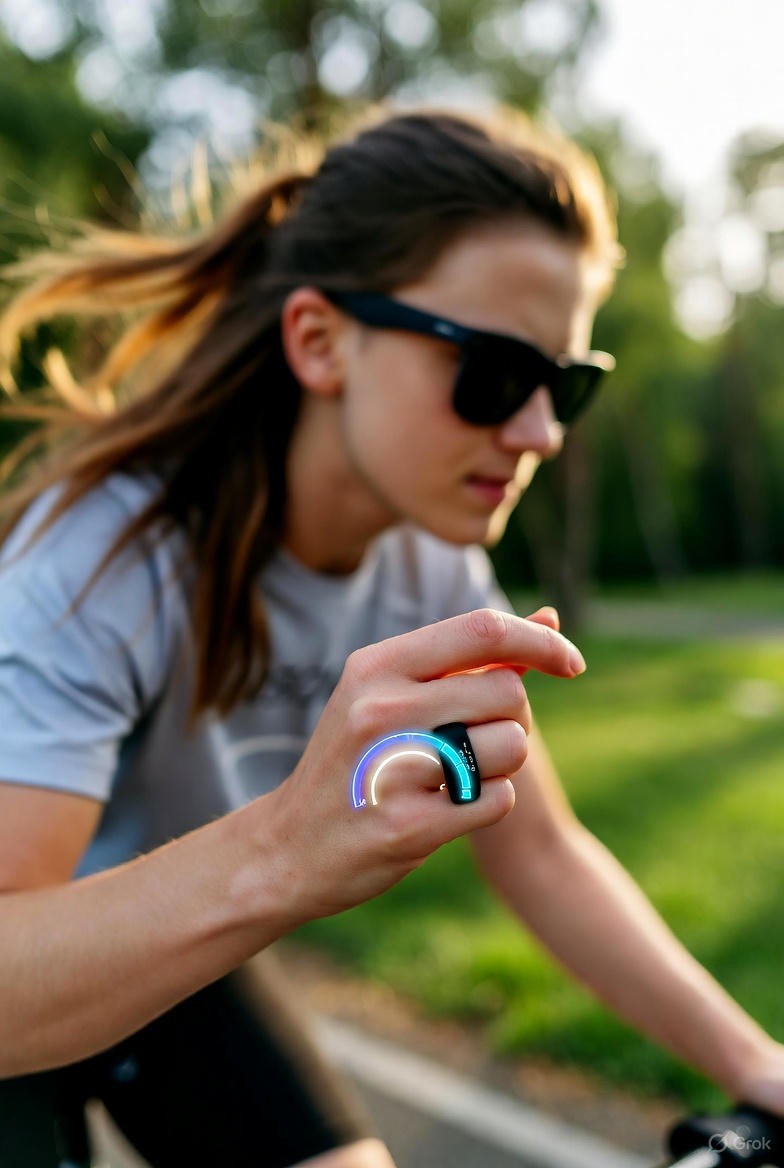
The true power of the wellness ring isn’t captured in a single day’s data. It unfolds over weeks and months, in the subtle trends and correlations that only continuous, uninterrupted wear can reveal. A wristband you remove for charging, for comfort, or because it clashes with an outfit creates data gaps. These gaps blind you to the full story. The ring’s minimal, jewelry-like design promotes constant wear, creating a seamless, rich dataset that becomes a mirror of your lifestyle.
Consider the following scenarios that only a 24/7 device can illuminate:
This longitudinal view transforms data from a report card into a conversation. The ring isn’t judging you; it’s showing you the physiological consequences of your choices. You become a detective of your own well-being, learning your unique responses to stress, alcohol, socializing, travel, different types of exercise, and even specific foods. This is personalized health intelligence at its most practical. For a deeper look at how to interpret these long-term patterns, particularly for sleep, our guide on Sleep Tracking Accuracy: What Your Device Can and Can’t Measure is an excellent resource.
In the wellness ring approach, sleep is not a passive state to be logged; it is the foundational pillar upon which daily energy, mood, and cognitive function are built. For the non-athlete, whose "performance" is measured in focus during meetings, patience with family, and resilience against daily hassles, sleep quality is arguably the most critical factor. The ring’s ability to monitor sleep stages, disturbances, and environmental factors provides a detailed blueprint of your recovery engine.
Sleep Staging (The Architecture): As mentioned, the distribution of Light, Deep, and REM sleep is key. A healthy adult typically cycles through these stages every 90 minutes, with deep sleep dominating the first half of the night and REM sleep the latter half. The ring’s algorithms estimate your time in each. Look for trends, not nightly perfection. Consistently low deep sleep, as explored in Deep Sleep Deprivation: Silent Signs You’re Not Getting Enough, can leave you physically achy and prone to sickness. Consistently low REM sleep might manifest as brain fog and emotional volatility.
Sleep Latency & Efficiency: How long does it take you to fall asleep? Consistently long latency (over 20-30 minutes) can point to an ineffective wind-down routine or caffeine timing. Sleep efficiency is the percentage of time in bed you are actually asleep. A low score suggests frequent awakenings or restlessness, which fragments sleep and reduces its restorative power.
Resting Heart Rate & HRV During Sleep: Your nighttime RHR is your truest baseline, free from the influences of movement and upright posture. Watching it dip to its lowest point (your "sleeping RHR") and tracking its nightly trend is powerful. Similarly, HRV typically peaks during deep sleep. A strong, high nighttime HRV is a clear sign of effective recovery. If your HRV remains suppressed all night, it’s a signal your nervous system is stuck in a stressed state, unable to fully downshift.
The Impact of Lifestyle Choices: This is where correlation becomes actionable. Use your sleep data to run gentle experiments:
By treating your sleep data as a feedback loop, you can identify the specific levers that improve your recovery. Small, consistent adjustments—like finishing eating 3 hours before bed, establishing a screen curfew, or practicing 10 minutes of light reading—can compound into significantly better energy and resilience. For a comprehensive starting point, our Sleep Tracking 101: Everything Beginners Need to Know article is the perfect primer.
For the non-athlete, "training" isn’t confined to the gym. It’s the mental load of a project deadline, the emotional labor of caregiving, the logistical strain of travel, or the physical toll of a busy social calendar. These are all forms of stress that require recovery. Unlike an athlete who recovers from a focused 90-minute workout, you are recovering from the diffuse, all-day workout of life. This is where Heart Rate Variability (HRV) and Resting Heart Rate (RHR) become your most trusted daily guides.
Think of your body’s stress and recovery balance like a bank account. Stressful events (physical, mental, emotional) make withdrawals. Recovery activities (sleep, meditation, gentle movement, leisure) make deposits. HRV is like the balance alert from your bank. A high, stable, or rising HRV trend suggests your account is in good standing—you’re making sufficient deposits to cover your withdrawals. A sudden or sustained drop in HRV is an overdraft warning: you’re spending more than you’re saving, and your physiological resilience is running low.
How to Use These Metrics Practically:
This system externalizes your internal state, preventing you from pushing through based on sheer willpower alone. It teaches body awareness. You might notice that your HRV consistently dips after days with back-to-back meetings, or that your RHR stays elevated for two days after flying. This isn’t failure; it’s invaluable information. It allows you to schedule demanding tasks during your resilient periods and buffer your schedule after known stressors.
The beauty of this approach is that it validates the need for rest as a critical component of health, equal to activity. It reframes "laziness" as strategic recovery. To see how this concept applies to more active individuals and understand the full spectrum of recovery, you can explore Deep Sleep Optimization for Athletes: Recovery While You Rest, which shares principles applicable to anyone under physical strain.
In the athletic paradigm, movement is often synonymous with structured, intense, sweat-drenched exercise. For the non-athlete, this binary view—either you’re "working out" or you’re sedentary—can be paralyzing and guilt-inducing. The wellness ring approach dismantles this false dichotomy. It reframes all movement as a positive modulator of your internal metrics, with the primary goal of supporting your nervous system, not exhausting it.
The data from your ring helps you find your "Movement Sweet Spot"—the type and amount of activity that supports your recovery and readiness, rather than sabotaging it.
How Your Ring Informs Your Movement Choices:
Practical Application: The Movement Feedback Loop
This process turns movement into a personalized experiment in self-care, not a punitive obligation. The goal is no longer to burn a certain number of calories, but to engage in activity that makes your wellness metrics—and, by extension, how you feel—better. It’s about moving in a way that supports your life, not dominates it.
For those curious about the deeper physiological processes that make recovery so crucial, the article The Science of Deep Sleep: What Happens to Your Body provides fascinating context on the critical repair work that happens when you are at rest.

Your biometric data does not exist in a vacuum. It is the real-time, physiological echo of every choice you make. The wellness ring’s ultimate power lies in its ability to make these invisible connections visible, transforming it from a tracker into a tool for conscious living. Conducting a periodic "Lifestyle Audit" is how you decode the story your data is telling and take empowered action.
This audit involves looking for correlations between specific lifestyle inputs and your key wellness outputs (Sleep Score, HRV trend, RHR, deep sleep %). You’re playing detective, looking for cause and effect.
Common Correlations to Investigate:
How to Conduct Your Audit:
By engaging in this audit process, you move from passive data collection to active self-knowledge. The ring becomes a partner in designing a lifestyle that truly works for your unique biology. For answers to common questions that arise during this discovery phase, our comprehensive FAQ is always available as a support resource.
Armed with the insights from your lifestyle audit, the next step is transformation. Here, the wellness ring approach aligns perfectly with modern behavioral science: big, sweeping changes fail. Tiny, sustainable adjustments succeed. This is the Micro-Adjustment Method. Instead of declaring "I will get 8 hours of sleep every night and exercise 5 days a week," you use your data to identify one tiny, high-impact lever to pull.
The data tells you what to adjust, and the micro-method tells you how to adjust it.
The Framework:
This method turns the wellness ring into a habit-formation engine. It provides the immediate, objective feedback that our brains crave to lock in new behaviors. You’re not relying on vague promises of feeling better "someday." You see the connection between action and result in your own data, making the healthy choice the obvious, rewarding choice. For inspiration on specific, small changes that target the most restorative sleep, our article on How to Get More Deep Sleep Tonight: 7 Proven Strategies is full of actionable ideas.
A legitimate concern with any detailed tracking system is the potential to swap one form of anxiety (performance) for another (obsession). Constantly checking your app, worrying over a single low HRV reading, or letting a "poor" sleep score ruin your morning defeats the entire purpose of the wellness ring. The goal is insight, not surveillance. Overcoming this requires a deliberate shift in mindset and behavior.
Cultivating a Healthy Data Relationship:
The wellness ring is a servant to your well-being, not its master. Its value is in empowering you with knowledge, not in creating a new source of stress. By setting boundaries around your engagement with the data, you harness its power without being consumed by it. This balanced approach is what makes the system sustainable for the long term. Reading about Is Sleep Tracking Worth It? Honest Pros and Cons for 2025 can provide further perspective on finding this balance.
The wellness industry is a cacophony of universal prescriptions: "Drink eight glasses of water." "Get 10,000 steps." "Sleep eight hours." While well-intentioned, this one-size-fits-all advice ignores the beautiful complexity of human individuality. Your optimal sleep duration, your ideal workout intensity, your body's response to caffeine—these are as unique as your fingerprint. The core promise of the wellness ring approach is to cut through the generic noise and help you build a health protocol that is yours alone.
This personalization journey moves through three key phases: Discovery, Experimentation, and Refinement. Your biometric data is the compass guiding you through each one.
Phase 1: Discovery – Establishing Your Baseline
Before you can optimize, you must understand your normal. This initial period of consistent wear (a minimum of 2-4 weeks) is purely observational. The goal is not to change behavior, but to faithfully record it alongside your data. During this phase, you learn:
Phase 2: Experimentation – The N-of-1 Trial
With a baseline established, you become the lead scientist in your personal health lab. This is where you run targeted, single-variable experiments based on hypotheses from your lifestyle audit.
Phase 3: Refinement – Building Your Protocol
Over months, successful experiments compound into a personalized wellness protocol. This isn't a rigid set of rules, but a flexible toolkit you can deploy based on your daily readiness.
This personalized roadmap liberates you from external dogma. Success is no longer defined by an Instagram fitness influencer's routine, but by the objective improvement of your own biomarkers and the subjective elevation of your own daily life experience. To understand how personalization evolves across a lifetime, consider reading How Age Affects Deep Sleep and How to Compensate, which highlights the importance of adapting your approach as your biology changes.
Integrating the Whole Picture: The Ring in Your Broader Health Ecosystem
The wellness ring is a powerful tool, but it is not an oracle. Its true genius is realized when its data is integrated into your broader health ecosystem—serving as a continuous feedback loop between you, your daily life, and your healthcare providers. It fills the critical gap between annual check-ups and subjective symptom reporting with objective, longitudinal data.
Bridging the Gap with Your Doctor:
Imagine walking into your physician's office not with vague complaints of "always being tired," but with a 30-day report showing chronically elevated nighttime heart rate, consistently low HRV, and fragmented sleep architecture despite adequate time in bed. This transforms the conversation. You move from describing symptoms to presenting evidence. This data can help your provider:
Synergy with Other Health Data:
The ring's data becomes even richer when viewed alongside other metrics:
The Ring as a Communication Tool:
This integrated approach turns you into an informed advocate for your own health. You bring a continuous data stream to complement the snapshot provided by lab work. It allows for more collaborative, data-informed discussions about your care. It shifts the dynamic from "Doctor, tell me what's wrong" to "Here's what I'm observing in my body. Can we explore this together?"
It's crucial to remember that the ring is a wellness device, not a medical device. It provides insights and trends, not diagnoses. Its role is to empower you with information to have better conversations and make smarter daily choices, always in partnership with qualified healthcare professionals. For many, starting this journey begins with understanding the foundational principles, which are thoroughly explained in our About Us page, detailing the mission behind creating such integrative tools.

Human beings are wired for connection, and the journey toward better health is no exception. While the wellness ring provides deeply personal data, its impact can be magnified within a context of community and shared understanding. Moving from solitary tracking to connected wellness transforms the experience from a clinical self-study into a supported, and often more joyful, endeavor.
Moving Beyond Comparison to Context:
Traditional social fitness platforms often foster unhealthy competition and comparison. Seeing a friend's 15-mile run when you struggled to get off the couch can be demoralizing. The wellness community built around holistic metrics, however, tends to focus less on competitive output and more on shared challenges and supportive insights. The conversation shifts from "How many steps did you get?" to "My HRV has been low all week; has anyone else experienced this during high work stress?" or "I tried that sleep tip and my deep sleep increased by 10%!" This creates a space for learning, not leaderboards.
The Power of Shared Experiments:
Community provides a powerful framework for accountability and discovery. You can engage in group "challenges" that are aligned with the wellness philosophy:
Creating Shared Language and Validation:
For many, especially those whose health struggles are invisible (chronic fatigue, anxiety, mild insomnia), the data from their ring can feel isolating. "Why is my body like this?" Connecting with others who see similar patterns—the "Sunday Scaries" HRV dip, the post-alcohol sleep disruption, the menstrual cycle's clear biometric signature—provides profound validation. It normalizes these experiences, reducing shame and fostering self-compassion. You develop a new vocabulary with loved ones: "I'm in the red today, I need to take it easy," or "My data says I'm recovering well, let's go for that hike!" This allows you to communicate your needs more effectively, supported by objective evidence.
Choosing Your Community Wisely:
The ideal wellness community, whether found through brand forums, dedicated social media groups, or even a few friends with similar devices, is characterized by curiosity, support, and a respect for bio-individuality. It's a place where data is shared to enlighten, not to boast, and where the focus is on progress and understanding, not perfection. Exploring Oxyzen's blog can be a great first step into a wider community of individuals engaged in this same journey of discovery, offering a wealth of shared stories and research.
We stand at an inflection point in personal health management. For decades, healthcare has been largely reactive: you feel sick, you see a doctor. The rise of continuous biometric monitoring via accessible, consumer-grade devices like the wellness ring is catalyzing a shift toward a proactive, participatory, and preventative model. This technology is democratizing the kind of detailed physiological insight that was once available only in sleep labs or to elite athletes, putting it on the finger of the everyday individual.
From Episodic to Continuous Monitoring:
The annual physical provides a single, static data point—a snapshot that can miss the dynamic story of your health. Life happens between check-ups. The ring provides the movie, not the photo. It captures how your body responds to holidays, work deadlines, dietary changes, new exercise routines, and even seasonal shifts. This continuous stream allows for the early detection of deviations from your personal norm, which is often the earliest sign of a problem long before it becomes a diagnosable condition. It empowers you to intervene with lifestyle adjustments at the first sign of drift, not after a crisis.
The Rise of the Informed Health Consumer:
This influx of personal data is creating a new archetype: the informed health consumer. This individual doesn't blindly follow generic advice but uses their data to ask smarter questions. They come to appointments prepared. They understand the concepts of baseline and variability. They are motivated by seeing the direct link between their choices and their physiology. This shifts the patient-provider relationship toward a collaborative partnership, where the individual is an active, data-contributing participant in their own care.
Integration with AI and Predictive Analytics:
The future of this technology lies not just in tracking, but in intelligent synthesis. As algorithms become more sophisticated, your wellness ring will move from describing what happened to suggesting why it might have happened and what to do about it. Imagine an AI coach that notices your HRV is trending down and, scanning your logged data, suggests: *"Your HRV has declined 15% over the past 5 days. This correlates with increased work hours and later caffeine intake. To recover, consider shifting your last coffee to before 2 PM and adding a 10-minute afternoon walk for the next three days."* This personalized, context-aware guidance is the logical evolution of the current data dashboard.
Closing the Loop on Mental Wellbeing:
The next frontier is the deeper integration of mental and emotional health. Future iterations may incorporate gentle, consent-based logging for mood and stress, creating a powerful fusion of subjective experience and objective biometrics. This could reveal, with stunning clarity, how a therapy session lowers your resting heart rate for days, or how a mindfulness practice steadily increases your HRV baseline. It breaks down the artificial barrier between "mental" and "physical" health, painting a complete picture of human well-being.
This future is not distant; it is being built now. The wellness ring you wear today is the foundational sensor in this coming revolution of personalized, proactive health. It represents a move away from health as a destination—a weight, a blood pressure number, a finish line—and toward health as a continuous, informed, and empowering journey. For a glimpse into the vision driving this future, you can read Our Story to understand the passion and purpose behind these innovations.
Theory and metrics come to life through story. Let's follow "Maya," a 42-year-old marketing manager and mother of two, who is the archetypal "non-athlete." Her goals are not athletic; they are about surviving and thriving in her demanding life: having patience with her kids, staying focused at work, and not feeling perpetually drained by 4 PM. She has worn an Oxyzen ring consistently for one month. Here’s how the data translated into her life.
Week 1: Baseline & A Haunting Revelation
Maya’s first week was observational. The data established her baseline: an average sleep duration of 6 hours 45 minutes (fragmented by night wakings), a deep sleep percentage of 8% (well below the healthy range), a morning HRV in the "low" zone, and a resting heart rate of 68 bpm. The most shocking correlation came from her notes. On Friday, she had two glasses of wine with friends. That night, her deep sleep plummeted to 3%, her sleeping heart rate averaged 72 bpm, and her HRV crashed. "I always thought wine helped me relax," she said. "The data showed it was torpedoing my only chance for physical recovery."
Week 2: The First Micro-Adjustment
Armed with this insight, Maya formed her first hypothesis: "Reducing alcohol will improve my deep sleep." Her micro-adjustment was simple: limit alcohol to one night per week, and have only one drink. She implemented this. The data response was immediate. On her "alcohol-free" nights, her deep sleep jumped to an average of 12%. Her sleeping RHR dropped to 65 bpm. She noted in her app: "Felt noticeably more rested on Tuesday and Thursday mornings. Less reliant on coffee."
Week 3: Discovering the Stress Signature
With better sleep, Maya had more mental bandwidth to observe her daytime data. She noticed her daytime HRV graph looked like a canyon every Wednesday—her day of back-to-back meetings. She tagged these days. The correlation was clear: high perceived stress = low HRV. Her second micro-adjustment was born: a "Wednesday Buffer." She blocked her calendar for a 20-minute walk outside after her last meeting, no exceptions. The following Wednesday, her HRV dip was less severe, and her sleep that night was more efficient. The walk wasn't just "exercise"; it was a neurological reset.
Week 4: The Compound Effect & A New Awareness
By the end of the month, the compound effect of her two micro-adjustments was clear in her monthly trend view. Her average deep sleep had increased from 8% to 14%. Her average sleeping RHR had fallen from 68 bpm to 63 bpm. Her weekly average HRV had moved from the "Low" to the "Balanced" zone. Subjectively, Maya reported: "I'm not a new person, but I'm a more resilient version of myself. I have a predictable afternoon energy dip, but it's less severe. I catch myself before snapping at the kids because I can recognize when my body is in 'yellow light' mode. I use my data to give myself permission to rest."
Maya’s story is not about dramatic transformation, but about sustainable reclamation. She didn't run a marathon; she reclaimed her sleep and managed her stress response. The ring provided the objective feedback that made her tiny changes feel meaningful and victorious. She continues her journey, now experimenting with a 10-minute evening meditation to see if it can further improve her sleep latency. Her data is her guide, her confidence is growing, and her health is no longer a mystery but an ongoing, positive conversation. For more real-world experiences that mirror this journey, our Testimonials page shares stories from users who have seen similar shifts.
With any emerging technology, especially in the wellness space, skepticism is healthy. Let's address the most common objections to the wellness ring approach head-on, separating valid concerns from misconceptions.
Objection 1: "It's just more data anxiety. I'll become obsessed."
This is a crucial concern, and the risk is real. The antidote lies in the design philosophy and user mindset. Unlike a screen-covered wristband that buzzes with notifications, the ring is passive. It collects data without demanding your attention. The key is to adopt the "trends, not dots" mentality and set intentional check-in boundaries, as outlined earlier. The goal is to foster body awareness, not data obsession. It's a tool to look outward at your life to understand your body, not to stare inward at your phone in anxiety. When used as intended, it should reduce anxiety by providing explanations for how you feel, replacing uncertainty with understanding.
Objection 2: "The data isn't medically accurate. Why should I trust it?"
This objection confuses precision with utility. It's true that a consumer smart ring is not a medical-grade polysomnograph. Its sleep staging is an algorithm's estimate. However, its strength is not in absolute, clinical-grade precision for a single metric on a single night. Its strength is in relative, longitudinal accuracy. While the absolute number for your deep sleep might be off by a percentage point or two, the trend is exceptionally reliable. If your ring shows your deep sleep dropped from 15% to 8% after a specific behavior, that change is real and meaningful. It's a consistent measuring stick for your own body. You're using it to track your personal deviations, not to diagnose disease. For a nuanced discussion on this very topic, our article Sleep Tracking Accuracy: What Your Device Can and Can’t Measure provides a transparent breakdown.
Objection 3: "I know what I need to do. I just need to do it. A ring won't help."
Willpower and knowledge are often insufficient. The ring adds the missing third element: immediate, personal, and non-judgmental feedback. "Knowing" you should sleep more is abstract. Seeing that your poor sleep directly correlates with your afternoon caffeine habit, and that on days you skip it, your deep sleep improves, creates a powerful cause-and-effect link in your brain. It bridges the gap between intellectual knowledge and visceral understanding. It turns abstract health concepts ("reduce stress") into concrete, personal observations ("my 10-minute meditation raised my HRV by 10 points"). This feedback loop is what drives sustainable behavioral change.
Objection 4: "It's too expensive for what it is."
This is a value assessment. One must weigh the cost against the potential return on investment (ROI) in quality of life. For many, the ROI becomes clear when they:
Objection 5: "My phone/cheap tracker does this already."
This misunderstands the fundamental advantage of the form factor and sensor placement. Wrist-based optical sensors are highly prone to motion artifact, especially for the delicate HRV measurement. Taking your device off to charge or for comfort creates data gaps, particularly at night. The ring's 24/7 wear from a vascular-rich location provides a cleaner, more consistent signal, especially for recovery metrics. Furthermore, most basic trackers focus on output metrics (steps, calories). The wellness ring is built from the ground up for input and state metrics (HRV, sleep stages, temperature trends)—the very metrics that matter most for the non-athlete's goals. It's a different category of device with a different purpose.
By addressing these objections thoughtfully, we can see that the wellness ring is not a magic bullet, but a sophisticated tool. Its value is not automatic; it is unlocked by a user who engages with it intentionally, using the data not as a scorecard, but as a conversation starter with their own body.
Embarking on this journey can feel exciting but overwhelming. A structured approach for your first 30 days can help you build a solid foundation, avoid common pitfalls, and set the stage for long-term success. Think of this as your onboarding roadmap.
Days 1-7: The Settling-In Period
Days 8-14: Observation & Baseline Establishment
Day 15: The First Review
Days 16-30: Your First Experiment
Pro-Tips for Success:
Your first 30 days are about building a sustainable relationship with the technology and with your data. By following this gentle ramp-up, you lay the groundwork for a practice of personalized health that can last for years, not weeks. The ultimate goal is to reach a point where the ring is an invisible partner in your well-being, providing insights that feel less like data and more like a deeper understanding of yourself.
After the first 30 days, you move from a novice to an intermediate user. You understand your baseline, have run a few experiments, and now the data reveals more subtle, complex stories. This phase is about sophistication—understanding not just what the numbers are, but what they mean in combination, and how they respond to more nuanced aspects of your life.
The Interplay of Metrics: The Story They Tell Together
A single metric in isolation can be misleading. True insight comes from observing the relationships between them.
The Lag Effect: When the Data Follows the Event
One of the most important advanced concepts is the lagging indicator. Your body's response to a stimulus isn't always immediate.
Contextualizing "Bad" Data: It's Not Failure, It's Feedback
An advanced user reframes low scores. A night of terrible sleep isn't a failure; it's a data point in an experiment titled, "What happens when I have a difficult conversation right before bed?" A week of suppressed HRV during a family crisis isn't a sign of poor health; it's a quantitative measure of your body's honest response to a hard life event. This data validates your experience and can guide compassionate self-care. The goal isn't to have perfect graphs, but to have graphs that truthfully reflect your life, so you can make informed choices to support yourself through all of it.
Longitudinal Trend Analysis: The Macro View
At this stage, start analyzing your data by month and season.
Mastering this level of interpretation turns your wellness app into a biography of your body. You learn its unique language of response and recovery, becoming fluent in what it needs to not just survive, but thrive through all of life's chapters. For a deep dive into one of the most critical long-term trends, Deep Sleep Sweet Spot: Ideal Duration by Age provides essential context for how your targets should evolve over time.
The wellness ring is not a short-term diet; it's a long-term companion. After the first few months of discovery and experimentation, the practice matures. It becomes less about daily scrutiny and more about strategic check-ins and course corrections, ensuring your health strategy evolves as your life does.
From Active Tracking to Integrated Awareness
The end goal is for the technology to recede into the background. You develop a "sixth sense" for your body's signals, informed by months of data correlation. You might feel a certain diffuse fatigue and think, "This feels like my HRV is low," and a check of the app confirms it. The data serves to validate and refine your intrinsic body awareness, not replace it. Your daily check-in might become a 10-second glance at a readiness score—a simple traffic light to guide your day—rather than a deep dive into graphs.
Scheduled Deep Dives: The Quarterly Review
Instead of daily analysis, establish a ritual of a Quarterly Wellness Review. Every three months, block an hour. Pull up your trend data from the last quarter and ask strategic questions:
This quarterly review turns wellness into a strategic personal project, managed with the same foresight you might apply to your finances or career.
Adapting to Life’s Phases
Your body is not static, and your wellness practice shouldn't be either. Your ring data will objectively document life's transitions, and your approach must flex with them.
Knowing When to Take a Break
Paradoxically, a sign of mastery is knowing when to disengage. If you find yourself in a healthy, stable rhythm and the daily check-in feels unnecessary, give yourself a "data holiday." Wear the ring to maintain the dataset, but hide the app. Live purely by feel for a week or two. This proves to yourself that the practice has done its job: it has educated your intuition. You can always return to the data for a tune-up or when navigating a new life challenge.
The long game is about resilience and sustainability. The ring ceases to be a "tracker" and becomes a part of your health infrastructure—a silent guardian that ensures you’re listening to the most important voice in your wellness journey: your own, now wiser and more informed.
As we invite these devices deeper into our lives, collecting our most intimate biological data—our sleep, our stress, our rhythms—we must engage with the serious ethical questions they raise. Proactive wellness should not come at the cost of privacy or autonomy. Being an educated user means being a vigilant steward of your own data.
Who Owns Your Biometric Data?
This is the paramount question. When you use a wellness device, you are typically generating two types of data: 1) the raw biometric signals, and 2) the derived insights (sleep scores, readiness metrics). It is critical to read the privacy policy of any company you engage with. A trustworthy company will be transparent, stating clearly that you own your data. They should explain that they use aggregated, anonymized data to improve algorithms, but that your personal, identifiable data is not sold to third parties. Look for policies that emphasize data minimization, strong encryption, and user control. The mission and values of a company, often found on pages like Oxyzen's Our Story, can be a strong indicator of their ethical stance on data stewardship.
The Privacy vs. Personalization Paradox
There is a tension between privacy and utility. The most powerful, personalized insights often come from algorithms trained on vast, diverse datasets. Would you be willing to contribute your anonymized data to train a better sleep stage algorithm if it meant the device would be more accurate for you and others? This is a personal choice. The key is informed consent. Companies should offer clear opt-in and opt-out choices for data sharing for research, not bury them in legalese.
Principles for the Ethical User:
Using a wellness ring mindfully means embracing its power while respecting its profound intimacy. It is a partnership built on trust—trust in the technology, and more importantly, trust in yourself to use the knowledge it provides wisely and ethically.
The impact of personalized wellness tracking extends far beyond the individual. When one person in a family, a partnership, or a workplace begins to understand and honor their physiological needs, it creates a ripple effect that can transform the health and dynamics of the entire group.
Transforming Partnerships and Family Dynamics:
Creating a Culture of Wellness in the Workplace:
Forward-thinking companies are beginning to see the value in supporting employee well-being not as a perk, but as a core operational strategy. The principles of the wellness ring approach can inform this shift without requiring individual tracking.
The Public Health Implications:
On a macro scale, if a significant portion of the population moved from a reactive to a proactive health model, the potential societal benefits are staggering.
The wellness ring, therefore, is more than a personal gadget. In the hands of mindful users, it becomes a tool for cultural change—starting in the home, spreading to the workplace, and contributing to a broader societal realignment with what true, sustainable health really means.
We began this exploration by acknowledging the disconnect: a fitness technology landscape built for athletes, leaving the everyday person behind. We have journeyed through the philosophy of the wellness ring—a device designed not for the podium, but for the pedestrian. We've delved into the metrics that matter, learned how to interpret them, and explored how to use them not as a cudgel of self-judgment, but as a compass for self-compassion.
The core revelation of this approach is that fitness is a subset of wellness, not the other way around. For the non-athlete—which is most of us—the ultimate goal is not a faster mile time, but a more vibrant, resilient, and engaged life. It's about having the energy to play with your kids after work, the focus to excel in your passions, the patience to nurture relationships, and the resilience to weather life's inevitable storms.
The wellness ring facilitates this by making the invisible visible. It translates the vague feeling of "being rundown" into a specific narrative: your deep sleep has been low for three nights, your HRV is trending down, and it correlates with a stressful project at work. This knowledge is power. It moves you from being a passive passenger in your health to an active pilot.
This is not a journey of perfection. It is a journey of progress and understanding. There will be weeks of beautiful, balanced graphs and weeks that look like seismic charts. Both are data. Both are teachers. The ring's greatest gift may be the permission it grants you to rest without guilt, to say no to protect your energy, and to celebrate the tiny, data-validated victories—the extra percent of deep sleep, the point-by-point climb of your HRV baseline.
As this technology evolves, becoming more integrated and intelligent, its potential to democratize proactive health will only grow. But the fundamental principle will remain: the technology is a servant to your wisdom. It provides the information, but you are the author of your story.
The invitation, then, is to begin. To listen. To experiment with curiosity. To build a partnership with your own body, facilitated by a tool that honors its complexity. It's an invitation to step off the hamster wheel of generic fitness advice and onto a path of personalized discovery—a path that leads not to a finish line, but to a more profound and sustainable sense of well-being, one micro-adjustment at a time.
Your wellness is not a destination to be reached through sheer effort. It is a landscape to be understood, nurtured, and enjoyed throughout the long and wonderful journey of your life. Let this be your new starting point.
Ready to Begin Your Journey?
If the concepts explored in this article resonate with you, the path to personalized understanding starts with the right tool. Discover a device designed with this holistic, non-athlete-first philosophy in mind. Explore the technology, design, and vision behind a new approach to wearable wellness at the Oxyzen Shop.
For continued learning, deep dives into specific topics like sleep science, and a community of like-minded individuals, visit our comprehensive resource hub at the Oxyzen Blog.
Have specific questions about how this approach can work for you? Our detailed FAQ is a great place to start.
Your data is your story. Start listening to it.
Your Trusted Sleep Advocate (Sleep Foundation — https://www.sleepfoundation.org/)
Discover a digital archive of scholarly articles (NIH — https://www.ncbi.nlm.nih.gov/
39 million citations for biomedical literature (PubMed — https://pubmed.ncbi.nlm.nih.gov/)
experts at Harvard Health Publishing covering a variety of health topics — https://www.health.harvard.edu/blog/)
Every life deserves world class care (Cleveland Clinic -
https://my.clevelandclinic.org/health)
Wearable technology and the future of predictive health monitoring. (MIT Technology Review — https://www.technologyreview.com/)
Dedicated to the well-being of all people and guided by science (World Health Organization — https://www.who.int/news-room/)
Psychological science and knowledge to benefit society and improve lives. (APA — https://www.apa.org/monitor/)
Cutting-edge insights on human longevity and peak performance
(Lifespan Research — https://www.lifespan.io/)
Global authority on exercise physiology, sports performance, and human recovery
(American College of Sports Medicine — https://www.acsm.org/)
Neuroscience-driven guidance for better focus, sleep, and mental clarity
(Stanford Human Performance Lab — https://humanperformance.stanford.edu/)
Evidence-based psychology and mind–body wellness resources
(Mayo Clinic — https://www.mayoclinic.org/healthy-lifestyle/)
Data-backed research on emotional wellbeing, stress biology, and resilience
(American Institute of Stress — https://www.stress.org/)


