


How Smart Rings Eliminated Fitness Tracking Barriers
Smart rings removed common barriers like bulk, complexity, and cost.
Smart rings removed common barriers like bulk, complexity, and cost.
%402x.svg)
For years, the promise of quantified self-movement—tracking every step, heartbeat, and calorie burned—has been both alluring and, for many, frustratingly out of reach. The early landscape of fitness technology was dominated by clunky wristbands, uncomfortable chest straps, and smartphones that needed to be perpetually clutched. These devices created more barriers than they broke down: they were obtrusive, socially awkward, easy to forget, and often produced data that felt disconnected from our lived reality. They demanded too much—constant attention, daily charging rituals, and a willingness to wear a tech gadget that screamed "gadget" rather than blending seamlessly into life. As a result, consistent, meaningful tracking remained the domain of the already-dedicated fitness enthusiast, leaving the average person behind.
But a quiet revolution has been taking place, one that fits snugly on your finger. The advent and refinement of the smart ring have systematically dismantled every major barrier that once stood between individuals and actionable health insights. This isn't just a miniaturization of existing tech; it’s a fundamental reimagining of the user experience. By shifting the form factor from the wrist to the finger, smart rings have unlocked a new paradigm of 24/7, unconscious, and highly accurate biometric monitoring. They have moved health tracking from a conscious, often burdensome activity into a passive, effortless background process.
The implications are profound. We are transitioning from an era of sporadic data snapshots to one of continuous, holistic life-streams. This shift is democratizing access to personal health intelligence, making it available to anyone who wears a ring, regardless of their tech-savviness or fitness level. By eliminating the frictions of wearability, social acceptance, battery anxiety, and data complexity, smart rings are finally delivering on the original promise of the fitness tracker: to provide effortless, insightful, and empowering guidance for a healthier life. This article will explore in detail how this elegant piece of technology has overcome each historical hurdle, paving the way for a future where understanding our own biology is as simple and natural as getting dressed.
The journey of the fitness tracker began on the wrist, and for a long time, it seemed like that was where it would stay. Early pedometers were bulky clips; the first wave of modern activity trackers were thick, rubberized bands that often caused skin irritation. While they shrank over time, the fundamental issue remained: you were always aware of a foreign object strapped to your body. It bumped against desks, got caught on sleeves, and had to be removed for showers, swimming, or any activity where it might get damaged. This constant awareness created a psychological and physical barrier to consistent use. You didn’t forget your fitness tracker; you were perpetually reminded of it.
Smart rings shattered this paradigm by leveraging one of the most intimate and accustomed places we wear jewelry: our fingers. The human finger is an ideal site for biometric sensing. It’s rich in capillary blood flow, allowing for strong photoplethysmogram (PPG) signals to measure heart rate and blood oxygen. It experiences pronounced temperature fluctuations. Crucially, we are culturally and physically accustomed to having items there. A well-designed smart ring doesn’t feel like a device; it feels like a piece of jewelry. This seamless integration is the first and most critical barrier eliminated.
The engineering challenge was immense. Packing sensors, a battery, memory, and wireless connectivity into a ring-sized enclosure required breakthroughs in micro-electronics and power management. The result is a device that disappears from conscious thought. You wear it while typing, sleeping, washing your hands, and working out. There’s no need to take it off, meaning there’s no gap in your data. This 24/7 wearability is the cornerstone of its value. Unlike a watch you charge nightly on a bedside table, a smart ring can be charged via a portable dock while you shower, maintaining an unbroken stream of health data. This effortless, all-day-and-night companionship transforms tracking from a deliberate act into a passive state of being. For those curious about the intricate technology that makes this possible, our deep dive into how sleep trackers actually work explores the sensor fusion happening inside these tiny devices.
Furthermore, the aesthetic barrier has vanished. Where fitness bands often clashed with professional or formal attire, a smart ring can be a stylish accessory. Brands like Oxyzen design their rings with sleek, minimalist aesthetics—ceramic coatings, titanium builds, and polished finishes—that complement any style. This social acceptability is a non-trivial factor in adoption. People are willing to wear something that looks and feels good, not just something that performs a function. This shift has opened the door for a broader audience, including those who would never consider wearing a traditional fitness tracker, to engage with their health data. It’s a move from tech-wear to everyday wear, and it’s a fundamental reason why smart rings are poised to become as ubiquitous as the wristwatch once was.
The greatest enemy of any data-driven health program is inconsistency. A perfect week of sleep data is meaningless if followed by three days of forgetting to wear your device. Traditional trackers required active participation: you had to remember to put them on, ensure they were charged, and often manually start or stop activity modes. This user friction was a significant drop-off point for many. Life gets busy, routines change, and a device that demands attention will eventually be ignored.
Smart rings have pioneered the concept of unconscious tracking. Once you slip it on, your job is done. There are no buttons to press for sleep mode, no need to tell it you’re going for a run. The ring uses sophisticated algorithms and multi-sensor data to autonomously detect what you’re doing. It knows when you’ve fallen asleep, when you enter light, deep, and REM cycles, when you’ve woken up, and even when you’ve gotten out of bed at night. It recognizes periods of activity, distinguishes between a walk and a vigorous workout, and logs periods of sedentary behavior—all without a single input from you.
This passivity is revolutionary. It captures your life as it is, not as you remember or report it. The data becomes a true reflection of your natural rhythms and behaviors, free from the bias of self-reporting or the gaps of forgetfulness. For the first time, you get an objective, continuous baseline. This is particularly transformative for understanding sleep. Many people have a poor perception of their own sleep quality and duration. The ring provides an irrefutable, detailed account, offering insights you might otherwise never access. To understand what this data can reveal, our article on sleep tracking accuracy breaks down the strengths and limitations of this passive monitoring.
The elimination of "forgetfulness" extends to charging. Early smart rings had short battery lives, but modern iterations like those from Oxyzen last 5-7 days on a single charge. The charging process itself is often designed around a natural break in wearability: placing the ring in its compact dock while you shower or get ready in the morning. In 20-30 minutes, it gains enough charge for another full day. This "top-up" model, contrasted with the nightly overnight charging of smartwatches, means the device is almost always on your body and collecting data. The barrier of "my tracker is dead" or "I left it on the charger" is virtually eliminated. By removing every point of required user interaction, smart rings have made consistent, long-term health monitoring not just possible, but inevitable for the wearer.
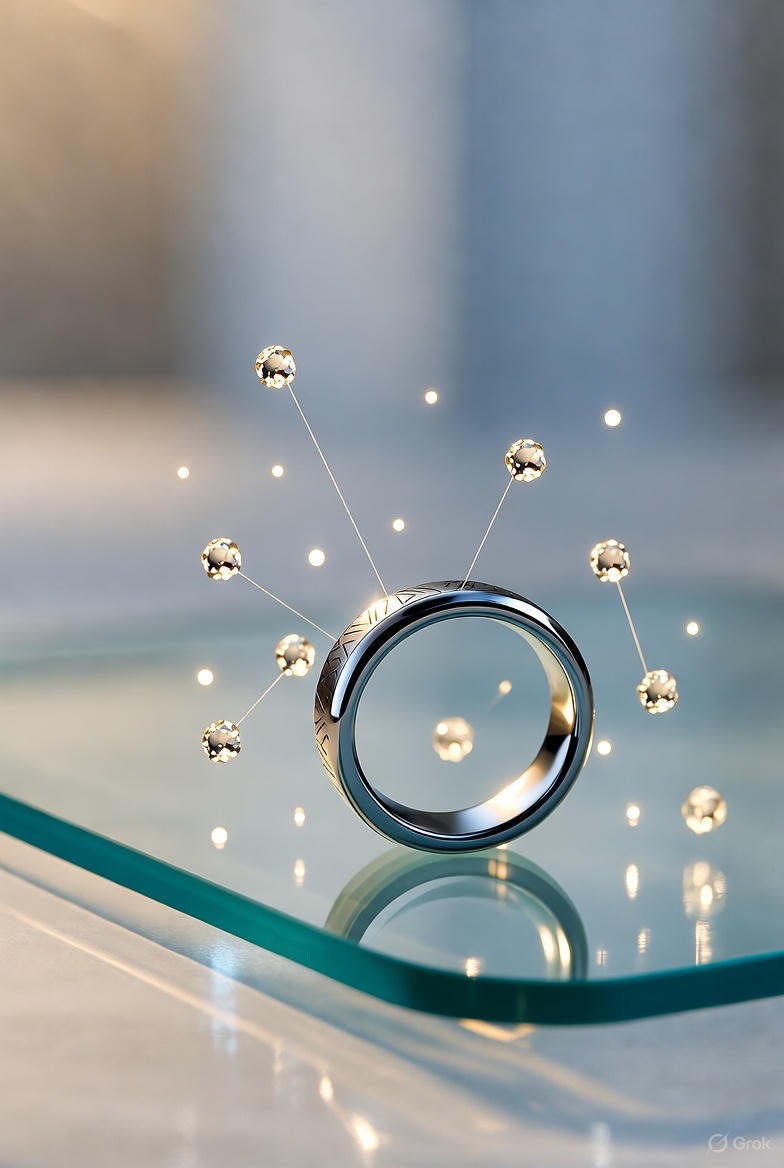
The fitness tracker industry was built on the step count. For years, this single metric was the primary focus, a simplistic proxy for overall activity. But human health is a symphony, not a single note. Focusing solely on steps is like judging an orchestra by the volume of the drums. It misses the harmony of heart rate variability, the melody of sleep cycles, the rhythm of body temperature, and the baseline of resting heart rate. The true barrier wasn't just collecting data; it was collecting the right data, continuously, to paint a complete picture.
Smart rings, by virtue of their 24/7 wearability and advanced sensor arrays, have broken through this reductive barrier. They are not fitness trackers; they are wellness monitors. Their purview encompasses your entire circadian biology:
This holistic approach dismantles the barrier of fragmented data. You no longer need one device for sleep, another for heart rate during workouts, and a journal for subjective mood. Everything is unified in one continuous stream from one device on your finger. This allows for the discovery of deep correlations: how a late meal affects your deep sleep, how a stressful day tanks your HRV, or how your workout performance is linked to your sleep quality two nights prior. It’s a shift from tracking isolated metrics to understanding the interconnected system of your body. To see how this holistic data can be applied, our guide on deep sleep tracking and what your numbers should look like provides a practical framework for interpretation.
A decade of fitness tech created a new problem: data overload. Users were presented with dashboards filled with complex charts, confusing graphs, and a barrage of numbers—steps, active minutes, calorie estimates, sleep scores, heart rate zones. For the average person, this was not empowering; it was paralyzing. The question shifted from "How do I get data?" to "What on earth does this data mean for me?" The barrier was no longer collection, but comprehension.
Smart ring platforms have led the charge in breaking down this barrier through sophisticated data synthesis and human-centric communication. The goal is not to show you raw sensor data, but to translate it into actionable, personalized insights. This is achieved through several key strategies:
This focus on actionable intelligence eliminates the "so what?" factor that plagued early trackers. The value is no longer in the data itself, but in the smart, accessible interpretation of that data. It empowers users to make informed decisions about training, recovery, sleep, and stress management without needing a degree in data science. For those beginning this journey, a great starting point is our Sleep Tracking 101 guide for beginners, which explains how to move from numbers to meaningful lifestyle changes.
For years, a persistent shadow hung over consumer wearables: the question of accuracy. Could a device you buy off the shelf provide data reliable enough to act upon? Early wrist-based optical heart rate monitors were notoriously unreliable during high-intensity interval training or for those with specific skin tones. Sleep staging was often little more than an educated guess based on movement. This credibility gap was a major barrier to trust and serious adoption. People might track for novelty, but they hesitated to make important health decisions based on the data.
The smart ring, by virtue of its form factor and sensor fusion, has made remarkable strides in closing this gap, bringing consumer-grade devices closer to medical-grade reliability in several key areas:
This push toward validated, reliable data is breaking down the barrier of skepticism. Users, and increasingly healthcare providers, are beginning to trust the longitudinal data from these devices as a valuable piece of the health puzzle. It’s enabling a new model of preventive, data-informed health where individuals can spot deviations from their personal norm and seek professional advice earlier. The ring isn’t a doctor, but it’s becoming a highly competent, always-on health assistant. For a balanced view on this capability, our honest assessment of whether sleep tracking is worth it weighs the benefits against the limitations.
The social experience of wearing a fitness tracker has evolved dramatically. The first generation of devices were often conversation starters—sometimes desired, sometimes awkward. "How many steps do you have?" became a modern greeting. The leaderboard, a feature of many early apps, turned personal health into a public competition. For many, this created a psychological barrier: the feeling of being constantly judged or the pressure to perform for an audience. It externalized motivation, which can be fleeting and fraught with comparison.
The smart ring, by its very nature, facilitates a more intimate and psychologically sustainable relationship with health data. Its discreet form means it doesn’t broadcast itself. No one needs to know you’re tracking unless you choose to tell them. This privacy allows for a more honest and self-focused journey. The data is for you, not for your social feed or a corporate wellness leaderboard. This internalization of motivation is a critical shift from extrinsic to intrinsic drivers, which are far more powerful for long-term behavior change.
This intimacy extends to the type of data collected. While a step count is easily shared and compared, metrics like HRV, deep sleep duration, or body temperature trend are deeply personal. They speak to your internal state, your recovery, your stress, and your unique biology. Sharing these feels less like a boast and more like a vulnerable insight. As a result, the culture around smart rings is less about competition and more about understanding and optimization. Communities that form around these devices often focus on problem-solving ("My temperature is elevated, has anyone experienced this?"), sharing strategies for improvement ("These habits helped increase my deep sleep"), and supportive discussions rather than leaderboard rankings.
This psychological shift lowers the barrier to entry for those who were turned off by the performative aspect of fitness tech. It appeals to individuals who are curious about their health but resistant to gamification or public display. It creates a safe, private space for exploration. The focus becomes self-compassion and listening to your body’s signals, rather than pushing through pain or fatigue to hit an arbitrary goal. This aligns perfectly with the broader wellness movement’s emphasis on holistic health, mindfulness, and recovery. It’s a tool for self-knowledge, not self-competition. You can read about real, personal journeys and transformations in the stories shared on our testimonials page.
The fitness tech industry has long been criticized for a "one-size-fits-all" approach that often defaulted to a male user model. Features were geared toward gym-based workouts and running, while the unique physiological cycles and health concerns of women were largely ignored. This created a significant barrier, making half the population feel like an afterthought in their own health journey.
Smart rings have emerged as a uniquely powerful tool for bridging this gender gap in health technology. Their 24/7 biometric monitoring, particularly of temperature and resting heart rate, provides unparalleled insight into the female reproductive cycle in a way wrist-based devices simply cannot match reliably.
Furthermore, the design of smart rings is inherently more gender-neutral and inclusive. Their form as jewelry avoids the "shrink it and pink it" trope. A sleek, titanium ring is as appealing to one gender as another. This inclusive design, combined with features that finally address women’s specific health needs, has dismantled a major adoption barrier. It has made advanced biometric tracking not just accessible, but genuinely valuable and relevant to women’s lived experiences in a way previous devices were not. For women specifically interested in optimizing their rest, our guide on deep sleep optimization for athletes contains principles highly applicable to managing energy and recovery across the menstrual cycle.
If there is one area where smart rings have had a disproportionately massive impact, it is sleep. Before their advent, understanding sleep was an opaque and frustrating process. Questionnaires were subjective, and even dedicated sleep trackers were often uncomfortable to wear in bed. The barrier to understanding and improving sleep was immense, leaving us to guess why we woke up tired.
The smart ring has become the ultimate "silent sleep coach," dismantling this barrier through effortless, comprehensive monitoring. It has moved sleep tracking from a niche, cumbersome activity into a seamless part of nightly routine. Here’s how it has revolutionized this domain:
This transformation has demystified sleep. Users are no longer passive victims of poor rest; they are empowered with knowledge. They can see the direct impact of their choices and make informed adjustments. The ring provides the objective feedback loop that was missing: try going to bed 30 minutes earlier for a week, and see if your deep sleep increases and your readiness score improves. This actionable, personalized guidance has broken the biggest sleep barrier of all—the feeling of helplessness. It has made optimizing sleep a tangible, data-driven process. For a comprehensive look at the factors involved, our article on the deep sleep formula of temperature, timing, and habits delves into the science of optimization.
The final barrier demolished by the smart ring is the perception that advanced biometrics are only for biohackers or elite athletes. Early adopters were indeed tech enthusiasts, but the utility of 24/7, holistic data has proven invaluable to two demanding groups whose performance is directly tied to recovery: competitive athletes and high-performing executives (the corporate athlete).
For the athlete, the old model was to train hard and hope for adequate recovery. Overtraining was a constant risk, and rest was often scheduled, not responsive. The smart ring changes this dynamic entirely. By providing a daily, objective "readiness" score derived from sleep quality, HRV, resting heart rate, and temperature, it tells the athlete whether their body is prepared to handle a high-intensity session or needs a light day. This moves training from a pre-written plan to an adaptive, body-responsive program. It helps identify the early signs of illness or overtraining before they derail weeks of progress. The focus shifts from just measuring output (pace, power) to optimizing the input (recovery). This is why many professional sports teams have integrated these devices into their athlete monitoring systems. The ring provides the continuous, recovery-focused data that was previously missing, allowing for truly personalized periodization. The insights in our article on deep sleep optimization for athletes are directly applicable here.
For the executive or knowledge worker, performance is measured in cognitive output, decision-making, and leadership under stress. Their "training" is a relentless schedule of meetings, travel, and mental load. Their "recovery" is sleep and downtime, which is often the first thing sacrificed. The smart ring serves as a vital circuit breaker. It quantifies the cost of that cross-red-eye flight or that consecutive week of 60-hour workdays. It shows, in indisputable data, how poor sleep destroys next-day HRV—a direct marker of stress resilience. For this user, the ring is a stress and resilience management tool. A low readiness score is a signal to delegate, postpone a high-stakes decision, or prioritize a meditation session. It provides permission to rest, backed by data.
By serving these high-performance demographics so effectively, the smart ring has shattered the barrier of being a "nice-to-have" gadget. It has established itself as a "need-to-have" tool for anyone whose livelihood depends on the consistent performance of their body and mind. This professional validation has, in turn, accelerated mainstream adoption, proving the technology’s robust utility and moving it squarely into the realm of essential wellness infrastructure. To understand the brand philosophy behind creating a tool for such demanding users, you can explore our story and mission.
For too long, advanced health monitoring was gated behind exclusive barriers: the high cost of specialized equipment, the need for technical expertise to interpret data, and the requirement to fit a specific, active lifestyle mold. The early adopter of fitness tech was often pictured as a marathon runner or a Silicon Valley biohacker—a narrow archetype that excluded the vast majority. Smart rings have fundamentally democratized access to deep health insights by being accessible, adaptable, and relevant to virtually every human body and daily routine, regardless of age, fitness level, or lifestyle.
This democratization operates on several levels. First, the financial and technological accessibility has improved dramatically. While premium models exist, the overall cost of entry for a device that tracks heart rate, HRV, temperature, sleep stages, and blood oxygen is now within reach of a mainstream consumer, especially when compared to the combined cost of separate devices for these functions just a few years ago. More importantly, the user interface requires no technical skill. The apps are designed for intuitive understanding, using scores, simple graphs, and plain-language insights. You don't need to know what "RMSSD" means to understand that a higher HRV is better; the app will show you a trend line and tell you what it indicates about your recovery.
Second, and more crucially, is lifestyle inclusivity. The smart ring does not judge or prescribe a single way of being healthy. It is equally valuable for:
The device adapts to your normal. It learns the baseline of a 75-year-old retiree and a 25-year-old CrossFit athlete with equal respect, flagging what is significant for each individually. This personalized relevance removes the intimidating, prescriptive aura of older fitness tech. It meets people where they are, making advanced health intelligence not just for the elite athlete, but for every body. This is the true elimination of the exclusivity barrier. To see how this plays out with real users from all walks of life, the experiences shared on our testimonials page illustrate this universal applicability.
A device that creates an island of data is a device with limited utility. One of the silent frustrations with earlier trackers was the "walled garden" problem—data lived and died within a single brand's app, unable to interact with the other digital tools we use to manage our health and lives. This created friction, duplication of effort, and a fragmented self-view. The smart ring has broken this barrier by championing open integration, positioning itself not as a destination, but as the most reliable source—the central biometric hub—within a larger, connected wellness ecosystem.
Modern smart ring platforms offer robust API (Application Programming Interface) integrations with a wide array of third-party apps. This transforms the ring from a solo performer into the conductor of a health data orchestra. The implications are profound:
This open-hub model eliminates the barrier of data siloing. It acknowledges that health is managed across multiple touchpoints and that the ring’s supreme value is in providing the most consistent, passive, and physiological ground truth. By feeding this truth into the other specialized apps we choose to use, it creates a synergistic, holistic management system that is greater than the sum of its parts. The ring doesn’t try to do everything; it does the foundational biometric sensing perfectly and lets other experts handle the rest. For a deeper understanding of one critical piece of this biometric puzzle, our explainer on what deep sleep is and why you're not getting enough delves into the core data the ring provides to these integrated systems.
The graveyard of fitness technology is littered with devices used enthusiastically for two weeks and then abandoned in a drawer. The initial burst of motivation—the "novelty effect"—wears off, and without a deeper reason to engage, the habit dies. This attrition was the ultimate, unsolved barrier for the industry. Smart rings have cracked the code on long-term adherence not through gamified gimmicks, but by becoming an invisible motivator that taps into powerful intrinsic drivers: self-knowledge, autonomy, and mastery.
The magic lies in the evolution of the user relationship with the device. It follows a distinct, psychologically potent pathway:
This model fosters adherence because it provides consistent, meaningful value. The feedback is directly relevant to your wellbeing (better sleep, less stress, more energy), not to arbitrary points or badges. It respects your autonomy by providing information, not commands. It facilitates mastery by helping you learn the unique language of your own body. The barrier of "habit drop-off" is eliminated because the ring ceases to be a separate "habit" at all. It becomes a background source of intelligence, like a trusted advisor, whose value compounds over time as it builds a richer and richer picture of your health. For those looking to start this journey of discovery, our comprehensive blog is filled with resources to help you move from data to lasting change.
The Achilles' heel of every wearable has been the battery. The "charging ritual" was a guaranteed data gap. For wrist-based devices, this almost always meant charging overnight—precisely when the most valuable recovery and sleep data could be collected. Users faced a lose-lose choice: charge your device and lose a night of sleep tracking, or wear it and risk it dying the next day. This interruption broke the sacred 24/7 data stream and made consistent tracking a logistical puzzle.
Smart ring engineers identified this as a critical barrier and attacked it from multiple angles, achieving what can be called "uninterrupted awareness." Their solution is a masterclass in user-centric design:
By solving the charging problem so elegantly, smart rings have eliminated one of the most practical and annoying barriers to consistent use. There are no more data gaps, no more "I forgot to put it back on," no more choosing between a charged device and a tracked sleep. The stream of awareness is, for all intents and purposes, continuous. This reliability is what turns a novelty into a utility. It's the engineering foundation that makes all the other benefits—the trends, the baselines, the insights—possible. For a device that promises to be your constant wellness companion, exploring how Oxyzen works reveals the thoughtful design principles behind this always-on experience.
The ultimate success of any technology is not when it becomes omnipresent, but when it becomes invisible—when it recedes into the fabric of daily life, enhancing it without demanding attention. This was a monumental barrier for wearables, which were, by their very nature, visible pieces of technology strapped to the body. They made a statement, sometimes unwanted. Smart rings have achieved this subtlety, this "disappearance," through a fusion of jewelry-grade design, material science, and ergonomic precision.
This design philosophy operates on two levels: visual and tactile.
Visually, the leading smart rings reject the "geek chic" aesthetic of early tech. They draw inspiration from classic signet rings, wedding bands, and minimalist contemporary jewelry. They use premium materials: brushed and polished titanium for strength and lightness, ceramic coatings for scratch resistance and a sleek feel, tungsten carbide for durability. The sensor array on the inner band is meticulously designed to be flat and smooth, avoiding any uncomfortable protrusions. The goal is to create an object that is admired first as a piece of apparel, and whose technological function is a surprising bonus. This allows it to transition effortlessly from the gym to the boardroom, from under a ski glove to a formal event. It doesn't clash; it complements. This visual subtlety removes the social self-consciousness barrier entirely.
Tactilely, the experience is one of forgetting. A well-designed smart ring must have:
When these elements align, the magic happens: you stop feeling it. By lunchtime, you are no more aware of the ring on your finger than you are of your watch on your wrist or your glasses on your nose. It becomes a part of you. This is the critical point where tracking stops. There is no conscious act of "wearing my tracker." There is only you, living your life, while a gentle, intelligent observer on your finger quietly logs the rhythm of your existence.
This disappearance of technology is the final, elegant dismantling of the user barrier. It requires no willpower, no adaptation, no sacrifice of style. It simply integrates. By becoming something you want to wear for its own sake, the smart ring ensures it will be there to do its job, always. This design-first, human-centric approach is central to the philosophy of brands leading this space. You can see this commitment to craftsmanship and wearer experience in the details shared on our about us page.
The entire history of consumer health tech has been reactive. It tells you what you did: how many steps you took, how many calories you burned, how you slept last night. This is valuable, but it's fundamentally backward-looking. The holy grail has always been a shift to proactive or even predictive insights: not just telling you how you are, but suggesting how you will be, and giving you a chance to change it. Smart rings, with their 24/7 biometric streams and focus on baseline trends, are the first consumer devices to credibly cross this threshold, eliminating the barrier of retrospective-only data.
This predictive power doesn't involve crystal balls; it stems from recognizing subtle, early-warning deviations in your body's fundamental signals before you consciously feel symptoms.
This shift from "what happened" to "what might happen" is paradigm-shattering. It transforms the device from a historian into a coach, from a logbook into a guide. It empowers users to intervene in their health trajectory with agency and precision. The barrier of lag-time between cause and effect is minimized. You no longer have to guess why you got sick; you can see the physiological strain building and act. This predictive capacity is the culmination of all the previous barrier eliminations: it requires 24/7 wear, accurate sensors, a strong personal baseline, and intelligent algorithms to spot meaningful deviations. It is the ultimate value proposition of the smart ring: not just to inform you about your health, but to help you protect and nurture it proactively. To understand one of the core metrics in this predictive equation, our guide on deep sleep deprivation and its silent signs explores what your data might be trying to tell you before you feel the full effects.
As health tracking becomes more intimate, continuous, and insightful, a new and formidable barrier emerges: the barrier of trust. This is not a barrier of convenience or design, but of security and ethics. The data collected by a smart ring is arguably the most personal digital profile possible: a continuous readout of your internal state, your sleep habits, your potential illnesses, and, for women, their reproductive cycle. The thought of this data being mishandled, sold, or breached is enough to make anyone hesitate. The smart ring industry has had to build a new privacy paradigm from the ground up to dismantle this legitimate concern.
Leading companies in the space have adopted a "privacy-by-design" approach, implementing stringent measures that often exceed standard tech industry practices:
This fortified privacy stance is not a feature; it is the foundation. It breaks down the trust barrier by demonstrating that the companies understand the gravity of what they are measuring. It assures users that the quest for self-knowledge doesn't require a sacrifice of personal security. The ring becomes a private vault for your health secrets, not a broadcast tower. This allows users to engage with the technology fully and honestly, without reservation, which is essential for the data to be accurate and the insights to be meaningful. For any user considering this technology, reviewing a company's privacy principles and FAQ is a critical step, ensuring your most personal data remains just that—personal.
The elimination of past barriers is not the end of the story; it is the foundation for a far more transformative future. By solving wearability, accuracy, battery life, and design, smart rings have positioned themselves not as the final product, but as the indispensable, always-on sensor layer for the next generation of personalized health. They are becoming the bridge between individual daily life and advanced healthcare, between consumer wellness and clinical science. The barrier being dismantled now is the one between tracking and treatment, between awareness and actionable intervention.
We are already seeing the contours of this future:
The smart ring, by virtue of being the only device comfortable and reliable enough to be worn constantly, is the logical heart of this ecosystem. It provides the continuous, real-world data that makes digital health truly dynamic and personal. The barriers it has eliminated—making tracking effortless, accurate, and secure—are what enable this brave new world. It has moved from being a tool for the curious to a platform for the future of proactive, personalized health for all. To stay at the forefront of how this technology evolves and how to apply it to your life, we encourage you to explore our blog for more in-depth resources on the cutting edge of wellness tracking.
The true power of a smart ring lies not in its elegant silhouette, but in the sophisticated physiological symphony it conducts from your fingertip. To move beyond seeing data as mere numbers and start viewing it as a dialogue with your body, we must understand the language. Each metric it provides is a vital signpost, pointing to the state of your nervous system, the quality of your recovery, and the efficiency of your biology. This deep dive into the core biometrics moves us from passive observation to informed interpretation, eliminating the final intellectual barrier between user and data.
If there is one metric that encapsulates the smart ring's advanced utility, it is Heart Rate Variability. Often misunderstood, HRV is not about your heart rate itself, but the subtle, millisecond variations in the time intervals between heartbeats. Contrary to intuition, a higher HRV is generally better. It indicates a healthy, responsive autonomic nervous system (ANS)—the branch of your nervous system that operates unconsciously, regulating functions like heart rate, digestion, and respiratory rate.
The ANS has two primary branches: the sympathetic ("fight-or-flight") and the parasympathetic ("rest-and-digest"). A high HRV signifies a strong, flexible balance between these two. Your heart can rapidly accelerate in response to a stressor (like a sprint) and then efficiently decelerate during recovery. A low, or declining, HRV suggests your sympathetic system is dominant—your body is in a state of heightened stress, fatigue, or is fighting an illness. It's less resilient and slower to recover.
What Your Smart Ring Reveals Through HRV:
Unlike a spot check at the doctor's office, the smart ring's 24/7 monitoring, especially during sleep, provides your true, resting HRV baseline, free from the noise of daily movement and posture. It transforms this complex biomarker into a daily, actionable guide for managing your energy and resilience.
While daytime metrics are subject to endless variables, the night provides a controlled laboratory. Your body's state during sleep is its unvarnished truth, revealing its recovery capacity and underlying health. Two metrics are paramount here: Nocturnal HRV (as discussed) and Resting Heart Rate (RHR).
Your RHR is exactly what it sounds like—the number of times your heart beats per minute when you are completely at rest. For adults, a lower RHR (typically 60-100 bpm, but often lower for fit individuals) generally indicates more efficient heart function and better cardiovascular fitness. But the trend is, again, more important than the absolute number.
The Intelligent Correlation:
A smart ring doesn't view HRV and RHR in isolation. It examines their relationship. In a healthy, recovered state:
When your body is under strain (overtraining, illness, dehydration, poor sleep), the opposite occurs:
Seeing these two metrics move in this inverse tandem is one of the clearest warning signs your ring can provide. It’s the body’s equivalent of a "check engine" light. This nightly report card allows you to calibrate the next day's expectations, turning recovery from a guess into a guided response. Understanding the broader context of this nightly recovery is essential, which is explored in our article on the brain-boosting connection between deep sleep and memory.
The inclusion of a precision temperature sensor is what truly separates smart rings from wrist-based wearables. It tracks the tiny fluctuations in your skin temperature, which closely mirror your core body temperature rhythm—one of the body's most fundamental circadian pacemakers.
Your Temperature Tells a Daily and Monthly Story:
By making this invisible rhythm visible, the smart ring provides a compass for your daily energy and a calendar for your hormonal health. It allows you to align your activities—scheduling demanding tasks during your daytime temperature peak, or understanding energy dips in the luteal phase—with your biological tides, not against them. For those looking to harness this knowledge, our guide on the deep sleep sweet spot by age integrates temperature rhythm understanding with sleep needs across the lifespan.
Sleep Architecture: Beyond Duration to Diagnostic Depth
Merely knowing you slept 7 hours is as informative as knowing you ate a meal without knowing its nutritional content. Sleep is not a monolithic state; it's a structured journey through light, deep, and REM (Rapid Eye Movement) stages, each with distinct functions. Smart rings, through their multi-sensor fusion, provide this architectural blueprint.
The Ring as a Sleep Diagnostician:
By showing not just how long you slept, but how you slept, the ring transforms sleep from a mystery into a management system.
This architectural analysis is the key to targeted sleep improvement. You no longer have to guess what's wrong; the data directs your intervention, making you an active participant in engineering your own recovery.
Two final, critical metrics round out the ring's comprehensive monitoring: Respiratory Rate (breaths per minute) and Nocturnal Blood Oxygen Saturation (SpO2).
Together, these metrics paint a complete picture of your cardiorespiratory function during the vulnerable state of sleep. They add a layer of safety and awareness, transforming the ring from a wellness tool into a potential guardian of long-term health, quietly ensuring the very fundamentals of life—breathing and oxygenation—are functioning as they should.
By mastering the science behind these metrics, the user transitions from a passive data recipient to an empowered self-manager. The smart ring provides the lexicon; understanding it allows you to write your own healthier story.

For the dedicated athlete—from the marathon runner to the weekend warrior—the quest for improvement has always been a delicate dance between stress and adaptation. Push too hard, and risk injury or overtraining syndrome. Don't push enough, and progress stalls. For decades, this balance was managed by intuition, rigid schedules, and rough metrics like perceived exertion. Smart rings have fundamentally altered this equation, providing a continuous, objective stream of data that personalizes the entire training-recovery cycle. They have eliminated the guesswork barrier, offering the active individual a precision toolkit once reserved for professional sports labs.
Periodization Powered by Physiology: From Prescribed to Adaptive Plans
The traditional training plan is prescriptive: Week 4, Day 2: 5x1000m intervals. But what if Week 4, Day 2 arrives and your body is still shattered from Day 1? You either push through at increased injury risk or skip it and disrupt the plan. Smart rings enable adaptive periodization.
Your daily readiness or recovery score, derived from HRV, RHR, sleep, and temperature, acts as a real-time mediator between your plan and your body. Advanced platforms can integrate this score directly with training apps like TrainingPeaks or Strava. The result? A dynamic plan that responds.
This creates a feedback loop where the athlete is no longer a slave to a calendar but a collaborator with their own physiology. It respects the body's non-linear recovery process and optimizes training stimulus for the greatest adaptation with the lowest risk. This is the core principle behind maximizing performance, which we explore in the context of rest in deep sleep optimization for athletes.
Overtraining syndrome (OTS) is the athlete's nightmare—a cascade of performance decline, persistent fatigue, mood disturbances, and immune dysfunction that can take weeks or months to recover from. It creeps in subtly. Smart rings serve as an early-warning sentinel against OTS by tracking the very biomarkers that signal its approach.
The hallmark of impending overtraining is a disconnect between load and recovery. An athlete might be logging massive training miles (high load) but their biometrics will show a failing recovery capacity:
Seeing these trends form over a week provides a critical window for intervention. Instead of pushing through another "hard week," the athlete can prescribe a "deload week"—reduced volume and intensity—based on objective data, potentially averting a full-blown OTS crisis. The ring turns recovery from a passive hope into an active, data-driven strategy.
Elite athletes have long known sleep is their secret weapon. Smart rings quantify that weapon. For the athlete, sleep data is not about feeling rested; it's about physiological repair.
By providing a nightly performance score (sleep score), the ring makes sleep hygiene a non-negotiable, measurable part of the training regimen. It answers the question, "Did my training yesterday lead to productive recovery last night?" This closes the loop, making sleep a trained skill, not just a passive state.
Nutrition and Hydration Insights Through a Biometric Lens
While smart rings don't track calorie intake, they provide powerful indirect feedback on nutrition and hydration strategies.
This turns the ring into a biofeedback tool for lifestyle choices. The athlete learns, through their own data, what truly fuels performance and what hinders it, moving beyond generic nutrition advice to a personalized fueling strategy.
For the active individual, the smart ring is the ultimate coach, physiologist, and recovery specialist, all fused into a device that never asks for attention, only provides truth. It democratizes the high-performance toolkit, giving every athlete the data to train smarter, recover better, and perform at their personal peak.
In the high-stakes arena of modern business, performance is cognitive, emotional, and relentless. The executive or knowledge worker is a "corporate athlete," whose primary instrument is their brain, and whose performance is degraded by poor recovery, chronic stress, and erratic sleep. While an athlete's overtrained state leads to physical injury, the executive's leads to burnout, poor decision-making, and eroded leadership. The smart ring, having conquered the athletic world, is now proving to be an indispensable performance dashboard for the mind, dismantling the barrier between personal wellbeing and professional excellence.
Quantifying Cognitive Load and Stress Resilience
Stress is not an abstract concept in the body; it is a physiological event with measurable parameters. For the executive facing back-to-back meetings, tight deadlines, and complex decisions, the sympathetic nervous system is in a frequent state of activation. The smart ring makes this visible.
This transforms stress management from a soft skill into a hard science. Instead of saying "I'm stressed," an executive can see, "My HRV has been 30% below my baseline for 72 hours. I need to intervene."
For the knowledge worker, sleep is not downtime; it is essential uptime for the brain. It's when memory consolidates, creativity sparks via novel neural connections, and emotional experiences are processed. Sacrificing sleep for work is the ultimate false economy, and the smart ring proves it.
By treating sleep data with the same gravity as a financial report, the executive can defend their recovery time with objective evidence. It makes prioritizing 8 hours of sleep not an act of laziness, but a strategic business decision.
Business travel is a brutal assault on circadian biology. The smart ring becomes a crucial tool for managing jet lag and maintaining performance across time zones.
The ring turns jet lag from a vague misery into a managed process, allowing the executive to minimize performance debt while on the road.
Perhaps the most profound psychological impact for the executive is the way objective data legitimizes rest. In a culture that often glorifies "the grind," choosing to take a rest day or leave work at 5 PM can feel like a moral failing. A low readiness score, however, is amoral data. It's not a character judgment; it's a physiological fact.
This externalizes the justification. An executive can think, "My data shows I'm in a recovery deficit. Pushing through will lead to diminishing returns and increased error risk. The strategically sound choice is to recharge." This reframes rest from weakness to wisdom, and from indulgence to investment.
The smart ring, for the corporate athlete, is the ultimate biofeedback device for sustainable high performance. It provides the metrics to manage the human system with the same rigor as any other business system, ensuring the most important asset—the person at the helm—is operating at optimal capacity. It bridges the gap between boardroom demands and biological needs, proving that in the long run, the best business strategy is a well-rested, resilient leader.
The fitness and wellness technology industry has perpetually suffered from a "shrink it and pink it" approach to women's health, offering superficial adaptations of male-centric designs. Smart rings have initiated a silent revolution by doing the opposite: they leveraged a form factor and sensor suite that, by sheer physiological coincidence, is perfectly suited to address the core, data-rich rhythms of the female body. This has dismantled a historic barrier of neglect, providing women with tools for understanding and optimizing their health that are both effortless and profoundly insightful.
For decades, cycle tracking meant manual daily temperature taking with a basal body thermometer (prone to error and forgetfulness) and calendar-based predictions that were often inaccurate. The smart ring automates and perfects this process.
This transforms cycle awareness from a cumbersome chore into a passive, insightful background process, empowering women with knowledge about their bodies that was previously inaccessible without significant effort.
For women using Fertility Awareness Methods (FAM) for either achieving or avoiding pregnancy, the smart ring is a paradigm-shifting tool. It provides the gold-standard biomarker—waking temperature—without the "waking" part. The anxiety of "Did I take my temperature correctly before I moved?" is eliminated. The data is clean, consistent, and automatically charted.
This empowers women with a higher degree of confidence and autonomy in their reproductive choices. It demystifies the fertility window, replacing guesswork with graphs. For those trying to conceive, it pinpoints ovulation with precision, maximizing chances. It's important to note that for contraception, FAM should be learned with a qualified instructor, but the ring provides the most reliable raw data possible to support the method.
Pregnancy and Postpartum: Monitoring the Great Transformation
The utility extends powerfully through pregnancy and the postpartum period.
Perimenopause and Beyond: Navigating the Transition
The revolution doesn't end with reproductive years. Perimenopause—the often-turbulent transition to menopause—is characterized by hormonal fluctuations that create a rollercoaster of symptoms: hot flashes, sleep disturbances, mood swings, and changing cycles. The smart ring becomes an invaluable compass during this time.
By providing a continuous, objective narrative of a woman’s hormonal journey from menarche to menopause and beyond, the smart ring fills a massive gap in personalized healthcare. It gives women the data to advocate for themselves, understand their bodies not as mysteries but as complex, rhythmic systems, and make informed choices for their health at every stage of life. It is a tool of bodily literacy, finally delivered in a form that respects the user's need for ease, elegance, and deep insight.
Your Trusted Sleep Advocate (Sleep Foundation — https://www.sleepfoundation.org/)
Discover a digital archive of scholarly articles (NIH — https://www.ncbi.nlm.nih.gov/
39 million citations for biomedical literature (PubMed — https://pubmed.ncbi.nlm.nih.gov/)
experts at Harvard Health Publishing covering a variety of health topics — https://www.health.harvard.edu/blog/)
Every life deserves world class care (Cleveland Clinic -
https://my.clevelandclinic.org/health)
Wearable technology and the future of predictive health monitoring. (MIT Technology Review — https://www.technologyreview.com/)
Dedicated to the well-being of all people and guided by science (World Health Organization — https://www.who.int/news-room/)
Psychological science and knowledge to benefit society and improve lives. (APA — https://www.apa.org/monitor/)
Cutting-edge insights on human longevity and peak performance
(Lifespan Research — https://www.lifespan.io/)
Global authority on exercise physiology, sports performance, and human recovery
(American College of Sports Medicine — https://www.acsm.org/)
Neuroscience-driven guidance for better focus, sleep, and mental clarity
(Stanford Human Performance Lab — https://humanperformance.stanford.edu/)
Evidence-based psychology and mind–body wellness resources
(Mayo Clinic — https://www.mayoclinic.org/healthy-lifestyle/)
Data-backed research on emotional wellbeing, stress biology, and resilience
(American Institute of Stress — https://www.stress.org/)


