


How to Apply Body Recovery Basics After Intense Exercise
How to apply basic recovery principles immediately after intense exercise.
How to apply basic recovery principles immediately after intense exercise.
%402x.svg)
You’ve just crushed it. The final rep, the last sprint, the peak of the mountain. Endorphins flood your system, a triumphant fatigue settles in your muscles, and you feel that powerful, satisfying ache of a workout well done. But as you catch your breath, a critical phase begins—one that is often overlooked, misunderstood, or rushed. The work you do after the last set, the moment you stop moving, is what truly determines whether your intense effort translates into strength, growth, and resilience or into burnout, plateaus, and injury.
Welcome to the unsung hero of fitness: recovery.
Recovery is not passive. It is not merely the absence of training. It is an active, deliberate, and scientifically-grounded process where the real magic of adaptation happens. It’s when microscopic tears in muscle fibers repair, becoming stronger. It’s when energy stores are replenished, the nervous system resets, and inflammation is managed. Neglecting recovery is like building a house without letting the concrete cure; the structure will be fundamentally weak, no matter how impressive the initial framework.
In today’s world, we no longer have to guess our way through recovery. The era of wearables has ushered in a paradigm shift from generalized advice to personalized, data-driven insight. This is where technology like the Oxyzen smart ring transforms the game. By continuously monitoring biomarkers like heart rate variability (HRV), skin temperature, blood oxygen saturation, and sleep architecture, a device on your finger provides a real-time window into your body’s internal state, telling you not just that you need to recover, but how and how much.
This comprehensive guide is your master blueprint for applying body recovery basics after intense exercise. We will move beyond folklore and fads, grounding every strategy in physiological principles. We’ll explore how modern tools give you an unprecedented advantage, turning recovery from a guessing game into a precise science. Whether you’re a weekend warrior, a competitive athlete, or someone dedicated to a sustainable fitness journey, mastering these fundamentals is the key to unlocking your true potential.
Let’s begin the most important workout of all: the workout of recovery.
We live in a culture that glorifies the grind. Social media is saturated with highlights of grueling workouts, heavy lifts, and sweat-drenched finishes. The metric of success is often how hard you pushed, how much you lifted, or how fast you ran. Rarely do we see a celebration of a perfect night’s sleep, a strategic rest day, or a mindful cool-down. This creates a dangerous illusion: that effort alone equals results.
The truth is that exercise is a catabolic process—it breaks the body down. You create controlled stress and micro-damage. The anabolic, or building-up, process occurs exclusively during recovery. Without adequate recovery, you remain in a perpetual state of breakdown, leading to the dreaded triad of overtraining: stagnation, fatigue, and injury.
The immediate post-workout period, often called the "metabolic window" or "golden hour," is when your body is most receptive to interventions that kickstart repair. Hormones like cortisol and adrenaline, spiked during exercise, begin to decline. Insulin sensitivity is heightened, making your muscles eager sponges for nutrients. The inflammatory response, necessary for repair but harmful in excess, is just beginning.
Ignoring this window is a missed opportunity of monumental proportions. You can’t out-train poor recovery. Consider this data point: A study in the Journal of Strength and Conditioning Research found that athletes who implemented a structured post-exercise recovery protocol showed a 30% greater improvement in performance markers over eight weeks compared to those who did not. The workout provided the stimulus, but the recovery protocol dictated the outcome.
This is where objective data becomes your most trusted coach. How do you know if your body has truly recovered from yesterday’s effort before you embark on today’s session? Subjective feelings can be deceptive. You might feel fine but have a depressed Heart Rate Variability (HRV)—a key biomarker of autonomic nervous system fatigue—indicating your body is still under stress. A device like the Oxyzen smart ring measures this and more while you sleep, giving you a readiness score each morning. It answers the critical question: "Is my body prepared for strain today, or does it need more repair?"
Understanding this shifts your entire mindset. The workout is the question. Recovery is the answer. And technology like that found at https://oxyzen.ai/ provides the translation guide. To dive deeper into how this technology has revolutionized personal health, our article on the evolution of health tracking technology traces this incredible journey.
To recover intelligently, you must first understand what you’re recovering from. Intense exercise is a multisystem stressor. Let’s walk through the physiological cascade, from the moment you begin your workout to the days that follow.
Muscular System: During resistance or endurance training, you create microscopic tears in your muscle fibers, particularly in the contractile proteins actin and myosin. This is not a bad thing; it’s the essential signal for growth, a process called muscle protein synthesis (MPS). Concurrently, you deplete intramuscular glycogen stores, the primary fuel for high-intensity effort. The repair process involves satellite cells (muscle stem cells) migrating to the damage site, fusing with muscle fibers, and donating nuclei to facilitate the synthesis of new proteins. This repair and supercompensation make the muscle slightly larger and stronger—if given the right resources and time.
Metabolic & Energy Systems: Your body operates on a currency called adenosine triphosphate (ATP). Intense exercise burns through ATP reserves rapidly, relying on stored glycogen and creatine phosphate. Post-exercise, your body enters a state of elevated excess post-exercise oxygen consumption (EPOC), sometimes called the "afterburn effect." Your metabolism remains elevated as it works to resynthesize ATP, restore oxygen levels in blood and muscles, clear lactate, and return core body temperature and hormone levels to baseline. This process can burn additional calories for hours after you’ve stopped.
Nervous System: The autonomic nervous system (ANS) has two branches: the sympathetic ("fight or flight") and the parasympathetic ("rest and digest"). Intense exercise is a massive sympathetic drive. Recovery requires a shift toward parasympathetic dominance to lower heart rate, promote digestion, and facilitate repair. Heart Rate Variability (HRV)—the variation in time between successive heartbeats—is a direct window into this balance. A high HRV indicates a robust, adaptable ANS ready for stress. A low HRV suggests sympathetic dominance and incomplete recovery.
Endocrine (Hormonal) System: Exercise acutely elevates anabolic hormones like testosterone and growth hormone, which aid in repair, and catabolic hormones like cortisol, which breaks down tissue for energy. A balanced recovery brings cortisol back down efficiently. Chronically elevated cortisol from under-recovery can lead to muscle loss, fat storage, and immune suppression.
Immune & Inflammatory Response: The muscle damage from exercise triggers a localized, acute inflammatory response. Immune cells like neutrophils and macrophages rush to the area to clear debris and initiate repair. This inflammation is necessary but must be resolved. Systemic, chronic inflammation from excessive training without recovery hampers this process and can become detrimental.
This complex symphony of breakdown and repair doesn’t run on a perfect 24-hour clock. Some processes, like glycogen replenishment, can take 24 hours. Others, like full muscular repair and protein remodeling, can take 48-72 hours or longer after severe eccentric exercise (like downhill running).
The challenge has always been that these processes are invisible. You can’t feel your glycogen stores or count your satellite cells. Now, with advanced wearables, we have proxies. Nocturnal HRV trends, resting heart rate, and sleep quality data from a device like the Oxyzen ring act as a dashboard for your nervous system and recovery status. By correlating this data with your training load, you move from training blind to training with insight. For a deeper look at the sensors that make this possible, explore our explainer on the science behind modern health tracking technology.
Effective recovery isn’t a single action; it’s a multi-faceted system. Think of it as a table supported by five critical legs. If one leg is short or missing, the table wobbles, and your progress becomes unstable. These five pillars work synergistically to create an environment where your body can not only bounce back but leap forward.
1. Sleep: The Non-Negotiable cornerstone
Sleep is the ultimate performance enhancer and recovery tool. It’s during deep (slow-wave) sleep that Growth Hormone (GH) secretion peaks, driving muscle repair and growth. REM sleep is crucial for cognitive recovery and motor skill consolidation—essential for mastering technique. Poor sleep increases cortisol, decreases insulin sensitivity, and impairs glycogen synthesis. Aiming for 7-9 hours of quality, uninterrupted sleep is the single most impactful recovery decision you can make.
2. Nutrition: The Building Material
You cannot repair a house without bricks and mortar. Post-exercise nutrition serves three primary goals: replenish glycogen, reduce protein breakdown, and increase protein synthesis. The timing, quality, and quantity of nutrients consumed around your workout act as direct signals to your repair machinery. This isn’t just about a protein shake; it’s about a strategic approach to fueling the repair process that lasts for the entire day.
3. Hydration & Electrolytes: The Internal Environment
Water is the medium for every metabolic process. Dehydration as little as 2% of body weight can significantly impair performance and delay recovery. Exercise, especially sweating, depletes critical electrolytes: sodium, potassium, magnesium, and calcium. These are vital for nerve conduction, muscle contraction (and relaxation), and fluid balance. Rehydration isn’t just about water; it’s about restoring this delicate electrolyte balance.
4. Active Recovery & Mobility: The Movement Pillar
Paradoxically, movement aids recovery. Complete immobilization can lead to stiffness and reduced circulation. Active recovery—light movement like walking, cycling, or swimming—increases blood flow without significant stress. This delivers nutrients to muscles and helps clear metabolic waste products. Combined with dedicated mobility work (like dynamic stretching or foam rolling), it maintains range of motion and reduces the sensation of stiffness.
5. Nervous System Management: The Calm Pillar
This is the mental and emotional component. Chronic psychological stress from work, life, or even overzealous training adds to the physiological stress load, keeping your sympathetic nervous system engaged. Techniques to engage the parasympathetic system—such as diaphragmatic breathing, meditation, or simply spending time in nature—lower cortisol, improve HRV, and create the internal calm necessary for physical repair.
Mastering these pillars requires awareness. A tool like the Oxyzen smart ring directly measures outcomes related to sleep (Pillar 1) and nervous system management (Pillar 5) through detailed sleep staging and HRV analysis. This data empowers you to see the impact of your nutrition, hydration, and activity choices, turning the pillars from abstract concepts into a personalized, optimized system. To see how these pillars come together in daily practice, our blog post on how a wellness ring helps build healthy habits provides practical examples.
If you prioritize only one thing from this guide, let it be sleep. It is during sleep that over 60% of your daily human growth hormone is released, tissue repair is at its peak, and memories (including muscle memory) are consolidated. Optimizing sleep is not about just more hours in bed; it’s about engineering quality and structure.
Understanding Sleep Architecture: Sleep occurs in 90-minute cycles, each containing stages of light sleep, deep sleep (N3), and REM (Rapid Eye Movement) sleep.
Disrupting these cycles, especially deep sleep, directly impairs your body’s repair capabilities.
Actionable Strategies for Sleep Optimization:
Think of sleep as your body’s nightly maintenance shift. You provide the raw materials through nutrition; sleep is when the construction crew arrives to do the work. Tracking your sleep with precision allows you to correlate your training load with your body’s actual restorative response, making adjustments before fatigue accumulates. Discover more about the critical metrics for long-term health in our guide to enabling preventive health monitoring.

Post-workout nutrition is the most direct lever you can pull to influence recovery. It’s about sending the right signals at the right time with the right materials. Let’s break down the strategy.
The Post-Workout "Window": The concept of a 30-minute "anabolic window" is somewhat overstated for the general athlete, but there is a clear benefit to consuming nutrients within 1-2 hours post-exercise. During this time, muscle cells are particularly sensitive to insulin, which helps drive glycogen and amino acids into the muscle.
The Macronutrient Trio:
A Practical Post-Workout Meal Strategy: Within 60 minutes of finishing your session, aim for a combination of protein and carbs. A simple smoothie with protein powder, a banana, and spinach is excellent. Or a meal of grilled chicken with sweet potato and vegetables. The goal is to make it convenient so you actually do it.
The Role of Micronutrients & Phytonutrients: Recovery isn’t just about macros.
Hydration: The Often-Forgotten Nutrient: Rehydrate with water and electrolytes. Weigh yourself before and after a sweat-inducing workout. For every pound lost, drink 16-24 ounces of fluid. For sessions longer than 60-90 minutes, or in hot conditions, include electrolytes. A pinch of high-quality salt in your water or a dedicated electrolyte mix can make a significant difference.
Nutritional recovery is highly individual. What works for one person may not work for another. This is where biometric feedback is invaluable. If you’re eating perfectly according to a textbook but your sleep HRV is chronically low and your resting heart rate is elevated, it’s a signal that something is off—perhaps total caloric intake, meal timing, or a food sensitivity. Using data from a tool like the Oxyzen ring helps you become your own nutrition scientist. For a comprehensive look at starting your personalized health journey, check out our wellness ring basics for beginners.
Water is the medium of life, constituting about 60% of your body weight. During intense exercise, you can lose significant amounts of fluid and electrolytes through sweat—a process designed to cool you down. But this loss comes at a cost to performance and recovery that goes far beyond simple thirst.
Why Dehydration Derails Recovery:
Electrolytes: The Spark Plugs of Your System
Sweat isn’t just water. It contains primarily sodium, followed by potassium, magnesium, and calcium. These minerals carry electrical charges essential for:
Creating an Effective Hydration Strategy:
The Data Connection: Chronic under-hydration can subtly impact your recovery biomarkers. It may contribute to elevated resting heart rate and lower HRV. By tracking these trends with a wearable, you can start to see correlations. For instance, if you notice a pattern of poor sleep scores and lower HRV on days after heavy sweating, it could be a signal to scrutinize and upgrade your hydration protocol. It turns a vague feeling of "being drained" into a specific, actionable insight. For more on how continuous monitoring provides these insights, read about continuous vs. periodic monitoring.
The day after a brutal leg day, the thought of moving might seem repulsive. Yet, strategic, gentle movement—active recovery—is one of the most potent tools to reduce soreness and accelerate the return to normal function. Complete rest (passive recovery) has its place, but for managing Delayed Onset Muscle Soreness (DOMS) and promoting circulation, active recovery reigns supreme.
The Science of Active Recovery: Light, low-impact movement increases blood flow to the muscles without causing further micro-tears. This enhanced circulation delivers fresh oxygen and nutrients while helping to flush out metabolic byproducts like lactate and hydrogen ions that contribute to soreness. It also helps reduce the stiffness associated with DOMS by gently taking muscles and joints through their range of motion.
What Constitutes Active Recovery? The key is low intensity—typically keeping your heart rate below 60% of your maximum. You should be able to hold a conversation comfortably.
Mobility: The Forgotten Component of Fitness
Mobility is often confused with flexibility. Flexibility is the ability of a muscle to lengthen. Mobility is the ability of a joint to move actively through its full range of motion. It requires not just muscle length, but also joint health, motor control, and strength at end-ranges. Poor mobility creates compensatory movement patterns that lead to inefficiency and injury over time.
Incorporating Mobility into Your Recovery Days:
The Role of Technology: How do you know if your active recovery day was effective? Your biometrics can tell you. A successful active recovery day should, ideally, be followed by an improvement in your morning readiness score, HRV, and resting heart rate. If your scores worsen, your "recovery" activity might have been too intense. Using a device from https://oxyzen.shop/ allows you to quantify this, turning active recovery from a vague concept into a dial you can adjust based on objective feedback. Understanding the full utility of such a device is covered in our article on how wellness rings support different health goals.
You’ve fueled, hydrated, moved, and slept. But if your mind is racing with stress, your body’s recovery machinery operates with the emergency brake on. Your nervous system is the command center, and its state dictates your physiological reality. Intense training is a sympathetic stressor; effective recovery requires a strong parasympathetic response. You must actively cultivate calm.
Understanding the Stress-Recovery Axis: Every stressor in your life—work deadlines, emotional conflict, financial worry, and hard training—adds to the same physiological bucket. It all elevates cortisol and activates the sympathetic nervous system. If your life stress is high, your capacity for training stress is lower. You must manage the total load.
Biomarkers of Nervous System Fatigue:
Techniques to Engineer Parasympathetic Dominance:
Making It Practical: You don’t need to do all of these. Pick one or two that resonate and build them into your daily routine—perhaps 5 minutes of breathwork after waking and 10 minutes of mindfulness before bed.
The Quantifiable Advantage: This is where a smart wearable provides undeniable value. You can practice breathwork for a week and feel calmer. But with an Oxyzen ring, you can see the direct, acute impact on your real-time HRV. You can observe how a week of consistent meditation slowly elevates your baseline HRV trend. It provides immediate positive feedback, reinforcing the habit. This transforms nervous system regulation from a "soft" wellness practice into a "hard" science with visible metrics. To read about real-world impacts of this technology, visit our testimonials page.

For centuries, cultures around the world have used temperature extremes to heal, invigorate, and recover. Modern science is now validating these practices, revealing how hot and cold exposure can be powerful adjuncts to your recovery toolkit by influencing inflammation, blood flow, and nervous system function.
Cold Therapy (Cryotherapy):
Heat Therapy:
Contrast Therapy (Hot/Cold Alternation):
How to Integrate Temperature Therapy Safely:
Armed with the foundational science and core pillars of recovery, we now turn to the advanced strategies, tools, and personalization tactics that separate good recovery from great recovery. This is where we move from general principles to your unique physiology, leveraging data and nuance to optimize every aspect of the repair process.
For decades, athletes and fitness enthusiasts relied on subjective feedback—how they felt—to guide recovery. While listening to your body is essential, feelings can be misleading. Fatigue can be masked by adrenaline, and underlying stress can hide behind a cup of coffee. The advent of sophisticated, consumer-friendly wearable technology has fundamentally changed this dynamic, ushering in an era of biofeedback-driven recovery.
Why Data Beats Intuition Alone:
The human body is a complex system of systems. Your conscious perception of recovery is a summary generated by your brain, but it doesn't have access to the raw data from your autonomic nervous system, hormonal cascades, or cellular repair processes. Wearables act as external sensors, providing that missing data stream. They translate the silent language of your physiology into actionable insights.
Key Biometric Markers and What They Reveal:
The Smart Ring Advantage:
While wrist-based devices are common, smart rings like Oxyzen offer a compelling alternative for recovery tracking. The finger is a superior location for photoplethysmography (PPG) sensors due to richer capillary beds and less motion artifact during sleep and daily activity. This can lead to more accurate and consistent readings of heart rate, HRV, and blood oxygen—especially critical for overnight data. Their unobtrusive form factor also means you’re more likely to wear them 24/7, ensuring complete data capture.
Turning Data into Decisions:
The value isn't in the numbers themselves, but in the trends and correlations. By wearing a device consistently, you build a personal baseline. You can then conduct experiments:
This technology transforms you from a passive recipient of recovery advice to an active architect of your own recovery strategy. It provides the "why" behind the "what," allowing for truly personalized optimization. For a detailed comparison of how this technology stacks up, explore our wellness ring comparison chart of top brands.
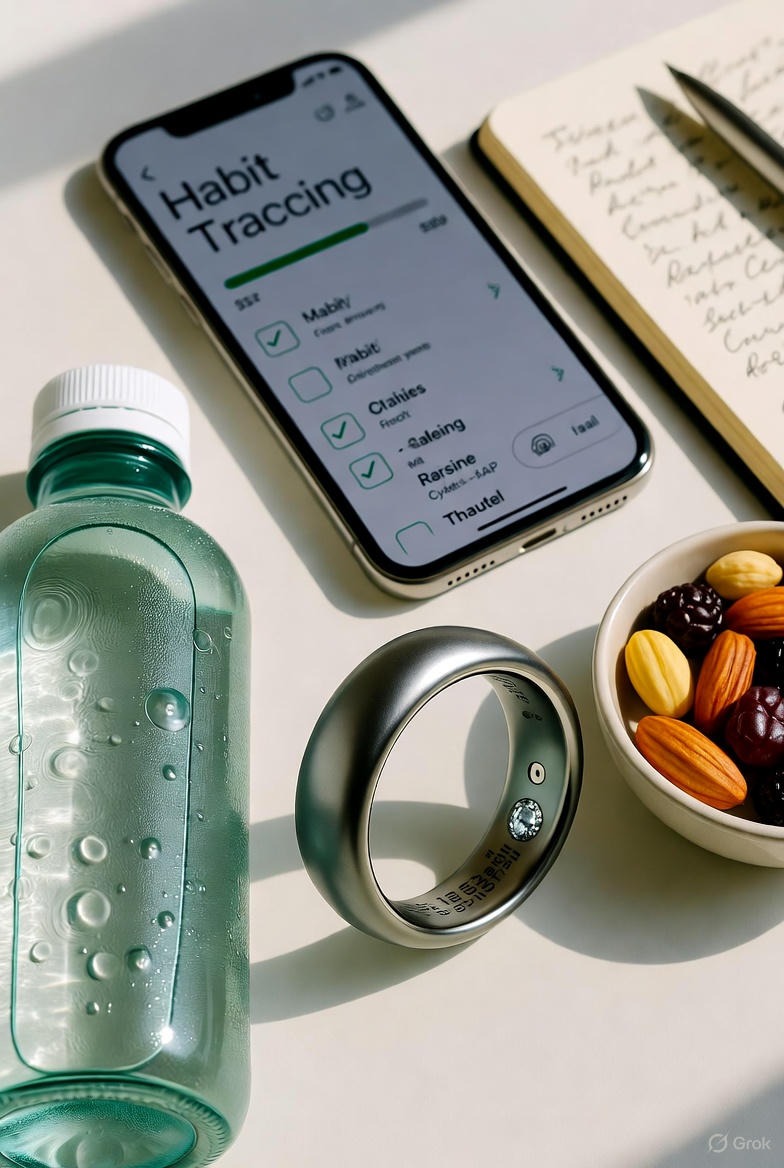
Knowledge is power, but implementation is king. Let’s synthesize everything into a actionable, personalized recovery protocol. This is not a one-size-fits-all checklist, but a framework you will adapt based on your lifestyle, goals, and biometric feedback.
Step 1: Establish Your Baseline (Week 1-2)
Before making changes, you need a snapshot of your normal. During this period:
Step 2: Master the Daily Non-Negotiables
These are the low-effort, high-impact habits that form the bedrock of recovery. Implement these first:
Step 3: Implement the Weekly Enhancers
Once the daily habits are solid, layer in these practices 2-3 times per week:
Step 4: Listen, Adapt, and Iterate with Data
This is where your protocol becomes truly personal. Use your biometric data to answer these questions:
Remember, the goal of a protocol is not rigidity, but intelligent responsiveness. Your body’s needs change daily. A smart protocol, informed by data, allows you to change with them. To see how such a personalized system is built from the ground up, our guide on making the perfect wellness ring purchase decision walks through the thought process.
Perhaps the greatest barrier to effective recovery is not a lack of knowledge, but a deeply ingrained psychological one: the cultural valorization of "more." More miles, more weight, more intensity, more hustle. Rest is often viewed as weakness, a deviation from the path, rather than an integral part of the path itself. To recover effectively, you must first recover your mindset.
The Dangers of "No Pain, No Gain" Literalism: This motto has motivated millions, but taken to an extreme, it becomes a blueprint for burnout. Pain is a signal, not always a goal. Distinguishing between the productive discomfort of effort and the warning pain of potential injury is critical. Ignoring the latter in pursuit of the former is a short road to long-term setbacks.
Redefining Discipline: True discipline is not just the discipline to push hard; it’s also the discipline to hold back. It’s the discipline to go to bed early when you want to watch one more episode. It’s the discipline to take a rest day when your ego wants you to train. It’s the discipline to follow your data when it contradicts your ambition. Reframe discipline as the commitment to doing what is optimal for your long-term goal, not just what feels tough in the moment.
Managing Training FOMO (Fear Of Missing Out): In the age of social media, seeing others post their workouts 7 days a week can create anxiety that you’re falling behind. Remember, you are only seeing their highlight reel, not their recovery metrics, their injury history, or their internal fatigue. Your journey is unique. Adherence to your plan, based on your body’s signals, is the only path that matters.
Using Data as an Objective Coach: This is where technology becomes a psychological ally. When your mind is screaming "go" but your HRV data is clearly in the red, that objective number can give you the permission you need to rest without guilt. It externalizes the decision, taking it out of the fraught space of "am I being lazy?" and into the clear space of "my body’s systems indicate stress." It turns rest from a failure of will into a smart, strategic compliance with biological feedback.
Celebrating Recovery Wins: Shift your reward system. Just as you might feel proud of a new personal record, learn to feel proud of a new high HRV score, a perfect week of sleep, or the discipline to take an extra rest day that left you feeling phenomenal for your next session. Make recovery a positive, proactive part of your identity as a fit person.
By addressing the psychological barriers, you create the mental environment where your physical recovery strategies can flourish. It’s the final, essential piece of the puzzle. For stories of how others have navigated this journey, the real-world experiences shared on our testimonials page can be a powerful source of inspiration and perspective.
Once you have mastered the foundational pillars and built a consistent personal protocol, you can explore advanced modalities. These are tools that can provide an extra edge, but they are supplements to, not replacements for, the basics of sleep, nutrition, and stress management.
1. Compression Garments:
2. Photobiomodulation (Red Light Therapy):
3. Hyperbaric Oxygen Therapy (HBOT):
4. Floatation (Sensory Deprivation) Tanks:
5. Vagus Nerve Stimulation (VNS):
Integrating Advanced Tools: The rule of thumb is to introduce one new modality at a time and monitor its impact on your biometrics for 2-3 weeks. Did your sleep scores improve with weekly red light therapy? Did your post-floatation HRV show a marked spike? Let your data, not just hype, guide your investments of time and money. For insights into the future of such personalized health tech, read our exploration of the future of wearable health technology.
The concept of periodization—structuring training into cycles of varying intensity and volume—is well-established for driving performance. However, recovery must be periodized with the same intentionality. Recovery is not static; your needs will fluctuate with your training cycle. Planning for this is the hallmark of a sophisticated approach.
Microcycle Recovery (Daily/Weekly):
This is the granular level of managing fatigue.
Mesocycle Recovery (The Deload Week):
A mesocycle typically lasts 3-6 weeks of progressive overload. At the end of this cycle, before you reach a state of overtraining, you intentionally schedule a deload week.
Macrocycle Recovery (The Off-Season):
For athletes with competitive seasons, the off-season or "active rest" period is a longer phase (several weeks) of greatly reduced structure.
The Role of Technology in Periodization:
A wearable device like the Oxyzen ring is the ultimate periodization tool. It allows you to:
By periodizing your recovery with the same care as your training, you ensure that you are always building on a solid foundation, not digging yourself into a hole of fatigue. This systematic approach is what enables long-term, sustainable progress. For more on planning and long-term health strategy, our resource on 50 healthy aging tips a smart ring helps implement daily offers a lifespan perspective.

Even with the best intentions, it’s easy to fall into traps perpetuated by fitness folklore or well-marketed misconceptions. Let’s debunk some common myths and clarify pitfalls to keep your recovery on track.
Myth 1: "I don't need to recover because I didn't sweat much / it wasn't a 'real' workout."
Reality: Recovery is needed for nervous system fatigue and skill acquisition, not just muscular damage. A heavy technical session (e.g., learning Olympic lifts) or a long, low-intensity mental effort can be draining in ways that don't produce sweat but still require recuperation. Your HRV can drop after intense cognitive work just as it can after physical work.
Myth 2: "More protein is always better."
Reality: While adequate protein is essential, there’s a limit to how much your body can use for muscle protein synthesis in a single sitting (~20-40g). Excess protein is simply converted to energy or stored. Spreading your intake evenly across 3-4 meals is more effective than one massive post-workout serving. Furthermore, excessive protein can displace other crucial nutrients from carbohydrates and fats needed for overall health and recovery.
Myth 3: "Stretching before a workout prevents soreness."
Reality: Static stretching (holding a stretch) before activity on cold muscles may actually decrease power output and not prevent injury or DOMS. Dynamic warm-ups are superior for preparation. Static stretching is best saved for after workouts or during separate mobility sessions to improve long-term range of motion.
Pitfall 1: Over-reliance on Supplements Over Whole Foods.
BCAAs, glutamine, and other recovery supplements have their place, but they are not magic. They cannot compensate for poor sleep, chronic dehydration, or an overall inadequate diet. Your first investment should always be in high-quality whole foods, sufficient total calories, and hydration. Supplements are the "icing," not the "cake."
Pitfall 2: Using "Active Recovery" as a Secret Second Workout.
This is a common ego trap. Your active recovery day should leave you feeling refreshed, not fatigued. If your heart rate is elevated, you’re breathing heavily, or you’re pushing against resistance, it’s not recovery—it’s training. Stick to the "conversational pace" rule.
Pitfall 3: Ignoring Non-Exercise Stressors.
You can have the perfect post-workout shake and 8-hour sleep window, but if you’re in a high-conflict job or personal relationship, your recovery will be compromised. You must account for your total stress load. Sometimes, the most important recovery activity is saying "no" to an extra commitment or scheduling time for a hobby. Your wearable data reflects all stress, giving you the evidence you need to address these life factors. For answers to many common questions on balancing these elements, our FAQ page is a great resource.
Myth 4: "If I'm not sore, I didn't work hard enough."
Reality: DOMS is a response to novel stimuli, not a prerequisite for growth. As you become more trained, you will experience less soreness from your regular routine, even as you continue to get stronger and fitter. Chasing soreness often leads to excessive, inefficient training that hampers recovery. Progress is measured by performance improvements and positive biometric trends, not by how much it hurts to walk downstairs.
By steering clear of these myths and pitfalls, you ensure your effort is channeled into effective, evidence-based practices that yield real results.
Recovery for Different Types of Exercise: Endurance vs. Strength vs. HIIT
While the pillars of recovery are universal, the emphasis and specific strategies can shift depending on the primary stressor of your training. The recovery needs of a marathoner differ from those of a powerlifter or a CrossFit athlete.
Endurance Training (Running, Cycling, Swimming):
Strength & Hypertrophy Training:
High-Intensity Interval Training (HIIT) & Metabolic Conditioning:
The Unifying Thread: Data
Regardless of your training modality, your biometrics provide the common language of recovery. An endurance athlete and a strength athlete will have different nutritional focuses, but they will both see their readiness plummet if they are under-slept or over-stressed. Using a device from https://oxyzen.shop/ allows you to see the unique impact of your chosen discipline on your body and tailor your recovery protocol accordingly, making it the ultimate cross-training tool. To understand the full scope of what such a device can track, read about activity and movement tracking basics.
We’ve established the framework, the tools, and the personalized protocols. Now, we move into the crucial integration phase—how to weave recovery seamlessly into the fabric of your daily life, address specific scenarios, and look toward the future of this essential science. This section focuses on practical application for the long haul, ensuring your recovery strategy is as sustainable as it is effective.
The biggest challenge with any wellness protocol isn't knowledge—it's consistency. Recovery can’t be something you “get to” if you have time; it must become a non-negotiable part of your routine, as automatic as brushing your teeth. Here’s how to make it stick.
Habit Stacking for Seamless Integration:
Don’t try to build new habits in isolation. “Stack” them onto existing ones.
Environment Design:
Make the healthy choice the easy choice, and the poor choice harder.
The Power of Micro-Actions:
When motivation is low, think small. Can’t face a 30-minute mobility session? Commit to 5 minutes of foam rolling just your calves. Can’t meditate for 20? Do 5 deep belly breaths. The act of starting often builds momentum, and these micro-actions still provide benefit while maintaining the habit chain.
Using Technology as a Accountability Partner:
Your wearable isn’t just a sensor; it’s a feedback loop.
By embedding recovery into your existing routines and environment, you reduce the cognitive load required to maintain it. It stops being an extra task and starts being simply “how you live.” For more insights on building lasting systems, our blog post on how wellness rings help build healthy habits delves deeper into the psychology of sustainable change.
A one-size-fits-all approach fails in recovery because our physiology and life demands differ. Let’s explore key considerations for different groups.
Recovery and Aging (40+):
As we age, several physiological shifts impact recovery speed and needs:
Recovery Considerations for Women:
Hormonal fluctuations across the menstrual cycle create a natural periodization model that can be leveraged for recovery and training.
Recovery for the Time-Poor Professional:
When work demands are high, recovery is often the first thing sacrificed. This is a catastrophic error, as it undermines both health and professional performance.
Understanding these nuances ensures your recovery plan respects your unique biology and life circumstances, making it more effective and sustainable. For a broader look at how technology aids health across the lifespan, our article on 50 healthy aging tips a smart ring helps implement daily is a comprehensive resource.
While self-management through data is empowering, there are times when professional guidance is the smartest recovery investment you can make. A good professional provides not just expertise, but an external, objective perspective.
When to Consider a Coach:
A qualified strength, sport, or recovery coach is valuable for:
When to See a Physical Therapist or Sports Massage Therapist:
These professionals are essential for mechanical recovery.
When to Consult a Registered Dietitian or Sports Nutritionist:
Go beyond generic nutrition advice for:
How Your Data Facilitates Better Care:
When you visit a professional, bringing your biometric data is like bringing a detailed logbook of your body’s engine. You can show them:
This objective data allows them to make far more precise, effective recommendations. It turns a vague description of “feeling tired” into a quantifiable problem they can help solve. It exemplifies how the future of personalized wellness is a partnership between human expertise and intelligent technology. For perspectives on how professionals are using this data, read our piece on what doctors find most useful in wellness rings.
The most devastating setback to any fitness journey is a serious injury, which can require weeks or months of forced recovery. Therefore, the most sophisticated recovery strategy has a strong proactive component: injury prevention. Think of it as pre-emptive recovery.
The Link Between Inadequate Recovery and Injury:
Fatigue is a primary injury risk factor. When you’re under-recovered:
Building an Injury-Prevention Practice into Your Recovery:
By viewing recovery as your primary injury-prevention tool, you shift from a reactive model (train hard, get hurt, recover) to a sustainable model (train smart, recover diligently, train consistently for years). For a foundational understanding of how to use your device for such preventive measures, see our guide on enabling preventive health monitoring.
The field of recovery technology is advancing at a breathtaking pace. What seems cutting-edge today will be standard in a few years. Understanding the trajectory helps us appreciate the tools we have and anticipate even more powerful integrations.
1. Advanced Biomarker Sensing:
Future wearables will move beyond PPG and accelerometers. We can expect non-invasive, continuous monitoring of:
2. Deeper Integration of AI and Machine Learning:
The future isn’t just more data; it’s smarter interpretation.
3. Closed-Loop Systems:
Technology will begin to directly influence your physiology.
4. Democratization of Advanced Tools:
Technologies like portable cryochambers, hyperbaric bags, and advanced muscle stimulators will become more affordable and compact, moving from elite sports facilities to dedicated recovery clinics and even homes.
The constant thread is personalization and proactive care. The goal is to create a seamless, 360-degree support system that helps you not just track, but actively optimize your body’s repair processes. Oxyzen and other innovators are at the forefront of this shift, as explored in our look at health tracking technology in 2025 and what’s possible.
Now, let’s bring everything together into a single, actionable plan. Your personal recovery dashboard is a living document—digital or physical—that consolidates your key metrics, habits, and reflections.
Step 1: Gather Your Tools.
Step 2: Define Your Daily Check-In (5 minutes each morning).
Record the following:
Step 3: Define Your Weekly Review (15 minutes each Sunday).
Look back at the past week and answer:
Step 4: Maintain a “Recovery Experiment” Log.
When you try something new—cold showers, a new magnesium supplement, red light therapy—create an entry. Note:
Why This Works:
This dashboard does the critical work of turning data into wisdom. It forces you to pause, reflect, and connect the dots between your actions and your body’s responses. It turns recovery from a passive state into an active, engaging process of self-discovery and optimization. To get started with a device designed for this level of insight, visit the Oxyzen shop to explore your options.
You have journeyed through the physiology of breakdown, the science of repair, and the art of implementing a personalized, data-informed recovery strategy. You understand that recovery is not the absence of training, but the positive presence of deliberate, nurturing actions that transform effort into adaptation.
You now know that the secret to long-term progress lies not in how hard you can push, but in how well you can recover. You have the framework of the Five Pillars, the power of modern biometrics, and the strategies to navigate pitfalls and personalize for your life.
The call to action is clear:
Your fitness journey is a marathon, not a series of sprints. By honoring the balance between stress and rest, between effort and ease, you build a body that is not only capable of great feats but is also resilient, sustainable, and vibrant for the long run.
The path to your best performance, health, and well-being is paved with quality recovery. Start laying your bricks today.
For continued learning and to stay updated on the latest in personalized recovery science, be sure to explore the wealth of articles and resources available on our main Oxyzen blog.
Your Trusted Sleep Advocate (Sleep Foundation — https://www.sleepfoundation.org/)
Discover a digital archive of scholarly articles (NIH — https://www.ncbi.nlm.nih.gov/
39 million citations for biomedical literature (PubMed — https://pubmed.ncbi.nlm.nih.gov/)
experts at Harvard Health Publishing covering a variety of health topics — https://www.health.harvard.edu/blog/)
Every life deserves world class care (Cleveland Clinic -
https://my.clevelandclinic.org/health)
Wearable technology and the future of predictive health monitoring. (MIT Technology Review — https://www.technologyreview.com/)
Dedicated to the well-being of all people and guided by science (World Health Organization — https://www.who.int/news-room/)
Psychological science and knowledge to benefit society and improve lives. (APA — https://www.apa.org/monitor/)
Cutting-edge insights on human longevity and peak performance
(Lifespan Research — https://www.lifespan.io/)
Global authority on exercise physiology, sports performance, and human recovery
(American College of Sports Medicine — https://www.acsm.org/)
Neuroscience-driven guidance for better focus, sleep, and mental clarity
(Stanford Human Performance Lab — https://humanperformance.stanford.edu/)
Evidence-based psychology and mind–body wellness resources
(Mayo Clinic — https://www.mayoclinic.org/healthy-lifestyle/)
Data-backed research on emotional wellbeing, stress biology, and resilience
(American Institute of Stress — https://www.stress.org/)


