


How Your Wellness Ring Simplifies Training Load Management
Simplifies the complex task of managing training load.
Simplifies the complex task of managing training load.
%402x.svg)
For any athlete, fitness enthusiast, or wellness-focused individual, progress feels incredible. Hitting a new personal record, shaving seconds off a pace, or simply feeling stronger and more energetic is the ultimate reward. Yet, for every story of triumph, there are countless others of frustration: unexplained plateaus, persistent fatigue, nagging injuries, or the bewildering feeling that you're working harder but getting nowhere. The culprit behind this frustration often isn't a lack of effort, but a fundamental misunderstanding of your body's most critical signal: its capacity to recover from stress.
Enter the modern paradigm of training load management. This isn't just tracking miles logged or hours spent in the gym. It's the art and science of precisely balancing the stress you apply (training) with your body’s ability to adapt and grow stronger (recovery). For decades, this balance was a guessing game, dictated by rigid schedules, instinct, and often, trial and painful error.
Today, the game has changed. We no longer have to guess. On your finger, a small, unassuming piece of technology—your wellness smart ring—is quietly revolutionizing this entire process. It transforms abstract concepts of load and recovery into precise, personalized, and actionable data. It moves you from training hard to training smart.
This comprehensive guide will explore how this elegant device simplifies the complex world of training load management. We’ll journey from understanding the foundational science of stress and recovery to how the ring collects and interprets your unique biological data. You’ll discover how to quantify your effort, measure your readiness, and create the perfect, dynamic training plan that evolves with you—not against you. This is about unlocking sustainable performance, preventing burnout and injury, and achieving your goals with unprecedented clarity and confidence. Your journey to mastering your load begins here.
To truly appreciate how a wellness ring simplifies training load management, we must first understand the fundamental biological process it’s designed to optimize: the stress-adaptation cycle. This cycle is the cornerstone of all physical improvement, whether you're a marathon runner, a weekend warrior, or someone focused on general health.
Imagine your body as a sophisticated adaptation engine. When you exercise, you apply a deliberate physical stressor—lifting weights, running, cycling. This stress causes microscopic damage to muscle fibers, depletes energy stores, and elevates stress hormones like cortisol. This is the breakdown phase. It’s not the workout itself that makes you stronger; it’s what happens next.
Following the stress, your body enters the recovery and adaptation phase. It gets to work repairing the micro-tears, replenishing glycogen, clearing metabolic byproducts, and, crucially, rebuilding tissues to be stronger than before to better handle future stress. This is the principle of supercompensation. The magic happens not during the workout, but in the quiet hours of rest, especially during deep, restorative sleep. You can learn more about this critical recovery period in our article on deep sleep optimization for athletes.
The problem with the traditional approach is its blindness. We could see the input (the workout) but were largely blind to the output (the body’s real-time response and recovery status). We might follow a plan that prescribes high intensity on a Tuesday, but if we spent Monday night tossing and turning with poor deep sleep, our body is already in a significant recovery deficit. Executing that Tuesday workout becomes not a stimulus for growth, but a one-way ticket to overreaching, stagnation, or injury.
This is where the science gets personal. Two people can do the identical workout and have wildly different recovery needs based on a symphony of internal factors:
A wellness ring makes the invisible visible. By continuously tracking physiological markers like heart rate variability (HRV), resting heart rate (RHR), skin temperature, and sleep architecture, it gives you a direct, quantifiable window into your internal recovery engine. It tells you not just that you worked out, but how your body is handling it. This transforms training from a pre-scripted monologue into a dynamic, responsive dialogue with your own biology. The first step to simplifying load management is understanding this conversation, and it starts with knowing your body’s unique language of stress and recovery. For a deeper dive into how these devices capture this data, explore how sleep trackers actually work.
Gone are the days of relying solely on how you "feel" upon waking—a method notoriously unreliable, influenced by mood, motivation, and the previous day's events. The wellness smart ring introduces an era of objective, physiological truth. But how does this sleek piece of wearable tech capture the complex symphony of your internal state? The answer lies in a suite of medical-grade sensors, working in concert 24/7 from the ideal location on your body: your finger.
The ring’s power stems from its continuous, passive data collection. Unlike a chest strap you wear only during exercise or a watch you take off to charge, the ring is designed to be worn constantly, especially during sleep—the most critical period for recovery data collection. This provides an unbroken stream of biomarkers, painting a far more accurate picture than spot-check measurements.
Here’s a breakdown of the key metrics it tracks and why they are foundational to training load management:
1. Heart Rate Variability (HRV): The Crown Jewel of Readiness
HRV is not your heart rate. It measures the subtle, millisecond variations in the time intervals between each heartbeat. Contrary to intuition, a higher HRV is generally better. It indicates a robust, resilient autonomic nervous system that can quickly adapt to stress and then return to a calm state. A trend of declining HRV is one of the clearest early warning signs of excessive training load, inadequate recovery, or mounting life stress. Your ring tracks HRV throughout the night, providing a pristine, stable daily readiness score.
2. Resting Heart Rate (RHR): Your Metabolic Baseline
Your RHR, measured during true rest (like deep sleep), is a fundamental indicator of cardiovascular fitness and recovery strain. When your body is fighting inflammation, under-recovered, or fighting illness, your RHR tends to elevate. A wellness ring establishes your personal baseline and flags meaningful deviations, prompting you to consider a lighter day.
3. Sleep Architecture: The Foundation of Repair
This is where the ring truly shines. It doesn't just track how long you sleep, but how well you sleep by distinguishing between light, REM, and deep sleep stages. Each stage plays a unique role in recovery: deep sleep is vital for physical repair and growth hormone release, while REM sleep is crucial for cognitive function and memory consolidation. The ring quantifies your sleep quality, showing you if you're getting enough of the deep sleep your body desperately needs for repair. Understanding your ideal deep sleep duration is a key piece of this puzzle.
4. Skin Temperature & Respiratory Rate: The Subtle Signals
Nocturnal skin temperature trends can indicate the onset of illness, menstrual cycle phases, or excessive inflammatory load. Respiratory rate during sleep is another stable marker of overall physiological strain. Together, these metrics add layers of context, helping explain why your HRV or RHR might be trending a certain way.
By synthesizing this data every morning, your wellness ring provides a Readiness Score or Recovery Index. This single, easy-to-understand number is the ultimate simplification. It’s the culmination of millions of data points, translated into a clear message: “You’re primed for a hard effort today,” or “Focus on recovery and gentle movement.” This objective dashboard replaces guesswork, allowing you to make informed decisions before you even lace up your shoes. It’s your personal biofeedback loop, turning your unique physiology into a manageable data stream. For those curious about the limits and capabilities of this technology, our analysis on sleep tracking accuracy provides valuable insight.
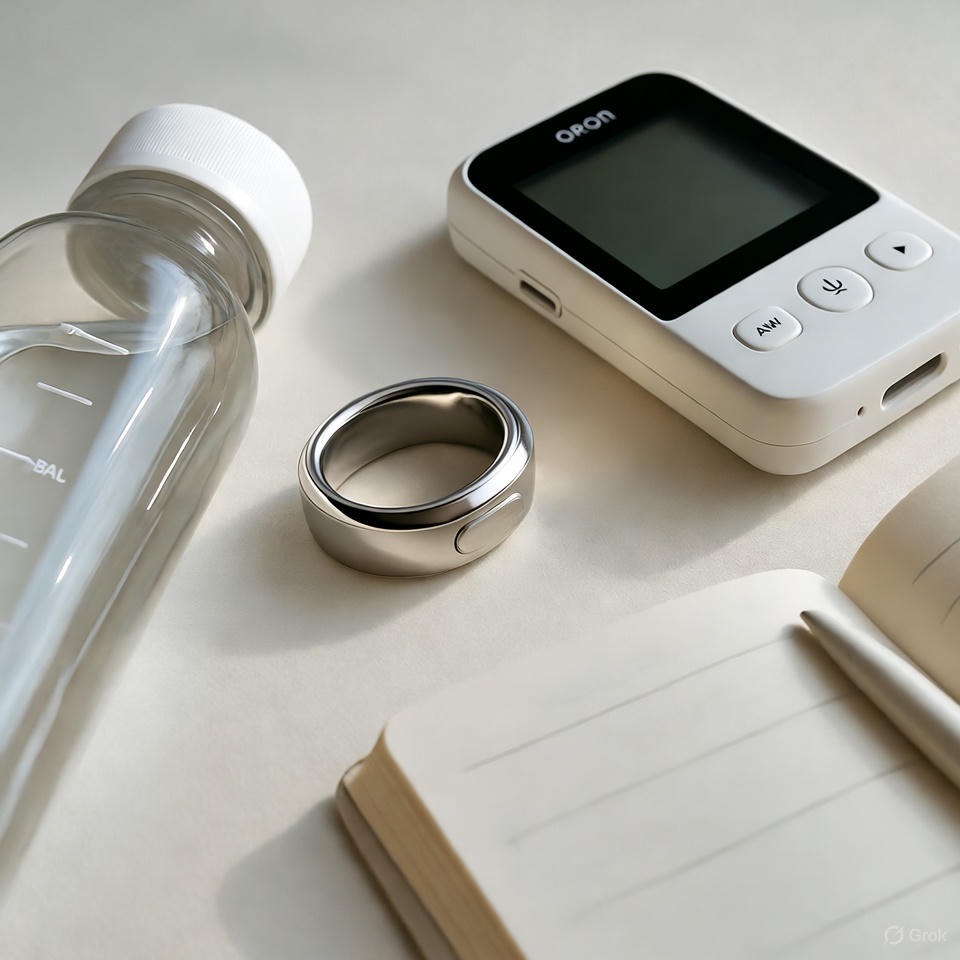
With a clear understanding of your body’s recovery status (the output), the next critical piece of the puzzle is accurately measuring the input: your training load. For decades, we’ve relied on external, one-dimensional metrics: miles run, weight lifted, hours trained. While useful, these fail to capture the true physiological cost of a workout. A 5-mile run feels completely different—and places a different stress on your body—if it’s done at a recovery pace versus at your maximum threshold pace.
This is where the wellness ring, often paired with its companion app or integrated with other fitness platforms, brings sophistication to load measurement. It moves beyond volume and begins to quantify intensity to calculate a more holistic training stress score. Here’s how:
1. Heart Rate-Based Training Effect:
By monitoring your heart rate throughout an activity, the ring can estimate the strain on your aerobic and anaerobic systems. It analyzes how much time you spent in each heart rate zone (e.g., Zone 2 for base building, Zone 4 for threshold, Zone 5 for VO2 max). A workout that keeps your heart rate elevated at 85% of its maximum for 30 minutes creates a significantly higher load than a 60-minute stroll in Zone 2, even if the latter is longer. The ring translates this cardiovascular effort into a quantifiable strain metric.
2. Perceived Exertion & Personalization:
Some advanced systems allow you to input your subjective Rate of Perceived Exertion (RPE)—how hard the workout felt. This personal layer is crucial because it accounts for factors the sensors might not directly capture, like mental fatigue, hydration status, or muscle soreness from a new movement pattern. When combined with heart rate data, RPE creates a powerful, personalized load metric.
3. Activity Recognition & Metabolic Cost:
Using accelerometers and algorithms, the ring can identify the type of activity you’re performing—running, cycling, strength training—and estimate the calories burned and metabolic demand. While not as precise as a power meter on a bike or a running dynamic pod, it provides a consistent benchmark for cross-training activities, helping you compare the load from a heavy squat session to a swim workout.
The Outcome: A Unified Training Stress Score
The magic happens when these input metrics are rolled into a single, proprietary metric like Training Load, Strain, or Exertion. This score reflects the combined physiological cost of your session. Over time, the app tracks your acute load (the strain from the last ~7 days) and your chronic load (your average strain over the last ~28 days).
This ratio—often called the Acute:Chronic Workload Ratio—is arguably the most important concept in modern load management. It’s your best defense against injury. Research consistently shows that when your acute load (what you did this week) spikes too high compared to your chronic load (what you’re accustomed to), your risk of injury skyrockets.
Your wellness ring automates this entire complex calculation. It logs every workout, assigns it a stress score, and continuously updates your acute and chronic load charts. Suddenly, you’re not just “doing a hard week.” You can see that your acute load is 120% of your chronic load, which is in the “optimal” range for progressive improvement. Or, you might see it’s at 150%—a “high injury risk” zone—prompting you to dial back. This quantification turns the abstract concept of “training load” into a clear, manageable number you can observe and act upon. To see how real users integrate this data into their lives, browse our collection of user experiences and testimonials.
Imagine starting every day with a confidential report from your central nervous system, detailing its operational capacity. That’s precisely what a wellness ring’s Readiness Score provides. It is the ultimate simplification engine, the nexus where all your recovery data (HRV, RHR, sleep, temperature) converges with your recent training load to produce a single, actionable verdict for the day ahead.
This score, typically presented on a scale of 1-100 or via a simple color-coded system (Green/Ready, Yellow/Caution, Red/Recover), is your personalized traffic light. It answers the most fundamental question in training: "How hard can I push my body today?"
Decoding the Signals:
The Power of Context and Trends:
The true genius of the Readiness Score lies not in any single day’s number, but in the trend over time. A single yellow day is normal. A string of yellow days trending toward red, however, tells a story of accumulating fatigue that requires an immediate deload week. Conversely, watching your score climb back into the green after a planned recovery period provides concrete validation that your strategy is working.
This system eliminates paralysis by analysis. You don’t need to be a sports scientist to interpret a dozen complex graphs each morning. The ring’s algorithm does the heavy lifting, synthesizing the data into a clear recommendation. It empowers you to make confident, daily adjustments to your plan, ensuring you’re always working with your body, not against it. It turns the infinite complexity of human physiology into a simple, daily decision point. This level of personalized insight is at the core of our mission at Oxyzen—to make advanced biometrics accessible and actionable for everyone.
The traditional training plan is a static document, often created weeks or months in advance. It assumes a predictable, linear response to stress. But human physiology is not linear; it’s dynamic, influenced by sleep, diet, stress, immune challenges, and a hundred other variables. Rigidly adhering to a pre-written plan on a day your body is screaming for rest is a recipe for failure. This is where the wellness ring enables a paradigm shift: from prescriptive planning to dynamic adaptation.
Your ring’s daily Readiness Score provides the core logic for this adaptive approach. Instead of a calendar dictating your workout, your physiology does. This creates a responsive, fluid training methodology that maximizes gains while minimizing risk.
How a Dynamic Week Might Unfold:
This adaptive loop ensures that your training stimulus is always aligned with your recovery capacity. It respects the fact that some days you are physically incapable of a high-quality, productive hard session. Forcing it would be counterproductive. By being flexible, you guarantee that your hard days are truly hard and effective, and your easy days are sufficiently easy to allow adaptation.
The ring provides the objective data that removes guilt or second-guessing from this process. You’re not “skipping a workout” because you’re unmotivated; you’re “rescheduling a stimulus” because your biometrics indicate it would be harmful or futile. This builds a sustainable, intelligent, and highly personalized path to long-term progress, transforming your training from a rigid schedule into a living, breathing conversation with your body. For more on building habits that support this kind of dynamic lifestyle, our blog offers a wealth of related resources.
Beyond the Workout: Accounting for Life Stress
One of the most profound simplifications a wellness ring offers is the demolition of the artificial wall between “training stress” and “life stress.” Your autonomic nervous system does not categorize stress. A brutal workout, a tense work presentation, an emotional conflict, poor sleep due to a noisy environment, or digestive issues—all are processed as demands on your system that require energy and recovery resources.
You can perfectly execute a “recovery week” in your training plan, but if you’re simultaneously navigating a major project deadline and family obligations, your total recovery burden may still be in the red zone. Ignoring this is a critical error. The wellness ring corrects it by giving you a whole-life stress score.
How Life Stress Manifests in Your Data:
By reflecting these non-training stressors in your daily Readiness Score, the ring forces a holistic view of your capacity. A low score on a non-training day is a clear message: “Your resources are depleted by other factors. Do not add physical stress today.”
This empowers you to make smarter decisions. Seeing a yellow score on a Wednesday morning when you have a calm day planned might prompt you to keep an easy workout. That same yellow score on the morning of a big, stressful work launch might convince you that a walk in nature is a far better use of your energy than a gym session. It teaches you to budget your physiological resources across all domains of your life.
In essence, the ring becomes your personal capacity manager. It helps you see that optimal training isn’t just about managing gym time; it’s about managing your entire life’s energy budget to ensure there’s sufficient reserve for physical adaptation. This integrated perspective is the key to sustainable high performance and avoiding the all-too-common burnout that comes from treating fitness in a vacuum. To understand the full scope of what’s possible with this holistic tracking, discover how Oxyzen works to integrate these insights seamlessly.

Injuries are the ultimate derailment of any fitness journey. They are physically painful, mentally frustrating, and can wipe out months of progress. While not all injuries are preventable, a staggering number are—they are the result of repeated overuse and a failure to respect the body’s warning signals. This is where the predictive power of training load management, powered by your wellness ring, becomes your most powerful injury prevention system.
The core principle is the Acute:Chronic Workload Ratio (ACWR) mentioned earlier. By quantifying both your recent short-term strain (acute) and your longer-term fitness level (chronic), the ring provides a clear, mathematical framework for risk.
Early Warning Signs Before Pain Appears:
Long before you feel the sharp pain of an injury, your body broadcasts subtle distress signals through your autonomic nervous system. Your wellness ring detects these whispers:
By monitoring these trends, you can take proactive, pre-emptive action. Instead of waiting for a sore knee to become a debilitating injury, you see a rising ACWR and a falling HRV. The intelligent response is to immediately schedule a “pre-hab” deload week: reduce volume and intensity, focus on mobility, and prioritize sleep and nutrition. This nips the problem in the bud, allowing you to return to training stronger rather than being forced into a long, reactive layoff.
The ring transforms injury prevention from a vague concept of “listening to your body” into a data-driven protocol. It gives you the tools to stay in the safe training corridor, making consistency—the true driver of long-term success—not only possible but probable. For answers to common questions about using data for health and performance, visit our comprehensive FAQ page.
The mental game of training is often as challenging as the physical one. Doubt, demotivation, and uncertainty can sabotage even the best-laid plans. “Am I doing enough?” “Why do I feel so tired?” “Is this ache something serious?” This constant internal chatter creates psychological noise that drains energy and erodes consistency. The wellness ring acts as a powerful tool for psychological simplification and reinforcement, turning noise into clarity and doubt into confidence.
1. Objective Validation Replaces Subjective Guilt:
On a morning you feel sluggish and unmotivated, it’s easy to label yourself as “lazy.” But what if your ring shows a Red Readiness score with a plummeting HRV? That’s not laziness; that’s biological fact. The data objectively validates your feelings, replacing self-criticism with understanding. It gives you permission to rest without guilt, because you’re not following a feeling—you’re following a scientifically-grounded instruction from your own body. This reframe is incredibly liberating and sustains long-term motivation.
2. Positive Reinforcement for Healthy Behaviors:
The ring creates a direct feedback loop for positive habits. When you prioritize an early bedtime, you can see the tangible result the next morning: a higher deep sleep percentage and a greener Readiness score. When you choose a relaxing yoga session over a punishing workout on a yellow day, you watch your metrics improve over the following days. This turns abstract “good choices” into rewarding, visible outcomes, reinforcing the behaviors that lead to success. It’s gamification grounded in physiology.
3. Confidence in Execution:
Walking into a key workout on a Green Readiness day provides a tremendous psychological boost. You know your body is primed. This confidence allows you to push harder, focus better, and fully commit to the session, maximizing its effectiveness. Conversely, approaching a hard session on a Red day often leads to a poor, half-hearted effort that yields little benefit and increases risk. The ring tells you when to confidently push and when to wisely hold back.
4. Trust in the Process and Patience:
Fitness progress is non-linear. Plateaus are normal. The ring’s longitudinal data builds trust in the broader process. During a plateau, you can look back and see your resting heart rate is lower than it was three months ago, or your average HRV is higher—clear signs of improved fitness that the scale or a performance metric might not yet reflect. This teaches patience and helps you appreciate the subtle, foundational improvements happening beneath the surface.
By providing an objective, external perspective on your internal state, the wellness ring quiets the noisy, often irrational, psychological debate. It builds a partnership between mind and body based on data, not drama. This fosters a calm, confident, and consistent approach to training—the ultimate mental environment for achieving and sustaining peak performance. The journey to this level of self-understanding is part of our story and vision at Oxyzen.
While daily readiness and weekly load management are crucial for navigating the immediate landscape of training, true mastery comes from understanding the long-term topography—the seasons of your fitness journey. This is where the historical data archive of your wellness ring becomes an invaluable strategic asset. It allows you to move from reactive daily adjustments to proactive, intelligent periodization.
Periodization is the planned, cyclical manipulation of training variables (volume, intensity, frequency) to peak for specific goals while managing fatigue. Traditionally, this was done with guesswork and a standard textbook model. With a year’s worth of your personal biometric data, you can now practice data-informed periodization.
How Long-Term Ring Data Informs Your Annual Plan:
By zooming out, the wellness ring transforms from a daily guide into a lifelong training log and biofeedback journal. It provides the empirical evidence to refine your strategy year after year, making you your own most knowledgeable coach. It ensures that your training load management isn’t just about surviving the next week, but about thriving over the next decade, building a resilient body and a profound understanding of your own potential. For a practical example of how deep data can guide specific goals, read our guide on deep sleep tracking and what your numbers should look like.
In the modern fitness landscape, no single device operates as an island. You might use a GPS watch for running pace and route mapping, a cycling computer for power output, a smart scale for body composition, and a nutrition app to log your meals. This fragmentation can create a confusing picture, with data scattered across multiple platforms. One of the most powerful yet understated features of a sophisticated wellness ring is its ability to act as the central hub of your personal health ecosystem.
Your ring provides the foundational, 24/7 physiological context—your recovery status and internal readiness—against which all other performance data should be interpreted. When you allow your ring’s companion app to sync with other platforms (through integrations like Apple Health, Google Fit, Strava, TrainingPeaks, or Whoop), you create a unified command center that tells a complete story.
The Synergy in Action:
This integration simplifies decision-making by creating a hierarchy of information. The ring’s Readiness Score becomes the primary filter. It answers the question, “Does my body have the capacity to absorb and benefit from the stress I’m about to apply or have just applied?” All other metrics—pace, power, reps, weight—are secondary to that fundamental truth.
By serving as this hub, the wellness ring eliminates the cognitive load of juggling multiple data streams. It correlates cause and effect across platforms, turning disparate data points into coherent narratives. This is the future of personalized performance: not more data, but better-connected and better-interpreted data. For a deeper look at how technology interprets your body's signals, explore our explainer on the science behind sleep tracking.
You can have perfect training load balance and impeccable sleep hygiene, but if your fueling and hydration strategies are out of sync, your performance and recovery will hit a hard ceiling. While a wellness ring doesn’t directly measure the chicken breast on your plate or the water in your bottle, it provides incredibly sensitive feedback on how your nutrition and hydration choices are impacting your internal state. It turns your body into a biofeedback lab for your diet.
How Your Ring Reflects Nutritional Status:
Using Data to Personalize Your Fueling Strategy:
The ring moves you beyond generic nutrition guidelines (“eat X grams of protein”) and into the realm of personalized experimentation.
By paying attention to how your dietary choices move your physiological dials, you learn to eat for performance and recovery, not just hunger or habit. The ring provides the objective, non-scale outcomes that make nutritional optimization a clear, rewarding process. For insights on foods that can specifically enhance your recovery through better sleep, our article on foods that increase deep sleep naturally is a great resource.
The principles of training load management are universal, but their application is deeply personal. To illustrate the transformative power of a data-informed approach via a wellness ring, let’s explore three hypothetical but realistic case studies. These stories show how the same tool simplifies the path to very different goals.
Case Study 1: The Stressed Professional (Marathon Beginner)
Case Study 2: The Aging Fitness Enthusiast (Injury Prevention Focus)
Case Study 3: The Competitive Age-Group Triathlete (Performance Optimization)
These stories underscore a common theme: simplification through insight. Whether the goal is finishing, lasting, or winning, the wellness ring provides the common language of your own body to cut through confusion and build a smarter, more sustainable path. Read more inspiring transformations in our customer testimonials.

Even with the best technology, users can fall into interpretative traps. Awareness of these common pitfalls is key to leveraging your wellness ring effectively, ensuring it simplifies your journey rather than complicating it.
Pitfall 1: Obsessing Over the Daily Score
Pitfall 2: Ignoring the "Feel" Factor
Pitfall 3: Misinterpreting High Load + High Readiness
Pitfall 4: Comparing Your Data to Others
Pitfall 5: Neglecting the Lifestyle Context
By guiding you around these pitfalls, the wellness ring evolves from a simple data reporter to an intelligent coach. It teaches you not just what the numbers are, but how to think about them, fostering a balanced, intelligent, and sustainable relationship with your own performance data.
Understanding the concepts is one thing; implementing them seamlessly into your life is another. This is where the ultimate simplification occurs: creating a streamlined, repeatable daily and weekly system that uses your ring’s data to automate smart decisions. Here’s a practical guide to building that system.
Step 1: The Morning Ritual (Data Collection & Assessment)
Step 2: Workout Execution & Logging
Step 3: The Evening Wind-Down (Preparing for Recovery)
Step 4: The Weekly Review (Strategic Adjustment)
Step 5: The Monthly/Quarterly Audit (Periodization Check)
By following this systematic approach, the ring’s data flows naturally into a decision-making framework. The complexity of biofeedback is reduced to a few clear, daily and weekly actions. This system creates a virtuous cycle: better decisions lead to better data, which builds confidence and leads to even better decisions. To get started with a device designed for this very purpose, visit the Oxyzen shop.
The current capabilities of wellness rings are revolutionary, but they represent just the beginning. As sensor technology, artificial intelligence, and our understanding of human physiology advance, the future of training load management promises even deeper simplification, personalization, and proactivity. Here’s a glimpse at what’s on the horizon.
1. Predictive Analytics and True Early Warnings:
Future algorithms won’t just tell you you’re currently stressed; they will predict when you are likely to become overreached or ill. By analyzing multi-year data trends against outcomes (injuries, illnesses, performance peaks), AI could identify subtle, unique precursor patterns for each individual. You might receive an alert: “Based on your current load trajectory and declining sleep efficiency, your model indicates a 70% probability of upper respiratory infection within 4 days. Recommended action: 48-hour proactive rest protocol.”
2. Integrated Biomarker Expansion:
Future wearables may incorporate non-invasive sensors for additional biomarkers:
3. Hyper-Personalized “Adaptive Coach” AI:
The ring’s companion app could evolve into a true AI coach. Instead of you adapting your plan based on data, the AI would do it for you in real-time. It would consider your training goal, your real-time readiness, your long-term load, your calendar, and even local weather, dynamically generating your optimal daily workout prescription. It would learn that you perform best with a specific sleep-wake rhythm and nudge you toward it, as detailed in resources like our guide on maximizing deep sleep for memory and brain function.
4. Holistic Ecosystem Autonomy:
Your ring could communicate with other smart devices to automatically optimize your environment. It could signal your thermostat to lower the temperature as you enter deep sleep, prompt your smart lights to simulate sunrise at the optimal point in your sleep cycle, or suggest a personalized meditation via your headphones when it detects elevated stress biomarkers.
5. Democratization of Advanced Physiology:
What is now the domain of elite athletes and expensive labs will become accessible to everyone. The wellness ring is at the forefront of this movement, putting sophisticated load management and recovery tracking on the finger of the everyday gym-goer, the busy parent, and the aging adult. This has the potential to transform public health by making proactive, personalized well-being management a part of daily life.
The constant through this evolution will be the core principle your current ring already champions: simplifying the complex. The future will bring more data, but the goal will be to present even clearer insights and more automated actions. The wearable will become less of a tool you consult and more of an intelligent partner that seamlessly guides you toward your health and performance goals, making the path to your best self ever more intuitive. Stay ahead of these trends by following the latest research and insights on our Oxyzen blog.

We have journeyed from the foundational biology of stress and recovery to the practical steps of building a daily system, all through the lens of a single, elegant device: your wellness smart ring. The overarching message is one of empowerment through simplification.
Training load management is no longer an esoteric concept reserved for coaches and professionals. It is a practical, daily discipline made accessible by technology that speaks the language of your body. The ring demystifies your internal state, translating the whispers of your autonomic nervous system into a clear dashboard of readiness and strain.
It simplifies by:
This first portion has laid the complete conceptual and practical framework. You now understand why managing load is critical, how your ring captures the necessary data, and what to do with that information on a daily, weekly, and seasonal basis.
The journey toward mastering your load is a journey toward self-mastery. It’s about developing a profound partnership with your body, where you provide the conscious intent and effort, and it provides the feedback and adaptation. Your wellness ring is the communication device that makes this partnership fluent, efficient, and productive.
Embrace this new paradigm. Move from guessing to knowing, from pushing blindly to progressing wisely. Let your ring simplify the complexity, so you can focus on what truly matters: the joy of movement, the satisfaction of progress, and the sustainable pursuit of your peak potential.
While the core principles of load management are universal, their application demands nuance across different athletic disciplines. A marathon runner, a powerlifter, and a CrossFit athlete stress their bodies in fundamentally different ways. Your wellness ring’s generalized readiness and load metrics are powerful, but by applying a layer of sport-specific intelligence, you can extract even greater precision. Here’s how to tailor the data for your chosen pursuit.
For endurance athletes, the primary variables are volume (miles, hours) and intensity (pace, power, heart rate zones). The ring excels at managing their interplay.
Strength & Power Sports (Weightlifting, Powerlifting): Neural Recovery is King
For strength athletes, the primary stress is on the central nervous system (CNS) and musculoskeletal structure, not just the cardiovascular system.
This modality is uniquely challenging due to its constantly varied, high-intensity, and often high-skill nature. Load management here is about separating fatigue from competency.
Across all sports, the ring provides the contextual intelligence to move beyond one-size-fits-all plans. It answers the sport-specific question: “Given my current physiological state, what is the most productive type of stress I can apply today?” This transforms you from a passive plan-follower into an active, savvy athletic manager. For more on how to structure recovery for athletic performance, our article on deep sleep optimization for athletes is essential reading.
We’ve established that your nervous system doesn’t differentiate between physical and mental stress. Yet, the "mental load" of training—the cognitive effort of focus, the emotional rollercoaster of competition, the psychological drain of discipline—is often the most overlooked component of recovery. Your wellness ring provides the missing link, offering objective data to validate and manage your mental and emotional state.
How Psychological Stress Manifests Physiologically (And What Your Ring Shows):
Using Your Ring to Build Mental Resilience Practices:
By quantifying the mental component, the wellness ring helps you achieve true holistic recovery. It proves that taking a “mental health day” or prioritizing a calming hobby isn’t a luxury; it’s a critical part of your performance protocol, as essential as protein intake or sleep. It bridges the gap between how you feel and what your body is experiencing, fostering a more compassionate and effective self-management strategy. For a deeper exploration of the critical brain benefits of proper recovery, see our piece on deep sleep and memory.
The journey of fitness and performance, while personal, doesn’t have to be solitary. One of the most powerful emerging features of connected wellness ecosystems is the ability to securely share biometric data with coaches, training partners, or even communities. This adds a layer of accountability, expert interpretation, and social support that can dramatically simplify and enhance your load management.
The traditional athlete-coach relationship relies heavily on subjective feedback: “How did you feel?” “How was your sleep?” This introduces bias and ambiguity.
For Training Groups and Teams: Normalizing Recovery
In group settings, there’s often unspoken pressure to “keep up” or hide fatigue. Shared, anonymized group data (e.g., team average HRV) can create a culture that honors recovery.
For the Individual: Finding Your Tribe
Many ring apps have community features where users can opt into sharing insights (not raw data) or discuss trends on forums.
This social layer adds a crucial human dimension to the technology. It turns your private data into a tool for connection, better guidance, and shared learning. It simplifies load management by providing external perspective and support, ensuring you have both the algorithm and the ally to help you navigate your path. To understand the philosophy behind building such a supportive ecosystem, learn more about our story and vision at Oxyzen.
The ultimate form of simplification is empowerment: giving you the tools and framework to answer your own most pressing questions. Your wellness ring, coupled with a methodical approach, turns you into a personal scientist conducting N=1 experiments. This is where you move beyond following general best practices to discovering what works uniquely for you.
The Framework for a Personal Experiment:
Powerful Experiments to Run:
The Power of the N=1 Mindset:
This process demystifies wellness. It replaces dogma (“You must do X”) with curiosity (“What happens if I do X?”). It builds deep self-knowledge and confidence. You become the world’s leading expert on your own body. The ring provides the objective lab equipment; you design the study.
This capability is the pinnacle of personalized health. It simplifies the overwhelming world of conflicting advice by giving you a direct feedback mechanism to determine truth for your unique physiology. Start small, ask one question, and let the data guide you. For more ideas and inspiration on personal wellness experiments, the Oxyzen blog is a continually updated resource.
The principles of stress, recovery, and adaptation governed by your wellness ring are not confined to the track, gym, or pool. They are life principles. Some of the most profound applications of this technology occur during major life transitions—periods where our capacity is tested, and our habitual recovery strategies are disrupted. Using your ring to manage “life load” can be transformative.
1. Parenthood (The Newborn Phase & Beyond):
This is the ultimate endurance event, characterized by extreme sleep fragmentation, unpredictable schedules, and high emotional stress.
2. Career Changes & Intensive Projects:
Starting a new job, launching a product, or enduring a “crunch time” period applies a massive cognitive and emotional load.
3. Menopause & Andropause (Hormonal Transitions):
Hormonal shifts can profoundly disrupt sleep, thermoregulation, and stress resilience, often derailing lifelong fitness routines.
4. Post-Injury or Surgery Rehabilitation:
Recovering from physical trauma is a delicate balance of providing enough stimulus for healing without causing re-injury.
In these life scenarios, the ring transitions from a performance tool to a resilience tool. It simplifies the complex challenge of “how to get through this” by providing a daily, objective status update on your foundational capacity. It teaches you to be strategic with your energy across all domains of life, ensuring that you not only survive transitions but navigate them with greater wisdom and well-being. For support and answers during challenging times, our FAQ and support page is always available.
Every athlete or fitness enthusiast eventually encounters the plateau—a maddening period where increased effort yields no improved results. Traditionally, the instinctive response is to “push harder”: add more volume, more intensity, more frequency. This often deepens the fatigue hole without providing the needed new stimulus. Your wellness ring offers a smarter, more nuanced strategy to diagnose and break through plateaus.
Diagnosing the Type of Plateau with Data:
Not all plateaus are created equal. Your ring’s historical data helps you identify the root cause.
The Breakthrough Protocol:
When you’ve identified an Adaptation Plateau and are ready for a breakthrough, structure it with data:
By using your ring to diagnose the plateau type, you avoid the classic error of treating all stalls with the same “more work” hammer. You learn to apply the precise tool—rest, new stress, or variety—to unlock the next level of your potential. For a deeper understanding of the physiological processes at play during recovery and adaptation, explore the science of deep sleep.
As we embrace the power of continuous biometric monitoring, an important conversation emerges about balance. Can we become too reliant on data? Does it create anxiety? Does it disconnect us from innate bodily wisdom? The goal of a wellness ring is to enhance self-awareness, not replace it. Using it sustainably requires a conscious, ethical approach.
Potential Pitfalls of Data Dependence:
Principles for Sustainable, Balanced Use:
The Ultimate Goal: Integrated Awareness
The pinnacle of using this technology is reaching a state where the external data and internal feeling are in alignment. You begin to feel the low HRV as a subtle heaviness, and you feel the high readiness as vibrant energy. The ring trains your interoceptive awareness—your sense of the internal state of your body. Over time, you may find you need to check the data less because you’ve internalized its lessons.
Used wisely, the wellness ring doesn’t create dependency; it fosters empowered independence. It gives you the education and feedback to ultimately trust yourself more deeply. It’s a tool for learning your body’s language, so that one day, you can have a fluent conversation without needing a translator. This philosophy of balanced, human-centric technology is central to the Oxyzen mission.
We have traversed the entire landscape of modern training load management, from its cellular foundations to its most advanced life applications, all through the conduit of a device worn on your finger. The journey reveals a profound shift: the era of guessing is over. The complexity of human performance has been made manageable, personalized, and profoundly simple.
Your wellness ring synthesizes a lifetime of sports science, physiology, and data analytics into a daily conversation. It simplifies by:
This is not just about avoiding injury or hitting a personal record—though it will help you do both. It’s about cultivating a relationship with your body built on respect and understanding. It’s about training with confidence, recovering with purpose, and living with a clearer sense of your own capacity.
The path to your peak potential is no longer shrouded in mystery. It is illuminated by the gentle, continuous light of your own physiological truth. Embrace this new paradigm. Let your wellness ring simplify the science, so you can focus on the art of movement, the joy of achievement, and the lifelong pursuit of a stronger, healthier, and more resilient you.
Your Trusted Sleep Advocate (Sleep Foundation — https://www.sleepfoundation.org/)
Discover a digital archive of scholarly articles (NIH — https://www.ncbi.nlm.nih.gov/
39 million citations for biomedical literature (PubMed — https://pubmed.ncbi.nlm.nih.gov/)
experts at Harvard Health Publishing covering a variety of health topics — https://www.health.harvard.edu/blog/)
Every life deserves world class care (Cleveland Clinic -
https://my.clevelandclinic.org/health)
Wearable technology and the future of predictive health monitoring. (MIT Technology Review — https://www.technologyreview.com/)
Dedicated to the well-being of all people and guided by science (World Health Organization — https://www.who.int/news-room/)
Psychological science and knowledge to benefit society and improve lives. (APA — https://www.apa.org/monitor/)
Cutting-edge insights on human longevity and peak performance
(Lifespan Research — https://www.lifespan.io/)
Global authority on exercise physiology, sports performance, and human recovery
(American College of Sports Medicine — https://www.acsm.org/)
Neuroscience-driven guidance for better focus, sleep, and mental clarity
(Stanford Human Performance Lab — https://humanperformance.stanford.edu/)
Evidence-based psychology and mind–body wellness resources
(Mayo Clinic — https://www.mayoclinic.org/healthy-lifestyle/)
Data-backed research on emotional wellbeing, stress biology, and resilience
(American Institute of Stress — https://www.stress.org/)


