


How Wellness Rings Removed the Barriers to HRV Monitoring
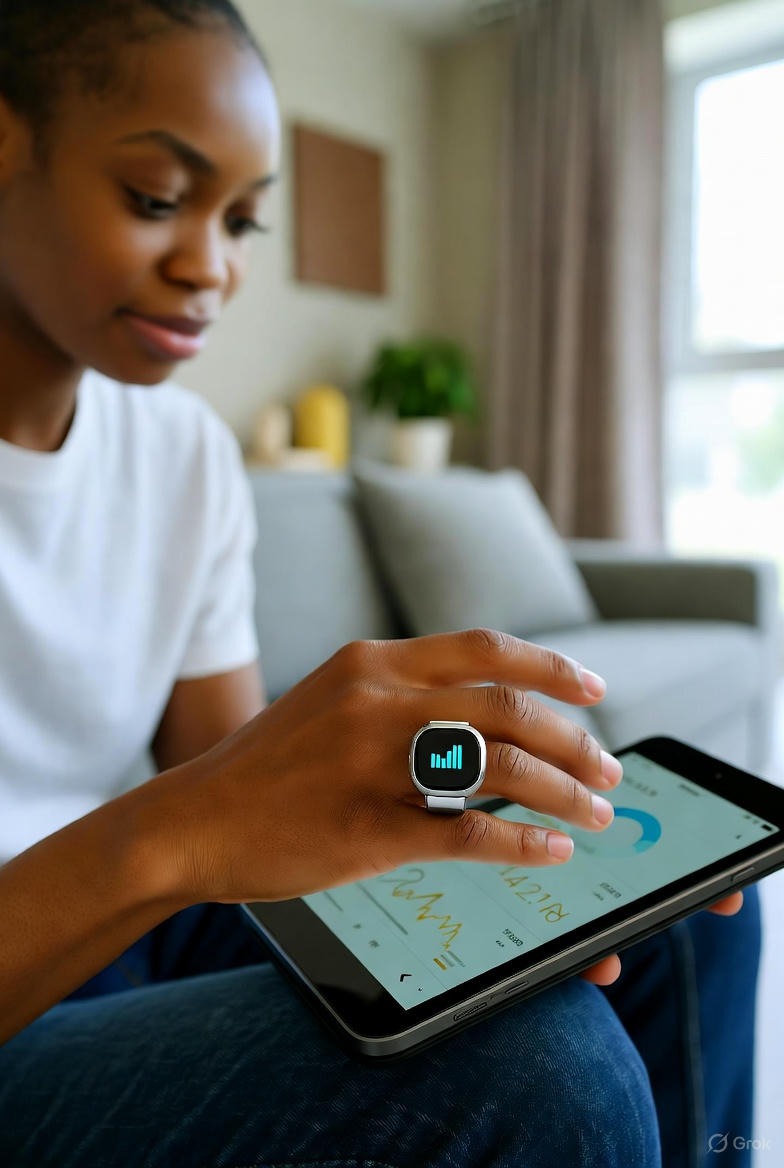
HRV tracking made easy with one-glance displays on smart rings.
HRV tracking made easy with one-glance displays on smart rings.
%402x.svg)
For decades, the pursuit of quantified health was a story of clunky wires, sterile labs, and frustratingly fragmented data. If you wanted to understand the intricate symphony of your nervous system—to measure a biomarker as profound as Heart Rate Variability (HRV)—you needed an EKG machine, a chest strap, and a doctorate in interpreting squiggly lines. HRV, the subtle variation in time between each heartbeat, sat locked away in the realm of cardiologists and elite athletes, a golden signal of resilience, recovery, and autonomic nervous system health that was, for the average person, utterly inaccessible.
Then, something shifted. The desire for self-knowledge met the miniaturization of medical-grade technology, and it chose the most personal canvas imaginable: our finger. The wellness ring emerged not as another gadget for the wrist, but as a discreet, continuous, and profoundly intimate health companion. In doing so, it didn't just introduce HRV monitoring to the masses; it systematically dismantled every single barrier that had kept this vital metric in the dark.
This is the story of that democratization. It's a tale of how a simple band of titanium or ceramic became the key to unlocking one of the body's most telling languages, transforming HRV from a clinical curiosity into a daily dialogue about stress, readiness, and overall well-being. We'll journey through the ten formidable barriers that once stood between you and understanding your nervous system, and explore precisely how the modern wellness ring—epitomized by devices like those from Oxyzen—has reduced them to dust.
To appreciate the revolution, we must first understand the fortress. Heart Rate Variability is a deceptively simple measurement with incredibly complex implications. Unlike your heart rate, which is an average (like 60 beats per minute), HRV measures the millisecond differences between those beats. A higher, more variable HRV typically indicates a resilient, adaptable nervous system—one that can swiftly shift from a stressed "fight-or-flight" (sympathetic) state to a relaxed "rest-and-digest" (parasympathetic) state. It’s a cornerstone metric for predicting cardiovascular health, tracking athletic recovery, monitoring mental stress, and even gauging immune function.
Yet, for all its power, accessing this data was historically a monumental challenge. The barriers weren't just technological; they were psychological, logistical, and financial. They created a world where the people who could benefit most from HRV insights—the overworked professional, the stressed parent, the fitness enthusiast without a coach, the individual managing chronic anxiety—were the very ones denied access.
Imagine trying to measure your HRV a decade ago. You’d likely need a chest strap, which is uncomfortable and obtrusive. You’d have to manually trigger a reading during a specific, controlled moment (like first thing upon waking), requiring discipline and a quiet environment. The raw data would be a confusing array of numbers (RMSSD, SDNN, LF/HF ratio) with little context. You’d have no idea if your score of 55 ms was "good" for someone your age, or if a drop to 40 ms was caused by yesterday's hard workout, a looming deadline, or a glass of wine. The cost of clinical-grade equipment was prohibitive, and the entire process felt separate from daily life—a chore for data, not a seamless insight into living.
This constellation of obstacles—inconvenience, poor user experience, data illiteracy, fragmentation, lack of context, clinical intimidation, cost, poor design, and short-term tracking—formed an impenetrable wall. The wellness ring didn't just climb this wall; it used a combination of elegant engineering, intuitive software, and human-centric design to dismantle it, brick by brick. Let's begin with the most obvious barrier: sheer inconvenience.
The path to traditional HRV data was paved with friction. Before rings, the gold standard for ambulatory (daily life) monitoring was the chest strap ECG. The process was a ritual of inconvenience: moistening electrodes, tightening a strap around your ribcage, ensuring a constant Bluetooth connection to a phone, and tolerating the chafing and discomfort that came from wearing a tight band for extended periods, especially during sleep. For a metric that is most valuable when tracked continuously and during sleep (when environmental variables are minimized), this was a non-starter.
Then came the finger sensors and early optical heart rate monitors. While less intrusive, they were "event-based" tools. You had to remember to use them. The classic instruction for the most accurate daily HRV reading is to take a measurement immediately upon waking, before you even sit up or check your phone. This requires the device to be at your bedside, charged, paired, and ready to go—a routine that falls apart after a groggy morning, a traveling schedule, or simply human forgetfulness. The data became sporadic, creating a choppy, unreliable picture rather than a smooth, insightful trendline.
How Wellness Rings Broke This Barrier: The Power of Continuous, Unconscious Wear
The genius of the wellness ring lies in its form factor and its "set-and-forget" philosophy. A ring is:
This eliminates the "remembering to measure" problem entirely. A device like the Oxyzen ring automatically captures your HRV throughout the night, during the day, and through periods of rest and activity. It builds a rich, multi-point dataset every single day without you lifting a finger. The inconvenience of scheduled measurements evaporates. The data collection becomes as seamless as wearing a wedding band, transforming HRV from a special occasion test into a flowing stream of daily life insight. This passive data collection is the bedrock upon which all other barriers are dismantled, enabling the kind of longitudinal analysis that makes HRV truly meaningful. For a deeper dive into how this seamless tracking applies to sleep, our blog on how sleep trackers actually work explores the underlying technology.
Beyond the physical hassle was the cognitive load. Early HRV apps and devices presented users with a bewildering array of raw data. You weren't greeted with insight; you were greeted with a spreadsheet. Terms like "Root Mean Square of Successive Differences (RMSSD)" or "Low Frequency/High Frequency power ratio" were thrown at users with little explanation. Graphs showed jagged lines without clear boundaries for "good" or "bad." The experience was designed for engineers and researchers, not for individuals seeking to improve their well-being.
This created a steep cliff of engagement. A user would overcome the inconvenience of taking a measurement, only to be met with a screen of indecipherable numbers, leading to the inevitable question: "What do I actually do with this?" The resulting frustration guaranteed that the device would end up in a drawer, a testament to a great sensor let down by terrible communication.
How Wellness Rings Broke This Barrier: From Raw Data to Human-Centric Insight
Modern wellness rings have invested as much in their software and user experience as in their hardware. They act as translators, converting the complex language of the autonomic nervous system into intuitive, actionable feedback.
Instead of presenting "RMSSD: 42 ms," a leading ring platform will display a "Readiness Score" of 72 out of 100, or label your nervous system state as "Balanced" or "Recovering." It uses color coding (green, yellow, red), simple icons, and plain language. The raw data is still available for the data-hungry user—often tucked away in an "advanced" tab—but the front door is an empathetic, easily understood dashboard.
This transformation is profound. It shifts the user's role from that of a data analyst to that of a recipient of guidance. The ring and its app do the heavy lifting of interpretation, allowing you to focus on the implication: "My body is telling me it's stressed; maybe I should prioritize a light walk instead of a heavy gym session today." This human-centric design, which you can explore in the philosophy behind Oxyzen's approach, is what turns a monitoring device into a true wellness partner, building trust and encouraging long-term use.
Closely tied to poor UX was the deeper problem of context—or the utter lack thereof. A standalone HRV number is meaningless. Is an RMSSD of 60 good? For a 20-year-old elite athlete, it might be low. For a 60-year-old, it might be excellent. Was a 10% drop from yesterday caused by an effective training adaptation or by a stressful argument? Traditional monitors gave you the number but left you stranded on an island of ignorance, without the tools to understand the "why" behind the "what."
This lack of context bred two outcomes: obsession or abandonment. Some users would become anxiously fixated on daily fluctuations, not understanding the natural noise in the data. Most would simply give up, seeing no tangible connection between the metric and their lived experience.
How Wellness Rings Broke This Barrier: The Symphony of Multimodal Sensing
The wellness ring’s most powerful innovation is not that it measures HRV; it’s that it measures HRV alongside everything else. By corralling multiple sensors into a single, always-on device, rings provide the contextual framework that makes HRV data sing.
Consider what a ring like Oxyzen tracks simultaneously:
Now, the magic happens in the algorithm. The app doesn't just show you these metrics in silos. It cross-references them. It can say: "Your HRV was low this morning. However, you also had a very high resting heart rate, elevated skin temperature, and low blood oxygen last night. This pattern is often associated with your body fighting an illness. Consider taking it easy." Alternatively, it might say: "Your HRV is low, but your deep sleep was high and your activity was intense yesterday. This is a normal sign of positive training stress. You're recovering."
This multimodal context is the killer feature. It moves HRV from a confusing standalone statistic to the central character in a story about your body’s daily state. It provides the "why," empowering you with understanding rather than leaving you with a cryptic number. For those new to this kind of holistic tracking, our Sleep Tracking 101 guide is an excellent starting point.
Before the era of the all-in-one wellness ring, the dedicated biohacker’s life was a patchwork of apps and devices. A Fitbit for activity and sleep, a Whoop strap for HRV and recovery, a separate pulse oximeter for SpO2, a manual temperature log, a meditation app for mindfulness correlation—the list went on. This fragmentation was the enemy of insight. Data lived in different ecosystems, with different interfaces, different time axes, and no ability to talk to each other.
Trying to understand how your evening meditation affected your next morning's HRV was a manual, frustrating process of screenshot comparisons. The holistic picture of health—the very picture HRV demands to be part of—was shattered across a dozen digital silos. This made sustained, informed behavior change nearly impossible, as no single platform could tell the complete story of your physiological state.
How Wellness Rings Broke This Barrier: Creating a Unified Health Dashboard
The wellness ring is a consolidation play. It is the grand unifier, bringing a dozen critical biomarkers under one roof—or, more accurately, under one bezel. By integrating PPG sensors, 3D accelerometers, temperature sensors, and sophisticated algorithms into a single device, it creates a native, synchronous dataset.
Every metric is timestamped to the same second, measured from the same physiological source (your body), and presented on a unified timeline. You can literally scroll through your night and see, moment by moment, how a drop in blood oxygen correlated with a spike in heart rate and a shift in sleep stage. You can see how your daytime stress (indicated by heart rate spikes) dovetails with your evening resting HRV.
This unified dashboard is transformative. It allows the algorithms to detect complex correlations that would be invisible to the human eye across fragmented apps. It turns the user from a data janitor, constantly cleaning and compiling information, into a data explorer, free to ask questions and see immediate, correlated answers. This seamless integration is a core part of the Oxyzen experience, designed to give you a single source of truth for your well-being.

Access to professional-grade physiological monitoring was historically reserved for those with significant resources. A medical-grade ambulatory ECG monitor (Holter monitor) can cost thousands of dollars to rent and requires a physician's prescription. Even consumer chest straps with good HRV capabilities often came with steep price tags and recurring subscription fees for advanced analytics. This financial barrier placed advanced health insights squarely in the domain of the wealthy, the professional athlete with team funding, or the seriously ill patient with medical necessity.
For the average person curious about optimizing stress, sleep, and fitness, the cost was simply unjustifiable. It framed HRV monitoring as a luxury rather than a fundamental tool for preventive health.
How Wellness Rings Broke This Barrier: Democratizing Access Through Mass Market Design
Wellness rings have leveraged consumer electronics supply chains, mass production, and direct-to-consumer sales models to collapse the cost of sophisticated monitoring. While not "cheap," a high-end wellness ring represents a one-time purchase that delivers a suite of capabilities that would have required $10,000 worth of separate medical equipment a generation ago.
Crucially, the value proposition is bundled and clear. You are not just buying an HRV monitor; you are buying a sleep lab, a recovery coach, an activity tracker, and a health observatory that fits on your finger. This bundling of immense value into a single, durable device makes advanced biofeedback financially accessible to millions. Furthermore, brands that focus on core hardware value, like Oxyzen, often avoid the predatory recurring subscription models that lock essential insights behind a perpetual paywall, truly making the insights a one-time investment in long-term health.
The ring isn't a medical device, and it doesn't claim to be one. But it brings a level of physiological insight that is clinically meaningful and actionable into the realm of everyday affordability, fulfilling the promise of democratized health technology.
Psychology matters. We are less likely to incorporate something into our identity and daily life if it makes us feel like a patient. Traditional health monitors—with their beige plastic, rubber straps, blinking LEDs, and obvious wires—scream "sick care." They are designed for diagnosis, not for living. Wearing a chest strap or a chunky medical sensor in social or professional settings invites unwanted questions and creates a psychological association with illness and vulnerability.
This aesthetic barrier was subtle but powerful. It prevented health monitoring from becoming a normalized, positive aspect of daily self-care, keeping it instead in the shadowy realm of the clinical and the abnormal.
How Wellness Rings Broke This Barrier: The Rise of Discreet, Jewelry-Grade Design
Wellness rings have embraced a fundamentally different design philosophy: stealth wellness. They are crafted from materials like titanium, ceramic, and carbon fiber—materials associated with fine jewelry and watches, not hospitals. Their forms are sleek, minimalist, and often indistinguishable from a fashionable ring. The sensors are hidden under a smooth, hypoallergenic inner surface.
This design choice is revolutionary. It allows the technology to disappear into your life. You can wear it to a board meeting, a workout, a wedding, and to bed, and it never looks out of place or draws attention to itself as a "medical device." This normalization is key to adoption. It transforms health tracking from a stigmatized, clinical activity into a personal, empowering, and even stylish choice. It aligns the tool with a proactive, wellness-oriented identity rather than a reactive, illness-focused one. The focus on elegant, wearable design is part of Oxyzen's story, proving that advanced technology doesn't have to be obtrusive.
In the pre-connected era, even if you had a device, tracking trends was a manual slog. You'd have to write down your daily HRV number in a notebook, then perhaps graph it weekly on paper to see a trend. Correlating it with lifestyle factors meant maintaining a separate journal for diet, exercise, and mood. The cognitive overhead was immense, and the likelihood of maintaining this practice for the months often required to see meaningful patterns was near zero.
This manual logging burden meant that most people only ever saw snapshots, not narratives. They could see a data point, but never the arc of their recovery from a stressful period, the impact of a new meditation practice, or the gradual improvement in resilience from consistent training. Without long-term trends, HRV data loses much of its predictive and insightful power.
How Wellness Rings Broke This Barrier: Automated Longitudinal Analysis & Personalized Baselines
Wellness ring platforms are built for the long haul. From day one, they automatically log every data point, building a private, cloud-based health timeline. The software is designed to highlight trends, not just daily numbers. It calculates your personal baselines for HRV, sleep, and other metrics over weeks and months, learning what is "normal" for you.
This is critical because HRV is highly individual. Comparing your 50 ms to someone else's 80 ms is pointless. The power is in understanding deviations from your own baseline. The ring’s app automatically flags these deviations. It can show you a 30-day trendline, highlighting a steady climb in your HRV baseline since you started a new yoga routine, or a concerning dip that coincided with a month of poor sleep.
Furthermore, many apps include integrated lifestyle logging. With a few taps, you can log caffeine intake, alcohol, stress levels, or workout intensity. The app then automatically correlates these logs with your physiological data, visually showing you, for example, how your HRV reliably dips the night after two glasses of wine. This automated correlation turns guesswork into knowledge, providing clear, data-backed feedback loops that empower sustainable behavior change. This approach to building a personalized health narrative is a topic we frequently explore in-depth on the Oxyzen blog.
The final, and perhaps most disheartening, barrier of the old paradigm was the gap between data and action. You might finally, after great effort, ascertain that your HRV was low. The inevitable next question was: "So what should I do differently?" Traditional devices offered no answer. They were diagnostic tools, not coaching tools. They left you on the cliff edge of awareness with no bridge to improvement.
This created a cycle of frustration: measure, worry, guess, repeat. Without personalized, actionable guidance tied directly to the data, the entire exercise could feel futile and even anxiety-inducing.
How Wellness Rings Broke This Barrier: From Monitoring to Coaching & Behavior Change
The modern wellness ring ecosystem has evolved into a proactive coaching platform. Using your aggregated, contextualized data, these systems don't just report—they recommend.
This manifests in several ways:
This transforms the relationship. The ring becomes less of a monitor and more of a guide. It uses your unique physiological data to offer tailored suggestions, closing the loop between awareness and action. It provides the "so what" and the "now what," making the entire endeavor purposeful and empowering. This journey from raw data to personal transformation is at the heart of what makes the technology truly revolutionary, a vision clearly shared in the mission of companies leading this space.
A less discussed but potent barrier was social perception. Openly tracking one's health metrics could be seen as obsessive, narcissistic, or hypochondriacal. The early adopters of biohacking often faced eye-rolls or concerns from friends and family. This social friction could make people hesitant to engage with self-tracking tools, fearing it would label them as "that person" who is overly fixated on their data.
This stigma created an internal conflict: the curiosity about self-improvement versus the desire for social normalcy.
How Wellness Rings Broke This Barrier: Normalizing Invisible Self-Care
The wellness ring’s discretion is its social superpower. Because it looks like ordinary jewelry, it doesn't broadcast "I AM TRACKING MY BIOMETRICS." The tracking is entirely private and invisible to the outside world. There is no screen to glance at during conversation, no obtrusive band to adjust at the dinner table.
This allows individuals to engage in deep self-quantification without any external social cost. They can benefit from the insights while maintaining a completely normal appearance. The ring enables a private, personal relationship with one's own data, free from external judgment or commentary. It democratizes self-care by making it a silent, personal practice rather than a performative one. This aligns perfectly with a growing cultural trend towards quiet, personalized wellness, a philosophy you can discover more about through Oxyzen's customer experiences.
Having dismantled the fortress of inaccessibility, the wellness ring didn't just open the gates—it invited the world into a new relationship with their own bodies. The removal of these barriers was not an end in itself, but a beginning. It unleashed the true potential of Heart Rate Variability as a practical, daily tool for living better. No longer confined to labs, HRV data, now seamless and contextual, is fueling a revolution in how we manage stress, optimize performance, navigate illness, and even redefine preventive healthcare.
This next phase of our exploration moves from the "how" of access to the "so what" of impact. We will journey through the tangible, life-altering applications that democratized HRV monitoring has made possible. From giving us a real-time gauge of our nervous system's reaction to the modern world to offering athletes a personal recovery coach, the implications are profound. We will see how this continuous stream of insight is creating early warning systems for illness, building resilience against burnout, and fostering a new era of personalized, data-informed well-being that is proactive rather than reactive. The story continues here, in the lived experience of millions who now have a direct line to their body's most honest messenger.

With the barriers removed, HRV ceases to be a mere number and becomes a dynamic, interactive compass for daily life. It shifts from a retrospective diagnostic to a prospective guide. This section explores the concrete domains where accessible, continuous HRV monitoring is making the most significant impact, transforming abstract data into daily rituals, informed decisions, and improved health outcomes.
For decades, public health and wellness advice has been necessarily broad. "Get 8 hours of sleep." "Manage your stress." "Exercise regularly." While sound, this advice ignores a fundamental truth: our bodies are not identical. What constitutes "stress" for one nervous system may be invigorating for another. The "right" amount of sleep is deeply individual. Wellness rings, by establishing a personal HRV baseline, allow us to move beyond generic platitudes and into the realm of personalized physiology.
Your ring learns your normal. It understands that your baseline HRV is 65 ms, your typical deep sleep is 1.5 hours, and your resting heart rate sits at 58. With this established, it can detect meaningful deviations that are invisible to any external observer. That "8 hours of sleep" might have been fragmented and unrefreshing, resulting in a 30% HRV drop—a clear signal that despite hitting the generic target, the quality was poor for you. That "moderate" workout might have pushed your system into a prolonged recovery state, indicated by an elevated resting heart rate and suppressed HRV for two days.
This personalized feedback loop is revolutionary. It allows you to experiment and observe. Try a new meditation app for two weeks: does your nightly HRV trend upward? Cut out evening screen time: does your deep sleep, and consequently your morning HRV, improve? The ring provides objective, physiological feedback on the interventions you choose, creating a customized roadmap to your own optimal state. This journey of self-discovery through data is a common theme in the real user stories shared by Oxyzen customers.
Perhaps no application of democratized HRV is more immediately impactful than in the realm of stress and mental health. Stress is not an event; it is a physiological response. For many, it's an invisible, chronic background hum that only becomes noticeable when it manifests as burnout, anxiety, or illness. Traditional stress management often relies on subjective self-assessment ("I feel stressed"), which can be inaccurate—we can be stressed without realizing it, or mistake excitement for anxiety.
HRV provides an objective, real-time window into the autonomic nervous system's balance. A low or declining HRV is a direct indicator of sympathetic ("fight-or-flight") dominance. A wellness ring makes this visible.
How It Works in Practice:
This process transforms stress management from a vague concept into a tangible, biofeedback-driven skill. Individuals learn which specific stressors most impact their system and which recovery tools work best for them. For those managing anxiety, seeing a physiological correlate can be validating and reduce catastrophic thinking. It turns the internal, often chaotic experience of stress into something measurable and manageable. The science behind this connection, especially regarding how deep sleep resets our stress response, is detailed in our exploration of the science of deep sleep.
In the world of athletic performance, HRV has long been a secret weapon for top coaches. Overtraining is a constant risk, and the line between productive strain and harmful stress is perilously thin. Before wellness rings, monitoring this required disciplined daily manual measurements with chest straps, a practice few outside the elite could maintain.
Democratized HRV has changed the game entirely. For the serious athlete, the weekend warrior, and the fitness newcomer alike, the ring acts as a 24/7 recovery coach.
Applications in Training:
The accessibility of this data empowers individuals to train smarter, not just harder. It brings a level of physiological insight to the individual athlete that was previously only available in professional sports labs. For athletes focused on maximizing the recovery component of their training, our guide to deep sleep optimization for athletes is an essential read.
One of the most promising applications of continuous HRV monitoring is in the domain of predictive health. The autonomic nervous system is intimately linked with immune function. Often, before you feel the first scratch in your throat or a wave of fatigue, your body has already mounted an immune response. This response creates physiological changes that a wellness ring can detect.
A consistent pattern observed in research and user data is the "sickness dip." In the 24-48 hours before the onset of cold or flu symptoms, it's common to see:
When your ring's algorithm sees this constellation of signals deviate from your personal baseline, it can serve as an early alert. You might get a notification: "Your body is showing signs of strain. Prioritize rest and recovery."
This early warning is powerful. It allows you to take proactive steps: scaling back intense activities, increasing hydration, prioritizing sleep (perhaps using techniques from our deep sleep formula article), and bolstering nutrition. In some cases, this may help mitigate the severity or duration of an illness. It transforms you from a passive victim of sickness to an active participant in your immune defense, using data as your early radar. For frequent questions on how these metrics interplay, our FAQ section offers clear explanations.
Our bodies are not static, and neither is our optimal HRV. Life transitions—both positive and challenging—profoundly affect our nervous system. Continuous monitoring provides invaluable support during these periods.
In all these cases, the ring provides a continuous, objective narrative of the body's journey through change, offering insight, validation, and a measure of control during potentially disorienting times.
Sleep is the primary recovery period for the autonomic nervous system, and HRV during sleep—particularly during deep sleep—is a critical indicator of its restorative quality. Wellness rings, by combining HRV with detailed sleep staging, have become one of the most powerful consumer tools for sleep optimization.
The Connection Unveiled:
This data moves sleep improvement beyond just counting hours. You can run experiments:
The ring provides the before-and-after data, turning sleep hygiene from a list of rules into a personalized optimization project with clear feedback. To start this journey, our comprehensive Sleep Tracking 101 guide is an invaluable resource.
Lasting behavior change is difficult because the rewards are often delayed and intangible. "Exercise is good for you" is a distant future promise. "Eating well will make you feel better" is vague. Wellness rings provide the missing link: immediate, tangible, personalized feedback.
This creates a powerful engine for habit formation based on operant conditioning:
Conversely, negative behaviors get immediate, non-judgmental feedback. That late-night social media scroll that pushed your bedtime to 1 AM? You'll see the impact on your sleep score and next-day readiness. Those three drinks with friends? You'll likely observe a suppressed HRV and elevated resting heart rate.
This process removes the moralizing "should" from health choices and replaces it with a cause-and-effect curiosity. It turns self-care into a series of personal experiments with clear outcomes, making sustainable change not just possible, but engaging and rewarding. For those wondering if this level of tracking is worth the effort, our honest analysis of the pros and cons of sleep tracking weighs the benefits against the potential pitfalls.
The ultimate cultural shift enabled by democratized HRV monitoring is the move from a reactive to a proactive healthcare model. Traditional medicine often intervenes after pathology presents with symptoms. Continuous physiological monitoring flips this script, focusing on maintaining health and preventing decline.
Your HRV trend is a leading indicator of overall system resilience. A gradual, multi-week decline in your baseline HRV isn't a symptom of a disease; it's a warning sign of deteriorating capacity. It's a signal that your foundational pillars—sleep, nutrition, stress, movement—are out of alignment long before that imbalance turns into a diagnosable condition like hypertension, insomnia, or an anxiety disorder.
With this early warning, you can take proactive, often lifestyle-based, steps to correct course. You can consult with a wellness coach, tweak your exercise regimen, or address sleep issues—all as preventive measures. This shifts the individual's role from a passive patient waiting for something to break to an active steward of their own health capital.
This proactive mindset, powered by accessible data, represents the true promise of the wellness revolution. It's about using technology not to diagnose illness, but to cultivate and protect vitality, empowering each person to be the expert on their own body's unique needs and rhythms. This philosophy is central to the vision behind brands like Oxyzen, which are built on empowering individuals through insight.
The narrative so far has been one of liberation: a vital health metric, once locked away, set free by elegant technology. We've seen the barriers fall and the flood of applications rise—transforming stress management, athletic training, and our very approach to health. Yet, every revolution demands not just enthusiasm, but wisdom. With great data comes great responsibility: the responsibility to interpret it correctly, to understand its limits, and to integrate it into a life that is lived, not just measured.
This final portion of our exploration ventures into this essential terrain of nuance and future-gazing. We will equip you with the critical knowledge to become a savvy, empowered user of this technology, not a slave to its numbers. We'll dissect the important limitations of consumer-grade HRV, provide a framework for sane and sustainable data interpretation, and explore how to weave these insights into the rich tapestry of your life without letting the tail wag the dog. Finally, we will look ahead to the horizon, where the convergence of continuous biometrics, artificial intelligence, and personalized medicine promises a future where our devices don't just track our health—they partner in its active cultivation.
The wellness ring is a powerful tool, but it is not a magic talisman. Its value is maximized when we understand what it is and what it is not. Navigating this new landscape requires a blend of curiosity and critical thinking.
At the heart of every wellness ring is a Photoplethysmography (PPG) sensor. It uses light (typically green and infrared LEDs) to detect blood volume changes in the capillaries of your finger. From these pulsatile changes, the device derives your heart rate and, through complex algorithmic processing, estimates Heart Rate Variability.
It is crucial to understand that this is an estimate. The clinical gold standard for HRV is an electrocardiogram (ECG or EKG), which measures the heart's electrical activity directly via electrodes on the skin. PPG is measuring a secondary effect (blood flow) that can be influenced by factors like skin temperature, peripheral circulation, and motion.
What this means for you:
The key takeaway is consistency over clinical precision. For the purpose of daily trend monitoring, stress tracking, and recovery insight, a well-made ring's PPG-derived HRV is remarkably effective and consistent for tracking changes in your own body over time. It provides a directional guide, not a medical diagnosis. For a deeper technical dive into the capabilities and limits of this sensing method, our article on sleep tracking accuracy provides essential context.
A significant risk in any form of self-quantification is the slide from helpful awareness into harmful obsession. In sleep medicine, clinicians have coined the term "orthosomnia" – an unhealthy preoccupation with achieving perfect sleep data. The same phenomenon can occur with HRV, readiness scores, and other ring metrics.
Warning signs of unhealthy engagement include:
The ring is a tool to enhance your life, not to become the purpose of it. The data is meant to inform your intuition, not replace it.
Strategies for Healthy Engagement:
HRV is famously personal. It is influenced by age, genetics, fitness level, and even sex. A "good" HRV for a 55-year-old is vastly different from a "good" HRV for a 25-year-old elite cyclist.
The cardinal rule of HRV is: Only compare you to you.
Wellness ring apps understand this. They spend the first week or two establishing your personal baselines. The real power lies in understanding deviations from that baseline. A 20% drop from your normal is significant, regardless of whether your normal is 40 ms or 100 ms.
Avoid the temptation to compare your scores with friends or online communities in a competitive way. Such comparisons are physiologically meaningless and can lead to unnecessary frustration or pride. Your journey is your own. The ring's value is in illuminating your unique patterns, responses, and pathways to improvement. This focus on the individual journey is a core part of the support philosophy you'll find in the Oxyzen FAQ.
The wisest users of this technology know when to put the ring in a drawer—metaphorically or literally. There are times when living a full human life should trump the optimization of biometrics.
When it might be wise to "ignore" the data:
The goal is to use the ring to build resilience so that you can fully engage in life's rich experiences, not to avoid experiences to protect a score.
As the wellness ring market matures, important considerations around the business model and data ethics have emerged.
Being an informed consumer means looking beyond the hardware to the software ecosystem and the company's ethos regarding your data. This commitment to user empowerment and transparency is often part of a company's foundational story and values.
The wellness ring is not the end point, but a pivotal chapter in the story of personalized health. Its success lies in proving the value and viability of continuous, passive biometric monitoring. This paves the way for an even more integrated and intelligent future.
Current algorithms are good at detecting patterns and correlations. The next generation, powered by advanced artificial intelligence and machine learning, will move toward prediction and prescription.
Imagine a system that:
The ring becomes the always-on data collector for an AI health coach that knows you better than you know yourself, offering hyper-personalized, proactive guidance.
The line between consumer wellness and clinical care is beginning to blur. Forward-thinking physicians and telehealth providers are starting to see the value of longitudinal patient-generated health data (PGHD).
Potential future integrations:
For this to happen, data must be secure, standardized, and presented in clinician-friendly formats. The wellness ring industry is moving in this direction, poised to become a bridge between daily life and the clinical setting.
The application of Heart Rate Variability extends far beyond the realms of athletic performance and general wellness. For individuals managing chronic health conditions, HRV tracking is emerging as a powerful, accessible tool for daily self-management, providing objective feedback on how lifestyle choices, treatment plans, and the conditions themselves affect the body's autonomic balance. It offers a quantifiable measure of the physiological toll of chronic illness and the benefits of effective management.
Many chronic conditions are either caused by or contribute to autonomic nervous system (ANS) dysfunction—a state often reflected in suppressed HRV.
Consider "Maria," who manages generalized anxiety and irritable bowel syndrome (IBS). Both conditions are linked to ANS dysregulation. Her HRV tracker provides her with a daily operational guide:
For those with chronic conditions, HRV tracking must be used thoughtfully:
By providing a window into the autonomic nervous system, HRV tracking equips individuals with chronic conditions with a unique form of biofeedback. It transforms the subjective experience of "having a bad day" into an objective understanding of physiological state, enabling more informed and proactive daily choices in partnership with healthcare providers. For more on how foundational health pillars like sleep interact with overall well-being, our analysis on whether sleep tracking is worth it explores the value of this data-driven approach.
Of all the lifestyle levers you can pull to influence your Heart Rate Variability, none is faster, more accessible, or more immediately effective than your breath. Breathing is our body's built-in remote control for the autonomic nervous system. By practicing specific, intentional breathing techniques, you can directly stimulate your vagus nerve and parasympathetic system, creating an acute boost in HRV and a state of calm. This practice is often called coherent breathing or resonant frequency breathing.
The connection is called Respiratory Sinus Arrhythmia (RSA). This is a natural, healthy phenomenon where your heart rate speeds up slightly on the inhalation (sympathetic slight uptick) and slows down on the exhalation (parasympathetic activation). The deeper and more rhythmic the breath, the greater this wave-like variation becomes—and this variation is HRV. Coherent breathing maximizes this wave by breathing at a slow, steady pace that creates synchrony between your heart rate oscillations and your breathing cycle.
This is the simplest entry point and highly effective.
Why it works: This pace (approximately 6 breaths per minute) is near the resonant frequency for most adults, where the synchronization effect between heart rate and breathing is strongest. It efficiently stimulates the vagus nerve, reduces physiological arousal, and will often increase real-time HRV measurably during the session.
Once comfortable with 5-5, you can explore variations:
The key is consistency, not duration. Five minutes daily is better than one 30-minute session weekly.
The Data Connection: This is where tracking shines. Practice your breathing technique consistently for a week. Observe your overnight HRV trends and your morning resting heart rate. Do you see a positive shift? This objective feedback reinforces the value of the practice, moving it from a "nice-to-do" to an essential, non-negotiable part of your routine because you can see it working.
Mastering your breath is mastering direct access to your nervous system. It is the most democratized biohack available, requiring no equipment, costing nothing, and offering profound benefits for HRV, stress, and overall health. To understand how this nightly practice fits into the broader picture of sleep optimization, our guide on how to get more deep sleep tonight incorporates breathing as a core strategy.

The finger holds more secrets yet to be unlocked. Research is ongoing into using the same PPG optical sensors, combined with new algorithms, to non-invasively estimate:
Furthermore, future wearables may incorporate additional sensor types—like galvanic skin response (GSR) for direct sweat-based stress measurement or even miniaturized ECG electrodes for periodic clinical-grade heart rhythm checks—all within the same discreet form factor.
Perhaps the most profound long-term impact of democratized HRV monitoring is not technological, but cultural. It is fostering a new form of physiological literacy.
A population that understands the concept of autonomic nervous system balance, that can recognize the signs of sympathetic overload and parasympathetic withdrawal in their own bodies, is empowered. This literacy shifts our collective conversation about health from merely the absence of disease to the active cultivation of resilience.
People begin to frame choices in terms of "nervous system cost" and "recovery investment." They understand why sleep is non-negotiable, not as a luxury, but as foundational infrastructure for mental and physical health (a topic explored in our article on what is deep sleep and why you're not getting enough). They can make a data-backed case for managing workload and setting boundaries. This cultural shift, from ignoring our body's signals to understanding and respecting them, may be the ultimate victory of this technology.
The journey of the wellness ring is a microcosm of a larger revolution in human health. It is the story of taking what was exclusive, intimidating, and fragmented and making it inclusive, intuitive, and whole. It has removed the barriers of inconvenience, poor experience, data illiteracy, and cost, replacing them with a seamless, context-rich, and personalized stream of insight into our most vital operating system.
HRV is no longer a secret language for the few. It is becoming a daily dialogue for the many—a dialogue about stress and recovery, effort and ease, challenge and resilience. The ring on your finger is a quiet revolution, a constant reminder that the most sophisticated health technology is not in a distant hospital, but in the intimate, continuous conversation you now have with your own body.
This is not about achieving a perfect score. It is about gaining a compassionate witness to your life's rhythms. It's about having the information to make kinder, smarter choices for your unique physiology. It's about building a partnership with technology where the device serves the human, illuminating the path to a more resilient, vibrant, and aware way of being.
The barriers are gone. The path to self-knowledge, through the subtle language of your own heartbeat, is now open. It is up to each of us to walk it with curiosity, wisdom, and the unwavering knowledge that the ultimate authority on your well-being, guided by data but grounded in lived experience, is you.
Your Trusted Sleep Advocate (Sleep Foundation — https://www.sleepfoundation.org/)
Discover a digital archive of scholarly articles (NIH — https://www.ncbi.nlm.nih.gov/
39 million citations for biomedical literature (PubMed — https://pubmed.ncbi.nlm.nih.gov/)
experts at Harvard Health Publishing covering a variety of health topics — https://www.health.harvard.edu/blog/)
Every life deserves world class care (Cleveland Clinic -
https://my.clevelandclinic.org/health)
Wearable technology and the future of predictive health monitoring. (MIT Technology Review — https://www.technologyreview.com/)
Dedicated to the well-being of all people and guided by science (World Health Organization — https://www.who.int/news-room/)
Psychological science and knowledge to benefit society and improve lives. (APA — https://www.apa.org/monitor/)
Cutting-edge insights on human longevity and peak performance
(Lifespan Research — https://www.lifespan.io/)
Global authority on exercise physiology, sports performance, and human recovery
(American College of Sports Medicine — https://www.acsm.org/)
Neuroscience-driven guidance for better focus, sleep, and mental clarity
(Stanford Human Performance Lab — https://humanperformance.stanford.edu/)
Evidence-based psychology and mind–body wellness resources
(Mayo Clinic — https://www.mayoclinic.org/healthy-lifestyle/)
Data-backed research on emotional wellbeing, stress biology, and resilience
(American Institute of Stress — https://www.stress.org/)


