


How to Track HRV Trends Effortlessly With Your Wellness Ring
HRV tracking made easy, requiring no medical background knowledge.
HRV tracking made easy, requiring no medical background knowledge.
%402x.svg)
Your body is whispering its secrets, but are you listening? Every beat of your heart tells a story—not of rhythm alone, but of a complex, nuanced conversation between your brain, nervous system, and every cell in your body. This conversation is measured by Heart Rate Variability (HRV), and for decades, accessing this profound biofeedback required clinical visits, cumbersome chest straps, and a PhD in data interpretation. No longer.
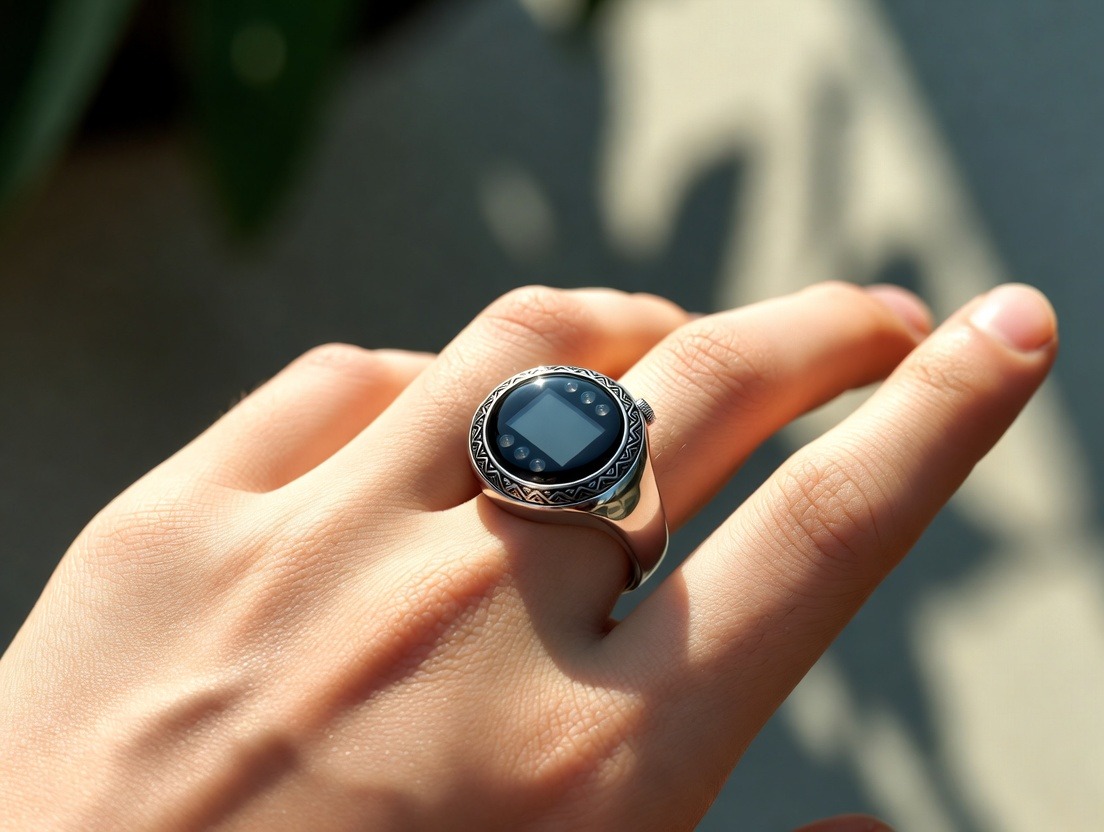
Welcome to the era of effortless, continuous HRV tracking, powered by a device so discreet it lives on your finger. The modern wellness ring has transformed a critical but elusive health metric from a scientific curiosity into a daily, actionable wellness companion. This is more than just tracking; it’s about translating the silent symphony of your autonomic nervous system into a personalized roadmap for resilience, recovery, and peak performance.
Gone are the days of single-point snapshots. The true power of HRV lies in its trends—the subtle shifts from day to day, week to week, that reveal how your body is truly responding to stress, sleep, exercise, and life itself. Until now, spotting these trends required manual logging, complex spreadsheets, and unwavering dedication. Today, your wellness ring does the heavy lifting, collecting data seamlessly as you live your life, and presenting clear, intelligible trends right in the palm of your hand.
This article is your master guide to not only understanding HRV but to mastering the art of tracking its trends effortlessly. We will dismantle the science, explore the technology that makes it possible, and provide a practical framework for integrating this profound knowledge into your daily routine. By the end, you will see your HRV not as a confusing number, but as a trusted dialogue with your own body, empowering you to make smarter decisions for your long-term health and vitality. Let’s begin by understanding the very language your heart is speaking.
To appreciate the revolution of effortless trend tracking, we must first understand what we're tracking. Heart Rate Variability is not your heart rate. Your heart rate tells you how many times your heart beats per minute. HRV tells you the time variation between each of those beats, measured in milliseconds. If your heart beat like a monotonous metronome—beat, beat, beat at perfect intervals—your HRV would be low. But a healthy, resilient heart beats with a dynamic, responsive rhythm—slightly faster as you inhale, slightly slower as you exhale. This variability is a very good thing.
Think of it as your body’s fundamental measure of adaptability. HRV is the direct output of your autonomic nervous system (ANS), which operates your "autopilot" functions: the sympathetic ("fight or flight") and parasympathetic ("rest and digest") branches. When the ANS is balanced and responsive, your HRV is generally higher, indicating readiness to handle stress and recover effectively. When you're chronically stressed, fatigued, or ill, the sympathetic system can dominate, leading to a lower, less variable HRV.
Why is this tiny millisecond variation so powerful?
Historically, capturing accurate HRV required an electrocardiogram (ECG). The rise of photoplethysmography (PPG) sensors in wearables changed the game, but accuracy was often compromised by motion and poor fit. The wellness ring, worn on the finger—a vascular-rich area with minimal motion during sleep—provides an ideal, stable platform for 24/7 PPG data collection. This continuous capture is the bedrock of trend analysis. You can no longer manage what you don't measure, and now, you can measure it seamlessly, night and day.
To truly grasp how this data translates into a coherent picture of your health, it’s helpful to explore the technology making it all possible. If you're curious about the sensor technology behind these insights, our detailed explainer on how sleep trackers actually work dives deep into the science of PPG and motion sensing.
Here lies the most common pitfall for new HRV enthusiasts: overreacting to a single data point. Waking up to a "low" HRV score and deciding your day is doomed is like checking the weather at one random moment and declaring it will be the same forever. It ignores the broader climate. The immense value of HRV is not in the daily number itself, but in the story the trend tells over time.
A single HRV reading is a snapshot—a portrait of your nervous system at that specific moment, influenced by a thousand transient factors: the quality of your last meal, a vivid dream, a momentary anxiety, or even your sleeping position. It has limited standalone meaning.
A long-term HRV trend, however, is a documentary. It reveals patterns, baselines, and deviations that correlate meaningfully with your lifestyle. It answers far more important questions:
For example, seeing your HRV gradually climb over several weeks while following a new meditation and sleep protocol is a powerful validation of its effectiveness. Conversely, a sustained downward trend over 5-7 days, despite "feeling fine," can be an early warning sign to pull back on intensity, prioritize sleep, or manage stress before you experience full-blown fatigue or illness.
Your wellness ring automates this trend analysis. Instead of you plotting points on a graph, advanced algorithms establish your personal baseline and visually highlight significant deviations. They can correlate dips and peaks with other data streams like sleep stages, activity, and temperature, providing context for the "why" behind the number. This transforms HRV from a confusing metric into a coherent narrative about your body's journey, empowering proactive rather than reactive health choices.
This seamless integration of data is what sets modern systems apart. To see how these insights come together in a user-friendly experience, you can discover how Oxyzen works to synthesize this information into a clear, actionable health dashboard.
The quest for accurate, continuous physiological monitoring has led wearables to the wrist, chest, ear, and forehead. Yet, for 24/7 HRV trend tracking, the finger has emerged as a uniquely optimal location. This isn't an accident of design but a triumph of physiological and practical engineering.
1. Physiological Superiority:
The finger, particularly the base near the palm, is rich in capillary beds. This vascular density allows the PPG sensor's green LED light to penetrate tissue and detect blood volume changes with high signal fidelity. Compared to the wrist, where bone and tendon can interfere, the finger provides a stronger, cleaner pulse waveform—the raw material for precise HRV calculation. This is crucial, as HRV analysis is exceptionally sensitive to motion artifact and "noisy" data. A clean signal means more accurate readings, both at rest and during mild activity.
2. The Nighttime Advantage:
HRV during sleep, especially deep sleep, is considered one of the purest reflections of autonomic recovery, as it's minimally influenced by conscious movement or acute stress. While wrist-based devices can be affected by arm position and sleep movements, a ring on the finger remains relatively stable throughout the night. This stability yields a pristine, uninterrupted data set of your nocturnal HRV, which is foundational for establishing a true recovery baseline.
3. Unobtrusive for Continuous Wear:
The ultimate goal of effortless trend tracking is uninterrupted data collection. A chest strap is uncomfortable for all-day wear. A wrist device can be bulky, get in the way during certain tasks, or be removed for charging, creating data gaps. A well-designed wellness ring is lightweight, low-profile, and safe for all activities (except extreme impact sports). You can wear it while typing, working out, washing hands, and sleeping. This continuous wear is non-negotiable for building a complete, gap-free trend line that reflects your entire life rhythm, not just fragments of it.
4. Consistent Sensor Placement:
Unlike a watch that can slide up and down the wrist, a properly fitted ring maintains consistent sensor contact with the same patch of skin. This consistency further improves data reliability, as the sensor isn't reading from slightly different vascular pathways each time.
By choosing the finger, wellness ring technology solves the core dilemma of medical-grade insight versus lifestyle practicality. It brings the accuracy needed for meaningful HRV analysis into a form factor you can—and will—wear 24/7. This continuous stream of high-fidelity data is what fuels the powerful trend analytics we rely on.
For those interested in how this form factor impacts another key metric, our analysis on sleep tracking accuracy explores what you can realistically expect from finger-based monitoring.

You’ve worn your smart ring for a week. You open the companion app each morning to see your "Readiness" or "Recovery" score, prominently featuring your nightly HRV. You see a number—let’s say 55 milliseconds (ms) one day and 48ms the next. What now? The real power of HRV tracking isn’t in the absolute number, but in the trends, context, and personal correlations.
The Golden Rule: Trend Over Snapshot, Personal Over Population
Forget comparing your 45ms to a friend’s 80ms. HRV is highly individual, influenced by age, genetics, fitness level, and even gender. A "good" HRV is one that is stable or increasing within your own normal range. The app will typically calculate a rolling baseline (e.g., a 30-day average). Your daily reading should be interpreted relative to this personal baseline.
Context is King: The Art of Logging
To move from observation to insight, you must pair your HRV data with lifestyle context. Modern apps allow you to log tags or view correlations. Over time, you’ll answer questions like:
HRV and Sleep Stages: The Deeper Layer
Advanced smart ring analyses don’t just give a single nightly average. They can show how your HRV fluctuates across sleep stages. Typically, HRV rises during deep NREM sleep (peak parasympathetic activity) and drops during REM sleep (which has more sympathetic activity, similar to waking). Observing if your deep sleep HRV is consistently high or if it’s suppressed can offer even finer-grained insights into the quality of your recovery. For a comprehensive look at what your deep sleep metrics should aim for, our guide on deep sleep tracking and ideal numbers is an essential resource.
By learning to interpret your HRV trends within the context of your life, you transform a abstract number into a conversation with your body. It becomes a daily feedback loop, nudging you toward choices that build resilience and away from those that deplete it.
While HRV is the star metric, it doesn’t work alone. A truly useful recovery system synthesizes HRV with other key nocturnal biomarkers to generate a holistic, easy-to-understand "Recovery" or "Readiness" score. This score acts as your daily guide, translating complex physiology into a simple, actionable recommendation.
A robust recovery score typically integrates data from three core pillars:
1. Sleep Quality (The Foundation):
This isn’t just duration. The algorithm weighs:
2. Nocturnal HRV (The Nervous System Barometer):
As we’ve detailed, this is the primary indicator of autonomic nervous system balance and stress/recovery status. It’s often the most sensitive component of the score.
3. Resting Heart Rate (RHR) & Respiratory Rate:
The Algorithmic Symphony
Each morning, the app’s algorithm takes these inputs—your sleep structure, your HRV trend, your RHR, and more—and weighs them against your personal baselines. It doesn’t just average them; it looks for concordance or discordance. For example:
This synthesized score takes the cognitive load off you. You don’t need to be a biostatistician; you get a clear, prioritized directive. It turns data into decision-support. For those wondering if engaging with this level of data is worthwhile, our honest analysis of the pros and cons of sleep tracking provides a balanced perspective to help you decide.
The promise of effortless trend tracking begins with a few crucial setup steps. Proper initial configuration ensures your data is accurate, your baseline is correctly established, and your insights are personalized from day one. Think of this not as a chore, but as laying the foundation for a years-long dialogue with your body.
Step 1: Achieving the Perfect Fit
This is the most critical physical step. Your ring should be snug enough not to spin freely or fall off, but with enough room to slide over your knuckle with a bit of resistance. Most companies provide a sizing kit—use it diligently. Try the sizers at different times of day (fingers can swell slightly) and ensure the sensor sits flush against the underside of your finger. A poor fit leads to data gaps and inaccuracies, corrupting your trend line before it even begins.
Step 2: Syncing and App Integration
Download the companion app and pair your ring. This usually involves holding the ring near your phone and following simple in-app instructions. Grant the necessary permissions (notifications, Bluetooth) to allow for automatic background syncing. Set up your user profile with honest information: age, sex, height, weight, and activity level. These demographic details help tailor algorithms to provide more personalized interpretations of your data.
Step 3: Establishing Your Baseline – The Patience Phase
Here is where many users go astray: expecting immediate, actionable insights. Upon first wear, your ring and its algorithms know nothing about you. They need a learning period—typically 1 to 2 weeks of continuous wear—to understand your personal norms. During this time:
This baseline period allows the app to calculate your average resting heart rate, your typical HRV range, and your normal sleep architecture. All future trends and "readiness" scores will be deviations from this personalized baseline, making them infinitely more meaningful than comparisons to population averages.
Step 4: Configuring Notifications and Goals
Dive into the app settings. Configure gentle, non-intrusive reminders if you forget to wear your ring. Set initial, achievable wellness goals related to sleep or activity that align with the ring's capabilities. The aim is to make the technology work for you on your terms, not to become a source of digital anxiety. A well-set-up system operates in the background, gathering data effortlessly until you’re ready to engage with its insights.
Taking these steps seriously transforms the device from a simple tracker into a calibrated biofeedback instrument. For any technical questions during this setup phase, our comprehensive FAQ page is an excellent resource for troubleshooting and optimization tips.
Once your baseline is set, the real conversation begins. Opening your wellness app should feel like checking in with a knowledgeable coach, not deciphering a scientific abstract. Modern HRV dashboards are designed for clarity, but understanding the key components empowers you to extract maximum value.
1. The Primary HRV Metric:
Most consumer wellness rings use a time-domain metric called rMSSD (the root mean square of successive differences) or sometimes SDNN (standard deviation of NN intervals). These are robust, widely understood measures of variability. Don't get bogged down by the acronym; instead, note the number and, more importantly, the trend arrow beside it. Is your score today significantly above, near, or below your established baseline? The arrow provides instant, trend-based context.
2. The Trend Graph:
This is the heart of your dashboard—a line chart showing your HRV over time (7, 30, or 90-day views). Look for the following:
3. The Correlation Panels:
Advanced apps don't show HRV in isolation. They intelligently correlate it with other metrics on the same timeline.
4. The Readiness or Recovery Score:
Many apps synthesize HRV, sleep data, resting heart rate, and temperature into a single, easy-to-digest "Readiness" or "Recovery" score (e.g., 1-100 or Low/Medium/High). This score is a trend-based interpretation, not a raw measurement. It answers the question: "Based on how my body has recovered and my recent trends, how prepared am I for stress today?" Trust this synthesized score—it’s the algorithm doing the complex pattern recognition for you, using your personal baseline as the reference point.
Learning to navigate this dashboard turns data into wisdom. For a deeper exploration of one of the most critical correlated metrics, our guide on what your deep sleep numbers should look like provides essential context for interpreting your recovery data.
Your HRV is as unique as your fingerprint. Comparing your number to a friend's or an online "ideal" chart is not only meaningless but potentially discouraging. A "low" number for one person might be a healthy baseline for another, influenced by age, genetics, fitness, and overall physiology. Therefore, the single most important concept in personal HRV tracking is establishing and understanding your own baseline.
Your baseline is not a single number; it's a range that represents your body's normal, homeostatic state under your typical lifestyle conditions. It's the calm center around which the storms of life (stress, training, travel) create temporary ripples.
How Your Ring Determines Your Baseline:
After the initial 1-2 week learning period, sophisticated algorithms calculate your baseline using a rolling average (often 2-4 weeks) of your nightly or morning HRV readings, typically taken during a consistent, quiet period (like deep sleep or the first few minutes after waking). This rolling model is dynamic—it slowly adapts as you become fitter, change lifestyles, or age, but it does so gradually to avoid being skewed by temporary anomalies.
How to Work With Your Baseline:
By internalizing your personal baseline, you stop chasing arbitrary numbers and start listening to your body's unique language. You learn what "normal" looks and feels like for you, making you exquisitely sensitive to the early signs of imbalance long before they manifest as fatigue, irritability, or injury. This self-knowledge is the ultimate goal of effortless tracking.
Understanding this personal baseline also enhances the value of community and shared experiences. Reading real customer reviews and testimonials can provide perspective on how others have used their personal baselines to transform their health journeys.
While daytime spot-check HRV has value, the gold standard for recovery assessment is nocturnal HRV, specifically the readings taken during deep sleep. This is because during deep, non-REM sleep, your conscious mind is offline, external stimuli are minimized, and your parasympathetic nervous system is most dominant. The measurement is less contaminated by the minute-to-minute thoughts, emotions, and movements of wakefulness. It’s a purer reflection of your system's intrinsic recovery capacity.
Your wellness ring is uniquely positioned to capture this. As you sleep, it takes thousands of measurements, building a detailed profile of how your HRV ebbs and flows throughout the night, aligned with your sleep stages.
How to Interpret Your Sleep HRV Data:
Actionable Insights from Sleep HRV:
By focusing on your sleep HRV, you tap into the most honest, unvarnished report card of your recovery. It removes the guesswork from understanding what true rest looks like for your body. For a comprehensive strategy on improving this critical metric, our resource on how to get more deep sleep tonight offers proven, actionable methods.
Data in a vacuum is just noise. The profound utility of HRV trend tracking emerges when you learn to connect the dots between the lines on your graph and the choices you make in your daily life. This is where passive monitoring transforms into active self-experimentation and empowerment.
HRV and Stress (Psychological & Physiological):
HRV is exquisitely sensitive to allostatic load—the cumulative burden of stress on your body. This isn't just about deadlines and arguments (though those count); it includes training stress, dietary stress, and environmental stress.
HRV and Exercise: The Fine Line Between Training and Overtraining
This is one of HRV's most powerful applications for active individuals.
HRV and Nutrition:
What you eat, and when you eat it, directly impacts your nervous system.
How to Conduct a Self-Experiment:
This process turns you into the lead scientist of your own health, using your HRV trend as the primary outcome measure. It provides objective evidence for what truly works for your unique biology, cutting through the noise of generic wellness advice.
To explore how one of the most significant lifestyle factors changes over a lifetime, our article on how age affects deep sleep and how to compensate provides essential insights for long-term trend interpretation.
Beyond the simple ups and downs, your HRV trend graph contains a hidden language of patterns that reveal profound insights into your physiology's deeper rhythms. Learning to recognize these patterns transforms you from a passive data viewer into an intuitive interpreter of your body's signals. These are the narratives written in the subtle fluctuations of your autonomic nervous system.
The Weekly Cycle Pattern (The "Social Sine Wave"):
For many people, especially those with structured workweeks, a distinct weekly HRV rhythm emerges. This often looks like a gentle sine wave on a 7-day view. You might observe:
Recognizing this pattern is liberating. It normalizes the Monday dip. The key question becomes: does your HRV recover by the weekend? If your weekly low points are getting progressively lower over time without a weekend rebound, it suggests chronic stress accumulation without adequate recovery—a recipe for burnout.
The Training Adaptation Curve:
For athletes following periodized training plans, the HRV trend should tell a clear story.
The "Silent Illness" Signature:
One of HRV's most valuable early-warning capabilities is its sensitivity to impending sickness. Often 24-72 hours before you feel any symptoms—before a scratchy throat or fatigue sets in—your HRV will begin a steep, unilateral decline. Unlike a stress-related dip, this drop is often more pronounced and may occur even while sleep appears normal. Recognizing this pattern allows you to act proactively: prioritize sleep, hydrate aggressively, reduce stress, and perhaps modify plans. You might just avert the illness altogether or lessen its severity.
The Circadian Rhythm Alignment:
Your HRV follows a natural circadian rhythm, typically highest during the night (peaking in deep sleep) and lower during the day. Advanced apps can plot your "daily HRV rhythm." A flattened rhythm—where there's little difference between your daytime and nighttime HRV—can indicate a dysregulated autonomic system, often seen with poor sleep hygiene, shift work, or chronic stress. Conversely, a robust, high-amplitude rhythm with a clear nocturnal peak is a hallmark of good nervous system health and recovery capacity.
The Gender and Hormonal Pattern:
For menstruating individuals, HRV trends can be powerfully linked to the menstrual cycle. It's common to see:
Tracking this monthly pattern isn't about pathologizing the dip, but about respecting biological reality. It allows for cycle-synced planning: scheduling demanding workouts or projects during higher-HRV phases, and prioritizing recovery and gentler activities during the luteal phase. This turns a potential frustration into a strategic advantage.
By learning to spot these advanced patterns, you move beyond simple metric tracking into the realm of true physiological literacy. Your trend graph becomes a dynamic map of your resilience, guiding you to work with your body's natural rhythms, not against them. For those looking to optimize the most restorative phase of their circadian rhythm, our deep sleep optimization guide for athletes delves into strategies that directly enhance these critical recovery patterns.

Collecting beautiful trend data is only worthwhile if it changes your behavior for the better. This is where the rubber meets the road: using your HRV feedback loop to make smarter, more personalized daily decisions that compound into significant long-term health gains. The goal is to close the loop between insight and action.
The Morning Check-In: Setting the Tone for the Day
Make a brief review of your readiness score and HRV trend part of your morning routine, alongside your coffee or tea. This isn't about judgment, but about informed calibration.
Using HRV to Guide Training Intensity (Not Just Volume)
Move beyond rigid, pre-written training plans. Use your HRV trend to implement autoregulation.
Nutritional Timing and Choices:
Let your HRV guide your fueling strategy.
Stress Management That Actually Works:
HRV is the perfect tool to validate the efficacy of your stress-reduction techniques. Does 10 minutes of meditation actually calm your nervous system? Don't guess.
By integrating these feedback loops, you create a dynamic, responsive approach to health. You stop following generic rules and start following the unique, real-time guidance of your own body. This is personalized wellness at its most potent. For more on creating foundational habits that support these daily decisions, explore our deep sleep formula covering temperature, timing, and habits.
Even with the most seamless technology, you'll encounter bumps in the road. Data may seem noisy, trends confusing, or you might face periods where tracking feels inconsistent. Knowing how to troubleshoot these common challenges ensures you maintain confidence in your data and avoid drawing incorrect conclusions.
Challenge 1: "My HRV Data Is All Over the Place – No Clear Trend"
Potential Causes & Solutions:
Challenge 2: "My HRV is Suddenly Much Higher/Lower for No Reason"
Before Panicking, Investigate Context:
Challenge 3: "I'm Doing Everything 'Right,' But My HRV Isn't Improving"
This is a complex but common frustration.
Challenge 4: Dealing with Data Gaps (Travel, Charging, Forgetting)
Navigating these challenges is part of the journey toward becoming a savvy user. Remember, the device is a tool for awareness, not a source of anxiety. For ongoing support and answers to specific technical questions, our FAQ resource is continually updated to help users overcome common hurdles.
To truly trust the trends on your dashboard, it helps to understand the sophisticated engineering happening behind the scenes. Your wellness ring isn't just a simple sensor; it's a miniaturized biolab running complex signal processing and machine learning algorithms to transform raw light data into a meaningful health narrative. Let's demystify the process.
Step 1: From Light to Pulse Wave – The PPG Signal
At the core is the Photoplethysmography (PPG) sensor. It emits green LED light (optimal for detecting blood volume changes in capillaries) into your skin. A photodetector measures the amount of light reflected back. With each heartbeat, blood volume surges, absorbing more light, causing the reflected signal to dip. This creates a pulse waveform—a series of valleys and peaks representing each cardiac cycle. The fidelity of this waveform is critical, and the finger's vascular density provides a cleaner signal than the wrist.
Step 2: Finding the "NN Intervals" – The Raw Material of HRV
The algorithm's first job is to identify the precise moment of each heartbeat from the noisy waveform—a process called "peak detection." It locates the steepest point of the pulse wave's upswing. The time between these consecutive peaks is called the Inter-Beat Interval (IBI). Not all heartbeats are valid for HRV analysis (ectopic beats, motion artifacts), so the software filters these out, leaving only normal-to-normal beats, or NN Intervals. This string of millisecond-precise timestamps is the gold-standard data for HRV.
Step 3: Choosing the Metric – rMSSD, SDNN, and LF/HF
Your ring's app likely reports rMSSD (root mean square of successive differences). This is a time-domain metric calculated by: 1) finding the difference between each successive NN interval, 2) squaring those differences, 3) calculating the mean of those squares, and 4) taking the square root. Why rMSSD? It's particularly good at reflecting short-term, beat-to-beat variability influenced by the parasympathetic ("rest and digest") nervous system, and it's more robust to occasional noisy data than some other metrics.
Other metrics provide different lenses:
Step 4: Contextualization and Personalization – The "Smart" in Smart Ring
This is where modern algorithms earn their keep. A raw rMSSD number is not personalized.
Understanding Limitations Builds Trust:
By appreciating this scientific and computational pipeline, you can engage with your data as an informed partner. You understand that the number is not a vague "wellness score" but a carefully derived, physiologically grounded insight into your autonomic nervous system. For a deeper exploration of the sensor technology that starts this entire process, our article on how sleep trackers actually work provides an excellent technological foundation.
HRV is a superstar metric, but it doesn't perform in a vacuum. Its true explanatory power is unlocked when viewed as part of an ensemble cast—a symphony of biomarkers that together tell the complete story of your health. Your wellness ring's ability to measure these other metrics simultaneously and correlate them on a unified timeline is what separates it from a single-purpose device.
1. Peripheral Body Temperature: The Metabolic and Circadian Cue
Your ring measures skin temperature on your finger, which, while not identical to core temperature, follows meaningful patterns.
2. Sleep Architecture: The Stage for Recovery
HRV is profoundly state-dependent. Knowing when the HRV was measured is as important as the number itself.
3. Activity and Resting Heart Rate (RHR): The Strain and Balance Dials
The Synergistic Dashboard:
A modern wellness app doesn't show these metrics in silos. It displays them temporally aligned. You can literally see on one screen:
This holistic picture moves you from "My HRV is 45" to "My recovery is strong because my sleep is deep and my temperature rhythm is solid," or "My body is struggling with the cumulative stress of training and work, evident across all my metrics." It provides the context that makes the data actionable. To understand one of the most critical components of this holistic picture, our guide on the science of deep sleep and what happens to your body delves into why this stage is so non-negotiable for integrated recovery.

Theory is compelling, but concrete stories bring the power of HRV trend tracking to life. Here are anonymized, composite case studies based on common user experiences that illustrate the transformative potential of this technology when used with intention.
Case Study 1: The Overtraining Executive (David, 42)
Case Study 2: The Sleep-Optimizing New Parent (Maya, 34)
Case Study 3: The Stress-Management Seeker (Alex, 50)
Case Study 4: The Menstrual Cycle Syncer (Jordan, 29)
These cases illustrate that the value isn't in the ring itself, but in the behavioral change it catalyzes through objective, personalized insight. The ring provides the "why" and the "when," empowering individuals to take the "how" into their own hands. For more inspiring examples of how data leads to transformation, you can read real user experiences and testimonials from a diverse community.
We are on the cusp of a paradigm shift—from descriptive tracking ("This is what happened to your HRV last night") to predictive and prescriptive analytics. The future of HRV trend analysis lies in leveraging longer datasets, more sophisticated AI, and integration with broader health ecosystems to not just report on your health, but to forecast and guide it.
1. Longitudinal Datasets and "Health Aging" Baselines
As users wear devices for years, unprecedented longitudinal datasets are being built. Future algorithms won't just compare you to your last month, but to your own data from a year ago, or to healthy agers with similar profiles.
2. True Predictive Illness Alerts
Current "silent illness" detection is almost real-time. The next step is anticipation.
3. Integrated Ecosystems and the "Digital Twin"
Your ring's data will not live in isolation. The future is seamless, permission-based integration with your electronic health record, fitness equipment, continuous glucose monitors, and even genetic data.
4. Personalized, Dynamic Prescriptions
Beyond forecasting, the system will offer tailored prescriptions.
5. Mental Health and Emotional Resilience Mapping
HRV is a direct proxy for emotional regulation. Future applications will delve deeper into this connection.
The trajectory is clear: from a passive recorder of the past to an active, intelligent partner in crafting a healthier future. The foundational work you do today—consistently tracking, establishing your baseline, learning your patterns—is building the essential dataset that will power these revolutionary future capabilities. To understand the vision behind creating such forward-thinking health technology, you can explore our brand's founding story and vision.
Your Trusted Sleep Advocate (Sleep Foundation — https://www.sleepfoundation.org/)
Discover a digital archive of scholarly articles (NIH — https://www.ncbi.nlm.nih.gov/
39 million citations for biomedical literature (PubMed — https://pubmed.ncbi.nlm.nih.gov/)
experts at Harvard Health Publishing covering a variety of health topics — https://www.health.harvard.edu/blog/)
Every life deserves world class care (Cleveland Clinic -
https://my.clevelandclinic.org/health)
Wearable technology and the future of predictive health monitoring. (MIT Technology Review — https://www.technologyreview.com/)
Dedicated to the well-being of all people and guided by science (World Health Organization — https://www.who.int/news-room/)
Psychological science and knowledge to benefit society and improve lives. (APA — https://www.apa.org/monitor/)
Cutting-edge insights on human longevity and peak performance
(Lifespan Research — https://www.lifespan.io/)
Global authority on exercise physiology, sports performance, and human recovery
(American College of Sports Medicine — https://www.acsm.org/)
Neuroscience-driven guidance for better focus, sleep, and mental clarity
(Stanford Human Performance Lab — https://humanperformance.stanford.edu/)
Evidence-based psychology and mind–body wellness resources
(Mayo Clinic — https://www.mayoclinic.org/healthy-lifestyle/)
Data-backed research on emotional wellbeing, stress biology, and resilience
(American Institute of Stress — https://www.stress.org/)


