


Morning Routine Optimization: What Your Smart Ring Tracks While You Sleep
How the data your ring gathers while you sleep provides a foundation for optimizing your morning.
How the data your ring gathers while you sleep provides a foundation for optimizing your morning.
%402x.svg)
For generations, the secret to a perfect morning was believed to be found in the actions we take upon waking: the early alarm, the cold shower, the green smoothie. We’ve been conditioned to believe that a successful day is built from the moment our eyes open. But what if the true foundation of an optimized morning, a day of peak productivity, emotional balance, and vibrant energy, is laid not at sunrise, but hours before, in the silent, hidden world of our sleep?
This is the revolutionary insight delivered by the latest generation of wearable technology: the smart ring. Discreetly worn 24/7, these powerful devices move beyond simply counting steps or tracking workout intensity. They are nocturnal sentinels, gathering a rich, multidimensional dataset from your body's most regenerative state. The data collected while you sleep doesn't just tell you how long you slept; it provides a detailed, biomarker-based report card on how well your body and mind recovered, preparing you—or failing to prepare you—for the day ahead.
Think of your sleep not as a blank period of inactivity, but as a critical, dynamic work shift for your biological systems. Your nervous system rebalances, your hormones are meticulously regulated, memories are consolidated, and cellular repair processes hit their peak. A smart ring acts as a project manager for this overnight shift, quantifying the efficiency of these vital processes. By understanding this data, you can stop guessing what your body needs each morning. You can move from a generic, one-size-fits-all routine to a truly personalized, responsive protocol that addresses your body's specific overnight recovery status.
In this comprehensive exploration, we will decode the nocturnal intelligence gathered by your smart ring and translate it into actionable strategies for crafting your ultimate morning. We’ll move beyond the basic sleep score to understand the symphony of physiological signals—from heart rate variability and respiratory rate to skin temperature and blood oxygen—and learn how each one directly informs the choices you should make from the moment you wake. This is not just about sleep tracking; it’s about building a bridge between your night and your day, using empirical data to create a morning routine that is perfectly synchronized with your body’s true needs.

We often approach our mornings with a predetermined checklist, willing ourselves into a state of readiness. Yet, true readiness isn’t a state of mind we impose; it’s a physiological state we inherit from the night before. Your smart ring functions as the interpreter of this physiological inheritance, translating the silent language of your autonomic nervous system into a clear blueprint for your morning.
At the core of this translation is a fundamental shift in perspective: sleep quality is the primary determinant of daytime resilience. Every biometric tracked overnight—from the deep, restorative periods of slow-wave sleep to the subtle spikes in your resting heart rate—paints a picture of your systemic recovery. For instance, a night of fragmented sleep, marked by frequent awakenings your conscious mind may not even recall, results in elevated sympathetic nervous system activity (your "fight or flight" mode). Your smart ring detects this through elevated nighttime heart rate and low heart rate variability (HRV).
Armed with this data, your morning blueprint changes. Instead of jolting this already-stressed system with caffeine and high-intensity exercise, the data-driven blueprint might prescribe a morning stress assessment protocol, followed by a gentle, parasympathetic-nervous-system-activating routine. Conversely, a night showing excellent sleep efficiency and high HRV indicates a robust recovery. Your blueprint for that morning could confidently recommend a more challenging workout or a deep focus work session, as your body has the metabolic and neural bandwidth to support it.
This process turns subjective feeling (“I’m tired”) into objective insight (“My HRV was 15% below my baseline, and my deep sleep was truncated, indicating poor nervous system recovery”). The smart ring’s data provides the “why” behind the feeling, allowing you to respond with precision, not guesswork. It reveals patterns invisible to the conscious mind, such as the impact of a late meal on your sleep-stage distribution or how stress tracking during major life changes like a job transition manifests in your nocturnal physiology.
Ultimately, the ring acts as the silent architect of your day. It doesn’t tell you what to do; it tells you what your body is prepared to handle. By reading and respecting this blueprint each morning, you move from fighting your biology to collaborating with it, setting the stage for a day of sustainable performance rather than forced exertion.
The ubiquitous "Sleep Score" is a helpful headline, but it's merely the average grade on a detailed report card. To truly optimize your morning, you must understand the individual subjects—the core nocturnal biomarkers. Each one tells a unique story about a different aspect of your recovery.
Heart Rate Variability (HRV): The Master Metric of Nervous System Balance
HRV is arguably the most critical metric for morning readiness. It measures the subtle variations in time between each heartbeat, which are controlled by the constant tug-of-war between your sympathetic ("stress") and parasympathetic ("rest and digest") nervous systems. A high HRV during sleep indicates a resilient, adaptable nervous system that has successfully downshifted into recovery mode. A low HRV suggests your body is stuck in a state of heightened stress, even at rest. If your smart ring shows a depressed HRV, your morning priority should be calm mind practices to coax your nervous system back into balance, not aggressive stimulation.
Resting Heart Rate (RHR): The Engine’s Idle Speed
Your nocturnal RHR is your cardiovascular system’s baseline. A lower-than-average RHR during sleep typically indicates good cardiovascular fitness and efficient recovery. A spike in your nightly RHR, however, is a glaring red flag. It can signal everything from an oncoming illness and dehydration to excessive stress or poor recovery from training. A morning review that reveals an elevated RHR is a clear directive to prioritize hydration, nutrient-dense foods, and perhaps take a recovery day instead of a training day.
Respiratory Rate: The Rhythm of Restoration
The number of breaths you take per minute during sleep is a window into your metabolic and nervous system state. A stable, slow respiratory rate (typically 12-18 breaths per minute for adults during sleep) is a sign of calm, efficient rest. Significant increases can indicate sleep disturbances like apnea, high stress, or even metabolic strain. Monitoring this trend helps you understand the quality of your sleep architecture beyond simple duration.
Skin Temperature: The Thermostat of Sleep
Your body’s core temperature must drop to initiate and maintain sleep. A smart ring tracking distal skin temperature can chart this crucial circadian rhythm. A smooth, significant dip after bedtime followed by a gradual rise toward morning is the ideal pattern. A flat or erratic temperature curve suggests circadian misalignment, which could stem from late-night screen time, inconsistent bedtimes, or an unsupportive sleep environment. This data directly informs evening habits that precede your morning, highlighting the importance of a proper evening calm practice.
Blood Oxygen Saturation (SpO2): The Fuel Gauge
While you sleep, your blood oxygen levels should remain stable. Periodic dips (desaturations) can be a key indicator of sleep-disordered breathing, such as sleep apnea. Consistently poor nocturnal SpO2 means your brain and tissues are being starved of oxygen repeatedly throughout the night, leading to fragmented sleep and profound daytime fatigue. This biomarker provides a non-invasive, early warning system that is far more accessible than an overnight lab sleep study.
By moving beyond the composite sleep score and learning to interpret this ensemble of biomarkers, you gain a nuanced, multi-system view of your recovery. This is the foundational knowledge required to build a responsive, intelligent morning routine. For a deeper dive into how these biomarkers interconnect to tell your body’s stress story, consider exploring this complete guide to biomarker-based stress tracking.

If you could only track one nocturnal biomarker to guide your morning, Heart Rate Variability (HRV) would be the most powerful choice. It is the single best objective measure of your autonomic nervous system’s state and, by extension, your body’s readiness to handle stress—be it physical, mental, or emotional.
Think of your HRV as a real-time barometer of your internal recovery weather. A high HRV is a sunny, calm day: your system is resilient, adaptable, and has ample "bandwidth" to take on challenges. A low HRV is a storm warning: your system is fatigued, stressed, and operating with limited reserves, signaling a need for caution and recovery. Your smart ring calculates this by analyzing the precise millisecond intervals between each heartbeat throughout the night, providing a morning reading that reflects your average nocturnal HRV.
This number is profoundly personal. Comparing your HRV to someone else’s is meaningless. The critical analysis is intra-individual: how does today’s HRV compare to your baseline? A smart ring and its accompanying app will establish this baseline over time. When you wake up and see your HRV is significantly higher than your baseline, it’s a green light. Your body has recovered superbly. This is the morning to tackle that important presentation, go for a personal record in your workout, or schedule demanding creative work.
Conversely, a significant dip below your baseline is a clear, physiological red flag. It’s your body’s objective report that it did not recover adequately from yesterday’s stressors. Ignoring this signal and charging ahead with a high-stress routine is like ignoring a low fuel light on a long drive. The data-driven response is to adopt a "recovery-first" morning. This might mean:
By letting your HRV guide these fundamental choices, you practice a form of biofeedback-informed living. You are no longer guessing at your capacity; you are reading it directly from your nervous system. This not only optimizes performance on good days but, more importantly, prevents burnout and overtraining by honoring your body’s need for repair on off days. For a comprehensive understanding of what your HRV numbers specifically mean, our dedicated guide on HRV and stress offers an expert breakdown.
While HRV is the master metric of nervous system readiness, Resting Heart Rate (RHR) and Respiratory Rate serve as its vital supporting actors, providing context and confirming the story. Together, they form a recovery dashboard that offers a more complete picture of your cardiovascular and metabolic load.
Resting Heart Rate: The Objective Stress Gauge
Your body doesn’t lie about its stress levels, and your RHR is one of its most honest messengers. Unlike HRV, which can be counterintuitive (higher is better), RHR is straightforward: a lower RHR during sleep generally indicates better fitness and recovery, while a higher RHR indicates systemic stress.
A smart ring tracks your nocturnal RHR, which is more accurate and meaningful than a spot check while awake. A consistent, gradual decrease in your baseline RHR over months is a fantastic indicator of improving cardiovascular health. More immediately, a sudden spike in your nightly RHR—say, 5-10 beats per minute above your normal range—is an unignorable alert. This could be due to:
In your morning review, an RHR spike paired with a low HRV is a strong double-confirmation for a gentle, restorative day. It’s data telling you to prioritize rest.
Respiratory Rate: The Window to Sleep Stability
Respiratory rate is often the forgotten biomarker, yet it is incredibly telling. It’s not about the absolute number but the stability and trend. A smooth, consistent respiratory rate throughout the night suggests uninterrupted, high-quality sleep cycles. Erratic breathing, with noticeable spikes or periods of very shallow breaths, points to sleep fragmentation—even if you don’t remember waking up.
This fragmentation destroys sleep quality and is a major culprit behind waking up feeling unrefreshed. If your smart ring shows consistently irregular respiratory patterns, it may point toward issues like sleep apnea or stress-induced micro-arousals. This data directs your optimization efforts beyond the morning and into the evening. It emphasizes the need for perfecting your wind-down ritual, perhaps by exploring micro-calm practices before bed to settle the nervous system, or evaluating your sleep environment for allergens or irritants.
When you interpret RHR and Respiratory Rate in concert with HRV, you move from a single data point to a correlated story. For example:
Learning to read this dashboard turns abstract fatigue into a diagnostic puzzle you can solve with targeted behavioral changes, starting the moment you open your eyes.
Beneath the more familiar metrics of heart rate and movement lie two profound biomarkers that reveal the depth and quality of your sleep: skin temperature and blood oxygen saturation. These are not just health metrics; they are direct indicators of whether your body’s most fundamental restorative processes are operating without obstruction.
Skin Temperature: Charting Your Circadian Wave
Your sleep-wake cycle is governed by your circadian rhythm, and one of its most reliable outputs is your core body temperature. To fall asleep, your core temperature must drop, facilitated by the dilation of blood vessels in your skin (especially in your hands and feet) to release heat. A smart ring on your finger is uniquely positioned to track this distal skin temperature cycle.
The ideal graph shows a pronounced drop shortly after you fall asleep, a maintained low throughout the night, and a steady climb as you approach morning, helping to prepare you for wakefulness. When this curve is flattened or erratic, it signals circadian disruption. Causes can include:
Waking up to see a poor temperature curve provides critical feedback for both your evening and morning routines. It underscores the non-negotiable importance of a cool, dark sleeping environment and a consistent digital sunset. For your morning, it suggests you may need brighter light exposure immediately upon waking to firmly reset your circadian clock for the following night.
Blood Oxygen Saturation (SpO2): Monitoring the Air Supply
Nocturnal SpO2 tracking is arguably one of the most significant health features of modern smart rings. It uses LED sensors to estimate the percentage of oxygen-saturated hemoglobin in your blood. While awake, a healthy person’s SpO2 is typically 95-100%. During sleep, it may dip slightly, but frequent or severe dips (below 90%) are a serious concern.
These dips, called desaturations, are often caused by sleep apnea—pauses in breathing that starve your brain and body of oxygen. Each event triggers a micro-arousal (a shift to a lighter sleep stage or brief awakening) to restart breathing, fragmenting your sleep architecture. The result? You might spend 8 hours in bed but wake up feeling like you’ve run a marathon, with daytime fatigue, brain fog, and irritability.
A smart ring that shows consistent, significant SpO2 dips is providing you with a powerful, early warning sign to discuss with a healthcare professional. From a morning optimization perspective, this data explains the unexplainable fatigue. It tells you that no amount of optimized morning routine will fully compensate for a broken night of sleep. It shifts your priority to seeking the root cause. Furthermore, understanding the relationship between sleep data and stress levels is crucial here, as chronic sleep fragmentation is a massive physiological stressor that will be reflected across all your other biomarkers.
Collecting data is only valuable if it informs smarter actions. This is where the magic happens: transforming the insights from your nocturnal biomarkers into a dynamic, responsive morning protocol. Forget rigid routines; this is about creating a flexible menu of actions, where you select the right ones based on the overnight report from your smart ring.
Step 1: The 60-Second Morning Data Review
Before you even get out of bed, make this your first habit. Open your smart ring’s companion app and scan your key metrics:
This review sets your intentional tone for the day. It moves you from a reactive state ("Ugh, I'm tired") to an objective, curious state ("My HRV is low; my body is asking for recovery today").
Step 2: Select Your Morning "Protocol Tier"
Based on your review, choose one of three general pathways:
Step 3: Adaptive Hydration & Nutrition
Your nighttime data directly informs your first meal and drink.
By adopting this flexible, data-informed framework, you stop imposing a routine on your body and start collaborating with it. You become the responsive conductor of your own physiology, leading to more sustainable energy, better decisions, and fewer days lost to burnout or illness.
For many, the morning routine is synonymous with the coffee ritual. Yet, blindly consuming caffeine at a fixed time each morning can undermine your energy and sleep cycles. Your smart ring’s sleep data, particularly regarding sleep quality and timing, provides the intelligence needed to optimize caffeine consumption for sustained energy, not jittery spikes and crashes.
The key lies in understanding your cortisol awakening response (CAR). Cortisol, your primary stress and alertness hormone, naturally peaks about 30-45 minutes after waking. This is a healthy, biological process designed to make you alert. Introducing caffeine—a potent stimulant that also raises cortisol—during this natural peak can lead to an excessive, jittery surge, followed by a steeper crash later. It can also blunt your body’s natural cortisol rhythm over time.
Here’s how to use your sleep data to solve the caffeine conundrum:
1. Assess Your Sleep Debt and Recovery:
2. Use Your Wake-Up Time as a Guide:
The principle of delaying caffeine is most critical for early risers (e.g., 5:00 AM), as their natural cortisol peak is also early. If you wake up later (e.g., 7:30 AM), your cortisol rhythm is shifted, and the timing can be more flexible. Your smart ring’s consistency in tracking your sleep schedule helps you understand your personal rhythm.
3. Let Data Overrule Habit:
Create a simple rule: On mornings where my HRV is below my 7-day average, I automatically delay caffeine by at least 90 minutes. This data-driven rule helps break the autopilot habit of reaching for the coffee pot first thing.
This approach transforms caffeine from a crude, dependency-forming tool into a precision performance aid. It respects your body’s endogenous rhythms and uses exogenous stimulants only when they can provide a true net benefit, rather than merely masking a recovery deficit. For those interested in the deeper hormonal patterns, our analysis on stress tracking and cortisol patterns provides a detailed look at this complex relationship.
One of the most powerful applications of sleep data is in guiding your morning movement. The old paradigm of "no days off" or fixed weekly schedules is replaced with a responsive, biofeedback-driven model. Exercising without regard for your recovery status is a recipe for plateau, injury, and burnout. Your smart ring tells you exactly what kind of movement—if any—your body is prepared for.
The Data-Driven Decision Tree for Morning Movement:
1. Red Light Data (Poor Recovery): Prioritize Restoration
2. Yellow Light Data (Moderate Recovery): Focus on Skill & Maintenance
3. Green Light Data (Excellent Recovery): Go for Performance
By letting your nocturnal biomarkers dictate your exercise intensity, you train smarter, not just harder. You align your effort with your body’s capacity, leading to better results, fewer injuries, and a more joyful, sustainable relationship with fitness. It turns your smart ring into a personal coach who always knows when to say "go" and when to say "grow" (through recovery).

The impact of poor sleep extends far beyond physical fatigue; it directly impairs your brain's executive functions. The prefrontal cortex—responsible for focus, decision-making, emotional regulation, and complex thought—is particularly vulnerable to sleep deprivation. Waking up with poor sleep data isn't just a signal about your body; it's a critical alert about your brain's operational capacity for the day.
Ignoring this alert and proceeding with a demanding cognitive schedule is like trying to run sophisticated software on a computer with half its RAM missing. The result is decision fatigue, irritability, poor focus, and a higher likelihood of errors. Your smart ring’s data provides the objective evidence you need to proactively protect your mental energy.
Creating a "Low-Cognitive-Load" Morning Protocol:
When your data indicates a recovery deficit, structure your morning to minimize decision-making and complex tasks.
1. The Power of Ritual Over Choice:
On a green-light day, you might choose your workout, your breakfast, and your first work task spontaneously. On a red-light day, remove all choice from the early morning. Implement a fixed, ultra-simple ritual:
This eliminates dozens of micro-decisions that drain a tired brain before the day has even begun.
2. Schedule "Deep Work" for Later (or Another Day):
Do not attempt intellectually demanding, creative, or strategic work in the first few hours after a poor night's sleep. Your brain is not in a state of calm mind and decision-making clarity; it's in a state of impairment. Use the morning for low-stakes, administrative tasks: clearing emails, organizing files, routine meetings, or data entry. Schedule your important thinking for the afternoon, when you may have a natural energy lift, or simply defer it to tomorrow.
3. Implement "Decision Boundaries":
Give yourself explicit permission to say "no" or "not today." Use your data as your rationale: "My recovery metrics are low today, so I need to protect my energy. I can’t take on that new request." This is a practical application of using stress tracking to set healthy boundaries. It turns subjective feeling ("I'm swamped") into an objective, health-based statement.
4. Leverage Tools for Externalization:
Use lists, project management apps, and calendars aggressively. The goal is to get tasks and decisions out of your swirling, fatigued mind and into a trusted external system. Review your list and simply execute the next pre-determined action without having to ponder "what should I do next?"
By cognitively downshifting on mornings signaled by poor sleep data, you accomplish two things: you prevent poor-quality work and avoidable mistakes, and you conserve your mental and emotional energy for necessary interactions and self-care. You manage your cognitive resources with the same precision an athlete manages physical resources, leading to better long-term outcomes in both work and well-being. This practice is a cornerstone of moving from a reactive state to one of resilience, a journey detailed in our piece on the neurological path from reactive to resilient.
Your morning routine doesn’t occur in a vacuum. It unfolds within an environment—a matrix of light, temperature, humidity, and air quality that your body perceives and responds to on a primal level. After a night of suboptimal sleep, strategically manipulating this environment becomes a powerful, non-negotiable tool for pulling your physiology toward balance and alertness. Your smart ring’s data provides the "why"—showing the deficit—and environmental tuning provides the "how" for partial compensation.
1. Light: The Primary Zeitgeber for a Sluggish System
Light exposure is the most potent signal for your circadian rhythm. After a night of poor or misaligned sleep (perhaps indicated by a flat skin temperature curve), your internal clock needs a strong, clear reset.
2. Hydration: Replenishing the Nocturnal Deficit
During sleep, you lose significant water through respiration and sweat, a process essential for thermoregulation. Dehydration thickens blood, elevates heart rate, and impairs cognitive function—symptoms that perfectly mimic and exacerbate post-poor-sleep fatigue. An elevated morning RHR is often a direct plea for fluids.
3. Air & Temperature: Stimulating Alertness
The environment you step into can either compound sleep inertia or help dispel it.
By consciously crafting this triumvirate of light, water, and air, you create a pro-alertness, pro-recovery bubble around your morning. You are not passively accepting a groggy state; you are using environmental levers to actively shift your physiology toward wakefulness and stability. This sets a solid foundation for the more personalized interventions that follow, ensuring your body has the basic resources it needs to benefit from them.
Breakfast has been mythologized as the "most important meal of the day," but a more accurate statement is that your first meal is one of your most powerful daily interventions for directing your metabolic and cognitive trajectory. What you eat should be a direct response to how you recovered, not a rigid habit. Your smart ring’s nocturnal data provides the clearest possible instructions for what your body needs to refuel and rebalance.
The Post-Poor-Sleep Nutrition Protocol: Stability Above All
When your data shows low HRV, high RHR, and low sleep scores, your primary metabolic goal is to stabilize blood sugar and reduce inflammation. Your nervous system is already on edge; a sugary, carbohydrate-dense breakfast will cause a rapid spike and crash in blood glucose, mimicking another stress cycle and leading to mid-morning fatigue, brain fog, and irritability.
The Post-Good-Sleep Nutrition Protocol: Fueling Performance
After a night of high HRV and great sleep, your body is metabolically flexible and primed to utilize nutrients efficiently. You have more leeway and can use nutrition strategically to fuel specific goals.
The Caffeine & Food Order Revisited:
This is where nutrition and caffeine strategy merge. The worst combination after a bad night is caffeine on an empty stomach followed by a sugary carb crash. The smart sequence is:
This sequence provides a stable metabolic platform so that caffeine acts as a performance enhancer rather than a stress-response trigger. It’s a tangible example of using data to orchestrate your biology, moving from reactive eating to responsive fueling. For those managing specific conditions, this kind of targeted approach is a cornerstone of stress tracking for those with multiple health conditions, where nutritional inputs must be precisely managed.
The true, transformative power of a smart ring is not realized in single-day reactions, but in the long-term accumulation of data that reveals your unique physiological patterns. Over weeks and months, you stop being a daily troubleshooter and start becoming the architect of your own sustainable well-being. This is the shift from optimizing your morning to optimizing your life based on empirical evidence.
Identifying Your Personal Triggers and Buffers:
Your monthly and weekly data aggregates become a mirror reflecting the impact of your lifestyle choices.
Evolving Your Routines Proactively:
With this pattern knowledge, you can proactively design your weeks, not just reactively manage your days.
This longitudinal view transforms the smart ring from a daily advisor into a personal health intelligence platform. It provides the feedback loop necessary for meaningful lifestyle design. You are no longer following generic advice; you are conducting a continuous n=1 experiment on yourself, learning what truly works for your unique biology. This journey from data to insight is what allows you to build a life that supports high performance and deep well-being simultaneously, a process explored in frameworks for interpreting chronic stress over the long term.
The modern workday often operates on an industrial schedule, demanding consistent output from 9 to 5. Yet, human cognitive and creative capacity is not linear; it ebbs and flows in rhythms dictated by our circadian biology and, as we now know, the quality of our preceding sleep. By leveraging your smart ring's overnight data, you can move from fighting these natural fluctuations to designing a "bio-synced" workday that aligns tasks with your genuine, data-proven capacity. This turns your work schedule from a source of constant stress into a framework for sustainable, high-quality output.
Mapping Cognitive Phases to Your Recovery Status:
Your sleep data allows you to predict, with surprising accuracy, the type of mental work you'll be best suited for.
Implementing a Dynamic Schedule:
This requires a shift from a static calendar to a dynamic, adaptable plan. Each evening or morning, after reviewing your sleep data, you can quickly "theme" your day and adjust your task priorities accordingly. Some digital calendars even allow for color-coding days (Red, Yellow, Green) based on your readiness score, providing an at-a-glance guide for you (and potentially, with discretion, your team) on how to best engage with you.
For the knowledge worker, this is the ultimate productivity hack. It replaces the draining cycle of "pushing through" brain fog with the empowering practice of "aligning with" cognitive capacity. This not only improves work quality but also dramatically reduces the workplace stress that comes from constant mismatches between task demands and mental resources.
We are social creatures, and our interactions are a constant exchange of emotional and physiological states—a phenomenon known as co-regulation or, in its negative form, stress contagion. After a night of poor recovery, your nervous system is more vulnerable. You are more likely to be reactive, to perceive neutral comments as threats, and to absorb the stress of others. Your smart ring’s data provides an early warning system, allowing you to manage your social battery with intention and protect your emotional well-being.
The Data-Informed Social Strategy:
Understanding Your Role in the Ecosystem:
This approach fosters emotional intelligence at a systemic level. You begin to see that managing your physiology isn't just self-care; it’s a contribution to your social and professional ecosystems. By not bringing a frazzled, reactive nervous system into interactions, you reduce stress contagion. By bringing a regulated, resilient presence, you foster healthier dynamics. This is especially crucial in close relationships, where partners can use shared insights from stress tracking for couples to navigate interactions with more grace and understanding on tough days.
In essence, your sleep data helps you decide not just what to do, but how and with whom to engage. It turns your social calendar from a series of obligations into a curated portfolio of interactions that either protect or productively expend your emotional energy, leading to healthier, more fulfilling relationships both at work and at home.
The cycle of optimization is a loop, not a line. The insights you glean from your morning data review are not only instructions for the day ahead but also critical feedback for the evening that follows. A poor recovery score isn't just a problem to manage today; it's a signal that last night's wind-down failed in some way. Therefore, your morning data becomes the most personalized guidebook for designing tonight's perfect evening ritual.
Creating a Corrective Evening Protocol:
Based on your specific morning biomarkers, you can prescribe targeted evening adjustments.
By using your morning data diagnostically for your evening routine, you close the feedback loop. You stop viewing sleep as an isolated event and start treating it as the pivotal link in a continuous 24-hour cycle of recovery and performance. Each day’s review informs the next night’s preparation, creating a virtuous cycle of ever-improving sleep and more predictable, high-capacity mornings. This is the essence of building a sustainable, data-informed lifestyle.
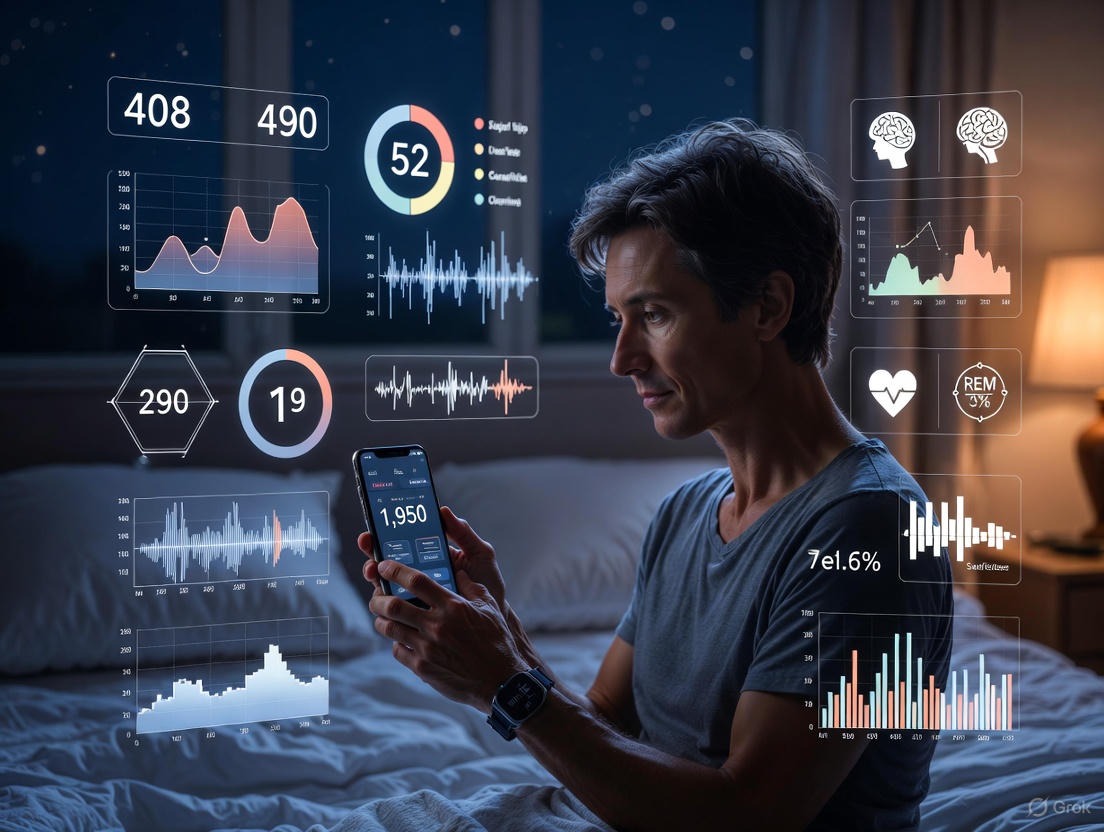
The smart ring is a phenomenal source of physiological data, but it doesn't capture the full picture of your life. The context behind the numbers—your nutrition log, your workout intensity, your menstrual cycle, your subjective mood—is what turns raw data into profound wisdom. By integrating your smart ring’s sleep and recovery data with other health and wellness platforms, you create a centralized "command center" for your well-being, revealing correlations and causations that would otherwise remain hidden.
Key Integration Points for a Holistic View:
By funneling these disparate data streams into a unified view (often facilitated by platforms like Apple Health or Google Fit), you become the lead researcher of your own life. You move from observing that "sleep was bad" to understanding that "sleep was bad because I had a high-intensity workout at 8 PM after a low-protein day during my luteal phase." This level of specificity is the key to truly personalized, effective optimization that respects your body’s complex, interconnected systems.
While smart rings are sophisticated, they are not infallible medical devices. There will be mornings when you wake up feeling refreshed and energetic, only to see a low sleep score and poor HRV. Conversely, you might feel groggy despite the app showing a "perfect" night. This dissonance isn't a failure of the technology or your perception; it's an opportunity for deeper inquiry and a reminder that data is a guide, not a gospel.
Common Reasons for Data-Body Dissonance and How to Investigate:
The Golden Rule: Use Data as a Compass, Not a Cage.
The ultimate metric is your subjective sense of well-being and ability to function in your life. The ring's data is there to explain, predict, and suggest—not to dictate or invalidate your lived experience.
Navigating these moments of dissonance is part of developing a sophisticated, nuanced relationship with your bio-data. It prevents you from becoming anxious or obsessive over scores and instead fosters a collaborative dialogue between your subjective awareness and objective measurement.
The idealized paradigm of 8 hours of uninterrupted sleep in a dark, cool room is a fantasy for vast segments of the population. Shift workers, parents of young children, and individuals managing chronic health conditions face unique sleep challenges that render standard advice useless. For these groups, a smart ring and the principles of morning optimization are not about perfection, but about strategic compensation and harm reduction. The goal shifts from achieving perfect scores to maximizing recovery within real-world constraints.
For the Shift Worker: Mastering Circadian Realignment
The graveyard or rotating shift worker is in a constant state of circadian warfare. Their sleep data will often show flat temperature curves, low HRV, and fragmented sleep.
For Parents (Especially of Infants & Toddlers): The Art of Micro-Recovery
Sleep is fragmented and scarce. Data will show frequent awakenings and likely elevated RHR. The focus here is on sleep quality over duration and seizing micro-opportunities.
For Those with Chronic Health Conditions: Monitoring the Disease-Recovery Loop
Conditions like fibromyalgia, ME/CFS, autoimmune disorders, or chronic pain fundamentally alter sleep architecture and recovery capacity. For this group, the smart ring is a vital monitoring tool for stress tracking in chronic illness.
For these populations, the smart ring transcends optimization; it becomes a tool for resilience, validation, and smarter navigation of a world not designed for their sleep patterns. It provides the objective truth needed to advocate for their own rest and structure their limited energy in the most impactful way.
Your Trusted Sleep Advocate: Sleep Foundation — https://www.sleepfoundation.org
Discover a digital archive of scholarly articles: NIH — https://www.ncbi.nlm.nih.gov/
39 million citations for biomedical literature :PubMed — https://pubmed.ncbi.nlm.nih.gov/
Experts at Harvard Health Publishing covering a variety of health topics — https://www.health.harvard.edu/blog/
Every life deserves world class care :Cleveland Clinic - https://my.clevelandclinic.org/health
Wearable technology and the future of predictive health monitoring :MIT Technology Review — https://www.technologyreview.com/
Dedicated to the well-being of all people and guided by science :World Health Organization — https://www.who.int/news-room/
Psychological science and knowledge to benefit society and improve lives. :APA — https://www.apa.org/monitor/
Cutting-edge insights on human longevity and peak performance:
Lifespan Research — https://www.lifespan.io/
Global authority on exercise physiology, sports performance, and human recovery:
American College of Sports Medicine — https://www.acsm.org/
Neuroscience-driven guidance for better focus, sleep, and mental clarity:
Stanford Human Performance Lab — https://humanperformance.stanford.edu/
Evidence-based psychology and mind–body wellness resources:
Mayo Clinic — https://www.mayoclinic.org/healthy-lifestyle/
Data-backed research on emotional wellbeing, stress biology, and resilience:
American Institute of Stress — https://www.stress.org/


