


Rest and Recharge Guide for Team Leaders and Managers
A guide for team leaders on resting to sustain leadership energy.
A guide for team leaders on resting to sustain leadership energy.
%402x.svg)
You’re a leader. Your calendar is a mosaic of back-to-back meetings, your inbox is a bottomless pit, and your mind is a never-ending loop of strategic decisions, team concerns, and quarterly goals. The concept of “rest” feels like a distant luxury, something for after the product launch, after the quarter closes, after you’ve solved the next big problem. But here’s the paradoxical truth that high-performance leaders are discovering: Sustainable success isn’t fueled by relentless grind; it’s powered by strategic recovery.
Burnout isn't a badge of honor; it's a systemic failure of personal and professional energy management. For the modern manager, rest isn’t about switching off—it’s about strategically recharging every dimension of your being to lead with clarity, empathy, and resilience. This isn’t a fluffy wellness pamphlet. This is an operational manual for your most critical asset: yourself.
Welcome to a data-driven, science-backed, and profoundly practical guide to rest and recharge, designed for the unique pressures of leadership in the 21st century. We’ll move beyond generic advice and into the realm of actionable systems, leveraging insights from neuroscience, performance psychology, and cutting-edge technology like smart wellness rings to help you measure, manage, and master your recovery. This journey will transform your approach to leadership, showing you that the path to an unstoppable team begins with a recharged leader. Let’s begin.
We are in the midst of a silent crisis in leadership. A 2023 Gallup study revealed that managers and leaders report significantly higher rates of burnout and daily stress than individual contributors. The very individuals entrusted with guiding teams, shaping culture, and driving results are operating on depleted reserves. This “leadership burnout epidemic” is fueled by a perfect storm of factors: the always-on digital tether, the blurred lines between work and home, the weight of responsibility for others’ livelihoods, and a persistent cultural myth that equates busyness with importance.
The cost of this epidemic is staggering, both personally and organizationally. For the leader, chronic stress manifests as cognitive fog, eroded patience, cynicism, sleep disturbances, and a weakened immune system. For the organization, it translates into poor decision-making, toxic team culture, high turnover (people don’t leave companies, they leave managers), and massive losses in productivity and innovation. A burned-out leader cannot inspire, cannot strategize clearly, and cannot foster psychological safety.
The core issue lies in a fundamental misunderstanding of human performance. We’ve treated our brains and bodies like machines that can run indefinitely at high RPMs, forgetting that we are complex biological systems governed by rhythms and the need for restoration. Performance is not a linear equation of more hours equals more output. It’s a wave—peaks of focused effort must be followed by valleys of intentional recovery. This is the concept of “oscillation,” championed by performance experts like Dr. Jim Loehr. Elite athletes have understood this for decades; they spend vastly more time recovering from training than in the training itself. Leaders, however, often live in a state of chronic, low-grade exertion with no deliberate recovery intervals.
The first step to solving any problem is recognizing its true nature. Leadership burnout isn’t a personal failing; it’s a design flaw in how we approach work. It’s time to redesign the system, starting with you. By learning to measure your stress and recovery—a process now made elegantly simple with discreet tools like the Oxyzen smart ring—you can move from guesswork to precision in managing your energy. For a deeper look at how health technology is changing this paradigm, explore our article on how health tracking technology has changed preventive medicine.
When most leaders hear “rest,” they picture a full day on the couch or a two-week vacation. While those have their place, this limited view is why rest feels so inaccessible. If that’s the only option, no wonder you never feel you have time for it. We must expand our definition. Rest is any activity that restores depleted mental, emotional, or physical resources. It is active, not passive. It is intentional, not accidental.
Think of your personal energy like a smartphone with multiple battery indicators: a physical battery (body), an emotional battery (heart), a mental battery (mind), and a spiritual/purpose battery (soul). Draining emails might deplete your mental and emotional batteries while leaving your physical one untouched. A poor night’s sleep drains your physical and mental reserves. Strategic recharging means diagnosing which battery is low and applying the correct charger.
The modern leader’s recharge plan must incorporate these diverse forms. A good night’s sleep (physical) won’t fully solve the exhaustion from managing team conflict (emotional). A vacation (sensory, social) won’t fix the cognitive fatigue from constant strategic pivoting (mental). By understanding this taxonomy of rest, you can create a personalized “recharge menu” of quick, medium, and long-duration activities to deploy throughout your day, week, and quarter. For insights into building the daily habits that support this multi-faceted rest, our guide on how a wellness ring helps build healthy habits offers practical technology-assisted strategies.
Understanding the “why” behind recovery principles transforms them from nice-to-have tips into non-negotiable laws of human performance. The science is unequivocal: without deliberate recovery, your leadership capacity will degrade.
The Nervous System: From Survival to Strategy.
Your autonomic nervous system has two primary gears: the sympathetic (“fight or flight”) and the parasympathetic (“rest and digest”). Leadership in crisis mode keeps you stuck in sympathetic arousal—heightened alertness, cortisol release, diverted resources to muscles, suppressed digestion and repair. This is essential for short-term threats but catastrophic as a default state. Strategic recovery is about activating the parasympathetic system. This state lowers heart rate, promotes digestion, triggers cellular repair, and allows the prefrontal cortex—the seat of executive function, decision-making, and emotional regulation—to come back online. Techniques like paced breathing (e.g., 4-7-8 breathing) are direct levers to pull to initiate this shift.
Sleep: The Non-Negotiable Foundation.
During deep sleep, your brain undergoes a literal cleaning process (the glymphatic system flushes out metabolic waste). Sleep consolidates memories, processes emotional experiences, and restores cognitive function. Chronic sleep deprivation (less than 7 hours for most adults) impairs judgment, innovation, and emotional control—a direct threat to leadership efficacy. It’s not just about quantity but quality, which can be objectively tracked through metrics like HRV (Heart Rate Variability) and resting heart rate, features central to devices like the Oxyzen ring.
The Role of Heart Rate Variability (HRV).
HRV is the gold-standard, non-invasive window into your autonomic nervous system balance. It measures the subtle variations in time between each heartbeat. A higher HRV generally indicates a strong, resilient nervous system capable of handling stress and recovering efficiently. A downward trend in HRV is a powerful, objective early warning sign of accumulated stress, overtraining, or impending illness. For leaders, monitoring HRV is like having a dashboard for your nervous system, telling you when to push and when to prioritize recovery. The science behind modern health tracking technology delves deeper into how sensors and algorithms translate this data into actionable insights.
Circadian Rhythms: Working With Your Biology.
Your energy, focus, and willpower are not constant throughout the day. They follow a circadian rhythm. Most people experience a peak in focus mid-morning, a post-lunch dip, and a second, smaller peak in the late afternoon. Ignoring these rhythms—scheduling demanding creative work during your biological dip, or checking emails right before bed—forces your system to work against itself. Recovery starts with alignment: doing the right type of work at the right biological time.
This scientific foundation makes it clear: recovery is not anti-work. It is an essential, productive part of the work cycle itself. It’s when your body repairs, your brain synthesizes, and your leadership capacity is rebuilt. To understand the tools that can help you track these biological signals, explore our primer on wellness ring basics for beginners.
For generations, leaders have relied on subjective, often flawed, signals to gauge their readiness: “I feel tired,” “I’m in a bad mood,” “I can’t focus.” By the time these signals are strong enough to acknowledge, you’re often already deep into a deficit. What if you could see the invisible? What if you had data that showed your stress accumulation before you felt overwhelmed, or confirmed that a new meditation practice was actually improving your nervous system resilience?
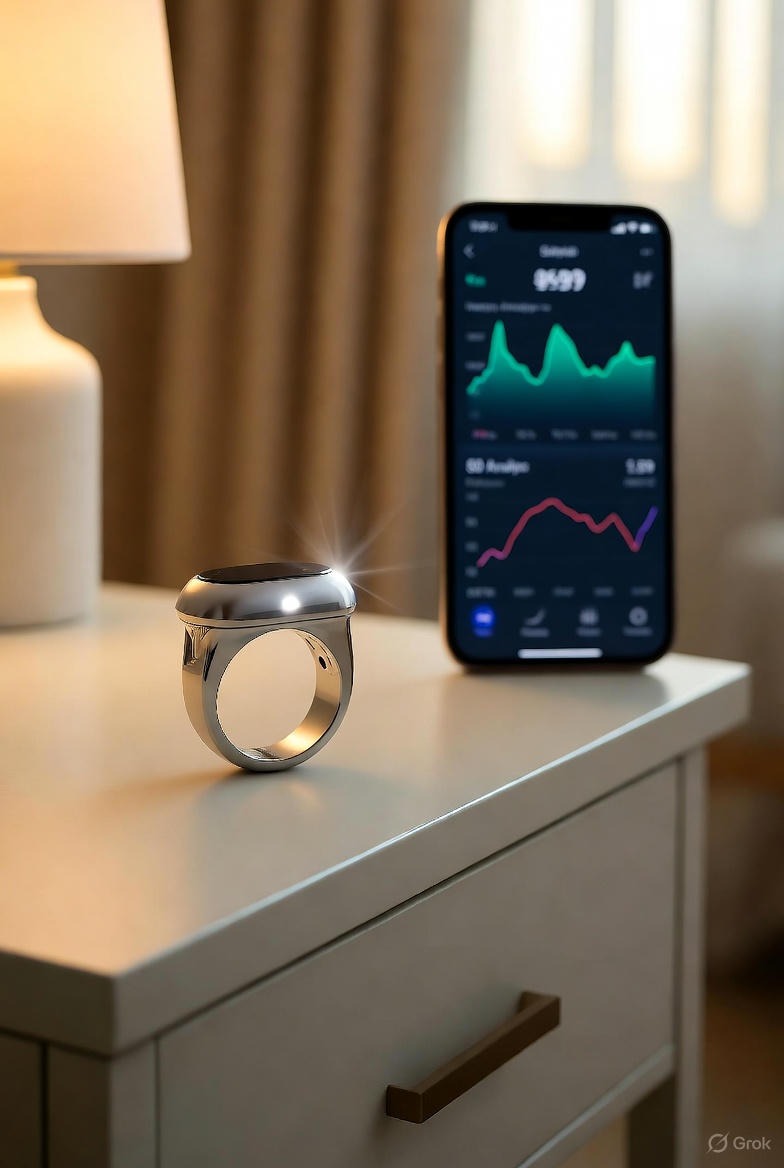
This is the paradigm shift offered by modern wearable technology, specifically smart wellness rings like those from Oxyzen. Unlike wrist-based devices that can be bulky and socially obtrusive, a smart ring is discreet, comfortable for 24/7 wear (even during sleep), and designed specifically for comprehensive wellness tracking. It moves you from managing based on feelings to leading based on facts.
Your Leadership Readiness Dashboard:
An advanced smart ring acts as a continuous, personal biometric monitoring system. Key metrics for the leader include:
Imagine starting your day not just by checking email, but by checking your personalized Readiness Score. A high score confirms you’re primed for that big negotiation or strategic planning session. A lower score advises you to structure your day differently: delegate more, schedule fewer demanding meetings, prioritize a proper lunch break and an early night. This is hyper-personalized, bio-feedback-driven leadership. It turns recovery from a vague concept into a measurable, manageable component of your performance strategy. To see how this technology integrates seamlessly into a health-conscious lifestyle, consider the insights from our article on wellness ring maintenance and care.
Beyond the Individual: The Ripple Effect.
When you, as a leader, model this data-informed approach to well-being, you give your team permission to do the same. You can shift team culture from “who worked the latest” to “who is bringing their most focused, creative, and resilient self to the challenge.” It’s a powerful form of leading by example. Discover how other users have integrated this technology into their lives by reading real customer reviews and testimonials.

You don’t need a spa day to recharge. The most powerful tool in a leader’s recovery arsenal is the micro-recovery—a brief, intentional pause of 30 seconds to 5 minutes deployed throughout the day to reset your nervous system and prevent energy drain from accumulating. These are the tactical pauses between meetings, the deliberate breaths before a difficult conversation, the conscious transitions between work modes.
The goal of a micro-recovery is to create a “psychological parenthesis”—a clean break from the cognitive or emotional demand of the previous task, allowing you to approach the next one with a fresh perspective. Here are science-backed techniques, categorized by the type of rest they provide:
For Mental & Sensory Recovery (60 seconds):
For Emotional & Physical Recovery (2-3 minutes):
The Rule of Transition:
The most critical time to deploy a micro-recovery is in the transition between activities. Instead of rushing from a tense budget call directly into a 1:1, schedule a 5-minute buffer. Use it for one of the techniques above. This prevents emotional and cognitive “bleed-over,” ensuring you show up fully for the next person or task. By the end of the day, these dozen micro-pauses can be the difference between being utterly drained and finishing with energy in reserve. For leaders looking to implement these habits systematically, our blog post on enabling preventive health monitoring discusses how technology can provide the reminders and accountability to make these pauses stick.
Your daily schedule is perhaps the most powerful tool you have—or neglect—for managing your energy. Most leaders’ calendars are a reactive collection of other people’s priorities, creating a day of cognitive whiplash. To recharge effectively, you must become the architect of your time, designing your day in harmony with your natural energy rhythms.
Protect Your "Gold Time."
Identify your 90-120 minute block of peak mental clarity and focus. For most, this is in the late morning. This is your Gold Time. This block must be treated as sacred and non-negotiable. Defend it against meetings, email, and low-cognitive tasks. This is the time for your most important, strategic, creative work—the work that only you can do. Scheduling a demanding analytical task during this window means you’ll complete it faster and with higher quality, leaving you less drained than if you tackled it during an energy slump.
Batch and Buffer.
The Strategic Recovery Slot.
Just as you schedule important meetings, schedule recovery. Block a 20-30 minute slot in your afternoon (during the common post-lunch dip) for a non-negotiable recharge. This could be:
The Technology Shield.
Use technology to serve your recovery, not sabotage it.
By designing your day with intention, you stop being a passenger on a chaotic ride and become the pilot, navigating toward sustained high performance with built-in pit stops. This proactive approach is a cornerstone of the philosophy behind Oxyzen’s mission to empower individuals with actionable health intelligence.
If you sacrifice sleep to get more done, you are engaged in a futile, self-defeating trade. Sleep is the single most effective performance and recovery tool available to you. As a leader, prioritizing sleep is not self-indulgence; it is a strategic imperative. Here’s how to move from struggling with sleep to mastering it.
Understand the Sleep-Wake Symphony.
Sleep is regulated by two main processes:
Insomnia and poor sleep often occur when these two processes are out of sync (e.g., you have high sleep drive but a strong alerting signal because you’re stressed or on your phone).
The Leader's Pre-Sleep Protocol (The 60-Minute Wind-Down):
You cannot sprint headlong into bed and expect to sleep. You need a ritual to transition from leader-mode to rest-mode.
Leverage Data for Sleep Optimization.
This is where a smart ring becomes an invaluable sleep coach. By wearing it overnight, you move from “I think I slept okay” to knowing:
The Midday Recharge: The Power Nap.
If sleep debt is unavoidable, a strategic 10-20 minute power nap before 3 PM can provide a significant cognitive boost without causing sleep inertia (grogginess). Keep it short and sweet. This is a tool for emergency recovery, not a substitute for nightly sleep.
By championing sleep, you champion your own effectiveness. You make better decisions, regulate your emotions, and lead with greater patience and clarity. It is the ultimate act of leadership responsibility—to yourself and to those who depend on you. For a comprehensive look at sleep and other metrics, our blog is filled with resources to help you on your journey.
Fueling for Resilience: Nutrition and Hydration for the Demanding Leader
Your brain, which governs every leadership decision and interaction, is an energy-intensive organ, consuming about 20% of your body’s calories despite being only 2% of its weight. The quality of the fuel you provide it directly impacts your cognitive function, mood stability, and stress resilience. Managing nutrition as a leader isn’t about dieting; it’s about strategic fueling for sustained mental performance.
The Blood Sugar Rollercoaster: The Enemy of Calm Command.
The classic leader’s diet—coffee for breakfast, a quick sandwich at the desk, sugary snacks for the afternoon slump—guarantees energy crashes, brain fog, and irritability. Spikes and crashes in blood glucose create a physiological stress response, triggering cortisol release and placing you on an emotional and energy rollercoaster. Stable blood sugar is foundational for stable mood and focus.
Principles of Leadership-Fueling:
The Caffeine & Alcohol Equation.
Listening to Your Body’s Data.
Pay attention to how different foods make you feel and perform two hours later. Does a heavy pasta lunch leave you in a 3 PM coma? Does a sugary snack make you jittery? Your wellness ring can provide complementary data: does poor food choice correlate with a restless night or a lower HRV score the next morning? This biofeedback loop turns nutrition into an experiment in personal optimization. For those with specific health goals, our guide on how wellness rings support different health goals can provide more targeted strategies.

For the time-crunched leader, exercise often feels like another item on an endless to-do list—something to be skipped when things get busy. This is a critical error. Physical activity is not just for physical health; it is one of the most potent stress buffers and cognitive enhancers available. The key is to reframe it from “working out” to “strategic movement for mental reset.”
Exercise as a Nervous System Regulator.
The Leader's Movement Menu: Variety is Key.
You don’t need a 90-minute gym session. The goal is consistent, varied movement.
Integrating Movement into the Leadership Flow.
Let your biometrics guide you. If your readiness score is high, it might be a day for a more challenging workout. If it’s low, honor that with a gentle walk or yoga session. The goal is to use movement to support your recovery and performance, not to add to your stress load. The activity and movement tracking capabilities of modern devices can help you monitor these efforts and their impact on your overall readiness.
Your most powerful leadership tool is also your most vulnerable to depletion: your mind. For leaders, psychological exhaustion—the fatigue of constant decision-making, emotional labor, and strategic foresight—often outpaces physical tiredness. Cognitive recovery isn’t about stopping thought; it’s about changing the quality of thought from draining to restorative. It requires deliberate practices to manage attention, regulate emotions, and quiet the internal critic that magnifies every challenge.
The Cognitive Load of Leadership.
Every decision, from a strategic pivot to mediating a minor team dispute, consumes cognitive resources. Modern leadership adds layers of complexity: processing torrents of information, navigating ambiguity, and maintaining a composed exterior. Without intentional mental recovery, this leads to decision fatigue, where the quality of your choices deteriorates as the day progresses, and attentional residue, where your mind remains stuck on a previous task even as you try to focus on a new one. The result is a leader operating at a fraction of their cognitive capacity.
Tools for Mental Decluttering and Focus.
Psychological recovery begins with creating space between stimuli and response. It’s about moving from reactive autopilot to mindful choice.
Reframing the Internal Narrative.
The leadership mind is often plagued by a harsh inner critic and catastrophizing thoughts ("If this project fails, it’s all on me"). Psychological recovery involves consciously editing this internal script.
The goal of these practices is to create a mind that is both a sharp tool and a peaceful sanctuary. A mind that can engage deeply with complex challenges and then disengage completely to recharge. It’s the difference between a browser with 100 tabs open and one focused on a single, high-definition window. For leaders exploring tools that provide feedback on stress states, understanding the sensors and AI behind health tracking can demystify how technology supports this mindful awareness.
For a leader, the line between dedication and depletion is drawn by boundaries. Without them, your energy, time, and focus become public property, siphoned away by endless requests, instant communication, and the myth of constant availability. Boundaries are not barriers to connection; they are the frameworks that make sustainable, high-impact leadership possible. They protect your recovery time so you can show up fully when you are "on."
Why Leaders Struggle with Boundaries.
The resistance is often internal: the desire to be helpful, the fear of being seen as uncommitted, the ingrained belief that leadership means always being "on call." However, the data and outcomes tell a different story. Leaders with weak boundaries model burnout, create teams that don’t develop autonomy (because they rely on constant input), and ironically, become less effective and accessible in the moments that truly matter.
Essential Boundaries for the Recharging Leader.
Communicating Boundaries with Clarity and Compassion.
Boundaries fail when they are implied but not stated. Proactive, positive communication is key.
Enforcing boundaries, especially at first, requires consistency. There will be pushback, but the long-term gain is a more sustainable you and a more empowered, respectful team. Your wellness data can be a powerful, non-confrontational ally in this; you can literally show the correlation between disrupted recovery time and a plummeting readiness score. It’s hard to argue with your own nervous system’s data. For more on how technology can support a balanced lifestyle, see our FAQs on common questions about wellness devices.

Your personal recovery is the first and most critical step. But its full power is unlocked when you scale it. As a leader, you have the profound responsibility and opportunity to shape your team’s environment—to build a culture of recovery where sustained high performance is fueled by collective respect for human energy limits. This is the ultimate competitive advantage: a team that is resilient, innovative, and engaged because they are not burning out.
The Leader as a Culture Architect.
Culture is what you model, measure, and celebrate. If you preach balance but send emails at midnight, you create a culture of silent exhaustion. To build a recovery-positive culture, you must align your actions, policies, and recognition systems.
Practical Policies for a Recharged Team.
Recognizing and Preventing Team Burnout.
Be a detective for early warning signs in your team: increased cynicism, withdrawal from collaboration, a drop in the quality of work, or visible fatigue. Proactively check in, not just about projects, but about capacity. Use one-on-ones to ask questions like:
When you see signs of strain, collaborate on solutions: reprioritizing, delegating, or bringing in temporary support. Show that preserving the team’s health is a higher priority than hitting an arbitrary deadline at any cost.
By fostering this culture, you don’t just prevent attrition; you unlock discretionary effort. People give their best when they feel cared for as humans, not just as resources. This is the hallmark of modern, enlightened leadership. For inspiration on building lasting, healthy habits within a team, our article on healthy aging tips a smart ring can help implement offers intergenerational principles that apply to any age.
Micro-recoveries sustain you daily, and good habits protect you weekly. But to prevent the slow, insidious creep of cumulative fatigue, leaders must also think in longer cycles. Your energy system requires strategic resets—deliberate, longer periods of disconnection and renewal aligned with the natural rhythms of business and life. These are the major pit stops that prevent engine failure on the long road of leadership.
The Quarterly Recharge (The 3-Day Rule).
Every 12-13 weeks, plan a mini-sabbatical of 3-4 consecutive days completely off-grid. This is not a "working vacation" where you check email in the morning. This is a true digital detox and psychological disconnection.
The Annual Deep Reset (The 2-Week Minimum).
Research is clear: the cognitive and health benefits of a vacation peak at around 8-10 days of continuous time off. For leaders, a minimum of two consecutive weeks away from work is not a luxury; it is a necessity for perspective and creativity renewal.
The Sabbatical Mindset for Long-Tenured Leaders.
For leaders with many years in a role or organization, consider advocating for or designing a sabbatical program—a longer break of 4-12 weeks after a significant period of service (e.g., 5-7 years). This isn't just a long vacation; it's a period for strategic learning, personal projects, or profound rest that can reignite passion and prevent late-career burnout. It’s a radical but increasingly recognized tool for retaining top talent and wisdom.
By scheduling these strategic resets, you send a powerful message to yourself and your organization: that sustained performance is a marathon with planned aid stations, not a series of endless sprints. You build resilience for the long haul. For leaders curious about the long-term journey of companies committed to this holistic well-being philosophy, you can read our story to see how these principles take root.
We’ve mentioned biometric data throughout this guide. Now, let’s operationalize it. A sophisticated wellness device like the Oxyzen smart ring transforms from a passive tracker into an active recovery coach when you know how to interpret its insights and build rituals around them. This is where subjective feeling meets objective fact, creating a powerful feedback loop for self-mastery.
Building Your Daily Check-in Ritual.
Your morning routine should include a 60-second data review. Open your companion app and focus on three key metrics:
Running Personal Experiments (N=1 Research).
The true power lies in using this data to test what works for your unique biology. The ring turns you into a scientist of your own well-being.
You can run similar experiments on:
Navigating the Data Without Obsession.
The goal is informed awareness, not anxiety. You are looking for trends and correlations, not fixating on a single day’s number. Some days will be low for no apparent reason—that’s being human. The technology is a guide, not a gospel. Use it to cultivate self-compassion on low days ("My data shows I need rest, so I’ll honor that") and to confirm what energizes you on high days. For a detailed look at what this user experience is like, from unboxing to expert use, see our guide to wellness ring mastery.
Even with all the data, strategies, and best intentions, the most formidable obstacle to recovery for many leaders is internal: guilt. The feeling that resting is lazy, that disconnecting is irresponsible, that prioritizing oneself is selfish. This psychological barrier must be dismantled for any recovery plan to succeed.
Where Does the Guilt Come From?
It’s often woven into the identity of a "high achiever." Worth becomes tied to productivity. Busyness is conflated with importance. Furthermore, many leaders carry a sense of responsibility that borders on martyrdom: "If I don’t do it, who will?" This mindset is not only unsustainable but also arrogant—it underestimates the capability of your team and overestimates your own indispensability.
Reframing Recovery as a Leadership Duty.
Practical Steps to Grant Yourself Permission.
Letting go of guilt is a practice. Each time you honor a boundary, take a break, or prioritize sleep, you are rewiring a deep-seated belief. You are proving through action that rest is not the enemy of achievement, but its foundation. For additional support and answers to common hurdles, our comprehensive FAQ is a valuable resource.
Knowledge is only potential power. Execution is everything. It’s time to synthesize everything we’ve covered into a living, breathing, personalized Leadership Recharge Plan. This is not a rigid set of rules, but a flexible framework you own, adapt, and iterate on. Think of it as your personal operating system for sustained performance.
Phase 1: The Audit (Where Are You Now?)
Spend one week in observation mode. Do not try to change anything yet.
Phase 2: The Design (The Ideal State)
Based on your audit and the principles in this guide, design your ideal recharge rhythm. Be specific.
Phase 3: The System (Making it Easy)
Reduce friction. Your future tired self will thank your present organized self.
Phase 4: The Launch & Iteration (The 30-Day Sprint)
Commit to your plan for the next 30 days. Use your smart ring data as your primary feedback mechanism.
Your Leadership Recharge Plan is a dynamic document. As your role, responsibilities, and season of life change, so too should your plan. The constant is your commitment to the principle that to lead others effectively, you must first lead yourself—with wisdom, compassion, and a strategic commitment to renewal. For ongoing inspiration and new strategies as you build your plan, remember to explore the wealth of articles on our blog.
Leadership is tested not in times of calm, but in crisis. A product failure, a public relations nightmare, a sudden market shift, or a personal tragedy within the team—these are the moments that demand your absolute peak presence. Ironically, these are also the moments when your recovery habits are most likely to be abandoned. The paradox of crisis recovery is that you must maintain the very practices you feel you have no time for. This is not indulgence; it is strategic survival.
The Physiology of Crisis Leadership.
During a high-stakes event, your body’s stress response is fully activated. Cortisol and adrenaline flood your system, sharpening focus in the short term but depleting resources rapidly. Decision-making shifts from the thoughtful prefrontal cortex to the faster, more reactive limbic system. Without deliberate counter-measures, this state leads to tunnel vision, emotional volatility, and physical exhaustion within days. The goal during crisis is not to avoid stress (impossible), but to manage the oscillation between intense engagement and strategic disengagement to prevent burnout and maintain cognitive clarity for the duration.
The Crisis Recovery Protocol: Rules for the Storm.
When a crisis hits, immediately enact these non-negotiable rules. Write them down if you must.
Post-Crisis Decompression: The Critical "After-Action" Recovery.
The end of the acute crisis is a moment of extreme vulnerability. The adrenaline drains away, leaving profound fatigue. If you jump immediately back into "business as usual," you guarantee burnout and miss crucial lessons.
Mastering crisis recovery ensures that when the storm passes, you and your team are not shattered wreckage, but a seasoned crew, stronger and wiser for the journey. For leaders interested in the long-term health implications of chronic stress and how to monitor them, our article on what doctors find most useful in health tracking provides a professional perspective.
The Power of Community and Mentorship: You Can't Recharge in a Vacuum
Leadership can be profoundly lonely. The weight of decisions, the need to maintain a confident façade, and the boundaries required for your role can isolate you. Yet, human beings are wired for connection, and recovery is deeply social. Strategic community and mentorship are not just career accelerants; they are essential recharge infrastructure. They provide the emotional rest of being truly seen, the mental rest of shared wisdom, and the creative rest of new perspectives.
Curating Your Personal Board of Directors.
Think beyond a single mentor. Assemble a diverse, trusted group of 3-5 individuals who form your personal advisory board. Each should serve a different recharge function:
Creating and Protecting Connection Rituals.
These relationships require intentional cultivation. Schedule them as recurring, non-negotiable appointments.
Giving Back as a Form of Recovery.
Mentoring others is not a drain; it is a source of energy and perspective. Teaching forces clarity. Seeing a protégé grow provides a sense of purpose and legacy that counteracts the daily grind. It connects you to your "why" and provides profound spiritual and emotional rest. Schedule your mentoring commitments with the same seriousness as your board meetings.
Remember, seeking help is not a weakness; it is a sophisticated leadership strategy. It distributes the cognitive and emotional load and ensures you have a sanctuary where you don’t have to be "the boss." For a company built on the philosophy of connection and support through technology, you can learn more about Oxyzen's mission and community.
The ultimate goal of this entire guide is not just to help you survive your current role. It is to help you craft a leadership lifestyle—and ultimately a life—so integrated and sustainable that you don’t dream of escaping it. This is about moving from recovery as damage control to vitality as a way of being. It’s about building a legacy not just of professional achievements, but of profound, enduring impact fueled by a life fully lived.
The Integration Mindset: Blending, Not Balancing.
The quest for "work-life balance" often sets up a false dichotomy, a teeter-totter where success in one area means failure in another. The more empowering frame is integration. How can your values, passions, and relationships be woven through all domains of your life?
When your life is an expression of a coherent set of values, the energy flows more freely between domains. You are not compartmentalizing and constantly switching costumes; you are expressing a whole person in different contexts. This is exponentially less draining.
Designing Your "Energized Life" Portfolio.
Imagine your life energy as an investment portfolio. A good portfolio is diversified, resilient, and aligned with long-term goals. Conduct an "energy audit" of your life’s activities across four key portfolios:
The goal is not to allocate equal time to each, but to ensure that over a month or a year, your energy investments are creating a rich, resilient life that fuels your leadership, not depletes it.
Legacy as a Daily Practice.
Legacy is not what you leave behind someday; it is what you weave into each day. A leader’s true legacy is the energy they impart to others. It’s the psychological safety you foster, the growth you champion, the calm you embody in chaos, and the boundaries you respect that give others permission to do the same. Every time you choose a recharge practice, you are not just saving yourself; you are modeling a new paradigm of leadership. You are planting seeds for a culture where people can do extraordinary work without destroying themselves in the process.
This is the pinnacle of recharged leadership: to lead so sustainably that you elevate everyone around you, creating a ripple effect of well-being and high performance that outlasts your tenure. For a vision of how personal wellness technology is evolving to support this integrated life, read about the future of wearable health tech.
We have journeyed from the bleak landscape of leadership burnout to the verdant, sustainable practice of strategic recovery. We’ve dissected the science, deployed the micro-tactics, embraced technology as a guide, fortified our minds, set our boundaries, built supportive cultures, planned our resets, navigated crises, connected with our community, and designed for long-term vitality.
The thread running through every section is this: The most radical and responsible act of leadership today is to prioritize your own renewal.
This is not a selfish act. It is the foundation upon which clear judgment, empathetic connection, creative innovation, and resilient teams are built. A depleted leader makes fear-based decisions, creates anxious teams, and mistakes motion for progress. A recharged leader operates from a place of abundance, making choices rooted in wisdom, fostering cultures of trust, and channeling energy toward meaningful impact.
The tools and knowledge are now in your hands. You understand that rest is multi-dimensional—physical, mental, emotional, social, creative, spiritual. You have a framework for building micro-recoveries into your day, designing your schedule for energy, and leveraging data from devices like the Oxyzen smart ring to move from guesswork to precision in managing your most critical asset. You have a plan for cultivating not just your own recovery, but a culture of recovery that lifts your entire team.
The journey will not be perfect. There will be days the schedule explodes, crises erupt, and old guilt resurfaces. This is not failure; it is the practice. The moment you notice you’re depleted is the moment you have an opportunity to choose a different path—to take the breath, to shut down the laptop, to honor the sleep, to ask for help.
So, we end with a call to action—not to do more, but to recover more.
Start today. Not tomorrow, not after the next project.
Pick one practice from this guide. Perhaps it’s instituting the 4-7-8 breath between meetings. Perhaps it’s blocking your first "Gold Time" hour tomorrow morning. Perhaps it’s finally exploring technology that can give you insight into your recovery, starting your journey at the Oxyzen shop.
Listen to the data your body is already giving you. Honor its need for rhythm. Protect your energy with fierce compassion. For in doing so, you will unlock not just your own potential, but the collective potential of everyone you lead.
The world doesn’t need more burned-out managers. It needs recharged leaders. Leaders who are clear-eyed and compassionate, resilient and responsive, strategic and sustainable. It needs you—not exhausted, but fully, vibrantly alive.
Your Trusted Sleep Advocate (Sleep Foundation — https://www.sleepfoundation.org/)
Discover a digital archive of scholarly articles (NIH — https://www.ncbi.nlm.nih.gov/
39 million citations for biomedical literature (PubMed — https://pubmed.ncbi.nlm.nih.gov/)
experts at Harvard Health Publishing covering a variety of health topics — https://www.health.harvard.edu/blog/)
Every life deserves world class care (Cleveland Clinic -
https://my.clevelandclinic.org/health)
Wearable technology and the future of predictive health monitoring. (MIT Technology Review — https://www.technologyreview.com/)
Dedicated to the well-being of all people and guided by science (World Health Organization — https://www.who.int/news-room/)
Psychological science and knowledge to benefit society and improve lives. (APA — https://www.apa.org/monitor/)
Cutting-edge insights on human longevity and peak performance
(Lifespan Research — https://www.lifespan.io/)
Global authority on exercise physiology, sports performance, and human recovery
(American College of Sports Medicine — https://www.acsm.org/)
Neuroscience-driven guidance for better focus, sleep, and mental clarity
(Stanford Human Performance Lab — https://humanperformance.stanford.edu/)
Evidence-based psychology and mind–body wellness resources
(Mayo Clinic — https://www.mayoclinic.org/healthy-lifestyle/)
Data-backed research on emotional wellbeing, stress biology, and resilience
(American Institute of Stress — https://www.stress.org/)


