


Daily Activity Intelligence: Using Your Smart Ring for Lifestyle Optimization
It provides "daily activity intelligence" for optimizing your lifestyle based on concrete data.
It provides "daily activity intelligence" for optimizing your lifestyle based on concrete data.
%402x.svg)
Imagine a world where your most subtle biological whispers—the quiet rhythm of your heart at rest, the minute fluctuations in your skin temperature as you work, the barely perceptible tremble in your hand during a stressful meeting—are not just heard, but understood. A world where this continuous stream of personal data is transformed into actionable intelligence, guiding you toward better sleep, more effective workouts, sharper focus, and a profound sense of balance. This is no longer the realm of science fiction; it’s the reality unfolding on your finger.
Welcome to the era of Daily Activity Intelligence. We’ve moved far beyond the simple step counters of yesteryear. The modern smart ring, a sleek and unobtrusive piece of wearable tech, is now a powerful biocomputer, a 24/7 personal health observatory. It’s not just tracking; it’s interpreting. It’s not just collecting data; it’s building a narrative of you—your unique physiology, your daily rhythms, your hidden patterns. This long-form exploration delves deep into how you can leverage this intelligence, transforming raw metrics into a personalized blueprint for lifestyle optimization. Whether you’re a biohacker chasing peak performance, a professional seeking sustainable energy, or someone simply wanting to feel their best, the key is on your hand, waiting to be decoded.
For decades, “activity tracking” was synonymous with a single, simplistic metric: steps. We chased 10,000 daily steps like a universal holy grail, a one-size-fits-all prescription for health. While movement is fundamental, this narrow focus painted an incomplete picture. Human wellness is a complex symphony, not a solo drumbeat. It involves the restorative quiet of sleep, the hormonal ebb and flow of stress and recovery, the cardiovascular resilience built through varied exertion, and the subtle metabolic shifts that occur throughout the day.
The smart ring, by virtue of its form factor and advanced sensor suite, is uniquely positioned to conduct this entire symphony. Worn on the finger, it has direct access to the rich vascular bed on the underside of your hand, allowing for highly accurate, continuous monitoring of key biomarkers like heart rate, heart rate variability (HRV), blood oxygen saturation (SpO2), and skin temperature. This constant, passive data collection is the foundation of Daily Activity Intelligence.
Daily Activity Intelligence (DAI) is the holistic, contextual analysis of all your physiological and movement data to generate insights into your overall well-being, readiness, and performance. It answers questions steps never could:
This shift is monumental. We are transitioning from reactive tracking (“I walked 8,000 steps today”) to predictive and prescriptive intelligence (“Your elevated resting heart rate and lower HRV suggest your body is under stress; consider a mindfulness session tonight and prioritize 8 hours of sleep to maintain immune function”). The smart ring becomes less of a reporter and more of a guide. To begin your journey with a device built on this philosophy, you can discover how Oxyzen approaches this intelligent tracking on our main site, Oxyzen.ai.
To conduct the symphony, you must first know the instruments. Your smart ring is a maestro listening to a core ensemble of physiological signals. Understanding what each metric represents is the first step toward interpreting the music they create together.
Heart Rate (HR): Your body’s fundamental metronome. Beyond just beats per minute, its patterns tell a story. Your Resting Heart Rate (RHR), best measured during sleep, is a classic indicator of cardiovascular fitness and overall recovery—a lower RHR typically suggests better fitness and efficient heart function. Seeing your RHR trend upward over several days can be an early signal of overtraining, insufficient recovery, or the onset of illness.
Heart Rate Variability (HRV): The unsung hero of biometrics. HRV measures the subtle variations in time between each heartbeat. Contrary to what one might think, a higher HRV is generally better. It indicates a resilient, adaptable autonomic nervous system—the balance between your stress (sympathetic) and relaxation (parasympathetic) responses. A strong, high HRV suggests your body can handle stress effectively and recover robustly. A dipping HRV trend is one of the most sensitive indicators of cumulative stress, fatigue, or poor recovery. Monitoring this gives you a window into your nervous system’s state that your conscious mind often misses.
Blood Oxygen Saturation (SpO2): This metric, expressed as a percentage, measures how much oxygen your red blood cells are carrying. While typically stable in healthy individuals, monitoring it continuously, especially during sleep, can reveal issues like sleep apnea (where breathing repeatedly stops and starts, causing SpO2 to dip). It’s also a valuable metric for athletes training at altitude or anyone monitoring respiratory health.
Skin Temperature: A sensitive, albeit indirect, gauge of internal changes. Your core body temperature follows a circadian rhythm, cooling as you prepare for sleep and warming toward morning. A smart ring tracks deviations from your personal baseline. A sustained elevated nighttime temperature can indicate inflammation, the start of an immune response (like fighting a virus), or even hormonal shifts in the menstrual cycle.
Movement & Acceleration: This is where the classic “activity” tracking lives, but with greater context. Using a 3-axis accelerometer, your ring counts steps, measures active minutes, and estimates calorie expenditure. More importantly, it categorizes movement—distinguishing between a walk, a run, and non-step-based activities like cycling or weight training. This data feeds into your overall activity profile, but is now weighed against your readiness metrics from HRV and RHR.
Together, these metrics form a feedback loop. For example, a hard workout (movement) will temporarily elevate your RHR and lower your HRV (stress response). How quickly and completely those metrics return to baseline is a direct measure of your recovery quality, influenced by your sleep (where SpO2 and temperature are also monitored). This interconnected view is the essence of DAI. To see how these metrics come together specifically for the most restorative phase of rest, explore our detailed analysis in Deep Sleep Tracking: What Your Numbers Should Look Like.
If Daily Activity Intelligence is a symphony, sleep is the concert hall where the most critical rehearsal occurs. It is the non-negotiable foundation upon which all daytime optimization is built. You cannot hack your way to peak performance or well-being with poor sleep. Your smart ring transforms the mysterious hours of slumber into a rich, data-driven story of restoration.
Modern smart rings don’t just tell you how long you slept; they map the architecture of your night. Using a combination of movement, heart rate, and HRV data, they segment your sleep into the crucial stages:
Your ring provides scores and analyses on Sleep Duration, Consistency, Timing, and Quality. It can identify disturbances you might be unaware of—like nighttime awakenings caused by environmental factors or sleep apnea events signaled by SpO2 drops. This data is invaluable. By correlating your daily habits (evening screen time, caffeine intake, meal timing, evening exercise) with your sleep scores, you can run personal experiments. Did that late afternoon coffee really reduce your deep sleep? Did a wind-down routine of reading improve your sleep latency (the time it takes to fall asleep)?
This makes sleep tracking the cornerstone of lifestyle optimization. The insights gleaned here directly inform your daytime decisions about training, nutrition, and stress management. For those just starting, our comprehensive Sleep Tracking 101: Everything Beginners Need to Know is the perfect primer.

Armed with a deep understanding of your sleep, you can now approach your day with intelligence. This is where the concept of “Readiness” or “Recovery” scores comes into play. Many advanced smart ring platforms synthesize your previous night’s sleep data (quality, duration, disruptions) with your morning biometrics (HRV, RHR, skin temperature) to generate a single, easy-to-interpret score.
Think of this score as your daily energy budget. A high readiness score (e.g., 85/100) suggests your body is well-recovered, resilient, and primed for physical or mental challenge. It’s a green light to tackle that intense workout, that important presentation, or a demanding social schedule. A low or moderate score (e.g., 62/100) is not a failure; it’s crucial information. It’s your body whispering that resources are depleted, stress is high, or recovery is incomplete. This is a yellow or red light suggesting a day for gentle movement, focused recovery, and stress mitigation.
This shifts your approach from a rigid, calendar-based schedule (“I always lift heavy on Tuesdays”) to an adaptive, body-informed plan (“My readiness is high today, so I’ll go for a PR. It’s low tomorrow, so I’ll prioritize yoga and an early bedtime”). This dynamic adjustment is the heart of sustainable optimization—preventing burnout, overtraining, and illness by respecting your body’s real-time needs.
Applying this intelligence means:
By listening to your readiness score, you stop fighting your physiology and start working with it. For more on how athletes specifically can leverage this data, see our resource on Deep Sleep Optimization for Athletes: Recovery While You Rest.
Stress is not inherently bad. Acute stress—the kind you feel during a challenging workout or a tight deadline—is a motivator and a trigger for adaptation. The problem for modern humans is chronic stress: the low-grade, persistent activation of our nervous system from work pressures, digital overload, financial worries, and social dynamics. This chronic state is insidious; we often acclimate to it, failing to recognize its toll until it manifests as exhaustion, anxiety, or illness.
Your smart ring makes the invisible visible. HRV is your most powerful ally here. As mentioned, a downward trend in HRV is a near-real-time indicator of accumulating stress load on your nervous system. Your resting heart rate may also creep up. This biometric feedback is objective, cutting through the noise of “I feel fine” when your body is signaling otherwise.
With this data, you can move from being a victim of stress to a manager of it. DAI allows you to:
This transforms stress management from a vague concept into a science. You learn which activities are truly restorative for you and can schedule them proactively, especially on days when your metrics indicate a higher load. It’s about creating a sustainable rhythm between stress and recovery, not eliminating stress entirely. For common questions on how wearables handle this complex measurement, our FAQ page offers valuable clarity.
With sleep, readiness, and stress as your foundation, you can now approach physical activity with unprecedented precision. Movement intelligence breaks down into two key domains: structured exercise and Non-Exercise Activity Thermogenesis (NEAT).
Structured Exercise Optimization:
Your ring data helps tailor your workouts in real-time and across cycles.
Non-Exercise Activity Thermogenesis (NEAT):
This is the calories you burn through everything that isn’t sleeping, eating, or sports-like exercise: walking, fidgeting, standing, typing, gardening. For many, NEAT is the largest variable in daily energy expenditure and a critical lever for metabolic health and longevity. Your smart ring is a superb NEAT tracker. It encourages you to hit simple, effective targets:
Optimizing NEAT is often more impactful for long-term health than sporadic, intense workouts. The ring makes this background activity conscious and celebratory, seamlessly integrating more movement into your daily flow. This holistic view of movement—respecting both intense exertion and gentle, consistent activity—is key to a balanced, sustainable fitness strategy.
Your body operates on a master 24-hour internal clock known as your circadian rhythm. This rhythm governs not just sleep and wakefulness, but also hormone secretion, digestion, cognitive function, and cellular repair. Aligning your lifestyle with this rhythm—a practice called circadian hygiene—is a profound form of optimization. Your smart ring provides two key tools for this: skin temperature and heart rate rhythm.
Skin Temperature as a Circadian Marker: Your core body temperature naturally dips to its lowest point in the early morning hours (around 4-5 AM) and rises throughout the day, peaking in the late afternoon. The smart ring’s continuous temperature monitoring can map this rhythm. A disrupted or flattened temperature curve can signal circadian misalignment, often caused by late-night light exposure, irregular sleep schedules, or eating too close to bedtime. By observing your temperature trends, you can adjust habits to reinforce a healthy rhythm, which in turn improves sleep quality, metabolism, and daytime energy. The connection between temperature and sleep is so critical we dedicated an entire piece to the Deep Sleep Formula: Temperature, Timing, and Habits.
Heart Rate Rhythm: Similarly, your resting heart rate follows a circadian pattern, typically lowest during sleep and rising in anticipation of wake-up. A blunted or erratic heart rate rhythm can also indicate poor circadian health or ongoing stress.
By paying attention to these biological rhythms, you can optimize:
This is biohacking at its most elegant—not forcing your body onto an arbitrary schedule, but syncing your life with its innate, intelligent design.
Nutrition is famously personal. What energizes one person can bloat another. While a smart ring can’t (yet) measure blood glucose or micronutrients directly, it provides powerful indirect feedback on how your dietary choices impact your physiology. This turns nutrition into a personalized experiment.
Here’s how to use DAI for nutritional insights:
This process moves you away from dogmatic diets and toward an N-of-1 nutrition strategy. You become the principal investigator of your own body, using objective biometrics to determine which foods truly fuel your performance, recovery, and sleep. To explore foods that specifically support the recovery process, our list of 10 Foods That Increase Deep Sleep Naturally offers a great starting point for experimentation.
Data is only as valuable as the action it inspires. The final, and most important, step in wielding Daily Activity Intelligence is synthesis. It’s about weaving the threads of sleep, readiness, stress, movement, rhythm, and nutrition into a cohesive, personal blueprint for living. This is where you move from being a passive observer of charts to an active architect of your well-being.
Start by identifying one or two key leverage points. For most, sleep is the foundational priority. Use your ring’s sleep data to establish a non-negotiable wind-down routine and consistent sleep schedule for 30 days. Observe the impact on your readiness scores. Next, you might layer in stress management: incorporating a 10-minute breathing exercise on afternoons when your HRV data shows signs of strain.
Create simple if-then rules based on your data:
The goal is not to become a slave to the data, but to use it to build intuitive, healthy habits. Over time, the external feedback loop of the ring trains your internal awareness. You begin to feel when your HRV is likely low or when you need more recovery. The ring becomes a tool for calibration, not a source of anxiety.
Remember, optimization is a journey, not a destination. Your blueprint will evolve with your life circumstances, age, and goals. The power of the smart ring is that it provides a continuous, objective companion on that journey, helping you make small, intelligent adjustments that compound into a lifetime of better health and vitality. For inspiration from others on this path, browse the real-world experiences shared in our testimonials. To continue building your knowledge base for this journey, a wealth of additional resources awaits on our dedicated blog.
The transition periods of morning and evening are the hinges of a well-optimized day. They are your prime opportunities to set the tone for what follows and to seal in the recovery from what has passed. Using your smart ring’s Daily Activity Intelligence, you can transform these routines from generic habits into highly personalized rituals that directly respond to your body’s needs. This moves you from a static schedule to a dynamic, responsive system.
Forget jolting awake to a blaring alarm. The future of mornings begins with gentle, intelligent awareness. The most powerful first action of your day is not grabbing your phone; it’s checking your biometric dashboard. This 60-second review provides your operational briefing for the next 16 hours.
Your morning check-in should focus on three core data points from the night and the immediate wake-up period:
This data-informed check-in allows you to craft a responsive morning. On a high-readiness day, you might engage in vigorous exercise, tackle your most demanding cognitive work, or schedule important meetings. On a low-readiness day, your routine shifts to support recovery: perhaps a gentle walk instead of a run, meditation over intense work sprints, and a firm commitment to an early, wind-down focused evening. This adaptability is the core of sustainable high performance.
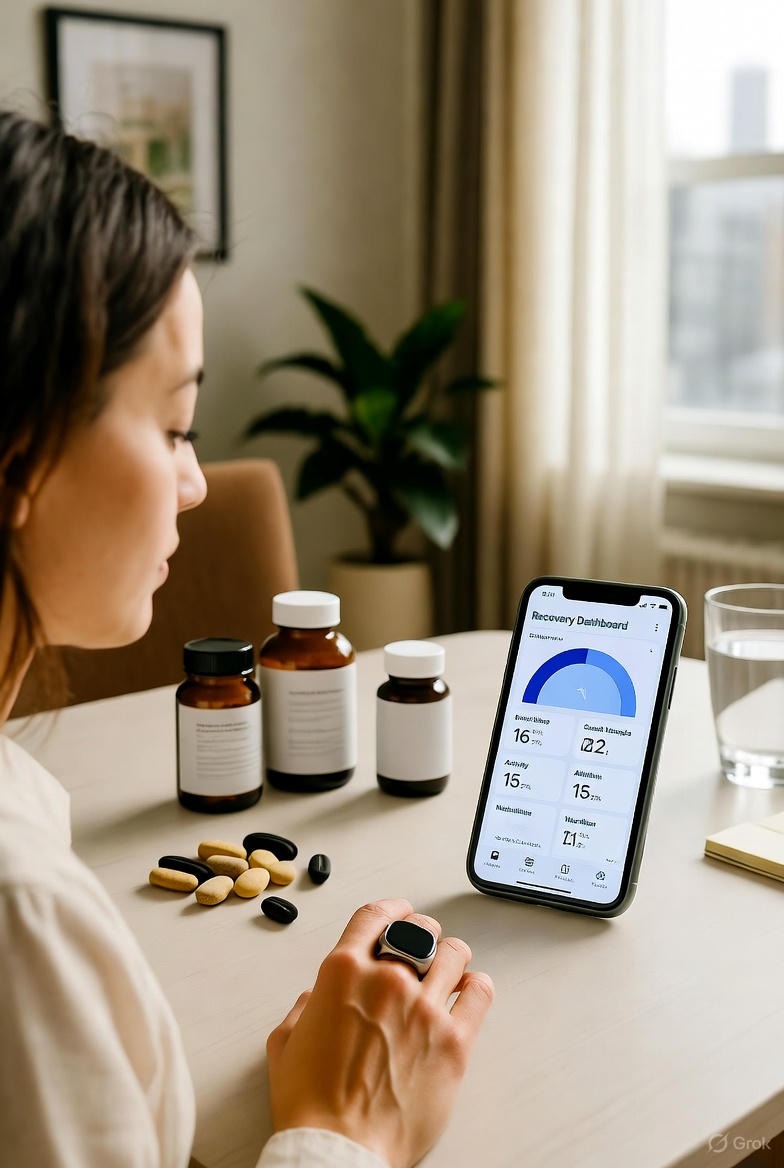
If the morning routine is about launching effectively, the evening wind-down is about ensuring a successful landing. Most of us know the basics—reduce blue light, avoid caffeine—but with biometric feedback, you can learn what actually works for your biology. Your smart ring provides the ultimate report card on your evening habits: your sleep data.
The goal of the wind-down is to facilitate the natural physiological shifts that precede sleep: a drop in core body temperature, a decrease in heart rate, and a shift toward parasympathetic (rest-and-digest) nervous system dominance. Your ring’s data helps you identify the activities that trigger these states for you.
Create a "Wind-Down Experiment":
For two weeks, intentionally vary your evening activities while keeping other factors as consistent as possible. Track the correlation with your sleep scores and morning readiness.
Review the data. Did your deep sleep increase with the bath nights? Did your sleep latency (time to fall asleep) decrease with meditation? This turns guesswork into a science. You’ll likely find, as our research on the deep sleep formula confirms, that managing temperature and stress are paramount.
A powerful wind-down ritual might look like this, informed by your personal experiment results:
By using your sleep data to validate your evening choices, you build a wind-down that isn’t just a list of "should-dos," but a proven protocol for superior recovery. For more tailored strategies, our article on how to get more deep sleep tonight with 7 proven strategies offers actionable steps you can test in your own routine.
A smart ring is a powerful sensor, but its intelligence is fully unlocked when its data is synthesized with other aspects of your life. The most advanced rings don’t exist in a silo; they act as the central biometric hub in a connected wellness ecosystem. By integrating with other apps and services, you create a multidimensional map of your health that reveals deeper correlations and empowers more precise interventions.
In this connected model, your smart ring becomes the source of truth for your body’s state. Other apps provide the contextual "why" behind the biometric "what." The ring might tell you that your stress load is high (via low HRV); your calendar integration can suggest why (you just had three project deadlines); and your mindfulness app can provide the tool to address it (a guided recovery session).
This ecosystem approach demystifies well-being. It shows you, in clear data, how your choices in one domain (work, diet, exercise) ripple through every other domain (sleep, stress, recovery). To explore a device designed to seamlessly fit into such a connected lifestyle, visit the Oxyzen.shop to see how modern smart rings are built for integration.
While daily scores are engaging, the true transformative power of Daily Activity Intelligence is revealed in long-term trends. The weekly, monthly, and seasonal view of your data moves you from managing daily fires to strategically engineering a healthier, more resilient life. This longitudinal analysis turns your smart ring into a personal health observatory, capturing the slow, meaningful shifts that define lasting change.
With trend data, you can move beyond vague resolutions ("get healthier") to specific, measurable, and data-informed goals.
By tying lifestyle interventions (new exercise routines, dietary changes, meditation practices) to these tracked metrics, you get unambiguous feedback. Did the new intervention move the needle? If not, you can adjust or abandon it without wasting months on guesswork. This empirical approach to self-improvement is perhaps the most profound benefit of continuous biometric monitoring. For those interested in the cognitive benefits of such optimizations, the link between deep sleep and mental performance is detailed in Deep Sleep and Memory: The Brain-Boosting Connection.
As with any powerful tool, there is a right way and a wrong way to wield Daily Activity Intelligence. The wrong way leads to "orthosomnia" – a paradoxical obsession with perfect sleep data that actually worsens sleep – or chronic anxiety over every dip in HRV. The goal is to use data as a compassionate guide, not a harsh judge. Finding this balance is critical for long-term success.
The healthiest relationship with this technology is one of curious collaboration. You are the expert on your life; the ring is an expert on your physiology. Together, you make better decisions. When in doubt, always err on the side of listening to your lived experience. For a balanced look at the pros and cons of this technology, our article Is Sleep Tracking Worth It? Honest Pros and Cons for 2025 provides essential perspective.
The technology underpinning smart rings is advancing at a breathtaking pace. What we consider cutting-edge today will be standard in a few years, and new frontiers are already being explored. Understanding these emerging metrics and future possibilities helps contextualize the current capabilities and hints at where personalized health optimization is headed.
The ultimate destination for DAI is a shift from descriptive to predictive and prescriptive.
This future is about contextual intelligence. The ring won’t just know your physiology; it will understand your life’s patterns and provide actionable guidance to navigate them in the healthiest way possible. To learn about the company pioneering this kind of user-centric, intelligent design, you can read our story and the vision driving this future.

Theory is compelling, but application is convincing. Let’s move from concepts to concrete stories, examining how different individuals leverage DAI to solve real-world problems and enhance their lives. These case studies illustrate the adaptability of this technology across diverse goals and lifestyles.
These stories show that DAI is not about achieving a perfect, frictionless life. It’s about navigating the friction of real life with more grace, intelligence, and agency. For more diverse experiences and outcomes, the real user stories on our testimonials page offer further inspiration.
We have journeyed through the foundational concepts of Daily Activity Intelligence—from understanding the core biometrics and the paramount importance of sleep, to adapting your daily routines, connecting data ecosystems, tracking long-term trends, and avoiding common pitfalls. We’ve glimpsed the future and seen its practical application in real lives.
The overarching message is one of empowerment. The smart ring is a key that unlocks a deeper dialogue with your own body. It translates the silent language of your physiology into a actionable insights. This is not about outsourcing your health to an algorithm, but about augmenting your intuition with evidence.
Your journey begins not with an overhaul, but with observation. Wear your ring consistently for a month. Establish your baselines. Notice patterns without judgment. Ask one simple question each week: "What is one connection I see between my lifestyle and my data?" Perhaps it’s the link between late-night scrolling and reduced deep sleep. Or the positive impact of a weekend nature walk on your Sunday night HRV.
Start small. Use one piece of data to inform one small change. Let that success build your confidence in this new, intelligent way of living. Remember, the goal is optimization, not perfection. It’s about gradual, sustainable progress fueled by self-knowledge.
As you move forward, continue to educate yourself. The field of personal biometrics is rich and evolving. Resources like the Oxyzen blog, including articles on how sleep trackers actually work and sleep tracking accuracy, can deepen your technical understanding and help you set realistic expectations.
The next portion of this comprehensive guide will dive even deeper. We will explore advanced topics such as gender-specific biometric patterns and hormonal cycling, the science of habit formation tied to biometric triggers, environmental optimization (light, air, temperature) for health, and a detailed analysis of the smart ring market—helping you choose the perfect device for your specific goals and lifestyle.
Your data is a story waiting to be read. Your smarter, more optimized life is a book waiting to be written. Turn the page.
Up to this point, we've explored Daily Activity Intelligence as a universal toolkit. But the most profound truth in personalized health is this: there is no universal blueprint. The very metrics we track—sleep architecture, heart rate variability, temperature rhythms—dance to the distinct biological rhythms dictated by sex hormones and the inevitable, yet manageable, process of aging. Ignoring these factors is like using a map of one country to navigate another; you'll get somewhere, but not where you intended. Your smart ring, when interpreted through the correct lens, provides the personalized map for your unique physiology.
For approximately half the population, a 28-35 day hormonal cycle creates a powerful, predictable, yet often overlooked rhythm in biometric data. Failing to account for this can lead to profound misinterpretation. A woman seeing her resting heart rate climb and her HRV dip in the week before her period might mistakenly believe she's overtraining or getting sick, when in fact, she is observing a perfectly normal luteal phase shift.
Here’s how key phases of the menstrual cycle typically manifest in smart ring data:
The Power of Cycle Syncing: By tracking these patterns over several cycles, women can practice "cycle syncing"—aligning diet, exercise, and work demands with their hormonal energy. For example, scheduling a deload week in the luteal phase and focusing on strength and intensity in the follicular phase. The ring provides the objective confirmation of the cycle phase without guesswork, turning what is often a source of frustration into a framework for powerful, rhythmic optimization.
While men do not experience a monthly cycle, they undergo a gradual, age-related decline in testosterone known as andropause (or late-onset hypogonadism). This shift, typically beginning in a man's 40s and 50s, has subtle but observable biometric correlations:
For men, the smart ring acts as an early warning system. A persistent, age-inappropriate decline in deep sleep paired with poor recovery metrics could be a nudge to have a conversation with a doctor about hormonal health, alongside lifestyle interventions like resistance training, optimizing sleep, and managing stress—all of which can support healthy testosterone levels.
Aging is not a disease; it is a change in terrain. Your smart ring helps you navigate that change intelligently, not by fighting biology, but by adapting your strategies to it. One of the most well-documented changes is the decline in deep sleep. Understanding this is not cause for despair, but for intelligent compensation.
The data allows you to age with agency. You're not blindly following generic advice for "seniors"; you're making personalized adjustments based on how your body is actually changing. It helps you distinguish between a normal off day and a concerning trend, allowing for early intervention. For a comprehensive look at this adaptation, see our guide How Age Affects Deep Sleep and How to Compensate.

Knowledge is only potential power. The real transformation happens when insight sparks action, and action hardens into habit. This is where the marriage of Daily Activity Intelligence and behavioral science becomes revolutionary. Your smart ring is more than a tracker; it's a habit formation catalyst. It provides the immediate feedback and reinforcement that our brains crave to lock in new behaviors.
Classical habit theory, popularized by Charles Duhigg, outlines a simple loop: Cue > Routine > Reward. The smart ring supercharges this loop, making it more personal, immediate, and tangible.
To build this into your life, create simple, data-driven implementation intentions. These are "If-Then" rules that pre-program your response to a specific biometric cue.
These rules act as cognitive scripts. They reduce decision fatigue in the moment by making the healthy choice the automatic, pre-determined choice. Over time, responding to the data becomes second nature. For instance, seeing a low readiness score no longer triggers anxiety but automatically triggers a compassionate recovery plan—a fundamental shift in mindset.
The goal is not to build a complex, overwhelming regime overnight. It's to use data to identify one or two high-leverage micro-habits. Perhaps it's using your sleep latency data to commit to a 15-minute "no-screen" buffer before bed. The ring will show you, within days, if this is improving your time to fall asleep. That positive feedback loop reinforces the habit.
Then you add another: using your post-meal heart rate data to notice that a large lunch makes you sluggish, so you decide to try a lighter, protein-focused meal. Again, the data provides the reward (stable afternoon energy, higher activity score).
This is the compound interest of health. Small, data-validated changes, consistently applied, create an enormous shift in your physiological trajectory over months and years. Your ring is the account statement, showing your growing balance of health capital.
Your body does not exist in a vacuum. It is in constant dialogue with its environment. The temperature of your bedroom, the light hitting your eyes, the air you breathe—all these inputs directly shape the outputs your smart ring records. By becoming an architect of your immediate environment, you can create conditions that reliably nudge your biomarkers in a positive direction. This is proactive optimization at its most effective.
We've touched on temperature's role in circadian rhythm, but its practical application is paramount. The initiation and maintenance of deep sleep are exquisitely sensitive to core body temperature.
Light is the most powerful zeitgeber (time-giver) for your internal clock. Mismanaged light exposure is a primary driver of poor sleep and misaligned circadian biology.
Two often-overlooked environmental factors can significantly impact sleep quality and recovery.
By treating your bedroom as a bio-hacking lab—controlling for temperature, light, and air—you create a sanctuary engineered for optimal recovery. The improvements in your sleep and readiness scores will provide all the motivation you need to maintain this environment. For more foundational knowledge on how your device captures these environmental impacts, our explainer on How Sleep Trackers Actually Work: The Technology Explained is invaluable.
With the landscape of smart rings expanding rapidly, choosing the right one is a critical decision that will shape your Daily Activity Intelligence journey for years. This is not about picking the "best" ring in a vacuum, but about finding the best ring for you—your goals, your lifestyle, your aesthetic, and your technological ecosystem. Let's move beyond marketing specs and into strategic selection.
Your first question should not be "Which ring is top-rated?" but "What do I need this ring to do for me?" The answer will immediately narrow the field.
Once you've filtered by use case, dive into these essential differentiators:
Your ring shouldn't be an island. Check its compatibility with your primary smartphone (iOS/Android) and the other apps you use (Strava, MyFitnessPal, Apple Health, Google Fit). A ring that seamlessly integrates into your existing digital life provides exponentially more value.
Finally, consider the company behind the ring. Are they established with a track record of software updates and customer support? Do they have a clear about us page that outlines their mission and vision? Your relationship with this device is long-term; you want a partner, not just a product.
Choosing a smart ring is an investment in your self-knowledge. Taking the time to make a strategic choice will pay dividends in the quality and usefulness of your Daily Activity Intelligence for years to come. To begin your discovery with a device built on the principles of holistic intelligence and elegant design, explore the curated selection at Oxyzen.shop.
As we invite these devices deeper into our lives, collecting our most intimate physiological data, a crucial conversation must accompany the excitement: the ethics of biometric data. Who owns your heartbeat patterns? Where is your sleep architecture stored, and who has access to it? Navigating this landscape with awareness is a non-negotiable part of being an empowered user of Daily Activity Intelligence.
When your ring syncs, your data is transmitted to the company's servers for processing and storage. This is necessary for the cloud-based algorithms that generate your sleep and readiness scores. The critical questions are:
You are not powerless in this transaction. Take these steps to be a conscientious steward of your own data:
The current model (data to cloud and back) presents inherent privacy trade-offs. The exciting frontier is on-device AI processing. Future rings with more powerful chips could analyze your sleep, calculate your readiness score, and generate insights directly on the ring itself, only syncing minimal summary data to your phone. This would keep your most sensitive raw biometrics (your heartbeat waveform, your exact sleep patterns) physically on your person, a major leap for privacy.
As users, we must advocate for this future—a model of biometric sovereignty where we own our data completely and choose how, when, and with whom to share it. The convenience of connected intelligence must not come at the cost of our fundamental privacy.
In our quest for optimization, there is a profound irony: we can become so fixated on the data about our body that we lose connection to our body. We stare at the sleep score instead of noticing how we actually feel upon waking. This is the final, and perhaps most important, pillar of mastery: using the data not as a replacement for internal awareness, but as a tool to refine it. The goal is to cultivate a seamless mind-body feedback loop.
Beginner users often experience a phase of external validation dependency: "The ring says I'm recovered, so I must be." The advanced user progresses to data-informed intuition: "I feel a bit fatigued, but my readiness score is high and my HRV is strong. This suggests my fatigue is more mental than physical; perhaps a walk in nature will refresh me more than a nap."
The process works like this:
This practice trains interoception—your perception of internal bodily sensations. Over time, you'll start to predict what the data will show. You'll feel the subtle signs of a rising resting heart rate before you see it. You'll sense the deep, restorative quality of a good night's sleep without checking the app.
Paradoxically, the smart ring can be your best ally in achieving a healthier relationship with technology itself. Use its data to run a "digital detox" experiment.
In this way, the ring helps you use technology more intentionally, breaking the cycle of mindless scrolling that it itself is a part of. It becomes a tool for mindfulness, providing the objective feedback that helps you stay present in your physical experience.
We have now ascended from the fundamentals of biometrics to the nuanced peaks of personalized application. We've seen how to adjust for the powerful tides of gender and aging, how to weld data to habit formation, and how to engineer our environments for better health. We've navigated the marketplace and the ethical landscape, and arrived at the philosophical core: using technology not to escape our bodies, but to return to them with greater understanding and compassion.
Daily Activity Intelligence, at its best, does not create a quantified self obsessed with graphs. It fosters an integrated self—a human who uses objective data to enhance subjective experience, who makes choices informed by both feeling and fact, and who views their body not as a machine to be optimized into the ground, but as a wise, dynamic partner in the adventure of life.
The journey continues. The final portion of this comprehensive guide will address the practicalities of troubleshooting and maximizing accuracy, working with healthcare professionals using your data, exploring niche applications for specific populations, and envisioning the long-term future of personalized health—where the line between wellness care and healthcare begins to blur, powered by the continuous intelligence gathered from devices like your smart ring.
You are no longer a passive passenger in your health. You are the pilot, and your smart ring is the instrument panel. Keep learning, keep experimenting, and keep listening—to both the data and the deep, ancient wisdom of your own body.
Your Trusted Sleep Advocate (Sleep Foundation — https://www.sleepfoundation.org/)
Discover a digital archive of scholarly articles (NIH — https://www.ncbi.nlm.nih.gov/
39 million citations for biomedical literature (PubMed — https://pubmed.ncbi.nlm.nih.gov/)
experts at Harvard Health Publishing covering a variety of health topics — https://www.health.harvard.edu/blog/)
Every life deserves world class care (Cleveland Clinic -
https://my.clevelandclinic.org/health)
Wearable technology and the future of predictive health monitoring. (MIT Technology Review — https://www.technologyreview.com/)
Dedicated to the well-being of all people and guided by science (World Health Organization — https://www.who.int/news-room/)
Psychological science and knowledge to benefit society and improve lives. (APA — https://www.apa.org/monitor/)
Cutting-edge insights on human longevity and peak performance
(Lifespan Research — https://www.lifespan.io/)
Global authority on exercise physiology, sports performance, and human recovery
(American College of Sports Medicine — https://www.acsm.org/)
Neuroscience-driven guidance for better focus, sleep, and mental clarity
(Stanford Human Performance Lab — https://humanperformance.stanford.edu/)
Evidence-based psychology and mind–body wellness resources
(Mayo Clinic — https://www.mayoclinic.org/healthy-lifestyle/)
Data-backed research on emotional wellbeing, stress biology, and resilience
(American Institute of Stress — https://www.stress.org/)


