


How Your Wellness Ring Reveals Activity Opportunities You're Missing
The ring highlights simple, missed opportunities for activity that you can easily incorporate.
The ring highlights simple, missed opportunities for activity that you can easily incorporate.
%402x.svg)
For years, you’ve counted steps. You’ve chased the burn of a strenuous workout and celebrated closing that elusive exercise ring. Yet, you might still feel a subtle, persistent fatigue—a sense that your energy reserves never quite top up. You sleep, but don't always wake up restored. You move, but without that vibrant, resilient spring in your step. The modern fitness mantra of "more is more" has left us obsessing over outputs while ignoring the most critical signal of all: our body's nuanced, real-time request for the right kind of input.
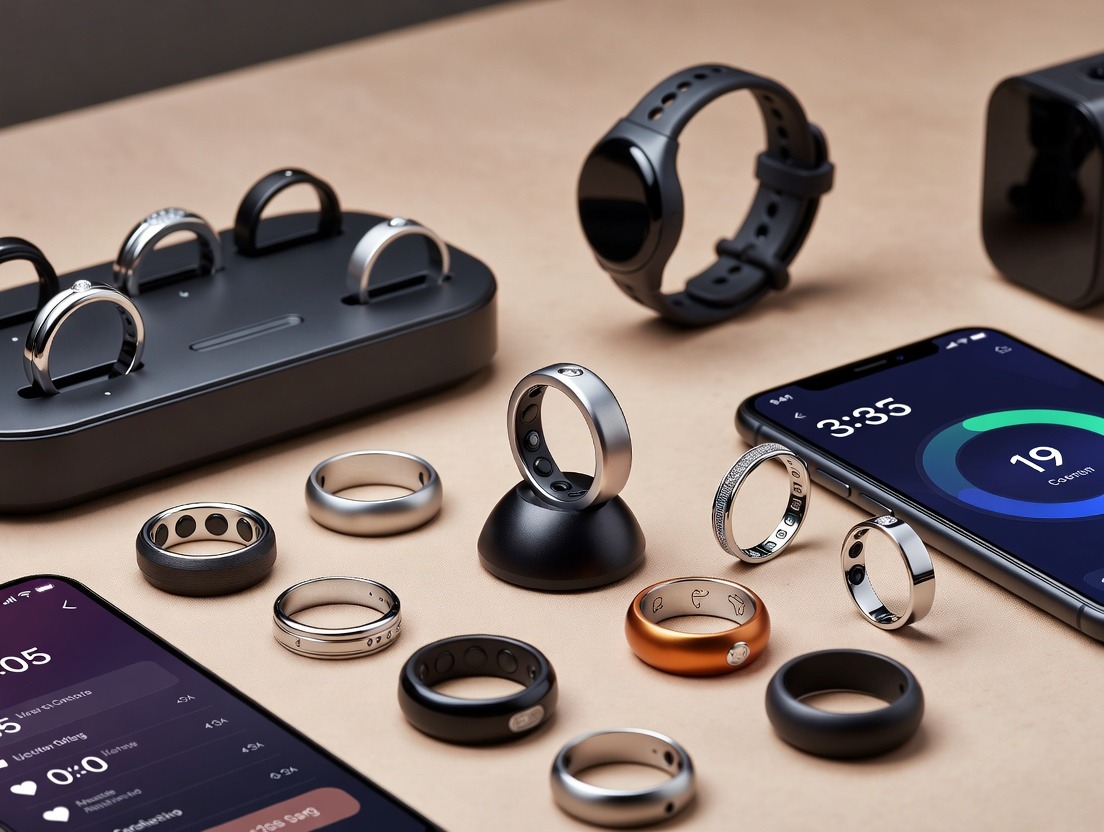
Enter the next generation of wearable technology: the wellness smart ring. Sleek, unobtrusive, and worn 24/7, devices like the Oxyzen ring represent a paradigm shift from simplistic activity tracking to holistic readiness monitoring. They don't just tally what you do; they decode what you need. By capturing a continuous, intimate stream of biometric data—from heart rate variability and skin temperature to detailed sleep architecture and blood oxygen—these rings paint a hyper-personalized portrait of your nervous system's state.
This article is not another lecture to move more. It’s a masterclass in learning to listen. Your wellness ring is a quiet conversation with your physiology, and its most valuable insights aren't about the workouts you crushed, but the subtle, restorative, and often overlooked activity opportunities hidden in your daily data. We will decode the signals that indicate when your body is primed for intensity, desperately craving gentle movement, or pleading for total stillness. We’ll move beyond steps and calories to explore how strategic walking, nervous-system-calming exercises, and even social interaction—all hinted at by your biometrics—can become your most powerful tools for sustainable health.
Your ring isn't just a tracker; it's a guide. It's time to learn its language and discover a world of movement you never knew you were missing.
We have been conditioned to view fitness through a remarkably narrow lens. For over a decade, wrist-based trackers have reduced the magnificent complexity of human health to a handful of commoditized metrics: steps taken, calories burned, floors climbed, and minutes of elevated heart rate. While these provided a revolutionary starting point for mass awareness, they represent the tip of the iceberg—and often, a misleading one.
The fundamental flaw in step-counting is its blissful ignorance of context. Ten thousand steps in a stressed, sleep-deprived state while your body is fighting inflammation is physiologically worlds apart from ten thousand steps taken after a night of restorative sleep. One could be a destructive strain, the other a nurturing boost. Traditional trackers cheer for both equally, missing the crucial story written in your autonomic nervous system.
A modern wellness ring changes the game by accessing the data that forms the context for your activity. This is the biometric layer beneath the motion:
By synthesizing these data points, a ring like Oxyzen generates a true Readiness or Recovery Score. This isn't a judgment, but a translation. A low score doesn't mean "you're lazy"; it means your body is asking for a specific type of support. It might be whispering for a walk in nature instead of a HIIT class, or for a hydration focus instead of a strength session.
This foundational data is the lexicon you need to understand. Before you can spot the missed opportunities, you must first learn what your body is trying to say. For a deeper dive into how this technology captures such intimate data, explore our detailed explainer on how sleep trackers actually work.
Our culture glorifies "pushing through." The badge of honor is the workout completed despite exhaustion, the work project finished on no sleep. We often interpret the desire to rest as a lack of discipline, a moral failing. Your wellness ring offers a radical, data-driven counterpoint: rest is not the absence of productivity; it is the foundational biological process that enables it.
This is where the first, and often most neglected, activity opportunity appears: the opportunity for strategic, active recovery and total stillness. Your ring identifies invisible stress—the kind that doesn't feel like acute panic but manifests as a suppressed HRV, elevated RHR, or poor sleep efficiency.
Storytelling Example: Consider Alex, who aims for five workouts a week. On Wednesday morning, he checks his Oxyzen app and finds a readiness score 15% lower than his baseline. His HRV has dipped, and his deep sleep was fragmented. The old Alex would have ignored the fatigue, fueled up on coffee, and hit the gym anyway—likely delivering a subpar performance and extending his recovery time. The new Alex, guided by his ring, understands this data as a direct request. He swaps the planned intense cardio for 30 minutes of gentle, rhythmic movement: a slow walk outdoors followed by a short session of mobility-focused yoga. By evening, his nervous system has settled. He sleeps profoundly that night and wakes with a readiness score rebounded, fully prepared for an effective workout on Thursday.
This is the hidden opportunity: Listening to a "rest" signal is an active, strategic health decision. It's the opportunity to engage in parasympathetic-nervous-system-activating activities that traditional trackers ignore:
Ignoring these signals has a quantifiable cost. Chronically training or operating under a low-readiness state leads to diminishing returns, hormonal imbalances (elevated cortisol), suppressed immunity, and ultimately, burnout or injury. The ring makes the invisible, visible. It turns a vague feeling of "being off" into a concrete, actionable insight. To understand the profound impact of one critical recovery component, learn about what deep sleep is and why you're likely not getting enough.
Conversely, your ring is also brilliant at spotting when you are a coiled spring, ready for action. Most of us schedule our workouts based on calendar convenience—lunch breaks, after work, Saturday mornings. But what if your body has its own optimal performance windows, unique to your physiology and daily rhythms, and your ring can identify them?
This is the second major activity opportunity: the opportunity to align intense effort with periods of peak biological readiness. It’s about quality over arbitrary scheduling.
Your daily biometrics create a map of your energy landscape. Key signs of a "prime time" window include:
When these stars align, your body is signaling that it has the metabolic flexibility, neural drive, and muscular resilience to not only handle stress but to thrive on it. This is the time to seize the opportunity for:
The Data in Action: Imagine your ring shows a consistent trend: your readiness scores are consistently highest on Tuesday and Friday afternoons, despite you always working out on Monday/Wednesday/Friday mornings. The Monday morning workout, it turns out, often follows a night of poorer sleep due to Sunday night anxiety about the week. By shifting your intense workout to Tuesday afternoon, you are placing stress where your body is best prepared to receive it. The result? Better performance, more effective adaptations, and less perceived fatigue.
This principle shatters the one-size-fits-all fitness schedule. It champions a dynamic, responsive approach. The opportunity cost of ignoring your prime times is exercising in a suboptimal state, yielding less result for more perceived effort. To leverage your best days fully, understanding recovery is key, especially for athletes exploring deep sleep optimization for recovery.
Every major wearable now has them: the sedentary alert. "Time to move!" it chirps at 50 minutes of sitting. We typically stand up, fidget for a minute, and sit back down, checking the box. But this alert is a blunt instrument pointing to a profound opportunity we consistently minimize.
The third major activity opportunity your ring reveals is not about replacing sitting with standing, but about harnessing the potent, cumulative power of non-exercise activity thermogenesis (NEAT) throughout the entire day.
Your ring’s constant monitoring of heart rate and movement illuminates the stark contrast between your "exercise" hour and your other 23 hours. Those long, flatlined periods of low heart rate and zero movement are not just gaps in data; they are gaps in metabolic stimulation, circulation, and cognitive refreshment.
The missed opportunity here is a universe of micro-movements that, in aggregate, can rival a workout in calorie expenditure and health impact, while continuously nourishing your body. It's about reimagining inactivity as a field ripe for strategic movement seeding:
The data connection is direct. Consistent micro-movement:
Your sedentary alert, therefore, is not a nuisance. It is a prompt to engage in the most underrated health activity of all: frequent, low-grade, nurturing movement. It's the antithesis of our "all or nothing" fitness culture and is perfectly suited to being guided by a device that never turns off. For more ideas on integrating wellness into a busy life, our blog offers a wealth of practical resources.
We often think of "activity" as things we do while awake. But your wellness ring posits a revolutionary idea: Sleep is not passive; it is the most critical performance activity of your day. The quality of your sleep directly determines your capacity for every other activity, from cognitive tasks to physical exertion. Therefore, optimizing sleep is the highest-leverage activity opportunity available.
Your ring’s detailed sleep analysis—breaking down your night into Light, Deep, and REM sleep—is a performance report card for your brain and body. Deficiencies in specific stages create specific daytime deficits, which your ring can then help you connect.
By framing sleep as the foundational activity, you start to see your day in reverse. The goal of your daytime moves becomes, in part, to set the stage for a victorious night of sleep. Did your afternoon walk improve your deep sleep? Did skipping evening alcohol boost your REM? Your ring provides the feedback loop. This holistic view is core to the mission at Oxyzen, where we believe understanding your 24-hour cycle is the key to true vitality.
Human beings are inherently social creatures, yet our health tracking has been fiercely individualistic. We focus on solo runs, personal bests, and private metrics. What if your wellness ring could show you that one of the most powerful "activities" for your nervous system is genuine human connection?
This is a more subtle, emerging insight: the correlation between social interaction and biometric markers of well-being. While rings don't directly track your conversations, the acute and chronic effects of loneliness or connection are written in your physiology.
Consider the data patterns:
The opportunity your ring reveals here is to quantify the value of community and schedule social wellness as diligently as you schedule a gym session. The "activity" is:
These activities lower cortisol (the stress hormone), boost oxytocin (the bonding hormone), and often involve incidental movement and laughter—all potent medicines. Your ring’s biometric data can serve as powerful positive reinforcement, showing you tangibly that time spent connecting is not time lost from your health goals; it is central to them. Reading about real user experiences can often highlight how others have discovered these connections.
Sometimes, the activity opportunity your ring reveals isn't about moving your body differently, but about changing the environment your body is in. Your biometrics are a live sensor network reacting to your surroundings—light, air, temperature, and noise. Unexplained dips in readiness or sleep quality can often be detective work for environmental tweaks.
In this way, your ring becomes a tool for bio-hacking your immediate ecosystem. The "activity" is the deliberate curation of your surroundings to support your biology. It turns you from a passive occupant into an active architect of your health space.
Accumulating insights is useless without a system for action. This final section of our initial exploration is about synthesis—about weaving the threads of readiness, prime times, micro-movements, sleep quality, social connection, and environment into a seamless, responsive daily practice.
This is the ultimate opportunity: to move from rigid, prescriptive planning to a fluid, intuitive, and data-informed movement ritual.
Here’s how a day might flow, guided by your wellness ring:
This practice turns your ring from a reporter into a partner in a continuous conversation. You act, it listens. It suggests, you respond. The goal is not perfection, but coherence—aligning your actions with your body's authentic, data-articulated needs.
The journey to 20,000+ words continues as we will next delve into specific biometric signatures, advanced recovery techniques, nutritional synchronization, and long-term trend analysis to build your complete guide to an optimized life. But the foundation is here: in learning to see the opportunities for movement, rest, and connection that your wellness ring, quietly and faithfully, reveals every single day. Ready to begin interpreting your own data? A great next step is to explore the Oxyzen shop to see the technology that makes this possible, or visit our comprehensive FAQ for any questions on starting your journey.
If your wellness ring had a single most important metric, Heart Rate Variability (HRV) would be a prime contender. Unlike heart rate, which measures the average beats per minute, HRV measures the subtle, millisecond variations between each heartbeat. Think of it not as a metronome, but as a jazz ensemble—the complexity and variation signify a healthy, adaptable system.
This isn't just data; it's the direct language of your autonomic nervous system. A higher HRV (within your personal, normal range) indicates strong parasympathetic ("rest-and-digest") tone. Your body is relaxed, resilient, and ready to handle stress effectively. A lower HRV signals sympathetic ("fight-or-flight") dominance, meaning your body is under strain, fatigued, or recovering.
The Missed Opportunity: Most people either don't track HRV or don't know how to act on it. They might see a low number and feel discouraged, without realizing it's a precise roadmap to the specific activity their body needs that day. Your HRV trend is your blueprint for balancing stress and recovery.
Actionable Insights from Your HRV Blueprint:
Storytelling Example: Maria, a project manager, noticed her Oxyzen ring showed a steady decline in her 7-day average HRV during a critical quarter-end at work. Her old self would have powered through with extra coffee and skipped rest days. Instead, she used the data as a non-negotiable guide. She proactively scheduled 20-minute lunchtime walks, instituted a strict 10 PM device curfew, and swapped two intense spin classes for restorative yoga sessions. Within ten days, her HRV began climbing back to baseline while still completing her work project. The ring didn't remove stress; it guided her to manage her physiological response to it, revealing the opportunity for strategic recovery within a busy life.
By learning your HRV blueprint, you move from guessing to knowing. You can answer the daily question, "Should I go hard or go home?" with empirical evidence from your own nervous system. For those seeking to understand the deeper science behind this critical metric, our article on the science of what happens to your body during deep sleep provides crucial context, as deep sleep is a primary driver of HRV recovery.

Your body runs on a master 24-hour clock known as your circadian rhythm. This rhythm governs not just sleep and wakefulness, but also hormone release (cortisol, melatonin), digestion, body temperature, and even gene expression. When this rhythm is in sync with your environment (light/dark cycle), you experience sustained energy, optimal metabolism, and restorative sleep. When it's disrupted, you feel "off"—jet-lagged, even if you've never left home.
Your wellness ring is a powerful circadian rhythm detective. It doesn't just track if you sleep, but when you sleep and how your vital signs fluctuate across the 24-hour cycle. The missed opportunity lies in ignoring these temporal patterns and trying to force activity at biologically incongruent times.
Key Circadian Signals Your Ring Reveals:
The Activity Opportunities Hidden in Circadian Alignment:
By aligning your activities with your circadian biology—using your ring's data as a guide—you work with your body, not against it. The result is energy that feels effortless and sustainable.
"I feel fine, so I'll train." This is the mantra of the intuitively guided athlete or busy professional. But "feeling fine" is a notoriously unreliable metric. It can be masked by caffeine, adrenaline, motivation, or simply denial. Your subjective feeling is your perception; your biometric data is your physiological reality. Often, there is a stark gap between the two.
This is the Fuel Gauge Fallacy. Your conscious mind is the optimistic passenger saying, "We can definitely make it to the next town!" Your wellness ring is the actual fuel gauge, showing the tank is nearing empty. Ignoring the gauge because the engine is still running is a risk.
How Your Ring Reveals the True Fuel Level:
Learning to trust your ring's "fuel gauge" over your fleeting "feeling" is a discipline. It requires humility and a long-term perspective. The payoff is preventing the boom-bust cycle and achieving consistent, sustainable progress. It turns wellness from an emotional rollercoaster into a data-informed journey. For many, this shift in perspective is transformative, as echoed in the real user experiences shared in our testimonials.
The modern fitness enthusiast often lives in a monotonous, moderate-intensity haze—the "gray zone." This is steady-state cardio at a conversational pace, medium-weight strength training for moderate reps, day after day. While better than nothing, this approach is suboptimal for both performance gains and metabolic health. It provides inconsistent stress for adaptation and can lead to plateauing and chronic fatigue.
Your biometric data, particularly HRV and heart rate recovery (HRR), naturally advocates for a different model: Activity Polarization. This is the practice of splitting your training into distinct, purposeful zones: very hard and very easy, with little in between.
How Your Ring Guides You Toward Polarization:
The Missed Opportunity Revealed: By living in the moderate zone, you miss two key activity opportunities:
Implementing Polarization with Your Ring:
This principle is fundamental for athletes but applies to anyone seeking efficient health gains. It’s about making every bout of activity intentional and data-validated. To understand the critical role of the deepest recovery phase in this polarized model, delve into the brain-boosting connection between deep sleep and memory.
Two of the most underappreciated yet easily influenced metrics on your wellness ring are nighttime skin temperature and resting heart rate trends. While not direct hydrometers or thermometers, they are brilliant proxy indicators for hydration status and thermal regulation—factors that dramatically impact performance, recovery, and general well-being.
The Hydration Signal:
Chronic, even mild, dehydration doesn't always scream with thirst. It whispers through your data:
The Missed Opportunity: You see a higher RHR and assume you're stressed or overtrained, when the simple, immediate opportunity is to systematically increase your electrolyte-rich fluid intake. Before diving into complex recovery protocols, your ring may be pointing you to the water bottle.
The Temperature Regulation Signal:
Your sleep is exquisitely sensitive to temperature. The initiation of sleep is triggered by a core body temperature drop. Your ring's skin temperature data is a window into this process.
The Missed Opportunity: You invest in sleep supplements or meditation apps, but ignore the most powerful sleep hack: environmental temperature control. The activity here is behavioral: lowering your thermostat, using a cooling mattress pad, taking a warm bath 90 minutes before bed (which causes vasodilation and then a drop in core temperature as you leave the bath).
Actionable Steps from This Data:
By tuning into these subtle biometrics, you address foundational pillars of health that are often overlooked in favor of more complex solutions. It’s a perfect example of your ring revealing a simple, high-impact activity opportunity: drink more water and cool your room.
"Social jet lag" is the term chronobiologists use to describe the mismatch between your biological clock (circadian rhythm) and your social clock (work/school schedule). It's most evident on weekends: you stay up late Friday and Saturday and sleep in, then suffer Sunday night trying to readjust for a Monday early alarm. This isn't just a minor inconvenience; it's a chronic stressor with metabolic consequences.
Your wellness ring is the perfect device to quantify your social jet lag and reveal the hidden cost of your weekly routine.
How Your Ring Measures Social Jet Lag:
The Opportunity Revealed: Consistency as a High-Value Activity.
The data exposes that the frantic "catch-up" sleep and relaxation of the weekend is less effective than maintaining a stable rhythm. Therefore, the most powerful activity opportunity isn't a weekend hike; it's protecting your circadian consistency.
This doesn't mean you can't have fun on weekends. It means being strategic:
By minimizing social jet lag, you smooth out your energy curve. You stop sacrificing your Wednesdays and Thursdays to pay for your Saturday nights. The ring provides the objective evidence that consistency in sleep timing is one of the highest-yield "activities" for overall health, arguably as important as the ideal duration of deep sleep by age.

Daily and weekly data are crucial for real-time adjustments. But the profound, life-changing insights from a wellness ring often emerge from long-term trend analysis—looking at 3, 6, or 12 months of aggregated data. This is where you move from reactive health management to proactive health optimization. It reveals the slow, powerful currents beneath the daily waves.
What Your Long-Term Trends Reveal:
The Missed Opportunity: Most users check their daily score and close the app. They miss the narrative. The opportunity is to schedule a quarterly "biometric review." Sit down with your Oxyzen app's trend views and ask:
This review turns your health into a strategic project. It allows you to see, for instance, that while your daily steps haven't changed, your improved sleep consistency (a result of your wind-down ritual) has driven a 10% improvement in your average readiness score. It shifts your focus from the activity (the steps) to the outcome (the readiness).
This longitudinal view is the culmination of the smart ring journey. It provides the ultimate feedback loop, proving that the small, daily activity opportunities—the walks, the consistent bedtimes, the hydration—compound into a vastly different health trajectory. To begin interpreting your own trends, resources like our blog post on sleep tracking accuracy help set realistic expectations for the data you're analyzing.
This concludes the first major portion of our comprehensive guide. We have laid the foundation, exploring how your ring interprets core signals like HRV, circadian rhythm, and HRV, and how it guides daily decisions towards polarization, hydration, and consistency. In the next portion, we will dive even deeper into advanced applications: synchronizing nutrition with biometrics, using data for specific health goals (weight management, anxiety reduction), integrating with other health platforms, and building a truly resilient, responsive lifestyle that turns missed opportunities into a life of sustained vitality and energy.
Ready to take the next step with this knowledge? You can explore the Oxyzen shop to find the tool that unlocks this depth of understanding, or visit our comprehensive FAQ for any technical or practical questions about beginning this journey. The story of your health is waiting to be written in data—and translated into action.
Nutrition and activity are two sides of the same coin, yet we often plan them in isolation. We eat based on the clock, social cues, or hunger pangs, while we move based on our schedules. Your wellness ring introduces a revolutionary third axis: your body's real-time metabolic and energetic state. By observing how your biometrics respond to different foods and eating patterns, you can discover the profound opportunity to synchronize your fuel with your physiology, optimizing both energy and recovery.
Your ring doesn't track calories or macros directly, but its sensors are exquisitely sensitive to the downstream effects of your dietary choices.
Key Biometric Responses to Nutrition:
The Activity Opportunities from Nutritional Data:
By using your ring to observe these patterns, you move from generic meal plans to a cyclical nutrition strategy that supports your activity cycle: fueling for work, optimizing for performance, and eating for recovery, all validated by your own physiology.
Physical activity is obvious. Mental activity is invisible, yet it can be equally—if not more—exhausting. Your brain consumes about 20% of your body's energy. Periods of intense focus, problem-solving, emotional labor, and constant multitasking place a massive "cognitive load" on your system, activating the stress response.
Your wellness ring is a powerful proxy for measuring this mental load. When your mind is overworked, your body bears the burden.
How Your Ring Quantifies Cognitive Strain:
The Missed Opportunity: Cognitive Recovery as an Active Discipline.
We rarely schedule recovery from mental work. The opportunity your ring reveals is to treat cognitive recovery with the same intentionality as physical recovery.
By acknowledging cognitive strain in your biometrics, you legitimize the need for mental recovery. This prevents the all-too-common scenario of being physically rested but mentally burnt out. For those in high-stress cognitive roles, understanding the brain-boosting connection between deep sleep and memory is a compelling reason to prioritize this recovery.
Health and fitness are not linear; they are cyclical waves of stress and adaptation. We apply a stressor (workout, work project), we dip into recovery, and we super-compensate to a higher level of fitness or resilience—if we time it correctly. The problem is we are often blind to where we are in this wave, leading us to apply stress during recovery or rest during a prime adaptation window.
Your wellness ring illuminates this wave. It turns the abstract concept of "periodization" into a visible, daily personal cycle.
Mapping Your Wave with Biometrics:
The Activity Opportunity: Dynamic Scheduling.
Your ring allows you to surf this wave instead of being pulled under by it.
Storytelling Example: Leo, a software developer and amateur cyclist, used to train every other day rigidly. Sometimes he felt great, sometimes dreadful. With his Oxyzen ring, he observed his adaptation wave. After a very hard interval session, his HRV took a full 48 hours to not just recover, but to supercompensate to a higher level. On that second morning, his readiness score soared. He shifted his schedule to two hard sessions per week, spaced with three easy days, always triggered by his ring's "peak" readiness. His performance improved dramatically with less perceived effort and fewer injuries. He was surfing his wave.
This framework moves you from a fixed calendar to a fluid, responsive plan. It respects that you are a biological system, not a machine. Understanding this cycle is especially crucial for masters athletes focused on how age affects recovery and deep sleep.

The standard formula for calculating maximum heart rate (220 - age) and its associated cardio zones (50-70% for fat burn, 70-85% for aerobic) is a population average, notoriously inaccurate for individuals. Training by these generic zones can mean you're working too hard on easy days or not hard enough on intense days, missing the intended physiological benefit.
Your wellness ring, through its constant heart rate monitoring and correlation with other metrics, enables you to discover your truly personalized cardio zones based on your real-world performance and physiology.
How Your Ring Helps Define Your Zones:
The Missed Opportunity: Efficient and Effective Cardio.
With personalized zones, every minute of cardio becomes more purposeful.
By training with your true zones, revealed through your ring's data, you stop wasting energy. You build your aerobic base more effectively, push your limits safely, and recover more completely. This is the precision that turns random cardio into a tailored physiological stimulus.
For women of reproductive age, the menstrual cycle is not a bug in the system; it's a fundamental feature. The fluctuating hormones of the follicular and luteal phases create distinct physiological states that influence energy, recovery, metabolism, and performance. Ignoring this cycle is like training with a blindfold on. A wellness ring provides an objective, personalized biofeedback tool to sync activity with cycle phase, even for those with irregular cycles.
How Your Ring Reflects Hormonal Changes:
The Activity Opportunity: Cycle-Aware Periodization.
This data allows for the ultimate in personalization: aligning your activity type and intensity with your hormonal landscape.
By syncing with your cycle, you work in harmony with your biology, not against it. This reduces injury risk, improves consistency, and can enhance long-term results. It turns what is often seen as a limitation into a strategic framework for training and life. For women navigating perimenopause or menopause, the ring's data on how age affects deep sleep becomes equally critical as hormonal landscapes shift.
Wellness is not the absence of stress; it is the capacity to withstand it and bounce back—this is resilience. Your wellness ring provides the tools to not just track daily readiness, but to actively build and benchmark your resilience over time.
Resilience is visible in your biometric data as the speed and amplitude of recovery from a known stressor.
How to Measure Your Resilience with Your Ring:
The Activity Opportunity: Resilience-Building Protocols.
Your ring identifies when you are resilient (ready for stress) and when you are vulnerable (need protection). But beyond that, it guides the activities that build resilience itself.
By framing your data through the lens of resilience, every decision becomes strategic. A rest day isn't skipping training; it's a resilience workout. A hard session isn't just burning calories; it's a controlled stress test to strengthen your system. This mindset shift, supported by your ring's feedback, builds a foundation of health that can withstand life's unpredictability. For foundational knowledge on the most critical resilience-building activity, see our primer on sleep tracking for beginners.
This portion has taken us deeper into the integration of wellness data with nutrition, cognition, hormonal health, and long-term resilience building. We've moved from daily adjustments to strategic life synchronization. In the final portion of this comprehensive guide, we will explore advanced integration: combining ring data with other health platforms, using it for specific goal optimization (e.g., weight management, anxiety reduction), navigating travel and time zones, and ultimately, crafting a personal constitution for lifelong vitality based on your unique biometric fingerprint. The journey from missed opportunities to mastered potential continues.
To see how this technology fits into a larger vision of personalized health, you can learn more about Oxyzen's mission and story. For those ready to implement these strategies, the journey begins at the Oxyzen shop.
Your Trusted Sleep Advocate (Sleep Foundation — https://www.sleepfoundation.org/)
Discover a digital archive of scholarly articles (NIH — https://www.ncbi.nlm.nih.gov/
39 million citations for biomedical literature (PubMed — https://pubmed.ncbi.nlm.nih.gov/)
experts at Harvard Health Publishing covering a variety of health topics — https://www.health.harvard.edu/blog/)
Every life deserves world class care (Cleveland Clinic -
https://my.clevelandclinic.org/health)
Wearable technology and the future of predictive health monitoring. (MIT Technology Review — https://www.technologyreview.com/)
Dedicated to the well-being of all people and guided by science (World Health Organization — https://www.who.int/news-room/)
Psychological science and knowledge to benefit society and improve lives. (APA — https://www.apa.org/monitor/)
Cutting-edge insights on human longevity and peak performance
(Lifespan Research — https://www.lifespan.io/)
Global authority on exercise physiology, sports performance, and human recovery
(American College of Sports Medicine — https://www.acsm.org/)
Neuroscience-driven guidance for better focus, sleep, and mental clarity
(Stanford Human Performance Lab — https://humanperformance.stanford.edu/)
Evidence-based psychology and mind–body wellness resources
(Mayo Clinic — https://www.mayoclinic.org/healthy-lifestyle/)
Data-backed research on emotional wellbeing, stress biology, and resilience
(American Institute of Stress — https://www.stress.org/)


