


The Simplified Fitness Tracking That Motivates Lasting Change
Simplified tracking that motivates real, lasting behavior change.
Simplified tracking that motivates real, lasting behavior change.
%402x.svg)
You bought the high-tech fitness tracker, the one with a screen the size of a coin and the promise of a new you. For the first week, it was a revelation—10,000 steps were a daily crusade, sleep scores were a competitive sport, and closing those colorful rings felt like a moral victory. Then, week two arrived. The buzz faded. The wrist felt clunky. The data became a confusing stream of numbers that felt more like a judgment than a guide. The “motivation” it provided was just a daily reminder of what you hadn't done. The device ended up in a drawer, another monument to a short-lived health kick.
You’re not alone. This cycle of initial enthusiasm followed by disengagement and abandonment is the dirty little secret of the wearables industry. We’ve been sold a vision of data-driven transformation, but have been given little more than a digital nag. The problem isn’t you—it’s the paradigm. True, lasting change isn’t forged in the fire of relentless self-quantification. It’s cultivated through understanding, gentle guidance, and support that fits seamlessly into your life. What if the key to unlocking your fitness potential wasn’t more complexity, but radical simplicity? What if your tracker understood not just your movement, but your rhythm?
Welcome to a new era of personal wellness, one that moves beyond the noise to focus on the signal. This is the promise of simplified, intelligent fitness tracking. It’s not about drowning in data, but about surfacing the one or two insights that can actually change your day. It’s about a device that works with your body’s natural language—heart rate variability, skin temperature, and movement—to provide a holistic picture of your readiness, not just your activity. And it’s about a form factor that disappears into your life: the smart ring. This is the story of how moving from complication to clarity, from your wrist to your finger, can finally bridge the gap between information and lasting motivation.
We live in the age of information, and our wrists have become ground zero for a data explosion. Modern smartwatches and fitness bands can track a staggering array of metrics: steps, distance, floors climbed, active minutes, heart rate zones, SpO2, ECG, stress scores, sleep stages, REM sleep, deep sleep, light sleep, sleep consistency, workout efficiency, recovery time, and even an estimate of your cardio fitness (VO2 Max). It’s a firehose of numbers, graphs, and percentages delivered daily.
On the surface, this seems empowering. More data must equal more control, right? The reality is far messier. For the average person seeking to improve their health, this deluge creates three critical failure points that sabotage long-term motivation.
First is cognitive overload and decision paralysis. When faced with a dashboard of 15 different metrics, all color-coded and demanding attention, our brains short-circuit. Which number is the most important? Should I focus on my sleep score today, or my step count? Is my resting heart rate too high, or is my HRV too low? This overload doesn’t lead to informed action; it leads to anxiety and inaction. The mental energy required to interpret this data is often greater than the energy needed for the workout itself, creating a hidden barrier to engagement.
Second is the tyranny of incomplete metrics. Fitness is a multi-dimensional construct—physical, mental, and emotional. Yet, most wrist-based trackers are fundamentally biased toward one dimension: output. They excel at measuring what you do (steps, active minutes, calories burned) but provide a shallow, often inaccurate, view of what you are (recovered, stressed, resilient). They cheer you on for a hard workout even if your body is screaming for rest, creating a dangerous disconnect. As we’ll explore later, true fitness gains are made not just during exertion, but during recovery. A device that only celebrates output is like a car’s dashboard that only shows speed, ignoring the fuel gauge, engine temperature, and oil pressure. You might be moving fast, but you’re headed for a breakdown.
Third is the compliance crisis. The bulky form factor, the need for daily charging, the screen notifications pinging with social media alerts, and the sheer presence of a device on your wrist become points of friction. Many people find watches uncomfortable to sleep in, which means missing the crucial recovery data from sleep. Others simply get “wrist fatigue” or dislike the aesthetic. Every minor friction point is a step toward that dreaded drawer. The device, meant to be a constant companion, becomes a burden.
This failure is reflected in the numbers. While wearables have high adoption rates, longitudinal studies show steep drop-offs in regular usage. The devices are technologically brilliant but humanly flawed. They give us everything except the one thing we need: a clear, compassionate, and actionable path forward. As highlighted in Oxyzen's blog on the pros and cons of sleep tracking, the value isn't in the tracking itself, but in how the data is curated and presented to drive positive behavioral change.
If the wrist is a problematic home for continuous, holistic tracking, where do we go? The answer is surprisingly simple, elegant, and has been on our bodies for millennia: the finger. The rise of the smart ring marks a pivotal shift in wearable technology, moving from a “tech-first” to a “human-first” design philosophy. It’s not just a smaller tracker; it’s a reimagining of what a health companion should be.
The core advantage is unobtrusive, 24/7 wearability. A well-designed smart ring is lightweight, low-profile, and devoid of screens or buzzes. It doesn’t shout for attention; it quietly observes. This eliminates the compliance problem at its root. You can wear it while sleeping, swimming, typing, or lifting weights with zero interference. It becomes a true part of you, enabling the collection of continuous, undisturbed data streams that are impossible for a watch you take off at night or during a shower. This continuous data is the bedrock of meaningful insight.
Furthermore, the finger provides a surprisingly optimal vantage point for physiological sensing. The vasculature in the finger is rich and close to the surface, allowing for highly accurate and consistent photoplethysmography (PPG) readings for heart rate and heart rate variability. Skin temperature can be measured reliably from this location. The combination of these two data points, collected passively around the clock, is a game-changer. While a watch might take a spot-check heart rate every few minutes, a ring is building a continuous, nuanced picture of your autonomic nervous system—the real control center of your stress and recovery.
This leads to the most profound shift: from activity-centric to readiness-centric tracking. A smart ring, by its very design and data access, naturally prioritizes your body’s input over your output. Instead of starting your day with a step goal, you start with a “Readiness Score” or a “Body Battery” level—a synthesized metric that tells you how recovered and prepared you are for the day’s demands. This flips the script. It asks, “What is your body capable of today?” rather than demanding, “Here’s what you must do today.” This approach aligns with modern sports science, which understands that performance is a product of stress + recovery. You can learn much more about the science behind this in our detailed guide on how sleep trackers actually work.
The smart ring, therefore, isn’t just a new gadget category. It’s the hardware embodiment of a more intelligent, empathetic, and sustainable approach to personal health. It’s the tool that finally allows us to listen to our bodies, not just command them.
Why do so many well-intentioned fitness plans fizzle out? Behavioral science points to a critical flaw: an over-reliance on extrinsic motivation. The flashing lights, the celebratory buzzes, the badges, and the social media shares from traditional trackers are all extrinsic motivators. They are rewards imposed from the outside. And while they can spark initial action, they are notoriously poor at sustaining it. Once the novelty wears off, the external reward loses its power, and the behavior stops.
Lasting change is fueled by intrinsic motivation—the desire to act for internal satisfaction, inherent enjoyment, or alignment with core personal values. It’s the difference between exercising to “close a ring” (extrinsic) and exercising because you love the feeling of energy and strength it gives you (intrinsic). The goal of any effective health tool should be to facilitate this transition, to help the user discover and connect with their own internal compass.
Simplified, intelligent tracking is uniquely positioned to do this. Here’s how:
By reducing noise and amplifying actionable signals, simplified tracking shifts the user’s focus from “What does the app want from me?” to “What is my body telling me?” This is the fundamental psychological shift that turns short-term effort into a lifelong practice. For a deeper look at how to interpret what your body is saying through data, our guide to sleep tracking accuracy is an excellent resource.
In the quest for simplicity, we must identify the vital signs of daily wellness—the metrics that serve as true north for our physical state. If we strip away the vanity metrics, we are left with a powerful trio that forms the foundation of holistic tracking: Heart Rate Variability (HRV), Resting Heart Rate (RHR), and Skin Temperature.
Heart Rate Variability (HRV) is the superstar of physiological insight, yet it is often misunderstood. It is not your heart rate, but the variation in time between each heartbeat. Contrary to intuition, a higher HRV is generally better. It indicates a robust, responsive autonomic nervous system. Your heart can quickly accelerate for a stressor (sympathetic “fight or flight” response) and then efficiently slow down to promote recovery (parasympathetic “rest and digest” response). A low HRV suggests your nervous system is stuck in a stressed, fatigued, or inflamed state, with less resilience to handle new challenges.
For fitness motivation, HRV is transformative. It provides a daily, objective answer to the question, “Am I recovered?” Instead of guessing if you’re ready for a hard workout, a rising HRV trend can give you the green light, while a sudden dip might suggest you need a rest day, even if you feel fine. This prevents overtraining and supports consistent progress. Tracking HRV helps you identify not just physical stressors, but emotional and mental ones, creating a complete picture of your load.
Resting Heart Rate (RHR) is a more familiar but equally critical metric. A well-conditioned cardiovascular system doesn’t have to work as hard at rest, leading to a lower RHR. While day-to-day fluctuations are normal, a sustained elevation in your RHR is one of the clearest early warnings your body can give. It can signal the onset of illness, dehydration, extreme fatigue, or chronic stress. Paired with HRV, it creates a powerful one-two punch for assessing recovery status.
Skin Temperature, measured continuously from the finger, is a fascinating and underutilized metric. It follows a natural circadian rhythm, typically dropping at night to initiate sleep and rising in the morning to promote wakefulness. Deviations from your personal baseline can be revealing. A consistently elevated nighttime temperature can indicate inflammation, the onset of illness, or a hormonal shift. For women, it is a cornerstone of fertility and cycle tracking. More broadly, it adds another layer of context to your sleep quality and overall physiological balance.
When these metrics are synthesized—not viewed as isolated data points—they create a dynamic, living map of your body’s state. They move the conversation from “How many calories did I burn?” to “How resilient is my system today?” This is the data foundation for simplified, meaningful tracking that motivates from a place of knowledge and self-care. To understand how these metrics interplay during your most restorative periods, delve into the science of what happens to your body during deep sleep.
If exercise is the stress we apply to get stronger, then sleep is the non-negotiable workshop where the repair happens. Yet, for years, sleep tracking has been rudimentary, focusing almost exclusively on duration. “I got 8 hours” was the badge of honor, with no insight into the architecture or quality of that sleep. Modern, simplified tracking changes this entirely, positioning sleep not as a passive state, but as the active, measurable foundation of all health and fitness gains.
Advanced tracking now differentiates between sleep stages: Light, Deep, and REM sleep. Each plays a distinct and vital role:
Simply knowing you cycled through these stages is powerful, but the real motivation comes from understanding your personal patterns and their impact. Seeing a direct correlation between a high percentage of deep sleep and feeling physically rejuvenated the next day is a profound motivator to protect your sleep hygiene. Conversely, noticing that a night of poor sleep, characterized by frequent awakenings and low deep sleep, leads to a low readiness score and poor workout performance creates a tangible cause-and-effect understanding.
This is where tracking becomes actionable. It moves beyond the number of hours to answer critical questions: Is your sleep consistent? Do you get enough deep sleep for physical repair? Is your sleep disrupted by late-night eating, alcohol, or screen time? The data provides unbiased feedback. You might believe that “a nightcap helps you sleep,” but the data could show it’s demolishing your deep sleep. This objective feedback loop is irreplaceable.
By elevating sleep to its rightful status as the primary recovery metric, simplified tracking systems naturally guide users toward behaviors that support better sleep. This creates a virtuous cycle: better sleep leads to higher daytime readiness, which leads to more effective workouts, which in turn improves sleep quality. The focus shifts from grinding through fatigue to building a foundation of recovery that makes fitness sustainable. For beginners looking to start this journey, our comprehensive Sleep Tracking 101 guide is the perfect place to begin.
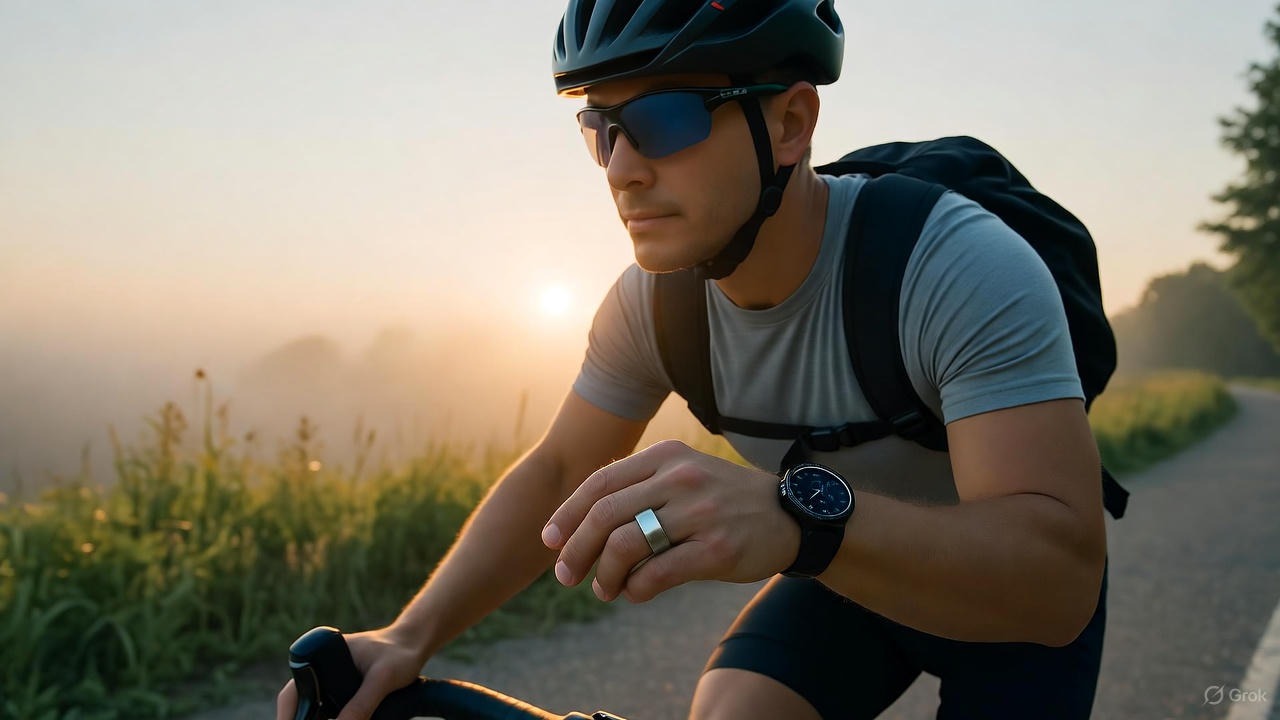
We’ve established that more data isn’t the answer. The human brain craves simplicity to make decisions. This is the genius behind the Readiness Score (or similarly named composite metrics like Body Battery, Recovery Score, etc.). It is the ultimate expression of simplified tracking: the distillation of complex physiological data—HRV, RHR, skin temperature, sleep duration, and sleep quality—into a single, digestible number on a scale of 1-100.
This number is your daily conversation starter with your body. A high score (e.g., 85+) is a clear message: “You are recovered, resilient, and primed for performance. Today is a great day for a challenging workout, a big presentation, or tackling that demanding project.” A low score (e.g., below 40) is an equally clear signal: “Your resources are depleted. Your body is dealing with stress, fatigue, or possibly illness. Prioritize rest, gentle movement like walking, hydration, and sleep.”
The psychological power of this cannot be overstated. It:
But a readiness score isn’t just about exercise prescription. It’s a holistic daily guide. A middling score might suggest focusing on stress management techniques. A low score following a night out might highlight the impact of alcohol on recovery. It transforms the tracker from a fitness device into a holistic wellness advisor.
This approach aligns perfectly with the mission of forward-thinking wellness companies. For instance, at Oxyzen, we believe technology should simplify your health journey, not complicate it. By designing systems that prioritize this kind of synthesized, actionable insight, we help users cut through the noise and focus on what truly moves the needle for their well-being.
Traditional fitness tracking is goal-oriented: Run 5k. Lose 10 pounds. Hit 10,000 steps. These are binary, all-or-nothing targets that live in the future. The problem is that the road to a big goal is long, and motivation often wanes before the finish line. We become disheartened by the lack of immediate progress. The “what-the-hell” effect sets in—you miss one day, feel you’ve failed the goal, and give up entirely.
Simplified tracking engineered for lasting change operates on a different principle: habit formation through micro-wins. It shifts the focus from the distant outcome to the immediate, sustainable process. The system itself is designed to celebrate and reinforce the tiny, daily behaviors that compound into transformation.
How does this work in practice?
By focusing on the micro-wins of daily process, the tracker becomes a coach for building an identity: “I am someone who listens to my body. I am someone who prioritizes recovery. I am someone who moves consistently.” This identity-based motivation is infinitely more powerful and lasting than any externally imposed goal. For real-world examples of how this philosophy translates into life-changing results, you can explore the experiences of others in our customer testimonials.
No two human bodies are identical. A resting heart rate of 55 might be normal for one person and a sign of fatigue for another. Seven hours of sleep might be perfect for you but leave your partner groggy. The fatal flaw of one-size-fits-all fitness advice is that it ignores this fundamental biological individuality.
The next evolution of simplified tracking is adaptive personalization. This is where a device or platform moves beyond generic population benchmarks and learns your personal baselines, rhythms, and unique responses. It transitions from being a thermometer (showing a static number) to being a weather station that understands your personal climate.
This happens through sophisticated algorithms that analyze your data over weeks and months to establish your normal. What is your typical HRV range? What is your baseline skin temperature? How does your sleep architecture usually look? What is your personal circadian rhythm?
Once these baselines are established, the system can detect meaningful deviations. Instead of telling you your deep sleep is “low” compared to a 25-year-old athlete, it can alert you that “Your deep sleep was 25% lower than your personal average last night. Consider reviewing your evening routine.” This feedback is exponentially more relevant and actionable.
Personalization extends to activity as well. The system can learn how different types of exercise impact your recovery metrics. Maybe a long run tanks your HRV for two days, while a strength session only affects it for one. This knowledge allows for truly optimized training planning that respects your individual physiology.
The ultimate expression of this is a tracker that provides personalized “what works for you” insights. Through long-term data correlation, it can surface patterns like: “On days you have a morning walk, your stress levels are 15% lower in the afternoon,” or “When you finish eating 3 hours before bed, your deep sleep increases by an average of 12%.” These are hyper-personalized discoveries that no generic blog post could ever provide. They are the keys to unlocking your optimal performance and well-being.
Embracing this philosophy of deep personalization is at the heart of Oxyzen’s story. We believe the future of wellness isn’t about following generic trends, but about using elegant technology to unveil your unique biological blueprint, empowering you to make choices that are perfectly attuned to your body’s needs.
Motivation is a fragile flame, easily extinguished by friction. In the context of wearable technology, design is not just aesthetics; it is a core behavioral feature. Every element of a device’s physical form either supports or hinders the ultimate goal: 24/7 consistency. This is where the smart ring’s design philosophy shines as a “silent partner” in your health journey.
Consider the friction points of a wrist-worn device:
A well-crafted smart ring systematically dismantles these barriers. Its lightweight, ergonomic form is designed to vanish on your finger. You forget it’s there, which is the highest compliment a wearable can receive. This passive wearability is the absolute prerequisite for gathering the long-term, uninterrupted data that leads to true personalization.
Its extended battery life, often lasting 5-7 days on a single charge, removes daily charging anxiety. The ritual becomes a brief, weekly event rather than a nightly hassle, making it far easier to maintain continuous wear.
Crucially, it has no screen. This is a feature, not a bug. By removing the screen, the device eliminates the temptation for compulsive data-checking and digital distraction. It forces the interaction to be intentional—you open the companion app when you want a thoughtful overview of your trends, not a nervous glance at a step count. This transforms the relationship from one of constant monitoring to periodic, meaningful reflection.
A single day’s data is a snapshot—interesting, but often meaningless. A week’s data is a trend. A month or a year’s data is your story. This longitudinal view is where simplified tracking reveals its true power, transforming from a daily dashboard into a personal health narrative. The focus shifts from “What’s my score today?” to “What are my patterns over time?” and, most importantly, “Why?”
Cyclical Awareness: For nearly half the population, the menstrual cycle is a dominant biological rhythm that profoundly impacts physiology. Simplified tracking can illuminate these patterns with stunning clarity. You may see your resting heart rate rise and your HRV dip in the luteal phase (after ovulation), while your skin temperature shows the biphasic pattern confirming ovulation. This isn’t just for conception; it’s for performance. Understanding these patterns allows a woman to tailor her training—pushing intensity in the follicular phase when recovery is faster, and focusing on maintenance, mobility, and recovery in the luteal phase. It turns a source of potential frustration into a blueprint for cyclical optimization.
Seasonal and Lifestyle Impact: Your data tells the story of your life beyond the gym. You can see the physiological impact of a stressful work project (a sustained dip in HRV), the recovery boost from a vacation (a steady climb in all metrics), or the subtle toll of frequent travel (disrupted sleep and elevated RHR). It highlights how your body responds to seasonal changes, like less daylight in winter potentially affecting sleep quality. This big-picture view fosters self-compassion. A period of “low” scores isn’t a personal failing; it’s a logical response to life’s demands, and seeing the recovery on the other side reinforces resilience.
Correlation Discovery: This is the most empowering aspect of long-term data. The platform can help you uncover connections you’d never notice. You start to see clear correlations: “On days I meditate, my sleep score averages 8 points higher.” “My afternoon stress alerts drop by 60% on weeks I take a lunchtime walk.” “My deep sleep plummets when I have alcohol after 8 PM.” These are your personal, data-backed truths. They move you from following general health advice (“limit alcohol”) to understanding your specific, quantified response (“For me, a glass of wine after 8 PM reduces my deep sleep by 40%”). This turns abstract recommendations into concrete, personal commandments.
By encouraging you to view your data as a story, the tool cultivates a mindset of curiosity and experimentation, rather than judgment. It answers the “why” behind your daily readiness, making you the author of your own well-being journey. For those particularly interested in optimizing the most critical chapter of that story—recovery—our blog offers a deep dive on how to increase your most restorative deep sleep.
Human beings are social creatures, and motivation is often contagious. Traditional fitness platforms, however, have often twisted this natural tendency into a source of anxiety through public leaderboards and step-count comparisons. Seeing a friend who is a marathon runner log 25,000 steps can be demoralizing, not motivating. This is social comparison, and it’s an extrinsic motivator that often backfires.
Simplified tracking, with its focus on personal baselines and readiness, paves the way for a healthier model: community support based on shared experience, not shared metrics. Imagine a community space—whether within an app forum, a dedicated social group, or a platform like Oxyzen’s blog for shared learning—where the conversation is different.
Here, people don’t post their readiness scores to boast. They share questions and insights:
In this environment, the shared language isn’t “who worked hardest,” but “what did we learn?” It’s a community focused on problem-solving, encouragement, and the exchange of personal, data-informed wisdom. This taps into a powerful intrinsic motivator: relatedness. Feeling connected to others on a similar path, who understand the nuances of tracking HRV or optimizing sleep stages, provides a sense of belonging and support that a lonely leaderboard never could.
This community becomes a source of accountability and inspiration. When you see others successfully navigating stress or improving their recovery, it reinforces the belief that change is possible. It turns the solitary act of tracking into a shared journey of discovery, making the process more engaging and sustainable. For a powerful look at how real people are applying these principles, the stories shared in our testimonials section offer genuine social proof.
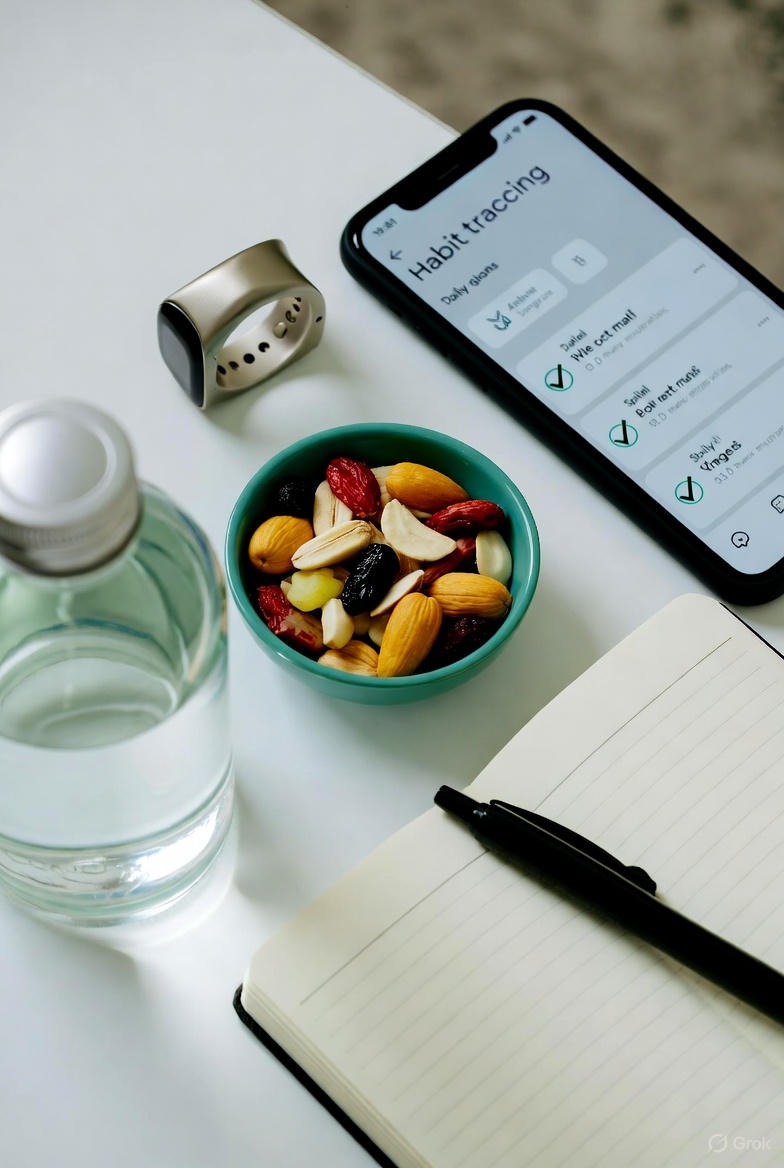
This is the most crucial paradox in the pursuit of simplified tracking: The ultimate goal of the technology is to make itself obsolete. The ring, the app, the scores—they are not the destination. They are sophisticated training wheels for your own internal sense of body awareness. The true mark of success is when you can increasingly rely on your own intuition, informed by the patterns you’ve learned, rather than compulsively checking a device.
This means developing a respectful relationship with your tracker. It’s a tool for guidance, not gospel. Here’s how to maintain a healthy balance:
Practice “Feel First, Check Second.” Start your day by checking in with yourself. How do you feel? Rested? Achy? Energized? Drained? Then, look at your readiness score. Does it align with your feeling? Often, it will, validating your intuition. Sometimes, it won’t—perhaps you feel tired but your score is high, suggesting you’re mentally fatigued but physically recovered, or vice-versa. This dissonance is a valuable prompt for deeper inquiry.
Embrace the “Soft” Data. Your tracker provides the “hard” data—numbers. You provide the “soft” data—the qualitative context. The app’s journaling feature (if it has one) is vital here. Logging notes like “big work presentation today,” “argued with partner,” “ate a heavy late meal,” or “felt incredibly joyful after hiking” provides the narrative for the numbers. Over time, you learn that for you, “emotional stress” impacts HRV more than “physical stress,” or that “social joy” boosts your recovery. This holistic view is something no algorithm can fully synthesize on its own.
Schedule Data Reviews, Not Constant Checks. Break the habit of glancing at the app 10 times a day. Instead, set two intentional moments: one in the morning to review your sleep and set your intention for the day based on your readiness, and one weekly or monthly review to look at trends and patterns. This transforms data consumption from an anxious tick to a mindful practice of self-reflection.
By using the technology as a teacher rather than a tyrant, you graduate from being data-dependent to being body-literate. You internalize the lessons. You know what good recovery feels like in your bones. You recognize the early signs of burnout in your mood and energy levels before a metric drops. The device becomes a periodic check-in, a trusted second opinion, while you become the primary authority on your own well-being. For those moments when you have questions about this balance or the technology itself, a great resource is the comprehensive FAQ section, designed to support your journey.
Let’s ground this philosophy in a real-world scenario. Meet Alex, a 38-year-old amateur triathlete. On his old smartwatch, he was a champion. He hit every calorie burn goal, crushed his weekly running mileage, and proudly shared his 90-minute “intensity minutes” every day. But he felt perpetually flat—constantly sore, prone to minor illnesses, and his race times had plateaued. He was trapped in a cycle of relentless output, guided by a device that only measured effort.
When Alex switched to a simplified, readiness-based system with a smart ring, the story his data told was shocking. His HRV was chronically low, trending downward. His resting heart rate was creeping up. His sleep data showed fragmented light sleep and very little deep sleep, despite being in bed for 8 hours. His readiness scores rarely broke 70.
The first insight was correlation. He saw that his hardest bike sessions were followed by two days of terrible HRV and sleep. The second insight was the power of rest. Following the system’s suggestion, he replaced a scheduled hard run on a day with a 45 readiness score with a gentle swim and an evening focused on sleep hygiene (inspired by tips from our deep sleep formula guide). The next morning, his readiness jumped to 65 and his deep sleep had increased by 30%.
Alex shifted his mindset. He stopped chasing daily strain and started chasing consistent recovery. He used his readiness score to periodize his own training: hard efforts on high-score days, active recovery or complete rest on low-score days. He learned that for him, alcohol was a deep sleep killer, and that a 10-minute meditation before bed calmed his nervous system measurably.
The results after three months? His average readiness score climbed from 65 to 82. His HRV trend reversed and began a steady, healthy climb. His resting heart rate dropped by 5 beats per minute. And crucially, on 20% less weekly training volume, he set a new personal best in his next triathlon. The tracker didn’t get him fitter; it helped him recover smarter, unlocking the fitness that was always being eroded by constant, unguided strain. Alex’s story exemplifies the transformation that is possible, similar to the athlete-focused recoveries discussed in deep sleep optimization for athletes.
A smart ring or a simplified app is not an island. Lasting change happens at the intersection of multiple lifestyle factors. Therefore, the most effective systems act as a central hub, capable of integrating with the other digital tools you use to paint a complete picture of your health. This interconnectedness turns isolated data points into a unified diagnosis.
Key integrations include:
This ecosystem approach moves wellness tracking from a siloed hobby to the operational system for your life. It acknowledges that your fitness is affected by what you eat, how you work, how you manage stress, and how you sleep. By bringing these data streams together in one place, with your physiological readiness at the center, you gain unparalleled insight into the levers you can pull to optimize your life. To see how a brand thinks about weaving these threads together into a cohesive mission, you can learn more about us and our holistic vision.
We are on the cusp of the next leap, moving from descriptive analytics (what happened) to predictive and even prescriptive insights. Simplified tracking, with its rich, continuous datasets and focus on core physiology, is the perfect foundation for this AI-driven future.
Imagine your health companion evolving in these ways:
This future isn’t about more complexity; it’s about deeper simplicity. It’s about the device doing the heavy lifting of pattern recognition, so you are presented with a clear, actionable insight—a “nudge” perfectly timed and tailored to your biology. The role of the human shifts from data analyst to decision-maker, empowered with foresight.
The journey through the failures of complex tracking to the promise of simplicity reveals a fundamental truth: Lasting change is not driven by more information, but by more understanding. It is not fueled by guilt, but by curiosity. It is not sustained by external pressure, but by internal alignment.
The simplified fitness tracking we’ve explored—embodied in the discreet form of the smart ring and the insightful paradigm of readiness—represents a maturation of the wellness technology industry. It is a move away from childhood, where we wanted all the blinking lights and badges, into adulthood, where we value quiet confidence, sustainable habits, and deep self-knowledge.
This approach offers a cohesive path:
The outcome is a new relationship with your health. Your tracker is no longer a critic on your wrist, but a compassionate coach in your corner. Your health is no longer a destination to be reached through suffering, but a daily practice of attentive self-care. The data is no longer a source of anxiety, but a language through which your body tells its story.
This is the foundation for motivation that doesn’t flicker and fade, but grows steadily stronger. It is the blueprint for change that lasts not for weeks, but for a lifetime. It begins by choosing tools that empower you to listen, understand, and respond—not just to count, compare, and strive.
The next part of this exploration will delve into the practical application: How do you start? How do you interpret your own data without overwhelm? What are the first habits to build? And how do you navigate the common pitfalls on the path to making this simplified approach your own? We will move from philosophy to practice, equipping you to begin your own journey toward lasting change.

The philosophy is clear, the potential is exciting, but the first question is practical: Where do I begin? Transitioning from a complex, output-focused mindset to a simple, readiness-based one requires a deliberate reset. Your first 30 days are not about optimization; they are about observation, calibration, and establishing a new baseline. Think of it as a month-long handshake with your own physiology.
Phase 1: The Clean Baseline (Days 1-14)
Your primary goal in the first two weeks is to wear your device consistently and avoid making major changes. This is a common mistake—people get a new tracker and immediately launch a punishing new regimen, which skews all the data. Instead, live your normal life. Go to bed at your usual time, eat your typical foods, follow your regular workout schedule (or lack thereof). The objective is for the algorithm—and you—to learn what your normal actually looks like.
During this phase, limit your app checks to once per day, in the morning. Look at your readiness score and your sleep data, but resist the urge to judge or interpret. Simply note them. Use the journal feature to tag any significant deviations from your routine: “Late work night,” “Drank two glasses of wine,” “Visited family.” This creates the essential context. You’ll likely see natural fluctuations. This period teaches patience and establishes the critical personal baseline against which all future changes will be measured.
Phase 2: The First Experiments (Days 15-30)
Now, with a baseline forming, you can begin gentle, single-variable experiments. The key is one change at a time. If you change your diet, sleep, and workout routine simultaneously, you’ll have no idea what caused any shift in your data.
These small experiments build the fundamental skill: connecting action to physiological outcome. You are learning the dialect of your body. By the end of month one, you will no longer see abstract numbers; you will see the story of your choices.
With a baseline established, let’s translate the metrics from concepts into a practical guide for daily decision-making. Think of this as your user manual for self-awareness.
Your Readiness Score: The Daily Decision Matrix
Treat your morning readiness score as your primary filter for the day. Here’s a practical framework for action:
Heart Rate Variability (HRV): The Resilience Barometer
Don’t fixate on the absolute number; focus on the trend and acute changes.
Sleep Stages: The Quality Audit
Move beyond total sleep time. Each morning, ask:
Resting Heart Rate (RHR) & Skin Temperature: The Context Clues
Building Your Foundational Habits: The Non-Negotiables
Armed with data, you can now build habits not on generic advice, but on what your body demonstrably needs. These are the universal pillars that simplified tracking will inevitably lead you to prioritize.
1. The Sleep Sanctuary Ritual
Your data will quickly show sleep is the foundation. Turn intention into ritual:
2. Strategic Movement, Not Random Exercise
Let your readiness score guide your movement choices.
3. Stress Management as a Measurable Practice
View stress reduction not as a luxury, but as a direct lever on your HRV and readiness.
4. Fueling for Recovery
Use your data to explore nutrition’s impact.
Navigating Plateaus and Setbacks: The Data Doesn’t Lie, But It Evolves

Your journey will not be a straight, upward line. There will be plateaus where progress stalls, and setbacks where metrics decline. This is normal. Simplified tracking gives you the tools to navigate these phases not with panic, but with intelligent inquiry.
The Plateau: When Metrics Stabilize
If your readiness and HRV have been stable for a month despite good habits, it’s a sign of adaptation. Your body has found a new, healthier equilibrium. To progress further, you may need a calculated stimulus. This could be:
The Setback: A Sustained Downturn
When scores trend down for a week or more, avoid emotional reactivity. Become a data detective.
The key lesson is that setbacks are data, not failure. They are an integral part of the feedback loop, teaching you about your limits and your body’s unique warning signs. Success is not avoiding dips, but learning to recognize them early and respond effectively.
A critical aspect of body literacy is understanding that your baseline is not static. It evolves with age, lifestyle, and season. Simplified tracking provides the clearest possible view of this natural evolution, allowing you to adapt gracefully rather than fight a losing battle against biology.
Aging and Your Metrics: It is normal and expected for average deep sleep percentage and HRV to gradually decline with age, while resting heart rate may slightly increase. This is not a cause for alarm but a call for smarter strategy. The focus shifts from peak performance to resilience and consistency. Your tracking helps you:
Seasonal Adaptation: Your body is part of nature. You may find your readiness and sleep scores dip slightly in the deep winter (less sunlight, colder temperatures) and perhaps improve in the summer. Allow for these rhythms. The data helps you differentiate between a normal seasonal dip and a problematic downward trend.
By embracing the long-term, evolutionary view that your data provides, you cultivate a compassionate and sustainable relationship with your health. You work with your body through the decades, not against it.
From Self-Tracking to Shared Understanding: Involving Your Partner, Coach, or Doctor
The insights from simplified tracking are powerful not just for you, but for the professionals and loved ones in your support system. Sharing this objective data can transform conversations about your health.
With Your Healthcare Provider: Walking into a doctor’s appointment with three months of trend data is revolutionary. Instead of saying, “I’m tired,” you can say, “My resting heart rate has been elevated by 8 bpm for six weeks, and my deep sleep has dropped by 25%, despite good sleep hygiene.” This provides concrete, objective clues that can lead to more precise investigations (e.g., checking for thyroid issues, anemia, or sleep apnea).
With Your Coach or Trainer: Share your readiness score and HRV trend with your coach. This allows for truly personalized, responsive programming. They can periodize your training based on your recovery, not just a generic calendar. This is the future of coaching—a collaborative partnership where you provide the internal data, and they provide the expert prescription.
With Your Partner: Sharing your wellness journey can build empathy and support. Explaining that a low readiness score means you need a quiet evening, not that you’re being antisocial, can prevent conflict. You can even embark on joint experiments, like a shared screen-free wind-down ritual, and compare how it affects your respective data.
This transforms health from a solitary pursuit into a connected, communicative part of your life, grounded in shared objective reality.
You have now moved from theory to practice. You understand how to start, how to read your dashboard, how to build foundational habits, and how to navigate the inevitable ebbs and flows of a lifelong health journey. You are no longer a passive consumer of health data or a slave to arbitrary fitness goals.
You are an Empowered Practitioner.
You have the tools—a discreet device that listens, a simplified interface that clarifies, and a mindset focused on readiness and recovery. You have the methodology—observation, experimentation, and adaptation based on personal data. You have the goal—not an arbitrary weight or speed, but a state of sustained resilience, energy, and alignment with your body’s innate wisdom.
This journey of simplified tracking culminates in a quiet confidence. You know how to eat, move, and rest in a way that works uniquely for you. You can predict how choices will affect you. You have a compassionate, data-informed response to both high-energy days and low-energy days.
The final portion of this guide will address advanced optimization, the intersection of different life stages (parenthood, menopause, intense career phases) with this system, and a forward-looking view of how this personal data sovereignty will shape the future of preventative healthcare. The path to lasting change is now under your feet, guided by the clear, simple signal of your own thriving biology.
Your Trusted Sleep Advocate (Sleep Foundation — https://www.sleepfoundation.org/)
Discover a digital archive of scholarly articles (NIH — https://www.ncbi.nlm.nih.gov/
39 million citations for biomedical literature (PubMed — https://pubmed.ncbi.nlm.nih.gov/)
experts at Harvard Health Publishing covering a variety of health topics — https://www.health.harvard.edu/blog/)
Every life deserves world class care (Cleveland Clinic -
https://my.clevelandclinic.org/health)
Wearable technology and the future of predictive health monitoring. (MIT Technology Review — https://www.technologyreview.com/)
Dedicated to the well-being of all people and guided by science (World Health Organization — https://www.who.int/news-room/)
Psychological science and knowledge to benefit society and improve lives. (APA — https://www.apa.org/monitor/)
Cutting-edge insights on human longevity and peak performance
(Lifespan Research — https://www.lifespan.io/)
Global authority on exercise physiology, sports performance, and human recovery
(American College of Sports Medicine — https://www.acsm.org/)
Neuroscience-driven guidance for better focus, sleep, and mental clarity
(Stanford Human Performance Lab — https://humanperformance.stanford.edu/)
Evidence-based psychology and mind–body wellness resources
(Mayo Clinic — https://www.mayoclinic.org/healthy-lifestyle/)
Data-backed research on emotional wellbeing, stress biology, and resilience
(American Institute of Stress — https://www.stress.org/)


