


10 Morning Routine Habits That Improve Your Smart Ring Scores by Evening
Ten morning habits that lead to better scores on your smart ring by the end of the same day.
Ten morning habits that lead to better scores on your smart ring by the end of the same day.
%402x.svg)
You wake up, glance at your smartphone, and feel that familiar pang of curiosity—or perhaps dread. Your smart ring has synced, and there it is: your overnight readiness score. A number that somehow feels like a verdict on your life choices, a quantification of your well-being distilled into a single digit. For the uninitiated, this might seem like just another piece of data. But for those of us who wear these sleek bands of insight, it’s a daily dialogue with our own physiology.
We live in an age of biofeedback, where devices like the Oura Ring, Ultrahuman Ring AIR, and Circular Ring Slim transform our fingertips into portals of self-knowledge. They track our sleep stages, heart rate variability (HRV), resting heart rate, respiratory rate, and skin temperature, synthesizing this data into scores that tell the story of our recovery, stress, and readiness to perform. The promise is profound: to move from guessing about our health to knowing.
But here lies the common frustration. You go to bed with the best intentions, yet by morning, your scores haven’t budged—or worse, they’ve dipped. You’re left wondering, “What more can I do?” The secret, it turns out, isn’t just in the night. The foundation for a stellar evening score is poured in the first hours after you open your eyes. Your morning routine sets the biochemical, neurological, and psychological trajectory for your entire day, directly influencing the very biomarkers your smart ring monitors.
This article is your definitive guide to hacking that trajectory. We will explore ten powerful, science-backed morning habits that don't just make you feel better—they send tangible, positive signals to your nervous system that your smart ring will detect and reward by sunset. This is about moving from passive tracking to active optimization, from being a spectator of your data to becoming its architect. By aligning your mornings with the principles of circadian biology and nervous system regulation, you can systematically elevate your readiness, sleep, and stress resilience scores. Let’s begin the journey to higher scores, starting with your very next sunrise.
Before we can optimize, we must understand. Your smart ring isn’t handing out arbitrary grades. Its algorithms are interpreting a symphony of autonomic nervous system (ANS) activity. The ANS has two primary conductors: the sympathetic nervous system (SNS), your "gas pedal" for stress, alertness, and action; and the parasympathetic nervous system (PNS), your "brake pedal" for rest, digestion, and recovery. Your smart ring scores, particularly HRV and resting heart rate, are essentially a readout of the balance between these two systems.
A high HRV generally indicates a strong, resilient PNS—your body can smoothly transition from stress to recovery. A low resting heart rate suggests efficient cardiovascular function and calm dominance. Your morning routine’s primary job is to gently nudge your system from the overnight dominance of the PNS (during deep sleep) into daytime alertness without slamming on the SNS gas pedal. A jarring, stressful morning creates SNS overdrive that can linger for hours, elevating cortisol unnecessarily, suppressing HRV, and making it harder to re-engage the PNS come evening. This dysregulation is what your ring will flag as poor "readiness" or elevated "stress."
Conversely, a deliberate morning practice cultivates what scientists call "neuroplasticity"—rewiring your brain for greater PNS tone. It sets a calm, stable circadian rhythm. This pays dividends in the evening when your body, guided by a consistent rhythm and a nervous system not frayed from morning chaos, can descend more deeply into restorative states. The ring captures this as improved sleep depth, faster latency, and higher overnight recovery. For a deeper dive into the biomarkers at play, our complete guide to biomarker-based stress tracking for 2025 breaks down the science in detail.
Think of your day as a physiological arc. A chaotic morning launch leads to a erratic, stressful flight path that ends in a crash landing at bedtime. A mindful, regulated launch sets a smooth, efficient flight path that allows for a gentle, controlled descent. The ten habits that follow are your pre-flight checklist, designed to optimize this arc for peak biometric performance.
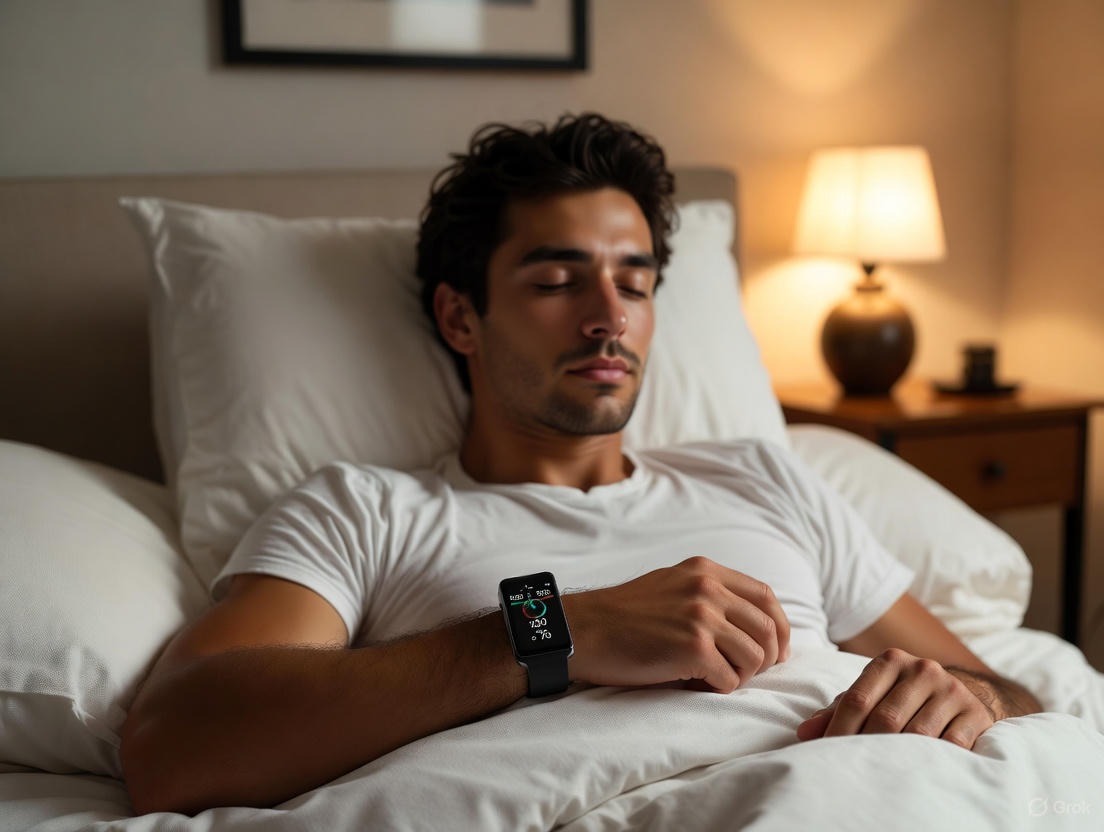
The moment you open your eyes may be the most powerful leverage point for your circadian rhythm. Your eyes contain specialized, non-visual photoreceptors called intrinsically photosensitive retinal ganglion cells (ipRGCs). These cells are exquisitely sensitive to blue-wavelength light, and they send direct signals to your brain's suprachiasmatic nucleus (SCN)—your master circadian clock.
Reaching for your phone immediately bathes these receptors in a blast of artificial blue light and information. This tells your SCN two things: 1) It’s "go time," triggering a cortisol spike to wake you up, and 2) The world is full of potential threats (emails, news, social comparisons). This is a harsh, SNS-dominant way to start the day. The cortisol spike, while natural in the morning, becomes exaggerated and can set a pattern of elevated stress hormones that undermine HRV throughout the day.
The alternative is the 90-Minute No-Screen Sunrise. For the first 90 minutes after waking:
The Smart Ring Impact: By anchoring your rhythm with natural light and avoiding digital stress, you promote a smoother cortisol curve. This leads to better daytime energy (reflected in higher activity scores) and, crucially, allows cortisol to drop effectively in the evening. A lower evening cortisol is a prerequisite for the rise of melatonin, leading to faster sleep onset and more deep sleep—directly boosting your sleep score. For those struggling with the transition from work stress to evening calm, mastering this morning habit is the first step, as detailed in our piece on evening calm practices for transitioning work to rest.
After 6-9 hours of sleep, you are in a state of relative dehydration. Your body has been repairing cells, clearing metabolic waste, and maintaining vital functions—all processes that consume water. Waking up dehydrated means your blood is slightly thicker, your heart has to work a bit harder (potentially raising resting heart rate), and cellular processes are suboptimal from the start.
The nearly universal reflex of reaching for coffee first exacerbates this. Caffeine is a diuretic, meaning it promotes fluid loss. Starting your day with it can deepen mild dehydration, putting stress on your system.
The Habit: Drink 16-24 ounces (500-750ml) of water before your first sip of coffee or tea. Make it a ritual. Use room temperature or warm water, perhaps with a squeeze of lemon for electrolytes and to gently kickstart digestion.
Why It Works for Your Biomarkers:
Smart Ring Data Connection: Look for correlations between mornings you hydrate thoroughly and two evening outcomes: 1) A slightly lower resting heart rate overnight, and 2) Improved sleep efficiency (more time asleep vs. time in bed). Dehydration can cause nighttime awakenings and disrupt sleep architecture. For a comprehensive look at how sleep and stress data interrelate, see our analysis of the relationship between sleep data and stress levels.
The notion of "morning stretching" is ingrained, but static stretching (holding a muscle in a lengthened position) on cold, stiff muscles and connective tissue first thing in the morning can be counterproductive and even increase injury risk. Your body needs to move, not just stretch.
Enter dynamic movement. This involves taking your joints and muscles through their full range of motion with controlled momentum. It raises core body temperature, increases blood flow, lubricates joints, and wakes up the neuromuscular system—all without the strain of static holds or high intensity.
A 10-Minute Dynamic Morning Sequence:
The Biometric Benefits:
Smart Ring Impact: Consistent morning movement helps regulate your body's stress response. Over time, you may see an improvement in your daytime stress metrics and a faster stress recovery score after minor daily stressors, as your system becomes more adept at returning to baseline.
After light, hydration, and movement, it's time to program your nervous system's software for the day. This habit involves a short, focused breathing practice designed not to empty your mind, but to directly influence your ANS, lowering your respiratory rate and heart rate, and increasing HRV.
The practice is simple but potent: Coherent Breathing, also known as resonance frequency breathing.
How to Practice Calibration Breathing:
The Science Behind the Habit: Breathing at this specific rate (around 5-6 breaths per minute) has been shown to create a resonance between your heart rate and breathing rhythm. This synchrony maximizes the efficiency of your cardiovascular system and powerfully stimulates the vagus nerve—the main highway of your PNS. This is a direct "manual override" to increase PNS activity, lowering physiological arousal.
Direct Link to Smart Ring Metrics: This habit has perhaps the most immediate and measurable impact on the data your ring collects.
This 5-minute calibration is the keystone habit for emotional regulation and physiological balance, setting a tone of calm control that your smart ring will document unequivocally.

The classic carbohydrate-heavy breakfast (toast, cereal, pastries) sets you on a blood sugar rollercoaster. A rapid spike in glucose is followed by a surge of insulin, which can lead to a reactive dip in blood sugar (hypoglycemia) a few hours later. This dip is a physiological stress event, triggering the release of cortisol and adrenaline to raise blood sugar again. This cycle of spikes and crashes creates metabolic stress, inflammation, and energy instability—all of which tax your nervous system and can depress HRV.
A breakfast rich in high-quality protein (and healthy fats) provides a slow, steady release of energy, stabilizing blood glucose and insulin levels for hours.
Smart Ring-Optimized Breakfast Principles:
Biometric Impact:
Smart Ring Correlation: Monitor how your sleep score and resting heart rate respond on days you eat a protein-rich breakfast versus a carb-heavy one. You may notice deeper sleep and a lower overnight heart rate when you provide your body with stable, slow-burning fuel.
Most people start their day reactively, diving into tasks and emails. This puts the nervous system in a constant state of defense, responding to external demands. The alternative is to spend 5-10 minutes proactively previewing your day, a practice that combines planning with a psychological technique called "stress inoculation."
This isn't just making a to-do list. It's a mental rehearsal that reduces the novelty and threat of potential challenges.
The Practice:
Why This Boosts Your Scores:
Link to Smart Ring Data: This habit is a direct intervention for your daytime stress metrics. By inoculating yourself against anticipated stressors, you lower the magnitude and duration of stress responses. Your ring will show fewer and less severe stress spikes. Furthermore, the clarity gained supports the kind of focused work that prevents frantic, stressful scrambling later—a key factor in preventing the digital burnout discussed in stress tracking for remote workers.
This habit is not for everyone, but its impact on biomarkers is so potent it cannot be ignored. Brief, deliberate exposure to cold water (a cold shower for 1-3 minutes, or an ice bath) is a form of hormetic stress—a small, controlled dose of adversity that makes your system stronger and more resilient.
How to Start Safely: End your regular warm shower with 30-90 seconds of cold water. Focus on getting your back, chest, and neck. Breathe deeply (don't hold your breath!). The goal is not misery, but tolerance.
The Dramatic Physiological Effects:
Smart Ring Impact:
The effects are often visible the very same night.
Caution: Those with cardiovascular conditions should consult a doctor. Start gradually and listen to your body.
While many practices manage negative stress, this habit actively cultivates positive neurochemistry. Feeling grateful is not just a fuzzy emotion; it’s a neurological event with measurable effects on heart rhythm and brain waves.
The practice is simple: Write down three specific things you are genuinely grateful for every morning. The key is specificity. Not "I'm grateful for my family," but "I'm grateful for the sound of my daughter laughing this morning," or "I'm grateful for the warm sun on my face during my walk."
The Science of Gratitude:
Integrating the Habit: Do this after your breathwork or during your breakfast. You can write in a physical journal, use a notes app, or even just articulate them mentally with focused feeling.
Smart Ring Correlation: While subtle, a consistent gratitude practice contributes to a higher overall stress resilience. You may notice your stress score recovers more quickly from minor annoyances. Over the long term, it contributes to a more optimistic baseline, which is reflected in steadier, more coherent HRV patterns. It's a perfect example of a micro-calm practice for finding peace in everyday moments that compounds over time.
We addressed hydration before caffeine. Now, let's optimize the caffeine itself. Caffeine is an adenosine receptor antagonist—it blocks the neurochemical that makes you feel tired. Used wisely, it’s a performance enhancer. Used poorly, it becomes a source of physiological stress that sabotages evening recovery.
The Strategic Rules:
Impact on Smart Ring Data:
Adhering to this habit ensures that a tool meant to enhance your day doesn't become the reason your evening recovery score plummets. It’s a critical part of managing your body’s energy systems, much like understanding cortisol testing and what stress hormone levels mean for your overall rhythm.
How you begin your first major work task sets a pattern for your entire day's cognitive efficiency and stress levels. The modern default is "multitasking commencement": opening your inbox alongside Slack, a news site, and your to-do list, and then frantically switching between them. This fragmented start maximizes cognitive load, spikes stress hormones, and trains your brain for distraction.
The antidote is the Single-Task Commencement. After completing your morning routine, identify the single most important, cognitively demanding task for your day (your "Most Important Task" or MIT). Block 60-90 minutes of protected time to work on only this task.
How to Execute It:
Biometric and Cognitive Benefits:
Smart Ring Connection: A day launched in focused flow typically has a lower overall stress score. The reduction in frantic, distracted work lowers sympathetic nervous system activation. Furthermore, the satisfaction of meaningful progress contributes to positive mood, which supports healthier evening wind-down routines. This practice is essential for anyone using data to optimize performance, aligning with principles in using stress tracking to improve time management.
Individually, each of these ten habits applies a gentle, positive pressure to a specific lever of your physiology: light, hydration, movement, breath, nutrition, psychology, hormesis, emotion, stimulant management, and focus. But their true power is not additive; it’s multiplicative. They create a synergistic ecosystem for your nervous system.
Consider the cascade: Natural light (Habit 1) perfectly times your cortisol. Hydration (Habit 2) ensures your cells are primed. Dynamic movement (Habit 3) gently raises your temperature and circulates the hydration. Calibration breathing (Habit 4) then takes that warmed, hydrated, rhythmically-aligned system and directly boosts its PNS tone. A protein breakfast (Habit 5) provides the stable fuel to sustain this calm energy. Intentional preview (Habit 6) and gratitude (Habit 8) secure the psychological flanks against stress. Strategic caffeine (Habit 9) provides a clean boost without sabotage, and the Single-Task start (Habit 10) leverages that clarity for profound productivity. Cold exposure (Habit 7), used appropriately, acts as a periodic resilience booster shot.
This synergy means that skipping one habit doesn't just subtract its benefit; it weakens the entire structure. The good news is that you don't need perfection. Start by integrating two or three, master them, and then layer in more. The goal is consistency, not a flawless 10/10 every single day. Your smart ring is the perfect tool to witness this compound effect. You won't just see a better score in one category; you'll see a harmonized improvement across Readiness, Sleep, and Activity. Your data will tell the story of a system coming into balance.
As you experiment with these habits, remember that the journey is personal. Use your ring’s data not as a judge, but as a guide. Notice which habits cause the most significant positive shifts in your unique biology. This is the art and science of modern self-optimization: using objective data to refine subjective experience, crafting mornings that don't just feel good, but that quantifiably build a healthier, more resilient you by the day's end. For a framework to make sense of the long-term trends you'll create, explore our expert's guide on turning numbers to insight on interpreting chronic stress.
You’ve been introduced to the ten foundational habits. Now, the critical work begins: measurement. A wellness journey without data is like sailing without a compass—you might feel like you’re moving, but you have no objective bearing on your true direction. Your smart ring provides that compass, but most people only glance at the final scores (Sleep, Readiness, Activity). To truly optimize your mornings, you must become a discerning analyst of the underlying biomarkers and their trends.
Tracking isn't about obsession; it's about creating a feedback loop. It answers the essential question: "Is what I'm doing actually working for my unique physiology?" This section will transform you from a passive score-watcher into an active biohacker, teaching you which metrics to monitor, how to interpret their interplay, and how to attribute changes to your specific morning interventions.
The Core Morning-to-Evening Feedback Loop:
Your goal is to observe how a specific morning habit (or combination) influences biomarkers throughout the day, which then culminate in your overnight recovery. The loop looks like this:
Morning Habit → Daytime Biomarkers (HRV, RHR, Stress) → Evening Wind-Down → Overnight Data (Sleep Score, HRV, Deep Sleep) → Next-Day Readiness.
To navigate this, you need to focus on three layers of data:
For instance, you might notice that on mornings you practice your Calibration Breath (Habit 4), your daytime stress graph shows fewer and less severe spikes. Or, you may see that a Protein-Powered Breakfast (Habit 5) correlates with a lower resting heart rate during your afternoon work block. Without tracking, these connections remain guesses. With tracking, they become personal, actionable science. To build this skill from the ground up, our beginners step-by-step guide to stress tracking is an excellent resource.
Let’s break down the specific data points your ring provides and what they tell you about the efficacy of your morning routine.
1. Heart Rate Variability (HRV) – Your North Star Metric
HRV is the most sensitive non-invasive measure of your autonomic nervous system balance. A higher HRV (relative to your baseline) generally indicates stronger parasympathetic (rest-and-digest) tone and better resilience.
2. Resting Heart Rate (RHR) – The Engine’s Idle Speed
Your RHR is how many times your heart beats per minute at complete rest. A lower RHR typically indicates better cardiovascular fitness and higher parasympathetic activity. Stress, dehydration, poor sleep, and inflammation can raise it.
3. Sleep Scores & Architecture – The Final Grade
Your sleep score is a composite, but the sub-scores and raw data are where the insights lie.
4. Stress & Recovery Metrics – The Day’s Narrative
Many rings now offer a continuous stress score or nervous system state (calm, tense, etc.) based on HRV, heart rate, and movement.
Creating Your Personal Experiment Log:
For the next 30 days, adopt the role of a scientist. Your lab is your life, and your subject is you.
This process of deliberate tracking moves you from generic advice to personalized protocol. It reveals, for example, that while cold exposure is a powerful tool for many, it might be too stimulating for your system and slightly disrupt your sleep—a finding you’d only discover through attentive data review. For a comprehensive framework on making sense of all this data, our guide on how to interpret your stress tracking data like a pro provides an expert-level methodology.
Even with the best intentions, you will have days—or periods—where your scores stagnate or drop. This is not failure; it’s feedback. When your smart ring signals a dip in recovery, it’s an opportunity to diagnose which part of your morning (or day) ecosystem is out of alignment. Instead of feeling discouraged, use your data as a diagnostic tool.
Here is a systematic troubleshooting guide, connecting common score depressions to potential morning routine culprits.
Symptom 1: Consistently Low or Dropping Overnight HRV
Symptom 2: Elevated Resting Heart Rate (Overnight or Daytime)
Symptom 3: Poor Sleep Score, Specifically Low Deep Sleep
Symptom 4: High Daytime Stress Scores, Especially in the Morning
The Importance of the Weekly Review:
Troubleshooting requires zooming out. Don’t diagnose based on a single bad night. Look at weekly trends in your ring’s app. Is there a pattern of lower scores on Monday mornings (weekend habit disruption)? Or lower sleep on nights after intense evening work (suggesting a failure to wind down, which starts with a poor morning launch)? This macro view is essential, and creating a weekly stress report to review data effectively will systematize this process.
Remember, your body is a complex system. Sometimes a low score isn’t about your routine at all—it’s an impending illness, a strenuous workout needing recovery, or an emotional life event. The habits are your foundational levers of control, but they operate within a larger context of life. Use the data not to self-criticize, but to curiously inquire and adjust.
The ten habits presented are a universal blueprint based on circadian biology and neurophysiology. However, the masterpiece you paint with them must be uniquely yours. "Bio-individuality" means that the optimal expression of these habits depends on your chronotype, fitness level, stress load, gender, age, and health status. A routine that sends a 25-year-old athlete's scores soaring might overwhelm a 50-year-old executive managing chronic stress. This section is about personalization.
1. Adjusting for Your Chronotype: The Lark, the Owl, and the Hummingbird
Your chronotype is your genetically predisposed natural inclination to sleep and be active at certain times. Forcing an "owl" (night owl) into a "lark's" (early bird) 5 AM routine is a recipe for stress and poor scores.
2. Adjusting for Stress Load and Recovery Needs
Your current state of recovery dictates the intensity of your morning inputs.
3. Adjusting for Fitness Level and Age
4. Adjusting for Gender Considerations
Hormonal fluctuations across the menstrual cycle or menopause can significantly impact biometrics. A woman’s optimal routine may need to flex with her cycle.
Creating Your "Flex Framework":
Don’t create a rigid, one-size-fits-all schedule. Create a menu of habits and a decision tree.
By tailoring the routine, you move from a strict dogma to an intelligent, responsive practice. You listen to your body’s data and your subjective feeling, using the habits as tools to meet yourself where you are. This is the essence of sustainable, effective self-care. For those managing specific conditions, this personalized approach is vital, as outlined in resources like stress tracking for chronic illness monitoring.
The true test of any wellness practice isn’t the initial 30-day surge of motivation, but its integration into the fabric of your life over months and years. A routine that is unsustainable will not produce lasting improvements in your smart ring scores—or your health. This final section addresses the psychology of habit maintenance, how to navigate inevitable disruptions, and what long-term progress actually looks like in your data.
From Motivation to Identity: The Three-Phase Journey
Strategies for Sustaining the Routine:
Navigating Disruptions: Travel, Social Events, Illness
Your scores will dip during disruptions. That’s okay. The goal is not to avoid dips, but to navigate them skillfully and recover quickly.
What Long-Term Success Looks Like in Your Data:
Lasting improvement is rarely a straight line upwards. It’s a noisy trend line with an upward slope. Look for these signs of long-term success:
The journey with your smart ring and these ten habits is a lifelong partnership in self-understanding. The morning routine is the daily practice ground. The scores are the feedback. The prize is not a perfect number, but a life lived with more energy, resilience, and calm—a life where you are no longer a passenger in your own body, but its skilled and compassionate pilot. By investing in your mornings, you are, quite literally, programming your days and upgrading your nights, one data point at a time.
You have now built a robust, personalized morning framework and learned to track its impact meticulously. For many, this represents a profound leap in well-being and data literacy. Yet, the journey of optimization need not stop at these ten universal habits. For the dedicated biohacker, the athlete seeking an edge, the professional in a high-stakes field, or the individual managing a specific health condition, the next level of morning mastery awaits. This section explores advanced protocols that target niche applications, pushing the boundaries of what your smart ring can help you achieve.
These are not beginner habits. They assume a foundation of consistency with the core ten, a stable baseline in your key metrics, and a strong understanding of your personal response to stress and recovery. Introduce them one at a time, with even more vigilant tracking, as their effects can be powerful and, if misapplied, counterproductive.
While Habit 4 (Calibration Breath) uses a fixed breathing rate to stimulate the vagus nerve, HRV biofeedback is a dynamic, technology-guided practice that teaches you to consciously maximize your HRV in real-time. It’s like weightlifting for your parasympathetic nervous system.
The Method: You use a sensor (your smart ring can sometimes serve this purpose via a partnered app, or a dedicated chest strap like Polar H10 for higher accuracy) connected to an app that displays your heart rate and HRV. The app provides visual or auditory feedback, such as a rising bar or a calming sound, as your HRV increases.
The Morning Practice: Dedicate 10-15 minutes, post-light and hydration, to a biofeedback session. The goal is not to control your heart directly, but to find the internal state—a specific breathing rhythm, a mental image, a feeling of appreciation—that causes the feedback signal to rise. You are learning the precise psychological and physiological "knobs" that optimize your own system.
Expected Smart Ring Impact: With consistent practice, you can expect to see a significant elevation in your baseline overnight HRV. More importantly, you develop the skill to voluntarily upregulate your PNS during daytime stressors. This can transform your daytime stress graph, turning sharp spikes into gentle ripples. The goal is to carry this skill off the mat, using a "biofeedback breath" in a tense meeting to self-regulate. For those fascinated by the nuances of this key metric, our deep dive into HRV and stress: understanding the numbers provides essential context.
Habit 5 focuses on what to eat for breakfast. This protocol addresses when you eat your first meal, leveraging time-restricted eating (TRE) to enhance metabolic flexibility—your body’s ability to efficiently switch between burning glucose and fat for fuel.
The Practice: Delaying your first meal (Protein-Powered Breakfast) by several hours, effectively extending your overnight fast. A common approach is a 16:8 schedule—eating all meals within an 8-hour window (e.g., 12 PM to 8 PM) and fasting for 16 hours. In the morning, you would consume only water, black coffee, or tea (maintaining Hydration Before Caffeination).
Why It Can Boost Scores: When done correctly and suited to your physiology, TRE can:
Crucial Caveats & Tracking:
This is not for everyone. It can be a major stressor if you are already highly stressed, have blood sugar dysregulation, or are very active. Your smart ring is critical here. Monitor closely:
Start gently—delay breakfast by 30 minutes each week and watch your data. The goal is metabolic resilience, not metabolic stress. This practice should make you feel clear-headed and energetic in the morning, not weak and distracted. For a deeper look at how to establish a healthy baseline before such experiments, see our guide on creating a personal stress baseline for accurate tracking.
Taking Habit 5 to a pharmacodynamic level, this involves consuming specific nutrients at specific times to directly influence the biomarkers your ring tracks. This is particularly relevant for athletes and those in heavy cognitive professions.
Morning Applications:
Tracking the Impact: This requires meticulous journaling. Tag your morning with specific supplements. Over weeks and months, look for trends: "On months I take Omega-3s, my average inflammation-related RHR increase post-workout is lower." The subtlety of these effects makes the long-term trend analysis in your ring's app—looking at monthly aggregates—essential. Learn how to perform this kind of analysis with our resource on aggregate view: monthly and yearly stress trend analysis.
For knowledge workers, entrepreneurs, and creatives, the morning is prime real estate for high-value cognitive work. This protocol combines several habits into a powerhouse sequence designed to maximize neurochemical conditions for flow state and decision-making.
The 90-Minute Deep Work Launch:
Smart Ring Correlation: Success here is measured in the output and the sustainability of energy. Your ring should show a low-stress, high-focus morning (stable HRV, moderate heart rate), followed by a strong sense of accomplishment that reduces afternoon anxiety, leading to a smoother wind-down and better sleep. This directly connects to the concept of achieving clarity through stillness in decision-making.
For athletes, the morning routine is about preparing the body not just for the day, but for a specific physical performance. The goal is to elevate readiness scores to ensure training quality and reduce injury risk.
The Pre-Training Morning Sequence:
Expected Data Shifts: An optimized athlete’s morning should lead to a high daytime HRV pre-training (indicating readiness), followed by a predictable, appropriate dip post-training (stress response), and then a strong rebound overnight. The link between morning preparation and evening recovery is the cornerstone of stress tracking for athletes optimizing training and recovery. The ring helps you distinguish between productive training stress and excessive overload.
For individuals with conditions like anxiety, autoimmune disorders, or hormonal imbalances (e.g., PCOS, perimenopause), the morning routine is a critical tool for symptom management and reducing systemic burden.
Key Adjustments and Emphases:
The Role of the Smart Ring: It becomes an early warning system. A creeping rise in resting heart rate or a drop in HRV can signal a flare-up before full symptoms appear, allowing for proactive rest and regimen adjustment. Tracking the subtle interplay between lifestyle and symptoms is explored in depth in our article on stress tracking for those with multiple health conditions.
Introducing Advanced Protocols Safely:
The cardinal rule of advanced optimization is: Change one variable at a time and measure for at least two weeks. If you want to try HRV biofeedback, don’t simultaneously start a fasting window. Introduce the protocol, hold all other habits constant, and watch your ring’s data for the true signal amidst the noise. Your body’s feedback, through both sensations and scores, is the final authority. The pursuit of a perfect score should never come at the cost of your overall well-being. The most advanced practitioners know that sometimes, the optimal habit is to step back, simplify, and let the system find its own balance. This wisdom is the heart of moving from a data-driven life to a data-informed life.
Thus far, we have operated on a core premise: a masterful morning sets the stage for a successful evening and night. But this relationship is symbiotic, not unidirectional. The quality of your evening directly determines how impactful your next morning can be. You cannot consistently launch a perfect morning from the crater of a poor night's recovery. Therefore, true optimization requires closing the loop, designing an evening wind-down that validates and amplifies the work you did at sunrise.
Think of it as a cycle: Evening Calm → Quality Sleep → High Readiness Score → Effective Morning Routine → Resilient Day → Evening Calm. A weak link breaks the chain. This section outlines the key evening practices that partner with your morning habits, ensuring your smart ring documents a full circadian day of support.
Your evening routine should be a gradual, deliberate deceleration—a mirror image of your morning’s gentle acceleration.
1. The Digital Sunset (The Evening Counterpart to Habit 1):
If your morning begins with a screen fast, your evening must end with one. Implement a "digital sunset" 60-90 minutes before bed. This means turning off TVs, phones, laptops, and tablets. The blue light from these devices suppresses melatonin production, the hormone essential for sleep onset and quality. This habit is the single most effective way to protect your sleep latency score. It allows your brain to transition from the stimulus-driven state of the day to the restorative state of night.
2. The Evening Calibration (Partner to Habit 4):
Just as you used breath to calibrate your nervous system for the day, use it to downshift for the night. A 5-10 minute breathing practice before bed, focusing on longer exhalations (e.g., 4-second inhale, 6-second exhale), actively stimulates the vagus nerve and signals safety to the body. This can directly lower your resting heart rate as you get into bed, setting the stage for deeper sleep. For a variety of approaches, explore the differences between guided vs. unguided calm practices to find what's right for you at night.
3. The Gratitude Review (Completing Habit 8’s Arc):
While morning gratitude sets a positive tone, evening gratitude acts as a closure mechanism. Take 2-3 minutes to reflect on one or two good things from the day. This practice shifts the brain away from scanning for threats (which can manifest as anxiety when trying to sleep) and toward appreciation, fostering a state conducive to the REM sleep stage where emotional processing occurs.
4. Consistent Sleep Schedule (The Foundation of Habit 1’s Rhythm):
Going to bed and waking up at roughly the same time every day, even on weekends, is the bedrock of circadian health. This consistency reinforces the rhythm you anchored with morning light. Your SCN clock thrives on predictability. Inconsistency is like giving it jet lag every weekend, guaranteeing poor readiness scores on Monday. Your smart ring’s sleep consistency metric is a direct measure of this.
5. The Environment Optimization:
Your bedroom should be a cave: cool (around 65-68°F or 18-20°C), dark, and quiet. A drop in core body temperature is a key signal for sleep. A cool room facilitates this. Darkness is essential for melatonin. Consider blackout curtains and removing light-emitting electronics. These environmental factors are captured in your sleep score breakdowns, particularly restfulness.
How Your Morning and Evening Routines Converge in Your Data:
When both routines are aligned, your ring’s data will show a beautiful, coherent pattern:
If your morning routine is stellar but your scores are still lacking, audit your evening. Often, the culprit lies in the hours before bed. The evening is where you "lock in" the gains of your day and prepare the canvas for tomorrow’s masterpiece. For a dedicated system to master this transition, our resource on evening calm practices for transitioning from work to rest provides a complete framework.
We stand at the frontier of a new era in personal health. The current generation of smart rings provides superb retrospective data: it tells you what has happened to your body. The near future, however, is about prediction and hyper-personalization. Imagine a device and an AI coach that doesn’t just report your low readiness score, but predicts it 24 hours in advance and prescribes a specific adjustment to your next morning’s routine to prevent it.
This is the direction in which wellness technology is rapidly moving. Understanding this future context helps you use your current device not as an endpoint, but as a training tool for a more integrated, intelligent partnership with technology.
AI-Driven Routine Adjustment:
Future algorithms will analyze your long-term data—your sleep, activity, HRV, RHR, temperature, respiratory rate—alongside your logged habits and external data (calendar stress, weather, pollen count). It will learn your unique patterns: *"Three days after a high-intensity leg workout, your deep sleep tends to decrease unless you increase your morning hydration by 20%."* It could then send a prompt: "Based on your training 2 days ago and a slight elevation in nighttime temperature, consider adding 8 oz of electrolyte water to your morning routine tomorrow to optimize recovery."
Predictive Readiness and Sleep Scores:
Instead of a readiness score based solely on last night’s sleep, future scores will incorporate predictive elements. The AI might say: *"Your projected readiness for tomorrow is 85. However, if you follow the attached 15-minute wind-down routine tonight, it can be improved to 92."* This moves you from reactive to proactive management.
Context-Aware Habit Recommendations:
Your device will know you’re traveling. Instead of suggesting your usual morning workout, it might prioritize a circadian-resetting light protocol and a jet-lag-specific breathing exercise. It could analyze your stress graph from a difficult workday and automatically schedule a longer Calibration Breath session for the next morning.
Integration with a Wider Biometric Ecosystem:
Your smart ring will not work in isolation. It will be the central hub, seamlessly integrating data from continuous glucose monitors (for Habit 5 optimization), at-home cortisol saliva tests (validating your stress management), and even genetic or microbiome data. This holistic view will allow for unbelievably precise morning prescriptions: a smoothie recipe tailored to your current inflammation markers, or a breathwork frequency tuned to your real-time HRV.
What This Means for You Now:
While this AI-driven future is unfolding, your task is to build the high-quality data set and self-knowledge that will make these tools truly effective. An AI is only as good as the data it trains on. By diligently practicing and tracking your ten morning habits now, you are:
Your current smart ring is the prototype of your future personal health AI. The more consciously you engage with it—not as a judge, but as a partner in curiosity—the more seamlessly you will adapt to and benefit from the coming wave of predictive, personalized health technology. The journey from tracking to prediction is the logical next step for anyone serious about leveraging data for lifelong vitality, a journey that begins with the simple, deliberate choices you make each morning.
We have traversed a comprehensive landscape—from the foundational science of smart ring scores and ten core morning habits, through the intricacies of tracking and personalization, into advanced protocols and the critical importance of evening synergy. This knowledge represents a powerful toolkit, but a toolkit is only valuable when put to use.
Your invitation is not to perfection, but to progression. Start tomorrow. Not with all ten habits, but with one. Perhaps it’s Habit 2: Hydration Before Caffeination. Commit to drinking a full glass of water before your coffee for the next seven days. Observe your energy, your hunger, and yes, your evening scores. Use your ring’s data to witness the subtle shift.
Then, add another. Layer in Habit 1: The 90-Minute No-Screen Sunrise. Feel the difference in your mental calmness in that first hour. Let your data tell the story.
This journey is iterative and personal. Your smart ring is your loyal scribe, documenting the narrative of your body. It doesn’t care about yesterday’s missed habit; it only responds to today’s choices. Each morning is a fresh page, a new opportunity to send a signal of care to your nervous system—a signal that will echo through your day and be reflected in the quiet hours of the night, culminating in a simple, satisfying number: a higher score, a mark of a day well-lived.
The ultimate goal transcends the scores themselves. It is the vibrant energy, the resilient calm, the deep sleep, and the profound sense of agency over your own well-being. The ring is the mirror; the reflection is your thriving self. Begin.
Your Trusted Sleep Advocate: Sleep Foundation — https://www.sleepfoundation.org
Discover a digital archive of scholarly articles: NIH — https://www.ncbi.nlm.nih.gov/
39 million citations for biomedical literature :PubMed — https://pubmed.ncbi.nlm.nih.gov/
Experts at Harvard Health Publishing covering a variety of health topics — https://www.health.harvard.edu/blog/
Every life deserves world class care :Cleveland Clinic - https://my.clevelandclinic.org/health
Wearable technology and the future of predictive health monitoring :MIT Technology Review — https://www.technologyreview.com/
Dedicated to the well-being of all people and guided by science :World Health Organization — https://www.who.int/news-room/
Psychological science and knowledge to benefit society and improve lives. :APA — https://www.apa.org/monitor/
Cutting-edge insights on human longevity and peak performance:
Lifespan Research — https://www.lifespan.io/
Global authority on exercise physiology, sports performance, and human recovery:
American College of Sports Medicine — https://www.acsm.org/
Neuroscience-driven guidance for better focus, sleep, and mental clarity:
Stanford Human Performance Lab — https://humanperformance.stanford.edu/
Evidence-based psychology and mind–body wellness resources:
Mayo Clinic — https://www.mayoclinic.org/healthy-lifestyle/
Data-backed research on emotional wellbeing, stress biology, and resilience:
American Institute of Stress — https://www.stress.org/


