


The Beginner-Friendly Guide to Exercise Timing for Maximum Productivity
A beginner's guide to timing exercise to boost, rather than hinder, cognitive productivity.
A beginner's guide to timing exercise to boost, rather than hinder, cognitive productivity.
%402x.svg)
For decades, the conventional wisdom around exercise was simple: Just do it. Any movement is good movement. And while that’s still profoundly true, we’re now standing at the frontier of a far more nuanced conversation. What if when you exercise is just as critical as what you do? What if moving your body at a specific time could transform your workout from a simple calorie burner into a precision tool for peak mental performance, sustained energy, and profound daily calm?
Welcome to the world of chrono-exercise—the science of aligning physical activity with your body’s innate biological rhythms. This isn’t about adding more to your plate; it’s about strategic placement to multiply the returns on every single minute you invest in your health. For the modern professional, parent, student, or anyone juggling a packed schedule, this knowledge is a game-changer. It’s the difference between squeezing in a draining, obligatory workout and engineering a vitality-boosting ritual that powers the rest of your day.
This guide is designed for the beginner—for anyone who’s ever wondered why some workouts leave them invigorated while others leave them crawling to the coffee pot. We’ll move beyond one-size-fits-all advice and dive into the personalized, data-informed approach that modern wellness technology, like advanced smart rings, now makes possible. You’ll learn how to listen to your body’s unique signals, sync your sweat with your circadian rhythm, and ultimately, use exercise not just to build a better body, but to craft a more focused, productive, and resilient mind.

Before we can master the when, we must understand the why. At the core of exercise timing is your circadian rhythm—the roughly 24-hour internal clock that governs nearly every physiological process in your body. This master clock, located in the hypothalamus, responds primarily to light and darkness, orchestrating the ebb and flow of hormones, body temperature, metabolism, and even gene expression.
Think of your circadian rhythm as the conductor of a grand symphony. At dawn, it cues cortisol, your “alertness” hormone, to rise gently, warming up your systems for the day. Core body temperature, which dips to its lowest in the early morning, begins a slow climb. As daylight fades, the conductor signals the release of melatonin, the “sleepiness” hormone, while core temperature starts to drop, preparing your body for rest and repair. This isn’t a subtle background process; it’s a powerful, predictable wave of biological change that your exercise can either ride for maximum benefit or fight against.
Why does this matter for your workout? Because your body’s performance capacity—strength, endurance, flexibility, reaction time—fluctuates predictably throughout this cycle. Research shows that factors like muscle strength, lung function, and joint flexibility often peak in the late afternoon, correlating with the highest core body temperature. This doesn’t mean morning workouts are “bad,” but it does mean they serve a different purpose. A morning session might optimally kickstart metabolism and enhance mental clarity for hours, while an evening workout might tap into peak physical power.
Ignoring this rhythm is like trying to surf against the tide. You can do it, but it requires exponentially more effort for a diminished return. By tuning into your personal chronobiology—a task made infinitely easier with the continuous biometric tracking from a smart ring—you can stop guessing and start strategically planning. You can learn whether you’re genetically predisposed to be a morning lark or a night owl, and how that influences your ideal workout window. This foundational understanding transforms exercise from a blunt instrument into a scalpel, precisely applied to enhance your daily life. For a deeper exploration of how your daily stress levels follow this same biological clock, the circadian rhythm of stress offers fascinating parallels.
For many, the idea of exercising before the sun is up feels like a special form of torture. But for those who can adapt to it, the “morning momentum” workout offers unique, productivity-boosting benefits that are hard to replicate later in the day. When you exercise in the morning, you are essentially giving your internal clock a firm, deliberate nudge. You’re telling your body, “The day has begun,” accelerating the rise in cortisol (in a healthy, controlled way) and boosting circulation to sharpen your brain.
The primary superpower of a consistent morning exercise routine is its profound effect on cognitive function for the subsequent hours. Studies consistently show that morning aerobic exercise improves attention, visual learning, and decision-making. It’s like preheating your brain’s oven. By increasing blood flow and releasing neurotransmitters like dopamine and norepinephrine, you set a tone of alert calmness. You enter your first work meeting or sit down to a complex task not in a fog, but with a neural advantage.
Furthermore, a morning session ensures your workout is completed before the endless contingencies of the day can derail it. There’s a powerful psychological victory in starting your day by honoring a commitment to yourself. This act of self-discipline generates momentum, reducing decision fatigue for the rest of the day because one of your most important tasks is already checked off.
The ideal morning workout for productivity leans toward moderate-intensity cardio or dynamic, flowing movement. Think brisk walking, jogging, cycling, swimming, or a vinyasa yoga flow. The goal is to elevate your heart rate and body temperature without inducing deep systemic fatigue. High-intensity interval training (HIIT) can be effective for some in the morning, but it requires careful attention to proper fueling and may be too draining for others, potentially backfiring on productivity. The key is to listen to your body’s feedback. A tool like a smart ring can be invaluable here, providing immediate data on your heart rate variability (HRV) and resting heart rate upon waking. If your metrics indicate poor recovery from the previous day, you might opt for a gentler movement session instead of pushing for intensity. This mindful approach to morning movement complements a stress-free morning routine perfectly, creating an unshakeable foundation for the day.
If you’ve ever felt a wave of drowsiness hit in the mid-afternoon—typically between 2 p.m. and 4 p.m.—you’ve experienced the natural dip in your circadian rhythm, often called the “post-lunch dip.” While many reach for caffeine or sugar, the most potent antidote is strategically timed movement. This period, paradoxically, is also when your body is often primed for its peak physical performance. Core body temperature and hormone levels like testosterone (important for muscle building in both men and women) tend to reach their daily highs in the late afternoon.
This makes the afternoon window, particularly from about 3 p.m. to 6 p.m., an ideal time for workouts where your goal is maximal performance: strength training, high-intensity cardio, speed work, or skill-based sports. Your muscles are warm, your reaction time is quick, and your pain tolerance may be higher, allowing you to lift heavier, push harder, and execute complex movements with better form and lower risk of injury. You’re essentially working with your biology’s peak operational state.
From a productivity standpoint, an afternoon workout acts as the ultimate circuit breaker. It forcibly pulls you away from your desk, resets your mental state, and floods your system with oxygen and endorphins. This can crush the afternoon slump, clearing away mental fog and restoring focus for the final productive push of the workday. It serves as a powerful transition ritual, separating the demands of work from the relaxation of evening.
For the knowledge worker, a 20-30 minute session can be revolutionary. It doesn’t have to be a full gym excursion. A bodyweight workout, a brisk walk-run intervals session outdoors, or even a dynamic yoga sequence can deliver the reboot. The act of physical exertion helps metabolize stress hormones like cortisol that may have accumulated throughout the morning’s challenges, effectively hitting a reset button on your nervous system. This strategic use of movement is a cornerstone of managing daily stress when you feel you have no time, proving that a short, powerful break can be more effective than hours of distracted grinding.
The notion of evening exercise has long been controversial, with conventional wisdom warning it could be too stimulating for sleep. However, modern research and a personalized approach reveal a more nuanced truth. For many, especially those who aren’t natural morning people, evening exercise is not only feasible but highly beneficial—if done correctly. The key lies in the type, intensity, and timing of the activity relative to your bedtime.
Low to moderate-intensity exercise in the early evening (finishing 2-3 hours before bed) can be a magnificent tool for promoting sleep quality. It helps to gently lower cortisol levels that may remain elevated from the day’s stresses. Simultaneously, it raises core body temperature slightly; the subsequent drop in temperature as your body cools down post-workout mimics the natural pre-sleep temperature decline, sending a strong signal to your brain that it’s time to wind down. This process can deepen sleep and help you fall asleep faster.
Ideal evening workouts are those that emphasize parasympathetic nervous system activation—the “rest and digest” state. Think restorative yoga, gentle stretching, Tai Chi, Qi Gong, or a relaxed walk in nature. These activities promote mindfulness and bodily awareness, helping to process the mental clutter of the day. Even a light resistance training session focused on mobility and controlled movement can be appropriate, provided it’s not taken to failure.
The critical factor is avoiding high-intensity, heart-pounding, or highly competitive exercise too close to bedtime. This can spike adrenaline, cortisol, and core temperature too dramatically, leaving your nervous system in a heightened state when you’re trying to power down. Using a smart ring to track your overnight readiness and sleep stages can provide personal feedback. You might discover that a 7 p.m. yoga session improves your deep sleep, while an 8:30 p.m. spin class fragments it. This data-driven approach turns guesswork into strategy. Incorporating calm mind practices designed for insomnia after your evening movement can compound these benefits, creating a powerful synergy for restorative sleep.
All the general guidelines in the world are meaningless if they don’t align with your body’s reality on any given day. This is where the art of exercise timing meets the science of biometrics. Your body constantly communicates its readiness and stress levels; the challenge has been learning to interpret its language. Today, wearable technology like advanced smart rings has given us a direct translation.
The most critical metric for daily exercise timing is Heart Rate Variability (HRV). In simple terms, HRV is the variation in time between your heartbeats. Contrary to intuition, a higher HRV (more variability) generally indicates a healthier, more resilient nervous system and better recovery. It suggests your body is ready for stress, including the beneficial stress of exercise. A lower HRV suggests your nervous system is under strain—from physical training, illness, emotional stress, or poor sleep—and may need rest.
Checking your HRV trend each morning, often through a simple reading provided by your smart ring, is like getting a daily report from your central command. A consistently high or rising HRV trend suggests you’re recovering well and can likely handle a more intense or strategically timed workout. A significant dip in your HRV, however, is a clear flag. It’s your body saying, “Today, be gentle.” On such days, ignoring the signal and pushing through with an intense afternoon session could lead to diminished returns, increased injury risk, and further strain on your system. Instead, it might be a day for a mindful walk, gentle stretching, or even complete rest.
Other key metrics include resting heart rate (a elevated RHR can indicate stress or incomplete recovery) and sleep quality data. Together, these form a daily “readiness score.” This personalized, data-informed approach democratizes elite athletic recovery principles for everyone. It teaches you to differentiate between “lazy” and “legitimately fatigued,” between a mental hurdle and a physiological stop sign. By honoring these signals, you stop forcing arbitrary workout schedules and start engaging in a responsive dialogue with your body. This builds sustainable habits and prevents burnout. Learning to respect these biological boundaries is a form of adaptive resilience for managing unpredictable daily stress.
We’ve covered the general circadian tide, but each of us has a unique chronotype—our personal tendency to prefer mornings or evenings. This isn’t just a preference; it’s genetically influenced and impacts our ideal windows for sleep, work, creativity, and yes, exercise. Forcing a night owl into a 5 a.m. boot camp is a recipe for misery and poor adherence, just as asking a morning lark to lift heavy at 9 p.m. might sabotage their sleep.
The Morning Lark (Early Chronotype): Wakes easily and is most alert in the first half of the day. Their cortisol peaks earlier, and their body temperature rises faster. Optimal Exercise Timing: Their morning workout window is wide open and highly effective for productivity. An afternoon session for performance also works well. Evening exercise should finish early and be very gentle to avoid sleep disruption.
The Night Owl (Late Chronotype): Naturally wakes later and feels most energetic in the evening. Their biological rhythms are delayed. Optimal Exercise Timing: Forcing intense morning exercise can feel grueling and counterproductive. Their ideal schedule often shifts later. A light morning walk to get sunlight can help regulate their clock, but their prime workout time for both cognitive and physical benefits is often late afternoon or early evening. They may tolerate exercise closer to bedtime better than larks, but should still monitor sleep data.
The Hummingbird (Intermediate Chronotype): The majority of people fall somewhere in the middle, with moderate flexibility. Optimal Exercise Timing: They have the most freedom to experiment and can often adapt to morning or afternoon workouts based on schedule. Their key is consistency and paying attention to how different timings affect their energy and sleep.
Discovering your chronotype is the first step to personalization. You can start with simple self-observation: When do you naturally wake without an alarm? When do you feel most focused? Technology can accelerate this discovery. A smart ring tracking your sleep/wake patterns, body temperature dynamics, and activity levels over weeks can paint a clear, data-backed picture of your personal rhythm. Aligning your exercise with this innate rhythm reduces the friction of habit formation and maximizes the positive ROI of your efforts. This alignment is a core principle of building daily stress management habits that last for years, as it works with your nature, not against it.
Exercise is not merely a physical act; it’s a potent cognitive intervention. The timing of this intervention can determine whether you sharpen your mind for a critical task or inadvertently blunt it. Understanding this connection allows you to wield exercise as a tool for neuro-enhancement.
Morning exercise, as noted, excels at enhancing executive function—the brain’s CEO. This includes working memory (holding information), cognitive flexibility (switching between tasks), and inhibitory control (resisting distractions). A morning workout primes these networks, making you better at planning, focusing, and managing complex projects throughout the morning and early afternoon.
Afternoon exercise, particularly as a counter to the post-lunch dip, is exceptional for resetting sustained attention. If your focus is waning, a bout of movement can restore alertness and concentration more effectively than another cup of coffee. It also provides a novel stimulus, which can spark creativity and help solve problems you’ve been stuck on.
The link between evening exercise and cognitive function is more indirect but profoundly important through the mechanism of sleep-dependent memory consolidation. The gentle stress of moderate evening exercise can promote deeper slow-wave sleep. This deep sleep phase is when the brain cleans metabolic waste, solidifies learning, and transfers memories from short-term to long-term storage. By improving sleep architecture, well-timed evening exercise indirectly enhances learning, emotional processing, and mental clarity for the following day.
Furthermore, all exercise stimulates the release of Brain-Derived Neurotrophic Factor (BDNF), often called “Miracle-Gro for the brain.” BDNF supports the health of neurons, encourages the growth of new neural connections, and is crucial for learning. Strategic timing ensures you’re flooding your brain with BDNF when it can be most utilized—perhaps before a learning session or during your peak work hours. This direct impact on daily stress and cognitive performance is a powerful reason to be intentional with your movement schedule.

You cannot discuss exercise timing without addressing its partner: nutrition. When you eat relative to your workout dramatically influences the energy you have available, the quality of the session, your recovery, and ultimately, how that exercise affects your daily productivity.
Pre-Workout Fuel (1-3 hours before): The goal is to top off energy stores without causing digestive discomfort. For a morning workout, this can be tricky. If you’re doing light to moderate cardio, you might be able to train fasted, which can teach your body to utilize fat stores. However, for intensity or strength training, even a small, easily digestible carbohydrate source (a banana, a piece of toast) 30-60 minutes prior can provide noticeable energy. For afternoon or evening workouts, ensure your last meal (containing carbs and protein) was 2-3 hours prior. The key is consistency: experiment to find what prevents hunger or lethargy without causing heaviness.
During Workout: For sessions under 60-75 minutes, water is typically all you need. For longer or intensely sweaty sessions, an electrolyte drink can be beneficial.
Post-Workout Recovery (within 1-2 hours after): This is where timing can significantly impact your productivity for the hours that follow. Your muscles are primed to replenish glycogen (stored carbs) and repair protein. A combination of carbohydrates and protein helps shuttle nutrients into muscle cells, accelerates recovery, and stabilizes blood sugar. Skipping this window, especially after a demanding session, can leave you feeling drained, foggy, and hungry later, triggering poor food choices that sabotage your energy. A smart recovery snack helps you transition smoothly back to mental work without a crash.
The Big Picture Sync: Your overall meal timing should also consider your circadian rhythm. There’s growing evidence that aligning eating with daylight hours (a form of time-restricted eating, like finishing dinner by 7 p.m.) supports metabolic health and circadian alignment. A large, heavy meal late at night can disrupt sleep quality and thus, the cognitive benefits of your exercise. Think of nutrition and exercise as two interlocking gears in the clockwork of your daily rhythm. Just as what you eat affects stress, your nutritional choices also play a role in cultivating a calm mind.
The single biggest barrier to consistent exercise is time. The beautiful truth of chrono-exercise is that you don’t always need a 60-minute block. In fact, strategically placed micro-workouts—bursts of activity as short as 5-10 minutes—can deliver disproportionate benefits for focus, mood, and energy management. This is the ultimate beginner-friendly, productivity-hacking approach.
The science is clear: short bouts of movement break up prolonged sitting, which is independently harmful to metabolism and circulation. They cause a rapid increase in cerebral blood flow, delivering a fresh shot of oxygen and glucose to your brain. They also trigger a release of mood-lifting neurotransmitters like endorphins and dopamine.
Here’s how to apply the 10-Minute Rule with timing intelligence:
These micro-doses are sustainable, non-intimidating, and incredibly effective. They prove that exercise timing isn’t just about your one daily “workout,” but about weaving movement into the very fabric of your day to regulate energy and focus. This philosophy aligns perfectly with the proven power of micro-breaks for stress management, demonstrating that small, frequent actions have a cumulative, transformative effect.
Now that we’ve explored the science, the rhythms, and the strategies, it’s time to synthesize this knowledge into a practical, personalized plan. This is not about creating a rigid, unforgiving schedule, but a flexible blueprint that serves your life and goals. Here is a step-by-step guide to building yours:
1. Assess Your Chronotype & Lifestyle: Are you naturally a morning or evening person? What are your non-negotiable daily commitments (work hours, childcare)? Identify the flexible windows you truly have control over.
2. Define Your Primary Goal: Is your main objective with exercise to boost daily productivity and focus? To build strength? To improve sleep? To manage stress? Your goal will weight the importance of different timing windows. For productivity, morning and afternoon breaks may be paramount.
3. Conduct a Two-Week Self-Experiment: Use a journal or the notes function in your health app.
* Week 1: Try morning movement (20-30 min) for at least 4 days. Note your energy, focus, and mood at 10 a.m., 2 p.m., and 5 p.m.
* Week 2: Shift your main workout to the late afternoon/early evening (finishing by 6 p.m.). Note the same metrics, plus your sleep quality and morning alertness.
* Track how you feel on rest days or days with only micro-workouts.
4. Integrate Biometric Feedback (If using a wearable): Pay attention to your daily readiness/HRV scores. Do they correlate with how you feel? Do afternoon workouts follow days with high readiness? Do you crash after morning workouts on days with low HRV? Let this data inform your decisions.
5. Draft Your Blueprint: Based on your experiment and data, sketch out an ideal week. It might look like:
* Monday (High Readiness): Afternoon strength session (after work).
* Tuesday: 10-minute morning walk + afternoon micro-break stretches.
* Wednesday (Moderate Readiness): Morning cardio (brisk walk/run).
* Thursday: Rest or gentle evening yoga.
* Friday (High Readiness): Afternoon full-body workout.
* Saturday: Adventure (hike, sport) – timing flexible.
* Sunday: Active recovery (walk, light stretch) or complete rest.
6. Embrace Flexibility: Your blueprint is a guide, not a law. If you wake up with terrible sleep and low readiness, swap the planned intensity for a walk. If an unexpected meeting kills your afternoon slot, do a 10-minute home workout after dinner. The system is intelligent, not inflexible.
This process of creating a personalized rhythm is the ultimate act of self-care. It moves you from following external, generic advice to cultivating an internal, responsive practice. It’s about becoming the architect of your own energy, using the powerful tool of exercise timing to build a more productive, resilient, and balanced life. For those navigating major life changes, this kind of adaptable, personalized system is key to managing daily stress during life transitions.
We’ve built a blueprint based on rhythm and goals. But a critical, dynamic force constantly interacts with this plan: your stress load. Exercise is a hormetic stressor—a beneficial, acute challenge that makes you stronger. However, it exists within the broader context of your total life stress—work deadlines, emotional strain, poor sleep, and even overtraining. The art of expert timing involves using exercise not just for performance, but as a lever to regulate your overall stress and recovery cycle.
Think of your body’s stress capacity as a cup. Work stress, relationship tension, financial worry, and poor sleep all fill the cup. A well-timed, appropriate workout can be like stirring the cup—it momentarily increases the activity (stress), but ultimately helps integrate and process the contents, making space. An ill-timed or excessive workout, however, is like pouring more water into an already full cup, leading to overflow: burnout, injury, illness, or mental fatigue.
This is where the concept of the “Stress-Recovery Window” becomes paramount. After any significant stressor—be it a hard workout, a difficult conversation, or a sleepless night—your body enters a period of increased vulnerability but also heightened adaptation potential. What you do in the hours following that stressor dramatically influences whether you recover and grow stronger or accumulate chronic strain.
For example, performing a high-intensity workout when your “cup” is already full from work stress misses an opportunity. Instead, that time might be better spent on a recovery-modality workout (like gentle yoga or walking) or even complete rest. Conversely, after a day of low stress and high-quality sleep (an empty or half-full cup), your body is primed to handle and benefit from a more intense training stress.
This is the pinnacle of personalized timing: it’s responsive, not just prescriptive. It requires checking in not only with your schedule, but with your nervous system. Questions like, “Did I sleep poorly?” “Is my mind racing with anxiety?” “Do I feel unusually fatigued before I start?” are as important as “Is it 5 p.m.?” Using a smart ring to view your HRV and sleep data provides an objective check on these subjective feelings, helping you distinguish between mere laziness and legitimate physiological need for recovery. This responsive approach is the essence of strategically using your daily stress recovery window.
Our discussion of exercise timing must expand beyond scheduled workouts to encompass the other 23 hours of the day. The calories you burn and the vitality you maintain are profoundly influenced by Non-Exercise Activity Thermogenesis (NEAT)—the energy expended for everything that isn’t sleeping, eating, or sports-like exercise. This includes walking to your car, typing, gardening, fidgeting, and standing. For most people, NEAT constitutes a significant portion of daily calorie expenditure, and its timing can be a stealth tool for sustaining energy and focus.
Strategically increasing NEAT throughout the day is a form of micro-timing that combats the energy-sapping effects of prolonged sitting. The goal is to prevent your metabolism and mind from going into “stasis.” Here’s how to time your NEAT:
The philosophy here is to distribute movement across the entire circadian cycle. You are not a battery that charges overnight and depletes with one daily workout. You are a kinetic system designed for near-constant, low-grade activity punctuated by rest. By mindfully timing these micro-movements, you maintain a steady flow of energy, support metabolic health, and keep your mind alert. It’s a foundational practice for cultivating a calm mind in a chaotic world, as it integrates physical regulation into your entire day.
For many beginners, the weekend represents the only time for longer, more immersive exercise sessions. This is not a flaw in the plan—it’s a potential asset. The key is to use these longer sessions (45-90 minutes) not as punishing “catch-up” for a sedentary week, but as strategic resets that serve specific psychological and physiological purposes. Their timing on Saturday or Sunday can set the tone for the entire week ahead.
The Saturday Morning Adventure: A longer, moderate-intensity session on Saturday morning—a hike, a bike ride, a longer run, or a full gym workout—can act as a powerful psychological reset. It’s a demarcation line between the workweek and the weekend. This session leverages your (hopefully) better-recovered state from Friday night’s sleep and the lack of time pressure. It floods your system with endorphins, provides a sense of accomplishment early in the weekend, and can boost mood and creativity for the rest of the day. Finishing it in the morning also leaves the rest of the day for recovery and leisure, avoiding the pitfall of procrastinating the workout and having it loom over you.
The Sunday Evening Re-setter: A gentler, longer session on Sunday evening serves a different master: preparation. A 60-minute yoga class, a long walk in nature, or a leisurely swim can be a therapeutic ritual to process the week that was and calmly prepare for the week ahead. This type of session is not about intensity; it’s about mobility, mindfulness, and nervous system downregulation. It helps quiet “Sunday Scaries” anxiety, promotes muscle recovery from any weekend activity, and can significantly improve Sunday night sleep quality, which is crucial for Monday morning productivity.
The Critical Rule: Avoid the “Weekend Warrior” Spike. The danger lies in going from near-zero activity Monday to Friday to an extreme, high-volume, high-intensity blast on Saturday. This pattern is associated with a high risk of injury and can leave you so sore and depleted that you start the new week in a recovery deficit, sabotaging your momentum. The weekend reset is most effective when it’s an extension of a consistent weekly practice, not a replacement for it. The goal is to use the weekend’s temporal freedom to enhance your practice, not to cram a week’s worth of stress into one punishing session. Think of it as a vital component of a complete daily stress management protocol from morning to night, where the weekend rhythm plays a distinct and valuable role.
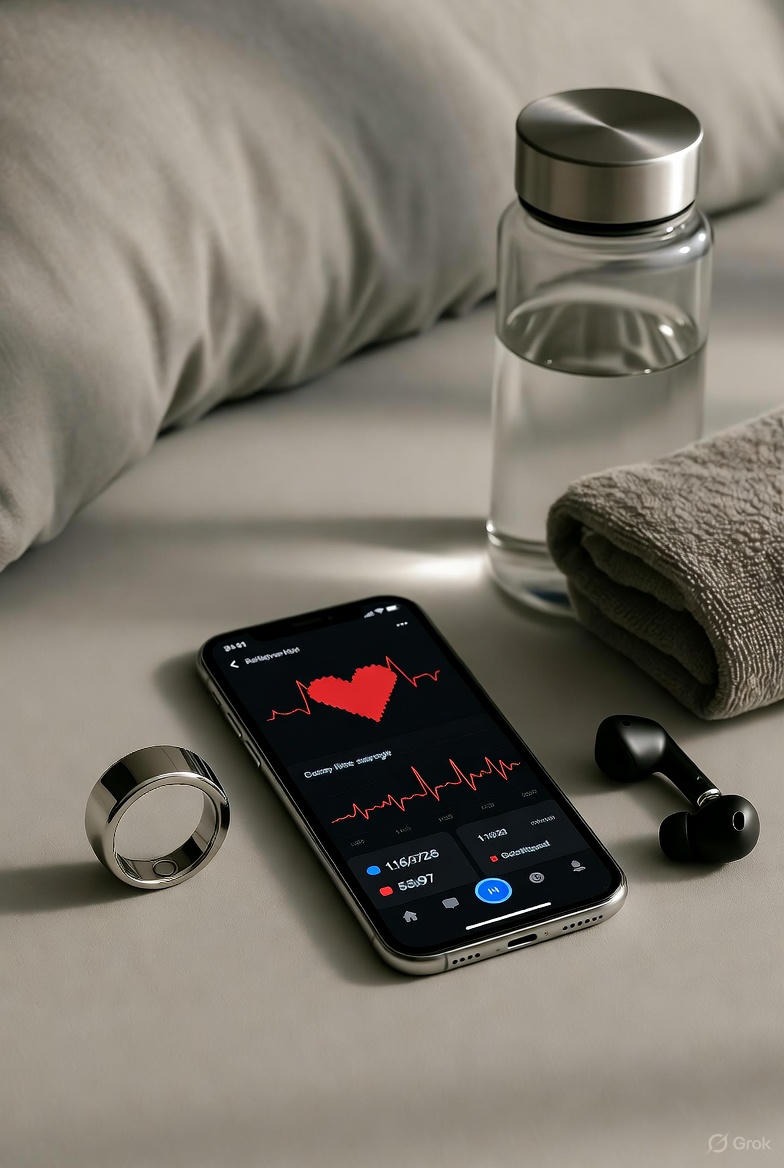
In the journey from beginner to informed practitioner, data is your compass. While self-awareness is crucial, our subjective perception of recovery and readiness can be clouded by motivation, denial, or simple lack of awareness. This is where modern wearable technology, specifically advanced smart rings, transitions from a novelty to an essential partner in mastering exercise timing.
A smart ring, worn 24/7, provides a continuous, passive stream of biometric data that paints a multi-dimensional picture of your readiness. It moves you from guessing to knowing. Here’s how key metrics directly inform your daily timing decision:
By reviewing this data each morning, you make an informed choice about the type and timing of your day’s movement. It turns exercise from a rigid calendar appointment into a dynamic, responsive dialogue with your body. This is the future of personalized wellness: using technology not to create dependency, but to deepen self-knowledge and make smarter, more adaptive choices that enhance both performance and peace. It’s a practical application of tracking your daily stress management metrics to see tangible progress.
No blueprint survives first contact with reality unscathed. Life is gloriously unpredictable. The true test of your timing strategy is not how well it works on a perfect Tuesday, but how resilient and adaptable it is when things go awry. Let’s troubleshoot common timing challenges and turn them into opportunities for intelligent adaptation.
Challenge 1: The Missed Morning Session.
Challenge 2: The Exhausted Evening.
Challenge 3: The Social Workout Dilemma.
Challenge 4: Travel and Time Zone Changes.
The overarching lesson is that intelligent timing is fluid, not fragile. It’s about having a clear default plan (your blueprint) and a set of principled adaptations for when life happens. This builds resilience, reduces all-or-nothing thinking, and ensures that your fitness journey supports your life, rather than becoming another source of rigid stress.
As you progress from a beginner to a more experienced practitioner, the concept of timing expands from the daily and weekly to the monthly and seasonal. This is called periodization—the planned manipulation of training variables (volume, intensity, frequency) over time to peak for goals and prevent plateaus. But we can also apply this wisdom to the non-athlete, using seasonal and life-phase timing to align exercise with broader natural and personal cycles.
Cycling with the Seasons:
Life-Phase Periodization:
Your exercise timing must also adapt to major life chapters, which operate on a much longer “season.”
Embracing this macro view of timing prevents burnout and fosters a lifelong, joyful relationship with movement. It acknowledges that you are not a static machine, but a dynamic being interacting with larger cycles. This holistic alignment is the ultimate goal of developing unshakeable mental calm over a 90-day period and beyond, recognizing that true wellness is a marathon, not a series of disconnected sprints.
Let’s synthesize everything into a tangible, flexible one-week example. This blueprint is for a hypothetical intermediate chronotype (“Hummingbird”) with a standard 9-5 desk job, whose primary goal is enhancing daily productivity and managing stress. Remember: This is a template to inspire your own creation, not a prescription.
Guiding Principles for the Week:
The Blueprint:
Monday: (Focus: Cognitive Priming)
Tuesday: (Focus: Strength & Resilience)
Wednesday: (Focus: Active Recovery & Mobility)
Thursday: (Focus: Metabolic Reset)
Friday: (Focus: Fun & Social Connection)
Saturday: (Focus: Adventure & Exploration)
Sunday: (Focus: Restoration & Preparation)
This blueprint demonstrates balance: it mixes intensities, respects the need for recovery, uses timing to combat daily energy slumps, and aligns workouts with weekly rhythms. It’s a living document that you would adjust based on your weekly readiness scores, social calendar, and energy levels. The goal is not rigid perfection, but intelligent, responsive consistency.
We have journeyed from the microscopic—the ebb and flow of hormones and heart rate variability—to the macroscopic—the seasonal and life-phase cycles that frame our existence. The central, empowering truth that emerges is this: You are not passive in the face of time. Exercise timing is not another rigid rule to follow, but a dynamic set of principles to master. It is the art and science of becoming the architect of your own energy, focus, and resilience.
For the beginner, this may feel overwhelming. Start small. Choose one timing principle to experiment with this week. It could be:
The foundational step is cultivating awareness—of your body’s signals, your daily rhythm, and how different types of movement at different times make you feel and perform. From this awareness, informed by personal data if you choose to use it, you can build a practice that is uniquely yours.
This guide has provided the framework, the science, and the strategies. The blueprint, however, is blank. It awaits your personal data, your goals, your challenges, and your victories. Remember that the ultimate objective is not optimization for its own sake, but liberation—liberation from low energy, from brain fog, from the feeling that your schedule controls you. By mastering the timing of your movement, you reclaim a powerful lever over your daily experience. You transform exercise from a task on a to-do list into a rhythmic, intelligent dialogue with your own biology, a core practice for crafting a life of sustained productivity, profound calm, and enduring vitality.
Understanding exercise timing at a deeper level requires a backstage pass to your body's hormonal concert. Cortisol, testosterone, growth hormone, insulin, and others are the musicians playing the symphony of your metabolism, mood, and muscle. When you exercise, you are not just moving muscles; you are cueing the conductor, influencing which instruments play louder, and shaping the entire composition of your day. Strategic timing allows you to harmonize these hormonal shifts with your productivity goals, rather than creating cacophony.
Cortisol: The Alertness Conductor (Often Misunderstood).
Cortisol is not the "bad" hormone; it's essential for waking up, providing energy, and managing stress. It naturally peaks in the early morning (the Cortisol Awakening Response) and declines throughout the day. Exercise acutely increases cortisol—this is normal and necessary to mobilize energy.
Testosterone: The Builder and Motivator.
Important for both men and women, testosterone supports muscle growth, bone density, libido, and a general sense of vigor. Its levels also follow a circadian rhythm, typically peaking in the morning (around 8 a.m.) for men and showing more complex, menstrual-cycle-linked variations for women.
Growth Hormone (GH): The Nighttime Regenerator.
GH is crucial for tissue repair, muscle growth, fat metabolism, and overall rejuvenation. Its most significant pulses occur during deep sleep. However, exercise is a powerful acute stimulator of GH release.
The Insulin Sensitivity Window.
Muscles are highly sensitive to insulin post-exercise, meaning they readily soak up glucose from the bloodstream to replenish glycogen stores. This "open window" is a powerful metabolic benefit.
Mastering this hormonal interplay is the essence of moving from basic timing to expert-level synchronization. It’s about asking not just "When should I work out?" but "What hormonal state do I want to cultivate for the next phase of my day?" This nuanced understanding of your internal chemistry is a form of neuroplasticity training for a calm mind, rewiring your body's stress response over time.
While the fundamental principles of chronobiology apply to everyone, the unique hormonal landscapes of men and women—particularly the menstrual cycle in women—introduce another layer of sophistication to exercise timing. Acknowledging and adapting to these differences isn't about limitation; it's about harnessing the unique strengths of each phase for productivity and well-being.
For Women: Syncing with the Menstrual Cycle.
The average 28-day cycle (highly variable person-to-person) can be viewed as four distinct phases, each with different implications for energy, recovery capacity, and ideal exercise focus.
For Men: The Daily and Seasonal Testosterone Tide.
While men don't experience a monthly cycle to the same degree, testosterone exhibits a robust diurnal rhythm (highest in the morning, declining through the day) and can be influenced by seasonal changes (often higher in autumn, lower in late summer) and lifestyle factors.
The universal takeaway is cycle-aware timing, not cycle-driven limitation. Using a smart ring or cycle-tracking app can help identify personal patterns. This respectful alignment reduces friction, minimizes injury risk, and turns your natural rhythm into a strategic asset for both fitness and daily cognitive performance. It’s a profound application of listening to your body’s unique language, a skill central to building a personal calm mind practice through customization.
Our exploration has been deeply physiological, but the decision of when to exercise is also a psychological game. Your motivation, willpower, and emotional state fluctuate throughout the day in predictable patterns. Intelligent timing accounts for these mental rhythms to build habits that stick.
The Willpower Reservoir: It Depletes.
Decision-making and self-control are finite cognitive resources. Every decision you make—from what to wear to navigating a work conflict—draws from this same pool. This is called ego depletion.
The Emotional Regulation Workout.
Exercise is a potent tool for managing anxiety, processing frustration, and elevating mood. This means its timing can be used proactively for emotional regulation.
The Flow State Window.
"Flow" is the psychological state of complete immersion and optimal performance. Some people are more likely to enter flow in the morning, others in the late afternoon.
The Identity Reinforcement Loop.
The time you consistently exercise becomes part of your identity. "I am a morning person who runs." This identity then reinforces the behavior. The key is to choose a time slot that feels authentic and sustainable for you, not one imposed by external trends. Consistently showing up at that time, even with short sessions, strengthens the identity, making the habit more resilient to disruption.
By considering these psychological factors, you move beyond the body's clock to the mind's clock. You schedule workouts not just when your muscles are warm, but when your will is strong, your emotions need guidance, and your mind is ready for engagement. This holistic approach ensures your routine supports your mental and emotional health as robustly as your physical health.
Your body’s master clock doesn't tick in a vacuum. It is constantly set and reset by external cues called zeitgebers (German for "time-givers"). The most powerful is light, but temperature, food timing, and social interaction also play significant roles. Your exercise timing can work in concert with—or against—these environmental synchronizers.
Light: The Prime Director.
Exposure to bright, blue-wavelength light in the morning suppresses melatonin and firmly sets your circadian phase for the day. This has a direct impact on your ideal exercise window.
Temperature: The Physiological Cue.
Ambient temperature influences your body's thermoregulatory efforts.
Social Cues: The Accountability Synchronizer.
Humans are social creatures. A planned workout with a friend or group is a powerful external commitment device. It overrides internal hesitation.
The Sync Stacking Strategy.
The most powerful approach is to stack multiple synchronizers. For example:
By consciously manipulating these environmental factors around your exercise, you don't just do a workout; you conduct a full orchestration of your circadian biology. This level of environmental design is a key component of designing workspaces and environments for mental peace, extending the principle to your entire day.
In a culture obsessed with optimization, the most overlooked timing skill is the strategic scheduling of non-activity. Recovery is not the absence of training; it is the positive, adaptive process driven by training. If exercise is the question, recovery is the answer. Timing your rest is as calculated as timing your effort.
The 24-Hour Recovery Cycle: Adaptation doesn't happen in the gym; it happens in the hours after you leave. This process has its own timeline:
Timing Your Rest Days: Proactive vs. Reactive.
The Micro-Recovery Timing: Between Sets and Sessions.
Recovery timing happens on a micro-scale too. The rest period between sets of strength training (typically 30-90 seconds) is timed to allow for phosphocreatine replenishment. The rest between interval sprints dictates the training effect (shorter rest increases metabolic stress; longer rest supports power output). Even the rest between weekly sessions for the same muscle group (typically 48-72 hours) is a timed variable for muscle repair.
Sleep: The Ultimate Recovery Window.
You cannot out-supplement or out-time poor sleep. The timing, duration, and quality of sleep are the master regulators of every recovery process. A workout timed perfectly for hormonal response is utterly negated by a night of poor sleep. Therefore, the most important recovery timing question is: "Does this workout schedule support or sabotage my sleep?" Protecting your bedtime and wake time is the non-negotiable foundation upon which all other timing strategies are built. This is why calm mind practices for insomnia are a critical complementary practice to any exercise regimen.
By elevating recovery to a scheduled, intentional practice, you flip the script. You are not "taking days off"; you are "prescribing adaptation windows." This mindset transforms rest from guilt-ridden laziness into a confident, strategic component of your productivity and performance plan.
Wearing a smart ring or watch is step one. The transformative step is moving from passively collecting data to actively interpreting it to make daily timing decisions. Let's translate raw metrics into actionable wisdom.
The Morning Check-In Triad: A Decision Matrix.
Each morning, consult these three metrics together to choose your day's movement type and timing.
Metric
What It Suggests
Potential Timing & Activity Implications
HRV (Trending UP/Stable)
Good autonomic balance, high recovery, ready for stress.
Green Light. Proceed with planned, potentially intense workout. Ideal for afternoon performance sessions or morning intensity if you're adapted to it.
HRV (Trending DOWN)
Elevated systemic stress, poor recovery, need for caution.
Yellow/Red Light. Consider downgrading intensity, duration, or both. Swap heavy lifting for mobility. Swap HIIT for steady-state cardio or a walk. Consider a complete rest day.
Resting Heart Rate (>10% above baseline)
Potential illness, dehydration, or significant fatigue.
Strong Caution. Prioritize hydration, nutrition, and rest. Exercise should be exceptionally gentle if at all. A walk in nature or light stretching only.
Sleep Score (High, with good Deep/REM)
Quality recovery occurred. Hormonal and neural repair are on track.
Green Light. Body is primed for adaptation. Good day for skill learning or high-intensity work.
Sleep Score (Low, fragmented)
Incomplete recovery. Cognitive function may be impaired.
Yellow Light. Focus on activities that won't overtax the CNS. Avoid heavy weights or complex coordination. Favor cardio in nature or mindful movement.
Body Temperature (Wrist-based, showing clear nightly dip)
Circadian rhythm is strong and aligned.
Your body's internal timing is precise. Good day to stick to your habitual workout time.
Body Temperature (Flat or erratic rhythm)
Circadian rhythm may be weak or disrupted (jet lag, night shifts).
Focus on Rhythm Reset. Use light exposure and gentle, consistent movement times to re-establish rhythm. Avoid taxing workouts.
The "Readiness Score" Synthesis:
Most devices combine these metrics into a single score (e.g., 1-100). Use this as your starting point, but drill down. A low score because of poor sleep but stable HRV suggests a different approach than a low score from great sleep but a crashing HRV. The former might mean a lighter day; the latter might signal an oncoming illness and require complete rest.
Tracking for Patterns, Not Perfection:
The real power emerges over weeks and months. Look for patterns:
These long-term patterns provide the empirical evidence to refine your personal blueprint. They move you from following generic advice to operating on a bespoke operating manual for your body. This iterative process of tracking and adjusting is the core of using metrics to manage your daily stress and track progress in a tangible way.
Overwhelmed by the possibilities? Let's distill it into a simple, progressive 30-day action plan. The goal of this first month is not perfection, but mindful experimentation and habit formation.
Week 1: Foundation & Observation.
Week 2: Introduce the "Check-In."
Week 3: Play with Timing (The Experiment).
Week 4: Integrate a Micro-Workout & Plan Ahead.
Throughout the Month: The Non-Negotiables.
This gentle, progressive plan builds the neural pathways of habit and the skill of body awareness. By Day 30, you will no longer be a passive beginner. You will be an informed individual with personal data, a protected time slot, and the beginnings of a flexible, intelligent approach to exercise timing. You’ll have started the journey of building daily stress management habits that last for years.
While this guide has focused on the daily productivity gains of smart timing, the implications ripple out to every aspect of health and well-being. The same principles that sharpen your focus at 2 p.m. also fortify your body and mind for the long haul.
Longevity: The Cellular Timing Effect.
Exercise induces autophagy—the cellular "clean-up" process that removes damaged components. It also supports telomere health (the protective caps on chromosomes). Consistent, well-timed exercise that respects recovery creates a rhythmic, sustainable stress that upregulates these longevity pathways without causing the chronic inflammation that accelerates aging. The routine itself—the circadian predictability—may be as beneficial as the activity, providing a stabilizing rhythm for all bodily systems.
Immune Function: The Delicate Balance.
Moderate, regular exercise is immunoprotective, while sudden, excessive exercise can create an "open window" of lowered resistance. Timing and recovery are everything here.
Joy and Sustainability: The Forgotten Metrics.
The most sophisticated timing protocol is worthless if you hate it. Adherence trumps optimization. Therefore, a critical factor in timing is personal enjoyment.
The Ultimate Goal: Integration, Not Segmentation.
The pinnacle of mastering exercise timing is when it ceases to be a separate "workout" task and becomes an inseparable, intuitive part of your daily rhythm—like eating or sleeping. You move because it's time to move, and that movement seamlessly fuels the next part of your life. It’s the physical expression of a calm mind practice that you can access in under 60 seconds—a tool always at your disposal to regulate your state. You become the fluent conductor of your own energy symphony, using timing not as a rigid rulebook, but as a dynamic language for crafting a life of vitality, resilience, and profound presence.
Your Trusted Sleep Advocate: Sleep Foundation — https://www.sleepfoundation.org
Discover a digital archive of scholarly articles: NIH — https://www.ncbi.nlm.nih.gov/
39 million citations for biomedical literature :PubMed — https://pubmed.ncbi.nlm.nih.gov/
Experts at Harvard Health Publishing covering a variety of health topics — https://www.health.harvard.edu/blog/
Every life deserves world class care :Cleveland Clinic - https://my.clevelandclinic.org/health
Wearable technology and the future of predictive health monitoring :MIT Technology Review — https://www.technologyreview.com/
Dedicated to the well-being of all people and guided by science :World Health Organization — https://www.who.int/news-room/
Psychological science and knowledge to benefit society and improve lives. :APA — https://www.apa.org/monitor/
Cutting-edge insights on human longevity and peak performance:
Lifespan Research — https://www.lifespan.io/
Global authority on exercise physiology, sports performance, and human recovery:
American College of Sports Medicine — https://www.acsm.org/
Neuroscience-driven guidance for better focus, sleep, and mental clarity:
Stanford Human Performance Lab — https://humanperformance.stanford.edu/
Evidence-based psychology and mind–body wellness resources:
Mayo Clinic — https://www.mayoclinic.org/healthy-lifestyle/
Data-backed research on emotional wellbeing, stress biology, and resilience:
American Institute of Stress — https://www.stress.org/


