


Health Tracking Basics for Families: Monitoring Multiple People
Using rings to track the health of multiple family members.
Using rings to track the health of multiple family members.
%402x.svg)
The modern family is a symphony of schedules, needs, and heartbeats. From the moment the first alarm clock chimes to the final goodnight story, we are attuned to the rhythms of our loved ones—their energy, their moods, their health. But in the daily whirlwind of carpools, packed lunches, and bedtime routines, truly listening to the subtle cues of our family’s collective well-being can feel impossible. We rely on intuition, the occasional thermometer, and crossed fingers, hoping that a cough is just a cough and that fatigue is merely a sign of a busy week.
What if you could move from reactive worry to proactive, informed care? What if you had a gentle, continuous window into the fundamental health metrics of every member of your family, not to create anxiety but to foster understanding and empowerment? This is the new frontier of family wellness: multi-person health tracking. It’s a shift from isolated data points to a connected, holistic view of your household’s health ecosystem.
Gone are the days when health technology was a solitary pursuit for fitness enthusiasts. Today, advanced, user-friendly devices like the modern smart ring are making it feasible for everyone—from toddlers to grandparents—to participate in understanding their own bodies. These discreet wearables silently gather data on sleep quality, activity levels, recovery, and vital signs, painting a rich, daily picture of well-being without disruption.
For a family, this technology unlocks something profound: context. Seeing that your teen’s restless sleep pattern coincides with their final exam week, or that your partner’s stress metrics spike predictably on Sunday evenings, transforms vague concern into actionable insight. It allows you to celebrate the positive—like seeing everyone’s sleep scores improve after a weekend camping trip—and proactively address challenges before they escalate.
This guide is your comprehensive roadmap to navigating this world. We will move beyond the basics of a single device to master the art and science of monitoring multiple people. We’ll explore how to choose the right family-friendly technology, set up a harmonious and privacy-conscious tracking environment, interpret the collective data in meaningful ways, and ultimately use these insights to build healthier, more resilient family rhythms. Think of it less about surveillance and more about fostering a shared language of wellness, where data becomes a tool for connection, support, and thriving together.
Whether you’re a parent seeking to understand your children’s unique needs, part of a multi-generational household, or simply a family committed to a proactive health journey, the path begins here. Let’s explore how to turn individual health signals into a chorus of well-being for your entire home.
Why Every Modern Family Needs a Health Tracking Strategy
We live in an age of information overload, yet we often lack the most crucial information about ourselves and the people we love most. For generations, family health management was episodic and reactive—a trip to the doctor when someone fell ill, a guess about why someone was constantly tired, a hope that healthy habits were sinking in. Today, we have the tools to build a foundational strategy that is continuous, preventive, and empowering.
At its core, a family health tracking strategy is about moving from a model of crisis management to one of lifestyle optimization. It’s the difference between treating a bout of burnout after it happens and noticing the rising stress trends that predict it. For families, this proactive stance is not a luxury; it’s a powerful shift that pays dividends in quality of life, medical preparedness, and daily harmony.
The Silent Epidemic of Modern Family Life: Disconnection from Body Signals
Modern schedules and digital distractions have created a collective numbness to our bodies’ early warning systems. Children might not articulate that they’re sleeping poorly; they may just be irritable. A partner might dismiss persistent fatigue as "just being busy." Without concrete data, these subtle signals are easy to ignore until they manifest as bigger problems—frequent illness, chronic stress, or emotional strain. A shared tracking strategy re-establishes that connection, giving tangible form to internal states.
Creating a Unified Picture of Household Health
A family is an interconnected system. One member’ insomnia can affect another’s sleep. A virus doesn’t stay in one room. Stress is contagious. By tracking multiple people, you stop seeing health in a vacuum. You begin to see patterns and correlations that were previously invisible. Did everyone’s resting heart rate dip after a week of earlier dinners? Did the start of the school year coincide with a drop in deep sleep for both you and your child? This systems-view is the unique advantage of a family-wide approach, turning individual data points into a story about your home environment and shared routines.
Early Detection and Preventive Action
This is perhaps the most compelling reason. Many health issues, from sleep apnea and irregular heart rhythms to escalating stress and overtraining, show their fingerprints in physiological data long before they become acute. For instance, significant deviations in heart rate variability (HRV) can signal that the body is struggling to recover. For parents, noticing a consistent drop in a child’s activity level or sleep quality can be a prompt for a conversation or a check-up, potentially heading off larger issues. It’s about having a dashboard that helps you maintain wellness, not just diagnose sickness. For a deeper dive into how this enables a preventive mindset, our article on how to enable preventive health monitoring explores this philosophy in detail.
Fostering a Culture of Shared Responsibility and Education

When health tracking becomes a family affair, it naturally sparks conversations about biology, rest, nutrition, and movement. It demystifies health, making it a topic of curious exploration rather than fear or admonishment. Children who grow up seeing their sleep data learn the tangible value of a good night’s rest. Teens can understand how screen time before bed impacts their sleep architecture. This shared language turns health from a set of rules ("go to bed!") into a collaborative journey of self-discovery and mutual support.
The Strategic Advantage for Busy Households
For the modern parent or caregiver juggling countless responsibilities, a consolidated health dashboard is a logistical godsend. Instead of mentally tracking who seemed tired, who skipped soccer practice, and who has been sniffly, you have a clear, organized overview. It helps you allocate your caregiving energy more effectively, celebrate small wins as a team, and make data-informed decisions about schedules, meals, and activities.
Ultimately, a family health tracking strategy is an investment in your collective resilience. It’s about equipping every member with knowledge and creating a home environment where well-being is understood, supported, and prioritized. It starts with choosing the right tools to make this vision effortless and integrated into daily life, a journey you can begin at the Oxyzen shop.
From Solo to Squad: The Evolution of Personal Health Tech for Household Use
The journey of health tracking technology is a fascinating tale of miniaturization, sophistication, and—most importantly—shifting focus from the individual athlete to the entire family unit. To appreciate where we are today, it’s essential to understand how we got here, and why the current generation of devices is uniquely suited for multi-person monitoring in a home setting.
The Era of Manual Logs and Isolated Metrics
Not long ago, "health tracking" meant a handwritten diary, a pedometer that clipped to a belt, and a bathroom scale. These were solitary, manual, and limited tools. They provided single data points (steps, weight) without context, and sharing or comparing this information was a cumbersome, paper-based affair. There was no concept of a family dashboard or correlated data.
The Rise of the Smartphone and the "Quantified Self" Movement
The advent of the smartphone and its sensors ushered in the first wave of digital health tracking. Apps could count steps, estimate calorie burn, and log food. However, this was still largely the domain of the tech-savvy individual, often focused on fitness or weight loss goals. Devices were bulky (armbands, chest straps), required frequent charging and syncing, and their data lived in siloed apps on a single person’s phone. The experience was personal, but not interpersonal.
The Wrist Revolution: Smartwatches Enter the Home
Smartwatches and fitness bands brought continuous tracking to the mainstream. They made data collection passive and always-on. For the first time, families might have multiple members wearing similar devices. Yet, challenges remained for household use. Watches can be bulky for small wrists, uncomfortable for sleep tracking, and often geared toward notifications and fitness, not holistic health. Managing multiple devices and accounts was often a fragmented experience, with no centralized view of the family’s well-being.
The Smart Ring: A Discreet, Family-Friendly Form Factor
This brings us to the present and the emergence of the smart ring as a paradigm-shifting form factor. The ring addresses many of the previous limitations for family use:
The Software Leap: Multi-User Management and Shared Dashboards
The true evolution for families isn’t just in the hardware; it’s in the software ecosystem. Modern platforms, like the one powering Oxyzen, are built with households in mind. Key features now include:
This evolution from solo gadgets to integrated family wellness systems marks a milestone. It acknowledges that health is not an isolated pursuit but a collective state. The technology has finally caught up to the reality of our lives, providing tools that support the unit as seamlessly as they support the individual. For a broader look at this technological journey, our piece on the evolution of health tracking from manual logs to smart rings offers a detailed historical perspective.
With the vision of a connected family health strategy in mind, the next critical step is selecting the right tool for the job. The market is filled with options, but not all are created equal for the unique demands of multi-person, multi-age, 24/7 household use. This guide will help you cut through the noise and identify the features that truly matter when your goal is to monitor and support the well-being of your entire family.
1. The Non-Negotiables: Core Features for Every Family Member
2. The Family Ecosystem: Software and Usability
3. Practical Considerations for a Multi-User Home
Why a Smart Ring Often Wins for Families

When you weigh these criteria, the modern smart ring—particularly platforms designed with families in mind—checks more boxes than any other form factor. It combines clinical-grade sensing with unparalleled comfort for continuous wear, eliminates the distraction of screens, and its software is increasingly built for multi-user management. It becomes a seamless part of each person’s daily life, not an added task or gadget.
Before making a final decision, immerse yourself in real-world experiences. Reading through customer reviews and user experiences can provide invaluable insight into how a device performs in the chaos of real family life. The right choice will feel less like buying a piece of technology and more like investing in a silent, supportive partner for your family’s health journey.
You’ve chosen your family’s wellness devices—now comes the most important step: creating a digital environment that is organized, secure, and respectful of each member’s autonomy. A clumsy setup can lead to frustration, data confusion, and privacy concerns. Done right, it establishes a foundation of trust and makes engaging with your health data a seamless, positive part of your daily routine. Let’s build your family’s health tracking hub, step by step.
Step 1: Establish the "Hub Manager" and Primary Account
Designate one adult as the primary account holder or "Hub Manager." This person will be the administrative lead, responsible for the initial setup, managing invitations, and overseeing family-wide settings. They will download the companion app (e.g., the Oxyzen app) and create the master account, which will act as the command center. This account should be linked to a secure, frequently accessed email.
Step 2: Creating Individual Profiles—The Heart of the System
For each family member, you will create a separate profile within the app. This is non-negotiable for accurate data. Treat each profile as a sacred digital space for that individual.
Step 3: Configuring Granular Privacy and Sharing Settings
This is where you operationalize trust. A one-size-fits-all approach does not work for a family with toddlers, teens, and adults.
Our dedicated guide on wellness ring privacy settings and data security dives deeper into these crucial configurations.
Step 4: Setting Personalized Baselines and Goals
Before launching into interpretation, you need a baseline. Encourage each family member to wear their device consistently for at least one full week during a period of "normal" life. This allows the algorithms to learn their personal patterns—their typical sleep duration, resting heart rate, activity level, and HRV.
After this baseline period, set initial goals. These should be positive, incremental, and personalized.
Step 5: Establishing Family Rituals Around Data
Integrate checking the hub into your family’s rhythm in a low-pressure way.
Step 6: Security and Data Hygiene
Use strong, unique passwords for the master account. Ensure the connected smartphone has biometric security enabled. Familiarize yourself with the company’s data policies—where is the data stored, and how is it protected? A reputable company will be transparent about this, like the information provided on the Oxyzen FAQ page.
By thoughtfully completing this setup, you transform a collection of devices and an app into a cohesive, respectful, and powerful family wellness hub. It becomes a tool for connection, not control, setting the stage for meaningful insights and collective growth.
Your family hub is active, data is flowing in, and now you’re faced with a dashboard of graphs, numbers, and scores. To a newcomer, it can look like a confusing control panel. But fear not—each metric is a simple, valuable piece of your family’s wellness puzzle. Let’s translate this data into a language everyone can understand, focusing on what each metric means for different age groups and how to use it supportively.
1. Sleep: The Foundation of Everything
Sleep isn’t just downtime; it’s when bodies repair, brains consolidate memories, and emotions regulate. For families, collective sleep quality is the single biggest predictor of daily mood and resilience.
2. Activity & Movement: More Than Just Steps
Activity data tells the story of your family’s daily energy expenditure, from formal exercise to the countless small movements that make up a day (called NEAT – Non-Exercise Activity Thermogenesis).
3. Heart Rate (HR) & Heart Rate Variability (HRV): The Stress & Recovery Duo
These two metrics, read from the vascular pathways in the finger, offer a real-time window into the autonomic nervous system—the control center for stress and recovery.
4. Blood Oxygen (SpO2) & Skin Temperature: The Early Warning Signals
These are less about daily optimization and more about significant trend detection.
The Power of Composite Scores: Sleep Score & Readiness Score
Most platforms boil this complex data into simple, out-of-10 scores.
Family Action: Make these scores a quick morning check-in. "I see your readiness is low today, want to take it easy after practice?" It provides a shared, non-judgmental language for managing energy.
Remember, the goal is trends over perfection, and insight over judgment. No single night’s bad score matters. What matters is the pattern over weeks and months, and the conversations and positive changes those patterns inspire. This data becomes the foundation for building healthy habits together.
This is the most delicate and crucial balance to strike in family health tracking. Implemented poorly, technology can feel like a policing tool, breeding resentment, anxiety, and secrecy. Implemented with intention, it becomes a catalyst for empathy, teamwork, and positive change. The difference lies entirely in the culture you create around the data.
The Pitfall: The "Health Police" Dynamic
Imagine a parent constantly checking a teen’s sleep score and admonishing, "You got a 72! You were on your phone too late again!" Or a partner using activity data to guilt the other about missing a workout. This turns insights into weapons, data into a report card, and the device into an object of control. It undermines trust and destroys the very well-being you’re trying to foster.
The Goal: A Supportive, Curious, and Empowered Family Unit
The data should serve as a neutral third party, an objective source of information that sparks collaborative problem-solving. It’s not "you failed," it’s "our data shows something is off; how can we figure this out together?"
Principles for Fostering a Positive Culture:
1. Lead with Curiosity, Not Criticism.
2. Focus on Collective Goals and Celebrations.
Make it a team sport. Shift the focus from individual shortcomings to family achievements.
3. Respect Autonomy and Privacy.
Honor the sharing settings you established during setup. If you agreed with your teen that their detailed sleep data is private, don’t sneak peeks. If they see the data as their own, they’re more likely to engage with it proactively. For adults, this is a matter of mutual respect. This trust is the bedrock of a healthy culture.
4. Model Vulnerability and Use Your Own Data.
As the parent or Hub Manager, be open about your own data and what you’re learning. "Wow, my data shows that when I work late, my sleep is really poor. I’m going to try to shut my computer down by 8 PM this week." This shows that everyone is on a journey, the data is for learning, and it’s safe to not be perfect.

5. Use Data to Validate Feelings, Not Invalidate Them.
This is especially powerful for children and teens who may struggle to articulate their emotions.
6. Know When to Ignore the Data.
The data is a tool, not an oracle. If your child feels great but their readiness score is low, trust the child, not the number. Use it as a gentle caution, not a command. The human experience always comes first.
Creating Rituals That Reinforce the Culture:
By consciously building this culture, you ensure that the technology serves your family’s values of support, respect, and growth. It becomes less about tracking health and more about living it—together. This philosophy aligns closely with the vision and values we hold at Oxyzen, which you can learn more about on our Our Story page.
A one-size-fits-all approach to health tracking is as ineffective as a one-size-fits-all parenting strategy. The needs, goals, and appropriate levels of involvement vary dramatically across the lifespan of a family. Success lies in adapting your use of the technology to support each member right where they are. Here’s how to tailor your approach for every generation under your roof.
For Young Children (Ages ~4-12): Guardianship and Baseline Building
At this stage, you are the custodian of their health data, using it to establish healthy patterns and catch potential issues early.
For Adolescents and Teens (Ages ~13-18): Partnership and Education
This is the most critical stage for shifting from control to collaboration. Teens are forming their identity, including their relationship with their own body.
For Adults and Parents: Optimization and Mutual Support
For the caregivers, tracking is about sustaining energy, managing stress, and supporting each other.
For Grandparents and Aging Family Members: Safety, Connection, and Early Detection
Here, the focus shifts subtly towards safety, independence, and early medical insight.
By tailoring your approach, you ensure that health tracking meets each person where they are, providing age-appropriate support and fostering a lifelong, positive relationship with understanding their own body. This stage-specific knowledge is something many families discover and refine, as shared in real user experiences and testimonials.
Even with the best intentions and a thoughtfully built culture, implementing family-wide health tracking presents real-world challenges. From data anxiety to sibling rivalry over scores, being prepared to navigate these hurdles is key to long-term success. Let’s address the most common concerns and practical solutions.
The risk of becoming overly focused on scores, turning every dip into a source of stress, is real—a condition sometimes called "orthosomnia" (an unhealthy preoccupation with perfect sleep data). In a family setting, this anxiety can be contagious.
Challenge 2: Sibling Competition and Comparison
It’s natural for children to compare. "My sleep score was 89 and yours was only 78!" This can quickly turn supportive tracking into a source of conflict and shame.
Challenge 3: Device Resistance and Wearer Fatigue
A child might suddenly refuse to wear their ring. A teen might "forget" to put it on after charging. This breaks the data continuity and can feel like rejection of the entire project.
Challenge 4: Privacy Erosion and Boundary Setting
As children grow, their need for privacy evolves. A parent used to full access might struggle when a teen invokes their privacy settings. Conversely, a caring adult might inadvertently over-monitor an aging parent.
Challenge 5: Data Overload and Paralysis
With multiple streams of data for multiple people, you can drown in graphs. Feeling like you must "fix" every sub-optimal metric for everyone leads to caregiver burnout.
Challenge 6: Interpreting Data Without Medical Training
A low HRV trend or a sporadic heart rate spike can be frightening. The temptation to Dr. Google can lead to unnecessary panic.
Challenge 7: Cost and Value Justification
Equipping an entire family represents a significant investment. The question of "Is this worth it?" can loom large, especially during the initial setup phase.
By anticipating these challenges and having compassionate, practical strategies ready, you transform potential roadblocks into opportunities for deeper communication and trust. The technology is merely the catalyst; your family’s thoughtful response to these hurdles is what truly builds a resilient wellness culture.
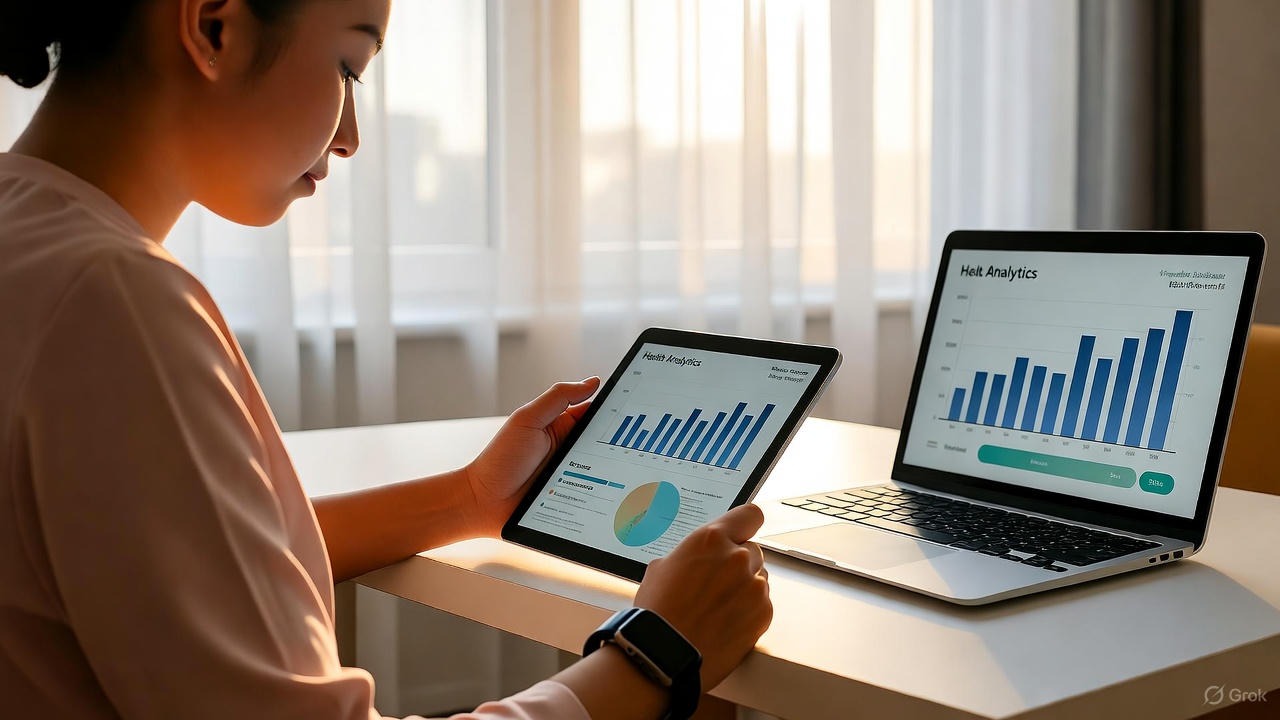
Data is inert until it inspires action. The true magic of a family health tracking system isn't in the colorful graphs; it's in the small, sustainable changes those graphs motivate you to make together. This is where knowledge becomes behavior, and behavior becomes lasting health. Let’s explore how to translate your family’s unique data insights into concrete, shared habits.
The Habit Loop: Cue, Routine, Reward – Data-Style
Every habit follows a loop. Your tracking data provides a powerful, objective Cue and Reward.
Actionable Strategies for Common Family Insights:
Insight: "Weeknight sleep is consistently poor for everyone."
Insight: "Family activity plummets after 4 PM and on weekends."
Insight: "Parental stress metrics (low HRV, high RHR) peak on workdays."
Insight: "Teen’s sleep consistency is wildly different on weekends vs. school nights."
Making it Stick: The Keys to Family-Wide Habit Change
By moving systematically from insight to action, you close the loop. The technology ceases to be just a monitor and becomes a coach—a catalyst for tangible, positive change that strengthens family bonds while building individual and collective health. This is the essence of how technology can help build healthy habits that last a lifetime.
As we stand at the forefront of this integrated approach to family well-being, it’s exciting to look ahead. The technology that allows us to monitor multiple people today is just the foundation. The future promises a shift from monitoring to predictive guidance, from individual data streams to a truly synchronized family health ecosystem. Here’s a glimpse of what the next 3-5 years may hold for families committed to connected wellness.
1. Advanced Predictive Analytics and Early Warning Systems
Future algorithms will move beyond telling you what happened last night to predicting what might happen tomorrow. By synthesizing sleep, activity, HRV, temperature, and even local environmental data (pollen count, virus prevalence), your family hub might offer gentle, proactive alerts.
2. Hyper-Personalized, AI-Powered "Family Health Coaches"
The AI behind your app will evolve into a personalized coach for each family member, offering tailored recommendations that respect their age, goals, and data patterns.
3. Deep Ecosystem Integration and the "Healthier Home"
Your family’s wearables won’t operate in a vacuum. They will seamlessly integrate with other smart systems in your home, creating an ambient environment that supports your wellness goals.
4. Genomic and Microbiome Integration for Truly Foundational Insights
The next frontier is combining real-time physiological data with foundational biological data. With proper consent and security, future platforms may allow you to integrate anonymized genetic or gut microbiome insights to provide even deeper context.
5. Enhanced Multi-Generational and Long-Distance Care Features
For families spread across distances, the platform will become a more powerful, respectful tool for connection and care.
6. Focus on Mental and Emotional Wellbeing Metrics
Future sensors may incorporate subtle indicators of emotional state through voice tone analysis (via connected mics with strict privacy controls) or advanced HRV interpretation, providing insights into collective family mood and stress levels.
The Constant: Privacy, Security, and Ethical Design
As these capabilities expand, the imperative for ethical design, ironclad security, and user-centric privacy will only grow. The most successful platforms will be those that transparently empower users with control over their data, use on-device processing where possible, and build trust as their core feature. Families will need to be discerning, choosing partners whose values align with theirs, much like the vision we articulate on our About Us page.
The future of family health tech is not about more intrusive surveillance; it’s about more intelligent, anticipatory, and holistic support. It’s about technology that fades into the background of your life while proactively helping every member of your family thrive. By starting your journey today, you’re not just adopting a tool—you’re preparing your family to harness the next wave of innovation in personal and collective well-being. For a visionary look at what’s on the horizon, explore our thoughts on health tracking technology in 2025 and beyond.
Building on Your Foundation: Advanced Integration and Long-Term Success
Having established your family's wellness hub, navigated initial challenges, and begun translating insights into action, you now move into the phase of mastery and deep integration. This is where the true, compounding benefits of multi-person health tracking are realized—not as a novel project, but as a seamless, invaluable component of your family's daily life. In this section, we explore advanced strategies for synchronizing health data with other aspects of your household, optimizing for specific goals, and ensuring the long-term sustainability of your wellness culture.
Your data will soon reveal that your family operates on interconnected biological and social rhythms. Mastering these rhythms is the key to reducing friction and maximizing collective well-being.
Identifying Your Family’s Chronotype Mix:
Every person has a natural chronotype—a genetic predisposition for being a morning lark, a night owl, or somewhere in between. Your sleep data makes this invisible trait visible.
Seasonal Adjustments and the Family Dashboard:
Well-being isn't static across the year. Your family’s data will show seasonal patterns—lower activity and more sleep in winter, perhaps higher stress during holiday or back-to-school transitions.
The Power of the "Family Readiness Score":
Some advanced platforms allow you to view an aggregate metric. If yours doesn't, you can create a simple version manually.
With baselines established, you can now use your tracking system to provide targeted support for major life stages and pursuits within your family.
For the Student: From Report Cards to Readiness Scores
Academic performance is deeply tied to sleep quality, consistency, and stress management.
For the Family Athlete (Young or Old): Performance and Recovery
Whether it's a child in competitive soccer or a parent training for a marathon, the line between optimal training and overtraining is thin.
For Aging in Place: Dignity, Safety, and Independence
For an elderly family member, the data serves a different, crucial purpose: enabling independence while providing peace of mind.
Physiological data tells half the story. The other half is fuel. The next level of family wellness involves creating a dialogue between your activity/recovery data and your nutritional habits.
The Sleep-Nutrition Connection:
Use your sleep scores as feedback on evening meals.
Activity and Refueling:
Post-activity recovery isn't just about rest; it's about nutrition.
Hydration and Vital Signs:
Subtle increases in resting heart rate and decreases in HRV can sometimes be early signs of mild dehydration.
Troubleshooting Advanced Multi-User Hiccups
Even in a well-oiled system, issues arise. Here’s how to solve common advanced problems.
Problem: Data Discrepancies Between Similar Devices.
If two family members with identical rings show vastly different readings for the same activity (like a walk together), don't panic.
Problem: "Alert Fatigue" from Too Many Notifications.
Getting pinged for every minor deviation leads to ignoring all alerts.
Problem: One Family Member’s Data is Consistently "Worse," Causing Discouragement.
Some individuals naturally have lower HRV or more restless sleep patterns.
The final challenge is making this a permanent, evolving part of your family's identity, not a passing fad.
Annual Wellness Reviews:
Once a year, perhaps around the New Year or a family anniversary, hold a "Family Wellness Review."
Evolving with Technology:
Technology will advance. New sensors, new insights, and new platforms will emerge.
Passing the Torch:
As children grow into young adults, the goal is for them to leave your home with a sophisticated understanding of their own body's signals and the tools to manage their well-being independently.
By reaching this stage of advanced integration and long-term planning, you have moved far beyond simple monitoring. You have built a responsive, empathetic, and data-informed family ecosystem. The technology has become silent infrastructure—like plumbing or electricity—powering a home environment where every member is supported in reaching their fullest, healthiest potential. This is the ultimate promise of mastering health tracking basics for the entire family.
For continued learning and to stay updated on best practices, remember to explore the wealth of resources available on the Oxyzen blog, where we continually explore the intersection of technology, family, and holistic well-being.
Your Trusted Sleep Advocate (Sleep Foundation — https://www.sleepfoundation.org/)
Discover a digital archive of scholarly articles (NIH — https://www.ncbi.nlm.nih.gov/
39 million citations for biomedical literature (PubMed — https://pubmed.ncbi.nlm.nih.gov/)
experts at Harvard Health Publishing covering a variety of health topics — https://www.health.harvard.edu/blog/)
Every life deserves world class care (Cleveland Clinic -
https://my.clevelandclinic.org/health)
Wearable technology and the future of predictive health monitoring. (MIT Technology Review — https://www.technologyreview.com/)
Dedicated to the well-being of all people and guided by science (World Health Organization — https://www.who.int/news-room/)
Psychological science and knowledge to benefit society and improve lives. (APA — https://www.apa.org/monitor/)
Cutting-edge insights on human longevity and peak performance
(Lifespan Research — https://www.lifespan.io/)
Global authority on exercise physiology, sports performance, and human recovery
(American College of Sports Medicine — https://www.acsm.org/)
Neuroscience-driven guidance for better focus, sleep, and mental clarity
(Stanford Human Performance Lab — https://humanperformance.stanford.edu/)
Evidence-based psychology and mind–body wellness resources
(Mayo Clinic — https://www.mayoclinic.org/healthy-lifestyle/)
Data-backed research on emotional wellbeing, stress biology, and resilience
(American Institute of Stress — https://www.stress.org/)


