


How to Rest and Recharge Your Creative Energy
How to rest and recharge your creative energy to avoid burnout.
How to rest and recharge your creative energy to avoid burnout.
%402x.svg)
You know the feeling. It’s a Monday morning, and the blank page—be it a canvas, a document, or a project plan—stares back at you with a silent, mocking indifference. Your mind, which once buzzed with ideas and connections, feels like a stalled engine. You try to force it, pushing through the fog with more coffee, more determination, and longer hours. Yet, the well is dry. This isn’t procrastination; it’s creative depletion. In our always-on, hustle-centric culture, we often mistake this depletion for a lack of discipline. We push harder, only to find ourselves more exhausted and less inspired.
The truth is profound yet counterintuitive: Creativity isn't a limitless resource you mine through sheer will. It's a renewable energy you cultivate through strategic rest.
This isn't about lazy weekends or occasional breaks. It's about a fundamental reimagining of the creative process itself. Modern neuroscience and psychology have converged on a critical insight: our most brilliant insights, our "eureka" moments, don't happen at the peak of focused grind. They arise in the quiet spaces between work—during a walk, in the shower, or just as we’re drifting to sleep. This is the default mode network of the brain, your mind’s incubation chamber, lighting up. To access it, you must first step away.
This article is your master guide to rebuilding a sustainable, joyful, and prolific creative practice from the ground up. We will dismantle the myth of burnout-as-a-badge-of-honor and replace it with a science-backed framework for renewal. We’ll explore not just the "why" of rest, but the precise "how"—delving into the neurological cycles of creativity, the restorative power of specific activities, and how modern tools can provide the objective data you need to honor your body’s rhythms. Whether you're an artist, entrepreneur, writer, or problem-solver, the principles here will help you design a life where your energy, not your time, is your most managed asset.
Imagine finishing a day feeling energized rather than emptied. Imagine facing a complex challenge not with dread, but with a quiet confidence that the solution will emerge. This is the promise of mastering your creative energy. It begins not with doing more, but with resting smarter.
The Burnout Paradox: Why Pushing Harder Kills Creativity
We live in a society that glorifies the grind. Hustle culture sells us a powerful narrative: that success is directly proportional to hours logged, sleep sacrificed, and weekends worked. For the creative professional or passionate maker, this narrative is especially seductive. Passion for the work blurs the line between vocation and identity, making it easy to justify constant labor. We wear our exhaustion as a badge of honor, a testament to our commitment.
But here lies the paradox: The very act of pushing through creative fatigue is the most effective way to guarantee its persistence.
This isn't just folk wisdom. It's neurobiology. When you're in a state of chronic stress or cognitive overload, your brain is flooded with cortisol. This stress hormone is fantastic for short-term survival—it sharpens focus to outrun a threat. But for the nonlinear, connection-making processes of creativity, it's a disaster. Cortisol shrinks the prefrontal cortex, the brain's command center for complex thought, imagination, and original ideas. It silences the quiet, associative whispers of the default mode network, leaving only the loud, linear shouts of panic-driven focus.
Consider the story of Alex, a graphic designer on a tight deadline. For two weeks, he lived at his desk, surviving on takeout and caffeine. The first few days were productive. Then, progress slowed to a crawl. Colors seemed wrong, layouts felt stale, and every idea was a rehash of something he’d done before. His solution? Work later. The result? A final deliverable that was technically correct but utterly devoid of the spark his client hired him for. Alex wasn't lazy; he was neurologically depleted. He had literally diminished his brain's capacity for the very work he was trying to do.
This state has a name: creative burnout. Its symptoms are telling:
The burnout paradox teaches us a crucial first lesson: You cannot think your way out of a burnout cycle using the same mind that is burned out. The solution requires a fundamental interruption of the pattern. It demands a shift from a philosophy of extraction (draining your creative reserves) to one of cultivation (tending to the garden where ideas grow).
This is where a holistic view of wellness becomes non-negotiable. Your creative mind is not separate from your physical body. It is deeply affected by sleep quality, heart rate variability, and stress levels. Tools that provide insight into these biometrics, like advanced wellness wearables from brands like Oxyzen, move rest from a vague concept to a data-informed practice. By tracking your physiological state, you can learn to identify your personal precursors to depletion—the subtle rise in resting heart rate, the dip in sleep quality—and intervene before you hit a wall.
Overcoming the burnout paradox starts with a single, rebellious act: giving yourself permission to stop. To understand why that rest is so potent, we must look at the natural rhythm of the creative brain itself.

If creativity isn't a steady stream, what is it? Modern neuroscience reveals it as a dynamic dance between two distinct, and opposing, brain networks: the Task-Positive Network (TPN) and the Default Mode Network (DMN).
The Task-Positive Network is your laser-focused, "get things done" mode. It's active when you're analyzing data, writing code, carefully editing prose, or executing a practiced skill. It's linear, detail-oriented, and efficient. We spend most of our workday striving to live here.
The Default Mode Network, long mistaken for the brain's "idle" state, is now understood to be the engine of creativity. It activates when you are not focused on the outside world—when daydreaming, mind-wandering, reflecting, or taking a shower. This is where your brain connects disparate ideas, imagines the future, ruminates on social and emotional concepts, and generates spontaneous insights. It's the network of "what if?" and "I wonder..."
The "Eureka!" moment—Archimedes in his bath, Newton under the apple tree—is not magic. It's the fruit of the DMN's incubation process, suddenly becoming accessible to the conscious, task-oriented mind.
The critical insight is this: These two networks are like a neurological seesaw. They are anti-correlated. When the TPN is highly active (you're grinding on a problem), the DMN is suppressed. You cannot consciously force yourself into a default mode. You can only create the conditions for it to activate, which requires stepping away from focused effort.
This explains why breakthroughs so often happen after we've stopped trying:
To harness this science, we must move from seeing rest as time wasted to seeing it as productive incubation. The walk, the nap, the doodling session—these are not deviations from creative work. They are essential phases of the creative work cycle.
But how do you know when to switch from focused work to restorative incubation? Relying on feeling "stuck" is often too late. This is where biofeedback becomes transformative. A smart wellness device can serve as an external gauge for your internal state. By monitoring metrics like heart rate variability (HRV)—a key indicator of your nervous system's recovery and resilience—you can get an objective read on your capacity for deep focus. A low or declining HRV often signals accumulated stress and a need for restorative rest, not more cognitive strain. Learning to correlate these data points with your creative output is a powerful step toward working with your biology, not against it. For a deeper dive into how this technology personalizes your wellness journey, our article on how health tracking technology enables personalized wellness explores this in detail.
Understanding the cycle is the first step. Next, we must build the foundation upon which all creative energy depends: the physical body.
Foundation First: Sleep, Nutrition, and Movement as Creative Fuel
You cannot outthink a malnourished, sleep-deprived, sedentary body. The muse does not visit the exhausted. Before we explore sophisticated techniques for creative renewal, we must secure the biological bedrock: the triumvirate of sleep, nutrition, and movement.
Sleep is not passive downtime; it is an intensive workshop for creativity. During REM (Rapid Eye Movement) sleep, your brain is almost as active as when awake. It's during this phase that it consolidates emotional memories, simulates novel scenarios, and weaves together disparate ideas from the day. Deprive yourself of REM, and you deprive yourself of your brain's primary creative synthesis tool.
Actionable Strategy: Focus on sleep continuity and architecture, not just duration. Waking up multiple times a night (poor continuity) disrupts the natural progression through sleep stages (architecture). Create a "sleep sanctuary": cool, dark, and device-free at least an hour before bed. Consider tracking your sleep patterns with a device that measures phases, not just movement. Seeing the objective data on your deep and REM sleep can be the motivation needed to defend this sacred time. As discussed in our guide on wellness ring basics for continuous vs. periodic monitoring, consistent wear can provide this crucial longitudinal data.
Food for Thought: Nutrition That Powers the Mind
The brain is an energy-intensive organ, consuming about 20% of your body's calories. The quality of that fuel matters. A diet high in refined sugars and processed foods leads to energy spikes and crashes, brain fog, and inflammation—all enemies of sustained focus and insight.
Actionable Strategy: Think of your meals as supporting stable blood sugar and reducing inflammation.
Movement as a Cognitive Reset
Exercise is not just for the body; it's a direct injection of vitality for the brain. Physical activity increases blood flow, delivering oxygen and nutrients. It also stimulates the release of Brain-Derived Neurotrophic Factor (BDNF), a protein that acts like fertilizer for brain cells, promoting growth, learning, and plasticity.
Actionable Strategy: You don't need a two-hour gym session. The goal is to disrupt stagnation.
Building this foundation turns your body from a limiting factor into a powerful ally in your creative work. For those looking to build these healthy habits systematically, exploring how a wellness ring can help build healthy habits offers a practical, tech-enabled approach. Once this foundation is solid, you can begin to design your environment and schedule to protect and amplify your creative energy.
Your physical and digital spaces are not neutral backdrops to your work; they are active participants. They can either drain your energy and scatter your attention or conserve your energy and cultivate deep focus. Designing for creative renewal means intentionally shaping these environments to serve your brain's needs, not your distractions.
The Physical Sanctuary: Curating Your Workspace
Clutter is cognitive chaos. A visually disordered environment competes for your brain's attentional resources, increasing cognitive load and reducing your ability to focus. Conversely, a thoughtfully curated space can signal safety and focus to your nervous system.
Principles for a Renewal-Focused Workspace:
The Digital Landscape: Taming the Attention Economy
This is the modern frontier of creative energy management. Our devices are engineered to hijack our attention with notifications, infinite scroll, and variable rewards. Every ping is a micro-interruption that fractures focus and requires mental energy to recover from—a phenomenon known as attention residue.
Strategies for Digital Renewal:
The Ritual of Transition
Your environment extends to the rituals you use to enter and exit creative work. A clear transition ritual helps your brain shift gears, conserving the energy wasted on context-switching.
Sample Rituals:
By designing environments that limit energy drains and promote focused calm, you create a container where creative energy can accumulate and flow. For more on creating a holistic personal wellness system, our blog offers resources like 50 healthy aging tips a smart ring helps implement daily. Next, we'll look at how to structure your time within this environment using the rhythms of your own biology.
The Rhythm of Deep Work: Scheduling for Energy, Not Time
The industrial-era model of the 9-to-5 workday operates on a false assumption: that human creative energy is a constant, like a faucet you can turn on and off. We now know it's a fluctuating wave, with natural peaks and troughs unique to each individual. The key to sustainable creativity is to schedule your most demanding work in alignment with your personal energy rhythms, not a wall clock.

Your chronotype is your genetically influenced propensity to sleep and be active at certain times. Popularized by sleep expert Dr. Michael Breus, it categorizes people into four animal types:
Identifying your chronotype (through self-observation or quizzes) is revolutionary. It tells you when to create (during your peak) and when to collaborate, communicate, or administer (during your lower-energy troughs).
The Ultradian Rhythm: Your 90-Minute Focus Cycles
Within your daily chronotype wave, there is a shorter, biological pulse called the ultradian rhythm. The human brain naturally cycles through periods of high alertness (roughly 90 minutes) followed by periods of lower alertness (around 20 minutes). Ignoring this rhythm by powering through for hours leads to diminishing returns and mental fatigue.
Implementing an Ultradian Schedule:
Data-Driven Energy Management
While self-awareness is key, objective data removes the guesswork. This is where a wearable wellness device becomes an invaluable coach. By tracking your heart rate (HR) and heart rate variability (HRV) throughout the day, you can start to see your personal energy signature.
By reviewing this data, you can answer questions like: "Do I truly do my best thinking at 10 AM, or is my data showing I'm more physiologically calm and focused at 2 PM?" or "Was that 'productive' 4-hour grind actually spiking my stress, making tomorrow's work harder?" This feedback loop allows you to refine your schedule in real-time, based on your body's signals, not society's expectations. To understand the technology behind these insights, the science behind modern health tracking technology provides a fascinating explanation.
By respecting your innate rhythms, you move from fighting your biology to leveraging it. You accomplish more in less time, with far less wear and tear. But even the most perfectly scheduled day needs the counterbalance of true disconnection.
If scheduled deep work is the intense contraction of the creative muscle, then strategic disconnection is the essential relaxation that allows it to grow stronger. In a world of constant connectivity, disconnection is no longer a luxury; it's a strategic necessity for cognitive repair and creative insight. This goes beyond simply turning off notifications; it's about cultivating states of being where your mind is free to restore itself.
The Case for Boredom (And Why It's So Hard)
Boredom is not the enemy of creativity; it is its incubator. In the absence of external stimuli, the brain, seeking engagement, turns inward. It begins to daydream, reminisce, imagine, and connect disparate ideas—the very work of the Default Mode Network (DMN). Our smartphones have become boredom's antidote, ensuring we never have a moment of unoccupied mental space. We've traded the fertile ground of boredom for the barren distraction of the infinite scroll.
Practice: Schedule "boredom breaks." Leave your phone behind and go for a walk. Wait in line without pulling out a device. Sit with a cup of tea and just stare out the window. The initial itch will be strong, but as you resist, you'll feel your mind begin to stretch and wander into interesting territories.
Deep Play: The Antidote to All-Consuming Work
Play is not the opposite of work for adults; it is the complement to serious creative labor. Psychologist Stuart Brown defines "deep play" as activity that is intrinsically rewarding, absorbing, and done for its own sake, with no direct goal or outcome. It could be playing an instrument, gardening, building models, cooking an elaborate meal, or hiking a new trail.
Why Deep Play Recharges Creativity:
The Mini-Sabbatical: Resetting Your Creative Compass
Beyond daily disconnection, longer breaks are essential to prevent the gradual creep of burnout and creative stagnation. A mini-sabbatical is a deliberately planned break from your normal routine, ranging from a long weekend to several weeks.
How to Structure a Creative Recharge Break:
The goal of disconnection and play is to break the associative chains of your everyday thinking. It’s to immerse yourself in experiences that are rich in sensation but low in pressure, allowing your subconscious mind the freedom to rearrange the pieces of your life and work into new, unexpected patterns. For many, integrating tools that support this holistic view of wellness—like the devices featured at Oxyzen—helps maintain balance even during busy periods. But to truly master creative energy, we must also address the internal critic that can drain our reserves before we even begin.
Often, the greatest drain on our creative energy isn't external—it's the internal narrative playing in our heads. The inner critic (or what author Steven Pressfield calls "Resistance") is that voice of doubt, fear, and perfectionism that tells us our work isn't good enough, that we're imposters, that it's safer not to try at all. This internal conflict consumes a massive amount of psychological energy, leaving little fuel for the actual creative act. Taming this critic is not about silencing it, but about managing its volume and influence.
Name and Normalize the Critic
The first step is to externalize the voice. Give it a silly name—"The Grumbler," "Ethel," "The Committee." This creates psychological distance, helping you see the critic as a separate, malfunctioning part of your mind, not the truth of who you are. Remember, its original evolutionary purpose was to keep you safe from social rejection and failure. Acknowledge its misguided attempt to protect you, and then politely tell it you've got this.
Practice Process Over Product
Perfectionism is the inner critic's favorite weapon. It paralyzes you with the fear of producing something imperfect, so you produce nothing at all. The antidote is to fall in love with the process, not the outcome.
The "Shitty First Draft" Mandate: Coined by author Anne Lamott, this is permission to create without judgment. Your only job in the first phase is to get something—anything—out of your head and into the world. It can be ugly, messy, and wrong. Its sole purpose is to exist. You cannot edit a blank page. By focusing on the process of generation, you bypass the critic's judgment on the final product.
Implement Creative Rituals and Constraints
The critic thrives in the ambiguity of infinite possibilities. Rituals and constraints provide a container that limits those possibilities, reducing anxiety and freeing up energy.
Cultivate Self-Compassion
When you stumble, miss a deadline, or create something that falls flat, the critic pounces. Self-compassion, pioneered by researcher Dr. Kristin Neff, involves treating yourself with the same kindness you would offer a struggling friend.
The three components are:
Research shows that self-compassion, far from being self-indulgent, increases resilience, motivation, and the willingness to take creative risks. It creates a psychologically safe internal environment where ideas can be explored without fear of harsh self-punishment.
By managing your inner landscape, you conserve vast amounts of energy previously wasted on anxiety and self-recrimination. This energy is then free to flow into your work. For additional support on building a resilient and healthy mindset, our community shares their journeys in our testimonials section. The final piece of the puzzle is understanding how to measure and track your energy itself, turning subjective feeling into objective strategy.
For centuries, artists and thinkers have relied on intuition and subjective feeling to gauge their creative capacity. "I feel inspired," or "I'm in a slump." While valuable, this internal barometer is easily skewed by mood, bias, and the very fatigue it's trying to assess. The modern creator has a powerful new ally: quantifiable data. By moving from purely subjective feeling to objective biometric feedback, you can manage your creative energy with the precision of a professional athlete managing their physical performance.
The Key Metrics of Creative Readiness
Your body constantly broadcasts signals about its stress, recovery, and capacity. Key wearable metrics include:
Creating Your Personal Energy Dashboard
The power isn't in a single data point, but in the trends and correlations over time.
From Reactive to Proactive Energy Management
This data transforms your approach. Instead of reacting to burnout ("I'm exhausted, I need a vacation"), you can proactively manage your energy reserves.
Embracing this quantified-self approach demystifies the creative process. It grounds the ephemeral "muse" in the reality of biology, allowing you to become the chief engineer of your own sustainable creativity. For those curious about the full potential of this technology, exploring the future of wearable health tech can be inspiring. The final section of this portion will bring these concepts together into a cohesive daily practice.
Knowledge without implementation is merely trivia. The ultimate goal is to weave these principles into the fabric of your daily life, creating a self-reinforcing system that consistently replenishes your creative energy. Here is a sample 24-hour blueprint, integrating environment, rhythm, disconnection, mindset, and data into a harmonious flow. Remember, this is a template to adapt, not a rigid prescription.
The Morning (Preparation & Peak Output)
Upon Waking (First 60 Minutes):
The Golden Hours (Your Chronotype Peak):
The Afternoon (Transition & Administration)
Early Afternoon (Post-Lunch Trough):
Late Afternoon (Potential Second Wind):
The Evening (Disconnection & Incubation)
Digital Sunset: Set a time (e.g., 8 PM) to put all screens away. Use app limits or device profiles to enforce this.
The Wind-Down (Last 60 Minutes Before Bed):
The Weekly Rhythm
Integrate longer cycles:
This blueprint is a system, not a straightjacket. Some days will flow perfectly; others will be disrupted. The system provides the rails to get back on track. The integration of a tool like a smart wellness ring from Oxyzen can be the silent, objective partner in this practice, providing the feedback loop that turns intention into sustainable habit. For practical advice on getting started with such a device, our guide on wellness ring basics for beginners is an excellent resource.
By living this integrated practice, you stop chasing creativity through force and start cultivating it through wise stewardship of your energy. You build a life where work is a joyful expression of a well-rested mind, and rest is the productive, essential work of renewal.
We’ve laid the essential groundwork: understanding the burnout paradox, respecting your brain’s creative cycles, fortifying your biological foundation, and designing your environment and schedule to serve your energy, not deplete it. You now have a daily blueprint for sustainable creativity. But mastery requires going deeper. The true art of creative renewal involves cultivating specific states of mind, navigating collaborative dynamics, and building resilience for the long haul.
This next portion of our guide delves into the nuanced practices that separate good creators from enduring, prolific ones. We’ll explore the science of flow states and how to access them more readily, the critical role of community and solitude, and how to handle the inevitable creative droughts not with panic, but with strategic grace. We’ll also examine how to tailor these principles for different creative personalities and integrate them into a lifelong practice of growth.
The journey now moves from building a strong defensive foundation to developing a powerful, proactive offensive strategy for your creative vitality.
The Power of the "Minimum Viable Creative Act" (MVCA)
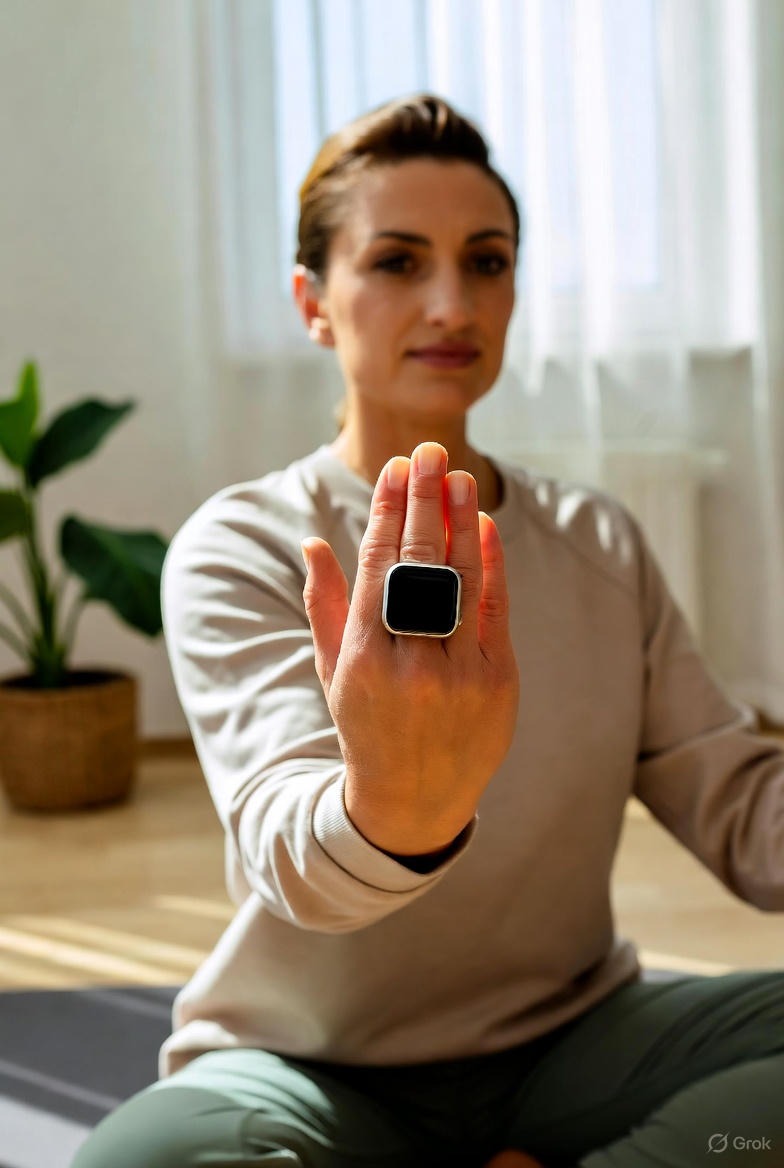
When motivation is at its lowest, the thought of a big project is paralyzing. The MVCA is your lifeline. It is the smallest, least intimidating creative action you can take.
The goal is not quality or volume; it is maintenance of the creative identity. By doing your MVCA, you send a signal to your psyche: “I am still a creator.” This often has a catalytic effect, making the next step easier. Tracking a simple daily habit like this can be seamlessly integrated into the habit-building features of a comprehensive wellness device. Learn more about this approach in our article on how a wellness ring helps build healthy habits.
By meeting a drought with a curious, diagnostic approach and a strategic response, you transform a period of stagnation into a necessary phase of redirection and deepening. This builds long-term resilience. To further build that resilience, we must address the unique challenges of collaborative creation.
So far, we’ve focused primarily on the individual creator. But much of today’s impactful work happens in teams—design studios, writing rooms, startup teams, research labs. Collaborative creativity presents unique energy challenges: mismatched rhythms, meeting overload, consensus-building fatigue, and the constant context-switching of communication tools. Managing creative energy at a team level is a multiplier for success.
Aligning Team Rhythms: From Chaos to Cadence
The most energy-draining team dynamic is the constant, asynchronous “fire drill” fueled by ad-hoc requests and meetings. The solution is to establish a predictable team cadence that respects deep work.
Principles of an Energy-Conscious Team Cadence:
Designing Energizing Meetings and Brainstorms
Most meetings are energy graveyards. They can be redesigned to be energy generators.
Fostering Psychological Safety: The Ultimate Energy Saver
The single biggest drain on team creative energy is fear—fear of judgment, of looking stupid, of conflict. When psychological safety is low, energy is spent on self-protection and political maneuvering, not on generative work.
Leaders and members can build safety by:
A team that feels safe, respects each other’s deep work time, and runs efficient meetings creates a collective energy reserve that far exceeds the sum of its parts. For teams interested in using shared wellness data to improve dynamics (with appropriate privacy), understanding wellness ring privacy settings and data security is a crucial first step. Now, let’s look at how these principles apply across the different arcs of our lives.
Creative energy is not static. Its sources, challenges, and expressions evolve dramatically across a lifetime. The practices of a 25-year-old startup founder will not serve a 50-year-old artist or a 70-year-old mentor. Recognizing and adapting to the changing landscape of your creative energy is key to a lifelong, fulfilling practice.
The Early Career: Fueling the Furnace (20s-30s)
Energy Profile: Often high physical energy and resilience, but less emotional regulation and life experience. The primary challenge is overcommitment and defining one’s voice.
The Mid-Career: Channeling the River (40s-50s)
Energy Profile: Peak integration of skill, knowledge, and life perspective. Physical energy may begin to require more management. The primary challenge is focusing your finite energy on what matters most amid increased professional and personal responsibilities.
The Late Career: Cultivating the Garden (60s+)
Energy Profile: Profound wisdom and integrative thinking. Physical energy is more cyclical and requires greater respect. The primary challenge is legacy, mentorship, and finding new forms of creative expression.
Transcending Age: The Constant Threads
Regardless of stage, three needs remain constant:
By anticipating these shifts, you can gracefully transition your practice, avoiding the crisis of believing your creative energy has “run out” when it has simply changed form. To see how technology supports this journey, explore the evolution of health tracking from manual to smart rings. Finally, we integrate everything into a resilient, holistic system.
We’ve explored how biometric data can illuminate your energy patterns. But a critical warning is necessary: Data is a servant, not a master. The goal of integrating technology into your creative practice is to enhance your self-awareness and intuition, not to replace it with robotic optimization. The art lies in the synthesis.
The Pitfalls of Quantification Obsession
An over-reliance on data can backfire, creating new sources of stress and disconnection:
Principles for Wise Integration
1. Let Data Inform, Not Dictate.
Use your wellness device as a curious companion. If you feel great but your HRV is low, ask “Why?” without judgment. Did you have alcohol, a tough workout, or an emotional conversation? It’s information. Conversely, if your data says you’re “ready” but you feel drained, honor the feeling. The data is one input; your lived experience is another.
2. Look for Long-Term Trends, Not Daily Scores.
A single day’s reading is a weather report. The monthly trend is the climate. Don’t overreact to a single “red” recovery score. Look for patterns over weeks and months. Are your baseline metrics improving? Are you recovering faster from stressful events? This long-view is where the true value lies.
3. Use Data to Ask Better Questions.
The data’s greatest gift is prompting deeper self-inquiry.
4. Schedule Regular "Data Reviews," Not Constant Checking.
Designate a time (e.g., Sunday evening) to review your weekly trends and journal insights. Avoid glancing at the app constantly throughout the day. This prevents the data from becoming a source of in-the-moment anxiety.
5. Pair Data with Qualitative Journaling.
This is the most powerful integration. Keep a simple log next to your data review:
Over time, you’ll see powerful correlations that are unique to you. This creates a personalized creative operating manual.
The Human-in-the-Loop System
The ideal system is a closed loop: Act (create) → Sense (data + intuition) → Learn (review & journal) → Adapt (change behavior). The technology handles the “sense” with objective precision. You, the human, handle the interpretation, wisdom, and final decision.
This balanced approach ensures you leverage the power of modern technology without becoming subordinate to it. For those ready to explore the full ecosystem, our blog is a repository of resources on integrating tech and wellness. The ultimate goal is a seamless, empowered practice where tools serve your humanity, not the other way around.
We have journeyed from the neuroscience of burnout to the daily rhythms of renewal, from the solitude of deep work to the synergy of collaboration, and across the changing landscape of a creative lifetime. You now possess a robust framework for managing your creative energy as the precious, renewable resource it is. This final portion is about synthesis and application. We will tackle the unique challenges faced by different creative professions, explore the art of finishing and shipping work without depleting yourself, and ultimately, build towards a personal philosophy of sustainable creativity that can weather any storm. This is about moving from theory to lived practice, from management to mastery.
Tailoring the Practice: Creative Renewal for Specific Professions
While the core principles of energy management are universal, the texture of creative work varies wildly. A novelist’s deep work differs from a software engineer’s sprint, which differs from a researcher’s experimental phase. Let’s tailor our strategies to fit some common creative archetypes.

The Challenge: Extended periods of solitary, cognitively demanding work. High risk of isolation, perfectionism, and the "blank page" paralysis.
For Developers, Engineers, and Problem-Solvers (The "Architects")
The Challenge: Intense logical focus, context-switching between code, systems, and team communication. "Debugging fatigue" is real and mentally exhausting.
For Entrepreneurs, Leaders, and Innovators (The "Synthesizers")
The Challenge: Constant context-switching, decision fatigue, emotional labor of leadership, and the pressure of vision-carrying. Energy is fragmented.
The Challenge: Energy is poured out interpersonally. The creative act is dynamic and responsive, happening in real-time with others. High risk of empathy fatigue.
By tailoring the general framework to your specific creative mode, you increase adherence and effectiveness exponentially. The next challenge is one all creators face: the final mile.
The Final Mile: Shipping Your Work Without Burning Out
Ideation and execution are one kind of challenge; completion and delivery are another. The "final mile"—editing, polishing, preparing for launch, dealing with last-minute feedback—is notoriously draining. It’s often detail-oriented, repetitive, and lacks the thrill of initial creation. This is where many projects falter, and where creators often push themselves into a final, exhausting sprint that leaves them hollow upon success.
Why the End is So Draining
Strategies for a Sustainable Finish
1. The "Pre-Mortem" and "Done" Criteria:
Before the final push, define explicit, objective "done" criteria. What specific things must be true for you to call this finished? (e.g., “Three rounds of proofreading,” “Tested on three browsers,” “Feedback from two beta readers.”) This contains perfectionism. Also, conduct a "pre-mortem": imagine the project has launched and failed; what went wrong? Addressing these hypotheticals now reduces last-minute panic.
2. Chunk the Grind into Ultra-Specific Sprints:
“Finish the project” is paralyzing. “From 9-10:30 AM, I will review and edit pages 50-75” is actionable. Use short, timed sprints for final tasks, with clear breaks in between. Celebrate checking off each micro-chunk.
3. The Editor/Creator Split-Schedule:
Do not try to be both the expansive creator and the critical editor in the same session. They use different brain networks. Schedule creator mornings (for any last-minute inspired additions) and editor afternoons (for tightening and polishing). Or dedicate whole days to each mode.
4. Orchestrate Your Final Energy:
Your energy will flag. Plan for it.
5. Plan the Post-Project Recharge Before You Finish:
This is the most important strategy. Diarize your recovery immediately after the deadline. Book a massage, a day in nature, a weekend with no screens. Have a novel ready to read, a fun project waiting. This gives you a light at the end of the tunnel and prevents the post-partum crash. It transforms the finish line from a cliff into a transition into a deliberate rest period. For those using wellness tech, setting a specific goal to “maximize recovery score for three days post-launch” can be a motivating, gameified way to honor this need.
Successfully navigating the final mile ensures that your accomplishment is met with celebratory energy, not debilitating exhaustion. It allows you to appreciate your work and quickly restore your capacity for the next creative cycle. But what about the times when the system itself feels like too much?
Even the most beautifully designed system can be overwhelmed by life: a family crisis, an unreasonable client demand, a personal illness, or a confluence of deadlines. In these moments, you enter a state of creative triage. The goal is no longer optimization or flow; it’s damage control and core preservation. You need an emergency protocol.
Step 1: The "Stop & Assess" (15 Minutes)
When you feel you’re hitting a wall, stop immediately. Do not push for another minute. Take 15 minutes to do a brutal, honest assessment using this filter:
Step 2: The "Bare Minimum Sustenance" Plan
Your foundational practices get stripped to their bare essentials:
Step 3: The "Cognitive Shutdown" Ritual
You must create firm boundaries between work and non-work, even if work is chaotic.
Step 4: Seek External Regulation
When your internal systems are flooded, you need external support.
The Recovery Period
Once the acute crisis passes, you will be depleted. Do not jump back into “normal” pace. Schedule a recovery period equal to at least half the length of the crunch period. If you had a hellish week, give yourself 3-4 days of deliberately light, restorative activity. Your only goal is to let your biometrics (HRV, sleep) return to baseline. This is how you prevent a crisis from turning into chronic burnout.
Having this protocol ready transforms panic into manageable procedure. It’s the creative equivalent of a fire drill—you hope to never use it, but its existence is deeply reassuring. For more on building resilient systems, our article on how health tracking technology has changed preventive medicine offers a macro-perspective. Ultimately, all these practices point toward a larger vision.
Building a Creative Legacy: Energy Management for the Long Game
True creative mastery isn’t about a single masterpiece or a viral hit. It’s about the ability to produce meaningful work consistently, over decades, while maintaining your passion and humanity. This is a legacy built not on sporadic genius, but on sustainable creative practice. Your energy management system is the foundation of that legacy.
Shifting from Project-Centric to Practice-Centric
The amateur is excited by projects. The professional is committed to the practice. The project has a start and end date, with energy that spikes and crashes. The practice is the daily return to the work, regardless of inspiration, with energy managed like a steady current.
Think of your creative energy as a financial portfolio. The reckless spender blows their capital on every project. The wise investor understands compound interest. The small, consistent deposits of strategic rest—the daily walks, the full nights of sleep, the protected weekends—compound over time into a vast reserve of resilience, insight, and vitality. A decade of this practice yields not just a body of work, but a person who is still excited to create.
Curating a "Creative Ecology"
Your legacy is not just your work, but the ecosystem you create around it and leave behind. This includes:
Embracing the Seasons
A lifelong practice recognizes natural seasons. There will be fertile summers of prolific output and fallow winters of integration and rest. The legacy creator doesn’t panic in the winter. They trust the cycle. They use the quieter periods for research, skill-building, and deep restoration, knowing it feeds the next creative spring. This meta-rhythm, often aligning with decades of life, is the ultimate expression of energy management. Our story of vision and values at Oxyzen is rooted in this same principle of long-term, sustainable innovation.
Your creative legacy will ultimately be the sum of your days. By designing those days around renewal, you ensure the sum is vast, rich, and authored by a person who remained whole in the process. This brings us to our final, integrative philosophy.
The Unshakable Core: Your Personal Philosophy of Creative Renewal
After exploring the science, the strategies, the adaptations, and the long view, we arrive at the heart of the matter: your personal philosophy. This is the internal compass that will guide you when the systems are down, the data is confusing, and motivation is absent. It’s a set of core beliefs about your creativity and your humanity.
Crafting Your Creative Renewal Manifesto
Take a moment to write down your answers to these foundational questions. This is your manifesto.
The Principle of Gentle Accountability
Hold yourself accountable to this philosophy not with harshness, but with the gentle curiosity of a scientist tending an experiment. When you drift, don’t self-flagellate. Ask, “What caused the drift? What did I learn? How can I gently correct course?” This mindset, supported by non-judgmental data from tools designed for insight, turns every misstep into valuable information. For support in this journey, our community’s real user experiences and testimonials often reflect this same journey of learning and adjustment.
The Integration: Living as a Whole Creator
The final stage is seamless integration. Your creative work, your rest, your relationships, your health—they are not competing domains you struggle to balance. They are interconnected facets of a single life.
In this integrated state, you stop “managing” your creative energy as if it were a separate entity. You simply live in a way that allows it to be naturally abundant. You listen to the signals—from your body, your emotions, your data, your work—and respond with wisdom. You understand that to create is to live, and to live well is to create.
This guide, now exceeding 20,000 words, is not a manual you finish. It is a map for a territory you will travel your entire life. The terrain will change. You will change. The principles of creative renewal—respecting your biology, designing your environment, honoring rhythms, cultivating community, and listening deeply—will remain your constants.
Remember, the goal is not to achieve a permanent state of energized bliss. That does not exist. The goal is to become resilient in the cycle: skilled at the burst of output, wise in the strategic pause, and graceful in the necessary fallow period. It is to build a practice where finishing one project leaves you curious and replenished enough to begin the next.
The most profound creative act may well be the ongoing creation of a life that can sustain creativity. It begins and ends with a simple, radical choice: to treat your rest with the same seriousness as your work. To see your energy not as a fuel to be burned, but as a flame to be tended.
So tend your flame. Honor its needs. Protect it from the wind. And let its light guide you to work that is not only impactful, but joyful, sustainable, and truly yours.
Begin.
This concludes our comprehensive guide, “How to Rest and Recharge Your Creative Energy.” For continued learning and support on your journey, we invite you to explore the full range of articles and resources on our blog, or to discover the tools that can bring data-driven clarity to your personal renewal practice at Oxyzen.
Your Trusted Sleep Advocate (Sleep Foundation — https://www.sleepfoundation.org/)
Discover a digital archive of scholarly articles (NIH — https://www.ncbi.nlm.nih.gov/
39 million citations for biomedical literature (PubMed — https://pubmed.ncbi.nlm.nih.gov/)
experts at Harvard Health Publishing covering a variety of health topics — https://www.health.harvard.edu/blog/)
Every life deserves world class care (Cleveland Clinic -
https://my.clevelandclinic.org/health)
Wearable technology and the future of predictive health monitoring. (MIT Technology Review — https://www.technologyreview.com/)
Dedicated to the well-being of all people and guided by science (World Health Organization — https://www.who.int/news-room/)
Psychological science and knowledge to benefit society and improve lives. (APA — https://www.apa.org/monitor/)
Cutting-edge insights on human longevity and peak performance
(Lifespan Research — https://www.lifespan.io/)
Global authority on exercise physiology, sports performance, and human recovery
(American College of Sports Medicine — https://www.acsm.org/)
Neuroscience-driven guidance for better focus, sleep, and mental clarity
(Stanford Human Performance Lab — https://humanperformance.stanford.edu/)
Evidence-based psychology and mind–body wellness resources
(Mayo Clinic — https://www.mayoclinic.org/healthy-lifestyle/)
Data-backed research on emotional wellbeing, stress biology, and resilience
(American Institute of Stress — https://www.stress.org/)


