


How Your Wellness Ring Prevents Both Under and Over-Activity
The ring helps prevent both under-activity and over-activity.
The ring helps prevent both under-activity and over-activity.
%402x.svg)
For generations, we’ve been fed a singular, exhausting narrative about health: more is more. More steps, more intense workouts, more miles logged, more calories burned. This relentless drive for “more” has created a culture of fitness where the metrics of movement are worshipped, often at the expense of genuine, sustainable well-being. We push through fatigue, ignore our body’s whispers for rest, and wear our over-scheduled lives as a badge of honor. On the flip side, a sedentary lifestyle—the “under-activity” epidemic—remains a profound and silent health crisis, linked to a host of chronic diseases. We are trapped, it seems, between the Scylla of stagnation and the Charybdis of burnout.
But what if true health isn’t found at either extreme? What if the secret lies in a precise, personalized middle ground—a physiological “Goldilocks Zone” where your activity is not too little, not too much, but just right for you?
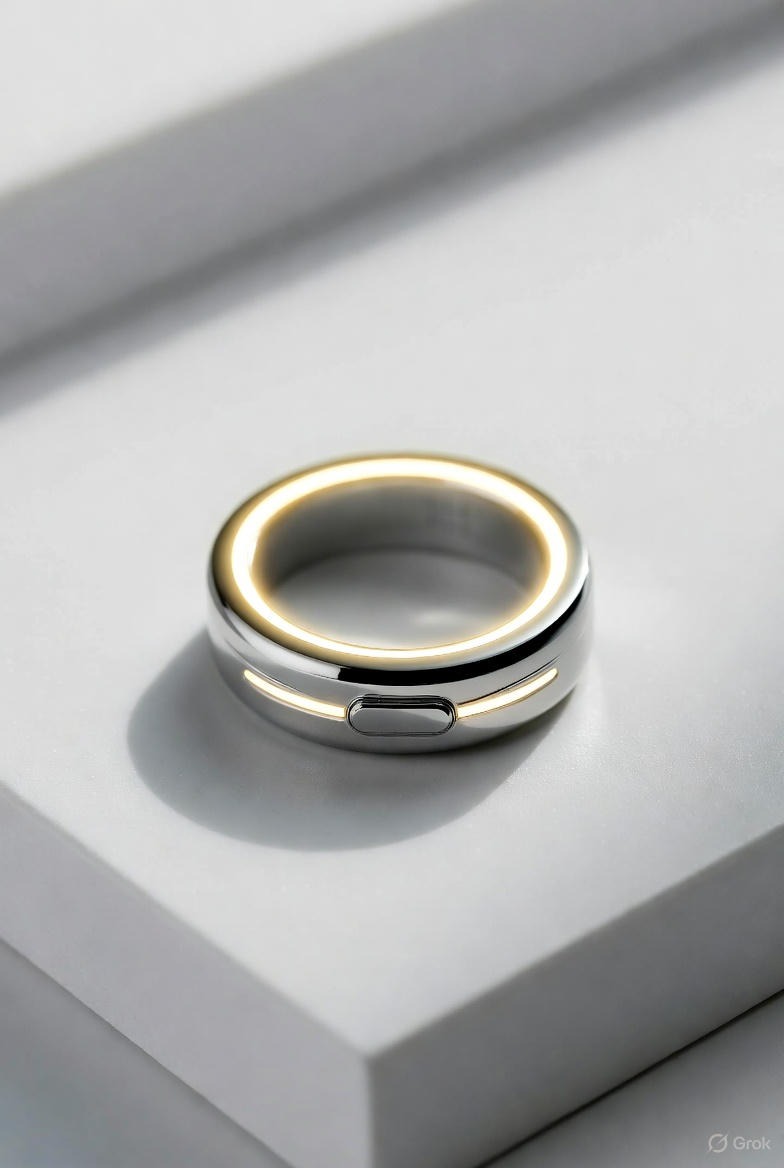
Enter the modern wellness ring. This unassuming piece of wearable technology represents a paradigm shift from obsessive counting to intelligent coaching. It moves beyond being a simple pedometer on your finger. By leveraging advanced sensors and powerful algorithms, it acts as a 24/7 biometrical interpreter, translating the subtle language of your body into actionable insights. Its most revolutionary function is its ability to guard both flanks of your health—protecting you from the risks of inactivity while simultaneously shielding you from the dangers of overtraining and chronic stress. It doesn’t just track your activity; it contextualizes it within the full story of your health, creating a dynamic, living picture of your readiness and resilience.
This is the end of guesswork and the beginning of a truly responsive relationship with your body. In this article, we will explore the sophisticated dual-protection system embedded in your wellness ring. We’ll delve into the science of how it detects the warning signs of both under and over-activity, and how it empowers you to walk the optimal path to sustained vitality, ensuring every move you make is informed, effective, and ultimately, restorative.
We live in an age of unprecedented convenience, but this comfort has come at a heavy cost to our collective health. The “sitting disease” is not a metaphor; it’s a well-documented, global health crisis. Sedentary behavior—defined as any waking behavior characterized by an energy expenditure of 1.5 metabolic equivalents (METs) or less while sitting, reclining, or lying—has been unequivocally linked to a staggering array of negative health outcomes.
The statistics are alarming. According to the World Health Organization, physical inactivity is a leading risk factor for global mortality, contributing to an estimated 3.2 million deaths annually. It is a primary contributor to the rise of non-communicable diseases (NCDs) such as heart disease, stroke, type 2 diabetes, and certain cancers. Prolonged sitting has been shown to negatively impact cardiovascular function, slow metabolism, impair blood sugar regulation, and weaken musculoskeletal structure. A landmark study published in the Annals of Internal Medicine concluded that even after adjusting for physical activity, prolonged sedentary time was independently associated with worse health outcomes, including a higher risk of death from all causes.
The insidious nature of under-activity is that its effects are often cumulative and silent. You don’t feel your insulin sensitivity dropping after three hours at your desk. You don’t sense your muscle protein synthesis slowing to a crawl. The decline is gradual, a slow leak in the foundation of your health that only becomes apparent when a problem—like hypertension, unexplained weight gain, or chronic back pain—manifests years later.
For many, the standard advice of “get 10,000 steps” or “exercise 30 minutes a day” falls short. It’s binary and fails to address the other 23.5 hours. A person can hit the gym for a vigorous 45-minute session and still be dangerously sedentary if they spend the remaining 15 waking hours mostly sitting. This is the critical gap that a wellness ring fills. It provides an all-day movement narrative. It doesn’t just log your workout; it holds you accountable for the nefarious sedentary periods in between. By monitoring your heart rate variability (HRV) and resting heart rate (RHR) trends, it can even begin to show you the physiological consequences of inactivity before you feel them, such as a creeping rise in RHR or a depressed HRV—both early warning signs of declining cardiovascular fitness and autonomic nervous system imbalance.
Understanding this baseline risk is the first step toward prevention. As we explore in our article on movement strategies for every decade, combating inactivity is a lifelong endeavor that requires smart, consistent effort. Your wellness ring becomes your constant companion in this fight, ensuring that the foundation of your daily movement is solid, because, as we’ll see next, building on a weak foundation with excessive activity can be just as hazardous.
If the peril of under-activity is a slow rust, the danger of over-activity is a catastrophic structural failure. In our pursuit of peak performance, aesthetic goals, or simply the endorphin rush of a hard workout, it’s frighteningly easy to cross the line from productive stress into destructive strain. This is the realm of overtraining syndrome (OTS), non-functional overreaching (NFO), and the broader, more insidious condition of chronic over-activity—a state where the cumulative load of exercise, life stress, and inadequate recovery overwhelms the body’s adaptive capacities.
The body thrives on the principle of hormesis: a beneficial adaptive response to a moderate stressor. Lifting weights creates micro-tears in muscle fibers, which then repair to be stronger. Cardio stress improves mitochondrial density and cardiovascular efficiency. However, when the stress is too frequent, too intense, or not balanced with adequate recovery, the adaptive system breaks down. The body remains in a perpetual state of alarm.
The physiological signs are stark:
The most dangerous aspect of over-activity is that its early warning signs are often misinterpreted. Persistent fatigue is seen as a reason to “push through.” A plateau in performance is met with increased effort. A slight ache is ignored until it becomes a full-blown injury. This is where traditional fitness trackers fail—and even contribute to the problem. A watch that only celebrates calorie burn and active minutes, without context, can inadvertently encourage overexertion.
A sophisticated wellness ring, however, is designed to be your recovery advocate. It shifts the focus from output to readiness. By continuously monitoring biometrics like nighttime HRV, resting heart rate, respiratory rate, and sleep quality, it detects the subclinical signs of systemic stress long before you feel overtrained. It answers the critical question: “Is my body ready to handle more stress today, or does it need me to pull back and prioritize repair?” This proactive approach to stress management and recovery is foundational to sustainable health, a topic we delve into deeply in our resource on stress management and connection.
To navigate the narrow path between under and over-activity, you need reliable, real-time feedback from your body. This is where the raw data from your wellness ring transcends simple numbers and becomes a dynamic dialogue. Three core biometrics form the essential “trinity” for assessing your physiological state: Heart Rate Variability (HRV), Resting Heart Rate (RHR), and Sleep Quality.
Heart Rate Variability (HRV) is arguably the single most important metric for gauging your autonomic nervous system (ANS) balance and recovery status. Contrary to what one might assume, a healthy heart does not beat with the metronomic regularity of a drum machine. The tiny, millisecond variations in the time interval between each heartbeat are a sign of a robust, adaptable nervous system. High HRV (within your personal normative range) indicates strong parasympathetic (“rest-and-digest”) tone and good resilience—your body is recovered and ready to handle stress. A downward trend in HRV, however, is a powerful, early-warning signal. It suggests your sympathetic (“fight-or-flight”) system is dominant, you may be fatigued, fighting off illness, or not fully recovered from prior stress, be it physical or emotional. For a detailed exploration of why this metric is so crucial for long-term vitality, see our analysis on how HRV monitoring supports healthy aging goals.
Resting Heart Rate (RHR) is a more familiar, but no less vital, metric. Generally, a lower RHR indicates higher cardiovascular fitness and stronger vagal tone. However, tracking its trend is key. A sudden, sustained increase of 5-10 beats per minute above your personal baseline can be a red flag. It often signals that your body is under systemic stress—from overtraining, insufficient sleep, dehydration, or the onset of illness. In the context of activity, a spiking RHR on a morning you planned a hard workout is your body’s direct request for a lighter day.
Sleep Quality is the non-negotiable foundation upon which all recovery and adaptation is built. It’s not just about duration, but about architecture (time spent in restorative deep sleep and REM sleep) and disturbances. Your wellness ring analyzes your sleep stages, nighttime movement, and respiratory rate to provide a holistic sleep score. Poor sleep destroys HRV, elevates RHR, impairs cognitive function, and cripples your body’s ability to repair itself from either the effects of inactivity or the strain of activity. Without quality sleep, any attempt to find your activity sweet spot is doomed to fail. We have dedicated an entire piece to understanding why sleep quality is the foundation of healthy aging.
Together, this trinity creates a composite picture of your readiness. Your ring doesn’t just tell you how you slept; it tells you what that sleep means for your capacity to perform and recover today. It turns abstract concepts of “fatigue” and “energy” into objective, actionable data, allowing you to make daily decisions that are perfectly aligned with your body’s true needs.
The fundamental leap from a basic fitness tracker to an intelligent wellness guardian lies in moving beyond counting to contextualizing. Anyone can count steps, but steps are a notoriously poor metric for gauging true physiological impact. Ten thousand steps on a flat surface while window-shopping is profoundly different from ten thousand steps with elevation gain while backpacking. The former is light activity; the latter is a significant strain.
Modern wellness rings employ sophisticated algorithms to calculate your Activity Load or Strain Score. This is a composite metric that weighs the intensity and duration of your movement against your personal physiological profile. It typically factors in:
This personalized load score is the cornerstone of preventing over-activity. Instead of a generic, one-size-fits-all calorie goal, you have a daily target that reflects your capacity. The ring’s accompanying app will often provide guidance: “Today’s load was optimal for maintaining fitness,” or “Your load was very high; ensure you prioritize recovery tomorrow.”
Furthermore, the ring tracks cumulative load over days and weeks. This is critical because over-activity is rarely the result of one killer workout; it’s the product of consistently stacking moderate-to-high load days without adequate low-load or rest days in between. By visualizing your weekly load trend, you can clearly see if you’re building a sustainable fitness pyramid or heading for a cliff of overtraining. This ability to track progress intelligently over time is a game-changer, as discussed in our article on how a smart ring tracks healthy aging progress over time.
This intelligent load calculation transforms your ring from a historian that records what you did into a strategist that helps you plan what you should do, based on the impact it will have. It ensures your activity is always dosed appropriately—enough to stimulate positive adaptation, but not so much that it triggers breakdown.
Armed with the deep insights from your Biometric Trinity (HRV, RHR, Sleep) and an understanding of your recent Activity Load, your wellness ring performs its most vital synthesis: generating your Daily Readiness Score or Recovery Index. This single, digestible number or color-coded indicator (e.g., Green = Go, Yellow = Caution, Red = Recover) is your personalized directive for the day.
Think of it as your body’s morning press briefing. It consolidates all the data from the night and the previous days into a clear recommendation for how to approach physical and mental stress.
The power of the Readiness Score is that it creates a forced, data-driven conversation with yourself. It overrides the flawed narratives of “I’m lazy if I don’t work out” or “I can tough it out.” It replaces guilt with science and ego with intelligence. By following its guidance, you systematically avoid the twin pitfalls: on green days, you’re motivated to be active, preventing under-activity; on yellow and red days, you’re given permission and reason to rest, preventing over-activity. This daily calibration is how you sustainably build fitness and health without burnout. To see how this principle applies to a critical life stage, explore our tips for maintaining muscle mass after 60, where intelligent recovery becomes paramount.
Even with the best intentions, modern life conspires to keep us seated. Work demands long hours at a desk, commutes are often passive, and evenings are spent recovering on the couch. This “sedentary drift” is a major contributor to the under-activity pandemic, and it operates in the stealthy background, outside of our formal exercise routines.
Your wellness ring serves as a vigilant sentinel against this drift. Through gentle, intelligent Movement Reminders, it helps you fragment prolonged periods of stillness, a practice shown to have significant metabolic benefits independent of your dedicated workout time. Research indicates that breaking up sitting time with just 1-2 minutes of light movement (standing, walking in place, stretching) every 30-60 minutes can improve glucose regulation, reduce triglyceride levels, and alleviate musculoskeletal discomfort.
These reminders are not random buzzes. A smart ring can use its accelerometer to detect when you’ve been immobile for a customizable threshold (e.g., 45 minutes). The alert is a nudge, not a nag—a simple prompt to get up and move for a minute or two. This feature transforms the ring from a passive recorder of your workout into an active coach for your non-exercise activity thermogenesis (NEAT), which is the energy expended for everything we do that is not sleeping, eating, or sports-like exercise. NEAT is a massive and highly variable component of our total daily energy expenditure and is crucial for metabolic health.
The beauty of this system is its simplicity and cumulative impact. You don’t need to change into gym clothes or break a sweat. You simply stand up, walk to get a glass of water, do a few calf raises, or stretch your hips. Over the course of a day, these micro-movements add up to hundreds of extra calories burned, better circulation, and a body that feels less stiff and more energized. It’s a direct, actionable defense against the hazards of a sedentary lifestyle, ensuring that even on days when a formal workout isn’t possible, you are still actively nurturing your body and fighting the inertia of inactivity. For more on integrating these small, powerful habits, our compilation of 50 healthy aging tips a smart ring helps implement daily offers a wealth of practical strategies.
In the quest for optimal health and longevity, one training concept has risen to the forefront of scientific and athletic communities alike: Zone 2 cardio. This is steady-state exercise performed at a moderate intensity where you can comfortably hold a conversation (sometimes called the “talk test”). Physiologically, it’s the intensity at which your body primarily burns fat for fuel and places a sustainable stress on your mitochondrial function and cardiovascular system. It’s the foundational work that builds a resilient, efficient aerobic engine.
However, the practical challenge has always been: “What is my exact Zone 2?” Generic formulas based on age (e.g., 220 - your age) are notoriously inaccurate. Perceived exertion is subjective and can be skewed by fatigue, caffeine, or environmental factors. Going too slow yields minimal benefit; pushing too hard slips you into Zone 3, which is more glycolytic (sugar-burning), produces more lactate, and contributes significantly more to systemic fatigue and load, undermining the goal of a recovery-friendly, foundational session.
This is where the precision of a wellness ring shines. Using your real-time heart rate data—and often leveraging your personal lactate threshold heart rate if you’ve performed a guided test—the ring provides you with a precise, personalized heart rate range for your Zone 2. You can start a “Zone 2 Training” session on your app, and the ring will give you live haptic or visual feedback to stay in your optimal band.
This personalized approach to low-intensity training is a cornerstone of building health sustainably. It ensures you are consistently stimulating positive adaptation in your most fundamental energy systems without contributing to the cumulative fatigue that leads to burnout. It’s a perfect example of how data drives precision, moving you from well-intentioned effort to guaranteed, efficient results. For a deeper dive into the science behind such effective habits, consider reading our piece on science-backed healthy aging tips that actually work.

Activity—whether it’s a structured workout or the cumulative movement of your day—is the stimulus. But the actual adaptation, the strengthening, the repair, and the improvement—that all happens during recovery, predominantly in sleep. You cannot out-train poor sleep. Therefore, any system designed to balance activity must have an equally sophisticated mechanism for monitoring and promoting recovery. Your wellness ring’s sleep and recovery tracking is the essential counterpart to its activity guidance.
Advanced sleep tracking goes far beyond simple duration. It uses a combination of photoplethysmography (PPG) for heart rate, an accelerometer for movement, and temperature sensors to map your sleep architecture throughout the night:
Your ring synthesizes this data into a Sleep Score and provides insights into your sleep consistency, timing, and efficiency. More importantly, it links this data directly to your recovery metrics. A night of poor deep sleep will almost certainly result in a depressed HRV and a higher RHR the next morning, leading to a lower Readiness Score. The app makes this connection explicit, showing you how last night’s sleep quality directly impacts today’s capacity.
This creates a powerful feedback loop. Seeing the tangible, negative impact of a late night or poor sleep habits on your next day’s readiness is a potent motivator for behavioral change. It encourages you to prioritize sleep hygiene—winding down earlier, minimizing blue light, creating a cool, dark sleep environment—not as an abstract “good thing to do,” but as a concrete performance enhancer and health protector.
By giving you an objective report card on your recovery, the ring ensures that your activity efforts are not in vain. It closes the loop, making you accountable not just for the work you put in, but for the rest you need to make that work worthwhile. This holistic view of the stress-recovery cycle is the ultimate safeguard, guaranteeing that you are always building health, not depleting it.
Stress and Activity: Understanding the Cumulative Load on Your Nervous System
A critical, yet often overlooked, pillar of the under/over-activity equation is non-exercise stress. Your autonomic nervous system (ANS) does not differentiate between the stress of a hard workout, a tense meeting, financial anxiety, or a poor night's sleep with a newborn. To your body, stress is stress—it all contributes to your total allostatic load, the cumulative burden of chronic stress and life events.
This is why two people can perform the exact same workout and have wildly different recovery needs. One may be relaxed, well-rested, and emotionally balanced. The other may be sleep-deprived, juggling work deadlines, and dealing with personal conflict. The workout represents a much higher proportional load on the second individual's already-taxed system, pushing them closer to the brink of over-activity without ever increasing the physical volume.
Your wellness ring, through its continuous monitoring of HRV and RHR, is uniquely positioned to quantify this cumulative load. It sees the physiological signature of a stressful day at the office: a suppressed HRV and a slightly elevated RHR, even if you never left your desk. When you then add a high-intensity workout on top of that, the ring’s algorithm understands the compound effect. Its subsequent Readiness Score will reflect this total burden, likely advising more caution than it would if the same workout followed a calm day.
This insight is transformative. It moves you from a siloed view of fitness (“I did my workout, so I’m healthy”) to an integrated view of well-being (“My nervous system is under heavy load from multiple sources, and I need to manage it holistically”). The ring becomes a tool for emotional and mental awareness, not just physical. It can prompt you to engage in stress-reducing practices like meditation, mindful breathing, or a nature walk on days when your biometrics indicate high stress, even if you’ve been physically inactive. This proactive stress management is a direct defense against the systemic inflammation and hormonal dysregulation that underpins both the diseases of inactivity and the syndromes of over-activity. For strategies on managing this crucial aspect of health, our article on healthy aging tips for women navigating hormonal changes provides context on how external and internal stressors uniquely interact.
The true genius of a wellness ring is not in its ability to tell you your HRV was 45 ms this morning. It’s in its capacity to show you that your average HRV over the last three months has trended upward from 38 ms to 52 ms. This longitudinal view—the story told over weeks, months, and years—is where profound health insights and lasting behavioral change are forged.
Daily numbers can be noisy. A single low HRV reading could be due to a single poor night's sleep, a heavy meal, or a glass of wine. In isolation, it’s not cause for alarm. However, a consistent downward trend over 7-10 days, despite adequate sleep, is a powerful, objective signal that you are not recovering adequately and may be drifting into a state of chronic overreaching.
Conversely, longitudinal data is your greatest motivator in combating under-activity. Seeing your resting heart rate slowly but steadily decline over several months of consistent Zone 2 training and daily movement provides incontrovertible proof that your efforts are working. Watching your deep sleep percentage increase as you prioritize a consistent bedtime reinforces the value of that habit more than any amount of subjective “feeling better” ever could.
This trend analysis allows your ring to provide adaptive baselines. Instead of comparing you to a population average (which is medically useless), it learns your personal norms. It knows what a “good” HRV is for you, and it flags deviations from your baseline. This personalization is key to accurate guidance.
Furthermore, this long-term data is invaluable for:
This evolutionary perspective turns the ring from a daily tool into a lifelong health companion. It validates what works for your unique biology, as explored in our piece on how a wellness ring validates effective healthy aging tips, allowing you to refine your lifestyle based on empirical evidence, not just trends or guesswork.
The principles of balancing under and over-activity are universal, but how they manifest varies dramatically across lifestyles. Let’s examine how the dual-protection system of a wellness ring applies to three archetypal users:
The High-Performing Corporate Professional (The "Sedentary Overworker"):
The Dedicated Endurance Athlete (The "Overtraining Candidate"):
The Health-Conscious Retiree (Focused on "Active Aging"):
In each case, the ring provides a customized, objective interface with the body’s needs, making the abstract goal of "balanced activity" a tangible, daily reality.
For decades, the prevailing fitness ethos has been built on a foundation of suffering. Sweat-drenched clothes, muscle burn, and post-workout exhaustion were seen as the only valid indicators of a successful session. This "no pain, no gain" mentality is not only flawed but is a direct contributor to the over-activity crisis. It glorifies systemic strain and ignores the paramount importance of recovery and consistency.
Your wellness ring is the antidote to this toxic myth. It provides a new, scientifically-grounded definition of effective effort:
Effective effort is the precise dose of stress that stimulates positive adaptation without overwhelming recovery capacity.
The ring’s data constantly reinforces this new paradigm:
This shift in mindset is perhaps the most profound benefit. It cultivates patience, intelligence, and body literacy. You learn to find satisfaction in the holistic process—seeing your weekly load smoothly undulate between stress and recovery, watching your biomarkers improve over time—rather than seeking validation solely from the acute fatigue of a single workout. You begin to understand, as detailed in our blog on healthy aging tips that start working at any age, that sustainable progress is about intelligent habits, not heroic, sporadic efforts.
While the wellness ring provides an unparalleled window into your physiological state, it exists within a larger ecosystem of well-being. Its data becomes exponentially more powerful when integrated with conscious choices in nutrition and mindfulness. This creates a virtuous, self-reinforcing cycle.
Nutrition as Fuel and Recovery Tool:
Your ring’s recovery metrics give you direct feedback on how your dietary choices affect your system. You might notice:
Mindfulness for Nervous System Regulation:
This is where the feedback loop becomes transformative. The ring measures the output of your autonomic nervous system (ANS). Mindfulness practices are a direct input to modulate that system.
By using your ring data to inform these other pillars, you move from fragmented health efforts to a coherent, self-optimizing system. You eat and meditate with purpose, guided by the clear feedback from your own body. This integrated approach is the hallmark of modern, proactive health management. For more on connecting these dots, our exploration of the social connection factor highlights another critical, often under-measured, component of well-being that interacts with your physiological data.
Avoiding Tech Dependence & Cultivating Body Awareness
A legitimate concern with any biometric device is the potential to become overly reliant on it, outsourcing your intuition to an algorithm. The ultimate goal of a wellness ring is not to create a generation of data-obsessed users who ignore their own feelings, but to use data as a teacher to rebuild and refine innate body awareness—a skill many of us have lost.
The ring is a calibration tool. In the beginning, you may have no idea what "recovered" or "overtrained" feels like. You push through fatigue because you can't differentiate it from laziness. You rest when you're bored, not when you're depleted. The ring provides the objective truth. Over time, you start to cross-reference the data with your subjective feelings.
You begin to notice: "Ah, when my readiness score is green, I spontaneously feel energetic and motivated." Or, "When the ring says I'm in the red, I realize I do feel a bit irritable and my muscles are unusually stiff." This process of correlation rebuilds your interoceptive awareness—your perception of sensations from inside your body.
The aim is to reach a point where the data and your intuition are in harmony. You might wake up feeling "off," check your ring, and see a low readiness score that confirms your suspicion, giving you permission to rest. Or, you might feel great and see a green score, validating your plan for a challenging session. Eventually, the ring becomes less of a daily oracle and more of a periodic check-in—a trusted second opinion for your own embodied wisdom.
This journey from data-dependence to embodied literacy is the pinnacle of using the technology wisely. It ensures the tool serves you, not the other way around. It transforms the ring from a crutch into a mentor, guiding you back to a more authentic, attentive relationship with the one health device you were born with: your own body. This philosophy of empowerment is at the core of our story at Oxyzen, where we believe technology should illuminate human potential, not replace it.

The technology embedded in today's wellness rings is just the beginning. As sensor fidelity improves, algorithms become more sophisticated with machine learning, and we integrate more data sources, we are moving toward a future of truly dynamic, personalized activity prescription.
Imagine a system that doesn't just give you a daily readiness score, but a dynamic, adaptive training plan. Based on your long-term goals (e.g., "improve cardiovascular health," "train for a 10k," "maintain muscle mass"), your ongoing biomarker feedback, and your calendar, the ring’s ecosystem could generate a flexible weekly schedule. It would auto-adjust: swapping a scheduled interval run for a Zone 2 session if your HRV is low, or suggesting an extra rest day if it detects an elevated resting heart rate and poor sleep.
Further ahead, we may see integration with:
The goal is a seamless, anticipatory health partner. Your ring would understand your patterns so well it could nudge you with a reminder like: "Based on your upcoming travel and past responses, consider shifting your intense workout to tomorrow and taking a walk today to better manage your overall load."
This is the evolution from tracking to true guided optimization. It turns the principle of preventing under and over-activity into a fully automated, personalized reality, allowing you to focus on living your life while your wellness intelligence works quietly in the background to keep you in your optimal zone. To stay abreast of these evolving possibilities, we invite you to regularly explore our blog where we cover the latest in wellness technology and science.
The theory of balanced activity is compelling, but its true power is revealed in lived experience. Let’s move beyond abstraction and examine how the dual-protection system of a wellness ring has tangibly guided individuals away from the extremes of under and over-activity. These anonymized case studies, inspired by real user experiences, illustrate the practical application of the principles we've discussed.
Case Study 1: Sarah, 42 – The "Weekend Warrior" Recovering from Injury
Case Study 2: David, 58 – The "Active but Stalled" Executive
Case Study 3: Maria, 71 – Prioritizing Consistency and Independence
These cases illustrate that whether the starting point is inactivity, compulsive over-activity, or the vulnerable transition of aging, the wellness ring provides the missing link: objective, personalized feedback that guides behavior toward the sustainable middle path.
To trust the guidance, it's helpful to understand the core technology. The primary sensor in your wellness ring is a Photoplethysmography (PPG) sensor. This is the tiny green light on the inner curvature of the ring. While it may seem like magic, the science is elegant.
How PPG Works:
The PPG sensor emits light (typically green LED light, which is optimal for detecting blood flow) into the capillaries in your finger. Hemoglobin in your blood absorbs this light. As your heart beats, blood volume in the capillaries surges slightly; between beats, it recedes. The sensor measures the amount of light reflected back. These minute, rhythmic changes in light absorption are translated into a pulse waveform. From this waveform, the device can extract:
The Advantage of the Finger:
Why a ring? The finger—particularly the base of the finger—is an ideal location for PPG. It has a high density of capillaries and is less prone to motion artifact during sleep compared to the wrist (which can bend sharply). This often results in more consistent, higher-fidelity data, especially for nighttime metrics critical for recovery assessment. This robust data collection is what allows for the accurate trend analysis that forms the bedrock of personalized insights, validating the daily habits we discuss in resources like healthy aging tips a wellness ring tracks.
Beyond the Beat: Other Sensors in the Ensemble
A modern wellness ring is a sensor fusion device. The PPG is the star, but it’s supported by a cast of other technologies:
This multi-sensor approach creates a rich, multi-layered data stream. Advanced algorithms then synthesize this information, cross-referencing movement data with heart rate to calculate calorie expenditure, or correlating temperature drops with sleep onset. This fusion is what transforms raw sensor data into the intelligent, contextual insights—like your readiness score—that guide your daily choices away from harmful extremes.
As with any powerful tool, maximizing the benefit of a wellness ring requires navigating common misunderstandings. Setting realistic expectations prevents frustration and ensures you use the device as intended.
Pitfall 1: Obsessing Over Single Data Points
Pitfall 2: Treating the Score as a Command, Not a Recommendation
Pitfall 3: Comparing Your Numbers to Others
Pitfall 4: Ignoring the "Why" Behind the Data
Pitfall 5: Expecting Immediate, Dramatic Life Changes
By avoiding these pitfalls, you transition from being a passive data consumer to an active, intelligent participant in your own health optimization, using the ring as a sophisticated tool for self-discovery rather than a source of anxiety or rigid rules.

The wearable market offers several options for tracking health metrics. Understanding the strengths and trade-offs of each form factor highlights why the ring is uniquely suited for the 24/7, recovery-focused mission of preventing under and over-activity.
Consideration
Smart Ring
Smart Watch
Chest Strap HR Monitor
Primary Use Case
24/7 Wellness & Recovery
Fitness & Connectivity
Exercise Performance
Data Continuity
Excellent. Worn continuously, even during sleep and water activities (with rating), providing seamless day/night data.
Good. Often removed for sleep and charging, creating data gaps in critical recovery periods.
Poor. Only worn during workouts. Provides zero data on daily activity, stress, or sleep.
Sleep & Recovery Data
Superior. Finger PPG is less prone to sleep movement artifacts. The form factor is unobtrusive for sleep. Designed for this.
Variable. Wrist-based PPG can be disrupted by arm movement during sleep. Many users don't sleep with a watch.
None. Not applicable.
Activity Tracking
Very Good for General Load. Excellent for all-day movement, step counting, and heart-rate-based activity load. May lack specific GPS or complex rep counting.
Excellent for Structured Exercise. Often includes GPS, dedicated workout modes, rep counting, and more granular sport-specific metrics.
Excellent for HR Accuracy During Exercise. ECG-grade heart rate accuracy during dynamic movement, ideal for interval training analysis.
Wearability & Habit
High. Passive, "set-and-forget." No screen to distract. Becomes a piece of jewelry.
Moderate. Requires conscious wearing, charging management, and can be bulky. Notifications can be distracting.
Low. Only worn intentionally for exercise. Uncomfortable for all-day wear.
Key Strength
Holistic, uninterrupted health snapshot (HRV, RHR, sleep, all-day load).
Versatile tool for fitness, communication, and apps.
Gold-standard heart rate accuracy during high-intensity exercise.
The Verdict for Balanced Activity:
For the specific goal of navigating the space between under and over-activity, the ring’s advantage is clear. Its core competency is measuring the response to activity (recovery) and the background of inactivity (sedentary periods), which are the two sides of the balance equation. A watch excels at measuring the activity itself, and a chest strap excels at measuring the cardiovascular intensity of that activity.
The ideal setup for a serious athlete might be a ring for 24/7 recovery monitoring paired with a chest strap for peak workout accuracy. For the individual focused on holistic health, longevity, and sustainable habits, the ring provides the most complete and actionable picture with the least friction. It is the device designed not just to log your workout, but to ensure your entire lifestyle supports the gains from it and protects you from the costs of both too little and too much. To discover the ring that embodies this philosophy, visit our main shop.
The ring is the hardware, but its intelligence is expressed through software and community. To fully leverage its protective capabilities, engaging with the broader ecosystem is key.
The Companion App: Your Data Command Center
A powerful app transforms raw data into wisdom. Look for apps that provide:
The Power of Community and Social Proof
Many platforms include community features or share user testimonials. Seeing how others interpret their data and navigate similar challenges can be incredibly motivating and educational. It normalizes the need for rest and celebrates non-scale victories like an improved HRV trend. Reading real user testimonials can provide inspiration and reinforce that the journey toward balance is shared and achievable.
Integration with Health Professionals
The future of healthcare is personalized and data-informed. Your longitudinal ring data can be a goldmine for proactive discussions with:
This ecosystem turns the ring from a solitary device into a node in a network of support—connecting you to knowledge, community, and professional guidance, all centered on the unified goal of keeping you thriving in your personal Goldilocks Zone.
The ultimate reward for mastering the balance between under and over-activity is not just a better training log or more energy this week; it is the profound impact on healthy aging. The principles enforced by your wellness ring align perfectly with the emerging science of longevity, which emphasizes hormetic stress (the right dose) and resilience.
Building a Resilient System:
Consistent, moderate activity (guided by your ring) maintains muscle mass and bone density, crucial for preventing sarcopenia and osteoporosis. It enhances mitochondrial function, the energy powerhouses of your cells, whose decline is a hallmark of aging. It improves cardiovascular efficiency, reducing strain on the heart and vascular system over decades.
Managing the Stress of Aging:
As we age, our recovery capacity naturally diminishes. The same workout at 50 requires more systemic resources to recover from than at 30. Your wellness ring automatically accounts for this by adjusting your personal baselines over time. It becomes increasingly vigilant in protecting you from over-activity, ensuring that your activity remains a net positive for your system, not a drain. This is especially critical during key transitional decades, as we note in our guide to healthy aging tips for your 50s, a critical decade for prevention.
The Cognitive Connection:
Physical activity is one of the most potent protectors of cognitive health. It stimulates brain-derived neurotrophic factor (BDNF), promotes cerebral blood flow, and can reduce the risk of dementia. However, chronic over-activity and the associated systemic inflammation can have the opposite effect. By keeping activity in the beneficial zone, you are directly supporting brain health and cognitive function for the long term.
The Ring as Your Aging Companion:
In this long-view perspective, the ring evolves from a fitness device into a longevity guardian. It ensures that your activity strategy evolves with you, always seeking the optimal dose to stimulate vitality without accelerating decay. It provides the objective feedback needed to adapt your habits as your body changes, allowing you to proactively manage your healthspan. This journey of continuous, data-informed adaptation is what we explore in our article on smart rings supporting healthy aging goals over time.
By preventing the extremes, you are not just avoiding injury or burnout today; you are investing in a future of sustained independence, vitality, and well-being. The balanced path your ring helps you walk is, fundamentally, the path to a longer, healthier, and more capable life.
Your Trusted Sleep Advocate (Sleep Foundation — https://www.sleepfoundation.org/)
Discover a digital archive of scholarly articles (NIH — https://www.ncbi.nlm.nih.gov/
39 million citations for biomedical literature (PubMed — https://pubmed.ncbi.nlm.nih.gov/)
experts at Harvard Health Publishing covering a variety of health topics — https://www.health.harvard.edu/blog/)
Every life deserves world class care (Cleveland Clinic -
https://my.clevelandclinic.org/health)
Wearable technology and the future of predictive health monitoring. (MIT Technology Review — https://www.technologyreview.com/)
Dedicated to the well-being of all people and guided by science (World Health Organization — https://www.who.int/news-room/)
Psychological science and knowledge to benefit society and improve lives. (APA — https://www.apa.org/monitor/)
Cutting-edge insights on human longevity and peak performance
(Lifespan Research — https://www.lifespan.io/)
Global authority on exercise physiology, sports performance, and human recovery
(American College of Sports Medicine — https://www.acsm.org/)
Neuroscience-driven guidance for better focus, sleep, and mental clarity
(Stanford Human Performance Lab — https://humanperformance.stanford.edu/)
Evidence-based psychology and mind–body wellness resources
(Mayo Clinic — https://www.mayoclinic.org/healthy-lifestyle/)
Data-backed research on emotional wellbeing, stress biology, and resilience
(American Institute of Stress — https://www.stress.org/)


