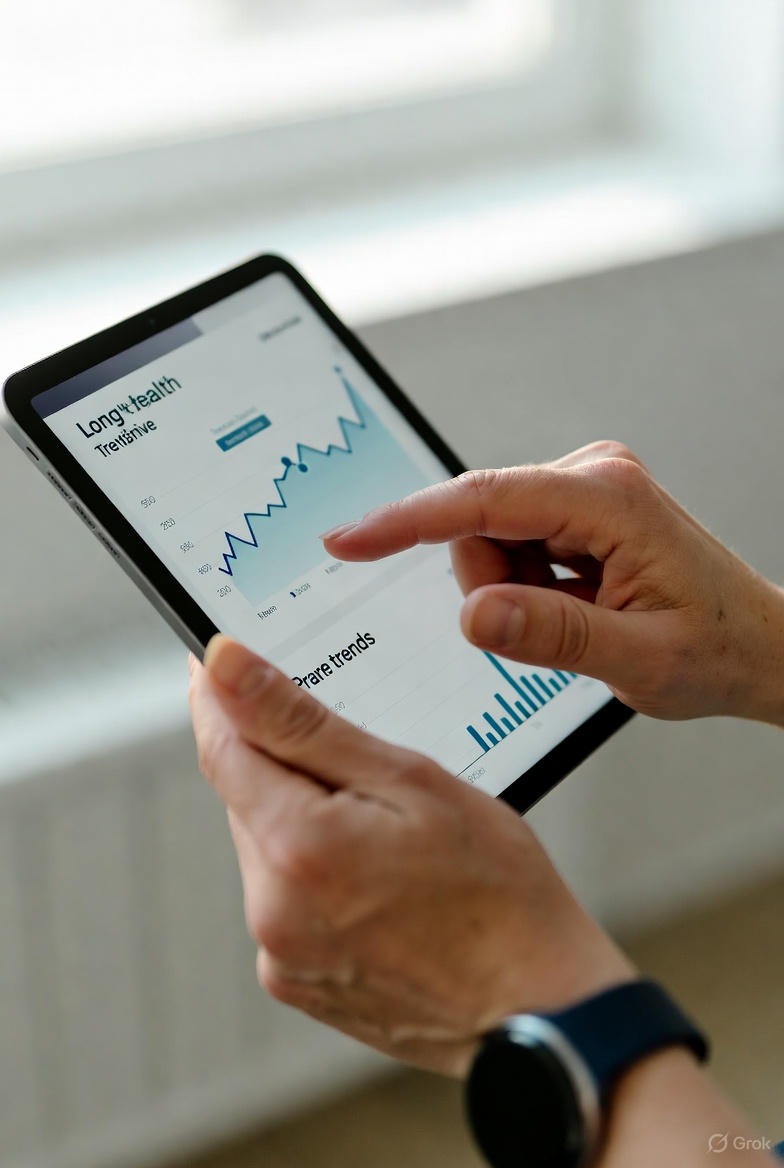
How Your Wellness Ring Shows Healthy Movement Habit Progress
The ring visually shows your progress in habit formation.
How Your Wellness Ring Shows Healthy Movement Habit Progress
Forget everything you know about fitness tracking. This isn’t about punishing step counts or guilt-inducing calorie burns. This is about a quiet revolution happening right on your finger. Your wellness ring—a sleek, unassuming piece of wearable technology—isn’t just measuring movement; it’s translating the subtle, complex language of your body into a coherent story of progress. It’s showing you not just if you moved, but how you moved, the quality of that movement, and its profound connection to every other aspect of your wellbeing. This is the frontier of personalized health: moving from fragmented data to meaningful insight, from arbitrary goals to sustainable habits.
The old paradigm of health tracking was transactional: 10,000 steps equals success. The new paradigm, championed by sophisticated devices like the Oxyzen smart ring, is relational. It understands that your morning walk impacts your afternoon focus, your evening workout influences your deep sleep cycle, and your weekend inactivity may be a sign of accumulated stress, not laziness. Your ring observes the interplay between movement, recovery, stress, and sleep, revealing patterns you could never perceive on your own.
This article is your deep dive into that narrative. We will dismantle the simplistic concept of "movement" and rebuild it as "movement habits"—the daily, weekly, and monthly rhythms that truly define your physical health. We’ll explore exactly how the sensors in a device like Oxyzen capture this data, demystify the key metrics you should be watching, and provide a framework for interpreting what your ring is telling you. This is about learning to listen to your body’s signals, with your ring as a fluent translator, guiding you toward a more balanced, energized, and resilient you. The journey to better health is a mosaic of small, consistent actions. Let’s learn how to see that beautiful picture taking shape, one data point at a time.
Beyond Steps: Redefining "Movement" for Holistic Health
We have been culturally hypnotized by the step count. It’s a clean, simple, easily gamified metric. But if health were a novel, steps would be the word count—a basic measure of output that says nothing about the plot, character development, or literary quality. True healthy movement is a rich tapestry woven from multiple threads: intensity, consistency, variety, and recovery. Your wellness ring sees all these threads.
The Four Pillars of Healthy Movement Habits:
Consistency Over Intensity (The Rhythm of Life): Your body thrives on rhythm. A 20-minute walk every day is often more beneficial for systemic health (metabolic, cardiovascular, mental) than a single punishing two-hour weekend hike followed by six days of stagnation. Your ring tracks your daily activity baseline and highlights streaks of consistency, rewarding the habit itself, not just the peak.
Movement Variety (The Spice of Physical Life): Human bodies are designed for a diverse menu of movement: walking, lifting, stretching, sprinting, balancing. A smart ring, through its combination of accelerometers, gyroscopes, and heart rate monitoring, can differentiate between these modalities. It can identify when your week has been heavy on cardio but light on strength, or when you’ve been sedentary for too long without a mobility break. This insight prevents overuse injuries and promotes full-body fitness.
Quality of Movement (Listening to Your Body): This is where advanced sensors truly shine. Two people can walk 10,000 steps and have vastly different experiences. One might have an elevated, erratic heart rate and high stress levels throughout. The other might maintain a steady, low heart rate in a "fat-burning" zone. Your ring assesses the physiological cost of your activity. Were those steps stressful or meditative? Did that workout leave you properly fatigued or dangerously drained? This data is crucial for aligning exercise with your body’s current state, a concept explored in depth in resources like our guide on optimizing recovery while you rest.
The Recovery-Movement Symbiosis: Movement is not an isolated event. It’s a stimulus. The real magic—the adaptation, strength-building, and health improvement—happens during recovery. Your ring closes this feedback loop. It shows you how last night’s deep sleep prepared you for today’s workout, and how today’s workout impacts tonight’s sleep readiness. Without this context, you’re only seeing half of the equation.
By tracking these pillars, your wellness ring moves you from asking "Did I get my steps?" to more empowering questions: "Is my movement routine balanced?" "Am I recovering adequately from my efforts?" "Is my daily activity supporting my overall stress and sleep health?" This holistic view is the foundation of sustainable progress, a philosophy central to the mission at Oxyzen.
The Invisible Orchestra: How Your Ring Actually Tracks Movement
To trust the data, it helps to understand the instruments in the orchestra. A modern wellness ring is a masterpiece of miniaturized engineering, packing a suite of sensors into a form factor designed for 24/7 wear. This constant wear is its superpower—unlike a phone left on a desk or a watch taken off to charge, the ring gets a continuous, intimate signal from a major artery on your finger.
Here’s a breakdown of the key players and what they conduct:
The 3-Axis Accelerometer & Gyroscope: These are the workhorses of gross movement tracking. The accelerometer measures linear acceleration—the forward, sideways, and up/down motion of your hand. The gyroscope measures orientation and rotational velocity. Together, they create a precise digital signature of your movement. They don’t just know you’re moving; they can distinguish the specific pattern of a walk from a run, the rhythmic motion of cycling, the repetitive form of weightlifting, and even the subtle fidgeting of your hands while typing. This is how your ring accurately logs activity type and duration, even when you’re not formally "exercising."
The Optical Heart Rate (PPG) Sensor: This is the window into your inner physiology. It uses tiny green LED lights to illuminate the capillaries in your finger and a photodetector to measure the amount of light absorbed. With each heartbeat, blood volume pulses, changing the light absorption. This provides a real-time heart rate (HR). But its utility goes far beyond a single number.
Heart Rate Variability (HRV): By measuring the precise millisecond intervals between heartbeats, the sensor derives HRV—a powerful, non-invasive indicator of your autonomic nervous system balance. A higher HRV (at rest) typically indicates better recovery, resilience, and readiness for exertion.
Activity Heart Rate & Zones: During movement, it tracks how hard your cardiovascular system is working. This allows the ring to calculate calorie expenditure more accurately than motion alone and determine your time in heart rate zones (e.g., fat burn, cardio, peak). This tells you the intensity of your movement.
The Skin Temperature Thermometer: A small but mighty sensor that tracks the subtle fluctuations in your peripheral temperature. Post-exercise, skin temperature changes can reflect inflammation and recovery processes. More broadly, its 24/7 baseline tracking can signal the onset of illness, changes in metabolism, and, as discussed in our deep sleep formula guide, is intimately tied to circadian rhythm and sleep quality.
The Algorithmic Conductor: Raw data from these sensors is just noise. The true genius lies in the proprietary algorithms—the conductor that turns sensor data into symphonic insight. These algorithms fuse the motion data with the physiological data. They use machine learning to filter out false signals (like the vibration of a car ride) and correctly classify activities. They contextualize a spike in heart rate: Was it due to exercise, or a stressful work call? This synthesis is what transforms a ring from a data logger into an intelligent health companion.
This 24/7, multi-sensor fusion is what sets a dedicated wellness ring apart. It’s always on, always listening, providing a data density and contextual richness that powers the nuanced habit tracking we’ll explore next. For a deeper look at the underlying technology, our blog offers a comprehensive breakdown on how sleep trackers actually work, with principles that apply directly to activity tracking.
Decoding Your Dashboard: Key Metrics for Movement Progress
Now that we understand the instruments, let’s learn to read the sheet music. Your companion app is your dashboard to this wealth of information. But with so many numbers and graphs, what should you actually focus on to gauge your movement habit progress? Let’s translate the key metrics from jargon into actionable insight.
1. Active Metabolic Hours / Activity Score: This is your holistic daily movement grade. Instead of a single step count, this metric typically combines duration, intensity, and sometimes heart rate data into a single, weighted score. Did you take a long, gentle walk? You’ll get points. Did you have a short, intense HIIT session? You’ll get different points. The algorithm rewards all meaningful movement. Watching this score trend upward over weeks and months is a powerful indicator that you’re successfully integrating more activity into your lifestyle. It’s a more meaningful progress marker than any single workout.
2. Resting Heart Rate (RHR) Trends: Your RHR, measured best during deep sleep or upon waking, is a fundamental biomarker of cardiovascular fitness and recovery. As your movement habits improve—particularly with consistent cardio vascular exercise—your heart muscle becomes stronger and more efficient, pumping more blood with each beat. This often leads to a gradual decrease in your RHR over time. In your app, don’t fixate on daily fluctuations (which can be affected by stress, alcohol, or poor sleep). Instead, look at the weekly or monthly average trend line. A downward slope is a silent, powerful cheer from your cardiovascular system.
3. Heart Rate Variability (HRV) Balance: If RHR is about the heart’s strength, HRV is about its intelligence and adaptability. It reflects the tug-of-war between your stress (sympathetic) and recovery (parasympathetic) nervous systems. When you’re well-recovered, resilient, and fit, your HRV tends to be higher. Intense or excessive movement without adequate recovery will suppress HRV. Therefore, tracking HRV isn’t about chasing a high number every day; it’s about observing its balance with your activity. * Good Sign: Your HRV baseline gradually rises over months, and it shows resilience—dipping after a hard training day but rebounding quickly after a rest day. * Warning Sign: Your HRV is chronically low or trending downward while your activity is high. This is a classic sign of overtraining and a signal to prioritize rest, as consistent poor recovery can even impact the brain-boosting connection of deep sleep.
4. Activity Heart Rate & Zone Analysis: During a workout, your ring shows you how your heart responds. Reviewing this post-session helps you understand the quality of your effort. * Heart Rate Curve: A smooth, appropriate rise and fall indicates a well-paced session. A spiky, erratic graph might suggest uneven pacing or high external stress. * Time in Zones: Are you spending most of your time in the intended zone? If your goal is endurance but you’re constantly spiking into peak zones, you may need to pace better. This data helps you execute your training plans with precision.
5. Recovery & Readiness Scores: This is the pinnacle of sensor fusion—an algorithmic synthesis of your previous day’s activity, last night’s sleep (including deep sleep duration), HRV, RHR, and temperature. It gives you a single, personalized number or status (e.g., "Peak," "Good," "Recover") each morning. This is your body’s daily briefing. A "Recover" score doesn’t mean "be lazy." It means your body is asking for lower-intensity movement, like walking or yoga, to aid repair. Honoring this score is the key to training smarter, not just harder, and preventing burnout.
By learning to watch these metrics in concert, you stop being a passive collector of data and become an active participant in a dialogue with your body. For more on interpreting your body’s signals, our blog is a treasure trove of expert analysis.
The 28-Day Rhythm: Identifying Your Personal Movement Patterns
Human habits don’t form or reveal themselves in 24-hour cycles. They unfold over weeks and months. This is where your wellness ring’s long-term data becomes truly transformative. By zooming out to a 28-day or monthly view, you move from analyzing events to identifying patterns—the true architecture of your lifestyle.
What to Look For in Your Monthly Trends:
The Activity Cycle: Do you see a predictable weekly rhythm? Perhaps you’re highly active Tuesday-Thursday, crash on Friday, have moderate weekend activity, and are sedentary on Monday. Recognizing this pattern allows for intentional planning. Could you add a light Monday morning walk to break the slump? Could you schedule your hardest workouts for your naturally energetic days?
Recovery Debt: Look for clusters. Do periods of high activity (multiple consecutive days of high scores) consistently lead to a plunge in HRV, a spike in RHR, and poor sleep scores? This visual "debt" is a clear sign you’re not scheduling enough deliberate recovery. The pattern shows you need to build rest days before your body forces you to.
Stress-Movement Interaction: Overlay your activity graphs with your stress metric graphs (often derived from HRV and heart rate data). Do you see that on high-stress days, even light activity feels harder or your sleep is worse? Conversely, do you see that on days you exercised, your stress levels were lower in the evening? This reveals your personal stress-buffering equation.
The Impact of Life Events: Your monthly timeline will tell the story of a busy work project, a vacation, or a minor illness. You’ll see the activity dip, the sleep disruption, and the subsequent recovery. This isn’t failure; it’s data. It teaches you how your body responds to life’s inevitable disruptions and, most importantly, how long it truly takes you to bounce back.
Case Study: Sarah’s Pattern Revelation Sarah, a Oxyzen ring user, felt she was "always tired" despite working out. A glance at her daily stats showed great workouts. But the 28-day view revealed a punishing pattern: intense spin class every Monday, Wednesday, Friday. Every Saturday, her HRV hit a weekly low and her readiness score was "Poor." She was starting each week already depleted. The pattern was clear: she needed more space between high-intensity efforts. She swapped Wednesday’s spin for a strength session and added a yoga day on Saturday. Within two cycles, her weekly HRV baseline was higher, her energy was stable, and her performance in her remaining spin classes actually improved. Her ring didn’t give her the answer; it showed her the problem, allowing her to craft her own solution. You can read similar user-driven discoveries on our testimonials page.
This pattern recognition is the core of habit intelligence. It externalizes your tendencies, allowing you to make conscious adjustments. You’re no longer a passenger in your health journey; you’re the navigator, with a detailed map of your own terrain.
From Sedentary to Active: How the Ring Nudges You Towards Consistency
Understanding patterns is one thing. Changing them is another. This is where the modern wellness ring evolves from a dashboard into a gentle, personalized coach. It employs principles from behavioral science—specifically, the concept of "nudges"—to help you build consistency, the most important factor in habit formation.
The Nudge Architecture of a Smart Ring:
Goal Setting & Micro-Targets: Instead of one daunting goal ("get fit"), the app helps you set small, daily or weekly targets based on your current baseline. If your average daily activity score is 8, it might nudge you to aim for 9. This "small wins" approach builds momentum and reinforces the identity of someone who is active, one achievable day at a time.
Inactive Alerts (The Gentle Tap): After a period of prolonged inactivity (e.g., 60 minutes of sitting during your workday), your app might send a subtle notification. Not a shaming alarm, but a reminder: "You’ve been still for a while. A 5-minute walk could boost your focus." This disrupts sedentary autopilot and anchors movement to natural breaks in your day.
Celebration of Streaks: Humans are wired to maintain streaks. Your app visually rewards consistency—a "7-Day Activity Streak" badge, a glowing weekly graph. This positive reinforcement leverages our innate aversion to breaking a chain, making it more likely you’ll take that evening walk even when you don’t feel like it, just to keep the streak alive.
Readiness-Based Suggestions: This is the most advanced nudge. On a morning you wake up with a "Peak" readiness score, your app might highlight: "Your body is primed for a challenging workout today." On a "Recover" day, it might suggest: "Focus on recovery. Try a walk or gentle stretch." This trains you to align your activity with your body’s capacity, optimizing results and reducing injury risk. It personalizes the "listen to your body" mantra with actual data.
Progress Visualizations: Seeing a graph fill up, a ring close, or a monthly calendar shaded with active days provides visual proof of your commitment. This abstract progress becomes concrete, fueling motivation. It answers the question "Is this even working?" with a resounding, data-driven "Yes."
These nudges work because they are timely, contextual, and non-judgmental. They provide the tiny bridge between intention and action. For individuals who feel overwhelmed about where to start, this guided approach can be the catalyst that turns aspiration into routine. It’s a core part of the seamless user experience we strive for at Oxyzen.
The Sleep-Movement Feedback Loop: Your Most Critical Health Synergy
If there is one relationship your wellness ring illuminates more powerfully than any other, it is the sacred, bidirectional dialogue between movement and sleep. They are not separate health categories; they are partners in a perpetual dance. One leads, the other follows, and together they determine your daily vitality. Your ring is the first device capable of showing you this intimate conversation in high definition.
How Movement Fuels Sleep:
Temperature Regulation: Physical activity raises your core body temperature. Following exercise, your temperature drops, a decline that mirrors and can enhance the natural drop needed to initiate sleep. This thermoregulatory effect is a powerful sleep signal, a topic detailed in our exploration of the science of deep sleep.
Sleep Pressure & Deep Sleep: Activity, especially sustained aerobic exercise, builds adenosine (a sleep-promoting chemical) in the brain. This increases "sleep pressure," making it easier to fall asleep and potentially increasing the amount of slow-wave deep sleep you get—the most physically restorative phase.
Stress Buffer: Exercise is a well-documented stress reliever. By metabolizing stress hormones like cortisol and releasing endorphins, it can quiet a racing mind, making the transition to sleep smoother and reducing nighttime awakenings.
How Sleep Fuels Movement:
Muscle Repair & Growth: During deep sleep, growth hormone is released, facilitating the repair of microscopic muscle tears caused by exercise. Without sufficient quality sleep, this repair is incomplete, leading to persistent soreness, poor performance, and increased injury risk.
Energy Restoration & Motivation: Sleep restores glycogen (energy stores) in your muscles and liver. A night of poor sleep leaves your physical and mental fuel tanks half-empty, making any workout feel harder and decreasing your drive to even start one. Your ring’s readiness score is a direct quantification of this.
Cognitive Function for Form: Movement quality isn’t just about muscles; it’s about coordination, balance, and technique—all governed by the brain. Sleep deprivation impairs motor skills, reaction time, and focus, increasing the risk of poor form and accidents during exercise.
Reading the Loop on Your Dashboard: Your app makes this abstract loop tangible. You will see direct correlations:
A Pattern: Day with high activity score + good sleep → High readiness score next morning.
A Warning: Day with very high activity + poor sleep (short duration, low deep sleep) → Low readiness score, high RHR.
An Insight: Day with moderate, consistent activity (like a long walk) → Better sleep quality than a completely sedentary day.
By observing this loop, you learn the type and timing of movement that best serves your sleep. You might discover that evening HIIT workouts spike your core temperature too close to bedtime, disrupting your deep sleep sweet spot, while afternoon strength training or morning cardio is ideal. This personalized feedback is invaluable for optimizing both your days and your nights.
Heart Rate Variability: The North Star of Sustainable Training
We’ve touched on HRV, but it deserves its own spotlight. In the quest for better movement habits, HRV is your most honest advisor. While activity scores tell you what you did, and heart rate tells you how hard you worked, HRV tells you how well you handled it and if you’re ready for more.
Think of your body as a bank. Exercise is a withdrawal—a stressor that depletes resources. Recovery (sleep, nutrition, rest) is a deposit. HRV is your real-time bank balance. A high balance (high HRV) means you have reserves and can afford a large withdrawal (hard workout). A low balance (low HRV) means you’re low on reserves; making a large withdrawal is risky and could lead to "overdraft"—injury, illness, or burnout.
How to Use HRV to Guide Your Movement Habits:
Establish Your Baseline: Wear your ring consistently for at least two weeks without making drastic changes. Your app will calculate your personal HRV baseline (usually an overnight average). This is your normal.
Interpret Daily Deviations:
HRV Significantly Above Baseline: This is a green light. Your body is recovered, resilient, and likely ready for a challenging session. Your parasympathetic ("rest and digest") system is dominant.
HRV At or Near Baseline: A yellow light. Proceed with your planned activity, but listen closely to your body. A standard workout is likely fine.
HRV Significantly Below Baseline: A red flag. This suggests your system is stressed, possibly from prior training, emotional stress, poor sleep, or illness. This is a day for deliberate recovery: light walking, stretching, meditation, or complete rest. Pushing through is counterproductive. This state, if chronic, can contribute to the silent signs of deep sleep deprivation, as the body struggles to find equilibrium.
Watch the Trend, Not the Daily Number: A single low HRV reading isn't cause for alarm—life happens. But a sustained downward trend over 5-7 days while maintaining high activity is the clearest signal your ring can give you to pull back and prioritize recovery.
The HRV-Guided Habit Shift: Instead of rigidly sticking to a Monday-Wednesday-Friday workout schedule, you begin to practice responsive training. You check your morning readiness score (heavily influenced by HRV) and let it guide your day’s movement.
Readiness: Peak/High -> Go for that intense run or heavy lift.
Readiness: Medium -> Stick with a moderate, maintenance workout.
Readiness: Low/Recover -> Swap the gym for a walk or a yoga session.
This approach maximizes the benefit of your hard days by ensuring you’re truly prepared for them, and optimizes your easy days to actually facilitate recovery. It turns movement from a prescriptive chore into a dynamic, intuitive conversation with your body’s current needs. For any lingering questions on applying this data, our comprehensive FAQ is an excellent resource.
Avoiding Plateaus & Overtraining: Using Data to Evolve Your Routine
Even with the best intentions, progress is not linear. The two most common derailers of movement habit progress are the plateau (where improvements stall) and overtraining (where pushing too hard leads to regression). Your wellness ring provides the early-warning system and diagnostic tools to navigate both.
Identifying a True Plateau: A plateau isn’t just a week without a new personal best. It’s a sustained period (several weeks) where key metrics stop trending positively despite consistent effort.
Data Signs: Your activity scores are stable, but your RHR has stopped decreasing. Your performance feels stagnant. Your HRV is flatlining instead of gradually climbing.
The Ring-Powered Solution: This data tells you your body has adapted to the current stimulus. It’s time for a change. Use your ring’s activity breakdown to audit your routine. Has your movement become too consistent? If every workout is the same pace, same load, same type, your body has become efficient—it’s no longer being challenged. The ring’s data gives you the confidence to strategically introduce variety and progressive overload: add intervals to your runs, increase weight in your lifts, try a new sport. The disruption will trigger new adaptation, and you’ll see your metrics begin to respond again.
The Sneaky Danger of Overtraining: Overtraining isn’t just for elite athletes. It’s a state of chronic stress where the body cannot recover adequately from the cumulative load of exercise and life. It leads to performance decline, persistent fatigue, mood changes, and increased injury/illness risk. Your ring spots it long before you consciously feel it.
Data Signs (The Cardinal Red Flags):
A Rising Resting Heart Rate: A sustained 5-10 bpm increase above your normal baseline, especially upon waking.
A Chronically Suppressed HRV: HRV remains below your personal baseline for over a week, even on rest days.
Poor Sleep Despite Exhaustion: You’re physically tired but your sleep scores are poor—fragmented, with low deep sleep and REM sleep. Your body is too stressed to settle into restorative cycles.
A Plummeting Readiness Score: You’re waking up with consistently "Low" scores even after a full night in bed.
The Ring-Powered Solution: When you see this cluster of signals, your ring is issuing a non-negotiable mandate: Deload. This means drastically reducing training volume and intensity for several days to a week. Do not ignore this data. Switch to very light activity like walking, gentle yoga, or complete rest. Use your ring to monitor your recovery metrics. You’ll know you’re emerging from the hole when your morning RHR starts to drop back down and your HRV begins to rebound. This proactive, data-driven deload can prevent weeks or months of lost progress due to burnout or injury.
By teaching you to recognize these signals, your ring transforms you from someone who just does workouts into an intelligent athlete-manager of your own body, capable of periodizing effort for long-term, sustainable gains.
Mindful Movement: How Your Ring Bridges Physical Activity and Mental Wellbeing
For decades, we’ve separated “physical health” from “mental health.” Your wellness ring reveals this to be a false dichotomy. The data flowing from your finger tells a unified story where movement isn’t just about building muscle or endurance; it’s a powerful modulator of your nervous system, mood, and cognitive function. This section explores how tracking movement holistically can foster not just a fitter body, but a calmer, more resilient mind.
Movement as a Nervous System Regulator:
Your autonomic nervous system has two primary gears: the sympathetic (fight-or-flight) and the parasympathetic (rest-and-digest). Modern life often leaves us stuck in a low-grade sympathetic drive. Interestingly, movement can be either a driver of stress or a powerful tool to resolve it, depending on the type and context.
Stress-Provoking Movement: When you exercise in a state of already-high stress—pushing through a workout because you “have to,” ignoring fatigue, or chasing metrics angrily—you can further spike cortisol and sympathetic activity. Your ring sees this: a workout with an unusually high and erratic heart rate relative to the effort, followed by poor recovery metrics and disrupted sleep.
Stress-Resolving Movement: Conversely, rhythmic, mindful, or enjoyable movement can be profoundly parasympathetic. A walk in nature, a flow-state yoga session, or even mindful breathing during a weightlifting set can lower cortisol, reduce anxiety, and improve heart rate variability. Your ring reflects this too: a steady, appropriate heart rate curve during activity, followed by a positive HRV response and improved sleep.
Key Metrics for Mental-Movement Connection:
Post-Activity Stress Metric: Many advanced algorithms now provide a “stress” or “energy” score throughout the day. Observe what happens to this score after different types of movement. Does your 30-minute lunch walk lower your afternoon stress score? Does a frantic, distracted workout leave it elevated? This feedback helps you curate an activity menu that truly serves your mental state.
Sleep Architecture Response: The ultimate test of an activity’s mental impact is how you sleep. Does the activity help or hinder your sleep latency (time to fall asleep) and sleep continuity? Mindful movement that regulates the nervous system should lead to quicker sleep onset and more stable sleep. High-stress movement can lead to fragmented sleep, as shown in our analysis of what your device can and can't measure.
HRV Response Pattern: As discussed, HRV is a direct readout of autonomic balance. An activity that leaves you feeling mentally clear and calm should correlate with a stable or slightly improved HRV in the hours following. An activity that leaves you wired and anxious may suppress HRV.
Building Mindful Movement Habits with Data:
Your ring can help you engineer movement for mental wellbeing. Here’s a practical framework:
The Morning Baseline Check: Before planning your day’s activity, check your readiness and overnight HRV. If you’re in “Recovery” mode with low HRV, prioritize movement that will calm your system, not challenge it. This is a day for tai chi, gentle yoga, or a nature walk—activities proven to boost parasympathetic activity.
The Afternoon Energy Dip Intervention: Use your ring’s daytime energy/stress graph. When you see the predictable post-lunch dip, instead of reaching for caffeine, try a 10-minute brisk walk. Track how it affects your stress graph and subsequent focus. This turns movement into a precise tool for cognitive management.
The Evening Wind-Down Ritual: Use temperature and heart rate data to see what truly winds you down. For some, light stretching lowers heart rate and core temperature, priming them for sleep. For others, even gentle activity too close to bedtime can be stimulating. Your ring provides the personal evidence to design your perfect wind-down routine, which may be key to unlocking more deep sleep tonight.
By paying attention to these mental-physical connections, you elevate movement from a purely physical task to a form of self-care and nervous system hygiene. This integrated approach is at the heart of modern wellness technology, a vision you can explore further in the Oxyzen blog.
Periodization for Everyday Life: Designing Your Personal Movement Cycles
Elite athletes don’t train hard all year round; they follow periodized plans—cycles of building, peaking, and recovering. Your wellness ring brings this sophisticated concept into the realm of everyday health, allowing you to design sustainable, long-term movement habit progress by intentionally alternating between phases of stress and recovery. This is how you build resilience without burning out.
Why the “Always On” Approach Fails:
Striving for a new personal best every workout or maintaining maximum activity every day is a recipe for plateau, injury, and psychological fatigue. The body adapts to stress during periods of rest, not during the stress itself. Without planned variation, progress stalls. Your ring’s data will clearly show this stagnation or decline in HRV, RHR, and sleep quality.
Creating a Simple Personal Periodization Plan:
Using your ring’s trends, you can create intuitive cycles, even without being a competitive athlete.
The “Building” Phase (3-4 Weeks): This is a phase of progressive overload. You gradually increase the volume (duration) or intensity (heart rate zone time) of your movement. What to watch on your ring: During this phase, it’s normal for your HRV to dip slightly after harder days and for your RHR to be slightly elevated. The key is that on your scheduled easier days or rest days, your metrics rebound. Your readiness score should fluctuate but generally stay in a “Good” range. Sleep should remain relatively stable.
The “Deload” or “Recovery” Phase (1 Week): After a building phase, you intentionally schedule a lower-stress week. Reduce volume by 40-50%, focus on low-intensity movement (walking, light yoga), and prioritize sleep and nutrition. What to watch on your ring: This is where you want to see your HRV climb back to its highest baseline levels, your RHR drop to its lowest, and your readiness scores soar into “Peak.” This is the supercompensation phase—where your body repairs and becomes stronger than before the building phase. This strategic rest is what makes the next building phase possible.
The “Maintenance” Phase (Flexible): Life gets busy. Vacations, work projects, or family events happen. A maintenance phase is when you hold steady. You do enough consistent movement to preserve your fitness (your ring’s activity score stays in your personal “maintenance” range) without pushing for progress. This prevents detraining during busy times without adding stress.
How Your Ring Informs and Guides Each Phase:
Starting a Building Phase: Only begin when your 7-day HRV average is at or above your baseline and your readiness scores are consistently good. Your ring gives you the green light.
Pacing a Building Phase: If, midway through, your HRV trends down for 5+ days and doesn’t rebound on a rest day, your ring is signaling you to shorten the building phase or insert an extra recovery day.
Timing a Deload Phase: Don’t wait for injury or exhaustion. Schedule a deload week proactively after a 3-4 week build, or the moment your ring shows the clustered red flags of overreaching (chronically low HRV, high RHR, poor sleep).
Transitioning Out of Maintenance: When life calms down, check your metrics. A period of solid maintenance often leads to great readiness. Use that high readiness score as your signal to confidently start a new building phase.
This cyclical approach, guided by data, creates a sustainable, long-term relationship with movement. It honors the body’s need for both challenge and deep repair, turning fitness from a linear grind into an intelligent rhythm. For more on how recovery changes with time, consider reading about how age affects deep sleep and how to compensate, as these principles apply directly to recovery capacity.
The Social and Competitive Dimension: Using Community Features Wisely
Many wellness platforms include social or competitive features: leaderboards, step challenges with friends, or sharing achievements. These can be powerful motivators but also sources of unhealthy pressure. The unique advantage of wearing a sophisticated device like a wellness ring is that you can engage with these social dimensions wisely, using your personal biometric data as a guardrail to ensure community fun supports your health, not undermines it.
The Double-Edged Sword of Competition:
The Pros: Friendly competition can boost motivation, add accountability, and make movement more fun. A weekly step challenge with colleagues can get you taking the stairs and walking at lunch.
The Cons: It can encourage ignoring your body’s signals. Pushing for 20,000 steps to “win” when your readiness score is low and you’re sleep-deprived is a form of self-sabotage. It can also foster a comparison mindset, which is antithetical to the personalized journey your ring is mapping for you.
A Data-Informed Approach to Social Features:
Let Your Readiness Score Be Your Referee: Before entering a competitive challenge, check your morning readiness. If it’s “Low” or “Recover,” opt out or participate with the explicit goal of not winning—use it as a reason to do gentle, consistent movement instead of all-out effort. Your long-term progress is more valuable than a one-day leaderboard victory.
Create Shared, Balanced Challenges: Instead of just “most steps,” propose challenges that align with holistic health. “Most consistent activity days” (rewarding streaks), “best sleep improvement during the challenge,” or “most minutes in heart rate zone 2” (aerobic base building). This shifts the focus from sheer volume to quality and balance.
Use Community as a Benchmark, Not a Comparison: Look at the community’s average activity or sleep scores for context, not to compare your personal numbers. Understanding that a 75 Sleep Score is above average for your age group can be reassuring, whereas comparing your 75 to one friend’s 90 can be demoralizing and irrelevant.
Share Insights, Not Just Numbers: The most valuable social interaction is sharing what you learned, not just what you scored. “Noticed my HRV crashes if I work out after a high-stress workday, so I moved my run to mornings—game changer!” This fosters a community focused on learning and growth, not just competition.
The Power of Shared Journeys:
Seeing a friend’s post about how they used their ring data to overcome a plateau or improve their sleep can be incredibly inspiring. It provides real-world social proof of the process. Platforms that allow you to share trends (e.g., “My 30-day RHR trend is down!”) rather than just daily scores can foster more meaningful support. Reading about others’ successes with specific strategies can also provide new ideas, much like the real-user experiences shared on the Oxyzen testimonials page.
By letting your biometric data guide your level of engagement, you harness the motivational power of community while staying firmly anchored in your personal health priorities. The ring ensures the game never costs you more in recovery debt than the prize is worth.
Navigating Life’s Interruptions: Illness, Travel, and Stressful Periods
A true test of any health habit is how it weathers life’s inevitable storms. Sickness, business trips, family emergencies, and high-stress work periods will disrupt your routine. In the past, this often meant abandoning tracking and “falling off the wagon,” followed by guilt and a difficult restart. Your wellness ring transforms these interruptions from derailments into valuable chapters in your health story, providing crucial data to navigate them intelligently and bounce back stronger.
The Ring as a Diagnostic Aid During Illness:
When you feel unwell, your ring’s data often provides objective confirmation and nuanced insight before you fully perceive the severity.
Early Signs: A sustained elevation in resting heart rate and/or a drop in HRV is often the very first sign your body is fighting something, even before aches or a sore throat appear. Your skin temperature baseline may also rise.
Tracking the Arc: During an illness like a cold or flu, your ring will show a clear physiological arc: RHR spikes, HRV plummets, sleep becomes fragmented with more wakefulness (as the body fights infection). As you recover, you can watch these metrics slowly normalize. This data provides a clear, guilt-free reason to rest absolutely. Pushing activity while your RHR is elevated by 10+ bpm is not just unproductive; it can prolong illness.
The Return-to-Activity Guide: The most valuable role your ring plays post-illness. Don’t return to your pre-illness activity level the day you “feel fine.” Let your metrics guide you. Wait until your RHR has returned to its normal baseline and your HRV has recovered. Then, start with activity at 50% of your normal volume and intensity, monitoring your body’s response. Your ring prevents the common cycle of “getting sick, coming back too fast, and immediately getting sick again.”
Managing Jet Lag and Travel Disruption:
Travel disrupts circadian rhythms through time zone changes, irregular schedules, and cramped activity. Your ring helps you manage the damage and reset faster.
Monitoring Circadian Stress: Watch your temperature rhythm and heart rate data. They will be chaotic. Use this as motivation to seek daylight at appropriate times (to reset your clock) and to be disciplined about sleep hygiene in a new environment.
Prioritizing Movement Type: On travel days, your goal isn’t a workout; it’s mitigating sedentariness. Use your ring’s inactive alerts to remind you to walk the airport terminal, do stretches in your seat, or take a short walk upon arrival. This maintains circulation and can improve subsequent sleep in a new location, aiding your circadian reset.
Adjusting Expectations: Your activity and readiness scores will be lower. That’s not failure; it’s an accurate reflection of the physiological stress of travel. Accept the data, do what you can, and focus on the fundamentals of hydration and sleep.
Stressful Life Periods: Data as an Anchor
During times of high work or emotional stress, your movement habits may need to adapt. The data provides an anchor of objectivity.
Recognizing Nervous System Load: You’ll see your stress scores higher, your sleep scores lower, and your HRV suppressed. This is critical information. It tells you that your capacity for physical stress is reduced. This is the time to swap intensity for consistency. A 15-minute daily walk is far more valuable than skipping movement all week and then attempting a brutal Saturday workout that your body cannot recover from.
Using Movement as a Pressure Valve: Even in busy times, schedule short movement breaks. Use your ring to see their direct effect on your stress graph. This reinforces that even 5 minutes of pacing or stretching is a productive, health-supporting act during a crisis, not a distraction from your responsibilities.
By treating these interruptions as data-collection periods rather than failures, you build resilience and a deeper understanding of your body’s unique responses. This knowledge makes you more robust and adaptable, turning life’s inevitable challenges into integral parts of your wellness journey. For support on interpreting data during these times, our FAQ section can be a helpful resource.
Integrating Data with Intuition: Becoming Your Own Best Coach
This is the ultimate goal of living with a wellness ring: to reach a state of empowered synergy where quantitative data and qualitative self-awareness work in harmony. The ring provides the external, objective metrics; you provide the internal, subjective context. Together, they form a complete picture that neither could alone. The end game is not dependency on the device, but the cultivation of a refined inner intuition, educated and validated by data.
From Data Dependency to Informed Intuition:
Initially, you may check your app constantly, looking for external validation for every decision. With time and pattern recognition, this changes. You start to:
Feel your HRV: You begin to associate a sense of calm, clear-headed resilience with days your HRV is high, and a sense of wired fatigue with days it’s low. The data teaches you what those states physically feel like.
Sense your readiness: You wake up and know if it’s a day for intensity or recovery. You then check your readiness score for confirmation, not direction. The score becomes a validation of your own developing bodily awareness.
Connect cause and effect: You intuitively know that the poor sleep you feel is linked to the late, heavy meal and intense evening work, and your ring’s data (showing low deep sleep, high nighttime heart rate) confirms it. This solidifies the habit connection.
The Dialogue Method: A Practical Framework
Each morning or when planning activity, engage in this dialogue:
Ask Your Body (Intuition): “How do I feel today? Rested? Heavy? Energetic? Stressed? What does my body seem to be asking for?”
Check the Data (Ring): Look at your readiness score, last night’s sleep breakdown (paying special attention to your deep sleep numbers), and your HRV trend.
Reconcile and Decide:
If they align (e.g., you feel great, data shows “Peak” readiness): Proceed with confidence.
If they conflict (e.g., you feel tired but data shows “Good” readiness): Investigate. Are you mentally tired but physically primed? Maybe a workout will boost your mood. Start gently and see how your body responds mid-activity.
If they conflict (e.g., you feel “okay” but data shows “Recover”): Trust the data. Your subjective feeling might be masking underlying strain. Opt for a recovery-oriented day. This is where the ring prevents you from overreaching.
Knowing When to Ignore the Ring (The Art of Exceptions):
The data is a guide, not a dictator. There are valid reasons to respectfully deviate:
Mental Health Days: Sometimes, the mental boost of a social game or a fun hike with friends is worth more than perfect recovery metrics. Go, enjoy, and know you may need extra recovery afterward. The data helps you plan for that.
Listening to Acute Pain: The ring tracks systemic load, not acute pain. If your knee hurts, don’t run because your readiness score is high. Your intuition about localized pain overrules generalized readiness.
Life’s Special Moments: A destination wedding, a once-in-a-lifetime hike, an all-night conversation with an old friend. Live these fully. Your ring will track the disruption, and you can use its data to gently guide yourself back to equilibrium afterward, without regret.
By practicing this integration, you graduate from being a patient reading a chart to being a co-pilot with a sophisticated instrument panel. The ring becomes less of a crutch and more of a trusted consultant, affirming your growing expertise on the subject that matters most: yourself. This journey of discovery is what drives the team at Oxyzen, and sharing these insights is a core purpose of our blog.
Future-Proofing Your Habits: How Long-Term Data Reveals Lifelong Trends
The final, and perhaps most profound, value of consistent wellness ring wear unfolds over years, not months. While weekly patterns teach you about recovery and monthly cycles teach you about periodization, multi-year data unveils the slow, powerful currents of your health landscape: the impact of aging, the effect of major lifestyle changes, and your personal baseline evolution. This is the ultimate map for lifelong wellbeing.
Tracking the Natural Arc of Your Metrics:
As we age, certain physiological changes are normal. Your ring provides a personal, granular view of this process, moving it from a vague societal concept to your specific reality.
Resting Heart Rate: While fitness can keep it low, there is a gradual, very slow tendency for RHR to increase with age due to changes in the heart muscle and nervous system. Your long-term data will show this trend at a micro-level, allowing you to see how your lifestyle choices (consistent movement, stress management) are mitigating this slope.
Heart Rate Variability: HRV has a well-documented age-related decline. Your multi-year trend will show your personal decline curve. The powerful insight here is that you can observe how periods of consistent training, good sleep, and managed stress flatten this curve, demonstrating the tangible anti-aging benefit of your habits. This connects directly to understanding how age affects deep sleep, another key biomarker.
Sleep Architecture: The proportion of deep sleep naturally decreases with age. Your multi-year sleep data will show this. However, it also reveals how your habits influence this decline. Do you see a steeper drop in deep sleep during periods of high stress or inactivity? Does it stabilize or even improve slightly during periods of consistent exercise and excellent sleep hygiene? This turns aging from a passive process into an active dialogue.
The Impact of Major Life Events:
Long-term data becomes a living journal of your body’s journey through life.
Career Change: Compare your stress graphs, sleep scores, and activity patterns from a high-stress job to a more balanced one. The quantitative difference can be staggering and validating.
Parenthood: The first year of a child’s life will be graphically represented by fragmented sleep and altered activity. Over time, you can track your return to a new baseline, informed by data.
Relocation, Diet Shifts, Retirement: Each major change leaves a signature in your biometric data. This allows you to objectively assess the net effect of these life choices on your physiology.
Evolving Your Personal Baselines:
Your “normal” is not static. After a year of dedicated training, your baseline RHR might drop 5 BPM. Your baseline HRV might establish itself at a higher set point. Your ring’s algorithms often recalculate these baselines periodically. This is critical because it means your “Readiness” score is always relative to your current, fitter (or less fit) self. It ensures the guidance remains personalized and challenging as you improve.
The Ultimate Goal: Predictive Health Insights:
With years of dense, personalized data, the potential for predictive insights grows. While not diagnostic, consistent trends can serve as powerful early-warning systems. A sustained, unexplained drift in your RHR, HRV, or temperature outside your normal range—even if you feel “fine”—can be a prompt to check in with a healthcare professional, potentially catching issues at their earliest, most manageable stages.
This long-term view is the antithesis of quick-fix fitness culture. It frames health as a lifelong project of observation, adaptation, and care. Your wellness ring becomes the scribe of that project, providing an objective record of how your daily choices write the story of your vitality across decades. It’s an investment in self-knowledge that pays dividends for a lifetime, a principle we are deeply committed to at Oxyzen.
Tailoring Movement for Weight Management: A Data-Driven Approach
The relationship between movement and weight is often oversimplified to "calories in vs. calories out." Your wellness ring cuts through the noise, offering a nuanced, dynamic view of how your activity influences your metabolism, appetite, and body composition. For sustainable weight management, this data is more valuable than any generic calorie count.
Moving Beyond the "Active Calories" Trap:
While your ring estimates calories burned, fixating on this number is counterproductive. It's an estimate with a significant margin of error. More importantly, intense focus on "earning" or "burning" calories can foster an unhealthy, transactional relationship with food and exercise. Instead, use your ring to understand the metabolic quality of your movement and its systemic effects.
Key Metrics for Metabolic and Weight Management:
Heart Rate Zones & Metabolic Fuel: The time you spend in different heart rate zones (derived from your HR data) tells a story about what fuel your body is primarily using.
Zone 2 (Aerobic/Endurance): This is your fat-burning foundation. Maintaining a steady effort in this zone (where you can hold a conversation) improves mitochondrial density and teaches your body to efficiently use fat for fuel. Your ring helps you find and stay in this zone, which is often lower intensity than people assume. Consistent Zone 2 training, visible in your weekly activity breakdown, builds a metabolic engine that supports stable weight.
Higher Zones (Anaerobic): These zones burn more glycogen (stored carbs) and create a significant metabolic demand that continues after exercise (Excess Post-Exercise Oxygen Consumption - EPOC). However, they also spike cortisol and hunger for many people.
The Impact on Resting Metabolism: Look for the indirect signs of an improved metabolism. A gradually declining Resting Heart Rate (RHR) is a strong indicator of improved cardiovascular efficiency. Improved Heart Rate Variability (HRV) suggests better autonomic balance, which is linked to healthier hormonal profiles (like insulin sensitivity). While the ring doesn't measure metabolic rate directly, these biomarkers are its supportive pillars.
Sleep as a Metabolic Regulator: This is non-negotiable. Inadequate or poor-quality sleep, especially lack of deep sleep, wreaks havoc on hormones that regulate appetite (ghrelin and leptin). Your ring’s sleep score and deep sleep tracking are critical weight management tools. A pattern of poor sleep will sabotage even the most perfect exercise regimen by increasing cravings and reducing willpower. Prioritizing sleep, guided by your data, is the first step in any effective plan.
Designing a Ring-Informed Movement Strategy for Weight Goals:
Focus on Consistency & NEAT: For base metabolic health, daily Non-Exercise Activity Thermogenesis (NEAT) is paramount. Use your ring’s inactive alerts and daily activity score to ensure you’re not sitting for prolonged periods. Consistently hitting a modest daily activity goal is more metabolically supportive than being sedentary all week and crushing one long workout.
Balance Intensity: Use your readiness score to periodize intensity. On high-readiness days, incorporate higher-intensity workouts (strength training, intervals) to build muscle (which raises resting metabolism) and stimulate EPOC. On lower-readiness days, prioritize Zone 2 cardio or recovery walks. This balanced approach, seen in your monthly activity mix, optimizes hormonal response and prevents burnout.
Observe the Hunger & Recovery Feedback: After different types of workouts, don’t just look at calories burned. Note in your app’s journal (or mentally) how hungry you feel and how you recover. Do intense evening workouts lead to poor sleep and ravenous hunger the next day? Do morning walks lead to stable energy? Your ring’s recovery metrics (sleep, next-day readiness) will validate these observations. Let this feedback loop guide your routine.
The Long-Term View for Body Composition: Sustainable fat loss and muscle gain are slow processes. Use your ring’s long-term trend lines for motivation. Is your average RHR trending down over 6 months? Is your HRV baseline trending up? Is your sleep improving? These are objective signs of improved metabolic health that matter far more than daily scale fluctuations. They indicate you’re building a healthier physiology, which is the true foundation for lasting weight management.
By shifting the goal from "burning calories" to "optimizing metabolic health markers," your wellness ring guides you toward sustainable habits that regulate weight as a natural byproduct of vitality.
The Athlete's Edge: Optimizing Performance and Recovery
For the dedicated athlete—whether a marathoner, CrossFit enthusiast, or competitive cyclist—a wellness ring transitions from a general health tool to an indispensable part of the training arsenal. It provides the granular, personalized data needed to optimize performance, minimize injury risk, and ensure peak readiness on race day.
Precision Monitoring of Training Load:
The concept of training load—the cumulative stress of your workouts—is critical. Too little, and you don’t adapt; too much, and you break down. Your ring quantifies this load not just by duration, but by physiological impact.
The HRV & RHR Response is Your Truth-Teller: After a hard training session, it’s normal for HRV to dip and RHR to rise slightly. The key questions your ring answers are: By how much? and How long does it take to recover?
Ideal Response: A moderate dip in HRV with a full rebound to baseline within 24-48 hours. This indicates an effective, recoverable stimulus.
Danger Zone: A large, prolonged suppression of HRV that doesn’t bounce back after 2-3 days, coupled with a sustained elevation in RHR. This is objective evidence of excessive load, signaling an urgent need to dial back.
Quantifying "Fitness" vs. "Fatigue": Advanced performance models use HRV and activity data to estimate these two forces. "Fitness" builds slowly over weeks of consistent training. "Fatigue" accumulates quickly after hard sessions. Your performance is the balance: Fitness minus Fatigue. Your readiness score is a practical version of this model. A high readiness score means your fitness is high and your fatigue is low—you’re primed to perform.
Personalizing Taper and Peak Timing:
The most common question before a race or competition: "Am I ready?" Guessing can lead to overtapering (losing fitness) or under-tapering (showing up fatigued).
Data-Driven Taper: Use your ring to guide your taper. As you reduce training volume in the final 1-2 weeks, watch your metrics. A successful taper should see your HRV climb to its highest personal levels, your RHR drop to its lowest, and your readiness scores hit "Peak." This is the supercompensation phase you’ve been training for. If these metrics aren’t improving, your taper might be too short or you might be too stressed from other life factors.
The Perfect Peak: The goal is for those perfect metrics—peak HRV, lowest RHR—to align with your event day. Your ring gives you the confidence that your body is truly ready, eliminating pre-race doubt.
Injury Prevention Through Readiness and Recovery:
Injuries often occur when fatigue is high and movement quality is poor. Your ring provides daily warnings.
Training on "Low" Readiness: Exercising when your body is signaling for recovery compromises coordination, muscle activation, and technique. Your ring’s clear "Recover" status is a directive to swap a hard session for mobility work or complete rest, potentially averting a stress fracture or muscle strain.
Monitoring Sleep for Repair: For athletes, sleep is where the body repairs the micro-damage from training. Inadequate deep sleep directly impairs this repair process, leaving tissues weak and vulnerable. Tracking sleep quality ensures you’re providing the necessary raw materials for adaptation.
Case Study: The Overtrained Runner A runner training for a marathon saw her pace plateau and her legs feel heavy. Her training log showed high mileage, but her Oxyzen ring data told the real story: a 6-week trend of gradually declining HRV and rising RHR, with sleep scores dropping despite exhaustion. Her "consistent" training was actually chronic, unrecovered stress. The data prompted a prescribed 10-day "reboot" of very low-intensity activity and sleep focus. Her metrics recovered, and she returned to training feeling stronger, eventually setting a personal best by training smarter, not just harder. Such data-driven turnarounds are common, as echoed in user stories on our testimonials page.
For the athlete, the ring transforms training from an art based on feel to a science guided by personal biomarkers, ensuring every ounce of effort translates into maximum gain.
The Synergy of Movement, Nutrition, and Hydration
Your movement doesn't exist in a vacuum. It’s fueled by what you eat and drink, and its effectiveness is determined by that fuel’s quality and timing. While a wellness ring doesn’t track your meals, it provides powerful proxy data to help you experiment and discover your personal optimal synergy between movement, nutrition, and hydration.
Using Recovery Metrics to Gauge Nutritional Support:
How well you recover from a workout is a direct reflection of your nutritional status. Your ring’s overnight data is a report card on your day’s intake.
Post-Workout Recovery & Sleep: After a hard training session, did you sleep well? Was your deep sleep sufficient? Poor recovery sleep following exercise can indicate inadequate post-workout nutrition (e.g., not enough protein for muscle repair or carbohydrates to replenish glycogen). It can also point to dehydration or eating too close to bedtime.
HRV as a Food Sensitivity Detector: While not a diagnostic tool, many users notice that their HRV is suppressed and their resting heart rate is elevated on nights after consuming certain foods (e.g., heavy meals, alcohol, high sugar, or foods they may have a mild intolerance to). By journaling meals and observing next-morning biometrics, you can identify patterns. A meal that leaves you with a low HRV and "Low" readiness is likely not supporting your health and fitness goals.
Hydration Status and Physiological Strain:
Dehydration has a direct and significant impact on the metrics your ring tracks.
Effect on Heart Rate: Even mild dehydration increases heart rate, as your heart works harder to maintain blood pressure and circulation with reduced blood volume. You may see an elevated heart rate during a standard workout or a higher-than-normal resting heart rate upon waking if you’re dehydrated.
Effect on HRV: Dehydration is a physiological stressor and can lower HRV.
Effect on Skin Temperature & Sleep: Dehydration can disrupt the body’s thermoregulation, potentially affecting sleep onset and quality.
Practical Experimentation: The Biofeedback Loop
Use your ring to run personal experiments:
The Pre-Workout Fuel Test: For a week, try having a small, balanced snack (carbs + protein) 60-90 minutes before your standard workout. The next week, try working out fasted. Don't just go by "feel." Compare the data: Was your workout heart rate more stable? Was your post-workout recovery (evening HRV, sleep score) better with one approach?
The Post-Workout Recovery Test: After similar workouts, try two different recovery meals: one high in protein and colorful veggies, another more processed or carb-heavy. Check your overnight deep sleep and morning readiness. The data often reveals which meal truly aids repair.
The Hydration Experiment: On a day you’re well-hydrated (clear urine, consistent water intake), note your activity heart rate and readiness the next morning. Compare it to a day you know you drank less. Look for differences in heart rate during similar activities and in your morning RHR.
By using your biometrics as feedback, you move from following generic nutrition rules to crafting a personalized fueling strategy that maximizes your movement results and overall vitality. For more on how specific nutrients affect recovery, explore our blog on foods that increase deep sleep naturally.
Advanced Data Analysis: Correlations, Custom Trends, and Personal Benchmarks
Once you’re comfortable with the standard dashboards, a world of deeper insight awaits. Advanced users can leverage their wellness ring’s long-term data archive to perform their own analysis, uncovering hidden correlations and establishing personal benchmarks that make the data even more powerful.
Identifying Personal Correlations:
The human body is a system of systems. Your ring’s data can reveal how one area of your life unexpectedly impacts another.
The Process: Export your data (if your app allows) or simply spend time scrolling through your monthly graphs side-by-side. Look for visual patterns.
Example Correlations to Investigate:
Activity Type vs. Sleep Depth: Do strength training days correlate with more deep sleep? Do late-evening cardio sessions correlate with less REM sleep?
Daily Step Count vs. Stress Score: Is there an inverse relationship? On days you take more steps, is your average stress score lower?
Workout Time vs. Recovery: Do morning workouts lead to better recovery metrics (HRV, RHR) than afternoon or evening workouts for you?
Weekly Activity Volume vs. Weekly Average HRV: Plot these against each other. At what point does increased activity stop correlating with improved HRV and start correlating with a decrease? This identifies your personal "tipping point."
Creating Custom Trends and Benchmarks:
Move beyond the app’s default views to track what matters most to you.
The "Quality Work" Benchmark: Instead of just total workout time, create a personal metric. For example: "Weekly minutes in Heart Rate Zone 2 + Zone 5." This tracks both your aerobic base and high-intensity work. Chart this weekly total over time.
The "Recovery Efficiency" Score: After a hard training day, note how much your HRV dips. Then, track how many days it takes to return to baseline. Over time, as you get fitter and manage recovery better, this "rebound time" should decrease. That’s a tangible metric of improved resilience.
The "Life Stress Impact" Gauge: During a calm life period, establish your baseline sleep score and HRV. When a stressful project begins, track the deviation. How many points does your sleep score drop? How much does your HRV fall? Quantifying the impact makes it real and can motivate proactive stress-management strategies.
Using Data for Motivational "Wins":
On days when motivation is low, dig into your data for encouragement.
Review Your "Best" Metrics: Look at your all-time high HRV reading or your all-time low RHR. Remember what you were doing in the days leading up to that—your sleep, nutrition, and activity mix. Recreate that formula.
Celebrate Consistency: The true mark of a habit is not the peak, but the valley. Look at your data from a busy, stressful week. Did you still manage three 20-minute walks? That’s a huge victory for habit integrity. Your ring’s data validates that those "small" efforts count.
This level of engagement turns you from a passive data consumer into an active health scientist, experimenting on the most important subject: yourself. The Oxyzen blog is filled with ideas and frameworks to inspire this kind of deep analysis.
Common Data Pitfalls and How to Avoid Them
With great data comes great responsibility. Misinterpreting the numbers from your wellness ring can lead to anxiety, unnecessary restriction, or counterproductive habits. Awareness of these common pitfalls will help you use your device as the empowering tool it’s meant to be.
1. Obsessing Over Daily Fluctuations (The "Noise" Trap):
The Pitfall: Waking up, seeing your HRV is 5 points lower than yesterday, and concluding you're "unfit" or must cancel your workout.
The Reality: Biometrics have natural daily variability (noise) due to factors like digestion, menstrual cycle phase, minor stress, or even measurement variance. A single data point is rarely meaningful.
The Solution: Focus on trends. Look at your 7-day rolling average for HRV and RHR. Is the average moving in the right direction? The trend (signal) is what matters, not the daily noise. Allow yourself a range of "normal" fluctuation.
2. Ignoring Context (The "Data-Only" Trap):
The Pitfall: Seeing a "Peak" readiness score and forcing yourself to do a hard workout despite feeling emotionally drained or having a headache.
The Reality: The ring measures physiological readiness, not mental or emotional state, nor acute illness or pain. It can't see your sore throat or your grieving heart.
The Solution: Integrate data with intuition. Use the readiness score as one input among many. Ask yourself: "Do I feel well? Am I in pain? What does my day need?" The data is an advisor, not a commander. As discussed in our guide on whether sleep tracking is worth it, the value is in the context, not the number alone.
3. Chasing Arbitrary "Ideal" Numbers (The "Comparison" Trap):
The Pitfall: Reading online that an HRV of 80ms is "good" and feeling discouraged because your baseline is 45ms.
The Reality: HRV, like most biometrics, is highly individual. It is influenced by age, genetics, and even the type of device. Comparing your absolute number to anyone else's is meaningless.
The Solution: Compare yourself to yourself. Your only relevant benchmarks are your own past data. Is your HRV higher today than it was 3 months ago? That's progress. Celebrate moving your personal needle.
4. Using Data for Self-Judgment (The "Good/Bad" Trap):
The Pitfall: Labeling a day with a low activity score as "bad" or a night with poor sleep as a "failure." This creates a negative, punitive relationship with your health.
The Reality: Data is neutral information. It is not a moral judgment. A "Recover" status is not a punishment; it's valuable guidance to protect your body. A low sleep score is a clue, not a condemnation.
The Solution: Adopt a curious, scientist mindset. Instead of "I failed," ask "What happened?" Look at the data with curiosity. "My HRV is low. Did I train too hard yesterday? Was I stressed? Did I eat late?" This reframes data as a problem-solving tool, leading to positive change without shame.
5. Neglecting the Big Picture for Micro-Optimization (The "Missing the Forest" Trap):
The Pitfall: Spending immense energy trying to raise your deep sleep from 1h 25m to 1h 35m, while ignoring the fact you only sleep 6 hours total.
The Reality: The biggest levers for health are often the simplest: consistent sleep schedule, regular moderate activity, managing stress, eating whole foods. Micro-optimizing a single metric while neglecting fundamentals is inefficient.
The Solution: Prioritize the pillars. Use your ring to reinforce the basics first. Ensure you’re hitting consistent sleep duration, getting daily movement, and seeing stable recovery before diving into advanced biohacking. Our FAQ can help ground you in these fundamentals.
By sidestepping these pitfalls, you ensure your wellness ring remains a source of empowerment and discovery, fostering a healthier relationship with your body and your data.
The Future of Personalized Movement: AI, Predictive Insights, and Proactive Health
We are on the cusp of a revolution in personal health technology. The current generation of wellness rings provides brilliant retrospective analysis—telling you what has happened. The next generation, powered by advanced artificial intelligence and even larger, longer datasets, will shift toward predictive and proactive guidance. This is where the journey from tracking habits to mastering them truly accelerates.
From Descriptive to Predictive Analytics:
Today's rings tell you: "Your HRV was low this morning because you slept poorly and trained hard yesterday." Tomorrow's AI-powered systems will predict: "Based on your current sleep deficit, elevated stress load, and upcoming training schedule, your injury risk is elevated in 3 days. We recommend shifting your Thursday intensity session to Friday and prioritizing 8 hours of sleep tonight and tomorrow."
This predictive model will be built on:
Hyper-Personalized Baselines: AI will learn your unique patterns down to the most granular level, understanding how you specifically respond to different combinations of sleep, food, stress, and movement.
Pattern Recognition at Scale: By analyzing millions of data points across thousands of users with similar profiles, AI will identify subtle pre-cursor patterns to common issues like overtraining, illness, or metabolic dips long before they become obvious.
Proactive, Context-Aware Nudging:
Notifications will evolve from generic ("You've been sitting") to highly contextual and prescriptive.
Scenario: You have a high-stress work presentation at 3 PM. Your ring, detecting rising stress biomarkers in the morning, might suggest: "I notice elevated stress. A 12-minute midday Zone 2 walk has been 80% effective for you in lowering afternoon stress. Schedule it now?"
Scenario: You're on vacation, and your temperature rhythm is out of sync with the new time zone. Your ring could advise: "To accelerate jet lag recovery, get 15 minutes of sunlight before 10 AM and avoid food after 8 PM local time."
Integration with a Broader Ecosystem:
The future ring won't be a standalone device. It will be the central, trusted biometric hub that integrates with and informs other aspects of your life.
Smart Home/Gym: Your ring detects you’re in optimal performance state and signals your smart bike to load a more challenging workout. Or, it senses you’re in recovery mode and cues your smart lights to a calming, sleep-promoting hue in the evening.
Nutritional Apps: With your permission, biometric data (post-meal HRV, glucose trends from a paired CGM) could help a nutrition app provide hyper-personalized food suggestions that optimize your energy and recovery.
Professional Coaching: Athletes and coaches will share streamlined, AI-analyzed biomarker dashboards, making remote coaching more precise and effective than ever.
The Ethical and Personal Frontier:
This future raises important questions about data privacy, algorithmic bias, and the risk of outsourcing our intuition to machines. The most successful users will be those who, like today, use the technology to enhance their self-awareness, not replace it. The goal remains the same: to provide such clear, personalized feedback that you internalize the patterns and eventually need the device less, not more.
This exciting future is being built today by companies dedicated to ethical, user-centric innovation. At Oxyzen, our mission is to be at the forefront of this shift, transforming dense data into simple, actionable wisdom that puts you in control of your health narrative. The journey from reactive tracking to proactive vitality is just beginning.



%402x.svg)