


Morning Routine Optimization for Low Readiness Days: Smart Ring Strategies
How to adjust your morning routine on days when your ring shows a low readiness score.
How to adjust your morning routine on days when your ring shows a low readiness score.
%402x.svg)
You know the feeling before you even open your eyes. A vague heaviness in your limbs, a fog clinging to the edges of your consciousness. The alarm sounds not as a call to a vibrant new day, but as a dull interruption. You check your smartwatch or phone’s sleep score, and it confirms what your body already knows: “Low Readiness.” The temptation to hit snooze, to scrap your morning ritual, and to simply survive the day is powerful.
For years, we’ve been sold a rigid, one-size-fits-all version of the “perfect” morning routine. It’s a hustle-culture checklist of ice baths, 60-minute meditations, and sunrise workouts. But what about the days when your physiology is clearly signaling a need for repair, not performance? Ignoring these signals and forcing a high-intensity routine on a low-readiness body is like redlining a cold engine. It leads to burnout, injury, and a deeper energy debt.
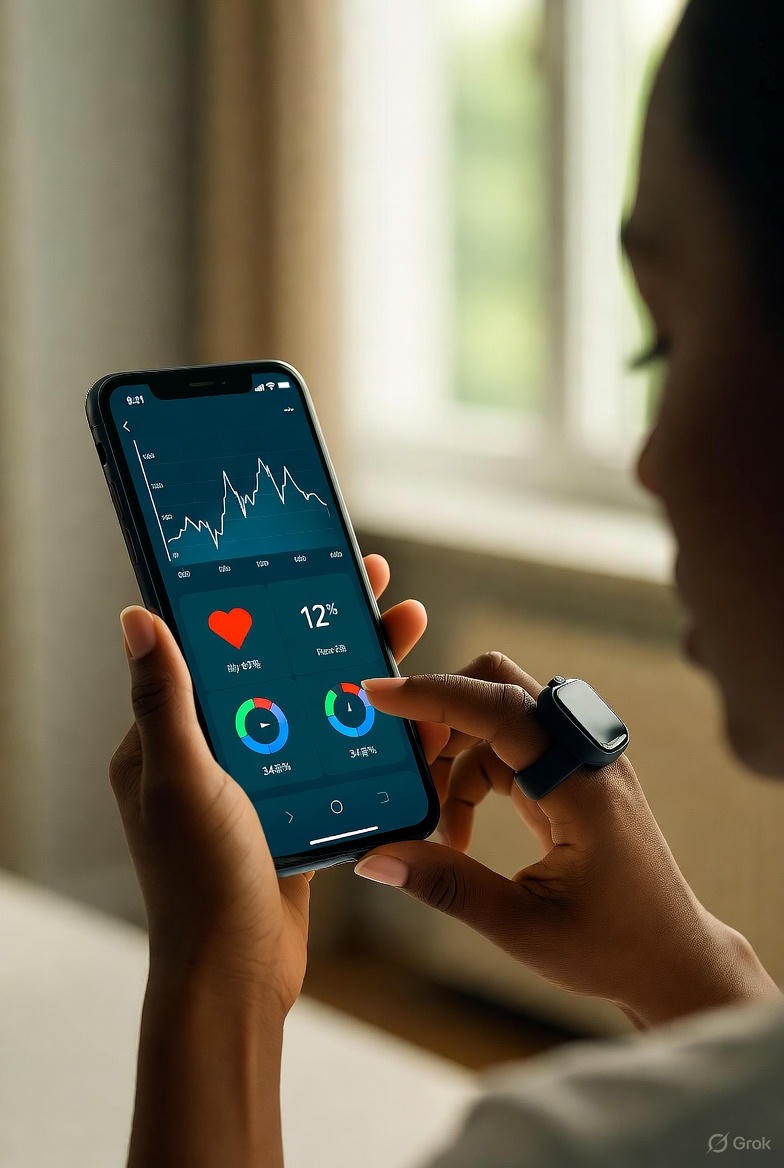
This is where the paradigm of morning routines is being revolutionized—not by sheer willpower, but by intelligent, personalized data. Enter the smart ring, an unassuming piece of wearable technology that is quietly transforming how we understand and respond to our bodies. By measuring biomarkers like Heart Rate Variability (HRV), resting heart rate, skin temperature, and sleep architecture from the optimal location—your finger—these devices provide a nuanced, accurate picture of your autonomic nervous system state. A “Low Readiness” score isn’t a judgment; it’s a crucial piece of biofeedback, a conversation starter from your body.
This article is your comprehensive guide to moving from a rigid, guilt-inducing morning checklist to a fluid, responsive, and deeply restorative morning practice. We will delve into the science behind readiness metrics, explore how to interpret your smart ring’s unique data signature, and build a dynamic toolkit of strategies specifically designed for those low-readiness days. You’ll learn how to transform a morning of potential struggle into one of strategic recovery, setting the stage not just for getting through the day, but for emerging from it stronger. The goal is not to avoid low-readiness days but to master your response to them, using objective data as your guide to true resilience.

A "Low Readiness" score on your app can feel like a personal failure, a red mark against your health. But to view it as such is to profoundly misunderstand the technology and, more importantly, your own biology. This score is not an indictment of your character; it is a sophisticated, aggregated report on your recent physiological load and recovery status. Think of it as your body's internal dashboard, with the smart ring acting as the diagnostic tool pulling the codes.
At its core, readiness is a measure of your capacity to handle stress—be it physical, mental, or emotional. It reflects the state of your autonomic nervous system (ANS), the control center that regulates everything from your heartbeat and digestion to your stress response. The ANS has two primary branches: the sympathetic ("fight-or-flight") and the parasympathetic ("rest-and-digest"). A high readiness state suggests a balanced, resilient ANS capable of a robust stress response followed by efficient recovery. A low readiness state indicates that your system is already under significant load, is actively in recovery mode, or is lacking the resources for optimal function.
Your smart ring synthesizes several key biomarkers to generate this score:
When your ring flashes "Low Readiness," it's essentially saying: "Your physiological resources are depleted. The demand placed on your system has recently exceeded its recovery capacity." The cause could be positive (a hard but effective training session), negative (emotional stress or poor sleep), or neutral (a late-night social event). The smart strategy isn't to ignore the signal and push harder; it's to honor the data and pivot your day towards restoration. This shift in perspective—from judgment to curiosity—is the first and most critical step in optimizing your routine.
In a culture that often glorifies "pushing through," the science of adaptation presents a compelling counter-argument: sustainable growth and long-term performance are built not during the stress itself, but in the quality of the recovery that follows. Forcing high stress on a system signaling low readiness is the biological equivalent of poor financial management—it's taking out a loan at a high interest rate from an already overdrawn account.
The principle at work is supercompensation. When you apply a stressor (a workout, a major work project), you create microscopic damage and deplete resources. During the subsequent recovery period—if provided with adequate rest, nutrition, and sleep—your body doesn't just repair itself to its previous level. It overcompensates, building back stronger, more resilient, and with greater capacity. This is how fitness is gained, skills are solidified, and resilience is built. However, if you introduce another significant stressor before this recovery cycle is complete, you interrupt the repair process. You start the next cycle from a deficit, leading to a downward spiral of fatigue, declining performance, and ultimately, overtraining syndrome, burnout, or illness.
Your smart ring’s readiness score is a direct gauge of where you are in this supercompensation cycle. A low score suggests you are still in the "damage/repair" phase. By honoring this and engaging in strategic recovery, you actively invest in the "supercompensation" phase. This means:
By strategically pulling back on low-readiness days, you're not losing ground. You are ensuring that the hard work you've already done gets properly integrated and that you are building a foundation for truly productive efforts tomorrow. It’s the essence of working smarter, not just harder.
The optimization of your low-readiness morning begins in the liminal space between sleep and wakefulness. Before your feet hit the floor, you have a powerful opportunity to gather intelligence and set an intentional tone for the day. This 5-minute "Data Triage" is less about analysis paralysis and more about cultivating a mindful, curious relationship with your body's signals.
First, pause before you check. Take three slow, deep breaths upon waking. Notice the subjective feeling: the weight of your body on the mattress, the quality of your mind. Then, open your smart ring's companion app. Don't just glance at the single readiness score; look at the contributing factors. This is detective work, not judgment.
The key is to compare the data to your personal baseline, not to a population average. What is "low" for you? Has there been a sharp deviation from your recent trend? This is where the true power of continuous wearables shines. By tracking over time, you move from seeing a snapshot to understanding a story. For instance, you might notice that your readiness is consistently low after evenings with poor wind-down routines, highlighting the importance of evening calm practices for transitioning from work to rest.
This triage isn't meant to diagnose medical conditions but to inform your behavioral prescription. Ask yourself: "Given this data, what does my body need most today to replenish its resources?" The answer will guide your choices in the hours that follow, transforming a generic morning into a targeted recovery session.

On a high-readiness day, you might launch into an intense fasted workout or a protein-packed breakfast. On a low-readiness day, your hydration and nutrition strategy has a different primary goal: gentle replenishment and reducing inflammatory load. Your digestive system is part of the parasympathetic "rest-and-digest" network. Forcing it to handle a heavy, complex meal when your body is in a stressed state can divert energy from recovery and may even cause distress.
Hydration First: Overnight, you lose significant water through respiration and perspiration. Dehydration alone can elevate resting heart rate and mimic or exacerbate feelings of fatigue. Your first act should be to rehydrate, but thoughtfully.
Nutrition for Nourishment, Not Just Fuel: Think of your breakfast as medicinal.
This gentle, intentional approach to morning fuel sends a clear signal to your body: "We are in recovery mode. I am providing resources for repair, not demanding performance." It's a foundational act of self-care that supports every other strategy you employ.
The instinct on a tired morning might be to skip movement entirely or, conversely, to "sweat out the fatigue" with a punishing workout. Both are missteps. The optimal path is intentional, low-grade movement designed to stimulate circulation, down-regulate the nervous system, and enhance mind-body connection. The goal is regulation, not exertion.
Forget calories burned or miles logged. On a low-readiness day, your movement metric should be "how do I feel afterward?" It should be energizing, not exhausting. Here are stratified approaches based on your data triage:
Listen acutely to your body during any movement. A slight elevation in heart rate and warmth is good. Sharp pain, dizziness, or a feeling of draining energy are clear signals to stop. Remember, you are using movement as a tool to improve your readiness score for tomorrow, not to achieve today's fitness goals. This nuanced understanding of exercise intensity is crucial, and leveraging your stress tracking data can be key to finding that optimal intensity for recovery.
A low-readiness body often houses a low-readiness brain. The prefrontal cortex—the CEO of your brain responsible for focus, decision-making, and emotional regulation—is metabolically expensive. When physiological resources are low, cognitive resources are often the first to be rationed. Trying to tackle a complex, creative project or make high-stakes decisions at 8 AM on such a day is a recipe for frustration and poor outcomes. The strategy here is cognitive calibration: aligning your mental tasks with your available bandwidth.
This approach requires a shift in identity from "always-on high-performer" to "strategic resource manager." It acknowledges that mental energy, like physical energy, is finite and fluctuates. By calibrating your tasks to your capacity, you achieve more with less strain and avoid the compounding stress of unmet expectations. For deeper insight into how a calm mind directly influences your decision-making capacity, our analysis on clarity through stillness explores this connection in depth.

The traditional workday is structured around marathons of focus, with recovery relegated to a lunch break and the evening. On a low-readiness day, this model is unsustainable. The antidote is the strategic pause: intentionally scheduled, short bursts of genuine recovery woven throughout your morning to prevent resource depletion and maintain a baseline of function. These are not distractions or procrastination; they are performance-enhancing interventions.
Think of your energy like a smartphone battery on a day with a faulty charger. You can't do a long charge at night; you have to top it up frequently throughout the day to keep it from dying. These strategic pauses are your quick charger ports. They reset your nervous system, break the cycle of stress hormone accumulation, and allow you to return to your tasks with marginally renewed focus. This practice of integrating small recovery moments is a cornerstone of building resilience, a journey from being reactive to resilient through neurological retraining.
Your environment exerts a constant, passive influence on your nervous system. On a high-readiness day, you might thrive amidst stimulation. On a low-readiness day, a cluttered, noisy, or harsh environment acts as a constant drain on your already diminished attentional and emotional resources. Environmental engineering is the practice of intentionally shaping your physical space to reduce cognitive load and support a calm, focused state.
You are not a passive occupant of your space; you are its curator. On a low-readiness day, your goal is to create a "recovery cocoon"—an environment that does the work of calming your nervous system for you, so you don't have to expend precious energy fighting distractions or discomfort. This principle of creating supportive spaces is just as vital when you're away from home, as discussed in our guide on how to maintain calm mind practices during travel.
For the modern professional, the single greatest source of unplanned cognitive and emotional load is the digital world. The morning "inbox check" on a low-readiness day is akin to starting your morning by having 50 people shout requests and problems at you before you've had a sip of water. Digital intentionality is the practice of consciously controlling your interaction with technology to serve your recovery state, not sabotage it.
Your attention is your most precious resource on a low-readiness day. Digital intentionality is about installing a "filter" on the world's demand for that attention, ensuring that you spend it only on what is truly essential and nourishing, rather than having it scattered and depleted by a thousand digital cuts. This mindful management of your digital environment is a practical application of using data to improve your life, moving from raw stress tracking metrics to genuine insight.
The final, and perhaps most important, component of optimizing for low-readiness days happens in the evening. It is the practice of reflective adjustment—looking back at the day with curiosity, not criticism, to learn from your body's responses and refine your personal protocol. This turns a single low-readiness day from a setback into a valuable data point in your lifelong wellness experiment.
At day's end, perhaps during your wind-down routine, take 5 minutes to review:
Look for connections. For example: "My readiness was low due to poor sleep. I did the gentle yoga and delayed caffeine. My stress graph showed lower spikes in the morning compared to last week when I just powered through. I felt more patient in my early meetings." This is a successful intervention.
The goal is to build your own personalized "Low Readiness Playbook." Over time, you'll discover that for "Low HRV + High RHR" days, a long walk is your best medicine, while for "Poor Sleep" days, admin work and frequent pauses work better. Document these insights. This reflective practice is what separates the casual user of a smart ring from the expert who truly harnesses its power for personalized health optimization. It's about closing the feedback loop, using your subjective experience to give meaning to the objective data, and vice-versa. For those looking to advance this practice, exploring how to deepen your calm mind practice after the first year offers a pathway to continued growth and refinement.
This process of learning and adapting is never complete, as our bodies and lives are constantly changing. But by approaching each low-readiness day with this mindset of strategic response and reflective learning, you transform your relationship with your own limits. They stop being walls that block your path and become instead signposts, guiding you toward a more sustainable, resilient, and ultimately high-performing way of living.
The first hour after a low-readiness alert is a critical window. It sets the neurological and emotional trajectory for your entire day. Where a high-readiness morning might be about expansion—adding tasks, seeking challenges—a low-readiness morning must be about containment and intention. The goal is not to launch yourself into the day, but to mindfully step into it with purpose and self-compassion, thereby preventing the low energy state from spiraling into frustration or a sense of failure.
This begins with a fundamental re-framing of what a "successful" morning looks like. On these days, success is not measured by productivity metrics, but by preservation and regulation. Did you protect your depleted resources? Did you avoid adding unnecessary stress? Did you make choices that fostered a sense of calm and control? This shift in measurement is liberating. It allows you to define victory on your own terms, based on your body's authentic needs.
The practice of setting a thematic intention is more powerful than a granular to-do list on these mornings. Instead of "Finish project report, call three clients, go to the gym," your intention might be "Gentleness," "Patience," or "Present-Moment Focus." This thematic lens then filters all your subsequent choices. When a frustrating email arrives, if your intention is "Patience," you are neurologically primed to take a breath before reacting. If your intention is "Gentleness," you give yourself permission to take a longer break. This single, simple act of choosing a guiding word creates a psychological container that holds the potential chaos of the day.
Following the intention, a brief mindfulness anchor is non-negotiable. This isn't about a 30-minute meditation session you don't have the energy for. It’s a 2-5 minute practice of grounding yourself in the present. One highly effective method is a "5-4-3-2-1" sensory check-in: Identify 5 things you can see, 4 things you can feel (the fabric of your clothes, the chair beneath you), 3 things you can hear, 2 things you can smell, and 1 thing you can taste. This exercise forcibly drags your anxious, future-tripping mind (which is worrying about how you'll get through the day) into the safety of the present moment, where things are, in fact, okay. It down-regulates the amygdala, your brain's threat center.
By mindfully commencing your day with reframing, a thematic intention, and a sensory anchor, you accomplish a crucial feat: you stop being a passive victim of your low-readiness state and become the active author of your response to it. You establish agency before the world's demands can strip it away. This foundational work of intention-setting is a cornerstone of building a sustainable practice, much like learning to measure progress in your calm mind practice is about recognizing subtle shifts over time.
If your smart ring is the diagnostic tool, then your breath is the most immediate, accessible, and powerful treatment tool you possess. Breathing is unique—it is an automatic function of the autonomic nervous system that we can also consciously control. By altering our breathing patterns, we send direct signals to the brainstem to shift the state of the ANS from sympathetic (stressed) to parasympathetic (calm). On a low-readiness morning, strategic breathing is not spiritual fluff; it is biohacking 101.
The key is to focus on techniques that emphasize lengthening the exhalation. Physiology shows that inhalation is mildly sympathetic, while a prolonged, smooth exhalation strongly stimulates the vagus nerve, the main conduit of the parasympathetic nervous system. Here are several practical, evidence-based techniques, stratified by time and need:
Integrate these practices seamlessly. Do 90 seconds of equal breathing in bed. Practice 5 minutes of 4-7-8 after your shower. Return to belly breathing whenever you remember. Your breath is a lever you can pull all day long to dial down your stress response, making it the most essential tool in your low-readiness toolkit. Mastering this self-regulation is a core part of the journey from being reactive to resilient.
A chaotic, decision-heavy morning is anathema to a low-readiness state. Every micro-decision—"Should I work out?" "What should I eat?" "Should I check email?"—depletes a tiny amount of your finite cognitive resources, a phenomenon psychologists call "decision fatigue." By the time you start your real work, your mental battery is already half-drained.
The solution is sequential phasing: creating a pre-determined, loose sequence of activities for low-readiness mornings that requires minimal thought. This isn't a rigid schedule, but a flow state checklist. It automates the early part of your day, conserving willpower for where it's truly needed later. A sample Low-Readiness Morning Phase might look like this:
Phase 1: Reception & Triage (15 mins)
Phase 2: Hydration & Gentle Awakening (20 mins)
Phase 3: Intentional Nourishment (20 mins)
Phase 4: Cognitive Priming & Planning (15 mins)
Phase 5: Strategic Commencement (Variable)
The magic of this phased approach is that it creates momentum through ease. You don't have to decide what to do next; the phase guides you. Each phase has a clear purpose and a natural transition to the next. On a high-readiness day, you might compress or skip phases. On a low-readiness day, you might stretch them out. The structure provides a supportive scaffold, not a cage. It ensures you cover the foundational pillars of recovery—hydration, gentle movement, nourishment, and intentional planning—without having to muster the energy to design it all in the moment. This structured approach to managing energy is a practical application of using data to improve life, similar to learning how to use stress tracking data to improve time management.
Beyond shaping your physical space, you can actively use your senses as direct levers to calm an agitated, fatigued nervous system. This is sensory modulation—the deliberate use of sensory input to create a desired physiological state. On a low-readiness morning, your goal is to provide your system with inputs that are grounding, soothing, and minimally stimulating.
By intentionally engaging with soothing sensory input, you are essentially giving your overworked nervous system a "lullaby." You are communicating safety and providing non-verbal cues that it is okay to rest and digest, not fight or flee. This practice of using your environment and body for regulation is a powerful complement to technological tracking, embodying the principles behind tracking stress without becoming obsessed with the numbers.
One of the greatest challenges on a low-readiness day is managing the expectations of others—family, roommates, colleagues, clients. Pushing through interactions when you have no capacity often leads to resentment, irritability, and poor communication, which then creates more stress, deepening the energy debt. Proactive, graceful boundary setting is therefore not a luxury; it is a critical skill for protecting your recovery and maintaining healthy relationships.
The goal is not to disappear or complain, but to communicate with clarity and professionalism (or loving-kindness at home). This requires a small shift in language from what you are ("I'm exhausted") to what you need ("I need to focus on deep work this morning").
Setting these boundaries does two things: First, it manages external demands, reducing the incoming stress load. Second, and perhaps more importantly, it is an act of self-respect that reinforces your own commitment to your recovery. You are demonstrating to yourself that your well-being is a priority worthy of protection. This skill of setting limits based on your internal state is a powerful outcome of developing greater self-awareness through practices like using stress tracking to set healthy boundaries.
Your standard to-do list is likely ill-suited for a low-readiness day. It probably reflects an idealized, high-energy version of yourself and looking at it can induce feelings of overwhelm and inadequacy. An adaptive workflow is a dynamic system for managing tasks that respects your changing capacity. It involves categorizing work not just by project or priority, but by the cognitive and emotional energy required.
A simple but powerful method is the Energy-Based Tagging System. Label every task on your master list (or in your project management tool) with one of three tags:
On a low-readiness morning, you only view and work from the "Low Energy" list. You might dip into "Medium" in the afternoon if your energy lifts, but "High" is off the table. This system accomplishes several things:
Implementation with Time Blocking: Block your morning calendar for "Low-Energy Processing." Gather your "L" tasks and work through them in timed blocks (e.g., 25 minutes on, 5 off). The nature of these tasks often makes them easy to pick up and put down, fitting perfectly with the strategic pause rhythm.
The Weekly Review for Adaptation: During your weekly planning, spend a few minutes tagging upcoming tasks. This makes daily adaptation seamless. When you see your low-readiness score, you don't have to think—you just filter. This system turns your fluctuating energy from a liability into a logistical variable you can plan for, much like a savvy project manager accounts for resource availability. It’s a practical manifestation of turning data into action, moving from simply tracking stress triggers to building systems that proactively manage them.
While digital intentionality advises minimizing mindless screen time, technology, when used purposefully, can be a powerful ally in your low-readiness recovery strategy. The key is to choose tools that automate calm, guide regulation, or provide restorative input—tools that give more than they take.
The principle is conscious curation. Your phone is not inherently draining; it's a portal. On a low-readiness day, you must be the strict gatekeeper of that portal, allowing only what serves your recovery to pass through. This transforms your device from a source of stress into a pocket-sized recovery assistant. Understanding the full potential of this technology begins with grasping the science behind wearable stress tracking that powers it.
Perhaps the most significant barrier to honoring a low-readiness day isn't logistical; it's psychological. It's the internal voice of guilt, shame, or impatience that says: "You're lazy," "You're falling behind," or "Just push through." This voice is often the echo of internalized productivity culture, and it can cause more stress than the physiological state itself. Cultivating self-compassion is therefore not a soft skill, but an essential component of an effective recovery strategy.
Self-compassion, as defined by researcher Kristin Neff, involves three core elements applied to moments of suffering (like feeling depleted): Mindfulness (acknowledging the difficulty without over-identifying with it), Common Humanity (recognizing that all humans have limits and off-days), and Self-Kindness (responding to yourself with warmth and understanding rather than criticism).
Building this psychological resilience—the ability to meet low capacity with kindness rather than war—is what prevents a single low-readiness day from triggering a spiral of negative self-talk and poor choices. It is the mental software that allows the hardware of smart rings and morning routines to function optimally. This inner work is the bedrock of sustainable health, complementing the outer work of tracking and routine. For those managing chronic conditions, this compassionate approach is especially vital, as explored in resources on stress tracking for chronic illness monitoring.
The ultimate goal of this entire system is to move from reactive guessing to predictive wisdom. You don't just want to survive low-readiness days; you want to learn from them, to see patterns in what causes them and, most importantly, what your most effective responses are. This requires closing the feedback loop by tracking your behavioral response alongside your biometric data.
This doesn't need to be complex. It can be a simple note in your phone or a dedicated section in your journal. At the end of a low-readiness day, or during your evening reflection, ask yourself two questions and jot down brief answers:
Over time, you will collect a personal dataset of what works for you. You might discover that for "poor sleep" days, sunlight and admin work are key, while for "high-stress hangover" days, extended breathing and deferred decisions work best. This personalized insight is far more valuable than any generic advice.
You can take this further by occasionally reviewing weekly or monthly trends. Are low-readiness days clustering around a certain day of the week (e.g., always Monday, suggesting weekend recovery isn't adequate)? Are they following a pattern with your menstrual cycle or known stress triggers? Your smart ring's trend graphs (weekly/monthly HRV, sleep, etc.) combined with your behavioral notes create a powerful diagnostic picture.
This practice of reflective tracking transforms you from a passive consumer of health data into an active participant in your own bio-individual experiment. It fosters a sense of agency and curiosity. You are no longer at the mercy of your metrics; you are in a collaborative dialogue with them, using them to refine your art of living well. This is the essence of moving from data to insight, a process detailed in guides on how to interpret your stress tracking data like a pro.
After exploring the philosophy, science, and individual strategies for navigating low-readiness days, the final step is synthesis. It’s time to move from theory to practice by assembling your own personalized Low-Readiness Protocol (LRP). This is not a rigid set of rules, but a curated menu of vetted strategies—your personal playbook—that you can deploy with confidence and minimal decision-making when your smart ring delivers its morning report.
Creating your LRP is an act of self-knowledge. It requires you to integrate your understanding of the biomarkers (the what) with your subjective preferences and life context (the how). The goal is to have a pre-established plan so that on a foggy, low-energy morning, you don't need to think; you simply execute your own designed sequence for recovery.
Step 1: Define Your "Low Readiness" Triggers. Based on your smart ring's data, categorize the common low-readiness signatures you experience. Create simple labels:
Step 2: Assemble Your Strategy Menu. For each of the pillars of a low-readiness morning, choose 1-2 "go-to" actions that you know are feasible and effective for you. Write them down.
Step 3: Create Trigger-Specific Flows. Now, match your strategy menu to your triggers from Step 1. Different primary causes may benefit from slightly different emphases.
Step 4: Build Your "LRP Card." Condense your most universal flow onto a single note (digital or physical) you can check in the morning. It might look like this:
Low-Readiness Morning Protocol
This card is your scaffolding. It holds you up when your internal structure feels weak. By investing time in creating this protocol on a high-readiness day, you ensure that your future self is cared for on the difficult ones. This systematic approach is the ultimate application of data, turning insights from your complete guide to biomarker-based stress tracking into a personalized action plan.
A perfectly optimized morning can be undone by a frantic, reactive afternoon. The strategies that set a calm tone must extend their reach to create a sustainable arc for the entire day. The core principle here is pacing. A low-readiness day is a marathon walked, not a sprint run. Your goal is to distribute your finite energy as evenly as possible to avoid a catastrophic crash at 3 PM or, worse, to borrow energy from tomorrow.
Sustaining the day is about vigilance and kindness. It’s about continuously checking in and asking, "What do I need to do right now to ensure I don't deplete my last reserves?" This ongoing attunement is the practice of living in sync with your physiology, a skill that becomes sharper with consistent tracking of your emotional vs. physical stress.
Even a carefully managed low-readiness day places a demand on a system that started in deficit. Therefore, the evening following such a day is not a normal evening; it is a critical recovery extension. Your primary objective is to create ideal conditions for the most restorative sleep possible, to pay down the energy debt and reset your readiness for tomorrow.
This wind-down must begin earlier and be more deliberate than usual. Consider it a non-negotiable appointment with your recovery.
By treating your evening as the essential second half of your low-readiness recovery protocol, you create a virtuous cycle. A mindful evening leads to better sleep, which leads to higher readiness tomorrow, making it less likely you'll face another severe low-readiness day back-to-back. This holistic view of the 24-hour cycle is key to managing long-term stress, as highlighted in resources about understanding cortisol patterns and their daily impact.
The ultimate power of a smart ring lies not in its daily score, but in its longitudinal data. Over weeks and months, it reveals patterns and trends that are invisible day-to-day. This moves you from a reactive stance ("My readiness is low today, what do I do?") to a predictive and preventive stance ("I see a pattern that my readiness drops every Thursday; what can I adjust on Wednesdays?").
Engage in a weekly or monthly data review session. Look at your trends graph and ask:
Acting on Trends: Once you identify a pattern, you can make structural life adjustments.
This pattern recognition turns your life into an optimized system. You're no longer at the mercy of random energy crashes; you are forecasting them and building shock absorbers into your schedule. This is the pinnacle of using wearable data for true lifestyle design, moving beyond tracking to strategic life management. It requires learning to see the story in the numbers, a skill explored in our resource on conducting a weekly stress report and data review.
The technology and science behind readiness optimization are advancing rapidly. What we do today manually—triaging data, selecting strategies from a menu—will increasingly be guided, automated, and hyper-personalized by artificial intelligence. Understanding this horizon helps contextualize the work you're doing now as foundational training for an even more intuitive future.
Your work now—learning to interpret your data, experimenting with responses, building your personal protocol—is building the "ground truth" for these future AI systems. You are training your own intuition and, in time, the algorithms that will assist you. This makes you an active participant in the future of proactive, personalized health care. It all starts with the fundamental step of learning to start tracking your stress and readiness in a meaningful way.
The journey through understanding and optimizing for low-readiness days brings us to a profound and liberating conclusion: Human health is not a static state of high performance, but a dynamic rhythm of stress and recovery, effort and ease.
Your smart ring, and the strategies outlined in this guide, are not tools to eradicate low-energy days. That is neither possible nor desirable. These low points are intrinsic to the rhythm of a living, adapting organism. They are the troughs that make the peaks possible, the necessary recovery phases in the cycle of growth.
The true optimization lies in changing your relationship with these days. To move from seeing them as failures to recognizing them as vital feedback. To shift from resisting them with gritted teeth to meeting them with intelligent, compassionate strategy. The goal is to build a life and a practice that is not brittle—breaking under the first sign of fatigue—but resilient, capable of bending with the strain and bouncing back with greater wisdom.
By using your smart ring's data as a conversation with your body, by building a personalized Low-Readiness Protocol, and by integrating the principles of strategic recovery into your life, you do more than just "get through" tough days. You build a deeper kind of strength. You cultivate a resilience that is informed by data, guided by self-compassion, and expressed through smarter choices. You learn to dance with your own physiology, respecting its natural rhythms while gently guiding it toward greater health and harmony.
This is the art and science of modern well-being: not a relentless pursuit of more, but the intelligent, responsive cultivation of enough. It starts each morning, with a glance at your finger, a reading of your readiness, and the empowered choice to meet the day exactly as you are.
Your Trusted Sleep Advocate: Sleep Foundation — https://www.sleepfoundation.org
Discover a digital archive of scholarly articles: NIH — https://www.ncbi.nlm.nih.gov/
39 million citations for biomedical literature :PubMed — https://pubmed.ncbi.nlm.nih.gov/
Experts at Harvard Health Publishing covering a variety of health topics — https://www.health.harvard.edu/blog/
Every life deserves world class care :Cleveland Clinic - https://my.clevelandclinic.org/health
Wearable technology and the future of predictive health monitoring :MIT Technology Review — https://www.technologyreview.com/
Dedicated to the well-being of all people and guided by science :World Health Organization — https://www.who.int/news-room/
Psychological science and knowledge to benefit society and improve lives. :APA — https://www.apa.org/monitor/
Cutting-edge insights on human longevity and peak performance:
Lifespan Research — https://www.lifespan.io/
Global authority on exercise physiology, sports performance, and human recovery:
American College of Sports Medicine — https://www.acsm.org/
Neuroscience-driven guidance for better focus, sleep, and mental clarity:
Stanford Human Performance Lab — https://humanperformance.stanford.edu/
Evidence-based psychology and mind–body wellness resources:
Mayo Clinic — https://www.mayoclinic.org/healthy-lifestyle/
Data-backed research on emotional wellbeing, stress biology, and resilience:
American Institute of Stress — https://www.stress.org/


