


The Smart Ring Signals That Say "Take a Rest Day Today"
Specific ring signals that suggest you need a rest day.
Specific ring signals that suggest you need a rest day.
%402x.svg)
You wake up before your alarm, a vague sense of heaviness in your limbs. The workout you crushed yesterday feels like a distant memory, replaced by a low hum of fatigue. Your schedule says "go," but your body is whispering "stop." In the age of optimized living, where hustle is glorified and rest is often seen as a luxury or a sign of weakness, listening to that whisper has never been more critical—or more difficult. We’re conditioned to push through, to ignore the subtle signals our bodies send us, often until they become shouts in the form of injury, illness, or burnout.
But what if you had a personal, 24/7 biofeedback coach on your finger, translating your body's cryptic language into clear, actionable data? This is the promise of the modern wellness smart ring. Moving beyond step counts, these sleek, powerful devices delve into your autonomic nervous system, measuring the very rhythms of your recovery and resilience. They don't just track activity; they track readiness. They answer the fundamental question for anyone invested in their long-term health and performance: Is my body prepared for stress today, or does it desperately need a break?
Gone are the days of guessing. The old paradigm of rigid workout schedules—"Monday is legs, Tuesday is cardio"—is being replaced by a responsive, dynamic approach to wellness. It’s a shift from external scheduling to internal listening. A smart ring provides the objective evidence we often need to give ourselves permission to rest, turning a "guilty" rest day into a strategic, data-driven recovery day. This isn't about being lazy; it's about being smart. It’s about understanding that true progress—whether in fitness, cognitive function, or overall vitality—is forged not just in the gym or on the run, but in the quality of the recovery that follows.
This article is your deep dive into the specific, often overlooked signals your smart ring is showing you. We'll move beyond the single number of a "readiness score" and unpack the rich physiological story beneath it. From the silent language of your nighttime heart to the subtle stress signatures in your skin, we will explore the nine key biometric signals that are your body's most honest pleas for rest. By learning to interpret these signals, you transform your smart ring from a passive tracker into an active partner in sustainable health, helping you not just live longer, but live better, with more energy and resilience every day. For a broader look at how this technology supports lifelong wellness, our blog offers extensive resources on science-backed healthy aging tips that actually work in 2025.
We live in a world of constant noise. Not just auditory noise, but the relentless cognitive noise of to-do lists, notifications, and internal pressure to perform. In this environment, the quiet, somatic intelligence of our bodies is easily drowned out. The mind, with its formidable willpower, can override the body’s signals for an astonishingly long time. You can drag yourself through a work presentation on four hours of sleep, force a run despite nagging joint pain, or power through a social event while fighting off the chills of an incoming virus. The mind says, "I have to," and the body, for a while, complies.
But this compliance comes at a cost—a debt paid in a currency of cortisol, systemic inflammation, and compromised immunity. Every time you ignore a whisper, the body must speak louder. A whisper of fatigue becomes a shout of exhaustion. A whisper of soreness becomes a scream of injury. A whisper of mental fog becomes a crippling bout of burnout. The problem is that by the time the shouts are undeniable, significant damage has already been done, and the path back to balance is much longer and steeper.
This is where the paradigm of listening changes everything. Proactive health isn't about fighting symptoms when they become severe; it's about recognizing and responding to early deviations from your personal baseline. Think of it like the dashboard of a high-performance vehicle. You wouldn't ignore a check engine light until the car broke down on the highway. You’d address it immediately to prevent catastrophic failure. Your body is the most high-performance vehicle you will ever own, yet for most of human history, we've been driving it without any gauges.
A smart ring changes that. It installs the dashboard. It translates the body's analog whispers into digital data you can see, track, and understand. It objectifies the subjective. That "heavy" feeling upon waking? It might correlate with a dramatically lowered Heart Rate Variability (HRV). That sense of being "wired but tired"? It could be reflected in elevated resting heart rate and poor sleep staging. The data provides the validation needed to make a different choice—to swap the high-intensity interval training for a walk in nature, to decline the late-night event, to prioritize an extra hour of sleep.
This approach aligns perfectly with the core principles of sustainable performance and healthy aging. It’s not about doing less; it’s about doing what’s right when it’s right. By honoring your body's need for recovery, you enhance its ability to adapt positively to stress—be it physical, mental, or emotional. You build resilience from the inside out. This foundational shift is what allows for consistent progress over decades, a theme we explore in depth in our article on how smart rings support healthy aging through daily monitoring. The rest of this guide will equip you to read your new dashboard, starting with the most telling metric of all: your Heart Rate Variability.
If you were to monitor only one metric to gauge your need for rest, Heart Rate Variability (HRV) would be the unequivocal choice. Despite its name, HRV has nothing to do with how fast your heart beats. Instead, it measures the subtle, millisecond variations in the time intervals between each heartbeat. A healthy heart is not a metronome; it's a dynamic, responsive symphony. When you inhale, your heart rate slightly accelerates; when you exhale, it gently decelerates. This is a sign of a robust and responsive autonomic nervous system (ANS).
Your ANS has two primary branches: the sympathetic ("fight-or-flight") and the parasympathetic ("rest-and-digest"). HRV is the ultimate reflection of their balance and interplay. A high HRV indicates a strong, flexible nervous system. It means your body can swiftly ramp up sympathetic activity to meet a challenge (like a sprint or a stressful work deadline) and then efficiently switch back to a calm, parasympathetic-dominant state for recovery. It’s a sign of resilience and readiness.
A low or sharply declining HRV, however, is one of the clearest biometric red flags for needing rest. It signals that your nervous system is under sustained stress and is losing its flexibility. The "fight-or-flight" branch may be chronically dominant, suppressing the "rest-and-digest" functions necessary for repair and recovery. Your body is stuck in a state of high alert, leaving little capacity for adaptive growth.
How Your Smart Ring Shows It & What to Look For:
The "Take a Rest Day" Interpretation:
When you see a significant HRV dip, your body is essentially saying, "My resources are depleted, and my nervous system is overwhelmed." Pushing through with intense training, heavy cognitive work, or major stressful events is counterproductive. You will not achieve positive adaptation; you will only dig a deeper recovery hole.

Your resting heart rate (RHR)—the number of times your heart beats per minute while you are completely at rest, typically during sleep or upon first waking—is a beautifully simple yet profoundly informative metric. For a fit, healthy individual, a lower RHR generally indicates a strong, efficient cardiovascular system. However, like HRV, it’s the changes in your personal baseline that tell the story of daily readiness.
When your body is fully recovered and operating efficiently, your heart doesn’t have to work hard to maintain basic physiological functions. But when your system is under stress—whether from physical overtraining, fighting an infection, emotional turmoil, or dehydration—it requires more resources. To deliver oxygen and nutrients and to clear waste products, your heart must work harder, even at rest. This manifests as an elevated RHR.
How Your Smart Ring Shows It & What to Look For:
The "Take a Rest Day" Interpretation:
An elevated RHR is your cardiovascular system’s direct report: "I am under load." Your metabolic rate is elevated as your body dedicates energy to repair, fight inflammation, or manage stress hormones. Adding more physical stress on top of this internal work is inefficient and risky. It can impede the very recovery processes that are already straining your system.
Sleep is the non-negotiable foundation of recovery. It is when the magic of physical repair, memory consolidation, and hormonal regulation happens. You cannot out-supplement, out-nutrition, or out-exercise poor sleep. Therefore, a night of dramatically poor sleep isn't just a cause of fatigue; it's, in itself, a massive biometric signal that your body failed to achieve the state of rest it needed.
Modern smart rings have moved far beyond simple sleep duration tracking. They use a combination of heart rate, HRV, movement, and skin temperature to estimate sleep stages: Light, Deep, and REM (Rapid Eye Movement) sleep. Each stage has a critical function. Deep sleep is for physical restoration and growth hormone release. REM sleep is for cognitive and emotional processing. Disruption in the architecture of your sleep is a major red flag.
How Your Smart Ring Shows It & What to Look For:
The "Take a Rest Day" Interpretation:
A night of poor sleep means you started your day in a recovery deficit. Your cognitive function, reaction time, pain tolerance, and emotional regulation are impaired. Attempting a demanding workout or a high-stakes workday on this foundation is like trying to run a marathon on an empty tank and flat tires. It increases injury risk, reduces performance, and further stresses a system already crying out for repair.
While HRV and RHR are indirect measures of nervous system balance, new sensor technology in smart rings provides a more direct window into your stress physiology. This is often presented as a continuous "Stress Score" or "Stress Level" throughout the day, derived from a metric called Electrodermal Activity (EDA) or Galvanic Skin Response (GSR).
EDA measures tiny, imperceptible changes in the sweat level on your skin. Your sweat glands are controlled by your sympathetic nervous system ("fight-or-flight"). When you are stressed, anxious, or focused, these glands become more active, even if you don't feel visibly sweaty. This changes the skin's electrical conductivity. A ring with EDA sensors can detect these fluctuations, identifying periods of heightened sympathetic arousal.
Similarly, a persistent elevation in nocturnal skin temperature (distinct from the circadian dip) can be a sign of systemic inflammation or the body working hard to fight an infection, which is itself a major physiological stressor.
How Your Smart Ring Shows It & What to Look For:
The "Take a Rest Day" Interpretation:
A chronically high stress score, especially during sleep, means your body is in a constant state of low-grade alert. This drains your adaptive energy reserves (a concept sometimes called "allostatic load"). An elevated nocturnal temperature suggests internal resources are being diverted to a fight (e.g., against a pathogen), not toward repairing muscle tissue or consolidating memory. Adding more stress—physical or mental—to this scenario is like throwing gasoline on a fire.
While the previous signals focus on the nervous and cardiovascular systems, blood oxygen saturation (SpO2) provides a glimpse into the respiratory system's efficiency during sleep. It measures the percentage of hemoglobin in your blood that is carrying oxygen. For most healthy people at sea level, this is consistently between 95-100%. However, temporary dips below this range during sleep can occur.
Brief, minor dips are normal. But frequent or significant desaturations can be a sign of sleep-disordered breathing, such as sleep apnea, or can indicate your respiratory system is working harder due to factors like illness, allergies, or high altitude. When your blood oxygen drops, it triggers micro-awakenings (even if you don't remember them) to restart normal breathing. This fragmentation destroys sleep architecture and places stress on the heart and brain.
How Your Smart Ring Shows It & What to Look For:
The "Take a Rest Day" Interpretation:
Poor sleep due to respiratory strain is profoundly unrefreshing. It means you likely spent the night with an elevated heart rate and sympathetic nervous system activity, fighting for air instead of sinking into restorative sleep stages. Waking up after such a night, you may experience crushing fatigue, morning headaches, and brain fog. Your body has been in a state of physiological stress all night long.
Most advanced wellness platforms don't expect you to become a expert in every biometric. This is where the algorithm-powered Readiness or Recovery Score comes in. This single number (usually on a scale of 0-100) is a synthesized interpretation of the primary signals we've discussed: HRV, RHR, sleep quality, and often body temperature and previous day's activity.
Think of it as your ring's executive summary. It weighs the various inputs, compares them to your personal baselines, and delivers a verdict on your body's preparedness for strain. A high score suggests you are well-recovered and primed for challenging activity. A low score is your device's strongest, aggregated recommendation to pull back.
How Your Smart Ring Shows It & What to Look For:
The "Take a Rest Day" Interpretation:
When your readiness score is low, your smart ring's algorithm is essentially shouting what your body has been whispering: "Your system's resources are depleted. The cost of demanding activity today will far outweigh any potential benefit." Ignoring this aggregated, data-driven advice is the digital equivalent of ignoring all the individual warning lights on your car's dashboard at once.
Signal 7: The Aching Data - Correlating Subjective Feelings with Objective Strain (Pain & Fatigue)
The most advanced biometric device is still no match for lived, subjective experience. The final arbitrator of how you feel is you. This is why the best wellness practices involve a marriage of objective data and subjective check-ins. This is often called "listening to your body," but with a smart ring, you can now correlate what you feel with what the data shows.
That deep, persistent ache in your knees? The heavy fatigue in your muscles that feels different from normal soreness? The general sense of malaise or "impending doom" about a workout? These are powerful subjective signals. When they align with the objective data—a low HRV, elevated RHR, poor sleep—they create an undeniable case for rest.

The "Take a Rest Day" Interpretation:
When your subjective experience of pain, fatigue, or malaise is confirmed by poor objective metrics, it’s a closed case. Your conscious perception and your unconscious physiology are in agreement. Pushing through this combination is the primary pathway to overtraining syndrome, injury, and burnout.
Signal 8: The Cumulative Load - When Your Activity Data Tells a Story of Insufficient Recovery
This signal is about looking backward to understand the present. Smart rings and their companion apps don't just track your recovery; they track your strain—your workouts, your daily step count, your active calorie burn. A critical function is monitoring the balance between strain and recovery over time.
The principle of adaptation is simple: you apply a stress (exercise), then you allow for recovery, and your body adapts to become stronger. Problems arise when the application of stress is chronic and the windows for recovery are insufficient. This is "cumulative load." You might not have done an insane workout yesterday, but the combined effect of several moderately hard days, poor sleep, and life stress has created a debt.
How Your Smart Ring Shows It & What to Look For:
The "Take a Rest Day" Interpretation:
A pattern of high cumulative load means you are continuously withdrawing from your recovery bank without making sufficient deposits. Even if today's individual metrics are "okay," your system as a whole is running on empty. Continuing this pattern guarantees that your metrics will crash, often accompanied by a performance plateau or decline and increased injury risk.
Signal 9: The Life Context Overlay - Stress, Travel, and Illness as the Ultimate Biometric Disruptors
All the biometrics in the world exist within the context of your life. The most sophisticated algorithm cannot account for the emotional toll of a family argument, the circadian disruption of cross-country travel, or the immune system's all-out war during a fever. However, you can and must layer this context onto your data.
When major life stressors occur, your biometrics will react—often dramatically. Recognizing that these are valid, powerful reasons for a low readiness score transforms the data from a source of frustration ("Why is my score so low? I didn't even workout!") to a source of validation ("My body is having a strong physiological response to this hard event, and it needs care.").
How to Contextualize Your Smart Ring Data:
The "Take a Rest Day" Interpretation:
When life stress, travel, or illness is present, your body's primary job is to manage that stressor, not adapt to a new workout. Demanding physical activity during these times diverts critical resources, can prolong illness, and deepens mental exhaustion. A rest day here is an act of efficiency and compassion.
Understanding the nine signals is the first, critical step. The next—and arguably more important—step is knowing what to do when you see them. A "rest day" should not be a vague concept of doing nothing. For the modern, active individual, an intentional, structured Rest Day Protocol transforms a day of perceived inactivity into a powerful, proactive tool for accelerating recovery and enhancing future performance. It’s the difference between passive stagnation and active rejuvenation.
Your protocol will be personal, but it should be built on core physiological principles that support the nervous system, reduce inflammation, promote repair, and replenish energy stores. Think of it as a menu of recovery modalities from which you can choose based on your specific signals and how you feel.
Creating Your Protocol:
Look at your ring’s data each morning. Is it a "full rest" day (multiple red flags) or an "active recovery" day (one mild flag or just feeling a bit off)? Choose 2-3 activities from the pillars above to structure your day intentionally. For example, a "full rest" protocol might be: morning breathwork, a gentle afternoon walk, an evening warm bath, and an early bedtime. An "active recovery" day might be: a longer mobility session, a 30-minute easy swim, and a focus on protein-rich meals. By having a plan, you remove the guilt and uncertainty, turning recovery into a positive, productive practice. For more ideas on structuring daily wellness habits, our blog is a continually updated resource.
One of the most common questions for data-informed athletes and wellness enthusiasts is: "My score is low, but should I do something light or nothing at all?" The answer lies not in a universal rule, but in the nuance of your specific data and the trend you’re in.
When to Choose Complete Rest (The "Do Nothing" Day):
This is prescribed when your body shows clear signs of systemic overload or immune system activation. The goal is to minimize all physiological stress to free up maximum resources for repair and defense.
When to Choose Active Recovery (The "Something Light" Day):
This is appropriate when you have a single, mild biometric deviation or feel "flat" but not ill. The goal is to stimulate blood flow and promote mobility without adding any meaningful metabolic or muscular strain.
The Role of Trend:
Your choice should also consider the cumulative trend. If you’ve had three "active recovery" days in a row but your metrics aren't improving, the fourth day might need to be a "complete rest" day to break the cycle. Conversely, after a full rest day that yields improved morning data, a light active recovery session can be a perfect bridge back to full activity. This intelligent, responsive cycling is how you use a tool like the Oxyzen ring to track and implement healthy aging progress over time, avoiding the boom-and-bust cycles that lead to injury and burnout.
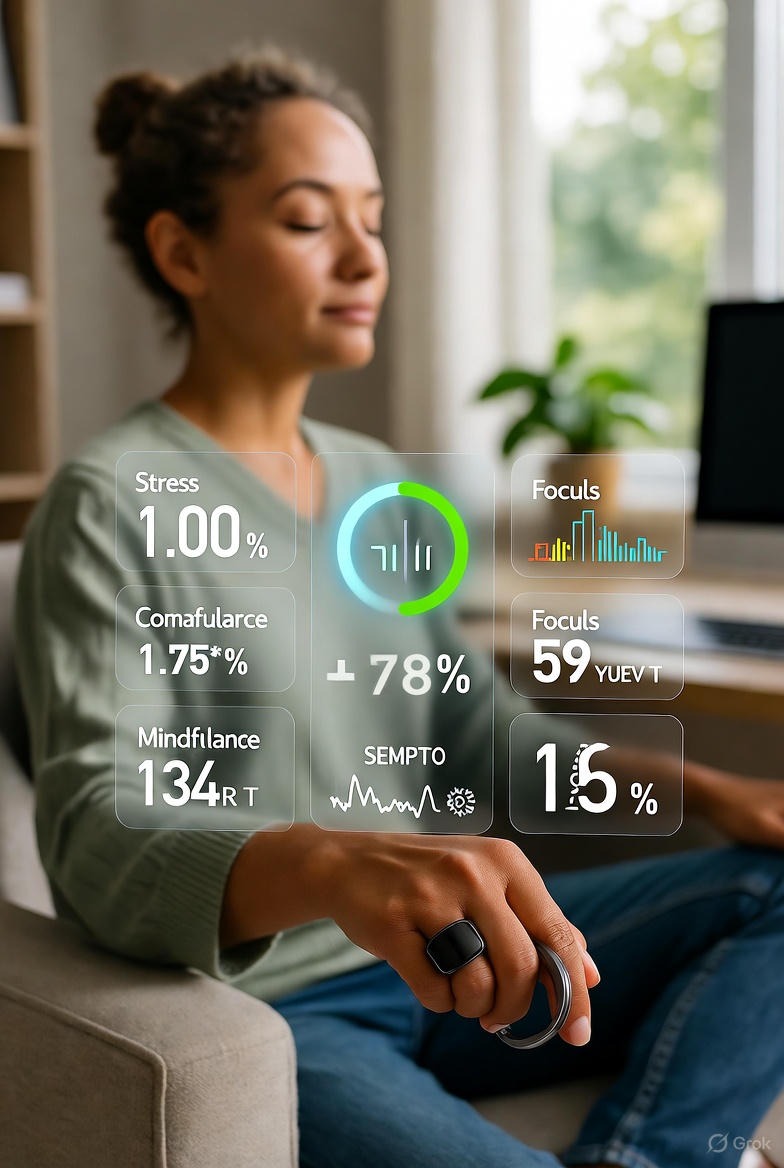
While daily decisions are crucial, the true power of a smart ring is unlocked in the long-term view. The weekly, monthly, and yearly trends in your data tell the story of your overall resilience, your response to training blocks, and your susceptibility to burnout. This macro perspective moves you from reactive recovery to proactive periodization of your entire lifestyle.
Key Trends to Monitor:
Actionable Insights from Long-Term Data:
By regularly reviewing trends, you move from being a passenger in your health journey to the pilot, making course corrections long before you hit stormy weather. This strategic, long-view approach is essential for anyone focused on sustainable performance and longevity.
A smart ring is a phenomenal tool, but it is not the entirety of the wellness picture. It provides the what—the objective data on your state. The how—the living, breathing practices that create positive data—comes from your daily choices. The ultimate goal is to use the ring’s feedback to inform and optimize a holistic lifestyle that naturally fosters high readiness and resilience.
Integrative Pillars for Sustained Energy:
The Synergy Cycle:
This creates a virtuous cycle: Your holistic lifestyle choices (nutrition, movement, stress management) generate positive biometric data (higher HRV, better sleep). That positive data gives you clarity and confidence, reinforcing your lifestyle choices. The ring is the feedback mechanism in the loop, closing the gap between action and outcome. For those interested in the deep science of longevity that underlies these choices, our piece on healthy aging tips that fight cellular aging delves into the molecular mechanisms.
To solidify these concepts, let’s walk through three hypothetical but data-realistic scenarios. These examples show how the signals combine to tell a story and guide an intelligent response.
Case Study 1: The Overtraining Executive (Maria)
Case Study 2: The Pre-Symptomatic Rest (David)
Case Study 3: The Stressed Caregiver (Aisha)
The final, and perhaps most profound, outcome of long-term smart ring use is not just better recovery decisions, but the development of a heightened sense of biofeedback intelligence. This is the ability to correlate internal sensations with physiological states, even without looking at the device.
The Learning Journey:
This is the ultimate gift of wearing a device like an Oxyzen ring. It acts as a translator and teacher until you become fluent in your body's native language. You move from outsourcing your health decisions to a device, to reclaiming your own innate somatic wisdom, now informed and refined by data. This self-knowledge is the bedrock of personalized, proactive health and is especially valuable as we age, helping us preserve independence and function longer.
Conclusion of This Section: Embracing Rest as a Strategic Skill
We have journeyed through the nine key biometric signals that plead for rest, built a framework for responding to them, and explored how to integrate these insights into a sustainable, holistic life. The overarching message is a paradigm shift: Rest is not the absence of work; it is the necessary counterpart to work that makes excellence sustainable. It is not a sign of weakness, but a hallmark of intelligence.
In a culture that often rewards burnout as a badge of honor, choosing to rest based on concrete, personal data is a revolutionary act of self-respect and long-term thinking. It is the practice of aligning your actions with the fundamental biological truth that adaptation requires recovery.
Your smart ring is the tool that makes this practice precise, personal, and empowering. It removes the guesswork and the guilt. It turns the abstract advice to "listen to your body" into a concrete, actionable skill. By learning to heed these signals—the plunging HRV, the elevated heart rate, the broken sleep—you are not opting out of high performance. You are opting into a smarter, more resilient, and ultimately more successful version of it. You are investing in a vitality that endures, ensuring that your energy and health are not consumed in short, fiery bursts, but burn as a steady, bright flame for decades to come.
This is just the beginning of mastering your own physiology. To continue your journey into optimizing every aspect of your healthspan, from cognitive function to muscular resilience, we invite you to explore our complete blog for deep dives on everything from maintaining muscle mass after 60 to navigating the critical decade of your 50s. The data is yours; the power to act on it is in your hands.
While a sophisticated smart ring provides a remarkably comprehensive dashboard of your autonomic nervous system and recovery status, it exists within a larger ecosystem of health data. The true pinnacle of personalized wellness is achieved when you intelligently combine your ring’s insights with other key metrics and records. This creates a multidimensional picture, filling in the gaps and providing context that makes each data stream more meaningful.
1. The Power of the Training Log:
Your ring tells you how ready you are, but your training log (whether in a dedicated app, a notebook, or your ring’s companion app) tells you what you did to create that state. This combination is indispensable.
2. Nutritional & Hydration Journaling:
Food and fluid are foundational inputs that directly affect your biometric outputs. Short-term journaling can uncover powerful connections.
3. Menstrual Cycle Tracking (For Women):
For women of reproductive age, this is non-negotiable context. Hormonal fluctuations across the cycle have profound, predictable effects on core temperature, metabolism, nervous system tone, and recovery capacity.
4. Blood Biomarkers & Annual Physicals:
Your ring provides dynamic, daily data. Blood tests and physicals provide static, point-in-time snapshots of deeper biochemistry. Together, they are unparalleled.
By creating this integrated dashboard—your ring’s readiness scores, your activity log, your nutritional notes, your cycle, and your annual labs—you become the CEO of your own health, with a complete report on every department of your biological corporation. For more on building this complete picture, our article on science-backed healthy aging tips provides a strong foundation.
Today’s smart rings are exceptional diagnostic tools, telling you your current state of recovery. The next frontier, already being pioneered by advanced algorithms and machine learning, is predictive health. The goal is to shift from “You need rest today” to “Our data suggests you are on a path that will lead to illness or overtraining in 3-5 days if you don’t modify your behavior.”
How Predictive Analytics Work:
The principle is pattern recognition on a massive scale. By analyzing your unique historical data—how your HRV, RHR, temperature, and sleep typically change in the days before you get sick, before you have a significant performance drop, or before you report high levels of stress—the algorithm learns your personal “precursor patterns.”
The Role of Population Data:
While your personal data is most important, anonymized, aggregated data from millions of users can identify universal precursor patterns. Did 80% of users who reported COVID-19 show a specific combination of temperature and HRV changes 48 hours prior to symptoms? This “wisdom of the crowd” can train algorithms to be more sensitive and accurate for everyone.
Ethical Considerations & The Human Element:
This predictive power comes with responsibility. False positives could cause unnecessary anxiety. The key will be in the communication—framing predictions as “increased risk” or “patterns to watch” rather than diagnoses. Furthermore, the human must remain in the loop. A predictive alert is a suggestion, not a command. It empowers you with foresight, but your lived experience and context must make the final call. This future is about augmenting human intuition with deep data, a vision we are passionate about at Oxyzen.
The traditional, grind-centric training philosophy is encapsulated in phrases like “no days off” and “go hard or go home.” This model venerates fatigue as the primary indicator of a good workout. The data-driven model facilitated by smart rings proposes a radical flip: The goal of training is not to get tired; it is to create a stimulus that prompts an adaptation, which occurs during recovery. Therefore, the quality of your recovery dictates the success of your training.
This “Recovery-Centric Training Philosophy” is built on several core tenets:
1. Readiness Dictates Intensity, Not the Calendar.
Your workout plan should be written in pencil, not ink. The planned “Intensity Day” only happens if your readiness score is in the green. If it’s in the yellow, you modify (reduce volume, lower weight). If it’s in the red, you swap it for a recovery protocol day. This ensures you apply stress only when your body is prepared to handle it and benefit from it. This responsive approach is far more effective than blindly following a pre-written plan into the ground.
2. You Earn the Right to Train Hard.
In this philosophy, you don’t “deserve” a hard workout because you’ve been good or you’ve paid for a gym membership. You earn the right to train hard by consistently demonstrating—through high readiness scores, good sleep, and managed life stress—that your body has the capacity to absorb and adapt to that hard work. Recovery is the qualifying exam for intensity.
3. The Minimum Effective Dose (MED) is the Guiding Principle.
What is the smallest dose of stress required to trigger the desired adaptation? More is not always better; it’s often just more damaging. Your ring data helps you find your MED. If a 30-minute weight session gives you a 10% HRV dip and you’re fully recovered in 24 hours, but a 60-minute session crashes your HRV by 25% and takes 48 hours to recover, the 30-minute session may be your MED for strength gains at that time. This maximizes results while minimizing systemic cost, a key strategy for maintaining muscle mass and function sustainably over a lifetime.
4. Recovery is an Active, Skilled Practice.
As we built in the Rest Day Protocol, recovery is not passive laziness. It is the active process of downregulating the nervous system, promoting circulation, fueling repair, and optimizing sleep. You should approach your recovery days with the same intention and focus as your hardest workouts. They are where the actual “building” happens.
5. The Macro-Cycle is a Rhythm, Not a Ramp.
A sustainable long-term plan looks like a series of waves: a block of accumulating load (where readiness may dip slightly but recover), followed by a deliberate deload or adaptation week (where readiness soars), leading to a new, higher baseline of fitness. Your ring’s long-term trend graphs are the proof that this wave-like rhythm is working. Forcing a constant, linear ramp upward is a direct path to plateau and breakdown.
Adopting this philosophy transforms your relationship with exercise from one of punishment and exhaustion to one of partnership and intelligent progression. It’s the difference between being a hamster on a wheel and being a skilled artisan, thoughtfully shaping your physiology over time.
As you integrate this technology into your life, questions will arise. Here are answers to some of the most common and critical questions about using a smart ring for recovery guidance.
Q1: My ring says to rest, but I have a race/important game/group class I don’t want to miss. What should I do?
This is the classic conflict between data and life. The ring provides information, not ultimatums. For a rare, high-priority event, you may choose to participate despite a low score. The key is to manage the context meticulously.
Q2: How long does it take to establish a accurate baseline?
Most algorithms require at least 14-30 days of consistent wear (especially during sleep) to establish your personal baselines for HRV, RHR, and sleep. During this initial period, focus on wearing it consistently and living your normal life. Avoid making drastic changes based on early scores. The data becomes truly meaningful after this calibration phase. For ongoing support on using your device, our FAQ page is a great resource.
Q3: Can I “game” the system to get a higher readiness score?
Attempting to manipulate your score misses the point. The score is a reflection of your physiology, not a video game level. However, engaging in proven recovery behaviors will naturally improve your underlying metrics, which will raise your score. You can’t “trick” it, but you can earn a better score through great sleep, nutrition, and stress management. This is the system working as intended.
Q4: What if my readiness is high but I subjectively feel terrible (or vice versa)?
Always default to the more conservative signal. If your data is green but you feel ill or injured, trust your subjective feeling. The ring’s sensors may not capture every issue (like localized joint pain or a migraine). Conversely, if you feel great but your data is red, proceed with extreme caution. This is often a sign of “sterile inflammation” or nervous system fatigue that hasn’t yet hit your conscious awareness. Use it as a day for cautious, light activity rather than all-out effort.
Q5: How do I differentiate between needing physical rest vs. mental rest?
Your biometrics often won’t distinguish the source of stress; a high stress score can come from a hard workout or a hard day at work. This is where your life context journal is key. If your activity log is empty but your stress score is high, you likely need mental/emotional de-loading: digital detox, time in nature, connection, breathwork. If you’ve had several hard training days, you likely need physical de-loading: gentle movement, mobility, foam rolling. Often, you need both. For more on managing the mental side, see our insights on stress management and connection.
Q6: Are these devices accurate enough to make health decisions?
Consumer smart rings are not medical devices and are not intended to diagnose or treat conditions. However, they are extremely precise in measuring trends. The absolute number may have a slight variance, but the direction and magnitude of change (e.g., HRV dropping 20%) are highly reliable. They are best used as guidance systems to inform lifestyle choices, not as diagnostic tools. Any concerning persistent trends should be discussed with a healthcare professional.
We have traversed the landscape of modern recovery, from the microscopic fluctuations of your heartbeat to the macro-trends that map your resilience over seasons. The journey from ignoring your body’s whispers to understanding its precise language through a smart ring is one of the most empowering shifts you can make for your long-term health and performance.
This is not about becoming a slave to data, anxiously checking your score every hour. It is about using data as a liberating tool. It liberates you from guesswork, from societal pressure to always push, from the guilt of taking a needed break. It gives you the confidence to rest when it’s smart, and the clarity to push when you’re truly ready.
The nine signals we’ve detailed—HRV, RHR, Sleep, Stress, SpO2, Readiness Scores, Subjective Feelings, Cumulative Load, and Life Context—are not just numbers on an app. They are a continuous conversation with the most sophisticated system you will ever know: your own body. By learning to listen and respond, you engage in a practice of profound self-respect.
Remember, the ultimate metric of success is not a readiness score of 100. It is the sustained vitality that allows you to show up fully for your life—for your passions, your work, your adventures, and your loved ones—not just for a season, but for a lifetime. It’s about aging not with decline as the default, but with function, energy, and independence as the goal. This is the core of our mission at Oxyzen.
Your smart ring is the compass for that journey. Let it guide you to honor your need for rest as diligently as you honor your capacity for effort. In that balance, you will find not just better health data, but a better, more vibrant life.
Ready to start listening? The journey begins with a single night of data. Explore the technology that makes this possible at the Oxyzen shop, and join a community of individuals using data to live smarter, not just harder. For continued learning and to see how others are applying these principles, browse the real-world experiences in our testimonials and the deep dives in our blog. Your most energized, resilient self awaits.
Your Trusted Sleep Advocate (Sleep Foundation — https://www.sleepfoundation.org/)
Discover a digital archive of scholarly articles (NIH — https://www.ncbi.nlm.nih.gov/
39 million citations for biomedical literature (PubMed — https://pubmed.ncbi.nlm.nih.gov/)
experts at Harvard Health Publishing covering a variety of health topics — https://www.health.harvard.edu/blog/)
Every life deserves world class care (Cleveland Clinic -
https://my.clevelandclinic.org/health)
Wearable technology and the future of predictive health monitoring. (MIT Technology Review — https://www.technologyreview.com/)
Dedicated to the well-being of all people and guided by science (World Health Organization — https://www.who.int/news-room/)
Psychological science and knowledge to benefit society and improve lives. (APA — https://www.apa.org/monitor/)
Cutting-edge insights on human longevity and peak performance
(Lifespan Research — https://www.lifespan.io/)
Global authority on exercise physiology, sports performance, and human recovery
(American College of Sports Medicine — https://www.acsm.org/)
Neuroscience-driven guidance for better focus, sleep, and mental clarity
(Stanford Human Performance Lab — https://humanperformance.stanford.edu/)
Evidence-based psychology and mind–body wellness resources
(Mayo Clinic — https://www.mayoclinic.org/healthy-lifestyle/)
Data-backed research on emotional wellbeing, stress biology, and resilience
(American Institute of Stress — https://www.stress.org/)


