


The Hidden Patterns in Your Daily Activity Your Wellness Ring Detects
It uncovers hidden patterns in your daily movement that a traditional fitness tracker might miss.
It uncovers hidden patterns in your daily movement that a traditional fitness tracker might miss.
%402x.svg)
You wake up feeling off. Not sick, exactly, but not like your usual self. The grogginess clings through your morning coffee, and a low hum of fatigue follows you into the afternoon. You chalk it up to a “bad night’s sleep” or “just one of those days.” But what if your day didn't just happen to be off? What if it was the inevitable, predictable output of a series of hidden inputs your body registered but your conscious mind missed?
We live in a world obsessed with the macro—the big goals, the major life events, the sweeping changes. Yet, our health and vitality are almost entirely governed by the micro: the minute, silent patterns that repeat every hour, every day, every week. These are the biological rhythms, the subtle physiological conversations, and the environmental interactions that script our energy, mood, focus, and long-term well-being. For most of human history, these patterns were invisible, felt only through their consequences.
No longer. The advent of the modern wellness ring has changed the game. This unassuming piece of wearable technology is more than a sleep tracker or step counter; it’s a personal biometrical observatory, continuously decoding the secret language of your body. It sees what you cannot feel and connects dots you didn't even know existed.
This article is a deep dive into that hidden world. We’ll move beyond simply reading your nightly sleep score and into the profound art of pattern recognition. We’ll explore how the continuous data from a device like the Oxyzen smart ring unveils the complex, interconnected stories written in your pulse, your movement, and your temperature. This is about learning to listen to the whispers of your body before they become shouts. This is about moving from reactive health care to proactive, predictive self-knowledge. The patterns are there. Let’s learn to see them.
Before you can spot a deviation, you must understand the norm. Your body is not a static machine; it’s a dynamic, pulsing ecosystem governed by intricate, innate rhythms. The most crucial of these is your circadian rhythm—your internal 24-hour master clock that regulates everything from hormone release and body temperature to digestion and cognitive function. It’s the conductor of your silent symphony.
A wellness ring’s first and most vital role is establishing your personal, unique baseline across all its metrics. This isn’t a generic “8 hours of sleep is good” template. This is your body’s signature. Over a period of consistent wear, the ring learns: What is your typical resting heart rate (RHR) on a well-recovered day? What is your normal heart rate variability (HRV) range? How does your skin temperature naturally fluctuate from evening to morning? What does a genuinely restorative sleep cycle look like for you?
For example, you might see your resting heart rate settle at 58 beats per minute on good days. That’s your baseline. An elevation to 65 bpm, sustained for a night or two, is not just a number—it’s a flare. It’s your body signaling it’s under unusual stress, fighting off an infection, or struggling with recovery. Similarly, HRV—the nuanced variation in time between heartbeats, which is a key indicator of your nervous system’s resilience—has a deeply personal healthy range. Learning your baseline is the foundation of all insight.
This process of establishing a baseline demystifies your body’s language. That “off” feeling we described earlier ceases to be a mystery. By checking your ring’s data, you might see that your baseline HRV has been depressed for three days, your skin temperature was elevated last night, and your sleep stages were fragmented. The data tells a coherent story: your body was actively fighting something, likely explaining the fatigue. This transforms subjective feeling into objective understanding. To delve deeper into how these devices capture such precise data, our detailed guide on how sleep trackers actually work breaks down the fascinating technology behind the insights.
The power lies in the continuous, passive collection. Unlike a doctor’s office snapshot, your ring provides a 24/7 stream of data, painting a living portrait of your physiology. It captures how your rhythms interact with your life, revealing your personal formula for peak performance and profound rest.
The fitness world has long been hypnotized by the step count. While daily movement is essential, it’s a brutally simplistic metric that tells a tiny fraction of the story. Ten thousand steps in a frantic, stressful day of back-to-back meetings carries a completely different physiological burden than the same ten thousand steps taken during a mindful, leisurely hike. Your wellness ring, by synthesizing movement data with stress and recovery metrics, helps you understand the quality of your activity, not just the quantity.
This is where pattern recognition in daily activity becomes revolutionary. The ring identifies not just when you move, but when you don’t—and how both states affect your system. Let’s explore two critical patterns:
The Sedentary Cascade: Modern work often chains us to desks for hours. Your ring can detect prolonged inactivity (e.g., 90+ minutes of near-zero movement). The insidious pattern isn’t just the stillness itself; it’s what often follows. After such a block, you might see a spike in your stress biomarkers or a noticeable dip in your heart rate variability. This is your body responding to the metabolic and vascular stagnation of sitting. Recognizing this pattern allows for proactive intervention—a 5-minute walk or stretch every hour to break the cascade before it stresses your system.
Activity-Intensity Mismatch: This is a pattern where your chosen workout intensity clashes with your body’s readiness. You’ve scheduled a high-intensity interval training (HIIT) session, but your ring shows a low HRV and elevated resting heart rate from poor sleep. Pushing through the workout anyway often results in poor performance, excessive strain (visible in a dramatically elevated heart rate during the workout and a very slow recovery afterward), and a deeper recovery debt that spills into the following days. The ring’s data helps you pivot—perhaps swapping the HIIT for gentle mobility or yoga, aligning your activity with your body’s actual capacity. This is the essence of training with your body, not against it.
Furthermore, the ring helps you spot meaningful trends in non-exercise activity thermogenesis (NEAT)—the energy you burn through fidgeting, standing, walking to the printer, etc. A gradual decline in your NEAT levels over weeks, even while maintaining formal workouts, can be an early sign of creeping burnout or lifestyle shift that impacts total metabolic health. By moving beyond the step count, you engage in a nuanced conversation with your body about movement, aligning your activity with your holistic health state. For those looking to optimize recovery through rest, understanding the role of deep sleep is crucial; explore our resources on deep sleep optimization for athletes to see how data can guide physical restoration.
Stress is not an emotion; it’s a measurable physiological state. It’s the symphony of your sympathetic nervous system (the “fight-or-flight” response) playing too loudly and for too long. While we often recognize acute stress—the pounding heart before a presentation—the far more damaging variety is chronic, low-grade stress that operates below our conscious awareness. This is the silent killer of recovery, focus, and immune function. Your wellness ring is a master detective of this invisible tension, identifying your unique “stress signature.”
The primary metric here is Heart Rate Variability (HRV). In simple terms, a higher HRV (within your normal range) indicates a resilient, adaptable nervous system that can smoothly transition between stress and relaxation. A lower HRV suggests your system is taxed, stuck in a state of heightened alert. Your ring tracks HRV continuously, but its most telling reading is your nightly average, captured during sleep when external stimuli are minimized. A sustained downward trend in nightly HRV is one of the clearest signs of accumulating stress, whether from work, emotional strain, overtraining, or poor diet.
But the ring doesn’t work with HRV in isolation. It creates a multi-layered stress signature by correlating it with:
The true power lies in identifying the sources of your stress signature. By reviewing your daily timeline, you can start to connect the dots. Did your stress graph spike for two hours after a difficult meeting? Did your HRV plummet the night after you had three drinks with dinner? Did a day of intense multi-tasking and screen time lead to a fragmented sleep architecture?
Seeing this signature objectively allows you to move from feeling “stressed” to understanding what specifically stresses your body. It empowers you to make targeted changes: instituting a digital curfew, practicing breathwork before bed, or reassessing your relationship with alcohol. It transforms stress from a vague, overwhelming foe into a manageable set of inputs you can control. To learn more about managing one of stress's biggest consequences, our article on how to get more deep sleep tonight offers proven, data-backed strategies.
In our high-performance culture, recovery is often misunderstood as mere inactivity or simply “getting 8 hours.” Your wellness ring reveals a more profound truth: recovery is an active, physiological process, and sleep is just one of its theaters. True recovery is the body’s process of repair, adaptation, and rebalancing. The ring helps you measure it, showcasing what we call the Recovery Paradox: sometimes, you can sleep for 9 hours and still wake up under-recovered, and other times, you can thrive on 6.5 hours of high-quality, efficient rest.
This is where the combination of metrics becomes irreplaceable. Your “Readiness” or “Recovery” score (a composite index used by many advanced rings) is the verdict on your body’s preparedness for the day’s demands. It synthesizes the night’s data:
The ring uncovers patterns in your recovery that are easy to miss. For instance, you might identify a “Two-Night Lag” pattern: after an exceptionally demanding day (physically or mentally), your sleep that first night might seem decent, but it’s on the second night that your body dives into profoundly deeper sleep and shows a spike in HRV, indicating the true repair work happened later. This pattern teaches patience and warns against stacking intense days back-to-back.
Another critical pattern is “Social Jet Lag” recovery deficit. This occurs when your sleep timing is wildly inconsistent between weekdays and weekends—staying up late and sleeping in on Friday and Saturday, then trying to crash early on Sunday for Monday’s early start. Your ring will show poorer sleep efficiency and lower HRV on Sunday night, leaving you under-recovered for the week ahead, all because your circadian rhythm was confused.
By tracking recovery as a multi-faceted outcome, you learn to respect the full spectrum of recovery activities: not just sleep, but also nutrition, hydration, mindfulness, and leisure. The data helps you answer the critical daily question: “Does my body need to be driven, or does it need to be nourished today?” For a foundational understanding of what your device is measuring during these crucial rest periods, you can read our primer on sleep tracking accuracy.
You are, quite literally, what you eat—and when you eat it. But the cause and effect between your dinner plate and your 3 a.m. wake-up can feel murky. Your wellness ring brings startling clarity, acting as a biofeedback loop for your dietary choices. It detects the “nutritional echo”—the way food and drink reverberate through your physiology hours later, most visibly in your sleep and next-morning metrics.
The patterns here are some of the most immediately actionable. While individual responses vary, common echoes include:
By tracking your meals and drinks alongside your biometrics, you move from guessing to knowing. You can conduct personal experiments: have a lighter, earlier dinner for a week and watch your deep sleep scores climb. Cut out evening alcohol and observe your REM sleep rebound. This turns nutrition from a dogma of “good vs. bad” into a personalized science of “what works for my body’s recovery.” For those curious about foods that actively support restoration, our guide to foods that increase deep sleep naturally provides data-driven dietary recommendations.
Your body is in constant dialogue with its environment. Subtle factors in your immediate surroundings leave a clear “imprint” on your biometric data, and your wellness ring is the translator. Becoming aware of these patterns allows you to engineer your environment for optimal recovery, turning your home—especially your bedroom—into a true sanctuary.
The most significant environmental factor is temperature. Your core body temperature needs to drop by about 1-2 degrees Fahrenheit to initiate and maintain sleep. A room that’s too warm impedes this drop. Your ring’s skin temperature sensor will show a pattern of restlessness, more awakenings, and less deep sleep on hotter nights or if your bedding is too insulating. Finding your personal ideal sleep temperature (typically between 60-67°F or 15-19°C) and seeing it reflected in improved data is a game-changer. We delve into this critical relationship in our article on the deep sleep formula of temperature, timing, and habits.
Light exposure is the primary governor of your circadian rhythm. Evening exposure to blue light from screens suppresses melatonin production, delaying sleep onset. Your ring can’t measure light directly, but the effect is inferred. A pattern of later, more irregular sleep times and lower sleep consistency scores often points to disordered light exposure. The fix is environmental: using blue-light filters, dimming lights in the evening, and seeking bright light first thing in the morning.
Noise pollution, even at levels that don’t fully wake you, can trigger micro-arousals and shift you from deeper to lighter sleep stages. If your ring shows frequent, brief awakenings or low deep sleep percentages without an obvious dietary or stress cause, ambient noise might be the culprit. This imprint leads to solutions like white noise machines or earplugs.
Finally, air quality is an emerging area of interest. Poor ventilation and allergens can increase respiratory rate and disturb sleep. A higher-than-normal nightly respiratory rate pattern could be a prompt to check your environment.
By learning to read the environmental imprint on your data, you gain agency. You stop blaming your “poor sleep” on an intangible internal failing and start fixing the external, modifiable factors. You transform your space from a passive backdrop into an active tool for well-being.

Our bodies keep the score of our emotional and social lives. A stressful conversation, a day of joyful connection, a period of loneliness, or an argument with a partner—all of these leave a biometric “footprint.” Your wellness ring, in its objective measurement, can often see the physiological cost or benefit of these experiences before you’ve fully processed them emotionally.
This is perhaps the most intimate layer of pattern recognition. It’s where quantitative data meets qualitative life.
Recognizing these footprints fosters emotional intelligence. It allows you to say, “My body had a big reaction to that event,” and to care for yourself accordingly. It removes guilt from the need for recovery and underscores that emotional well-being is not separate from physical health—it’s woven into the same biological fabric. For real-world examples of how others have connected their life patterns to their data, browse the authentic experiences shared in our customer testimonials.
Are you a lion, a bear, a wolf, or a dolphin? Popular chronotype metaphors point to a fundamental truth: we each have an inherited, biological predisposition for optimal times of sleep, activity, and focus. Fighting your chronotype is like swimming against a relentless current—it’s exhausting and inefficient. Your wellness ring is the tool that helps you discover and honor your true biological time, a field known as chronobiology.
Your ring doesn’t ask you if you’re a “morning person.” It shows you. By analyzing months of data, it reveals your natural patterns:
The data may reveal that your optimal sleep window is 1 a.m. to 9 a.m., not the societal ideal of 10 p.m. to 6 a.m. It might show that your HRV—and thus your resilience—peaks in the late afternoon, making that your best time for demanding cognitive work or intense exercise. It could highlight that your sleep is consistently poor when you force an early bedtime, but dramatically improves when you align with your later rhythm.
Working with this pattern is liberating. It means scheduling critical work tasks during your biological peak performance window (your “peak” time). It means planning demanding workouts when your body is primed for them, not when a generic fitness plan says you should. It means understanding that if your chronotype is later, your “morning” routine might start at 10 a.m., and that’s perfectly optimal for you.
This data-driven self-knowledge helps you negotiate with the world. While you can’t always fully live by your chronotype, knowing your pattern allows for smarter compromises and more self-compassion on days when you have to fight your natural rhythm. To explore how these natural rhythms change over a lifetime, our analysis on how age affects deep sleep provides valuable insights.
This is the frontier: moving from understanding past patterns to anticipating future states. The ultimate power of continuous biometric monitoring is not descriptive, but predictive. By establishing your deep personal baselines and recognizing your unique response patterns, your wellness ring can provide early-warning signals, allowing you to intervene before you crash, get sick, or burn out.
This is where data transforms into foresight. Consider these predictive patterns:
This predictive capability shifts your health paradigm from reactive to proactive. You are no longer a passenger in your body, surprised by its breakdowns. You become its knowledgeable custodian, reading the dashboard warnings and making gentle corrections to keep the system running smoothly, mile after mile. For a deeper exploration of what one of the most critical recovery metrics means for you, our guide on what your deep sleep numbers should look like helps you interpret these predictive signals.
While daily and weekly patterns offer immediate, actionable insights, the true transformative power of a wellness ring is unlocked over months and years. This longitudinal data—the continuous, unbroken stream of biometrics—transcends the noise of daily life to reveal the profound macro-cycles that govern our health. It allows you to see the forest, not just the trees, mapping how your body’s rhythms evolve with seasons, life stages, and long-term habits.
Seasonal patterns are among the most striking macro-cycles visible in long-term data. You may discover your Resting Heart Rate (RHR) exhibits a gentle, predictable rise in the deepest winter months, a phenomenon linked to the body’s increased metabolic effort to maintain core temperature, alongside potential changes in activity and daylight exposure. Conversely, your Heart Rate Variability (HRV) might show a peak in late spring or early autumn—seasons often associated with milder temperatures and increased outdoor activity. Your sleep architecture may shift, with more deep sleep recorded in colder, darker months, while summer brings a natural, later chronotype alignment with longer daylight hours. Recognizing these annual rhythms fosters self-compassion; a slightly higher RHR in January isn’t a failure, but a natural adaptation.
Beyond the seasons, life’s own seasons leave an indelible mark. Longitudinal tracking can objectively chart the physiological impact of major life events: the sustained stress signature of a career change, the gradual improvement in recovery metrics after leaving a toxic job, or the profound, multi-month recalibration of sleep and stress following the arrival of a child. The ring becomes a diary written in your physiology, providing an unbiased record of your body’s journey through life’s chapters.
Most importantly, long-term data is the ultimate tool for measuring the efficacy of lifestyle interventions. Starting a consistent meditation practice, adopting a new dietary approach like time-restricted eating, or introducing regular strength training—these are not changes judged over days. Their true impact unfolds over weeks and months. The data allows you to answer with evidence: “Is this new habit moving my physiological baselines in the right direction?” You might see a 5% gradual increase in your average HRV after three months of daily breathwork, or a steady decline in your nightly resting heart rate after six months of improved hydration. This turns self-experimentation from guesswork into a rigorous, personal science, where you are both the researcher and the subject. For a foundational look at starting this journey of tracking, our Sleep Tracking 101 guide for beginners is an excellent first step.
To truly become fluent in your body’s language, you must understand the vocabulary. Each metric from your wellness ring is a distinct channel of information. When interpreted in isolation, they are informative; when synthesized, they tell a complete story. Let’s deconstruct the core biomarkers.
Heart Rate Variability (HRV): The Master Metric of Resilience
HRV is often misunderstood. It is not the speed of your heart, but the variation in time between successive heartbeats, measured in milliseconds. Think of it as your nervous system’s fine-tuning. A higher HRV (within your normal range) indicates a healthy, agile autonomic nervous system that can swiftly switch from stressed (sympathetic) to relaxed (parasympathetic) states. It is the single best non-invasive proxy for your body’s capacity to handle stress, recover, and adapt. Trends are everything: a sustained high baseline suggests growing resilience, while a downward trend is a cardinal sign of accumulating fatigue, overtraining, or illness. It is the cornerstone of your readiness score.
Resting Heart Rate (RHR): The Engine’s Idle Speed
Your RHR is the minimum number of beats per minute your heart needs to sustain basic bodily functions at complete rest, best captured during deep sleep or upon first waking. A lower RHR generally indicates a more efficient cardiovascular system and higher vagal tone. Acute spikes are incredibly telling: an RHR 5-10 bpm above your baseline for a night or two is a strong signal of physiological stress from illness, dehydration, intense training, or alcohol. Long-term, watching your RHR trend downward with improved fitness or upward with chronic stress provides a clear gauge of cardiovascular health.
Skin Temperature: The Nocturnal Regulator
Wearable devices measure peripheral skin temperature, not core temperature. Its value lies in its pattern. Your skin temperature naturally drops 1-2 degrees as you fall asleep, aiding the sleep-onset process. A ring detects if this drop is inhibited (suggesting a too-warm environment or late metabolic activity). More crucially, it identifies nocturnal shifts. A sustained elevation in skin temperature across the night is a classic, early sign of immune system activation, often appearing before other symptoms of illness. It can also reflect hormonal fluctuations across the menstrual cycle, providing women with unique insight into their physiological phases.
Blood Oxygen Saturation (SpO2): The Nocturnal Guardian
While not a primary metric for daily readiness, nocturnal pulse oximetry is a powerful screening tool. It measures the percentage of oxygen-saturated hemoglobin in your blood during sleep. Consistent, minor dips are normal. However, a pattern of frequent, significant desaturations (typically below 90%) can be an indicator of sleep-disordered breathing, such as sleep apnea. This makes the wellness ring a potential first-alert system for a serious condition that often goes undiagnosed, prompting users to seek professional evaluation.
Understanding the science behind each signal empowers you to move beyond a singular score. You learn that a low readiness reading due to low HRV and high RHR and high temperature tells a much more urgent story of potential illness than a low score from just one metric. It is the symphony of these signals, conducted by your circadian rhythm, that creates the masterpiece of your daily health story.
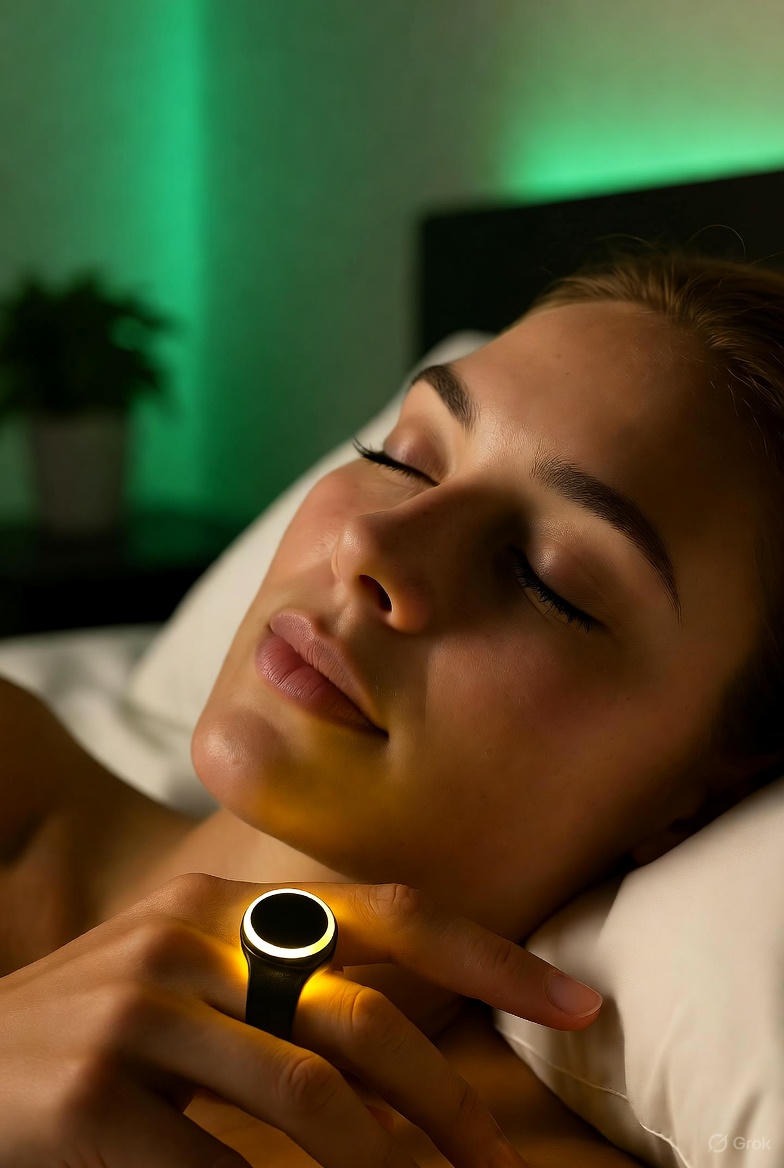
Your wellness ring is a powerhouse of physiological data, but it doesn’t exist in a vacuum. Its insights reach their full potential when integrated with other pillars of your health ecosystem. This synergistic approach creates a holistic, 360-degree view of your well-being, connecting the dots between what your body does (ring data) and what you put into it and ask of it (other metrics).
Nutrition & Macronutrient Tracking: Syncing your food log with your biometric data unlocks profound personal discoveries. You might use the ring to identify food sensitivities not through digestive distress, but through the inflammatory echo they leave: a depressed HRV and elevated RHR the night after consuming certain foods like gluten or dairy. Conversely, you can validate positive choices—seeing your recovery scores soar on nights following days you hit your protein target or stayed perfectly hydrated. Apps that combine logging with ring data allow you to run powerful correlations, turning “I think dairy bothers me” into “My data shows a 25% average HRV drop on nights after I consume dairy.”
Fitness & Training Load: For anyone who exercises, this integration is non-negotiable. Your ring provides the “readiness to perform” score, while your fitness tracker or smartwatch provides the “exertion” data—exercise heart rate zones, training load, and workout duration. Bringing them together enables truly personalized, adaptive training. The rule is simple: Let your readiness modulate your planned exertion. A high readiness score on a heavy training day? Green light to push. A low readiness score? The data commands you to swap the interval run for a recovery walk or a rest day. This prevents the common trap of blindly following a pre-set calendar into overtraining, using your body’s real-time feedback as your guide.
Menstrual Cycle & Hormonal Tracking: For women, this integration is revolutionary. The menstrual cycle is a powerful hormonal rhythm that directly influences core biometrics. By overlaying cycle phases with ring data, clear patterns emerge: a natural rise in resting heart rate and a dip in HRV during the luteal phase (after ovulation), a slight rise in basal skin temperature post-ovulation, and variations in sleep architecture across the month. This knowledge transforms self-understanding. A low recovery score during your luteal phase isn’t a personal failing; it’s physiology. It allows you to plan your month strategically—scheduling demanding projects during your higher-energy follicular phase and prioritizing recovery and gentler workouts pre-menstrually.
Mental & Emotional Logging: Pairing a brief daily journal or mood tracker with your biometrics bridges the mind-body gap. Writing “high anxiety day” and then seeing a corresponding, objective spike in your stress graph and a low overnight HRV validates your experience biologically. Conversely, logging a “calm, connected day” and seeing the positive footprint in your data reinforces the practices that led to that state. This synergy turns abstract feelings into concrete, manageable physiological events.
By building this synergy system, you cease to view health in silos. You see the direct line from your dinner plate to your sleep depth, from your workout intensity to your next-day resilience, and from your emotional state to your heart’s rhythm. You become the integrator of your own well-being. For practical strategies on building one of the most critical pillars of this system—sleep—our guide on whether sleep tracking is worth it lays out the honest benefits and considerations.
Armed with insights into your patterns, your biomarkers, and their synergies, you now graduate to the most advanced phase: moving from interpretation to prescription. This is the art of building your personal health algorithm—a dynamic, living set of rules and routines informed by your unique data, designed to steer you toward optimal performance and well-being.
Your algorithm is not a rigid, one-size-fits-all plan. It’s a flexible decision matrix, a series of “if-then” statements governed by your biometric feedback. It starts with identifying your Key Lever Metrics. For one person, the primary lever might be HRV; when it dips below a certain threshold for two days, it triggers a “recovery protocol.” For another, it might be sleep consistency; when it falls, it activates a “sleep hygiene reset.”
Here is how you build it, step by step:
This personalized algorithm turns you from a passive consumer of health information into an active engineer of your own state. It makes your daily choices data-informed, reducing guesswork and willpower depletion. You’re not following a generic blog’s advice; you’re executing a plan written specifically for you, by you, with the critical assistance of your body’s own data. To see how personalization applies to one of the most restorative sleep stages, explore our article on the science of deep sleep and what happens to your body.
In a world of constant quantification, a critical paradox arises: the very tool meant to reduce stress can become a source of it. “Data anxiety” or “wearable stress” is a real phenomenon—the compulsive checking of scores, the frustration over a “red” recovery day, the obsession with optimizing every metric. To wield a wellness ring effectively, you must master the art of being the “human in the loop.” The data is a guide, not a gospel. Your lived experience and intuition are the indispensable co-pilots.
The first step is cultivating a healthy data relationship. This means setting boundaries. Designate specific times to review your data—perhaps once in the morning to check readiness and once in the evening to reflect on the day’s stress patterns. Avoid compulsive, all-day checking. Remember, the ring’s job is to collect; your job is to interpret wisely, not constantly.
Next, practice contextual compassion. A low score is not a moral failure or a permanent state. It is a single data point in a long stream. Ask the compassionate question: “What does my body need today?” rather than the judgmental one: “Why is my score so bad?” Did you have a late but deeply connecting dinner with an old friend that tanked your sleep score? The data shows a cost, but your lived experience may deem it a priceless trade-off. The human assigns the value.
Re-calibrate with intuition. Your body sends signals that no ring can measure: the subtle feeling of creative flow, the deep sense of peace after meditation, the gut feeling of needing a quiet day. Use the data to inform these feelings, not override them. If your ring says you’re “ready to perform” but your intuition screams for rest, honor it. The data might be missing a non-physiological stressor, like emotional labor. Use the ring to explain your intuition (“Ah, my high stress graph explains why I feel so drained”) and to challenge it when necessary (“My data says I’m recovered, maybe I can push a little beyond my mental resistance today”).
Finally, embrace the “Why” over the “What.” Don’t just fixate on the score. Use it as a starting point for a curious, non-judgmental investigation. “My HRV is low. Why might that be? Was my workout too intense? Did I have a difficult conversation yesterday? Did I eat something that didn’t agree with me?” This shifts you from a state of anxiety to a state of empowered inquiry.
The goal is a harmonious partnership: the ring provides the objective, physiological narrative; you provide the subjective, experiential context and the wisdom to make balanced choices. Together, you achieve a level of self-awareness that is both deeply scientific and profoundly human. For support on common questions that arise in this journey, our comprehensive FAQ page is a valuable resource for users at every stage.
The wellness ring you wear today is just the beginning. It represents the first generation of truly personal, continuous health monitors. The future unfolding in labs and R&D departments points toward a device that will become even more integrated, predictive, and clinically powerful—a true health guardian on your finger.
The next frontier is multi-layered biomarker detection. Future rings will likely incorporate new, non-invasive sensors. Continuous Glucose Monitoring (CGM) integration, either via a separate sensor synergy or through advanced optical methods, would be revolutionary. Seeing real-time glucose responses to food, correlated with HRV and sleep data, would provide a complete picture of metabolic health. Electrodermal Activity (EDA) sensors to measure subtle changes in skin conductance, a direct marker of sympathetic nervous system arousal, would add another layer to stress tracking. Advanced temperature sensing could move beyond trend detection to more precise, core-temperature approximations.
AI-Driven Predictive Personalization will transform data interpretation. Instead of you learning to read your graphs, artificial intelligence will learn the nuances of your body’s patterns with incredible depth. It will move from telling you “you’re stressed” to predicting “based on your current HRV trend, sleep debt, and calendar, you have a 70% likelihood of catching a cold in 3 days unless you follow this tailored protocol.” The ring’s companion app will evolve into a true AI health coach, offering hyper-personalized, proactive recommendations for nutrition, activity, and recovery.
Clinical-Grade Diagnostics and Remote Patient Monitoring (RPM) is perhaps the most significant horizon. As sensor accuracy is validated, the wellness ring will transition from a consumer wellness tool to a medically approved device. Imagine your cardiologist prescribing a ring to monitor atrial fibrillation burden, or your sleep doctor using its SpO2 and movement data to fine-tune CPAP therapy. For chronic condition management—from hypertension to diabetes—the continuous, real-world data stream would be invaluable, enabling preventative interventions and reducing hospital visits. The ring could become a standard tool in personalized preventative medicine, catching deviations long before they become diagnoses.
Finally, seamless ecosystem integration will make the data flow invisible and more powerful. Your ring will talk to your smart thermostat to lower the bedroom temperature as you fall asleep, signal your lights to gradually brighten with your wake-up time based on your sleep stage, and prompt your calendar to block time for a break when it detects an extended stress response. It will become the central, autonomous hub of your quantified self, working quietly in the background to engineer an environment perfectly tailored to your physiological needs.
This future is not science fiction; it’s the logical evolution of the pattern-detection power you already hold on your finger. It promises a shift from managing illness to cultivating sustained, optimized vitality. To understand the foundation upon which this future is being built, you can learn about the mission and vision driving these innovations forward.

We began with a feeling—that intangible sense of being “off.” We end with empowerment: the ability to transform that vague unease into a precise, understandable narrative and an actionable plan. This journey from ignorance to insight to wisdom is the ultimate promise of the modern wellness ring. It’s not about the data itself; it’s about the self-knowledge the data unlocks.
Becoming the expert of your own body is a process of layered learning. The first layer is Literacy: understanding what HRV, RHR, and temperature trends mean. The second layer is Pattern Recognition: connecting your daily data to your lifestyle choices, your emotions, and your environment. The third, and deepest layer, is Integration: weaving these insights so seamlessly into your life that they become second nature—your personal health algorithm running in the background of your consciousness.
This expertise confers profound advantages. It replaces anxiety with agency. Instead of fearing burnout, you see its precursors in your longitudinal HRV trend and can course-correct. Instead of wondering why you’re tired, you can pinpoint the nutritional echo or the environmental factor disrupting your sleep. It fosters a deep, compassionate dialogue with your physical self. You stop seeing your body as a separate entity to be commanded or criticized, and start relating to it as a complex, communicating partner whose signals deserve respect and attention.
This self-expertise also makes you a empowered partner in your own healthcare. Walking into a doctor’s office with months of biometric data showing a clear trend is a radically different experience than going in with a vague complaint. You can provide objective evidence, ask better questions, and collaborate more effectively on solutions.
The Oxyzen smart ring, and devices like it, are the tools that make this level of personal expertise accessible. They demystify the inner workings of your biology. But remember, the ring is the compass, not the destination. The destination is a life lived with more energy, resilience, and alignment—a life where you are no longer guessing, but knowing.
The hidden patterns have always been there, writing the story of your health in a language of pulses and waves. Now, you have the translator. Now, you can not only read the story but also pick up the pen and help write its next, most vibrant chapter. The journey to becoming your own best health expert starts with a single insight. For those ready to begin, the doorway to discovery is at the Oxyzen shop, and a wealth of continued learning awaits in our blog.
Data points in isolation are like random words on a page. It is the connection between them—the correlation—that forms a coherent sentence, a paragraph, and ultimately, the narrative of your health. Moving beyond observing patterns to establishing causality is the master class in using your wellness ring. This is the art of the controlled personal experiment, where you become a meticulous researcher of the one subject that matters most: you.
The foundational principle is the "N-of-1" Trial. This is scientific research conducted on a single participant—yourself. Its power lies in its perfect personalization. While large-scale studies tell us what works on average, your N-of-1 trial reveals what works for you. Your ring provides the objective, measurable outcome data.
Let’s walk through a classic experiment: "The Impact of a 4 PM Caffeine Cutoff on Sleep Latency."
This method can be applied to countless questions:
The key is controlling variables. Change one thing at a time. If you start meditation, change your diet, and buy blackout curtains all in the same week, you won’t know which intervention moved the needle. The ring’s data rewards patience and precision.
Furthermore, learning to spot confounding variables is crucial. You might see your HRV plummet on Wednesday night and initially blame your tough workout. But a review of your timeline might reveal you also had a heated argument that evening. The data shows the combined effect; your detective work untangles the contributing threads. This practice hones your analytical skills, teaching you to think in systems, not in isolated events. For a deep dive into one of the most common confounding variables for sleep, our article on the deep sleep formula of temperature, timing, and habits explores how multiple factors intertwine.
Mastering this art transforms you from a passive observer of charts to an active architect of your well-being. You stop following generic advice and start generating your own, evidence-based personal protocol. The ring provides the irrefutable feedback loop: try something, measure the outcome, adapt.
Sleep is not a monolithic state of unconsciousness. It is a carefully architected, cyclical journey through distinct stages, each with a unique physiological purpose. Your wellness ring’s ability to estimate these stages—through a combination of heart rate, HRV, and movement data—provides you with a detailed blueprint of your night. Understanding this architecture is key to solving the mystery of why you might sleep for 8 hours yet wake up unrefreshed.
The night is divided into cycles, each lasting roughly 90 minutes and containing four primary stages:
Stage 1 (N1) & Stage 2 (N2): The Gateway and Foundation.
Stage 3 (N3): Deep Sleep (Slow-Wave Sleep).
This is the most physically restorative phase. Your heart rate and breathing are at their slowest, muscles are relaxed, and the brain produces slow, rolling delta waves. This is when human growth hormone is released, tissue repair occurs, and the immune system is fortified. It’s predominant in the first half of the night. A lack of deep sleep leaves you feeling physically drained and vulnerable. Tracking its duration and consistency is paramount, and our guide on what your deep sleep numbers should look like offers clear benchmarks.
REM Sleep: The Mental and Emotional Workshop.
Rapid Eye Movement (REM) sleep is where dreaming occurs. Your brain is highly active (near waking levels), but your body is in a state of temporary paralysis. This stage is essential for emotional processing, memory integration, and creativity. REM periods become longer and more prominent in the second half of the night. Suppressing REM sleep (often through alcohol or certain medications) can lead to emotional volatility and cognitive fog.
Your ring visualizes this architecture, allowing you to spot critical patterns:
By learning to read your blueprint, you can diagnose issues with precision. Feeling physically wrecked? Check your deep sleep percentage. Emotionally frayed? Look at your REM duration. Can’t turn your brain off? Observe how long it takes to transition from wakefulness into stable N2 sleep. This architectural insight moves you far beyond the simplistic goal of "more sleep" and into the nuanced pursuit of better-structured sleep.
For anyone engaged in physical training, the line between productive stress and destructive strain is perilously thin. The old model of "no pain, no gain" is not only unsustainable but counterproductive. Your wellness ring introduces a new, intelligent paradigm: the Strain vs. Gain Equation. It provides the real-time feedback necessary to ensure your exertion (strain) is consistently met with adequate recovery (gain), leading to progressive adaptation instead of breakdown.
The equation hinges on two data streams: External Load and Internal Response.
Optimizing the Equation:
The goal is to see a positive correlation where a higher external load leads to a manageable internal response that fully recovers within 24-48 hours, resulting in a higher baseline (improved fitness). Your ring helps you spot the warning signs of a negative equation:
By living in this equation, you abandon fixed, pre-written training plans. You adopt an autoregulated approach. Your morning readiness score dictates the intensity of your day’s session. A green score means you can attack your planned workout. A yellow score suggests scaling back intensity or volume. A red score commands a rest day or very gentle active recovery. This dynamic method respects your body's daily variability, dramatically reducing injury risk and burnout while maximizing the efficiency of every workout. For athletes focused on maximizing recovery, understanding the role of deep sleep for athletic recovery is a non-negotiable part of this equation.
Human beings are not isolated systems; we are social creatures whose physiologies influence and are influenced by those around us. The emerging field of "social physiology" suggests that our heart rates, breathing, and even brainwaves can synchronize during close, positive interaction. While current consumer wearables don't measure inter-personal sync directly, your wellness ring can reveal the profound impact of your social world on your individual biology—and vice versa.
Your data holds the Social Footprint, as discussed earlier, but on a deeper level, it can help navigate shared lifestyles.
The Partnered Sleep Pattern: Sharing a bed is one of the most significant biometric mergers. One partner's restlessness, snoring, or different sleep schedule can imprint on the other's data. Couples who both wear rings can engage in a collaborative, data-informed dialogue to improve mutual rest. They might discover that when one partner drinks alcohol, both partners' sleep scores suffer due to disturbance. Or, they can experiment with temperature settings to find a compromise that works for both their physiological needs. This turns a potential source of conflict ("you're stealing the covers!") into a problem-solving partnership ("the data shows we both sleep better when the room is at 67°F").
The Family Health Ecosystem: In a family, stress and illness are contagious, but so are healthy habits. A parent under intense work stress may show a depressed HRV, which can affect the household's emotional climate. Conversely, starting a family walk ritual might show up as improved sleep consistency for everyone. Seeing the data can motivate collective action—agreeing on device-free dinners or earlier bedtimes for all, creating a shared culture of recovery.
The Accountability Partnership: Sharing select wellness data with a trusted friend or coach creates a powerful layer of external accountability and support. It’s not about competition, but connection. You might have an agreement: "If my readiness score is below 70 for three days in a row, I'll message you for a check-in." Or, training partners can coordinate their hard sessions based on mutual recovery, ensuring they can push each other effectively on days when both are physiologically primed.
This perspective expands the purpose of biometric tracking from pure self-optimization to relational optimization. It provides an objective, non-blaming language to discuss the impact of shared lives. It helps answer questions like: "Is our lifestyle sustainable for our health?" and "How can we structure our shared time to support each other's well-being?" The data becomes a tool not just for personal insight, but for building healthier, more empathetic connections. For a look at the human stories behind the data, the shared journeys in our testimonials section illustrate this collective aspect of wellness.
To wield a powerful tool with wisdom, one must understand its boundaries. A wellness ring is an extraordinary proxy for your physiology, but it is not a medical device, and its data is not omniscient. Acknowledging the "dark data"—what it cannot see, where it can be misinterpreted, and the ethical implications of constant self-tracking—is essential for a balanced, healthy relationship with the technology.
Technical Limitations & The Proxy Problem:
It’s critical to remember that the ring measures surrogates. It estimates sleep stages from movement and heart rate patterns; it doesn't measure brainwaves (EEG). It measures peripheral skin temperature, not core temperature. Its HRV is derived from optical heart rate sensors, which, while excellent for trends, may have more noise than a medical-grade chest strap ECG. Understanding these are estimates prevents over-interpreting small fluctuations. A 5-minute change in deep sleep is likely within the margin of error; a 30-minute sustained change is a pattern.
The Gap of Subjective Experience:
The ring captures the physiological correlate of an experience, but not the experience itself. It can show a stress spike during a meeting, but it cannot tell you if that spike was due to excitement, anger, or fear. It can show improved sleep after a mindfulness retreat, but it cannot capture the profound sense of peace you felt. Your lived, qualitative experience is the indispensable context that gives meaning to the quantitative data. Never let the numbers override your internal felt sense.
The Risk of Orthosomnia:
A legitimate clinical concern is "orthosomnia"—an unhealthy preoccupation with achieving perfect sleep data. This paradoxically creates performance anxiety around sleep, making it harder to fall asleep and worsening the very metric one is trying to optimize. If checking your sleep score becomes a source of dread, or if you find yourself sacrificing meaningful life experiences to "protect your data," it's time to step back. The ring is a servant to your life, not its master.
Data Privacy and Ownership:
You are generating a profoundly intimate dataset. Who owns it? How is it stored, anonymized, and potentially used? Responsible companies are transparent about their data policies, offering end-to-end encryption and clear opt-outs for data sharing. As a user, it is your right and responsibility to understand the privacy policy of the device you wear 24/7. Your biometric data is your digital self; guard it with the same care you would your physical self.
Engaging with this "dark data" fosters a mature, critical, and empowered user mindset. You appreciate the ring's insights without becoming enslaved by them. You use data to enhance your intuition, not replace it. You remain the conscious author of your health narrative, using the ring as a powerful editor, not a ghostwriter. For clear answers to common technical and usage questions, our dedicated FAQ page is designed to address these very concerns.
We have explored the patterns, the science, the experiments, and the cautions. Now, we arrive at the synthesis: the practical, daily manifesto for integrating these insights into a seamless, sustainable, and enhanced life. This is not about adding more tasks to your day; it’s about making smarter, more informed choices within the flow of your existing life. It’s about building a cohesive, data-informed lifestyle.
Principle 1: Start with One Question.
Overwhelm is the enemy of integration. Don’t try to optimize everything at once. Start with a single, burning question your data can help answer. "Why do I always crash at 3 PM?" or "Why can't I fall asleep on Sunday nights?" Use your ring to investigate this one pattern for a month. Master the process of inquiry—hypothesis, observation, correlation—on this single issue. Success here builds confidence for broader application.
Principle 2: Create Data-Informed Rituals, Not Rigid Rules.
Transform insights into gentle, non-negotiable rituals. Instead of the rigid rule "no screens after 9 PM," create the ritual: "When my ring's wind-down reminder alerts at 9 PM, I begin my evening transition: I make herbal tea, read a book, and do 5 minutes of breathing." The data informs the ritual's timing and purpose, but the ritual itself is a humane, enjoyable practice.
Principle 3: Use Your Readiness Score as a Daily Compass.
Let this composite score be your primary touchpoint each morning. Before you check email or social media, check your readiness. Let it set the tone for your day. A high score is permission to engage fully, tackle challenges, and connect socially. A low score is an instruction to prioritize nourishment: gentle movement, hydrating foods, clear boundaries, and early rest. This simple practice aligns your actions with your body’s actual capacity, day by day.
Principle 4: Schedule Quarterly "Health Reviews."
Four times a year, block an hour for a personal health review. Export your long-term trends from the past three months. Look at the macro-cycles: How did your metrics trend over the season? Did your new habit stick, and did it move your baselines? What were your biggest stressors and your most potent recovery tools? This quarterly review is your strategic planning session for your well-being, allowing you to course-correct and set intentions for the next quarter.
Principle 5: Cultivate a "Curious, Not Critical" Mindset.
When you see a negative trend, respond with curiosity, not self-criticism. "Hmm, my HRV has been low all week. What's been different? Let me investigate," rather than "Ugh, I'm failing at recovery again." This mindset shift is the difference between using data for self-improvement and using it for self-flagellation. The ring is a mirror, not a judge.
By adopting this manifesto, the technology fades into the background, and the wisdom comes to the fore. You spend less time staring at graphs and more time living a life that feels energizing, resilient, and authentically yours. The data stream becomes like the weather report—a useful piece of information to help you dress appropriately for the day, not a source of endless drama. For ongoing inspiration and deeper dives into each of these principles, our blog serves as a continual resource for your journey.
The journey through the hidden patterns in your daily activity is, by its very nature, endless. Your body is not a machine with a fixed blueprint, but a dynamic, living process—an unfinished symphony that plays a new movement each day. The wellness ring is the sheet music, capturing the notes, the rhythms, and the subtle harmonies of your unique biological composition.
What began as a quest to understand a feeling of being "off" has unfolded into a comprehensive education in self-literacy. You've learned to read the baseline rhythms of your circadian conductor, decode the stress signatures written in your pulse, hear the nutritional echoes in your night, and see the environmental imprint on your sleep. You've moved from counting steps to optimizing the strain-gain equation, from tracking sleep to architecting it. You've discovered how to run the personal experiments that turn generic advice into personal truth, and you've learned to hold this powerful data with both hands—respecting its insights while honoring the unquantifiable wisdom of your own intuition.
This is the ultimate promise: not a lifetime of perfect scores, but a lifetime of deepening conversation. A conversation with the most fascinating, complex, and vital system you will ever engage with: your own body. With this continuous feedback loop, you are empowered to make choices that are not guesses, but informed investments in your sustained vitality. You gain the agency to shape your health trajectory proactively, catching the whispers of imbalance long before they become crises.
The patterns were always there, hidden in plain sight. Now, you have the lens to bring them into focus. The story of your health is being written in every heartbeat, every breath, every quiet restoration of the night. You are both the subject and the author. Wear your ring not as a chain of measurement, but as a key—a key to unlocking a more attuned, resilient, and vibrant version of yourself. The symphony is playing. Now, you can truly listen, and perhaps, even begin to conduct.
To begin translating these insights into your daily life, explore the tools designed for this purpose at the Oxyzen shop, and to continue your learning, the full breadth of our research and user experiences awaits in our blog and our story.
Your Trusted Sleep Advocate (Sleep Foundation — https://www.sleepfoundation.org/)
Discover a digital archive of scholarly articles (NIH — https://www.ncbi.nlm.nih.gov/
39 million citations for biomedical literature (PubMed — https://pubmed.ncbi.nlm.nih.gov/)
experts at Harvard Health Publishing covering a variety of health topics — https://www.health.harvard.edu/blog/)
Every life deserves world class care (Cleveland Clinic -
https://my.clevelandclinic.org/health)
Wearable technology and the future of predictive health monitoring. (MIT Technology Review — https://www.technologyreview.com/)
Dedicated to the well-being of all people and guided by science (World Health Organization — https://www.who.int/news-room/)
Psychological science and knowledge to benefit society and improve lives. (APA — https://www.apa.org/monitor/)
Cutting-edge insights on human longevity and peak performance
(Lifespan Research — https://www.lifespan.io/)
Global authority on exercise physiology, sports performance, and human recovery
(American College of Sports Medicine — https://www.acsm.org/)
Neuroscience-driven guidance for better focus, sleep, and mental clarity
(Stanford Human Performance Lab — https://humanperformance.stanford.edu/)
Evidence-based psychology and mind–body wellness resources
(Mayo Clinic — https://www.mayoclinic.org/healthy-lifestyle/)
Data-backed research on emotional wellbeing, stress biology, and resilience
(American Institute of Stress — https://www.stress.org/)


