


The Smart Ring Fitness Tracking That Works While You Sleep
Continues to track vital fitness metrics even while you sleep.
Continues to track vital fitness metrics even while you sleep.
%402x.svg)
For decades, the pursuit of fitness was a sunlit endeavor. It happened on morning runs, in fluorescent-lit gyms, and on sweat-soaked yoga mats. We tracked our progress with steps counted, miles logged, and weights lifted—all conscious, daytime activities. But what if we’ve been missing half the picture? The most critical phase of our physical regeneration, mental consolidation, and metabolic repair happens not under the sun, but in the quiet, hidden world of the night. For true wellness, the time you spend unconscious is just as important as the hours you spend actively training.
Enter the smart ring: a minimalist piece of wearable technology that is quietly revolutionizing how we understand health. Unlike bulky watches that buzz and glow from your wrist, a smart ring works in the background, gathering a continuous stream of physiological data with a subtlety that makes it the perfect companion for the most fragile and informative state of our lives—sleep. This isn't just about counting sheep; it's about quantifying the complex symphony of your autonomic nervous system, the silent repair work of your cells, and the architectural reshaping of your brain, all while you're peacefully unaware.
Imagine waking up not just to an alarm, but to a detailed report on your night’s restoration. A report that tells you not just how long you slept, but how well you cycled through crucial stages, how your heart found its most restful rhythm, and whether your body truly cooled down for optimal recovery. This is the promise of nocturnal fitness tracking, a 24/7 wellness paradigm where recovery is no longer a passive void but a measured, optimizable pillar of health. It represents a shift from "fitness by exertion" to "wellness by balance," where understanding your night is the key to mastering your day.
This article is your definitive guide to that silent revolution. We will delve deep into the science, the technology, and the practical application of sleep-stage tracking. We'll explore why the metrics you generate between midnight and 6 a.m. are your most powerful health indicators, how a device on your finger can perceive what’s happening inside your body, and how you can use this knowledge to transform your energy, cognitive function, and overall vitality. This is where true, holistic fitness begins: in the dark, while you dream.
We often think of sleep as a state of inactivity, a nightly shutdown. Nothing could be further from the truth. Sleep is a state of intense biological activity, a meticulously choreographed "night shift" where your body performs essential maintenance, repair, and preparation that it simply cannot accomplish during the chaos of wakefulness. To ignore this phase is to ignore the very foundation of your health, fitness, and cognitive performance.
During the day, your body is in "catabolic" mode—focused on consuming energy, processing stimuli, and engaging with the external world. Your brain is a CEO, making executive decisions. Your sympathetic nervous system (the "fight or flight" system) is often engaged. But at night, there’s a profound shift. The "night crew" clocks in, and your body switches to "anabolic" mode—a state of building, repairing, and restoring. Growth hormone, essential for muscle repair and recovery, is predominantly secreted during deep sleep. Your brain transitions from CEO to janitor and archivist, clearing out metabolic waste products like beta-amyloid (linked to cognitive decline) and consolidating memories, transforming short-term impressions into long-term knowledge.
Your cardiovascular system gets a break, with heart rate and blood pressure dipping to their lowest daily levels—a phenomenon known as nocturnal dipping. This respite is critical for long-term heart health. Your immune system ramps up production of cytokines, proteins that help fight infection and inflammation. Even your metabolism is fine-tuned; sleep regulates hormones like leptin and ghrelin, which control hunger and satiety. Poor sleep disrupts this balance, often leading to increased cravings and weight gain.
Consider this: you can have the most perfect diet and the most rigorous workout routine, but if you chronically shortchange your sleep, you are systematically undermining your efforts. You’re building muscle in the gym only to limit its repair at night. You’re eating clean but triggering hormonal signals that promote fat storage. You’re studying hard but failing to properly cement the learning. This is why tracking your daytime fitness metrics alone is like reviewing a company’s sales figures without ever looking at its R&D, manufacturing, or logistics. The night shift is where the product—a healthier, sharper, more resilient you—is actually assembled.
To truly grasp the mechanics of this nightly transformation, a foundational understanding is key. For a comprehensive primer, I recommend our beginner's guide to sleep tracking, which breaks down the essentials of what happens when you close your eyes.
The wearable tech market has long been dominated by the smartwatch. It’s a fantastic tool for notifications, daytime activity tracking, and on-the-go interactions. But for the specific, delicate task of monitoring sleep, the wrist may be the wrong place. Here’s why the unassuming smart ring is emerging as the gold standard for nocturnal insight.
First, consider form factor and comfort. Sleep is a sensitive state. A bulky watch on your wrist can be annoying, pressing against the mattress or your other arm. It can get caught in sheets or hair. A smart ring, by contrast, is almost unnoticeable. Its low profile and lightweight design make it far less intrusive, promoting natural sleep posture and minimizing the chance you’ll rip it off in the middle of the night. This comfort leads to higher compliance—you’re more likely to wear it consistently, which is the absolute prerequisite for accurate longitudinal data.
Second, and more scientifically compelling, is sensor placement. The finger is a uniquely rich location for physiological data. It hosts a dense network of capillaries, allowing for a strong and consistent photoplethysmography (PPG) signal—the optical method used to measure heart rate and blood volume changes. The arteries in your finger are closer to the surface and less obstructed by tendons and bones compared to the wrist, potentially yielding a cleaner, more reliable signal for heart rate variability (HRV), a critical metric for recovery and stress.
Furthermore, the finger is an excellent site for skin temperature measurement. Core body temperature fluctuations are a central pillar of the circadian rhythm, and while a ring measures peripheral temperature, its trends are highly informative. A ring sensor maintains stable contact with the skin, unaffected by the shifting position of a watch face. This stable contact is vital for collecting consistent data across an entire night.
Finally, there’s the psychological factor. A smartwatch is an instrument of the day—it buzzes, lights up, and demands interaction. A smart ring is a silent guardian. It has no glowing screen to disrupt melatonin production. It doesn’t tempt you to check messages if you wake up. It exists purely to observe and inform, aligning perfectly with the passive, restorative nature of sleep itself. It embodies the principle that the best technology for health should sometimes be invisible.
Brands like Oxyzen have leveraged these inherent advantages, designing rings that prioritize this seamless, comfortable, and accurate nighttime tracking. You can discover how Oxyzen works to see this philosophy in action, where the design is intrinsically linked to its purpose of unobtrusive, 24/7 health monitoring.
So, you're wearing a smart ring. Night after night, it collects data. But what does that data mean? Moving beyond simple "hours in bed," modern sleep tracking breaks down the night into a rich dashboard of biometrics. Understanding these metrics is the first step to transforming raw data into actionable wisdom.
Sleep Stages: The Architecture of Rest. Sleep isn't monolithic. It’s a cyclical journey through four distinct stages: Light Sleep (Stages N1 & N2), Deep Sleep (Slow-Wave Sleep, N3), and REM (Rapid Eye Movement) Sleep. Each cycle lasts about 90 minutes, and you'll go through several each night.
Resting Heart Rate (RHR) & Heart Rate Variability (HRV). Your nighttime heart tells a profound story. Your Resting Heart Rate typically reaches its lowest point during deep sleep. A trend of a lower RHR over time can indicate improved cardiovascular fitness. More insightful is Heart Rate Variability—the subtle variation in time between each heartbeat. Contrary to intuition, higher HRV is generally better. It indicates a robust, flexible autonomic nervous system that can easily switch between stress (sympathetic) and relaxation (parasympathetic) states. High nighttime HRV is a strong signal of good recovery and resilience.
Respiratory Rate. This is the number of breaths you take per minute during sleep. It’s a remarkably stable metric for a given individual, typically between 12-20 breaths per minute. Significant deviations from your personal baseline can be an early indicator of underlying issues, such as the onset of illness, respiratory problems, or excessive stress load.
Skin Temperature. While not your core temperature, nocturnal skin temperature trends are tightly linked to your circadian rhythm. Your body needs to drop its core temperature to initiate and maintain sleep. A smart ring tracks the peripheral cooling and warming patterns that reflect this process. Disrupted temperature rhythms can signal circadian misalignment, like that from jet lag or inconsistent sleep schedules.
By synthesizing these metrics—stages, heart dynamics, breath, and temperature—you move from knowing you "slept okay" to understanding the quality of your restoration. You can see if you achieved sufficient deep sleep for physical repair, if your nervous system was truly able to relax (high HRV), and if your internal clock is in sync. This is the dashboard for your night shift.
For a deeper technical dive into how devices capture this data, you can explore how sleep trackers actually work.
Of all the sleep stages, deep sleep (or slow-wave sleep) holds a special, non-negotiable status for physical health and fitness. It is the most restorative phase, the time when your body is literally repairing itself from the cellular level up. If sleep is the foundation of wellness, deep sleep is the bedrock.
During deep sleep, your brain waves slow to a synchronized, rhythmic pattern called delta waves. This state allows for several critical functions:
The amount of deep sleep you get is not static. It is influenced by age, stress, lifestyle, and prior sleep debt. Adults typically need about 1.5-2 hours of deep sleep per night, but this demand increases significantly if you are physically active, mentally stressed, or recovering from illness. A single night of poor deep sleep can leave you feeling groggy and physically sore; chronic deprivation is far more serious.
The silent signs of deep sleep deprivation are often overlooked: persistent fatigue unrelieved by longer sleep, constant muscle aches, a foggy brain, increased susceptibility to sickness, and poor recovery from workouts. It’s a deficit that undermines every other aspect of your health regimen.
Therefore, tracking deep sleep isn't a luxury; it's a necessity for anyone invested in their physical well-being. By monitoring your deep sleep percentage and duration, you gain direct insight into your body’s repair capacity. You can answer crucial questions: Did my body recover from yesterday's hard training session? Is my lifestyle supporting my physiological repair, or hindering it?
Athletes, in particular, can leverage this data for a competitive edge. The principles of deep sleep optimization for athletes turn this nightly phase into a targeted recovery tool, fine-tuning training schedules and habits based on objective recovery data from the night before.
It seems almost like magic: a small band on your finger can distinguish between the dreamscapes of REM and the profound stillness of deep sleep. The technology that makes this possible is a sophisticated blend of biometric sensing, signal processing, and machine learning. Let’s demystify the process.
The primary sensor in most smart rings is a Photoplethysmography (PPG) sensor. It consists of tiny LED lights (usually green and red/infrared) that shine light into the skin of your finger, and a photodetector that measures the amount of light reflected back. Blood absorbs light, so as your heart pumps and blood volume in your capillaries pulses, the amount of reflected light changes in rhythm with your heartbeat. This raw signal provides a continuous readout of your heart rate.
But the story goes much deeper. The subtle, beat-to-beat timing differences—your Heart Rate Variability (HRV)—are extracted from this PPG signal with advanced algorithms. HRV is a direct window into your autonomic nervous system. The pattern of your HRV changes predictably across sleep stages. During deep sleep, your heart rate is at its lowest and most stable, with HRV showing high parasympathetic ("rest and digest") dominance in a regular pattern. During REM sleep, your heart rate becomes more variable and can spike, similar to wakefulness, reflecting the brain activity of dreaming, while your body is paralyzed.
To distinguish between sleep and wake, and between the different sleep stages, devices use accelerometers. These measure movement (or the lack thereof). Prolonged stillness suggests sleep, while movement suggests wakefulness or light sleep. However, movement alone is a poor indicator of sleep stages—you are largely paralyzed during REM, for instance. This is where the fusion of data, or sensor fusion, becomes critical.
The true genius lies in the algorithm. It takes the multi-faceted input—heart rate patterns, HRV characteristics, movement data, and often skin temperature from a dedicated sensor—and feeds it into a machine-learning model. This model has been trained on massive datasets where this wearable sensor data was collected simultaneously with the gold-standard of sleep measurement: polysomnography (PSG) conducted in sleep labs. PSG uses EEG to measure brain waves, along with eye movements and muscle activity, to definitively identify sleep stages.
The algorithm learns to correlate the patterns from the ring’s sensors (heart rate dipping, HRV signature, motionlessness) with the confirmed brain states from the PSG. Over time, it becomes incredibly adept at making accurate stage predictions. It’s not reading your mind; it’s reading the physiological proxy signals that are intimately tied to your brain’s state.
This is why consistency and placement matter. A ring on the finger provides a stable, high-fidelity PPG signal crucial for this analysis. The technology isn't perfect—no consumer wearable can match a clinical PSG—but for tracking trends, understanding your personal patterns, and making lifestyle adjustments, it is exceptionally powerful. To understand the nuances of what these devices can and cannot measure, our analysis on sleep tracking accuracy provides a balanced and detailed perspective.
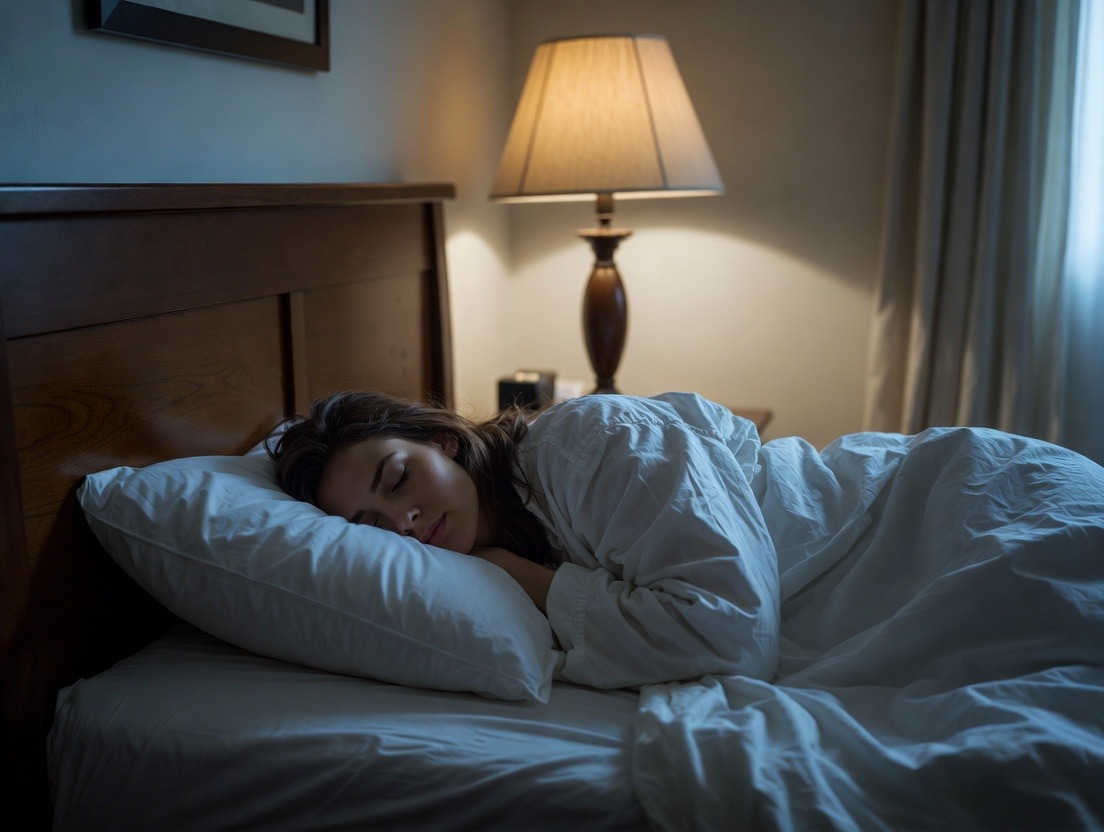
In the age of quantified self, one of the most damaging tendencies is to compare our biometrics to generic averages or, worse, to someone else’s highlight reel. The most powerful use of sleep tracking is not to chase an arbitrary ideal, but to discover your own unique personal baseline. What does a good, restorative night look like for you?
Averages are a starting point, but they are not a destination. The textbook "7-9 hours" of sleep is a population-wide recommendation. Your genetic makeup, age, lifestyle, and stress load determine your individual need. One person may be fully recovered with 6.5 hours of high-quality sleep, while another genuinely requires 8.5. The only way to know is through consistent tracking and paying attention to how you feel.
Establishing your baseline requires a minimum of two weeks of consistent tracking during a period of relative normalcy—not on vacation, not during an intense work crisis, not while sick. This gives the algorithms enough data to smooth out nightly variations and identify your personal patterns. Focus on these key questions:
This personal baseline becomes your most important reference point. Deviations from it are far more informative than deviations from a population average. A night where your deep sleep drops by 30% from your norm is a significant event, even if the absolute number still looks "average." A steady, week-long decline in your HRV is a clear signal from your nervous system that your recovery is failing to keep up with your stress (physical, mental, or emotional).
Understanding how your needs change over time is also part of this. For instance, how age affects deep sleep is a critical piece of knowledge, helping you adjust expectations and strategies as you mature.
Collecting data is only step one. The transformative power of sleep tracking lies in interpretation and action. Waking up to a sleep score of 78 is meaningless unless you know why it’s a 78 and what you can do to support a better night tomorrow. Here’s a framework for moving from passive observation to active optimization.
Start with the Macro View: The Sleep Score & Key Metrics. Most apps provide a composite score. Don’t fixate on the number alone. Dive into what contributed to it. Did you lose points on "duration" or "quality"? If quality was low, which sub-metrics were off? Was it low deep sleep, high restlessness, or an elevated resting heart rate?
Investigate the "Why" Behind the Numbers. This is the detective work.
Make One Change at a Time. The key to effective optimization is the scientific method: isolate variables. If you try to cool your room, take magnesium, stop screens, and meditate all in the same week, you won’t know what moved the needle. Pick one likely lever based on your detective work and test it for at least 3-5 nights.
Leverage the Data for Lifestyle Decisions. This is where sleep tracking becomes a superpower. Use last night’s recovery data to inform today’s choices.
For practical strategies, our guide on how to get more deep sleep tonight offers immediate, actionable steps you can implement based on your data. Remember, the goal is not a perfect score every night, but a deep understanding of your body’s rhythms and needs, allowing you to live in greater harmony with them.
The boundary between sleep and wakefulness is not a wall, but a permeable membrane. What you do during the day profoundly shapes the quality of your night, and the quality of your night dictates your capacity, resilience, and performance the following day. Smart ring tracking illuminates this beautiful, bidirectional feedback loop in real time.
How Your Day Creates Your Night (The Forward Effect):
How Your Night Fuels Your Day (The Reverse Effect):
By tracking both daytime activity (steps, active minutes) and nighttime recovery with a single device like a smart ring, you can see this interplay on your dashboard. You can run experiments: "If I take a 20-minute walk in morning sunlight, what happens to my sleep latency?" or "If I finish eating 3 hours before bed instead of 1, does my deep sleep improve?" This creates a closed-loop system where your daily habits are informed by nightly results, leading to a virtuous cycle of improved wellness. To see how real people have used this connection to transform their routines, browsing real customer testimonials can be incredibly insightful.
While the focus of this discussion is on nocturnal tracking, the true potential of a smart ring is unlocked when viewed as a continuous, 24/7 wellness monitor. It doesn’t stop working when you open your eyes. This all-day wear transforms it from a sleep specialist into a holistic health guardian, painting a complete picture of your body’s rhythms, stresses, and recoveries across your entire circadian cycle.
Daytime Heart Rate & HRV Tracking: Monitoring your heart rate and HRV throughout the day provides context for your nighttime readings. You can see how your body responds to specific events: a stressful meeting (a sharp dip in HRV), a meditation session (a rise in HRV), or a vigorous workout (a sustained elevated heart rate followed by a recovery curve). This helps you identify daily stress triggers and moments of calm. Seeing your HRV gradually decline throughout a stressful workweek provides an objective cue to schedule more downtime.
Activity & Readiness Scores: Many smart ring platforms synthesize your sleep data, recovery metrics (like HRV), and recent activity load to generate a daily Readiness or Recovery Score. This single number is a powerful recommendation engine. A high score suggests your body is primed for exertion—a good day to train hard or tackle demanding tasks. A low score is a recommendation to prioritize recovery: take it easy, focus on gentle movement, sleep, and nutrition. This takes the guesswork out of "should I work out today?"
Temperature Trends & Women’s Health: For women, the continuous skin temperature data is particularly valuable. Basal body temperature (BBT) tracking is a well-established method for identifying ovulation and mapping the menstrual cycle. A smart ring automates this, providing a convenient, hands-off way to track BBT trends with high precision due to its all-night wear, offering insights into fertility windows and hormonal health patterns.
Long-Term Trend Analysis & Health Insights: The ultimate value lies in the longitudinal dataset. Worn for months and years, a smart ring can identify subtle, long-term trends that would be invisible otherwise. A gradual, sustained increase in resting heart rate might warrant a conversation with a doctor. Noticing that your deep sleep percentage consistently dips during high-pollen seasons could reveal an allergy impact. It becomes a logbook of your body’s unique language, helping you understand how lifestyle changes, aging, and even dietary shifts manifest in your physiology.
This 24/7 perspective frames sleep not as an isolated event, but as the most critical chapter in your body’s ongoing story. The data from the night explains the potential of the day, and the data from the day predicts the needs of the night. It’s a holistic, always-on system for self-awareness. For those curious about the full scope of what’s possible, exploring the Oxyzen smart ring and its features can provide a concrete example of this integrated approach to wellness tracking.
To move from theory to practice, let's walk through a hypothetical week with "Alex," a busy professional who uses a smart ring not as a curiosity, but as a central tool for managing energy, fitness, and health. This narrative illustrates how the nightly data seamlessly integrates into daily decision-making.
Monday: Alex wakes up after a standard worknight Sunday. The sleep report shows a score of 82. Sleep duration was good (7h 30m), but deep sleep was slightly below personal baseline at 1 hour (about 17%). Resting Heart Rate (RHR) is normal, but Heart Rate Variability (HRV) is a few points lower than usual. The app’s "Readiness Score" is a 7/10. Interpretation: The body recovered decently but not optimally, perhaps from a weekend with slightly later nights. Action: Alex decides to honor the data. Instead of the planned high-intensity interval training (HIIT) class, they opt for a strength training session with moderate weight and longer rest periods, followed by a focused wind-down routine in the evening: no screens after 9:30 PM and a 15-minute meditation.
Tuesday: The tailored recovery day pays off. Alex wakes up feeling refreshed. The data confirms it: sleep score jumps to 89, with deep sleep hitting a solid 1 hour 45 minutes. HRV has rebounded nicely. The readiness score is a strong 9/10. Action: Energized and fully recovered, Alex has a highly productive workday and crushes an intense evening workout, feeling strong and resilient throughout.
Wednesday: The sleep report after the hard workout is fascinating. Total sleep is slightly longer (8 hours), and deep sleep is markedly increased to 2 hours—the body’s clear demand for physical repair. The readiness score remains high. Insight: Alex sees direct, quantitative evidence of how their body uses deep sleep to recover from training stress. They feel confident in pushing hard when recovered, knowing the system works.
Thursday: A late work dinner with clients pushes bedtime back. The sleep data shows shorter total sleep (6h 45m) and slightly fragmented light sleep, likely from digestion. The readiness score dips to 6/10. Action: Instead of frustration, Alex uses the objective data to adjust. They prioritize hydration, choose a lighter lunch, and schedule a 20-minute afternoon walk outside for sunlight and gentle movement to bolster circadian rhythm, avoiding caffeine after noon.
Friday: Sleep is better, but not fully restored. The data shows a middling score. It’s the cumulative effect of a demanding week. Action: Alex listens. They use the lunch walk again and make it a point to disconnect from work email by 6 PM. The ring’s daytime HRV readings show a gradual improvement throughout the afternoon as stress diminishes, a small victory observed in real-time.
Saturday: With no alarm, Alex sleeps in. The data shows a long sleep duration with a large portion of late-morning REM sleep—the brain catching up on what it may have missed during the week’s earlier nights. This aligns with the understanding of REM rebound. Insight: Alex learns that for them, "catch-up sleep" has a specific architecture, emphasizing the need to protect sleep time consistently to avoid this compensatory, albeit helpful, scramble.
Sunday: The week ends with excellent scores across the board. The ring’s weekly report highlights trends: average deep sleep increased compared to last week, and average HRV is trending upward. The Big Picture: Alex doesn’t just feel better; they have a dashboard proving that their intentional habits—respecting readiness scores, timing workouts, managing evening routines—are creating a measurable positive trend in their physiological resilience.
This week demonstrates the transition from being a slave to a schedule to being a responsive partner to your own body. The smart ring provides the dialogue.

Your sleep data is a direct reflection of your biology interacting with your environment. If your numbers are consistently off, one of the most effective places to intervene is not inside your body, but in your bedroom. Your sleep sanctuary should be engineered for recovery. Let’s use tracking data to audit and optimize each key environmental factor.
Temperature: The Goldilocks Zone. As your data shows, skin temperature trends are crucial for sleep onset and maintenance. The optimal room temperature for most people is between 60-67°F (15.5-19.5°C). A room that’s too warm prevents the necessary drop in core body temperature. Data Correlation: If you see prolonged sleep latency or frequent awakenings, especially in the first half of the night, high ambient temperature is a prime suspect. Action: Invest in a thermostat you can program to drop at bedtime. Use breathable, moisture-wicking bedding (like cotton, linen, or advanced performance fabrics). Consider a cooling mattress pad or pillow if you tend to sleep hot.
Darkness: Total Blackout. Even small amounts of light, especially blue-spectrum light, can disrupt melatonin production and sleep architecture. Streetlights, charging LEDs, or early morning sun can all be culprits. Data Correlation: Early morning awakenings or reduced sleep quality (lower deep/REM) could be linked to light intrusion. Action: Use blackout curtains or a comfortable sleep mask. Remove or cover all electronic LEDs. Consider using a red/orange nightlight if one is needed for safety, as these wavelengths are less disruptive.
Noise: The Sound of Silence (or Consistency). Sudden, intermittent noises (traffic, a partner snoring, a dog barking) can cause micro-arousals, fragmenting sleep stages even if you don’t fully remember waking. Data Correlation: High "restlessness" scores or frequent visible awakenings on your sleep graph often point to noise issues. Action: Use earplugs or a white noise machine/smart speaker playing constant, soothing sound (like brown noise or rain). This masks disruptive peaks with a consistent auditory blanket.
Comfort & Allergens. An uncomfortable mattress, pillows that don’t support your posture, or allergens like dust mites can cause subtle discomfort and inflammation, disrupting sleep. Data Correlation: Generalized poor sleep quality, high resting heart rate, or low HRV without an obvious lifestyle cause can sometimes be linked to this. Action: Ensure your mattress and pillow are supportive and not past their lifespan. Use hypoallergenic pillow and mattress covers, and wash bedding weekly in hot water.
Digital Hygiene: The Pre-Sleep Buffer Zone. This is an environmental factor for your mind. The blue light from screens suppresses melatonin, and stimulating content activates the brain. Data Correlation: Long sleep latency is the classic signature of poor digital hygiene. Action: Implement a strict "digital sunset" 60-90 minutes before bed. Use device features like Night Shift or Blue Light Filters, but better yet, put devices away. Charge your phone outside the bedroom.
By systematically altering one environmental variable at a time and observing the changes in your sleep data—particularly deep sleep, restlessness, and latency—you can engineer a bedroom that actively supports, rather than passively hosts, your recovery. It turns your sleeping space into a true bio-hacking lab. For a deeper exploration of how temperature and timing interact, our piece on the deep sleep formula of temperature, timing, and habits offers a detailed blueprint.
You are what you eat, and you sleep how you eat. The timing, composition, and quantity of your evening nutrition have a profound and measurable impact on your sleep stages, particularly your coveted deep sleep. Your smart ring can become a powerful tool for discovering your personal nutritional triggers and supports.
The Major Disruptors:
The Sleep-Supportive Nutrients & Timing:
Using Your Data to Experiment: This is where personalization is key. Try having your last caffeine intake at 2 PM instead of 4 PM for a week. Does your sleep latency improve? Note the effect of a weekend glass of wine on your sleep graph. Try incorporating a magnesium supplement or a tryptophan-rich snack and track your deep sleep percentage over several nights. The goal is not perfection but awareness. By linking dietary choices to objective sleep outcomes, you empower yourself to make informed trade-offs. For inspiration on foods that specifically aid the most restorative phase, our list of 10 foods that increase deep sleep naturally is a great practical starting point.
In our 24/7 world, chronic stress is the arch-nemesis of deep, restorative sleep. It creates a vicious cycle: stress disrupts sleep, and poor sleep lowers resilience to stress. A smart ring, by tracking Heart Rate Variability (HRV), provides a rare, objective window into the state of your autonomic nervous system—allowing you to quantify stress and measure the impact of your management techniques.
HRV: The Numerical Voice of Your Nervous System. As a reminder, HRV measures the subtle variations in time between heartbeats. High HRV indicates a healthy, flexible system that can easily switch between sympathetic (stress) and parasympathetic (rest) states. Low HRV indicates a system that is stuck in "fight or flight" or is simply exhausted and inflexible. Your nighttime HRV, when you are ideally in a parasympathetic-dominant state, is a pure indicator of your recovery capacity and stress load.
The Stress-Sleep Disruption Pathway: When you are chronically stressed:
Using Data to Break the Cycle:
By using HRV as a feedback tool, you move from vaguely "trying to relax" to strategically training your nervous system for resilience. You learn which practices truly work for your biology and get immediate, non-judgmental feedback on your internal state. This transforms stress management from a soft science into a quantifiable component of your fitness regimen. For more on the profound link between your night and your brain’s function, including memory, see deep sleep and memory: the brain-boosting connection.
Beyond stages, heart, and movement, the latest generation of smart rings incorporates pulse oximetry to track blood oxygen saturation (SpO2) and provide deeper respiratory insights. This opens another layer of understanding, particularly for uncovering subtle issues that might be robbing you of quality rest.
Blood Oxygen (SpO2) During Sleep: In healthy individuals, SpO2 should remain fairly stable during sleep, typically between 95-100%. Significant, repeated dips can be a sign of sleep-disordered breathing.
Respiratory Rate: As mentioned, this is the number of breaths per minute. Its value is in its consistency and trends.
Using These Metrics Proactively: For the wellness-focused individual, these aren't just problem-finding tools; they're optimization tools.
Integrating SpO2 and respiratory rate into your analysis provides a more complete picture of your respiratory health during sleep, an often-overlooked pillar of overall recovery. It empowers you with knowledge, turning you into an informed advocate for your own health. For more on the capabilities and limitations of such tracking, our resource on what your sleep tracking device can and can't measure offers balanced clarity.
The fleeting snapshot of a single night’s data is interesting, but the monumental power of a smart ring is revealed over months and years. This longitudinal dataset is your personal biography of health, revealing trends, predicting pitfalls, and providing a data-driven roadmap for aging with resilience and vitality.
Identifying Trends and Preventing Burnout: Burnout and overtraining aren't events; they are processes. They creep in with subtle signals that are easy to ignore subjectively but can be glaring in objective data.
Aging with Data: Compensating for Natural Changes. Our sleep architecture changes as we age. Total sleep time and, most notably, the amount of deep sleep naturally decrease. This is a normal part of the aging process. However, the rate and impact of this decline are highly influenced by lifestyle.
Health Advocacy and Shared Decision-Making: Your long-term data is a powerful tool for healthcare conversations. Instead of saying "I'm tired," you can show a provider: "My resting heart rate has trended up by 8 bpm over the last 6 months, and my deep sleep has declined by 25%, despite these lifestyle measures." This objective record facilitates more productive discussions and personalized investigations.
Ultimately, the long game with a smart ring is about agency. It’s about moving from being a passenger in your body to being its informed pilot, with a detailed instrument panel that shows not just your immediate location, but your trajectory, fuel levels, and engine performance over the long journey. It turns wellness from a vague aspiration into a documented, livable reality.
The promise of smart ring sleep tracking is compelling, but the market is rapidly evolving with different players, sensors, and claims. How do you choose the right tool for such a personal mission? Understanding the key technological differentiators and the realistic expectations around accuracy is essential to making an informed investment in your health.
Sensor Suite: The Foundation of Data. Not all rings are created equal. The breadth and quality of the sensor suite directly determine what you can track.
Algorithm & Data Science: The Secret Sauce. The raw sensor data is just noise without sophisticated algorithms. This is where companies invest heavily in their proprietary "secret sauce." Key questions to consider:
Battery Life & Form Factor: The Practicalities. A device you don't wear is useless.
The Accuracy Conversation: Setting Realistic Expectations. It's vital to approach consumer sleep trackers with the right mindset. No wearable can match the diagnostic accuracy of a hospital-grade PSG, which uses electrodes on your scalp (EEG), face, and chest. A ring is making educated inferences from peripheral signals.
Choosing a smart ring is about aligning technology with your goals. Are you a biohacker wanting every possible metric? A fitness enthusiast focused on recovery? Someone seeking gentle guidance toward better sleep habits? Your answer will point you toward the right balance of sensors, battery life, and algorithmic intelligence. For an ongoing exploration of the latest in wellness technology and insights, our blog at Oxyzen.ai serves as a continually updated resource.
A smart ring is a powerful sensor, but its value multiplies exponentially when its data doesn't live in a silo. Integration with the broader digital health ecosystem creates a holistic health dashboard, enabling deeper analysis, personalized coaching, and seamless tracking across all aspects of your life.
Why Integration Matters: Your health is influenced by countless interconnected factors: sleep, nutrition, exercise, mindfulness, and medical data. When these data streams are connected, you and the apps you use can see the bigger picture.
The Future: Closed-Loop Wellness Systems. The next frontier is true closed-loop integration, where data triggers automatic actions. Imagine:
While this level of automation is emerging, the foundational step is ensuring your ring's valuable data can communicate with the wider digital world. By prioritizing rings with robust, open integration capabilities, you future-proof your investment and unlock the full potential of a data-informed lifestyle. To see how one brand approaches this holistic view of data, you can explore Oxyzen's philosophy and mission.
Specialized Use Cases: Tailoring Sleep Tracking for Athletes, Shift Workers, Parents, and Travelers

While the core principles of sleep tracking are universal, different lifestyles present unique challenges and opportunities. The smart ring's 24/7 wearability and detailed metrics make it a uniquely adaptable tool for these specialized populations.
For the Athlete & Fitness Enthusiast: Recovery as Training. For this group, sleep is not just rest; it's a critical component of the training program.
For the Shift Worker & Chronically Sleep-Deprived: Managing Circadian Chaos. This group battles against their innate biological clock, making sleep tracking essential for damage control.
For New Parents & Caregivers: Surviving and Thriving on Fragmented Sleep. Sleep is no longer a single block but a series of precious fragments. Tracking helps maximize the quality of what you can get.
For the Frequent Traveler & Jet-Setter: Conquering Jet Lag with Data. Travel disrupts the core pillars of good sleep: circadian rhythm, routine, and environment.
In each case, the smart ring moves from being a generic tracker to a personalized advisor, providing objective, non-judgmental feedback on what works for your body within the constraints of your life. It turns unique challenges into optimized, personalized systems.
As sleep tracking grows in popularity, so do misconceptions, frustrations, and real-world challenges. Addressing these head-on is key to maintaining a healthy, productive relationship with your data and your device.
Myth 1: "I need a perfect sleep score every night."
Myth 2: "The absolute number of deep sleep minutes is 100% accurate."
Challenge 1: Data Overload & Paralysis.
Challenge 2: "The data says I slept well, but I feel terrible." (Or vice-versa.)
Challenge 3: Consistency and Device Wear.
Challenge 4: Interpreting Confusing or Contradictory Data.
Myth 3: "Sleep tracking will magically fix my sleep."
By approaching sleep tracking with a balanced, curious, and self-compassionate mindset, you avoid the pitfalls and harness its true power: the power of awareness. It’s a tool for self-knowledge, not self-judgment. For a balanced look at the value proposition, our honest analysis of whether sleep tracking is worth it weighs these very challenges against the benefits.
The smart ring ecosystem is not static; it's accelerating at a breathtaking pace. The technology on your finger today is just the foundation for a future where continuous, passive health monitoring becomes predictive, preventive, and deeply personalized. Let's explore the horizon of what's coming.
Next-Generation Sensors & Multi-Modal Data Fusion.
AI-Powered Predictive Health & Personalized Coaching.
The Evolving Form Factor & Ubiquity.
Ethical Considerations and the Path Forward. This powerful future comes with responsibility. Questions of data privacy, security, and ownership will become even more critical. Users will need transparent control over their highly intimate biometric data. Furthermore, the potential for health anxiety fueled by constant monitoring and the digital divide in access to such technology are issues that the industry must address thoughtfully.
The trajectory is clear: we are moving from episodic, reactive healthcare to continuous, proactive health optimization. The smart ring, working silently through the night, is poised to be a central hub in this new paradigm—a guardian of our most precious recovery time and a guide to our daily vitality. This future is being built today by companies focused on this vision; you can learn about one such journey in Oxyzen's founding story and vision.
Your Trusted Sleep Advocate (Sleep Foundation — https://www.sleepfoundation.org/)
Discover a digital archive of scholarly articles (NIH — https://www.ncbi.nlm.nih.gov/
39 million citations for biomedical literature (PubMed — https://pubmed.ncbi.nlm.nih.gov/)
experts at Harvard Health Publishing covering a variety of health topics — https://www.health.harvard.edu/blog/)
Every life deserves world class care (Cleveland Clinic -
https://my.clevelandclinic.org/health)
Wearable technology and the future of predictive health monitoring. (MIT Technology Review — https://www.technologyreview.com/)
Dedicated to the well-being of all people and guided by science (World Health Organization — https://www.who.int/news-room/)
Psychological science and knowledge to benefit society and improve lives. (APA — https://www.apa.org/monitor/)
Cutting-edge insights on human longevity and peak performance
(Lifespan Research — https://www.lifespan.io/)
Global authority on exercise physiology, sports performance, and human recovery
(American College of Sports Medicine — https://www.acsm.org/)
Neuroscience-driven guidance for better focus, sleep, and mental clarity
(Stanford Human Performance Lab — https://humanperformance.stanford.edu/)
Evidence-based psychology and mind–body wellness resources
(Mayo Clinic — https://www.mayoclinic.org/healthy-lifestyle/)
Data-backed research on emotional wellbeing, stress biology, and resilience
(American Institute of Stress — https://www.stress.org/)


