The Real Reason You Wake Up Exhausted Despite 8 Hours of Sleep — And Why It’s Not in Your Head
Feeling exhausted despite full sleep may be caused by poor recovery, stress, or hidden health signals—not simply lack of sleep—highlighting the importance of deeper biometric tracking.
The Real Reason You Wake Up Exhausted Despite 8 Hours of Sleep — And Why It’s Not in Your Head
You set your alarm for 7.5 hours. You didn’t drink last night. You went to bed at a reasonable time — no phones, no late-night scrolling, no midnight snack. The room was dark, the temperature was cool, and you even remembered to take your magnesium.
And you woke up feeling like you’d been hit by a truck.
That heavy-limbed, sandbag-chested, brain-in-fog sensation that no amount of coffee can touch. The alarm goes off, and instead of springing up refreshed, you lie there negotiating with yourself — just five more minutes, just one more snooze, just the bare minimum to get through the morning.
If this sounds familiar, you are not alone. In fact, you are statistically normal. According to the Australian Sleep Health Foundation, nearly 40 percent of Australian adults experience inadequate sleep quality — not quantity — on a regular basis. That’s almost 8 million people dragging themselves through days that feel like they’re being lived underwater.
Here’s the thing most people never hear: You’re not broken. But something in your sleep is.
The something is not your imagination, not your laziness, not some character flaw that means you just need to try harder. It is measurable, trackable, and — most importantly — fixable. But before you can fix it, you have to understand what’s actually happening inside your body while you think you’re sleeping peacefully.
Because here is the brutal truth that the wellness industry doesn’t want you to know: Hours of sleep is almost meaningless.
You can spend nine hours in bed and wake up destroyed. You can sleep six hours and wake up firing on all cylinders. The difference isn’t magic. It’s not genetics (not entirely, anyway). It’s physics. It’s biology. It’s the invisible architecture of what your body is actually doing while you lie there with your eyes closed.
This article is going to show you exactly what that architecture looks like. We’re going to dismantle the single most stubborn misconception in public health — that sleep duration equals sleep quality. Then we’re going to show you the three things that actually determine how recovered you feel tomorrow morning. We’ll name the hidden conditions that steal your deep sleep without you even knowing they’re there. And we’ll give you a tiered action plan that starts with things you can do tonight, for free, in your own bedroom.
By the time you finish reading, you will never look at your sleep the same way again. More importantly, you will finally have an answer to the question you’ve been asking yourself for months or years: Why am I so tired?
Let’s start with the lie you’ve been sold.
The Hours Myth: Why Duration Is Only One-Third of the Sleep Story
There is a number that has become almost sacred in modern health culture. You see it on fitness trackers, in wellness articles, on government guidelines, and in the comments section of every post about burnout. The number is eight. Eight hours of sleep. The gold standard. The magic threshold.
Here’s what nobody tells you: the eight-hour recommendation was never based on high-quality evidence that eight hours of sleep guarantees good recovery. It was based on population-level observational data showing that people who report sleeping between seven and nine hours tend to have better health outcomes than people who report sleeping less than six or more than ten. That is a correlation. It is not a prescription.
And it certainly doesn’t mean that if you sleep eight hours, you should feel fine.
Think about it this way. Imagine you have two cars. You fill both of them with exactly the same amount of petrol — let’s say 50 litres. You park one car in a heated garage. You park the other car outside in a hailstorm with the windows down and the boot open. You leave them both for eight hours. Which car will start easily in the morning? Which car will have a dead battery, damp seats, and possibly a family of possums living in the back?
The petrol is the same. The hours are the same. But the conditions of the rest — what happens during those hours — could not be more different.
Your body is the same. You can spend eight hours in bed, but if your sleep architecture is broken, you might as well have been parked in a hailstorm.
Sleep architecture is the term sleep scientists use to describe the structure of your night. A healthy night of sleep cycles through different stages in a specific pattern: light sleep, deep sleep, REM sleep, and brief wakeful moments that you usually don’t remember. Each stage does something different for your body. Light sleep helps with memory consolidation and emotional regulation. Deep sleep is when your body repairs tissue, clears metabolic waste from your brain, and releases growth hormone. REM sleep is when your brain processes emotions and cements learning.
If those stages are disrupted — if you spend too much time in light sleep, not enough in deep sleep, or if your REM cycles are fragmented — you can sleep for ten hours and still wake up exhausted. Your body was in bed, but it wasn’t doing the work of recovery.
The Australian Bureau of Statistics (ABS) has been tracking sleep patterns for years. Their most recent National Health Survey found that while the average Australian adult reports sleeping around 7.5 hours per night, nearly 30 percent report that their sleep is frequently or always disrupted. That’s 5.7 million people who are spending enough time in bed but not getting the quality they need.
Here’s where it gets even more interesting. The ABS also tracks something called “restedness” — a self-reported measure of how recovered people feel when they wake up. The correlation between hours slept and restedness is surprisingly weak. People who sleep seven hours are almost as likely to report poor restedness as people who sleep five hours. People who sleep nine hours are only slightly more likely to feel rested than people who sleep six.
What this means is that hours alone cannot explain the exhaustion epidemic.
So what does explain it? If you’re spending seven or eight hours in bed and still waking up exhausted, something else is going on. And that something else falls into three main categories: your sleep efficiency, your deep sleep proportion, and your heart rate variability during sleep.
These three metrics are the real story of your night. They are what separate the people who bounce out of bed at 6am from the people who press snooze until the last possible second. And the best part? They are measurable. They are trackable. And once you know what they are, you can actually do something about them.
Before we dive into each one, let me tell you a quick story about a patient — let’s call her Sarah — who changed everything I thought I knew about sleep.
Sarah was a 34-year-old marketing director in Sydney. She did everything right. She went to bed at 10pm. She woke up at 6am. She had blackout curtains, a white noise machine, a supportive mattress, and a strict no-screens-after-9pm rule. By every conventional measure, she was a sleep superstar. And she felt like death every single morning.
She had seen three GPs. She had done a sleep study that came back “normal.” She had tried melatonin, magnesium, CBD oil, meditation apps, and a $400 pillow. Nothing worked. She had started to believe that maybe this was just what getting older felt like. Maybe she was just a tired person. Maybe her body was broken.
Then she started tracking her sleep with a device that measured more than just movement and heart rate. What the data showed shocked her. Sarah was spending an average of 8 hours and 12 minutes in bed each night. But her sleep efficiency — the percentage of time in bed that she was actually asleep — was only 74 percent. For a healthy adult, sleep efficiency should be above 85 percent. Anything below 80 percent is considered poor.
That meant that of her 8 hours in bed, Sarah was awake for more than two hours. She didn’t remember most of those wakeful moments — they were micro-arousals, lasting just a few seconds each, triggered by everything from her partner’s movement to her own airway partially collapsing. But they were enough to fragment her sleep architecture so badly that she never got more than 20 consecutive minutes of deep sleep all night.
She wasn’t broken. Her sleep was.
And once she understood that, she could finally fix it.
Let’s look at the three metrics that actually determine how recovered you feel tomorrow morning. Because if you’re going to stop waking up exhausted, you need to know what to measure.
The Three Things That Actually Determine How Recovered You Feel Tomorrow
The human body is not a simple machine. You cannot just input eight hours and expect to output one recovered human. Sleep is a biological process — messy, dynamic, and deeply responsive to what’s happening in your environment and your nervous system.
After reviewing decades of sleep research and thousands of nights of biometric data, three metrics consistently emerge as the strongest predictors of how you will feel when you wake up. These are not obscure lab measurements. They are real, trackable, and actionable. And they are almost certainly where your sleep is going wrong.
Sleep Efficiency: The Metric That Changes Everything
Sleep efficiency is exactly what it sounds like. It is the percentage of time you spend in bed that you are actually asleep. The formula is simple: total sleep time divided by total time in bed, multiplied by 100.
If you get into bed at 10pm, fall asleep at 10:30pm, wake up briefly at 2am and again at 5am, and get out of bed at 6am, your sleep efficiency is not 100 percent. It’s not even close. Let’s do the math. You were in bed for eight hours (480 minutes). You were asleep for roughly seven hours (420 minutes). That’s a sleep efficiency of 87.5 percent — which is actually decent. Anything above 85 percent is considered healthy.
But here’s what most people don’t realise. Sleep efficiency below 80 percent is where things start to fall apart. And sleep efficiency below 75 percent is essentially a clinical problem. At those levels, your sleep is so fragmented that you are barely getting any continuous time in deep sleep or REM. You are spending your nights in a kind of biological limbo — not fully awake, not fully asleep, and certainly not recovering.
The average Australian adult has a sleep efficiency of around 83 percent, according to data from the Australian Institute of Health and Welfare. That means the average person is awake for nearly an hour and a half of every eight hours in bed. Most of that awake time happens in micro-arousals that you never remember — a shift in position, a noise outside, a change in room temperature, a moment of airway resistance that triggers a brief wake-up call from your brain.
The problem is that micro-arousals don’t need to be long to be destructive. A single arousal lasting just three seconds can be enough to reset your sleep cycle. If you have 30 of those in a night — and many people have more — you never get the sustained periods of deep sleep that your body needs to repair itself.
Think of sleep efficiency like the batting average of your night. You can spend a lot of time at the plate, but if you’re not making contact, you’re not scoring runs.
What drives low sleep efficiency? The list is long, but the biggest culprits are sleep apnea (which causes hundreds of micro-arousals per night as your airway repeatedly collapses), anxiety (which keeps your nervous system in a state of low-grade alert even while you sleep), pain (which triggers protective wake-up signals from your body), and environmental factors like noise, light, and temperature fluctuations.
Here’s the good news. Sleep efficiency is highly responsive to intervention. Simple changes to your sleep environment, your pre-bed routine, and your stress management can push sleep efficiency from the 70s into the 80s in a matter of weeks. And once your sleep efficiency crosses that threshold, you will feel the difference the very next morning.
Deep Sleep Proportion: Where the Actual Repair Happens
If sleep efficiency is about quantity of sleep, deep sleep proportion is about quality. And deep sleep — technically called NREM Stage 3 sleep — is where your body does its most important work.
During deep sleep, several critical things happen. Your pituitary gland releases growth hormone, which stimulates tissue repair and muscle growth. Your glymphatic system — a recently discovered waste clearance pathway in your brain — becomes ten times more active, flushing out metabolic waste products including beta-amyloid, a protein associated with Alzheimer’s disease. Your immune system releases cytokines that help fight infection and inflammation. Your heart rate drops, your blood pressure falls, and your parasympathetic nervous system — the “rest and digest” branch — takes full control.
Deep sleep is, quite literally, your body’s nightly maintenance shift. And you need a certain amount of it to wake up feeling recovered.
For most adults, deep sleep should make up about 15 to 25 percent of total sleep time. That means on a seven-hour night, you need somewhere between 63 and 105 minutes of deep sleep. On an eight-hour night, between 72 and 120 minutes.
Here’s the problem. Deep sleep is also the most vulnerable stage of sleep. It is the first to be disrupted by alcohol, the first to be shortened by stress, and the first to be stolen by sleep disorders like sleep apnea. Many people who report sleeping seven or eight hours are actually getting only 30 or 40 minutes of deep sleep — far below what their bodies need.
And unlike light sleep or even REM sleep, deep sleep cannot be “caught up” easily. If you miss deep sleep for several nights in a row, your body will try to compensate with something called REM rebound — spending extra time in REM sleep on subsequent nights. But REM rebound does not fix the damage from missing deep sleep. The tissue repair doesn’t happen. The glymphatic clearance doesn’t happen. The immune function doesn’t happen.
This is why you can sleep ten hours after a week of poor sleep and still feel terrible. You can’t out-sleep a deep sleep deficit. The only way to fix it is to protect deep sleep in the first place.
What steals deep sleep? Alcohol is the single biggest offender. Even one drink before bed reduces deep sleep by nearly 25 percent. Late-night eating is another major culprit — digesting food keeps your body in a more aroused state, suppressing deep sleep. Caffeine has a half-life of five hours, meaning that coffee at 4pm is still 25 percent active in your system at 2am, quietly eroding your deep sleep architecture. And stress hormones like cortisol are direct antagonists of deep sleep — when cortisol is high, deep sleep is low.
We will dive into each of these saboteurs in detail. But first, we need to talk about the third metric — the one that most people have never heard of, and the one that might be the most important of all.
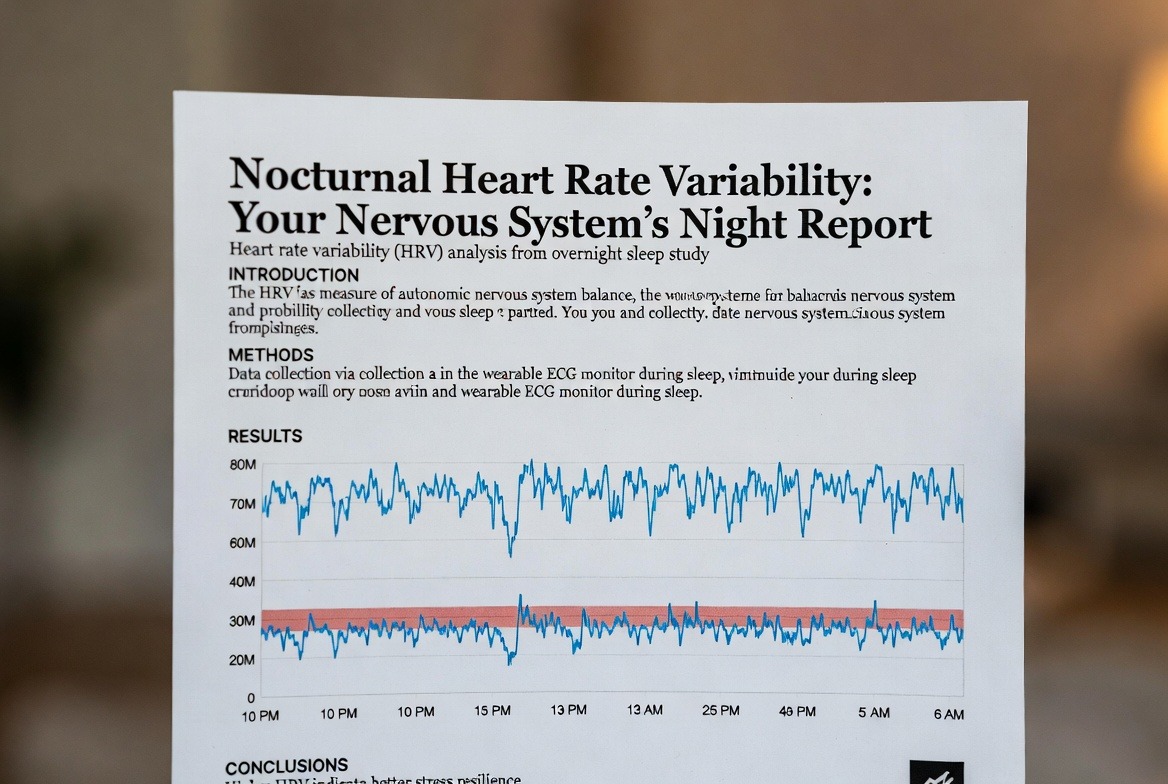
Nocturnal Heart Rate Variability: Your Nervous System’s Night Report
Heart rate variability — HRV — is the measure of the time variation between each heartbeat. If your heart were a metronome, beating with perfect regularity, your HRV would be zero. That would be bad. Very bad. Because a healthy heart does not beat like a metronome. It speeds up and slows down constantly, responding to your breath, your thoughts, your movement, and your nervous system state.
High HRV means your heart is responsive and adaptable — speeding up when you need energy, slowing down when you need rest. Low HRV means your heart is locked into a narrow range, unable to respond flexibly to what your body needs.
During sleep, HRV tells you something profound about how well your nervous system is recovering. In a healthy sleeper, HRV should rise significantly during the night, especially during deep sleep. That rise reflects your parasympathetic nervous system taking over — slowing your heart, lowering your blood pressure, and putting your body into a state of deep recovery.
But if your HRV stays flat during the night — or worse, drops — it means your sympathetic nervous system (the “fight or flight” branch) is still active. You are sleeping, but your body is still braced for threat. And a body that is braced for threat cannot recover.
This is the mechanism behind why stress ruins sleep even when you fall asleep easily. You can close your eyes, you can drift off, but if your nervous system is still in a sympathetic state, your sleep will be light, fragmented, and low in deep sleep. You will wake up exhausted not because you didn’t sleep enough, but because your body never actually rested.
Nocturnal HRV is also exquisitely sensitive to lifestyle factors. Alcohol crushes HRV — even a single drink lowers nocturnal HRV by an average of 15 to 20 percent. Late-night meals do the same. So does intense exercise too close to bedtime, emotional stress, blue light exposure, and sleeping in a room that is too warm.
The reverse is also true. Improving nocturnal HRV is one of the fastest ways to feel better in the morning. And unlike deep sleep, which can be hard to influence directly, HRV responds quickly to interventions like breathwork, cold exposure, consistent sleep timing, and targeted supplementation.
At this point, you might be wondering how you’re supposed to track these three metrics. Sleep efficiency, deep sleep proportion, nocturnal HRV — these aren’t things you can feel. You can’t wake up and say, “I think my HRV was low last night.” You need data. And that’s where a new generation of wearable technology has changed everything.
Devices like the Oxyzen smart ring sit on your finger while you sleep, measuring your heart rate, HRV, temperature, and movement with clinical-grade accuracy. Unlike bulky sleep trackers or smartphone apps that guess based on sound, a smart ring gives you actual biometric data — the same kind of data that sleep labs collect, but in your own bed, night after night. You can explore how Oxyzen works and see why thousands of Australians are finally understanding their sleep.
But you don’t need a device to start improving your sleep tonight. You just need to know what’s stealing your deep sleep — often without you having any idea it’s happening.
The Hidden Conditions That Steal Your Deep Sleep Without You Knowing
Here is the most important sentence in this entire article: You can have perfect sleep hygiene and still sleep terribly.
The wellness industry has sold us a story that bad sleep is a moral failure. If you’re tired, the story goes, it’s because you looked at your phone before bed, or you drank coffee after 2pm, or you didn’t meditate enough. And sure, those things matter. But they are not the whole story. They are not even most of the story.
The real thieves of deep sleep are often invisible. They are physiological conditions and lifestyle factors that operate below the level of your awareness. You cannot feel your airway partially collapsing. You cannot feel your cortisol spiking at 3am. You cannot feel the inflammatory response to the wine you had with dinner. But your body can. And your sleep architecture pays the price.
Let’s walk through the five most common hidden conditions that steal deep sleep — starting with the one that affects an estimated one in four Australian adults who have no idea they have it.
Obstructive Sleep Apnoea: The Silent Epidemic
Obstructive sleep apnoea — OSA — is a condition in which your airway repeatedly collapses during sleep, cutting off your breathing for ten seconds or longer. Your brain notices the drop in oxygen, panics, and sends a wake-up signal. You don’t fully wake up — most people with OSA have no memory of these events — but your sleep cycle resets. Deep sleep disappears. REM sleep disappears. You spend your entire night bouncing between light sleep and micro-arousals.
The numbers in Australia are staggering. According to the Sleep Health Foundation, more than 1.5 million Australian adults have diagnosed OSA, and an estimated 1 million more have undiagnosed moderate to severe OSA. That’s 2.5 million people — nearly 13 percent of the adult population — whose sleep is being systematically destroyed by a condition they don’t know they have.
The classic signs of OSA are loud snoring, waking up with a dry mouth or headache, and feeling exhausted despite sleeping enough hours. But here’s the catch: you don’t have to snore to have OSA. You don’t have to be overweight to have OSA. You don’t have to be male or over 50. OSA can affect anyone with a narrow airway, including young, fit, non-snoring women.
In fact, recent research suggests that OSA is significantly underdiagnosed in women because their symptoms are different. Women with OSA are more likely to report insomnia, fatigue, morning headaches, and mood disturbances than loud snoring. They are also more likely to be misdiagnosed with depression or anxiety and prescribed antidepressants that do nothing for their sleep apnoea.
If you wake up exhausted every single day despite spending eight hours in bed, OSA should be your first suspicion. A home sleep test can confirm the diagnosis, and treatment — typically CPAP therapy or an oral appliance — can transform your sleep literally overnight.
Alcohol’s Devastating Effect on Sleep Architecture
Here is a sentence that will make you rethink your evening glass of wine: Alcohol is the single most powerful suppressor of deep sleep known to science.
Not caffeine. Not blue light. Not stress. Alcohol.
When you drink alcohol before bed, several things happen to your sleep. First, you fall asleep faster — this is the sedative effect that makes people believe alcohol helps them sleep. But what follows is a disaster. As your body metabolises the alcohol, typically two to three hours after you fall asleep, you experience a massive rebound of lighter sleep stages. Your deep sleep plummets. Your REM sleep is suppressed. And your heart rate variability drops like a stone.
The data is unequivocal. A 2018 meta-analysis published in the journal Sleep Medicine Reviews looked at 27 studies on alcohol and sleep. The findings: even moderate doses of alcohol — the equivalent of one or two standard drinks — reduced deep sleep by more than 20 percent. Higher doses reduced deep sleep by nearly 40 percent. And these effects persisted even when alcohol was consumed four hours before bedtime.
But here’s what most people don’t understand. The damage isn’t just to deep sleep. Alcohol also triggers something called “REM rebound” later in the night — an overcompensation that fragments REM sleep into short, unstable bursts rather than the long, continuous REM cycles your brain needs for emotional processing. The result is a night of chaotic, low-quality sleep that leaves you exhausted and emotionally fragile the next day.
If you want to understand the full picture of what alcohol actually does to your sleep, including the specific HRV changes and the hangover-sleep connection, this deep dive on alcohol and recovery will show you the data that changes how Australians drink.
The practical implication is simple but uncomfortable: if you are waking up exhausted despite sleeping enough hours, and you drink alcohol more than twice a week, alcohol is almost certainly a major contributor. Even one drink. Even earlier in the evening. Even if you don’t feel hungover.
Late-Night Eating and the Digestive Battle
Your body is not designed to digest food and sleep deeply at the same time. These are opposing biological states. Digestion requires blood flow to your gut, metabolic activity, and a certain level of sympathetic nervous system activation. Deep sleep requires blood flow to your brain, metabolic quiescence, and full parasympathetic activation. They cannot coexist.
When you eat within two to three hours of bedtime, your body faces a conflict. It needs to digest your food, but it also needs to enter deep sleep. The compromise is that both processes happen — but both happen poorly. Digestion is sluggish, which can cause reflux, bloating, and discomfort. And deep sleep is suppressed, often by 10 to 20 percent depending on the size and composition of the meal.
Certain foods are worse than others. High-fat meals take longer to digest and are associated with greater sleep disruption. High-protein meals can be similarly problematic, especially if they contain tyramine — a compound found in aged cheeses, cured meats, and fermented foods — which can trigger alertness. Spicy foods can raise core body temperature, which interferes with the natural temperature drop that initiates and maintains deep sleep.
Even seemingly healthy late-night eating — a bowl of cereal, a banana, a handful of nuts — can be enough to fragment your sleep architecture if you are sensitive. The only reliable solution is a consistent eating window that ends at least three hours before bedtime.
The Cortisol Connection: Why Stressed People Sleep So Poorly
Cortisol is often called the stress hormone, but that’s misleading. Cortisol is actually a circadian hormone — it follows a predictable daily rhythm that is essential for health. Cortisol peaks in the early morning, helping you wake up and feel alert. It gradually declines throughout the day, reaching its lowest point around midnight. That low cortisol level at night is a prerequisite for deep sleep.
Here’s the problem. Chronic stress disrupts the cortisol rhythm. Instead of dropping at night, cortisol stays elevated — sometimes significantly elevated. And cortisol is a direct antagonist of deep sleep. High cortisol at night suppresses the brain’s ability to generate the slow waves that characterise deep sleep.
This creates a vicious cycle. Poor sleep raises cortisol the next day. High cortisol that evening impairs deep sleep again. And on it goes, week after week, month after month. Many people in this cycle don’t even recognise themselves as stressed. They’ve adapted to chronic low-grade stress so completely that it feels like normal. But their cortisol rhythm tells a different story.
What does high nocturnal cortisol feel like? It feels like waking up at 3am with a racing mind. It feels like being unable to fall back asleep because your brain won’t stop planning, worrying, replaying. It feels like waking up exhausted despite being in bed for eight hours because your body was never actually resting.
You’ve heard the advice about putting your phone away before bed. And it’s good advice — blue light from screens does suppress melatonin production, which can delay sleep onset and reduce sleep efficiency. But blue light is not just about screens.
Modern Australian homes are filled with blue light sources that many people never think about. LED light bulbs — especially the cool-white or daylight varieties — emit significant amounts of blue light. So do many bedside lamps, bathroom lights, and kitchen downlights. So does the light from your television, your laptop, your tablet, and even some e-readers.
The problem is that our bodies evolved with a simple light signal: bright blue-rich light during the day (from the sun) tells our brains it’s time to be awake. Warm, dim, blue-poor light in the evening tells our brains it’s time to prepare for sleep. But modern homes have erased that distinction. Many Australians go from daylight-spectrum LED office lighting to daylight-spectrum LED home lighting to a blue-light-emitting television to a blue-light-emitting phone — all in the three hours before bed. Their brains never receive the signal that night has arrived.
The solution is not just “put your phone away.” It’s a comprehensive evening lighting strategy: warm-white bulbs (2700K or lower), dimmers, red-light nightlights, and blue-blocking glasses if you must use screens. These interventions sound small, but their cumulative effect on melatonin production, sleep efficiency, and deep sleep proportion is substantial.
What Your Body Looks Like When Sleep Is Working vs When It Isn’t
Let’s make this concrete. What does a good night of sleep actually look like — not in terms of how you feel, but in terms of what your body is doing? And what does a bad night look like when you zoom in on the biometrics?
Imagine two people. Both go to bed at 10pm. Both set their alarms for 6am. Both spend eight hours in bed. But their bodies tell completely different stories.
Person A — The Good Sleeper
Person A falls asleep within 10 minutes of getting into bed. Their heart rate, which was around 75 beats per minute during the evening, begins to drop steadily. By 10:30pm, their heart rate is 65. By 11pm, it’s 58. Their HRV, which was moderate during the evening, begins to climb as their parasympathetic nervous system takes over.
Between 11pm and 2am, Person A spends nearly 90 minutes in deep sleep. Their heart rate drops to its lowest point of the night — around 52 beats per minute. Their HRV reaches its peak. Their body temperature drops by about one degree Celsius. Their breathing is slow, regular, and quiet.
Between 2am and 5am, Person A cycles through light sleep and REM sleep. Their heart rate begins to rise slowly, preparing for morning. Their HRV gradually declines from its peak. They have a few brief awakenings — rolling over, adjusting position — but each lasts less than 10 seconds, and they fall back asleep immediately.
Between 5am and 6am, Person A enters their final REM cycle. Their heart rate rises to around 65. Their body temperature begins to climb. When the alarm goes off at 6am, their body is already in a light sleep stage, ready to wake. They open their eyes feeling clear-headed, physically rested, and emotionally stable.
Person B — The Exhausted Sleeper
Person B gets into bed at 10pm but lies awake for 20 minutes, their mind racing. Their heart rate stays high — around 80 beats per minute — refusing to drop. Their HRV is flat and low, indicating sympathetic nervous system dominance.
When they finally fall asleep around 10:30pm, their sleep is shallow. They spend almost no time in deep sleep — maybe 20 or 30 minutes total, scattered in fragments that last only a few minutes each. Their heart rate never drops below 70. Their breathing is irregular, sometimes stopping for a few seconds before restarting with a gasp — a sign of airway resistance or mild sleep apnoea.
Between 1am and 3am, Person B has a long awakening. They’re not fully conscious — they won’t remember this in the morning — but their heart rate spikes, their HRV crashes, and their sleep cycle resets. This happens four or five more times during the night. Each time, their body tries to enter deep sleep, and each time, a micro-arousal pulls them back into light sleep.
By 5am, Person B’s body is exhausted but not recovered. Their heart rate is still elevated. Their cortisol, which should be at its lowest point, is rising too early — a sign of chronic stress. When the alarm goes off at 6am, they feel like they haven’t slept at all. Their head is foggy. Their body feels heavy. Their mood is flat or irritable. They want nothing more than to go back to bed.
This is the difference between sleeping and recovering. Person A and Person B spent the same eight hours in bed. But their bodies experienced completely different nights.
What separates them is not luck. It is not genetics — not entirely. It is a set of measurable, modifiable factors that we have already discussed: sleep efficiency, deep sleep proportion, and nocturnal HRV. And those factors are shaped by specific behaviours and conditions that are well within your power to change.
The question is not whether you can improve your sleep. You can. The question is where to start.
If you are waking up exhausted every day, your path forward depends on understanding which of the hidden conditions is affecting you most. Is it sleep apnoea? Is it late-night eating? Is it alcohol? Is it stress? Is it your evening lighting? Most people have more than one factor at play — and that’s okay. You don’t need to fix everything at once. You just need to start.
But before we get to the action plan, let’s look at the data that makes this problem real for Australians in particular. Because while exhaustion is universal, the specific drivers of poor sleep vary by location, lifestyle, and environment. And Australia has some unique sleep saboteurs that you need to know about.
The 5 Most Common Sleep Saboteurs in Australian Urban Life
Australia is a wealthy, healthy, outdoorsy country with high rates of exercise, good healthcare access, and a cultural emphasis on work-life balance. So why are Australians so tired?
The data tells a surprising story. According to the Australian Bureau of Statistics, more than 40 percent of Australian adults report that lack of sleep affects their daily functioning at least once a week. That’s higher than comparable figures from the United Kingdom and only slightly lower than the United States. Australians are not sleeping worse than the rest of the world — but they are sleeping worse than their lifestyle would predict.
What’s driving this? Researchers have identified five uniquely Australian (or at least, uniquely urban Australian) sleep saboteurs. These are not the usual suspects like stress and caffeine. These are structural and environmental factors that most people never think about.
Saboteur 1: Suburban Temperature Extremes
Australian homes are famously poorly insulated. Unlike European or North American homes designed to retain heat, many Australian houses — especially those built before the 2000s — are designed to let heat escape. This is great for summer cooling but disastrous for winter sleep.
The optimal temperature for sleep is between 16 and 19 degrees Celsius. When your bedroom is warmer than 21 degrees, your body struggles to achieve the core temperature drop that initiates and maintains deep sleep. When your bedroom is warmer than 24 degrees, deep sleep is severely suppressed — often by 30 to 40 percent.
Data from the NSW Environment Protection Authority shows that during summer heatwaves, indoor bedroom temperatures in uninsulated Sydney homes regularly exceed 26 degrees at midnight. During winter cold snaps, the same homes can drop below 10 degrees by early morning. Both extremes destroy sleep architecture.
The solution is not cranking the air conditioning — that’s expensive and environmentally damaging. The solution is passive temperature management: thermal curtains, ceiling fans, strategic window opening, and in some cases, a simple bedroom fan that creates air movement without cooling the whole house. For Australians in older homes, even small temperature interventions can dramatically improve deep sleep.
Saboteur 2: The FIFO Schedule Disruption
Fly-in, fly-out work is a cornerstone of the Australian resource economy. More than 100,000 Australians work FIFO schedules, typically spending one to four weeks on site followed by one week at home. But the sleep disruption of FIFO work extends far beyond the workers themselves — it affects their partners, their children, and their family systems.
The problem is that FIFO schedules force constant circadian resetting. A worker on a night shift in Western Australia returns home to a family on a day schedule in Queensland. Their body clock never knows what time it is. The result is chronic sleep fragmentation, low HRV, and a deep sleep deficit that accumulates over years.
FIFO workers are ageing faster than everyone else, with recent data showing their hearts are biologically 8 to 12 years older than their chronological age. Much of that accelerated ageing is driven by poor sleep quality — not just short sleep, but fragmented, low-deep-sleep, high-stress sleep that never allows full recovery.
For FIFO workers and their families, standard sleep advice is insufficient. They need targeted circadian interventions: strategic light exposure, scheduled sleep windows, and in some cases, melatonin timing protocols designed for shift workers.
Saboteur 3: The Australian Drinking Culture
Australians drink. Not in the problematic, binge-drinking sense — though that happens too — but in the casual, everyday, “wine with dinner” sense that feels completely normal and completely harmless. The average Australian adult consumes 10.4 standard drinks per week, according to the Australian Institute of Health and Welfare. That’s more than the United Kingdom, more than Canada, and significantly more than the United States.
The problem is not liver damage or addiction. The problem is sleep. As we discussed earlier, even one or two drinks before bed reduces deep sleep by 20 percent or more. For the average Australian having a glass of wine with dinner five or six nights a week, that means their deep sleep is suppressed more than half the time. They are chronically, unknowingly, robbing themselves of the recovery their bodies need.
The alcohol-sleep connection is so powerful that many people who reduce or eliminate drinking report feeling like they’ve discovered a new kind of sleep. They fall asleep at the same time, wake up at the same time, but feel completely different. The data behind this transformation is compelling — what alcohol actually does to your HRV, sleep, and recovery explains why so many Australians are rethinking their evening drink.
Saboteur 4: Morning Commute Light Exposure
Here’s a sleep saboteur you’ve probably never considered. The timing and quality of your morning light exposure affects your sleep that night. And for millions of Australians, the morning commute happens in a light environment that confuses their circadian clock.
When you wake up, your brain needs a strong signal that day has begun. That signal is bright, blue-rich light — ideally sunlight. Sunlight exposure within the first hour of waking helps set your circadian clock,
You set your alarm for 7.5 hours. You didn’t drink last night. You went to bed at a reasonable time — no phones, no late-night scrolling, no midnight snack. The room was dark, the temperature was cool, and you even remembered to take your magnesium.
And you woke up feeling like you’d been hit by a truck.
That heavy-limbed, sandbag-chested, brain-in-fog sensation that no amount of coffee can touch. The alarm goes off, and instead of springing up refreshed, you lie there negotiating with yourself — just five more minutes, just one more snooze, just the bare minimum to get through the morning.
If this sounds familiar, you are not alone. In fact, you are statistically normal. According to the Australian Sleep Health Foundation, nearly 40 percent of Australian adults experience inadequate sleep quality — not quantity — on a regular basis. That’s almost 8 million people dragging themselves through days that feel like they’re being lived underwater.
Here’s the thing most people never hear: You’re not broken. But something in your sleep is.
The something is not your imagination, not your laziness, not some character flaw that means you just need to try harder. It is measurable, trackable, and — most importantly — fixable. But before you can fix it, you have to understand what’s actually happening inside your body while you think you’re sleeping peacefully.
Because here is the brutal truth that the wellness industry doesn’t want you to know: Hours of sleep is almost meaningless.
You can spend nine hours in bed and wake up destroyed. You can sleep six hours and wake up firing on all cylinders. The difference isn’t magic. It’s not genetics (not entirely, anyway). It’s physics. It’s biology. It’s the invisible architecture of what your body is actually doing while you lie there with your eyes closed.
This article is going to show you exactly what that architecture looks like. We’re going to dismantle the single most stubborn misconception in public health — that sleep duration equals sleep quality. Then we’re going to show you the three things that actually determine how recovered you feel tomorrow morning. We’ll name the hidden conditions that steal your deep sleep without you even knowing they’re there. And we’ll give you a tiered action plan that starts with things you can do tonight, for free, in your own bedroom.
By the time you finish reading, you will never look at your sleep the same way again. More importantly, you will finally have an answer to the question you’ve been asking yourself for months or years: Why am I so tired?
Let’s start with the lie you’ve been sold.
The Hours Myth: Why Duration Is Only One-Third of the Sleep Story
There is a number that has become almost sacred in modern health culture. You see it on fitness trackers, in wellness articles, on government guidelines, and in the comments section of every post about burnout. The number is eight. Eight hours of sleep. The gold standard. The magic threshold.
Here’s what nobody tells you: the eight-hour recommendation was never based on high-quality evidence that eight hours of sleep guarantees good recovery. It was based on population-level observational data showing that people who report sleeping between seven and nine hours tend to have better health outcomes than people who report sleeping less than six or more than ten. That is a correlation. It is not a prescription.
And it certainly doesn’t mean that if you sleep eight hours, you should feel fine.
Think about it this way. Imagine you have two cars. You fill both of them with exactly the same amount of petrol — let’s say 50 litres. You park one car in a heated garage. You park the other car outside in a hailstorm with the windows down and the boot open. You leave them both for eight hours. Which car will start easily in the morning? Which car will have a dead battery, damp seats, and possibly a family of possums living in the back?
The petrol is the same. The hours are the same. But the conditions of the rest — what happens during those hours — could not be more different.
Your body is the same. You can spend eight hours in bed, but if your sleep architecture is broken, you might as well have been parked in a hailstorm.
Sleep architecture is the term sleep scientists use to describe the structure of your night. A healthy night of sleep cycles through different stages in a specific pattern: light sleep, deep sleep, REM sleep, and brief wakeful moments that you usually don’t remember. Each stage does something different for your body. Light sleep helps with memory consolidation and emotional regulation. Deep sleep is when your body repairs tissue, clears metabolic waste from your brain, and releases growth hormone. REM sleep is when your brain processes emotions and cements learning.
If those stages are disrupted — if you spend too much time in light sleep, not enough in deep sleep, or if your REM cycles are fragmented — you can sleep for ten hours and still wake up exhausted. Your body was in bed, but it wasn’t doing the work of recovery.
The Australian Bureau of Statistics (ABS) has been tracking sleep patterns for years. Their most recent National Health Survey found that while the average Australian adult reports sleeping around 7.5 hours per night, nearly 30 percent report that their sleep is frequently or always disrupted. That’s 5.7 million people who are spending enough time in bed but not getting the quality they need.
Here’s where it gets even more interesting. The ABS also tracks something called “restedness” — a self-reported measure of how recovered people feel when they wake up. The correlation between hours slept and restedness is surprisingly weak. People who sleep seven hours are almost as likely to report poor restedness as people who sleep five hours. People who sleep nine hours are only slightly more likely to feel rested than people who sleep six.
What this means is that hours alone cannot explain the exhaustion epidemic.
So what does explain it? If you’re spending seven or eight hours in bed and still waking up exhausted, something else is going on. And that something else falls into three main categories: your sleep efficiency, your deep sleep proportion, and your heart rate variability during sleep.
These three metrics are the real story of your night. They are what separate the people who bounce out of bed at 6am from the people who press snooze until the last possible second. And the best part? They are measurable. They are trackable. And once you know what they are, you can actually do something about them.
Before we dive into each one, let me tell you a quick story about a patient — let’s call her Sarah — who changed everything I thought I knew about sleep.
Sarah was a 34-year-old marketing director in Sydney. She did everything right. She went to bed at 10pm. She woke up at 6am. She had blackout curtains, a white noise machine, a supportive mattress, and a strict no-screens-after-9pm rule. By every conventional measure, she was a sleep superstar. And she felt like death every single morning.
She had seen three GPs. She had done a sleep study that came back “normal.” She had tried melatonin, magnesium, CBD oil, meditation apps, and a $400 pillow. Nothing worked. She had started to believe that maybe this was just what getting older felt like. Maybe she was just a tired person. Maybe her body was broken.
Then she started tracking her sleep with a device that measured more than just movement and heart rate. What the data showed shocked her. Sarah was spending an average of 8 hours and 12 minutes in bed each night. But her sleep efficiency — the percentage of time in bed that she was actually asleep — was only 74 percent. For a healthy adult, sleep efficiency should be above 85 percent. Anything below 80 percent is considered poor.
That meant that of her 8 hours in bed, Sarah was awake for more than two hours. She didn’t remember most of those wakeful moments — they were micro-arousals, lasting just a few seconds each, triggered by everything from her partner’s movement to her own airway partially collapsing. But they were enough to fragment her sleep architecture so badly that she never got more than 20 consecutive minutes of deep sleep all night.
She wasn’t broken. Her sleep was.
And once she understood that, she could finally fix it. Explore how Oxyzen’s smart ring technology provides the kind of continuous biometric data that helped Sarah see what was really happening inside her body while she slept.
Let’s look at the three metrics that actually determine how recovered you feel tomorrow morning. Because if you’re going to stop waking up exhausted, you need to know what to measure.
The Three Things That Actually Determine How Recovered You Feel Tomorrow
The human body is not a simple machine. You cannot just input eight hours and expect to output one recovered human. Sleep is a biological process — messy, dynamic, and deeply responsive to what’s happening in your environment and your nervous system.
After reviewing decades of sleep research and thousands of nights of biometric data, three metrics consistently emerge as the strongest predictors of how you will feel when you wake up. These are not obscure lab measurements. They are real, trackable, and actionable. And they are almost certainly where your sleep is going wrong.
Sleep Efficiency: The Metric That Changes Everything
Sleep efficiency is exactly what it sounds like. It is the percentage of time you spend in bed that you are actually asleep. The formula is simple: total sleep time divided by total time in bed, multiplied by 100.
If you get into bed at 10pm, fall asleep at 10:30pm, wake up briefly at 2am and again at 5am, and get out of bed at 6am, your sleep efficiency is not 100 percent. It’s not even close. Let’s do the math. You were in bed for eight hours (480 minutes). You were asleep for roughly seven hours (420 minutes). That’s a sleep efficiency of 87.5 percent — which is actually decent. Anything above 85 percent is considered healthy.
But here’s what most people don’t realise. Sleep efficiency below 80 percent is where things start to fall apart. And sleep efficiency below 75 percent is essentially a clinical problem. At those levels, your sleep is so fragmented that you are barely getting any continuous time in deep sleep or REM. You are spending your nights in a kind of biological limbo — not fully awake, not fully asleep, and certainly not recovering.
The average Australian adult has a sleep efficiency of around 83 percent, according to data from the Australian Institute of Health and Welfare. That means the average person is awake for nearly an hour and a half of every eight hours in bed. Most of that awake time happens in micro-arousals that you never remember — a shift in position, a noise outside, a change in room temperature, a moment of airway resistance that triggers a brief wake-up call from your brain.
The problem is that micro-arousals don’t need to be long to be destructive. A single arousal lasting just three seconds can be enough to reset your sleep cycle. If you have 30 of those in a night — and many people have more — you never get the sustained periods of deep sleep that your body needs to repair itself.
Think of sleep efficiency like the batting average of your night. You can spend a lot of time at the plate, but if you’re not making contact, you’re not scoring runs.
What drives low sleep efficiency? The list is long, but the biggest culprits are sleep apnea (which causes hundreds of micro-arousals per night as your airway repeatedly collapses), anxiety (which keeps your nervous system in a state of low-grade alert even while you sleep), pain (which triggers protective wake-up signals from your body), and environmental factors like noise, light, and temperature fluctuations.
Here’s the good news. Sleep efficiency is highly responsive to intervention. Simple changes to your sleep environment, your pre-bed routine, and your stress management can push sleep efficiency from the 70s into the 80s in a matter of weeks. And once your sleep efficiency crosses that threshold, you will feel the difference the very next morning.
Deep Sleep Proportion: Where the Actual Repair Happens
If sleep efficiency is about quantity of sleep, deep sleep proportion is about quality. And deep sleep — technically called NREM Stage 3 sleep — is where your body does its most important work.
During deep sleep, several critical things happen. Your pituitary gland releases growth hormone, which stimulates tissue repair and muscle growth. Your glymphatic system — a recently discovered waste clearance pathway in your brain — becomes ten times more active, flushing out metabolic waste products including beta-amyloid, a protein associated with Alzheimer’s disease. Your immune system releases cytokines that help fight infection and inflammation. Your heart rate drops, your blood pressure falls, and your parasympathetic nervous system — the “rest and digest” branch — takes full control.
Deep sleep is, quite literally, your body’s nightly maintenance shift. And you need a certain amount of it to wake up feeling recovered.
For most adults, deep sleep should make up about 15 to 25 percent of total sleep time. That means on a seven-hour night, you need somewhere between 63 and 105 minutes of deep sleep. On an eight-hour night, between 72 and 120 minutes.
Here’s the problem. Deep sleep is also the most vulnerable stage of sleep. It is the first to be disrupted by alcohol, the first to be shortened by stress, and the first to be stolen by sleep disorders like sleep apnea. Many people who report sleeping seven or eight hours are actually getting only 30 or 40 minutes of deep sleep — far below what their bodies need.
And unlike light sleep or even REM sleep, deep sleep cannot be “caught up” easily. If you miss deep sleep for several nights in a row, your body will try to compensate with something called REM rebound — spending extra time in REM sleep on subsequent nights. But REM rebound does not fix the damage from missing deep sleep. The tissue repair doesn’t happen. The glymphatic clearance doesn’t happen. The immune function doesn’t happen.
This is why you can sleep ten hours after a week of poor sleep and still feel terrible. You can’t out-sleep a deep sleep deficit. The only way to fix it is to protect deep sleep in the first place.
What steals deep sleep? Alcohol is the single biggest offender. Even one drink before bed reduces deep sleep by nearly 25 percent. Late-night eating is another major culprit — digesting food keeps your body in a more aroused state, suppressing deep sleep. Caffeine has a half-life of five hours, meaning that coffee at 4pm is still 25 percent active in your system at 2am, quietly eroding your deep sleep architecture. And stress hormones like cortisol are direct antagonists of deep sleep — when cortisol is high, deep sleep is low.
We will dive into each of these saboteurs in detail. But first, we need to talk about the third metric — the one that most people have never heard of, and the one that might be the most important of all.
Nocturnal Heart Rate Variability: Your Nervous System’s Night Report
Heart rate variability — HRV — is the measure of the time variation between each heartbeat. If your heart were a metronome, beating with perfect regularity, your HRV would be zero. That would be bad. Very bad. Because a healthy heart does not beat like a metronome. It speeds up and slows down constantly, responding to your breath, your thoughts, your movement, and your nervous system state.
High HRV means your heart is responsive and adaptable — speeding up when you need energy, slowing down when you need rest. Low HRV means your heart is locked into a narrow range, unable to respond flexibly to what your body needs.
During sleep, HRV tells you something profound about how well your nervous system is recovering. In a healthy sleeper, HRV should rise significantly during the night, especially during deep sleep. That rise reflects your parasympathetic nervous system taking over — slowing your heart, lowering your blood pressure, and putting your body into a state of deep recovery.
But if your HRV stays flat during the night — or worse, drops — it means your sympathetic nervous system (the “fight or flight” branch) is still active. You are sleeping, but your body is still braced for threat. And a body that is braced for threat cannot recover.
This is the mechanism behind why stress ruins sleep even when you fall asleep easily. You can close your eyes, you can drift off, but if your nervous system is still in a sympathetic state, your sleep will be light, fragmented, and low in deep sleep. You will wake up exhausted not because you didn’t sleep enough, but because your body never actually rested.
Nocturnal HRV is also exquisitely sensitive to lifestyle factors. Alcohol crushes HRV — even a single drink lowers nocturnal HRV by an average of 15 to 20 percent. Late-night meals do the same. So does intense exercise too close to bedtime, emotional stress, blue light exposure, and sleeping in a room that is too warm.
The reverse is also true. Improving nocturnal HRV is one of the fastest ways to feel better in the morning. And unlike deep sleep, which can be hard to influence directly, HRV responds quickly to interventions like breathwork, cold exposure, consistent sleep timing, and targeted supplementation.
At this point, you might be wondering how you’re supposed to track these three metrics. Sleep efficiency, deep sleep proportion, nocturnal HRV — these aren’t things you can feel. You can’t wake up and say, “I think my HRV was low last night.” You need data. And that’s where a new generation of wearable technology has changed everything.
Devices like the Oxyzen smart ring sit on your finger while you sleep, measuring your heart rate, HRV, temperature, and movement with clinical-grade accuracy. Unlike bulky sleep trackers or smartphone apps that guess based on sound, a smart ring gives you actual biometric data — the same kind of data that sleep labs collect, but in your own bed, night after night. You can learn more about Oxyzen and its technology to understand how continuous tracking reveals patterns your doctor would never see in a 15-minute appointment.
But you don’t need a device to start improving your sleep tonight. You just need to know what’s stealing your deep sleep — often without you having any idea it’s happening.
The Hidden Conditions That Steal Your Deep Sleep Without You Knowing
Here is the most important sentence in this entire article: You can have perfect sleep hygiene and still sleep terribly.
The wellness industry has sold us a story that bad sleep is a moral failure. If you’re tired, the story goes, it’s because you looked at your phone before bed, or you drank coffee after 2pm, or you didn’t meditate enough. And sure, those things matter. But they are not the whole story. They are not even most of the story.
The real thieves of deep sleep are often invisible. They are physiological conditions and lifestyle factors that operate below the level of your awareness. You cannot feel your airway partially collapsing. You cannot feel your cortisol spiking at 3am. You cannot feel the inflammatory response to the wine you had with dinner. But your body can. And your sleep architecture pays the price.
Let’s walk through the five most common hidden conditions that steal deep sleep — starting with the one that affects an estimated one in four Australian adults who have no idea they have it.
Obstructive Sleep Apnoea: The Silent Epidemic
Obstructive sleep apnoea — OSA — is a condition in which your airway repeatedly collapses during sleep, cutting off your breathing for ten seconds or longer. Your brain notices the drop in oxygen, panics, and sends a wake-up signal. You don’t fully wake up — most people with OSA have no memory of these events — but your sleep cycle resets. Deep sleep disappears. REM sleep disappears. You spend your entire night bouncing between light sleep and micro-arousals.
The numbers in Australia are staggering. According to the Sleep Health Foundation, more than 1.5 million Australian adults have diagnosed OSA, and an estimated 1 million more have undiagnosed moderate to severe OSA. That’s 2.5 million people — nearly 13 percent of the adult population — whose sleep is being systematically destroyed by a condition they don’t know they have.
The classic signs of OSA are loud snoring, waking up with a dry mouth or headache, and feeling exhausted despite sleeping enough hours. But here’s the catch: you don’t have to snore to have OSA. You don’t have to be overweight to have OSA. You don’t have to be male or over 50. OSA can affect anyone with a narrow airway, including young, fit, non-snoring women.
In fact, recent research suggests that OSA is significantly underdiagnosed in women because their symptoms are different. Women with OSA are more likely to report insomnia, fatigue, morning headaches, and mood disturbances than loud snoring. They are also more likely to be misdiagnosed with depression or anxiety and prescribed antidepressants that do nothing for their sleep apnoea.
If you wake up exhausted every single day despite spending eight hours in bed, OSA should be your first suspicion. A home sleep test can confirm the diagnosis, and treatment — typically CPAP therapy or an oral appliance — can transform your sleep literally overnight.
Alcohol’s Devastating Effect on Sleep Architecture
Here is a sentence that will make you rethink your evening glass of wine: Alcohol is the single most powerful suppressor of deep sleep known to science.
Not caffeine. Not blue light. Not stress. Alcohol.
When you drink alcohol before bed, several things happen to your sleep. First, you fall asleep faster — this is the sedative effect that makes people believe alcohol helps them sleep. But what follows is a disaster. As your body metabolises the alcohol, typically two to three hours after you fall asleep, you experience a massive rebound of lighter sleep stages. Your deep sleep plummets. Your REM sleep is suppressed. And your heart rate variability drops like a stone.
The data is unequivocal. A 2018 meta-analysis published in the journal Sleep Medicine Reviews looked at 27 studies on alcohol and sleep. The findings: even moderate doses of alcohol — the equivalent of one or two standard drinks — reduced deep sleep by more than 20 percent. Higher doses reduced deep sleep by nearly 40 percent. And these effects persisted even when alcohol was consumed four hours before bedtime.
But here’s what most people don’t understand. The damage isn’t just to deep sleep. Alcohol also triggers something called “REM rebound” later in the night — an overcompensation that fragments REM sleep into short, unstable bursts rather than the long, continuous REM cycles your brain needs for emotional processing. The result is a night of chaotic, low-quality sleep that leaves you exhausted and emotionally fragile the next day.
If you want to understand the full picture of what alcohol actually does to your sleep, including the specific HRV changes and the hangover-sleep connection, this deep dive on alcohol and recovery will show you the data that changes how Australians drink.
The practical implication is simple but uncomfortable: if you are waking up exhausted despite sleeping enough hours, and you drink alcohol more than twice a week, alcohol is almost certainly a major contributor. Even one drink. Even earlier in the evening. Even if you don’t feel hungover.
Late-Night Eating and the Digestive Battle
Your body is not designed to digest food and sleep deeply at the same time. These are opposing biological states. Digestion requires blood flow to your gut, metabolic activity, and a certain level of sympathetic nervous system activation. Deep sleep requires blood flow to your brain, metabolic quiescence, and full parasympathetic activation. They cannot coexist.
When you eat within two to three hours of bedtime, your body faces a conflict. It needs to digest your food, but it also needs to enter deep sleep. The compromise is that both processes happen — but both happen poorly. Digestion is sluggish, which can cause reflux, bloating, and discomfort. And deep sleep is suppressed, often by 10 to 20 percent depending on the size and composition of the meal.
Certain foods are worse than others. High-fat meals take longer to digest and are associated with greater sleep disruption. High-protein meals can be similarly problematic, especially if they contain tyramine — a compound found in aged cheeses, cured meats, and fermented foods — which can trigger alertness. Spicy foods can raise core body temperature, which interferes with the natural temperature drop that initiates and maintains deep sleep.
Even seemingly healthy late-night eating — a bowl of cereal, a banana, a handful of nuts — can be enough to fragment your sleep architecture if you are sensitive. The only reliable solution is a consistent eating window that ends at least three hours before bedtime.
The Cortisol Connection: Why Stressed People Sleep So Poorly
Cortisol is often called the stress hormone, but that’s misleading. Cortisol is actually a circadian hormone — it follows a predictable daily rhythm that is essential for health. Cortisol peaks in the early morning, helping you wake up and feel alert. It gradually declines throughout the day, reaching its lowest point around midnight. That low cortisol level at night is a prerequisite for deep sleep.
Here’s the problem. Chronic stress disrupts the cortisol rhythm. Instead of dropping at night, cortisol stays elevated — sometimes significantly elevated. And cortisol is a direct antagonist of deep sleep. High cortisol at night suppresses the brain’s ability to generate the slow waves that characterise deep sleep.
This creates a vicious cycle. Poor sleep raises cortisol the next day. High cortisol that evening impairs deep sleep again. And on it goes, week after week, month after month. Many people in this cycle don’t even recognise themselves as stressed. They’ve adapted to chronic low-grade stress so completely that it feels like normal. But their cortisol rhythm tells a different story.
What does high nocturnal cortisol feel like? It feels like waking up at 3am with a racing mind. It feels like being unable to fall back asleep because your brain won’t stop planning, worrying, replaying. It feels like waking up exhausted despite being in bed for eight hours because your body was never actually resting.
You’ve heard the advice about putting your phone away before bed. And it’s good advice — blue light from screens does suppress melatonin production, which can delay sleep onset and reduce sleep efficiency. But blue light is not just about screens.
Modern Australian homes are filled with blue light sources that many people never think about. LED light bulbs — especially the cool-white or daylight varieties — emit significant amounts of blue light. So do many bedside lamps, bathroom lights, and kitchen downlights. So does the light from your television, your laptop, your tablet, and even some e-readers.
The problem is that our bodies evolved with a simple light signal: bright blue-rich light during the day (from the sun) tells our brains it’s time to be awake. Warm, dim, blue-poor light in the evening tells our brains it’s time to prepare for sleep. But modern homes have erased that distinction. Many Australians go from daylight-spectrum LED office lighting to daylight-spectrum LED home lighting to a blue-light-emitting television to a blue-light-emitting phone — all in the three hours before bed. Their brains never receive the signal that night has arrived.
The solution is not just “put your phone away.” It’s a comprehensive evening lighting strategy: warm-white bulbs (2700K or lower), dimmers, red-light nightlights, and blue-blocking glasses if you must use screens. These interventions sound small, but their cumulative effect on melatonin production, sleep efficiency, and deep sleep proportion is substantial.
What Your Body Looks Like When Sleep Is Working vs When It Isn’t
Let’s make this concrete. What does a good night of sleep actually look like — not in terms of how you feel, but in terms of what your body is doing? And what does a bad night look like when you zoom in on the biometrics?
Imagine two people. Both go to bed at 10pm. Both set their alarms for 6am. Both spend eight hours in bed. But their bodies tell completely different stories.
Person A — The Good Sleeper
Person A falls asleep within 10 minutes of getting into bed. Their heart rate, which was around 75 beats per minute during the evening, begins to drop steadily. By 10:30pm, their heart rate is 65. By 11pm, it’s 58. Their HRV, which was moderate during the evening, begins to climb as their parasympathetic nervous system takes over.
Between 11pm and 2am, Person A spends nearly 90 minutes in deep sleep. Their heart rate drops to its lowest point of the night — around 52 beats per minute. Their HRV reaches its peak. Their body temperature drops by about one degree Celsius. Their breathing is slow, regular, and quiet.
Between 2am and 5am, Person A cycles through light sleep and REM sleep. Their heart rate begins to rise slowly, preparing for morning. Their HRV gradually declines from its peak. They have a few brief awakenings — rolling over, adjusting position — but each lasts less than 10 seconds, and they fall back asleep immediately.
Between 5am and 6am, Person A enters their final REM cycle. Their heart rate rises to around 65. Their body temperature begins to climb. When the alarm goes off at 6am, their body is already in a light sleep stage, ready to wake. They open their eyes feeling clear-headed, physically rested, and emotionally stable.
Person B — The Exhausted Sleeper
Person B gets into bed at 10pm but lies awake for 20 minutes, their mind racing. Their heart rate stays high — around 80 beats per minute — refusing to drop. Their HRV is flat and low, indicating sympathetic nervous system dominance.
When they finally fall asleep around 10:30pm, their sleep is shallow. They spend almost no time in deep sleep — maybe 20 or 30 minutes total, scattered in fragments that last only a few minutes each. Their heart rate never drops below 70. Their breathing is irregular, sometimes stopping for a few seconds before restarting with a gasp — a sign of airway resistance or mild sleep apnoea.
Between 1am and 3am, Person B has a long awakening. They’re not fully conscious — they won’t remember this in the morning — but their heart rate spikes, their HRV crashes, and their sleep cycle resets. This happens four or five more times during the night. Each time, their body tries to enter deep sleep, and each time, a micro-arousal pulls them back into light sleep.
By 5am, Person B’s body is exhausted but not recovered. Their heart rate is still elevated. Their cortisol, which should be at its lowest point, is rising too early — a sign of chronic stress. When the alarm goes off at 6am, they feel like they haven’t slept at all. Their head is foggy. Their body feels heavy. Their mood is flat or irritable. They want nothing more than to go back to bed.
This is the difference between sleeping and recovering. Person A and Person B spent the same eight hours in bed. But their bodies experienced completely different nights.
What separates them is not luck. It is not genetics — not entirely. It is a set of measurable, modifiable factors that we have already discussed: sleep efficiency, deep sleep proportion, and nocturnal HRV. And those factors are shaped by specific behaviours and conditions that are well within your power to change.
The question is not whether you can improve your sleep. You can. The question is where to start.
If you are waking up exhausted every day, your path forward depends on understanding which of the hidden conditions is affecting you most. Is it sleep apnoea? Is it late-night eating? Is it alcohol? Is it stress? Is it your evening lighting? Most people have more than one factor at play — and that’s okay. You don’t need to fix everything at once. You just need to start.
But before we get to the action plan, let’s look at the data that makes this problem real for Australians in particular. Because while exhaustion is universal, the specific drivers of poor sleep vary by location, lifestyle, and environment. And Australia has some unique sleep saboteurs that you need to know about.
The 5 Most Common Sleep Saboteurs in Australian Urban Life
Australia is a wealthy, healthy, outdoorsy country with high rates of exercise, good healthcare access, and a cultural emphasis on work-life balance. So why are Australians so tired?
The data tells a surprising story. According to the Australian Bureau of Statistics, more than 40 percent of Australian adults report that lack of sleep affects their daily functioning at least once a week. That’s higher than comparable figures from the United Kingdom and only slightly lower than the United States. Australians are not sleeping worse than the rest of the world — but they are sleeping worse than their lifestyle would predict.
What’s driving this? Researchers have identified five uniquely Australian (or at least, uniquely urban Australian) sleep saboteurs. These are not the usual suspects like stress and caffeine. These are structural and environmental factors that most people never think about.
Saboteur 1: Suburban Temperature Extremes
Australian homes are famously poorly insulated. Unlike European or North American homes designed to retain heat, many Australian houses — especially those built before the 2000s — are designed to let heat escape. This is great for summer cooling but disastrous for winter sleep.
The optimal temperature for sleep is between 16 and 19 degrees Celsius. When your bedroom is warmer than 21 degrees, your body struggles to achieve the core temperature drop that initiates and maintains deep sleep. When your bedroom is warmer than 24 degrees, deep sleep is severely suppressed — often by 30 to 40 percent.
Data from the NSW Environment Protection Authority shows that during summer heatwaves, indoor bedroom temperatures in uninsulated Sydney homes regularly exceed 26 degrees at midnight. During winter cold snaps, the same homes can drop below 10 degrees by early morning. Both extremes destroy sleep architecture.
The solution is not cranking the air conditioning — that’s expensive and environmentally damaging. The solution is passive temperature management: thermal curtains, ceiling fans, strategic window opening, and in some cases, a simple bedroom fan that creates air movement without cooling the whole house. For Australians in older homes, even small temperature interventions can dramatically improve deep sleep.
Saboteur 2: The FIFO Schedule Disruption
Fly-in, fly-out work is a cornerstone of the Australian resource economy. More than 100,000 Australians work FIFO schedules, typically spending one to four weeks on site followed by one week at home. But the sleep disruption of FIFO work extends far beyond the workers themselves — it affects their partners, their children, and their family systems.
The problem is that FIFO schedules force constant circadian resetting. A worker on a night shift in Western Australia returns home to a family on a day schedule in Queensland. Their body clock never knows what time it is. The result is chronic sleep fragmentation, low HRV, and a deep sleep deficit that accumulates over years.
FIFO workers are ageing faster than everyone else, with recent data showing their hearts are biologically 8 to 12 years older than their chronological age. Much of that accelerated ageing is driven by poor sleep quality — not just short sleep, but fragmented, low-deep-sleep, high-stress sleep that never allows full recovery.
For FIFO workers and their families, standard sleep advice is insufficient. They need targeted circadian interventions: strategic light exposure, scheduled sleep windows, and in some cases, melatonin timing protocols designed for shift workers.
Saboteur 3: The Australian Drinking Culture
Australians drink. Not in the problematic, binge-drinking sense — though that happens too — but in the casual, everyday, “wine with dinner” sense that feels completely normal and completely harmless. The average Australian adult consumes 10.4 standard drinks per week, according to the Australian Institute of Health and Welfare. That’s more than the United Kingdom, more than Canada, and significantly more than the United States.
The problem is not liver damage or addiction. The problem is sleep. As we discussed earlier, even one or two drinks before bed reduces deep sleep by 20 percent or more. For the average Australian having a glass of wine with dinner five or six nights a week, that means their deep sleep is suppressed more than half the time. They are chronically, unknowingly, robbing themselves of the recovery their bodies need.
The alcohol-sleep connection is so powerful that many people who reduce or eliminate drinking report feeling like they’ve discovered a new kind of sleep. They fall asleep at the same time, wake up at the same time, but feel completely different. The data behind this transformation is compelling — what alcohol actually does to your HRV, sleep, and recovery explains why so many Australians are rethinking their evening drink.
Saboteur 4: Morning Commute Light Exposure
Here’s a sleep saboteur you’ve probably never considered. The timing and quality of your morning light exposure affects your sleep that night. And for millions of Australians, the morning commute happens in a light environment that confuses their circadian clock.



%402x.svg)