


The Complete Beginner-Friendly Guide to Personal Time Protection via Ring Data
A complete beginner's guide to protecting personal time, using ring data to enforce boundaries.
A complete beginner's guide to protecting personal time, using ring data to enforce boundaries.
%402x.svg)
In a world that never stops demanding your attention, time has become our most sacred—and most violated—resource. Each day, a silent theft occurs: your focus is fractured, your energy is siphoned, and your most productive hours are lost to a vortex of distractions, poor planning, and biological misalignment. You glance at the clock and wonder, “Where did the day go?” This isn't just busyness; it's a systemic drain on your potential, health, and happiness.
But what if the key to reclaiming your time wasn't another rigid scheduling app or a fleeting productivity hack, but something you wear on your finger? Welcome to the frontier of personal time protection, powered not by willpower alone, but by data. The modern smart ring, a sleek and continuous wearable, is shifting the paradigm from guessing about your energy and focus to knowing. It moves beyond counting steps and hours slept to decoding the intricate biological rhythms that govern your capacity for deep work, creative insight, and genuine rest.
This guide is your master key. We will demystify how the rich, personalized data stream from a wellness ring—tracking heart rate variability (HRV), skin temperature, sleep stages, and activity—translates into an actionable defense strategy for your time. You will learn to identify your true biological prime time, structure your days in harmony with your energy, and build resilient routines that protect you from burnout and distraction. This isn't about squeezing more tasks into your day; it's about strategically aligning your most finite resource—your focused energy—with what matters most. Let’s begin the journey from time poverty to time sovereignty.
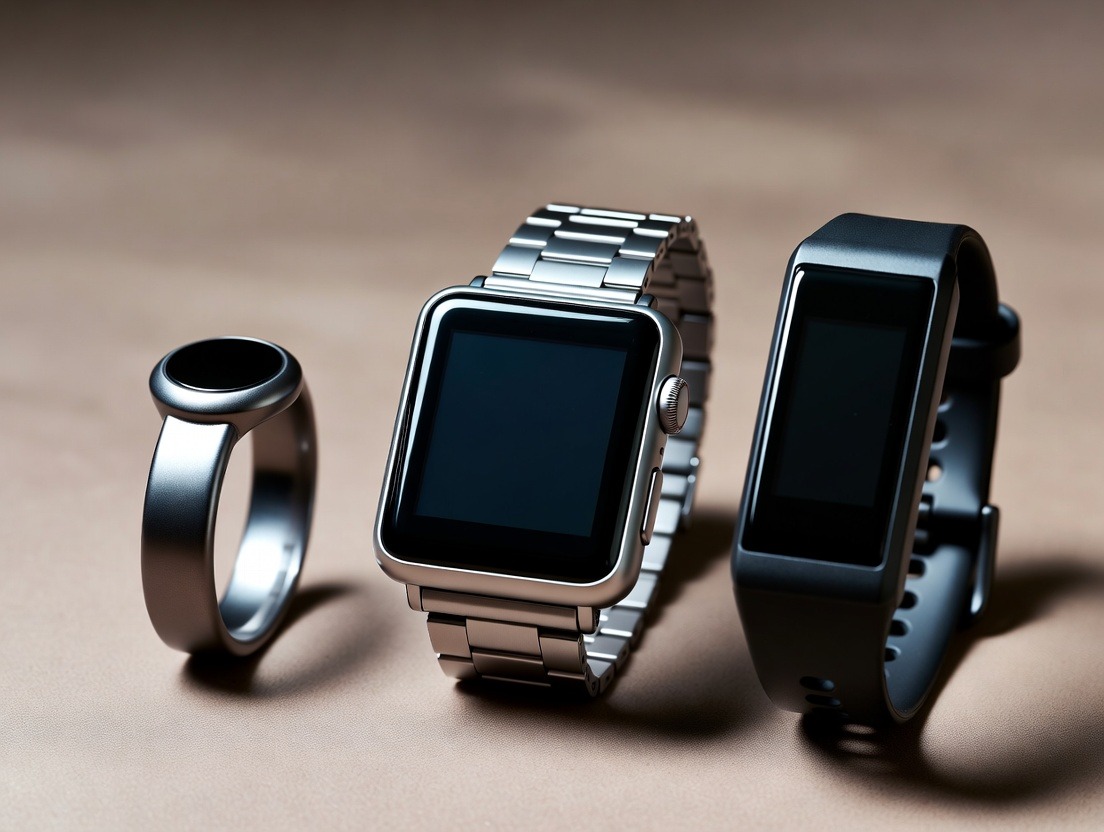
Imagine having a personal guardian for your most valuable asset—not a bodyguard, but a time-guard. This guardian doesn't operate on hunches; it works from a deep, continuous stream of physiological intelligence. That is the fundamental role of your smart ring. While you sleep and go about your day, its sensors are quietly collecting biomarkers that serve as the foundational language of your personal energy economy.
At the heart of this is Heart Rate Variability (HRV). Far more insightful than your average heart rate, HRV measures the subtle variations in time between each heartbeat. A higher, stable HRV typically indicates a resilient nervous system—your body is adaptable, recovered, and ready to handle stress and focus. A dip or a low trend in HRV is your guardian’s first alert: your system is fatigued, stressed, or possibly fighting illness. It’s a direct signal that your capacity for intense, focused time is depleted and needs protection.
Complementing HRV is nocturnal skin temperature. Your core body temperature follows a circadian rhythm, dropping to initiate sleep and rising to promote wakefulness. A smart ring tracks this subtle ebb and flow. Deviations from your personal norm can indicate metabolic strain, the onset of illness, or hormonal fluctuations—all of which silently sabotage your planned productivity. Furthermore, detailed sleep stage analysis (deep, light, REM) provides a quality score for your recovery. You cannot protect your waking time effectively if the foundation of your rest is cracked.
Together, this triad forms your Personal Recovery Index (PRI)—a synthesized, daily score of your physiological readiness. Think of it as your body’s “battery percentage” for the day ahead. Waking up with a high PRI means your tank is full; your guardian is giving you the green light to schedule demanding tasks and creative work. A low PRI is a red flag, urging you to defend your time by prioritizing rest, light activity, and administrative tasks instead of deep work.
This data transforms your ring from a passive tracker to an active guardian. It shifts the question from “What’s on my calendar?” to “What is my body capable of today?” This is the first, non-negotiable step in personal time protection: listening to the objective signals of your own biology before letting the world’s demands set the agenda.
You’ve woken up, glanced at your phone, and there it is: your daily readiness or recovery score from your ring’s companion app. It might be a number out of 100, a color-coded gauge (green, yellow, red), or a simple “High/Medium/Low” verdict. This single metric is the master key to your day, but its true power is unlocked only when you learn to interpret it beyond the surface. This score is your personalized Time Blueprint for the next 16 hours.
A High Readiness Score (e.g., 75-100, Green) is your biological seal of approval for ambitious time investment. This is not just a “good day”; it’s a high-yield day. Your nervous system is resilient, your recovery is solid, and your cognitive resources are plentiful. Your blueprint today should focus on protection through offense. This is the day to:
Conversely, a Low Readiness Score (e.g., <50, Red) is a critical alert from your internal guardian. It is not a failure, but a vital piece of defensive intelligence. Ignoring it is like trying to run a high-performance engine with the oil light on. Your blueprint must shift to protection through defense and repair. Today’s strategy should be:
The Medium Score (Yellow) is perhaps the most common and requires nuanced management. It indicates a system that is functional but not optimal. Your blueprint here is strategic balance. This is the day for:
The true art lies in the trends. Is your score trending downward over three days despite good sleep? That’s a sign of accumulating stress. Is it stubbornly low? You may need to investigate factors like diet, hidden stressors, or sleep pattern disruption. By treating your readiness score as the first input for daily planning, you stop fighting your biology and start partnering with it. You protect time not just on the calendar, but within your own body.
One of the most profound applications of ring data is moving beyond the generic “early bird vs. night owl” label to discover your precise chronotype—your body’s innate, genetic predisposition for sleep and wakefulness timing. Your ring doesn’t just guess based on when you go to bed; it infers your chronotype by analyzing the consistency of your sleep onset, your nighttime HRV patterns, and the timing of your temperature nadir (your lowest body temperature at night). This is a game-changer for time protection because it reveals your Biological Prime Time (BPT): those golden hours when you are naturally most alert, focused, and creative.
Most people schedule their most important work based on external demands (morning meetings, office hours) or societal praise for “the 5 AM club.” This is a classic form of time misalignment, guaranteeing that you spend your peak hours on low-value tasks and grind through demanding work when your energy is in a trough. Your ring data helps you identify your true pattern. For instance, a consistent late sleep onset (after midnight) coupled with a later temperature nadir and higher evening HRV strongly suggests an evening chronotype. Trying to perform deep work at 7 AM is a futile battle against your circadian rhythm.
Once identified, you can architect your day for circadian alignment:
This alignment is the ultimate form of time leverage. An hour of work in your Biological Prime Time can yield the output of two or three hours spent outside of it, with less mental fatigue. It reduces the “friction” of starting difficult tasks because your biology is on your side. To dive deeper into discovering your own type, you can identify your natural sleep pattern with a chronotype quiz. Furthermore, understanding the full sleep pattern spectrum from early birds to night owls can help you contextualize your data and optimize your schedule for peak cognitive performance.
You cannot defend your waking time if you are constantly rebuilding from a deficit. Sleep is not just downtime; it is the non-negotiable infrastructure upon which effective time protection is built. Your smart ring provides a forensic audit of this infrastructure every night, moving far beyond simple duration to the architecture of your sleep: the balance of light, deep, and REM sleep, your sleep latency (time to fall asleep), and restlessness.
Think of Deep Sleep (N3) as your physical restoration contractor. This is when tissue repair, immune function strengthening, and cellular cleanup occur. Consistently low deep sleep, as shown in your ring data, means you’re waking up with a body that hasn’t fully repaired. This manifests as physical fatigue, low motivation for activity, and a craving for stimulants—all enemies of proactive time management.
REM Sleep, on the other hand, is your cognitive and emotional project manager. It’s crucial for memory consolidation, learning, emotional processing, and creativity. A shortage of REM sleep, which can be caused by alcohol, certain medications, or going to bed too late, leaves you with brain fog, poor emotional regulation, and diminished problem-solving ability. You have the time, but not the clear-headedness to use it effectively.
Your ring’s Sleep Score is a direct report on the stability of your time-protection foundation. A high score means you’ve invested well in recovery. A low score is an immediate signal that your next day’s “time budget” is already in the red. Here’s how to use this data proactively:
By treating your sleep data as a nightly performance review of your recovery system, you make targeted investments. You stop saying, “I’ll sleep when I’m dead,” and start saying, “I’ll protect my sleep so I can live fully while I’m awake.” For a comprehensive look at how these stages work together, learn what sleep patterns are and why they matter. To understand the different structural approaches to sleep, you can explore monophasic, biphasic, and polyphasic sleep patterns explained.
Not all stress is bad. Acute stress (eustress) is the strain of a challenging workout or a tight deadline that focuses your energy. The true thief of time is chronic, low-grade stress—the kind that simmers in the background, depleting your physiological reserves without a clear, actionable cause. This is the insidious drain that makes you “busy all day but accomplish nothing,” leaving you mentally exhausted yet unable to point to a single overwhelming task. Your ring’s HRV and temperature data are unparalleled detectives for uncovering this silent thief.
Heart Rate Variability is your premier stress ledger. When your sympathetic nervous system (the “fight or flight” system) is chronically activated, it reduces the natural variability between your heartbeats, leading to a lower, or downward-trending, HRV. Your ring tracks this 24/7, but daytime HRV dips are particularly telling. Do you see a consistent drop every day between 2-4 PM? That could be a post-lunch metabolic slump or a poorly timed caffeine crash. Does your HRV plummet every Tuesday at 10 AM? That’s likely a reaction to a specific, recurring high-pressure meeting. This data transforms a vague feeling of “dread” into a pinpointed stress signature.
Nocturnal skin temperature adds another layer of evidence. While a gradual drop is normal, a consistently elevated nighttime temperature can be a sign of systemic inflammation or metabolic stress, often driven by poor diet, overtraining, or an unresolved immune response. You might be sleeping, but your body is working overtime, not truly resting.
Here’s how to use these insights for active time defense:
By making the invisible visible, you shift from being a victim of ambient stress to a manager of your nervous system. You protect your time by first protecting your internal state.

In the pursuit of productivity, we often fall into one of two traps: the sedentary grind, where we sit for hours chasing efficiency, or the relentless hustle, where we stack intense work on top of intense workouts. Both are recipes for energy bankruptcy. Your smart ring provides Activity Intelligence—data that helps you balance movement for sustained energy, not just for fitness metrics. This is about using your body to fuel your mind’s capacity over the long haul.
Key metrics here are daily step count, active minutes, and, crucially, your resting heart rate (RHR) trend and post-exercise HRV recovery. Steps and active minutes ensure you meet a baseline of movement to promote circulation, mood, and metabolic health. However, the recovery metrics tell you if your activity is building you up or breaking you down.
The protective action is strategic rest. Use your ring’s recovery score to guide your training intensity. A low readiness score means swapping the planned high-intensity interval training for yoga, walking, or complete rest. This disciplined approach prevents the boom-bust cycle that destroys consistent productivity for weeks. It ensures your activity fuels your energy reservoir instead of draining it. For individuals whose work and biology are in conflict, such as athletes or shift workers, understanding this balance is critical. Learn more about the athletic and cognitive impact of sleep patterns and performance and how shift work destroys natural sleep patterns.
Daily readiness scores are your tactical orders. The Weekly Data Review is your strategic war room session. This is where you step back from the day-to-day alerts and connect the dots across seven days to see the larger patterns governing your energy and time. Spending 20-30 minutes each week analyzing trends is the master practice that transforms reactive data checking into proactive life design.
Start by opening your ring’s weekly view in the app. Look for these key patterns:
This weekly audit is how you move from being a passenger in your life to the pilot. You stop asking, “Why am I so tired?” and start declaring, “Based on the data, I need to protect my sleep more on Tuesdays and move my creative work to Wednesday mornings.” For a structured approach to this review, consider guidance on sleep pattern tracking and what to monitor weekly.
Armed with insights from your daily and weekly data, you can now construct routines that are not generic, but genetically and circumstantially tailored to you. These are Time-Protective Routines—rituals designed to fortify your energy systems and defend your focus. Let’s build them from night to day, informed by your ring’s feedback.
The Evening Wind-Down Ritual (Investment in Tomorrow’s Time):
Your sleep data tells you what works. If you see high deep sleep on nights you finish eating 3 hours before bed, that ritual is locked in. If high REM correlates with a 30-minute reading session instead of screen time, that becomes non-negotiable. Your wind-down should start when your ring’s daytime HRV begins its natural descent. This ritual might include:
The Morning Activation Ritual (Claiming Your Prime Time):
Your first hour sets the tone for your time protection. Use your chronotype to design this. A morning type might use light exposure and vigorous movement. An evening type might focus on hydration, gentle light, and a slower start without aggressive stimuli. Check your readiness score as part of this ritual. A low score changes the activation: perhaps meditation and planning instead of an intense workout and deep work.
The Workday Rhythm Ritual (Sustaining Focus):
Structure your day in alignment with your Biological Prime Time and your typical energy dips (seen in HRV). Use the 90-120 minute Ultradian Rhythm cycle. Schedule blocks of focused work (e.g., 90 minutes) followed by a true break (e.g., 20 minutes). Use your break for physical movement—a walk, some stretches—which your step and activity data will reward. Schedule meetings and low-cognitive tasks for your known energy valleys (e.g., post-lunch). Protect your 1-2 peak energy blocks each day as sacred for your most important work.
These data-backed routines create a fortress of habit around your time. They reduce decision fatigue and ensure you are consistently investing in the activities that your unique biology confirms will yield the highest return in focus and energy. For those struggling to establish consistency, a dedicated program to reset unhealthy sleep patterns can be a powerful starting point for building these protective rituals.
Even the most perfectly designed schedule meets reality. Travel, family emergencies, project crunches, and social events are inevitable. In the past, these disruptions could derail your productivity and well-being for days or weeks. With your ring data as an anchor, you can navigate disruptions with resilience and minimize their time-stealing impact. The goal is not to avoid life, but to pass through storms with your compass intact.
Travel and Time Zones: This is the ultimate circadian test. Your ring’s sleep and temperature data become critical. Upon landing, immediately seek daylight exposure at the local time’s appropriate wake-up period to help reset your clock. Use your ring to monitor your sleep adaptation. Don’t expect to perform deep work on day one if your data shows terrible sleep and a low score. Schedule light, administrative tasks. As your temperature rhythm and sleep score begin to stabilize (usually after 1-2 days per time zone crossed), you can gradually reintroduce demanding work. For specific strategies, explore insights on managing sleep patterns during travel and time zones.
Social Events and Late Nights: The data removes guilt and adds strategy. If you have a big event Friday night, look at your week’s readiness scores. If you’re already depleted by Thursday, you have a choice: protect sleep Wednesday and Thursday to build a reserve, or accept that Saturday will be a low-capacity recovery day and plan accordingly (grocery delivery, easy meals, no complex work). After the event, use your next day’s readiness score—not your willpower—to decide if you go to the gym or for a walk. Let the data guide your recovery.
Project Crunches and Stress Periods: Sometimes, a high-pressure period is unavoidable. Here, your role shifts to energy asset management. Monitor your HRV trend like a fuel gauge. If it’s in a sustained dive, you must double down on the fundamentals you can control: prioritize sleep hygiene over extra hours of anxious work, choose nourishing food over quick sugar, and insert 5-minute breathing breaks every hour. The data will show you the cost of the crunch in real-time, allowing you to make micro-adjustments to avoid a total crash. Afterwards, your recovery metrics will tell you exactly how long you need to truly recuperate before returning to full capacity.
By treating your ring data as a real-time navigation system, you become adaptable. Life’s disruptions become detours, not dead ends. You protect your time by managing your energy through the turbulence, ensuring you arrive on the other side ready to re-engage effectively.
Time protection isn’t solely a solo mission. Our schedules and energy are deeply intertwined with partners, families, and roommates. Conflicting chronotypes and recovery needs can be a major source of friction and wasted time—the late-night partner keeping the early-riser awake, or the weekend warrior wanting to hike when the other needs to recharge. Here, shared or compared ring data can move conversations from conflict (“You’re always tired!”) to collaboration (“Our data shows we’re out of sync, how can we fix this?”).
Understanding Partner Chronotypes: If one partner is a clear “Wolf” (evening type) and the other a “Lion” (morning type), this isn’t a character flaw; it’s biology. Reviewing each other’s sleep data and inferred circadian timing can foster empathy. The morning person can see the evening partner’s naturally later temperature drop. The evening person can see the morning partner’s steep energy decline by 9 PM. This allows for practical compromises:
Synchronizing Recovery Days: Nothing derails a shared day off like one person being ready for adventure and the other needing a couch day. By checking each other’s readiness scores on a weekend morning, you can collaboratively plan. Two green scores? Plan the hike or big project. One green, one yellow? Maybe a moderate activity like a museum visit or brunch. Two red scores? That’s a clear signal for a mutual recovery day—movie marathon, easy meals, and no guilt. This prevents resentment and ensures shared time is actually restorative for both.
Family and Parenting Rhythms: For parents, a child’s sleep disruption is a direct assault on personal time. While tracking a child isn’t advised with an adult ring, tracking your own sleep during difficult phases provides hard data on the toll. This can justify tag-teaming with a partner (“My data shows I’ve had three terrible nights, can you take the monitor tonight so I can recover?”) or outsourcing help. It turns a subjective feeling of exhaustion into an objective case for support.
This collaborative approach transforms time protection from a selfish act into a relational skill. It builds households and teams that respect biological individuality, leading to more harmonious and productive shared time. For more on navigating these dynamics, read about managing different chronotypes in couples.
The ultimate power of ring data is revealed not in a day or a week, but over months and years. This long-term dataset is your biography written in biomarkers—a chronicle of how your body responds to different jobs, relationships, locations, and stages of life. Engaging with these trends is how you build Lifelong Time Wealth: the cumulative dividend of years spent aligning your time with your energy, not against it.
Seasonal and Annual Cycles: You may discover your HRV is consistently highest in the spring and fall, and your sleep is most stable in the summer. This isn’t random; it’s your personal interaction with how seasonal changes affect sleep patterns. With this knowledge, you can plan your year strategically: schedule intense creative projects or fitness goals for your high-performance seasons, and plan administrative work, planning, and maintenance for your lower-energy periods.
Life Stage Transitions: Your data will objectively document major shifts. The impact of a new, stressful job will be visible in your HRV trend. The recovery demands of pregnancy and postpartum, the sleep changes of perimenopause, or the gradual evolution of sleep architecture as you age are all trackable. This turns a frightening or frustrating transition into a navigable process. You can see what interventions help (e.g., a new magnesium supplement improves your sleep depth score) and what doesn’t. You become the expert on your own evolving biology, adapting your time protection strategies for each new chapter. For context on these changes, see how sleep patterns change throughout your life and what’s optimal for your specific age group.
The Prevention Dividend: The most valuable return is prevention. A slowly declining HRV trend over six months might prompt you to address a hidden stressor or see a doctor, potentially averting a health crisis that would have stolen not just days, but months of your time. Consistent poor sleep data might lead you to get a sleep study, revealing sleep apnea that, once treated, returns years of clear-headed mornings to your life.
This long view changes your relationship with time from one of scarcity to one of stewardship. You are no longer just spending time; you are investing in your physiological capital. The ring’s data is your portfolio statement, showing you which habits are yielding compound interest in energy and focus, and which are toxic debts. It empowers you to make life choices—about career, location, relationships—that are in harmony with your biological needs, ensuring that the time you have is not just long, but rich, vibrant, and fully your own. This is the pinnacle of personal time protection.
You've protected your schedule, aligned with your chronotype, and built resilient routines. Yet, the true test of time protection happens in the moment—the micro-decisions that pop up throughout your day: "Should I accept this last-minute meeting?" "Can I handle that extra project?" "Is tonight the right night for a social event?" Left to willpower or guilt alone, these choices often lead to time debt. This is where your ring's live and historical data becomes an objective Decision Filter, a tool for making choices that honor your energy capacity.
The process is simple but transformative. When a non-planned request or opportunity arises, pause and consult your data. This creates a buffer between stimulus and response, allowing biology to inform your choice.
By using your data as a filter, you externalize the "no." It's not you being difficult; it's the objective readout of your capacity. This reduces decision fatigue, minimizes people-pleasing that leads to burnout, and ensures that when you do say "yes," you can deliver fully and enjoy the commitment. It's the ultimate application of data for boundary setting—a core skill in permanent time protection.

Our digital devices are perhaps the most pervasive and unacknowledged thieves of time and recovery. The constant pings, the endless scroll, and most critically, the blue light exposure after sunset create a state of chronic low-grade alertness that directly sabotages the physiological markers your ring tracks. This isn't just about wasting minutes on Instagram; it's about degrading the quality of every hour that follows. Your ring data provides the incontrovertible evidence needed to build a bulletproof digital hygiene protocol.
Blue Light and Your Circadian Signal: The most direct link is between evening screen exposure and your nocturnal skin temperature and sleep architecture. Blue light suppresses melatonin production, the hormone that cues your body temperature to drop for sleep. Your ring will show this as a delayed temperature decline and often a reduction in deep sleep. It tells you that your body's natural "off" switch is being overridden, making it harder to fall asleep and compromising the restorative quality of the sleep you do get.
Cognitive Hyperarousal and HRV: The constant context-switching of notifications and the engaging, often stressful, nature of digital content (news, social media debates) keep your sympathetic nervous system subtly engaged. This can manifest in a suppressed daytime HRV and a higher resting heart rate. You might not feel "stressed," but your physiology is in a state of defensive readiness, depleting the energy reserves needed for focused, deep work.
Your Data-Backed Digital Defense Plan:
By viewing your digital habits through the lens of physiological data, you see the true cost. Ten minutes of scrolling in bed isn't just ten minutes lost; it's a downgrade of your entire night's recovery and a tax on tomorrow's cognitive capital. Your ring makes this invisible tax visible, giving you the motivation and blueprint to reclaim your cognitive sovereignty. This is especially crucial if you suspect a mismatch between your work and biology, as digital overstimulation exacerbates this conflict.
What you eat, and when you eat it, is not just about nutrition—it's about time management. Food is information that directly influences inflammation, blood sugar volatility, and metabolic stress, all of which are reflected in your ring's core metrics. A poor dietary choice can silently sabotage your next four hours of planned productivity. By conducting simple self-experiments, you can use your data to build a Time-Optimized Nutrition Protocol.
The Clear Culprits: Data Signatures of Poor Fuel
Conducting a Food-Data Audit:
You don't need a complex elimination diet. Start with targeted observations:
The goal is not diet dogma, but personalized food intelligence. Your ring data helps you identify which foods and timings make you a steady, stable energy producer versus which ones make you a sputtering, unreliable engine. By fueling for stable energy, you protect your planned time from internal biochemical sabotage. This is a critical part of learning to use sleep pattern data to optimize your entire life.
Stress management is often seen as soft or separate from "real" productivity. Your ring data proves otherwise. Practices like meditation, breathwork, and mindfulness are not just for calm; they are high-resolution tools for directly improving the physiological metrics that govern your time capacity. This creates a powerful positive feedback loop: the practice improves your data, and the improving data motivates you to practice.
Direct Impact on Core Biomarkers:
Building a Data-Verified Practice:
When you see on a graph that 10 minutes of breathwork can improve your physiological readiness, it ceases to be an "extra" task and becomes a core, non-negotiable component of your time protection system. You are not taking time away from productivity; you are investing it in the foundation of all productivity: a calm, resilient, and responsive biology. This is key to managing how stress alters sleep patterns and recovery.
Your time is spent in environments—your bedroom, your office, your home. These spaces are not passive containers; they are active participants in shaping your physiology. Light, temperature, noise, and even air quality send constant signals to your nervous system. Your ring data is the ultimate tool for environmental auditing, allowing you to tweak your surroundings to support, not hinder, your goals of focused work and deep recovery.
The Bedroom: A Recovery Chamber
Your sleep data is the direct report card on your bedroom environment.
The Workspace: A Focus Zone
Your daytime HRV and subjective energy during work blocks can guide workspace optimization.
By methodically changing one environmental variable at a time and observing the data shift, you become an architect of your own optimal performance ecosystem. You stop blaming your willpower for afternoon slumps and start adjusting your surroundings to make focus and recovery the path of least resistance. This principle is central to understanding how light exposure shapes your sleep patterns and, by extension, your daily energy.
Your smart ring is a phenomenal personal intelligence tool, but it is not a medical device. Its supreme value often lies in its ability to act as a canary in the coal mine—to reveal persistent, unexplained patterns that warrant a deeper look from a healthcare professional. Using your data as an objective log of symptoms can transform vague complaints into productive conversations with doctors, therapists, or coaches, protecting you from years of unresolved energy issues.
Red Flags and Patterns to Elevate:
How to Present Your Data:
This approach makes you an active, informed participant in your health. It moves the conversation from treating symptoms to investigating root causes, potentially saving you immense amounts of time and quality of life lost to undiagnosed or poorly managed conditions. Your ring becomes the starting point for a professional partnership dedicated to protecting your most fundamental asset: your health.
Travel is a dual assault on time protection: it disrupts your biological rhythms (jet lag) and fills your days with unpredictable demands. For the frequent traveler or the vacationer, a smart ring is an indispensable Traveler's Compass, providing real-time navigation through time zones and helping you strategically plan an itinerary that balances adventure with recovery.
Phase 1: Pre-Travel Preparation (The Investment)
In the days before a trip, especially one crossing time zones, your goal is to build a reservoir of resilience.
Phase 2: In-Transit and Immediate Arrival (The Navigation)
Phase 3: Building a Travel Itinerary (The Strategy)
This is where data-driven time protection shines. Check your morning readiness score each day of the trip.
Traveling with this data-informed approach transforms the experience. You maximize enjoyment and minimize the "I need a vacation from my vacation" feeling. You protect your time by respecting the biological reality of displacement, ensuring you return home truly restored, not more exhausted. For a dedicated guide on this process, see our resource on managing sleep patterns during travel and time zones.
The final, and perhaps most liberating, stage of using ring data for time protection is graduating from constant external validation to cultivated internal wisdom. The ring is a brilliant teacher, but the goal is not to become permanently dependent on its scores. The goal is to use the data to recalibrate your own internal sensors—your sense of energy, focus, and need for recovery—which have often been numbed by years of ignoring your body's signals.
The Calibration Process:
The Outcome: Informed Intuition
After months of consistent tracking and correlation, a shift occurs. You begin to trust your own assessment. You might skip checking the score because you know you slept poorly and need a light day. You feel a subtle energy dip at 3 PM and instinctively take five deep breaths or go for a walk without needing an alert.
The ring becomes a tool you use for periodic check-ins, for investigating anomalies, or during times of high stress or transition—not a daily crutch. You have internalized the principles of time protection. You schedule based on a felt sense of your rhythm. You say no because you can feel your capacity is full. You've developed what we might call Bio-Literacy—the ability to read the language of your own body.
This is the pinnacle of personal time protection: freedom. Freedom from external validation, from rigid systems that don't fit you, and from the cycle of burnout and recovery. You are no longer protecting time from a place of scarcity and fear, but from a place of deep self-knowledge and abundance. You have become the expert guardian of your own energy and time.
Our social lives are a core part of our humanity, yet they represent one of the most complex arenas for time protection. Obligations, FOMO (Fear of Missing Out), and the desire for connection can easily override our best intentions, leading to schedule sabotage and energy bankruptcy. Your ring data provides a foundation for Social Sync—a way to navigate relationships and events with integrity, ensuring your social time is genuinely energizing, not depleting.
The Data of Social Dynamics:
You may begin to notice fascinating patterns in your data related to social interaction.
Applying the Social Sync Framework:
The goal of Social Sync is to move from a social calendar driven by external expectations to one curated by conscious choice and self-knowledge. It ensures that the time you spend with others builds you up, contributing to your overall energy portfolio rather than bankrupting it. This leads to richer, more present connections because you are truly there, not running on empty.
Time spent learning a new skill, studying, or engaging in deep mental work is a high-value investment. However, attempting this work at the wrong time or in the wrong state is a recipe for frustration and slow progress—a waste of your precious learning time. Your ring data allows you to plot a Personal Learning Curve, identifying the optimal conditions for neuroplasticity, memory consolidation, and creative problem-solving.
Prime Time for Acquisition vs. Consolidation:
Your biological rhythms dictate different capacities for different types of mental work.
Building Your Data-Informed Learning Schedule:
By aligning your learning efforts with your physiological readiness, you achieve more in less time with less frustration. You stop banging your head against a wall during an afternoon slump and instead use that time for restorative breaks that ultimately fuel insight. This turns skill acquisition from a battle of attrition into an elegant dance with your own biology.
To internalize the principles of lifelong time protection, it helps to adopt a powerful metaphor: Your Energy Portfolio. Just as you manage financial assets for long-term wealth, you must manage your physiological assets for long-term vitality and effectiveness. Your ring data is your daily portfolio statement, showing deposits, withdrawals, dividends, and risky debts.
The Core Assets (What Your Ring Measures):
Portfolio Management Strategies:
Viewing your life through this lens makes decisions clear. Going out for late drinks on a worknight is taking a high-interest loan from tomorrow's productivity. Investing in a sleep mask and blackout curtains is buying a blue-chip stock in your future self. The goal is Energy Compound Interest—where your daily deposits grow your capacity so significantly that you have abundant energy not just for work, but for a rich, engaged, and fulfilling life. This is the essence of using data to optimize your entire life.
Life is not a steady state. Periods of intense stress—a family crisis, a critical work deadline, an illness—are inevitable. Traditional time management often collapses under these storms. Data-informed time protection, however, allows you to build a Resilience Buffer in advance and navigate the storm with minimal long-term damage. Your ring metrics are the weather radar and the structural integrity report for your personal system.
Phase 1: Pre-Storm Fortification (When You See Clouds)
If you can anticipate a stressful period (e.g., a product launch, exam week, tax season), use the preceding weeks to build your buffer.
Phase 2: In-The-Eye Navigation (During the Storm)
During the high-stress period, your goal is strategic energy rationing.
Phase 3: Post-Storm Recovery Assessment (The Damage Report)
After the storm passes, your data tells the true story of the cost.
This approach doesn't eliminate stress, but it prevents stress from eliminating you. It ensures that a difficult month doesn't derail your entire year. You learn that you can handle intense periods without destroying your health, because you have the data to guide a safe passage through them. This is critical knowledge for anyone in a high-pressure field, where understanding how stress alters patterns is a professional survival skill.
A life ruled solely by data can become rigid and joyless. There will be times when the most time-protective thing you can do is to strategically detach from the numbers and fully immerse in a moment that feeds your soul, even if it shows up as a "red" day tomorrow. The wisdom lies in knowing the difference between a conscious, strategic choice and a compulsive, destructive override. Your data, ironically, helps you develop this discernment.
Conscious Choice vs. Compulsive Override:
How to Practice Strategic Detachment:
The data ultimately serves your values, not the other way around. It gives you the clarity to say, "This is worth the cost," with eyes wide open, and the discipline to say, "This isn't," to the myriad of smaller, draining distractions that masquerade as obligations. It helps you spend your one precious life not just efficiently, but meaningfully.
The most profound application of ring data unfolds on a scale of years. This Legacy Dataset—comprising thousands of nights of sleep, tens of thousands of HRV readings, and every life event you've logged—becomes an empirical autobiography of your energy and resilience. It transcends daily optimization and begins to inform your most significant life decisions: career paths, geographic moves, relationship commitments, and lifestyle design.
Patterns That Emerge Over Years:
Using Legacy Data for Decision-Making:
When facing a big choice, don't just consult your gut or your bank account. Consult your historical data.
This long view is the culmination of personal time protection. It’s about shaping a life that doesn’t just fit into your time, but one that is exquisitely tailored to sustain your energy across decades. You move from managing days to designing a lifetime. For a scientific perspective on this lifelong journey, explore the research on how sleep patterns change from infancy to senior years and what the science of sleep patterns reveals.
As you build this rich, intimate portrait of your inner workings, a critical question arises: Who owns this data, and how is it protected? Your biomarker data—your sleep patterns, stress responses, temperature rhythms—is your Biological Fingerprint. It is uniquely yours and deeply personal. Engaging in time protection requires a parallel engagement in data protection. Being an informed steward of your information is the final, non-negotiable layer of true personal sovereignty.
Key Considerations for the Informed User:
A Proactive Data Hygiene Routine:
Engaging with this ethical dimension completes the circle. You are not just using technology to protect your time; you are consciously shaping your relationship with technology to protect your privacy and autonomy. This ensures that the journey of self-knowledge remains empowering, not exploitative. It allows you to harness the power of your data without becoming a product of it.
We have journeyed from the foundational signals of your ring—the HRV, temperature, and sleep scores—through the practical application of daily readiness, chronotype alignment, and environmental tuning. We've explored how this data strengthens your social, mental, and emotional worlds, helps you weather storms, and even guides your largest life choices. We've acknowledged the need for both strategic detachment and ethical vigilance.
What emerges is not just a set of tips, but a new relationship with time itself.
Time is no longer an external tyrant, measured only by the clock on the wall, dictating a frantic pace. Through the lens of your physiological data, time becomes an internal experience, measured by the rhythm of your heart, the depth of your sleep, and the resilience of your nervous system. You stop asking, "How can I fit more in?" and start asking, "How can I align my energy with what matters most?"
You have learned to see your body not as a vehicle to carry your brain from meeting to meeting, but as the highly sensitive, deeply intelligent instrument that actually creates your capacity for everything you do. Protecting your time is, at its core, protecting the biological processes that generate focus, creativity, and presence.
This is the promise of personal time protection via ring data: a shift from being busy to being effective. From being drained to being renewable. From managing minutes to cultivating a life of sustained energy and meaningful contribution.
The data is your guide, but you are the author. Your next step is to take these principles and weave them into the fabric of your days, not as another rigid system, but as a living practice of self-observation and respectful alignment. Begin tonight. Observe your wind-down. Check your score tomorrow. Make one small, data-informed adjustment. This is how a revolution in personal time begins—one heartbeat, one night, one protected hour at a time.
Your Trusted Sleep Advocate: Sleep Foundation — https://www.sleepfoundation.org
Discover a digital archive of scholarly articles: NIH — https://www.ncbi.nlm.nih.gov/
39 million citations for biomedical literature :PubMed — https://pubmed.ncbi.nlm.nih.gov/
Experts at Harvard Health Publishing covering a variety of health topics — https://www.health.harvard.edu/blog/
Every life deserves world class care :Cleveland Clinic - https://my.clevelandclinic.org/health
Wearable technology and the future of predictive health monitoring :MIT Technology Review — https://www.technologyreview.com/
Dedicated to the well-being of all people and guided by science :World Health Organization — https://www.who.int/news-room/
Psychological science and knowledge to benefit society and improve lives. :APA — https://www.apa.org/monitor/
Cutting-edge insights on human longevity and peak performance:
Lifespan Research — https://www.lifespan.io/
Global authority on exercise physiology, sports performance, and human recovery:
American College of Sports Medicine — https://www.acsm.org/
Neuroscience-driven guidance for better focus, sleep, and mental clarity:
Stanford Human Performance Lab — https://humanperformance.stanford.edu/
Evidence-based psychology and mind–body wellness resources:
Mayo Clinic — https://www.mayoclinic.org/healthy-lifestyle/
Data-backed research on emotional wellbeing, stress biology, and resilience:
American Institute of Stress — https://www.stress.org/


