


Health Tracking Basics: Your Complete Foundation Guide for 2025
Your complete, up-to-date foundation guide for health tracking in 2025.
Your complete, up-to-date foundation guide for health tracking in 2025.
%402x.svg)
In the quiet moments of a morning, before the world awakens its demands, a new conversation is beginning. It’s not with a person, but with your own body. For decades, understanding our health was a reactive practice—we visited doctors when something felt wrong, relying on annual check-ups that provided a single, static snapshot of a dynamic, ever-changing system. That paradigm is crumbling. Today, we stand at the precipice of a fundamental shift: from reactive healthcare to continuous, personalized, and empowered preventive health monitoring.
This revolution is woven into the fabric of our daily lives, quite literally, on our wrists and fingers. What began with simple step counters has evolved into a sophisticated ecosystem of biometric surveillance, capable of decoding the subtle language of our physiology. Your heart rate variability whispers about your stress resilience. Your blood oxygen saturation hints at respiratory efficiency and sleep quality. Your skin temperature and sleep architecture narrate the story of your recovery. This is no longer science fiction; it's the actionable data in the palm of your hand.
Welcome to your complete foundation guide for 2025. This is not just a rundown of features or a glossary of tech terms. This is a map to a new way of being. We will deconstruct the "how" and "why" of modern health tracking, moving beyond the novelty to build a robust, sustainable practice of self-knowledge. Whether you're a curious beginner stepping into the world of wearables for the first time, or a data enthusiast looking to deepen your understanding, this guide will lay the unshakable groundwork.
By the end of this journey, you will understand the science behind the sensors, the art of interpreting the data, and the strategy for turning insights into lasting, healthy habits. You'll learn why a smart ring like those from Oxyzen might be the most intuitive tool for this 24/7 journey, and how to navigate the vast landscape of options to find what truly serves your unique health goals. Let's begin the most important exploration you'll ever undertake: the one within.
To appreciate where we are, we must understand how we got here. The journey of health tracking is a mirror reflecting our own technological and philosophical evolution in understanding wellness. It’s a story that moves from crude, manual measurements to seamless, intelligent anticipation.
In the beginning, it was all about movement. The pedometer, a simple mechanical device that counted steps by detecting hip movements, dates back to the 18th century. For the average person, however, the modern health tracking era truly ignited in the early 2000s with the mainstream adoption of clip-on devices and early fitness watches. Their goal was singular: motivate more movement. They answered the basic question, "Did I move enough today?" This was the Activity & Movement Tracking 1.0—a binary, volume-focused world.
The first seismic shift occurred when sensors shrank and became sophisticated enough to measure state, not just action. The introduction of continuous optical heart rate monitoring was a game-changer. Suddenly, a device could tell not just if you were running, but how hard your heart was working during that run—and crucially, while you were at rest. This opened the door to tracking resting heart rate, a fundamental vital sign. Soon after, tri-axis accelerometers and gyroscopes allowed for nuanced activity recognition (distinguishing a swim from a cycle) and sleep stage estimation.
We are now in the midst of the second, and more profound, shift: the move from descriptive to predictive and prescriptive analytics. This is powered by the confluence of three elements:
This evolution has transformed the device on your finger from a simple recorder to a health guardian. It enables the kind of preventive health monitoring that was once only available in elite athletic programs or cutting-edge clinics. To dive deeper into this technological journey, from manual logs to AI-powered insights, explore our detailed analysis on the evolution of health tracking technology.
The endpoint of this trajectory is clear: a fully integrated, personalized health ecosystem. The wearable is the data collection hub, but its true power is unlocked when it speaks to other apps, your electronic health record (with your permission), and even your clinician's tools. This is the future we are building toward—a future where health is a continuous, collaborative dialogue, not an annual event.
Embarking on a health tracking journey requires a bit of faith—faith that these numbers and graphs will translate to a better life. Skepticism is healthy. "Won't this make me obsessive?" "Is this just more noise?" These are valid concerns. The transformative power lies not in the data itself, but in the mindful, purposeful application of it. When done right, health tracking delivers profound benefits that cascade through every aspect of your being.
From Guesswork to Knowledge: Illuminating the Invisible. The human body is remarkably poor at subjective self-assessment. How often have you thought you slept "pretty well," only to feel groggy all day? Or felt "stressed" without pinpointing the cause or magnitude? Health tracking shines a light on these blind spots. It translates vague feelings into objective metrics. You don't have to guess if you're recovered from your workout; your Heart Rate Variability (HRV) trend will show you. This objective feedback is the first, crucial step out of the fog of ambiguity and into the clarity of self-knowledge.
The Ultimate Motivator: Tangible Progress and Positive Reinforcement. Willpower is a finite resource. Lasting change is built on systems, not sheer force of will. Health tracking builds the most powerful system of all: visible, positive reinforcement. Seeing your resting heart rate trend downward over months, watching your deep sleep duration increase, or hitting a personal best in recovery score after a week of good habits—these are powerful rewards. They create a virtuous cycle. The data shows your effort is working, which motivates you to sustain the effort, which creates better data. It’s a feedback loop of success that is far more effective than guilt or fear.
Early Warning System: The Power of Proactive Intervention. This is arguably the most significant benefit. Many health issues announce themselves subtly in our biometrics days or even weeks before symptoms become obvious. A sustained, unexplained elevation in resting heart rate and skin temperature can be an early sign of infection. Consistently poor sleep metrics paired with low HRV can be a red flag for chronic stress or burnout. By establishing your personal baseline, your wearable becomes a sentinel, alerting you to deviations that warrant attention. This shifts your health stance from reactive ("I feel sick, I should see a doctor") to proactive ("My data has been off for three days; I should prioritize rest and hydration"). This proactive approach is at the heart of modern preventive health monitoring.
Empowerment in the Healthcare Partnership. Walking into a doctor's office with a log of your resting heart rate, sleep patterns, and activity levels over the past month is a game-changer. It moves the conversation from "How have you been feeling?" to "Here is the objective data on how my body has been behaving." This empowers you as an active participant in your care and provides your clinician with context they could never get from a 15-minute appointment. It transforms the patient-doctor dynamic into a collaborative partnership.
Building Sustainable Habits, Not Short-Term Fixes. The true magic happens when tracking moves from a novelty to a seamless part of your life. The goal is not to stare at charts all day, but to use the insights to build healthy habits that become automatic. A smart ring nudging you to move after an hour of inactivity trains you to avoid prolonged sitting. A sleep score encouraging a consistent bedtime ritual helps cement a wind-down routine. The device becomes a gentle, persistent coach, guiding you toward the daily micro-actions that compound into monumental lifelong health. For practical strategies on turning data into daily routines, our guide on how wellness rings help build healthy habits offers a detailed roadmap.
In essence, health tracking offers the rarest of gifts in our complex world: clarity and agency over your own well-being. It replaces anxiety with understanding and hope with a clear, data-backed path forward.
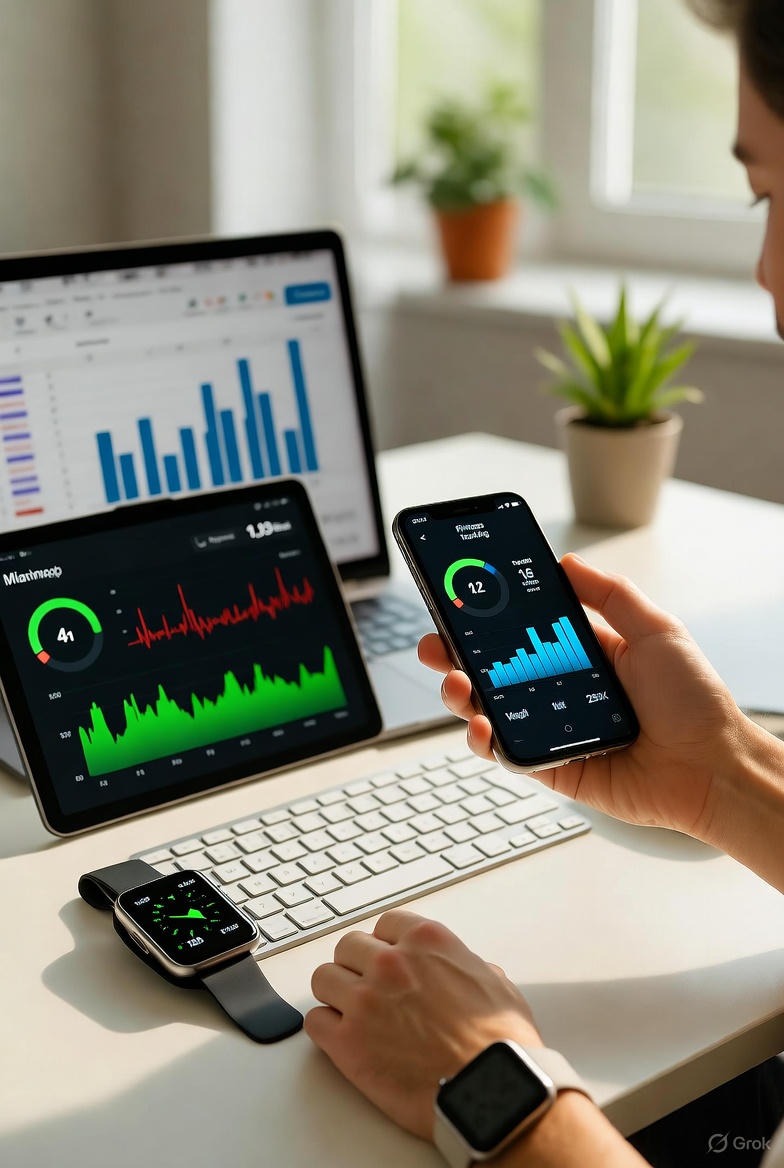
The dashboard of a modern health tracker can feel overwhelming—a sea of graphs, scores, and acronyms. To navigate this world confidently, you need to understand the language. These are not arbitrary numbers; each is a vital sign with a specific story to tell about a different system in your body. Let's decode the most critical metrics you'll encounter in 2025.
Heart Rate (HR) & Resting Heart Rate (RHR): The Engine's Idle Speed. Your heart rate is the most fundamental rhythm of life. While active HR tells you about exercise intensity, Resting Heart Rate—measured best during sleep or deep relaxation—is a powerful indicator of cardiovascular fitness and overall health. A lower RHR generally suggests a more efficient heart muscle and better aerobic fitness. A sudden, sustained increase in your RHR (outside of normal fluctuations from exercise or illness) can be a primary signal of stress, dehydration, or the onset of sickness. It's your body's internal tachometer.
Heart Rate Variability (HRV): The Metric of Resilience and Recovery. If RHR is the idle speed, HRV is the sophistication of the engine's control system. Technically, it's the variation in time between each heartbeat. Contrary to intuition, a higher HRV is generally better. It indicates a robust, responsive autonomic nervous system—your body can swiftly adapt to stress and then recover smoothly. A low or declining HRV trend suggests your system is under strain (from physical overtraining, mental stress, or poor recovery) and is less resilient. It is arguably the single best non-invasive metric for tracking your body's readiness and recovery status. Monitoring HRV is a cornerstone of effective preventive health monitoring.
Blood Oxygen Saturation (SpO2): The Fuel Delivery Gauge. SpO2 measures the percentage of oxygen-carrying hemoglobin in your blood. While it's critical for monitoring conditions like sleep apnea (where it can dip repeatedly during the night), it's also a broader wellness indicator. Consistently lower-than-normal nocturnal SpO2 can point to respiratory issues, while it can also be impacted by altitude, illness, or even intense training. Tracking it continuously, especially during sleep, provides a window into your respiratory health and sleep quality.
Skin Temperature: The Body's Subtle Thermostat. Your core body temperature is tightly regulated, but peripheral skin temperature fluctuates and is highly informative. Nocturnal skin temperature trends are particularly valuable. A higher baseline temperature during sleep can indicate inflammation, the start of an illness (like a cold or flu), or hormonal changes like ovulation in women. Tracking this over time helps you establish your personal normal range and spot meaningful deviations.
Sleep Staging & Architecture: Rebuilding the Foundation. Sleep is not a monolithic state. Modern trackers use movement, heart rate, and HRV to estimate time spent in Light, Deep, and REM (Rapid Eye Movement) sleep. Each stage has a unique function:
Respiratory Rate: The Silent Rhythm. Often overlooked, the number of breaths you take per minute is a remarkably stable and sensitive vital sign. An elevated respiratory rate, especially during sleep, can be an early sign of cardiopulmonary stress, anxiety, or metabolic issues. It’s a passive, continuous metric that adds another layer to your physiological profile.
Activity & Movement: The Non-Exercise Thermogenesis (NET) Factor. Beyond formal workouts, general daily movement—walking, taking stairs, fidgeting—is crucial for metabolic health. This is often called Non-Exercise Activity Thermogenesis (NEAT). Trackers monitor step count, active minutes, and calories burned from this all-day movement, reminding you that life is not just workouts and rest, but the vital activity in between.
Mastering these metrics transforms your wearable from a black box into a transparent window. You move from seeing numbers to understanding narratives. For a deep dive into the sensors and algorithms that make this possible, our article on the science behind modern health tracking technology provides a comprehensive look under the hood.
With your goals clarified and the metrics decoded, the next pivotal step is selecting the right tool for your journey. The market is a mosaic of options, each with strengths and compromises. Your choice will determine not just the data you get, but your likelihood of sticking with the practice long-term. Let's compare the primary contenders in the 2025 landscape.
Smartphones: The Ubiquitous But Limited Starter Kit. Your phone is likely already tracking some health data via its accelerometer or through connected apps. It's excellent for basic step counting, GPS route mapping for runs, and housing your centralized health data (Apple Health or Google Fit).
Fitness Watches & Bands: The Jack-of-All-Trades. This is the most crowded and familiar category, from basic bands to full-featured smartwatches.
Medical-Grade Patches & Chest Straps: The Gold Standard for Accuracy. These are adhesive patches or electrode straps worn on the chest.
Smart Rings: The Discreet, Continuous Biometric Sentinel. This emerging category, pioneered by brands like Oura and now advanced by players like Oxyzen, represents a fundamental rethink of the wearable paradigm.
The Core Decision: Philosophy of Use. Your choice ultimately hinges on your primary "North Star":
To see how these options stack up side-by-side, including specific brand comparisons, our wellness ring comparison chart of top brands provides an unbiased breakdown to inform your decision. Remember, the best device is the one you'll wear consistently and whose data you'll learn to trust and act upon.
The smart ring isn't just another wearable; it's a strategically superior form factor for continuous health intelligence. The advantages go far beyond aesthetics. They are rooted in human physiology, behavioral psychology, and data science. Let's explore why placing a sensor on your finger is a paradigm shift.
Physiological Superiority: A Clearer Signal from a Richer Source. The primary goal of any biometric sensor is to get the cleanest possible signal with the least amount of "noise." The finger, specifically the palmar digital arteries, offers a unique advantage.
Behavioral Frictionlessness: The Key to Unbroken Data. The single biggest predictor of tracking success is consistency. Any barrier—discomfort, inconvenience, the need to remember—will break the chain. The smart ring eliminates these barriers masterfully.
Holistic Health Focus: From Workouts to Well-Being. While rings can track activity, their core intelligence lies in interpreting how all your daily inputs—stress, exercise, food, sleep—affect your body's readiness and recovery. The advanced algorithms in rings like Oxyzen synthesize sleep, activity, and physiological stress data to provide a "Readiness" or "Recovery" score each morning. This isn't about pushing you to do more; it's about advising you on what your body needs most—perhaps a hard workout, a light walk, or a focused recovery day. This shifts the focus from external performance to internal balance, a true foundation for lifelong health.
Aesthetic Versatility and Personalization. A ring is a personal jewelry item. Modern smart rings are designed with this in mind, offering various finishes from brushed titanium to glossy black, and even options for different color and style choices. They are subtle enough for a boardroom and durable enough for a gym. This social and aesthetic flexibility further reduces the chance you'll ever take it off.
In essence, the smart ring leverages its unique position—both on your body and in the market—to deliver what matters most: accurate, continuous, and actionable insights into your foundational health, with minimal lifestyle disruption. It is the tool built for the modern understanding of wellness as a 24/7 state, not just a workout metric. To understand how this technology is forging the future, explore our perspective on the future of wearable health tech.
You're convinced of the smart ring's potential. Now, the crucial, practical step: choosing and fitting your ring. This isn't like buying a watch; the fit is paramount for both comfort and data accuracy. A poorly sized ring can be unwearable or provide useless data. Let's walk through the process to ensure your first smart ring is a perfect match.
Step 1: The Sizing Ritual – Precision is Everything. Never guess your ring size for a device of this nature.
Step 2: Choosing Your Finger – The Data & Comfort Balance. While the non-dominant hand's ring finger is the standard recommendation (least movement, consistent position), you have options:
Step 3: Navigating Material & Style Options. This is where personal preference meets practical consideration.
Step 4: Matching the Ring to Your Health Goals. Not all rings are created equal. Before purchasing, ensure the ring's core competencies align with your "Why."
Taking the time to get this process right is the single most important thing you can do to ensure a successful, long-term relationship with your smart ring. It's the foundation upon which all insights are built. For a visual and detailed walkthrough from unboxing to expert use, our smart ring mastery guide is an invaluable resource.

The box has arrived. The excitement is real. This moment is where the potential of health tracking becomes tangible. A thoughtful, patient setup is critical to transitioning from an owner to an informed user. Rushing this process can lead to confusion and early frustration. Let’s methodically walk through the crucial first days and weeks.
Phase 1: The Mindful Unboxing and First Charge.
Phase 2: The Digital Handshake – App Installation and Pairing.
Phase 3: The Golden Rule – Wear Consistently and Ignore the Noise.
Phase 4: Establishing Your Personal Baseline – The Foundation of Insight.
After the initial week or two, you can start to observe your trends. Your baseline is your personal normal—not a comparison to anyone else. Open the app's trend views (usually weekly or monthly) and ask:
This baseline is your health "home base." All future insights and recommendations from the ring will be based on deviations from this personal standard. This is what enables true personalized wellness.
Phase 5: Initial Customization – Setting Your Intentions.
By following this phased approach, you build a relationship of trust with your device. You allow it to become a accurate mirror of your physiology, setting the stage for the truly transformative phase: learning to interpret and act on what it shows you. For a deeper look at personalizing the device to your body's signals, our article on personalizing your wellness ring offers advanced tips.
The data is now flowing. Your app is filled with graphs, scores, and percentages. This is the critical juncture where many people get stuck—a state of "analysis paralysis," where the volume of information becomes overwhelming rather than enlightening. The goal is not to become a slave to every data point, but to learn the art of synthesis: turning raw data into contextual wisdom and, ultimately, into wise action.
Adopt the "Trends Over Points" Mindset. This is the cardinal rule of health data interpretation. A single night of poor sleep or a low HRV reading is almost meaningless. Life happens. A stressful day, a late meal, a glass of wine, an intense workout—all can cause temporary fluctuations. The magic, and the truth, lies in the trend.
Understand the "Why" Behind the Scores. Most apps provide a readiness or recovery score. Don't just accept the number. Tap into it. The app should break down the contributing factors: "Your score is lower due to elevated resting heart rate, decreased HRV, and low sleep duration." This breakdown is your diagnostic checklist. It tells you not just that you're not recovered, but why.
Use Data to Experiment and Learn (The N=1 Study). You are the subject of the most important study you'll ever conduct: your life. Use your wearable to run gentle experiments.
Set Healthy Boundaries with Your Data. To avoid obsession, institute data "check-ins," not constant monitoring.
When to Ignore the Data (Trusting Your Feelings). The data is a guide, not an oracle. If you feel energetic and great but your readiness score is low, it's okay to proceed with caution but not cancel your day. Conversely, if you feel awful but the data says you're recovered, listen to your body first. The subjective feeling is data point number one. The wearable metrics are there to provide objective context for those feelings.
By mastering this interpretive layer, you graduate from being a passive data collector to an active health strategist. The numbers stop being abstract and start telling the coherent story of your body's response to your life. This is the gateway to genuine, sustainable behavior change. For a deeper exploration of how this data empowers personalized approaches, see how health tracking enables personalized wellness.
You have your ring. You understand the metrics. You’re interpreting the trends. Now, we unlock the next level of power: moving from a standalone device to the central hub of a connected health ecosystem. No single app or device holds all the answers to your wellness. Your life is lived across multiple platforms—your fitness apps, your nutrition log, your meditation timer, and perhaps even your electronic health records. The true magic of modern health tracking happens when these silos of data begin to communicate, creating a holistic, multidimensional picture of your well-being.
The Hub-and-Spoke Model: Your Smart Ring as the Foundation. Think of your smart ring, like the OxyZen, as the central hub. It provides the continuous, passive, foundational biometric stream: heart rate, HRV, sleep, temperature, and activity. This is your body’s output data—how it’s responding to life. The "spokes" are the other apps that track your deliberate inputs:
When you connect these spokes to your hub via Apple Health (on iOS) or Google Fit (on Android), something transformative occurs. You can start to see causal relationships, not just correlations.
The Power of Connected Data: From "What" to "Why." Let’s illustrate with a real-world scenario:
This is data integration at its most powerful. It moves you from seeing symptoms in your biometrics to identifying probable lifestyle causes. For a practical guide on setting up these powerful connections, our resource on wellness ring integration with other health apps provides step-by-step instructions.
Choosing Your Aggregator: Apple Health vs. Google Fit. These are the two major "data exchanges" for your health information. They act as secure, permission-based intermediaries.
Your primary goal is to ensure your smart ring and your other key health apps are all reading from and writing to this central aggregator. This creates a single source of truth for your health data.
The Future is Open: The Rise of Interoperability. The most forward-thinking health tech companies are embracing open APIs and partnerships. Imagine a future where, with your explicit consent:
This level of integration is where health tracking transitions from a personal curiosity to a component of professional, collaborative care. It’s the pathway to making the data truly actionable within the broader context of your healthcare journey. As you build this ecosystem, remember that privacy is paramount—always review what data you are sharing and with whom. The power should always remain in your hands.
Data is inert. Wisdom is potential. But action is power. This is the critical bridge that so many health-tracking journeys fail to cross. It’s the chasm between knowing your sleep was poor and actually implementing a wind-down routine that fixes it. The ultimate goal is not a high score in an app, but a tangible improvement in how you feel, perform, and live. Let’s master the art of turning insightful data into automatic, sustainable habits.
Start Small: The Power of Micro-Habits. Faced with a dashboard full of "areas for improvement," the instinct is to overhaul everything at once. This is a recipe for burnout. The strategy of micro-habits—tiny, almost laughably easy changes—is backed by neuroscience. A small change requires minimal willpower, creates a quick win, and builds the neural pathway for the behavior.
Let Data Inform Your Daily Decisions: The Readiness Score as a Guide. One of the most valuable features of advanced trackers is the daily readiness or recovery score. Don't just look at it; use it as a decision-making tool.
This practice teaches you to work with your body’s natural rhythms, not against them. It turns subjective guesswork into an objective daily game plan.
Create "If-Then" Rules Based on Your Trends. This is a powerful behavioral technique called implementation intention. You pre-decide your response to a specific data pattern.
By creating these rules in advance, you remove the need for decision-making in the moment. The data triggers a pre-programmed, healthy response.
Focus on Behavior, Not the Metric. It’s easy to become fixated on "gaming" a metric—like trying to artificially inflate your HRV. This misses the point. Instead, focus on the behaviors that influence the metric.
This redirects your energy to the controllable inputs, and the positive outputs (like higher HRV) will follow naturally. This is the core philosophy of using technology to build healthy habits that last a lifetime.
Celebrate Non-Scale, Non-Data Victories. Finally, remember that the data is a tool to enhance your life, not become your life. The real victory is in the lived experience:
When you experience these, acknowledge them. They are the true north of your health journey, proving that the numbers on your screen are translating into a better quality of life. The ring is the guide, but you are the one living the improved story.

As we invite these devices deeper into our lives, collecting our most intimate physiological data, a critical question must be addressed: Who owns this data, and how is it protected? Your health information is among the most sensitive personal data that exists. Trust is not a feature; it is the absolute foundation. In this section, we’ll equip you with the knowledge to be a savvy, protected participant in the digital health revolution.
Understanding the Data Lifecycle: From Your Finger to the Cloud. It’s important to know what happens to your data:
Your Rights: Ownership and Control. Reputable companies will have a clear, transparent privacy policy. Key principles you should look for:
Practical Steps to Lock Down Your Privacy. Don't just rely on policy; take proactive control within the app:
The Special Case of Health Data: HIPAA and Wearables. A common point of confusion is HIPAA (the Health Insurance Portability and Accountability Act in the US). Most consumer wearables are NOT covered entities under HIPAA. HIPAA applies to healthcare providers, health plans, and healthcare clearinghouses. Once you choose to share your wearable data with your doctor, and they incorporate it into your medical record, that copy of the data is then protected by HIPAA within their system. The original data on the wearable company’s servers is governed by their own privacy policy and consumer protection laws. This makes choosing a company with a strong, ethical privacy stance paramount.
Choosing a brand that prioritizes privacy is a non-negotiable aspect of selecting your health partner. At Oxyzen, we believe transparency is the cornerstone of trust. We encourage all users to be informed; you can read our detailed policies and learn more about data security and privacy settings to understand how we protect your information. Your journey to self-knowledge should be a private, secure, and empowering one.
Even the most advanced technology can have off days or be influenced by user error. To maintain trust in your data and ensure you’re getting the full value from your investment, it’s essential to know how to troubleshoot common issues and optimize your setup. Think of this as the ongoing maintenance and fine-tuning of your health-tracking practice.
Ensuring Data Accuracy: Common Pitfalls and Fixes. If your data seems off—wildly unrealistic heart rate, sleep not being tracked—consider these factors:
Optimizing for Specific Goals: Advanced User Tips. Once the basics are solid, you can tweak your practice for deeper insights:
When to Contact Support. If you’ve checked fit, cleanliness, and battery and are still experiencing persistent issues like the device not syncing, not charging, or providing consistently implausible data, it’s time to reach out. A reputable company will have a robust support system. Before you contact, note the specific issues, any error messages, and the steps you’ve already taken to troubleshoot. This will help them resolve your issue faster. For common questions and a knowledge base, our FAQ and support page is always available.
A proactive approach to troubleshooting and optimization ensures your wearable remains a reliable partner. It transforms it from a black-box gadget into a transparent, understandable tool that you are in full command of, ready to serve your health journey for years to come.
Health is not a destination; it’s a lifelong journey with changing seasons, terrains, and priorities. The initial excitement of a new wearable can fade. Life can get busy. Goals can shift. The key to a lasting, beneficial relationship with health tracking is to build a flexible, adaptive practice that evolves with you, avoiding the twin pitfalls of obsession and abandonment.
Recognizing and Avoiding Tracking Burnout. This manifests as anxiety over data, compulsive checking, or feelings of guilt and failure when scores are low. To prevent it:
Re-framing Motivation: From Goals to Systems. Goals are finite (e.g., "lose 10 pounds"). When you reach them, motivation often vanishes. Systems are infinite processes (e.g., "I am a person who prioritizes recovery"). They provide ongoing motivation because you are engaged in the identity-based process, not just an outcome.
Evolving with Life’s Chapters. Your health tracking should serve your current life chapter, not the one you were in three years ago.
Celebrating Milestones and Reflecting. Periodically, look back. Compare your monthly trends from today to six months or a year ago. Have you established a lower average resting heart rate? Has your sleep become more consistent? These long-term improvements are the real victories. They represent a fundamental shift in your health foundation. Share these successes (if you wish) with supportive communities or with your healthcare provider.
Knowing When to Upgrade or Change Tools. Technology evolves. Your needs evolve. The device that was perfect for you as a marathon trainee might not be ideal as a new parent focused on stress and sleep. Every few years, reassess the market. Has a new form factor emerged? Do the algorithms now provide the kind of insight you need for your new chapter? Making an intentional choice to upgrade is part of the evolving journey.
By embracing this long-term, flexible mindset, you ensure that health tracking remains a empowering companion for life. It becomes a lens through which you understand yourself better at every age and stage, providing not just data, but wisdom and guidance for the road ahead. Your health narrative is long and beautiful; let your tools help you read it, write it, and live it to the fullest.
We've explored the sensors that gather data and the metrics that tell the story. Now, we arrive at the brain of the operation: Artificial Intelligence (AI) and Machine Learning (ML). This isn't science fiction; it's the invisible, intelligent layer that transforms raw biometrics from a simple diary of your body into a predictive, personalized health advisor. In 2025, AI is what separates a basic data logger from a true health intelligence platform.
From Descriptive to Predictive: The Paradigm Shift. Early health tracking was descriptive: "You slept 6 hours and 23 minutes last night." Then it became diagnostic: "Your deep sleep was low, and your heart rate was elevated." AI-powered tracking is now predictive and prescriptive. It doesn't just tell you what happened; it anticipates what might happen and suggests what you should do about it. This is the core of modern preventive health monitoring.
How Machine Learning Works in Your Wearable. Imagine teaching a child to recognize a dog. You show them thousands of pictures of dogs (and not-dogs), and their brain learns the patterns—four legs, fur, a snout. Machine learning works similarly, but on a colossal scale.
Real-World AI Applications in Your Daily Data. This isn't abstract. You interact with these AI-driven insights every day:
The Future is Hyper-Personalized Algorithms. The next frontier is algorithms that don't just react, but learn your goals and adapt in real-time.
This intelligent layer is what makes modern wearables profoundly useful tools for behavior change. They are no longer just mirrors reflecting your state; they are becoming intelligent coaches guiding your path. To understand the technical underpinnings of this intelligence, delve into our explanation of sensors, algorithms, and AI in health tracking. The age of one-size-fits-all health advice is over. Welcome to the age of your personal AI health ally.

The power of continuous biometric monitoring extends far beyond personal curiosity and self-optimization. It is poised to reshape the very foundations of clinical medicine and public health. We are moving from episodic, clinic-based care to continuous, remote patient monitoring (RPM), creating a more proactive, preventive, and participatory healthcare model. This is where the consumer wearable meets the clinical world, with transformative potential.
Remote Patient Monitoring (RPM): Bringing the Clinic Home. For patients managing chronic conditions like hypertension, heart failure, diabetes, or COPD, frequent clinic visits are burdensome and provide only snapshots of health. RPM uses FDA-cleared or approved wearable devices to transmit vital data (heart rate, rhythm, blood oxygen, activity, etc.) directly to a clinician's dashboard.
The "Bring-Your-Own-Device" (BYOD) Challenge and Opportunity. While dedicated medical devices are used in formal RPM programs, there is growing interest in leveraging the millions of consumer wearables already on people's wrists and fingers. The challenge is validation: ensuring the data from a consumer smart ring or watch is accurate and precise enough for clinical decision-making. The opportunity is massive: scaling preventive monitoring to entire populations at a low cost. Research is accelerating to validate consumer devices for specific clinical use cases. Our analysis of how health tracking technology is changing preventive medicine explores this shift in detail.
Clinical Research and Drug Trials. Wearables are revolutionizing clinical trials by providing objective, continuous, real-world data.
Population Health and Early Detection. On a macro scale, aggregated and anonymized data from wearables can act as a early-warning system for public health.
The Doctor-Patient Partnership, Redefined. This is the most profound change. The wearable equips the patient with objective data, transforming the annual physical.
The integration of wearables into clinical care is not without hurdles—data privacy, integration into electronic health records, clinician training, and liability. However, the direction is clear. The future of medicine is not confined to the clinic walls; it is a continuous, data-informed partnership that extends into every moment of a patient's life, enabled by the silent sentinel on their finger or wrist.
While the holistic view of readiness and recovery is powerful, many individuals come to health tracking with specific concerns. The granular, continuous data from a smart ring or watch can provide unique insights into conditions like sleep disorders, chronic stress, and metabolic health, offering a path to better management that goes far beyond guesswork.
Sleep Apnea and Sleep-Disordered Breathing. This is one of the strongest use cases for nocturnal tracking. While a consumer wearable cannot diagnose sleep apnea (that requires a formal sleep study), it can provide compelling screening data and track the effectiveness of treatment.
Chronic Stress, Anxiety, and Burnout. These conditions dysregulate the autonomic nervous system (ANS), and this dysregulation is clearly visible in your biometrics.
Metabolic Health and Fitness Optimization. For those focused on weight management, body composition, and athletic performance, data provides the fine-tuning knob.
Women's Health and Hormonal Cycle Tracking. The menstrual cycle is a powerful biological rhythm that influences core temperature, heart rate, HRV, and sleep.
In each of these cases, the wearable moves you from being a passive patient to an active investigator. It provides the objective evidence you need to have more productive conversations with healthcare providers, to experiment safely with lifestyle interventions, and to truly understand the dynamic nature of your own health. This is the practical application of data for supporting different health goals, transforming anxiety into agency.
Human beings are social creatures, and our health journeys are no exception. While the data on your smartphone is intensely personal, the process of understanding and acting on it doesn't have to be a solitary endeavor. The rise of community features, digital coaching, and shared challenges within health platforms adds a powerful, often overlooked layer of motivation, accountability, and support to the high-tech world of biometrics.
The Motivation of Shared Endeavor: Communities and Challenges. The basic step challenge between friends on a smartphone demonstrated the power of social motivation. Modern wellness platforms are taking this much further.
The Rise of Digital Health Coaching and AI Guides. While community provides peer support, digital coaching offers expert guidance scaled through technology.
Accountability Partnerships and Data Sharing. With privacy controls firmly in your hands, you can choose to share your data with a trusted partner—a spouse, a close friend, or a fitness trainer.
Navigating the Pitfalls: Comparison and Social Pressure. The social dimension has a shadow side. It's crucial to engage with these features healthily.
When used mindfully, the social and coaching layers transform health tracking from a cold, analytical process into a warm, supported journey. They provide the encouragement, ideas, and accountability that help translate knowledge into lasting action. They remind us that while the path to better health is personal, we don't have to walk it alone. For real examples of how this plays out, browse the shared experiences in our customer testimonials section.
As health tracking technology becomes more powerful and integrated into care, we must confront critical ethical questions. Who benefits from this revolution? Who might be left behind? The algorithms and devices we create are not neutral; they are built by humans with inherent biases, trained on data that may not represent all of humanity. Building a healthier future requires us to build a more equitable one.
Algorithmic Bias: When Data Doesn't See Everyone. Machine learning models are only as good as the data they're trained on. If a health AI is trained primarily on data from young, male, affluent, and light-skinned populations, its insights and predictions may be less accurate—or even harmful—for others.
The Digital Divide and the Cost of Wellness. The latest smart ring or watch is a significant financial investment. The subscription fees for advanced analytics create an ongoing cost.
Data Privacy and Power Dynamics Revisited. When data is used in clinical trials, employer wellness programs, or by insurance companies, the power dynamic shifts.
Building an Inclusive Future. The goal is not to slow innovation, but to steer it consciously. We must:
The promise of health tracking is a world where everyone has the tools to understand and optimize their own health. To fulfill that promise, we must ensure the tools are designed for everyone, and the path to using them is open to all. This is the necessary, and ultimately most rewarding, challenge of the health tech revolution. Engaging with a brand's our story and values can provide insight into how they are addressing these critical issues.
As we stand in 2025, the pace of innovation is not slowing; it's accelerating. The convergence of biotechnology, nanotechnology, and artificial intelligence is set to blur the lines between external devices and integrated biology. Let's project forward, based on current research and emerging trends, to envision what the next decade of health tracking might hold.
The Sensor Revolution: Non-Invasive Blood Chemistry. The holy grail of wearables is the ability to measure biomarkers currently requiring a blood draw. This is arriving.
Form Factor Evolution: Invisible, Implantable, and Ambient.
Advanced AI: From Prediction to Prescription and Intervention.
The Integration with Extended Reality (XR) and the Metaverse. As virtual and augmented reality become mainstream, biometrics will be integral to the experience.
The Regulatory and Social Landscape. This future will demand new frameworks.
The journey from the pedometer to the predictive, AI-powered smart ring has been extraordinary. The next decade promises to be even more transformative, moving us closer to a world where illness is preempted, health is continuously optimized, and our understanding of our own bodies is deep, intuitive, and empowering. The frontier of what's possible is expanding daily, as explored in our outlook on health tracking technology in 2025 and beyond. The future of health is not something that happens to you; it is something you will actively, intelligently, and continuously co-create.
Your Trusted Sleep Advocate (Sleep Foundation — https://www.sleepfoundation.org/)
Discover a digital archive of scholarly articles (NIH — https://www.ncbi.nlm.nih.gov/
39 million citations for biomedical literature (PubMed — https://pubmed.ncbi.nlm.nih.gov/)
experts at Harvard Health Publishing covering a variety of health topics — https://www.health.harvard.edu/blog/)
Every life deserves world class care (Cleveland Clinic -
https://my.clevelandclinic.org/health)
Wearable technology and the future of predictive health monitoring. (MIT Technology Review — https://www.technologyreview.com/)
Dedicated to the well-being of all people and guided by science (World Health Organization — https://www.who.int/news-room/)
Psychological science and knowledge to benefit society and improve lives. (APA — https://www.apa.org/monitor/)
Cutting-edge insights on human longevity and peak performance
(Lifespan Research — https://www.lifespan.io/)
Global authority on exercise physiology, sports performance, and human recovery
(American College of Sports Medicine — https://www.acsm.org/)
Neuroscience-driven guidance for better focus, sleep, and mental clarity
(Stanford Human Performance Lab — https://humanperformance.stanford.edu/)
Evidence-based psychology and mind–body wellness resources
(Mayo Clinic — https://www.mayoclinic.org/healthy-lifestyle/)
Data-backed research on emotional wellbeing, stress biology, and resilience
(American Institute of Stress — https://www.stress.org/)


