


How Your Wellness Ring Simplifies Making Sense of Your Numbers
How your wellness ring simplifies understanding your numbers.
How your wellness ring simplifies understanding your numbers.
%402x.svg)
In an age of information overload, we are drowning in data yet starving for wisdom. This is especially true in the realm of personal health. For years, the promise of wearables has been a deluge of numbers: heart rate graphs, sleep scores, step counts, and stress metrics flashing across our screens. But what do they mean? A resting heart rate of 58 BPM—is that good for me, or a sign of trouble? A dip in your Heart Rate Variability (HRV)—is it yesterday's stressful meeting or an oncoming cold? The raw data, without context and interpretation, often leads to more anxiety than insight.
This is the critical gap between data collection and true understanding—a gap that the modern wellness ring is uniquely designed to bridge. Unlike clunky watches or easily forgotten chest straps, the ring form factor offers continuous, comfortable, and clinically-significant data collection from the vascular-rich finger. But its true genius lies not just in sensing, but in simplifying.
This article is your definitive guide to moving from confusion to clarity. We will explore how today's advanced wellness rings transform complex biometric streams into a coherent, actionable narrative about your health. You’ll learn how they cut through the noise, highlight what’s truly important, and translate the cryptic language of physiology into personalized guidance you can actually use. We’ll demystify the core metrics, explain the science of sensor fusion, and show you how to evolve from a passive data observer to an active participant in your own well-being journey.
The goal is no longer just to track, but to understand. And understanding is the first, most powerful step toward meaningful change. If you're new to this world, our complete introduction to health tech provides a perfect foundation.
We’ve all been there. You open your health app, eager to check on your progress, only to be met with a dashboard that looks like a pilot’s cockpit: multiple graphs, dozens of numbers, colored zones, and trend arrows pointing in every direction. Your sleep breakdown shows light, deep, REM, and awake times with percentages. Your activity panel shows steps, active minutes, calorie burn, and distance. Your readiness score is based on HRV, resting heart rate, skin temperature, and sleep. Individually, these are fascinating data points. Collectively, they can feel like a chaotic health stock ticker that you’re supposed to decipher before breakfast.
This phenomenon is known as "data paralysis" or "analysis paralysis." When presented with too much information without a clear framework for interpretation, the human brain tends to shut down or fixate on the wrong things. You might obsess over a single night of poor sleep, ignoring a month of positive trends. You might see a high resting heart rate and jump to catastrophic conclusions, unaware that it’s a normal response to a hard workout the previous day. The raw numbers lack the crucial elements of context and narrative.
This overwhelming phase is a common starting point, which is why we created a dedicated resource on avoiding data overwhelm. The wellness ring’s primary mission is to solve these problems at the source. Instead of presenting you with a spreadsheet, its accompanying intelligence uses algorithms and human-centered design to answer the three questions you actually care about: How am I doing? Why might that be? What should I do about it?
By weaving together data from multiple sensors and comparing it to your own historical trends, the ring begins to tell your body’s unique story, freeing you from the tyranny of isolated, confusing digits and setting the stage for genuine, informed self-care.
So how does a small piece of jewelry on your finger perform this feat of data alchemy? The magic lies in a process called sensor fusion and contextual analytics. It’s the difference between having a bag of individual letters and reading a compelling novel. The letters (raw data) are necessary, but it’s the grammar, syntax, and plot structure (the algorithms) that create meaning.
Think of your wellness ring as a miniature, non-stop biological observatory. Its sensors—like photoplethysmogram (PPG) for blood flow, a 3-axis accelerometer for movement, a skin temperature sensor, and sometimes even an electrodermal activity (EDA) sensor for stress—are constantly collecting signals. Individually, each has a story to tell. The PPG reveals your heart’s rhythm and the subtle variations between beats (HRV). The accelerometer knows when you’re running, walking, or still. The temperature sensor detects minute nightly changes that can signal ovulation or illness.
But the real intelligence sparks when these data streams are combined. The software doesn’t just look at a elevated heart rate; it cross-references it with movement data. Is your heart rate high because you’re exercising, or is it elevated while you’re sitting at your desk (a potential sign of stress or dehydration)? It doesn’t just note you were restless at 3 AM; it checks if that restlessness coincided with a spike in your nighttime heart rate or a change in skin temperature, building a more complete picture of your sleep disturbance.
This fusion creates a multi-layered narrative:
This narrative approach transforms abstract numbers into a relatable story about you. You’re no longer managing data points; you’re learning the language of your own physiology. This foundational understanding of how data becomes insight is crucial, and our guide on the science behind the technology delves deeper into the fascinating mechanics.
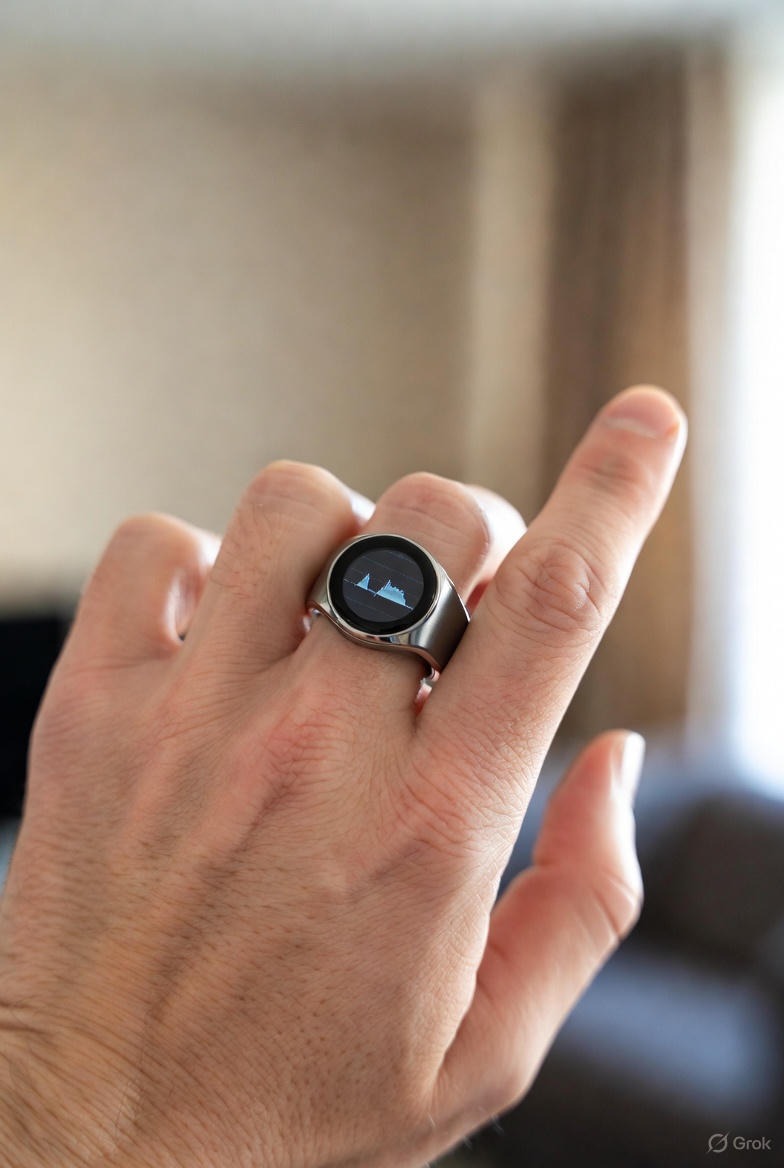
Now, let’s translate the story into the specific characters that tell it. Your wellness app’s dashboard is the book’s table of contents. Understanding what each metric truly represents is the first step to fluency. Here, we break down the core cast of characters in your health narrative.
Sleep: The Foundational Metric
Sleep is not a monolithic block of time. Your ring tracks its architecture:
The ring synthesizes these into a Sleep Score—a single, digestible number that reflects the overall quality of your night’s restoration. For a dedicated deep dive into optimizing this critical pillar, see our approach to sleep optimization.
Activity & Movement: More Than Just Steps
Modern wellness rings have moved far beyond simple step counting.
Readiness & Recovery: Your Body’s Green Light
Perhaps the most revolutionary metric is the Readiness or Recovery Score. This is the pinnacle of data synthesis. It answers the question: "How prepared is my body for stress today?" It typically incorporates:
Stress & Resilience: Listening to Your Nervous System
Many rings now offer a Stress Score or measurement of your autonomic nervous system (ANS) activity throughout the day.
By understanding what these metrics are designed to reveal, the dashboard transforms from a confusing array of numbers into a clear status report on your body’s core systems. The next step is learning to interpret the patterns they form over time.
This is the most critical concept in moving from confusion to clarity: All health is personal. Medical textbooks and fitness magazines are filled with population averages—"normal" resting heart rate is 60-100 BPM, "good" sleep is 7-9 hours. But these ranges are so broad as to be almost meaningless for individual guidance. The true power of continuous wear, as championed by a wellness ring, is its ability to define your normal with exquisite precision.
Your wellness ring isn’t comparing you to a 25-year-old elite athlete or a population average. It’s comparing you to yourself. It establishes a dynamic, ever-evolving baseline for every metric it tracks. This is your biological fingerprint.
When you first put on your ring, it enters a learning phase (typically 1-2 weeks). During this time, it’s quietly observing: What is your average resting heart rate on a good night’s sleep? What is your typical HRV range? What does your sleep architecture look like? Once these baselines are set, they become the reference point for all future data.
A deviation from your personal baseline is infinitely more informative than a deviation from a population average. For example:
Baselines aren’t static. They should and do change as you get fitter, older, or as your lifestyle evolves. A consistent training program may gradually lower your baseline RHR and raise your baseline HRV—signs of improved cardiovascular fitness. The ring tracks these slow, meaningful trends, separating them from daily noise. This focus on long-term progression is a key theme in how smart rings track long-term health trends.
By focusing on your personal baselines, the wellness ring eliminates comparison anxiety and provides hyper-personalized feedback. It tells you not if you’re "normal," but if you’re normal for you—and when you’re not, it gently nudges you to ask why. This principle is fundamental to setting realistic health expectations.
Data in a vacuum is misleading. A low sleep score could be due to poor sleep hygiene, or it could be due to a vigorous, beneficial late-night workout. A spike in stress could be from a difficult conversation, or from an exciting, positive event. This is where the most advanced wellness rings pull ahead: they seek context to distinguish between harmful deviations and benign or even beneficial ones.
The goal is to move from "What happened?" to "Why did it happen?" This is achieved through two primary methods: automatic context detection and user-provided tags.
The ring’s sensors are constantly building a contextual picture:
This is where your partnership with the device deepens. Most apps allow you to quickly log daily factors that the sensors can’t detect:
When you combine automatic sensor context with your personal life-logging, the narrative becomes rich and actionable. The app might show: *"Your HRV dropped 15% below your baseline last night. You logged '2 glasses of wine' and 'late work stress.' Your sleep showed reduced REM. For better recovery tonight, consider minimizing alcohol and implementing a wind-down routine."*
This collaborative process of context-building is what turns a tracking device into a true wellness companion. It empowers you to run experiments on your own life. Want to see if meditation affects your stress score? Tag your sessions and watch the data. Curious if cutting off caffeine at 2 PM improves your deep sleep? Tag your intake and find out. This hands-on mastery is the subject of our guide on getting the most from your device.

With a constant stream of data and context, the next challenge is prioritization. Not every deviation is an emergency. Not every low score requires immediate action. If your app alerted you with equal urgency to a single night of poor sleep and a week-long, trending decline in HRV, you’d quickly become desensitized—a phenomenon known as "alert fatigue."
Sophisticated wellness rings employ intelligent data triage. This is the algorithmic process of sorting through all incoming signals, assessing their severity, duration, and correlation with other metrics, and then deciding what deserves your attention right now.
A well-designed system distinguishes between three levels of information:
For the latter, you might receive a prioritized insight: "We've detected a sustained increase in your resting heart rate and a drop in HRV over the past 4 days, alongside elevated skin temperature. This pattern often suggests your body is fighting something or needs more rest. Consider prioritizing sleep, hydration, and light activity." This is actionable, potentially preventive guidance.
The ring’s triage system is designed to highlight lead indicators (metrics that predict future state) over lag indicators (metrics that describe the past).
By teaching you to focus on lead indicators like readiness, HRV trends, and sleep quality, the ring helps you become proactive rather than reactive in managing your health. This skill—differentiating meaningful trends from daily noise—is explored in our article on understanding trends vs. daily fluctuations.
This is the ultimate goal: actionable insight. Data is fascinating, but transformation happens in the space between insight and action. The modern wellness ring closes this loop by not only identifying patterns but also suggesting evidence-based, personalized actions. It provides the "so what" after the "what."
This translation happens through two main channels: personalized recommendations and actionable summaries.
Instead of generic advice like "get more sleep" or "reduce stress," the ring’s AI can offer specific, contextual nudges tied directly to your data:
These micro-actions are manageable, directly linked to a clear data point, and create a powerful feedback loop. You take the action, and subsequent data shows you the result, reinforcing positive behavior change.
Many apps provide a digestible daily or weekly summary email or in-app report. This isn’t just a data dump. It’s a curated narrative that:
This structured feedback helps you avoid trying to change everything at once, a common pitfall that leads to burnout. It promotes sustainable, incremental improvement by focusing on one leveraged area at a time. This philosophy is core to building sustainable health habits.
By translating complex biometrics into clear, contextual actions, the wellness ring becomes a coach on your wrist (or finger), guiding you toward better decisions one data point at a time. The next section explores how this continuous guidance fosters profound long-term behavior change.
Wearable technology often faces a critical challenge: the "novelty cliff." Users are excited for the first few weeks, then engagement plummets as the device becomes just another source of notifications. Wellness rings counter this by evolving from a novelty into a source of health intelligence—a deepening understanding of your body that motivates intrinsic, long-term change.
This shift relies on two powerful psychological principles activated by continuous, contextual feedback: operant conditioning and increased self-efficacy.
Operant conditioning, in simple terms, is learning through consequences. The ring creates a tight, positive feedback loop:
This loop is far more effective than willpower alone. When you see the direct physiological benefit of a behavior, it becomes reinforced not as a chore, but as a valued choice. Over time, these reinforced micro-choices coalesce into lasting habits. For more on this powerful psychological mechanism, see how wearable wellness motivates long-term behavior change.
Self-efficacy is the belief in your own ability to succeed in specific situations. Chronic health goals ("get healthy," "lose weight," "reduce stress") can feel abstract and overwhelming, eroding self-efficacy.
The wellness ring builds self-efficacy by providing mastery experiences:
As your health intelligence grows, you start to predict what your ring will tell you. You’ll feel tired and know your readiness score will be low. You’ll have a calm, restorative day and know your sleep will be good. This internalization of cause and effect is the hallmark of true behavior change—the technology becomes a mirror confirming your own bodily awareness, not a crutch.
This journey transforms you from a passive patient receiving data to an active, informed participant in your health, a transition supported by the principles of how this technology empowers patient-doctor conversations. The final section of this portion will explore how this personal intelligence scales to connect with and enhance your broader healthcare ecosystem.
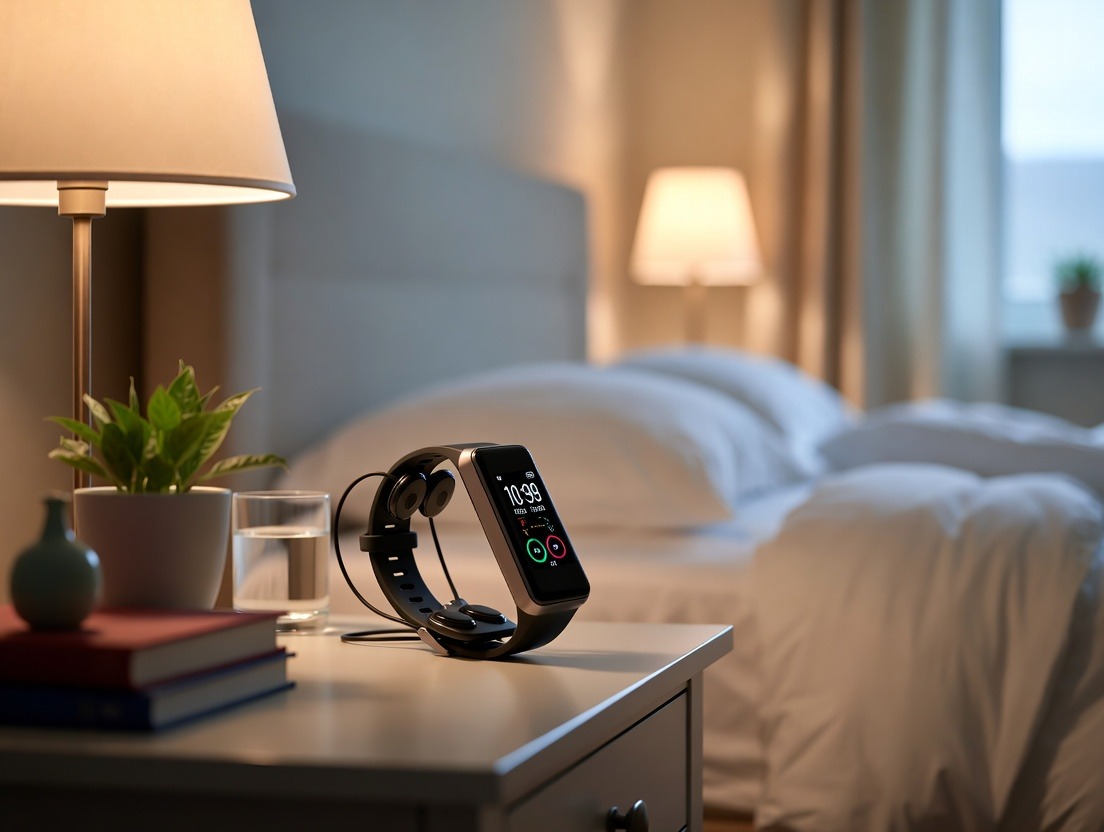
The true potential of personal health data is unlocked not in isolation, but in connection. Your wellness ring’s insights become exponentially more powerful when they can inform conversations with professionals and integrate with the broader digital tools that manage your health. This moves wellness tracking from a solitary hobby to a integrated component of modern, proactive healthcare.
Walking into a doctor’s appointment with subjective feelings ("I've been tired lately") is one thing. Walking in with objective, longitudinal data is another. Your ring provides a quantified history that can:
The key is presenting this data effectively. Most wellness apps allow you to export PDF summaries or share specific trend graphs. This turns a vague symptom into a data-supported discussion point, making you a more prepared and engaged partner in your own care. This collaborative approach is a central tenet of modern wellness, as discussed in our guide to making sense of your health dashboard.
Leading wellness rings don’t aim to be a walled garden. They offer APIs (Application Programming Interfaces) and direct integrations that allow your anonymized, aggregated data to flow securely into other applications you use. This creates a unified health picture.
This interoperability is the future of connected health. It ensures your ring’s valuable insights don’t sit in a silo but contribute to a holistic, centralized view of your well-being across all the digital tools you trust. Understanding this interconnected landscape is part of mastering the app ecosystems that power modern wearables.
The journey from overwhelming data to simple, powerful insight is ongoing. The wellness ring category is one of the most dynamic in health tech, with rapid advancements poised to make these devices even more intuitive, predictive, and seamlessly integrated into our lives. Understanding this trajectory helps us see not just what the technology is, but what it is becoming.
The core mission remains the same: to simplify complexity. But the methods are evolving from descriptive ("what happened") and diagnostic ("why it happened") analytics toward truly predictive and prescriptive intelligence.
Future algorithms will move beyond identifying current strain to forecasting future risk. By analyzing millions of data points across vast, anonymized populations (while strictly preserving individual privacy), AI will be able to identify subtle, pre-symptomatic patterns.
The goal is zero user burden. Future iterations will require even less manual tagging and interaction.
The ultimate simplification may be the creation of a digital twin—a sophisticated computer model of your unique physiology. This model, informed by years of your ring data, could be used to run safe, virtual "what-if" scenarios. "What would happen to my recovery if I increased my weekly running mileage by 10%?" "How would shifting my bedtime one hour earlier impact my cognitive performance next week?"
This future, where your ring acts as a constant, silent guardian that translates the infinite complexity of your body into a simple, actionable stream of personalized wisdom, is closer than it seems. It represents the culmination of the journey from data deluge to empowered simplicity. For a visionary look at this path, explore our thoughts on how smart ring features will evolve in the next 5 years.
The sophistication of your ring’s narrative depends entirely on the quality of its raw material: the data. Garbage in, garbage out. While the device is engineered for simplicity, following a few key practices ensures the signals it captures are clean, consistent, and truly representative of your physiology. Accuracy is the non-negotiable foundation of trust.
A wellness ring is a medical-grade optical device. Its PPG sensor shines light into the capillaries in your finger and measures the reflected signal to determine blood volume changes. For this to work optimally, the ring needs consistent, snug contact with your skin.
The unique value proposition of a ring is its ability to be worn continuously, capturing your body’s full circadian rhythm. To build the most accurate personal baselines and trends, 24/7 wear is the goal. Take it off only for:
The more you wear it, especially during sleep, the better it understands your unique rhythms. Missing nights creates gaps in your most restorative data. For more on the practicalities of daily use, see our guide on how wearable wellness fits into your daily routine.
By treating your ring as a precision instrument and following these simple protocols, you ensure the story it tells is crisp, reliable, and worthy of guiding your decisions. This foundational care is the first step in a long-term partnership, akin to understanding the basics of battery life and maintenance.
Now, let’s elevate your fluency. Beyond the simple scores, a deeper understanding of specific metrics unlocks another level of personal insight. These are the biomarkers that offer a direct window into your autonomic nervous system, recovery status, and immune function.
HRV is not your heart rate. It is the measure of the slight variations in time between each heartbeat. Controlled by your autonomic nervous system, a higher HRV (more variability) generally indicates a healthy balance—your body can efficiently switch between stress (sympathetic) and recovery (parasympathetic) modes. A lower HRV suggests your system is under strain, stuck in a stressed state, or fatigued.
Advanced Interpretation:
Moving beyond "good" or "bad" sleep, understanding your stages reveals why you feel the way you do.
Your core body temperature drops at night to initiate and maintain sleep. Your ring’s skin temperature sensor tracks deviations from your personal baseline.
Mastering these advanced metrics transforms you from a passive recipient of scores to an active diagnostician of your own state. You begin to see the rich dialogue between different systems, a skill that helps in making sense of your entire health dashboard.
Your wellness ring is not just a monitor; it’s the ultimate biofeedback tool for personal science. The most empowered users adopt an experimentation mindset. They use their ring to test hypotheses about how their lifestyle impacts their physiology. This turns vague health advice into personalized, proven truth.
Follow this simple structure to gain clear insights:
This process of self-experimentation is profoundly empowering. It moves you from following generic rules to creating your own, data-backed owner’s manual. It’s the practical application of the principles behind building healthy habits with technology.
Your body is not a static machine. It’s a dynamic organism constantly adapting to internal and external changes. A key sign of health intelligence is learning to interpret your ring’s data through the lens of your current life phase or event. The ring doesn’t judge; it reflects. Your job is to contextualize the reflection.
Acute and chronic stress leave clear biometric footprints:
Action: Use these signatures as a cue to deploy your stress-management toolkit before burnout sets in. The data provides objective proof that your self-care isn’t a luxury; it’s a physiological necessity.
One of the most valuable features of continuous monitoring is early illness detection. The pattern is often remarkably consistent, appearing 1-3 days before symptoms:
Action: Seeing this pattern early allows you to act proactively: prioritize sleep, hydrate aggressively, reduce physical and mental stress, and boost nutrition. You may shorten the illness’s duration or severity.
Jet lag and time zone changes wreak havoc on your circadian rhythms, and your ring captures it all.
Action: Use the data to be patient and self-compassionate. Don’t schedule critical meetings or intense workouts on the first two days. Use light exposure strategically to help reset your clock.
Learning to read these phase-specific signatures turns life’s inevitable disruptions from mysterious slumps into understandable, manageable physiological events. It’s a core aspect of understanding how wearable wellness changes with life stages.
As with any powerful tool, there are ways to misuse wellness ring data. The path to simplification can sometimes veer into obsession, anxiety, or faulty conclusions if you’re not mindful. Awareness of these common pitfalls is your compass.
This is the most frequent mistake. You wake up, see a low sleep score or a dropped HRV, and let it define your day. You become anxious, which further stresses your system, creating a negative feedback loop.
The Antidote: Zoom Out. Health is a movie, not a snapshot. Always view daily numbers in the context of your weekly and monthly trends. A single bad night is meaningless noise. A week-long downward trend is a meaningful signal worth investigating. Focus on the moving average, not the daily volatility.
It’s tempting to start making decisions purely to "get a green score," rather than listening to your holistic well-being. Forcing a 10,000-step walk when your readiness is 20% just to close a ring, or going to bed angry to hit a sleep time goal, misses the point entirely.
The Antidote: Use Data as a Guide, Not a Tyrant. The scores are indicators of your body’s state, not judgments of your worth. A low readiness score isn’t a "failure"; it’s valuable information that your body needs rest. Honor that. The goal is to align your actions with your physiology, not to conquer an abstract metric. This mindset is key to avoiding common mistakes.
You see a friend post their 90 HRV, and yours is 45. You immediately think something is wrong. This is biologically meaningless. HRV, like fingerprint patterns, is highly individual. Differences are driven by age, genetics, fitness type, and a host of other factors.
The Antidote: Embrace Your Uniqueness. Your only valid comparison is you yesterday, you last month, you last year. Is your trend moving in a direction you want? That’s all that matters. The ring’s entire design is built around your personal baseline for this exact reason.
The "numbers vs. feel" debate is false. They are two sides of the same coin. If you feel fantastic but your readiness score is low, don’t blindly ignore the score—but also don’t dismiss how you feel. Conversely, if you feel terrible but all scores are green, don’t dismiss your subjective experience.
The Antidote: Practice Conscious Correlation. Journal a few words about how you feel each morning. Over time, correlate your subjective notes with the objective data. You’ll discover the nuanced ways your body signals to you that may precede or accompany data changes. This builds embodied awareness, making the technology a tool to enhance, not replace, your own intuition.
By navigating these pitfalls, you ensure your relationship with your data remains healthy, productive, and simple—a true aid to wellness rather than a source of new stress. This balanced approach is fundamental to the psychology of health data.
Your wellness ring is a powerhouse of physiological insight, but it doesn’t have to work alone. In fact, its value multiplies when it becomes the central, trusted source for your body’s status within a broader ecosystem of health and fitness technology. This synergy creates a unified command center for your well-being.
Position your ring’s data—specifically Readiness, Recovery, and Sleep Quality—as the governing inputs for your activity. These metrics answer the question: "What is my body’s capacity for stress today?"
The ultimate goal is a single, actionable view. Apps like Apple Health (iOS) and Google Fit (Android) are designed to be this aggregator. They pull in:
Here, you can see all the threads of your health tapestry woven together. You can spot high-level patterns that would be invisible in any single app: "On days when I sleep poorly and my glucose variability is high, my afternoon stress scores are through the roof." This holistic integration is the future of personal health management, a topic explored in our guide to third-party integrations.
While daily and weekly insights drive immediate behavior, the monumental value of a wellness ring is accrued over months and years. This long-term data set is your most powerful asset for preventive health and understanding your body’s deep rhythms. It shifts the focus from performance to longevity.
Set a calendar reminder every 3 months. Open your app’s trend view (most have a 90-day or 3-month view). Don’t look at lines; look for shifts in baseline and correlated patterns.
Long-term data can reveal risk patterns long before clinical symptoms appear.
This longitudinal view is where the ring transitions from a fitness tool to a lifelong health companion. It provides an objective diary of your body’s journey, empowering you to make choices that support not just how you feel today, but how you will function for decades to come. This aligns perfectly with the principles of how wearable wellness supports longevity. To dive deeper into this analytical approach, our resource on tracking long-term health trends is invaluable.
Theory illuminates, but stories inspire. Let’s move from concept to concrete reality by exploring hypothetical but highly plausible case studies of individuals who used their wellness ring to cut through confusion and achieve clarity. These narratives illustrate the principles we’ve discussed in action.
These stories exemplify the core theme: simplification leads to empowerment. By providing clear signals amid the noise, the wellness ring enables precise, effective action. For more real-world perspectives, exploring customer reviews and recommendations can provide further social proof and ideas.
We have journeyed from the overwhelming cacophony of raw data to the clear, actionable melody of personalized health insight. We’ve seen how a wellness ring, through sensor fusion, contextual analysis, and intelligent triage, performs the vital work of translation—turning the complex language of physiology into a straightforward narrative you can understand and act upon.
The journey involves mastering the metrics, establishing your personal baselines, adopting an experimentation mindset, and learning to read the unique signatures of stress, recovery, and life’s phases. It requires avoiding common pitfalls like obsession and comparison, and instead, fostering a synergistic relationship with other health technologies. Ultimately, it’s about playing the long game, analyzing trends over seasons and years to steward your health for a lifetime.
The promise of the modern wellness ring is not more data, but less confusion. It is a tool that honors the sophistication of the human body by providing a simple, elegant interface to understand it. In a world saturated with information, the greatest luxury—and the ultimate form of smart technology—is clarity. By simplifying your numbers, your wellness ring hands you the most powerful tool of all: the clear-eyed confidence to make decisions that truly support the one body and life you have.
Your Trusted Sleep Advocate: Sleep Foundation — https://www.sleepfoundation.org
Discover a digital archive of scholarly articles: NIH — https://www.ncbi.nlm.nih.gov/
39 million citations for biomedical literature :PubMed — https://pubmed.ncbi.nlm.nih.gov/
Experts at Harvard Health Publishing covering a variety of health topics — https://www.health.harvard.edu/blog/
Every life deserves world class care :Cleveland Clinic - https://my.clevelandclinic.org/health
Wearable technology and the future of predictive health monitoring :MIT Technology Review — https://www.technologyreview.com/
Dedicated to the well-being of all people and guided by science :World Health Organization — https://www.who.int/news-room/
Psychological science and knowledge to benefit society and improve lives. :APA — https://www.apa.org/monitor/
Cutting-edge insights on human longevity and peak performance:
Lifespan Research — https://www.lifespan.io/
Global authority on exercise physiology, sports performance, and human recovery:
American College of Sports Medicine — https://www.acsm.org/
Neuroscience-driven guidance for better focus, sleep, and mental clarity:
Stanford Human Performance Lab — https://humanperformance.stanford.edu/
Evidence-based psychology and mind–body wellness resources:
Mayo Clinic — https://www.mayoclinic.org/healthy-lifestyle/
Data-backed research on emotional wellbeing, stress biology, and resilience:
American Institute of Stress — https://www.stress.org/


