


Productivity and Health Synergy for Students: Ring-Tracked Study Optimization
Advice for students on optimizing study schedules and performance using ring-tracked health data.
Advice for students on optimizing study schedules and performance using ring-tracked health data.
%402x.svg)
The library is silent, but the storm rages within. It’s 2 AM, the glow of a laptop illuminating a face etched with fatigue. The third energy drink sits empty, a monument to desperation. Cramming for tomorrow’s exam, the student feels a familiar, corrosive cocktail of anxiety, exhaustion, and mental fog. The goal is productivity—hours logged, pages highlighted, formulas memorized. Yet, this brute-force approach is a trap. It sacrifices the very foundation of high-level cognitive function: health. What if the path to academic excellence wasn’t about pushing harder, but about understanding and optimizing the unique biological rhythms that govern focus, memory, and resilience?
Welcome to a new paradigm in academic achievement: the synergy of productivity and physiological health. For the modern student, the era of guessing is over. We are entering the age of the quantified self, powered by wearable technology that translates the subtle whispers of our body into actionable intelligence. At the forefront of this revolution is the smart ring—an unobtrusive, 24/7 personal health tracker worn on your finger. It moves beyond counting steps, delving into the core metrics that directly fuel (or drain) academic performance: sleep architecture, heart rate variability (HRV), resting heart rate, respiratory rate, and body temperature.
This article is your definitive guide to ring-tracked study optimization. We will dismantle the myth of the "all-nighter hero" and build, in its place, the profile of the strategic academic performer. By fusing proven cognitive science with continuous biometric feedback, we will explore how you can transform your health data into your most powerful study tool. This is not about adding more to your plate; it’s about working intelligently with the body you have, using data to create a sustainable, high-performance system that excels during finals week and beyond. Let’s begin by understanding the invisible connection between your physical state and your brain’s output.

The academic landscape has never been more demanding or more distracting. Students are tasked with navigating a relentless torrent of information, deadlines, and digital notifications, all while managing the complex social and emotional pressures of young adulthood. The traditional "grind" culture glorifies sleepless nights and equates busyness with productivity, but the data tells a different story. Chronic stress, sleep deprivation, and poor recovery are not badges of honor; they are direct pathways to diminished cognitive capacity, emotional volatility, and, ultimately, burnout.
Consider the cognitive cost of constant distraction. Every ping from a social media app, every email alert, represents a "context switch" for the brain. Research indicates it can take over 23 minutes to regain deep focus after an interruption. When multiplied across a typical day, the result is a fragmented mind, incapable of the sustained, deep work required for mastering complex subjects. Furthermore, the always-on digital environment keeps the nervous system in a state of low-grade alert, subtly elevating stress hormones like cortisol, which, over time, impair memory formation and problem-solving abilities.
Compounding this is the erosion of fundamental health pillars. Irregular sleep schedules, fueled by late-night screen time, disrupt circadian rhythms, crippling the brain’s natural process of memory consolidation that occurs during deep sleep. Poor nutrition and inadequate physical activity starve the brain of essential nutrients and oxygen, while chronic stress shrinks the prefrontal cortex—the very region responsible for executive function, decision-making, and focus. The student striving for productivity while neglecting these health fundamentals is like a runner trying to win a marathon while ignoring a sprained ankle. The effort is immense, but the outcome is pre-determined.
This is the core dilemma: the pursuit of academic success often comes at the direct expense of the physiological systems that make that success possible. The solution requires a shift from external time management alone to internal state management. We must learn to read our body’s signals. Are you truly focused, or are you in a state of anxious, shallow work? Is your fatigue a sign you need another coffee, or a critical signal that your brain requires sleep for consolidation? The first step out of this dilemma is awareness. And this is where technology steps in, not as another source of distraction, but as a lens to bring our hidden biology into clear view, empowering us to make choices that align our health with our ambitions. For a deeper understanding of how daily stress directly attacks your mental performance, our analysis of daily stress and cognitive performance reveals the precise mechanisms at play.
Fitness trackers and smartwatches have popularized the concept of tracking, but their focus has largely been on outward activity: steps taken, calories burned, flights climbed. For the student, these metrics are of secondary importance. The real battleground for academic performance is internal—the autonomic nervous system (ANS), sleep quality, and recovery status. This is the domain of the advanced smart ring. Worn continuously, it captures a treasure trove of biometric data that serves as a direct window into your readiness to perform.
The cornerstone of this insight is Heart Rate Variability (HRV). Often mistaken for heart rate, HRV is the subtle variation in the milliseconds between each heartbeat. It is the single most powerful, non-invasive indicator of your autonomic nervous system balance. A higher HRV (within your personal range) indicates strong parasympathetic ("rest-and-digest") tone, meaning your body is resilient, recovered, and primed for focused work and effective stress management. A lower or dipping HRV is a clear flag from your body that it is under strain—from academic stress, poor sleep, illness, or overtraining—and that your cognitive resources are depleted. Monitoring your HRV trend allows you to distinguish a "good day" for tackling a dense research paper from a day where your brain needs a lighter load.
Then comes sleep staging. A smart ring doesn’t just tell you you slept for 7 hours; it reveals the architecture of those hours. It quantifies time spent in Light, Deep, and REM sleep. Each stage is crucial for learning:
By analyzing your sleep patterns, you can directly link a night of poor deep sleep to next-day brain fog, or a week of solid REM sleep to a breakthrough on a complex project. This moves sleep from an afterthought to a non-negotiable, active part of your study plan.
Additional metrics like resting heart rate (RHR) and body temperature provide supporting context. A creeping RHR can be an early sign of stress or impending illness. Nocturnal body temperature trends are intimately tied to circadian rhythm; disruptions here can warn of circadian misalignment, which devastates focus and mood.
Together, this data forms a Readiness Score or Recovery Index—a single, actionable metric many rings provide each morning. It synthesizes your sleep, HRV, and other data to answer the fundamental question: "How capable is my body and brain today?" This is the ultimate tool for dynamic study planning. Instead of blindly following a rigid schedule, you can adapt. A high readiness score means it’s time to attack your most challenging subject. A low score is a directive to prioritize recovery, choose lighter review work, and employ techniques to lower stress, perhaps starting with the powerful 4-7-8 breathing method for instant calm. The ring becomes your invisible coach, providing a daily performance forecast based on your body’s truth, not your mind's often-overly-optimistic guess.

We’ve all heard the advice: "Get more sleep." It’s well-intentioned but frustratingly vague. How much is enough? What kind of sleep? And what do you do when you lie in bed, mind racing with to-do lists? Smart ring data transforms this vague directive into a precise, actionable science. It creates a closed feedback loop: your study habits and daily choices affect your sleep data, and your sleep data, in turn, predicts and guides your next day’s study effectiveness.
The first insight comes from sleep consistency. Your ring will starkly reveal the impact of inconsistent bedtimes. The body’s master clock, the circadian rhythm, thrives on regularity. When you go to bed and wake up at wildly different times—early for a lecture, late after a weekend—you create "social jet lag." The ring’s data will show this as fragmented, shallow sleep and a depressed HRV. The cognitive cost is immense: impaired attention, slower processing speed, and poor emotional regulation. The fix is non-negotiable: set a consistent sleep window and protect it as you would a crucial lecture.
Next, the data exposes the true enemies of deep sleep. That late-night cram session? The ring will likely show a elevated resting heart rate and reduced deep sleep percentage, as cognitive arousal and screen blue light suppress melatonin. That heavy meal or alcohol before bed? It may manifest as restless sleep and a spike in nocturnal heart rate as your body works to digest rather than restore. By correlating your evening activities with your sleep score, you learn your personal sleep hygiene rules. Perhaps you discover that stopping intense study 90 minutes before bed and replacing it with a body scan practice for physical and mental calm is the key to unlocking 20% more deep sleep.
Finally, the loop is closed by using morning readiness to plan your day. Imagine two students with an identical 8 AM exam.
Student A is using the sleep-study feedback loop. They understand that last night’s sleep is the foundation for today’s learning, and today’s mindful recovery sets the stage for tomorrow’s sleep. This turns sleep from a passive state into an active, optimized pillar of academic performance. To build a comprehensive evening ritual that guarantees restorative sleep, our complete daily stress management protocol from morning to night offers a science-backed framework.
To the overwhelmed student, stress feels like a monolithic, debilitating force. But through the lens of biometric data, stress becomes quantifiable, manageable, and even strategically useful. The key is differentiating between acute stress (a short-term challenge like a presentation) and chronic stress (a relentless, unmanaged state that depletes your reserves). Your smart ring is exceptional at diagnosing the latter and guiding you through the former.
Heart Rate Variability (HRV) is your stress resilience dashboard. During a short, acute stressor—a "pop" quiz or a difficult problem set—it’s normal for HRV to dip temporarily as your sympathetic ("fight-or-flight") system engages. This is healthy stress; it sharpens focus. The problem arises when the stressor ends, but your physiology doesn’t recover. Chronic, low-grade academic anxiety keeps your HRV suppressed. Your ring will show this as a downward trend in your nightly or weekly average HRV. This is a critical red flag: your body’s recovery capacity is compromised, leaving you vulnerable to illness, emotional outbursts, and cognitive burnout.
The power of tracking is in the intervention. When you see your HRV trend dropping, you can act proactively, not reactively after a breakdown.
Furthermore, you can use your ring to test the efficacy of your de-stressing techniques. Does a 10-minute meditation before bed improve your sleep HRV more than listening to music? Does a brisk walk between classes lower your daytime resting heart rate? This turns stress management into a personal science experiment, allowing you to build a toolkit of what actually works for your unique physiology, moving beyond generic advice to a personalized resilience plan. For those facing constant pressure, learning to manage unpredictable daily stress with adaptive resilience is an essential skill.
The student body is a high-performance cognitive machine, and like any machine, its output is dictated by the quality of its fuel and maintenance. The "all-nighter diet" of energy drinks, delivery pizza, and skipped meals is a recipe for biometric chaos. A smart ring allows you to move beyond nutritional guesswork and see the direct, physiological impact of your fuel choices on your readiness to learn.
Start with the most obvious disruptor: caffeine and sugar. That 3 PM latte or soda might feel necessary to combat the post-lunch slump, but your ring data may reveal the hidden cost: a elevated resting heart rate for hours afterward and, crucially, a degradation in that night’s sleep quality. The stimulant can delay sleep onset and reduce precious deep sleep, creating a vicious cycle of fatigue requiring more stimulants the next day. By tracking, you can find your personal "caffeine curfew"—the latest time you can consume it without sabotaging your sleep data.
Next, consider meal timing and composition. A large, heavy meal right before a study session diverts blood flow to the gut, leaving the brain in a foggy, sluggish state. Your ring might capture this as a spike in heart rate and a dip in HRV as your body works hard to digest. Conversely, going too long without eating can cause blood sugar crashes, triggering stress responses (cortisol release) that your ring will detect. The optimal pattern is often consistent, moderate meals with a balance of protein, healthy fats, and complex carbohydrates to provide steady energy. You can experiment: try a light, protein-rich snack before a study block and note if your focus feels more sustained.
Physical activity presents another powerful correlation. Sedentary study marathons are not just bad for your body; they stagnate your mind. Light to moderate activity—a 30-minute walk, a bike ride, a yoga session—is a potent cognitive enhancer. It boosts blood flow to the brain, reduces stress hormones, and can significantly improve sleep quality. Your ring will validate this: days with purposeful movement often show better sleep scores and higher next-day readiness. However, the data also warns against overdoing it. An intense late-evening workout can be as stimulating as caffeine, disrupting wind-down physiology. Your ring helps you find the right type, duration, and timing of exercise that serves as cognitive maintenance, not another stressor. For a holistic look at how what you eat supports a peaceful mind, explore the principles of a calm mind diet and nutritional support for mental peace.

Time management for students has traditionally been about blocking hours on a calendar. But what if those blocks are scheduled at the wrong time for your brain? Peak cognitive performance is not constant; it ebbs and flows in rhythms dictated by your chronotype (your innate "early bird" or "night owl" tendency) and your circadian biology. A smart ring helps you discover your personal cognitive rhythm and design a study schedule that rides the wave of your natural energy, rather than fighting against it.
Your ring data, particularly body temperature and sleep/wake consistency, helps identify your chronotype. Do you get your best, most restorative sleep when you go to bed later and wake later? Do your morning readiness scores consistently improve with a later wake time? This is valuable data, not an excuse for skipping morning classes, but a guide for structuring your self-directed study time. The famed "night owl" may find that their most focused, creative work happens from 8 PM to midnight, while the "early bird" owns the 6 AM to 10 AM slot.
Beyond chronotype, the ring reveals your daily energy curve. Most people experience a post-lunch dip in alertness (a great time for administrative tasks or a nap, not for dense reading). Many also have a second wind in the late afternoon or early evening. By paying attention to your subjective focus alongside your daytime heart rate and activity data, you can map these highs and lows.
Here’s how to apply this:
This approach is the antithesis of cramming. It’s about strategic allocation of your highest-quality mental resources to your highest-value academic work. It turns time management into energy management, a far more sophisticated and effective paradigm for sustained academic success. For early birds looking to set a powerful tone, a dedicated morning calm practice can cement this advantage.
The Pomodoro Technique—25 minutes of work followed by a 5-minute break—is a staple of productivity advice. But what if your body’s optimal focus rhythm isn't a neat 25/5 cycle? What if some days you can go 50 minutes deep, while on others you’re spent after 15? Relying on a rigid timer ignores the dynamic state of your nervous system. The next evolution is a bio-informed, flexible approach to work/rest cycles, using your body's real-time signals as your guide.
This isn't about checking your ring app every minute. Instead, it’s about developing interoceptive awareness—the ability to sense internal states—supported by data trends. Your ring provides the training wheels to recognize these signals. The goal is to take a break before cognitive fatigue forces one, to maintain a high average level of focus throughout the day.
Learn Your Focus "Tells":
Implement a Dynamic Break Strategy:
By becoming attuned to your body’s signals and using breaks as strategic recovery tools, you move from fighting fatigue to managing your cognitive energy reserves. This leads to more productive hours per day with less perceived effort and lower overall stress—a sustainable model for long-term study. For those who feel they can't afford to pause, the guide on how to manage daily stress when you have no time is built on this very principle of strategic micro-recovery.
Raw data—graphs of HRV, sleep stages, and heart rate—can be overwhelming. The magic happens when you synthesize this information into a coherent narrative about you. This is about building a Personal Academic Performance Dashboard, a holistic view that connects biometric inputs to cognitive and academic outputs. You become the lead researcher in your own N-of-1 study on optimal performance.
Start by tracking your inputs and outputs together. In a journal or digital note, alongside your daily readiness score, log:
Now, look for correlations over time. Use your ring’s weekly or monthly review features. Ask questions like:
These correlations are your personal performance laws. For example, you might discover: "For me, getting less than 6.5 hours of sleep drops my next-day focus by 40%," or "A midday workout improves my late-afternoon retention by a noticeable margin."
Finally, establish your baseline and warning zones. Calculate your average sleep need, your typical HRV range, and your optimal bedtime. Your dashboard then has clear indicators:
This dashboard transforms you from a passive recipient of data into an active architect of your own performance. It provides the evidence needed to make tough, healthy choices—like choosing sleep over one more hour of cramming—because you have hard data on the trade-off. To understand the neuroscience behind how consistent practice rewires your brain for better stress management, read about the neuroplasticity of a calm mind.
A single day’s data point is almost meaningless. A low readiness score one morning is not a failure; it’s a single weather report in the larger climate of your academic semester. The true power of ring-tracked optimization reveals itself over weeks and months, in the trend lines. This long-view perspective is essential for overcoming the inevitable plateaus and setbacks—the sick week, the stressful family visit, the poor exam grade that derails motivation.
Beware of Data Anxiety. It’s easy to become obsessed with "hacking" every metric, turning wellness into another source of performance pressure. If you find yourself anxiously checking your app or feeling defeated by a "poor" sleep score, you’ve missed the point. The data is a compassionate guide, not a judge. Its purpose is to increase self-awareness and agency, not to breed anxiety.
Focus on Direction, Not Perfection. Instead of fixating on hitting a perfect HRV number every day, look at the weekly average. Is the general trend flat, upward, or downward over 3-4 weeks? A steady upward trend in average sleep duration, even by 15 minutes a night, is a monumental success. A stabilizing HRV after a period of decline indicates your recovery interventions are working.
Navigate Setbacks with Data. When you get sick, your data will be a mess: elevated RHR, tanked HRV, poor sleep. This is valuable! It shows your body is fighting. The intelligent response is not to panic or try to "study through it." It’s to surrender to recovery. Use the objective data to give yourself full permission to rest, knowing that pushing will only prolong the setback. Similarly, after a brutal exam week that leaves your biometrics depleted, the trend data informs your recovery plan. You know you need 3-4 days of lighter cognitive load to return to baseline.
Celebrate Correlation Victories. The most motivating moments come when you see a direct, positive correlation between a healthy habit and an academic win. Perhaps you stuck to a wind-down routine for a week, your deep sleep increased by 15%, and you aced a presentation feeling calm and prepared. That connection—visible in your dashboard—is powerfully reinforcing. It proves that investing in health is investing in academic success. For building these beneficial habits into a permanent lifestyle, the principles for building daily stress management habits that last for years are directly applicable.
As we embrace this powerful technology, we must do so with wisdom. The goal of ring-tracked optimization is to enhance life, not to become life. It’s to free up mental energy for learning and living, not to chain it to a new set of metrics. Navigating this requires mindful consideration of ethics, privacy, and psychological balance.
Data Privacy and Ownership: These devices collect profoundly intimate data about your body. Before choosing a ring, investigate the company’s privacy policy. Who owns your data? How is it stored and encrypted? Is it anonymized and aggregated for research (which can be beneficial), or could it be sold to third parties? Opt for companies that are transparent about data use and give you clear control over your information. Your biometrics are your property.
The Peril of Quantification Addiction: There is a risk of replacing internal wisdom with external numbers—ignoring your body’s clear signal of fatigue because your "readiness score" is high, or feeling anxious on a perfectly good day because your HRV is 2 points below average. Guard against this by regularly practicing data fasts. One day a week, perhaps a weekend day, wear the ring for collection but don’t check the app. Reconnect with how you feel without the validation or judgment of a score. Cultivate the very interoceptive awareness the ring is meant to train.
Technology as a Servant, Not a Master: The ring is a tool for self-knowledge, not a replacement for self-compassion. It should inform your choices, not dictate them with robotic rigidity. Sometimes, the most optimal choice for your long-term well-being is to stay up late connecting with friends, even if it lowers tomorrow’s readiness score. The data helps you understand the cost and make that trade-off consciously, then guides you back to balance afterward. It provides feedback, not commands.
The Human Element Endures: No device can measure curiosity, passion, intrinsic motivation, or the quality of your relationships with professors and peers—all critical components of academic and life success. The smart ring optimizes the vessel (your body) so that the captain (your mind) and the crew (your social support) can perform their best work. It handles the background processes so you can focus on the meaning, creativity, and connection that make the journey worthwhile. For a deeper philosophical and practical take on maintaining this balance in our chaotic world, the guide to cultivating a calm mind in a chaotic world offers timeless wisdom.
The exam period is the ultimate stress test for any student optimization system. It’s a time when the temptation to abandon health for perceived productivity is strongest, and the cost of doing so is highest. A smart ring provides the objective data and strategic framework to navigate these weeks not with panic, but with the precision of a trained athlete peaking for a championship. This is your game plan.
Phase 1: The Taper (1-2 Weeks Before Exams): Just as athletes reduce training load before a major event, students must intelligently reduce cognitive and physiological stress to ensure peak readiness. Use your ring’s recovery score as your guide.
Phase 2: Game Day (The Exam Day Itself):
Phase 3: The Critical Recovery Window (Between Exams): The biggest mistake is treating the gap between exams as another study marathon. This creates a compounding stress debt. Your ring’s data makes the need for recovery undeniable.
By treating exam period as a phased performance plan, guided by biometric feedback, you replace chaotic reactivity with strategic execution. You enter each exam hall not drained, but in a state of managed readiness. For a comprehensive framework that covers these phases in detail, our complete daily stress management protocol from morning to night is an invaluable resource.
While exams are sprints, major papers, theses, and capstone projects are marathons. These endeavors test sustained focus, intrinsic motivation, and the ability to manage energy over weeks or months. Here, the smart ring shifts from a tactical day-planner to a strategic project manager, helping you avoid the ruinous cycle of procrastination and last-minute burnout.
Mapping the Project Timeline to Your Biometric Rhythm: At the project's outset, break it into phases (research, outlining, drafting, revising, polishing). Then, align these phases with your personal energy management.
Using Data to Combat Procrastination: Procrastination is often not laziness, but a fear response to an amorphous, daunting task, coupled with a lack of immediate reward. Your ring data provides two antidotes:
Preventing Mid-Project Burnout: The long middle stretch of a project is where motivation wanes. Schedule mandatory recovery milestones into your project plan, just as you would a chapter deadline. After completing a major section, plan a full recovery day—no project work. Your ring’s recovery score should be your gatekeeper to returning to deep work. If the score hasn't rebounded, it’s a sign you need another light day. This prevents the cumulative stress that leads to week-long breakdowns later.
The Final Sprint with Guardrails: As the deadline approaches, intensity will naturally increase. The key is to raise the floor of your self-care, not abandon it.
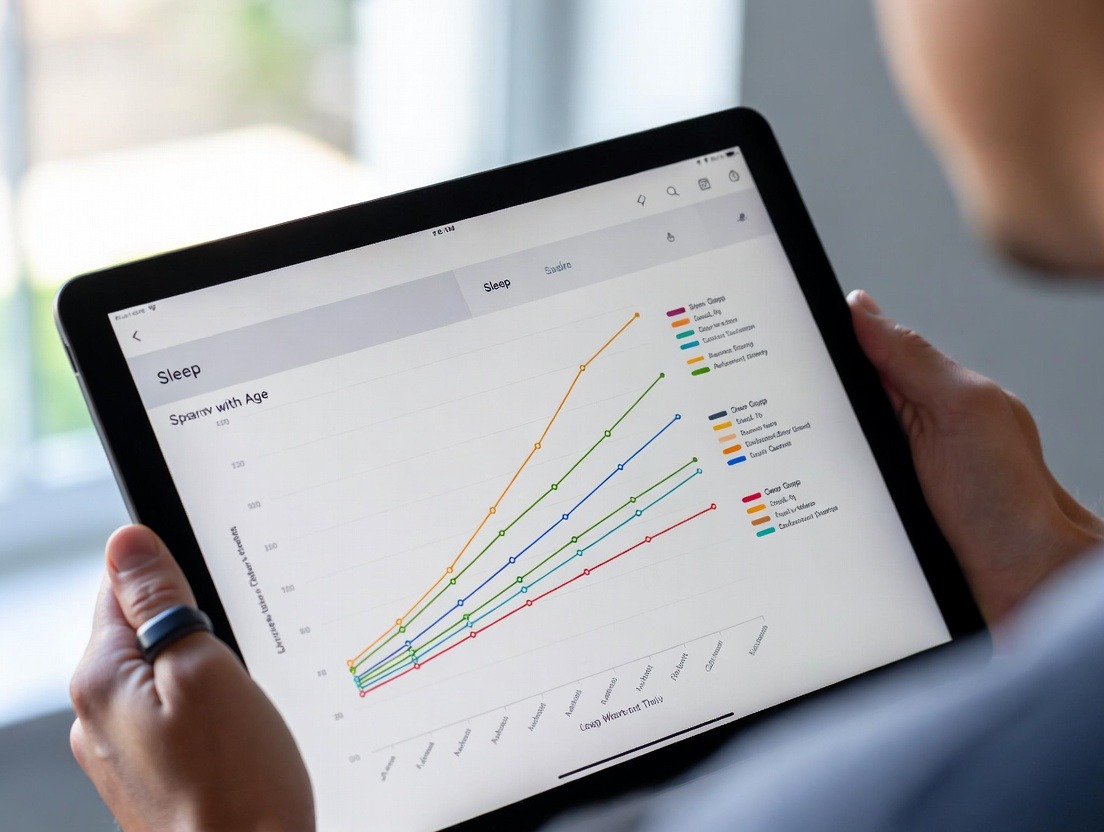
A smart ring does not exist in a vacuum. It is one node in a student’s vast digital ecosystem of calendar apps, note-taking software, communication platforms, and, yes, social media. The true power of ring-tracked optimization is realized when its insights actively shape how you interact with the rest of your digital tools, moving you toward a state of digital wellness—where technology serves your focus, rather than fragments it.
Biometric-Blocked Calendaring: Move beyond color-coding for subject. Introduce a new layer: energy allocation. Based on your typical daily rhythm (from ring data), block your calendar in advance:
Your morning readiness score can then inform minor adjustments to this template for the day ahead.
The Notification Audit Informed by Stress Data: Notifications are constant, low-grade stressors. Perform an audit: which apps need to interrupt you? For most, only messaging from project groups or family qualifies. Turn off all social media, news, and promotional notifications. To understand the profound impact this has, read about the effect of technology on managing digital stress in daily life. Observe if this reduction in digital interruptions correlates with a lower average daytime heart rate and improved focus metrics in your dashboard.
Leveraging Focus-Assist Apps with Intelligence: Use app blockers (like Freedom, Cold Turkey) or focus timers (like Forest) informed by your biometrics. Don’t just set a 25-minute timer because you “should.” Set it for a duration that aligns with your current focus capacity. If you’re in a high-readiness period, try a 50-minute block. If you’re recovering, use 20-minute blocks. The ring data helps you set realistic, sustainable parameters for these tools.
Creating a Digital Wind-Down Trigger: The blue light from screens is a known suppressor of melatonin, delaying sleep onset. Your ring’s sleep data will confirm this if you use devices late. Establish a digital sunset—a time 60-90 minutes before bed when you switch all devices to night mode or, ideally, put them away. Replace this time with a screen-free wind-down: reading a physical book, practicing calm mind journaling for inner peace, or gentle stretching. This single habit, verified by improvements in your sleep “time to fall asleep” metric, is one of the highest-return digital wellness investments you can make.
The Social Media Consumption Corollary: Track not just when you use social media, but how it makes you feel, and see if it reflects in short-term biometrics. Do 20 minutes of scrolling leave you feeling agitated, with a slightly elevated heart rate? This data gives you the objective reason to make consumption intentional (e.g., “I will check Instagram for 10 minutes at 5 PM”) rather than reflexive, protecting your mental calm and cognitive resources for your priorities.
At its core, studying is the process of encoding, consolidating, and retrieving memories. Cognitive neuroscience provides a clear map of this process, and your smart ring tracks the physiological conditions that either optimize or sabotage each stage. Understanding this science turns your study habits from folklore into a precise technology.
Encoding: Getting Information In (During Study). This is the initial learning phase. Its effectiveness depends on focused attention.
Consolidation: Making It Stick (After Study, Especially During Sleep). This is where memories are stabilized and integrated into your knowledge network. It is biologically automatic but condition-dependent.
Retrieval: Getting Information Out (During Exams or Participation). This is the recall phase. It is highly state-dependent and sensitive to interference.
Practical Application of the Memory Science:
By aligning your study and lifestyle habits with this neurobiological timetable, you work with your brain, not against it. Your ring provides the proof that these methods work, showing how good sleep hygiene translates to better retention and easier learning. For a deep dive into the neural mechanisms, the neuroscience of sustained calmness explores the brain states conducive to optimal cognitive function.
Theory is powerful, but real-world examples cement understanding. Let’s examine three anonymized student archetypes and how ring-tracked optimization transformed their academic experience.
Case Study 1: The Overwhelmed Freshman (Maria)
Case Study 2: The Procrastinating Thesis Writer (David)
Case Study 3: The High-Performing but Stressed Pre-Med (Alex)
These cases illustrate that ring-tracked optimization is not a one-size-fits-all solution, but a flexible framework for diagnosing and solving the specific performance-limiting bottlenecks in any student's life.
One of the most challenging aspects of student life is communicating your limits and needs to professors, group members, roommates, and family. "I'm too stressed" can feel like an excuse. Biometric data provides a powerful, objective foundation for these conversations, transforming them from emotional pleas into collaborative problem-solving.
With Professors or Academic Advisors: When facing a genuine crisis (health, family) or needing an extension on a major project due to burnout prevention, data can support your case.
With Group Project Members: Conflicts often arise from mismatched work rhythms and perceived imbalances in effort.
With Roommates or Family: Creating an environment conducive to sleep and focus is critical.
The Key Principles for Data-Driven Communication:
This objective approach reduces defensiveness and fosters understanding. It helps those around you see your health-focused choices not as self-indulgence, but as the strategic, professional management of your academic "instrument." For those in shared living or working spaces, designing a calm mind workspace can be a collaborative project that benefits everyone.
The integration of biometrics into education is just beginning. The smart ring on your finger today is the precursor to a more integrated, responsive, and personalized learning ecosystem of tomorrow. Understanding this trajectory helps contextualize the skills you are building now as essential future-proofing.
AI-Powered Academic Coaches: Imagine an AI that integrates your continuous biometric data (from a ring), your digital calendar, your syllabus deadlines, and your past performance. This coach could:
Personalized Learning Pathways: Biometrics could help identify not just when you learn best, but how. Does your physiology show higher engagement and retention with interactive video vs. text? Does group work elevate your stress markers, suggesting you need solo preparation first? Data could tailor content delivery formats to optimize for both comprehension and well-being.
The Evolving Role of Educators: Forward-thinking institutions may begin to educate students on the science of learning and performance, incorporating basic biometric literacy into orientation or study skills courses. The goal wouldn't be surveillance, but empowerment—giving students the tools to understand and manage their own cognitive resources, much like athletes are taught about nutrition and recovery.
Ethical Frontiers and Necessary Safeguards: This future necessitates rigorous ethical frameworks. Student biometric data must be owned and controlled by the student. Its use must be purely opt-in and aimed at supporting autonomy, not for grading, compliance, or punitive measures. The line between supportive tool and surveillance apparatus must be guarded fiercely.
By engaging with ring-tracked optimization today, you are not just improving your current semester. You are developing biometric fluency—the ability to understand, interpret, and act on data from your own body. This is a foundational skill for lifelong learning in a world where human performance will increasingly be augmented by, and in dialogue with, personal technology. You are learning to partner with technology to become more human, more focused, and more resilient. For a look at the cutting edge of training the mind for this future, the exploration of the neuroplasticity of a calm mind is highly relevant.
Knowledge without implementation is merely trivia. This 28-day blueprint is designed to systematically integrate ring-tracked optimization into your life, creating lasting habits through gradual, evidence-based steps. Each week builds upon the last, with a focus on collecting data, forming correlations, and making iterative adjustments.
Week 1: The Baseline & Awareness Phase
Week 2: The Sleep Optimization Phase
Week 3: The Energy Alignment Phase
Week 4: The Stress-Recovery Integration Phase
This blueprint is cyclical, not linear. After 28 days, you continue iterating, using the principles in our complete daily stress management protocol to refine further.
Even with a perfect system, you will encounter confusing data and performance plateaus. This is normal. Advanced troubleshooting is about becoming a skilled detective of your own physiology.
Scenario 1: "I slept 8 hours but have a terrible readiness score."
Scenario 2: "My HRV is dropping even though I'm doing everything 'right.'"
Scenario 3: "I've hit a performance plateau; my grades and focus aren't improving."
Scenario 4: "The data is making me anxious."
The ultimate goal of ring-tracked optimization is not to create a perfectly optimized student robot, but to cultivate a Resilient Performer’s Mindset. This mindset, forged through understanding your body’s signals, extends beyond GPA and into every aspect of life.
Embrace Non-Linearity: High performance is not a straight line upward. It is a series of waves—periods of stress and growth, followed by intentional recovery and integration. The ring teaches you to respect this rhythm, to pull back without guilt and push forward with confidence.
Develop Self-Compassion Through Data: When you see a low readiness score linked to a personal challenge, it can foster self-compassion. "My body is having a hard time," becomes easier to accept than a vague sense of failure. This objective view helps you treat yourself with the kindness you would offer a struggling teammate.
Build Stress Resilience as a Skill: You learn that stress is not something to be eliminated, but a force to be managed. By regularly practicing recovery techniques, you are not being lazy; you are literally strengthening your parasympathetic nervous system, building a broader "window of tolerance" for future challenges. This is the work of building adaptive resilience for unpredictable stress.
Transition from External Validation to Internal Authority: Initially, you follow the ring’s suggestions. Over time, you internalize the patterns. You begin to feel when your HRV is likely low. You know what a night of good deep sleep feels like in your body. The external device trains your internal sense of authority, until you need it less as a crutch and more as an occasional check-in. This is the development of unshakeable mental calm, a process explored in our 90-day guide.
Carry the Framework Forward: The principles of sleep hygiene, energy alignment, strategic recovery, and data-informed decision-making are applicable to any demanding career, creative pursuit, or life stage. You are not just learning to be a better student; you are learning to be a steward of your own human potential.
We stand at the confluence of two powerful rivers: the ancient pursuit of knowledge and the modern science of human optimization. For too long, they have run on parallel tracks, with education focusing solely on the mind, often at the expense of the body that houses it. Ring-tracked study optimization represents the bridge between these two realms.
The future of education is not just about smarter curricula or more engaging lectures; it is about smarter learners. Learners who are equipped with a deep understanding of their own cognitive and physiological machinery. Learners who know that a page of philosophy absorbed during a focused, well-rested state is worth ten pages skimmed in a fatigued haze. Learners who approach an exam not with dread, but with the calm confidence of an athlete who has prepared their whole system for peak performance.
This is a profoundly humanistic vision. It uses technology not to alienate us from our bodies, but to reconnect us with them. It replaces the culture of burnout with a culture of sustainable excellence. It argues that the greatest academic advantage you can cultivate is not a photographic memory, but a resilient nervous system, a well-consolidated sleep cycle, and the self-awareness to navigate your energy with intelligence.
Your smart ring is a tool in this quiet revolution. Let its data be a conversation with yourself, a source of curiosity, not anxiety. Let it guide you to the profound understanding that your health is not separate from your productivity—it is its very source. By tending to the root—sleep, recovery, mindful fuel—you allow the branches of your intellectual pursuits to grow stronger, taller, and more fruitful than you ever thought possible.
Start where you are. Use what you have. Begin with one consistent wake-up time, one protected hour of deep work, one intentional breath before opening a textbook. Observe, adjust, and grow. The synergy of productivity and health is not a destination to be reached, but a dynamic, lifelong practice to be lived. You have the technology, you have the science, and now, you have the map. The journey to becoming your most focused, resilient, and effective self begins with a single, data-informed step.
Your Trusted Sleep Advocate: Sleep Foundation — https://www.sleepfoundation.org
Discover a digital archive of scholarly articles: NIH — https://www.ncbi.nlm.nih.gov/
39 million citations for biomedical literature :PubMed — https://pubmed.ncbi.nlm.nih.gov/
Experts at Harvard Health Publishing covering a variety of health topics — https://www.health.harvard.edu/blog/
Every life deserves world class care :Cleveland Clinic - https://my.clevelandclinic.org/health
Wearable technology and the future of predictive health monitoring :MIT Technology Review — https://www.technologyreview.com/
Dedicated to the well-being of all people and guided by science :World Health Organization — https://www.who.int/news-room/
Psychological science and knowledge to benefit society and improve lives. :APA — https://www.apa.org/monitor/
Cutting-edge insights on human longevity and peak performance:
Lifespan Research — https://www.lifespan.io/
Global authority on exercise physiology, sports performance, and human recovery:
American College of Sports Medicine — https://www.acsm.org/
Neuroscience-driven guidance for better focus, sleep, and mental clarity:
Stanford Human Performance Lab — https://humanperformance.stanford.edu/
Evidence-based psychology and mind–body wellness resources:
Mayo Clinic — https://www.mayoclinic.org/healthy-lifestyle/
Data-backed research on emotional wellbeing, stress biology, and resilience:
American Institute of Stress — https://www.stress.org/


