


The 7 Essential Health Metrics Your Smart Ring Should Track Daily
The seven essential daily metrics a good ring should track.
The seven essential daily metrics a good ring should track.
%402x.svg)
For decades, the pursuit of better health was a game of educated guesses and annual check-ups—snapshots in time that often missed the full, dynamic story of our bodies. We’d log workouts in journals, count steps on clunky pedometers, and wonder why we felt exhausted despite "getting enough sleep." The data was fragmented, retrospective, and often disconnected from our daily reality. Today, we stand on the precipice of a health revolution, one that fits comfortably on your finger. The modern smart ring represents the quiet, continuous, and profoundly personal culmination of wearable technology, moving beyond the novelty of notifications to become a 24/7 guardian of your well-being.
This isn't about tracking for tracking's sake. It's about transforming opaque, internal biological processes into clear, actionable insights. It's about moving from reactive healthcare—addressing problems after they arise—to a truly proactive and preventive model. Your body speaks a complex language of rhythms, signals, and patterns. A smart ring acts as your constant translator, decoding the seven fundamental metrics that form the bedrock of your daily health. These aren't just numbers on an app; they are the vital signs of your modern life, offering a holistic dashboard that reveals how your body responds to stress, sleep, activity, and recovery.
Understanding these metrics empowers you to make informed decisions that compound over time, leading to better energy, sharper focus, improved resilience, and a deeper connection to your own physiology. From the silent rhythm of your heart to the mysterious landscape of your sleep, each data point is a piece of a larger puzzle. This article will explore in comprehensive detail the seven non-negotiable health metrics that any high-quality smart ring must track. We’ll delve into the science behind each one, explain why daily monitoring is transformative, and show you how to interpret the data to optimize your life. Welcome to the future of self-knowledge, worn daily.
1. Heart Rate: The Unceasing Rhythm of Life
Your heart rate is far more than a simple measure of beats per minute. It is the relentless, living metronome of your existence, a dynamic signal that responds in real-time to everything you think, feel, and do. Once only accessible in a doctor's office with a stethoscope, continuous heart rate monitoring via a smart ring provides a breathtaking window into your cardiovascular fitness, metabolic state, and nervous system activity. Unlike watches that can lose contact during sleep or specific movements, a ring's position on the finger’s vasculature allows for remarkably consistent photoplethysmography (PPG) readings, capturing your heart's story 24 hours a day.
Resting Heart Rate (RHR): Your Body’s Baseline Report Card
Your resting heart rate—measured best during deep sleep or first thing in the morning—is a powerful, foundational biomarker. For the average adult, a RHR between 60-100 bpm is considered "normal," but for the health-conscious, lower is generally better. A well-conditioned athlete might have a RHR in the 40s. Why does this matter? A lower RHR typically indicates stronger cardiovascular efficiency; your heart muscle doesn’t have to work as hard to pump blood throughout your body. But the true magic of daily tracking isn't in a single number—it's in the trend.
A sudden, sustained increase in your resting heart rate, often by 5-10 bpm above your personal baseline, is one of the clearest early warning signs your body can give. It can signal:
By observing your RHR each morning, you gain an objective measure of your body’s readiness for the day. A higher-than-usual reading might be your cue to prioritize rest, hydrate thoroughly, or take a recovery day instead of an intense workout. This is the essence of personalized, data-driven health—listening to your body's whispers before they become shouts.
Heart Rate Variability (HRV): The Secret Language of Your Nervous System
If resting heart rate is the steady drumbeat, Heart Rate Variability is the complex, meaningful rhythm between the beats. HRV measures the subtle variations in the time interval between successive heartbeats, governed by the autonomic nervous system (ANS). A higher HRV indicates a robust, adaptable ANS—a healthy balance where your body can smoothly transition between the "gas pedal" (sympathetic "fight or flight" mode) and the "brake pedal" (parasympathetic "rest and digest" mode). A low HRV suggests your nervous system is stuck in a state of stress, fatigue, or exhaustion, with less resilience to handle life's challenges.
Daily HRV tracking, especially your morning HRV baseline, is arguably one of the most insightful metrics for overall well-being. It reflects:
By tracking HRV, you move beyond guessing how you "should" feel. The data provides an unbiased report on your nervous system's state. For a deeper exploration of how this technology enables a truly personalized approach to wellness, you can read about how health tracking enables personalized wellness. A smart ring that tracks HRV empowers you to align your daily actions—be it training, meditation, or social plans—with your body's actual capacity, not just your ambition.
Active Heart Rate & Cardio Fitness
During exercise, your smart ring tracks how your heart responds to exertion. Monitoring your heart rate zones (e.g., fat burn, cardio, peak) helps ensure you're training at the intended intensity, whether your goal is endurance building or fat loss. Over time, this data contributes to an estimation of your VO2 Max—a gold-standard measure of aerobic fitness. Seeing your fitness level improve, as reflected in a lower resting heart rate and more efficient heart rate response to exercise, is one of the most rewarding validations of your health journey. To understand the full journey of this technology, from manual logs to intelligent wearables, consider the evolution from manual tracking to smart rings.
2. Sleep: The Non-Negotiable Pillar of Restoration
We spend roughly one-third of our lives asleep, yet for generations, it remained a black box. We knew it was important, but we had no objective way to measure its quality, only its quantity. The advent of advanced sleep tracking in smart rings has changed everything, transforming sleep from a passive state into a rich, analyzable dataset. By leveraging accelerometers and those same precise PPG sensors, a smart ring can map your entire sleep architecture, revealing not just how long you sleep, but how well you sleep. This is critical because poor sleep is a silent saboteur, linked to impaired cognition, weakened immunity, weight gain, and long-term chronic disease.
Sleep Stages: Mapping the Nightly Journey
Quality sleep is a cyclical journey through four distinct stages: Light Sleep (N1 & N2), Deep Sleep (N3, or slow-wave sleep), and REM (Rapid Eye Movement) sleep. Each plays a unique, irreplaceable role:
A smart ring charts your progression through these stages each night, showing how much time you spend in each. The balance is key. Consistently low deep sleep can leave you feeling physically unrefreshed, while insufficient REM can impact memory and emotional resilience. Seeing this breakdown allows you to connect lifestyle factors—like evening caffeine, late-night screen time, or room temperature—to their direct impact on your sleep architecture.
Sleep Latency & Efficiency: The Mechanics of Slumber
Two simple but telling metrics are sleep latency (how long it takes you to fall asleep) and sleep efficiency (the percentage of time in bed you are actually asleep). Ideally, you should fall asleep within 15-20 minutes and have a sleep efficiency above 85%. Consistently high latency or low efficiency can point to sleep hygiene issues, stress, or even underlying sleep disorders like insomnia. Your ring makes these invisible problems visible, providing the first step toward addressing them.
The Power of Consistency & Timing
Beyond the stages, your smart ring also sheds light on your sleep consistency and timing. Going to bed and waking up at roughly the same time each day—even on weekends—strengthens your circadian rhythm, your body's internal master clock. This consistency improves sleep quality, daytime energy, and metabolic health. Your ring can show you your sleep trend over time, highlighting how weekend "social jetlag" might be throwing your system out of sync. By providing this feedback loop, the device helps you build the healthy habits that lead to sustained well-being. For those focused on longevity, quality sleep tracked by your ring is a cornerstone, as discussed in these 50 healthy aging tips.
3. Blood Oxygen Saturation (SpO2): The Fuel Gauge of Your Cells

Blood oxygen saturation, or SpO2, measures the percentage of hemoglobin in your blood that is carrying oxygen. It's a vital sign that, until recently, required a clip-on pulse oximeter. Now, advanced smart rings can monitor this metric continuously, particularly during sleep. While a healthy individual typically maintains SpO2 levels between 95-100%, it's the nocturnal dips that tell a compelling and potentially critical story.
Nocturnal Monitoring: Unmasking Sleep Disruptions
During the day, your breathing is largely voluntary and conscious. At night, it’s governed by your autonomic system. Monitoring SpO2 during sleep is crucial for detecting breathing disturbances. Brief, cyclical dips in blood oxygen can be indicative of sleep apnea—a condition where breathing repeatedly stops and starts. These apneic events fragment sleep (often pulling you out of deep stages without full awakening) and strain the cardiovascular system. Symptoms like loud snoring, daytime fatigue, and morning headaches are clues, but SpO2 data provides objective evidence.
Seeing a pattern of significant nocturnal desaturations on your smart ring report is a powerful prompt to consult a healthcare professional. It transforms a subjective feeling of unrefreshing sleep into a tangible data point that can lead to diagnosis and treatment, fundamentally improving sleep quality and long-term heart health. This exemplifies how modern wearables are at the forefront of a broader shift in medicine, which you can explore in this article on how health technology is changing preventive medicine.
Beyond Sleep: A Window into Respiratory Health
While sleep is the primary use case, tracking SpO2 trends can also offer insights during waking hours, especially at high altitudes or during intense physical exertion. It can also serve as a general marker of respiratory wellness. A smart ring that offers reliable SpO2 monitoring is essentially providing a continuous, non-invasive safety net for one of your body's most fundamental processes.
4. Body Temperature: The Delicate Internal Thermostat
Core body temperature is a tightly regulated variable, central to maintaining homeostasis—the stable internal environment necessary for enzyme function, metabolism, and overall health. While we think of it as a constant 98.6°F (37°C), it actually follows a daily circadian rhythm, dipping to its lowest in the early morning and peaking in the late afternoon. It also fluctuates in response to infection, inflammation, hormonal changes, and stress. A smart ring with a precision skin temperature sensor can track these subtle, meaningful variations from your personal baseline.
Baseline Tracking & Circadian Rhythm
The absolute temperature reading is less important than your deviation from your own norm. By establishing your unique, multi-day baseline, a smart ring can detect anomalies. A significant elevation in your nighttime or morning temperature is a classic, and often early, sign of oncoming illness, as your body raises its thermostat to fight pathogens. For women, tracking basal body temperature (BBT) trends can also provide insights into ovulation and menstrual cycle phases, offering valuable data for family planning or simply understanding hormonal influences on energy and mood.
Stress & Recovery Insights
Interestingly, skin temperature is also influenced by the autonomic nervous system. During stress, blood flow is diverted away from the extremities (like your fingers) to your core, which can cause a measurable drop in skin temperature at the ring site. Conversely, as you relax and enter recovery, blood flow returns. When correlated with HRV and heart rate data, temperature trends add another layer to understanding your body's stress and recovery cycles. This multi-metric approach is what separates advanced health monitoring from simple step counting.
5. Activity & Movement: The Foundation of Metabolic Health
While step counting is the most recognizable form of activity tracking, it is a crude and incomplete metric. A comprehensive smart ring captures total daily movement through advanced accelerometers and algorithms, painting a picture of your non-exercise activity thermogenesis (NEAT)—the calories you burn through all activity outside of formal exercise. This includes walking, fidgeting, standing, and household chores. NEAT can be a massive, variable component of your daily energy expenditure and a key player in metabolic health.
Active Minutes & Intensity
Beyond steps, look for tracking of active minutes and time spent in different intensity zones (light, moderate, vigorous). The goal set by organizations like the WHO is at least 150 minutes of moderate-intensity activity per week. A smart ring helps you quantify this, ensuring you meet these foundational health guidelines even on days you don't "work out." It rewards all movement, encouraging you to take the stairs, have a walking meeting, or park farther away.
The Critical Balance: Activity vs. Recovery
Perhaps the most sophisticated use of activity data is in its integration with recovery metrics. A premium smart ring ecosystem will not just count your steps but will use your sleep, HRV, and RHR data to provide a daily "readiness" or "recovery" score. On a morning when your data indicates high stress or poor recovery, the system might suggest prioritizing mobility or light activity over a high-intensity interval training (HIIT) session. This prevents you from blindly following a rigid workout schedule and instead trains in harmony with your body's actual state, reducing injury risk and optimizing long-term progress. This intelligent integration is a key feature for anyone looking to support different health goals, from weight management to athletic performance.
6. Respiratory Rate: The Quiet Metric of Calm and Strain
Respiratory rate—the number of breaths you take per minute—is a vital sign that has been strangely absent from mainstream wellness tracking until recently. For a healthy adult at rest, it typically falls between 12-20 breaths per minute. Like heart rate, it is controlled by the autonomic nervous system and is exquisitely sensitive to both physical and psychological states. Your smart ring derives this metric from the subtle, rhythmic patterns in the PPG signal caused by chest movements and blood flow changes with each breath.
A Marker of Physical Exertion and Fitness
During exercise, your respiratory rate naturally increases to meet the oxygen demands of your muscles. Tracking how quickly it returns to baseline after a workout can be an indicator of your cardiorespiratory fitness. More importantly, monitoring your resting respiratory rate, especially during sleep, provides profound insights.
The Nocturnal Window and Stress Indicator
A resting respiratory rate that is consistently high (e.g., above 18-20 bpm while asleep) can be a subtle sign of physical strain, such as from overtraining or an underlying respiratory issue. It can also be a very clear marker of psychological stress or anxiety. When you are stressed, your breathing becomes shallower and faster. Seeing an elevated nightly respiratory rate, particularly when correlated with a lower HRV, is a strong, objective indicator that your nervous system is under pressure, even if your mind has tuned it out.
This metric adds a crucial layer to the recovery picture. It’s a gentle, non-judgmental biofeedback tool. By becoming aware of it, you can consciously practice slower, diaphragmatic breathing to actively engage your parasympathetic nervous system and lower your rate—a direct action you can take to manage stress in real-time.
7. Stress & Recovery Scoring: The AI-Powered Health Dashboard
The ultimate value of a smart ring lies not in presenting seven isolated streams of data, but in synthesizing them into a coherent, actionable story about your body's current state. This is where advanced algorithmic processing and artificial intelligence come into play. The seventh essential "metric" is not a raw physiological signal, but a derived score: your integrated stress and recovery assessment.
How the Score is Built
A sophisticated smart ring platform takes the core metrics—Heart Rate, HRV, Body Temperature, Respiratory Rate, and Sleep data—and feeds them into proprietary algorithms. These algorithms analyze the complex interactions between the systems. For example:
The system weighs these patterns against your personal baselines to generate a single, easy-to-understand score, often called "Readiness," "Body Battery," or "Recovery."
Transforming Data into Daily Action
This score is your daily guide. A high score suggests your body is resilient, recovered, and ready for physical or mental challenge. It’s a green light for that intense workout, important presentation, or big social event. A low score is a yellow or red light. It’s your body’s data-driven plea for rest, hydration, gentle movement, stress management, and early sleep. It tells you to focus on recovery behaviors.
This transforms health management from reactive to predictive. Instead of wondering why you crashed in the afternoon, you can see in the morning that your body was already running on empty and adjust your day accordingly. It teaches you the unique impact that different lifestyle factors—alcohol, a late meal, an intense workout, a stressful argument—have on your personal physiology. This is the pinnacle of what modern health tracking technology aims to achieve: a personalized, proactive health coach on your finger. To see how this technology is being validated in clinical settings, you can read about its growing role in hospitals.
With an understanding of these seven essential metrics, the next critical step is selecting a device capable of capturing them all with clinical-grade reliability. Not all smart rings are created equal. The utility of the data is directly dependent on the quality of the sensors collecting it and the intelligence of the algorithms interpreting it. When evaluating your options, look beyond aesthetics and brand hype. The sensor suite is the heart of the device. Ensure it includes a high-fidelity PPG sensor for heart rate and blood oxygen, a precision skin temperature sensor, and a high-sensitivity accelerometer. The raw data from these sensors is only as good as the software that processes it.
Research the brand's commitment to scientific validation. Do they publish their findings or partner with research institutions? Are their algorithms developed with input from physiologists and medical professionals? The user experience—the companion app—is where the data comes to life. It should present complex information in an intuitive, visually clear dashboard. Look for features like long-term trend analysis, the ability to add lifestyle tags (like "drank alcohol" or "had stressful meeting"), and personalized insights that connect your behaviors to your biometrics. For a detailed comparison of what’s available, our wellness ring comparison chart can be an invaluable resource.
Finally, consider the device as a daily companion. It should be comfortable for 24/7 wear, including during sleep and workouts. Durability, water resistance, and battery life are practical concerns that affect consistency—the most important factor in tracking. A device that is uncomfortable or constantly needing a charge will create data gaps, rendering your insights incomplete. For guidance on selecting a ring that feels as good as it functions, explore our guide to hypoallergenic materials and style options.
Integrating Data into Your Life: From Insight to Action
Collecting terabytes of health data is meaningless without a framework for action. The final step in this journey is closing the loop—using the insights from your smart ring to make tangible, positive changes to your daily routine. This is where true health transformation occurs. Start by establishing your personal baselines. Wear your ring consistently for at least two weeks without trying to change anything. This gives the algorithm time to learn what "normal" looks like for you. Observe your natural patterns in sleep stages, resting heart rate, and HRV.
Next, become a detective of your own life. Use the tagging or journal feature in your app to log potential influencers: caffeine intake time, alcohol consumption, workout intensity, major work deadlines, moments of meditation. Over time, you will see clear correlations. You might discover that a glass of wine with dinner tanks your deep sleep and raises your resting heart rate. You might see that a 20-minute afternoon walk improves your sleep latency. These are your personal, data-driven levers for change.
Develop rituals around your data. Make a habit of checking your readiness score and sleep report each morning. Let this objective assessment guide your day. On a low-recovery day, honor it. Swap the HIIT class for yoga or a walk. Prioritize hydration, nutrient-dense foods, and an earlier bedtime. On a high-recovery day, seize the opportunity to challenge your body and mind. This dynamic, responsive approach is infinitely more effective than a rigid, one-size-fits-all plan. For a comprehensive look at turning these insights into lasting routines, our blog offers a wealth of resources on building healthy habits and more.
Remember, the goal is not to become obsessed with perfect scores, but to cultivate awareness and empower better choices. The ring is a tool for self-compassion, not self-judgment. It provides the feedback necessary to live in greater alignment with your body's needs, paving the way for sustained energy, resilience, and vitality. To begin your journey with a device designed for this depth of insight, you can explore the collections at our main storefront.
The Holistic Health Ecosystem: Beyond the Seven Core Metrics
While the seven core metrics form the indispensable foundation of daily health intelligence, the true power of a modern smart ring lies in its ability to act as the central node in your personal health ecosystem. This ecosystem extends beyond raw physiological data, integrating behavioral patterns, environmental factors, and long-term trend analysis to provide a context-rich understanding of your well-being. Think of it this way: the seven metrics are the vital signs of a complex biological machine; the holistic ecosystem interprets how that machine performs in the real-world environment of your life. This involves correlating your hard data with soft inputs—your daily habits, your schedule, your choices—to answer the "why" behind the numbers.
For instance, knowing your HRV is low is one thing. Understanding that it reliably dips after nights you work past 10 PM, or on days you skip your morning walk, transforms that data point into actionable wisdom. This layer of contextual intelligence is what bridges the gap between tracking and true behavior change. It turns your smart ring from a passive monitor into an active partner in co-creating a healthier lifestyle. By welcoming you to log meals, mood, exercise type, stress events, and even menstrual cycles, the platform builds a multidimensional model of your health. This is the frontier of personalized wellness: not generic advice, but insights tailored to your unique physiology and life patterns. As you move from simply observing metrics to engaging with this full ecosystem, you unlock the next level of preventive health—a proactive, predictive, and deeply personal approach to thriving every day.
Viewing heart rate, sleep, HRV, or temperature as isolated signals is like listening to a single instrument from an orchestra—you might recognize the tune, but you'll miss the harmony, depth, and emotional impact of the full piece. The profound insights emerge from the interplay between these metrics. Their relationships create a symphony of data that narrates the story of your autonomic nervous system, your recovery status, and your resilience in real-time.
Consider the powerful correlation between Sleep (Deep & REM stages) and Heart Rate Variability (HRV). They exist in a virtuous cycle. High-quality sleep, rich in deep and REM stages, is the primary recharge for your parasympathetic nervous system, leading to a higher morning HRV. Conversely, a high HRV during the day predicts better sleep quality at night. A disruption in one immediately affects the other. If your ring shows a week of poor sleep architecture followed by a declining HRV trend, it’s a clear, multi-system alert that your foundational recovery is compromised.
Another critical interplay is between Resting Heart Rate (RHR), Skin Temperature, and Oncoming Illness. A elevated RHR is a warning flag. When paired with a concurrent, sustained rise in your nocturnal skin temperature—deviating from your personal baseline—the signal becomes a near-certain indicator that your body is fighting something. The immune system’s inflammatory response raises your core temperature and metabolic rate, forcing your heart to work harder. Seeing this paired anomaly 24-48 hours before you feel actual symptoms allows you to proactively rest, hydrate, and boost nutrients, potentially mitigating the severity or duration of an illness.
Furthermore, Respiratory Rate and Stress are intimately linked. During the day, a subtle but noticeable rise in your resting respiratory rate, especially when your activity is low, can be a pure, objective measure of psychological or emotional stress. When this is seen alongside a depressed HRV, it confirms a state of sympathetic nervous system dominance. This interconnected view stops you from dismissing a "weird day" as purely mental and allows you to address it with physical interventions like breathwork, which can directly lower respiratory rate and improve HRV.
Understanding these interconnections transforms your app from a dashboard of numbers into a diagnostic tool. You learn to read the patterns: "Ah, my temperature is up and my heart rate is elevated, but my sleep was good. That might be because I pushed hard in my workout yesterday—it's likely muscular inflammation, not sickness." Or, "My HRV is low and my respiratory rate is high, even though I slept 8 hours. That work deadline is clearly taking a physical toll." This symphonic understanding is the core of what makes a smart ring an intelligent health companion. For a deep dive into the sensors and artificial intelligence that make this correlation possible, explore our explainer on the science behind modern health tracking.
Data without a clear path to action is merely noise. The ultimate purpose of tracking these seven essential metrics is to create a feedback loop that informs smarter daily decisions. This is where the abstract becomes concrete, transforming insights into improved energy, performance, and well-being. Let’s break down how to apply this data across key areas of your life.
Guiding Your Training & Fitness Regimen:
The era of blindly following a pre-set workout calendar is over. Your biometrics provide a daily "readiness to perform" assessment.
Optimizing Sleep & Evening Rituals:
Your sleep data is a report card on your previous day and evening. Use it to experiment and refine your sleep hygiene.
Managing Stress & Emotional Resilience:
Your HRV and respiratory rate are your real-time stress barometers.
By making small, data-informed adjustments like these, you move from guessing to knowing. You stop wasting energy on workouts your body can't benefit from and start amplifying habits that genuinely improve your recovery and resilience. For more on how to personalize these insights for goals ranging from athletic performance to general wellness, see our guide on how wellness rings support different health goals.

The daily fluctuations in your data are informative, but the monumental value of continuous wear unfolds over months and years. This long-term data set becomes your most powerful tool for preventive health, moving beyond daily optimization to lifelong risk mitigation. By establishing your personal, precise baselines, you create a sensitive early-warning system for deviations that may indicate developing issues.
Spotting the Slow Drift:
Chronic conditions rarely appear overnight. They often manifest as gradual, almost imperceptible drifts in your biomarkers.
With annual check-ups, these slow drifts are invisible. With a smart ring, they are plotted on a graph, making them unmistakable. You can bring these objective, longitudinal trends to your healthcare provider, facilitating earlier, more informed conversations. This is the essence of true preventive care—catching imbalances in the subclinical stage, when lifestyle interventions are most powerful.
Aging with Awareness and Agency:
Aging is associated with certain biological shifts: average resting heart rate may increase slightly, HRV naturally declines, and sleep architecture changes (with less deep sleep). Having your own long-term data demystifies this process. You can see what "normal aging" looks like for you. More importantly, you can see how your lifestyle choices positively or negatively influence these trajectories. You might observe that a consistent meditation practice blunts the age-related decline in your HRV, or that regular strength training helps maintain healthier sleep patterns. This turns aging from a passive process into an active engagement, empowering you with the knowledge of which levers most effectively pull you toward healthy longevity. Our dedicated article offers 50 actionable tips for healthy aging that a smart ring can help you implement, grounded in this very principle of long-term trend awareness.
Creating a Personal Health Legacy:
Your multi-year dataset is a unique health legacy. It can reveal your personal optimal zones, how you respond to different life events (parenthood, career change, relocation), and what truly works for your body. This information is invaluable not just for you, but potentially for future generations, contributing to a more personalized understanding of health and heredity. In essence, you are no longer a patient describing symptoms in vague terms; you are a citizen scientist presenting a detailed log of your physiological journey.
Privacy, Security, and Ethical Data Use in Personal Health Tracking
As we welcome devices that collect our most intimate biological data—our sleep patterns, our stress levels, the rhythms of our heart—a critical conversation must underpin the excitement: the conversation of trust. Your health data is profoundly personal. Ensuring it is collected, stored, and used with the highest ethical standards and robust security is not a feature; it is a fundamental obligation of any company in this space. When choosing a smart ring, understanding its approach to privacy is as important as understanding its sensor accuracy.
The Pillars of Data Security:
A reputable provider will be transparent about its security architecture. Key elements to look for include:
Ethical Use and Algorithmic Transparency:
Beyond security, there's the question of ethical use. Algorithms that interpret your data and provide "scores" or "insights" should be developed with medical and ethical oversight. There is a responsibility to ensure these insights are presented in a way that promotes health without creating anxiety or orthorexia—an unhealthy obsession with health metrics. The language should be empowering, not alarming.
As a user, you have a role to play. Use strong, unique passwords for your health app accounts. Enable two-factor authentication if offered. Be mindful of the permissions you grant the companion app. Regularly review your privacy settings. For a comprehensive look at how to control your digital well-being, our guide on privacy settings and data security is an essential read. Choosing a brand that aligns with your values on privacy is a crucial step in forming a trusted, long-term partnership with your health technology.
The wearable health market is crowded, dominated by wrist-based smartwatches. So, why choose a ring? The form factor of a smart ring confers several distinct and significant advantages for 24/7 health monitoring, making it not just an alternative, but often a superior choice for the dedicated wellness enthusiast.
1. Unobtrusive Comfort and Consistency:
This is the most compelling advantage. A well-designed ring becomes a part of you. You forget you're wearing it. This is critical for the most important health data: sleep. Watches can be bulky, uncomfortable to sleep in, and their sensors often lose contact with the skin on the underside of the wrist during the night, creating data gaps. A ring, sized correctly, stays perfectly positioned on the finger, where the vasculature is rich and consistent contact is maintained. This leads to more reliable, gap-free nocturnal readings for heart rate, HRV, SpO2, and temperature—the cornerstone metrics for recovery.
2. Superior Sensor Placement for Specific Metrics:
The finger, particularly the base, offers a unique advantage for photoplethysmography (PPG). The arteries in the finger are closer to the surface and less obstructed by tendons and bones compared to the wrist. This can, in principle, allow for a stronger, cleaner PPG signal, which is the foundation for accurate heart rate, HRV, and blood oxygen readings. Furthermore, for skin temperature, the finger is an excellent site that responds quickly to autonomic changes (like stress-induced vasoconstriction), providing a sensitive marker that the wrist may not capture as dynamically.
3. Discreetness and Social Norms:
A ring is socially invisible in a way a watch often isn't. In meetings, at dinners, or during social events, glancing at or interacting with a watch can be seen as rude or distracted. A ring collects data silently and discreetly. There's no screen begging for your attention, which leads to a healthier relationship with the device—it works for you in the background without promoting constant digital distraction. This makes it easier to be present in your life while still gathering the insights you need.
4. Lifestyle and Aesthetic Flexibility:
For athletes, a ring doesn't interfere with wrist wraps, gloves, or watch-based fitness trackers. It can be worn comfortably during any sport. For professionals, it looks like a simple piece of jewelry, fitting seamlessly into any attire without the sporty or techy aesthetic of a watch. This universal wearability ensures you never have to take it off, which is the golden rule for continuous, meaningful data collection. For those curious about the design and material choices that enable this, our overview of color and style options provides more detail.
While smartwatches excel at notifications, on-wrist workouts, and broader smartphone integrations, the smart ring is a focused tool dedicated to one thing: being the most consistent, comfortable, and clinically-oriented health monitor you can wear. It’s a specialist, not a generalist. For a detailed, feature-by-feature analysis of how the top devices stack up, our comparison chart of top brands is an invaluable resource for making an informed decision.
Embarking on a journey with advanced health tracking naturally brings up questions. Addressing these upfront can help set realistic expectations and ensure you get the most from your device. Let's tackle some of the most frequent queries from new and prospective users.
"How accurate is this compared to medical-grade equipment?"
This is the paramount question. The answer is nuanced. Smart rings are consumer wellness devices, not FDA-cleared medical devices (with very rare exceptions for specific features). They are not intended to diagnose, treat, or cure any medical condition. However, the best smart rings use sensor technology derived from medical-grade pulse oximetry and cardiology. Their accuracy, when validated against clinical equipment in studies, is often very high for resting measurements. You can generally trust the trends and relative changes absolutely. If your ring shows your RHR is 5 bpm higher than your baseline for three days, that trend is real and meaningful, even if the absolute number might have a small margin of error. For SpO2, they are excellent at detecting meaningful dips (like those from sleep apnea) though the absolute percentage might vary slightly from a hospital device. The key is to use the data for awareness and lifestyle guidance, and to bring concerning trends to a medical professional for clinical diagnosis.
"I'm not an athlete. Is this still useful for me?"
Absolutely. In fact, the non-athlete may benefit even more profoundly. Athletes often use this data for marginal performance gains. For everyone else, it's about healthspan and resilience. It's about understanding why you're tired all the time, why you can't lose weight, or why you feel anxious. It's about getting objective feedback that your poor sleep is linked to your late-night scrolling, or that your afternoon slump correlates with a high-carb lunch. It empowers you to make changes that improve daily energy, mood, and long-term metabolic health. It's a tool for anyone who wants to take an active, informed role in their own well-being.
"Will all this data make me anxious or obsessive?"
This is a valid concern, often called "orthosomnia" – the preoccupation with perfect sleep scores. The best way to avoid this is to shift your mindset from chasing perfect scores to understanding your patterns. Don't stress over a single night of poor HRV. Look at the weekly average. Use the data as a kind, objective guide, not a harsh judge. If you find yourself constantly checking the app and feeling distressed, it's a sign to take a step back. Use the "out of sight, out of mind" principle—let the ring collect data passively and only review it once or twice a day, perhaps in the morning and evening as part of a ritual. The goal is enhanced living, not a perfect graph. For more on navigating the psychological aspect of tracking, our blog post on common questions answered covers this and other beginner topics.
"How long does it take to see meaningful insights?"
Give it time. The first week is for novelty. The first 2-4 weeks are critical for establishing your personal baselines. During this period, wear the ring as consistently as possible and live your normal life. After this baseline period, you'll start to see what "normal" looks like for you. Meaningful, actionable correlations between your lifestyle and your metrics often become clear within 4-8 weeks, as you go through different types of days, stressors, and routines. The long-term trends, which are the most valuable for preventive health, reveal themselves over 3-6 months and beyond.
"What about battery life and charging?"
Most premium smart rings offer 5-7 days of battery life on a single charge. Charging is typically done via a compact docking case or a proprietary charger. The short daily or weekly charging break can be a good opportunity to briefly "disconnect" from the data stream. For uninterrupted sleep tracking, many users develop a simple habit of placing the ring on the charger during a regular, consistent downtime, like while showering and getting ready in the morning.
The smart ring we've described is powerful, but it represents just the beginning. The field of wearable biosensing is advancing at a breathtaking pace, driven by innovations in miniaturization, new sensor modalities, and artificial intelligence. Looking ahead, the smart ring is poised to evolve from a health monitor into a comprehensive health advisor and even a diagnostic screener.
1. Non-Invasive, Multi-Molecular Sensing:
The next frontier is moving beyond physiological signals to continuous biochemical monitoring. Research is rapidly progressing on sensors that can non-invasively measure biomarkers in interstitial fluid (the fluid between cells) via the skin. Future rings may be able to track:
2. Advanced AI and Predictive Health:
With richer data streams, AI will become exponentially more powerful. Future algorithms won't just tell you your recovery score; they will predict your risk of specific issues. Imagine an alert: "Based on your elevated resting heart rate, lowered HRV, and slight temperature rise, there's an 85% probability you are fighting a viral onset. Recommended action: Increase sleep by 90 minutes tonight, double fluid intake, and consider zinc supplementation." This moves from descriptive to truly predictive and prescriptive analytics.
3. Enhanced Integration with Healthcare Systems:
The future will see seamless, secure data sharing between your personal wearable and your electronic health record (EHR), with your explicit consent. Your doctor could review your 6-month trend of sleeping heart rate variability before your annual physical. A cardiologist could examine your heart rhythm data captured during a symptomatic episode you logged. This turns episodic care into continuous care, making you an active participant in your medical team. To glimpse what this integrated future holds, explore our perspective on health tracking technology in 2025 and beyond.
4. Form Factor and Material Science:
Rings will become even more durable, lighter, and aesthetically customizable. We'll see wider adoption of hypoallergenic, medical-grade materials, advanced scratch-resistant coatings, and perhaps even flexible or self-healing materials. The goal is a device that is truly indistinguishable from high-end jewelry in appearance, yet contains a laboratory's worth of sensing capability.
This evolving technology promises a future where we have a deep, continuous, and actionable understanding of our bodies, democratizing access to health insights that were once confined to research labs and hospitals. The smart ring is the perfect form factor to carry us into that future—unobtrusive, personal, and always on, guarding our most valuable asset: our health.
Building Your Personalized Health Protocol: A Step-by-Step Implementation Guide
Understanding the metrics and the technology is one thing. Weaving them seamlessly into the fabric of your daily life to create lasting change is another. This is where theory meets practice, and data transforms into tangible vitality. Think of your smart ring not as a judge, but as a compass and a coach. Its purpose is to guide you toward the daily choices that are most aligned with your body's current needs and long-term goals. Implementing a personalized health protocol isn't about a drastic overnight overhaul; it's a methodical, compassionate process of self-experimentation and iteration. The following step-by-step guide will help you move from being a passive data observer to an active architect of your own well-being, using the seven essential metrics as your blueprint.
Phase 1: The Baseline Establishment (Weeks 1-4) – Become the Observer
Resist the urge to immediately change your behavior. Your first mission is one of neutral, curious observation. Wear your ring consistently, 24/7. Go about your normal routine—your usual sleep schedule, workouts, diet, and stress. The goal here is for the algorithm to learn your unique, unvarnished baseline. During this phase, focus only on:
After 3-4 weeks, you'll have a reliable picture of your personal ranges. What is your normal resting heart rate? What does a good HRV score look like for you? This personalized baseline is your most important reference point; all future insights will be measured against it.
Phase 2: The Correlation Detective (Weeks 5-12) – Connect the Dots
Now, with a baseline established, you begin active experimentation. This is the most enlightening phase, where you discover your personal levers of health. Look for clear correlations between your logged behaviors and your biometric outcomes.
The goal is to build a list of personalized, data-backed rules. For example: "For me, alcohol cuts my deep sleep by 30%," or "A 20-minute afternoon walk improves my sleep efficiency by 5%." These are your superpowers. For a structured approach to habit-building with your device, our resource on how wellness rings help build healthy habits offers a practical framework.
Phase 3: The Adaptive Protocol (Ongoing) – Live in Dynamic Harmony
Armed with self-knowledge, you now graduate to a dynamic, responsive lifestyle. Your daily protocol is no longer a rigid schedule, but a flexible flow guided by your morning readiness score.
This adaptive approach prevents burnout, reduces injury risk, and ensures you are always working with your body, not against it. It turns health from a destination into an intelligent, daily dialogue.
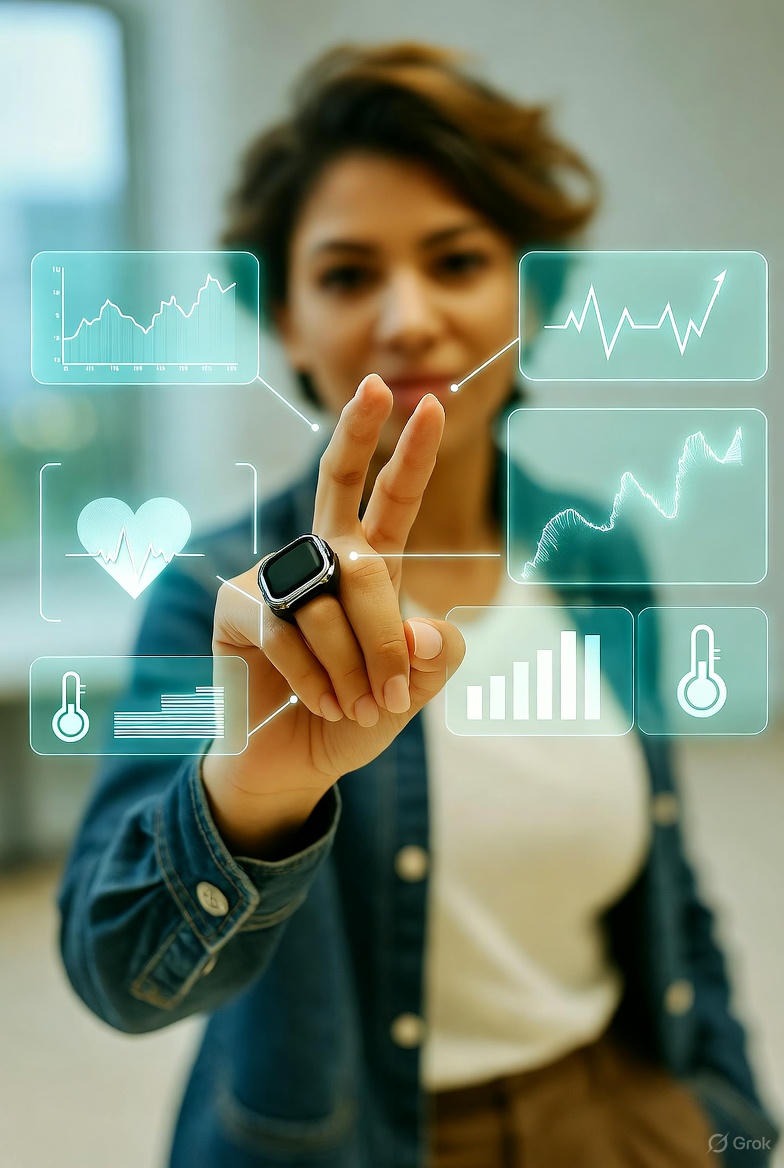
The power of this technology is its universal applicability, though its utility manifests differently depending on one's primary goals. Here’s how individuals across various lifestyles leverage their smart ring data to achieve specific outcomes.
The Executive & Knowledge Worker: Managing Stress and Sustaining Energy
For the professional facing constant cognitive demand and mental stress, the ring is a buffer against burnout. Key use cases include:
The Endurance Athlete: Precision Training and Peak Recovery
For the runner, cyclist, or triathlete, the ring is a precision instrument for balancing load and adaptation.
The Wellness Seeker & Parent: Building Sustainable Habits and Resilience
For someone focused on general well-being, managing family life, and maintaining energy, the ring provides grounding and objective feedback.
These diverse applications underscore a common theme: the smart ring provides a universal language of the body, translated into actionable strategies for any life path. Reading real customer reviews and experiences can provide further inspiration on how different people integrate this tool into their unique journeys.
Once you've mastered the basics of daily readiness and habit correlation, you can delve into advanced techniques to extract even more nuanced insights from your device. These practices are for the dedicated user who wants to use their ring as a true biohacking tool.
1. The "Tagging Everything" Methodology:
Move beyond logging obvious events. Create a detailed library of tags for precise experimentation:
2. Harnessing Circadian Rhythm Optimization:
Your body temperature rhythm is a direct output of your central circadian clock. Use your ring’s skin temperature data to:
3. Longitudinal Data Analysis for Macro-Cycles:
Don't just look at daily or weekly views. Every quarter, export your data or spend time analyzing the 3-month and 6-month trend views.
4. Creating Your Own "N=1" Experiments:
Adopt a scientist's mindset. Form a hypothesis, test it, and analyze the results.
By engaging with your data at this level, you become the world's leading expert on your own body. For a look at what the next generation of this personal experimentation might hold, explore our insights into the future of wearable health tech.
Even with the best technology, you will encounter confusing data points or periods where the numbers don't seem to match how you feel. This is normal. Here’s how to troubleshoot and maintain a balanced perspective.
"My ring says I slept great, but I feel exhausted."
This disconnect is common and instructive. First, trust your subjective feeling—it is valid data in itself. Then, investigate:
"My HRV is all over the place with no clear pattern."
HRV is a highly variable metric, sensitive to countless inputs. If it seems chaotic:
"My activity/steps seem inaccurate."
Rings are generally less accurate for step counting than a wrist-based device or phone in your pocket, as your hands aren't always moving when you walk (e.g., pushing a stroller, holding bags).
"The data is making me anxious. What should I do?"
This is the most important challenge to address.
For further support on navigating these and other technical or psychological hurdles, our comprehensive FAQ and support page is always available.

Your smart ring is a powerhouse of data, but it is not an island. Its value multiplies exponentially when integrated thoughtfully with other elements of a holistic health strategy. It should be the central, objective feedback mechanism within a larger ecosystem of care.
1. Synergy with Professional Healthcare:
This is the most critical integration. Your ring data is a detailed logbook to bring to your doctor, physical therapist, nutritionist, or therapist.
2. Complementary Wearables and Apps:
Use your ring for its strengths—continuous, passive, recovery-focused metrics—and pair it with other tools for specific tasks.
3. Mindfulness and Subjective Awareness Practices:
Quantitative data must be balanced with qualitative awareness.
By placing your smart ring at the center of this integrated web, it becomes the orchestrator of a truly personalized, proactive, and holistic health management system. It connects the dots between medical care, fitness technology, and mindful self-awareness. To explore how this integration works in practice, our article on wellness ring integration with other health apps provides technical guidance.
We have journeyed through the landscape of modern health tracking, from the fundamental physiology of the seven essential metrics to the advanced strategies for integrating this knowledge into a vibrant, responsive life. The promise of the smart ring is not a life of perfect scores, but a life of profound connection—a re-establishment of the conversation between your conscious mind and the intelligent, whispering biology of your body that you may have learned to ignore.
This technology returns agency to you. It demystifies the vague notions of "tired," "stressed," or "run-down" and replaces them with clarity. It shows you the direct line from your evening habits to your morning energy, from your workout intensity to your sleep quality, from your mental burdens to your physical heart. It transforms health from a static goal into a dynamic, daily practice of intelligent choices, guided by the most reliable source possible: yourself.
The path forward is one of curious partnership with your own data. Start by establishing your baseline with non-judgmental observation. Progress to becoming a detective of your own patterns, celebrating the personal discoveries that no generic health article could ever give you. Ultimately, strive for a state of dynamic harmony, where you use objective feedback to navigate your days with resilience and grace.
The future of health is not in waiting for symptoms to appear; it is in the continuous, gentle listening that allows for early, gentle correction. Your smart ring is the tool for that listening. It is an investment not in a piece of technology, but in a deeper understanding of the one asset you have for your entire life: your body. As you move forward, remember that the data is a map, but you are the traveler. Use it to explore, to learn, and to craft a journey of well-being that is uniquely, powerfully your own.
To begin this journey with a device engineered for this depth of insight and integration, we invite you to discover our featured collections at the Oxyzen shop. For continued learning and to dive deeper into any of the topics covered here, our blog is a rich resource for your ongoing exploration.
Your Trusted Sleep Advocate (Sleep Foundation — https://www.sleepfoundation.org/)
Discover a digital archive of scholarly articles (NIH — https://www.ncbi.nlm.nih.gov/
39 million citations for biomedical literature (PubMed — https://pubmed.ncbi.nlm.nih.gov/)
experts at Harvard Health Publishing covering a variety of health topics — https://www.health.harvard.edu/blog/)
Every life deserves world class care (Cleveland Clinic -
https://my.clevelandclinic.org/health)
Wearable technology and the future of predictive health monitoring. (MIT Technology Review — https://www.technologyreview.com/)
Dedicated to the well-being of all people and guided by science (World Health Organization — https://www.who.int/news-room/)
Psychological science and knowledge to benefit society and improve lives. (APA — https://www.apa.org/monitor/)
Cutting-edge insights on human longevity and peak performance
(Lifespan Research — https://www.lifespan.io/)
Global authority on exercise physiology, sports performance, and human recovery
(American College of Sports Medicine — https://www.acsm.org/)
Neuroscience-driven guidance for better focus, sleep, and mental clarity
(Stanford Human Performance Lab — https://humanperformance.stanford.edu/)
Evidence-based psychology and mind–body wellness resources
(Mayo Clinic — https://www.mayoclinic.org/healthy-lifestyle/)
Data-backed research on emotional wellbeing, stress biology, and resilience
(American Institute of Stress — https://www.stress.org/)


