


The Beginner-Friendly Guide to Delegation Decisions Using Wellness Ring Data
A beginner's guide to deciding what to delegate based on how tasks affect your stress and recovery metrics.
A beginner's guide to deciding what to delegate based on how tasks affect your stress and recovery metrics.
%402x.svg)
In an era where productivity is often worn as a badge of honor, the silent crisis of burnout has become a defining feature of modern professional life. We chase the elusive ideal of "work-life balance" with countless apps, time-blocking strategies, and motivational mantras, yet we measure our success with the crudest of tools: a vague sense of exhaustion, irritability, and the sinking feeling that we’re failing at both the office and at home. We are data-driven in every aspect of our work, yet we remain profoundly blind to the most critical dataset of all: the real-time, biological feedback of our own bodies.
Enter the smart ring. This unassuming piece of wearable technology is quietly revolutionizing our approach to personal well-being by shifting the measurement of work-life balance from subjective feeling to objective, physiological fact. No longer must you wonder if you’re "run down"; your ring will show you the precipitous drop in your Heart Rate Variability (HRV). No longer do you have to guess if that late-night work session was worth it; your device will quantify the resulting sleep debt and its impact on your cognitive readiness the next morning.
This article is your guide to decoding that data, specifically as it relates to the delicate dance between your professional ambitions and your personal health. We will explore twelve distinct, measurable improvements you can witness in your smart ring metrics as you cultivate a healthier, more sustainable equilibrium. These are not abstract concepts, but tangible shifts in your biometrics—from sleep architecture and stress resilience to energy management and recovery efficiency.
Your smart ring transforms you from a passive participant in your own burnout to an active scientist of your well-being. Let’s begin by understanding the foundational metrics that will tell this new story of balance.
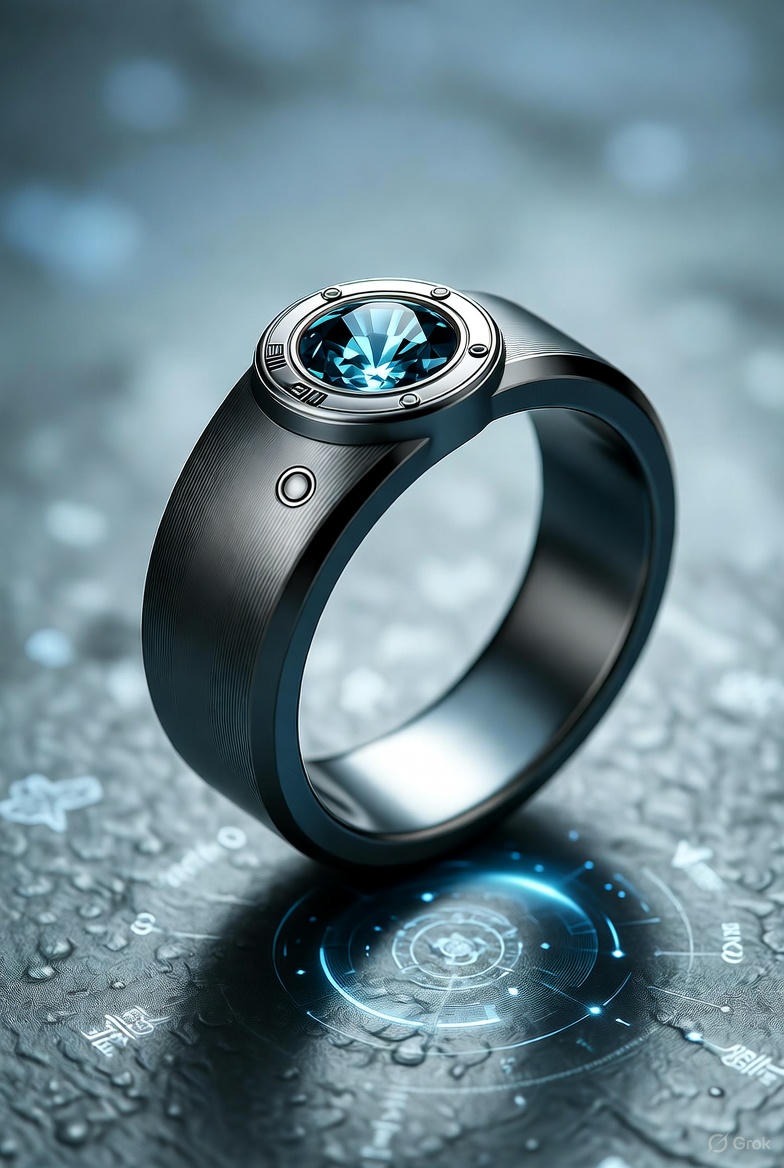
Before we dive into the specific improvements, it’s crucial to understand the language your smart ring speaks. Unlike a step tracker or a simple sleep logger, a sophisticated smart ring is a 24/7 physiological monitoring lab on your finger. It gathers data through photoplethysmography (PPG) sensors, accelerometers, and advanced algorithms to paint a holistic picture of your body’s state. To see work-life balance, you must first learn to read its key biometric signatures.
Restorative Sleep vs. Mere Unconsciousness: The most profound metric for balance is sleep, but not just its duration. Your ring analyzes sleep stages (light, deep, REM), sleep continuity (how often you wake), and timing. A balanced life promotes early, consistent, and architecturally sound sleep. An imbalanced one shows as fragmented deep sleep, delayed sleep onset, or the tell-tale signs of "social jet lag" where your weekend sleep schedule drastically differs from your weekday one, a topic we explore in depth in our guide on the weekend sleep pattern problem known as social jet lag.
Stress and Recovery: The HRV Story: Heart Rate Variability (HRV) is your body’s master metric for resilience and autonomic nervous system balance. A high HRV generally indicates a rested, recovered, and adaptable state—your body is ready for challenge. A low, suppressed HRV is a red flag for chronic stress, overtraining, or insufficient recovery. Your ring tracks your nightly HRV and daytime stress levels, offering a direct window into whether your work demands are exceeding your recovery capacity.
Activity and Readiness: Balance isn't about being sedentary; it’s about aligning your activity with your capacity. Your ring’s "readiness" or "body battery" score synthesizes sleep, HRV, and recent activity to advise whether today is a day for high-intensity effort or gentle recovery. Ignoring a low readiness score to push through a major work project is a classic recipe for imbalance, often showing up as degraded metrics for days afterward.
Temperature and Trends: Some advanced rings track subtle changes in skin temperature, which can be influenced by stress, illness onset, menstrual cycle phases, and sleep quality. A sustained elevation in nighttime temperature might signal your body is fighting something off—a warning that your current pace is unsustainable.
By monitoring these interwoven metrics, your smart ring stops being a simple tracker and becomes a feedback system. It tells you not just what you did, but how it affected you at a foundational level. With this foundation, let's examine the first concrete improvement you’ll witness as balance is restored.
For millions, Sunday evenings are haunted by a specific, low-grade dread: the anxious anticipation of the coming workweek. This "Sunday Night Syndrome" isn't just psychological; it manifests physiologically as you toss and turn, watching the clock, unable to quiet your mind. In your smart ring metrics, this appears as a stark weekly pattern: significantly increased Sleep Onset Latency (the time it takes you to fall asleep) every Sunday night, and often on other high-pressure nights before major meetings or deadlines.
What the Data Shows: When your life is out of balance, sleep onset latency becomes a barometer for your subconscious anxiety. Your ring’s sleep graph will show a clear, recurring spike. You might see your resting heart rate elevated during this pre-sleep period, and your HRV depressed even before sleep begins, indicating your fight-or-flight nervous system is still engaged.
The Shift Toward Balance: As you implement boundaries and strategies to protect your personal time, the first victory appears on this graph. The Sunday spike begins to flatten. Your sleep onset latency becomes more consistent across all seven nights of the week. This happens because:
The Ripple Effect: This stabilization is more than a convenience; it’s a cornerstone of health. Consistent, rapid sleep onset improves sleep efficiency, giving you more time in restorative deep and REM sleep. It breaks the vicious cycle where work stress steals sleep, and sleep deprivation amplifies stress. You begin every Monday not from a deficit, but from a place of restoration, fundamentally changing your relationship with the workweek. This consistency is critical, as sleep pattern consistency and why regular timing matters is a pillar of long-term well-being.

Deep sleep (or slow-wave sleep) is your body’s ultimate physical restoration phase. It’s when tissue repair occurs, growth hormone is released, and memories are consolidated. It’s the most fragile sleep stage, easily disrupted by stress, alcohol, late-night eating, and an overactive mind. When work-life balance is skewed, deep sleep is often the first casualty.
What the Data Shows: An imbalanced life leads to a "noisy" deep sleep graph. You’ll see:
The Shift Toward Balance: As balance improves, your deep sleep metrics transform from a desperate battlefield into a serene, predictable landscape. You’ll observe:
The Strategic Value: This isn’t just about feeling more rested. This "Deep Sleep Dividend" translates directly to work performance. You’ll experience improved problem-solving abilities, better emotional regulation during challenging conversations, and enhanced physical stamina. Your body is fully repairing itself nightly, making you more resilient to the next day's demands. It’s the ultimate biological foundation for sustained high performance without burnout. To understand your own sleep architecture better, consider taking our identify your natural sleep pattern chronotype quiz.
If we had to crown one metric as the ultimate biomarker for work-life balance, it would be Heart Rate Variability (HRV). HRV measures the subtle variations in time between your heartbeats. A higher HRV indicates a healthy, responsive autonomic nervous system where the "rest-and-digest" (parasympathetic) branch is strong and can quickly counterbalance the "fight-or-flight" (sympathetic) branch. In essence, high HRV means you’re resilient; you can handle stress and recover from it efficiently.
What the Data Shows: Chronic work stress, poor sleep, and constant time pressure keep your sympathetic nervous system perpetually engaged, suppressing your HRV. On your smart ring dashboard, this looks like:
The Shift Toward Balance: As you implement true balance, your HRV begins a slow, glorious ascent. This is a lagging indicator—it changes over weeks and months, not days—which makes it all the more meaningful.
Why This is Revolutionary: A rising HRV baseline is your body’s scientific proof that your lifestyle is sustainable. It correlates with lower inflammation, better cardiovascular health, and improved emotional regulation. In the context of work, it means you operate from a state of calm readiness, not anxious reactivity. Decisions are clearer, patience is greater, and your capacity for creative, strategic thought expands. Monitoring your sleep pattern analysis and what your tracker is telling you will give you deeper insights into the factors influencing this critical metric.
The post-lunch energy nosedive is so common it’s considered a workplace norm. But this "3 PM crash" is not an inevitability; it’s a symptom. It’s often the result of poor sleep, blood sugar spikes from stress-induced eating, and a circadian dip colliding with cognitive fatigue. Your smart ring, through its combination of sleep data, readiness score, and periodic heart rate/stress measurements, can both predict and document the dissipation of this crash.
What the Data Shows: Imbalance creates a rollercoaster energy pattern. Your ring’s "body battery" or energy score might start the day low (from poor sleep) and drain precipitously by mid-afternoon. You might see spikes in your daytime resting heart rate or elevated stress flags during this period as your body struggles with cortisol dysregulation and glucose management.
The Shift Toward Balance: With balance, your daytime energy graph transforms from a dramatic mountain range into a gentle, sustainable plateau.
The Operational Benefit: Eliminating the crash means the last two hours of your workday can be as productive and creative as the first two. It means you have genuine energy left for your family, hobbies, or exercise when you log off. You stop living in a cycle of caffeine-fueled spikes and exhausted crashes, and instead operate on steady, renewable biological power. Finding these sleep patterns and productivity peak hours becomes a data-informed strategy, not a guessing game.
One of the clearest biometric signatures of work-life imbalance is "social jet lag"—the condition where your internal body clock (circadian rhythm) is on one schedule during the workweek and a completely different one on weekends. It’s as if you fly across multiple time zones every Friday and Sunday night. This constant resetting is profoundly stressful on your physiology.
What the Data Shows: Your sleep timeline graph will tell this story vividly.
The Shift Toward Balance: True balance isn’t about sacrificing weekend fun; it’s about reducing the dramatic pendulum swing. The ideal is consistency.
The Health Dividend: Aligning your schedules reduces chronic circadian stress, which is linked to metabolic disorders, mood issues, and impaired immune function. You no longer spend the first half of your week recovering from your weekend and the latter half anticipating the next disruption. Life becomes a smooth, sustainable rhythm. This is the practical application of learning to match your sleep pattern to your lifestyle in a harmonious way.
The Stress Response Refinement – Faster Recovery from Acute Stress Events
Work will always involve moments of acute stress: a critical deadline, a difficult presentation, a challenging negotiation. The problem in an imbalanced life isn’t the presence of these events; it’s your inability to recover from them. They leave a long, lingering physiological shadow. Your smart ring’s continuous stress tracking (often derived from heart rate and HRV analysis) provides a perfect map of these events and your recovery from them.
What the Data Shows: In an imbalanced state, stress events create deep, lasting valleys.
The Shift Toward Balance: As you cultivate balance, your stress graph starts to look like a healthy EKG: sharp, brief peaks followed by rapid returns to a calm baseline.
The Professional Advantage: This refinement turns you into a more composed and reliable leader or colleague. You don’t carry the emotional baggage of a morning meeting into an afternoon brainstorm. You can be intensely focused in the moment and fully present with your family in the next. Your nervous system learns that stress is a temporary event, not a permanent state. This is crucial knowledge, especially when understanding how stress alters sleep patterns and recovery.
In a state of imbalance, leisure and personal time often feel unproductive or guilty. We might "rest" while simultaneously scrolling work emails, rendering the rest ineffective. Balance involves intentionally engaging in activities that are genuinely rejuvenating and being able to see their measurable impact. Your smart ring provides the proof that your hobbies and downtime are not frivolous; they are essential maintenance.
What the Data Shows: Without intentional renewal, your biometrics show a slow, steady decline throughout the week, with leisure time making no positive dent.
The Shift Toward Balance: You begin to use your ring to test what truly recharges you.
The Life-Enriching Outcome: This turns your personal life into a source of measurable strength. You can confidently defend your yoga class, your Friday game night, or your Sunday hike because you have data showing it makes you healthier, more resilient, and ultimately more effective in all domains of life. It’s the ultimate argument against the "always-on" culture. This process of discovery is akin to running a sleep pattern test to discover your ideal schedule for overall wellness.
The greatest enemy of modern work-life balance is the dissolved boundary. The laptop on the dinner table, the notifications after hours, the "quick check" of Slack that turns into 30 minutes of problem-solving. Without clear boundaries, your nervous system never receives the all-clear signal that it’s safe to fully rest. Your smart ring can show you, in real time, the moment your workday truly ends—not when you close your laptop, but when your body registers the shift.
What the Data Shows: In a boundary-less life, your physiology remains in a state of low-grade work arousal from morning until bed.
The Shift Toward Balance: You implement a ritual—a hard stop—and your body learns the new cue. You’ll see it in the data:
The Empowerment of Data: This turns an abstract principle ("set boundaries") into a tangible, trackable habit. You can experiment with different shutdown rituals and see which one most effectively triggers your physiological "off" switch. It provides incontrovertible evidence that protecting your personal time isn’t being lazy; it’s a biological necessity for sustainable performance. This is a key strategy in learning to reset unhealthy sleep patterns in just two weeks.

In the reactive mode of imbalance, you ignore your body’s whispers until they become screams. You push through fatigue, ignore low energy, and are constantly surprised by illness or burnout. A key benefit of long-term smart ring use in a balanced lifestyle is the shift from reactive to predictive awareness. Your ring’s algorithms, fed with months of high-quality data from your balanced life, begin to identify patterns and offer proactive insights.
What the Data Shows: In an erratic, imbalanced state, the algorithms have little consistent pattern to learn from. Readiness scores may seem random or simply echo last night’s poor sleep. Insights are basic and reactive ("you slept poorly last night").
The Shift Toward Balance: With consistency, the AI in your ring becomes a powerful partner.
The Strategic Advantage: This predictive capacity is like having a chief wellness officer on your finger. It allows you to make strategic adjustments before your performance declines. You can reschedule a demanding meeting from a low-readiness day to a high-readiness day. You can prioritize sleep at the first sign of a metric dip, potentially averting a cold. You move from managing crises to managing your capacity, which is the epitome of professional and personal mastery.
Sleep Efficiency is a simple but powerful metric: the percentage of time you spend in bed that you are actually asleep. An 85% or higher score is considered good. When your mind is cluttered with unresolved work stress and tomorrow’s to-do list, you can spend a long time in bed "trying" to sleep, or waking frequently, resulting in low efficiency. You might be in bed for 8 hours but only log 6 hours of actual sleep.
What the Data Shows: Imbalance leads to wasted time in bed.
The Shift Toward Balance: As you achieve mental closure from work and establish a calm pre-sleep routine, your time in bed becomes almost exclusively time asleep.
The Practical Gift: This improvement literally gives you time back. If you need 7.5 hours of actual sleep, you might achieve it in an 8-hour bed window instead of 9. This creates more margin in your evening for connection or relaxation, or allows for a slightly later bedtime without sacrificing core sleep needs. It turns sleep from a struggle into a highly efficient, reliable biological process. For a deeper dive into the mechanics of sleep, explore our resource on what are sleep patterns and why do they matter.
While not directly measured by all rings, the impact of relentless digital stimulation—the endless scroll, the constant notifications, the blue light bombardment—is inferred through its effects on stress, sleep onset, and HRV. A major component of creating balance is intentionally detoxing from this digital frenzy, especially during key recovery periods. Your ring will show you the physiological calm that results.
What the Data Shows: A digitally saturated life keeps your nervous system in a state of high-frequency, low-grade arousal.
The Shift Toward Balance: Implementing digital boundaries (e.g., no phones 1 hour before bed, notification silos during deep work) creates a quieter physiological landscape.
The Cognitive Payoff: This detox doesn’t just feel good; it rebuilds your attention span and capacity for deep work. Your mind becomes less fragmented, and your ring’s data will reflect the physiological correlate of that mental clarity: a calm, coherent heart rate pattern and a nervous system that isn’t constantly being hijacked. It’s a foundational step in using sleep pattern data to optimize your entire life.
The ultimate, holistic proof of superior work-life balance is a robust immune system. Chronic stress, sleep deprivation, and poor recovery are proven immunosuppressants. When you’re constantly running on empty, your body has no resources left to defend itself, making you susceptible to every passing cold, flu, or virus. Your smart ring provides powerful, leading indicators of immune function, allowing you to see improved resilience long before you notice you’re "never sick anymore."
What the Data Shows: In a state of chronic imbalance, your body is in a perpetual state of low-grade inflammation and defense.
The Shift Toward Balance: As your balance creates a consistent environment of recovery and low chronic stress, your immune system is no longer perpetually besieged. The data tells a story of calm strength.
The Life-Changing Impact: This improvement translates directly into freedom and reliability. You stop planning your life around inevitable "burnout colds." You gain weeks of productive, vibrant time back each year. You become a more dependable colleague, parent, and partner because you are not constantly being knocked out of commission. Your ring’s data provides the ultimate validation: that investing in balance is not a luxury, but the most cost-effective health insurance you can buy. Understanding how seasonal changes affect sleep patterns can further refine this defensive strategy.

Witnessing these twelve improvements in your metrics is the reward, but the journey requires a plan. Data without action is just trivia. This section is your guide to translating the insights from your smart ring into a structured, personalized blueprint for sustainable work-life integration. The goal is to move from reactive corrections (seeing a bad sleep score and vowing to do better) to proactive system design (structuring your life to generate good scores consistently).
Step 1: The Baseline Audit (2-4 Weeks)
Before changing anything, spend a few weeks simply observing. Wear your ring consistently and live your normal life. At the end of this period, analyze the data without judgment. Answer these questions:
Step 2: The "Low-Hanging Fruit" Intervention
Choose ONE of the first three improvements to tackle first, based on your audit.
Step 3: The Boundary Engineering
With one habit cemented, engineer a non-negotiable boundary. This is a structural change, not just a behavioral one.
Step 4: The Strategic Scheduling
Use your ring’s Readiness Score or Body Battery as a planning tool.
Step 5: The Continuous Refinement Loop
Your blueprint is a living document. Every month, review your trends.
The most exciting phase of this journey isn't seeing one metric improve; it's witnessing the synergy effect—when improvements in one area begin to automatically and effortlessly boost others, creating a virtuous, self-reinforcing cycle of well-being. This is where the real transformation from "balanced" to "thriving" occurs.
The Foundational Synergy: Sleep → HRV → Resilience
This is the core flywheel. As you stabilize and deepen your sleep (Improvements 1 & 2), your overnight HRV naturally rises (Improvement 3). This higher HRV means you wake with a higher readiness score (Improvement 9) and are more resilient to daytime stress (Improvement 6). Because you handle stress better, you detach more easily in the evening, which leads to even better sleep. The flywheel spins faster, each element propelling the next. You begin to see this as a compounded upward trend on your monthly reports.
The Performance Synergy: Energy → Boundaries → Renewal
As your daytime energy stabilizes (Improvement 4), you accomplish focused work more efficiently. This makes it psychologically easier to enforce a hard stop (Improvement 8) because your work feels "complete." Protecting this off-time allows you to engage in genuinely renewing activities (Improvement 7), the positive impact of which is now visible in your data. This validated renewal fills your energy tank more fully for the next day, making you even more efficient. You exit the cycle of diminishing returns and enter a cycle of increasing capacity.
The Psychological Synergy: Predictability → Agency → Calm
When your body's responses become predictable (e.g., you know a 10-minute meditation will lower your stress, or that 8 hours in bed with your routine yields 7.5 hours of sleep), you gain a profound sense of agency. You are no longer a victim of your own erratic biology. This reduction in helplessness is itself a massive stressor removal. The calm that comes from this agency further stabilizes your nervous system, making all metrics easier to maintain. It becomes a positive feedback loop of control and tranquility.
This synergy effect is the hallmark of a system in true equilibrium. The goal is no longer to "fix" things but to gently steer a powerful, self-sustaining system. Your role shifts from mechanic to gardener, tending to the conditions for growth. To understand the biological underpinnings of this system, delve into the science of sleep patterns and what research reveals.
While sleep, HRV, and resting heart rate form the holy trinity of balance tracking, advanced smart rings are unlocking deeper layers of physiological insight. Understanding these can fine-tune your blueprint to an astonishing degree.
Respiratory Rate: This is the number of breaths you take per minute, typically measured during sleep. It’s a remarkably stable metric for an individual. A sustained increase (e.g., from 14 to 17 breaths per minute) can be an even earlier sign of underlying stress, immune activation, or respiratory issues than heart rate. As you find balance, your nocturnal respiratory rate will settle at a low, consistent number, reflecting a deeply relaxed nervous system.
Blood Oxygen (SpO2) During Sleep: While not a medical device, trends in nightly SpO2 can be informative. Consistently lower average SpO2 or frequent dips might indicate sleep-disordered breathing (like mild apnea), which is often exacerbated by weight gain, alcohol, and poor sleep position—all factors that can creep in during periods of imbalance. Improving balance often indirectly improves sleep hygiene, leading to more stable SpO2 levels.
Skin Temperature Trends: As mentioned, this is a powerful stealth metric. Beyond spotting illness, women can use temperature trends to understand their menstrual cycle phases and how they intersect with energy and resilience. You might discover your HRV dips and resting heart rate rises predictably in the luteal phase, for example. With this data, you can strategically schedule demanding projects during your follicular phase when your physiology is primed for stress resilience—a masterclass in bio-synchronized work-life planning.
Activity & Recovery Balance: Advanced algorithms don't just count steps; they evaluate the physiological cost of your activity. They can tell if your "recovery walk" was genuinely restorative (showing a lower heart rate during and after) or if it was actually stressful (showing an elevated, jagged heart rate). This helps you distinguish between movement that builds resilience and movement that depletes it—a critical distinction when you're using exercise to manage stress, not add to it.
The Composite Score: The Ultimate Barometer
The most user-friendly output is the composite "Readiness" or "Body Battery" score. When built on a foundation of balanced data, this score becomes incredibly meaningful. It’s the algorithm’s best guess, based on dozens of data points, at your body’s true capacity for the day. Learning to trust and act on this score—to take a true recovery day when it’s low, even if you "feel fine"—is the ultimate act of partnering with your data for sustainable performance. It embodies the principle of sleep pattern flexibility and whether you can truly change your type by working with your biology, not against it.
The pursuit of work-life balance via smart ring metrics is not a 30-day challenge; it’s a framework for a lifetime of sustainable performance. The final stage of this journey is moving from conscious maintenance to unconscious competence, and using the long-term data to make profound life choices.
From Management to Mastery: Initially, you check your data daily and make adjustments. Over time, the habits become ingrained. You no longer need the ring to tell you you’re stressed; you feel it, but you also have a proven toolkit to address it. The ring transitions from a daily coach to a periodic audit tool. You check your weekly trends to ensure you’re staying on track, and your monthly reports become a satisfying confirmation of a life well-lived, not a report card to fret over.
The Data-Driven Life Decision: This long-term dataset becomes invaluable during major life transitions.
Redefining Success: Ultimately, this process redefines what "success" means. The external validation of promotions and output remains, but it is now balanced by—and in service of—the internal validation of a high HRV, deep sleep, and a strong readiness score. You begin to see that these internal metrics are the engine that makes external success possible and sustainable. You are not trading performance for well-being; you are fueling peak performance with deep well-being.
The smart ring, in this long view, becomes a lifelong companion in self-awareness. It is the mirror that reflects not just your face, but the state of your nervous system, empowering you to design a life that doesn't force you to choose between achieving your dreams and enjoying your health. It proves that the most important work you will ever do is the work of building a resilient, balanced, and vibrant vessel for your one precious life. For those in demanding professions, understanding how shift work destroys natural sleep patterns can be the first step in crafting a powerful counter-strategy.
Achieving a state of biometric balance is a monumental achievement, but life is not a sterile laboratory. The true test of your new framework isn't maintaining perfection during calm seas; it's navigating the inevitable storms—the crunch project, the family emergency, the bout of travel, the unexpected illness—without completely derailing your hard-won equilibrium. This is where your smart ring transforms from a wellness dashboard into a critical navigation system, providing real-time feedback to help you manage damage control and accelerate recovery.
The Philosophy of the "Controlled Burn"
In forestry, a controlled burn is a deliberate, managed fire that clears out underbrush to prevent a catastrophic wildfire later. Similarly, in a balanced life, there will be periods of intense, focused effort—a "controlled burn." The key difference from burnout is intention, boundaries, and a recovery plan. You consciously decide to elevate stress for a defined period for a specific goal, with a clear plan to return to baseline.
Travel and Time Zones: From Jet Lag to Jet Management
Travel is a classic balance-disruptor, attacking your circadian rhythm, sleep, and routine. Your smart ring is your secret weapon for managing time zones and travel stress.
The Emotional Storm: When Life Throws a Curveball
Personal grief, relationship stress, or financial worry create a form of stress that can't be solved with a better bedtime routine. During these times, the ring's job shifts from optimization to compassionate monitoring.
The most profound change enabled by smart ring metrics is not behavioral; it's psychological. It facilitates a fundamental mindset shift from the toxic "grind culture" to a smarter, more compassionate culture of "grace"—grace defined as efficient, sustainable effort aligned with natural capacity.
Eradicating Hustle Porn: Our culture often glorifies suffering for success—the 5 a.m. wake-up, the 80-hour workweek, the "I'll sleep when I'm dead" mentality. This "hustle porn" is seductive because it seems like a simple, brute-force formula for achievement. Your smart ring provides a relentless, objective counter-narrative. It shows you, in undeniable data, that the 80-hour week destroys your deep sleep, tanks your HRV, and makes the following week's 40 hours of work less effective. It proves that sustainable, focused effort fueled by recovery actually produces superior long-term results. You move from being motivated by guilt (I should be working more) to being guided by wisdom (I need to recover to be effective).
Building Self-Trust (Bio-Trust): Many of us have learned to distrust our body's signals. We override fatigue with caffeine, ignore hunger with "willpower," and push through pain. This creates a state of internal alienation. Consistent use of a smart ring rebuilds what we might call Bio-Trust. You learn that the feeling of afternoon fog reliably corresponds to a dip in your energy score. You learn that a specific, subtle feeling of anxiety is mirrored by a rise in your resting heart rate. This correlation teaches you to trust your subjective feelings again, because they are now validated by objective data. Your internal sense becomes a reliable guide, refined by external feedback.
The End of Comparison: In the gym, comparing your lift to the person next to you is futile. The same is true for well-being. Your colleague might thrive on 6 hours of sleep; your ring shows you need 7.5. Another might handle back-to-back meetings; your data shows you need 90-minute recovery blocks. Your ring’s data is deeply, uniquely personal. It moves you from "What works for them?" to "What does my data say works for me?" This ends the exhausting game of comparison and launches you into the empowered space of personalized design. Understanding the genetics of sleep patterns and what you inherited can further deepen this sense of self-acceptance.
From Productivity to Vitality: The ultimate mindset shift is a redefinition of the goal. The initial draw might be "productivity hacking," but the lasting value is the cultivation of vitality. Productivity is about output. Vitality is about the quality of your input—into your work, your relationships, your life. Your ring tracks the sources of vitality: restorative sleep, low inflammatory stress, a resilient nervous system. As you see these metrics flourish, you realize that the productivity gains were merely a happy side effect of becoming more fully, vibrantly alive. This is the essence of using data not just to do more, but to be more.
A smart ring does not exist in a vacuum. Its true power is unlocked when it becomes the central hub in your ecosystem of well-being, connecting dots between other health data and daily habits to create a unified picture.
Correlation with Nutrition Apps: Sync your ring data with a nutrition tracker like Cronometer or MyFitnessPal. Start asking powerful questions:
Fitness Tracker Synergy: Pair your ring with a dedicated fitness tracker or smartwatch for workouts. The ring provides the "why" (readiness, recovery), while the watch provides the "what" (workout intensity, GPS route, reps). Together, they answer: "Was that hard workout yesterday truly beneficial, or did it push me into overreaching based on my recovery score this morning?" This prevents exercise from becoming another source of unmanaged stress.
Mental Fitness and Mindfulness: Use your ring to measure the impact of your mental training. After a 10-minute meditation with Calm or Headspace, does your stress score show a sustained drop? Does a journaling session before bed correlate with faster sleep onset? This provides tangible, motivating feedback that reinforces these sometimes-abstract practices, showing they are "working" on a physiological level. It's a practical application of understanding the relationship between sleep patterns and mood disorders.
The Unified Dashboard: The future of this technology lies in platforms that bring this data together seamlessly. Imagine a dashboard that shows: *"Your high readiness score (85), combined with yesterday's leg workout and today's high-protein meal plan, suggests you are optimally primed for a high-intensity lower body session. However, your stress score has been elevated for 2 hours following your midday meeting—consider a 10-minute breathing exercise before training to ensure maximum neuromuscular efficiency."* This is personalized coaching at a previously unimaginable level.
We are on the cusp of a new era where wearable data moves from descriptive to truly predictive and prescriptive. The future of work-life balance, guided by smart rings, will be proactive, personalized, and seamlessly integrated into the fabric of our lives.
Hyper-Personalized AI Coaching: Future algorithms will analyze your long-term data to know you better than you know yourself. They will identify ultra-specific patterns: "You consistently experience a 15% dip in HRV two days after client dinners involving alcohol, but not after team dinners without it," or "Your peak cognitive readiness for deep analytical work occurs between 10:15 AM and 12:30 PM, but only on days following sleep with over 90 minutes of REM." The AI will then make micro-suggestions: "Based on your upcoming deadline and current recovery trend, consider shifting your deep work block to Thursday morning instead of Wednesday afternoon for a 22% predicted increase in output efficiency."
Contextual Awareness Integration: The next generation of devices will integrate with your digital calendar and environment. Your ring will know you have a major presentation at 3 PM. It might suggest a specific type of lunch to optimize energy, prompt a brief autonomic nervous system reset exercise at 2:45 PM, and automatically dim your smart lights and suppress notifications starting at 9 PM that night to protect recovery from the event's stress. It becomes an ambient, context-aware guardian of your balance.
Organizational Well-Being Analytics (The Ethical Frontier): On an aggregate, anonymized level, this data holds immense value for organizations. Could a company, with full employee consent and robust privacy safeguards, see that company-wide HRV dips every quarter during financial reporting, and proactively institute "no-meeting Fridays" or provide recovery resources during that period? Could it identify that a specific team's sleep scores are chronically low, prompting a review of workload or management practices? This shifts organizational health from annual engagement surveys (which are retrospective and subjective) to real-time, objective well-being metrics, enabling truly human-centric work design. This addresses the core conflict of sleep pattern mismatch, when work and biology clash.
The journey we have detailed across these pages is an invitation—an invitation to step out of the fog of fatigue and guesswork and into the clarity of a measured life. A life where your choices are informed not by societal "shoulds" or frantic imitation, but by the intimate, real-time story told by your own body.
Your smart ring is more than a gadget; it is a translator. It converts the silent language of your physiology—the heartbeat, the breath, the waves of sleep—into a narrative you can understand and, ultimately, author. The twelve improvements are chapters in that new story:
This is not a path to a rigid, optimized existence. It is a path to freedom. The freedom that comes from knowing your limits, not as constraints, but as the blueprint for your unique capacity. The freedom to work intensely because you know how to recover completely. The freedom to disconnect without guilt because you have data proving its necessity. The freedom to design a life that doesn't force you to choose between achievement and well-being, but recognizes them as the inseparable halves of a single, thriving whole.
Start where you are. Put on the ring. Observe without judgment. Pick one metric, one "low-hanging fruit" improvement, and experiment. Let the data be your gentle, objective guide. You are not fixing a broken system; you are learning to converse with a wise and ancient one—your own body. And in that conversation, you will find not just balance, but a profound and sustainable vitality.
Your Trusted Sleep Advocate: Sleep Foundation — https://www.sleepfoundation.org
Discover a digital archive of scholarly articles: NIH — https://www.ncbi.nlm.nih.gov/
39 million citations for biomedical literature :PubMed — https://pubmed.ncbi.nlm.nih.gov/
Experts at Harvard Health Publishing covering a variety of health topics — https://www.health.harvard.edu/blog/
Every life deserves world class care :Cleveland Clinic - https://my.clevelandclinic.org/health
Wearable technology and the future of predictive health monitoring :MIT Technology Review — https://www.technologyreview.com/
Dedicated to the well-being of all people and guided by science :World Health Organization — https://www.who.int/news-room/
Psychological science and knowledge to benefit society and improve lives. :APA — https://www.apa.org/monitor/
Cutting-edge insights on human longevity and peak performance:
Lifespan Research — https://www.lifespan.io/
Global authority on exercise physiology, sports performance, and human recovery:
American College of Sports Medicine — https://www.acsm.org/
Neuroscience-driven guidance for better focus, sleep, and mental clarity:
Stanford Human Performance Lab — https://humanperformance.stanford.edu/
Evidence-based psychology and mind–body wellness resources:
Mayo Clinic — https://www.mayoclinic.org/healthy-lifestyle/
Data-backed research on emotional wellbeing, stress biology, and resilience:
American Institute of Stress — https://www.stress.org/


