


The Future of Health Tracking: AI and Predictive Analytics
The future role of AI in analyzing and predicting health trends.
The future role of AI in analyzing and predicting health trends.
%402x.svg)
We stand on the precipice of a quiet revolution. For decades, health was something measured in retrospect—a diagnosis after symptoms appeared, a check-up summarizing the past year, a lab report reflecting a single moment in time. Our approach was reactive, a rearview mirror glance at our well-being. But what if we could see around the bend? What if your body could whisper its needs and concerns long before they became shouts? This is no longer the realm of science fiction. The future of health tracking is here, and it is powered by the silent, continuous observation of wearable technology, interpreted by the vast, pattern-recognizing power of Artificial Intelligence and predictive analytics.
This future moves us from simply tracking to truly understanding; from counting steps to comprehending systemic resilience. It promises a shift from generic wellness advice to hyper-personalized, predictive nudges that align with your unique biology, lifestyle, and goals. At the heart of this transformation is an elegant, unobtrusive device: the modern smart ring. Worn day and night, it becomes a guardian of your foundational health metrics—heart rate variability, skin temperature, blood oxygen, sleep architecture, and activity—generating a rich, continuous stream of personalized data.
This article is a deep exploration of that future. We will journey through the technological pillars making predictive health a reality, dissect how AI transforms raw data into life-changing insights, and envision a new paradigm of proactive well-being. We’ll examine the profound implications for personalized medicine, mental health, athletic performance, and chronic disease management. This is a story about moving from being a passenger in your health journey to becoming the pilot, with an intelligent co-pilot providing real-time navigation. The destination? A life of optimized vitality, empowered prevention, and unprecedented understanding of the only body you will ever have.
Let’s begin.
To appreciate the seismic shift brought by AI and predictive analytics, we must first understand the journey of the “Quantified Self” movement. Born from early fitness pedometers and heart rate monitors, this movement was fueled by a simple, powerful idea: if you can measure it, you can improve it. The initial era was defined by manual logging and basic metrics. Enthusiasts tracked their daily steps in paper journals, monitored their morning pulse, and made crude correlations between their habits and how they felt.
The advent of the smartphone and the first wave of consumer wearables—primarily wrist-based fitness trackers—democratized this process. Suddenly, step counts, distance traveled, and crude sleep estimates were automatically collected and displayed in colorful dashboards. This was the era of data collection. The focus was on volume and activity: reaching 10,000 steps, closing your exercise “rings,” and comparing sleep duration. While motivational, this approach had significant limitations. The data was often siloed—activity here, sleep there, nutrition in another app. Insights were retrospective and descriptive (“You slept 6 hours last night”) rather than prescriptive or predictive. The story these devices told was a simple, one-dimensional narrative: were you active or not?
The narrative began to deepen with the introduction of more advanced sensors. Optical heart rate monitors allowed for continuous heart rate tracking. Accelerometers and gyroscopes became sophisticated enough to estimate sleep stages (light, deep, REM) rather than just duration. This marked the transition into the era of data context. Wearables started to connect dots: “Your resting heart rate was elevated last night, and you got less deep sleep.” This provided a richer, more holistic picture, moving beyond mere activity to encompass recovery and readiness.
Yet, a critical gap remained. The human body is a complex, interconnected system. An elevated heart rate could signal stress, an oncoming illness, overtraining, or simply too much caffeine. Without understanding the unique baseline of an individual and the interplay between dozens of physiological signals, the data’s true meaning remained elusive. The story was still being read one chapter at a time, without comprehending the overarching plot.
This is where the smart ring, particularly platforms like Oxyzen, entered the stage, heralding the current era of data synthesis and narrative. By residing on the finger—a vascular-rich area ideal for sensor accuracy—and being worn continuously, these devices capture the body’s most fundamental rhythms without the intrusiveness or battery limitations of smartwatches. They collect high-fidelity data on heart rate variability (a key marker of nervous system balance), core body temperature trends, blood oxygen saturation, and detailed sleep physiology.
The real evolution, however, isn’t just in the quality of the sensors, but in what happens to the data next. This is the leap from telling simple stories to writing a complex, predictive biography of your health. The modern smart ring is not just a tracker; it is a data gateway. It feeds this continuous, multimodal stream into sophisticated algorithms that begin to learn your normal. They understand how your heart rate variability dips before you feel stressed, how your skin temperature subtly rises at the onset of an infection, and how your sleep patterns correlate with your cognitive performance. For a deeper look at how this technology has evolved, the journey from manual logs to smart rings is a fascinating one.
We are now leaving the age of the quantified self and entering the age of the qualified self. The question is no longer just “What did I do?” but “What does this mean for me, and what is likely to happen next?” This sets the stage for the true revolution: the application of Artificial Intelligence to weave these disparate data threads into a tapestry of predictive insight.
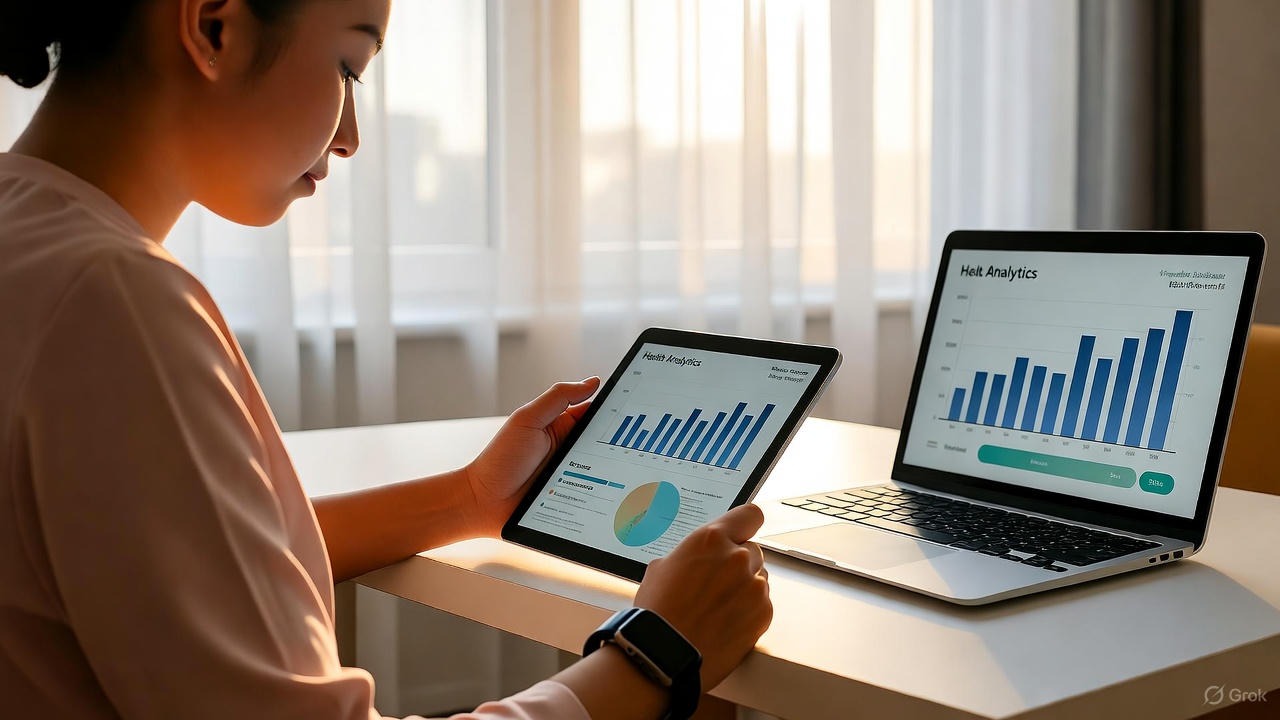
If high-fidelity biometric data from devices like smart rings is the fuel, then Artificial Intelligence (AI) and its subset, Machine Learning (ML), are the high-performance engines transforming that fuel into actionable intelligence. This is where the magic of prediction happens, moving us far beyond the capabilities of simple rule-based algorithms. To understand the future, we must peek inside this engine room.
At its core, AI in health tracking is about pattern recognition at a scale and complexity impossible for the human mind. A traditional algorithm might be programmed with a rule: “IF resting heart rate is >10 bpm above baseline AND sleep score is <70, THEN flag ‘potential recovery issue’.” This is useful but rigid. It cannot account for the hundreds of other variables at play, nor can it learn new, unforeseen correlations unique to you.
Machine Learning flips this model. Instead of being explicitly programmed with rules, ML models are trained on vast datasets. Imagine feeding an ML model the anonymized data from a million smart ring users: billions of data points covering sleep, activity, heart rate, temperature, and self-reported outcomes (e.g., “I caught a cold,” “I performed poorly in a race,” “I felt extremely focused”). The model, through techniques like deep learning, begins to identify complex, non-linear patterns and correlations invisible to us.
How It Works in Practice:
Key AI/ML Techniques in Play:
The result is a shift from reactive to proactive health management. Instead of being told, “You slept poorly last night,” an AI-powered system can tell you, “Based on your elevated cortisol markers and nervous system activity last night, you are 60% more likely to report high stress today. Consider a 10-minute meditation session this afternoon.” Or, “Your recovery metrics have been declining for three days, suggesting cumulative fatigue. Your injury risk is elevated. Today is an ideal day for light active recovery instead of your planned high-intensity workout.”
This is not a replacement for medical expertise, but a powerful augmentation. It provides you and your healthcare provider with a continuous, objective report of your physiology, highlighting trends and risks long before they manifest clinically. To delve into the specific sensors and algorithms that make this possible, our resource on the science behind modern health tracking provides a detailed breakdown. The engine is now running. Let’s explore the new horizons it allows us to see.
The traditional health and fitness dashboard is a museum of the past. It’s a static display of what has already happened: yesterday’s steps, last night’s sleep score, last week’s average heart rate. While informative, it places the entire cognitive burden on you—to interpret the data, connect it to your feelings, and decide what action to take. Predictive analytics, powered by the AI engine we just described, shatters this model. It moves us Beyond the Dashboard and into the realm of proactive, contextual, and intelligent wellness guidance.
Predictive wellness is not about fortune-telling; it’s about forecasting probabilities based on a robust model of your physiology. It answers the question we truly care about: “Based on my current state and recent trends, what is most likely to happen to my health and performance in the near future, and what can I do to influence that outcome?”
1. Illness Prediction and Prevention: This is one of the most compelling applications. As mentioned, the body shows subtle but detectable physiological changes in the 24-48 hour window before cold or flu symptoms become obvious. A predictive system monitoring trends in skin temperature, heart rate, HRV, and sleep quality can identify this “pre-illness” pattern. Instead of a notification saying “You have a fever,” you might receive an alert two days prior: “Health Forecast: Your biometrics show early signs of immune activation. Prioritize rest, hydration, and sleep to potentially mitigate severity.” This allows you to act proactively—perhaps taking a rest day, increasing your vitamin C intake, or using a zinc supplement—potentially averting the illness altogether or lessening its impact. The implications for managing contagious diseases in workplaces or families are profound.
2. Personalized Recovery and Readiness Scoring: Generic “readiness” scores have existed for years, but they are often one-size-fits-all. Predictive analytics personalizes this deeply. Your readiness score isn’t just a calculation of last night’s sleep and yesterday’s activity. It’s a forecast of your physiological and cognitive capacity for the day ahead. It factors in your sleep data, your stress load from the previous day, your weekly training strain, and even menstrual cycle phase (for women). The resulting score is predictive: “Score: 82/100. You are predicted to have excellent focus and physical stamina today. Your body is fully recovered, making it an ideal day for that important presentation and your planned workout.” Conversely: “Score: 45/100. High fatigue load detected. Prediction: High injury risk during intense exercise and lower cognitive resilience. Recommendation: Swap high-intensity training for gentle movement or rest.”
3. Optimizing Sleep and Chronobiology: Predictive systems don’t just analyze past sleep; they help engineer future sleep. By learning your personal chronotype and how your behavior (caffeine, alcohol, late meals, evening screen time) impacts your sleep architecture, the AI can offer predictive nudges. “Based on your current stress levels and afternoon coffee, your model predicts a 40% longer sleep latency tonight. Consider a caffeine cutoff 2 hours earlier tomorrow.” It can also suggest optimal bed and wake times based on your circadian rhythms and next-day commitments, helping you align with your body’s natural timing for the best possible restorative sleep.
4. Stress Forecasting and Mitigation: Chronic, unmanaged stress is a silent killer. Predictive analytics can identify not just when you are stressed, but when you are becoming vulnerable to stress. By tracking nervous system tone (via HRV) and correlating it with your calendar, location, and even audio environment (with user permission), the system can learn your personal stress triggers. It might predict: “Your nervous system is showing signs of depletion. Your 3 PM meeting with [X] has historically caused a significant stress response. A 5-minute breathing exercise now is predicted to improve your resilience by 30%.” This transforms stress management from a generic, post-hoc practice (“I should meditate more”) to a precise, pre-emptive intervention.
This shift from descriptive to predictive analytics fundamentally changes our relationship with our health data. The device is no longer just a reporter; it becomes a coach, an early-warning system, and a personal health strategist. It empowers you to make decisions today that create a healthier tomorrow. For insights on how this technology enables a truly personalized approach, explore how health tracking tailors wellness to the individual. As this predictive layer becomes more sophisticated, its most profound impact will be felt in the world of medicine itself.
The integration of AI-powered predictive health data into clinical medicine represents nothing short of a paradigm shift. It moves healthcare from an episodic, symptom-driven model to a continuous, data-informed partnership between patient and provider. Imagine walking into your doctor’s office not with a vague description of how you’ve felt for the past few weeks, but with a detailed, objective report of your physiology over that exact period. This is the promise of the doctor’s new toolkit.
For healthcare professionals, this continuous stream of patient-generated health data (PGHD) from validated devices like advanced smart rings is a game-changer. It provides context that has always been missing from the snapshot provided by an annual physical or a visit prompted by acute symptoms.
Transforming Patient-Provider Interactions:
Bridging the Gap Between Lifestyle and Health Outcomes:
One of the most powerful aspects of this toolkit is its ability to directly connect lifestyle choices to physiological outcomes in a way that is tangible for both patient and doctor. A physician can literally show a patient the graph: “See this spike in your resting heart rate and drop in HRV? That’s the night you had three drinks. And see this gradual improvement in your deep sleep? That correlates with you starting that mindfulness app.” This makes health education powerfully personal and actionable.
Of course, this integration presents challenges: data overload for clinicians, the need for secure and interoperable data platforms, and rigorous validation of consumer-grade devices for clinical use. However, the trajectory is clear. The future clinic will not rely on a patient’s memory of their health, but on a living, breathing digital record of it. This partnership, where the patient is an engaged data-collector and the clinician is a data-informed guide, is the cornerstone of truly preventive and personalized medicine. This data-driven approach is changing the very foundation of preventive medicine, creating a more proactive and effective system.
For too long, mental and emotional health existed in a separate, subjective domain, distinct from the “objective” metrics of physical health. Feelings of stress, anxiety, or low mood were often described in metaphors or on sliding scales, difficult to quantify or track with precision. AI-powered predictive health tracking is demolishing this artificial divide, providing us with the first true biomarkers for our mental and emotional state. We are now learning to quantify the mind-body connection.
The gateway to this understanding is the autonomic nervous system (ANS)—the control system that regulates bodily functions like heart rate, digestion, and respiratory rate, operating largely below the level of consciousness. The ANS has two primary branches: the sympathetic (“fight or flight”) and the parasympathetic (“rest and digest”). Our emotional and mental states are deeply reflected in the balance of this system.
Key Biomarkers of Mental Well-being:
Predictive Mental Wellness in Action:
An AI system synthesizing these signals creates a dynamic picture of your emotional and mental load. Its predictive power lies in several key areas:
By giving tangible, physiological form to our inner states, this technology destigmatizes mental health. It frames well-being as a holistic spectrum, where a “low resilience” score is no different than a warning of low physical recovery. It empowers us to care for our minds with the same precision and proactivity we apply to our physical training. This is a fundamental step toward integrated, whole-person health. For a practical look at implementing daily habits that support this mind-body connection, especially as we age, our guide on 50 healthy aging tips a smart ring can help implement offers actionable strategies.

The pursuit of peak performance—whether on the athletic field, in the boardroom, or on stage—has historically been a blend of science, intuition, and brutal trial-and-error. Athletes overtrain and get injured. Executives push through fatigue until they burn out. Performers have off nights they can’t explain. Predictive analytics, fed by the continuous biometric stream from devices like smart rings, is revolutionizing this pursuit. It is moving performance optimization from a guessing game to a precise science of predicting and engineering readiness.
For both the elite athlete and the high-performing professional, the core challenge is identical: to balance stress (training, work, cognitive load) with recovery, in order to consistently perform at their best and avoid breakdown. Predictive analytics provides the real-time, personalized feedback loop to master this balance.
The Predictive Edge for Athletes:
The Cognitive Athlete: Predictive Analytics for Executives and Knowledge Workers:
The principles of athletic performance apply directly to cognitive performance. The brain is an organ that fatigues, requires recovery, and performs best under optimal conditions.
In both spheres, predictive analytics transforms performance from an outcome to be achieved into a state to be predicted and cultivated. It replaces “no pain, no gain” with “smart strain, maximum gain.” It provides the objective feedback needed to work with the body and mind, not against them, unlocking sustainable, long-term excellence. For a comparison of how different devices support these high-performance goals, our wellness ring comparison chart can be a valuable resource.
The power of predictive health analytics comes with a profound responsibility: the stewardship of our most intimate data—the continuous story of our bodies. This creates the central tension of the digital health age: The Privacy Paradox. We crave the deep, personalized insights that require surrendering vast amounts of personal data, yet we are increasingly wary of how that data is stored, used, and potentially exploited. Navigating this paradox is not just a feature of future health tracking; it is its foundational ethical imperative.
The data collected by advanced health wearables is uniquely sensitive. It’s not just your step count; it’s your sleep patterns (revealing lifestyle habits), your stress levels (hinting at mental state), your heart rate trends (potentially indicating health conditions), and your location patterns. In the wrong hands, this data could be used for discrimination (by employers or insurers), targeted manipulation (by advertisers), or surveillance.
Therefore, the companies building this future must prioritize Security and Privacy by Design. This isn’t an add-on; it must be the core architecture of the system. For a conscientious brand like Oxyzen, this commitment is paramount, and understanding the basics of privacy settings and data security is crucial for every user.
Key Principles for a Secure Predictive Health Future:
The Role of Regulation:
Frameworks like Europe’s General Data Protection Regulation (GDPR) and health-specific regulations like HIPAA in the U.S. (as it applies to covered entities) set important baselines. However, the wearable tech industry must often exceed these minimums. Users should look for companies that are vocal about their privacy philosophy, undergo independent security audits, and publish transparency reports.
The future of health tracking depends on trust. We will only embrace the profound benefits of predictive analytics if we are confident our biometric souls are protected. The goal is to create a world where we can gain deep knowledge about ourselves without fear that knowledge will be used against us. It’s a future where the ring on your finger is a guardian of your health and your digital privacy.
A smart ring, no matter how advanced, is not an island. The true power of predictive health is unlocked when it functions as the central, intelligent node in a Seamless Ecosystem—a connected web of apps, devices, and services that work together to manage your holistic well-being. This ecosystem turns fragmented data into unified action, creating a personalized health hub that anticipates your needs across all aspects of your life.
Today’s digital health landscape is often frustratingly siloed. Your fitness data lives in one app, your sleep data in another, your nutrition logs in a third, and your medical records in a fourth, inaccessible portal. You, the user, are left as the unpaid system integrator, trying to mentally cobble together a complete picture. AI-powered predictive platforms are the solution to this fragmentation through robust interoperability.
The Pillars of a Connected Health Ecosystem:
The User-Centric Hub:
In this vision, the companion app for your smart ring (or a central health platform) becomes your Personal Health Command Center. It’s not just a place to view data; it’s the dashboard from which you manage your holistic well-being. It displays your predictive insights, shows how data from different sources correlates, and offers a unified set of actionable recommendations.
This seamless interoperability does more than just add convenience; it creates a closed-loop system for behavior change. The AI makes a prediction (“You are at high risk for stress today”), suggests an action (“Schedule a 10-minute breathing session”), and can then measure the outcome (improved HRV post-session), continuously learning what works for you. It turns your entire lifestyle into a tuning instrument for your health.
The future belongs not to the device with the most sensors, but to the platform that can most intelligently connect, synthesize, and act upon data from the widest array of sources—always with your privacy and goals at the center. This connected ecosystem is the final piece that turns predictive promise into daily, tangible reality. As we look ahead, the possibilities for this interconnected, intelligent health system are boundless, pushing the very boundaries of what we believe is possible in personal wellness.
If the previous sections outlined the engine and architecture of predictive health, this section delves into its ultimate destination: a state of hyper-personalization. This is the point where AI transcends generalized recommendations and creates a health and wellness plan that is as unique as your fingerprint. It’s the final move away from population-level averages and into the realm of “N-of-1” medicine and optimization.
For generations, health advice has been built on broad statistical norms. “Adults need 7-9 hours of sleep.” “Aim for 150 minutes of moderate exercise per week.” “Reduce sodium intake.” While grounded in evidence, these guidelines ignore the vast biological diversity within the human population. Your ideal sleep duration might be 8.5 hours, while your partner thrives on 7. Your body’s response to caffeine, carbohydrates, or a specific training stimulus is uniquely yours. AI-powered predictive analytics is the key to unlocking this individuality.
How AI Enables Hyper-Personalization:
The Emergence of the Digital Twin:
The most advanced frontier of hyper-personalization is the concept of a Digital Twin—a sophisticated, dynamic computer model of your physiology. Fueled by your continuous biometric data, genetic information (if provided), and lifestyle logs, this digital avatar runs simulations.
Before you try a new diet, your digital twin could simulate a week of it, predicting its impact on your energy, sleep, and key biomarkers. Before adjusting a medication dosage with your doctor, the twin could model potential outcomes. An athlete could simulate the impact of a new training block on their injury risk and performance peaks. While still in its early stages for consumer health, this direction points to a future where we can test interventions in a risk-free digital sandbox before applying them to our physical selves.
Ethical Considerations and the “Health Bubble”:
Hyper-personalization is powerful, but it raises important questions. Could excessive focus on our unique data lead to a “health bubble,” where we become overly sensitive to minor fluctuations and ignore broader, evidence-based public health wisdom? There’s a risk of narcissism of small differences. The goal of AI should be to empower, not to create anxiety. Platforms must be designed to highlight meaningful trends, not every minor blip, and to always contextualize personal data within the wider framework of holistic well-being.
Furthermore, hyper-personalization must be accessible. There is a danger of creating a two-tier health system: one for those who can afford AI-powered insights and another for those who cannot. The industry must work toward democratizing these technologies through scalable solutions and integration with public health initiatives.
Ultimately, hyper-personalization through AI marks the end of the “average patient” and the beginning of true individualized care. It respects the beautiful complexity of human biology, acknowledging that the path to optimal health is a personal journey, and providing the intelligent map to navigate it. For those beginning this journey, understanding how to personalize a wellness ring to your body and goals is the first practical step into this new paradigm.

The future of health tracking is not about more notifications, more apps to log into, or more screens demanding our attention. It is about less. The ultimate goal is an Invisible Guardian—a system of passive monitoring and ambient intelligence that works silently in the background, safeguarding our well-being without adding to our cognitive load. This represents a shift from proactive tracking (something you do) to passive sensing (something that happens for you).
Current wearables, for all their advances, still require a degree of engagement. You must remember to wear them, charge them, and occasionally glance at an app. The next evolution, already underway, is embedding this sensing capability into our environment and into devices that disappear into our daily lives. The smart ring is a prime example of this direction—it’s jewelry first, a sensor second. But the concept goes far beyond a single device.
Principles of Ambient Health Intelligence:
The Privacy Imperative, Amplified:
This vision of ambient, pervasive sensing amplifies the privacy paradox a hundredfold. It is non-negotiable that such systems must be architected with privacy as the core principle. Data should be processed locally where possible (“edge computing”). Users must have absolute transparency and control over what is sensed, what is stored, and what is shared. The technology must be designed to sense health patterns, not to record identifiable audio or video. Trust is the only currency that will allow this future to flourish.
The Goal: Enhanced Human Autonomy, Not Dependence:
The purpose of the invisible guardian is not to make us slaves to our data or to our environment. It is the opposite: to free us. By offloading the constant, low-level monitoring of our basic well-being to a reliable, ambient system, we free up mental bandwidth to live our lives. We can be present with loved ones, immersed in work, or engaged in play, with the quiet confidence that our well-being is being watched over. It allows us to forget about our health, secure in the knowledge that our guardian will remember it for us.
This shifts the role of technology from a distraction to a support, from an extra task to a seamless layer of care. It is the culmination of a user-centric design philosophy, where the technology serves us on our terms, invisibly. For a glimpse into how this philosophy translates into product design and user experience from day one, the unboxing and mastery journey for a modern wellness ring reveals the thought behind creating an intuitive, seamless tool.
Health tracking has often been marketed to the young and the fit—the biohackers and elite athletes. But the most profound impact of predictive, AI-driven health technology may be across the entire human lifespan, serving as a universal tool for lifelong wellness. From the young adult establishing healthy patterns to the senior managing chronic conditions and maintaining independence, this technology can adapt to serve changing needs. It becomes a constant companion on the health journey, its role evolving as we do.
The Lifecycle of a Health Guardian:
The Family and Caregiver Connection:
This technology also bridges generations by connecting family members and caregivers. With explicit, granular consent, an adult child could receive an alert if an aging parent’s system detects a fall or a significant, concerning health anomaly. A caregiver could access a simple, high-level dashboard showing trends in sleep, activity, and vital signs, providing peace of mind and enabling earlier professional intervention if needed. This reduces caregiver anxiety and can help seniors stay in their own homes longer, safely.
Design for All Ages:
For this vision to be realized, devices and software must be designed with universal principles. Interfaces must be clear, simple, and customizable for varying levels of tech-savviness. Devices must be comfortable, easy to charge, and durable. The value proposition must be communicated across generations: for the young, it’s about optimization; for the old, it’s about safety and independence; for everyone, it’s about understanding and agency over their health.
By serving us throughout our lives, predictive health technology ceases to be a gadget and becomes a foundational component of modern healthcare—a thread of continuous, objective data weaving through our entire life story, helping us write the healthiest possible narrative at every chapter. For those specifically interested in the aging journey, our comprehensive list of 50 healthy aging tips explores how this technology supports daily implementation.
Until now, we’ve focused on the immense personal benefits of AI-driven health tracking. But there is a second, equally transformative layer: the Data Dividend. This refers to the societal benefit derived from the aggregated, anonymized data of millions of users. When harnessed ethically and responsibly, this vast dataset has the potential to revolutionize medical research, epidemiology, and public health policy, moving us from slow, sample-based studies to real-world, population-level insights at unprecedented speed and scale.
From Clinical Trials to Real-World Evidence (RWE):
Traditional medical research is slow, expensive, and limited. Clinical trials involve relatively small, homogenous groups over short periods, often in artificial settings. They answer the question: “Does this drug/workout/diet work under controlled conditions?” Real-world evidence, gathered from wearables, answers a different, crucial question: “How does this intervention work in the messy, diverse reality of everyday life, across different ages, genetics, and lifestyles, over long periods?”
How the Data Dividend Works:
The power of the data dividend is inextricably linked to rigorous ethical safeguards. The public’s trust is the only asset that makes this possible.
The data dividend represents a new social contract for the digital health age. In exchange for contributing our anonymized data to the collective pool, we all benefit from faster medical discoveries, more effective public health strategies, and a deeper understanding of human health. It turns every user of a device like an Oxyzen ring into a potential citizen-scientist, contributing to a healthier future for all. To understand the company values and mission that would guide such ethical data use, learning about Oxyzen’s story and vision provides important context.
With the landscape of AI-powered health wearables expanding, choosing the right device is a critical decision. It’s not just about buying a piece of technology; it’s about selecting a long-term health companion. This decision should be guided by an understanding of how the device’s capabilities align with the principles we’ve explored: predictive analytics, hyper-personalization, privacy, and ecosystem integration. Here’s a framework for navigating this purchase, moving beyond spec sheets to core value.
Critical Evaluation Criteria for an AI Health Ring:
Asking the Right Questions:
Instead of “How many sensors does it have?” ask:
The goal is to find a device that transitions from a novel purchase to an indispensable part of your daily life—so intuitive and valuable that you feel its absence when you’re not wearing it. It should feel less like a tech gadget and more like a personal health ally. For a side-by-side look at how leading options stack up, a wellness ring comparison chart can be a useful starting point, but always drill down into the AI and privacy specifics.

As we stand at the convergence of advanced biometric sensing, artificial intelligence, and ubiquitous connectivity, it’s clear we are only at the beginning of this journey. The next decade will see predictive health technology evolve from a complementary tool to a central pillar of global healthcare and personal well-being. Based on current trajectories and research, here are the frontiers we are likely to breach.
1. Multi-Omics Integration:
The future predictive model will not just use physiological data from wearables. It will integrate multi-omics data—your genome, epigenome, proteome, metabolome, and microbiome. Imagine a system that knows your genetic predisposition for low magnesium absorption, reads that your current metabolomic profile shows a deficiency, sees your muscle recovery is lagging, and automatically suggests a specific, highly bioavailable magnesium supplement and dietary adjustments. This is hyper-personalization at the molecular level.
2. Non-Invasive Blood Biochemistry:
The “holy grail” of wearables is continuous, non-invasive monitoring of blood biomarkers like glucose, lactate, cortisol, CRP (inflammation), and electrolytes. Technologies like advanced spectral analysis, sweat sensors, and ultrasound are in rapid development. Achieving this will transform the management of diabetes, metabolic health, and athletic performance, providing a real-time dashboard of your internal chemistry.
3. Advanced Neural and Cognitive Sensing:
Future devices may incorporate simple EEG (electroencephalogram) or fNIRS (functional near-infrared spectroscopy) sensors to monitor brainwave patterns, focus, and cognitive load. This could lead to predictive insights for mental performance, early detection of neurological fatigue, and even tailored neurofeedback sessions to improve concentration or calm the mind.
4. Predictive Environmental Integration:
Health forecasting will expand to include external data at a hyper-local level. Your health AI will factor in real-time air quality (pollen, PM2.5), UV index, altitude, and local disease prevalence into its predictions and recommendations. “High pollen count and your elevated histamine markers suggest a high probability of allergy symptoms today. Take your antihistamine and consider an indoor workout.”
5. AI as a Diagnostic Partner and Virtual Health Coach:
With regulatory evolution, AI health assistants may move beyond “general wellness” to become certified diagnostic support tools. They could analyze your symptom log, biometric trends, and voice tone to suggest potential conditions to discuss with your doctor, complete with a summarized data report. Furthermore, these AIs will evolve into full-fledged, empathetic virtual health coaches, conducting conversational check-ins, adapting to your psychological state, and providing dynamic, week-by-week coaching programs for weight management, stress reduction, or fitness.
6. Democratization and Global Health Impact:
The cost of sensors and computing power will continue to fall. Simplified, affordable versions of this technology could have a monumental impact on global health, bringing early warning and chronic disease management tools to underserved populations and remote areas, bridging gaps in healthcare access.
The Human-Centric Future:
Throughout all these advances, the core principle must remain: technology in service of humanity. The goal is not to create cyborgs obsessed with their data, but to use these tools to enhance human flourishing, autonomy, and connection. The most successful future health tech will be that which we notice least when it’s working perfectly—the silent partner that helps us live longer, healthier, and more vibrant lives, so we can focus on what makes us truly human: relationships, creativity, and experience.
To explore these exciting possibilities in more detail, our article on what’s possible in health tracking technology by 2025 and beyond delves into these near-future innovations. The journey into this future is already underway, and it promises to redefine our relationship with our health in ways we are only beginning to imagine.
Understanding the technology is one thing; visualizing its impact on daily life is another. Let’s move from theory to practice and follow a week in the life of Alex, a 38-year-old project manager and amateur triathlete, who uses an AI-powered smart ring and its ecosystem. This narrative illustrates how predictive analytics shifts from a concept to a seamless, guiding layer of everyday existence.
Sunday Evening: The Weekly Forecast
As Alex prepares for the week, he doesn’t just check his calendar; he checks his Health Forecast in his companion app. The AI, having analyzed his recent training load, sleep consistency, and current biometrics, provides a predictive outlook:
This isn’t a rigid prescription, but a probabilistic map. Alex feels empowered, not dictated to. He adjusts his training schedule slightly and mentally prepares for a demanding Wednesday, deciding to block his lunch hour for a walk, not emails.
Tuesday Morning: The Pre-Emptive Nudge
Alex wakes up feeling fine. His smart ring, however, has been working all night. At 5:30 AM, as he enters light sleep, it gently vibrates to wake him at an optimal point in his sleep cycle, promoting alertness. On his phone, the morning report includes a notable insight:
Remembering the principles of preventive monitoring, Alex heeds the advice. He cancels his morning gym session, opts for a gentle walk, loads up on herbal tea and vitamin C, and decides to work from home to avoid spreading anything. He feels a sense of control, catching a potential cold before it catches him.
Thursday: The Context-Aware Stress Intervention
A major project deadline looms. Alex’s calendar is back-to-back with video calls. At 10:45 AM, as he rushes from one meeting to the next, his ring gives a soft, discrete buzz. A glance at his watch shows a notification: *“Stress Biomarkers Rising. Predictive Break Window: Now. A 5-minute breathing exercise is 80% likely to improve focus for your 11 AM call.”*
The AI didn’t just detect stress; it recognized the pattern of his stress response and, by syncing with his calendar, identified a tiny window where an intervention would be most effective. Alex takes three minutes for a guided breathing session on his app. By the time he joins the critical call, his heart rate has settled and his mind feels clearer. The system logged this successful intervention, reinforcing the personalized strategy for him.
Saturday: Personalized Recovery and Social Balance
It’s a social Saturday. Alex has a long bike ride in the morning and a dinner party at night. Post-ride, his recovery metrics are tracked. By late afternoon, his readiness score has rebounded nicely to 75/100. However, the AI knows from history that for Alex, alcohol significantly disrupts his sleep architecture. At 7 PM, as he’s getting ready, he gets a proactive, positive nudge: *“Tonight’s Forecast: With 2+ alcoholic drinks, your predicted deep sleep decreases by 40%. For optimal recovery, aim for a 1:1 water-to-drink ratio and a hard stop 2 hours before bed.”*
Armed with this personalized insight, Alex enjoys the party but stays mindful, alternating wine with water. The next morning, his sleep score confirms the value: he achieved 1.5 hours of deep sleep, only a 15% reduction from his sober baseline—a trade-off he feels good about.
The Seamless Thread:
Throughout the week, the technology is a quiet, observant thread woven into Alex’s life. It doesn’t scream for attention. It provides high-signal, low-frequency insights that feel less like commands from a device and more like wisdom from a deeply intuitive friend who knows his body better than he does. This is the lived experience of predictive health: a shift from episodic, reactive health choices to a continuous, proactive dialogue with your own physiology.
Embarking on this journey requires a mindset shift. The first month with an AI health companion is not about dramatic changes or instant answers; it’s about establishing a trusted baseline. This period is crucial for the AI to learn you and for you to learn how to interpret its language. Here’s a phased guide to building your predictive health foundation.
Phase 1: The Observation Window (Days 1-14) – “Collect, Don’t Correct”
Phase 2: Pattern Emergence (Days 15-21) – “The ‘Aha!’ Moments”
Phase 3: Predictive Engagement (Day 22-30) – “The Dialogue Begins”
Foundational Habits for the First 30 Days:
By the end of 30 days, the device will have transitioned from a novel piece of tech to the beginnings of a true health companion. You’ll have a foundational understanding of your personal rhythms and the start of a predictive partnership. For a comprehensive step-by-step guide through this process, from unboxing to expert use, our mastery guide is an invaluable resource.
The power of predictive health technology multiplies when its insights are shared (with explicit consent) across groups—families, athletic teams, or corporate wellness programs. This creates a new layer of collective well-being intelligence, fostering accountability, support, and early intervention on a community scale.
The Family Health Dashboard:
Imagine a private, secure dashboard where family members can choose to share key wellness metrics. This isn’t about surveillance, but about connected care.
The High-Performance Team:
For professional sports teams, corporate leadership teams, or even hospital shift workers, group biometrics can optimize collective performance and prevent burnout.
The Ethical Framework for Shared Data:
This application demands the highest ethical standards.
When implemented ethically, this collective approach transforms health from a solitary pursuit into a supported, community endeavor. It leverages the power of the group to uplift the individual, creating a culture where well-being is visibly valued and proactively managed. To see how real users experience the benefits of this technology in their lives, exploring customer testimonials and experiences can provide powerful social proof.
In our enthusiasm for a predictive health future, we must maintain a clear-eyed understanding of its limitations. AI is not omniscient. It deals in probabilities, not certainties. A “70% illness risk” is a warning bell, not a diagnosis. A “Low Readiness” score is a suggestion, not a life sentence to the couch. Navigating this future wisely requires understanding the limits of prediction and fiercely safeguarding human agency.
Sources of Uncertainty and “Noise”:
The Risk of Algorithmic Anxiety and Over-Reliance:
A significant pitfall is the potential for these tools to induce anxiety—a state we might call “algorithmic anxiety” or “quantified self-induced stress.” Obsessively checking scores, over-interpreting minor fluctuations, and allowing a device to veto your intuition can be detrimental to well-being. The goal is insight, not oversight.
Guiding Principles for Balanced Use:
The most successful users of this technology are those who achieve a symbiotic relationship with it. They use the AI’s objective, predictive lens to illuminate blind spots and opportunities, while trusting their own intuition, emotion, and wisdom to make the final call. The technology’s ultimate purpose is to enhance your agency, not undermine it. For common questions and concerns on navigating this balance, our FAQ and support resource addresses many user uncertainties.
The integration of predictive health data into clinical care, as previously discussed, is not a passive process. It requires you, the patient, to become an engaged, data-literate partner. Preparing for and navigating this new type of doctor’s appointment is a skill. Here’s how to make the conversation productive and powerful.
Before the Appointment: Curating Your Health Narrative
During the Appointment: Framing the Discussion
Navigating Potential Doctor Reactions:
The New Standard of Care:
In the future, this will become standardized. Clinics may have systems to ingest secure data feeds from validated devices. Until then, you are a pioneer. By bringing organized, insightful data to your appointments, you elevate the conversation from “I feel tired” to “My objective physiological markers show a sustained stress pattern that correlates with my fatigue.” This leads to more precise diagnostics, more personalized treatment plans, and a true partnership in your health journey. To understand what features medical professionals often find most compelling, our article on what doctors find most useful in wellness rings offers valuable perspective.
In our focus on data and algorithms, we must not overlook the physical artifact—the ring itself. For a technology meant to be worn for years, its design, durability, and environmental impact are critical to its success and ethical footprint. The future of health tech must be sustainable, both for the user and the planet.
Design for Durability and Longevity:
The antithesis of fast fashion, a health ring should be a heirloom-grade device. This means:
The Charging and Battery Conundrum:
Battery technology is a key limitation. The ideal is a ring that charges so quickly and lasts so long that charging is a trivial, weekly ritual.
The End-of-Lifecycle: Repairability and Recycling:
A responsible company plans for the device’s entire lifecycle.
Aesthetic Versatility:
To be worn every day, the device must transcend “tech gadget” aesthetics. It should look like fine jewelry or a minimalist accessory. Offering a range of finishes, colors, and styles allows it to integrate into personal style, from the gym to the boardroom to a formal event. This aesthetic acceptance is key to the “invisible guardian” ideal.
The physical object is the bridge between our digital health future and our analog human lives. Its design sends a message: Is this a disposable piece of surveillance tech, or is it a crafted, durable tool for self-care? By choosing devices from companies that prioritize sustainable, human-centric design, we vote for a future where technology enhances our lives without costing the earth. For insights into caring for this physical object to ensure its longevity, refer to our guide on wellness ring maintenance and care.
As we culminate this exploration of the predictive health future, we must confront its most significant challenges head-on. The power of AI is not intrinsically benevolent; its impact depends entirely on the ethics of its creators, the fairness of its algorithms, and the equity of its distribution. Ensuring this future is bright for all requires vigilant focus on ethical AI, algorithmic bias, and equitable access.
The Peril of Algorithmic Bias:
AI models are trained on data. If that data is not representative of the diverse human population, the resulting predictions will be biased and less accurate for underrepresented groups.
Combating Bias Requires Action:
The Challenge of Equitable Access:
There is a very real danger of creating a health data divide. Those who can afford advanced wearables and AI coaching will receive hyper-personalized preventive care, potentially catching diseases early and optimizing longevity. Those who cannot may be left with the traditional, reactive sick-care system. This exacerbates existing health inequities.
Pathways to Equity:
The Ethical Imperative for Companies:
Brands in this space, like Oxyzen, carry a profound responsibility. Their mission must extend beyond profit to include:
The future of health tracking we build will be a reflection of our values. By prioritizing ethics, fighting bias, and striving for equity, we can ensure that the promise of predictive, personalized health leads not to a fragmented world of health haves and have-nots, but to a genuine elevation of human well-being for everyone. The story of this technology is still being written, and its concluding chapters will be determined by the choices we make today.
Your Trusted Sleep Advocate (Sleep Foundation — https://www.sleepfoundation.org/)
Discover a digital archive of scholarly articles (NIH — https://www.ncbi.nlm.nih.gov/
39 million citations for biomedical literature (PubMed — https://pubmed.ncbi.nlm.nih.gov/)
experts at Harvard Health Publishing covering a variety of health topics — https://www.health.harvard.edu/blog/)
Every life deserves world class care (Cleveland Clinic -
https://my.clevelandclinic.org/health)
Wearable technology and the future of predictive health monitoring. (MIT Technology Review — https://www.technologyreview.com/)
Dedicated to the well-being of all people and guided by science (World Health Organization — https://www.who.int/news-room/)
Psychological science and knowledge to benefit society and improve lives. (APA — https://www.apa.org/monitor/)
Cutting-edge insights on human longevity and peak performance
(Lifespan Research — https://www.lifespan.io/)
Global authority on exercise physiology, sports performance, and human recovery
(American College of Sports Medicine — https://www.acsm.org/)
Neuroscience-driven guidance for better focus, sleep, and mental clarity
(Stanford Human Performance Lab — https://humanperformance.stanford.edu/)
Evidence-based psychology and mind–body wellness resources
(Mayo Clinic — https://www.mayoclinic.org/healthy-lifestyle/)
Data-backed research on emotional wellbeing, stress biology, and resilience
(American Institute of Stress — https://www.stress.org/)


