


How Your Smart Ring Personalizes Preventive Wellness Recommendations
How the ring personalizes preventive recommendations.
How the ring personalizes preventive recommendations.
%402x.svg)
For decades, the promise of personalized health felt like a distant future—a world of sci-fi medicine reserved for the elite. We’ve settled for one-size-fits-all advice: "Get 8 hours of sleep," "Walk 10,000 steps," "Drink eight glasses of water." But what if your ideal sleep window is 7 hours and 15 minutes? What if your body’s stress manifests not in your heart rate, but in a subtle, telltale dip in your heart rate variability (HRV) every Tuesday afternoon after meetings? What if the key to preventing your next migraine, energy crash, or bout of anxiety was not in a generalized textbook, but in the unique, continuous biological symphony of your own body?
Enter the modern smart ring. This unassuming piece of wearable technology is ushering in a revolution in preventive wellness, shifting the paradigm from reactive care to proactive, deeply personal insight. It moves beyond simply tracking metrics to interpreting them in the context of you—your lifestyle, your physiology, your goals, and your unique baselines. This isn't just another gadget; it's a 24/7 personal health researcher, quietly gathering the most intimate longitudinal dataset you will ever own.
The true magic lies not in the raw data, but in the sophisticated personalization engine that transforms billions of data points into actionable, preventive recommendations. This article will pull back the curtain on that process. We will journey through the seamless integration of advanced sensors and artificial intelligence, explore how a digital twin of your health is constructed, and unveil how this constant stream of insight empowers you to make micro-adjustments that compound into monumental shifts in your long-term well-being. We are moving from guessing about our health to knowing, from hoping we’re on the right track to having a personalized map and compass. This is the future of wellness, and it’s already on your finger.
At first glance, a smart ring like those offered by leading innovators is a marvel of miniaturization. But its true power is invisible, lying in the silent, constant conversation between an array of biomedical sensors and complex algorithms. This partnership forms the bedrock of all personalized recommendations. To understand the “how,” we must first appreciate the “what” being measured and the “mind” that makes sense of it all.
The Sensor Suite: Your Body’s Continuous Biometric Translator
Unlike a smartphone or smartwatch you intermittently check, a ring enjoys a privileged, consistent position on your finger. This provides unparalleled access to the rich vascular bed on your finger’s underside, where key physiological signals are strong and stable. The core sensors include:
This sensor array operates in a continuous, low-power loop, creating a river of raw biometric data. But data alone is noise. This is where artificial intelligence steps in as the master interpreter.
The AI Engine: Context is Everything
The AI’s first job is signal processing. It must filter out the “noise”—the artifacts caused by a sudden hand movement, a loose fit, or momentary pressure on the ring. Advanced algorithms clean the PPG signal to find the true cardiac rhythm amidst life’s chaos.
Next comes pattern recognition and baselining. This is where personalization begins. The AI doesn’t just know a “normal” HRV; it learns your normal. Over days and weeks, it establishes your personal baselines for resting heart rate, nocturnal HRV, skin temperature, and sleep duration. It learns the rhythm of your workweek versus your weekend. It understands what a “good” night looks like for you.
Finally, through predictive analytics, the system correlates these biometric patterns with your self-reported inputs (like logging a stressful event, a workout, or a coffee) and behavioral outcomes (like poor sleep or high energy). It begins to answer personalized questions: *How does a late meal specifically impact my deep sleep? What is the effect of a 45-minute afternoon walk on my nighttime HRV? How many days before my cycle does my temperature typically rise?*
This continuous feedback loop—sensors capturing data, AI refining your personal model, you receiving insights and acting—is the core engine of modern preventive wellness. It’s a journey that began with simple pedometers and has evolved into this powerful, discreet form factor. To appreciate just how far we’ve come, it’s worth exploring the evolution of health tracking technology from manual logs to smart rings, a testament to human ingenuity in the pursuit of self-knowledge.
The popular imagination of wearable tech often begins and ends with the step count. But the smart ring’s value proposition for preventive health is built on a far more sophisticated set of metrics. These are the biomarkers that offer a proactive, rather than reactive, view of your health. They move the focus from simple activity to the critical balance of stress, recovery, and readiness—the fundamental triad of sustainable wellness.
1. Heart Rate Variability (HRV): The North Star of Nervous System Health
If you take one concept from this article, let it be HRV. It is arguably the most important metric your smart ring provides for personalization. HRV measures the subtle variations in time between each heartbeat. Contrary to intuition, a higher HRV (more variability) is typically better. It indicates a robust, resilient autonomic nervous system that can swiftly adapt to stress—physical or mental—and then recover efficiently.
Your ring’s AI tracks your HRV, especially during sleep when external influences are minimized, to establish your unique baseline. It then monitors daily deviations. A significant drop below your baseline is a clear, personalized flag: your body is under strain. This strain could be from overtraining, emotional stress, dehydration, or the onset of illness. The recommendation engine uses this data not to chide you, but to suggest personalized recovery protocols—perhaps nudging you toward a mindfulness session instead of a HIIT workout, or recommending an earlier bedtime. Understanding HRV is the key to listening to your body’s whispers before they become screams.
2. Sleep Architecture: The Ultimate Recovery Diagnostic
Personalized wellness is impossible without mastering sleep. Smart rings move far beyond just “8 hours.” They use movement, heart rate, and HRV patterns to construct a detailed map of your sleep stages: light, deep, and REM (Rapid Eye Movement) sleep.
The AI learns your ideal proportions and timing. It can identify if your deep sleep is consistently truncated or if you’re missing REM cycles. The personalization comes in the correlated insights: “Your deep sleep decreased by 25% on nights you consumed alcohol after 8 PM,” or *“Your sleep latency (time to fall asleep) is shorter on days you achieved 30+ minutes of daylight before noon.”* This transforms sleep from a black box into a system you can actively and personally optimize. For a deeper dive into how this data empowers daily choices, our resource on 50 healthy aging tips a smart ring helps implement daily offers a wealth of actionable strategies.
3. Resting Heart Rate (RHR) & Activity Strain
Your resting heart rate, measured most accurately during stable sleep, is a fundamental vital sign. A personalized increase in your RHR trend can indicate fatigue, dehydration, stress, or illness. Conversely, a downward trend over months can be a sign of improving cardiovascular fitness. The AI contextualizes your daily activity against these baselines. It doesn’t just count steps; it estimates the physiological strain of your activity on your cardiovascular system. A brisk walk that elevates a beginner’s heart rate to 70% of max might be a light activity for an athlete. The ring knows the difference for you.
4. Body Temperature & Respiratory Rate
Nocturnal skin temperature trends and breathing rate are powerful, passive health indicators. A sustained elevation in your nightly temperature trend might be your body’s earliest signal of fighting an infection, often before you feel symptoms. Similarly, an elevated or irregular breathing rate during sleep can point to disturbances affecting recovery.
By synthesizing these metrics into a cohesive picture—your Readiness Score or Recovery Index—the ring provides a personalized daily recommendation on how hard to push or how much to prioritize rest. This holistic, biomarker-driven approach is the cornerstone of modern preventive care. The science behind this modern health tracking technology is a fascinating blend of physiology, physics, and data science that makes this personalization possible.
The culmination of continuous sensing and advanced analytics is the creation of a digital twin for your health. This is not a static profile with your age and weight. It is a dynamic, computational model that simulates your unique physiology. It’s a living blueprint that learns, adapts, and predicts, making personalization not just a feature, but the entire premise of the system.
The Baselining Phase: Learning Your "Normal"
The first week with a smart ring is a quiet introduction. The AI is in observation mode, gathering data without strong judgment. It’s answering foundational questions: What is this specific human’s average sleeping heart rate? What is their typical HRV range? When do they usually go to bed and wake up? What does their temperature curve look like across a normal night? This period establishes the critical personal baseline against which all future deviations are measured. Your “normal” is the only standard that matters.
Correlation and Causation: The Pattern-Matching Engine
Once baselines are set, the real detective work begins. The AI starts cross-referencing biometric patterns with your logged behaviors and environmental data it can infer (like time of day, day of week).
Let’s illustrate with a story. Meet Alex. After three weeks, Alex’s ring model has learned that her average sleep HRV is 45ms. Every Thursday night for three weeks, it’s dipped to an average of 32ms. On Friday mornings, her readiness score is low. Alex logs nothing unusual. The system flags this as a persistent, unexplained pattern. On the fourth Wednesday, Alex finally logs a weekly 8:00 AM cross-training class. The AI makes a correlation: “High-intensity morning workout on Wednesday correlates with significantly reduced recovery metrics (HRV, deep sleep) on the following night for this user.” It then generates a hypothesis and a personalized suggestion: “For Alex, intense morning workouts may create residual physiological stress that impacts overnight recovery. Consider moving this session to the afternoon or incorporating a more thorough cooldown.”
This is digital twin personalization in action. It’s not a generic fitness tip; it’s a cause-and-effect insight unique to Alex’s body.
Adaptive Learning: The Model That Grows With You
Your digital twin is not a fixed snapshot. It evolves. As you age, change fitness routines, experience different life stresses, or even shift time zones, the model adapts. It understands that a baseline from six months ago may no longer be relevant. It continuously refines its predictions and recalibrates what “optimal” looks like for you in your current life chapter.
This adaptive model enables the most powerful feature of all: predictive nudges. By recognizing early-warning biometric signatures, the system can offer preventive advice. A rising temperature trend coupled with a slightly elevated RHR might trigger a suggestion to increase hydration and prioritize sleep, potentially heading off a full-blown cold. A steady decline in weekly HRV might recommend a “deload” recovery week before you feel overtrained.
This level of personalization is what transforms a tracking device into a true health companion. The algorithms powering this are a sophisticated blend of machine learning and physiological modeling, and you can explore how health tracking technology enables personalized wellness to understand the technical artistry behind your digital twin.

Your smart ring’s recommendations are not generated in a vacuum. They are the product of a multi-factor analysis, where your biometric data is interpreted through the lens of several key, personal contextual pillars. The AI weighs these factors to ensure its advice is not only physiologically sound but also practical and relevant to your life. Understanding these pillars demystifies why your friend’s ring might suggest an evening run while yours advocates for a yoga session.
1. Physiological Baseline & Biometric Trends
This is the core pillar. Your unique, established baselines for HRV, RHR, sleep, and temperature are the primary filters. A recommendation is always calibrated against your normal. A “low” HRV alert is triggered by your personal history, not a population average. The direction and velocity of your trends (e.g., “HRV has been trending down 8% per day for 4 days”) are often more telling than a single data point and drive the urgency and type of recommendation.
2. Declared Goals & Lifestyle Profile
During setup, you tell the system what you want to achieve. Are you optimizing for athletic performance, stress management, weight management, improved sleep, or general wellness? This intent sets the initial tuning of the algorithm. A performance goal might make the system more tolerant of high activity strain, focusing recommendations on optimizing recovery. A stress management goal might prioritize suggestions that improve HRV and lower RHR, even if it means sometimes dialing back intense exercise. Furthermore, your indicated lifestyle (sedentary job, active job, shift worker, parent) helps the AI interpret your data and suggest feasible actions.
3. Activity History & Training Load
The system has a memory. It knows what you did yesterday and last week. This is critical for preventing overtraining and promoting progressive overload safely. The principle of chronic vs. acute training load is central here. The AI calculates whether your recent (acute) activity is significantly above or below your longer-term (chronic) average. A high acute-to-chronic ratio is a risk factor for injury or burnout and will trigger recovery-focused recommendations. This personalized load management is a game-changer for anyone pursuing fitness sustainably.
4. Sleep-Wake Chronotype & Circadian Rhythm
Not everyone is wired for a 6 AM run. Your ring infers your natural chronotype (“night owl” vs. “early bird”) by analyzing the consistency of your sleep midpoint and your energy patterns. Recommendations for workout timing, meal timing, and even when to seek bright light exposure are personalized to align with your circadian biology, not an idealized schedule. This respects your individual physiology for better adherence and effectiveness.
5. Environmental & Contextual Data
By syncing with your smartphone (with permission), the ring can incorporate broader context. A sudden, stressful calendar event, a long travel day with time zone changes, or local weather data (extreme heat or cold) can all be factored in. The AI understands that a poor sleep score during a heatwave or after a red-eye flight is contextually expected and may temper its alerts accordingly, perhaps focusing on hydration and cooling strategies instead of generic sleep tips.
6. User Feedback & Behavioral Reinforcement
This is the interactive loop. When you log a meal, note your stress, or manually indicate you’re feeling ill, you are directly teaching the model. Even more powerfully, when you act on a recommendation (e.g., do the suggested breathing exercise, go to bed 30 minutes earlier) and the subsequent biometric data improves, the system learns the efficacy of that intervention for you. This reinforces successful patterns and refines future suggestions, making them increasingly accurate and trusted.
This multi-pillar framework ensures the ring acts as a truly personal health coach. It’s a system designed not to overwhelm you with data, but to cut through the noise and provide the one or two most relevant, actionable insights for your day. For those just beginning this journey, a guide on wellness ring basics to make it perfect for beginners can help you set up these pillars effectively from the start.
The most profound aspect of a personalized smart ring system is that it is not a one-way broadcast. It is a dialogue. Your biometric data informs the AI, which offers a suggestion. Your subsequent action (or inaction) and its result provide feedback that makes the AI smarter. This creates a virtuous cycle of co-learning, where the technology becomes more attuned to you with every passing day.
Closing the Loop: The Power of Logging and Behavioral Data
The most direct way to teach your model is through manual logging. When you tap “Log Stress” after a difficult conversation, or “Log Illness” when you feel a sore throat coming on, you are providing a priceless label for a complex biometric state. The AI can then analyze: “Ah, for this user, ‘felt stress’ correlates with a 15% increase in resting heart rate for the next 3 hours and a suppression of deep sleep by 10%. Let’s look for that pattern proactively.”
Similarly, logging activities like alcohol consumption, caffeine intake, or a heavy meal allows the system to quantify their specific impact on your physiology. Over time, it can deliver stunningly personalized insights: “For you, caffeine after 2 PM delays sleep onset by an average of 22 minutes,” or “Your heart rate variability tends to be highest on days you meditate for at least 10 minutes.”
Passive Reinforcement: The Ultimate Teacher
Even without active logging, your behavior teaches the AI. The most powerful feedback is behavioral reinforcement through biometric outcomes.
Consider this sequence:
Conversely, if you ignore the suggestion and your metrics continue to deteriorate, the system notes the inaction and may escalate the alert or, in future similar situations, try phrasing the recommendation differently. It is continuously A/B testing, in a sense, to find the most effective ways to support you.
The Evolution of Personalization
This feedback loop means the ring you wear at Month 12 is providing fundamentally smarter, more nuanced advice than the ring at Week 2. It has moved from general best practices to a curated library of tactics proven effective for you. It knows which levers to pull in which situations. This transforms the device from a passive monitor into an active, adaptive wellness partner. This principle of continuous adaptation is a cornerstone of modern wearable tech, and you can read about the future of wearable health technology to see where this intelligent feedback loop is headed next.
Of all the domains of health, sleep is where smart ring personalization shines brightest and delivers the most immediate, tangible value. Generic sleep advice is notoriously frustrating because sleep is deeply personal. The ring cuts through the guesswork, providing a data-driven, personalized roadmap to your best possible recovery. It moves from prescribing a universal "8 hours" to helping you discover your own perfect sleep formula.
Decoding Your Personal Sleep Architecture
The first step is understanding your unique sleep pattern. The ring’s staging gives you a nightly report card that includes:
The AI compares these metrics to your personal baselines and to optimal ranges for your demographic. But the real magic is in the trend analysis and correlations.
Personalized Sleep Hygiene Recommendations
Your ring becomes a sleep detective, identifying the unique disruptors and enhancers of your sleep. For example, it may surface insights like:
These are not generic tips. They are cause-and-effect statements derived from your life. The system might notice that for you, a daytime nap longer than 20 minutes fragments your deep sleep cycle and suggest limiting naps. Or it might find that a consistent bedtime variance of more than 90 minutes crashes your HRV, making a strong case for schedule regularity.
Chronotype Alignment and Timing
Perhaps one of the most liberating insights is the validation of your natural chronotype. The ring can objectively show if you are a true “night owl” (with a naturally later sleep midpoint and better energy in the evening) fighting an early schedule, or an “early bird” struggling with late nights. Personalized recommendations then focus on aligning your life with your biology, not fighting it. It might suggest scheduling demanding cognitive work during your peak alertness windows or timing light exposure (morning light for owls, minimizing blue light at night for birds) to gently nudge your rhythm if needed.
Recovery-First Planning
Your sleep data directly feeds your daily “Readiness” or “Recovery” score. A night of poor or restricted sleep doesn’t just come with a low score; it comes with adjusted daily plans. The system might automatically lower your daily activity goal, suggest a more restorative yoga flow instead of a strength workout, or remind you to be mindful of stress triggers. This ensures you are working with your body’s recovery needs, not against them, preventing the cycle of burnout. Mastering this aspect is a key component of building sustainable healthy habits, a topic explored in how wellness ring basics help build healthy habits.
In our always-on culture, stress is often the silent saboteur of wellness. But not all stress is bad; it’s about the balance between stress (strain) and recovery. The smart ring’s ability to objectively measure your physiological stress and recovery in real-time is its superpower for mental and physical resilience. It makes the invisible, visible.
HRV: Your Real-Time Stress Barometer
As established, Heart Rate Variability is the premier non-invasive metric for autonomic nervous system balance. A high, stable HRV suggests a body in “rest-and-digest” (parasympathetic) mode, ready to adapt. A low or dipping HRV indicates a dominance of “fight-or-flight” (sympathetic) activity.
Your ring tracks your HRV throughout the day and night. It learns your diurnal pattern—it’s normal for HRV to be lower during active daytime hours and higher during deep sleep. The personalization comes in identifying abnormal deviations from your pattern. A sharp, unexpected drop in HRV during a work meeting is an objective signal of acute stress. A chronically suppressed HRV trend over weeks is a red flag for burnout risk.
Personalized Stress Intervention Nudges
Armed with this data, the system can intervene in real-time or offer post-hoc insights.
This moves stress management from a vague concept of “self-care” to a precise science of nervous system regulation. You learn which activities are truly depleting for you and which are genuinely restorative.
The Readiness Score: Your Daily Prescription for Effort
The synthesis of stress (load) and recovery data is your daily Readiness Score. This single, personalized number is the AI’s recommendation for how hard you should push that day.
By honoring your readiness score, you learn to periodize your life—alternating periods of stress with intentional recovery—just as athletes periodize their training seasons. This is the essence of sustainable high performance in any life domain. For those concerned about how this intimate data is handled, it’s reassuring to know about the robust wellness ring basics for privacy settings and data security that protect your personal insights.
The era of blindly following a rigid, pre-written workout plan is fading. Smart ring personalization brings a dynamic, biofeedback-driven approach to fitness. It ensures your activity supports your long-term wellness goals without pushing you into overtraining, injury, or exhaustion. It’s about working smarter, not just harder.
From Generic Plans to Adaptive Training
A traditional plan might say: “Monday: Run 5 miles at tempo pace.” A personalized, ring-informed approach says: “Today, based on a Readiness Score of 72/100 and a slightly elevated resting heart rate, consider a moderate 3-mile run with focus on form, followed by mobility work. Save the high-intensity session for tomorrow if recovery improves.”
The ring introduces two critical, personalized concepts to your fitness regimen:
Personalized Workout Suggestions and Recovery Protocols
Based on your readiness and goals, the system can suggest the type, intensity, and duration of activity that aligns with your body’s state.
Furthermore, the ring personalizes your post-workout recovery needs. It analyzes how long it takes your heart rate to return to baseline after exercise (Heart Rate Recovery) and how your sleep is impacted. It might learn that for you, intense evening workouts consistently impair sleep onset and suggest moving them to the morning. Or it might find that post-workout foam rolling is correlated with better next-day HRV and remind you to do it.
Goal-Specific Adaptation
Whether your goal is running a marathon, building muscle, or losing weight, the ring tailors its feedback. For an endurance athlete, it focuses on aerobic efficiency and recovery between long sessions. For a strength athlete, it might emphasize the impact of heavy lifting on nocturnal HRV and the importance of protein timing for recovery. This ensures your fitness journey is aligned with your physiology, making it more effective and enjoyable. To see how this fits into a broader ecosystem, learn about wellness ring basics for integration with other health apps, connecting your fitness data to nutrition planners, workout apps, and more.
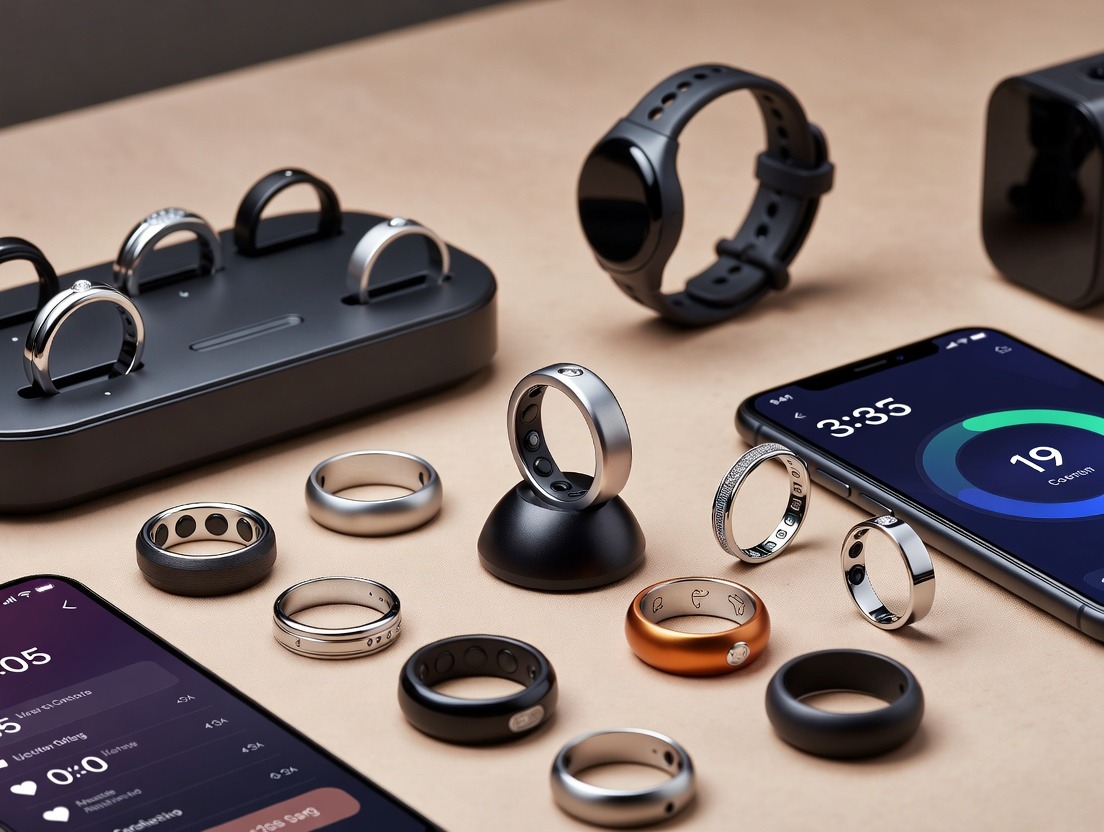
For generations, nutrition advice has been a battleground of conflicting ideologies. Keto or plant-based? Intermittent fasting or six small meals? The truth, as your smart ring reveals, is that the "best" diet is the one that uniquely supports your body's recovery, energy, and homeostasis. By connecting the dots between your daily choices and your nightly biometrics, the ring transforms nutrition from a guessing game into a personalized science of cause and effect.
The Nocturnal Report Card: How Your Body Grades Your Day
While smart rings don't (yet) directly measure glucose or macronutrient intake, they serve as a supremely sensitive downstream reporter. Every choice you make—what you eat, when you eat, how much you move, your stress levels—writes a story that is read aloud in the language of your sleep and recovery metrics. The ring’s AI is the translator.
Key connections it looks for:
Personalized Nudges for Metabolic Health
Beyond sleep, these biomarkers are proxies for metabolic strain. Consistently elevated sleeping heart rate and low HRV are linked to insulin resistance and systemic inflammation. Therefore, when the ring suggests behaviors that improve these metrics—like meal timing, stress reduction, or morning activity—it's indirectly supporting your metabolic health.
The system encourages self-experimentation. You can actively test hypotheses: “If I have a high-protein breakfast tomorrow, how does it affect my afternoon energy and sleep compared to a high-carb breakfast?” By logging the intervention and observing the biometric outcome, you become an active researcher in your own N-of-1 study. This iterative process, detailed in resources like our guide on how to enable preventive health monitoring with your ring, is the heart of truly personalized lifestyle medicine.
The daily and weekly insights are invaluable, but the monumental power of a smart ring is unlocked over months and years. This longitudinal data set creates a detailed timeline of your healthspan—the period of life spent in good health. It shifts the focus from fighting acute problems to proactively nurturing long-term resilience and spotting sub-clinical trends long before they become clinical diagnoses.
Baselining Your "Health Weather"
Just as a meteorologist needs decades of data to identify climate change, your ring needs time to distinguish your normal "health weather" from a changing "health climate." A single night of poor sleep is a rainy day. A six-month trend of gradually declining sleep efficiency and rising resting heart rate is a shift in the climate—a signal worth investigating.
The ring’s long-term analytics dashboard allows you to visualize these trends:
Early Warning System for Subclinical Shifts
Perhaps the most profound preventive application is the early detection of deviations that signal your body is fighting something. A sustained, subtle elevation in your nocturnal skin temperature and resting heart rate, coupled with a drop in HRV, can be the earliest sign of:
With this early warning, you can proactively double down on rest, hydration, nutrition, and stress management, potentially mitigating the severity or duration of an illness. This is preventive care in its purest form—intervening at the level of disruption, not disease.
Aging with Agency: The Healthspan Dashboard
As we age, the goal is not to avoid change, but to understand and optimize it. Your ring becomes a personal dashboard for aging well. You can observe how lifestyle changes affect age-related biomarkers. Does a new strength training routine improve your deep sleep? Does a mindfulness practice boost your HRV into a younger range? This data empowers you to make informed investments in your future self. For a comprehensive look at this long-game approach, our article on 50 healthy aging tips a smart ring helps implement daily is a valuable companion.
The ultimate frontier of smart ring personalization is its integration into the formal healthcare ecosystem. While not a medical device, the rich, contextual data it provides can transform the patient-provider conversation from a sparse, recall-based interaction into a data-rich collaboration. This turns annual check-ups into continuous care partnerships.
From "I Feel Tired" to Data-Driven Dialogue
Imagine walking into your doctor's office not just saying, "I've been tired for three months," but presenting a trend graph showing a 40% decline in your average HRV, a 10% increase in your resting heart rate, and a clear correlation with a stressful work project that started 14 weeks ago. You can show the impact of a new medication on your sleep architecture or demonstrate how a dietary change improved your recovery metrics.
This shifts the dialogue. The professional can ask targeted questions based on objective data: "I see your stress markers spiked here. What was happening?" or "This intervention seems to have helped. Let's build on that." It makes the patient an engaged, informed partner in their own care.
Remote Patient Monitoring & Post-Operative Recovery
Forward-thinking clinicians and hospitals are beginning to see the value. In scenarios like post-surgical recovery, a patient could go home with a ring to monitor vital trends remotely. The care team could be alerted to concerning patterns—like a rising temperature trend or abnormal heart rate—enabling early intervention before a complication escalates, potentially reducing readmissions. The potential for health tracking technology in hospitals is an exciting area of ongoing development.
Preparing for Your Appointment: The Personal Health Report
You can use your ring’s long-term data to generate a concise "Personal Health Report" to bring to appointments. This report could highlight:
This approach respects the professional's time while providing them with a quality of information they've never had before. It’s a tool for collaborative diagnostics and personalized treatment planning.
Amidst all this talk of sensors, AI, and data, a critical question arises: Does this technology make us more connected to our bodies, or does it turn us into obsessed, data-driven machines? The most successful personalized wellness journeys strike a delicate balance. The smart ring is not meant to be an oracle, but a mirror and a guide. The human element—your intuition, your joy, your lived experience—remains the irreplaceable core.
Data as Insight, Not Inquisition
The goal of personalization is to provide clarity, not to create a tyranny of metrics. A low readiness score is not a "failing grade"; it's a compassionate signal from your body to be kind to yourself. The most sophisticated systems understand this and frame suggestions as opportunities, not judgments. They encourage you to use the data to understand your patterns, not to berate yourself for a "bad" night.
Listening to Your Body's Narrative
Your subjective feeling—how you feel—is the most important data point of all. The ring’s metrics should be used to decode those feelings. If you feel exhausted but your data shows excellent recovery, it might point to mental or emotional fatigue, prompting you to explore different restorative practices. If you feel great but your HRV is low, it might be a sign of adrenal overdrive, where your body is masking strain with stimulants like cortisol. The ring helps you listen to the subtler chapters of your body's story.
The Joy of Experimentation and Agency
The human element is about agency. The ring gives you the tools to experiment and discover what "optimal" truly means for you. Maybe the data shows your perfect workout isn't the most metabolically intense one, but the one in nature that leaves you energized and happy. Perhaps your ideal evening routine isn't meditation, but reading fiction that lowers your heart rate more effectively. Personalization frees you from external dogmas and returns authority to your own lived experience.
This journey is about empowerment, not obsession. It’s about using technology to reconnect with your innate bodily wisdom, not to replace it. For many, this balanced approach is the key to lasting change, a sentiment echoed in real user stories found in our testimonials section.
As we invite these devices deeper into our lives, collecting our most intimate physiological data, questions of privacy, security, and ethics become paramount. The blueprint of your health is among your most sensitive pieces of personal information. Trust in the ecosystem is not a feature; it is the foundation.
The Principle of Data Sovereignty
A fundamental question must be answered: Who owns your data? Ethical companies in this space operate on the principle of user sovereignty. You should own your raw and processed biometric data. This means you should have the ability to:
Transparency is key. Before you even make a purchase, it's wise to understand a company's stance. You can explore Oxyzen's FAQ on data practices and our detailed guide on wellness ring privacy settings and data security to see how these principles are put into action.
On-Device Processing & Encryption
The gold standard for privacy is on-device processing. This means the raw PPG and motion data from your finger is processed directly on the ring or your smartphone into abstracted metrics (like "HRV: 52ms"), before any data is sent to the cloud. This minimizes exposure. From there, end-to-end encryption should protect your data in transit and at rest, ensuring that even if servers were breached, your biometric blueprint would be unreadable.
The Ethics of Recommendations & "Nudging"
There is also an ethical dimension to the AI's personalization. Algorithms must be designed to avoid harmful biases and promote balanced wellness. For instance:
Responsible companies employ diverse teams of clinicians, ethicists, and data scientists to audit algorithms and ensure recommendations are safe, inclusive, and supportive, not prescriptive or shaming. The mission, as outlined in resources like Oxyzen's story, should center on user empowerment and safety above all.

The technology we see today is just the opening chapter. The future of smart ring personalization is moving toward even more seamless, predictive, and comprehensive integration into our holistic health. Here are the frontiers being actively explored.
Multi-Sensor Fusion & New Biomarkers
The next generation of sensors will move beyond optical PPG. Research is underway on integrating:
Fusing these data streams will create a hyper-dimensional model of your health, allowing the AI to make even more precise correlations and predictions.
True Predictive Health & AI Partnerships
The future is predictive, not just descriptive. AI will move from telling you what happened to forecasting what might happen and prescribing how to prevent it.
Seamless Ecosystem Integration
The ring will fade further into the background as a sensor, while its intelligence becomes omnipresent. It will seamlessly integrate with:
This is not science fiction; it's the logical trajectory of the health tracking technology landscape in 2025 and beyond. The ring will become the central, discreet hub of a truly personalized health and wellness ecosystem.
Embarking on this journey can be exciting but also overwhelming. To truly reap the benefits of a hyper-personalized wellness companion, how you start matters. Here is a practical guide to setting up your smart ring for success, ensuring you build an accurate, trustworthy, and insightful digital twin from the very first day.
Phase 1: The Observational Baseline (Weeks 1-2)
Resist the urge to make drastic changes immediately. Your primary job in the first two weeks is to live your normal life. Wear the ring consistently (24/7 is ideal, removing only for charging). Let it observe you without judgment. This establishes the critical baseline—your unique "normal" for sleep, resting heart rate, HRV, and temperature. Avoid the temptation to "perform" for the ring. Authenticity now leads to accurate personalization later.
Phase 2: The Gentle Experimentation (Weeks 3-4)
Once you see your patterns emerge, begin gentle, single-variable experiments.
Phase 3: The Interactive Partnership (Month 2 and Beyond)
Now, engage actively with the feedback loop.
For a comprehensive walkthrough of this process, from unboxing to expert use, our guide on wellness ring mastery from unboxing to expert user is an invaluable resource. Remember, the path to personalization is a marathon, not a sprint. It’s a gradual, fascinating process of building a partnership between your intuition and your data.
We have journeyed from the microscopic sensors on your finger to the vast, ethical considerations of a data-driven health future. The throughline is clear: the modern smart ring represents a fundamental shift in our relationship with our own well-being. It democratizes access to the kind of continuous, personalized biometric insight that was once the sole domain of elite athletes and research labs.
This technology personalizes preventive wellness by replacing generic guesswork with specific knowledge. It tells you not just that you slept poorly, but why you specifically slept poorly last night, and what you personally can try tonight to sleep better. It transforms stress from a vague feeling into a measurable physiological state that you can learn to regulate. It turns fitness from a pursuit of external metrics (steps, pounds) into an internal dialogue about strain, recovery, and sustainable progress.
The promise is not a life perfectly optimized by an algorithm, but a life profoundly understood by you. It is about gaining agency—the power to make informed choices that align with your body's unique needs and rhythms. It’s about catching small imbalances before they become larger problems, extending not just your lifespan, but the quality of your healthspan.
As this technology continues its rapid evolution, becoming more predictive, more integrated, and more intuitive, one thing remains constant: you are at the center. The data is yours, the insights are for you, and the choices are yours to make. The smart ring is simply the tool—a sophisticated, compassionate, and ever-learning tool—that illuminates the path. The first step on that personalized journey of preventive wellness begins the moment you put it on.
As we move beyond foundational metrics, the true artistry of smart ring personalization lies in its ability to interpret the subtle, often overlooked language of your body. These are the nuanced signals that exist in the spaces between the obvious data points—the whispers that precede the shouts. Learning this language is what separates reactive tracking from truly anticipatory wellness.
The Story in Your Heart Rate Curve
Your heart rate throughout the day and night is not a flat line; it’s a narrative. A personalized system looks at the shape of this curve, not just the highs and lows.
Temperature Micro-Patterns and Menstrual Health
For individuals who menstruate, the skin temperature sensor becomes a powerful tool for cycle awareness, far beyond simple ovulation prediction.
HRV Resonance and Coherence
Advanced analysis looks at the frequency and coherence of your HRV, not just its average level. The balance between low-frequency (LF) and high-frequency (HF) power in your HRV spectrum speaks to the balance between your sympathetic and parasympathetic systems. Some systems use this to guide resonant frequency breathing exercises—identifying the precise breathing pace (e.g., 5.5 seconds in, 5.5 seconds out) that maximizes coherence for you, creating a powerful, personalized biofeedback tool for stress reduction.
The "Tells" of Disturbed Sleep
Beyond just "light" or "deep" sleep, the ring analyzes micro-awakenings and movement. It can identify patterns you’d never recall: a cluster of restless periods at 3 AM every night, or a correlation between increased movement in the second half of sleep and room temperature. By connecting these subtle "tells" to environmental or behavioral factors, it provides hyper-specific advice: *“Your sleep disturbance between 2-4 AM is 40% lower when your bedroom is below 68°F.”*
This deep interpretation transforms raw data into a rich, personal biography of your physiology, where every blip and curve has a potential story and a personalized solution. For those wanting to master this level of detail, resources like our blog on the accuracy revolution in health tracking technology explain the science behind these nuanced readings.
Your body does not exist in a biometric vacuum. It responds to the world around it. The next leap in personalization involves the smart ring synthesizing its physiological data with a rich layer of external, contextual information. This creates a holistic 360-degree view of your well-being, where internal states are explained by external realities.
Geographic and Environmental Context
With user permission (and always with privacy at the forefront), the ring’s companion app can integrate data to answer critical contextual questions:
Digital Activity and Mental Load
Our digital lives create a profound physiological impact. Future-forward integration looks at:
Social and Emotional Context (The Human Layer)
The most complex, and potentially most valuable, layer is the social-emotional one. Manual logging is key here, but future integrations might (with explicit, granular consent) allow for:
By weaving this external context into the biometric fabric, the smart ring’s AI moves from being a physiologist to a holistic life coach. It understands that you are not just a heart rate and a temperature; you are a person in an environment, with a schedule, relationships, and a digital life—all of which shape your health. For a look at how this integrated data is protected, our primer on privacy settings and data security is essential reading.
Abstract concepts come to life through stories. Let’s explore how this personalization engine manifests in the real, messy, and varied lives of different users. These composite case studies illustrate the transformative power of moving from generic data to personalized insight.
Case Study 1: The "Healthy" Overtrainer
Sarah, 38, avid marathoner. Sarah was following a rigorous training plan but noticed her race times were plateauing and she felt chronically fatigued. Her fitness tracker showed she was hitting all her targets. Her Oura Ring told a different story.
Case Study 2: The Stressed Executive with "Perfect" Labs
*David, 52, high-powered CFO.* David’s annual physical showed pristine cholesterol, blood pressure, and blood glucose. Yet, he felt wired yet tired, struggled with focus, and had intermittent insomnia. He felt dismissed when he mentioned stress.
Case Study 3: The Peri-Menopausal Seeker of Balance
Elena, 48, navigating hormonal shifts. Elena was experiencing erratic sleep, new anxiety, and fluctuating energy. She was told it was "just perimenopause" but wanted to manage it proactively.
These stories, echoed in platforms like our testimonials page, demonstrate that personalization isn't about achieving a perfect score; it's about understanding your unique physiology so you can navigate your unique life with more resilience and grace.
A common experience in any wellness journey is the plateau—the point where progress stalls, or even backslides. Furthermore, life is not static; we encounter new jobs, injuries, illnesses, parenthood, and aging. A rigid health tool becomes obsolete. A smart ring with a robust personalization engine, however, is designed for these very challenges. It helps you navigate plateaus and adapt your wellness strategy to life’s ever-changing chapters.
Decoding the Plateau: Is It Stalling or Stabilizing?
When your readiness scores or fitness metrics stop improving, the ring’s data helps you diagnose why.
Personalized Periodization for Life
Athletes use periodization—cycles of stress and recovery—to peak for events. Your ring enables you to periodize your life.
Adapting to Aging and Changing Goals
Your wellness priorities at 25, 45, and 65 are different. A great personalization system evolves with you.
This adaptive intelligence ensures your smart ring remains a relevant and valuable partner for decades, not just months. It is built for the long and winding road of a human life. For inspiration on adapting wellness strategies across a lifespan, our article on 50 healthy aging tips provides a wealth of adaptable ideas.
In an age of social media leaderboards, the most profound personalization also involves a healthy dose of de-comparison. Smart ring data is most powerful when viewed through the lens of your own journey, not in competition with others. However, there is a constructive role for anonymized, aggregated community data—not to compete, but to contextualize and inspire.
Your Only Valid Comparison: You Yesterday, You Last Month, You Last Year
The ring’s interface should consistently orient you toward intra-personal comparison. The graphs show your trends. The insights reference your baselines. This trains you to ask the right questions: "Am I recovering better than I was last month?" not "Is my HRV higher than my friend's?" This focus is critical for mental health and sustainable motivation.
The Value of Anonymized Population Insights
When used ethically, aggregated data can provide valuable personal context:
Tapping into Collective Wisdom
Some platforms allow you to opt into sharing de-identified data for research. This contributes to a greater good: scientists can discover new correlations between lifestyle and biomarkers, which eventually feed back into better algorithms and public health knowledge for everyone. You become part of a citizen science project advancing personalized medicine. You can learn more about how one company approaches this mission on its About Us page.
Finding Your Tribe (The Right Way)
The social element should be opt-in and focused on support, not competition. Small, private groups (e.g., a running club, a stress-management cohort) can share general insights and encourage each other based on personalized goals. "My ring says I need a rest day, so I’m swapping the run for yoga" is a healthier share than "I got a higher sleep score than you."
This balanced approach—deeply personal focus, with optional, ethical communal context—ensures the technology builds you up rather than fueling comparison anxiety. It turns data into a tool for self-compassion and growth.
With an understanding of the depth of personalization possible, how do you select the right device? The market offers choices, but not all rings are created equal when it comes to generating actionable, personalized insight rather than just raw data. Here are the key features to prioritize.
1. Sensor Accuracy and Scientific Validation
This is non-negotiable. The best algorithms are useless with poor data. Look for:
2. The Intelligence of the Algorithm & App Experience
The app is where personalization lives. Evaluate:
3. Battery Life and Form Factor for 24/7 Wear
Personalization requires continuous data. A ring you have to take off daily to charge for hours breaks your data stream. Prioritize:
4. Privacy Philosophy and Data Ownership
As discussed, this is foundational. Read the privacy policy. A trustworthy company will:
5. Ecosystem and Support
Choosing wisely means selecting a device that will act as a true partner in your health journey for years to come. For a detailed, side-by-side analysis, our comparison chart of top brands can be an invaluable tool in your decision-making process.
We have traversed the intricate landscape of modern smart ring technology—from its microscopic sensors to its grand potential for reshaping healthcare. Now, we arrive at the synthesis: what does it truly mean to live a life guided by this level of personalized, preventive insight? It is not a life of data obsession, but a life of informed intuition, empowered agency, and proactive harmony.
From External Authority to Internal Authority
The most profound shift is the relocation of authority. Wellness is no longer dictated solely by external experts, magazine headlines, or social media trends. It is co-created through a dialogue between you and your body, with the ring as the translator. You learn to trust the signals your body sends—validated by data—and respond with compassion and intelligence. You become the expert on you.
Prevention as a Daily Practice, Not a Panicked Reaction
Preventive wellness ceases to be an abstract concept and becomes a tangible daily practice. It’s the sum of micro-choices informed by your readiness: choosing the walk because your body needs movement without strain, opting for the herbal tea because your sleep needs protection, setting the boundary because your stress metrics demand it. Prevention is no longer an annual doctor’s visit; it’s the fabric of your everyday decisions.
The Compound Interest of Micro-Adjustments
The power of personalization lies in the compound effect. A 5% improvement in sleep efficiency, sustained over a year, translates to weeks of extra restorative sleep. A consistent 10% higher HRV represents a significantly more resilient nervous system. A slightly lower average resting heart rate is a gift to your cardiovascular system. These aren't dramatic overnight transformations; they are the gradual, sustainable results of thousands of personalized nudges heeded.
A New Relationship with Your Future Self
This technology fosters a long-term relationship with your future self. You make choices today not out of restriction, but out of investment. You see the direct line between tonight’s wind-down routine and tomorrow’s clarity, between this week’s managed stress and next month’s sustained energy. It cultivates a sense of stewardship and kindness toward the person you are becoming.
The Ultimate Goal: Fading into the Background
The highest purpose of a perfectly personalized wellness tool is to eventually become subconscious. The initial period of learning and adjustment is active. But over time, the insights become internalized. You start to feel when your HRV is low. You intuitively crave movement when your body is ready for it. The ring’s confirmations become quieter, its interventions rarer. It has successfully taught you its language, and you have learned to speak directly with your own body. The technology fades, leaving behind a more attuned, resilient, and empowered human.
This is the promise of the personalized preventive wellness revolution. It’s not about adding more complexity to our lives, but about using intelligent technology to cut through the noise and return to a simpler, more authentic connection with our own vitality. The smart ring is the compass for that journey home.
Your Trusted Sleep Advocate (Sleep Foundation — https://www.sleepfoundation.org/)
Discover a digital archive of scholarly articles (NIH — https://www.ncbi.nlm.nih.gov/
39 million citations for biomedical literature (PubMed — https://pubmed.ncbi.nlm.nih.gov/)
experts at Harvard Health Publishing covering a variety of health topics — https://www.health.harvard.edu/blog/)
Every life deserves world class care (Cleveland Clinic -
https://my.clevelandclinic.org/health)
Wearable technology and the future of predictive health monitoring. (MIT Technology Review — https://www.technologyreview.com/)
Dedicated to the well-being of all people and guided by science (World Health Organization — https://www.who.int/news-room/)
Psychological science and knowledge to benefit society and improve lives. (APA — https://www.apa.org/monitor/)
Cutting-edge insights on human longevity and peak performance
(Lifespan Research — https://www.lifespan.io/)
Global authority on exercise physiology, sports performance, and human recovery
(American College of Sports Medicine — https://www.acsm.org/)
Neuroscience-driven guidance for better focus, sleep, and mental clarity
(Stanford Human Performance Lab — https://humanperformance.stanford.edu/)
Evidence-based psychology and mind–body wellness resources
(Mayo Clinic — https://www.mayoclinic.org/healthy-lifestyle/)
Data-backed research on emotional wellbeing, stress biology, and resilience
(American Institute of Stress — https://www.stress.org/)


