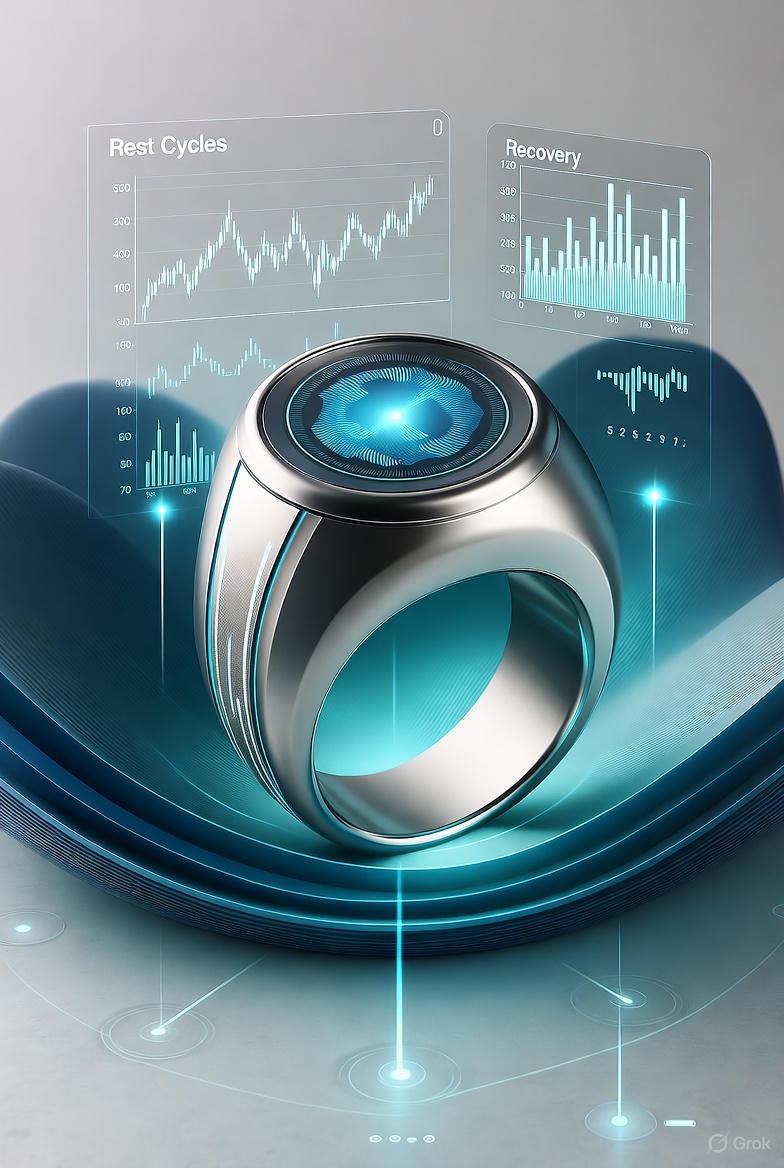
A review of the best wearable devices for automated daily recovery tracking.
The Unseen Foundation: Why Daily Recovery Tracking is the Ultimate Biohack
For the modern wellness enthusiast, the focus has long been on the output: steps counted, calories burned, miles run, PRs shattered. We’ve become masters of the doing. But what about the being? The silent, essential hours where our bodies repair, adapt, and grow stronger? For years, this critical phase—recovery—existed in a data black hole. We guessed based on how we felt, often mistaking fatigue for weakness or pushing through the very signals begging for rest.
Today, we stand at the frontier of a paradigm shift. The new apex of personal wellness isn't just about tracking your exertion; it's about quantifying your restoration. Daily recovery tracking is the ultimate biohack because it provides the missing half of the equation. It’s the difference between driving a high-performance car with only a speedometer and driving one with a full, real-time diagnostic dashboard monitoring engine vitals, fluid levels, and stress tolerances.
Imagine knowing, with objective data, whether your body is primed for an intense workout or silently pleading for a gentle yoga session. Envision understanding how that late-night dinner, that stressful meeting, or that extra glass of wine tangibly impacts your nervous system’s state of calm. This isn't science fiction; it's the reality delivered by the latest generation of intelligent wearables. These devices move beyond simple activity logging to become 24/7 guardians of your physiological readiness, measuring the very biomarkers that whisper the truth about your inner state.
This comprehensive guide is dedicated to uncovering The Best Wearables for Daily Recovery Tracking. We will delve deep into the science of what recovery truly means, explore the cutting-edge sensors that make it measurable, and provide an authoritative analysis of the devices leading this quiet revolution. From smart rings sensing your core temperature as you sleep to advanced watches mapping your heart’s subtle rhythms, we are equipping you with the knowledge to move from guessing to knowing, from pushing blindly to optimizing intelligently. Your journey to mastering recovery—the true foundation of performance, health, and longevity—starts here.
The Silent Symphony: Defining Recovery in the Age of Data
Recovery is not merely the absence of activity. It is an active, complex, and multifaceted physiological process—a silent symphony of repair, adaptation, and rebalancing conducted across every system in your body. For decades, athletes and health-conscious individuals relied on subjective cues: soreness, energy levels, mood. While valuable, these signals are lagging indicators, often appearing well after the optimal window for intervention has passed. The age of data allows us to listen to the symphony in real-time, translating its movements into actionable insights.
At its core, recovery is the body's process of returning to homeostasis—its stable, baseline state—after the stress of exercise, work, mental load, or environmental challenges. This process occurs on multiple, interconnected levels:
Muscular & Tissue Repair: After micro-tears induced by exercise, the body repairs and rebuilds muscle fibers, making them stronger. This requires protein synthesis, nutrient delivery, and cellular cleanup.
Neurological Rebalancing: The autonomic nervous system (ANS) has two primary branches: the sympathetic (fight-or-flight) and the parasympathetic (rest-and-digest). Effective recovery involves a shift from sympathetic dominance to parasympathetic activity, lowering stress hormones like cortisol and promoting relaxation.
Metabolic & Hormonal Restoration: Glycogen stores in muscles and the liver are replenished. Hormone levels, including growth hormone and testosterone (vital for repair), are regulated during deep sleep.
Cognitive & Psychological Reset: Mental fatigue is as real as physical fatigue. Recovery involves synaptic pruning, memory consolidation, and the reduction of cognitive load, directly impacting focus, decision-making, and emotional resilience.
The revolutionary advance of modern wearables is their ability to proxy these internal states through non-invasive, continuous biometric monitoring. They don't measure glycogen directly, but they can measure heart rate variability (HRV)—a powerful indicator of autonomic nervous system balance and physiological stress. They can't see inside your muscles, but by tracking your resting heart rate and body temperature, they can infer the presence of systemic inflammation or the onset of illness that would impede repair.
This shift transforms recovery from a passive, time-based concept ("I'll rest for 48 hours") to a dynamic, readiness-based model. Your readiness score each morning isn't a guess; it's a data-driven synthesis of how well your body has orchestrated its silent symphony overnight. It tells you if you are tuned for a high-performance day or if you need to conduct a gentler rehearsal.
To truly build a foundation of health that lasts, understanding these principles is key. For a deeper exploration of how this technology enables a proactive approach to long-term vitality, consider reading our guide on how health tracking technology enables personalized wellness. It’s the first step in moving from merely tracking to truly understanding.
The Biometric Orchestra: Key Metrics for Measuring Recovery
To appreciate the data from a recovery wearable, you must understand the instruments in the biometric orchestra. Each metric plays a distinct part, and together, they create a holistic picture of your physiological state. The most advanced devices don't rely on a single number; they conduct a multi-parameter analysis, cross-referencing signals to filter out noise and reveal the true narrative of your recovery.
Heart Rate Variability (HRV): The Maestro of the Nervous System
HRV is arguably the most critical and insightful recovery metric available. Contrary to what one might assume, a healthy heart does not beat with the monotonous regularity of a metronome. The tiny, millisecond variations in time between each heartbeat are a sign of a robust, adaptable nervous system. High HRV generally indicates strong parasympathetic (rest-and-digest) activity and good resilience, meaning your body can efficiently respond to stress and then recover. A downward trend in your HRV can signal accumulated fatigue, overtraining, poor sleep, illness, or excessive life stress. It’s your body’s most honest review of yesterday’s management.
Resting Heart Rate (RHR): The Steady Baseline
Your resting heart rate, best measured during stable sleep or the first moments of waking, is a fundamental vital sign. A lowered RHR over time typically indicates improved cardiovascular fitness. However, a spike of 5-10 beats per minute above your personal baseline upon waking can be a clear red flag. It often points to elevated sympathetic tone, meaning your body is still working hard—perhaps fighting inflammation, digesting a late meal, or processing stress—when it should be in its most restorative state.
Sleep Architecture: The Foundation of Repair
Sleep is not a binary on/off state. Quality recovery depends on cycling through light, deep, and REM (Rapid Eye Movement) sleep stages. Deep sleep is crucial for physical restoration and growth hormone release, while REM sleep is essential for cognitive function and memory. Modern wearables use a combination of accelerometry, heart rate, and sometimes temperature to estimate these stages. Tracking not just "hours in bed," but the composition and consistency of your sleep architecture, is non-negotiable for assessing recovery.
Body Temperature: The Metabolic Thermostat
Core and skin temperature are powerful, yet often overlooked, biomarkers. A elevated nocturnal skin temperature can indicate the body working overtime—fighting an infection, dealing with inflammation from a hard workout, or struggling in a non-optimal sleep environment. Some advanced devices, like smart rings worn on the finger, have a unique advantage here. The finger provides a strong arterial blood flow, allowing for a reliable proxy of core temperature trends, making it a highly sensitive tool for detecting early signs of illness or hormonal fluctuations.
Respiratory Rate: The Breath of Calm
The number of breaths you take per minute, especially during sleep, is a stable and informative metric. An elevated respiratory rate can be a subtle sign of physical strain, cardiac stress, or even sleep-disordered breathing like apnea. A calm, low respiratory rate aligns with parasympathetic dominance and efficient recovery.
Activity & Strain: The Context for the Data
Recovery data in a vacuum is incomplete. The best platforms contextualize your morning readiness scores against your previous day's strain—a composite score of your exercise intensity, duration, and overall activity. This feedback loop is essential: it answers the "why" behind a low recovery score. Was it due to the brutal interval session, or was it the stressful workday and poor sleep?
Understanding the interplay of these metrics is where true insight begins. For a detailed breakdown of the sensors and algorithms that make this possible, delve into our resource on the science behind modern health tracking technology. It demystifies the magic, showing you the precise engineering that captures your body's silent symphony.
The Contenders: Form Factors for Recovery Tracking (Watches, Rings, Patches & Beyond)
The battle for your wrist—and your wellness data—is fierce. But the landscape of recovery tracking has expanded beyond the familiar smartwatch. Each form factor brings inherent advantages and trade-offs, primarily centered on sensor placement, wearability, and the type of data it can optimally collect. Choosing the right one is about aligning the device's strengths with your lifestyle and recovery-tracking priorities.
The Smartwatch: The Feature-Packed Powerhouse
The smartwatch is the most recognizable player. Brands like Apple, Garmin, Fitbit, and Whoop have made significant strides in recovery analytics.
Strengths: Superior daytime activity and workout tracking (GPS, complex exercise modes), bright displays for notifications, and extensive third-party app ecosystems. They are fantastic all-in-one devices for the fitness-focused user who wants a single device for guidance during activity and insights after.
Recovery Considerations: Wrist-based optical heart rate sensors can be prone to motion artifact (noise during movement). For 24/7 wear, including sleep, some users find watches bulky. The battery life of full-featured models often requires daily or every-other-day charging, creating potential data gaps.
The Smart Ring: The Subtile, Nocturnal Specialist
The smart ring represents a paradigm shift in continuous, unobtrusive biomonitoring. Devices like Oura, Circular, and Ultrahuman have pioneered this space.
Strengths: The form factor is a game-changer for comfort, especially during sleep. There are no screens or buttons to dig into your wrist. The finger provides a strong arterial signal, often yielding very high-fidelity heart rate and HRV data. The placement also allows for reliable skin temperature sensing. Battery life typically ranges from 4-7 days, and the charging ritual doesn't interrupt sleep tracking. It’s the ultimate "set it and forget it" recovery device.
Recovery Considerations: Lacks a screen for real-time workout metrics or notifications (which some see as a pro for reducing distraction). Activity tracking is more generalized compared to a GPS-enabled watch. Sizing is critical for accuracy.
The Dedicated Fitness Band (e.g., Whoop Strap): The Focused Athlete’s Tool
The Whoop strap and similar devices sit in a unique category: they are stripped-down, screenless bands wholly dedicated to 24/7 performance and recovery biometrics.
Strengths: Unmatched focus on recovery metrics (Strain and Recovery scores) with a compelling, data-driven coaching model. Battery is charged via a separate puck, so the device never leaves your wrist, ensuring zero data gaps. The community and coaching aspects are highly engaging for competitive athletes.
Recovery Considerations: Requires a monthly subscription, locking you into an ecosystem. Like wrist-based watches, it can be susceptible to motion noise. The lack of any display means all interaction is via smartphone.
Chest Straps, Patches, and Emerging Tech
Chest Straps (e.g., Polar H10): The gold standard for accuracy during exercise, especially for heart rate and HRV. However, they are impractical for 24/7 recovery tracking.
Smart Patches (e.g., continuous glucose monitors, Biostickers): These represent the cutting edge, offering clinical-grade, continuous data for specific metrics (glucose, ECG, temperature). Currently, they are often single-use, prescription-led, or used for short-term diagnostic purposes, but they point to a future of even more seamless, medical-grade monitoring.
The Core Differentiator: For pure, uninterrupted recovery tracking, the smart ring's combination of optimal sensor placement, comfort for 24/7 wear, and long battery life makes it a uniquely powerful tool. It is designed first and foremost to listen to your body at rest, making it a perfect companion, even if you use a separate watch for guided workouts.
If the discreet, powerful nature of a smart ring intrigues you, our wellness ring basics for beginners guide is an essential starting point to understand how this elegant form factor can transform your approach to daily recovery.
Under the Hood: Sensor Technology and Algorithmic Intelligence
A wearable is only as good as the data it collects and the brain that makes sense of it. This is where the rubber meets the road. Two devices can measure the same heart rate, but the insights they generate can differ wildly. This disparity comes down to two pillars: the sophistication of the sensor hardware and the intelligence of the software algorithms.
The Sensor Suite: Your Body's Digital Interface
Modern recovery wearables are miniaturized health laboratories. Here’s what’s inside:
Photoplethysmography (PPG) Sensors: This is the core technology for optical heart rate monitoring. It uses green, red, and/or infrared LEDs to shine light into the skin and measures the amount of light reflected back. Blood absorbs light, so the fluctuating signal corresponds to your pulse. Advanced PPG arrays can extract not just heart rate, but also HRV, blood oxygen saturation (SpO2), and even estimate blood pressure trends.
3-Axis Accelerometers & Gyroscopes: These detect movement and orientation. They are crucial for activity tracking, step counting, and, importantly, for sleep stage estimation by detecting micro-movements associated with different phases of sleep.
Skin Temperature Sensors: Typically thermistors or infrared sensors, these monitor the subtle changes in your skin temperature. Worn continuously, they establish a personal baseline, and deviations can signal the onset of illness, menstrual cycle phases, or poor sleep quality.
Electrodermal Activity (EDA) Sensors: Sometimes called galvanic skin response sensors, these measure tiny changes in the skin's electrical conductivity, which is influenced by sweat. This is a direct indicator of sympathetic nervous system arousal and is used for stress detection.
Bioimpedance Sensors: By sending a tiny, imperceptible electrical current through the body, these sensors measure the opposition to that current. This can be used to estimate body composition (like lean mass vs. fat) and, in some advanced implementations, track fluid levels and even measure continuous blood glucose trends.
The Algorithmic Brain: From Raw Data to Personalized Insight
Raw biometric data is a chaotic stream of numbers. The algorithm's job is to transform this stream into a coherent, personalized story. This is where true innovation lies.
Data Cleaning & Fusion: The first step is filtering out noise—motion artifact from turning in bed, a loose fit, or environmental interference. Advanced algorithms fuse data from multiple sensors (e.g., using accelerometer data to validate PPG heart rate readings) to ensure a clean signal.
Baseline Establishment: The system doesn't just compare you to population averages (which are often meaningless). It learns your unique baseline for HRV, RHR, temperature, etc., over a period of typically 2-4 weeks. All future readiness scores are based on deviations from your normal.
Multivariate Analysis: The most accurate recovery scores don't look at HRV in isolation. They analyze the interplay between HRV trends, RHR changes, sleep quality, temperature deviations, and previous day's activity. This cross-referencing creates a robust picture that a single metric cannot.
Machine Learning & Personalization: The most advanced platforms employ machine learning. As you log behaviors (e.g., "had alcohol," "stressed workday," "took a rest day") and tag events, the algorithm learns how these inputs correlate with your biometric outcomes, offering increasingly personalized guidance over time.
This fusion of hardware and software is what separates a simple data logger from an intelligent recovery advisor. The precision of this technology is constantly evolving. To understand the remarkable journey to today's accuracy, explore our article on the accuracy revolution in health tracking technology.
Deep Dive: Smart Rings as the Premier Recovery Tracking Tool
Given the critical importance of continuous, high-fidelity data—especially during sleep—the smart ring deserves a dedicated examination. Its rise is not a fashion trend but a functional evolution, addressing key limitations of other form factors to claim the title of premier recovery-tracking tool.
The Anatomical Advantage: Why the Finger?
The choice of the finger is a masterstroke in biometric engineering.
Rich Vascular Access: The capillaries and arteries in the finger, particularly the palmar digital arteries, are dense and close to the surface. This provides a stronger, less noisy PPG signal compared to the wrist, which has more bone, tendon, and variable blood flow. The result is often superior accuracy for heart rate and, critically, for HRV measurements during both sleep and waking rest.
Ideal for Temperature: The fingertips are excellent thermoregulators. Tracking temperature here provides a stable and sensitive proxy for circadian rhythm shifts and systemic changes, often detecting trends hours before you feel symptoms.
Minimal Motion Artifact: While not immune, the finger generally experiences less random movement during sleep than the wrist, leading to cleaner data during the most important recovery window.
The Lifestyle Advantage: Unobtrusive and Always-On
Sleep Comfort: This is the decisive factor for many. A lightweight, smooth ring is far less likely to cause discomfort or be consciously noticed during sleep than a watch or a chunky band. Better comfort leads to higher compliance, which leads to more complete data.
Social and Professional Discretion: A smart ring looks like elegant jewelry. It doesn't light up with notifications during a meeting or a movie. It allows for constant monitoring without the digital distraction or the sporty aesthetic of a watch, fitting seamlessly into any context.
Battery Life & Ritual: With multi-day battery life (often 4-7 days), charging becomes a brief, planned ritual—like charging wireless earbuds—rather than a daily interruption that forces you to choose between tracking sleep or tracking your day.
The Data Integrity Advantage: Focused on the Foundation
A dedicated smart ring is engineered with a primary goal: to master the metrics of rest and readiness. Without the need to power a bright display, run GPS, or manage countless notifications, its resources are dedicated to precise, low-power biometric sensing and sophisticated overnight analysis. You wear your watch for your day; you wear your ring for your night and the readiness it brings to your day.
The outcome of this focus is a morning report that feels deeply personal and physiologically grounded. It’s not confused by the noise of your day; it’s a pure reading of how well your body used the night to restore itself.
For those curious about how this elegant device functions on a daily basis and the practicalities of owning one, our comprehensive wellness ring basics: maintenance and care instructions provides all the necessary details to ensure you get the most accurate and longest-lasting performance from your device.
Deep Dive: Advanced Smartwatches & Bands for Holistic Fitness & Recovery
While smart rings excel in passive recovery monitoring, advanced smartwatches and dedicated bands offer a more interactive, holistic, and fitness-integrated model. For the individual whose identity is deeply tied to active training and who wants a single device to both guide performance and assess its cost, this category remains incredibly powerful.
The Garmin Ecosystem: The Athlete’s Command Center
Garmin has built perhaps the most comprehensive physiological analytics platform for endurance and multi-sport athletes.
Recovery Metrics: Features like Body Battery (a 0-100 energy score based on stress and sleep), HRV Status (tracking your 7-day average against your baseline), and Training Status (evaluating whether your training is productive, maintaining, or overreaching) are industry standards.
Unique Insights: Training Readiness score synthesizes sleep, HRV status, recovery time, acute load, and sleep history. Physiological Metrics like VO2 Max, Training Effect (aerobic/anaerobic), and Recovery Time predictions post-workout create a detailed feedback loop.
Strengths: Unbeatable for GPS accuracy, workout profiles, and mapping. The ecosystem (watches, bike computers, radar) is seamless for serious athletes. The data depth is staggering.
The Whoop Paradigm: Subscription to Performance
Whoop redefined the category by removing the screen and focusing entirely on biometrics and behavior change through subscription-based coaching.
Recovery Metrics: The daily Recovery Score (based on HRV, RHR, respiratory rate, and sleep performance) is the central pillar. It’s directly pitted against your Strain Score (a measure of daily cardiovascular and muscular load), enforcing the strain-recovery relationship.
Behavioral Journal & Insights: The detailed daily journal and subsequent monthly performance assessments show correlations between behaviors (caffeine, late meals, mindfulness) and recovery, driving tangible habit change.
Strengths: Zero data gaps due to on-device charging. The community and coach-like feedback are highly engaging. The focus is purely on the biometrics, not notifications.
The Apple Watch (with Third-Party Apps): The Smart Platform
The Apple Watch is a health and fitness platform. Its out-of-the-box recovery metrics are basic (sleep stages, resting/walking heart rate), but its power is unlocked through third-party apps.
App Ecosystem: Apps like Athlytic, Training Today, and Gentler Streak use the Watch's high-quality sensors (and now, via iOS 17, direct access to HRV) to generate detailed recovery scores, readiness metrics, and personalized training recommendations.
Strengths: Seamless iPhone integration, the best smart features (calls, messages, apps), and continuous hardware innovation (ECG, temperature sensing for cycle tracking, crash detection). For those entrenched in the Apple ecosystem who want both a smartwatch and deep recovery insights, this is the path.
The Fitbit & Google Ecosystem: Accessible Wellness
Fitbit, now under Google, offers the most accessible gateway into recovery-focused metrics.
Recovery Metrics: The Daily Readiness Score (on Premium) combines sleep, heart rate variability, and activity to suggest when to push or rest. The Sleep Score and Stress Management Score are clear and user-friendly.
Strengths: Often more affordable, with excellent battery life on some models (5+ days). The interface is intuitive for beginners. Google's integration promises future AI-powered insights.
Choosing between a ring and an advanced watch/band often comes down to philosophy: Do you want a dedicated recovery specialist that informs your overall life, or a holistic fitness commander that integrates recovery into an active training plan? For a direct comparison of how different devices stack up, our wellness ring basics: comparison chart of top brands offers valuable perspective in your decision-making journey.
Beyond the Numbers: Interpreting Your Data and Taking Action
A readiness score of 85% or a low HRV notification is just the starting pistol. The true value—and the path to transformation—lies in the interpretation and, most importantly, the action you take. Data without context is noise; data with intelligent response is power. This is where you move from being a passive observer to an active participant in your own biology.
How to Read Your Morning Readiness Report
A comprehensive report will include several key elements. Your job is to synthesize them:
The Overall Score (Readiness/Recovery): This is your executive summary. Treat a high score as a green light for performance and a low score as a caution flag, not a failure. Investigate the contributing factors.
Contributing Factors: This is the "why." Did your score dip due to:
Poor Sleep? (Look at duration, deep/REM sleep, disturbances)
Low HRV? (Indicates autonomic nervous system fatigue)
Temperature Deviation? (Could be illness, inflammation, or hormonal)
High Previous Day Strain? (A positive cause—you challenged your body!)
Trends Are Everything: A single day's data is a snapshot; a week's or month's data is a movie. Look for patterns. Is your HRV consistently lower on weekday mornings? Do you see a temperature rise every 28 days? Does alcohol consistently crater your sleep quality by 30%? Trends reveal the levers you can actually pull.
Actionable Responses Based on Data
Here’s how to translate common data scenarios into daily decisions:
Nutrition: Anti-inflammatory foods, hydrate deeply, avoid processed sugars and alcohol.
Stress Management: Schedule a mindfulness session, take breaks, avoid high-stakes meetings if possible.
Evening Prep: Double down on sleep hygiene: cool, dark room, no screens 90 mins before bed, perhaps a magnesium supplement or relaxation technique.
Scenario: High Readiness Score (Optimal Metrics)
Action: This is your day to perform. Don't waste it.
Training: Schedule your most challenging workout, skill session, or creative work.
Cognitive Load: Tackle complex problems, have important conversations.
Nutrition: Fuel appropriately for your planned activity. Your body is ready to utilize nutrients efficiently.
Scenario: Normal Readiness but High Temperature Trend
Action: Proactive health defense. Increase hydration, prioritize sleep, consider reducing intensity, load up on vitamin C and zinc-rich foods. You may be preventing a full-blown illness.
The ultimate goal is to create a feedback loop where the data informs your behavior, and your changed behavior improves your data. This is the essence of biohacking. For inspiration on how to build the sustainable habits that lead to consistently better recovery metrics, explore our guide on how wellness rings help build healthy habits.
Integration and Ecosystem: Making Your Data Work Together
In an ideal world, your recovery wearable wouldn't exist in a silo. Its true potential is unlocked when its data converses with the other digital health tools you use, creating a unified, holistic view of your wellness. This integration is the final piece of the puzzle, turning fragmented insights into a coherent, actionable strategy.
The Power of Connected Data
Imagine this seamless flow:
Your smart ring detects a poor night of sleep and a depressed morning HRV, generating a low readiness score.
This score is automatically shared with your fitness app (like Apple Fitness+, Strava, or Peloton).
Your fitness app, seeing the low readiness, automatically suggests a "Recovery Ride" or "Gentle Yoga Flow" instead of the high-intensity interval training (HIIT) workout you had bookmarked.
Simultaneously, your nutrition app (like MyFitnessPal or Cronometer) could receive a context cue, prompting it to highlight hydration and anti-inflammatory meal ideas for the day.
Your calendar could even block out a 20-minute "Focus & Recharge" slot in the afternoon, anticipating a potential energy dip.
This is not a futuristic dream. It's the direction of modern health ecosystems, largely facilitated by Apple Health on iOS and Google Fit on Android. These platforms act as central, permission-based hubs where apps can write and read data.
How to Build Your Connected Wellness Hub
Choose a Primary Hub: For most, this is Apple Health or Google Fit. Ensure your primary wearable has robust, two-way sync with this hub.
Connect Your Specialized Apps: Authorize your chosen apps to read and write relevant data.
Medical: Your patient portal (some now integrate with these hubs).
Review and Refine: Periodically check what data is flowing where. The goal is to minimize manual entry and let the ecosystem provide context-aware insights.
The Oxyzen Vision: A Cohesive Ecosystem
At Oxyzen, we believe in this connected future. A device like a smart ring is most powerful as part of a thoughtful ecosystem. Our vision extends beyond the ring itself to how its data empowers your entire life. This means ensuring our platform integrates seamlessly with the health hubs and apps you already trust, allowing your recovery data to inform your fitness, nutrition, and mindfulness choices wherever you make them. It’s about creating a cohesive, intelligent environment around your wellness journey.
The Human Element: Balancing Data with Body Wisdom
As we immerse ourselves in the world of quantified recovery, a critical, humanistic caution must be raised: Your biometric data is a guide, not a gospel. The most advanced algorithm is still interpreting signals from the incredibly complex, subjective, and nuanced system that is you. The ultimate wearable technology sits between your ears—your own conscious awareness and intuition. The goal is not to become a slave to a score, but to use the data to refine and educate your own innate body wisdom.
The Pitfalls of Over-Reliance on Data
Analysis Paralysis: Constantly checking scores, obsessing over tiny fluctuations, and letting a "bad" number dictate your mood can create its own form of stress, ironically harming recovery.
Ignoring Subjective Feelings: You might feel energetic and strong despite a middling readiness score. Conversely, you might feel drained despite a high score. Your lived experience is a valid data point. The device may not capture certain types of mental or emotional fatigue.
Misinterpreting Context: The algorithm doesn't know everything. It doesn't know you just had a vaccination (which can raise RHR and temperature), are in a new time zone, or are grieving a personal loss. You must be the interpreter of context.
Strategies for a Balanced, Human-Centric Approach
Practice "Feel vs. Real": Each morning, before you look at your device, take 60 seconds. Ask yourself: "How do I feel?" Rate your energy, mood, and muscle soreness on a simple scale. Then check your data. Observe the correlation over time. You're training your intuition alongside the algorithm.
Use Trends, Not Drops: Don't panic over a single day's drop in HRV. Look at the 7-day rolling average. The trend tells the true story of your adaptation.
Become a Detective, Not a Judge: A low recovery score isn't a verdict of failure; it's a clue. Adopt a curious mindset: "Fascinating! My body is telling me it's under stress. Let's explore the possible causes—was it my workout, my food, my stress, or something else?"
Schedule "Data-Free" Time: Consider taking the device off for a weekend or a vacation. Reconnect with the pure, unfiltered experience of how your body feels during rest and play without a numerical score attached. This can be a refreshing reset.
The most successful users of recovery technology are those who create a collaborative partnership with their device. The wearable provides objective, often surprising, insights that challenge assumptions. You, the human, provide context, emotional intelligence, and the final executive decision on how to proceed. This synergy is where true optimization and well-being reside.
For those navigating the common questions and seeking a balanced understanding, our wellness ring basics: common questions answered resource addresses many of these human-centric concerns, helping you integrate technology into your life wisely.
Nutrition & Hydration: Fueling Recovery from the Inside Out
Your wearable provides the "output" data—how your body is responding. Nutrition and hydration are the primary "inputs" you can control to directly influence those outputs. This isn't about fad diets; it's about using biometric feedback to create a personalized fueling strategy that supports repair, reduces inflammation, and stabilizes energy.
Using Data to Guide Nutritional Timing and Choices
The Post-Workout Window (The Anabolic Opportunity):
The Data Signal: After a strenuous workout, you may see an elevated resting heart rate and lower HRV that night, indicating systemic stress and inflammation.
The Nutritional Action: Consume a combination of protein (20-40g) and easily digestible carbohydrates within 45-60 minutes post-exercise. The protein provides amino acids for repair, while the carbs replenish glycogen and help blunt the cortisol response, aiding recovery. Track this: does a proper post-workout meal correlate with a better recovery score the next morning compared to days you skip it?
The Evening Wind-Down (Preparing for Sleep):
The Data Signal: Poor sleep scores, low deep sleep, and elevated nocturnal heart rate.
The Nutritional Action:
Last Meal Timing: Finish your last sizable meal 2-3 hours before bed. Digestion raises metabolism and core temperature, opposing the body's natural sleep-onset cooling process.
Macro Composition: Avoid large, high-fat, or spicy meals close to bedtime. Opt for a lighter meal with complex carbs (which can aid tryptophan uptake for serotonin/melatonin production) and moderate protein.
The Alcohol & Sugar Trap: Your sleep data is the ultimate truth-teller. Correlate nights with alcohol or high-sugar desserts with shattered deep sleep and elevated heart rate. Use this objective evidence to make different choices.
Hydration: The Silent Recovery Partner:
The Data Signal: Subtle but important. Chronic under-hydration can lead to elevated resting heart rate (as blood volume decreases, your heart works harder) and may contribute to higher perceived exertion and poorer performance.
The Hydration Action: Use your wearable's daily heart rate trends as a gauge. Aim to drink water consistently throughout the day, not just during workouts. Monitor the color of your urine. Even mild dehydration can impede cellular repair and cognitive function.
Identifying Food Sensitivities and Inflammatory Responses
For some, recovery is hindered by subclinical inflammation from food sensitivities (not full-blown allergies). Your wearable can be a powerful tool for discovery.
The Process: Use the journal feature in your app. After a day of eating a food you suspect might be problematic (common culprits: gluten, dairy, certain nightshades for some individuals), tag that day.
The Data to Watch: Look at the next morning's metrics. Do you see a notable dip in HRV, a spike in RHR, or a rise in your skin temperature trend? This pattern, repeated over several instances, can provide strong anecdotal evidence to discuss with a healthcare professional or to guide an elimination diet.
Nutrition for recovery is a process of becoming your own research subject. The wearable provides the lab results. By paying attention to the correlations between what you consume and how your body registers that consumption overnight, you can build a truly personalized, anti-inflammatory, recovery-optimized way of eating.
For practical guidance on implementing these insights, especially when starting out, our article on wellness ring basics: support for different health goals provides a framework for aligning your habits with your specific objectives, whether that's better sleep, less stress, or improved fitness.
Stress Management and the Nervous System: The Non-Negotiable for Modern Recovery
In our modern environment, physical exertion is often not the primary recovery blocker—chronic psychological stress is. Your autonomic nervous system (ANS) doesn't differentiate between a saber-toothed tiger and an overflowing inbox; it responds with the same cascade of sympathetic ("fight-or-flight") chemicals. When this state becomes chronic, it directly sabotages every recovery process: it impairs sleep, increases inflammation, hinders digestion, and depresses HRV. Therefore, active stress management is not a luxury "wellness" activity; it is a core component of a recovery protocol.
Using Your Wearable as a Stress Biofeedback Tool
Advanced devices with continuous stress tracking or EDA sensors offer real-time insight into your nervous system state.
Daytime Stress Scores: These are not measures of your emotional feelings, but of your physiological arousal. A high score means your sympathetic nervous system is activated.
The Power of Awareness: Simply seeing a high stress score pop up on your watch or in your app can serve as an intervention. It's an objective cue to pause and ask, "What's driving this? Is it this task, this conversation, this environment?"
Measuring the Impact of Interventions: This is the most powerful application. Use the device to test what actually calms your physiology.
Data-Backed Stress Reduction Techniques
Box Breathing (4-7-8 Breath):
The Protocol: Inhale for 4 seconds, hold for 7 seconds, exhale slowly for 8 seconds. Repeat for 3-5 minutes.
The Data Test: Engage in a moderately stressful task (e.g., a difficult work email). Note your stress score. Perform 5 minutes of box breathing. Watch the stress score drop in real-time. This biofeedback proves the technique's efficacy on your system.
Mindfulness and Meditation:
The Protocol: A daily 10-20 minute guided meditation session.
The Data Test: Don't just track consistency; track outcomes. Compare your average HRV and resting heart rate on weeks you meditate daily versus weeks you don't. Look at your sleep scores on meditation days. This long-term data provides irrefutable motivation to maintain the practice.
Nature Immersion ("Forest Bathing"):
The Protocol: A 20-30 minute walk in a natural environment, without headphones, focusing on sensory input.
The Data Test: Check your stress score or HRV before and after the walk. The physiological shift is often dramatic and more potent than a walk in an urban environment.
Digital Detoxes:
The Protocol: Designated periods (e.g., Saturday afternoons, Sunday mornings) with all personal devices off or in another room.
The Data Test: Review your 24-hour heart rate and HRV graphs from a detox day. You will likely see a smoother, more stable pattern indicative of a calm nervous system, compared to the jagged, reactive patterns of a high-screen day.
By treating stress management as a measurable, trainable skill—like strength or endurance—you take direct control of the single greatest thief of recovery in modern life. Your wearable becomes your coach, showing you what works and holding you accountable to the practices that build resilience.
Understanding how to protect your mental space is part of holistic health. For insights into how device makers approach this crucial aspect, see our guide on wellness ring basics: privacy settings and data security, ensuring your journey to calm is also a secure one.
Environmental Optimization: Crafting Your Recovery Sanctuary
Your body does not recover in a vacuum. The environment you create—from your bedroom to your workspace—profoundly influences your physiological state. Your wearable data provides the feedback to fine-tune these environments, transforming them from passive backdrops into active recovery tools.
The Sleep Sanctuary: Engineering the Perfect Night
We've touched on temperature, but let's expand the blueprint using data as our guide.
Light: The Master Circadian Regulator:
The Problem: Artificial light, especially blue wavelengths from screens, suppresses melatonin production, delaying sleep onset and disrupting sleep architecture.
The Data-Driven Fix: Use your sleep latency (time to fall asleep) and REM sleep data as metrics.
Evening: Install warm-toned, dimmable lights in living areas after sunset. Use blue-light blocking glasses or software (like f.lux) on all devices.
Bedroom: Achieve total darkness. Use blackout curtains and cover or remove any LED lights (from chargers, smoke detectors, etc.). Even small amounts of light can fragment sleep.
Morning: Seek bright, natural light exposure within 30 minutes of waking. This resets your circadian clock, improving sleep pressure for the following night. Does consistent morning light correlate with better sleep scores for you?
Sound: Protecting Sleep Architecture:
The Problem: Noise disturbances, even those that don't fully wake you, can cause micro-arousals that fragment sleep and pull you out of deep and REM stages.
The Data-Driven Fix: Look at your sleep graph for unexplained "awake" periods or restless periods.
Solution: A white noise machine or a fan can mask inconsistent external noises (traffic, neighbors) with a consistent, soothing sound spectrum, leading to less fragmented sleep.
Air Quality & Ergonomics:
The Data Link: Poor air quality (high CO2, allergens) can increase respiratory rate and inflammation, impacting sleep quality. An unsupportive mattress/pillow can lead to more tossing and turning.
Optimization: Consider an air purifier, especially if you have allergies. Your restless sleep metric might improve. Ensure your pillow supports your neck in a neutral alignment.
The Daytime Environment: Mitigating Chronic Stress
Workspace Ergonomics & Movement:
The Data Link: Prolonged sitting and poor posture contribute to muscular stiffness, reduced circulation, and can even impact breathing patterns, subtly elevating stress.
Optimization: Use your wearable's inactivity alerts or simply set a timer to stand and move for 2-3 minutes every 30-60 minutes. Notice if this simple habit improves your afternoon heart rate variability or stress scores.
Social & Digital Environment:
The Data Link: The constant ping of notifications and the "compare and despair" trap of social media are potent psychological stressors.
Optimization: Schedule "Do Not Disturb" blocks on your phone and computer for deep work. Use your wearable's stress score as proof of the benefit. Curate your digital intake as you would your food.
By methodically adjusting your environment and using your biometrics to validate the changes, you create a world that actively supports—rather than undermines—your daily recovery. It turns your surroundings into a co-conspirator in your quest for optimal readiness.
For those considering a smart ring, the choice of material and design also contributes to this environmental harmony. Learn about the options in our guide to wellness ring basics: material and hypoallergenic options to ensure your device is a comfortable, seamless part of your sanctuary.
The Long Game: Tracking Recovery for Longevity and Healthspan
Thus far, we've focused on the acute: tomorrow's workout, this week's energy, tonight's sleep. But the ultimate promise of daily recovery tracking is far grander: it is a powerful tool for extending not just lifespan, but healthspan—the number of years we live in good health, free from chronic disease and disability. This shifts the perspective from performance optimization to systemic resilience building.
How Chronic Recovery Deficits Accelerate Aging
Persistently poor recovery metrics are not just about being tired; they are signs of underlying physiological dysregulation that is the hallmark of accelerated aging:
Low HRV & High RHR: Associated with increased risk of cardiovascular disease, metabolic syndrome, and all-cause mortality.
Chronic Sleep Deprivation/Poor Quality: Linked to higher risks of Alzheimer's disease (impaired glymphatic clearance), diabetes, obesity, hypertension, and weakened immune function.
Elevated Baseline Inflammation (proxied by temperature/RHR): The common soil in which nearly all chronic age-related diseases grow, from heart disease to cancer.
By monitoring these biomarkers daily, you are effectively taking a frequent, non-invasive reading of your "biological age" and systemic health.
Using Your Wearable as a Longevity Dashboard
Establishing Your "Healthy Baseline": Over the first few months of use, you'll establish what normal looks like for you in your prime. This becomes your personal gold standard.
Monitoring for Deviations from Baseline: The true power for longevity is in trend detection over years, not days.
Is your resting heart rate baseline creeping up by 1-2 BPM per year?
Is your average HRV on a slow, steady decline?
Is your deep sleep percentage gradually decreasing? These long-term negative trends are early warning signals—often appearing years before clinical symptoms—that your systems are under chronic strain and your resilience is waning. They are a call to investigate and intervene: improve sleep hygiene, manage stress more effectively, adjust nutrition, or consult a functional medicine doctor.
Testing Lifestyle Interventions for Longevity: The same process used for acute recovery works for longevity. Want to try intermittent fasting, a new supplement, or a different exercise regimen for its supposed anti-aging benefits? Don't just go by feel. Monitor its impact on your core biomarkers (HRV, RHR, sleep, temperature) over 4-12 weeks. Your body will tell you, objectively, if it's helping or hurting your systemic resilience.
The Predictive Power of Continuous Data
Perhaps the most profound future application lies in predictive health. By combining long-term trends in HRV, RHR, temperature, and sleep with other data (like activity and eventually continuous glucose), advanced algorithms could one day provide personalized risk assessments and nudge you toward preventive actions long before disease manifests. This is the frontier of true preventive medicine, powered by the wearable on your wrist or finger.
Embracing daily recovery tracking for longevity reframes the device from a fitness gadget to a lifelong health guardian. It provides the motivation to make sustainable choices today that will pay dividends for decades to come.
To see how this long-term thinking translates into everyday practice, our piece on wellness ring basics: enable preventive health monitoring details the specific features and habits that turn a smart device into a powerful ally for your future self.
Navigating the Limitations and Ethical Considerations
As we embrace the power of biometric data, it is imperative to maintain a clear-eyed view of its limitations and navigate the ethical landscape it inhabits. Uncritical adoption can lead to misinterpretation, anxiety, and unintended consequences. A responsible user is an informed user.
Understanding the Technical and Physiological Limitations
It's an Estimate, Not a Diagnosis:
The Reality: Wearables provide estimations of sleep stages, stress, and recovery. They are not medical-grade diagnostic devices (with few exceptions like FDA-cleared ECG features). A low HRV score suggests physiological stress; it does not diagnose a specific disease.
The Smart Approach: Use the data as a trend indicator and a conversation starter with healthcare professionals, not as a definitive medical verdict.
The "Last Night" Bias and Individual Variability:
The Reality: Algorithms are often heavily weighted on your previous night's sleep. A terrible night's sleep might give you a low readiness score even if you subjectively feel fine. Conversely, biological individuality means two people with the same HRV could have vastly different physiological resilience.
The Smart Approach: Always combine the quantitative data with qualitative self-assessment ("How do I feel?"). Understand your own unique patterns over time.
Sensor Accuracy and Placement Issues:
The Reality: Optical heart rate sensors can be inaccurate during high-intensity interval training or for those with darker skin tones or tattoos. A loose-fitting device will give poor data.
The Smart Approach: Ensure a proper fit. For ultimate accuracy during workouts, pair your wearable with a chest strap. Know the strengths and weaknesses of your device's technology.
Ethical Considerations and Digital Wellbeing
Data Privacy and Ownership:
The Question: Who owns your intimate biometric data? How is it stored, anonymized, and potentially sold or used by the company?
The Smart Approach: Before purchasing any device, read its privacy policy. Understand what data is collected, how it is used, and what control you have. Opt out of data sharing where possible. Support companies that are transparent and treat user data as a sacred trust. We are committed to this at Oxyzen, as detailed in our privacy and data security principles.
The Anxiety of Optimization:
The Problem: The pursuit of perfect scores can become a new source of stress—"orthosomnia" (an unhealthy preoccupation with perfect sleep data) is a documented phenomenon.
The Smart Approach: Periodically take breaks from the data. Remember that the goal is to enhance your life, not to become a slave to a dashboard. If checking your scores causes more stress than it alleviates, it's time to recalibrate.
The Equity and Access Divide:
The Reality: Advanced biometric wearables are expensive, creating a "quantified self" divide where only those with means have access to this powerful self-knowledge.
The Bigger Picture: While we discuss premium tools here, it's important to advocate for broader access to preventive health technology as a component of public health.
By acknowledging these limitations and ethical dimensions, you empower yourself to use the technology wisely, effectively, and safely. It ensures that your journey towards better recovery remains a positive, human-centric experience.
For a balanced view that includes real-world experiences and concerns, we encourage you to browse authentic customer reviews and user experiences to see how others have successfully integrated this technology into their lives, challenges and all.
The Practitioner's Guide: Comparing Top Wearables for Recovery Tracking
Having built a comprehensive understanding of why and how to track recovery, we now turn to the critical question: which device is right for you? The market is rich with options, each with its own philosophy, strength, and ecosystem. This section provides a detailed, comparative analysis of the leading contenders, moving beyond marketing claims to examine how their core functionalities serve the specific goal of daily recovery optimization.
Our evaluation focuses on several key pillars for the recovery-centric user:
Biometric Accuracy & Breadth: The quality and range of recovery-focused sensors (HRV, temperature, etc.).
Algorithmic Intelligence: The sophistication of the readiness/recovery score and its contributing factors.
Sleep Tracking Fidelity: The depth of analysis and actionable insights provided.
User Experience & Lifestyle Fit: Form factor, battery life, comfort, and daily usability.
Data Ecosystem & Integration: How well the data connects with other apps and platforms.
Let's dissect the leaders in the space.
The Smart Ring Elite: Oura Ring (Gen 3) & Challengers
Smart rings have cemented their status as the specialist's tool for recovery. Worn on the finger, they leverage superior vascular access for clean signals and offer unparalleled comfort for 24/7 wear.
Oura Ring (Generation 3)
Positioning: The established market leader and pioneer, focused on holistic health and readiness.
Recovery & Readiness Analytics:
Readiness Score: A composite score based on Sleep, Activity Level, and Balance (HRV, RHR, temperature). It’s a holistic measure of your capacity for the day.
Deep Dive Metrics: Provides detailed breakdowns of Sleep HRV, Resting Heart Rate, Respiratory Rate, and Body Temperature Trend. The temperature trend is a standout feature, excellent for spotting illness and menstrual cycle insights.
Daytime Stress: "Moment" features use the optical sensor to take on-demand readings of heart rate and HRV to gauge stress.
Sleep Tracking: Industry-leading. Uses heart rate, movement, and temperature to estimate sleep stages. The "Sleep Contributors" feature (like timing, efficiency, latency) offers highly actionable feedback. SpO2 monitoring for detecting blood oxygen dips.
Form Factor & Lifestyle:
Design: Sleek, jewelry-grade designs in titanium with multiple finish options.
Battery: 4-7 days, charged via a compact dock. Charging doesn’t interrupt sleep tracking.
Best For: Individuals whose primary focus is sleep quality, recovery, and long-term health trends. The user who values discretion and wants a device that disappears into their life until it’s time to review insights.
Considerations: Requires a monthly subscription to access all historical data and insights. Activity tracking is more generalized (steps, active calories, METs) rather than GPS-guided workout focused.
Emerging & Specialized Challengers (Circular, Ultrahuman Ring Air, RingConn)
These newer entrants are pushing innovation and challenging the subscription model.
Circular Ring: Features a unique "Smart Alarm" on the ring itself (gentle vibrations) and a "Kira" interactive button for silencing alarms or triggering actions. Strong focus on sleep and readiness with a one-time purchase price (no subscription for core features).
Ultrahuman Ring Air: Positions itself as a "metabolic health platform." In addition to core recovery metrics, it places heavy emphasis on glucose response insights (via connection with continuous glucose monitors like Libre) and post-meal activity recommendations. For those deeply interested in metabolic flexibility and nutrition timing, it's a unique contender.
RingConn: Markets itself on a straightforward value proposition: all core features (detailed sleep, temperature, HRV, activity) with no subscription fee. A strong option for those wanting ring-based recovery tracking without recurring costs.
The Smart Ring Verdict: If your primary goal is mastering sleep and recovery with the most comfortable, always-on form factor, a smart ring is the optimal choice. Oura remains the most polished and comprehensive, but the challengers offer compelling alternatives, especially if you oppose subscriptions or want niche features like metabolic integration.
The Dedicated Band: Whoop 4.0 – The Subscription to Performance
Whoop redefined the category by removing the screen and creating a behavior-change platform built entirely around strain and recovery.
Positioning: A performance optimization tool for athletes and high-achievers, delivered via a subscription service.
Recovery & Readiness Analytics:
Recovery Score (0-100%): The daily north star. Derived from HRV, RHR, respiratory rate, and sleep performance. It is deliberately stark and dictates daily action.
Strain Score (0-21): A measure of your cardiovascular and muscular load. The core philosophy is to match your daily Strain to your Recovery.
The Journal: A massive differentiator. Users log dozens of behaviors (caffeine, alcohol, meditation, late food, etc.). Whoop’s monthly Performance Assessments show you, with statistical correlation, which behaviors most positively or negatively impact your metrics. This is powerful, habit-forming feedback.
Sleep Tracking: Provides a Sleep Score and breakdown of stages. Its Sleep Coach is goal-oriented: it tells you exactly how much sleep you need tonight based on recent sleep debt and tomorrow's strain goal. It’s prescriptive.
Form Factor & Lifestyle:
Design: A minimalist, screenless band worn on the wrist (or bicep with optional apparel). Battery is charged via a slide-on puck, so the device never leaves your body, ensuring zero data gaps.
Battery: The device itself has a ~5-day battery; the portable charger provides top-ups on the go.
Best For: Data-driven athletes, CrossFitters, and professionals who thrive on a quantifiable "score" and want direct, coach-like feedback on habit impact. The community and coaching aspects are highly engaging.
Considerations: The subscription model locks you into an ecosystem. The lack of any display means you are wholly reliant on the app. While great for strain/recovery balance, it offers less holistic health context (like temperature trends for illness prediction) compared to Oura.
The Fitness Powerhouse: Garmin – The Athlete's Ecosystem
Garmin devices are comprehensive fitness computers that have integrated increasingly sophisticated recovery metrics into a vast ecosystem.
Positioning: The ultimate tool for the serious endurance and multi-sport athlete who needs workout guidance, navigation, and physiological analytics in one device.
Recovery & Readiness Analytics (on mid-to-high-tier models like Forerunner, Fenix, Epix):
Body Battery: A 0-100 energy score that fluctuates throughout the day based on stress and sleep. It’s a continuous readiness meter.
HRV Status: Tracks your 7-day average HRV against your personal baseline, providing a simple "Balanced," "Low," or "High" status—a fantastic trend view.
Training Status & Load: Evaluates if your recent training is "Productive," "Maintaining," "Overreaching," or "Detraining."
Training Readiness (Flagship Feature): A singular morning score (0-100) that synthesizes sleep history, HRV status, recovery time, acute load, and sleep quality. It is arguably the most comprehensive readiness algorithm on the market for athletes.
Sleep Tracking: Provides a Sleep Score and stage breakdown. Newer models with wrist-based temperature sensors add Pulse Ox and HRV status data to sleep analysis, improving accuracy.
Form Factor & Lifestyle:
Design: Rugged, sport-focused watches with always-on MIP or vibrant AMOLED displays. Built for the elements.
Battery: Industry-leading, from days to weeks depending on model and use of GPS.
Best For: Runners, cyclists, triathletes, hikers. Anyone who needs precise GPS, workout profiles, mapping, and performance metrics alongside recovery insights. It’s a single-device solution for the hardcore fitness enthusiast.
Considerations: The watches can be large and noticeable for sleep. The sheer depth of data can be overwhelming for beginners. Recovery features are often gated behind higher-priced models.
The Smartwatch Platforms: Apple Watch & Fitbit – Mainstream with Depth
These devices dominate the mainstream market, offering a blend of smart features, fitness tracking, and increasingly competitive recovery metrics, often enhanced by third-party apps.
Apple Watch (Series 9 & Ultra 2, with watchOS)
Positioning: The ultimate health and fitness platform within the Apple ecosystem.
Native Recovery Features:
Sleep Stages: Uses accelerometer and heart rate. The Sleep Focus mode is a brilliant integration, silencing notifications and dimming the lock screen.
Respiratory Rate: Measured during sleep.
Wrist Temperature: Used exclusively for cycle tracking (retro-ovulation estimates) in women’s health. Not yet deployed for general recovery or illness prediction.
Heart Rate Zones & Cardio Recovery: More fitness-focused.
Mindfulness App: Encourages daily reflection, a key recovery component.
The Power of Third-Party Apps: This is where Apple Watch shines for recovery.
Athlytic: The premier app. Generates a Recovery % score using HRV (now accessed directly via watchOS), RHR, and respiratory rate. Provides Exertion score (like Strain) and recommends daily cardio/strength amounts.
Training Today: Provides a simple, HRV-based Readiness Score.
Gentler Streak: Focuses on gentle, sustainable movement based on your condition.
Form Factor & Lifestyle:
Best For: iPhone users who want a seamless, all-in-one device for communication, apps, music, payments, and health/fitness. The user who is comfortable using third-party apps to build their ideal recovery dashboard.
Considerations: Battery life necessitates nightly charging, disrupting 24/7 wear unless you adopt a clever daytime charging routine. Native recovery analytics are basic; you need to invest in and manage third-party apps for depth.
Fitbit (Sense 2, Charge 6) & Google Ecosystem
Positioning: Accessible, user-friendly wellness tracking with guided programs.
Daily Readiness Score: The flagship. Combines Sleep, Heart Rate Variability, and Activity to suggest when to push or ease off.
Sleep Score & Sleep Profile: Excellent, easy-to-understand sleep analysis with animal-themed monthly profiles (e.g., "Bear," "Giraffe") that offer personality-based insights.
Stress Management Score: Uses EDA (electrodermal activity) sensors on the Sense to measure bodily stress.
Form Factor & Lifestyle:
Design: Sleek, comfortable trackers and watches. The Charge series offers great battery life in a slim band form.
Best For: Beginners to biometric tracking or those who prefer guided, program-based wellness (like mindfulness sessions, health challenges) within a simple, intuitive app. The value proposition is strong.
Considerations: The most advanced features sit behind the Premium paywall. The integration into Google’s ecosystem is still evolving, with some uncertainty around future direction.
Head-to-Head: Choosing Your Champion for Recovery
To crystallize the decision, let's frame it around user archetypes:
The Recovery & Sleep Purist: You want the most accurate, comfortable, and focused device for optimizing sleep and understanding your body's restoration. You don't need workout GPS.
Top Pick: Smart Ring (Oura or a no-subscription challenger).
Why: Unbeatable 24/7 comfort, superior physiological signal from the finger, and algorithms dedicated to rest. It’s a specialist tool for a specialist goal.
The Data-Driven Athlete: You live to train and want a single device that guides your workouts and tells you how well you’ve recovered from them. Strain vs. Recovery is your mantra.
Top Pick: Whoop 4.0 or a High-End Garmin.
Whoop if: You love the journaling/habit-correlation feature and the zero-gap charging. You don’t need a screen or GPS.
Garmin if: You need built-in GPS, maps, and detailed workout metrics alongside your Training Readiness score.
The Ecosystem Integrator: You are deeply invested in an ecosystem (Apple or Google) and want your recovery data to be a seamless part of your digital life. You appreciate a screen and smart features.
Top Pick: Apple Watch (with Athlytic) or Fitbit Sense/Charge.
Apple if: You’re an iPhone user willing to use third-party apps for deep recovery insights.
Fitbit if: You prefer a simpler, all-in-one app with guided programs and a lower barrier to entry.
The Holistic Health Optimizer: You are interested in the intersection of recovery, metabolic health, and long-term wellness. You see data as a way to connect lifestyle dots.
Top Pick: Smart Ring (Oura for general trends, Ultrahuman for metabolic focus) or Apple Watch (with multiple health apps).
Why: Rings offer the continuous temperature and HRV data crucial for this view. The Apple Watch platform allows you to aggregate data from many sources.
Remember, the "best" device is the one you will wear consistently and whose data you will actually act upon. Comfort, battery life, and intuitive design are just as important as the underlying algorithm.
Data and specifications tell one story; human experience tells another. Here are anonymized, composite case studies based on common user experiences, illustrating how different devices catalyzed specific transformations.
Case Study 1: Maria – The Overtrained Runner (Using Whoop)
The Problem: Stuck in a cycle of high mileage with poor results. Felt guilty taking rest days.
The Device & Intervention: Started using Whoop. The Strain/Recovery framework was revelatory. She saw that her "easy" runs were still generating high Strain scores on yellow (moderate) Recovery days.
The Transformation: She began strictly following her Recovery score. On red (low) days, she replaced runs with walking or mobility work. She used the Journal and discovered that even one glass of wine the night before a long run consistently lowered her Recovery by 15-20%.
The Outcome: Within 3 months, her average Recovery score increased. She hit a new marathon PR on a day her Recovery was in the "green" (high), having tapered effectively based on data, not just a calendar. Injuries ceased.
Case Study 2: David – The Stressed Executive (Using Oura Ring)
Profile: 52, tech CEO, poor sleeper, reliant on caffeine, perpetually "wired but tired."
The Problem: Assumed his 5-6 hours of broken sleep was "enough." Energy crashes in the afternoon.
The Device & Intervention: Wore an Oura Ring. The data was stark: his Sleep Score was consistently in the 60s (out of 100), with very low deep sleep. His body temperature trend was elevated, and his HRV was chronically low.
The Transformation: He used the "Sleep Contributors" to target fixes: installed blackout curtains (improved "Timing"), stopped eating after 8 PM (improved "Latency"), and bought a cooling mattress pad (improved "Efficiency"). He started taking brief afternoon walks instead of a third coffee.
The Outcome: After 6 weeks, his average Sleep Score climbed to the 80s. His daytime energy stabilized, and his resting heart rate dropped by 8 BPM. He reported feeling "less reactive" in high-pressure meetings, correlating with a rising HRV trend.
Case Study 3: Chloe – The Fitness Enthusiast (Using Apple Watch + Athlytic)
Profile: 29, enjoys varied workouts (HIIT, yoga, strength), feels confused about when to push or pull back.
The Problem: Inconsistent energy. Some days she crushed workouts, others she felt drained. Relied entirely on subjective feeling.
The Device & Intervention: Used her existing Apple Watch with the Athlytic app. It gave her a daily Recovery % and Exertion target. She began checking her Recovery % before her evening workout class.
The Transformation: On days with 75%+ Recovery, she chose the HIIT class. On days below 60%, she opted for restorative yoga or a rest day. She noticed that poor sleep (tracked natively) was the #1 driver of low recovery.
The Outcome: Her workout consistency improved because she avoided burnout. She felt stronger in her HIIT sessions as she was only doing them when physiologically prepared. The data gave her permission to rest without guilt.
Case Study 4: The Couple – Prioritizing Healthspan (Using Garmin & a Smart Ring)
Profile: A couple in their late 40s focusing on longevity and active retirement.
The Problem: Wanted to maintain fitness but avoid injury and track overall health trends as they aged.
The Device & Intervention: He (an avid hiker) uses a Garmin for Training Readiness and hiking maps. She (focused on sleep and stress) uses a smart ring for temperature and HRV trends. They sync both devices to Apple Health for a shared view.
The Transformation: They use the data for accountability: comparing sleep scores, encouraging each other to get steps in on low-activity days. His Garmin alerted him to a high acute load, prompting a deload week. Her ring’s temperature trend spotted a minor infection early.
The Outcome: They have developed a shared language around health ("My HRV is up!" "My body battery is full, let's hike!"). The data serves as a motivator for shared activities and proactive health management, turning wellness into a collaborative journey.
These stories highlight a common thread: the device provided objective truth that overcame subjective bias or cultural pressure. It turned invisible internal processes into visible, manageable feedback loops.
For more firsthand accounts of how technology integrates into diverse lives, visit our page of authentic user experiences and testimonials.
The Future of Recovery Tracking: 2025 and Beyond
We are standing at the edge of a new horizon in personal biomonitoring. The devices we see today are merely the first generation of truly intelligent health guardians. Based on current research, patent filings, and expert predictions, here’s what the next wave of recovery tracking may hold.
1. Non-Invasive Blood Biomarker Sensing
The holy grail. Imagine a wearable that could estimate key blood markers continuously or periodically:
Continuous Glucose Monitoring (CGM) Integration: Already happening with devices like Ultrahuman linking to Abbott Libre. The next step is optical glucose sensing from the wrist or finger, eliminating the need for a separate implantable sensor. This would revolutionize recovery insights around nutrition and metabolic health.
Lactate: Monitoring lactate threshold and clearance optically could provide real-time feedback on workout intensity and recovery status.
Electrolytes & Hydration: More advanced bioimpedance or spectroscopic sensors could provide true hydration status and electrolyte balance, critical for endurance athletes.
Inflammatory Markers (e.g., CRP): While challenging, estimating systemic inflammation levels would provide a direct window into recovery and illness.
2. Advanced Nervous System and Brain-State Monitoring
Recovery is fundamentally a neurological state. Future devices may delve deeper:
EEG-Lite for Sleep & Focus: Miniaturized, comfortable sensors that can more accurately discern sleep stages (distinguishing deep from REM) and even measure daytime brainwave states to assess focus, flow, and cognitive fatigue.
Direct Vagus Nerve Tone Measurement: Moving beyond HRV as a proxy to more direct measures of parasympathetic activity.
3. Contextual and Environmental Intelligence
Your device will become aware of your world.
Onboard Environmental Sensors: Measuring ambient light quality (melatonin-impacting wavelengths), noise pollution, air quality (PM2.5, VOCs), and barometric pressure. Your recovery score would then factor in: "Your HRV is low, but this correlates with high air pollution yesterday. Consider an indoor workout."
Audio & Location Context: With privacy paramount, anonymous audio analysis could detect coughs, snoring, or stressful ambient noise levels, adding another layer of explanatory data.
4. Hyper-Personalized AI Coaching
Algorithms will evolve from reporting to true coaching.
Predictive Interruption: Instead of telling you your recovery is low this morning, your device will predict it the night before and suggest: "Based on your elevated heart rate and temperature, you are likely to have poor recovery tomorrow. We recommend a 20-minute meditation tonight and prioritizing 8 hours of sleep."
Dynamic, Integrated Planning: Your wearable will communicate with your calendar, fitness apps, and nutrition logger to create a fully adaptive daily plan: rescheduling hard meetings on low-recovery days, suggesting meal timing, and auto-adjusting your workout playlist and intensity in real-time based on your live biometrics.
5. Medical-Grade Integration and Clinical Pathways
The line between consumer wellness and clinical care will blur.
Remote Patient Monitoring (RPM): Doctors will prescribe specific wearables to monitor patients with chronic conditions (heart failure, hypertension, depression) post-surgery or during treatment. Trends in HRV, RHR, activity, and sleep will be monitored by care teams, enabling early intervention. Learn more about this emerging application in our article on health tracking technology in hospitals.
Digital Therapeutics: The device and its app could become part of a prescribed treatment plan for insomnia, anxiety, or cardiac rehab, with data shared securely with clinicians.
The future of recovery tracking is multimodal, predictive, and deeply integrated. It will move from telling us what happened to guiding us toward what should happen for optimal health. It promises a world where our technology understands not just our steps, but our physiology, our environment, and our goals, acting as a true partner in our lifelong well-being.
Making Your Decision: The Ultimate Buyer's Checklist
Armed with knowledge about the science, the devices, and the future, you are ready to make an informed choice. Use this final checklist to ensure your investment aligns perfectly with your recovery-tracking goals.
Step 1: Define Your Primary "Why"
Sleep Optimization: My main goal is to understand and improve my sleep quality.
Athletic Performance: I want to balance training strain with recovery to avoid overtraining and peak for events.
Stress & Resilience Management: I need to objectively measure and manage my stress levels and nervous system health.
General Health & Longevity: I'm focused on overall wellness trends and preventing health decline.
Habit Formation & Curiosity: I want data to motivate and inform better daily habits.
Step 2: Evaluate Form Factor & Lifestyle Fit
Comfort for 24/7 Wear: Can I sleep comfortably with this on my wrist/finger? Will I notice it during daily activities?
Battery Life & Charging: Does it need daily charging (creating data gaps) or can it last 4+ days? Is the charging method convenient?
Aesthetics & Discretion: Do I want a noticeable tech gadget or something that looks like jewelry? Does it fit my professional and social settings?
Durability: For an active life, do I need a rugged device or a more delicate one?
Step 3: Scrutinize the Key Features
Core Recovery Metrics: Does it provide HRV, RHR, Sleep Stages, and a Readiness/Recovery Score?
Differentiating Sensors: Does it have skin temperature (for illness/cycle tracking)? EDA for stress? SpO2 for blood oxygen?
Sleep Tracking Depth: Does it just give a score, or does it offer actionable insights (like latency, efficiency, contributors)?
Activity Tracking: Do I need built-in GPS for runs/rides, or is generalized activity tracking sufficient?
App & Algorithm: Is the app intuitive? Does the algorithm make sense to me? Does it use my personal baseline for scoring?
Step 4: Consider the Ecosystem & Cost
Subscription Model: Am I willing to pay a monthly fee (e.g., Oura, Whoop, Fitbit Premium) for ongoing insights and updates, or do I prefer a one-time purchase?
Data Integration: Does it sync with Apple Health or Google Fit so I can see all my data in one place? Does it connect to my other favorite fitness apps (Strava, TrainingPeaks)?
Upfront Cost: What is my budget for the hardware itself?
Company Vision & Support: Do I trust the company's privacy policy? Do they have good customer support? What is their update history? Learn about the philosophy behind one such company on our about us page.
Step 5: Final Verification
I have read independent reviews and user experiences for my shortlisted devices.
I understand the limitations (it's not a medical device) and commit to using it as a guide, not a gospel.
My choice aligns with my primary "Why" from Step 1.
By working through this checklist, you move beyond hype and marketing to a rational, personalized decision. The right wearable for you is the one that will become a seamless, valuable, and trusted part of your daily pursuit of better recovery and a healthier life.
For any final, practical questions before you take the plunge, our comprehensive FAQ page is designed to address common concerns and provide clear answers.



%402x.svg)