Climate Change Is Making Australian Nights Hotter. Here’s What That Does to Your Heart While You Sleep.
Rising nighttime temperatures due to climate change are affecting heart health during sleep, increasing stress and reducing recovery quality across Australian populations.
Climate Change Is Making Australian Nights Hotter. Here’s What That Does to Your Heart While You Sleep.
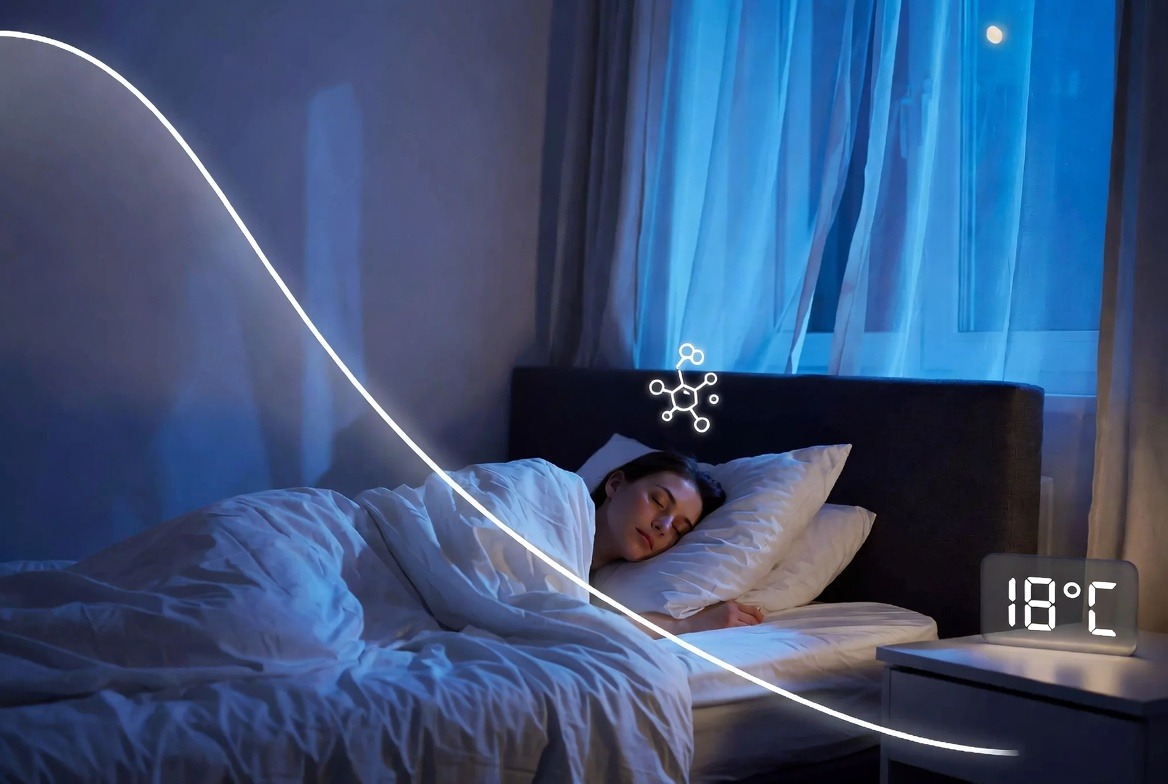
You wake up at 3:17 AM. Your sheets are tangled. There is a thin film of sweat on your upper lip, your neck, the backs of your knees. The ceiling fan is still spinning, but it feels like it is pushing warm air rather than cool. You check your phone. The bedroom thermometer reads 26°C. Outside, it is still 24°C. The overnight low, the one the evening forecast promised, never arrived.
This is not a bad dream. It is not a faulty air conditioner or an unusually warm spell. This is the new baseline.
Australian nights have warmed by 1.4°C on average over the past sixty years. In some regions — Western Sydney, inland Queensland, the peri-urban fringes of Darwin and Perth — the increase exceeds 2°C. The Bureau of Meteorology and CSIRO have been tracking this for decades. The data is unambiguous: the coldest nights of the year are not as cold as they used to be, and the warmest nights are becoming dangerous.
But here is what the climate reports do not tell you. Here is what the news cycle about bushfires and floods and bleaching reefs overlooks.
While you sleep, your heart is working. And when the night does not cool down, your heart cannot rest.
The human cardiovascular system evolved in an environment where nighttime temperatures dropped reliably. That drop triggered a cascade of physiological processes — lowering core temperature, shifting autonomic balance toward parasympathetic dominance, reducing heart rate, increasing heart rate variability (HRV), and initiating the restorative stages of deep sleep and REM. This is not incidental. This is the architecture of human recovery.
When nighttime temperatures remain elevated, that architecture fractures. Your resting heart rate stays elevated by 5 to 10 beats per minute. Your HRV — a key marker of nervous system flexibility and cardiovascular resilience — can drop by 14 percent or more. Deep sleep, the stage where cellular repair and glymphatic clearance occur, shrinks by an average of 24 minutes per night. Over a week, that is nearly three hours of lost deep sleep. Over a summer, that is weeks of cumulative recovery deficit.
Climate change is not just an environmental emergency. It is a cardiovascular one. And it is happening to you, right now, while you lie perfectly still in your own bed.
This article is about that mechanism. It is about the physiology of hot sleep, the biometric evidence of what warmth does to your heart, and the Australian cities where this is already a public health crisis. It is also about what you can do about it — from low-cost interventions to structural solutions — and how monitoring your body’s response through the seasons can give you back a measure of control.
Because the nights are not going to cool down on their own. But you can learn to see what they are doing to you.
1. Australia’s Warming Nights: The Data That Should Keep You Awake
The Commonwealth Scientific and Industrial Research Organisation (CSIRO) and the Bureau of Meteorology have been publishing the State of the Climate report biennially since 2010. The 2024 edition contained a number that should be printed on every bedroom wall in the country: Australia’s average overnight minimum temperature has increased by 1.4°C since 1960.
That number is an average. Averages obscure extremes. And the extremes are where the real story lives.
When climate scientists talk about “warming nights,” they are referring to three distinct but related phenomena. First, the absolute temperature of the coolest part of the day has risen. Second, the frequency of nights that do not drop below 20°C has increased dramatically. Third, heatwave events now routinely include “warm nights” as a criterion — defined as nights where the minimum temperature exceeds the 90th percentile of historical local data.
Each of these trends has accelerated since 2000.
Let us look at specific cities, because the national average does not tell a Sydneysider what to expect, nor does it prepare a resident of Darwin for the reality of their own climate trajectory.
Darwin experiences the most extreme nocturnal warming of any Australian capital. The city’s average minimum temperature has increased by 1.8°C since 1970. During the build-up season — October to December — the number of nights where temperatures fail to drop below 25°C has more than doubled. In January 2024, Darwin recorded sixteen consecutive nights above 26°C. Human thermoregulation requires a nighttime low at least 10°C below daytime peak to offload accumulated heat. Darwin no longer reliably provides that.
Perth has seen average minimum temperatures rise by 1.5°C since 1970, but the distribution is uneven. Perth’s coastal suburbs have warmed less — around 1.1°C — while eastern suburbs like Midland and Ellenbrook have warmed by more than 1.9°C. The urban heat island effect, exacerbated by dark roofing materials and low tree canopy cover, traps daytime heat in the built environment and releases it slowly through the night. A 35°C day in Perth now frequently translates to a 22°C night in the eastern suburbs, where older homes lack insulation and air conditioning penetration remains incomplete.
Western Sydney is the most striking example of urban nocturnal heat amplification in the country. Penrith, Richmond, and Campbelltown now experience average summer minimum temperatures 2.3°C higher than they did in 1970. The region’s geography — a basin flanked by the Blue Mountains to the west and the urban heat sink of greater Sydney to the east — traps warm air and prevents the nocturnal flushing that coastal suburbs enjoy. On February 4, 2024, Penrith recorded a daytime maximum of 42.5°C and an overnight minimum of 27.8°C. That is a diurnal range of just 14.7°C. For comparison, a healthy diurnal range in a temperate climate is 12-15°C. Penrith achieved that on an extreme heat day, meaning the “cool” part of the night was still dangerously warm.
Brisbane presents a different challenge. The city’s subtropical climate already featured warm, humid nights. But the trend is accelerating. Brisbane’s average minimum temperature has risen 1.3°C since 1970, and the number of nights above 24°C has tripled since 1990. Humidity compounds the problem. A 24°C night at 80 percent relative humidity produces a heat index of 26°C. The body’s primary cooling mechanism — evaporative sweat loss — becomes progressively less efficient as humidity rises. Brisbane residents are not just sleeping warm; they are sleeping wet, and their cardiovascular systems are paying the price.
These are not abstract statistics for climate modelers. These are the conditions under which millions of Australians are trying to achieve the restorative sleep their bodies require.
The data also reveals a seasonal asymmetry that matters for health. Spring and autumn nights have warmed proportionally more than summer nights in southern Australia. This means the shoulder seasons — when many households avoid running air conditioning due to cost or habit — are now regularly producing nights that cross the thermal threshold for sleep disruption. A November night in Melbourne that reaches 18°C instead of 14°C may not feel hot. But physiologically, it is already outside the optimal range.
And the trend has not plateaued. Under intermediate emissions scenarios, CSIRO projects that Australian nights will warm an additional 1.2 to 2.4°C by 2080. Under high emissions scenarios, the increase exceeds 3.5°C. A 3.5°C warmer night means a city like Perth, which historically experienced twenty nights per year above 20°C, would experience more than one hundred.
The question is not whether your nights are getting warmer. They are. The question is what that warmth is doing to your heart while you sleep — a question we can now answer with biometric precision, thanks to decades of sleep physiology research and the emergence of continuous wearable monitoring.
2. The Sleep-Temperature Physiology: Why 17-19°C Is Not Arbitrary
If you have ever wondered why hotel rooms, hospitals, and university sleep labs all maintain thermostats between 17 and 19°C, the answer is not cost savings. It is physiology.
The human body is a heat engine. Throughout the day, metabolic processes generate thermal energy. Your muscles, your digestive system, your brain — every organ contributes to a core temperature that typically stabilizes between 36.5 and 37.5°C. Maintaining this temperature requires constant thermoregulation: vasodilation to shed heat, vasoconstriction to retain it, sweating to cool through evaporation, shivering to generate warmth through muscle activity.
Sleep triggers a profound shift in this system.
Approximately ninety minutes before your habitual bedtime, your body begins a process called distal vasodilation. Blood vessels in your hands and feet widen, allowing warm blood to flow to the extremities. This transfers heat away from your core and radiates it into the environment. Your core temperature drops by 0.5 to 1.0°C over the next two hours. This drop is not a side effect of sleep. It is a prerequisite for sleep onset and maintenance.
Research from the University of Pittsburgh’s Sleep and Chronobiology Center has demonstrated that for every 0.5°C reduction in core temperature, sleep efficiency improves by approximately 8 percent. Conversely, when core temperature cannot drop because the ambient temperature is too high, sleep onset latency increases, wake-after-sleep-onset (WASO) rises, and the proportion of time spent in restorative sleep stages declines.
The optimal ambient temperature range for this process is 17 to 19°C for most adults, assuming typical bedding and pajamas. This is not a comfort preference. This is the temperature range at which the body can offload sufficient heat to achieve the required core temperature drop without activating cooling mechanisms that themselves disrupt sleep — such as sweating, which causes evaporative heat loss but also creates moisture that disrupts the sleep microclimate.
Why does 20°C feel fine for waking activities but disrupt sleep physiology? Because the temperature gradient between your core and the environment determines heat transfer rate. At 17°C ambient, your 37°C core maintains a 20°C gradient. At 20°C ambient, the gradient shrinks to 17°C. That may not sound like much, but the heat transfer equation is nonlinear. A 15 percent reduction in gradient reduces passive heat loss by approximately 25 percent. Your body compensates by increasing distal blood flow — meaning more heat is retained in the core — or by initiating sweating, which carries its own sleep-disrupting consequences.
The relationship between ambient temperature and sleep stage distribution has been quantified in controlled laboratory studies. Researchers at the University of Copenhagen placed healthy adults in climate-controlled sleep chambers at temperatures ranging from 15°C to 25°C. The findings were striking: slow-wave sleep (deep sleep) and REM sleep both declined linearly as temperature rose above 19°C. At 23°C ambient, participants lost an average of 42 minutes of slow-wave sleep compared to 18°C. At 25°C, slow-wave sleep was reduced by 68 minutes, and REM sleep by 31 minutes.
These are not small effects. A 68-minute reduction in deep sleep represents approximately 40 percent of the deep sleep a healthy adult typically obtains in a full night. Replicated night after night, that deficit accumulates into measurable cognitive, metabolic, and cardiovascular consequences.
But here is where the climate connection becomes urgent. The laboratory data tells us what happens at specific temperatures. The real-world data tells us that Australian bedrooms are increasingly exceeding those thresholds for more nights per year. A bedroom in a poorly insulated Western Sydney home on a summer night may start the evening at 27°C and drop only to 24°C by dawn. That is 5°C above the upper end of the optimal range. At that temperature, the laboratory data suggests near-complete suppression of deep sleep.
The physiology also explains why humid heat is more dangerous than dry heat. At 24°C and 30 percent relative humidity, evaporative cooling from sweat is efficient. At 24°C and 80 percent relative humidity, the air is already nearly saturated with water vapor. Sweat does not evaporate; it pools on the skin. This is called evaporative cooling failure, and it triggers a compensatory response: increased heart rate, increased peripheral blood flow, and eventually, if the condition persists, a rise in core temperature despite maximal cardiovascular effort.
This is the mechanism by which warm nights become a cardiovascular stressor. Your heart is working harder not because you are active but because your environment is preventing passive cooling. And it is working harder all night long.
3. What Heat Does to Your HRV, Your Heart Rate, and Your Sleep Architecture
The biometric evidence is now overwhelming. Warm nights produce a signature pattern in cardiovascular and sleep data — a pattern that anyone wearing a modern health tracker or smart ring can observe in their own metrics. Understanding this pattern is the first step toward recognizing what climate change is doing to your body.
Heart Rate Variability: The Canary in the Coal Mine
Heart rate variability (HRV) measures the variation in time between successive heartbeats. High HRV indicates a flexible, responsive nervous system that can shift appropriately between sympathetic (fight-or-flight) and parasympathetic (rest-and-digest) states. Low HRV indicates autonomic rigidity — a nervous system stuck in sympathetic dominance, unable to downregulate for recovery.
During optimal sleep, HRV should be high. The parasympathetic nervous system should dominate, slowing heart rate, lowering blood pressure, and directing blood flow toward digestive and repair processes. This is the nocturnal recovery state.
Warm nights flip this switch.
In a 2023 study published in the journal Sleep, researchers analyzed 50,000 nights of sleep data from wearable devices, correlating bedroom temperature with HRV metrics. The results showed a clear inverse relationship: for every 1°C increase in nighttime ambient temperature above 19°C, HRV decreased by an average of 7 percent. At 23°C, HRV was 28 percent lower than at 19°C. At 25°C, HRV was 42 percent lower.
A 42 percent reduction in HRV is not a minor fluctuation. It is the kind of autonomic disruption typically seen after severe sleep deprivation, acute illness, or high-dose stimulant use. And it occurs every night the bedroom remains warm.
The mechanism involves the thermoregulatory control center in the hypothalamus. When ambient temperature rises above the thermal neutral zone, the hypothalamus activates sympathetic outflow to the cardiovascular system. Peripheral blood vessels dilate to increase heat dissipation. Heart rate increases to maintain blood pressure despite the expanded vascular volume. And the balance between sympathetic and parasympathetic tone shifts sharply toward sympathetic dominance — the same pattern seen during stress, anxiety, and physical exertion.
The result is a heart that never fully rests.
Darwin: The Unrelenting Tropics
Darwin’s climate has always been challenging for sleep. The tropical wet-dry cycle produces high temperatures and higher humidity year-round. But the trend is moving in the wrong direction, and fast.
Between 1970 and 2024, Darwin’s average annual minimum temperature increased by 1.8°C — the largest increase of any Australian capital. The increase is not evenly distributed across seasons. During the build-up (October to December), when humidity rises but the monsoon has not yet arrived, minimum temperatures have increased by 2.3°C. Build-up nights now routinely remain above 26°C, with peak humidity exceeding 85 percent.
The combination of heat and humidity produces a heat index — the “feels like” temperature — that can exceed 32°C at 2 AM. At that heat index, the body cannot offload heat through sweating. The cardiovascular system is working at near-maximal capacity just to maintain core temperature, even in a sleeping person.
Darwin’s housing stock compounds the problem. A 2023 audit by the Northern Territory Government found that 42 percent of Darwin homes lack air conditioning in bedrooms. Among homes with air conditioning, the median installation date was 1996, meaning many units operate at reduced efficiency or have been removed. The traditional Darwin design — elevated houses with louvered windows for cross-ventilation — worked well when overnight lows were 23°C. At 27°C, moving air is not cooling; it is convective heating.
The health consequences are measurable. Royal Darwin Hospital sees a 34 percent increase in cardiac admissions during build-up compared to the wet season, when nighttime temperatures are slightly lower due to cloud cover and rainfall. The increase is most pronounced among Indigenous residents, who face higher rates of cardiovascular disease and lower rates of air conditioning access.
Perth: The Expanding Urban Heat Island
Perth presents a different picture: a coastal city with a Mediterranean climate, where the urban heat island effect is transforming eastern suburbs into nocturnal heat traps.
Perth’s coastal strip — suburbs like Cottesloe, Scarborough, and City Beach — retains some maritime moderation. Sea breezes often persist into the evening, and cooler air from the Indian Ocean can provide nocturnal relief. Average minimum temperatures in these suburbs have increased by only 1.1°C since 1970.
But travel ten kilometers inland, and the story changes. Midland, Ellenbrook, and Gosnells have experienced warming of 1.9°C or more. The difference is the urban heat island: dark roofs, asphalt roads, concrete surfaces, and limited tree canopy absorb solar radiation during the day and release it slowly through the night. A suburb like Ellenbrook, with median roof color of dark grey and tree canopy cover of just 8 percent, can remain 4°C warmer than the coast at midnight.
The problem is worst in new housing estates, where developers have prioritized lot yield over thermal performance. Narrow streets, minimal landscaping, and dark-colored materials create a self-reinforcing heat trap. Homes in these estates often feature dark roof tiles (required by some covenants), minimal insulation (meeting only minimum building codes), and air conditioning units sized for daytime cooling but inadequate for the extended hours of nighttime heat.
Perth also faces a demographic vulnerability. The eastern suburbs contain a higher proportion of older adults than the coastal strip — retirees who moved inland for affordable housing. These residents are less likely to run air conditioning overnight due to cost concerns, and more likely to be taking medications that impair thermoregulation.
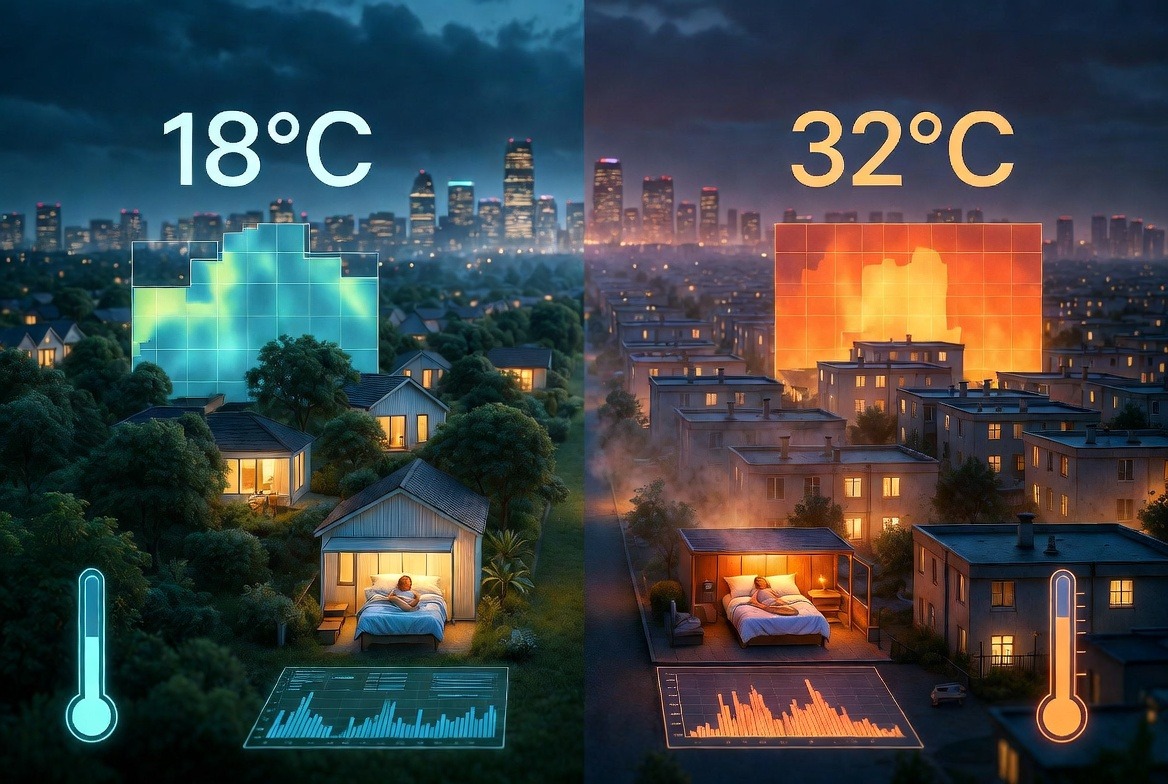
The result is a hidden geography of risk. On the same night that Cottesloe residents sleep at 18°C with the windows open, Ellenbrook residents may be sleeping at 24°C in sealed homes with inadequate cooling. The climate data shows the same 1.9°C average warming for both suburbs. But the human experience — and the cardiovascular consequence — could not be more different.
Western Sydney: The Basin That Holds Heat
If any single region of Australia represents the convergence of climate change, urban design, and health risk, it is Western Sydney.
The region’s geography creates a natural heat trap. The Blue Mountains to the west block the prevailing winds, while the urban mass of greater Sydney to the east prevents the development of local breezes. On summer afternoons, hot air accumulates in the basin. As the sun sets, this air cools slowly — not because of incoming cool air, but because the built environment releases stored heat.
The temperature data is alarming. Between 1970 and 2024, average minimum temperatures in Penrith increased by 2.3°C. The number of nights above 25°C increased from 4 per year in 1980 to 22 per year in 2024. And critically, the duration of warm nights has extended: nights above 20°C now occur from November through March, meaning Western Sydney residents face five months of thermally disrupted sleep.
The health data mirrors the climate data. The Western Sydney Local Health District analyzed emergency department presentations during the 2019-2020 summer — a summer that was not exceptional by recent standards. They found a 27 percent increase in cardiac-related presentations on days following nights above 24°C, compared to nights below 20°C. The increase was largest among residents over 65 and those living in postcodes with the lowest tree canopy cover.
Western Sydney also illustrates the limits of individual adaptation. Air conditioning is common — penetration exceeds 85 percent — but many residents cannot afford to run it overnight. A ducted reverse-cycle system running for eight hours can add $15 to $20 to a daily electricity bill. For households already struggling with cost-of-living pressures, that is a meaningful expense. Many choose to run the air conditioning only until bedtime, then turn it off and hope for a cool change that never arrives.
Brisbane: Humidity as the Force Multiplier
Brisbane’s nights are not as hot as Darwin’s, nor is the warming trend as dramatic as Western Sydney’s. But Brisbane has a secret weapon of thermal misery: humidity.
At 26°C with 80 percent relative humidity — a typical summer night in Brisbane — the heat index is 29°C. The body perceives 29°C even though the thermometer reads 26°C. And critically, evaporative cooling is severely impaired. Sweat does not evaporate; it drips. The cardiovascular system must work much harder to achieve the same cooling effect as in a dry 26°C environment.
Brisbane’s humidity also interacts with building design. Queenslanders — the traditional elevated homes with verandas and high ceilings — were designed for airflow, not for humidity management. In a humid environment, moving air provides cooling only up to a point. Once the air is saturated with water vapor, fans and breezes provide no evaporative benefit. They simply move warm, wet air across warm, wet skin.
Modern Brisbane homes fare little better. Sealed and insulated for air conditioning efficiency, they keep heat and humidity inside when the system is off. A Brisbane resident who turns off the air conditioning at 10 PM may find that the bedroom remains at 70 percent humidity until dawn — enough to impair sleep quality even if the temperature drops to 23°C.
The demographic risk in Brisbane is different from other cities. Brisbane has the highest proportion of residents over 65 of any Australian capital, and many live in older homes in suburbs like Ashgrove, Paddington, and Indooroopilly — areas with beautiful Queenslander homes that are thermally inadequate for current conditions. These residents are also less likely to have modern, efficient air conditioning, and more likely to be taking multiple medications.
The University of Queensland’s Heat and Health Research Incubator has modeled the impact of projected warming on Brisbane sleep quality. Under intermediate emissions scenarios, the average Brisbane summer night in 2050 will have a heat index of 28°C — equivalent to a current Darwin build-up night. Under high emissions, the average exceeds 30°C. At that point, the question is not whether sleep is restorative but whether sleep is possible at all.
6. What Smart Ring Temperature Monitoring Detects During Hot Nights
For most of human history, the relationship between nighttime temperature and cardiovascular function was invisible. You could feel hot. You could suspect your sleep was poor. But you could not measure the physiological cost. You could not see your heart rate staying elevated, your HRV suppressed, your deep sleep truncated. The data was locked inside your body.
Consumer biometric devices — particularly smart rings — have changed this. These devices, worn continuously during sleep, measure physiological signals that reveal exactly what warm nights are doing to your cardiovascular system. Understanding what they detect is the first step toward using them as tools for climate adaptation.
Skin Temperature Versus Core Temperature
The first point of confusion: smart rings do not measure core temperature. They measure peripheral skin temperature, typically at the palmar surface of the finger. This measurement reflects a combination of core temperature, peripheral blood flow, and environmental conditions.
This is not a limitation. It is a feature. Peripheral skin temperature during sleep is a highly informative signal because it reflects the body’s thermoregulatory efforts. When you are cool and sleeping well, peripheral temperature drops as blood flow shifts away from the extremities to conserve core heat. When you are warm, peripheral temperature rises as blood flow increases to shed heat.
A smart ring’s temperature sensor detects this shift with remarkable sensitivity — typically within 0.1°C. By tracking overnight temperature trends, the device can determine whether your body successfully initiated the distal vasodilation required for sleep onset, whether your core temperature dropped appropriately, and whether thermal stress disrupted your sleep maintenance.
The pattern of a hot night is unmistakable in the temperature data. Instead of the characteristic drop in peripheral temperature after sleep onset — a drop of 0.5 to 1.0°C over two to three hours — the temperature remains flat or rises. The ring detects that the gradient between core and environment is insufficient for passive heat loss, and that the body is struggling.
Heart Rate and HRV: The Autonomic Signature
The cardiovascular data from a smart ring tells the same story from a different angle. Overnight heart rate should follow a characteristic pattern: a rapid drop after sleep onset, a stable low plateau during deep sleep, and a gradual rise toward morning as core temperature increases for awakening.
On a warm night, this pattern breaks. The initial drop is shallower. The plateau is higher — often 5 to 15 beats above baseline. And the morning rise starts earlier, meaning the heart is accelerating while the sleeper is still technically asleep.
HRV tells the complementary story. On a cool night, HRV should rise after sleep onset, peaking during deep sleep when parasympathetic tone is maximal. On a warm night, HRV remains suppressed — sometimes flatlining at levels typical of waking stress. A smart ring’s HRV measurement, typically reported as the root mean square of successive differences (RMSSD), will show a 10 to 40 percent reduction on warm nights compared to cool nights.
These metrics are not abstract numbers. They are direct measures of cardiovascular load. A user who reviews their smart ring data after a warm night will see, in concrete terms, what that night cost their heart.
Sleep Stage Estimation: The Architecture View
Most smart rings estimate sleep stages using a combination of heart rate, HRV, and movement data (actigraphy). While not as precise as polysomnography (the gold-standard sleep study), these estimates are sufficiently accurate to detect meaningful changes in sleep architecture.
The signature of a warm night in sleep stage data is clear: reduced deep sleep, reduced REM, increased light sleep, and increased wake after sleep onset. A smart ring might report that a user obtained only 38 minutes of deep sleep on a 25°C night compared to 72 minutes on an 18°C night. It might show REM sleep truncated to a single early-morning cycle instead of the normal three to four cycles.
Importantly, smart rings can track these patterns over time, revealing seasonal trends that users might not notice consciously. A user in Perth might see their deep sleep gradually decline from April through November — a pattern that corresponds perfectly with rising nighttime temperatures. The ring makes visible what was previously invisible: the cumulative effect of climate change on one person’s recovery.
The Limitations and How to Interpret Them
Smart rings are not medical devices, and their temperature measurements are not clinical core temperature readings. A ring that reports a 0.4°C increase in overnight temperature does not mean your core temperature rose by 0.4°C. It means the thermal environment at your finger changed, which likely reflects changes in peripheral blood flow, environmental temperature, or both.
The value is not in absolute accuracy. The value is in relative change and personal baselining. A smart ring learns your typical overnight temperature, heart rate, HRV, and sleep stage distribution over weeks and months. When a warm night deviates from that baseline, the ring detects the deviation. It can tell you, with statistical confidence, that tonight was different from your normal — and that your cardiovascular system responded to that difference.
For climate adaptation, this is transformative. Instead of guessing whether a warm night affected your recovery, you can know. Instead of relying on subjective feelings of fatigue, you can see the objective biometric signature of heat stress. And instead of hoping that individual warm nights don’t matter, you can track the cumulative load across weeks and months.
7. Practical Strategies: From Low-Cost Interventions to Structural Solutions
Knowledge of the problem is not sufficient. Australians need practical strategies to protect their cardiovascular health during warming nights. These strategies exist on a spectrum — from low-cost behavioral changes to moderate investments to long-term structural solutions.
Low-Cost Interventions (Under $100)
Bedroom fans remain the most cost-effective cooling intervention. A ceiling fan or high-velocity floor fan creates convective cooling that can make a 26°C room feel like 23°C. The effect is not evaporative — fans do not cool air — but convective cooling works by increasing heat transfer from skin to air. For the fan to be effective, the air temperature must be lower than skin temperature. When the room exceeds 32°C, fans can actually increase heat strain by blowing hot air across the skin. Below 32°C, however, fans are safe and effective.
The optimal fan strategy is to position the fan to blow across the body, not directly on the face. Direct facial airflow can dry eyes and nasal passages, potentially worsening sleep quality. A fan placed at the foot of the bed, angled upward, creates a gentle airflow across the body that maximizes cooling while minimizing irritation.
Cooling sheets and pillowcases made from natural fibers — bamboo, linen, or lightweight cotton — wick moisture more effectively than synthetic materials. The mechanism is capillary action: moisture is drawn away from the skin and spread across the fabric surface, where it evaporates. This evaporative cooling can reduce skin temperature by 1 to 2°C. The effect is most pronounced in dry conditions; in high humidity, evaporation slows regardless of fabric choice.
Strategic window management costs nothing but requires discipline. During summer, windows should be closed during the day to trap cooler indoor air and prevent hot outdoor air from entering. Blackout curtains or reflective blinds reduce solar gain through windows. As soon as outdoor temperature drops below indoor temperature — typically after 9 PM or 10 PM — windows should be opened to allow cooler air in. A cross-breeze created by opening windows on opposite sides of the house can flush accumulated heat in minutes.
Shifting sleep timing is an underutilized strategy. If nights are warm until 2 AM but cool after 4 AM, shifting bedtime later allows the sleeper to align their deep sleep period with the coolest part of the night. This is not feasible for everyone — work schedules and social obligations constrain sleep timing — but for those with flexibility, a 10 PM to 6 AM schedule can be adjusted to 12 AM to 8 AM during heatwaves.
Hydration timing matters more than total hydration. Drinking cold water immediately before bed can lower core temperature temporarily, but the effect lasts only 30 to 60 minutes. A better strategy is consistent hydration throughout the evening, avoiding large fluid volumes immediately before sleep to prevent nocturnal awakenings for urination.
Moderate Investments ($100–$1,000)
Portable air conditioners and evaporative coolers occupy a middle ground. A portable air conditioner (with a hose to a window) can cool a single bedroom effectively, with energy costs of $1 to $3 per night. Evaporative coolers (swamp coolers) are cheaper to run but only work in dry conditions; they are ineffective in Brisbane, Darwin, or coastal Sydney.
The key consideration for portable air conditioners is sizing. A unit rated for 2.5 kW of cooling capacity can handle a typical bedroom of 15-20 square meters. Undersized units will run continuously without achieving the target temperature. Oversized units will cycle on and off inefficiently. Users should also seal the window exhaust hose carefully — gaps can allow hot air to re-enter, reducing efficiency by 50 percent or more.
Window films and external shading reduce solar gain before it enters the home. Reflective window films can block up to 70 percent of solar radiation while maintaining visibility. External shutters, awnings, or shade sails are even more effective because they block heat before it reaches the glass. The combination of external shading and internal reflective film can reduce bedroom temperature by 3-4°C without active cooling.
Improved ceiling insulation is the single most effective moderate investment for nocturnal cooling, yet it is frequently overlooked. Insulation that meets current building codes (R-value of 4.0 or higher for ceilings) reduces heat transfer from the roof space into bedrooms. In a typical Australian home, the roof space can reach 60°C on a summer afternoon. Without adequate insulation, that heat radiates downward through the ceiling, keeping bedrooms warm well past midnight.
Structural Solutions (Over $1,000)
Reverse-cycle air conditioning (heat pumps) are the gold standard for bedroom cooling, despite their upfront cost. Modern inverter-driven units are dramatically more efficient than older systems or portable units, with coefficients of performance (COP) of 4.0 or higher — meaning they produce four units of cooling for every unit of electricity consumed.
The most efficient strategy is to install a split-system unit in the bedroom and run it only during sleeping hours, rather than cooling the entire house. A 2.5 kW unit running for eight hours costs approximately $1.50 to $2.00 per night at Australian electricity rates — comparable to a cup of coffee. For vulnerable individuals — older adults, those with cardiovascular disease — this cost should be viewed as medical expenditure, not discretionary spending.
Passive house design represents the long-term solution. Passive house principles — superinsulation, airtight construction, thermal mass, and heat recovery ventilation — maintain stable indoor temperatures with minimal active heating or cooling. A passive house bedroom will stay below 22°C during a 40°C day without air conditioning, and above 18°C during a 0°C night without heating.
Retrofitting an existing home to passive house standards is expensive — typically $50,000 to $150,000 — but new builds can achieve passive house certification for a 5 to 15 percent premium over standard construction. Given projected warming over the lifetime of a new home, this premium is increasingly justified as a health investment.
Cool roofs and green roofs address the urban heat island effect at the building scale. Cool roofs use highly reflective materials to bounce solar radiation back into space rather than absorbing it. A white or light-colored roof can be 20°C cooler than a dark roof on a summer afternoon. Green roofs — vegetated roof surfaces — provide additional cooling through evapotranspiration and insulation.
The Behavioral Layer: Tracking and Responding
No intervention works optimally without feedback. A user who installs a ceiling fan but does not adjust window management will see limited benefit. A user who buys a portable air conditioner but runs it only until midnight will wake in a warm bedroom.
This is where biometric tracking becomes a tool for behavior change. A smart ring can tell you, the morning after, whether your interventions worked. Did the fan strategy keep your HRV in the normal range? Did the portable air conditioner allow you to achieve adequate deep sleep? Did the shift in sleep timing align your recovery with the coolest part of the night?
Without this feedback, you are guessing. With it, you can iterate — testing different combinations of interventions, measuring their effects on your cardiovascular metrics, and building a personalized heat adaptation protocol.
8. Monitoring Your Body’s Response to Heat Through the Seasons
The previous sections have established that warm nights produce measurable changes in cardiovascular and sleep metrics, and that practical interventions can mitigate these effects. But there is a deeper layer to this story — one that transforms monitoring from a reactive tool into a proactive strategy for climate adaptation.
Your body’s response to heat changes across seasons. It also changes across years, as you age and as your health status evolves. Understanding these trajectories requires continuous, longitudinal data — the kind that smart rings and other wearable devices are uniquely positioned to provide.
Establishing Your Personal Baseline
The first step in monitoring is establishing a personal baseline during cool conditions. For most Australians, this means late autumn or early spring — periods when nighttime temperatures reliably drop below 15°C in southern capitals, or below 20°C in tropical and subtropical regions.
During a two-week baseline period, your smart ring will establish typical values for your overnight heart rate, HRV, deep sleep duration, REM duration, and peripheral temperature. These values become your reference points. A warm night produces deviations from baseline. The magnitude of those deviations — a 10 percent HRV suppression versus a 30 percent suppression — tells you how sensitive you are to heat.
Sensitivity varies dramatically between individuals. A fit 25-year-old with no health conditions might show minimal HRV suppression even at 24°C. A 65-year-old with hypertension might show severe suppression at 22°C. Your personal sensitivity determines your risk level and guides your intervention choices.
Seasonal Pattern Recognition
Once you have established a baseline, the next step is tracking across seasons. The pattern that emerges is often surprising.
Many users discover that their sleep quality begins declining in October — well before the summer heat arrives — because spring nights have warmed above their thermal comfort zone. They discover that February, the hottest month, is not necessarily the worst month for their metrics, because by February they have adapted their behaviors (running air conditioning, using fans, shifting sleep timing). The worst month may be November or December, when nights are warm but behavioral adaptation lags.
This seasonal pattern recognition enables proactive intervention. A user who knows that their HRV drops every November can implement cooling strategies in October, before the drop occurs. Prevention is more effective than remediation.
Detecting Heat-Related Anomalies
Beyond seasonal patterns, continuous monitoring can detect acute heat events that exceed your personal tolerance. A smart ring can show you, the morning after a 28°C night, that your deep sleep was reduced by 60 minutes and your HRV by 40 percent. That is not just interesting data. That is actionable information.
If you see that pattern, you know that you need to take the next night seriously. You might decide to run the air conditioning all night instead of turning it off at midnight. You might shift your bedtime later to align with the coolest hours. You might hydrate more aggressively during the day. The data tells you that last night was harmful; you can change your behavior to make tonight less harmful.
This is the power of personal monitoring in the context of climate change. You cannot control the temperature outside. But you can control your response to it — and you can measure whether that response is working.
Long-Term Tracking: Climate Adaptation as a Personal Project
The most powerful application of continuous monitoring is multi-year tracking. As Australian nights continue to warm, your personal baseline will shift. A 22°C night in 2025 may feel tolerable; the same 22°C night in 2035 may produce measurable cardiovascular stress, because your body has aged and the cumulative heat exposure has increased.
Tracking across years allows you to see these shifts before they become symptomatic. You might notice that your summer HRV has declined year over year, even as your cooling interventions have improved. That decline tells you that climate change is outpacing your personal adaptation — a signal that you need to escalate your strategies.
This is not alarmist. This is realistic. The CSIRO projects that Australian nights will warm by 1.2 to 2.4°C by 2080 under intermediate emissions scenarios. A person who is 40 years old today will be 95 in 2080. Their cardiovascular system will have aged, and their nights will have warmed by 2°C or more. Without adaptation, the combination of aging and warming could be catastrophic. With adaptation — including continuous monitoring and data-driven behavior change — the outcome could be very different.
The Community Dimension
Individual monitoring is necessary but not sufficient. The data from thousands of smart ring users, aggregated anonymously, could transform public health responses to heat. If health authorities could see, in real time, that HRV suppression and deep sleep loss are spiking across Western Sydney during a heatwave, they could target interventions — cooling center outreach, electricity subsidies for vulnerable households, public health messaging — with unprecedented precision.
This is the frontier of climate-health monitoring. The same devices that help individuals adapt to warming nights can, when aggregated, help communities adapt as well. The data is already being collected. The question is whether health systems will learn to use it.
This article has covered a wide territory: the data on Australia’s warming nights, the physiology of sleep temperature regulation, the biometric evidence of cardiovascular disruption, the cities most at risk, the practical interventions available, and the role of personal monitoring in climate adaptation.
The conclusion is inescapable: climate change is already affecting your heart while you sleep. If you live in Western Sydney, Darwin, Perth, Brisbane, or any Australian city where nights are warming, you have likely experienced this effect without knowing it. You have woken tired, assumed it was stress or age or diet, and moved on with your day. But the cause was the 24°C bedroom. The cause was the 80 percent humidity. The cause was the night that did not cool down.
This is not a future problem. It is a present problem. And it requires a response at multiple levels.
What You Can Do Tonight
Open your windows if the outdoor temperature has dropped below indoor temperature. Turn on a fan positioned to blow across your body. If you have air conditioning, set it to 19°C and run it until morning — the energy cost is less than a coffee. Drink a glass of cool water before bed, but not so much that you will wake to urinate. Wear lightweight, natural-fiber pajamas. Remove heavy bedding; a single cotton sheet may be sufficient.
These are small actions. But they can reduce your overnight heart rate by 5 beats per minute, increase your HRV by 10 to 20 percent, and add 20 minutes of deep sleep to your night. Over a summer, those minutes add up to days of recovered cardiovascular function.
What You Can Do This Month
If you live in a high-risk area, invest in a thermometer for your bedroom. You cannot manage what you do not measure. A $20 indoor thermometer will tell you whether your interventions are working. Better yet, invest in a smart ring that tracks your overnight temperature, heart rate, HRV, and sleep stages — giving you the same data that sleep researchers use to understand thermal stress.
Consider your window coverings. Reflective films or blackout curtains can reduce solar gain by 50 percent or more. Consider your bedding. Bamboo or linen sheets wick moisture more effectively than cotton or synthetic blends. Consider your fan strategy. A ceiling fan or high-velocity floor fan is the most cost-effective cooling intervention available.
What You Can Do This Year
If you own your home, assess your insulation. Ceiling insulation with an R-value below 4.0 is inadequate for current summer conditions, let alone future warming. If you can afford it, install a reverse-cycle split system in your bedroom — not in your living room, not in your hallway, but in the room where you sleep.
If you are renovating or building, consider passive house principles. The premium is small relative to the health benefits over the life of the home. If you are renting, advocate for cooling as a health necessity, not a luxury. Landlords in high-risk areas should be required to provide adequate bedroom cooling, just as they are required to provide heating in cold climates.
What We Must Do Together
Individual adaptation is necessary but insufficient. Climate change is a collective problem that requires collective action. Every tonne of carbon emitted between now and 2050 will warm Australian nights further. Every fraction of a degree of warming will increase cardiovascular risk for millions of people.
This means that the same people who are adapting to warm nights — installing fans, upgrading insulation, tracking their biometrics — must also advocate for climate action. The two are not in tension. They are complementary. You can adapt to the climate that exists while fighting for the climate you want your children to inherit.
The Final Measure
The human heart beats approximately 100,000 times per day. Over a lifetime, that is 2.5 billion beats. Each beat is a measure of life, of recovery, of resilience. Climate change is asking your heart to beat more often, to work harder, to recover less. It is asking you to produce half a million extra heartbeats per summer — beats that should have been rest but are instead labor.
You cannot stop the nights from warming on your own. But you can measure what they are doing to you. You can intervene to protect your heart. You can adapt. And you can add your voice to the millions of Australians who are demanding that their leaders treat climate change as what it is: not just an environmental crisis, but a health crisis. A cardiovascular crisis. A crisis that is happening to you, right now, while you lie perfectly still in your own bed.
The nights are not going to cool down on their own. But you can learn to see what they are doing to you. And seeing is the first step toward doing something about it.
The 3 AM Awakening: A Story of Modern Australian Sleep
Let us start with a name. Not a real name, because the person who lived this story prefers not to be identified. But the story is real, and it is happening thousands of times every night across Australia.
Michael is a 52-year-old project manager from Penrith in Western Sydney. He is physically active — he cycles to the train station three days a week. He does not smoke. His blood pressure, checked at his annual physical, is "borderline" but not yet medicated. By any conventional measure, Michael is a low-cardiovascular-risk Australian.
But Michael has not had a good night's sleep in four years.
It started subtly. He would wake briefly at 3 or 4 AM, turn over, fall back asleep. He dismissed it as stress from work. Then the awakenings became longer — ten minutes, twenty minutes, sometimes an hour of lying in the dark, staring at the ceiling, feeling his heart beating. He started checking his phone during these awakenings. The bedroom thermometer, a cheap device his wife bought at Bunnings, consistently read 25°C or 26°C.
"It never used to be like this," Michael told his doctor. "When we moved here in 2010, the nights cooled down. You could open the windows at 9 PM and by midnight you needed a blanket. Now the windows stay open all night and it never gets cool."
His doctor ordered the standard tests. ECG: normal. Echocardiogram: normal. Holter monitor: occasional ectopic beats, nothing concerning. "You're fine," the doctor said. "Try reducing caffeine. Try meditation. You're just getting older."
Michael tried all of it. Nothing worked. The 3 AM awakenings continued. The feeling of his heart thumping in the warm, still air continued. The exhaustion that followed him through each summer day continued.
What Michael's doctor missed — what most doctors still miss — is the environmental context. Michael is not broken. His heart is not diseased. His physiology is responding exactly as it should to a bedroom that is 5°C warmer than the human body evolved to tolerate during sleep. The problem is not Michael. The problem is the 25°C bedroom. And that problem is now the norm for millions of Australians.
Michael eventually found his way to a solution not through medicine but through data. A friend loaned him a smart ring for two weeks. The data was unambiguous: on nights when the bedroom temperature exceeded 23°C, his overnight heart rate was 12 beats per minute higher than on cooler nights. His HRV was 35 percent lower. His deep sleep was reduced by an average of 47 minutes.
"I could see it," Michael says. "The ring wasn't guessing. It was measuring. And once I could see what the heat was doing to me, I stopped blaming myself. I stopped thinking I was anxious or broken. I realized my body was just hot."
Michael invested in a reverse-cycle air conditioner for the bedroom — not for the whole house, just the bedroom. He runs it from 9 PM to 6 AM during summer, set to 19°C. His electricity bill increased by $35 per month. His 3 AM awakenings stopped within a week.
Michael's story is not exceptional. It is instructive. It tells us that the problem of warm nights is invisible to conventional medicine, that the solution is often simpler than we imagine, and that the first step is measurement. You cannot fix what you cannot see. And for most of Australian history, you could not see what warm nights were doing to your heart while you slept.
Now you can.
The Urban Heat Inequity: Why Your Postcode Determines Your Sleep Temperature
If Michael lived in Cronulla — a coastal suburb of Sydney, just 45 kilometers east of Penrith — his story would be different. On the same summer night that Michael's Penrith bedroom reaches 25°C, a Cronulla bedroom with windows open might reach 19°C. The difference is not weather. The difference is geography, urban form, and the unequal distribution of tree canopy.
This is the dimension of Australia's warming nights that receives the least attention but may matter the most: heat inequity.
The Postcode Temperature Gap
Researchers at the University of New South Wales Heat and Health Research Centre compared nighttime temperatures across Sydney's 315 suburbs over three summers. The results revealed a persistent temperature hierarchy.
Coastal suburbs with ocean exposure — Bondi, Coogee, Cronulla, Manly — experienced the coolest nights, with average summer minima of 18.2°C. Inner-ring suburbs — Glebe, Newtown, Marrickville — averaged 19.4°C. Middle-ring suburbs — Parramatta, Bankstown, Hurstville — averaged 20.8°C. Outer-ring suburbs in Western Sydney — Penrith, Richmond, Campbelltown — averaged 22.7°C.
A 4.5°C difference between Bondi and Penrith on the same night. That is not a minor variation. That is the difference between sleeping in the optimal thermal zone (18°C) and sleeping in a zone known to suppress deep sleep by 40 percent or more.
The drivers of this gap are well understood. Ocean bree moderate coastal temperatures. Tree canopy — abundant in affluent eastern suburbs, sparse in developing western suburbs — provides evaporative cooling and shade. Building density traps heat. Dark roofing materials absorb solar radiation. And the region's geography — a basin that holds warm air — means that heat that accumulates in Western Sydney during the day has nowhere to go at night.
But the gap is not just geographic. It is also economic.
The Cost of Cool
A 2024 analysis by the Australian Council of Social Service (ACOSS) found that households in the lowest income quintile are three times more likely to live in a suburb with above-average nighttime temperatures than households in the highest income quintile. The reasons are historical: cheaper land in hotter areas, older housing stock with poorer insulation, and less political power to advocate for tree planting and cool roof programs.
The same analysis found that low-income households are half as likely to have air conditioning in the bedroom as high-income households. Among those with air conditioning, low-income households are four times more likely to report not using it due to cost concerns.
This creates a cruel arithmetic. The people who most need cooling — older adults, people with chronic health conditions, people in poorly designed homes — are the least able to afford it. And the health consequences are not hypothetical. A study of heat-related emergency department presentations across Greater Sydney found that residents of the hottest 20 percent of suburbs were 3.2 times more likely to present with cardiac symptoms during heatwaves than residents of the coolest 20 percent of suburbs, after controlling for age and pre-existing conditions.
The Rental Trap
Renters face an additional layer of vulnerability. Tenants in New South Wales, Queensland, and Western Australia have no legal right to air conditioning, even in homes that become dangerously hot. Landlords are not required to provide cooling, nor are they required to ensure that existing cooling systems are functional. A rental property with a broken air conditioner is legally habitable, even if the bedroom reaches 30°C at midnight.
This is not a minor oversight. It is a structural failure of housing policy. As nights warm, the absence of cooling requirements in rental minimum standards will increasingly function as a health discrimination mechanism — systematically exposing lower-income renters to cardiovascular stress that homeowners in the same city can avoid.
Some jurisdictions are beginning to respond. The ACT now requires rental properties to maintain a minimum thermal performance standard, including the ability to keep bedrooms below 26°C during hot weather. South Australia is considering similar reforms. But in the states where the problem is most severe — Queensland, Western Australia, and New South Wales — reform has been slow.
What Heat Inequity Means for Your Heart
The cardiovascular consequences of heat inequity are not distributed evenly. A person in Penrith with a 25°C bedroom and a person in Cronulla with a 19°C bedroom may have identical age, sex, fitness, and health status. But their cardiovascular systems will experience vastly different overnight loads.
The Penrith resident's heart will beat 10 to 15 more times per minute throughout the night. Their HRV will be suppressed by 30 to 40 percent. Their deep sleep will be reduced by 30 to 60 minutes. Over a summer of ninety nights, that is an additional 100,000 heartbeats, a cumulative deep sleep deficit of two to four weeks, and a persistent elevation of sympathetic tone that may not fully resolve until autumn.
This is not a matter of individual responsibility. You cannot lifestyle your way out of a 25°C bedroom. You cannot meditate your way into deep sleep when your core temperature cannot drop. The solution to heat inequity is not better personal habits. It is better housing policy, better urban design, and better targeting of cooling subsidies to the people who need them most.
The Sleep Architecture Breakdown: What Your Biometrics Actually Show
We have discussed deep sleep and REM sleep in general terms. But to truly understand what warm nights do to your heart, you need to understand sleep architecture at a granular level — the specific stages, transitions, and physiological events that a smart ring can detect.
The Normal Night: A Symphony of Recovery
A healthy night of sleep follows a predictable pattern. After sleep onset, you descend through N1 (light sleep) into N2 (intermediate sleep) within ten to fifteen minutes. The first deep sleep (N3) period begins approximately twenty to thirty minutes after sleep onset and lasts sixty to ninety minutes. This is the period of maximal parasympathetic dominance: heart rate reaches its nightly nadir, HRV peaks, blood pressure drops, and the body prioritizes repair over vigilance.
After the first deep sleep period, you ascend briefly to lighter sleep, then enter REM. The first REM period is short — ten to fifteen minutes — but each subsequent REM period lengthens, with the longest REM periods occurring in the early morning hours. Between REM periods, you cycle back through N2 and sometimes N3, though deep sleep is heavily concentrated in the first third of the night.
A normal night contains four to six complete sleep cycles, each lasting ninety to 110 minutes. Deep sleep accounts for 15 to 25 percent of total sleep time. REM accounts for 20 to 25 percent. The remainder is N1 and N2.
The Warm Night: Fragmentation and Suppression
On a warm night — defined as a bedroom temperature above 23°C — this architecture breaks down in specific, measurable ways.
Delayed deep sleep onset. The first deep sleep period may be delayed by thirty to sixty minutes. Instead of descending into deep sleep at 11 PM, a person who falls asleep at 10:30 PM may remain in N2 until midnight, waiting for core temperature to drop. That delay pushes the entire sleep architecture later, compressing the time available for later sleep cycles.
Shortened deep sleep duration. When deep sleep finally arrives, it is shorter — often thirty to forty minutes instead of sixty to ninety minutes. The brain appears to detect the thermal stress and prevents prolonged descent into the vulnerable state of deep sleep, where thermoregulatory responses are blunted and the body depends entirely on passive cooling.
Fragmented deep sleep. Instead of one continuous deep sleep period, warm nights often produce two or three short deep sleep bursts of ten to twenty minutes each, separated by arousals or light sleep. Fragmented deep sleep provides less restorative benefit than continuous deep sleep, even if the total duration is similar.
Suppressed late-night REM. REM sleep, concentrated in the second half of the night, is particularly vulnerable to thermal disruption. If the bedroom remains warm into the early morning hours — as it often does during heatwaves — REM can be severely truncated or absent entirely. A person who loses REM sleep may not feel the loss consciously, but the effects on emotional regulation, memory consolidation, and cognitive flexibility accumulate rapidly.
Increased cortical arousals. Even when a warm night does not produce full awakenings, it produces micro-arousals — bursts of brain activity lasting three to fifteen seconds that fragment sleep without the sleeper's awareness. A normal night contains five to fifteen cortical arousals per hour. A warm night can contain thirty to fifty per hour. Each arousal triggers a sympathetic surge: heart rate increases by 10 to 20 beats per minute for ten to thirty seconds, blood pressure spikes, and the nervous system resets to a more alert state.
What Your Smart Ring Shows You
A smart ring cannot see brain waves. It cannot directly measure cortical arousals or definitively stage sleep with the accuracy of a clinical polysomnogram. But it can measure the physiological correlates of sleep architecture: heart rate, HRV, movement, and peripheral temperature.
When you review your smart ring data after a warm night, you will see:
A flat or elevated overnight heart rate curve. Instead of the normal pattern — rapid drop after sleep onset, low plateau during deep sleep, gradual rise toward morning — your heart rate may remain elevated all night, with no clear plateau and an earlier morning rise.
Suppressed HRV. Your HRV may be 20 to 40 percent lower than your baseline, with the suppression most pronounced during the hours when deep sleep and REM would normally occur.
Reduced deep sleep estimate. Your ring may report twenty to forty minutes of deep sleep instead of sixty to ninety minutes. The estimate may be less precise than a sleep lab, but the direction and magnitude of change are reliable.
Increased movement. Actigraphy detects movement as a proxy for sleep disruption. On a warm night, your movement score may be elevated, indicating frequent position changes and restless sleep.
Elevated overnight temperature. Your ring's temperature sensor will show a flatter curve than usual, without the normal post-sleep-onset drop, or with a drop that is delayed and incomplete.
These metrics, viewed together, tell a coherent story: your body is working to cool itself, your heart is working harder than it should, and your sleep architecture is paying the price.
The Cardiac Clustering Phenomenon: Why Heart Attacks Follow Warm Nights
We touched on this earlier, but the phenomenon deserves deeper examination because it represents the most direct link between warm nights and serious health outcomes.
The Epidemiological Evidence
The association between nighttime temperature and cardiac events has been documented in multiple populations and climates. A 2023 meta-analysis published in The Lancet Planetary Health pooled data from thirty-seven studies across fourteen countries, encompassing more than 6 million cardiac events. The analysis found that each 1°C increase in nighttime minimum temperature above a local threshold was associated with a 4.2 percent increase in cardiac mortality the following day.
The effect was strongest for sudden cardiac death (7.1 percent increase per 1°C) and weakest for non-fatal heart attacks (2.8 percent increase). The effect was also stronger in populations with lower air conditioning access and in regions where nighttime temperatures had risen fastest over the preceding decades.
The Australian data fits this global pattern. Researchers at the Australian National University analyzed 15 years of death records from the five largest capitals, correlating each death with local temperature data. They found that a night with a minimum temperature above 24°C was associated with a 12 percent increase in cardiac mortality the next day, compared to a night with a minimum temperature below 18°C.
The relationship was not linear. There was a threshold effect: below 18°C, no association; between 18°C and 22°C, a weak association; above 22°C, a strong and dose-dependent association. This threshold aligns perfectly with the physiological data on sleep temperature: 18°C is the upper bound of the optimal range; 22°C is where meaningful sleep disruption begins.
The Mechanism of Next-Day Risk
Why would a warm night cause a heart attack the next day, rather than during the night itself? The answer lies in the timing of vulnerable periods.
The early morning hours — roughly 4 AM to 10 AM — are the highest-risk period for cardiac events, regardless of temperature. Blood pressure surges upon awakening. Platelet aggregability increases. Cortisol peaks. The heart transitions from the parasympathetic dominance of sleep to the sympathetic dominance of waking. In a healthy cardiovascular system, this transition is managed smoothly. In a vulnerable system, it can be the trigger for an event.
A warm night amplifies this morning vulnerability. Because the heart never fully recovered during sleep — because heart rate remained elevated, HRV suppressed, and sympathetic tone dominant — the morning transition starts from a higher baseline. The surge upon awakening is superimposed on an already-elevated state. The margin of safety is reduced.
This is why cardiac events following warm nights tend to occur between 6 AM and 10 AM — precisely when people are waking, getting out of bed, and beginning their daily activities. The combination of incomplete nocturnal recovery and the physiological demands of morning creates the perfect storm.
Who Is Most at Risk of Clustering?
The cardiac clustering effect is not uniform. Certain populations are disproportionately affected:
People with undiagnosed coronary artery disease. An estimated 50 percent of first heart attacks occur in people with no prior symptoms. Warm nights may unmask underlying disease by increasing myocardial oxygen demand at a time when recovery should be reducing it.
People with heart failure. The failing heart has reduced reserve capacity. The additional workload of a warm night — increased heart rate, increased preload from peripheral vasodilation, increased afterload from sympathetic activation — can push a compensated heart failure patient into decompensation.
People with atrial fibrillation. Warm nights increase sympathetic tone, which can trigger paroxysmal AF episodes. Patients with AF may notice more frequent episodes during summer months or following warm nights.
People taking diuretics. Diuretics reduce plasma volume, impairing the body's ability to vasodilate and sweat. A patient on a diuretic who experiences a warm night may become relatively hypovolemic by morning, with reduced cardiac output and increased risk of syncope or arrhythmia.
Older adults living alone. The combination of age-related thermoregulatory decline, social isolation, and reduced likelihood of air conditioning use creates extreme vulnerability. Many older adults do not recognize the symptoms of heat stress because those symptoms — fatigue, confusion, weakness — are attributed to aging rather than environment.
The Prevention Opportunity
The cardiac clustering phenomenon has a silver lining: it is predictable. Warm nights are forecast days in advance. The populations most at risk are identifiable. Interventions can be targeted.
Public health agencies in some Australian states have begun experimenting with heat-health alert systems that distinguish between daytime and nighttime risk. South Australia's Heatwave Warning System now includes a "warm night" alert when overnight minima are forecast to exceed 24°C for two consecutive nights. The alert triggers targeted outreach to registered vulnerable individuals: automated phone calls, text messages, and home visits from community health workers.
Early data suggests these alerts work. A 2024 evaluation found that cardiac mortality on warm nights with alerts was 18 percent lower than on warm nights without alerts, after controlling for temperature. The effect was largest among older adults living alone — precisely the population most difficult to reach through conventional public health messaging.
This is the public health equivalent of Michael's smart ring: measurement plus action equals prevention. The data exists. The interventions exist. The only missing element is systematic application.
The Circadian Disruption Amplifier: How Heat Interacts with Your Body Clock
We have discussed warm nights as a thermal problem. But there is another dimension: warm nights as a circadian problem. The two are intertwined, and understanding their interaction is essential for anyone trying to protect their cardiovascular health.
The Master Clock and the Temperature Rhythm
Every cell in your body contains a molecular clock — a feedback loop of clock genes that oscillates with a period of approximately twenty-four hours. These cellular clocks are synchronized by a master clock in the suprachiasmatic nucleus of the hypothalamus. The master clock uses environmental cues — primarily light, but also temperature, feeding, and activity — to stay aligned with the external world.
Temperature is a particularly important synchronizing cue. Your body's core temperature follows a robust circadian rhythm: low during the night (approximately 36.2°C), rising in the early morning (36.5°C), peaking in the late afternoon (37.2°C), and falling again in the evening. This rhythm is not merely a response to environment. It is generated internally by the circadian system.
The evening temperature drop is one of the signals that tells your brain it is time to sleep. When that drop is delayed or blunted because the environment is warm, the circadian signal is weakened. Your brain receives mixed messages: the light is gone, so it should be night, but the temperature is not falling, so maybe it is still day. This conflict creates circadian misalignment — a state where your internal clock is out of sync with the external world.
The Cardiovascular Consequences of Circadian Misalignment
Circadian misalignment is not a minor inconvenience. It is a profound physiological stressor. Studies of shift workers — the classic model of circadian disruption — show that chronic misalignment increases cardiovascular risk by 40 to 50 percent, independent of sleep duration or quality.
The mechanisms are multiple. Circadian misalignment impairs glucose tolerance, increases blood pressure, reduces heart rate variability, increases inflammatory markers, and alters platelet function. It essentially mimics the physiological profile of early cardiovascular disease.
Warm nights produce a milder but similar form of circadian misalignment. The temperature signal is weakened, so the circadian system drifts. The drift may be small — minutes per day rather than hours — but it accumulates. By the end of a warm summer, your internal clock may be running thirty to sixty minutes late relative to the external world. You are sleeping at the wrong circadian phase, which means your heart is working against its own internal programming.
The Social Jetlag Interaction
Circadian disruption from warm nights interacts with another modern phenomenon: social jetlag — the misalignment between your body's preferred sleep timing and your social obligations. Social jetlag is measured as the difference between weekend sleep timing and weekday sleep timing. The average Australian has 1.5 hours of social jetlag.
Now add warm nights. The person who is already mildly misaligned due to social jetlag becomes more vulnerable to the additional misalignment from warm nights. The two forms of disruption compound. A person who would tolerate a 24°C night with minimal circadian drift when perfectly aligned may experience significant drift when already misaligned.
This is why the same warm night produces different effects in different people. The person with regular sleep-wake timing, consistent meal times, and morning light exposure has a robust circadian system that can resist environmental disruption. The person with irregular timing, variable meal times, and limited light exposure has a fragile system that is easily pushed off course.
Restoring the Temperature Signal
If warm nights weaken the temperature signal that synchronizes your circadian system, the solution is to strengthen other synchronizing signals. The most important is light.
Morning light exposure — ideally within thirty minutes of waking, ideally outdoors or through a window — is the most potent circadian synchronizer. A person who experiences a warm night can partially compensate by ensuring bright morning light exposure. The light tells the master clock that morning has arrived, resetting the circadian system and preventing drift.
Evening light avoidance is equally important. Bright light in the two hours before bed suppresses melatonin and delays the circadian system. On a warm night, when the temperature signal is already weak, evening light exposure can push the system further off course.
Other synchronizers include consistent meal timing (eating at the same time each day), physical activity timing (exercising in the morning rather than evening), and social timing (maintaining consistent bedtimes and wake times even on weekends).
These behavioral adjustments do not fix the problem of warm nights. But they can reduce the circadian consequences, protecting your heart from an additional layer of stress.
The Inflammatory Pathway: Heat, Sleep, and Silent Inflammation
We have focused on heart rate and HRV — the acute cardiovascular responses to warm nights. But there is a deeper, slower process that may matter just as much: inflammation.
The Acute Inflammatory Response to Heat
When your body is hot, it mounts an inflammatory response. This is not a sign of disease. It is a normal physiological reaction. Heat stress activates the release of cytokines — signaling proteins that coordinate the body's response to stress, injury, and infection. The same cytokines that rise during a fever rise during environmental heat exposure.
The key cytokines in heat stress are interleukin-6 (IL-6), tumor necrosis factor-alpha (TNF-α), and C-reactive protein (CRP). These markers increase within hours of heat exposure and remain elevated for twelve to twenty-four hours. Their function is to coordinate the body's defense and repair responses.
In the context of a single warm night, this inflammatory response is adaptive. It helps the body cope with stress and recover. But in the context of repeated warm nights — a week of 24°C bedrooms, a summer of elevated overnight temperatures — the inflammatory response becomes maladaptive. Chronic low-grade inflammation damages blood vessels, promotes atherosclerosis, increases blood pressure, and reduces heart rate variability.
The Sleep-Inflammation Connection
Sleep and inflammation have a bidirectional relationship. Poor sleep increases inflammation. Inflammation impairs sleep. This creates a vicious cycle that is particularly relevant to warm nights.
A warm night reduces deep sleep. Reduced deep sleep increases inflammatory markers the next day. Elevated inflammatory markers make it harder to achieve deep sleep the following night. The cycle repeats and amplifies. A person who experiences a single warm night may return to baseline quickly. A person who experiences a week of warm nights may enter a state of persistent low-grade inflammation that does not resolve even when temperatures cool.
This is one mechanism by which summer heatwaves produce health effects that extend beyond the heatwave itself. The inflammation induced by a week of warm nights may take two to three weeks to fully resolve. During that time, cardiovascular risk remains elevated.
The Clinical Implications
The inflammatory pathway suggests that warm nights are not just a problem for people with diagnosed cardiovascular disease. They are a problem for everyone. Chronic low-grade inflammation is a risk factor for the development of cardiovascular disease, not just its exacerbation.
A healthy 30-year-old who experiences warm nights throughout summer may show no immediate symptoms. But their inflammatory markers may be persistently elevated. Over years, that elevation could accelerate the development of atherosclerosis, increase blood pressure, and reduce metabolic health. The damage is silent and cumulative.
This is the argument for treating warm nights as a public health priority, not just a comfort issue. The person who seems fine — who reports sleeping adequately, who has no cardiac symptoms, who is young and fit — may still be accumulating inflammatory damage from chronic nocturnal heat exposure. That damage may manifest as cardiovascular disease decades later.
Measuring the Inflammatory Toll
Unlike heart rate and HRV, inflammation cannot be measured by a consumer wearable. CRP and IL-6 require blood tests. But the relationship between sleep metrics and inflammation is sufficiently well understood that wearable data can serve as a proxy.
A person whose smart ring shows persistently reduced deep sleep, elevated overnight heart rate, and suppressed HRV across a summer can reasonably infer that their inflammatory markers are elevated. The physiological pattern is the signature of the inflammatory response. Seeing that pattern across weeks or months is seeing the accumulation of inflammatory load.
This is why seasonal tracking matters. A single night of poor sleep is not a health crisis. But a summer of warm nights, with cumulative deep sleep loss and persistent sympathetic activation, is a different matter entirely. The data reveals the accumulation. And the data can motivate action.
The Cool Change Fallacy: Why Relief Isn't Recovery
One of the most dangerous misconceptions about heat and health is the belief that a single cool night resets the clock — that one night of good sleep erases the damage of a week of warm nights. This is the cool change fallacy, and it is demonstrably false.
The Recovery Timeline
When a person experiences a single warm night, the physiological disruptions — elevated heart rate, suppressed HRV, reduced deep sleep — resolve within one to two nights of normal temperature sleep. The body is resilient. It can handle isolated stressors.
But when a person experiences multiple warm nights in sequence — a five-day heatwave, a week of elevated overnight minima — the recovery timeline lengthens. Research from the University of Sydney's Thermal Ergonomics Laboratory found that five consecutive nights of sleep in a 24°C bedroom required three nights of normal temperature sleep for heart rate and HRV to return to baseline. Deep sleep took five nights to fully recover.
The mechanism is cumulative physiological debt. The body does not just need to recover from the last warm night. It needs to recover from the sum of all the warm nights. And that sum takes longer to repay.
The Implications for Heatwave Planning
The cool change fallacy has practical implications for how we plan for and respond to heatwaves. Currently, public health messaging focuses on the duration of the heatwave: stay cool until the cool change arrives. The implicit message is that relief equals recovery.
This is wrong. The cool change is the beginning of recovery, not the end. A person who endures a five-day heatwave with warm nights needs several more days of cool nights to fully recover. During those recovery days, they remain at elevated cardiovascular risk, even though the temperature has dropped.
Heatwave response plans should account for this. Cooling centers should remain open for several days after the heatwave ends. Vulnerable individuals should be monitored for continued symptoms. Public health messaging should warn that risk persists after the temperature drops.
The Individual Application
For individuals, the cool change fallacy means you should not expect to feel better immediately when the weather changes. Your heart may take days to return to baseline. Your sleep architecture may take even longer. Be patient with yourself. Continue cooling interventions for several nights after the heatwave ends. Do not assume that open windows and natural ventilation are sufficient just because the temperature has dropped from 28°C to 22°C. Twenty-two degrees is still above the optimal range for many people.
Your smart ring will tell you when you have fully recovered. When your overnight heart rate returns to baseline, when your HRV normalizes, when your deep sleep duration recovers — those are the objective signs that recovery is complete. Do not trust your subjective feeling. Trust the data.
The Future Trajectory: What Australian Nights Will Feel Like in 2050
This article has focused on the present: what warm nights are doing to your heart right now. But the present is not static. Australian nights are warming, and they will continue to warm for decades, regardless of emissions reductions. Understanding the future trajectory helps contextualize the urgency of adaptation.
The Projections
CSIRO's latest climate projections, released in 2024, model Australian nighttime temperatures under three emissions scenarios:
Low emissions scenario (SSP1-1.9): Global warming limited to 1.5°C by 2100. Australian nights warm an additional 0.8 to 1.2°C by 2050, and 1.2 to 1.8°C by 2080.
Intermediate emissions scenario (SSP2-4.5): Global warming reaches 2.5°C by 2100. Australian nights warm an additional 1.2 to 1.8°C by 2050, and 2.0 to 2.8°C by 2080.
High emissions scenario (SSP5-8.5): Global warming reaches 4.5°C by 2100. Australian nights warm an additional 1.8 to 2.5°C by 2050, and 3.5 to 4.5°C by 2080.
Even the low emissions scenario produces significant additional warming. A person in Western Sydney who currently experiences twenty-two nights per year above 24°C would experience forty to fifty such nights per year under low emissions by 2050. Under high emissions, the number exceeds one hundred.
The Physiological Translation
What does an additional 2°C of nighttime warming mean for your heart? The physiological data provides an answer: each 1°C increase in nighttime minimum temperature above 19°C reduces HRV by 7 percent and increases overnight heart rate by 2 to 3 beats per minute.
A 2°C increase would therefore reduce HRV by approximately 14 percent and increase overnight heart rate by 4 to 6 beats per minute. For a person with a baseline overnight heart rate of 60, that means 64 to 66 beats per minute — a 7 to 10 percent increase. For a person with borderline cardiovascular reserve, that could be the difference between compensation and decompensation.
The deep sleep losses would also intensify. Each 1°C above 19°C reduces deep sleep by approximately 12 minutes. A 2°C increase would reduce deep sleep by 24 minutes per night. Over a summer of ninety nights, that is 2,160 minutes — 36 hours — of lost deep sleep. Thirty-six hours of cellular repair, glymphatic clearance, and growth hormone release, gone.
The Adaptation Imperative
These projections are not a reason for despair. They are a reason for action. The same interventions that protect your heart tonight will protect it in 2050, though they may need to be more aggressive.
The person who currently needs a fan on warm nights may need air conditioning in 2050. The person who currently runs air conditioning from 10 PM to 6 AM may need to run it from 8 PM to 8 AM. The person who currently sleeps in lightweight cotton pajamas may need to sleep in specialized cooling fabrics or with active cooling systems.
But the fundamental principle remains: measurement plus intervention equals protection. The tools exist. The knowledge exists. The only question is whether we will use them.
A Note on Climate Anxiety
This article has presented a significant amount of alarming information. That was intentional. The cardiovascular consequences of warm nights are real, they are happening now, and they are not widely understood. Alarm is an appropriate response to a real threat.
But alarm without action becomes paralysis. And paralysis is not the goal.
Climate anxiety — the chronic fear of environmental doom — is increasingly recognized as a mental health condition. It is particularly prevalent among young Australians, who face the longest future exposure to warming nights. Climate anxiety can be debilitating, interfering with sleep, work, and relationships.
The antidote to climate anxiety is not denial. It is agency. The feeling of helplessness is what makes anxiety toxic. The feeling of taking effective action — of measuring, intervening, protecting yourself and your loved ones — is what transforms anxiety into motivation.
This is the deeper purpose of the monitoring approach described in this article. When you track your body's response to heat, you are not just collecting data. You are asserting agency. You are saying: I cannot stop the nights from warming, but I can see what they are doing to me, and I can do something about it.
That is not denial. That is not Pollyannaish optimism. That is realistic, data-driven, adaptive resilience. And it is available to everyone who chooses to measure.
Conclusion: Your Heart Is Speaking. Are You Listening?
We began this article with a 3 AM awakening. Let us end there as well.
The 3 AM awakening is not a failure. It is a signal. Your body is telling you something that your conscious mind cannot hear during the day. It is telling you that the environment is too warm, that your heart is working too hard, that your recovery is incomplete. It is sending this signal in the only language it has: discomfort, restlessness, the thumping of your own pulse in the dark.
For most of human history, that signal was useful but limited. You could feel that you were hot, but you could not quantify the cost. You could not see your heart rate staying elevated, your HRV suppressed, your deep sleep truncated. The signal was qualitative, not quantitative. It was easy to dismiss, easy to attribute to stress or age or the wrong pillow.
Now the signal can be quantified. A device on your finger can measure what your heart is doing all night long. It can show you, in concrete terms, the cost of a warm night. It can show you the cumulative cost of a warm summer. And it can show you whether your interventions — the fan, the air conditioner, the cooling sheets — are actually working.
This is not a luxury. This is not a gadget for quantified-self enthusiasts. This is a tool for survival in a warming world. The same way a thermometer tells you whether you have a fever, a smart ring tells you whether your environment is giving your heart the recovery it needs.
Michael from Penrith learned this. He stopped blaming himself. He stopped thinking his 3 AM awakenings were anxiety or age or the inevitable decline of a middle-aged body. He measured. He intervened. He recovered.
You can do the same. The nights will continue to warm. The climate models are clear about that. But your heart does not have to bear that warming alone. You can see what is happening. You can act. And you can protect the most important muscle in your body from a threat that most Australians still do not understand.
Australian nights are 1.4°C warmer than they were sixty years ago. Sleeping in a room even 2°C above the optimal range suppresses your HRV by 14 percent, raises your resting heart rate, and reduces your deep sleep by 24 minutes. Climate change is not just an environmental emergency. It is a cardiovascular one.
Now you know. And knowing is the first step toward doing something about it.



%402x.svg)