


Building Community Through Shared Recovery Essentials
Discover how shared recovery practices can help build community and support.
Discover how shared recovery practices can help build community and support.
%402x.svg)
We live in a paradox of hyper-connection and profound isolation. We can broadcast our lives to thousands with a tap, yet genuine, supportive human connection often feels elusive—especially when we are navigating the vulnerable journey of recovery, whether from illness, injury, burnout, or the pursuit of peak performance. The wellness industry has long focused on the individual: your journey, your metrics, your optimization. But what if the true catalyst for sustained healing and growth isn’t just found within, but between us? What if the most powerful recovery tool is a community that shares the same essential language and tools?
The concept of recovery is evolving. It’s no longer just the downtime after a marathon or the period following surgery. Modern recovery is a proactive, holistic, and continuous practice of restoring balance to our nervous systems, muscles, minds, and social selves. It’s the essential counterpoint to our high-performance lives. And as we begin to recognize its daily importance, we are also discovering a powerful truth: shared recovery practices don’t just heal individuals; they forge communities.
This article explores the profound intersection of personal wellness technology and communal support. We’ll delve into how a common framework of data-driven recovery essentials—powered by accessible tools like smart wellness rings—is creating new avenues for empathy, accountability, and collective resilience. When we move beyond solitary tracking and towards shared understanding, we transform wellness from a private pursuit into a connective tissue that binds us. It’s a shift from “How am I doing?” to “How are we doing?” and, ultimately, to “How can we support each other in doing better?”
The journey begins by redefining the tools we use, not as cold, clinical devices, but as shared essentials that foster conversation, normalize struggle, and celebrate collective progress. Welcome to the future of recovery, where community is the ultimate metric.
For centuries, the concept of recovery was passive, solitary, and often shrouded in silence. It was something that happened to you, in isolation—convalescing in a sickroom, rehabilitating a limb in private, or quietly managing chronic pain. The focus was purely on the individual body’s return to a baseline state of “not sick.” There was no shared language for the process, no benchmarks beyond the absence of symptoms, and certainly no community forums for comparing notes on sleep quality or stress resilience.
This paradigm began to shift with the fitness revolution of the late 20th century. Recovery started to be seen as an active component of athletic training—ice baths, protein shakes, scheduled rest days. Yet, it remained largely the domain of elite athletes and their coaches, a technical part of a performance protocol. The average person’s “recovery” was still just a weekend or a vacation.
The digital age, and specifically the wearable revolution, ignited the next major shift. Suddenly, we could quantify our physiology. Heart rate variability (HRV), resting heart rate, sleep stages, and body temperature became accessible data points. This transformed recovery from a vague feeling (“I’m tired”) into a measurable state (“My HRV dropped 20%, indicating high stress”). This quantification was revolutionary, but it risked creating a new form of isolation: the individual alone with their dashboard, anxiously optimizing in a silo.
Today, we stand at the precipice of the most significant evolution yet: Connected Recovery. This model posits that the data is not an end in itself, but a starting point for connection. It leverages technology not to isolate, but to create shared understanding and mutual support. The story of this evolution, from clunky pedometers to elegant, community-enabling devices, is fascinating. You can trace the entire journey in our detailed article on the evolution of health tracking technology from manual tools to smart rings, which shows how the technology itself has become more personal and, ironically, more communal.
The modern recovery essential, therefore, is twofold: it is a personal biomarker and a potential point of shared experience. When everyone in a community—be it a running club, a corporate wellness program, or a group of friends managing a similar health condition—understands and tracks core metrics like sleep consistency or stress load, a powerful common language emerges. Struggles are demystified. A low “readiness score” isn’t a personal failure; it’s a shared human experience that opens the door for support: “I see you had a rough night. Want to do a gentle walk instead of the hard run today?”
This shift from solitary convalescence to connected practice is redefining wellness. It acknowledges that while the healing journey is personal, we don’t have to walk it alone. Technology, when designed with intention, can be the bridge that turns our individual data into collective wisdom.

For decades, the wellness industry’s playbook has been singularly focused on the individual. Diet plans, workout regimens, meditation apps, and sleep trackers all speak to the “you” in a vacuum. They promise self-optimization, a better version of you, achieved through sheer personal willpower and discipline. This model has yielded results for some, but it has also bred a silent epidemic of wellness anxiety, comparison, and burnout. When the entire onus of health is placed on the individual, any setback feels like a personal failing.
This is where the paradigm cracks. Human beings are not biologically designed for solitary optimization. We are a profoundly social species, hardwired for connection. Our nervous systems co-regulate—a calm presence can soothe our anxiety, and shared joy amplifies our own. Our motivations are social—we show up for a group run far more consistently than we do for a solo jog. Our resilience is collective—we draw strength from knowing others have faced similar challenges and prevailed.
Community, therefore, isn’t just a nice-to-have add-on to wellness; it is a foundational pillar of human health. Studies consistently show that strong social connections improve longevity, boost immune function, lower risks of anxiety and depression, and even enhance recovery rates from illness and surgery. Yet, this “social metric” has been glaringly absent from our wellness dashboards.
Imagine if your wellness profile didn’t just show your sleep duration and activity minutes, but also indicated your “connection quotient”—the quality and frequency of your supportive interactions. While we can’t yet quantify a hug, we can use technology to create the conditions for meaningful connection around shared health goals.
This is the revolutionary role modern wellness technology can play. A device like a smart ring, worn continuously, gathers the intimate, nuanced data of your body’s state—the very essence of your personal recovery needs. When this data becomes a point of shared, voluntary communication within a trusted community, magic happens. It moves wellness from a performance to be judged into a experience to be shared.
For example, a workplace team using a shared understanding of recovery metrics can shift culture from presenteeism to sustainability. If a manager sees their team’s aggregate stress metrics are high, they might proactively cancel a non-essential meeting. A fitness group can adjust workout intensity based on the group’s collective recovery data, preventing injury and building trust.
The community becomes the accountability partner that doesn’t judge, the cheerleader that celebrates non-scale victories, and the support network that normalizes off-days. It provides the “why” behind the “what” of the data. You’re not just improving your HRV for a number; you’re doing it to have more energy for your family, to keep up with your hiking group, or to contribute more effectively to a team project you care about.
To truly build healthy habits that last, we need this social fabric. Our blog delves deeper into how wellness ring basics can help you build healthy habits by combining personal data with the power of social context. The missing metric in modern wellness isn’t a new biomarker; it’s the connection between the people reading them.
In a market saturated with devices that promise to turn you into a quantified, optimized island, Oxyzen was founded on a counter-intuitive principle: the most advanced health technology should make you more human, not less. Our vision was never to create another piece of cold, clinical hardware that adds to the noise of self-surveillance. Instead, we asked: How can a device facilitate empathy? How can data foster conversation? How can something you wear become a catalyst for deeper, more supportive relationships?
This vision is rooted in our core belief that technology’s highest purpose is to augment our innate human strengths—like compassion, understanding, and mutual support—not to replace them with algorithms. From the very first sketch, the Oxyzen smart ring was conceived not just as a sensor platform, but as a social object. Its design is elegant and minimalist, not to hide its function, but to make it a seamless, comfortable part of your daily life and identity, so you can focus on living, not on managing a device. We invite you to discover the full story behind our vision and values to understand the journey that led us here.
This philosophy permeates every aspect of the Oxyzen ecosystem:
Oxyzen’s technology is the enabler, but the connection is the product. The ring is the shared essential that gives a community a common framework for care. It’s the difference between saying “I’m fine” when you’re not, and having a shared, objective reference point that allows a friend to say, “Hey, I noticed you’ve had a few restless nights. Want to talk about it or join me for a mindful walk?”
We believe the future of health is not in more isolated data points, but in more meaningful human interactions. Our mission is to build the tools that make those interactions more informed, more empathetic, and more supportive. You can learn more about this mission and the team behind it on our about us page.
If community is the missing metric, then what is the vocabulary needed to discuss it? You cannot build a supportive structure around vague notions of “feeling good” or “being stressed.” Empathy requires a shared reference point. This is where Shared Recovery Essentials come in—a curated set of objective, physiological metrics that become the common language for a group committed to collective well-being.
These essentials are the bridge between intimate personal data and supportive communal interaction. They are not about broadcasting every biometric detail, but about agreeing on a few key indicators that reflect overall balance and readiness. For a community using Oxyzen rings, these essentials might include:
The power of this common language is multifold:
Implementing these essentials starts with education. A community needs to understand what the metrics mean and how to interpret them with nuance, not rigidity. Our blog offers a wealth of resources to help groups build this literacy, from articles explaining the science of HRV to guides on personalizing your device for different health goals. For instance, understanding how to personalize your wellness ring for your body and objectives is a crucial first step in making the data truly meaningful.
By adopting a set of Shared Recovery Essentials, a community moves from well-meaning but vague support (“Hope you feel better!”) to informed, actionable empathy (“I see your recovery is down. How can we adjust the plan to support you today?”). This shared language is the bedrock upon which a truly resilient community is built.
The notion that sharing sleep scores or stress trends could deepen human bonds might seem counterintuitive. We often think of biometric data as private, even clinical. However, emerging research from neuroscience and social psychology reveals a compelling science behind why vulnerability through shared, objective data can be a powerful catalyst for trust and empathy.
The key lies in two interconnected concepts: biobehavioral synchrony and the theory of shared reality.
Biobehavioral Synchrony refers to the alignment of physiological states between individuals during social interaction. When we feel connected to someone—through a deep conversation, shared laughter, or coordinated activity—our heart rates, breathing patterns, and even brain waves can begin to align. This synchrony is the biological substrate of empathy and rapport. It’s why you feel “in sync” with a close friend.
Now, consider shared recovery data. When you voluntarily disclose a personal metric like a low HRV (indicating stress or poor recovery) to a trusted community, you are initiating a form of digital biobehavioral synchrony. You are offering a window into your internal physiological state. When others acknowledge it (“I see that. I’ve been there.”), they are aligning their understanding with your reality. This creates a powerful psychological bridge, reducing the perceived distance between your experience and theirs.
The Theory of Shared Reality posits that humans have a fundamental need to share their inner experiences with others and have those experiences validated. We don’t just want to feel understood; we want to know that our perception of the world aligns with others’. Subjective feelings are hard to validate—“I’m exhausted” can be met with “Just push through.” But an objective metric provides a concrete piece of reality to share. “My recovery score is 45% today” is an indisputable fact about your current state.
When a community agrees to use these metrics as shared essentials, they are co-creating a shared reality about health and well-being. This shared reality:
The technology itself is neutral. But when applied with this scientific understanding, it becomes a potent tool for social cohesion. It externalizes our internal states in a way that is precise, shareable, and actionable. For those interested in the technical foundations that make this precision possible, our article on the science behind modern health tracking technology provides a detailed look at the sensors and algorithms that capture your body’s subtle signals.
In essence, sharing recovery essentials doesn’t just give us information about each other; it creates the conditions for our physiological and psychological states to align, fostering the deep trust and accurate empathy that are the hallmarks of a truly supportive community.
The modern workplace is often the epicenter of disconnected, high-pressure effort that leads directly to burnout. Teams operate in silos, wellness programs feel like impersonal checkboxes, and the only metrics that matter are output and deadlines. The human cost is staggering: diminished creativity, high turnover, and a pervasive sense of exhaustion. One forward-thinking tech company, facing these very issues, decided to flip the script using Shared Recovery Essentials as their framework for cultural change.
The Challenge: A product development team of 15 was perpetually in “crunch mode.” Morale was low, sick days were increasing, and despite long hours, innovation had stalled. The manager knew the team was burning out but had no objective way to address it without sounding like she was criticizing their work ethic.
The Intervention: The company partnered with Oxyzen to pilot a “Team Resilience” program. Each team member received a smart ring. The goal was not to monitor individuals, but to foster a shared language of recovery. They agreed on three Shared Recovery Essentials: Team Average Recovery Score, Sleep Consistency, and Stress Load Trend. Data was aggregated and anonymized in a team dashboard, visible to all. Individual data remained private unless voluntarily shared in their weekly “Wellness Check-in.”
The Transformation:
The Results: After two quarters, voluntary turnover on the pilot team dropped to zero. Employee satisfaction scores related to well-being and support skyrocketed. Critically, the team hit its product milestones ahead of schedule with fewer defects. The manager reported, “We didn’t work less; we worked smarter. The rings gave us permission to care for ourselves as a system, and the system became infinitely more resilient.”
This case demonstrates how Shared Recovery Essentials can transform a group from a collection of exhausted individuals into a coherent, empathetic, and high-performing organism. For organizations looking to implement similar changes, our FAQ page addresses common questions about integrating wellness technology into team environments.
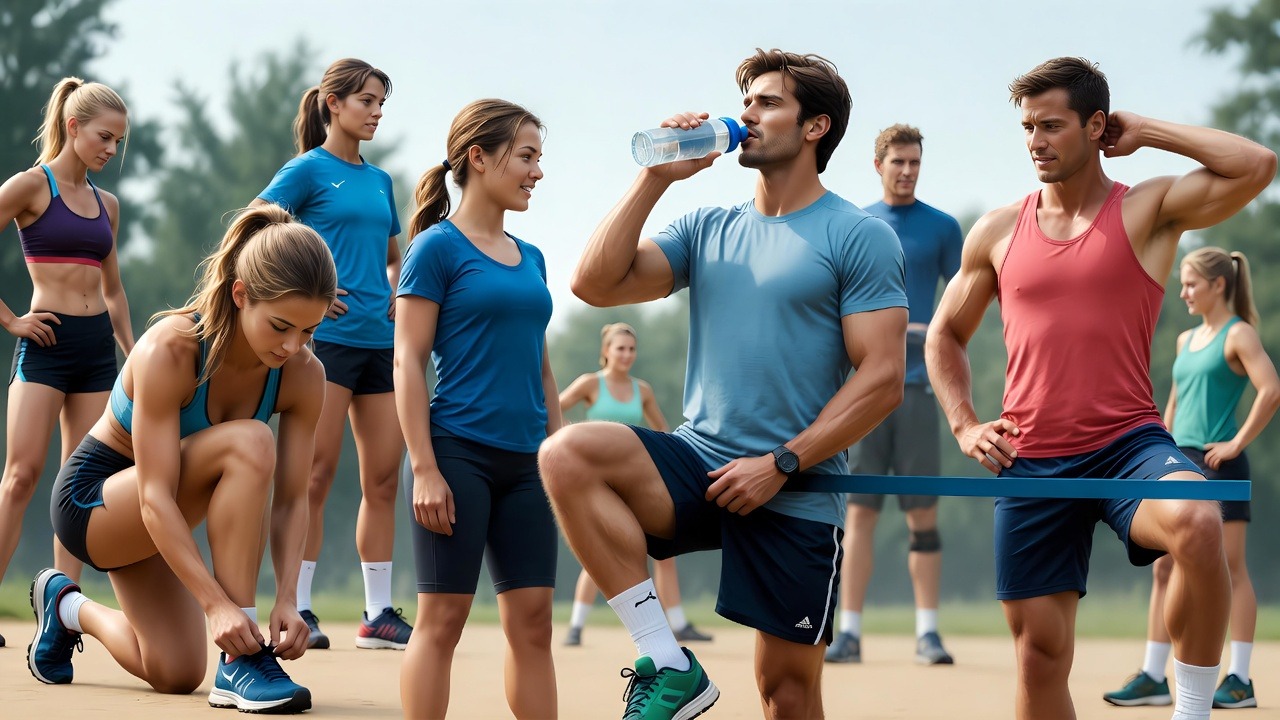
Fitness communities are often built on a foundation of competition—pushing harder, running faster, lifting more than the person next to you. While this can drive short-term gains, it often leads to injury, burnout, and a culture where struggling is seen as weakness. A running club in Portland, “Forest Park Collective,” decided to redefine their ethos using the common language of recovery.
The Challenge: The club had a high rate of repetitive stress injuries and a noticeable dropout rate after major races. Post-event blues and overtraining were common. The social dynamic was supportive but superficial, centered mostly on pace and distance.
The Intervention: The club’s coach introduced Oxyzen rings and a new framework. The primary Shared Recovery Essentials became Daily Readiness Score and Sleep Score. The rule was simple: your scheduled workout intensity for the day would be guided by your personal readiness score. The group’s collective average readiness would determine the flavor of the group session.
The Transformation:
The Results: The Forest Park Collective not only retained its members but grew, attracting people who were intimidated by traditional, performance-only clubs. Their race results improved collectively because athletes arrived at start lines fresh and prepared, not already depleted. The coach stated, “We stopped competing against each other and started caring for each other. Our shared data became the language of that care.”
This example highlights how recovery essentials can turn a fitness group from a source of stress into a pillar of holistic support. For athletes interested in the specifics of how activity and recovery tracking work together, our guide on wellness ring basics for activity and movement tracking offers valuable insights.
For individuals managing chronic conditions like Long COVID, fibromyalgia, or autoimmune disorders, the journey is often isolating. Symptoms are invisible and fluctuating, making them hard to explain to others, even loved ones. A lack of objective data can lead to self-doubt and a devastating sense of being disbelieved. An online support group for people with Postural Orthostatic Tachycardia Syndrome (POTS) pioneered a powerful use of Shared Recovery Essentials.
The Challenge: Members struggled to communicate their “good days” and “crash days” to employers, family, and even doctors. They felt alone in their experience and frustrated by the inconsistency of their symptoms.
The Intervention: A subgroup began using Oxyzen rings to track key metrics highly relevant to their condition: Resting Heart Rate (RHR), Heart Rate Variability (HRV), and Sleep Disturbances. They created a private, secure forum where they could voluntarily share screenshot trends (not raw data) to illustrate their weekly patterns.
The Transformation:
The Results: The support group reported significant reductions in feelings of isolation and anxiety. Members felt more in control of their health narrative. Several successfully used their aggregated, anonymized data trends to advocate for workplace accommodations or to guide their healthcare providers toward more effective treatments.
This case is a profound testament to how Shared Recovery Essentials can give voice to the invisible. It turns subjective suffering into a shared, objective reality that fosters deep empathy, practical support, and powerful advocacy. For individuals exploring how technology can aid in managing health, our article on how health tracking technology enables personalized wellness provides a broader context for this approach.
The case studies illustrate the transformative potential, but how do you begin? Implementing Shared Recovery Essentials is less about technology deployment and more about cultivating a new culture of care. Whether you’re a team leader, a coach, a support group facilitator, or simply a group of friends, this step-by-step guide can help you build a framework for connected recovery.
Step 1: Define Your “Why” and Establish Safety.
Before mentioning a device, have an open conversation. Why does the community want to do this? Is it to prevent burnout, reduce injury, foster deeper connection, or better manage a shared health challenge? The “why” must be collective and non-coercive. Crucially, establish ironclad principles of voluntary participation, privacy, and non-judgment. Data is a tool for support, never for surveillance or evaluation.
Step 2: Co-Create Your Shared Essentials.
Don’t dictate the metrics. As a group, explore what “recovery” and “readiness” mean in your context. A work team might care most about stress trends and sleep consistency. A fitness group will focus on readiness scores and resting heart rate. A chronic illness group might prioritize heart rate patterns and activity tolerance. Choose 2-3 key metrics that will serve as your common language. Resources like our blog post on how wellness rings can support different health goals can help inform this discussion.
Step 3: Choose the Right Tool and Educate.
Select a wearable that prioritizes the metrics you care about and has robust privacy controls. A device like the Oxyzen ring, with its focus on recovery and discreet design, is often ideal for 24/7 wear. Once you have the tools, invest time in education. What does HRV actually mean? How is sleep score calculated? Understanding the “why” behind the number prevents misinterpretation and anxiety. Our blog’s wellness ring basics series is an excellent place to start this group learning.
Step 4: Start with Low-Stakes Sharing.
Begin by sharing not the numbers, but the insights and trends in a dedicated, safe space (a Slack channel, a weekly check-in meeting, a private forum). Use prompts:
Step 5: Build Rituals Around the Data.
Integrate the essentials into your existing community rhythms.
Step 6: Focus on Supportive Action, Not Just Observation.
The ultimate goal is to translate awareness into supportive action. Create simple protocols:
Step 7: Iterate and Refine.
Check in quarterly. Are these essentials serving the group? Do we need to adjust our metrics or our sharing practices? The framework should evolve with the community’s needs.
By following this guide, you transform a wellness tool into a social artifact—a shared essential that weaves a stronger, more empathetic, and more resilient social fabric. For those ready to explore the tools that can enable this journey, the Oxyzen shop is the starting point for discovering the technology designed with this very vision of connection in mind.
The Role of the Smart Ring: Why This Discreet Device is the Perfect Community Catalyst
In the landscape of wearables, choices abound—bulky smartwatches with glaring screens, chest straps for dedicated athletes, clip-on trackers that get lost. Yet, for fostering a community around shared recovery, one form factor stands apart as uniquely powerful: the smart ring. Its rise to prominence isn't merely a trend in miniaturization; it's a convergence of design, functionality, and social psychology that makes it the ideal catalyst for connected wellness. At the forefront of this design philosophy is Oxyzen, where our commitment to seamless integration is foundational. You can explore the materials and thoughtful design choices in our article on wellness ring basics, materials, and hypoallergenic options.
1. Discretion and Social Comfort: A ring is arguably the most socially discreet wearable. It doesn't light up with notifications during a conversation. It doesn't create a physical barrier between you and a loved one during a hug. In a group setting—a board meeting, a dinner party, a support circle—it doesn't announce itself as a "tracking device." This normalcy is critical for community adoption. People are more likely to consistently wear a device that doesn't feel like a piece of tech jewelry, allowing for the continuous, uninterrupted data collection that is essential for accurate recovery metrics.
2. Proximity to Key Biomarkers: The finger hosts a rich vascular network, allowing photoplethysmography (PPG) sensors in a ring to capture highly accurate pulse waveform data. This is the raw material for calculating core recovery essentials like Heart Rate Variability (HRV), resting heart rate, and blood oxygen saturation—metrics far more indicative of internal balance and stress than step count alone. The ring’s position also allows for stable skin temperature monitoring, a key signal of circadian rhythm and onset of illness. This reliable access to foundational biomarkers makes the data shared within a community trustworthy and meaningful.
3. The Psychology of "Wearing Your Commitment": A ring is a personal artifact, often carrying symbolic weight (e.g., wedding bands, signet rings). Choosing to wear a wellness ring can symbolize a personal commitment to self-care and, by extension, to a community that shares that value. It serves as a subtle, constant reminder of that commitment, unlike a phone that gets stashed away or a watch that is removed. When every member of a running club or therapy group wears one, it becomes a visual, unifying token of shared intent—a silent badge of belonging to a community that values holistic recovery.
4. Eliminating the "Screen Barrier": Smartwatches, by design, pull your attention outward to a screen. The interaction is often disruptive: lifting your wrist, tapping, scrolling. A smart ring’s primary interface is passive and somatic; you feel it on your finger, but you engage with its insights through a phone app at a time you choose. This design intentionally minimizes compulsive checking and fosters a more reflective relationship with your data. In a community context, this means conversations are driven by considered insights and weekly trends, not by real-time notifications that breed comparison and anxiety.
5. Comfort for 24/7 Wear: Recovery isn't a 9-to-5 metric; it's a continuous cycle. The most critical data for recovery—sleep—is collected at night. A lightweight, smooth, waterproof ring is far more likely to be worn comfortably through the night and during all activities than a watch or a strap. This yields the complete, unbroken dataset necessary for the algorithms to truly understand your unique physiological patterns, making the "shared essentials" you discuss with your community based on a full picture, not a fragmented one.
6. A Focus on Essentials, Not Distractions: By virtue of its size and interface, a smart ring platform is naturally curated toward high-level, essential insights—your readiness, your sleep quality, your stress load. It doesn't bombard you with emails, social media, or GPS mapping. This focus aligns perfectly with the community framework. You're sharing what matters most for collective well-being, not the noise of daily life.
In essence, the smart ring is more than a sensor; it's a socially intelligent platform. It gathers the most intimate data in the least intrusive way, facilitating a shift from outward performance tracking to inward awareness. This makes it the perfect conduit for turning personal awareness into communal support. For a comprehensive look at how this technology captures data, our piece on health tracking technology sensors, algorithms, and AI explained delves into the sophisticated engineering behind the simplicity. By choosing a device that honors both science and social nuance, communities lay the strongest possible foundation for a culture of shared recovery.

The entire edifice of building community through shared recovery essentials collapses without one absolutely solid foundation: trust. And in a digital age, trust is inextricably linked to data privacy and ethical boundaries. The moment individuals feel their sensitive physiological data could be used against them, judged, or exposed without consent, the potential for connection turns into a source of anxiety and division. Therefore, establishing a robust, transparent, and member-controlled framework for data is not a technical feature—it is the first and most important community agreement.
For a company like Oxyzen, this is a core ethical commitment, not a compliance checklist. You can read about our foundational principles in our dedicated FAQ and support section on data practices. This commitment must be mirrored and actively upheld by any community using this technology.
1. Ownership and Control Must Reside with the Individual.
This is the inviolable rule. The data generated by a person’s body is their property, full stop. The community platform (be it an app feature or a third-party tool) must provide granular, easy-to-use controls. Each member should be able to decide:
2. Favor Aggregation and Anonymization for Group Insights.
For general group awareness, aggregated and anonymized data is king. Instead of "Jane's sleep score is 55," the community dashboard should show "The team's average sleep score this week is 72, down from 78 last week. 30% of members had 'poor' sleep on Thursday." This protects individual privacy while still providing the "shared reality" necessary for collective action. It answers "How are we doing?" without exposing "How is Jane doing?"
3. Establish a Clear, Written Community Covenant.
Before the first data point is shared, the community should co-create and agree to a covenant. This document should explicitly state:
4. Educate on the Limits and Context of Data.
A number without context is dangerous. A community must be educated that a low HRV can mean physical stress, emotional stress, the onset of an illness, or even a positive adaptation to a good workout. The data is a starting point for a caring conversation, not a diagnostic verdict. Our article on how doctors find wellness ring data most useful highlights the importance of this contextual, collaborative approach.
5. Design for "Vulnerability by Choice," Not by Default.
The platform architecture should make the most private setting the default. Sharing should always be an active, opt-in choice. Features should be designed to encourage low-stakes, voluntary sharing—like a "Wellness Check-in" sticker system (Green/Yellow/Red) that members can choose to post, rather than an automatic broadcast of their exact score.
The Ethical Responsibility of Community Leaders:
Leaders, coaches, and facilitators bear a special burden. They must:
When these principles are diligently upheld, something remarkable happens: the very act of safeguarding privacy builds immense trust. Members feel safe enough to be vulnerable. They know the community respects their boundaries, which makes the choice to share a meaningful, connective act. The data becomes a gift of trust offered, not a metric extracted. This is the fertile ground in which genuine, supportive community grows. For those building such communities, our resource on wellness ring privacy settings and data security offers practical guidance on implementing these critical safeguards from the device level up.
The "Quantified Self" movement launched a revolution in personal awareness. For the first time, we could measure steps, heart rate, and sleep phases, turning inward gazes into outward data. But this movement often had a lonely, myopic endpoint: the optimization of the individual self. Success was a higher score, a lower resting heart rate, a longer life—all personal achievements. The narrative was one of solo discipline and willpower.
The community recovery model demands a paradigm shift: from the Quantified Self to the Qualified Us. Here, success is not defined solely by individual metrics, but by the quality of connection, support, and collective resilience that those metrics facilitate. The data is no longer the destination; it is the shared compass that helps the group navigate toward a healthier, more supportive state together.
What does "Qualified Us" success look like in practice?
1. Success is Measured in Supportive Interactions, Not Just Scores.
2. Success is Defined by Collective Sustainability, Not Peak Individual Performance.
3. Success is Found in Shared Vulnerability, Not Curated Perfection.
4. Success is System Change, Not Just Behavior Change.
Implementing "Qualified Us" Metrics:
Communities can consciously track these new success indicators:
This shift requires a conscious reframing of the dashboard. Alongside personal HRV, a community dashboard might have:
By moving from "Quantified Self" to "Qualified Us," we align our technology with our deepest social needs. We use data not to isolate and compare, but to connect and uplift. The smart ring, the shared essentials, the privacy protocols—all of it serves this higher goal of qualifying the health of our connections. For inspiration on how personal data can be the start of this journey, our collection of real customer reviews and user experiences showcases how individuals are finding connection through shared understanding.
The vision is clear, the principles are established, and the potential is immense. Now, how do you take the first concrete step to transform your own circle—your family, your team at work, your book club, or your fitness group—into a community built on shared recovery essentials? The journey begins not with a purchase order, but with a conversation.
Phase 1: The Seed Conversation (Week 1-2)
Phase 2: Exploration and Co-Creation (Week 3-4)
Phase 3: Soft Launch and Ritual Building (Week 5-8)
Phase 4: Review, Refine, and Expand (Month 3+)
Remember: The goal is not 100% adoption of a device. The goal is 100% adoption of a more empathetic, aware, and supportive culture. The technology is a powerful enabler, but the heart of the process is the ongoing, human conversation it sparks. By starting small, focusing on co-creation, and prioritizing psychological safety, you plant the seeds for a community that doesn't just function together, but truly recovers and thrives together. For any technical or support questions along the way, remember our comprehensive FAQ page is designed to help.
The Symphony of Biomarkers: How Shared Data Creates Harmonious Group Rhythms
Imagine an orchestra warming up—a cacophony of individual instruments, each playing its own tune. Now, imagine the conductor raises a baton, and those disparate sounds coalesce into a harmonious symphony. This metaphor perfectly captures the transition from individual biometric tracking to a community operating on Shared Recovery Essentials. Each person's unique physiological data—their sleep rhythm, their stress response, their energy curve—is an instrument. The shared framework and communal intent act as the conductor, aligning these individual parts into a cohesive, supportive, and more resilient whole.
This alignment, or biometric synchrony, is not about making everyone the same. It’s about creating a shared rhythm that allows the group to move through challenges and opportunities with greater collective intelligence and grace.
Every community’s "symphony" will feature different sections, but these core biomarkers often form the foundational melody and harmony:
How the Symphony Plays Out in Practice:

For this symphony to emerge, two things are needed: a sensitive conductor and a common sheet music stand.
The outcome of this biometric symphony is a community that is adaptively intelligent. It can soften its volume during periods of collective strain and build to a crescendo when energy and cohesion are high. It moves from being a collection of soloists to an integrated ensemble, capable of creating something far more beautiful, resilient, and supportive than the sum of its individual parts. For a deeper understanding of the instruments themselves, our exploration of health tracking sensors, algorithms, and AI reveals the sophisticated technology capturing this physiological music.
The benefits of a community built on shared recovery essentials don't stop at the group's boundary. Like a stone dropped in a pond, the practices, norms, and empathy cultivated within these micro-communities create ripples that extend outward, influencing organizational culture, public health, and even societal attitudes toward wellness. This ripple effect represents the macro-level potential of this micro-level practice.
Ripple 1: Humanizing the Workplace and Redefining Productivity
The modern workplace is often a primary source of chronic stress and disconnection. When teams within a company adopt a shared recovery framework, they create pockets of a new culture—one that values sustainability over burnout, empathy over mere output, and holistic well-being as a driver of performance.
Ripple 2: Reducing the Burden on Healthcare Systems
A significant portion of healthcare visits are for stress-related illnesses, poor sleep, and lifestyle-induced chronic conditions. Proactive, community-supported wellness acts as a upstream intervention.
Ripple 3: Creating a New Social Script for Masculinity and Vulnerability
Traditional social scripts, particularly around masculinity, often discourage vulnerability and emotional expression, labeling them as weaknesses. This contributes to poor mental health outcomes and isolation.
Ripple 4: Fostering Intergenerational Connection and Wisdom
Wellness technology is often seen as the domain of the young and tech-savvy. However, the principles of recovery and community are universal.
Ripple 5: Informing Public Health with Hyper-Local, Real-Time Data
With strict ethical controls and full anonymization, aggregated community recovery data could become a powerful public health tool.
The journey from a single individual putting on a smart ring to a society with a more compassionate and effective approach to health is long, but it is connected. Each small community that forms around shared recovery essentials is a node in a growing network of resilience. They demonstrate an alternative to isolation and burnout, proving that our health is interconnected. By choosing to build these communities, we are not just healing ourselves; we are participating in the slow, steady healing of our collective culture. To see the tangible impact on individuals, which is the seed of all these ripples, browse through our testimonials and real user experiences.
Beyond the Ring: Integrating Shared Essentials with Holistic Lifestyle Practices
The smart ring and its data are powerful, but they are not the totality of recovery. They are the compass, not the territory. For a community to truly thrive, the shared recovery essentials must be integrated with and enriched by holistic lifestyle practices. This integration ensures that the community’s focus remains on the lived human experience, using data as a guide to deepen engagement with timeless wellness practices.
Think of your recovery metrics as primary colors. The following practices are the mix of hues, textures, and mediums that create a complete masterpiece of well-being.
1. Mindful Movement as Communal Ritual:
Data might tell a group their collective stress load is high. The integrated practice is how they respond.
2. Nutritional Awareness as Shared Nourishment:
Recovery is fueled by nutrition. A community can extend its shared language into the realm of food without prescribing diets.
3. Digital Hygiene as a Collective Agreement:
The blue light and constant connectivity that disrupts sleep is often a social phenomenon—late-night emails, group chat notifications.
4. Nature Connection as a Group Remedy:
Exposure to nature (forest bathing, "green exercise") is proven to lower cortisol, improve mood, and enhance cognitive recovery.
5. Creative Expression as Emotional Co-Regulation:
Recovery isn't just physical; it's emotional and creative. Shared creative acts can process stress and build bonds in ways data alone cannot.
6. Purpose and Contribution as Foundational Recovery:
A deep sense of purpose and contributing to something beyond oneself is a core pillar of long-term well-being and resilience.
The Role of the Shared Essentials:
In this holistic model, the data from devices like the Oxyzen ring serves three key functions:
By weaving data with these holistic practices, a community builds a robust, multi-dimensional culture of recovery. It acknowledges that while technology can guide us, the deepest healing happens in the spaces between the data points: in shared meals, in silent walks, in collective creation, and in purposeful action. For inspiration on blending technology with daily life for long-term benefit, our article on 50 healthy aging tips a smart ring helps implement daily is a testament to this integrated approach.
Navigating Setbacks and Plateaus: The Community as a Resilience Engine
No recovery journey—individual or communal—is a linear ascent. There will be weeks where aggregate scores plummet despite best efforts, seasons where motivation wanes, and moments where the shared framework itself feels like a burden. These setbacks and plateaus are not signs of failure; they are inevitable features of the landscape. The true test and strength of a community built on shared recovery essentials is not in avoiding these dips, but in how it navigates them. The community itself becomes the resilience engine that pulls the group through.
1. The "Collective Crash" After a Big Push:
A team finishes a major project. A family survives the holidays. A training group completes a race. The data shows a synchronized crash in recovery scores.
2. The "Comparison Plateau":
After initial improvements, metrics stall. Members start secretly comparing, wondering why some are still improving while others are flatlining.
3. "Compassion Fatigue" in Support Roles:
In communities managing chronic conditions or high-stress professions, the caregivers or consistently high-recovery members can become fatigued from always giving support.
4. Technology Frustration and Data Disengagement:
Devices run out of battery, updates glitch, or members simply get tired of looking at their data.
5. Life Events that Fracture Group Rhythm:
A member experiences a loss, a birth, a job change, or an illness. Their data becomes an outlier, and the shared rhythm is disrupted.
The Resilience Engine in Action:
A community that successfully navigates these challenges doesn't emerge weaker; it emerges wiser and more bonded. The shared experience of moving through a setback together—using the common language of essentials to articulate the struggle and coordinate the response—forges a deeper level of trust and interdependence. The framework proves its worth not when things are easy, but when they are hard.
This process builds metaresilience—the community's capacity to adapt its own support structures in response to stress. It learns about itself. The data and the shared experience become a form of collective memory: "Remember when we all crashed after the Q3 push? We learned to build in a recovery week, and it worked." This learning loop is the hallmark of a living, adaptive, and truly resilient community. For communities looking to understand the long-term arc of health technology, our perspective on the future of wearable health tech contextualizes these tools within an evolving journey.
The Long-Term Vision: Cultivating a Legacy of Intergenerational Well-Being
The ultimate promise of building communities around shared recovery essentials extends beyond quarterly reports, race times, or even the current members' lifespans. It points toward a more profound legacy: the cultivation of intergenerational well-being. This is the vision where the practices, language, and culture of proactive, connected recovery are passed down and adapted, becoming a sustainable inheritance of health for families, organizations, and communities for decades to come.
1. Families with a Language for Internal States:
Imagine children growing up in a household where it’s normal to hear, “My Oxyzen ring shows I’m recovering well today, so I have lots of energy for the park!” or “My nervous system feels a bit agitated, so I’m going to sit quietly for a few minutes.” From a young age, they learn to:
2. Organizations with Institutional Memory of Sustainability:
A company that embeds shared recovery principles creates a cultural flywheel. New hires are onboarded into a system that has documented, data-backed proof of what works: meeting-free Fridays actually improve collective focus scores; team recovery weeks actually boost post-project innovation.
3. Evolving Technology as a Companion to Wisdom:
The smart rings of 2040 will be vastly more advanced. But in this vision, they will not replace human wisdom; they will be calibrated by it. The algorithms will learn from decades of aggregated, anonymized community data across generations—understanding, for instance, the unique recovery patterns of new parents, the shifting circadian rhythms of aging, or the collective stress signature of global events.
4. A Shift in Healthcare to True Prevention:
When a significant portion of the population grows up in communities literate in recovery essentials, the demand on the healthcare system shifts. Doctors become partners who interpret long-term physiological trends provided by patients, focusing on optimization and true prevention rather than just crisis management.
5. Redefining Success for Future Generations:
Perhaps the most powerful legacy is the redefinition of what it means to be "successful." The next generation’s aspirational icons may not just be the wealthiest or most outwardly accomplished, but those who have cultivated deep resilience, supportive communities, and a balanced, vital life—all supported by a transparent understanding of their own biology.
Planting the Seeds of This Legacy Today:
This long-term vision is built by the small, consistent actions of communities today.
The journey of building community through shared recovery essentials, therefore, is more than a wellness strategy. It is an act of cultural stewardship. We are not just tracking our sleep; we are learning how to rest in a frenetic world. We are not just measuring our HRV; we are learning the language of our resilience. And by doing this together, we are weaving a stronger, more conscious, and more compassionate social fabric—a legacy of well-being that can ripple out to touch generations we may never meet. For more resources to continue this journey, our ever-growing blog is a repository of knowledge for the community of today building the legacy of tomorrow.
Your Trusted Sleep Advocate (Sleep Foundation — https://www.sleepfoundation.org/)
Discover a digital archive of scholarly articles (NIH — https://www.ncbi.nlm.nih.gov/
39 million citations for biomedical literature (PubMed — https://pubmed.ncbi.nlm.nih.gov/)
experts at Harvard Health Publishing covering a variety of health topics — https://www.health.harvard.edu/blog/)
Every life deserves world class care (Cleveland Clinic -
https://my.clevelandclinic.org/health)
Wearable technology and the future of predictive health monitoring. (MIT Technology Review — https://www.technologyreview.com/)
Dedicated to the well-being of all people and guided by science (World Health Organization — https://www.who.int/news-room/)
Psychological science and knowledge to benefit society and improve lives. (APA — https://www.apa.org/monitor/)
Cutting-edge insights on human longevity and peak performance
(Lifespan Research — https://www.lifespan.io/)
Global authority on exercise physiology, sports performance, and human recovery
(American College of Sports Medicine — https://www.acsm.org/)
Neuroscience-driven guidance for better focus, sleep, and mental clarity
(Stanford Human Performance Lab — https://humanperformance.stanford.edu/)
Evidence-based psychology and mind–body wellness resources
(Mayo Clinic — https://www.mayoclinic.org/healthy-lifestyle/)
Data-backed research on emotional wellbeing, stress biology, and resilience
(American Institute of Stress — https://www.stress.org/)


