


Desk-Based Recovery for Busy Office Workers
Desk-based recovery exercises and stretches for busy office workers.
Desk-based recovery exercises and stretches for busy office workers.
%402x.svg)
You are not just sitting at a desk. You are running a high-stakes, cognitive marathon in a stationary chair. Your heart rate may not be in the cardio zone, but your nervous system is oscillating between sprints and obstacle courses—from back-to-back video calls and relentless inbox pings to complex problem-solving under silent, fluorescent lights. The fatigue you feel by 3 PM isn't laziness; it’s systemic exhaustion. Your body, held in a static, often compromised posture for hours, is screaming for relief. Your mind, overstimulated yet undernourished by true rest, is trapped in a fog.
For decades, "recovery" was a concept reserved for athletes—the ice baths, massage guns, and rest days that followed physical exertion. Meanwhile, the office worker was expected to be a perpetual cognitive machine, with coffee as the only sanctioned recovery tool. This paradigm is not only flawed; it's destructive. It leads to the epidemic of burnout, chronic musculoskeletal pain, and the slow, steady erosion of our vitality.
But a revolution is underway. We are finally recognizing that the boardroom, the home office, and the cubicle demand their own sophisticated science of recovery. This is Desk-Based Recovery: a proactive, integrated system of micro-practices designed to counteract the unique physiological and psychological stressors of knowledge work. It’s about strategically punctuating your workday to replenish your nervous system, reset your posture, and restore mental clarity without ever leaving your workspace.
And now, for the first time, technology is not the antagonist in this story, but a powerful ally. The rise of intelligent wearables, specifically smart wellness rings, has given us a continuous, personalized window into our body's internal state. A device like the Oxyzen ring turns abstract concepts like "stress load" and "recovery need" into tangible, actionable data. It moves us from guessing about our fatigue to knowing—and then acting with precision. You can explore how this technology personalizes wellness on our dedicated blog, health-tracking-technology-enables-personalized-wellness.
This isn't about adding more to your to-do list. It's about a fundamental rewiring of your workday. It’s the understanding that your most valuable professional asset is not your laptop, but your own capacity—and that capacity must be meticulously renewed, in real-time, at the very place it is being depleted.
Welcome to the new frontier of professional performance and personal well-being. Let's begin.
To master desk-based recovery, we must first diagnose the problem with precision. "Desk fatigue" is a vague, catch-all term that obscures a complex web of interrelated systems under siege. It's not one thing; it's a perfect storm of physical stagnation, cognitive overload, and environmental mismatch.
The Physical Lockdown: A Body in Protest
The human body is designed for movement—roughly 150-200 micro-movements per hour. At a desk, we reduce this to a mere handful. This stasis triggers a cascade of issues:
The Cognitive Blizzard: An Overheated Processor
Your brain at work is not idle. It's engaged in what neuroscientists call "attentional labor."
The Invisible Load: Nervous System Overdrive
This is the most insidious layer. The constant low-grade pressure of deadlines, emails, and performance expectations keeps your sympathetic nervous system subtly engaged. Your cortisol and adrenaline levels may not spike like they would in a true emergency, but they simmer at an elevated baseline. This creates a background hum of anxiety, makes it difficult to truly relax, and impedes the digestive and restorative processes governed by the parasympathetic ("rest-and-digest") system.
Understanding this anatomy is the first step. Recovery, therefore, must be multi-system: it must address the static body, the overloaded mind, and the frayed nervous system simultaneously. In the following sections, we'll build your personalized toolkit to do exactly that. For a deeper look at how sensors track these physiological states, you can read about the science behind modern health tracking technology.
If the idea of finding an extra hour in your workday for a yoga session feels laughable, this section is your liberation. The cutting-edge science of human performance has shifted its focus from lengthy, discrete recovery periods to the profound power of micro-recovery—brief, intentional breaks woven seamlessly throughout the workday. Think of it not as stopping work, but as changing the type of work your systems are doing to ensure peak cognitive function.
The Physiological Rationale: Interrupting the Stress Cascade
The body responds to patterns. Prolonged sitting or mental focus signals a "stress state" that, over hours, becomes chronic. A micro-recovery break acts as a deliberate pattern interrupt. It sends a powerful signal to the autonomic nervous system that the "threat" (in this case, sustained focus and postural stress) is temporary. This allows for a brief but critical parasympathetic response, which:
Research from institutions like the University of Illinois supports the "vigilance decrement"—the fact that performance on any sustained task declines after a period of time. Their studies show that brief diversions (as short as 30-60 seconds) can dramatically improve focus and performance on prolonged tasks.
The 90-Minute Ultradian Rhythm: Working With Your Biology
Our bodies operate on natural cycles called ultradian rhythms. Approximately every 90 minutes, we move from a peak of high-frequency brain activity (ideal for focused work) into a trough of lower-frequency activity, signaling a need for rest. Fighting this rhythm is futile. Micro-recovery aligns with it. By scheduling a 2-5 minute reset every 60-90 minutes, you're not slacking—you're biohacking your natural productivity waveform.
What Constitutes an Effective Micro-Recovery?
It must be a true break from the primary task. Scrolling social media or reading news does not count—it's simply switching cognitive channels, often to something more stimulating. Effective micro-recovery activities involve a change in:
Examples of Science-Backed Micro-Recovery Acts:
The goal is consistency, not duration. Ten 2-minute breaks are far more effective for system-wide recovery than one 20-minute break you never take. To see how technology can remind and guide you through these crucial resets, discover how a wellness ring helps build healthy habits.
We've been sold a myth: that the solution to desk-related pain is finding the "perfect" chair or assuming the one "correct" posture. This is a static solution to a dynamic problem. The human spine thrives on movement and variation, not rigid perfection. The goal is not to hold a single ideal shape for 8 hours, but to cultivate dynamic posture—a state of supportive, ever-changing alignment.
The Myth of Static "Good Posture"
Holding any position, even a textbook-perfect one, for too long leads to stiffness, ischemia (reduced blood flow to tissues), and discomfort. The key is movement. Research in ergonomics now emphasizes "movement snacks" over fixed setups.
Building Your Dynamic Posture Toolkit:
Think of your workday as a posture flow. Cycle through these positions intentionally:
1. The Foundational Sit: Start from a place of support.
2. The Active Stand: Transition to a standing desk or high surface.
3. The Perch: A transitional, high-sit position.
4. The Movement Break Integrations: Posture resets you can do hourly.
Listening to Your Body's Signals
This is where technology transcends theory. A smart wellness ring, worn continuously, can detect physiological markers of physical stress from poor posture—such as elevated heart rate variability (HRV) stress scores or unusual resting heart rate trends during sedentary periods. It provides objective feedback that your subjective mind may have tuned out. You can learn more about how this continuous monitoring works in our guide on wellness ring basics: continuous vs. periodic monitoring.
Dynamic posture turns your workspace into an environment for physical literacy. Your desk is no longer a place where your body endures; it becomes a place where your body engages.

Of all the recovery tools available to you, the most powerful is also the most immediate and invisible: your breath. Breathing is the only autonomic function we can easily consciously override, making it a direct "remote control" for shifting your nervous system state. At your desk, your breathing pattern is both a diagnostic tool and a therapeutic intervention.
The Desk-Breathing Default: Stress Signaling
Under cognitive load, our breath becomes shallow, rapid, and high in the chest. This thoracic breathing is controlled by the accessory muscles of the neck and shoulders (which is why you get tense there) and is neurologically linked to the sympathetic nervous system. It's a feedback loop: stress causes shallow breathing, and shallow breathing signals more stress to the brain.
Strategic Breathwork for Desk Recovery
We can break this loop by intentionally practicing breathing patterns that stimulate the vagus nerve, the main conduit of the parasympathetic nervous system. These are not hour-long meditations; they are 1-3 minute resets.
1. The Physiological Sigh (The 60-Second Reset):
Discovered by Stanford researchers as the fastest natural way to reduce physiological arousal.
2. Box Breathing (The Focus Anchor):
A Navy SEAL-tested technique for achieving calm alertness.
3. 4-7-8 Breathing (The System Downturn):
Developed by Dr. Andrew Weil, this is a potent tool for triggering the relaxation response.
Integrating Breath Awareness
The first step is simply to notice. Set a gentle hourly chime. When it sounds, don't change your breath yet—just observe it for three cycles. Is it in your chest or belly? Fast or slow? This meta-awareness is itself a form of recovery, a moment of mindfulness that disengages you from the cognitive treadmill. For those interested in the data behind stress and recovery, our article on how health tracking technology changed preventive medicine delves deeper into these insights.
Breath is your built-in, always-available recovery technology. Mastering it turns every moment of overwhelm into an opportunity for reset.
Your physical posture is only one part of the equation. Your digital workspace—the cacophony of apps, notifications, and endless browser tabs—creates a cognitive posture that can be just as fatiguing. Desk-based recovery requires a deliberate design of your digital environment to reduce attentional tax and cognitive drag.
The Principles of Cognitive Ergonomics:
This is the science of designing information so it aligns with how our brains actually process it. At its core, it's about reducing unnecessary decision-making and distraction.
1. The Notification Purge: Reclaiming Your Attention
Every ping, buzz, or banner is a "context switch" request that your brain must process, even if you don't actively engage. This fragments focus and depletes mental energy.
2. The Single-Tab Sanctum: Monotasking as a Recovery Act
The myth of the productive multitasker has been thoroughly debunked. Tab-switching is cognitive switching, and each switch has a cost.
3. Light and Sound Scaping: Sensory Input Management
4. The "Brain Dump" Buffer: Externalizing Mental RAM
Your short-term memory (working memory) is a precious and limited resource. Trying to hold to-dos, ideas, and reminders in your head creates background cognitive load.
Technology as a Guide, Not a Warden
This is where a smart ring offers a fascinating meta-layer. It can help you audit the impact of your digital environment. You might notice that on days with back-to-back video calls (a high-stimulus digital environment), your stress metrics are significantly higher, or your recovery score that night is poorer. This data allows you to make informed decisions: perhaps you need a 10-minute buffer between calls, or a strict no-calls afternoon. By reviewing your personalized data, you can move from a generic digital detox to a precisely calibrated digital diet. For practical tips on managing the technology itself, see our guide on wellness ring basics: maintenance and care instructions.
Detoxifying your digital workspace isn't about working less; it's about allowing your brain to work with its full, undivided capacity.
The mid-afternoon crash. The post-lunch fog. These aren't moral failings; they are often the direct result of nutritional choices that mismatch the metabolic and cognitive demands of desk work. At a desk, we are not expending large amounts of physical energy, but our brains are glucose hogs, consuming about 20% of the body's energy. Desk-based recovery includes strategically fueling this organ to avoid energy rollercoasters that sabotage focus and mood.
The Blood Sugar Rollercoaster: The Enemy of Focus
The typical desk diet—sugary coffee drinks, refined carb snacks, heavy lunches—creates rapid spikes and subsequent crashes in blood glucose. A spike might give a brief surge of energy, but the crash leads to brain fog, irritability, and cravings for more sugar. This cycle keeps you in a state of metabolic and cognitive instability.
Principles of Desk-Side Nutrition for Steady Energy:
1. The Protein & Fat Anchor: Every meal and snack should include a source of protein and/or healthy fat. These macronutrients slow the digestion of carbohydrates, leading to a gentle, sustained release of glucose into the bloodstream.
2. Smart Carbohydrate Selection: Choose complex, fiber-rich carbohydrates over simple, refined ones. Fiber acts as a buffer, further smoothing the energy curve.
3. Hydration as Cognitive Lubrication: Even mild dehydration (as little as 1-2%) is proven to impair cognitive function, attention, and short-term memory. At a desk, with dry air from HVAC, it's easy to become dehydrated without feeling thirsty.
4. The Strategic Caffeine Window: Caffeine is a powerful cognitive enhancer, but its timing is crucial. It has a half-life of 5-6 hours, meaning afternoon coffee can significantly disrupt sleep.
Desk-Specific Eating Habits:
How Wearable Data Informs Nutrition:
Your body's data provides direct feedback on your nutritional choices. A smart ring tracking your sleep and recovery can reveal powerful correlations:
This turns nutrition from a guessing game into a personalized experiment. You're not following a generic diet; you're learning how your unique system responds to different fuels while under the specific stress load of desk work. Explore how a ring can support different health goals, including nutritional awareness.
Eating for desk-based performance isn't about restriction; it's about strategic, high-quality fueling that turns your food into sustained mental clarity.
You don't need a gym break; you need movement integration. The concept of "exercise" as a separate, 60-minute block of time is a barrier for many desk workers. "Movement snacks," however, are non-negotiable, bite-sized movement breaks that counteract stasis, boost circulation, and reset your musculoskeletal system. They are the practical application of dynamic posture and micro-recovery.
The Physiology of a Movement Snack:
A short burst of movement does wonders:
Your Deskercise Menu:
Choose one or two of these every 30-60 minutes. Set a timer if you must.
1. The Foundational Flow (2 minutes):
2. The Posture Corrector Series (3 minutes):
3. The Stealth Isometrics (Doable in any meeting):
Making it Stick: The Habit Loop
Movement snacks dismantle the artificial barrier between "work time" and "exercise time." They reclaim your workday as an opportunity for physical vitality.
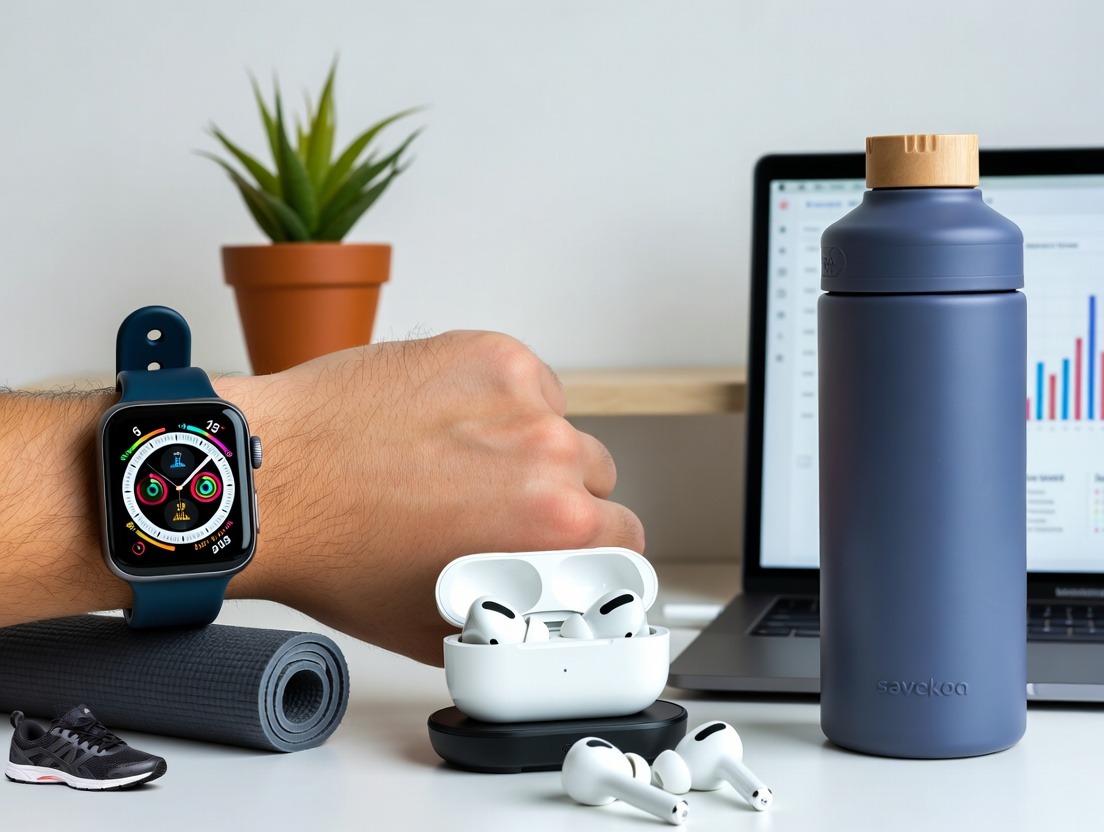
Your computer slows down when its hard drive is fragmented; your mind experiences the same under cognitive clutter. Desk work generates a relentless stream of thoughts, decisions, and emotional micro-reactions. Without deliberate resets, this leads to what psychologists call "cognitive fusion"—where you become tangled in your thoughts, and mental fatigue sets in. Recovery requires techniques to defragment, distance, and refresh.
1. The Power of the "Worry Dump" or Brain Dump:
As mentioned in the digital detox, this is critical for emotional regulation. Set a timer for 5 minutes and write continuously about everything on your mind—tasks, anxieties, ideas, frustrations. No editing, no judging. The goal is not to solve, but to externalize. This gets the swirling thoughts out of your working memory and onto the page, creating immediate psychological distance and relief.
2. The 5-4-3-2-1 Grounding Technique (90-Second Reset):
When feeling overwhelmed or anxious, this sensory exercise pulls you out of your head and into the present moment.
3. The "Third-Person" Reframe:
When stuck on a problem or ruminating on a conflict, mentally step outside yourself. Ask: "What would I advise my best friend to do in this situation?" or "How will I view this challenge one month from now?" This minor linguistic shift—from "I" to "he/she/they"—creates psychological distance, reduces emotional intensity, and often reveals clearer solutions.
4. The Micro-Meditation: Focused Attention Practice
You don't need 30 minutes of silence. A 1-3 minute meditation is a potent cognitive reset.
Quantifying the Unquantifiable: The Data of Mental Load
This is perhaps the most profound application of a smart wellness ring. While it can't read your thoughts, it can quantify their physiological toll.
This transforms subjective feelings of being "burnt out" or "wired" into objective data points. It validates your need for a mental reset and guides you toward the most effective practices for your system. For a broader perspective on this evolution, consider the evolution of health tracking technology from manual to smart rings.
Mental recovery at your desk is the practice of becoming the observer of your thoughts, not their prisoner. It's the skill that allows you to finish the mental workday with clarity, not clutter.
We’ve built a robust toolkit of physical, mental, and digital practices. Now, we enter the era of precision. What if you could move from generalized advice—“take more breaks”—to a personalized prescription—“a 3-minute standing stretch at 10:47 AM and a 90-second breathing reset at 2:30 PM will optimally maintain your focus and mitigate your unique stress pattern”? This is the promise of the quantified recovery, powered by the seamless integration of biometric wearables, specifically the modern smart wellness ring.
From Guessing to Knowing: The Data Feedback Loop
For decades, office recovery was guesswork. You felt tired, so you drank coffee. You felt sore, so you stretched once. A smart ring closes this loop by providing continuous, passive biometric monitoring. It turns your body’s subtle signals into a readable dashboard. Key metrics for desk-based recovery include:
Building Your Personal Recovery Protocol:
Data without action is just trivia. The power lies in creating a feedback loop:
This process demystifies self-care. It removes the guilt from taking a break by providing objective evidence of its necessity and efficacy. You're not slacking; you're engaging in a data-driven performance optimization protocol. To understand the technical prowess behind this, delve into the sensors and algorithms that make it possible.
Your body and mind do not exist in a vacuum. They interact with your chair, desk, screen, lighting, and air. A recovery-centric workday requires designing this holistic desk ecosystem to support, rather than fight, your biology. This goes far beyond ergonomics into the realm of environmental psychology and biophilic design.
The Sensory Layer of Your Workspace:
1. Light: The Master Circadian Regulator
2. Sound: From Noise Pollution to Soundscape
3. Air & Thermal Comfort: The Invisible Factors
4. The Biophilic Element: A Connection to Life
Biophilia is the human tendency to seek connections with nature. Incorporating even small elements reduces stress and mental fatigue.
Ergonomics Revisited: The Toolkit Approach
Instead of one perfect chair, think of a toolkit:
The goal is to create an environment that offers choices and variety, inviting movement and reducing static strain. Your smart ring data can even help here: you might find your stress metrics are lower on days you use your standing desk for 30% of the day versus 10%. For inspiration on creating a wellness-centric setup from the ground up, our blog offers a guide on wellness ring basics for beginners.
Your workspace should feel like a cockpit designed for your peak performance and well-being, not a cell designed for endurance.
Knowledge is not the bottleneck. We know we should move more, breathe, take breaks. The gap lies in consistent implementation amid relentless work demands. This section is about tactical habit engineering and mindset shifts to overcome the most common barriers to desk-based recovery.
Barrier 1: "I'm Too Busy; I Can't Stop."
Barrier 2: "I Get in the Zone and Forget."
Barrier 3: "It Feels Silly or Self-Indulgent."
Barrier 4: "My Workplace Culture Doesn't Support It."
The Science of Habit Stacking for Recovery:
The most reliable way to build a new habit is to "stack" it onto an existing one.
By attaching the new recovery behavior to a solid existing cue, you dramatically increase adherence.
Leveraging Your Wearable for Habit Formation:
Your smart ring is the ultimate habit catalyst.
This positive reinforcement loop is neurologically potent. Over time, the desire to see that positive data and feel that internal shift becomes the driving force. To get started with such a device, the wellness ring mastery guide from unboxing to expert user is an excellent resource.
Building recovery habits is a practice of self-respect. It is the daily declaration that your long-term capacity is more important than the short-term illusion of non-stop productivity.

To achieve seamless desk-based recovery, your tools must work in harmony. The true power of a smart wellness ring is unlocked when it moves from being a standalone data repository to an integrated central nervous system for your well-being, communicating with the other apps and devices that structure your work life.
The Ecosystem of Integration:
1. Calendar Syncing for Predictive Recovery:
Imagine your ring’s app analyzing your calendar for the day ahead. Seeing a block of 4 hours of back-to-back video calls, it could:
2. Focus App and Pomodoro Timer Integration:
Sync your ring with focus apps like Forest or a Pomodoro timer.
3. Smart Home and Workspace Triggers:
With platforms like IFTTT or Apple Shortcuts, your ring’s data can trigger actions in your environment.
4. Health App Aggregation (Apple Health, Google Fit):
Your ring becomes the primary data collector, feeding into a central health dashboard. This allows you to see the interplay between your desk-based recovery metrics and other factors:
Data Visualization and Long-Term Trend Analysis:
The weekly and monthly reports generated by your ring’s app are where the profound "aha" moments happen.
This level of integration transforms your smart ring from a fitness tracker into an intelligent, context-aware recovery coach embedded in your life. It anticipates challenges, suggests contextual actions, and provides irrefutable evidence of what works for you. For a look at what this interconnected future holds, explore our thoughts on the future of wearable health tech.
Desk-based recovery is often framed as a productivity hack. While the immediate benefits of sharper focus and reduced pain are real and valuable, this perspective is myopic. The true scope is far grander. The daily practices you implement at your desk are the micro-investments in your long-term physiological capital. They are the frontline defense against the chronic diseases of sedentarism and the slow drain of persistent, low-grade stress.
From Acute Relief to Chronic Disease Prevention:
The eight-hour workday is a powerful repetitive stressor. Over weeks, months, and decades, its effects compound.
The Cumulative Effect: Your Health Span Dividend
"Health span" refers to the number of years you live in good health, free from chronic disease and disability. Desk-based recovery is a direct contributor to extending your health span. Each time you choose a movement snack over continued stasis, you are making a deposit. Each time you use a breathing technique to down-regulate stress, you are paying down a debt. Over a 40-year career, these micro-actions compound into a massive difference in how you age.
A New Mindset: The Office as a Wellness Gym
This is the ultimate reframe. We must stop seeing the office as a place where health is necessarily compromised and start viewing it as our most frequented "wellness gym." It is the place where we have the most opportunities to practice:
Your smart ring is the wearable equivalent of a personal trainer and fitness tracker for this new kind of gym. It provides the form feedback, the rep count, and the progress metrics for the most important workout of your life: maintaining your vitality amidst the demands of modern work. For a broader view on how this proactive approach is changing healthcare, read about how this technology is being used in hospitals and clinical settings.
Investing in desk-based recovery is not just about surviving the workweek. It is about thriving for a lifetime. It is the understanding that the greatest project you will ever manage is your own well-being, and its headquarters is right at your desk.
We have now laid the comprehensive foundation—the philosophy, the science, the tactical practices, and the technological integration of desk-based recovery. You are equipped with a deep understanding of why it matters and a detailed toolkit for how to implement it. In the final portion of this guide, we will bring it all together into actionable frameworks, troubleshoot advanced scenarios, and provide a roadmap for making this a permanent, transformative part of your professional and personal life. We'll explore specific daily and weekly schedules, address niche challenges like travel and hybrid work, and solidify your identity as someone who masters their energy, not just their time.
Knowledge is only potential power. The true transformation begins when you assemble your unique recovery protocol—a living system that evolves with your data, your schedule, and your life. This is not a one-size-fits-all prescription, but a methodology for creating your own. Think of it as building your personal operating system for sustainable performance.
Phase 1: The One-Week Audit (Data Collection & Awareness)
Before you change anything, observe. For one typical workweek, commit to two parallel tracks:
At the week’s end, analyze the convergence. Use your ring’s app to review:
This audit provides your baseline map. It highlights your personal pain points and reveals the first, most impactful levers to pull. For many, this audit is an eye-opener, revealing hidden stressors like the physiological impact of long video calls or the post-3 PM cognitive cliff. If you're considering a ring to start this process, our wellness ring comparison chart of top brands can be a helpful resource.
Phase 2: The Minimum Viable Recovery (MVR) Plan
Start impossibly small to ensure success. Based on your audit, choose ONE foundational habit from each of three core categories. Commit to these for two weeks.
These are tiny, almost effortless actions tied to concrete cues. The goal is not magnitude, but consistency. Your smart ring can track your progress on the movement and stress fronts, giving you a subtle dopamine hit of achievement.
Phase 3: Iteration and Expansion (The Flywheel Effect)
After two weeks of flawless MVR execution, assess using both subjective feeling and ring data. Did your afternoon stress scores slightly improve? Did you feel more hydrated? Celebrate the win.
Now, add one incremental layer:
This is the iterative flywheel: Implement → Measure → Learn → Refine. Each positive data point reinforces the behavior. You are no longer relying on willpower; you are guided by a system of cues and rewards, both felt and quantified. For deeper questions as you build your system, our FAQ section is always available.
Phase 4: Protocol Personalization & Advanced Scheduling
Once your core habits are automatic, you can graduate to a more sophisticated, schedule-aware protocol. Create a template for different types of workdays:
This personalized protocol becomes your playbook. You no longer have to decide what to do for recovery; you simply execute the plan designed for the day’s battle rhythm.
Even with the best protocol, you will hit snags. Plateaus, unexpected stress, and life events will test your system. Here’s how to troubleshoot using a data-informed lens.
Scenario 1: “I’m doing all the things, but my ring data shows high stress and low recovery. Nothing is working.”
Scenario 2: “I have an inconsistent schedule (travel, client sites, hybrid). I can’t maintain my routine.”
Scenario 3: “I experience intense afternoon energy crashes that derail my productivity.”
Troubleshooting with data removes the guesswork and emotional self-judgment. You’re not failing; you’re conducting an experiment where the variables need adjustment. For more nuanced questions, our blog post on common wellness ring questions answered can provide additional clarity.

Desk-based recovery begins as a personal practice, but its fullest potential is realized when it becomes a cultural norm. Reducing the stigma around taking breaks and modeling sustainable work habits has a ripple effect that can transform team dynamics and organizational health.
Leading by Example (The Stealth Influence):
You don’t need a title to lead. Simply by visibly practicing recovery, you give others implicit permission.
Creating Micro-Cultures of Recovery:
Within your immediate team or work circle, you can initiate small, low-effort collective practices.
Using Data for Empathetic Leadership (For Managers):
If you are in a leadership role, understanding the principles of desk-based recovery allows you to build healthier team structures.
When a culture shifts from valuing hours logged to valuing energy and focus managed, everyone wins. Productivity increases, burnout decreases, and the workplace becomes more human. To understand the philosophy behind creating products that support this shift, you can learn about our story and mission.
The nature of “the desk” is changing. Fully remote, hybrid, gig work, and the integration of AI tools are reshaping our work landscape. A future-proof recovery protocol must be agnostic to location and adaptive to technology.
Recovery in the Age of AI and Hyper-Automation:
As AI handles more routine tasks, human work will skew even more toward creative problem-solving, emotional intelligence, and complex decision-making. These are energy-intensive cognitive functions.
Recovery for the "Digital Nomad" or Location-Independent Worker:
The ultimate test of a portable protocol.
The Decentralized Office (Hybrid as the Norm):
Switching between home office, corporate office, and third spaces requires fluidity.
The core principles remain unchanged: interrupt stasis, modulate stress, and renew cognitive capacity. The tactics simply evolve with your context. Your smart ring is the constant in this equation, providing a consistent biometric baseline no matter where your desk is. To see how technology is evolving to meet these needs, explore what’s possible in health tracking by 2025.
We have journeyed from understanding the deep physiology of desk fatigue to building a personalized, data-informed, culturally-aware, and future-proof recovery protocol. The scope is vast because the stakes are high: your health, your performance, and your quality of life.
This is not a finish line, but a starting line.
Your Immediate Next Actions:
Embracing the Identity Shift:
Ultimately, desk-based recovery is about an identity shift. You are transitioning from:
This journey is iterative, not linear. Some days you will execute your protocol flawlessly. Other days, survival will be the win. The data from your tools is there not to judge you, but to guide you back, compassionately and objectively.
You now hold the map and the compass. The terrain is your daily work life. The destination is a career—and a life—characterized not by chronic fatigue and burnout, but by resilience, vitality, and purposeful achievement.
Explore Further Resources:
This guide is your foundation. To dive deeper into specific aspects of using technology for wellness, our blog is continually updated with articles on everything from the accuracy of modern health tracking to guides on personalizing your wearable to your body.
The invisible marathon continues. But now, you are no longer running it in worn-out shoes, blinded to the course. You are equipped, informed, and ready to pace yourself for the long, rewarding run ahead.
Your Trusted Sleep Advocate (Sleep Foundation — https://www.sleepfoundation.org/)
Discover a digital archive of scholarly articles (NIH — https://www.ncbi.nlm.nih.gov/
39 million citations for biomedical literature (PubMed — https://pubmed.ncbi.nlm.nih.gov/)
experts at Harvard Health Publishing covering a variety of health topics — https://www.health.harvard.edu/blog/)
Every life deserves world class care (Cleveland Clinic -
https://my.clevelandclinic.org/health)
Wearable technology and the future of predictive health monitoring. (MIT Technology Review — https://www.technologyreview.com/)
Dedicated to the well-being of all people and guided by science (World Health Organization — https://www.who.int/news-room/)
Psychological science and knowledge to benefit society and improve lives. (APA — https://www.apa.org/monitor/)
Cutting-edge insights on human longevity and peak performance
(Lifespan Research — https://www.lifespan.io/)
Global authority on exercise physiology, sports performance, and human recovery
(American College of Sports Medicine — https://www.acsm.org/)
Neuroscience-driven guidance for better focus, sleep, and mental clarity
(Stanford Human Performance Lab — https://humanperformance.stanford.edu/)
Evidence-based psychology and mind–body wellness resources
(Mayo Clinic — https://www.mayoclinic.org/healthy-lifestyle/)
Data-backed research on emotional wellbeing, stress biology, and resilience
(American Institute of Stress — https://www.stress.org/)


