


Health Tracking Basics for Chronic Illness Management
Using a ring to manage and monitor chronic health conditions.
Using a ring to manage and monitor chronic health conditions.
%402x.svg)
Imagine waking up and knowing, not guessing, how your body will respond to the day ahead. For millions living with chronic illnesses like diabetes, heart disease, autoimmune disorders, or chronic fatigue, each day is a complex equation of symptoms, medications, energy levels, and external triggers. For decades, managing these conditions relied on memory, instinct, and sporadic doctor’s visits—a fragmented picture painted with broad, often blurry strokes. But a silent revolution is underway, shifting the paradigm from reactive suffering to proactive, data-driven living.
This revolution is powered by personal health tracking. No longer the sole domain of athletes counting steps, modern health tracking has evolved into a sophisticated, continuous feedback loop for the human body. It’s about transforming the subtle, often unnoticed whispers of your physiology into clear, actionable data. This data becomes your personal roadmap, revealing patterns invisible to the naked eye, empowering you to have informed conversations with your healthcare team, and ultimately, giving you a profound sense of agency over your own well-being.
At the forefront of this revolution are discreet, powerful tools like the smart wellness ring. Worn day and night, these devices move health monitoring from a conscious, manual task into a passive, seamless stream of insights. They capture the vital signals that form the bedrock of chronic illness management: heart rate variability, resting heart rate, blood oxygen saturation, sleep architecture, and body temperature trends.
This article is your foundational guide to harnessing this power. We will move beyond the basics into a comprehensive exploration of how intentional health tracking can become your most powerful ally in managing a chronic condition. We’ll delve into the science of key biomarkers, establish effective tracking frameworks, integrate this data into your care plan, and navigate the future of this transformative technology. This is not about replacing your doctor; it’s about empowering you to become the most informed, active participant in your own care team. The journey from patient to empowered individual begins with a single data point. Let’s discover what yours are telling you.
For too long, chronic illness management has been a narrative written by crises. You feel a flare-up, a spike in pain, a wave of debilitating fatigue, and you report these symptoms to your physician. The consultation becomes a historical analysis of what went wrong. This reactive model leaves you constantly playing catch-up with your own body. The new paradigm flips this script: it proposes that data is the new symptom. The subtle, quantitative shifts in your physiology that precede a major flare are the most critical symptoms to track.
Consider a person with Rheumatoid Arthritis. The overt symptom is swollen, painful joints. But what if, days before the swelling appears, their nocturnal resting heart rate showed a sustained elevation and their heart rate variability—a key metric of nervous system stress—began a steady decline? This data is a pre-symptomatic alarm, a biological whisper warning of rising inflammation and system-wide stress. In the old model, this whisper goes unheard until it becomes a shout. In the new model, this data allows for preemptive action: adjusting activity, prioritizing restorative sleep, or contacting a care provider.
The power of this approach lies in pattern recognition over point-in-time snapshots. A single reading of a high heart rate is meaningless—it could be due to stress, caffeine, or a moment of anxiety. But a trend line showing a 10% increase in average resting heart rate over two weeks is profoundly meaningful. It’s a pattern that correlates directly with the body’s inflammatory load, immune activity, and overall strain.
This is where continuous monitoring, especially through a wearable device like a smart ring, becomes indispensable. Manual tracking, like writing down a daily pulse or how you "feel" on a scale of 1-10, is subject to memory lapses and subjective bias. A device worn 24/7 collects objective data passively, even while you sleep. Sleep data, in particular, is a goldmine for chronic illness management. Conditions like fibromyalgia, MS, and chronic fatigue syndrome are intimately tied to sleep quality. A smart ring can track not just duration, but sleep stages (light, deep, REM), disturbances, and sleep latency (how long it takes to fall asleep). Seeing a correlation between poor deep sleep and next-day pain levels isn’t just insightful; it’s a directive to prioritize sleep hygiene.
The goal is to build a Personal Health Baseline. This is your unique data profile when you are in a state of relative stability or "remission." Once this baseline is established, any significant deviation becomes a flag. You’re no longer just saying, "I feel worse." You can say, "My data shows my resting heart rate has been elevated for five days, my deep sleep has decreased by 40%, and my skin temperature variation is abnormal, all suggesting I may be heading toward a flare." This transforms the patient-clinician dialogue from vague to precise, from descriptive to analytical. It’s the cornerstone of personalized, predictive healthcare. To understand how this technology evolved to make such insights possible, explore the evolution of health tracking technology from manual logs to smart rings.
To wield data effectively, you must understand the language it speaks. The metrics provided by advanced health trackers are more than just numbers; they are vital signs of your autonomic nervous system, metabolic health, and recovery status. Let’s decode the core biomarkers that are particularly relevant for chronic illness management.
Resting Heart Rate (RHR): This is your heart’s idle speed. While a low RHR is generally associated with fitness, in the context of chronic illness, the trend is key. A creeping elevation in RHR is often one of the earliest signs of systemic inflammation, infection, dehydration, or heightened stress. For someone with an autoimmune condition or a cardiovascular issue, tracking RHR can provide an early warning system before more obvious symptoms appear.
Heart Rate Variability (HRV): This is arguably the most important metric for anyone managing a chronic condition. HRV measures the tiny variations in time between each heartbeat. Contrary to intuition, higher HRV is better—it indicates a resilient, adaptable autonomic nervous system that can smoothly shift between stress (sympathetic) and rest (digest-and-repair (parasympathetic)) states. Low HRV is a strong, non-specific indicator of physiological stress. This stress can be from overtraining, but also from fighting an infection, managing chronic pain, experiencing psychological anxiety, or enduring an inflammatory flare. By tracking HRV trends, you can gauge your body’s total stress load and capacity to recover. A sustained drop in HRV is a clear signal to dial back, prioritize rest, and investigate potential triggers.
Sleep Architecture (Not Just Duration): Telling someone with a chronic illness to "get more sleep" is often insufficient. The quality and structure of that sleep are paramount. Advanced trackers break sleep into stages:
Blood Oxygen Saturation (SpO2): While continuous SpO2 is a feature of many wearables, it’s particularly crucial for conditions affecting respiration (like COPD, severe asthma, or sleep apnea) or circulation. Nocturnal dips in SpO2 can reveal sleep-disordered breathing, which is both a common comorbidity and an exacerbating factor for many chronic conditions, sapping energy and increasing systemic inflammation.
Skin Temperature Trends: Basal body temperature is a classic biomarker. Continuous wearables track subtle changes in peripheral skin temperature. For women, this can help track menstrual cycles, which often influence symptom severity in conditions like lupus or migraine. More broadly, a sustained elevation in nighttime temperature can signal the onset of an immune response or inflammatory process.
Activity & Recovery Balance: This is where passive tracking creates active wisdom. By understanding your personal patterns, you can learn to pace yourself—a critical skill for managing conditions like ME/CFS or Long COVID. The device can help you see that a day of moderate activity might require two days of reduced output for your HRV and RHR to recover to baseline. It moves the concept of "pacing" from guesswork to a guided, data-informed practice. For a deeper dive into how movement tracking supports holistic health, our guide on activity and movement tracking basics is an excellent resource.
Understanding these biomarkers is the first step. The next is building a structured, sustainable system to collect and interpret them—a framework for your health data.
Data without structure is just noise. To transform raw metrics into actionable intelligence, you need a framework—a Personal Health Dashboard. This isn't a literal software dashboard (though many apps provide one), but a systematic method for collecting, correlating, and interpreting your data. Think of it as the command center for your wellness journey.
Step 1: Define Your "North Star" Metrics. Based on your specific condition, choose 2-3 primary biomarkers to watch most closely. For someone with hypertension or POTS, RHR and HRV might be the north stars. For someone with fibromyalgia, sleep quality (deep/REM sleep) and HRV could be paramount. For an autoimmune condition, RHR and temperature trends might lead the way. Don’t try to track everything with equal intensity; it leads to burnout and data paralysis.
Step 2: Establish Correlative Logging. The magic happens when you layer subjective experience on top of objective data. Use a journal (digital or analog) or the notes section in your health app to log:
Step 3: Create Your Baseline & Identify Ranges. Use a period of relative stability (at least 2-4 weeks) to calculate your personal baseline for your North Star metrics. What is your typical RHR? Your average HRV? Your normal deep sleep percentage? Then, establish your "alert ranges." For example, if your baseline RHR is 58, you might note that a sustained average above 65 (a ~12% increase) is a yellow flag requiring caution.
Step 4: Schedule Regular Review Intervals. Daily checking can induce anxiety. Instead, adopt a weekly review rhythm. Every Sunday, look at the weekly trends in your primary metrics. How did your body handle the past week? Then, do a deeper monthly review to spot longer-term patterns. This rhythm keeps you informed but not obsessive.
Step 5: Integrate with Professional Care. Your dashboard is not a replacement for your doctor; it's a briefing document. Before an appointment, prepare a summary: "Over the last month, my data shows an improving trend in sleep efficiency, but my resting heart rate remains 8 bpm above my personal baseline, correlating with the increased joint pain I mentioned." This elevates the conversation. Many modern devices allow you to generate PDF reports to share directly with your care team. For insights on which data doctors find most valuable, you can read about what medical professionals find most useful in wearable data.
This framework turns a stream of numbers into a coherent story about your health. It provides the structure needed to move from simply collecting data to truly understanding it.
A tracking framework in isolation is powerful, but its true potential is unlocked through integration. Your health data should not live in a silo on your wrist or in a single app. It should flow seamlessly into the broader ecosystem of your healthcare, becoming a connective thread between you, your providers, and other wellness tools.
Integration with Electronic Health Records (EHRs): The frontier of digital health is the secure, patient-permissioned sharing of wearable data with your official medical record. While not yet universal, many forward-thinking health systems and platforms are developing ways to ingest patient-generated health data (PGHD). This allows your cardiologist to see your weekly heart rate trends alongside your EKG, or your endocrinologist to review your sleep and activity data in the context of your glucose management. When choosing a health tracking device, consider its compatibility and data-sharing capabilities with major health platforms like Apple Health (iOS) or Google Fit (Android), which often act as intermediaries for EHR integration.
The Central Hub: Aggregator Apps. Platforms like Apple Health, Google Fit, or Samsung Health are designed to be central repositories. They can pull data from your smart ring, your smart scale, your glucose monitor (if compatible), and even manually entered data. This creates a unified, holistic view in one place. Instead of juggling five apps, you have one dashboard showing how yesterday's stressful meeting (logged in your mood app) correlated with a spike in RHR (from your ring) and a poor night's sleep (also from your ring).
Specialized App Synergy: For many chronic conditions, specialized apps exist for logging symptoms, medications, or specific biomarkers. The power comes from connecting these. For instance, a person with diabetes might use a continuous glucose monitor (CGM) app. If their smart ring data can be viewed alongside their glucose trends in an aggregator app, they might discover that periods of high glucose variability correlate with decreased HRV and poorer sleep quality—a powerful insight into the systemic impact of blood sugar dysregulation.
Enhancing the Clinical Conversation: This integrated data ecosystem transforms appointments. Walking in with a report that shows multi-system data—"Here’s my sleep, activity, and subjective pain levels for the last three months, synchronized on one timeline"—provides context that a 15-minute conversation never could. It helps identify which factors are primary drivers and which are secondary effects. It moves treatment from a trial-and-error approach to a targeted, evidence-based strategy co-created by you and your provider.
Community and Longitudinal Tracking: Integration also means your data travels with you over years, creating a priceless longitudinal health record. This long-term view is invaluable for chronic progressive conditions, as it can show slow trends and the impact of long-term therapies in a way that annual checkups cannot. For more on how this integrated, personalized approach is reshaping wellness, explore how modern health tracking technology enables personalized wellness.
The technical and practical integration of data is critical. But to build a sustainable practice, you must also navigate the psychological relationship with constant self-monitoring.
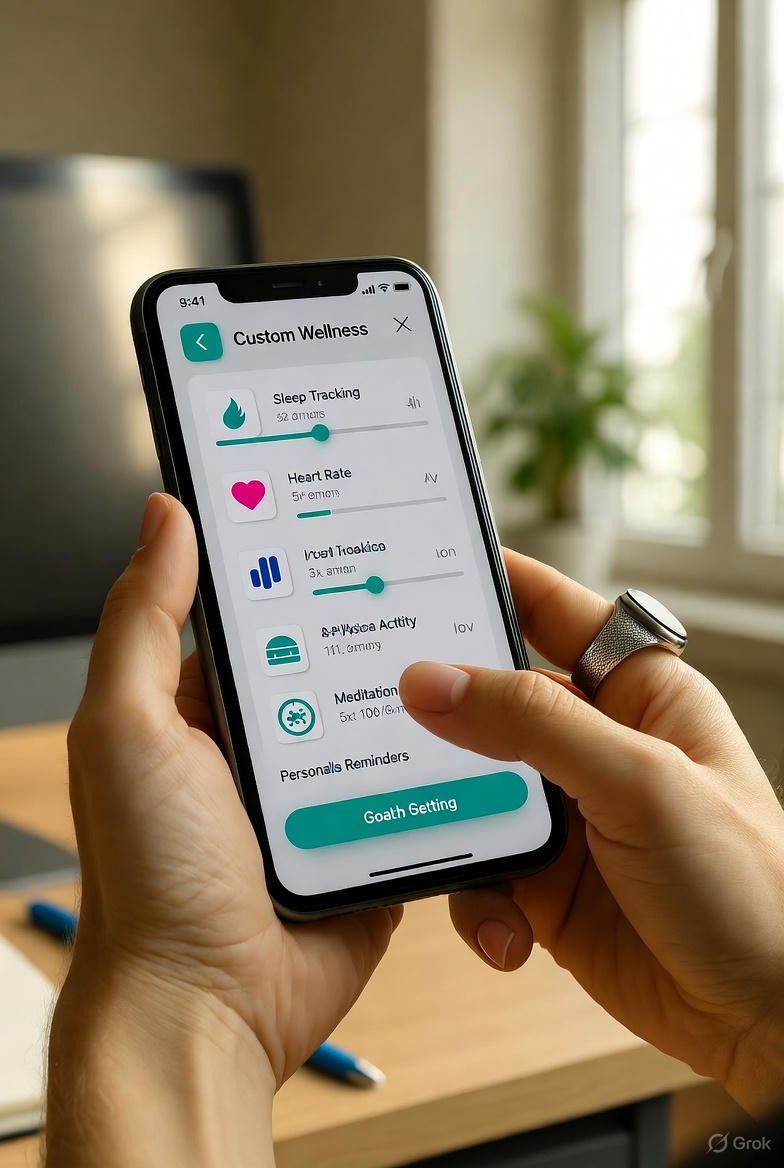
Embracing health tracking is not just a technical shift; it’s a psychological one. The constant presence of data can be a double-edged sword—a source of profound empowerment or, if mismanaged, a trigger for anxiety and obsession. This is especially true for those with chronic illnesses, where health is often a primary focus of concern. Mastering the psychology of tracking is therefore as important as mastering the metrics themselves.
Beware of "Numbers Anxiety": It’s easy to fall into the trap of checking your data dozens of times a day, fretting over every minor dip in HRV or spike in RHR. This hyper-vigilance can activate the very stress response (sympathetic nervous system) that negatively impacts the metrics you’re watching, creating a vicious cycle. Remember, the value is in the trend over time, not the instantaneous value. A single data point is a weather report; a trend line is the climate. Train yourself to look at daily averages and weekly graphs, not momentary readings.
Focus on Response, Not Perfection: The goal of tracking is not to achieve "perfect" numbers every day. That’s an impossible standard that leads to frustration. The human body is not a machine; it has natural variability. Instead, focus on how you respond to the data. A low HRV score isn't a failure; it's information. The successful response is to say, "My body is signaling high stress. I will prioritize a light day, gentle breathing exercises, and an early bedtime." This shifts your identity from a "patient being monitored" to an "agent taking intelligent action."
Celebrate the Correlations, Not Just the Outcomes: When you see a clear correlation—like consistent sleep after implementing a new wind-down routine, or improved HRV after a period of mindful pacing—celebrate that insight. It means you are learning your body’s unique language. These small wins in understanding are themselves powerful motivators and reduce the feeling of being at the mercy of an unpredictable condition.
Schedule Data "Downtime": Just as you need sleep, you need breaks from health data. Designate times when you are "off the grid." Perhaps you don’t wear your tracker during a relaxing vacation day, or you make a rule not to check the app after 8 PM. This prevents tracking from consuming your identity and allows you to simply live and feel without quantification.
Reframe the Narrative: Move from a narrative of "tracking my illness" to "tracking my resilience." Look for data that shows your capacity—how quickly your HRV recovers after a stressor, how your RHR adapts to gentle exercise, how your sleep deepens when you manage your energy well. This strengths-based perspective is crucial for mental well-being.
Use Data for Reassurance, Not Just Alarm: Often, the data can provide comforting validation. On a day you feel inexplicably awful, seeing that your HRV is low and your sleep was disrupted can be reassuring—it confirms your subjective experience isn't "in your head," but has a biological basis. Conversely, on a day you feel worried but your data is solidly at baseline, it can provide permission to relax and trust your body. For strategies on building a positive, sustainable relationship with health tech, our blog offers resources on how wellness tracking can help build healthy habits.
By cultivating a mindful, balanced relationship with your data, you ensure it remains a tool for empowerment, not a source of distress. This psychological foundation allows you to then leverage the data for one of the most practical aspects of chronic illness management: daily pacing and energy conservation.
From Data to Action: Pacing, Energy Budgeting, and Predictive Planning
For many with chronic fatigue-related illnesses (ME/CFS, Long COVID, fibromyalgia, MS), the most debilitating symptom is often the severe energy limitation and post-exertional malaise (PEM)—a crash that occurs after exceeding one's energy capacity. Traditional advice like "just exercise more" is not only ineffective but harmful. Here, health tracking shifts from a wellness tool to a essential management system for a scarce resource: your biological energy.
Quantifying Your "Energy Envelope": This concept, central to pacing, posits that each person has a daily limit of energy they can expend without triggering a crash. The problem has always been that this envelope is invisible and fluctuates. Health data, particularly HRV and RHR trends, can help map its contours. Your HRV is a direct readout of your autonomic nervous system's resilience—essentially, your recovery capacity. A higher HRV suggests a larger, more flexible energy envelope for the day. A low or dropping HRV indicates your envelope is constricted; your system is under stress and has less capacity for exertion.
Implementing Data-Informed Pacing:
Beyond Fatigue: Actionable Data for Other Conditions:
This actionable approach turns abstract data into a daily operating system. It replaces the fear of the unknown crash with a sense of guided navigation. For those beginning this journey, our guide on how to make a wellness ring perfect for beginners covers the foundational steps to start this process.
As we invite these devices into our lives to collect our most intimate biological data, a critical question arises: Who owns this information, and how is it protected? For individuals with chronic conditions, the data isn't just about steps; it can reveal disease states, medication efficacy, and patterns of disability. Ensuring privacy and security is not a secondary concern—it is a fundamental requirement for ethical health tracking.
Understanding the Data Landscape: When you use a health tracking device and its accompanying app, you typically generate two streams of data:
It is vital to read the company's Privacy Policy and Terms of Service. Key questions to implicitly answer:
Proactive Privacy Protection:
Data Ownership Philosophy: Legally, you likely own your data, but you grant the company a license to use it to provide the service. Ethically, you should seek companies that are transparent and treat user data as a sacred trust, not a commodity. Look for brands that are clear about their "data-for-service" model and do not rely on selling intimate health data for revenue. For a comprehensive look at how to secure your wearable data, our article on privacy settings and data security basics is essential reading.
By taking charge of your data privacy, you ensure that the tool meant to empower you does not become a vector for vulnerability. This peace of mind allows you to focus fully on the insights and benefits.
With the framework, psychology, and privacy considerations in place, the choice of tool becomes paramount. While smartwatches are common, the smart wellness ring is emerging as a uniquely suited device for 24/7 chronic illness management. Its design philosophy offers distinct advantages for this specific use case.
The Case for the Ring: Discretion and Continuity: A ring is small, lightweight, and socially unobtrusive. For someone who may feel defined by their illness, wearing a medical-looking device can be psychologically burdensome. A well-designed smart ring looks like jewelry, not a medical alert. More importantly, its form factor is ideal for continuous wear. You can sleep with it comfortably, shower with it (if rated waterproof), and it won’t get in the way during daily activities. This continuity is critical for capturing undisturbed sleep data and true 24/7 physiological trends, unlike a watch you might remove at night or during showers.
Sensor Placement: A Unique Vascular Window: The base of the finger is a rich vascular bed, allowing for strong optical sensor readings for heart rate, HRV, and SpO2. For temperature tracking, the finger can provide reliable peripheral temperature trends. This makes it a powerful, always-on data collection point.
Battery Life and Simplicity: Most premium smart rings boast 4-7 days of battery life, minimizing the frequency of charging gaps that disrupt data continuity. Their interface is often app-based, not screen-based, which reduces distraction. You’re not constantly being notified on your wrist, which helps maintain the passive, background nature of ideal health tracking.
Key Features to Prioritize for Chronic Illness:
A device like the Oxyzen smart ring is engineered with these principles in mind, designed to be a comfortable, powerful, and discreet companion for the long-term health journey. Its goal is to fade into the background of your life while bringing your health data into the foreground of your understanding. To see how such a device fits into the broader wearable landscape, you can compare wellness tracking devices and top brands.
Choosing the right tool is the final step in building your system. With it in place, you are equipped not just to manage your condition day-to-day, but to engage in a longer-term, more strategic practice: using your accumulated data to participate in groundbreaking research and shape the future of personalized medicine.

You have your framework. You’ve chosen your tool. The data is flowing. Now, we enter the most transformative phase of health tracking for chronic illness: the longitudinal view. This is where days turn into weeks, weeks into months, and months into years. This accumulated data ceases to be merely about daily management and becomes something far more powerful—a Lifelong Health Log. This log transforms subjective patient history into objective, longitudinal evidence, fundamentally changing your relationship with the healthcare system and with the scientific process itself.
For decades, managing a chronic illness meant relaying a curated, often fragmented history to each new specialist: "I think my fatigue started around 2018... the pain gets worse in the spring... I had a bad reaction to that one medication a few years back." This anecdotal evidence, while heartfelt, is unreliable. Memory fades, details blur, and the stress of a clinical appointment can make communication difficult. Your Lifelong Health Log changes this dynamic utterly.
Imagine walking into a new rheumatologist’s office, not with a vague timeline, but with a digital report spanning the last 24 months. You can show a graph where a steady rise in resting heart rate and a drop in HRV preceded your last three major flares by 5-7 days. You can demonstrate that a particular biologic medication coincided with a 15% improvement in your deep sleep metrics within six weeks. You can prove that your "good seasons" correlate strongly with a specific range of nightly heart rate variability.
This is not just better communication; it’s a higher form of evidence. It turns you from a historian recounting events into a scientist presenting findings. It allows your doctor to practice medicine not on a generalized "patient with condition X," but on you, as a unique biological system with documented patterns and proven responses.
Furthermore, this longitudinal data is your greatest ally in navigating the often-tricky waters of disability claims or workplace accommodations. Quantified, graphed evidence of impaired sleep, elevated physiological stress, and reduced activity capacity over months or years is objectively more compelling than statements of feeling unwell. It provides the tangible, third-party-validated data that institutions often require.
But the impact extends beyond the individual. Anonymized and aggregated, the data from millions of individuals managing chronic conditions is fueling a revolution in research. This real-world evidence (RWE) complements traditional clinical trials by showing how diseases behave and treatments perform in the messy, complex reality of daily life. By consciously contributing to this pool (always on your own terms, with privacy protected), you become part of a citizen-science movement accelerating the understanding of your own condition. The journey to this level of sophisticated, evidence-based management has been made possible by the accuracy revolution in modern health tracking technology.
Navigating the Human Element: Communicating Data with Family and Caregivers
Chronic illness is rarely a solitary journey. It affects partners, family members, friends, and caregivers. Yet, one of the most profound challenges is communicating the invisible, fluctuating reality of your condition. How do you explain to a well-meaning partner that you cannot attend a family event, when you "look fine"? How do you help a caregiver understand that your capacity changes hour by hour, not day by day? This is where shared data becomes a powerful tool for empathy, understanding, and reducing relationship strain.
Data as a Shared Language: Subjective feelings like fatigue, pain, and brain fog are internal experiences, impossible for another person to fully grasp. Numbers and graphs, however, are an external, shared reference point. Showing a family member your readiness score for the day—a composite of your sleep, HRV, and RHR—provides a tangible, neutral explanation for your limitations. It’s not "I don’t want to"; it’s "My body’s recovery capacity is currently at 30% of my baseline."
Setting Realistic Expectations: You can use trend data to educate your support network about your condition’s patterns. For instance, you might explain, "See this dip in my HRV every time I have a busy day? It takes me two full days of rest for it to recover. So if we have a big event on Saturday, I need to keep Thursday and Friday very light, and I’ll likely need Monday to recover." This moves planning from a source of conflict ("Why are you always canceling?") to a collaborative, data-informed strategy.
Involving Caregivers in the Framework: For those with dedicated caregivers, incorporating them into your health dashboard can be transformative. With your permission, they can view your key metrics (via a shared access feature in some apps). This allows them to:
The "Why" Behind the "No": Perhaps the most common relational friction comes from having to decline invitations or opt out of activities. Saying "My data shows I’m heading toward a crash if I push today" is often more readily accepted than a simple "I’m too tired." It externalizes the cause. The constraint is not your personality or your affection for the person; it’s the objective state of your biology.
Of course, this requires tact. Bombarding loved ones with every data point can be overwhelming. The key is to share summary insights, not raw data streams. A weekly check-in where you show your main trend graph and discuss what it means for the coming week is far more effective than daily score reporting. This process turns what can be a source of isolation into an opportunity for deeper connection and teamwork. For real-world examples of how this data integration impacts lives, the user experiences and testimonials from others on a similar path can be illuminating.
The culmination of everything we’ve discussed—the data, the framework, the longitudinal log, the predictive insights—converges on a single, transformative point: the dynamic between you and your healthcare providers. Health tracking, executed thoughtfully, does not seek to bypass medical expertise; it seeks to augment it. It aims to transform you from a passive patient receiving instructions into an active partner in a collaborative care team.
Preparing for the Data-Enabled Appointment: The goal is to make the most of your limited, valuable clinical time.
Finding a Data-Ready Clinician: Not all providers are prepared for this. Seek out those who are open to innovation. You can ask questions like:
The New Clinical Dialogue: In this new model, the conversation changes:
Contributing to Your Own Medical Record: This partnered approach actively shapes your own permanent medical record. Your observations and data become part of the narrative, creating a more accurate and detailed history for any future provider to review. You are co-authoring the story of your health. This is the ultimate empowerment: using technology not to go it alone, but to engage with expert care at a higher, more effective, and more respectful level. To see how this partnership is beginning to transform care settings, read about how health tracking technology is being utilized in hospital environments.
We have journeyed through the foundational principles of using health tracking as a powerful, dynamic tool for chronic illness management. We began by shifting the paradigm from tracking symptoms to tracking the data that precedes them, establishing the core biomarkers that serve as your body’s communication system. We built a structured framework—a Personal Health Dashboard—to transform data streams into actionable intelligence, and we integrated this system into the broader ecosystem of your care and personal life.
We navigated the crucial psychological landscape, ensuring the practice empowers rather than obsesses, and we applied data to the very practical art of energy budgeting and predictive pacing. We addressed the non-negotiable issues of privacy and data ownership, and we evaluated why a device like a smart ring can be a uniquely suited tool for this 24/7 mission.
Looking forward, we saw how this practice scales into a Lifelong Health Log that transforms anecdote into evidence, and how it can improve understanding with loved ones. We peered into the near future of predictive health and built a vision for a holistic sensor ecosystem. We soberly considered the ethical imperative of equitable access and equipped ourselves with the knowledge for long-term maintenance of this practice. Finally, we envisioned the ultimate goal: a redefined, collaborative partnership with the healthcare system.
This comprehensive foundation is your map. The territory is your own body, your unique condition, your singular life. The process is iterative, a cycle of tracking, learning, adjusting, and communicating. It requires patience and curiosity. Some days the data will provide stunning clarity; other days it may seem confusing. This is all part of the process.
You are not just managing an illness. You are engaging in a deep, ongoing study of the one subject that matters most: you. You are building a language to describe your experience that is both personally meaningful and clinically relevant. You are moving from a narrative of limitation to one of knowledgeable adaptation and resilient agency.
The next part of this guide will dive even deeper. We will explore advanced correlation techniques, delve into condition-specific tracking strategies for ailments like dysautonomia, Long COVID, and chronic pain syndromes, examine the cutting-edge research in digital phenotyping, and provide templates for creating your own personalized health reports. The journey from data to wisdom continues.
Ready to take the first step or deepen your practice? Explore the technology designed for this purpose at Oxyzen, and for continued learning on this journey, find a wealth of resources and community insights on our blog. Your data holds your story. It’s time to start reading it.
With the foundation firmly set, we now move into the realm of advanced practice. This is where you evolve from a data collector to a skilled analyst of your own physiology. It involves moving beyond watching single metrics to understanding the dynamic relationships between them, and using that understanding to build sophisticated, personalized management protocols.
The Art of Cross-Correlation: The first level of tracking looks at HRV in isolation. The advanced level asks: How does HRV interact with my sleep stages, my activity from the previous day, and my menstrual cycle phase? This is cross-correlation. To practice it, you need to view your data on a unified timeline. Most advanced health apps allow you to layer multiple metrics. Look for these specific interactions:
Creating a Personal Algorithm: Once you identify stable correlations, you can create simple, personal predictive rules.
These self-created protocols make your response proactive and systematic, reducing decision fatigue during times of low capacity.
Quantifying the "Unquantifiable": Advanced tracking also involves creating better scales for subjective symptoms. Move from a 1-10 pain scale to a more descriptive log. Use a notes app to quickly voice-record or type: "Headache: 5/10, throbbing, right temple, onset 2pm, after 3 hours of screen work." This detail, when later reviewed against your physiological data, can reveal patterns (e.g., screen-time-induced headaches correlate with a specific pattern of neck tension and elevated shoulder muscle activity detectable by some wearables).
This deep analytical work is powered by the sophisticated sensors and AI algorithms inside modern devices. By engaging with your data at this level, you are effectively collaborating with that AI, training it—and yourself—to understand your unique biological language.
Condition-Specific Strategies: Tailoring Your Dashboard
While the core principles of tracking are universal, optimal management requires tailoring your focus to the specific pathophysiology of your condition. Here are advanced strategies for common chronic illness categories:
For Dysautonomia (POTS, Orthostatic Hypotension):
For Chronic Fatigue Syndromes (ME/CFS, Long COVID):
For Migraine and Headache Disorders:
For Metabolic Conditions (Diabetes, PCOS, Thyroid):
For all conditions, the ultimate resource is a comprehensive FAQ addressing common advanced questions. Tailoring your dashboard turns a general wellness tool into a precision management instrument.

We now step into the cutting-edge concept of digital phenotyping. A "phenotype" is the observable expression of your genes in the real world. Digital phenotyping is the moment-by-moment quantification of the individual-level human phenotype using data from personal digital devices, like your smartphone and smart ring.
For chronic illness, this means moving beyond tracking a few chosen metrics to allowing an algorithm to analyze the totality of your passive data to define your unique "digital phenotype" of your disease. This is the engine behind the predictive future we discussed earlier.
How It Works: An advanced platform doesn't just look at your sleep score. It analyzes thousands of data points: the timing of your sleep, its consistency, its fragmentation, your heart rate dip during sleep, the coupling between your heart rate and breathing (respiratory sinus arrhythmia), your nighttime movement, your temperature curve, and how all of this varies with your self-reported cycle or medication schedule. It then compares this vast dataset to two things:
The Output - A Digital Biomarker: From this analysis, it can extract a digital biomarker—a specific, algorithmically-derived pattern that is highly predictive for you. For instance:
Passive Symptom Detection: The most profound application is in mental health and neurological conditions. Research is showing that changes in typing speed on your phone, vocal tone in calls, sleep patterns, circadian regularity, and even gait (from your phone's accelerometer) can form a digital phenotype for depression relapse, manic episodes in bipolar disorder, or early cognitive decline. A smart ring adds the critical layer of physiological arousal (HRV, RHR) to this behavioral data.
The Power and The Caution: Digital phenotyping promises hyper-personalized, real-time health monitoring. However, it raises profound questions about algorithmic transparency. If a black-box algorithm tells you your "Crash Risk is 85%," do you understand why? The ethical development of these tools requires that they provide explainable AI—not just a score, but the key contributing factors ("Your score is high due to elevated resting heart rate combined with low sleep deep sleep for two consecutive nights").
Engaging with this frontier means choosing platforms committed to transparency and user education. It means being a critical consumer of these advanced scores, always correlating them with your lived experience. This is where true co-creation with technology occurs, paving the way for a future where your digital phenotype guides a perfectly tailored care plan. The science enabling this is complex; you can explore the foundational science behind modern health tracking technology to better understand it.
To fully actualize the partner model with your clinicians, you must master the skill of data translation. A 50-page PDF export is useless in a 15-minute appointment. You need to synthesize your analysis into a concise, professional-quality report. This act of synthesis is where your deep analytical work pays off in clinical capital.
The One-Page Executive Summary (The Most Important Page):
This is what you hand your doctor first. It should include:
The Appendix: Data on Demand: Have a digital tablet or folder ready with deeper data, but only reference it if asked.
The Narrative Bridge: Weave the data into a story. Don't just show the graph; say: "As you can see in Graph A, my sleep was consistently fragmented. After we started the sleep hygiene protocol we discussed, there's a clear shift here on March 15th. The data confirms what I felt—more consolidated sleep. However, Graph B shows my RHR is still reactive to stress, which aligns with my ongoing palpitations."
Specialist-Specific Reports: Tailor the report to the specialist:
By providing this report, you demonstrate professionalism, respect for their time, and a commitment to collaborative problem-solving. You elevate the encounter from a symptom checklist to a case review. This skill is a direct application of the insights found in our article on what data doctors find most useful from wearables.
While your data is deeply personal, you do not navigate your condition in a vacuum. One of the most powerful, yet underutilized, aspects of modern health tracking is the ability to responsibly leverage collective wisdom—learning from the aggregated, anonymized experiences of others with your condition. This moves you from being a solo researcher to part of a distributed research network.
The Power of Aggregated Data: When thousands of individuals with, say, Postural Orthostatic Tachycardia Syndrome (POTS) consistently share (with explicit consent) that a specific pattern of HRV dip and temperature rise precedes their worst symptom days, a powerful collective biomarker emerges. Researchers and forward-thinking health tech companies can analyze these patterns to validate digital biomarkers, identify sub-types of conditions, and even discover new physiological relationships.
Participatory Research Platforms: Look for and consider joining ethical, privacy-focused research initiatives. These are often run by university hospitals, patient advocacy non-profits (like the Solve ME/CFS Initiative or Dysautonomia International), or transparent health tech companies. In these programs, you may contribute your de-identified data to answer specific research questions: "What is the digital phenotype of Long COVID recovery vs. non-recovery?" or "Do different autoimmune conditions have distinct nocturnal heart rate patterns?"
Learning from Community Insights (Anonymously): Some advanced health apps, with strong privacy guardrails, offer community insight features. These might say, "Anonymous data from other users with similar tags shows that on days with high pollen count, average resting heart trend is 3% higher." Or, *"Users who report implementing a consistent bedtime within a 30-minute window see a 15% average improvement in HRV over 8 weeks."* These are not prescriptions, but powerful, data-driven suggestions for experiments to run on yourself.
Cohort-Based Tracking Challenges: Some patient communities run informal, guided self-experiments. For example, a 30-day "hydration challenge" where participants track a consistent increase in water/electrolyte intake and monitor its average effect on HRV and orthostatic heart rate spikes. The shared results, while not controlled science, can generate compelling personal hypotheses.
Ethical Imperatives: Engaging in this collective space requires vigilance. Ensure any platform you contribute to:
By participating ethically, you contribute to a future where medical knowledge is built not just from isolated clinical trials, but from the continuous, real-world experiences of the patient community itself. This is the ultimate democratization of health research. To see how this collective knowledge shapes product development and support, you can read our commitment to user-driven innovation in our about section.

A crucial, often unspoken, part of the long-term tracking journey is navigating periods where the data seems to offer no new insights, becomes disheartening, or even contradicts your efforts. Progress with chronic illness is almost never linear. You will encounter plateaus, setbacks, and paradoxical responses. Your relationship with your data during these times is critical.
The "Why Isn't This Working?" Plateau: You've been meticulously following a new protocol—a diet, a pacing strategy, a supplement—for six weeks. Yet, your key metrics (HRV, RHR) show no improvement, or even a slight decline. This is a profound test.
Data During a Major Flare or Crash: It can be terrifying to watch your data plummet during a severe flare. The instinct might be to stop looking.
When Data and Sensation Diverge: Sometimes you feel terrible, but your data looks "good." Or you feel great, but your HRV is low.
The Practice of Detachment: This is the advanced spiritual practice of health tracking. The data is not you. It is a reflection of your current physiological state. Learn to observe it with curiosity rather than judgment. A low number is not a grade; it's a cloud passing over the sun of your being. This mindful detachment prevents burnout and allows you to use the tool with wisdom rather than fear. For strategies on maintaining this balance, our resources on building sustainable healthy habits with tech are invaluable.
Integrating Mind-Body Practices: Quantifying the Unquantifiable?
Thus far, we've focused on the body's objective, autonomic outputs. Yet, the management of chronic illness is incomplete without addressing the mind-body connection. Stress, anxiety, and trauma are not just psychological experiences; they are physiological events that directly worsen inflammation, dysregulate the nervous system, and exacerbate symptoms. The frontier here is using our tracking tools not just to measure the problem, but to measure the solution—to quantify the impact of mind-body interventions.
HRV Biofeedback Training: This is the most direct application. Heart Rate Variability is not just a metric to read; it's a lever you can pull. Using your device's real-time HRV display (or a dedicated app that connects to it), you can practice breathing at your resonant frequency—typically a slow, diaphragmatic breath at around 4.5-6.5 breaths per minute. When you hit this frequency, you will see your HRV amplitude increase in real-time on the graph. This is direct visual feedback that you are stimulating your vagus nerve and shifting into a parasympathetic (rest-and-digest) state.
Quantifying Meditation and Mindfulness: While you can't track thoughts, you can track their physiological footprint. Before and after a 15-minute meditation, note your immediate heart rate and check your HRV in the app. Over time, track the longitudinal effect of a consistent meditation practice on your baseline HRV and sleep quality. The data provides objective reinforcement for a subjective practice.
Tracking the Impact of Therapy or Somatic Work: Are you doing EMDR, trauma-informed therapy, or somatic experiencing? Note your therapy sessions in your log. Observe your physiological data for the 24-48 hours following a session. It's common to see a temporary dip in HRV as the nervous system processes and integrates challenging material, followed by a rise as resolution occurs. Seeing this pattern can normalize the "post-therapy slump" and demonstrate the long-term healing trend.
Nature and "Awe" as Medicine: Log time spent in nature. After a walk in the woods or sitting by a body of water, check in with your metrics. Research shows nature exposure lowers cortisol, reduces RHR, and increases HRV. Your personal data can reveal your own "dose" of nature needed for a measurable effect.
The Limits of Quantification: It is vital to remember that not all healing is quantifiable. The feeling of peace, connection, or joy from a mind-body practice may not always show up as a perfect HRV score that day. The data should be a guide, not a governor. Use it to prove to your skeptical mind that these "soft" practices have "hard" effects, but never let the absence of a data shift invalidate a felt sense of well-being. This balanced approach is part of a larger vision for how health tech enables personalized, holistic wellness.
As your Lifelong Health Log grows in detail and credibility, it begins to serve a function beyond clinical care: it can become a critical piece of evidence in legal, insurance, and disability contexts. In a world that often doubts invisible illnesses, objective data is a powerful advocate.
For Disability Applications (SSDI, Long-Term Disability Insurance): One of the biggest hurdles is proving the functional limitation and consistency of your impairment. Physician notes are essential, but they are snapshots. Your longitudinal data provides the continuous narrative.
Preparing a "Data Packet" for Legal/Insurance Purposes:
For Health and Life Insurance: In some countries, "wellness data" from wearables can be used by insurers to offer discounts (e.g., for step counts). This is a contentious area. Extreme caution is advised. For someone with a chronic illness, sharing this data could potentially be used to justify higher premiums or denials based on "pre-existing conditions" or "high-risk" physiology. Until robust legal protections are in place, it is generally safest to never voluntarily share your detailed health tracking data with an insurance company unless explicitly required and guided by a legal advisor.
Workplace Accommodations: Under the ADA (Americans with Disabilities Act) or equivalent laws, you have a right to reasonable accommodations. Data can help make the case. Showing your employer or HR department that your cognitive function (correlated with sleep data) is impaired before 10 AM can support a request for a later start time. Data showing the physiological cost of fluorescent lighting or open-plan office noise can support a request for a quiet, dimly lit workspace.
Navigating this arena is complex and often requires the help of a patient advocate or attorney familiar with chronic illness. Your meticulously kept log transforms you from a subjective complainant into an objective reporter of measurable impairment, which can be the key to securing the support and resources you need and deserve. For understanding your rights and the warranty protections of your tools, our warranty and policy information is a good starting point for the product side of this equation.
In this second portion of our guide, we have moved from principles to mastery. We've explored the advanced art of cross-correlation and built condition-specific dashboards. We've peered into the future of digital phenotyping and learned to craft professional health reports that command respect in clinical settings. We've seen how to ethically tap into collective wisdom and how to navigate the inevitable plateaus and setbacks with resilience.
We integrated the essential mind-body component, using our tools to validate the physiological power of practices like meditation and biofeedback. Finally, we equipped you with the knowledge to use your data as objective evidence in the practical worlds of insurance, disability, and workplace rights.
You are no longer a passive user of technology. You are a Health Data Strategist. You possess a framework for inquiry, a toolkit for analysis, and a language for communication. You understand that this practice is a long-term dialogue with your own body, a dialogue that requires patience, curiosity, and occasional detachment.
The final part of this comprehensive guide will look at the horizon. We will explore the emerging integration of wearables with telemedicine and remote patient monitoring (RPM), examine the role of genetic data in conjunction with continuous tracking, and discuss the philosophical implications of "the quantified self" for identity and healing. We will also provide a living resource list for staying current in this rapidly evolving field.
Your journey is unique, but you are not navigating it without a map. Your data, thoughtfully gathered and wisely interpreted, illuminates the path forward, one data point at a time.
Continue to build your expertise and community. For ongoing discussions, deeper dives into specific conditions, and the latest in wearable health tech, the conversation continues on the Oxyzen blog. To explore the tool designed for this depth of continuous, nuanced tracking, visit Oxyzen.
Citations:
Your Trusted Sleep Advocate (Sleep Foundation — https://www.sleepfoundation.org/)
Discover a digital archive of scholarly articles (NIH — https://www.ncbi.nlm.nih.gov/
39 million citations for biomedical literature (PubMed — https://pubmed.ncbi.nlm.nih.gov/)
experts at Harvard Health Publishing covering a variety of health topics — https://www.health.harvard.edu/blog/)
Every life deserves world class care (Cleveland Clinic -
https://my.clevelandclinic.org/health)
Wearable technology and the future of predictive health monitoring. (MIT Technology Review — https://www.technologyreview.com/)
Dedicated to the well-being of all people and guided by science (World Health Organization — https://www.who.int/news-room/)
Psychological science and knowledge to benefit society and improve lives. (APA — https://www.apa.org/monitor/)
Cutting-edge insights on human longevity and peak performance
(Lifespan Research — https://www.lifespan.io/)
Global authority on exercise physiology, sports performance, and human recovery
(American College of Sports Medicine — https://www.acsm.org/)
Neuroscience-driven guidance for better focus, sleep, and mental clarity
(Stanford Human Performance Lab — https://humanperformance.stanford.edu/)
Evidence-based psychology and mind–body wellness resources
(Mayo Clinic — https://www.mayoclinic.org/healthy-lifestyle/)
Data-backed research on emotional wellbeing, stress biology, and resilience
(American Institute of Stress — https://www.stress.org/)


