


How Your Wellness Ring Proves Evening Routines Impact Tomorrow's Readiness
Your ring provides concrete proof of how your evening habits affect the next day's readiness.
Your ring provides concrete proof of how your evening habits affect the next day's readiness.
%402x.svg)
For centuries, humanity has operated on a simple, almost poetic assumption: that the quality of our night shapes the quality of our next day. We’ve shared proverbs about “early to bed, early to rise,” and felt the undeniable truth of a groggy, irritable morning following a night of poor sleep. Yet, until very recently, this was all anecdotal—a foggy landscape of guesswork and correlation. We knew we felt better after a good night’s sleep, but we couldn't quantify why, or pinpoint which evening behaviors were the true architects of tomorrow’s energy, focus, and emotional resilience.
Enter the modern wellness ring. This unassuming piece of wearable technology, nestled on your finger, has become a personal sleep scientist, a nocturnal biofeedback monitor, and a silent witness to your evening choices. It transforms ancient wisdom into hard, actionable data. It doesn’t just track sleep; it decodes the intricate biological cascade that begins hours before you close your eyes, revealing with startling clarity that your “tomorrow” is largely engineered between the hours of 6 PM and midnight.
This article is a deep dive into the evidence literally at your fingertips. We’ll move beyond generic “sleep hygiene” tips and into the precise, data-driven connections that your wellness ring illuminates. You’ll discover how your pre-screen wind-down, your last meal, your evening stress levels, and even the temperature of your room send specific signals to your nervous system—signals that your ring captures and translates into tomorrow’s Heart Rate Variability (HRV), resting heart rate, sleep stages, and readiness score.
The narrative is no longer one of hopeful routine, but of measurable cause and effect. Your evening is not merely a prelude to sleep; it is the foundational shift-work for your body’s restoration crew. By understanding the levers your wellness ring shows you—levers like physiological calm, thermal regulation, and digital sunsetting—you gain the ultimate power: the ability to program your next day for success, stability, and vitality before you ever drift off. Let’s explore how the silent data from your night tells the loudest story about your day.
We begin with the cornerstone of this entire discussion: the objective, physiological data. Your wellness ring is more than a sleep tracker; it’s a continuous biosensor measuring the subtle language of your autonomic nervous system (ANS). The ANS has two primary branches: the sympathetic (fight-or-flight) and the parasympathetic (rest-and-digest). Your evening routine is essentially a dedicated project to downregulate the sympathetic branch and upregulate the parasympathetic, a state your ring quantifies through several key metrics.
First and foremost is Heart Rate Variability (HRV). Often misunderstood, HRV is not your heart rate, but the tiny, millisecond variations in the time intervals between consecutive heartbeats. A higher HRV generally indicates a more resilient, adaptable nervous system—one that can smoothly transition between effort and recovery. Your wellness ring shows you your nightly HRV, which is a direct report card on how effectively your evening routine prepared your body for deep restoration. An elevated nighttime HRV correlates strongly with lower next-day cortisol, better emotional regulation, and improved cognitive function.
Second is your Resting Heart Rate (RHR). As you settle into true recovery, your RHR naturally dips to its lowest point during deep sleep. The speed and depth of that dip are profoundly influenced by evening activities. A large, late meal, an intense workout, or an emotionally charged argument can keep your RHR elevated for hours, signaling that your body is still in a state of metabolic or sympathetic processing rather than restorative repair. Your ring tracks this trajectory, showing you how quickly you descended into your recovery zone.
Third is the architecture of your Sleep Stages themselves. The balance of light, deep, and REM sleep is not random. It’s a carefully orchestrated program that is easily disrupted by evening inputs. Deep sleep (N3), crucial for physical repair and immune function, is prioritized in the first half of the night and is highly sensitive to alcohol, caffeine, and high core body temperature. REM sleep, essential for memory consolidation and emotional processing, dominates the later cycles and is vulnerable to stress and erratic sleep schedules. Your ring’s breakdown of these stages provides a structural analysis of your recovery quality.
Finally, most rings synthesize this data into a singular Readiness or Recovery Score. This is the ultimate bridge metric. It takes last night’s physiological data (HRV, RHR, sleep duration/stages) and presents it as a forecast for today’s capacity. A high readiness score isn’t just a pat on the back; it’s a prediction of your physiological resilience to stress, your cognitive bandwidth, and your physical energy stores. The entire premise rests on the proven link: a calm, consistent, and intentional evening begets a nervous system primed for high-quality sleep, which begets a body and mind ready to perform. The data flowing from your ring is the continuous proof of this chain reaction, making the abstract concept of “rest” tangibly visible for the first time.
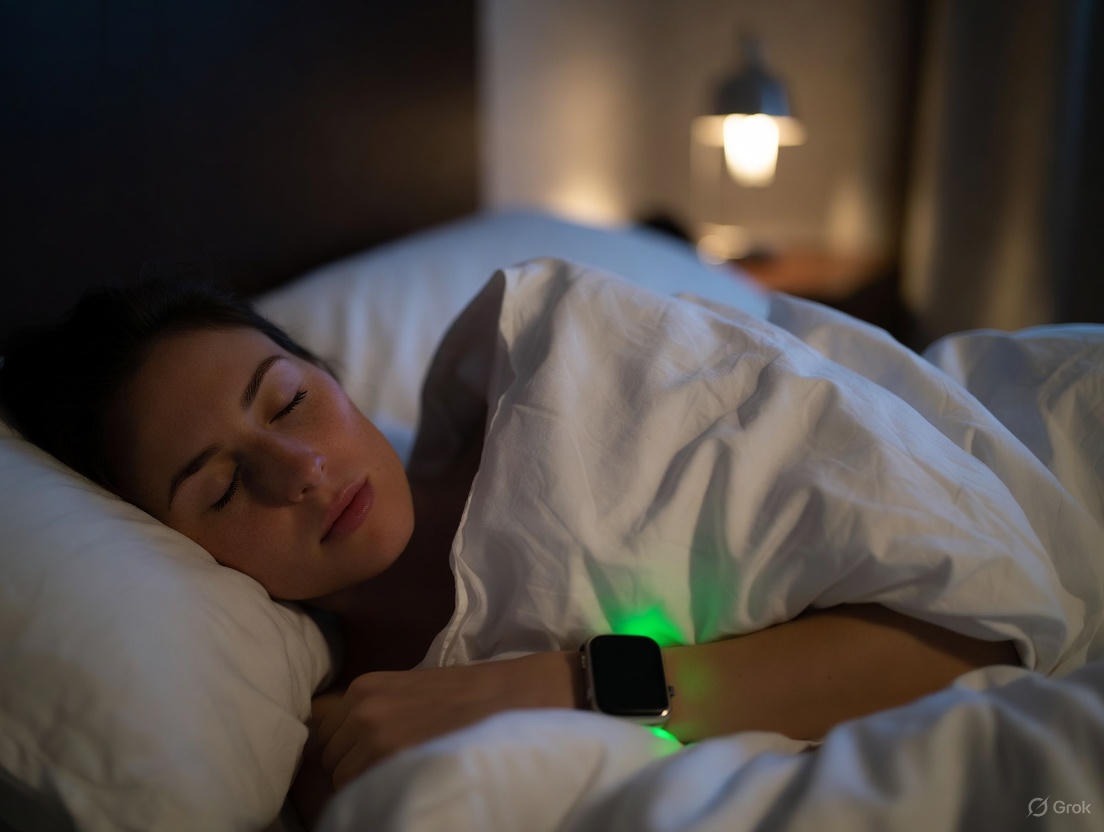
A common and costly mistake is to equate sleep preparation solely with total sleep duration. While quantity matters, your wellness ring data consistently reveals a more nuanced truth: the timing and quality of your transition into sleep are often more predictive of next-day readiness than a mere extra 30 minutes of fragmented sleep. This is grounded in our circadian biology.
Your body runs on a master clock in the brain (the suprachiasmatic nucleus), which synchronizes peripheral clocks in every organ. This system thrives on predictability. When you begin your wind-down routine at a consistent time, you send a powerful Zeitgeber (“time-giver”) signal to this entire network, initiating a cascade of sleep-supportive hormones. Melatonin begins its rise, core body temperature starts its essential drop, and cortisol, the alertness hormone, continues its evening decline.
Your ring detects the success of this transition. A person who goes to bed at a erratic times but logs 8 hours may show a lower HRV and more restless sleep than someone with a rock-solid 60-minute pre-sleep routine and only 7 hours of solid sleep. The ring’s sleep consistency analysis often highlights this: regular bedtimes lead to higher sleep efficiency (more time asleep while in bed) and more balanced sleep stages.
The critical window is the 60-90 minutes before your target sleep time. This is the "physiological runway" your body needs. What you do in this window directly programs the first—and most restorative—sleep cycles of the night. A chaotic, stimulating, or stressful pre-sleep period forces your nervous system to attempt an emergency landing, resulting in shallow initial sleep, missed deep sleep opportunities, and a readiness score that reflects the turbulence.
Consider this data-driven analogy from your ring: two nights with identical “8 hours in bed.” On Night A, you scrolled social media in bed until lights out. Your ring shows a elevated RHR for the first 90 minutes of the night, suppressed deep sleep in the first two cycles, and a low HRV. Your readiness score is 72. On Night B, you read a physical book under dim light after a relaxing stretching routine. Your ring shows a rapid RHR drop, robust deep sleep in the first cycle, and a high HRV. Your readiness score is 89. The difference wasn’t sleep duration; it was the quality of the transition. Your ring quantifies the profound impact of honoring your body’s need for a predictable, gentle descent into sleep, proving that the journey into sleep is just as important as the destination.
Perhaps the most glaring and measurable conflict between modern life and sleep biology is our exposure to artificial light at night, specifically the blue-wavelength light emitted by smartphones, tablets, laptops, and TVs. This isn't just about “eye strain”; it’s a direct biochemical hijacking of your sleep signal, and your wellness ring captures the fallout with precision.
Here’s the mechanism: specialized cells in your eyes detect blue light and send a direct signal to your brain’s master clock: “It’s daytime; suppress melatonin.” Melatonin is not simply a “sleep pill” hormone; it’s the conductor of the nighttime repair orchestra. It regulates the timing and quality of sleep stages, influences core body temperature drop, and has potent antioxidant properties. When you binge-watch a show or scroll through emails at 10 PM, you are essentially telling your pineal gland to delay the concert.
Your ring’s data manifests this in several ways:
The proof is in the personalized experiment. Try a true digital sunset—ceasing all screen use 60-90 minutes before bed—for just three nights. Replace that time with activities like reading a physical book, light tidying, or conversation. Observe your ring’s data. Many users see:
This isn’t hypothetical wellness advice; it’s a biohack verified by your own physiology. The blue light isn’t just keeping you awake; it’s downgrading the quality of your entire restoration cycle. By declaring a digital sunset, you remove the single biggest pollutant from your sleep environment and allow your natural biology, and your ring’s positive data trends, to take over. For those in high-pressure professions where late nights on screens are unavoidable, exploring stress relief techniques for high-pressure professions can offer alternative wind-down strategies that mitigate this digital damage.
Food is energy and information. What and when you eat in the evening sends direct instructions to your metabolic systems, which must then coordinate with your sleep systems. Your wellness ring, particularly through its measurement of nighttime RHR and HRV, acts as a brilliant auditor of this metabolic activity. The goal for an ideal evening is to allow digestion to be mostly complete before sleep, so the body’s energy can shift from processing food to repairing tissue and consolidating memory.
A large, heavy, or high-fat meal within 3 hours of bedtime forces your body to maintain a state of metabolic activity. Your core temperature may stay elevated (counter to the drop needed for sleep), blood is shunted to your gut, and your nervous system remains sympathetically engaged to manage the process. Your ring will often report a higher average nighttime RHR, more restlessness in the first half of the night, and potentially less deep sleep. It’s as if a construction crew (your digestive system) is still loudly working while the office cleaners (your sleep repair crews) are trying to do their job.
Conversely, going to bed very hungry can also be disruptive, causing a stress response and blood sugar dips that may wake you. The sweet spot, which your ring data will help you identify, is a modest, balanced meal finished 2-3 hours before sleep. This allows for the crucial post-meal insulin response and initial digestion to occur while you are still awake and active.
Macronutrients also play distinct roles:
Perhaps the most telling data point is your HRV response. A body struggling with late digestion shows a suppressed HRV—it’s less resilient because its resources are divided. By experimenting with meal timing and composition and observing your ring’s next-day readiness score and sleep graph, you engage in a powerful form of nutritional biofeedback. You learn not just what foods fuel your day, but what eating patterns fuel your night’s restoration. Pairing this knowledge with stress relief through mindful eating and nutrition for the nervous system creates a holistic evening nourishment strategy.
One of the most robust, yet under-appreciated, drivers of sleep onset and quality is core body temperature. Your circadian rhythm orchestrates a deliberate drop of about 1-2 degrees Fahrenheit in your core temperature, beginning in the evening and reaching its nadir in the middle of the night. This drop is not a side effect of sleep; it is a prerequisite for sleep initiation and maintenance. Your wellness ring, often equipped with a skin temperature sensor, provides direct insight into this critical process.
The mechanism is elegant: to cool the core, your body increases blood flow to the skin’s surface (vasodilation) to dissipate heat. This is why you might have warm hands and feet as you get sleepy—they are your body’s radiators. If your bedroom environment or habits impede this heat loss, sleep suffers.
Your ring’s temperature data can reveal several patterns:
You can use this data to engineer your thermal environment for sleep:
This is a prime example of how a subtle data point from your ring—overnight temperature—guides you to a powerful, non-pharmacological sleep intervention. By becoming an expert in your own thermoregulation, you stop fighting a fundamental biological need. For a deeper dive into using temperature for regulation, explore the principles behind how hydrotherapy provides stress relief through water-based techniques, which shares a foundational concept with thermal sleep hacking.
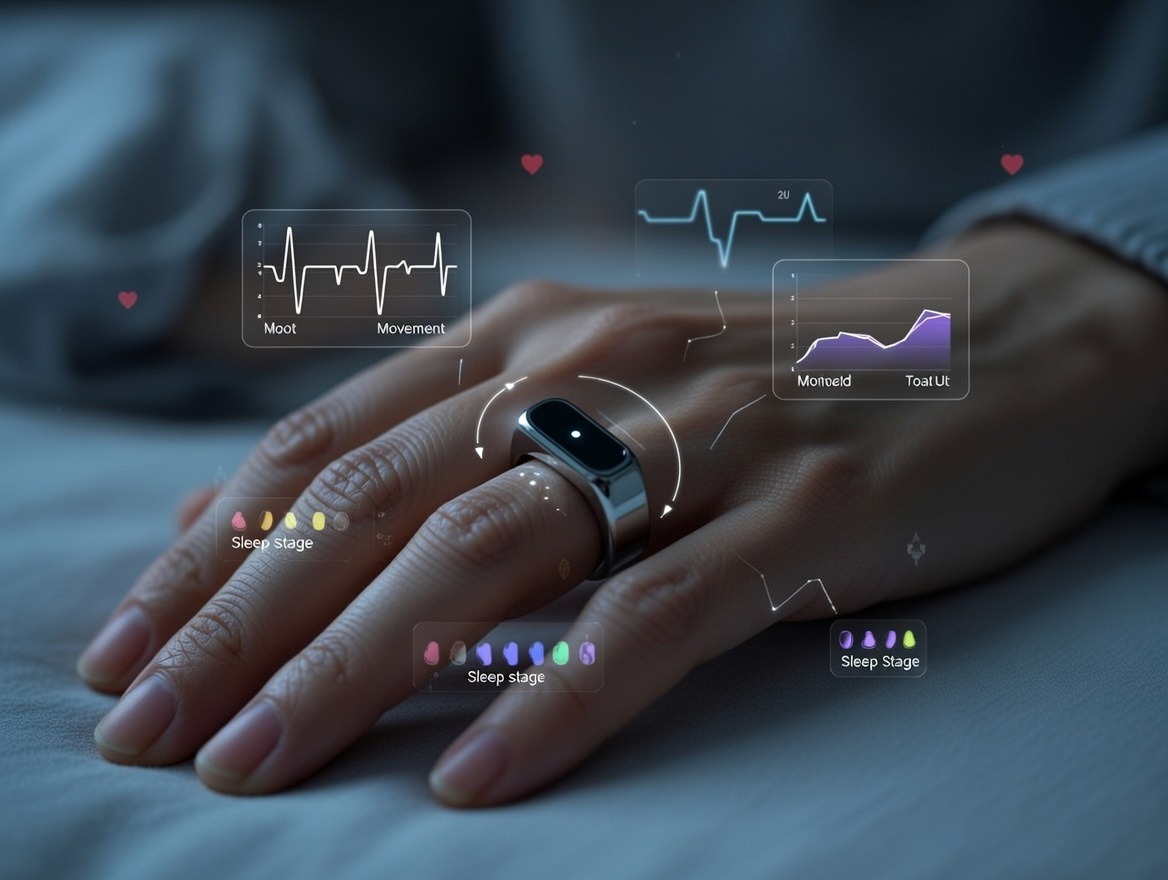
The stressors of the day do not magically vanish at 5 PM. Unprocessed mental and emotional tension manifests as physiological tension—elevated cortisol, a ramped-up sympathetic nervous system, and a suppressed vagal tone. Carrying this state into bed is like trying to launch your sleep recovery software while a virus (stress) is running in the background. It crashes the system. Your wellness ring’s HRV metric is the most sensitive indicator of this conflict. A high HRV indicates a calm, adaptable system; a low HRV indicates a system under strain.
Therefore, a non-negotiable component of an effective evening routine is active stress decoupling. This is the deliberate process of transitioning your nervous system from “fight-or-flight” (sympathetic) to “rest-and-digest” (parasympathetic) dominance before you expect it to sleep. It’s not passive relaxation; it’s active downregulation.
Your ring provides the perfect feedback loop to test which decoupling practices work best for your unique physiology. You can experiment and see the direct result in your nighttime HRV and sleep graph. Evidence-based practices include:
The key is consistency and timing. Performing your chosen decoupling ritual during your 60-minute “physiological runway” creates a conditioned response. Over time, your body learns that this activity means “shift into recovery mode.” Your ring’s data will validate this: on nights you consistently practice decoupling, look for a higher HRV, a lower and smoother RHR graph, and fewer reported awakenings. You are not just managing stress; you are systematically closing the sympathetic ledger of the day so your sleep can be a pure profit of restoration. For a comprehensive set of tools to find what works for you, consider building a personal stress relief toolkit with a customized approach.
Society has two popular evening “wind-down” substances: caffeine (often in the form of an after-dinner coffee or soda) and alcohol (a “nightcap”). Both are, according to the unambiguous data from wellness rings, profound sleep disruptors. They create an illusion of relaxation or drowsiness while sabotaging the very architecture of sleep you’re seeking.
Caffeine is an adenosine receptor antagonist. Adenosine is a neurotransmitter that builds up in your brain throughout the day, creating “sleep pressure.” Caffeine blocks its receptors, making you feel alert. Its half-life is 5-6 hours, meaning at 10 PM, half of a 5 PM coffee is still active in your system. Even if you fall asleep, your ring will often show:
Alcohol is a more seductive saboteur. It is a central nervous system depressant that can induce drowsiness, helping you fall asleep faster. However, as it metabolizes, it causes a rebound arousal effect. Your ring data typically reveals:
Your wellness ring removes all subjectivity. You can see the direct trade-off: the short-term relaxation from a glass of wine is paid for with a chunk of your REM sleep and a lower readiness score. The alertness from a late coffee costs you deep restoration. By observing your own data after consuming these substances, you move from hearing general warnings to witnessing your personal physiological cost-benefit analysis. This empowers you to make informed choices, perhaps shifting caffeine to before 2 PM and replacing the alcoholic nightcap with a true stress relief technique for nighttime and pre-sleep, like herbal tea or a guided relaxation.
Armed with all this data, the task becomes not just understanding the principles, but implementing a sustainable, personalized practice—a ritual, not a rigid routine. A routine is a list of tasks; a ritual is a series of intentional, meaningful actions that signal a transition in state. Your wellness ring is the perfect tool for building this ritual because it provides non-judgmental feedback, allowing you to iterate and adapt.
Start by auditing your current evening with your ring’s data as a guide. Look at the correlations: On nights with higher readiness scores, what did you do differently? Was it an earlier meal? A digital sunset? A warm bath? Use this to identify 2-3 high-impact levers unique to you.
Next, design a 60-minute “Power-Down Ritual” that incorporates these levers. Structure it in phases:
The consistency of the ritual’s timing is as important as its contents. It builds a powerful Pavlovian response in your nervous system. Your ring will show you the fruits of this consistency: better sleep efficiency scores, more stable HRV, and higher readiness.
Remember, the goal is not perfection. It’s about creating a compassionate framework that supports your biology. Some nights the ritual will be 20 minutes; other nights it will be complete. The ring’s data helps you see the spectrum of results, reinforcing the value of the ritual without inducing guilt. It turns the evening from a time of passive exhaustion into an active, skillful practice of preparing for renewal—a practice whose success is literally measured while you dream. For those undergoing significant life changes, maintaining such a ritual is a cornerstone for maintaining emotional balance during major life changes.
The moment of truth arrives each morning: you open your app to see the night’s report and your readiness score. This is not just a grade to feel good or bad about. It is a rich diagnostic report, a conversation with your physiology. Learning to interpret it wisely transforms data into actionable wisdom for both your upcoming day and your next evening.
First, Adopt a Curious, Not Judgmental, Mindset. A low readiness score isn’t a failure; it’s crucial information. It’s your body saying, “I need a different approach today.” Ask: “What is this data telling me about my needs?”
Key Insights to Synthesize:
This morning review should directly influence two things:
By engaging with the morning report as a strategic briefing rather than a scorecard, you close the feedback loop. Last night’s data informs today’s behavior, which informs tonight’s routine, which generates tomorrow’s data. This creates a virtuous, self-optimizing cycle where you are no longer guessing about your wellbeing—you are collaborating with it, guided by the continuous stream of wisdom from your finger.
The final, and perhaps most profound, insight from long-term wellness ring use is the revelation of compound interest. Just as small, regular financial investments grow exponentially over time, small, consistent evening investments in your sleep biology compound into a vast reservoir of physiological and psychological resilience. Your ring’s long-term trends—viewable over weeks, months, and seasons—make this invisible growth spectacularly visible.
This isn’t about a single perfect night. It’s about the trend line. A person who prioritizes their evening ritual 80% of the time will, over months, show a significantly higher baseline HRV, a lower baseline RHR, and more stable sleep architecture than someone who oscillates wildly between “perfect” and “neglected” nights. Consistency trains your nervous system to trust the process. It learns to expect and efficiently execute the wind-down cascade. This leads to:
Your ring’s long-term view is your motivation. Seeing your HRV baseline climb slowly upward over a season is a more powerful motivator than any external goal. It’s direct evidence that your daily choices are fundamentally upgrading your operating system.
The evening routine, therefore, transcends mere “recovery from today.” It becomes preparation for all your tomorrows. It is the daily deposit into the bank of your health, energy, and potential. The wellness ring is your account statement, showing not just your balance, but the steady, rewarding growth that comes from faithful, intelligent investment in the quiet, powerful hours of the night. This understanding moves you from chasing sleep to cultivating a lifestyle of sustainable readiness, one deliberate evening at a time.
Not all 10 PM bedtimes are created equal. One of the most significant personalization factors your wellness ring can help you decode is your chronotype—your inherent biological predisposition for sleep and wake times. Are you a natural "lark" (early riser), an "owl" (night owl), or somewhere in between? Fighting against your chronotype with a misaligned evening routine is like swimming upstream; it's exhausting and inefficient. Your ring's long-term data on sleep onset, sleep quality, and morning alertness (often reflected in your readiness score's time-to-peak) can pinpoint your natural rhythm.
For the Lark, whose melatonin rises and core temperature drops early in the evening:
For the Owl, whose biological night is delayed:
The Majority in the Middle (the "hummingbirds") have more flexibility but still benefit from observing their personal trends. Does your ring show better HRV when you finish dinner by 7 PM versus 8 PM? Does your sleep efficiency drop if you work past 9 PM?
By analyzing months of data, you can stop trying to fit a generic "ideal schedule" and start designing an evening that respects your innate wiring. This alignment reduces the physiological friction of sleep initiation, leading to more effortless sleep onset, more robust sleep architecture, and a readiness score that reflects a system operating in harmony with its natural design. Understanding this is a cornerstone for anyone seeking to achieve emotional balance in a world of constant stimulation, as chronotype misalignment is a chronic, low-grade stressor.
The concept of a single, monolithic "evening routine" can feel daunting. An advanced strategy illuminated by ring data is the Segmented Evening or the Micro-Recovery Hour. This involves intentionally splitting your wind-down process into two distinct phases, each with a specific physiological goal, separated by a clear transition. This structure can be more manageable and psychologically effective than one long, ambiguous block of time.
Phase 1: The Administrative & Metabolic Shutdown (Approximately T-90 to T-60 minutes before bed)
This phase is about closing open loops and completing processes that would otherwise haunt your nervous system.
Phase 2: The Nervous System & Sensory Transition (The final 60 minutes)
This is the sacred, screen-free, stimulation-controlled period dedicated solely to downregulation.
The power of this segmentation is clarity and habit stacking. Your brain learns that Phase 1 means "wrap up," and Phase 2 means "wind down." Your wellness ring becomes the validator. On nights you successfully execute both phases, look for a distinctive pattern: a steady, uninterrupted decline in your live heart rate graph starting right at the beginning of Phase 2, leading to rapid sleep onset and a high sleep stability score. This two-phase approach is a practical application of building emotional balance through daily micro-practices, distributing the work of restoration across the evening.
Your bedroom is not just a place you sleep; it is a recovery chamber. Its environmental parameters—light, sound, temperature, and air quality—are not background details; they are active inputs your nervous system constantly processes. Your wellness ring’s sensitivity to sleep fragmentation and resting heart rate provides direct feedback on how well your environment supports, or sabotages, your sleep.
1. Darkness Beyond the Digital: Total darkness is non-negotiable for optimal melatonin production. Even small amounts of light from a charger LED, a streetlamp, or a crack under the door can be detected by your photoreceptors and subtly disrupt sleep architecture. Your ring’s measure of "restlessness" or "awake time" can often be correlated with light pollution. Solutions like blackout curtains, an eye mask, or electrical tape over LEDs are simple fixes with potentially dramatic results. This pursuit of sensory minimization aligns with the principles of how time in darkness provides unique stress relief.
2. The Sound of Silence (or Consistent Noise): Abrupt, unpredictable noises—a dog barking, a car alarm, a partner snoring—trigger micro-arousals, pulling you out of deep sleep stages even if you don’t remember waking. Your ring’s sleep stage graph may show unexplained interruptions. Consistent, monotonous "white noise" or pink noise from a sound machine can mask these disruptions by providing a stable auditory blanket. The data payoff is often a higher "sleep efficiency" percentage and more consolidated deep sleep blocks.
3. Temperature Precision: As discussed, temperature is crucial. Your ring’s skin temperature sensor allows you to experiment with precision. Is 68°F (20°C) better for you than 65°F (18°C)? Does a ceiling fan, which also provides white noise, improve your temperature curve? The data will guide you to your personal thermal sweet spot.
4. Air and Allergens: Poor air quality, high CO2 levels, or allergens can cause subtle inflammation and restless sleep. An air purifier or simply ensuring good ventilation can sometimes lead to improvements in nighttime HRV and reduced morning congestion, which your ring may correlate with better recovery scores.
By treating your sleep environment as a lab and your ring as the measurement tool, you move from guesswork to optimization. Each adjustment—a new blackout shade, a sound machine, a different duvet—can be tested over a week. The ring provides the objective answer: did this change improve my sleep stability and next-day readiness? This process of environmental control is itself a form of stress relief through organization and environmental control, reducing the unconscious burdens on your sleeping brain.
Human connection is vital, but the timing and nature of evening social interactions can have a profound impact on your nervous system’s ability to shut down. A heated debate, an emotionally charged conversation, or even an overstimulating, joyful social gathering right before bed can leave your sympathetic nervous system activated for hours. Your wellness ring is a stark witness to this, often showing elevated heart rate and low HRV long after the interaction has ended.
The concept of a Social Sunset is the intentional management of social stimuli in the final hours of the day. This doesn’t mean becoming antisocial; it means becoming strategic.
Your ring’s HRV is the ultimate barometer of social-emotional load. A night of low HRV following a social evening is clear data that the interaction, however enjoyable in the moment, was metabolically costly. This insight allows you to plan proactively. Perhaps you schedule a calming, solo ritual after social events to aid the decoupling process, using methods like cognitive reframing for changing stress perception to process the event healthfully. By managing your social sunset, you protect the integrity of your sleep and ensure your relationships fuel, rather than drain, your readiness.
Exercise is a cornerstone of health, but its timing relative to sleep is a critical variable that your wellness ring can help you optimize perfectly. Intense exercise stimulates cortisol release, raises core body temperature, and activates the sympathetic nervous system—all opposite to the state desired for sleep initiation. However, the body’s response and recovery time vary greatly from person to person.
Your ring data allows you to conduct a personalized audit:
The general rule that emerges from aggregated ring data is a gradient of recovery time: the more intense and anaerobic the exercise, the longer the required cooldown period before sleep. Furthermore, consistent exercisers often adapt, showing less sleep disruption from evening workouts than sporadic exercisers.
Let your readiness score be your guide. If you consistently see low scores after evening workouts, it’s a mandate to shift that session to the morning or afternoon. If your scores remain high, you have the data-backed freedom to continue. This removes the dogma and replaces it with personal physiology, ensuring your movement routine always serves your ultimate goal of holistic recovery.
In the quest to decouple from the day’s stress, few tools are as potent and immediately accessible as mindfulness. A short, focused mindfulness practice in the evening acts as a direct neural interrupt, breaking the chain of rumination and worry, and pulling your awareness into the present, calm moment. Your wellness ring quantifies the success of this interrupt by measuring its downstream effect on your nervous system throughout the night.
Unlike a 30-minute meditation session (which is wonderful but can feel like a high barrier), the "Mindfulness Bridge" involves 5-10 minutes of targeted practice during your Phase 2 wind-down. The goal is not enlightenment; it’s physiological shift.
The ring’s data reveals the impact: consistent evening mindfulness practitioners often show a steeper decline into sleep, higher and more stable HRV, and less-reported "mind-racing" at bedtime. The practice essentially "clears the cache" of the day’s mental and emotional processing, preventing it from spilling over into sleep architecture. It is a direct method for expanding your window of tolerance for emotional capacity, allowing you to enter sleep from a state of equilibrium rather than overwhelm. By making this a non-negotiable part of your evening ritual, you build a reliable bridge from the chaos of the day to the calm of the night.
Hydration is essential for every bodily function, including the cellular repair that happens during sleep. However, the timing of fluid intake presents a classic sleep dilemma: drink too little, and you risk dehydration and midnight waking from a dry mouth or thirst; drink too much too late, and you guarantee disruptive trips to the bathroom (nocturia). Your wellness ring’s sleep fragmentation data—specifically the "awake" or "restless" periods—can help you find your personal hydration sweet spot.
The goal is to be hydrated but not full of fluid at bedtime. A strategic approach involves:
Your ring provides the evidence. If you see a pattern of awake periods around 2-4 AM correlating with late fluid intake, it’s a clear signal to adjust your schedule. Conversely, if you wake with a headache or a very low HRV (which can be influenced by mild dehydration), you may need to shift more hydration into the earlier evening.
This isn't just about avoiding bathroom trips. Each full awakening to use the bathroom can break a sleep cycle, making it difficult to re-enter deep or REM sleep. By optimizing your evening hydration strategy, you protect the continuity of your sleep architecture, a factor that directly boosts your readiness score. It’s a simple, logistical tweak with a disproportionately positive impact on sleep quality, proving that readiness is built on a foundation of these finely-tuned, everyday practices.
An evening routine does not exist in a vacuum. It is the final act of a daily play. The quality of your day—your exposure to light, your management of stress, your activity patterns—profoundly influences how easily you can slide into a restorative evening wind-down. Your wellness ring’s daytime metrics (like daytime HRV or stress scores) and its nightly data are two sides of the same coin. To engineer a perfect evening, you must also leverage your day.
Think of your day as gathering the ingredients for your evening recovery feast. Morning light, managed stress, and physical activity are the fresh, high-quality components. A chaotic, dark, sedentary, and over-caffeinated day provides stale, poor-quality ingredients. No evening recipe, no matter how skilled, can then produce a gourmet meal of sleep. Your ring’s 24/7 data stream allows you to see this cause-and-effect chain in real-time. A high-stress day score often predicts a lower sleep score, unless you actively intervene with a superb evening routine. This holistic view is the essence of a complete guide to emotional balance where science meets practice, recognizing that readiness is a 24-hour endeavor.
Sometimes, the data from your ring seems to contradict your felt experience. You might feel exhausted but get a high readiness score. Or you might feel great but see a low HRV and a poor sleep breakdown. These "paradoxical readings" are not errors; they are advanced lessons from your physiology. Learning to interpret them is key to sophisticated self-knowledge.
Scenario 1: High Readiness Score But You Feel Tired.
Scenario 2: Low HRV/Readiness But You Feel Energetic.
Scenario 3: Great Sleep Data But Waking Unrefreshed.
Scenario 4: Sudden, Unexplained Shifts in Baseline.
When data and feeling diverge, don't dismiss the ring. Use it as a starting point for deeper inquiry. Ask: "What is my body trying to say that my mind hasn't caught up to yet?" or vice versa. This nuanced dialogue between subjective experience and objective data is the highest form of self-care your ring enables, moving you towards true integration and a complete guide to emotional balance where science meets practice.
An effective evening routine does more than ensure a good tomorrow; it is a daily workout for your nervous system's resilience. Each night you successfully guide your body through the wind-down cascade—lowering cortisol, stimulating the vagus nerve, and entering deep, restorative sleep—you strengthen the neural pathways responsible for calm and recovery. This is the concept of neuroplasticity applied to autonomic regulation. Your wellness ring tracks the fruits of this training not just in nightly HRV, but in the upward creep of your HRV baseline over months and seasons.
This long-term training manifests in several critical ways:
Your ring’s long-term trends are the proof of this compounded investment. Watching your average resting heart rate decrease by a few beats per minute over a year, or your HRV baseline climb, is not just a statistic; it’s visible evidence that your daily evening practice is fundamentally upgrading your biological hardware for long-term health, making you more adaptable, stable, and durable.
One of the truest tests of any health practice is its portability. Travel—with its time zone changes, unfamiliar environments, disrupted schedules, and dietary shifts—is a perfect storm for destroying sleep and readiness. Yet, with intention and your wellness ring as a guide, you can create a Travel & Disruption Protocol that minimizes the damage and accelerates re-synchronization.
Your ring becomes your most valuable travel companion, providing objective data when your subjective sense of time and wellness is scrambled.
Pre-Travel Preparation (The 3-Day Anchor):
In-Transit Strategy:
The Recovery Routine:
The Home Re-Entry:
By having a plan and using your ring’s feedback, travel changes from a guaranteed readiness-wrecker to a manageable, data-informed challenge. You prove to yourself that your evening habits are not fragile, but flexible tools you can deploy anywhere to protect your core recovery.
For those who share a bed and a life with a partner, individual evening routines can collide, creating friction that undermines both people’s sleep. The snorer, the night owl, the early bird, the light sleeper—these differences become data points on each other’s rings, often in the form of poor sleep stability scores. The solution is not separate bedrooms (though that is a valid option), but partner synchronization: a collaborative approach to designing a shared evening that honors both individuals’ biology.
Step 1: Data-Driven Empathy. Share your ring data with each other. This isn’t about blame (“your restlessness ruined my deep sleep!”), but about understanding. “Look, on nights we watch that intense show right before bed, my heart rate stays elevated for an hour. How does it affect you?” This objective data depersonalizes the issue and makes it a joint puzzle to solve.
Step 2: Craft a Complementary, Not Identical, Routine. You may not have the same chronotype. The solution is a staggered or parallel routine.
Step 3: Incorporate Bonding into the Wind-Down. Instead of screens, can the final 30 minutes include a shared, calm connection? This could be sharing highlights of the day, giving each other a brief neck massage, or practicing a partnered breathing exercise. This leverages how social connection provides natural stress relief and turns the pre-sleep period into a relationship-positive ritual.
Step 4: Address Sleep Disruptors Together. If one partner’s snoring (often visible on the other’s ring as frequent awakenings or elevated nighttime heart rate) is an issue, the data provides motivation to seek solutions, from positional therapy to professional sleep studies.
When both partners are invested in each other’s readiness, it creates a positive feedback loop. Better sleep leads to better moods, more patience, and higher energy for the relationship during the day. The shared goal of mutual readiness, monitored by your collective ring data, transforms the evening from a potential battleground into a collaborative project for shared wellbeing, strengthening the foundation for managing stress relief techniques for relationship and social stress.
Your circadian rhythm is exquisitely sensitive to the changing light and temperature of the seasons. The long, bright evenings of summer and the short, dark days of winter present different challenges for sleep and readiness. A static evening routine year-round is less effective than one that adapts. Your wellness ring’s season-over-season comparisons provide the clues for how to adjust.
Summer Challenges & Adjustments:
Winter Challenges & Adjustments:
Spring/Fall (Transition Seasons):
By observing your ring’s yearly patterns, you learn to anticipate these shifts and proactively tweak your evening habits. This transforms your routine from a rigid prescription into a living, breathing practice that flows with the rhythm of the natural world, ensuring your readiness is robust in every season.
The default modern evening is often passive and consumptive: scrolling social media, binge-watching TV, and absorbing information. While relaxing, these activities can leave the mind feeling full yet empty—stimulated but not satisfied. A powerful paradigm shift for evening readiness is to replace a portion of consumptive time with creative time. This doesn’t mean writing a novel; it means engaging in any low-stakes, expressive act that uses your mind and hands in a generative way.
Why does this boost readiness? Creative acts:
Your ring will likely reflect this shift. An evening that includes 20-30 minutes of creation often leads to a calmer pre-sleep heart rate, quicker sleep onset, and a higher HRV. The mind, having been given a constructive, absorbing task, is more ready to shut down than a mind numbed by endless scrolling.
Try swapping one episode of a show for a creative session for a week. Use your ring’s sleep and readiness data as the measure. You may find that this practice doesn’t just improve your sleep metrics; it adds a layer of fulfillment and gentle mastery to your evenings, making the wind-down something you look forward to, not just a health obligation.
The cycle of readiness is a circle, not a line. Your evening routine sets the stage for sleep, which determines your morning readiness score. But then, that morning data must inform how you start your day, which in turn influences how easily you can wind down that night. This creates a virtuous, self-reinforcing loop.
Your morning routine should be a graceful exit from the state of restoration, designed to capitalize on the readiness you’ve built and set a positive trajectory for the coming evening.
Let Your Readiness Score Be Your Morning Guide:
Morning Rituals That Support the Next Evening:
By designing a responsive morning that honors your nightly data, you complete the feedback loop. You use the output of last night’s routine (your readiness) to design today’s actions, which then create the conditions for tonight’s successful routine. This holistic, 24-hour perspective is the essence of building permanent stress adaptations beyond temporary relief. You’re not just recovering from yesterday; you are proactively building tomorrow’s resilience today.
The current generation of wellness rings provides a revolutionary window into our nocturnal biology. But this is just the beginning. As sensor technology, machine learning, and integrative health science advance, the future of evening optimization promises even deeper personalization and proactive guidance.
1. Multimodal Sensing Integration: Future devices may seamlessly integrate data from your ring with other inputs: under-mattress sleep trackers for precise movement and breathing, continuous glucose monitors (CGMs) to see the direct impact of evening meals on nocturnal glucose stability, and even at-home EEG headbands to measure brainwave states. Your "readiness" score could become a holistic fusion of nervous system, metabolic, and neural data.
2. Predictive, Not Just Reactive, Insights: Algorithms will move beyond telling you what happened last night to predicting what will happen. Based on your daytime activity, stress, and evening behaviors up to 8 PM, your app might say: "Based on your current state, if you follow your standard routine, your predicted readiness is 82. If you add a 15-minute mindfulness session, it increases to 87. If you have a late dinner, it drops to 75." This turns your evening into a real-time optimization game.
3. Personalized, Dynamic Recommendations: Instead of generic "reduce blue light" tips, your AI coach might say: "Your data shows you're particularly sensitive to emotional stress before bed. When your daily stress score exceeds 6.5, I recommend this specific 10-minute self-compassion meditation for stress relief through kindness." Or, "Your temperature drop is slow on nights you exercise after 7 PM. Consider a cool shower 30 minutes before bed on those nights."
4. Longitudinal Health Forecasting: By analyzing years of evening routine, sleep, and readiness data correlated with health outcomes, these devices could identify personal risk factors and protective habits. They might highlight that for you, consistently protecting your REM sleep is the strongest predictor of maintained emotional balance, or that late caffeine is your single biggest sleep disruptor.
This future is not about more obsessive tracking, but about smarter, quieter guidance. The goal will be for the technology to fade into the background, providing just-in-time, hyper-personalized nudges that make crafting the perfect, readiness-boosting evening almost effortless. The core principle, however, will remain the same, as outlined in our exploration of what emotional balance is and why it matters for health: the deliberate, informed care of our nervous system is the foundation of everything we wish to be and do.
We began with a simple premise, now overwhelmingly supported by the data from your finger: your evening routine is the most powerful lever you have to directly engineer tomorrow's readiness. It is not downtime, but strategic uptime for your biology. It is the daily renaissance where the wear and tear of the day is repaired, the mind is cleared, the emotions are integrated, and your physiological resilience is restored.
Your wellness ring transforms this from folk wisdom into a precise science. It shows you the direct line from your digital sunset to your HRV, from your last bite to your deep sleep, from your stress-decoupling practice to your morning focus. It turns the opaque process of recovery into a transparent, optimizable system.
The invitation, then, is to approach your evenings with the reverence and intention they deserve. See them not as the leftover hours at the end of a spent day, but as the foundational shift at the beginning of a new one. Each evening is a fresh opportunity to program a better tomorrow—to wake up not just rested, but truly ready: ready to think clearly, engage fully, create boldly, and connect meaningfully.
Let your ring be your guide and your proof. Experiment, observe, and iterate. Build your ritual. Respect your chronotype. Protect your sanctuary. In doing so, you claim authorship over your energy, your health, and your potential. You move from being at the mercy of your days to being the architect of your readiness, one deliberate, restorative evening at a time. The data is in, and the conclusion is clear: how you spend your night is the most honest predictor of how you’ll conquer your day.
Your Trusted Sleep Advocate: Sleep Foundation — https://www.sleepfoundation.org
Discover a digital archive of scholarly articles: NIH — https://www.ncbi.nlm.nih.gov/
39 million citations for biomedical literature :PubMed — https://pubmed.ncbi.nlm.nih.gov/
Experts at Harvard Health Publishing covering a variety of health topics — https://www.health.harvard.edu/blog/
Every life deserves world class care :Cleveland Clinic - https://my.clevelandclinic.org/health
Wearable technology and the future of predictive health monitoring :MIT Technology Review — https://www.technologyreview.com/
Dedicated to the well-being of all people and guided by science :World Health Organization — https://www.who.int/news-room/
Psychological science and knowledge to benefit society and improve lives. :APA — https://www.apa.org/monitor/
Cutting-edge insights on human longevity and peak performance:
Lifespan Research — https://www.lifespan.io/
Global authority on exercise physiology, sports performance, and human recovery:
American College of Sports Medicine — https://www.acsm.org/
Neuroscience-driven guidance for better focus, sleep, and mental clarity:
Stanford Human Performance Lab — https://humanperformance.stanford.edu/
Evidence-based psychology and mind–body wellness resources:
Mayo Clinic — https://www.mayoclinic.org/healthy-lifestyle/
Data-backed research on emotional wellbeing, stress biology, and resilience:
American Institute of Stress — https://www.stress.org/


