


Simple Daily Recovery Tracking Methods for Beginners
Simple, low-tech methods for beginners to start tracking their recovery.
Simple, low-tech methods for beginners to start tracking their recovery.
%402x.svg)
In the relentless pursuit of better health, we often focus on the push—the hard workouts, the strict diets, the early mornings. We meticulously track our steps, our calories burned, and our PRs. But what about the pause? What about the essential, often invisible, process that allows all that effort to actually translate into results? That process is recovery, and tracking it is the single most transformative habit a wellness beginner can adopt.
Think of your body as a sophisticated battery. Every stressor—physical, mental, emotional—drains its charge. Exercise is a controlled, productive drain. Sleep, nutrition, and relaxation are the charge. If you only monitor the drain, you’re flying blind, destined to hit a wall of fatigue, burnout, or injury. Daily recovery tracking flips the script. It empowers you to listen to your body’s signals, quantify your "charge" level, and make informed decisions that sustain your energy and progress for the long haul.
Gone are the days of guessing how you feel. Today, intuitive technology like advanced wellness rings brings laboratory-grade insights to your fingertip. This guide is your comprehensive introduction to simple, actionable daily recovery tracking methods. We’ll move beyond complex theories to practical routines you can start tonight. From decoding your sleep data to understanding your nervous system's whispers, you’ll learn how to build a complete picture of your readiness to thrive.
The goal isn’t to add another chore to your day, but to cultivate a profound connection with your well-being. This is the foundation of intelligent, personalized health. Whether you're starting a fitness journey, managing daily stress, or simply seeking more vitality, mastering these methods is your first step. Welcome to a smarter, more responsive way to care for yourself. Let’s begin by understanding the critical "why" behind the practice.
We live in a culture that celebrates output. Hustle is glamorized, busyness is a badge of honor, and "no days off" is a common mantra. This mindset, however, ignores a fundamental biological law: adaptation and improvement do not happen during the stress of a workout or a demanding workday. They occur afterward, during the recovery phase. This is when muscles repair, the nervous system recalibrates, energy stores are replenished, and cognitive function is restored. Ignoring recovery is like constantly withdrawing money from a bank account without ever making a deposit—eventually, you’ll go bankrupt.
For beginners, this is especially crucial. Your body is adapting to new stimuli, and its signals can be subtle. Without tracking, you might mistake chronic fatigue for laziness, or persistent soreness for weakness, leading to discouragement or overtraining. Daily recovery tracking provides an objective, personalized dashboard that moves you from guessing to knowing.
The Science of Supercompensation
At the heart of recovery is a principle called supercompensation. When you apply a stressor (like exercise), your body’s systems are temporarily depleted or disrupted. Given proper rest and nutrients, it doesn’t just return to baseline; it overcompensates, building back slightly stronger, more resilient, and more efficient to prepare for the next challenge. This upward spiral is how we get fitter, sharper, and healthier. The entire cycle hinges on the quality of the recovery window. Tracking tells you precisely when that window is open and when you need to keep it propped open a little longer.
Beyond the Gym: Holistic Stress
Recovery isn't just for athletes. Your body processes all stress through similar physiological pathways. A difficult conversation, a looming deadline, poor sleep, or digesting a heavy meal all trigger your sympathetic nervous system (the "fight or flight" response) and require recovery through the parasympathetic system ("rest and digest"). Modern life is a constant drip of these micro-stressors. Daily tracking helps you see the cumulative load and identify which non-physical factors—like a poor night's sleep or a high-stress workday—are depleting your battery, allowing you to adjust before it impacts your health or workout performance.
By making recovery visible, you shift from a reactive to a proactive health model. Instead of waiting for illness, injury, or burnout to force you to stop, you intelligently modulate your activity to stay in the optimal zone for growth and vitality. This is the core of preventive health monitoring, and it starts with the simple habit of paying attention. As you’ll discover on our blog, this proactive approach is the future of personal wellness.
The Beginner’s Mindset: Curiosity Over Perfection
Starting a recovery tracking practice requires no special equipment—just a commitment to curiosity. The goal is not to achieve "perfect" scores every day but to observe patterns and relationships. How does that late-afternoon coffee affect your sleep? How does a 30-minute walk in nature impact your stress levels compared to 30 minutes of social media? This data is power. It transforms you from a passenger in your health journey to the pilot, with a clear instrument panel guiding your decisions.
In the following sections, we’ll explore that instrument panel, starting with the most powerful recovery tool you already possess: your sleep.
If recovery had a king, sleep would sit unquestionably on the throne. It is the most potent, non-negotiable period of physiological and psychological restoration. During deep sleep, growth hormone is released for tissue repair, memories are consolidated, the brain’s glymphatic system clears metabolic waste, and the immune system recharges. Tracking sleep isn't just about logging hours in bed; it's about assessing the architecture and quality of those hours to ensure you’re getting the restorative benefits you need.
For beginners, focusing on two foundational pillars is essential: Duration and Quality. Think of duration as the quantity of fuel and quality as the octane level. You need both for optimal performance.
Pillar 1: Tracking Sleep Duration – The 7-9 Hour Baseline
The National Sleep Foundation recommends 7-9 hours per night for adults. This is your starting point. A consistent sleep schedule—going to bed and waking up at roughly the same time every day, even on weekends—is arguably more important than a single night of perfect duration. It regulates your circadian rhythm, your body's internal master clock that governs sleep-wake cycles, hormone release, and even digestion.
Pillar 2: Decoding Sleep Quality – The Stages of Restoration
Sleep is not a monolithic state. It cycles through light sleep, deep sleep (slow-wave sleep), and REM (rapid eye movement) sleep approximately every 90 minutes.
Poor sleep quality often means insufficient deep or REM sleep, even if you’re in bed for 8 hours. You might wake up feeling unrefreshed. Causes can include alcohol consumption, late-night eating, sleep apnea, or an irregular schedule.
Actionable Tracking Techniques for Beginners:
Sleep tracking’s ultimate value is in revealing patterns. Does your deep sleep plummet after evening drinks? Does your REM sleep increase after a day of intense mental work? This knowledge lets you tailor your evening routine for better recovery. For a deeper dive into how technology unlocks these insights, explore the science behind modern health tracking. Your sleep data is the first and most critical chapter in your daily recovery story. The next chapter begins the moment you open your eyes.
Your first moments upon waking are a golden window of insight. Before coffee, news, or the day’s stressors influence your body, you exist in a near-baseline state. This is the perfect time to capture simple, powerful metrics that serve as your daily recovery "vital signs." Establishing a consistent morning check-in ritual takes less than five minutes but provides a wealth of information about how well you recovered from the previous day and your readiness for the day ahead.
For beginners, three accessible metrics form a robust morning triad: Resting Heart Rate (RHR), Heart Rate Variability (HRV), and subjective ratings.
1. Resting Heart Rate (RHR): The Body’s Tachometer
Your RHR is the number of times your heart beats per minute while you are completely at rest. A well-recovered cardiovascular system is efficient; it doesn’t need to work hard to maintain baseline function. Therefore, a lower RHR generally indicates better fitness and recovery. For tracking, it’s the trend that matters, not a single number.
2. Heart Rate Variability (HRV): The Nervous System’s Secret Language
HRV is the most sophisticated recovery metric accessible to beginners. It measures the subtle variations in time between each heartbeat. Contrary to intuition, a higher HRV is typically better. It indicates a resilient, adaptable autonomic nervous system that can seamlessly switch between stress (sympathetic) and recovery (parasympathetic) modes. A low or dropping HRV suggests your nervous system is stuck in a stressed, "fight or flight" state, signaling poor recovery.
3. Subjective Morning Ratings: The Power of "How Do You Feel?"
Never underestimate the wisdom of your own perception. Quantitative data needs a qualitative counterpart. Two simple questions can frame your morning:
Log these numbers alongside your RHR. Over time, you’ll see how your subjective feelings correlate with objective data. You might feel "off" with a high RHR, confirming the need for an easy day. Or, you might feel great despite a low HRV, prompting you to look for other stressors.
Building the 5-Minute Morning Ritual:
This ritual creates a powerful feedback loop. It turns abstract concepts of "tiredness" into concrete, trackable data, empowering you to make smarter daily choices—like opting for a walk instead of a hard run if your metrics are low. This practice is a key component of learning to build healthy, sustainable habits with technology. Now, let’s carry this awareness of your internal state into the rhythm of your entire day.
Your energy and mood are not static; they ebb and flow in natural waves throughout the day, influenced by your circadian rhythm, meal timing, activity, and stress. For beginners, simply bringing conscious attention to these patterns is a revolutionary act. It allows you to work with your biology, not against it, scheduling demanding tasks when you’re naturally alert and embracing rest when you dip. This is the art of energy management, a critical component of daily recovery.
Tracking these patterns helps you identify your personal ultradian rhythms—the 90-120 minute cycles within a day where your body moves from high alertness to physiological fatigue. Pushing through these natural dips with caffeine or willpower leads to a deeper energy debt. Honoring them with short breaks accelerates recovery and sustains performance.
The Energy & Mood Log: A Simple Framework
You don’t need to note every hour. A "check-in" approach three to four times a day is perfectly effective. Use a scale of 1-5 for both energy and mood.
Key Check-In Points:
Alongside your number, jot a one-word cause if it’s obvious (e.g., "Energy: 2 – big lunch," "Mood: 4 – walked outside").
Interpreting the Patterns:
After a week of logging, look for trends.
The Role of Objective Data:
Subjective logs become even more powerful when paired with objective data from a wearable. Many smart rings and watches can detect "body battery" or "stress" scores throughout the day using HRV and activity data. You might subjectively rate your energy as a "3," but your device shows your stress levels have been high for three hours straight. This objective nudge can prompt you to take five minutes of diaphragmatic breathing to downregulate your nervous system, actively promoting recovery during the day to prevent an overwhelming debt by bedtime.
Understanding these daily rhythms is the first step in managing your active recovery. It allows you to strategically place small, restorative habits into your natural dips. To explore how different devices can assist with this kind of continuous monitoring, our comparisons offer valuable insights. Next, we’ll translate the data from your mornings and days into intelligent decisions about your physical activity.

This is where daily recovery tracking pays its highest dividend: informed action. For too long, fitness has been guided by rigid, pre-written plans that ignore the most important variable—you, on this specific day. Was your sleep poor? Is your HRV in the tank? Are you fighting off a bug? Pushing through a high-intensity workout on such a day is counterproductive, increasing injury risk and deepening your recovery deficit.
The modern approach is autoregulation—letting your daily recovery metrics guide the intensity, volume, and even type of your training. This is not an excuse to skip workouts when you’re merely unmotivated; it’s a sophisticated strategy to train smarter, maximize results, and stay healthy.
Creating Your Personal "Traffic Light" System
A simple framework for beginners is a three-tiered system based on your morning metrics (RHR, HRV, subjective feel) and sleep score.
The Story in the Trends
A single red light day is not a cause for alarm—life happens. The power lies in spotting trends. If you’re consistently in the yellow for a week, it’s a sign of chronic under-recovery. This is the critical moment to intervene with a planned "deload" week (reducing training load by 40-50%) or to scrutinize your sleep, nutrition, and life stress before pushing forward.
Beyond the Morning Check: In-Session Listening
Recovery tracking also teaches you to listen during activity. Perceived Exertion (RPE) is a fantastic tool. On a scale of 1-10, how hard does the workout feel? If a normally manageable weight feels like a 9 today, your body is telling you it’s not recovered. Honor that signal, reduce the load, and focus on perfect form.
Technology as Your Coach:
Advanced wearables now offer "Readiness" or "Recovery" scores that synthesize sleep, HRV, RHR, and recent activity into a single recommendation. This acts as a personalized, daily coach on your wrist (or finger). By following these data-driven suggestions, beginners can avoid the classic pitfall of doing too much too soon. This intelligent guidance is a key feature discussed in articles about what doctors find most useful in consumer health tech.
Using data to guide activity transforms exercise from a blind grind into a responsive dialogue with your body. This ensures your training is consistently effective and sustainable. But physical readiness is only part of the equation. To truly recover, we must address the silent, pervasive stressor of modern life.
When we think of recovery, we often picture post-workout protein shakes and foam rolling. Yet, for most people, the largest and most persistent obstacle to full recovery isn’t physical training—it’s unmanaged psychological and emotional stress. Chronic stress keeps your sympathetic nervous system engaged, flooding your body with cortisol and adrenaline. This state directly opposes recovery, impairing sleep quality, lowering HRV, slowing tissue repair, and suppressing immune function. You can’t out-train, out-supplement, or out-sleep a chronically stressed nervous system. Therefore, tracking and managing life stress is not a wellness "extra"; it is central to the recovery process.
The first challenge with stress is that we often normalize it until it manifests physically. Daily tracking brings this invisible load into the light.
Simple Methods for Tracking Subjective Stress:
Objective Data: Your Stress "Lie Detector"
This is where wearable technology becomes a game-changer. Devices can estimate your stress levels by analyzing your HRV in real-time. When you’re relaxed, your HRV is high and variable. When stressed (even if you’re sitting still at your desk), your HRV flattens and your heart rate may creep up. Seeing a "high stress" alert on your device while you’re just answering emails is a powerful wake-up call. It provides undeniable proof that your body is in a stressed state, allowing you to take immediate corrective action.
Connecting the Dots: The Stress-Recovery Feedback Loop
The true power comes from correlating your subjective log with objective data. You might log a "3" for stress subjectively, but your device shows three hours of elevated stress in the afternoon. This disconnect shows you’ve become acclimated to a high baseline of tension. Conversely, you might feel very stressed about a presentation, but your body’s physiological response (as shown by your wearable) is minimal, indicating better resilience than you thought.
From Tracking to Managing: Micro-Recovery Practices
Tracking’s purpose is to prompt action. When you see a stress spike—either subjectively or objectively—that’s your cue for a 3-5 minute micro-recovery intervention:
By regularly downregulating stress throughout the day, you prevent it from accumulating into a recovery-blocking cascade by nighttime. This practice of proactive stress management, supported by data, is a cornerstone of how modern wearables support different health goals, from athletic performance to anxiety management. Once we acknowledge and address stress, we can turn to the fundamental fuel that powers both our efforts and our recovery: nutrition.
You cannot track recovery in a vacuum. The data from your sleep, HRV, and energy levels are direct outputs of the inputs you provide your body. Nutrition and hydration are the raw materials for every repair process. Poor fueling can sabotage the best sleep and stress management, while optimal fueling can amplify their benefits. For beginners, the goal isn’t a perfect diet but to observe how different nutritional choices move your recovery metrics.
Think of it as a science experiment on yourself. You are testing hypotheses: "If I drink more water today, will my morning RHR be lower?" "If I eat a vegetable-heavy dinner, will my deep sleep increase?"
Key Nutritional Levers to Track for Recovery:
The Inflammation Connection:
Chronic, low-grade inflammation from a diet high in processed foods, sugars, and unhealthy fats can act as a constant background stressor, dampening HRV and impairing recovery. While tracking specific inflammatory markers requires lab tests, you can track your intake of anti-inflammatory foods (like fatty fish, berries, leafy greens, nuts) and pro-inflammatory foods. Do you notice better recovery scores after a day of whole foods versus a day of processed meals?
Practical Tracking for Beginners:
Don’t get bogged down in calorie counting. Start with a "Plus/Minus" Journal.
Review this log alongside your sleep and morning metrics at the end of the week. The connections will start to reveal themselves. For example, you may consistently see a lower HRV on mornings after your "minus" entries. This personalized feedback is far more motivating than generic diet rules.
Nutritional data, when combined with physiological metrics, completes a major part of your recovery picture. For those using advanced tools, exploring how your device can integrate with other health apps for nutrition logging can create an even more comprehensive dashboard. With the pillars of sleep, stress, and nutrition in place, we now turn to the practical tools that can accelerate the recovery process itself.
Recovery is not purely passive. While sleep is paramount, strategic, gentle activity can significantly enhance the recovery process by increasing blood flow, reducing muscle stiffness, and downregulating the nervous system. This is "active recovery." For beginners, the key is to track these activities not as workouts to be conquered, but as interventions whose effectiveness is measured by their impact on your recovery metrics and how you feel.
1. Tracking Stretching & Mobility Work:
The goal here is to improve range of motion, alleviate stiffness, and promote circulation without causing new fatigue or micro-tears (which would require more recovery).
2. Tracking Breathwork & Meditation:
This is direct training for your autonomic nervous system. Coherent breathing (like 5-second inhale, 5-second exhale) or longer exhales are proven to increase HRV and activate the parasympathetic state almost immediately.
Building an Active Recovery Log:
Create a simple log with columns: Date, Activity (e.g., "Foam Roll Legs," "10-min Guided Breathwork"), Duration, Pre-Score, Post-Score. After two weeks, review:
This turns recovery from an abstract concept into a series of proven, personal techniques. You’ll discover that a 10-minute breathing session is your most reliable tool for lowering afternoon stress, or that 20 minutes of yoga flows after work reliably predicts better sleep. This is the essence of personalized wellness. For beginners looking for the right tools to start, understanding the basics of what makes a perfect wellness device is an excellent first step. Finally, we bring all these threads together into a simple, sustainable daily practice.
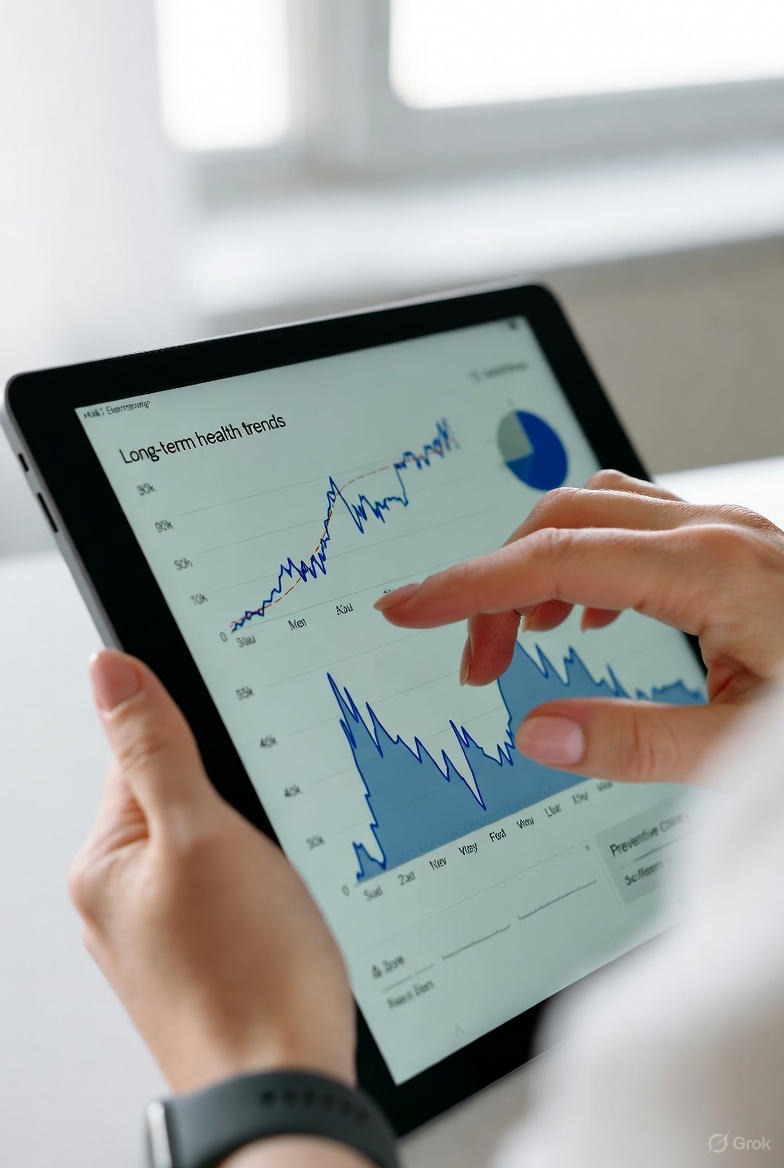
You now understand the critical components of recovery: sleep, morning physiology, energy, stress, nutrition, and active practices. The final step is to synthesize this knowledge into a streamlined, sustainable daily routine—your Personal Recovery Dashboard. This is not about creating a complex, time-consuming chore. It’s about designing a 10-15 minute daily ritual of awareness that informs your 24 hours.
Here is a beginner-friendly, integrated protocol you can start with tomorrow.
The Daily Recovery Tracking Protocol:
Morning (5 minutes):
Throughout the Day (Micro-Moments):
Evening (10 minutes):
The Weekly Review (The Most Important Step):
Once a week (Sunday evening works well), spend 15 minutes reviewing your logs. Don’t judge, just observe. Look for:
Sustainability is Key:
Start by tracking just ONE thing for a week—perhaps just morning energy and sleep. The next week, add your RHR. The week after, add a single daily stress check-in. Gradual implementation ensures the habit sticks. The dashboard is yours to customize; it should serve you, not burden you.
This protocol empowers you to become the expert on your own body. It transforms wellness from a guessing game into a guided, responsive journey. For those ready to explore the technology that can automate much of this data collection and synthesis, the journey often begins at a place like the Oxyzen shop, where design meets seamless functionality. The stories of others who have walked this path can be a powerful inspiration, which you can find in our customer testimonials.
For decades, we’ve treated physical and mental health as separate domains, often addressed by different specialists. Daily recovery tracking shatters this artificial divide. The data streaming from your sleep, heart rate, and nervous system is not just reporting on your muscles; it’s providing a live feed of your brain’s environment and, by extension, your mental and emotional state. For beginners, recognizing this connection is transformative—it turns vague feelings of anxiety, low mood, or brain fog into understandable patterns with clear potential levers for improvement.
Your brain is the most metabolically active organ in your body, consuming about 20% of your energy. Its function is exquisitely sensitive to the very things you’re now tracking: sleep quality, physiological stress, and energy availability. When your recovery metrics dip, your mental well-being is often the first casualty.
How Recovery Data Maps to Mental State:
Building Your Mental-Wellness Correlation Log:
Enhance your daily log with one extra column: "Mental/Emotional Note." This isn’t a diary entry, just a few keywords.
After a few weeks, patterns will emerge. You may discover that your "low mood" days are almost always preceded by two nights of sub-80 sleep scores. Or that your clearest, most creative days correlate with an HRV above your personal baseline. This knowledge is empowering. Instead of feeling at the mercy of your moods, you see them as understandable outputs of your physiological inputs. You can now take action: prioritizing sleep becomes a non-negotiable act of mental health care, not just physical rest.
This integrated view is at the heart of why modern health technology is so revolutionary. It allows you to see the self not as a collection of separate parts, but as a unified system. Learning more about how this technology enables personalized wellness reveals just how deep these connections go. With this holistic understanding, we can now look at how to use your recovery dashboard to navigate one of life’s most common challenges.
A perfect streak of green-light recovery days is not the goal—and it’s not realistic. Life happens. The true test of your recovery tracking practice is not how well you maintain it during ideal conditions, but how you use it to navigate the inevitable disruptions: a common cold, a demanding work week, or crossing multiple time zones. During these times, your tracking shifts from optimization to essential navigation and damage control. It becomes your most reliable guide for minimizing the impact and accelerating your return to baseline.
Scenario 1: Tracking Through Illness (The Common Cold/Flu)
When you get sick, your body’s number one job is to mount an immune response. This is an immensely taxing physiological process. Your recovery metrics will reflect this, providing clear signals to rest.
Scenario 2: Tracking Through Travel & Jet Lag
Travel disrupts your two most fundamental rhythms: circadian (light/dark) and social (meal/activity times). Your tracking dashboard helps you measure the disruption and guide your re-synchronization.
Scenario 3: Tracking Through High-Stress Busy Periods (Work Crunch, Family Demands)
These periods are often when people abandon tracking first, citing "no time." Ironically, this is when it’s most valuable. Chronic, high-demand stress without physical illness still creates a massive recovery debt.
In all these scenarios, the act of tracking itself is a grounding practice. It keeps you connected to your body’s reality amidst chaos. It turns a setback from a vague period of "feeling awful" into a mapped journey with a clear exit. As you learn to navigate these periods, your confidence in your body’s signals and your ability to respond grows. This is the foundation of truly sustainable health. Next, we explore how to ensure the data guiding you is as accurate and meaningful as possible.
Your recovery dashboard is only as powerful as the data that feeds it. Inconsistent tracking or misunderstanding what your tools measure can lead to "garbage in, garbage out"—confusing noise for signal and prompting misguided decisions. For beginners, establishing a few foundational best practices around accuracy and consistency is more important than chasing the most advanced metrics. Reliable trends, even from simple data, are infinitely more valuable than perfect but sporadic snapshots.
Rule 1: Consistency in Measurement is Paramount.
Trends are everything. A single day’s HRV reading is a data point; a 30-day trend is a story. To see true trends, you must measure the same way, at the same time, under the same conditions as often as possible.
Rule 2: Understand What Your Tools Measure (and What They Don’t).
No consumer device is a medical-grade diagnostic tool, and that’s okay. Their power is in tracking relative changes for you.
Rule 3: Calibrate with How You Feel.
Your subjective 1-10 scores are not inferior data; they are the ultimate validation. If your device says you had a "Sleep Score: 90" but you feel like a zombie, trust your feeling and investigate. Perhaps you slept soundly but are fighting off a virus, which the score didn't capture. Conversely, if you feel amazing but your HRV is low, consider if you’re in an excited, motivated state (which can also lower HRV) rather than a stressed one. Your lived experience is the final arbiter. This balance is key to using tech as a helpful guide, not an absolute oracle.
Rule 4: Mind the Confounders.
For clean data, be aware of common factors that can skew readings:
By adhering to these practices, you build a robust, trustworthy dataset. This reliability is what allows you to have confidence in the trends you see and the decisions you make. For a deeper look at the technological advances ensuring this reliability, you can read about the accuracy revolution in health tracking. With a foundation of accurate data, we can now explore how to connect these personal insights to the broader landscape of your overall health.

Daily recovery tracking does more than tell you if you’re ready for a workout. It provides a continuous, low-frequency readout of your overall systemic health. The same metrics that guide your daily decisions—HRV, RHR, sleep architecture—are powerful proxies for long-term risk factors and vitality. For beginners, understanding this connection elevates the practice from fitness optimization to true lifelong health investment. You’re not just tracking recovery; you’re tracking the very pillars of healthy aging and disease prevention.
Recovery Metrics as Cardiovascular Sentinels:
Sleep Data as a Window into Chronic Disease Risk:
Consistently poor sleep quality, particularly low deep sleep, is not just about feeling tired. It’s linked to:
Your nightly sleep score is thus a daily check-in on a process critical to long-term metabolic, cardiovascular, and brain health.
The Big Picture: From Daily Readiness to Lifelong Resilience
When you string together weeks and months of data, you move from daily management to strategic planning. You can answer profound questions:
This long-view transforms recovery tracking from a tactic into a strategy. It provides the motivation to stick with healthy habits not for a six-week challenge, but for a six-decade life. Every night of good sleep, every managed stress response, and every well-fueled day becomes an investment documented in your personal health ledger. To see how this proactive approach is changing healthcare, explore how health tracking technology has changed preventive medicine.
Humans are social creatures, and our wellness journeys are no exception. Many modern recovery-tracking platforms include social features—allowing you to connect with friends, join challenges, or see how your metrics compare to anonymized population averages. Used wisely, these features can provide motivation, accountability, and context. Used poorly, they can lead to discouragement, unhealthy competition, and misinterpretation of your deeply personal data. For beginners, navigating this social landscape with intention is crucial.
The Peril and Promise of Comparison:
Leveraging Social Features for Good:
Creating Your "Trusted Circle":
Consider creating a small, private group with 2-3 close friends or family members who are also on a wellness journey. This can be a safe space to share non-judgmental insights, ask questions, and provide motivation. The shared language of recovery tracking—"I’m in the red today, taking it easy"—can help others understand and support your choices without lengthy explanation.
Remember: You Are Your Own Control Group.
The most powerful research study in the world is the single-subject experiment you are running on yourself. All that matters is how your body responds to your actions. Social features are tools to enhance engagement, not arbiters of your success. Your data is a private conversation between you and your body. Let that be the primary relationship, and let community be a supportive circle around it. For those curious about how others have successfully integrated this technology into their lives, our collection of user experiences offers genuine inspiration.
We’ve covered the fundamentals of tracking sleep, HRV, stress, and nutrition. But what happens when this data doesn’t just sit in a log, but is actively interpreted by intelligent systems? This is the frontier of recovery tracking: the shift from descriptive analytics ("this is what happened") to predictive and prescriptive insights ("this is what’s likely to happen, and here’s what you should do"). For beginners today, understanding this direction reveals where your simple daily practice is headed and how it will become even more intuitive and powerful.
From Data Collection to Pattern Recognition:
Your first 90 days of tracking build a unique baseline—your normal. Advanced algorithms and AI can now analyze this baseline alongside your daily inputs to detect subtle patterns no human could feasibly spot.
Predictive Readiness and Proactive Nudges:
The next evolution is predictive modeling. Instead of a morning "Readiness Score" based solely on last night’s sleep, future systems will incorporate your planned day, your recent training load, and even calendar events to forecast your recovery trajectory.
Integrated Ecosystem Insights:
True personalization comes from data synthesis. The future lies in seamless, privacy-conscious integration of your recovery metrics with other digital health data—with your explicit permission.
This isn’t science fiction; it’s the logical endpoint of the tracking journey you’ve started. It represents a move from tools you have to interrogate to a intelligent wellness partner that understands your context. This vision of deeply integrated, AI-enhanced health is what drives innovation in devices designed for this future, like those you can explore at Oxyzen.
For the beginner, the message is this: the simple habits you build today—the consistent logging, the mindful observation—are creating the high-quality data foundation that will make these advanced insights possible and accurate for you in the near future. You are building your digital twin, a mirror of your physiology that will help you make better decisions for decades to come.
Knowledge is powerless without action. This final section is your launchpad. Here is a concrete, phased 30-day plan to implement everything we’ve covered without feeling overwhelmed. We’ll also address common beginner roadblocks so you can navigate them with confidence.
The Philosophy: Crawl, Walk, Run.
Do not try to track everything on Day 1. You will burn out. The goal of the first month is to build the habit of paying attention, not to achieve perfect data.
Your 30-Day Recovery Tracking On-Ramp:
Days 1-7: The Foundation Week (Crawl)
Days 8-14: The Awareness Week (Walk)
Days 15-21: The Connection Week (Jog)
Days 22-30: The Integration Week (Run)
Common Beginner Troubleshooting:
The Journey Ahead:
Congratulations. By completing this 30-day plan, you have done something extraordinary: you’ve begun a practice of mindful, data-informed self-care. You are no longer a beginner guessing at your health; you are a student of your own body, equipped with tools and understanding.
This is just the beginning of your long-form wellness story. The insights will deepen, the patterns will become clearer, and your ability to fine-tune your life for vitality will grow. To continue your education and discover more ways to apply these principles, a wealth of knowledge awaits on our blog. Remember, the ultimate goal of recovery tracking is not a perfect score, but a richer, more responsive, and resilient life. You now have the map. The journey is yours.
You’ve completed your first 30 days. You’re no longer just collecting data; you’re having a conversation with your body. The jump from “beginner” to “informed practitioner” lies in transitioning from following a generic plan to designing a Personalized Recovery Protocol (PRP). This is your unique algorithm for well-being, a set of rules and responses dictated by your data, your lifestyle, and your goals. Building your PRP turns recovery from a reactive practice into a proactive system.
Step 1: Define Your "Why" – The Goal Hierarchy
Your protocol’s structure depends on your primary objective. These typically exist in a hierarchy:
Choose your primary tier. This determines where you’ll spend your analytical energy.
Step 2: Establish Your Personal Baselines & Ranges
Using your first month of data, calculate your averages:
These are not benchmarks to hit daily, but your center of gravity. Significant deviations from these personal norms are your most important signals.
Step 3: Create Your "If-Then" Decision Matrix
This is the core of your PRP—your pre-programmed responses to your data. It removes daily guesswork.
Metric Signal
If (Condition)
Then (Action)
Sleep Score
< 60 for 2+ consecutive nights
Next day is mandatory Red Light. Prioritize 20-min nap if possible, move bedtime 60 min earlier.
RHR
>10 BPM above baseline
Check for illness/hydration. Yellow Light. Swap intense cardio for walking or yoga.
HRV
Drops below personal range for 3+ days
Initiate “Stress Reset Protocol”: 10-min meditation AM/PM, digital sunset, no alcohol, focus on protein & veggies.
Daily Energy
Consistently <5 in afternoons
Schedule a 10-min outdoor walk or breathing break at 2:30 PM. Experiment with lunch composition (more protein/fat, fewer refined carbs).
Readiness Score
In “Low” or “Poor” zone
Automatically modify workout: reduce volume by 50%, lower intensity, or convert to active recovery (mobility, light swim).
Step 4: Schedule Your Recovery "Doses"
Proactively schedule recovery like you schedule meetings.
Your PRP is a living document. The final, critical step is the Monthly Audit. On the last Sunday of each month, review your “If-Then” matrix. What worked? What didn’t? Did a new stressor appear? Tweak one rule. This iterative process is the essence of truly personalized wellness enabled by technology. With your protocol in hand, let’s examine the most common obstacle to executing it: the modern environment.

Your physiology exists within an environment. The spaces you inhabit—your bedroom, your office, your home—are not passive backdrops; they are active participants in your recovery, constantly sending signals to your nervous system. An Environmental Audit is the process of systematically aligning your physical spaces with your recovery goals. It’s about designing a habitat that passively supports restoration.
Zone 1: The Sleep Sanctuary (Your #1 Recovery Lever)
This is non-negotiable. Your bedroom should have one primary function: sleep.
Zone 2: The Work & Stress Environment
Your workspace, whether at home or an office, is often a “stress incubator.”
Zone 3: The Recovery & Recharge Zone
Designate a specific corner or chair for deliberate recovery practices.
Tracking the Environmental Impact:
For two weeks, log one environmental variable alongside your recovery metrics.
We are profoundly social beings. The quality of our relationships doesn’t just affect our happiness; it directly influences our physiology, which means it shows up in your recovery data. Chronic loneliness and conflict are potent stressors, while strong social connections and positive interactions are powerful recovery aids. Tracking this “social recovery” requires a more nuanced log, but the insights can be life-changing.
The Physiology of Connection:
Positive social interaction triggers the release of oxytocin, a hormone that reduces cortisol (the primary stress hormone), lowers blood pressure, and promotes feelings of trust and safety—all parasympathetic, recovery-friendly states. Conversely, antagonistic or lonely social environments keep the sympathetic nervous system engaged. You can literally be in “fight or flight” because of a difficult relationship or a lack of meaningful connection.
How to Track Your Social Recovery:
Add a final column to your evening log: Social Quality.
Correlating Social Data with Biometrics:
After a month, look for patterns. You may discover:
These aren’t coincidences. They are evidence that your social world is a key input in your recovery equation.
Leveraging Community for Accountability:
This is where the social aspect of wearables can be positive. Instead of comparing scores, use community for shared purpose.
Setting Boundaries as a Recovery Strategy:
Your tracking data can provide the objective justification you need to set healthy social boundaries. If you see clear data that late-night social events destroy your sleep for two days, you can confidently say, “I need to head out by 10 to protect my sleep,” backed by your personal science. This transforms boundary-setting from guilt-ridden denial into empowered self-care.
Recognizing social health as a pillar of recovery completes a holistic picture: Physical, mental, environmental, and social. For many, seeing this connection in their own data is the push needed to invest more deeply in their relationships. As you integrate this layer, you may start to wonder about the tools themselves. How do you choose and maintain the right one?
Your recovery tracking practice is only as good as the data fidelity you receive. For many, a dedicated wearable device—particularly a wellness smart ring—becomes the cornerstone of their protocol due to its comfort, continuous wearability, and rich dataset. Moving from a beginner’s curiosity to a practitioner’s reliance requires a more discerning eye. How do you select the right tool, and how do you care for it to ensure longevity and accuracy?
Selection Criteria: Beyond the Hype
When evaluating a recovery-focused wearable (like a smart ring), consider these key factors:
Maintenance & Care for Optimal Performance:
To ensure your device delivers reliable data for years:
Choosing your tool is an investment in your health infrastructure. It’s worth taking the time to research and select a device that aligns with your values for accuracy, privacy, and design. For a side-by-side look at how top options compare, our wellness ring comparison chart can be a valuable resource. Once you have your tool optimized, the next frontier is integrating its insights with the other pillars of your health.
Your recovery dashboard is powerful, but it exists in a digital ecosystem. Its true potential is unlocked when it communicates with other key parts of your health landscape: your nutrition tracker, your fitness app, and even your electronic medical records. This integration creates a unified picture, moving from isolated insights to holistic understanding.
The Integration Trinity:
The “Hub and Spoke” Model:
To manage this without overwhelm, designate one app as your “hub” (often a comprehensive health app or your wearable’s app) and let other apps feed data into it as “spokes.” Your primary review and analysis happen in the hub, giving you a single, synthesized view.
This synergistic approach transforms your phone from a collection of unrelated apps into a command center for your total well-being. The final piece of the puzzle is perhaps the most challenging: maintaining this sophisticated practice through all of life’s seasons.
Your recovery needs are not static. They evolve dramatically through different decades and life stages. The protocol of a 25-year-old competitive athlete is not that of a 40-year-old new parent, a 55-year-old navigating perimenopause, or a 70-year-old focused on vitality. A lifelong recovery practice is defined not by rigidity, but by graceful adaptation. Your tracking is the compass that guides these adaptations.
Life Stage Adaptations:
Navigating Major Transitions:
Parenthood, career changes, menopause, retirement—these are seismic shifts. During these times, let your data guide you, not guilt you.
The Unifying Thread: Compassionate Awareness.
Through all stages, the constant is not a specific metric, but the practice of compassionate awareness. Your tracking is a dialogue, not a judgment. Its purpose is to provide information that allows you to meet yourself where you are, and make the best possible choice for your well-being in that moment. This is the essence of a sustainable, lifelong practice. To see how the tools themselves are evolving for this lifelong journey, explore thoughts on the future of wearable health tech.
Theory is useful, but story is compelling. Let’s move from concept to concrete reality by examining anonymized, composite case studies that illustrate how the principles of daily recovery tracking manifest in real lives. These stories showcase the “before and after” of implementing a personalized protocol.
Case Study 1: “The Burnt-Out Professional”
Case Study 2: “The Injured & Frustrated Athlete”
Case Study 3: “The Health-Conscious but Stagnant Retiree”
These cases illustrate the universal applicability of the principles. The specifics change, but the process—Measure, Learn, Adapt—remains the same. For more such transformative stories, you can explore our testimonials page. As we look at these successes, we must also cast our gaze forward to what’s next.
The field of personal biometrics is advancing at a breathtaking pace. The metrics we track today (HRV, RHR, sleep stages) will soon be considered the foundational layer of a much richer, more predictive dashboard. For the forward-looking practitioner, understanding the horizon is exciting—it reveals where the art of recovery tracking is headed, from reactive to predictive and even preventative.
Emerging Biomarkers on the Cusp:
The Next Generation of Technology & AI:
For the beginner today, this future is not a distraction; it’s a destination. The habits you build now—the consistency, the interpretation, the action-taking—are preparing you to be an expert user of these advanced technologies. You are building the literacy to speak the language of your own body, which will only become more important. To delve deeper into what’s coming, explore our analysis of health tracking technology in 2025 and beyond.
Your Trusted Sleep Advocate (Sleep Foundation — https://www.sleepfoundation.org/)
Discover a digital archive of scholarly articles (NIH — https://www.ncbi.nlm.nih.gov/
39 million citations for biomedical literature (PubMed — https://pubmed.ncbi.nlm.nih.gov/)
experts at Harvard Health Publishing covering a variety of health topics — https://www.health.harvard.edu/blog/)
Every life deserves world class care (Cleveland Clinic -
https://my.clevelandclinic.org/health)
Wearable technology and the future of predictive health monitoring. (MIT Technology Review — https://www.technologyreview.com/)
Dedicated to the well-being of all people and guided by science (World Health Organization — https://www.who.int/news-room/)
Psychological science and knowledge to benefit society and improve lives. (APA — https://www.apa.org/monitor/)
Cutting-edge insights on human longevity and peak performance
(Lifespan Research — https://www.lifespan.io/)
Global authority on exercise physiology, sports performance, and human recovery
(American College of Sports Medicine — https://www.acsm.org/)
Neuroscience-driven guidance for better focus, sleep, and mental clarity
(Stanford Human Performance Lab — https://humanperformance.stanford.edu/)
Evidence-based psychology and mind–body wellness resources
(Mayo Clinic — https://www.mayoclinic.org/healthy-lifestyle/)
Data-backed research on emotional wellbeing, stress biology, and resilience
(American Institute of Stress — https://www.stress.org/)


