


Your Health Data Explained: The Morning Report Your Smart Ring Provides
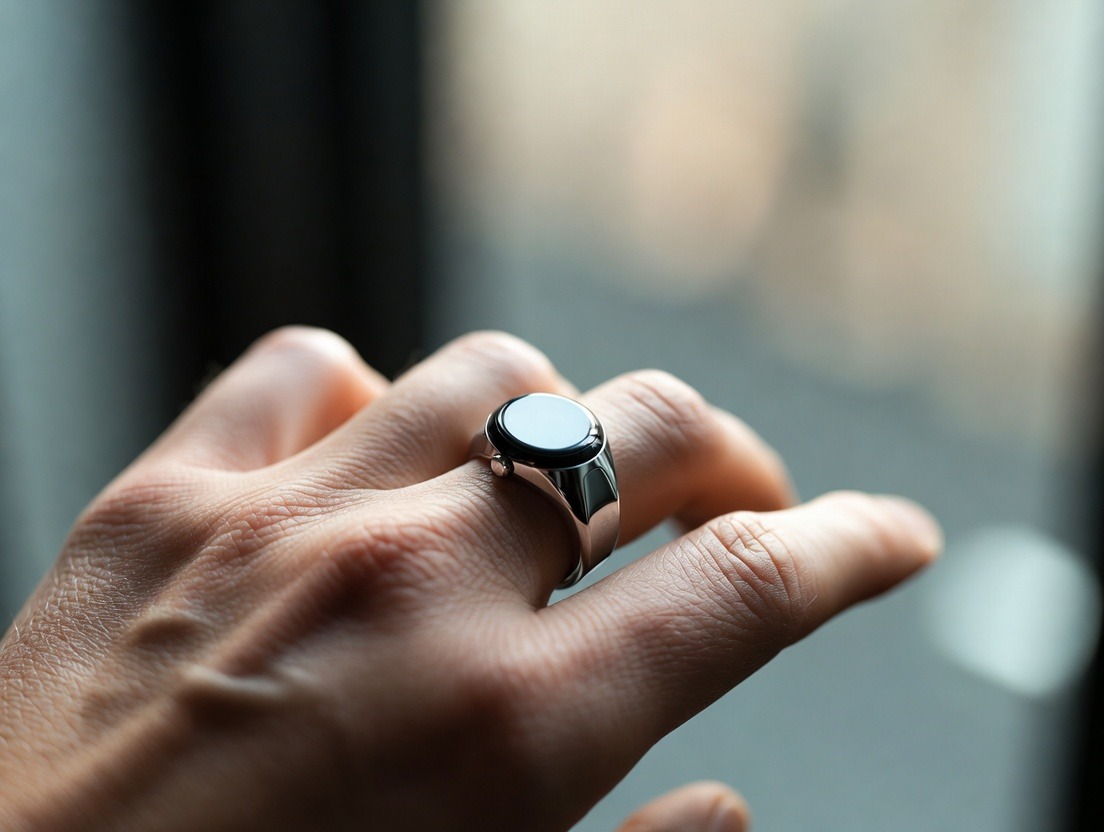
The morning report provided by your smart ring.
The morning report provided by your smart ring.
%402x.svg)
You wake up. Before your eyes fully adjust, before your first sip of water, you already possess a detailed, data-driven narrative of your night. Not from a foggy memory, but from a silent, diligent observer you wear on your finger. You open an app on your phone, and there it is: your Morning Report. A dashboard of numbers, graphs, and scores that claims to quantify your rest, your readiness, and your body’s inner state. For a moment, it feels like science fiction. But then the questions begin. What does a "Readiness Score" of 72 actually mean for my day? Why is my Heart Rate Variability low? Is my deep sleep really sufficient?
This daily ritual is becoming commonplace for millions who have adopted smart rings. Unlike the flashy notifications of a smartwatch, the smart ring’s value proposition is quiet, profound, and deeply personal. It’s a biometrically-aware whisper about your health, not a shout from the world. That morning report isn't just data; it's a translation. It's the complex language of your autonomic nervous system, your circadian rhythms, and your physiological stress, decoded into actionable insights.
But to move from simply seeing numbers to truly understanding them is the journey from passive wearer to empowered individual. This guide is your personal translator. We will dissect every major metric in your smart ring’s morning report, exploring not just the "what," but the "so what." We’ll dive into the science behind the scores, teach you how to interpret trends over time, and show you how to use this intimate knowledge to make tangible improvements in your energy, focus, recovery, and long-term wellness. This is about moving beyond the gadget and into a deeper conversation with your own body.
The true power of wearable technology isn't in its ability to capture a single moment, but in its capacity to reveal patterns over time. Your smart ring’s morning report is the cornerstone of this philosophy. Think of it not as a report card, but as a daily weather forecast for your internal biome. You wouldn't plan your week based on a single, random temperature reading from last month; you’d check the forecast each morning to decide whether to wear a coat or carry an umbrella. Your physiological "weather" is just as dynamic, influenced by sleep, stress, diet, exercise, and illness.
A sporadic glance at your heart rate or a weekly sleep summary misses the nuanced story. The morning report aggregates and synthesizes the most critical restorative phase—your sleep—into a cohesive narrative that sets the context for your coming day. This daily ritual creates a feedback loop that is fundamentally educational. By consistently correlating your subjective feelings ("I feel drained today") with objective data ("My resting heart rate is 10 bpm higher than usual and my HRV dipped"), you begin to identify your unique triggers and responses. You learn what a "good" night looks like for you, not just a population average.
This approach aligns with modern preventive health paradigms. Instead of waiting for a symptom to become a problem, you’re monitoring the subtle precursors. A creeping elevation in resting heart rate over several mornings might signal dehydration, the onset of an infection, or unsustainable training load, allowing you to adjust before you crash. This daily dialogue fosters a proactive, rather than reactive, relationship with your health. It turns abstract concepts like "wellness" and "balance" into tangible, daily metrics you can observe and influence.
Furthermore, the format of a single, consolidated report reduces data overload. A smart ring collects thousands of data points per night. The morning report’s job is to distill this ocean of information into a few key takeaways: Are you recovered? Are you stressed? Did you sleep well? This curation is essential, transforming raw data into usable wisdom. For a deeper exploration of how to weave this data into the fabric of your life, our guide on how to integrate wearable health tech into your daily routine offers practical strategies.
Ultimately, the morning report is a tool for self-awareness. It holds up a mirror, not to your appearance, but to your inner state. By making it a habit, you stop being a passenger in your own body and start becoming its informed pilot.
This is often the first number you see: a single score, usually out of 100, with a label like "Ready," "Recovering," or "Pay Attention." Names vary by brand—Readiness Score, Recovery Index, Body Battery—but the concept is the same. It is the algorithmically-derived executive summary of your report. Think of it as your body’s "opening quote" for the day.
What It Is: This composite score is a weighted calculation based primarily on data from your sleep period. It typically factors in your sleep quality (duration, stages, disturbances), cardiovascular metrics (Resting Heart Rate and Heart Rate Variability), and sometimes body temperature and previous day’s activity. The exact formula is each company’s secret sauce, but the goal is to answer one question: "How physiologically prepared is my body to handle stress, exertion, and cognitive demand today?"
Interpreting the Number:
The Crucial Context: Your Personal Baseline. The most important number is not today’s score in isolation, but how it compares to your own personal rolling average. A score of 65 might be "low" for someone who typically scores 85, but it might be a "great" day for someone with a chronic condition whose average is 55. Your smart ring learns your normal. Therefore, the trend is your friend. A consecutive dip in scores over three days is a far stronger signal than a single low score after a known late night.
Actionable Insight: Don't just read the score; let it guide your day’s structure. A low readiness score isn’t a failure; it’s valuable information. It’s your body asking for a gentler day. Using this score to periodize your training and workload is a key strategy for athletes and executives alike, a topic we explore in detail for athletes and fitness enthusiasts using wearable tech.
Sleep is not a passive state. It’s a highly active, structured, and non-negotiable physiological process where the most critical recovery occurs. Your smart ring’s sleep analysis is arguably its most valuable feature, as it tracks you uninterrupted for hours. The morning report breaks this down into architecture, quality, and timing.
H3 Sleep Stages: The Architecture of Rest
Smart rings use movement (accelerometry) and heart rate variability to estimate time spent in four key stages:
What to Look For: A healthy sleep cycle will show a rhythmic oscillation between these stages every 90-120 minutes. The report will show durations and percentages. There’s no universally "perfect" breakdown, but consistently very low deep or REM sleep (e.g., <10% each) may warrant attention to sleep hygiene.
H3 Key Sleep Scores & Metrics
H3 The Importance of Consistency & Timing
Your body thrives on rhythm. The report may highlight your Sleep Consistency—how aligned your bedtime and wake time are from day to day. Going to bed and waking at wildly different times, even with sufficient hours, can disrupt your circadian rhythm, leading to poorer quality sleep and daytime fatigue.
Actionable Insight: Use this data to experiment. See how a consistent bedtime, reducing blue light 90 minutes before sleep, or a cooler room temperature impacts your deep sleep percentage and efficiency. For a more granular look at the technology behind these measurements, our guide to understanding health metrics provides a comprehensive background.
While you slept, your heart was telling a story. Two of the most insightful metrics in your morning report come directly from its rhythm: Resting Heart Rate (RHR) and Heart Rate Variability (HRV). They are the primary inputs for your readiness score and direct windows into your autonomic nervous system.
H3 Resting Heart Rate (RHR): Your Metabolic Idle Speed
Measured in beats per minute (bpm), this is your heart rate at complete rest, typically an average taken from your deepest sleep period.
H3 Heart Rate Variability (HRV): The Gold Standard of Recovery
This is the most nuanced and important metric for advanced users. HRV measures the millisecond variations in time between each heartbeat. Contrary to intuition, higher HRV is better. It indicates a robust, adaptable autonomic nervous system.
Beyond heart metrics, advanced smart rings employ sensors to track two more vital signs: skin temperature and breathing rate. These add layers of context, often revealing what other metrics can only hint at.
H3 Skin Temperature Trend
This isn't a single-point measurement like a fever check. It tracks the deviation from your personal baseline temperature across the night. Your core temperature naturally drops to initiate sleep and rises to promote wakefulness. The ring tracks the pattern on your finger.
H3 Respiratory Rate (Breaths Per Minute)
This is the number of breaths you take per minute, averaged over your sleep. It’s a remarkably stable vital sign for healthy adults, typically between 12-20 bpm during sleep.
A comprehensive morning report doesn’t just look backward; it sets the stage for the day ahead. This often involves summarizing the previous day’s expenditure and setting a moving, intelligent target for today.
H3 Previous Day’s Activity & Calorie Burn
The report will often show your total active minutes, steps, and estimated calorie burn (Active Energy + Resting Energy). This context is vital for interpreting your recovery metrics. A sky-high activity day logically explains a lower readiness score the next morning. The smart ring connects the cause and effect.
H3 Activity Readiness or Daily Target
Some platforms use your recovery data to personalize your daily activity goal. Instead of a static "10,000 steps," it might dynamically adjust. On a high-readiness day, it might nudge you higher. On a low-readiness day, it might lower the step goal and emphasize recovery, effectively teaching you to periodize your life. This personalization is at the heart of how technology can tailor a personalized wellness journey.
Actionable Insight: Pay attention to this feedback loop. If you consistently see poor recovery after days with specific types of activity (e.g., heavy strength sessions, long endurance runs), you can adjust your training plan, nutrition, or post-activity recovery protocols accordingly.
Many smart rings now offer a continuous stress or recovery score that runs 24/7, and the morning report provides a snapshot of your nocturnal baseline and the previous day’s pattern.
H3 How It’s Measured: This metric is primarily derived from HRV in real-time. During the day, when you’re moving, the algorithm uses complex models to isolate the autonomic nervous system signal from the noise of physical activity. Periods of low HRV (indicating sympathetic dominance) are tagged as "stressful" or "recovering," while high HRV periods are tagged as "restful."
H3 The Daytime Chart: You’ll often see a timeline graph of your day, color-coded with blocks of stress (red/orange) and recovery (blue/green).
Actionable Insight: Use this as a biofeedback tool. When you see a sustained stress block, ask yourself: Can I take a 5-minute break? Do some box breathing? Go for a short walk? By consciously intervening and then watching the graph shift toward "recovery," you train your nervous system’s resilience. For dedicated strategies on this, our guide on stress and recovery monitoring is an excellent resource.

With so many data points, it’s easy to get lost. Here’s a practical, step-by-step method for your daily morning review:
The magic of the morning report isn’t in any single day. It’s in the weeks, months, and years. Your personal dashboard becomes a longitudinal health journal.
H3 How to Use Trend Views:
Actionable Insight: Set a weekly calendar reminder to review your longer-term trends. This is where you answer bigger questions: "Is my new training program improving my cardiovascular fitness (slowly lowering RHR)?" "Is my meditation practice increasing my resilience (raising my HRV baseline)?" This big-picture analysis is how you maximize your wearable health tech investment for lifelong health.
To be an informed user, you must understand the boundaries of the technology. A smart ring is a phenomenal wellness tool, but it is not a medical device.
Understanding these limitations keeps expectations realistic and prevents misinterpretation. For a balanced view on the capabilities of consumer technology, the ongoing accuracy debate versus medical testing is a critical read.
Now comes the most important part: applying the knowledge. Here are concrete ways to adjust your life based on common report findings:
Scenario 1: Consistently Low Sleep Score & High Awake Time.
Scenario 2: Morning Readiness is Chronically Low on Weekdays.
Scenario 3: RHR is Gradually Creeping Up Over Weeks.
Scenario 4: You Feel Fine, But HRV is in a Downward Trend.
By engaging in this iterative process of observation, hypothesis, action, and re-observation, you enter a state of empowered self-experimentation. Your smart ring provides the measurements, but you are the scientist and the subject of your own ongoing study in optimal living.

Beneath the surface of every graph and number in your morning report lies the master conductor of your inner world: your autonomic nervous system (ANS). This unconscious control center regulates everything from your heartbeat and breath to digestion and temperature. Understanding its two primary branches is the key to transforming raw data into profound self-knowledge.
H3 The Yin and Yang of Your Physiology: Sympathetic vs. Parasympathetic
Your ANS operates like a sophisticated balancing act between two opposing forces:
Health is not the absence of the SNS, but the dynamic, fluid movement between the two. You need to hit the accelerator to get through a work deadline or a tough workout, but you must then engage the brake to recover. Your smart ring's morning report is, in essence, a readout of which system held dominance overnight and what your current balance looks like.
H3 The Direct Link: HRV as the Window to ANS Balance
Heart Rate Variability is the most direct metric your ring provides for assessing ANS activity. A high HRV indicates a strong, active parasympathetic tone and a flexible system that can respond smoothly to demands. A low HRV indicates sympathetic dominance—your body is stuck in a state of high alert, unable to downshift into recovery mode.
When your morning report shows a low HRV, it’s not just a number; it’s a signal that your internal "brake" is worn. The causes can be multifaceted: chronic psychological stress, physical overtraining, poor sleep, inflammatory diet, or even subconscious anxiety. This is why HRV is so powerful—it integrates the total load on your system into a single, sensitive metric.
H3 The Nightly Reset: How Sleep Is a Parasympathetic Bath
Sleep, particularly deep sleep, is a parasympathetic-dominant state. This is when the PNS goes to work repairing tissues, clearing metabolic waste from the brain, and consolidating memories. A high Sleep Score with sufficient deep sleep typically coincides with a higher morning HRV, showing a successful "recharge" of the parasympathetic system.
Conversely, fragmented or insufficient sleep means you spent less time in this restorative state. Your morning HRV will often be lower, and your RHR higher, indicating your sympathetic system didn’t fully disengage. The ring quantifies what you might feel as "waking up tired."
Actionable Insight: View your morning report as an ANS balance sheet. Your goal isn't to eliminate sympathetic activity, but to ensure it is followed by robust parasympathetic recovery. Practices like diaphragmatic breathing, meditation, and gentle walks directly stimulate the vagus nerve—the main conduit of the PNS—and can be tracked by observing their positive impact on your daytime stress graph and next-day HRV. For those managing health conditions where ANS dysregulation is common, this monitoring can be particularly insightful, as discussed in how wearable tech supports chronic disease management.
Your body runs on a master internal clock known as your circadian rhythm. This 24-hour cycle, governed by light exposure, regulates hormone release (like cortisol and melatonin), body temperature, digestion, and sleep-wake cycles. Your smart ring doesn't just track sleep; it tracks your alignment—or misalignment—with this innate rhythm.
H3 The Signature of a Healthy Rhythm in Your Data
A body in sync with its circadian rhythm displays predictable patterns in morning report data:
When these metrics show erratic patterns—a jagged temperature line, an RHR that doesn't drop sufficiently, or unpredictable HRV—it can signal circadian disruption.
H3 The Culprits: Social Jet Lag and Light
The most common disruptor is "social jet lag": the disconnect between your biological clock (e.g., your body's desire to sleep at 10 PM) and your social clock (e.g., staying up until 1 AM on weekends). This forces your body into a state similar to jet lag, impairing sleep quality and next-day readiness. Your sleep consistency metric directly tracks this.
The primary regulator of your circadian clock is light exposure. Blue light from screens in the evening tricks your brain into thinking it's daytime, suppressing melatonin and delaying sleep. Conversely, bright morning light signals your brain to wake up and synchronize the clock.
Actionable Insight: Use your sleep timing and consistency data to audit your schedule. If your readiness is poor after late nights, protect your bedtime. More importantly, leverage the data to proactively strengthen your rhythm. Seek bright light exposure (preferably sunlight) within 30 minutes of waking. This simple habit can dramatically improve circadian alignment, leading to more stable energy, better sleep, and more resilient morning report data over time. Managing this daily rhythm is a cornerstone of successfully integrating this technology into your routine.
For women, a critical layer of context is often missing from generic health data: the menstrual cycle. Hormonal fluctuations across the month create a natural, rhythmic variation in physiology that directly impacts almost every metric a smart ring tracks. Ignoring this can lead to misinterpretation of your data as "poor" when it’s simply reflecting a different phase of your cycle.
H3 The Hormonal Blueprint: Estrogen, Progesterone, and Baseline Shifts
H3 Redefining Your "Normal"
For a woman, there is no single baseline. You have a range of baselines that change weekly. A morning report showing an RHR of 58 and an HRV of 42 might be a "red flag" in your follicular phase, but it could be perfectly "normal" and healthy for day 22 of your cycle.
Actionable Insight: If your smart ring offers cycle tracking (using temperature data), use it! If not, manually log your cycle phases in the app's journal. This allows you to view your readiness, sleep, and cardiovascular data through the correct lens. You can then cycle-sync your life: plan demanding workouts and projects for your high-energy follicular phase, and schedule more recovery, gentler movement, and stress-management focus in the luteal phase. This isn't a limitation; it's a superpower of nuanced self-awareness. For a deeper dive into this essential topic, explore our dedicated article on how wearable tech tracks women's health specifically.
Your morning report is a mirror held up to your previous day's choices. While exercise and sleep are major players, the subtler effects of nutrition and substances are clearly written in the data.
H3 The Dietary Stress Test
H3 Alcohol: The Recovery Saboteur
Alcohol is a potent disruptor, and its signature is unmistakable in high-quality data:
Even one or two drinks can crater your readiness score the next day, not from a hangover, but from objectively poor physiological recovery. The report provides undeniable, personalized evidence of its impact.
H3 Caffeine: The Long Shadow
Caffeine has a half-life of 5-6 hours. A 3 PM coffee means a quarter of its stimulating adenosine-blocking effects are still in your system at 9 PM. This can:
The result? A lower sleep score and potentially a lower readiness score, even if you "fell asleep fine."
Actionable Insight: Use your report for clean experimentation. Have a "clean" week with no alcohol, early dinners, and good hydration. Observe your baselines. Then, reintroduce one element (e.g., two glasses of wine with dinner) and compare the next morning's data. This turns abstract health advice into personalized, undeniable cause-and-effect knowledge. Understanding these nuanced interactions is part of the complete buyer's and user's guide to mastering this technology.
For anyone engaged in structured fitness, the morning report transitions from a wellness tool to an essential piece of sports science equipment. It moves training from guesswork to guided adaptation.
H3 The Principle of Supercompensation
Athletic improvement occurs through a cycle: you apply a stressor (training), which breaks down tissues and depletes energy. During recovery, your body rebuilds stronger than before (supercompensation). Train again too soon, and you dig a hole (overtraining). Train too late, and you lose the adaptive peak. The morning report helps you hit the perfect timing.
H3 Key Metrics for Training Load Management
H3 Periodization Based on Data
Instead of following a rigid calendar-based plan, you can adopt a flexible periodization model. Your plan has optional workouts: if readiness is high, you do the "A" (intense) version. If readiness is moderate, you do the "B" (moderate) version. If readiness is low, you do the "C" (recovery) version. This respects your body's actual state, not an idealized schedule.
Actionable Insight: After every intense training session, note it in your app's journal. Observe the subsequent 1-3 days of morning reports. Learn your personal recovery signature. How long does it take your HRV to bounce back? This knowledge allows you to tailor your training frequency and volume for optimal progress. This data-driven approach is a game-changer for athletes and fitness enthusiasts seeking every legitimate edge.
One of the most enlightening practices is the daily "data-feel check." This is the process of consciously comparing your subjective experience upon waking with the objective report.
H3 The Four Possible Outcomes:
H3 Building Your Personal Lexicon
Over time, you'll develop a nuanced language. You'll learn that for you, "a low HRV with a high temperature trend" feels like "coming down with something," while "a low HRV with a normal temperature" feels like "mental burnout." This mind-body correlation is the ultimate goal—it turns the external data into an internal sense.
Actionable Insight: Spend 30 seconds each morning before checking your phone. Rate your energy, mood, and muscle feel on a simple scale of 1-5. Then open your report. This tiny habit builds powerful intuition and prevents you from becoming a slave to the numbers. It ensures the technology serves your human experience, not the other way around. This balanced approach is central to maximizing your investment in this technology.
The morning report isn't just for you. When shared thoughtfully, it becomes a powerful communication tool that can enhance the care you receive from professionals.
H3 With Your Trainer or Coach
Providing a screenshot of a poor readiness score is a more compelling reason to modify a session than just saying "I'm tired." A coach can see your elevated RHR and low HRV trend over time and proactively adjust your training plan to prevent overtraining. This creates a true partnership based on objective biomarkers.
H3 With Your Healthcare Provider
While not diagnostic, longitudinal data from a smart ring is a goldmine for a doctor or specialist.
This data provides context between appointments, painting a picture of your daily life rather than a snapshot in a clinic. It empowers you to be an engaged, informed participant in your health. We delve into this transformative dynamic in our article on how this tech empowers patient-doctor communication.
H3 Privacy and Selectivity
Of course, this data is intimate. The power lies in your control. You choose what to share, with whom, and for how long. The ability to export a PDF report or share specific graphs allows for collaborative insight without surrendering your continuous data stream.
Actionable Insight: Before your next annual physical or specialist appointment, prepare a one-page summary of notable trends from the past 3-6 months. Highlight any concerning correlations (e.g., "poor sleep consistently precedes migraine episodes"). This turns a routine check-up into a deeply productive, data-informed conversation.
The current morning report is largely descriptive: it tells you what has happened. The next evolution, powered by advanced artificial intelligence and machine learning, will be predictive and prescriptive.
H3 From Descriptive to Predictive Analytics
Future algorithms will analyze your long-term data, combined with population models, to identify patterns you might miss. Imagine receiving a notification on Tuesday afternoon: "Based on your current stress load and sleep trends, your predicted Readiness for tomorrow is 42. Consider an early bedtime and a light dinner to improve this to 65." This shifts the intervention from reactive to proactive.
H3 Truly Personalized "Nudges"
Instead of generic advice ("get more sleep"), the AI could offer hyper-personalized suggestions: "Your data shows your HRV responds well to 10 minutes of meditation before bed. You haven't done this in 3 days. Want to schedule a session tonight?" Or, *"Your recovery after leg day improves by 22% when you consume a protein-rich meal within 60 minutes of training. Your post-workout meal yesterday was delayed by 2 hours."*
H3 Integration with Broader Ecosystems
The report will not exist in a vacuum. It will integrate with your calendar, suggesting you reschedule a demanding presentation if your predicted cognitive readiness is low. It could sync with smart home devices to gradually dim lights as your body temperature begins its nightly descent. It could even inform your nutrition app, suggesting meal plans based on your physiological stress state and recovery needs.
H3 The Role of Continuous Glucose Monitors (CGM) and Other Biomarkers
The future of wearable health is multi-modal. Imagine your morning report incorporating not just heart and sleep data, but also glucose variability from a CGM, showing how your blood sugar stability impacts your sleep and recovery. Or data on hydration levels from advanced bioimpedance sensors. The morning report would become a truly holistic dashboard of your metabolic, cardiovascular, and nervous system health.
Actionable Insight: The landscape is evolving rapidly. Staying informed about these advancements, particularly the role of AI and machine learning features, will help you understand the capabilities of the next generation of devices and choose the right tool for your evolving needs.
To truly trust your morning report, it helps to understand the silent, sophisticated work happening on your finger as you sleep. The journey from raw biometric signals to a clean, insightful dashboard is a marvel of modern sensor fusion and algorithmic processing.
H3 The Sensor Suite: More Than Just a Heartbeat
A high-end smart ring is a miniaturized health lab. While specific sensors vary, the core typically includes:
H3 The Nightly Data Harvest: From Noise to Signal
When you sleep, the ring enters a dedicated, high-frequency sampling mode. It’s not just taking your pulse every few minutes; it’s collecting thousands of data points per second. The raw data, however, is messy. It contains motion artifacts from shifting in bed, pressure changes from your hand under a pillow, and signal gaps.
H3 The Morning Synthesis: Creating Your Personal Story
Upon waking, the ring syncs this processed nocturnal data with your phone. The app’s algorithms then perform the final synthesis:
Actionable Insight: Knowing this process demystifies the data. It explains why the ring might occasionally mislabel a period of lying perfectly still but awake as "light sleep," or why your data might be sparse on a night you tossed and turned incessantly. This understanding of the underlying technology is key to making an informed choice, which is why our detailed comparison of smart rings vs. smartwatches examines these sensor systems in depth.
Theory meets practice. Let’s walk through three hypothetical, yet common, morning reports to see how a holistic interpretation works.
H3 Case Study 1: "The Silent Bug"
H3 Case Study 2: "The Dehydration Effect"
H3 Case Study 3: "Mental Overload"
For all its benefits, constant biometric feedback can have a psychological downside: orthosomnia (an unhealthy preoccupation with perfect sleep data) or anxiety over "bad" numbers. The key is to foster a mindset of compassionate curiosity rather than judgmental scrutiny.
H3 From Performance to Partnership
Reframe your relationship with the data. The ring is not a judge scoring your health. It is a partner providing feedback. A low score isn't a "failing grade"; it's valuable intel from your body, like a check-engine light that allows for a minor adjustment instead of a major breakdown.
**H3 Embrace the "Why," Not Just the "What"
When you see a deviation, instead of thinking "This is bad," ask "I wonder why?" This shifts you into investigative mode. "I wonder why my HRV is down? Did I eat something new? Was yesterday's emotional stress higher than I realized? Am I coming down with something?" This is a productive, engaged stance.
H3 The 80/20 Rule of Data
Aim to make decisions based on trends (80% of your attention) and not daily fluctuations (20%). A single bad night is noise. A week-long downturn is a signal. Focusing on the multi-day average prevents daily obsession and provides a more stable picture of your health trajectory.
H3 Scheduled Check-Ins vs. Constant Monitoring
Avoid the temptation to check your live stress score or heart rate constantly throughout the day. This can increase anxiety. Instead, trust the process. Let the ring collect data silently, and make your primary interaction the intentional, mindful morning review. This habit is a core part of learning to integrate the tech seamlessly into your daily routine without letting it dominate your consciousness.
Actionable Insight: If you find yourself feeling anxious or controlled by the numbers, take a "data vacation." Wear the ring to collect the data (maintaining the baseline), but don't open the app for 3-4 days. Then, review the trends. This breaks the cycle of daily fixation and re-establishes a healthy, detached perspective.
The hardware on your finger is only half the story. The companion smartphone app is the brain—the interface where data becomes insight. The quality, design, and philosophy of this app are paramount to your experience.
H3 The Hallmarks of a Great Health App
H3 The Import/Export Power
A truly empowering app allows you to own your data. Look for:
H3 Community and Social Features (Used Wisely)
Some apps include community challenges or opt-in sharing with friends. This can be motivating for some, but it's vital to use these features in a way that supports, rather than harms, your psychological relationship with data. The focus should be on personal progress, not comparison. For a look at how these features work, our guide on social features and community support explores the pros and cons.
Actionable Insight: When choosing a smart ring, spend as much time reviewing the app (through video reviews and screenshots) as you do the hardware specs. The app is your daily portal. A poor app experience can render the best sensors nearly useless. Ensuring a cohesive app ecosystem and compatibility with your existing digital life is a critical step.
A fair question persists: How accurate is this consumer device data compared to the equipment used in hospitals and sleep labs? Understanding the difference between clinical accuracy and trend accuracy is key.
H3 The Gold Standards: Where Clinical Devices Reign
H3 The Smart Ring's Sweet Spot: Longitudinal Trend Accuracy
While a smart ring may not match a PSG for labeling a specific 5-minute epoch of sleep with 99% certainty, its power lies in its consistency and longevity. Worn every night in the same place, its estimates become incredibly reliable for tracking changes.
This makes it exceptional for personal biomonitoring. You are your own control subject. The device’s potential systematic error is constant, so the variations it detects are real and meaningful.
H3 The Verdict: Complementary, Not Competitive
Think of it this way: A lab PSG is a high-resolution photograph of a single night. A smart ring is a time-lapse video of every night for years. The photo has more detail in the frame, but the video tells the story of change over time. For diagnosing specific sleep disorders like apnea, you need the photo (the PSG). For managing your daily recovery, sleep hygiene, and understanding your physiological trends, the video is transformative. For a balanced discussion on this topic, the ongoing accuracy debate vs. medical testing provides a nuanced perspective.
Actionable Insight: Trust your ring for tracking your personal trends and relative changes. Do not use it to diagnose medical conditions. Use the trends it reveals as compelling evidence to take to a professional, who can then order the appropriate gold-standard tests if needed.
A one-size-fits-all approach to health is obsolete. The best wearable experiences allow you to customize thresholds, alerts, and goals based on your personal baselines and life circumstances.
H3 Setting Intelligent, Dynamic Alerts
Instead of generic "you moved" notifications, look for the ability to set alerts based on meaningful physiological events:
H3 Personalizing Your Readiness & Sleep Scores
Some platforms allow you to adjust the weightings of their composite scores. For example, if you know you function well even on slightly less sleep but are highly sensitive to stress, you could tell the algorithm to weight HRV more heavily in your Readiness Score than sleep duration.
H3 Activity Goals That Breathe
Move beyond static step counts. Set goals based on:
Actionable Insight: Spend an hour deep in your app's settings. Configure alerts and goals that matter to you. This turns a generic monitoring device into a truly personal health co-pilot. This level of personalization is what makes the tech so effective for personalizing your wellness journey.
The first month with a smart ring is fascinating—you establish baselines and see immediate cause-and-effect. But the real value compounds over quarters and years. Your dashboard evolves from a daily report into a historical health record with predictive power.
H3 Seasonality and Your Physiology
You will begin to see macro-cycles. Perhaps your HRV naturally dips in the dark winter months (Seasonal Affective pattern) and peaks in the summer. Maybe your sleep efficiency drops during high-pollen allergy season. This long-term view helps you distinguish between a temporary, environmentally-driven slump and a more concerning health trend.
H3 Aging in Data: Tracking Your Healthspan
As you age, certain baselines will naturally shift—resting heart rate may creep up slightly, HRV may show a gentle downward trend. However, the rate of this change is what's important. Your longitudinal data becomes a tool for measuring your healthspan—the period of life spent in good health. By observing how lifestyle interventions (consistent exercise, improved diet, stress management) affect these age-related trends, you can actively work to flatten the decline curve.
H3 Life Event Correlation
Major life events—a career change, moving houses, having a child, menopause—leave clear signatures in your biometric data. Having this objective record can be validating. It can show you the profound physiological cost of a stressful period, but also your remarkable resilience and recovery afterward. This data becomes a journal of your body’s experience through life.
H3 The Predictive Horizon
With years of data, patterns become forecasts. You may notice that three days of elevated temperature + lowered HRV always precedes a cold for you. Or that a specific sleep pattern predicts a migraine. This allows for ultra-early, pre-symptomatic intervention. The AI features mentioned earlier will leverage this very long-term data to make their predictions astonishingly personal and accurate.
Actionable Insight: Commit to the long game. Don't get discouraged if progress isn't linear. Use the yearly review feature (if your app has one) to reflect each year. Ask: "Is my average Sleep Score higher this year than last? Is my HRV baseline stable?" This big-picture view is the ultimate way to maximize your wearable health tech investment for lifelong wellbeing.
Wearing a device that collects the most intimate data about your body 24/7 is a profound act of trust. Navigating the ethical landscape of this data is a responsibility for both the user and the company.
H3 Who Owns Your Biometric Data?
This is the critical first question. Read the privacy policy. Does the company claim ownership of aggregated, anonymized data? Do they sell it to third parties for research or advertising? The ideal stance is that you own your raw data. The company provides a service to interpret it, but the underlying biometric information is yours.
H3 How is Your Data Secured?
Data should be encrypted both in transit (from ring to phone) and at rest (on the company's servers). Look for companies that are transparent about their security practices, using enterprise-grade encryption and adhering to standards like GDPR (General Data Protection Regulation) if applicable.
H3 The Purpose of Data Collection
Is the company's business model aligned with your health? Be wary of companies whose primary revenue seems to be from selling user data or advertising within the app. Prefer companies whose business is the hardware and software itself, with a clear mission to improve user health. The rise of subscription models vs. one-time purchase is a key part of this equation—understand what you're paying for and why.
H3 Your Role: Digital Hygiene
Practice good digital hygiene:
Actionable Insight: Choose your wearable brand as you would a healthcare partner. Prioritize transparency, clear data ownership policies, and a track record of respecting user privacy. The stakes are too high for compromises here. For a focused analysis on this critical issue, our comparison from the privacy and data security angle is essential reading.
As we've explored the depths of the morning report, a final, foundational question remains: Is a smart ring the optimal form factor for your journey? The answer depends on your lifestyle, goals, and preferences.
H3 The Ideal Smart Ring User:
H3 When a Smartwatch or Other Device Might Be Better:
H3 The Hybrid Approach
There's no rule against using both. Some use a smart ring for 24/7 baseline health and recovery metrics, and a dedicated sports watch or chest strap for high-intensity training accuracy. The ring data provides the overall recovery context that informs when and how hard to train.
Actionable Insight: Conduct an honest audit of your needs. If your primary goals are passive, longitudinal health insight, recovery optimization, and sleep tracking with maximal comfort, a smart ring is likely your best choice. For a definitive, feature-by-feature breakdown to aid this decision, our ultimate wearable health tracker comparison is an invaluable resource.
Your Trusted Sleep Advocate: Sleep Foundation — https://www.sleepfoundation.org
Discover a digital archive of scholarly articles: NIH — https://www.ncbi.nlm.nih.gov/
39 million citations for biomedical literature :PubMed — https://pubmed.ncbi.nlm.nih.gov/
Experts at Harvard Health Publishing covering a variety of health topics — https://www.health.harvard.edu/blog/
Every life deserves world class care :Cleveland Clinic - https://my.clevelandclinic.org/health
Wearable technology and the future of predictive health monitoring :MIT Technology Review — https://www.technologyreview.com/
Dedicated to the well-being of all people and guided by science :World Health Organization — https://www.who.int/news-room/
Psychological science and knowledge to benefit society and improve lives. :APA — https://www.apa.org/monitor/
Cutting-edge insights on human longevity and peak performance:
Lifespan Research — https://www.lifespan.io/
Global authority on exercise physiology, sports performance, and human recovery:
American College of Sports Medicine — https://www.acsm.org/
Neuroscience-driven guidance for better focus, sleep, and mental clarity:
Stanford Human Performance Lab — https://humanperformance.stanford.edu/
Evidence-based psychology and mind–body wellness resources:
Mayo Clinic — https://www.mayoclinic.org/healthy-lifestyle/
Data-backed research on emotional wellbeing, stress biology, and resilience:
American Institute of Stress — https://www.stress.org/


