


Daily Recovery Tracking for Sleep Quality Improvement
Focus daily tracking on understanding and improving your sleep quality.
Focus daily tracking on understanding and improving your sleep quality.
%402x.svg)
You wake up. You check the time. Maybe you groan, maybe you stretch, maybe you reach immediately for your phone. But how do you really know how you slept? You might feel groggy, so you assume it was poor. You might feel alert, so you assume it was good. But our subjective feeling of sleep is a famously unreliable narrator—a story clouded by yesterday’s stress, today’s anticipation, and our own flawed perceptions.
For centuries, sleep was a black box. We entered, we (hopefully) drifted off, and we emerged with only vague impressions of what transpired in the mysterious hours in between. We’ve relied on crude metrics: hours in bed, the number of times we recalled waking, the sheer force of will required to press the snooze button. This fundamental ignorance has cost us dearly. It has normalized chronic fatigue, masked underlying health issues, and led us to accept "just getting by" as a standard for our most critical biological function.
But a revolution is happening in the dark. A new era of bio-intelligence is dawning, powered by wearable technology that fits on your finger. It’s moving us beyond simply tracking sleep to mastering recovery—the true outcome of good sleep. This isn’t about counting sheep; it’s about quantifying restoration. Daily recovery tracking is the meticulous, data-driven process of measuring how well your body and nervous system recuperate overnight, providing an objective, personalized scorecard for your resilience. It transforms sleep from a passive state you hope for into an active pillar of health you can measure, understand, and systematically optimize.
This comprehensive exploration is your guide to that frontier. We will dismantle the old myths of sleep, build a new understanding of holistic recovery, and demonstrate how the continuous, nuanced data from a device like the Oxyzen smart ring is the key to unlocking the deepest, most restorative sleep of your life. The journey to better sleep doesn’t start when you close your eyes. It starts the moment you wake up and decide to understand what truly happened the night before.
For decades, the golden rule of sleep was the "8-hour mandate." It was a tidy, one-size-fits-all prescription handed down through generations. But if you’ve ever felt exhausted after a "full" 8 hours or remarkably refreshed after 6, you’ve experienced firsthand the failure of this simplistic metric. Time in bed is a poor proxy for sleep quality, much like weighing yourself tells you nothing about your body composition or fitness. The fixation on duration obscures the rich, complex architecture of sleep itself—an architecture where quality, timing, and biological restoration are the true cornerstones.
Sleep is not a monolithic state. It’s a dynamic, cyclical journey through distinct stages, each with a unique physiological purpose:
A truly restorative night is about the right balance and succession of these stages, not just the total time spent in them. You could sleep for 9 hours but spend very little time in crucial deep or REM sleep, leading to poor recovery. Conversely, a highly efficient 6-hour sleep with robust cycles can be profoundly restorative.
So, what should we track instead of mere hours? Modern recovery science focuses on a suite of interlinked biomarkers that paint a complete picture of your night:
This is the data that matters. It moves us from asking "How long did I sleep?" to asking the far more meaningful question: "How well did I recover?" By shifting our focus to these physiological markers, we gain an objective, personalized dashboard of our nightly restoration. To understand how we moved from counting hours to capturing this rich data, it’s essential to look at the evolution of health tracking technology from manual logs to smart rings.
The Pillars of Recovery: Understanding HRV, Deep Sleep, and Your Nervous System
To master daily recovery tracking, you must become fluent in the language of your own physiology. Three pillars form the foundation of this understanding: Heart Rate Variability (HRV), Deep Sleep, and the autonomic nervous system. Together, they tell the story of your body’s struggle between stress and restoration.
Contrary to what you might think, a healthy heart does not tick like a metronome. The time between beats is constantly fluctuating, changing by milliseconds. This is Heart Rate Variability. It is controlled by your autonomic nervous system (ANS)—the unconscious control center that regulates everything from digestion to stress response.
The ANS has two main branches:
HRV is the tug-of-war between these two systems. A high HRV indicates a strong, adaptable PNS and a well-recovered body. It means your system can easily shift into a relaxed, restorative state. A low HRV indicates SNS dominance—your body is under stress, fatigued, or fighting illness, and is struggling to recover.
By tracking your nightly HRV trend (most accurate during consistent, undisturbed sleep), you get a direct line into your recovery status. Seeing a dip in your HRV can alert you to overtraining, an oncoming cold, or excessive life stress, allowing you to proactively prioritize rest instead of pushing through.
Deep Sleep: The Non-Negotiable Physical Reboot
While HRV reflects your systemic readiness, deep sleep is the engine of physical repair. During deep sleep, your body releases human growth hormone (HGH), which is essential for tissue growth and muscle repair. Blood flow to muscles increases, delivering oxygen and nutrients. The brain’s glymphatic system, a waste-clearance system, kicks into high gear, flushing out neurotoxic waste products like beta-amyloid, which is associated with Alzheimer's disease.
You cannot "catch up" on deep sleep. It is prioritized in the first half of the night. Disrupting this window with alcohol, late-night eating, or irregular bedtimes severely curtails this critical repair phase. Tracking your deep sleep duration and consistency is therefore non-negotiable for physical health, injury prevention, and long-term cellular maintenance.
The Sympathetic-Parasympathetic Dance During Sleep
A perfect night of recovery is a journey of descending into and maintaining parasympathetic dominance. As you fall asleep, your SNS should disengage, and your PNS should take over, lowering your heart rate and increasing HRV. Throughout the night, your ANS remains in this restorative state, punctuated by the active brain states of REM sleep.
Problems arise when SNS activity intrudes. This can be caused by:
A modern recovery tracker doesn’t just record sleep; it charts this delicate nervous system ballet, showing you where the performance was flawless and where it was disrupted. The sophistication behind this tracking stems from a scientific revolution in the sensors and AI algorithms that make it possible.

The journey to accurate sleep and recovery tracking has been a quest for the perfect point of measurement. We started with smartphones under pillows (notoriously inaccurate), moved to bulky chest straps (uncomfortable for sleep), then to wrist-worn devices. While wrist-based trackers brought sleep tracking to the masses, they introduced significant limitations, especially for the gold-standard metric: HRV.
The wrist is a dynamic, high-movement area. Even during sleep, wrist position changes can create motion artifacts that corrupt the delicate photoplethysmography (PPG) signal used to measure blood flow and heart rate. This can lead to "noisy" data, particularly for HRV, which requires a clean, stable signal. Furthermore, wrist-based devices can be uncomfortable for some sleepers, and their larger form factor can lead to removal, creating data gaps.
Enter the smart ring. Worn on the finger, it represents a paradigm shift in continuous biometric monitoring for three key reasons:
This combination—superior signal fidelity at night and seamless wearability by day—makes the smart ring the ideal form factor for the serious recovery tracker. It moves beyond mere sleep staging into the realm of professional-grade recovery analytics, all from a device you forget you’re wearing. For a deeper dive into how this technology enables a truly personalized approach, explore how health tracking technology enables personalized wellness.
You cannot manage what you do not measure, and you cannot accurately measure without first establishing a baseline. This is the most common and critical mistake people make when they start recovery tracking: they look at a single night’s score in isolation and jump to conclusions. "My HRV is 35—is that bad?" The truth is, without your personal context, that number is almost meaningless.
Your baseline is your personal "normal." It is unique to you, influenced by your age, genetics, fitness level, and overall health. A HRV of 35 could be excellent for one person and a sign of extreme fatigue for another. The power of daily tracking is not in the absolute numbers, but in the trends and deviations from your own established norm.
Your first month with a recovery tracker is a discovery phase. The goal is not to achieve perfect scores, but to gather at least 20-30 nights of data under your typical lifestyle conditions. This means you should live your normal life—follow your usual workout schedule, eat as you typically do, keep your regular sleep and work routines. Do not try to "game" the system or make drastic changes yet. The objective is honest data collection.
During this phase, focus on observing:
This baseline period transforms your tracker from a judge into a guide. It personalizes the science. Once you know your norms, you can start to see what "good" and "bad" truly look like for you. A drop in HRV 20% below your baseline after a hard workout is a clear signal to prioritize easy recovery the next day. A steady upward trend in your HRV average over weeks is objective proof that your new meditation habit or improved diet is working.
This process of establishing a personal baseline is a core part of building healthy, data-informed habits that last a lifetime.
Waking up to a recovery score can be empowering, but it can also be confusing if you don’t know how to interpret the dashboard. Let’s walk through a hypothetical morning report from an advanced device like the Oxyzen ring, translating each metric from data point to actionable insight.
Your Recovery Score (e.g., 82/100): This is your composite, overall grade for the night. It’s an algorithmically weighted score based primarily on HRV (heavily weighted), RHR, sleep quality, and respiratory rate. Don’t fixate on the absolute number; watch its trend relative to your baseline. An 82 is fantastic if your average is 78, but may indicate subpar recovery if your average is 90.
Sleep Analysis:
Physiological Metrics:
The Story of This Night: This report tells a clear story. You gave your body the conditions it needed (early, consistent bedtime, no major evening disruptions), and it responded with excellent physical (deep sleep) and nervous system (high HRV, low RHR) recovery. You are primed for a high-performance day, both physically and cognitively.
Conversely, a report showing low sleep efficiency, minimal deep sleep, elevated RHR, and a depressed HRV tells the opposite story: your body is struggling to recover. The cause could be stress, illness, or poor sleep hygiene. This report isn’t a criticism; it’s a diagnostic tool, giving you the objective reason behind your subjective feeling of fatigue. For more on how to personalize this data to your body's unique signals, see our guide on how to personalize your wellness ring to your body.
Recovery is not an isolated event that occurs between 10 PM and 6 AM. It is a continuous 24-hour cycle where daytime inputs directly determine nighttime outputs. Your body uses sleep to process the stresses and stimuli of the day. Therefore, the most powerful lever for improving sleep quality is often not what you do at night, but what you do during the preceding 16 hours.
Think of your nervous system like a battery. Daytime activities—both physical and mental—draw energy from the battery and create "metabolic debt." Sleep is the charging process. If you over-discharge the battery (chronic stress, overtraining, poor nutrition), even a long charging cycle may not fully replenish it, leading to a gradually depleted state (chronic fatigue, burnout, low HRV).
Key daytime factors that directly impact your recovery score:
By wearing your recovery tracker all day, you can start to see these connections in real time. You might notice your daytime stress levels (often inferred from heart rate patterns) spike during a meeting, and then see that reflected in a longer sleep latency that night. This creates a powerful feedback loop, empowering you to make smarter daytime choices for a better night’s rest. This holistic view is at the heart of how modern wearables can enable preventive health monitoring in your daily life.
Armed with your baseline and an understanding of the day-night connection, you can now graduate from generic sleep tips to Sleep Hygiene 2.0: a personalized, iterative system for optimization. This is where recovery tracking moves from passive observation to active experimentation and mastery.
Your data provides the clues. Now you run the experiments.
Experiment 1: The Wind-Down Protocol.
Experiment 2: The Caffeine Curfew.
Experiment 3: The Training Timing Test.
The Framework for Experimentation:
This systematic approach turns you into the scientist of your own sleep. It removes guesswork and replaces it with confidence. For beginners looking to start this journey, our resource on how a wellness ring is the perfect tool for beginners offers a great starting point.
Beyond Sleep: Using Recovery Data to Optimize Training, Nutrition, and Stress
The ultimate power of daily recovery tracking is that it provides a universal metric for measuring the cost of everything in your life. Your recovery score becomes the ultimate biofeedback loop, guiding decisions far beyond the bedroom.
Optimizing Your Fitness Regimen (The Art of Listening to Your Body):
The old-school "no pain, no gain" mentality is obsolete and dangerous. Overtraining is a surefire way to crush your HRV, increase injury risk, and stall progress. Your recovery data allows for autoregulation—adjusting your training based on daily readiness.
Informing Nutritional Choices:
You may notice patterns linking certain foods to poor sleep or next-day sluggishness reflected in low HRV. While not a diagnostic tool, this biofeedback can prompt beneficial elimination experiments (e.g., reducing sugar or processed foods late in the day). Furthermore, seeing a chronically low HRV might indicate systemic inflammation, prompting a closer look at your overall diet quality.
Managing Stress and Mental Load:
Your HRV is a direct mirror of your nervous system state. By tracking it, you can:
In this way, the recovery tracker becomes the central dashboard for your holistic well-being. It integrates the pillars of health—movement, nourishment, rest, and mental state—into a single, understandable language of data. This integrated approach is what allows a device to support a wide variety of different health goals, from athletic performance to stress management.

Armed with your baseline and a framework for experimentation, you've begun the active work of optimization. But the path to perfect recovery isn't a straight, upward line. It's a winding road with peaks, valleys, and frustrating plateaus. The true mastery of daily recovery tracking lies not just in collecting data, but in becoming an expert interpreter of its long-term narrative. This phase is about moving from weekly experiments to seasonal wisdom, learning to distinguish meaningful signals from meaningless noise, and navigating the common obstacles that can derail progress.
The first major insight you’ll gain is that recovery is inherently cyclical, not linear. You will see patterns emerge over weeks and months that reflect your lifestyle, hormonal cycles, and even the seasons. A woman may observe a predictable dip in HRV and rise in resting heart rate in the days leading up to her period, linked to the physiological effects of progesterone—this isn't poor recovery; it's a normal biological response. An endurance athlete might see a gentle, weekly undulation: moderate dips after hard interval days, followed by "supercompensation" peaks on rest days, leading to a gradual upward trend in baseline HRV over a training block.
Learning to anticipate and accept these natural cycles prevents unnecessary alarm. A single low score is a data point; a week-long downward trend during a deload week is a problem. The key is to zoom out. Use the monthly or quarterly view in your app. Look for the direction of the trend line, not the daily fluctuations. Is your average HRV over the last 90 days higher than the 90 days before? That is progress, even if yesterday’s score was low.
Conversely, you must also learn to spot the dangerous patterns—the sustained deviations that signal a true problem. A consistent, multi-week decline in HRV coupled with an elevated resting heart rate is the classic biometric signature of overtraining, unsustainable stress, or an impending illness. It’s your body’s distress beacon. Ignoring this pattern and continuing to push is the recipe for burnout, injury, or a major crash.
The plateau is another inevitable part of the journey. After initial improvements from fixing "low-hanging fruit" like caffeine timing or screen use, progress may stall. Your scores become consistent, but not improving. This is not failure; it’s an invitation to go deeper. Plateau-busting often requires more nuanced interventions:
The data also reveals your personal pitfalls. Perhaps you see that social events, even enjoyable ones, consistently wreck your next-day recovery due to late nights and alcohol. Maybe business travel, with its time zone changes and disrupted routines, always triggers a multi-day recovery slump. Seeing these patterns documented takes the emotional guilt out of the equation. It’s not a character flaw; it’s a quantifiable physiological cost. This allows you to make empowered, pre-emptive choices: planning a true rest day after travel, or choosing non-alcoholic drinks at a second weekend event.
Ultimately, navigating your data is about developing a calm, curious relationship with the numbers. They are not a grade, but a conversation. They say, "Here is how your body responded to the life you lived yesterday." Your job is to listen, learn, and adjust—not to judge. For more on how users integrate this data into their lives, the real-world experiences shared in our customer testimonials can provide valuable perspective.
This is one of the most common and disruptive patterns revealed by recovery tracking: the "Social Jet Lag" phenomenon. You live with discipline during the week—early bedtimes, consistent wake-ups, structured meals. Then Friday night arrives. You stay up late, you sleep in on Saturday, you might have a drink or two. Saturday night may follow a similar pattern. By Sunday night, you force yourself back to an early bedtime for Monday, but your body’s internal clock, or circadian rhythm, has been shifted. You struggle to fall asleep, sleep poorly, and wake up on Monday with a terrible recovery score, feeling like you were hit by a truck. You’ve essentially given yourself minor jet lag without leaving your time zone.
The problem isn't recreation itself; it's the violent shift in schedule. Your circadian rhythm thrives on consistency. It is regulated by a master clock in your brain (the suprachiasmatic nucleus) that responds primarily to light, but also to behavioral cues like meal times and activity. When you shift your sleep window by 2-3 hours on the weekend, you desynchronize this clock from your social and work schedule.
The data reveals this brutally:
The solution is not to abandon your social life; it’s to strategically manage consistency. The single most important lever is your wake-up time.
The Non-Negotiable Anchor: A Fixed Wake-Up Time
Aim to wake up within 30-60 minutes of your weekday wake-up time, even on weekends. This anchors your circadian rhythm. If you stayed up late, you will be tired, and that’s okay—it will naturally encourage an earlier bedtime the next night, gently correcting the schedule without a drastic jump. Protecting this wake-time anchor is more important for recovery than getting a few extra hours of fragmented, late-morning sleep.
Smart Socializing Strategies:
By applying these tactics, you smooth out the weekly recovery curve. Your Monday scores will improve dramatically, setting a positive tone for your entire week. You’ll have more sustainable energy, proving that consistency, not deprivation, is the true secret to high performance. Understanding the body’s need for this rhythm is a key part of the broader science behind modern health tracking technology.
While heart rate and HRV get most of the attention, one of the most fascinating and actionable biomarkers for sleep and recovery is core body temperature. Its daily cycle is a fundamental driver of the sleep-wake rhythm and a powerful lens into metabolic health and readiness.
Here’s the simple, crucial pattern: To initiate and maintain sleep, your core body temperature must drop. As evening approaches, your body begins to shed heat, primarily by increasing blood flow to your extremities (hands and feet) to radiate heat away from the core. This temperature drop is a direct signal to the brain that it’s time for sleep. A rise in core temperature, conversely, is a signal to wake up.
Recovery trackers that measure peripheral temperature (like a smart ring on your finger) are uniquely positioned to monitor this process. They don’t give you a medical-grade core temp, but they track the relative change in your skin temperature, which closely mirrors the core’s rhythm when you are at rest.
What Your Temperature Data Tells You:
Using Temperature Data for Optimization:
By adding temperature to your analytical toolkit, you gain a deeper, more holistic view of your body’s preparatory dance for sleep. It’s a silent, powerful rhythm that, when understood, gives you one more lever to pull for perfect recovery. This kind of subtle, continuous monitoring represents the accuracy revolution in modern health tracking.
This is the dark side of the quantified self: tracking-induced anxiety, or "orthosomnia" – a preoccupation with perfecting sleep data. It manifests as checking your score compulsively, feeling deep frustration or shame over a "bad" night, and becoming so fixated on the metrics that you actually inhibit your ability to relax and fall asleep. The very tool meant to improve your rest becomes a source of stress that destroys it.
It’s a real paradox. The goal of recovery tracking is to increase body awareness and autonomy, not to outsource your sense of well-being to an algorithm. If you find yourself saying, "My ring says I slept poorly, so I must be tired," despite feeling fine, you’ve crossed the line from using data to being used by it.
Strategies for a Balanced, Healthy Relationship with Your Data:
Remember, the ultimate metric is your lived experience. Does tracking help you feel better, perform better, and live more vibrantly? If so, continue. If it’s making you anxious and robbing you of peace, it’s time to step back. The technology should serve you, not the other way around. For support and answers to common user questions that can alleviate anxiety, our comprehensive FAQ page is always available.
The true power of your recovery data is multiplicative, not additive. When combined with other streams of health and lifestyle data, it creates a rich, multidimensional picture that no single metric can provide. This is where the concept of a personal health ecosystem comes to life. Your smart ring is the central, always-on biometric hub, but its insights are magnified when connected to other apps you use daily.
Key Integrations and Their Superpowers:
The Future of the Integrated Dashboard:
The end goal is a unified dashboard—a single screen that shows your readiness (recovery score), your daily strain (activity from fitness apps), your fuel (nutrition), and your mental load (calendar/meditation), all in one place. This holistic view turns abstract health concepts into a manageable, daily operating system for your well-being. To see how this technology is beginning to transform even clinical settings, you can read about how health tracking technology is being used in hospitals. For a practical guide on setting up these connections, explore our resource on wellness ring integration with other health apps.
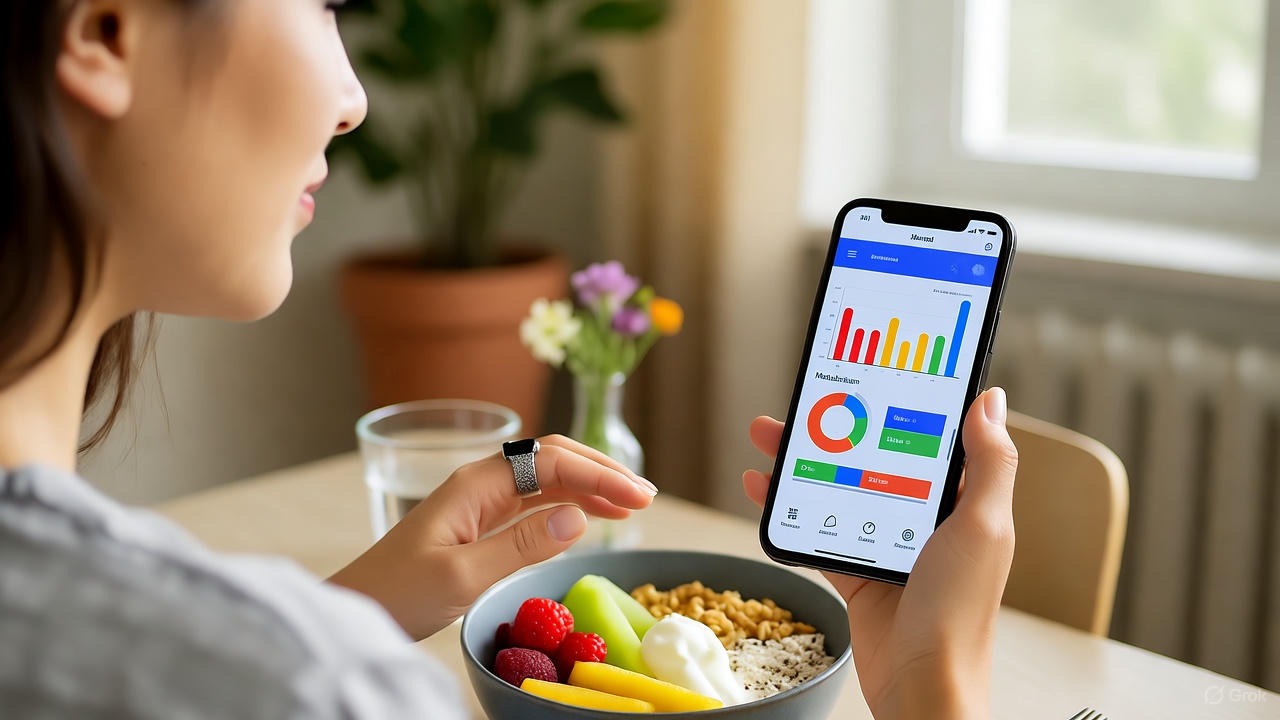
Daily recovery tracking is not just about optimizing tomorrow’s workout or shaking off today’s grogginess. Its most profound value may be as a long-term sentinel for your health, offering a unique window into the gradual process of aging and providing early warnings for potential disease. The patterns that emerge over years of data form a personalized blueprint of your health trajectory, shifting the focus from treating illness to proactively preserving vitality.
Recovery Metrics as Biomarkers of Aging:
Aging, at a physiological level, is characterized by a loss of complexity and resilience. Your recovery data quantifies this resilience.
Early Warning System for Chronic Conditions:
Chronic diseases don’t appear overnight. They simmer for years, creating subtle physiological disturbances long before a diagnosable condition appears. Your nightly recovery data is a sensitive probe for these disturbances.
By treating your long-term recovery trends as a core vital sign, you engage in true preventive medicine. You are no longer waiting for symptoms to appear. You are monitoring the soil of your health, ensuring it remains fertile. This empowers you to have informed conversations with your doctor, not based on vague feelings, but on objective, longitudinal data. This proactive approach is at the heart of our guide on 50 healthy aging tips a smart ring helps you implement daily.
In a market filled with wearables, the approach matters as much as the technology. At Oxyzen, recovery tracking is not a feature; it is the foundational philosophy. Every aspect of our smart ring—from its sensor array and form factor to our algorithms and app experience—is engineered with a single goal: to provide you with the most accurate, actionable, and holistic recovery data possible, so you can move from guessing to knowing.
Engineering for Truth: Sensor Fusion and Signal Integrity
Accuracy starts with capturing a clean signal. The Oxyzen ring employs a multi-sensor fusion approach, but its core advantage lies in its form factor. As discussed, the finger provides a superior PPG signal for heart rate and HRV due to better capillary density and natural immobility. We augment this with a medical-grade temperature sensor and a 3-axis accelerometer. Our proprietary algorithm doesn’t just look at these sensors in isolation; it fuses them. For example, it uses the accelerometer data to identify and filter out motion artifacts from the heart rate signal, ensuring that your HRV reading reflects true autonomic nervous system activity, not just you rolling over in bed. This commitment to signal integrity is what separates useful data from guesswork.
The Philosophy of Holistic Context
We believe a night’s score is meaningless without the day’s context. That’s why the Oxyzen system is designed for 24/7 wear. It continuously logs not just sleep, but activity strain, body temperature trends, and daytime stress indicators. Our app doesn’t just give you a sleep score; it gives you a Daily Readiness Score that synthesizes last night’s recovery with your recent strain and ongoing trends. This tells you not just how you slept, but how prepared you are for the day ahead. Was your low HRV due to a hard workout (expected) or unexplained stress (a warning)? Oxyzen helps you tell the difference.
Actionable Intelligence, Not Raw Data
We are committed to turning complex physiology into simple, empowering guidance. Our app is built around three core pillars:
A Device Built for Life
A recovery tracker must be a seamless part of your life, not a chore. The Oxyzen ring is crafted from durable, hypoallergenic materials like titanium, with a scratch-resistant coating. It’s water-resistant for swimming and showering. Its minimalist, jewelry-grade design ensures you’ll want to wear it always, which is the only way to get the continuous data that tells the full story. For details on materials and care, see our guide on wellness ring basics: materials and maintenance.
Our mission is to empower you with the intelligence of your own body. We are not just selling a ring; we are providing a lens through which you can see your health with unprecedented clarity. To understand the vision behind this tool, we invite you to explore our story and learn more about the company dedicated to this future at Oxyzen.
Knowledge is only potential power. Execution is everything. This final section is your catalyst—a structured, progressive 90-day plan to integrate everything we’ve discussed into a life-transforming routine. Think of it as a marathon, not a sprint, with three distinct phases: Foundation, Optimization, and Mastery.
Phase 1: Days 1-30 — The Foundation (Awareness & Baseline)
Goal: Establish your personal baseline and cultivate non-negotiable sleep hygiene habits.
Phase 2: Days 31-60 — The Optimization (Experimentation & Refinement)
Goal: Systematically test variables to improve your baseline scores.
Phase 3: Days 61-90 — The Mastery (Integration & Personalization)
Goal: Integrate recovery awareness into your daily decisions and tackle your personal pitfall.
This roadmap is your starting point. The journey of recovery mastery is lifelong, but the first 90 days will fundamentally change your relationship with sleep, energy, and your own body. You will have moved from being a passive passenger to an informed pilot of your health.
As you embark on this journey, remember that the tools and community are here to support you. For ongoing tips, insights, and advanced strategies, our blog is continually updated with resources to help you on your path. And when you’re ready to begin, your gateway to this new world of understanding starts at the Oxyzen shop.
The night is no longer a black box. It is a space of rich data and profound restoration. You now have the key. It’s time to unlock your best recovery, and in doing so, unlock your best self.
Troubleshooting Common Tracking Issues: From Inconsistent Data to Device Placement
Even with the most advanced technology, the journey of daily recovery tracking isn't always smooth. You'll encounter nights where the data seems off, scores that baffle you, or physical issues with the device itself. Understanding how to troubleshoot these common problems is a critical skill that separates novice users from expert practitioners. It ensures you trust your data and can act on it with confidence.
The Night the Data Doesn't Add Up: Investigating Anomalies
You wake up feeling surprisingly refreshed, only to see a poor recovery score. Or conversely, you feel drained, but your metrics are all in the green. These discrepancies are not failures of the technology; they are puzzles to be solved. Before dismissing the data, adopt a detective's mindset.
Step 1: Check the Raw Signal.
First, look at the "raw" data in your app—specifically the sleep graph and heart rate chart throughout the night.
Step 2: Correlate with Subjective Feelings & Logs.
Use the journal feature in your app (or your own notes) from the previous day.
Step 3: Consider Device Factors.
Often, the "wrong" data is the most educational. It forces you to look deeper into factors you may have overlooked, like hidden stressors, dietary triggers, or the beginnings of an immune response. For a deeper dive into what specific patterns might mean, our blog post on what doctors find most useful in wellness ring data offers professional perspective.
The single greatest factor affecting the accuracy of your biometric data—second only to wearing the device—is fit. A wellness ring is not a piece of casual jewelry; it is a precision optical instrument. Its sensors must maintain consistent, gentle contact with the skin of your finger to capture a clean photoplethysmogram (PPG) signal.
Finding Your "Goldilocks" Fit:
The ring should be snug enough that it doesn't spin easily around your finger, but not so tight that it leaves a deep indent or causes discomfort. A good test:
Optimal Finger and Hand Placement:
A poorly fitted ring will lead to data gaps, unreliable HRV readings, and frustration. Taking the time to get it right is the first and most important step in your tracking journey. For visual guides and more detailed fitting instructions, you can often find helpful resources in the wellness ring basics for mastery, from unboxing to expert use.
Beyond the Ring: Complementary Practices for Enhanced Recovery
Your recovery tracker provides the "what," but often the "how" of improvement involves practices that exist outside the realm of data collection. These are the complementary, often ancient, modalities that work synergistically with modern tracking to drive your nervous system into a deeper state of restoration.
1. Strategic Breathwork: The Direct Line to Your Vagus Nerve
You can directly influence your HRV through your breath. The vagus nerve, a key component of the parasympathetic (rest-and-digest) system, is intimately tied to respiration. Slow, rhythmic, diaphragmatic breathing is a potent tool.
2. Temperature Therapy: Harnessing Heat and Cold
We've discussed temperature's role in sleep. You can actively manipulate it for recovery.
3. Mindfulness and Meditation: Calibrating the Mind-Body Connection
A racing mind at night is a surefire way to suppress HRV. Meditation isn't about clearing your mind; it's about practicing non-reactive awareness.
4. Nutritional Support for Sleep Architecture
While tracking can show you the impact of food, you can proactively consume nutrients that support sleep physiology:
Use your recovery tracker to A/B test these practices. Two weeks with a bedtime magnesium regimen versus two weeks without. The data will tell you if it's worth incorporating. For more ideas on building a holistic system, our article on how wellness rings help build healthy habits provides a broader framework.

Recovery can feel like a solitary pursuit, but humans are social creatures, and motivation often thrives on connection. The rise of recovery tracking has given birth to a new form of community: groups of people using shared data to inspire, educate, and hold each other accountable. Engaging with this social layer can dramatically enhance your commitment and results.
The Benefits of Shared Data:
How to Engage Safely and Effectively:
Guarding Your Privacy:
While sharing can be powerful, your biometric data is deeply personal. Always use the built-in privacy controls in your app. Most platforms allow you to share only specific metrics (e.g., just your recovery score, not your detailed sleep stages or HRV graph) or to share only with specific individuals. Never feel pressured to share more than you're comfortable with. Understanding your options is key, which is why we detail wellness ring privacy settings and data security in a dedicated guide.
Future-Proofing Your Recovery: Adapting Your Routine to Life Changes, Travel, and Stress
Your life is not static, and neither should your recovery strategy be. The true test of your tracking mastery is your ability to adapt your routines when life throws you a curveball—be it international travel, a new baby, a demanding work project, or an injury. Your data becomes the compass that guides you through these disruptions.
Mastering Jet Lag with Data:
Travel across time zones is the ultimate circadian challenge. Instead of surrendering to a week of fog, use your tracker proactively.
Navigating Life Stressors:
A new job, a family illness, or emotional stress will show up in your data—often as a sustained depression of HRV. During these times, your goal shifts from optimizing recovery to protecting it.
Adapting to Aging and Changing Physiology:
As you age, your "normal" will slowly change. The recovery tracker helps you differentiate between natural, graceful decline and problematic drops.
Your recovery practice is a lifelong companion, designed to adapt with you. It provides stability through change and insight through uncertainty. For more strategies on adapting health tracking to life's phases, explore our comprehensive list of 50 healthy aging tips a smart ring helps implement.
As with any emerging health technology, recovery tracking is surrounded by misconceptions and oversimplifications. Believing these myths can lead to misuse, frustration, or missed opportunities. Let's clear the air on the most common fallacies.
Myth 1: "A Higher HRV is Always Better."
Truth: While a higher HRV relative to your personal baseline is a sign of good recovery and resilience, an abnormally or suddenly high HRV can sometimes be a sign of pathology, such as in certain cardiac conditions. Furthermore, context is everything. An artificially high HRV from alcohol or certain medications is not a sign of health. The trend and context matter more than the absolute number.
Myth 2: "You Need 100% Sleep Efficiency to Have Good Recovery."
Truth: 100% sleep efficiency (zero minutes awake after sleep onset) is not only unrealistic, it's abnormal. The average healthy sleeper has 5-10 brief awakenings per night they don't remember. Aiming for 90%+ efficiency is an excellent goal, but obsessing over perfection creates the very anxiety that ruins sleep. A score of 85% is still good.
Myth 3: "The Recovery Score is an Absolute, Scientific Truth."
Truth: Your recovery or readiness score is a heuristic—a useful algorithm-generated estimate based on the available biometrics. Different companies use different algorithms with different weightings (e.g., Oura prioritizes HRV balance, Whoop uses HRV and RHR, Garmin uses HRV and stress). No single number can capture the infinite complexity of the human body. It is an incredibly valuable guide, not an infallible oracle.
Myth 4: "If You Feel Good, You Don't Need to Track."
Truth: Subjective feeling is important, but it is notoriously unreliable. You can feel "good" while chronically under-recovered, a state that leads to burnout and injury down the line. Tracking provides an objective check on your subjective perception, often revealing hidden stressors or imbalances before you feel their full effects. It's preventive medicine.
Myth 5: "Tracking Devices Are Medical Devices for Diagnosis."
Truth: Consumer wellness trackers are wellness tools, not medical devices. They are designed for trend analysis, lifestyle insight, and motivation. They are not FDA-cleared to diagnose sleep disorders, heart conditions, or illnesses. However, the trends they reveal can be powerful evidence to bring to a healthcare professional to pursue formal diagnosis. This crucial distinction is why we encourage users to explore our FAQ for clarity on the device's purpose and capabilities.
Now that you understand the principles, the patterns, and the pitfalls, it's time to build your operational command center. A well-organized dashboard—whether within your tracking app or as a complementary system—turns data into daily action. Here’s how to set it up.
Step 1: Define Your "North Star" Metrics.
Don't try to watch everything at once. Based on your goals, select 2-3 primary metrics to focus on daily.
Step 2: Establish Your Review Rituals.
Step 3: Integrate Complementary Logs.
Use the journal feature in your app religiously. Tag days with:
Step 4: Build Your External Dashboard (Optional but Powerful).
For the data enthusiast, you can export data (if your app allows) to a spreadsheet or connect it via API to a visualization tool like Google Data Studio. This lets you create custom charts, like a 12-week rolling average of your HRV superimposed on your training volume, providing stunning visual clarity on your progress.
Step 5: Set Intelligent Alerts (And Know When to Ignore Them).
Configure app notifications for meaningful patterns, not daily scores. Useful alerts might be:
By creating this structured, ritualized approach, you make recovery management a calm, integrated part of your life, not a source of chaotic data overload. For a look at how this personalization power is shaping the future, read about the future of wearable health tech.
As we invite these devices deeper into our lives, collecting our most intimate data—our pulse, our sleep, our temperature rhythms—we must pause and consider the ethical implications. Who owns this data? How is it used? What are the responsibilities of the companies we trust with our physiology?
Data Ownership: A Murky Landscape
When you use a wellness tracker, you typically do not own the raw biometric data it collects. You own the device, but the data is hosted on the company's servers under the terms of a End-User License Agreement (EULA). You are usually granting the company a broad license to use "anonymized" or "aggregated" data for research, product development, and potentially to share with third-party partners. It is critical to read the privacy policy of any device you use. Look for clear answers to: Can you export your raw data? Is data sold to advertisers? How long is it retained?
Privacy and Security: Your First Line of Defense
The security of your biometric data is paramount. A breach of your heart rate data may seem less critical than a credit card number, but this sensitive information could theoretically be used for insurance profiling, targeted advertising based on health state, or other intrusive purposes.
The Future: Biometric Data as a Healthcare Asset
Looking ahead, your longitudinal recovery data could become a vital part of your personal health record. Imagine sharing a 5-year HRV trend graph with your cardiologist, or your sleep architecture data with a neurologist. For this to be a positive future, we need:
As a user, you have a right to understand and control your digital self. We encourage you to be proactive. Learn about your device's policies. At Oxyzen, we believe in radical transparency, which is why we provide detailed information on our approach to wellness ring privacy, settings, and data security. Your trust is the foundation of this entire endeavor.
Your Trusted Sleep Advocate (Sleep Foundation — https://www.sleepfoundation.org/)
Discover a digital archive of scholarly articles (NIH — https://www.ncbi.nlm.nih.gov/
39 million citations for biomedical literature (PubMed — https://pubmed.ncbi.nlm.nih.gov/)
experts at Harvard Health Publishing covering a variety of health topics — https://www.health.harvard.edu/blog/)
Every life deserves world class care (Cleveland Clinic -
https://my.clevelandclinic.org/health)
Wearable technology and the future of predictive health monitoring. (MIT Technology Review — https://www.technologyreview.com/)
Dedicated to the well-being of all people and guided by science (World Health Organization — https://www.who.int/news-room/)
Psychological science and knowledge to benefit society and improve lives. (APA — https://www.apa.org/monitor/)
Cutting-edge insights on human longevity and peak performance
(Lifespan Research — https://www.lifespan.io/)
Global authority on exercise physiology, sports performance, and human recovery
(American College of Sports Medicine — https://www.acsm.org/)
Neuroscience-driven guidance for better focus, sleep, and mental clarity
(Stanford Human Performance Lab — https://humanperformance.stanford.edu/)
Evidence-based psychology and mind–body wellness resources
(Mayo Clinic — https://www.mayoclinic.org/healthy-lifestyle/)
Data-backed research on emotional wellbeing, stress biology, and resilience
(American Institute of Stress — https://www.stress.org/)


