


Daily Recovery Tracking for Pain Management
Use daily tracking to monitor pain levels and the effectiveness of management strategies.
Use daily tracking to monitor pain levels and the effectiveness of management strategies.
%402x.svg)
For millions living with chronic pain, every day is a delicate calculation. A morning walk carries the hidden tax of afternoon stiffness. A good night’s sleep is a coveted treasure, not a guarantee. A stressful workday can manifest as a physical flare-up. Pain has long been a cryptic, reactive experience—we feel it, we (try to) treat it. But what if we could shift from a model of reaction to one of prediction and prevention? What if, instead of just managing pain, we could understand the very conditions that give rise to it, and actively cultivate the daily recovery that keeps it at bay?
This is the paradigm shift at the heart of modern pain management. It moves beyond the pill and the physio session—though those remain crucial—to embrace the 23 hours in between. It recognizes that pain is not a single event but the complex output of a system: your body. The inputs to that system? Sleep, stress, activity, nutrition, and inflammation. For decades, these metrics were vague, subjective feelings. "I slept poorly." "I'm really stressed." Today, they are quantifiable, trackable data points, and they hold the key to unlocking a life with less pain and more vitality.
The catalyst for this revolution is wearable technology, specifically the advent of the sophisticated, medical-grade wellness ring. Unlike clunky watches or easily forgotten patches, a smart ring offers continuous, unobtrusive monitoring from the body's perfect data-gathering point: the finger. Here, rich vascular access allows for precise measurement of the physiological signatures of recovery—or lack thereof.
This article is your comprehensive guide to building a life of resilience through daily recovery tracking. We will dismantle the old model of pain management and rebuild a new, empowered approach centered on data, insight, and personalized action. We’ll explore the critical biomarkers that signal your body’s readiness, demonstrate how to interpret this data in the context of pain, and provide a practical framework for turning insight into lasting change. This journey begins with understanding that the path to less pain is paved with better recovery. And the first step on that path is knowing your numbers.
Pain is not merely a sensation; it’s a complex perception, a compelling message from your nervous system that something is wrong. Chronic pain, in particular, often becomes a maladaptive loop where the nervous system itself becomes hypersensitive, firing pain signals long after the initial injury has healed. Traditional management focuses on dampening that signal. But a more profound strategy is to address the factors that turn up the nervous system's volume in the first place.
Think of your body as a bucket. Every stressor—physical, emotional, metabolic—adds water to the bucket: a hard workout, an argument with a loved one, a night of poor sleep, inflammatory foods, a looming deadline. Pain is what happens when the bucket overflows. For someone with a chronic condition like fibromyalgia, arthritis, or persistent back pain, that bucket is already half-full, or even three-quarters full, on a good day. The margin for error is thin.
Daily recovery tracking is the process of measuring the water level in your bucket before it spills over. It moves you from asking "Why do I hurt today?" to the more insightful question: "What depleted my resilience buffer to the point where pain became the dominant signal?" The answers are found in four primary biomarkers, which modern wellness rings are uniquely equipped to track:
By monitoring these metrics holistically, you gain a Recovery Score—a daily, objective assessment of your body’s capacity to handle stress and its vulnerability to pain. This score isn't a judgment; it's a forecast and a tool. It allows you to pivot proactively. A low recovery score might mean you choose a gentle yoga session over a high-intensity workout, prioritize an extra hour of sleep, or employ stress-management techniques you’ve learned, like those discussed in our guide on how a wellness ring can help you build healthy habits.
This data-driven understanding finally gives you agency over the inputs, allowing you to manage the output: your pain.

To appreciate the power of a wellness ring on your finger, it helps to understand how far we’ve come. Health tracking began with manual, fragmented inputs. You stepped on a scale once a week. You wrote down what you ate in a journal. You might have worn a pedometer that counted steps with a crude mechanical mechanism. The data was sparse, subjective, and impossible to correlate in any meaningful way.
The first digital revolution came with the smartphone and the wrist-based fitness tracker. Suddenly, steps, heart rate, and even sleep duration were automatically logged. This was a leap forward in awareness, but it came with significant limitations. Wrist-based optical sensors are prone to motion artifact (errors caused by movement). Their placement is suboptimal for medical-grade photoplethysmography (PPG), the technology used to measure blood volume pulses for heart rate and HRV. Furthermore, watches are often removed for charging, during showers, or simply for comfort, creating data gaps at critical times—like overnight, which is the most important period for recovery assessment.
The evolution to the smart ring represents a purposeful refinement towards accuracy, convenience, and physiological relevance. The finger provides a denser vascular bed and less motion interference than the wrist, especially during sleep, leading to superior data fidelity for heart rate, HRV, and blood oxygen saturation (SpO2). A ring is also more likely to be worn 24/7, providing truly continuous data. This shift from periodic snapshots to a continuous, cinematic view of your physiology is foundational for pain management, as subtle, critical trends are easy to miss with sporadic monitoring.
This is more than a convenience upgrade; it's a fundamental shift in the science behind modern health tracking technology. Advanced sensor fusion, where data from accelerometers, temperature sensors, and multiple PPG wavelengths are combined, allows algorithms to filter noise and extract true physiological signals. Machine learning then contextualizes this raw data, learning your personal baselines and identifying what "normal" and "disruption" look like for you.
For someone managing pain, this personalization is everything. A "good" HRV for a 25-year-old athlete is meaningless for a 55-year-old with an autoimmune condition. What matters is your trend. Is your HRV 15% lower than your 30-day average this morning? That’s a tangible, personal red flag that your system is under strain, giving you a clear, data-backed reason to prioritize recovery. This move from population averages to a personalized N-of-1 model is how health technology transitions from being a generic gadget to a powerful, personal health ally. To delve deeper into this transformative journey, explore our piece on the evolution of health tracking technology from manual logs to smart rings.
Each morning, after a night of wearing your wellness ring, you receive a detailed report—a recovery dashboard. This isn't just a number; it's a narrative of how your body spent the night repairing and rebalancing itself. For pain management, learning to read this story is your first line of defense. Let’s break down the key chapters of this nightly report and what they mean for your pain levels.
Sleep: The Foundation of Repair
Your sleep data is the cornerstone. Look beyond the simple duration score.
Heart Rate Variability (HRV): Your Nervous System’s Tone
Your morning HRV reading is arguably the most important number on your dashboard. Think of it as your body’s "readiness to perform" score, where "perform" includes handling stress and mitigating pain.
Resting Heart Rate (RHR) & Temperature: The Silent Alarms
The Composite Recovery Score: Your Daily Prescription
Your device will synthesize these metrics into a single Recovery Score (often out of 100). This score is your daily guide:
By treating your recovery dashboard as a trusted advisor, you move from being a passive victim of pain to an active manager of your own physiology. For a closer look at how this data integrates into your daily life, our blog on wellness ring basics for making the perfect start for beginners offers excellent practical first steps.
We’ve established that poor recovery metrics (low HRV, bad sleep, high RHR) correlate with increased pain. But what is the actual biological bridge? The answer, in large part, is inflammation. While acute inflammation is a necessary healing response, chronic, low-grade systemic inflammation is a primary driver of nearly all chronic pain conditions, from arthritis to neuropathic pain.
Your daily recovery data is a proxy for your inflammatory state. Here’s how the connection works:
A wellness ring gives you a real-time, non-invasive window into this inflammatory terrain. You can’t easily measure your IL-6 levels at home, but you can track your HRV and sleep. When you see your data dip, you can infer that inflammatory processes are likely more active.
This knowledge is empowering. It means your behavioral interventions have a direct molecular target:
This is the essence of precision wellness: using data about your system’s state to inform actions that directly modulate the biological underpinnings of your pain. It transforms lifestyle changes from generic advice to targeted, personal biohacking. For more on how this technology is reshaping care, read about how health tracking technology has changed preventive medicine.

Armed with an understanding of your recovery dashboard, the next step is to build a dynamic, responsive daily protocol. This is not a rigid set of rules, but a flexible framework where your morning data dictates the day's priorities. Here is how to operationalize your insights.
The Morning Review (5 Minutes):
The Recovery Toolkit: Actions for Each Zone
The Power of the Log: Context is King
Your ring provides the what (the data), but you provide the why. Use the journal feature in your app to note:
This creates a feedback loop. Over time, you’ll identify your personal "pain triggers" and "recovery boosters" with scientific certainty, moving far beyond guesswork. This process of personalization is central to how modern health tracking technology enables personalized wellness.
A wellness ring is a powerful tool, but it is not a doctor. The ultimate goal of daily recovery tracking is to create richer, more productive conversations with your healthcare providers. You move from describing symptoms to presenting trends.
Preparing for Your Medical Appointment:
This transforms you from a passive patient into an active research partner in your own care. You provide objective, longitudinal data that a 15-minute clinical visit could never capture. This collaborative model is the future of chronic disease management. For insights into how this is already happening, explore our piece on which health metrics doctors find most useful from wellness rings.
Sharing with Coaches and Therapists:
By bridging the gap between daily life and the clinical setting, your recovery data becomes a universal language of your well-being, making every member of your care team more effective.
The Mind-Body Feedback Loop: Using Data to Break the Pain-Anxiety Cycle
Chronic pain and psychological distress are locked in a self-perpetuating dance. Pain causes fear, anxiety, and stress. That emotional activation, in turn, lowers pain thresholds, heightens sensitivity, and creates muscle tension, which fuels more pain. This is the cycle that traps so many. Daily recovery tracking offers a unique tool to break this loop: objective biofeedback.
Seeing Stress Physiologically: Telling someone with pain to "relax" is often futile. But showing them the data is transformative. When you see your HRV nosedive on your screen after a stressful thought or event, it externalizes the internal process. The abstract feeling of "anxiety" becomes a concrete, measurable dip in your resilience metric. This objectification is the first step to gaining control.
Data as a Calming Agent: On a difficult pain day, it’s easy to catastrophize: "This will never end. My body is failing." But what if you could open your app and see, "My HRV is low and my RHR is high—my body is in a stressed state, which is amplifying the pain signals. This is a physiological state, not a permanent reality." This reframes the experience from a terrifying existential threat to a manageable biological condition. You know that if you apply your recovery protocol (breathing, rest, hydration), you can shift the biology and, by extension, the perception.
The Positive Reinforcement of Action: This is where the magic happens. You feel anxiety rising. You do a 5-minute breathing exercise. Ten minutes later, you check your ring’s "instant HRV" or stress score (a feature on many devices) and see it has improved. You have just created a powerful neuro-association: "My conscious action can directly improve my body's state." This reinforces the behavior, builds self-efficacy, and weakens the helplessness that chronic pain often cultivates.
This mindful, data-informed approach to the mind-body connection is perhaps the most profound benefit of daily tracking. It doesn’t eliminate pain or anxiety; it gives you a dashboard and steering wheel for the complex vehicle of your own nervous system. For practical steps on setting up your device to support this, our guide on personalizing your wellness ring for your body is an essential resource.
Theory is powerful, but lived experience is convincing. Let’s look at hypothetical but data-informed scenarios that mirror real user testimonials you can find at Oxyzen Testimonials.
Case Study 1: Maria – Managing Rheumatoid Arthritis (RA) Flares
Maria, 42, has RA. Her flares seemed random and devastating. She started wearing a wellness ring. After a month, a pattern emerged: a significant drop in her HRV and a rise in her nighttime skin temperature consistently preceded a major joint flare-up by 48-72 hours. This early warning system became her empowerment tool. At the first sign of these data dips, she would immediately implement her "flare protocol": extra rest, anti-inflammatory diet focus, canceling non-essential activities, and gentle range-of-motion exercises. The result? The severity and duration of her flares decreased dramatically. The data didn't cure her RA, but it gave her a strategic window to intervene, changing her relationship with the disease from one of victimhood to one of management.
Case Study 2: David – The Chronic Lower Back Pain Puzzle
David, 50, had persistent lower back pain with no clear structural cause ("non-specific low back pain"). Physio helped temporarily, but pain always returned. His recovery data revealed a critical insight: his deep sleep was chronically low, and his HRV was in a perpetual slump. The data prompted him to prioritize sleep above all else. He used the ring’s sleep staging to experiment: he found that stopping caffeine after 12 PM and installing blackout curtains raised his deep sleep by 25%. As his sleep improved, his HRV slowly climbed. Over eight weeks, his average daily pain score dropped by 40%. The root issue wasn’t just his back; it was his body’s systemic inability to recover from the minor strains of daily life.
Case Study 3: Anya – Post-Surgical Recovery with Precision
Anya, 35, was recovering from a complex knee surgery. Her surgeon gave generic advice: "Rest, then gradually increase activity." But what did "gradually" mean? Anya used her recovery score as her guide. On days her score was green, she would gently increase her rehab exercises. On days it was yellow or red, she would focus on ice, elevation, and rest. She also showed her surgeon the data, which clearly showed how her body was responding to different levels of activity. This allowed them to collaboratively adjust her physical therapy plan in real-time, leading to a smoother, faster, and less painful recovery than her previous surgical experiences.
These stories illustrate the common theme: knowledge is power, and self-knowledge is transformative power. The ring provides the objective mirror, allowing individuals to see the true impact of their lifestyle and condition, and to adjust with precision. To explore the full potential of this technology for aging vibrantly, our article on 50 healthy aging tips a smart ring helps you implement daily offers a wealth of actionable strategies.
The initial months of recovery tracking are often marked by dramatic revelations and rapid progress. You identify clear triggers, implement changes, and see tangible improvements in your scores and, more importantly, your pain levels. This "honeymoon phase" is incredibly motivating. But what happens when the low-hanging fruit is gone? When progress plateaus, or life throws a series of curveballs that tank your data for weeks? This is where the true, sustainable practice of data-informed wellness is built—not on the excitement of discovery, but on the commitment to consistency through life's inevitable ups and downs.
The key is to shift your mindset from outcome-dependent to process-oriented. Your goal is no longer to "get a green score every day"—an impossible standard that leads to frustration. Your goal becomes: "To consistently observe my data and make the most supportive choice available to me today, whatever that may be." On a perfect day, that's a vigorous workout. On a stressful travel day, it might be staying hydrated and doing breathing exercises on the plane. Both are successes if they are the right response to your current state.
Avoiding Burnout and Data Anxiety:
It's crucial to prevent your recovery dashboard from becoming a source of stress itself—a phenomenon sometimes called "wearable anxiety." Here’s how to maintain a healthy relationship with your data:
Remember, the ultimate metric is quality of life, not a recovery score. The score is a tool to serve that end. If the tool is causing distress, you hold the power to change how you use it. For more on balancing data with daily living, our blog offers a thoughtful discussion on the basics of continuous vs. periodic monitoring.
Once you've mastered the basics of sleep, HRV, and RHR, you can move into advanced personal research. This involves using your device’s tagging or journal features to run informal experiments and discover hyper-specific correlations that medical science could never provide for you as an individual.
The Method: Isolate and Investigate.
Powerful Variables to Test for Pain Management:
This process of self-experimentation transforms you from a data consumer to a citizen scientist. It cultivates deep body literacy and empowers you with knowledge that is 100% applicable to you. It’s the pinnacle of what health tracking technology makes possible—democratizing the tools of personalized health discovery.
The Ecosystem Advantage: Syncing Your Ring with Your Digital Health Hub

A wellness ring is most powerful not as a standalone island of data, but as a central node in your personal health ecosystem. By integrating its rich recovery data with other apps and services, you create a holistic picture that is greater than the sum of its parts. This integration is key for sophisticated pain management.
Key Integrations for a Pain Management Ecosystem:
This interconnected approach breaks down data silos. Instead of having your nutrition in one app, your pain in a notebook, and your sleep on your ring, you have a unified command center. This is the practical implementation of how wellness rings integrate with other health apps, creating a seamless flow of information that puts you in control.
We are on the cusp of a new era where health tracking moves from descriptive and diagnostic to truly predictive. Current technology tells you what has happened to your body. The next generation will tell you what is likely to happen, with enough lead time for you to prevent it. For chronic pain management, this is the ultimate goal: predicting flare-ups before the first twinge.
The Role of AI and Machine Learning:
The foundation of prediction is pattern recognition at scale—a task perfectly suited for artificial intelligence. Advanced algorithms can analyze your longitudinal data (months or years worth) alongside population-level data to identify subtle, complex precursors to a pain event.
Emerging Biomarkers on the Horizon:
The sensors in wellness rings are rapidly evolving. Future devices may non-invasively track biomarkers that are directly indicative of pain and inflammation states:
This progression represents the accuracy revolution in health tracking technology, moving us closer to lab-grade insights from a wearable device. The smart ring, due to its ideal vascular placement and 24/7 wearability, is poised to be the platform that delivers these advancements directly to consumers. To understand how this technology is even entering clinical settings, read about health tracking technology in hospitals.
With the market expanding, choosing the right device is critical. Not all wellness rings are created equal, especially for the specific, demanding task of managing a complex condition like chronic pain. Here are the key features to prioritize, moving beyond marketing claims to clinical utility.
The Non-Negotiable Feature Set:
The Oxyzen Difference: Built for the Recovery-Centric User
While many rings cater to fitness enthusiasts, a device like Oxyzen is engineered from the ground up with the recovery-focused user in mind. This philosophy manifests in several ways:
When evaluating, don't just compare specs. Consider the philosophy behind the device. Read real user experiences from people with similar goals on our testimonials page, and utilize comparison resources like our wellness ring comparison chart of top brands to make an informed decision.
Knowledge is powerless without implementation. This 90-day plan is designed to onboard you smoothly into the practice of daily recovery tracking, preventing overwhelm and building sustainable habits.
Days 1-30: The Observation Phase (No Changes!)
Days 31-60: The Single-Leverage Experiment Phase
Days 61-90: The Integration & Personalization Phase
Conclusion of This Portion: The Empowered Path Forward
We have traversed the landscape of modern pain management, from understanding the biological connections between recovery metrics and pain, to mastering the daily use of a wellness ring, to building a long-term, sustainable practice. The thread running through it all is a shift in agency.
You are no longer at the mercy of unseen forces within your body. You have a translator—a device that turns the silent language of your physiology into a clear, actionable dashboard. You have a map that shows not just where the pain is, but the terrain that leads to it. And most importantly, you have the tools to chart a new course.
This journey is not about achieving perfection. It is about cultivating resilience—the ability to bend without breaking, to recover from stressors more efficiently, and to navigate life with a greater sense of control and less suffering. The data from your ring is the compass on that journey, pointing you toward the daily choices that fill your reservoir, lower your inflammation, and quiet your nervous system.
The path to less pain is paved with better recovery. It is built night by night, breath by breath, and choice by choice. It begins with the decision to listen—truly listen—to what your body is telling you. Now, you have the technology to hear it clearly.
From Personal Practice to Collective Wisdom: Building a Community of Resilience
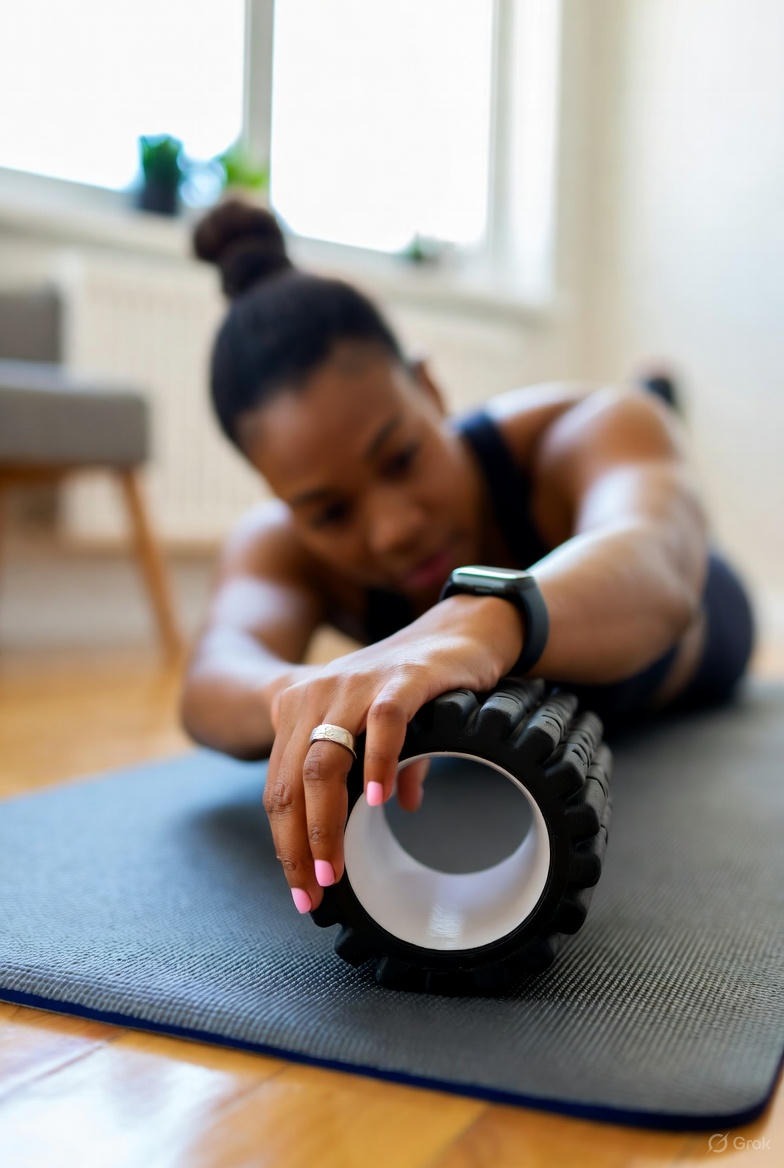
The journey of managing pain with data is profoundly personal, but it need not be solitary. One of the most transformative yet overlooked aspects of modern health technology is its ability to connect us—not through social media likes, but through shared struggles, validated experiences, and collective problem-solving. When you move from hiding your pain to understanding its patterns, you gain a language to describe it. And with that language, you can find your tribe.
The Power of Shared Data Stories: Online communities centered around specific wellness devices or conditions are treasure troves of practical wisdom. Here, users don't just say, "I feel worse when it rains." They post screenshots showing a trend of rising resting heart rate and plummeting HRV correlating with falling barometric pressure. They ask, "Has anyone else noticed a correlation between low REM sleep and migraine intensity?" and receive responses with tagged data graphs as evidence. This moves support from the realm of anecdote to that of shared observation, creating a powerful form of collective intelligence.
Beyond Comparison, Toward Context: A critical warning emerges here: community is for shared strategies and empathy, not for comparison. Your HRV of 35ms is not "worse" than someone else's 100ms. Biology, age, genetics, and condition create vastly different baselines. The value lies in seeing how others with similar baseline profiles have successfully moved their own numbers. It's about the delta—the change—not the absolute value. In these spaces, you learn about niche interventions: the specific magnesium glycinate brand that helped a fellow fibromyalgia patient improve deep sleep, the breathing technique that smoothed out another user's stress-induced HRV crashes, or the way someone adapted their ring's alerts to serve as a cue for posture correction to avoid back pain.
Contributing to the Larger Picture: Anonymized, aggregated data from communities of users can also drive broader research. When thousands of people with chronic low back pain consistently show suppressed HRV during flare-ups, it adds weight to the scientific connection between autonomic dysfunction and pain. You become part of a citizen science project, contributing to a future where medicine better understands the real-world, daily dynamics of chronic conditions. To see how real users are applying these insights, explore authentic experiences in our customer reviews and user experiences.
Inevitably, there will be setbacks. A family crisis, an unexpected illness, a travel disruption, or simply a mysterious flare that seems to defy all your data. These periods can be disheartening and can threaten to unravel your new, data-informed identity. This is when your practice is tested most severely. The key is to reframe the setback not as a failure of the system, but as its most critical use case.
The Protocol for the Bad Data Streak:
This process transforms a debilitating flare from a chaotic, terrifying event into a structured, manageable—though still difficult—scenario. You have a protocol. You have a dashboard. You are not lost.
The Synergy of Modalities: Pairing Your Ring with Professional Therapies
Your wellness ring is not a replacement for professional care; it is a force multiplier for it. The data creates a feedback loop that makes every therapy session more targeted and efficient. Let’s explore specific synergies.
With Cognitive Behavioral Therapy (CBT) for Pain:
CBT for pain focuses on changing the thoughts and behaviors that exacerbate suffering. Your ring provides irrefutable behavioral evidence.
With Physical Therapy and Rehabilitation:
This is where quantification prevents over- and under-doing it.
With Nutritional Psychiatry and Functional Medicine:
These fields seek root causes in biochemistry. Your ring offers continuous outcome measures.
This collaborative model elevates the standard of care. You arrive not with vague complaints, but with a detailed report on your body's response to life. For more on how professionals view this data, revisit our resource on what doctors find most useful from wellness rings.
Chronic pain is astronomically expensive—in direct medical costs, lost productivity, and diminished quality of life. Viewing the purchase of a wellness ring and the time invested in recovery tracking through a purely economic lens reveals it as one of the highest-return investments in health one can make.
Calculating the "Pain Cost":
The ROI of Proactive Management:
A device like a wellness ring is a capital investment in health infrastructure. Its return is measured in cost avoidance and quality-of-life gains.
When framed this way, the question shifts from "Can I afford this ring?" to "Can I afford not to have this level of insight into the single biggest challenge affecting my life and livelihood?" It is the ultimate application of the proverb: "An ounce of prevention is worth a pound of cure." For those considering this investment, our guide to making a final purchase decision can help clarify the choice.
Tailoring the Technology: Special Considerations for Different Pain Types
While the core principles of recovery tracking apply universally, the nuances of your specific condition should shape how you prioritize and interpret your data.
For Neuropathic Pain (e.g., Diabetic Neuropathy, Sciatica, CRPS):
For Inflammatory Arthritis (e.g., Rheumatoid Arthritis, Psoriatic Arthritis):
For Chronic Migraine and Headache Disorders:
For Chronic Widespread Pain (e.g., Fibromyalgia):
Understanding these nuances ensures your interaction with the technology is as personalized as your pain. For support on setting up your device for specific goals, see our article on how wellness rings support different health goals.
As we embrace this powerful technology, we must also navigate its ethical complexities with eyes wide open. The data from your wellness ring is a deeply intimate diary of your body. Its management and use carry significant implications.
The Paramount Concern: Data Privacy and Ownership
Algorithmic Bias and the "Normative" Body
Health algorithms are trained on datasets. If those datasets are predominantly young, male, and white, the "norms" and insights generated may be inaccurate or even harmful for women, older adults, and people of color. For instance, a "normal" sleep algorithm might misinterpret the unique sleep architecture of perimenopausal women as "poor sleep."
Informed Consent in the Era of Predictive Health:
If your device's AI predicts a high probability of a flare, what is the company's (and your doctor's) liability if you ignore it and suffer? Conversely, what if a false prediction causes unnecessary anxiety? The legal and ethical frameworks for these scenarios are still being written. As a user, staying informed and maintaining open communication with your healthcare provider is your best strategy.
Engaging with this technology thoughtfully means advocating for your digital rights as fiercely as you advocate for your health. It means choosing partners who align with your values, a principle you can learn more about on our about us page.
Your body is not a static machine. The recovery practices and benchmarks that serve you at 30 will need refinement at 50, and again at 70. The true mastery of daily recovery tracking is the ability to evolve with your own biology, using data to gracefully navigate life’s transitions.
Adapting to Perimenopause and Menopause: This transition is a masterclass in shifting baselines. Hormonal fluctuations disrupt sleep (via hot flashes), increase systemic inflammation, and destabilize the autonomic nervous system.
Navigating the Aging Process: With age comes a natural decline in HRV, a tendency for lighter sleep with less deep wave activity, and a longer recovery time from stressors.
Recalibrating After Major Life Events: Surgery, grief, a major move, or a global pandemic—these are system-wide resets. Your pre-event baselines are temporarily irrelevant.
This long-view perspective transforms recovery tracking from a fitness hack into a cornerstone of conscious aging. It provides a calm, objective narrative about the changes in your body, replacing fear and confusion with understanding and purposeful adaptation.
Conclusion of This Portion: The Integral Tapestry of Data-Informed Wellbeing
We have now woven a comprehensive tapestry, connecting the microscopic details of nightly HRV to the macroscopic themes of community, economics, ethics, and a lifetime of change. Daily recovery tracking for pain management is no longer a simple tool; it is revealed as a practice—a disciplined, compassionate, and evolving way of engaging with your own existence.
It integrates the quantifiable and the qualitative. It respects the hard data of photoplethysmography while holding space for the unmeasurable aspects of hope, resilience, and human connection. It bridges the gap between the cutting edge of predictive AI and the ancient wisdom of listening to one's body.
This practice does not promise a cure. It promises something perhaps more sustainable: agency. Agency to understand, to predict, to influence, and to adapt. It changes the fundamental question from "Why is this happening to me?" to "What is my body telling me, and how can I best support it today?"
The journey continues. The next frontier is integrating this empowered, data-literate self into the broader healthcare ecosystem, advocating for change, and exploring the outer limits of what is possible when we truly partner with technology for healing. The path is open, and you now have the map and the compass.
This deep dive into the philosophy and practice of recovery-focused living is just the beginning. To continue your exploration, find answers to common questions in our FAQ , or delve into the specifics of sensor technology in our explainer on the sensors and AI behind health tracking . Discover the Oxyzen collection designed to support this profound journey, and join a community turning data into enduring resilience.
Your Trusted Sleep Advocate (Sleep Foundation — https://www.sleepfoundation.org/)
Discover a digital archive of scholarly articles (NIH — https://www.ncbi.nlm.nih.gov/
39 million citations for biomedical literature (PubMed — https://pubmed.ncbi.nlm.nih.gov/)
experts at Harvard Health Publishing covering a variety of health topics — https://www.health.harvard.edu/blog/)
Every life deserves world class care (Cleveland Clinic -
https://my.clevelandclinic.org/health)
Wearable technology and the future of predictive health monitoring. (MIT Technology Review — https://www.technologyreview.com/)
Dedicated to the well-being of all people and guided by science (World Health Organization — https://www.who.int/news-room/)
Psychological science and knowledge to benefit society and improve lives. (APA — https://www.apa.org/monitor/)
Cutting-edge insights on human longevity and peak performance
(Lifespan Research — https://www.lifespan.io/)
Global authority on exercise physiology, sports performance, and human recovery
(American College of Sports Medicine — https://www.acsm.org/)
Neuroscience-driven guidance for better focus, sleep, and mental clarity
(Stanford Human Performance Lab — https://humanperformance.stanford.edu/)
Evidence-based psychology and mind–body wellness resources
(Mayo Clinic — https://www.mayoclinic.org/healthy-lifestyle/)
Data-backed research on emotional wellbeing, stress biology, and resilience
(American Institute of Stress — https://www.stress.org/)


