


Health Tracking Basics: Why Your Wellness Ring Beats Annual Doctor Visits
Why daily tracking with a ring is more valuable than an annual doctor's visit.
Why daily tracking with a ring is more valuable than an annual doctor's visit.
%402x.svg)
For generations, the annual physical has been the gold standard of preventive health. You schedule it, fast if needed, spend an hour in a paper gown answering questions, get poked and prodded, and then receive a snapshot of your health from a single moment in time. That report, based on data points collected over 15 minutes, is then used to guide your lifestyle for the next 365 days. It’s a system built on intervals, assumptions, and hindsight.
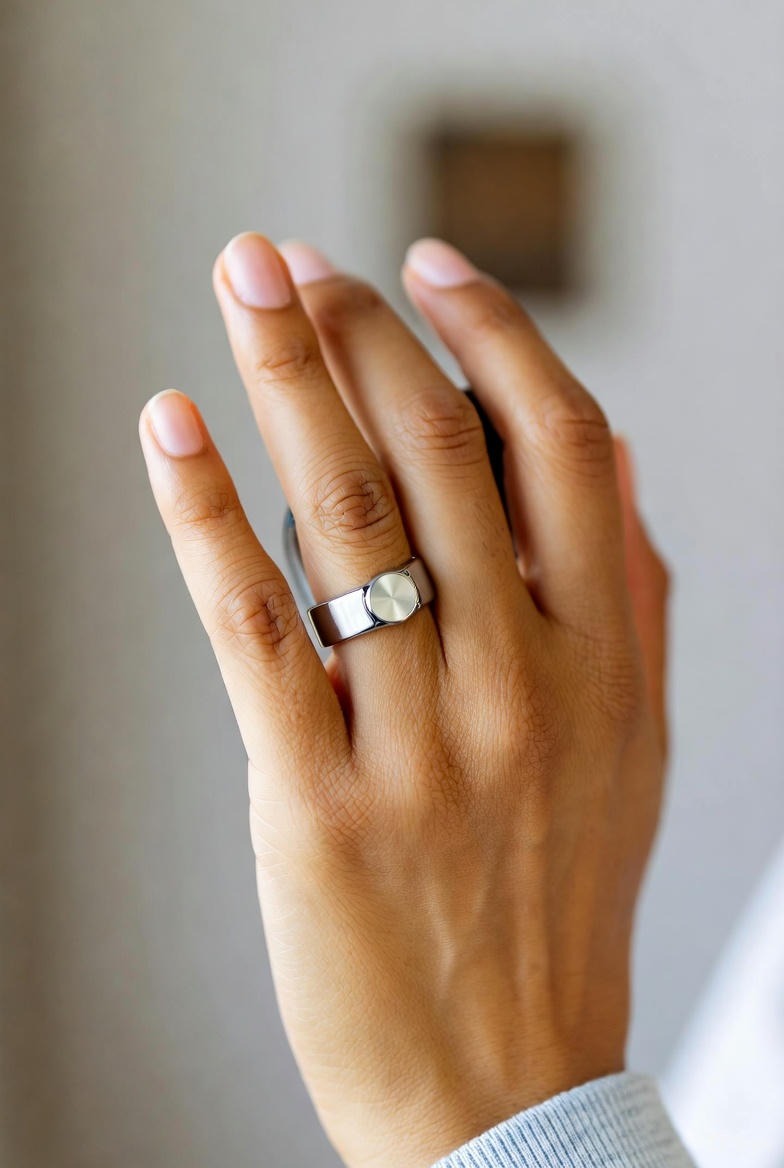
But what if your health isn’t a snapshot? What if it’s a continuous, dynamic, and deeply personal movie, with plot twists happening every second—while you sleep, during a stressful work meeting, in the middle of a workout, or after a meal? Capturing that story requires a different kind of lens. This is where the paradigm of health monitoring is fundamentally shifting, from episodic check-ins to continuous, intelligent observation. At the forefront of this revolution is a device so seamless it’s often forgotten: the modern wellness ring.
This isn't about replacing your doctor. It’s about empowering you with a depth of self-knowledge so profound that it transforms your relationship with your own body and, in turn, makes your clinical visits infinitely more productive. A wellness ring like those developed by Oxyzen moves you from being a passive patient, reacting to problems, to an active participant in a state of sustained well-being. It provides the missing link between daily life and clinical insight, offering a rich, longitudinal dataset that a single annual visit could never hope to capture.
Imagine walking into your doctor’s office not with vague descriptions of feeling "tired lately," but with concrete, multi-month trends showing your resting heart rate variability dipping two weeks before you felt fatigued, correlated with poor sleep cycles and elevated nighttime heart rate. This is the power of context. This is the future of preventive health, and it’s available on your finger today.
In this deep dive, we’ll explore the foundational principles of health tracking and build an undeniable case for why the continuous, comprehensive data from a wellness ring is becoming an indispensable complement—and in many ways, a superior proactive tool—to the traditional annual visit. We’ll journey through the science of constant monitoring, debunk the myth of the infrequent check-up, and reveal how a simple ring is rewriting the rules of personal wellness.
The core philosophical difference between an annual physical and continuous health tracking with a wearable is the difference between a single photograph and a feature-length film. One gives you a frozen moment, often staged and under unnatural conditions (who is truly "resting" in a doctor's office?). The other reveals the narrative arc, the character development, the subtle foreshadowing, and the cause-and-effect relationships that define your unique health story.
The Limitations of the Health "Snapshot"
Your annual check-up provides critical biomarkers: blood pressure, cholesterol levels, fasting glucose, and more. These are invaluable, but they are profoundly limited by their context.
The Power of the Health "Movie"
A wellness ring collecting data 24/7 builds a rich, longitudinal dataset. This is the "movie" of your health. It establishes your personal baselines across dozens of metrics and then highlights meaningful deviations.
Key Longitudinal Metrics a Wellness Ring Tracks:
The magic isn’t in the individual data points; it’s in the trends and correlations. The ring’s algorithms learn your normal. When your HRV trend line dips for three consecutive nights while your resting heart rate creeps up, and your deep sleep percentage falls—that’s a multi-factor alert that your body is struggling to recover. This confluence of data provides context that a single blood pressure reading never could.
This shift from snapshot to continuous narrative is the first, most critical health tracking basic. It forms the foundation for everything that follows: true prevention, personalization, and proactive intervention. To understand how we got here, it's worth exploring the evolution of health tracking technology from manual logs to smart rings, a journey that highlights just how revolutionary this constant data stream truly is.

We’ve inherited a healthcare cadence built for simplicity and scalability, not for optimal human biology. The concept of an "annual" check-up is an administrative and logistical convenience, not a scientifically derived interval for preserving wellness. Our bodies don’t operate on a 12-month crisis cycle; they are in a constant state of flux, responding daily to diet, stress, sleep, infection, and environment.
Health is Dynamic, Not Static
Consider the key pillars of health over a single year:
Relying on an annual visit to catch these dynamics is like trying to understand climate change by only checking the temperature once a year on the same date. You’ll miss every storm, every heatwave, and every gradual shift until the cumulative effect is undeniable and potentially harder to address.
The Early Detection Gap
The greatest strength of continuous monitoring is its ability to narrow the detection gap—the time between when a physiological change begins and when it becomes symptomatic or severe enough to be caught in a clinic.
This constant vigilance closes the gap between change and awareness. It empowers you to make small, timely corrections—more sleep, better hydration, managed stress, a visit to the doctor now with specific data—rather than large, reactive interventions later. This proactive mindset is at the heart of why modern wearables are so transformative. For a deeper look at this shift, read about how health tracking technology has changed preventive medicine.
The doctor's office is a controlled, artificial environment. It strips away the very context that defines 99.9% of your life. Your health isn't made or broken in the examination room; it's forged during your daily sleep, at your desk, in your kitchen, and on your morning run. A wellness ring's supreme advantage is its ability to go where you go, collecting data in the wild, real-world laboratory of your life.
The Nocturnal Narrator: Unlocking Sleep's Secrets
Sleep is the single most important restorative process for your physical and mental health. Yet, in an annual visit, it's reduced to a question. A wellness ring acts as a nocturnal narrator, telling the full, unbiased story of your sleep every single night.
The Stress Biographer: Quantifying the Unquantifiable
Stress is a subjective feeling with very objective physiological consequences. A wellness ring translates the feeling into data through two primary metrics:
By tracking these metrics continuously, you learn your body's unique stress signature. You can see the impact of a deadline, an argument, or even a poor diet. More importantly, you can objectively measure the efficacy of your de-stressing tools: does that meditation app actually improve your HRV? Does a walk in nature lower your RHR? The data provides clear feedback, turning stress management from an abstract concept into a measurable science.
The Activity Anthropologist: Beyond Step Counting
Modern wellness rings understand that movement is a spectrum, not a binary of "sedentary" and "10,000 steps."
This comprehensive, 24/7 picture creates a holistic health profile that is impossible to replicate in any clinical setting. It captures the truth of your daily existence, providing the context that makes clinical data meaningful. For those curious about the technical marvel that makes this possible, we delve into the science behind modern health tracking technology.
Medical guidelines are built on population averages. Charts for blood pressure, heart rate, BMI, and cholesterol tell you where you stand relative to millions of others. This is useful for identifying statistical risk, but it's dangerously generic. Your perfect health doesn't live at the statistical mean; it lives at your unique, personal optimum. This is the second revolutionary gift of continuous tracking: the discovery of Your Normal.
Why Population Averages Fail You
A 40-year-old male and a 40-year-old female. An elite athlete and a sedentary office worker. A person who meditates daily and one with chronic anxiety. Placing these individuals on the same "normal" chart for resting heart rate (60-100 BPM) or HRV is clinically reductive. The athlete's "normal" RHR might be 45, and a reading of 65 could signal illness or fatigue. For the sedentary individual, 65 might be excellent. Without a personal baseline, you have no way of knowing what a number truly means for you.
How a Wellness Ring Establishes Your Baseline
When you first wear a ring like Oxyzen, its most important job isn't to judge you against the world, but to learn you. Over the first few weeks, it observes:
It builds a multi-dimensional model of your personal homeostasis. Once this baseline is established, the ring's intelligence shifts from "what's normal for people" to "what's abnormal for YOU."
Detecting Meaningful Deviations
This is where prevention becomes personal and powerful. Instead of waiting for a metric to cross a generic red line into "clinical risk," you get alerted when it deviates significantly from your own healthy baseline.
This shift from generic to personal is the cornerstone of precision wellness. It moves healthcare from a one-size-fits-all model to a truly individualized approach. The ring provides the longitudinal, personal dataset that enables this. To see what's next in this personalized journey, explore insights on how health tracking technology enables personalized wellness.
Traditional healthcare is largely reactive. You feel a symptom, you go to the doctor, you get a diagnosis, and you begin treatment. The annual physical attempts to be proactive but is limited by its infrequency and lack of context. Continuous health tracking with a wellness ring introduces a powerful third category: predictive awareness. It's about identifying patterns and physiological shifts that precede overt symptoms, allowing for preemptive action.
The Physiology of a Trend
Disease and disorder rarely switch on like a light bulb. They are more like a dimmer switch, gradually increasing physiological strain over time. This strain manifests in subtle, interconnected changes in your autonomic nervous system, sleep, and recovery metrics—all of which a advanced ring is designed to detect.
Real-World Predictive Patterns:
From Prediction to Prevention
The goal of predictive data isn't to cause anxiety over every blip—robust algorithms filter out noise to show you meaningful trends. The goal is to equip you with a dialogue with your body.
When your data shows a negative trend, you can start a investigation:
This dialogue leads to small, corrective actions: an earlier bedtime, a commitment to meditation, a healthier meal, a rest day. These micro-corrections, guided by data, are the essence of modern prevention. They stop small problems from becoming big ones. This predictive capability is fueled by incredible advances in sensor and algorithm design, which you can learn more about in our explainer on health tracking technology sensors, algorithms, and AI explained.
Imagine two scenarios for your next doctor's appointment:
Scenario A (Traditional): "Doctor, I've been feeling more tired than usual for the past few months." The doctor asks about sleep, stress, and diet. You give vague, recalled answers. They run standard blood tests, which may or may not show anything. The outcome is often a best-guess recommendation or a suggestion to "wait and see."
Scenario B (Data-Enhanced): "Doctor, I've been feeling more tired. I've been tracking my health data, and over the past 10 weeks, I've seen a 20% decline in my heart rate variability, a 5 BPM increase in my resting heart rate, and my deep sleep has dropped by 30%. This trend started around the time I began a new project at work. My blood pressure and activity levels have remained consistent."
The difference is transformative. In the second scenario, you are no longer a mystery; you are a collaborative partner with objective evidence. The conversation instantly elevates from vague symptoms to specific physiological patterns with a potential trigger.
How a Wellness Ring Makes You a Better Patient
Bridging the Gap Between Daily Life and Clinical Care
The wellness ring becomes the perfect bridge. It takes the esoteric, internal experience of "not feeling well" and translates it into a clinical-grade data narrative that a healthcare professional can understand and act upon. It turns appointments from isolated events into periodic reviews of an ongoing, data-rich health journal that you co-author with your device.
This doesn't undermine the doctor's expertise; it augments it. It provides them with the longitudinal data they have always lacked, making their diagnostic and treatment decisions more informed and precise. For a perspective on how this data is viewed by professionals, consider reading about what doctors find most useful in wellness ring data.

A common critique of health data is that it can lead to fixation on numbers, creating anxiety rather than wellness. However, when used correctly, the modern wellness ring does the opposite: it fosters holistic integration. It reveals the invisible threads connecting your physical body, your mental state, and your daily behaviors, painting a unified picture of your well-being.
The Interconnected Feedback Loops
The ring's data doesn't exist in silos. Its true genius is in showing how one aspect of your life profoundly affects another.
Beyond the Physical: Mental Well-Being Biomarkers
Perhaps the most significant holistic contribution is the objective tracking of mental well-being through physiological proxies.
This validates the mind-body connection not as a abstract concept, but as a measurable reality. It destigmatizes mental health by showing its clear physical footprint and provides tangible goals for improvement (e.g., "I want to raise my average HRV by 10%," which correlates strongly with better emotional regulation).
By integrating these signals, the wellness ring helps you move away from optimizing single metrics (like steps) and toward optimizing your system as a whole. The goal becomes achieving a harmonious state where sleep, activity, recovery, and stress are in balance, as reflected in a cohesive, positive data trend. To see how this integration extends to your other devices, learn about wellness ring integration with other health apps.
Data without insight is noise. The pinnacle of a modern wellness ring's value is its transformation of raw data into actionable intelligence—personalized, timely nudges and insights that guide you toward healthier habits every single day.
From Dashboard to Daily Coach
Early wearables were dashboards: here are your numbers, figure it out. Next-gen devices like advanced wellness rings are moving into the role of an AI-powered health coach.
How This Manifests:
The Habit-Forming Feedback Loop
This is where the magic of long-term change happens. The ring creates a tight, immediate feedback loop for your actions.
This loop turns abstract health advice ("get more sleep") into a tangible, rewarding game. You start to make choices not out of obligation, but because you can directly see and feel the benefit. The ring provides the missing link between intention and outcome. For practical strategies on using your device this way, our article on how a wellness ring helps build healthy habits offers a detailed blueprint.
The rise of the wellness ring is not an isolated consumer trend; it is a leading indicator of a seismic shift in the entire healthcare paradigm. The data and behavioral models pioneered by these devices are beginning to flow into and reshape clinical medicine, research, and our collective understanding of health.
The Hospital at Home & Remote Patient Monitoring
The most direct application is in Remote Patient Monitoring (RPM). Patients with chronic conditions like heart failure, hypertension, or COPD can be sent home with medical-grade wearables (rings are ideal for continuous, unobtrusive monitoring) that track vital signs like heart rate, rhythm, blood oxygen, and respiratory rate.
Democratizing Clinical Research
Longitudinal health data from millions of consenting wearable users creates the largest, richest dataset on human physiology ever assembled.
The Era of True Preventive, Personalized Medicine
This is the ultimate destination. Integrating continuous lifestyle data from wearables with periodic clinical data (genomics, blood tests, imaging) and your electronic health record creates a dynamic, multi-layered "digital twin" of a patient.
The wellness ring on your finger is the vanguard of this revolution. It is the tool that begins to teach both individuals and the system what "health" really looks like as a continuous, personalized state. As you use it, you are not just optimizing your own life; you are contributing to a broader understanding that will benefit future generations. To glimpse where this is all headed, look at our forecast for health tracking technology in 2025 and what's possible.
Having established the "why," the compelling case for continuous data over the annual snapshot, we now turn to the "how." Understanding the paradigm is one thing; implementing it effectively in your own life is another. This section is your practical field guide. We’ll navigate the process of selecting the right device, understanding its core metrics beyond the surface, setting it up for success, and integrating its intelligence seamlessly into your daily routine. This is where theory meets practice, and your journey from passive patient to proactive health pioneer truly begins.
Choosing Your Companion: A Guide to Selecting the Right Wellness Ring
The market for smart rings is growing rapidly, with options ranging from minimalist activity trackers to advanced health monitors. Choosing the right one is crucial, as it will be your constant companion. It’s not just about features; it’s about fit—both physically and philosophically with your lifestyle and health goals.
Defining Your "Why" and Core Needs
Before comparing specs, ask yourself:
Key Features Comparison: Beyond the Marketing Hype
When evaluating rings like Oxyzen and others, look past the headline claims and examine these core components:
To help in your decision process, you can explore a detailed wellness ring comparison chart of top brands on our blog. Ultimately, the best ring is the one you’ll wear consistently and whose insights you’ll actually use. For a final checklist before purchasing, review our resource on making the purchase decision for a wellness ring.
Once your ring is on your finger, you’ll be greeted with a stream of data. To avoid confusion or fixation, it’s vital to understand what the key metrics mean, how to interpret them in context, and which ones deserve your primary attention.
Heart Rate Variability (HRV): Your Nervous System's North Star
What it is: HRV is the subtle variation in time between each heartbeat. It is controlled by your autonomic nervous system (ANS). A higher HRV generally indicates a healthy, resilient ANS with a strong balance—where the "brake" (parasympathetic, "rest-and-digest") can effectively modulate the "gas pedal" (sympathetic, "fight-or-flight").
How to Use It:
Sleep Staging and Quality: More Than Just Hours in Bed
Your ring uses movement, heart rate, and HRV patterns to estimate sleep stages.
The Readiness/Recovery Score: Your Daily Action Plan
This is the pinnacle of actionable intelligence—a single score that synthesizes multiple data points (typically last night’s sleep, HRV trend, RHR, and sometimes temperature) to advise you on how to approach the day.
Understanding these metrics in depth transforms you from a passive data viewer to an active health interpreter. For a complete beginner's guide to all core metrics and more, start with wellness ring basics: the perfect guide for beginners.

The initial period with your wellness ring is a discovery phase, not a judgment phase. Your primary goal is not to "get high scores" but to allow the device to learn your normal under your current lifestyle. This establishes the critical baseline from which all future insights will be derived.
The "Wear and Observe" Protocol
What You’ll Start to See
After about two weeks, patterns will emerge:
This baseline is your health "fingerprint." It is neutral data. There is no good or bad baseline—only an honest one. This self-awareness is the first and most powerful step toward change. To ensure your device stays accurate during this crucial phase, follow our wellness ring basics: maintenance and care instructions.
Data becomes power only when it influences behavior. Now that you have your baseline and understand your metrics, you can begin the exciting work of experimentation—using your ring to test what truly works for you.
The N=1 Experimentation Framework
Become a scientist of your own life. Formulate hypotheses and use your ring to test them.
Creating Your Personal "If-Then" Rules
Based on your experiments and observed patterns, you can build a set of personalized rules. This is your wellness playbook.
This framework turns abstract health advice into a personalized, responsive system. It empowers you to make dynamic, informed decisions that align with your body's real-time needs. For more ideas on tailoring this approach, see how a ring can support different health goals.
As with any powerful tool, there are potential pitfalls. The goal is mindful use, not obsessive tracking. Awareness of these common challenges is the first step to avoiding them.
Data Anxiety (The "Ring of Stress")
This occurs when you become overly attached to daily numbers, treating every dip in HRV or low sleep score as a personal failure.
The Antidote:
Overtracking and Analysis Paralysis
Trying to optimize too many metrics at once—sleep, steps, HRV, workouts, nutrition—can be overwhelming and counterproductive.
The Antidote:
The Plateau Effect
After initial improvements, you may feel your scores stagnate. This is normal.
The Antidote:
Navigating these mental aspects is crucial for long-term, sustainable use. For reassurance and community, reading real customer reviews and user experiences can provide valuable perspective and normalize the journey.
Your wellness ring is a powerful central node, but it is not an island. Its true potential is unlocked when it communicates with and informs the other elements of your health ecosystem.
Integration with Other Apps and Devices
Most advanced rings sync seamlessly with major health platforms.
Informing Your Clinical Care
This is the most important integration. Prepare for doctor’s visits by generating reports or identifying trends.
This turns appointments into collaborative, data-driven conversations. To explore how this integration works technically, learn about continuous vs. periodic monitoring and app integration.
The ultimate goal is not to wear a ring forever in a state of hyper-vigilance, but to use it as a teacher. Over months and years, the lessons it provides about your body’s unique language become internalized. You develop an intuitive sense of what your data would say.
Phases of the Journey
The Ring as a Lifelong Sentinel
Even in the internalization phase, the ring maintains immense value as a sentinel. As we age, or if life circumstances change dramatically (new job, parenthood, injury), having this continuous data stream can detect new trends—both positive and negative—that we might subjectively miss. It becomes a permanent part of your preventive health toolkit, ensuring you never go back to flying blind for 364 days a year.
Your journey from an annual snapshot to a continuous, data-empowered narrative is one of the most profound investments you can make in yourself. It is the practice of taking radical responsibility for your well-being, armed with the best tools humanity has yet invented. To see where this technology and your journey could lead, ponder the future of wearable health tech.
We’ve journeyed from the philosophical "why" to the practical "how." Now, we zoom out to the panoramic view. The impact of a single wellness ring extends far beyond the individual. It creates ripples—touching families, reshaping workplace culture, offering new solutions for aging populations, and forcing crucial conversations about ethics and the future of medicine. This final section explores the collective and societal implications of this quiet revolution on our fingers, painting a picture of a world where continuous health intelligence is woven into the fabric of how we live, work, and age.
The Family Health Hub: Wellness Rings and Connected Care
Health is often a family affair. Stress, sleep patterns, and even illness spread through households. A wellness ring, when adopted by multiple family members, transforms from a personal device into a family health hub, fostering shared awareness and supportive dynamics.
Parent-Child Connections and Early Awareness
For parents, a ring provides objective data that cuts through the guesswork of childcare.
Couples and Interdependent Wellness
For partners, shared tracking builds empathy and teamwork.
This familial shift moves health management from isolated concern to a collaborative, data-informed support system. It turns wellness into a shared value. For families thinking about long-term wellness across generations, insights from 50 healthy aging tips a smart ring helps implement daily can be a valuable resource.
The corporate world is grappling with an epidemic of burnout, presenteeism, and soaring healthcare costs. The old model of ignoring employee well-being until a crisis hits is both economically and ethically bankrupt. Forward-thinking organizations are now seeing continuous health data not as an intrusion, but as the cornerstone of a human-centric, sustainable productivity model.
From Presenteeism to Purposeful Performance
The traditional office rewards hours logged, not outcomes achieved. A data-informed approach flips this script.
Ethical Implementation and the Role of Employers
This must be handled with extreme care. The gold standard is employee-owned, company-supported wellness.
This model aligns the company’s interest in a healthy, resilient workforce with the employee’s right to privacy and autonomy. It’s a move from exploitative burnout culture to a sustainable culture of thriving.
One of the most profound applications of wellness ring technology is in supporting the desire of older adults to age in place—to live independently, safely, and with dignity in their own homes for as long as possible. Here, the ring transitions from a wellness tool to a discreet safety and health monitoring system.
Proactive Health Management for Chronic Conditions
For seniors managing hypertension, atrial fibrillation (AFib), or diabetes, continuous monitoring is a game-changer.
Maintaining Independence and Quality of Life
Beyond safety, the data empowers seniors to take charge of their vitality.
This application turns the wellness ring into a powerful tool for compassionate, distance-spanning care, enabling agency and independence while providing a vital safety net. It’s a concrete way technology can support the human desire to grow old at home, on one’s own terms.
As we embrace this powerful technology, we must stare unflinchingly at its shadow side. The data generated by a 24/7 health monitor is the most intimate profile imaginable—a biometric diary of your life. Who owns it? Who can access it? How is it used? Navigating this dilemma is not optional; it is fundamental to the ethical future of the industry.
The Core Ethical Principles
For consumers and companies alike, several non-negotiable principles must guide this space:
Questions to Ask Any Wearable Company
The trust between user and brand is sacred. Companies that build their foundation on robust privacy, like those that openly address common questions about data and support, will be the ones that thrive in the long term. The future belongs to privacy-by-design, not as an afterthought.
The wellness ring is not the end point; it is a pivotal early node in a coming integrated digital health ecosystem. Within a decade, the lines between consumer wellness, clinical care, and pharmaceutical intervention will blur into a seamless, personalized continuum.
The "Digital Twin" and Predictive Healthcare
The convergence of continuous wearable data, genomics, electronic health records (EHRs), and artificial intelligence will give rise to your "digital twin"—a dynamic, computer-based model of your physiology.
The Ring as a Universal Health Interface
The ring’s form factor—unobtrusive, always-on, and loaded with sensors—makes it an ideal candidate to become our primary health interface.
In this future, your annual physical becomes an annual "system update and calibration" for your digital twin. The rest of the year, you and your care team interact with a living, breathing data stream that allows for true continuous care. To glimpse the near-term possibilities, explore predictions for what's possible in health tracking by 2025.
This exploration—from the flaws of the annual snapshot to the vision of a digital twin—may feel vast. The key is to start where you are. The technology exists today to make a quantum leap in your own health agency. The future of medicine is not something that will be done to you; it will be co-created with you. Your data is your voice in that conversation.
How to Begin Your Journey
A Final Vision: The Democratization of Health
At its heart, the wellness ring represents a powerful democratizing force. It takes insights once confined to the laboratory and the specialist’s office and puts them on the finger of anyone who seeks them. It shifts power from institutions to individuals. It changes the fundamental question from "What’s wrong with me?" to "How can I help my body thrive today?"
This is more than tracking steps. This is about writing a new story for healthcare—one of prevention, personalization, and participation. Your annual doctor’s visit will always be a critical chapter. But now, with a wellness ring, you hold the pen to write the thousands of daily pages that lead up to it. Make them a story of thriving.
Your Trusted Sleep Advocate (Sleep Foundation — https://www.sleepfoundation.org/)
Discover a digital archive of scholarly articles (NIH — https://www.ncbi.nlm.nih.gov/
39 million citations for biomedical literature (PubMed — https://pubmed.ncbi.nlm.nih.gov/)
experts at Harvard Health Publishing covering a variety of health topics — https://www.health.harvard.edu/blog/)
Every life deserves world class care (Cleveland Clinic -
https://my.clevelandclinic.org/health)
Wearable technology and the future of predictive health monitoring. (MIT Technology Review — https://www.technologyreview.com/)
Dedicated to the well-being of all people and guided by science (World Health Organization — https://www.who.int/news-room/)
Psychological science and knowledge to benefit society and improve lives. (APA — https://www.apa.org/monitor/)
Cutting-edge insights on human longevity and peak performance
(Lifespan Research — https://www.lifespan.io/)
Global authority on exercise physiology, sports performance, and human recovery
(American College of Sports Medicine — https://www.acsm.org/)
Neuroscience-driven guidance for better focus, sleep, and mental clarity
(Stanford Human Performance Lab — https://humanperformance.stanford.edu/)
Evidence-based psychology and mind–body wellness resources
(Mayo Clinic — https://www.mayoclinic.org/healthy-lifestyle/)
Data-backed research on emotional wellbeing, stress biology, and resilience
(American Institute of Stress — https://www.stress.org/)


