


Why ‘Getting Older’ Is Not Why You’re Exhausted. And How to Tell the Difference.
Exhaustion is often blamed on ageing, but biometric insights reveal underlying stress, recovery issues, or lifestyle factors that are the true causes.
Exhaustion is often blamed on ageing, but biometric insights reveal underlying stress, recovery issues, or lifestyle factors that are the true causes.
%402x.svg)
At sixty-two, Margaret had stopped making plans after 7:00 PM. Not because she wanted to—because her body had made the decision for her. The evening walks she’d loved for thirty years became negotiations she lost. Book club became an endurance test. Dinner with friends required a nap beforehand and two days of recovery afterward.
Her GP, a well-meaning man who’d looked after her husband’s blood pressure for a decade, smiled when she mentioned it. “You’re not twenty-five anymore, Margaret. This is what getting older looks like.”
She believed him. Why wouldn’t she? Everyone she knew over fifty-five said the same thing. “Wait until you turn sixty.” “Just you wait.” “It doesn’t get any easier.” The cultural script was so deeply embedded that she’d started saying it herself—laughing off her exhaustion at family gatherings, apologising for her flagging energy as if it were a character flaw instead of a symptom.
Three years later, Margaret’s daughter—a physiotherapist in Brisbane—finally convinced her to see a different doctor. The new GP didn’t smile and nod. She ran blood work. She asked about sleep, about snoring, about whether she woke up feeling like she’d been running all night. She ordered a sleep study and an echocardiogram.
The results came back: obstructive sleep apnoea with an AHI of thirty-two. Moderate anaemia. Early hypothyroidism. Three distinct, measurable, treatable conditions—all of which had been hiding behind the same four words: “It’s just age.”
Within six months of treatment, Margaret was walking again. Not the slow, careful shuffle she’d resigned herself to—the brisk, purposeful stride of someone who’d been given back something she didn’t know she’d lost. She wasn’t twenty-five. But she also wasn’t eighty-five. She was sixty-five, and for the first time in years, she felt exactly that age—not a decade older.
Here’s what the data says, and what your doctor might not have time to tell you: In most cases, fatigue, poor sleep, and declining energy in Australians over fifty-five are not caused by ageing. They are caused by measurable, treatable conditions that have been dismissed as normal for far too long.
This article is for everyone who has been told—or has told themselves—that feeling terrible is just part of getting older. It’s for the fifty-eight-year-old who sleeps nine hours and still can’t keep her eyes open at 3:00 PM. It’s for the sixty-seven-year-old whose “mid-afternoon slump” has become a daily blackout. It’s for the adult child watching their parent shrink into a version of themselves that seems older than their years.
And it’s for the millions of Australians over fifty-five who have normalised decline to the point where they’ve stopped asking whether things could be different.
They can be. And we’re going to show you exactly how to tell the difference between ageing and something else entirely.
Explore our blog for more research on how biometric tracking is changing the way Australians understand their health after fifty.
Let’s start with something that should be obvious but isn’t: Ageing is not a disease. It is a biological process. And while that process involves real, measurable changes in how your body functions, it does not—repeat, does not—explain the kind of exhaustion that most Australians over fifty-five are experiencing.
Here’s what actual healthy ageing looks like, according to the gerontology literature: A sixty-five-year-old with no underlying disease should be able to walk 400 metres without stopping, climb a flight of stairs without chest pain or severe breathlessness, and stay awake through an afternoon movie without requiring a two-hour nap. Their sleep efficiency—the percentage of time in bed actually spent sleeping—might drop from ninety percent to eighty-five percent. Their heart rate variability might decline gradually. Their maximum oxygen consumption might decrease by about ten percent per decade.
But here’s what healthy ageing does not look like: Waking up exhausted after eight hours in bed. Needing caffeine to function before noon. Falling asleep in front of the television every single night. Feeling like your limbs are filled with concrete. Avoiding social engagements because you don’t have the energy. These are not normal. They have never been normal. And the medicalisation of “normal ageing” has become one of the most dangerous cultural scripts in Australian healthcare.
When a doctor—or a patient themselves—attributes fatigue to age without investigation, several things happen simultaneously. First, treatable conditions go untreated. Second, the patient begins to internalise decline as inevitable, which reduces their likelihood of seeking future care. Third, the window for early intervention closes, often permanently.
Consider obstructive sleep apnoea. In Australia, an estimated one in four men over fifty-five has moderate to severe OSA. The same condition is present in approximately one in ten women over fifty-five, though experts believe female OSA is dramatically underdiagnosed because women present differently—less snoring, more insomnia and fatigue. OSA is not ageing. It is a mechanical failure of the upper airway during sleep. It is treatable with CPAP, oral appliances, positional therapy, or in some cases, surgery. And untreated OSA doesn’t just cause fatigue—it increases your risk of hypertension, atrial fibrillation, stroke, and cognitive decline.
Now consider anaemia. Among Australians over sixty-five, the prevalence of anaemia is approximately twelve percent. That’s more than half a million people. Anaemia is not ageing. It is a deficiency—most commonly iron, sometimes B12 or folate. It is detectable with a simple blood test and treatable with supplementation or dietary changes. But when an older patient mentions fatigue and a doctor says “that’s normal at your age” without checking a full blood count, that patient may live with treatable anaemia for years. Years of unnecessary exhaustion. Years of lost function. Years that could have been different.
There is a second layer of harm here, one that doesn’t show up in blood tests. When you believe that your exhaustion is just ageing, you stop looking for solutions. You stop asking questions. You stop pushing your doctor. You cancel the follow-up appointment because “what’s the point?” You decline the referral to the sleep specialist because “they’ll just say the same thing.” You stop exercising because it feels impossible, and you tell yourself that’s just how it is now.
This is what researchers call “learned helplessness” in the context of ageing, and it is a self-fulfilling prophecy. The person who stops moving because they believe they’re too old to move becomes, within months, someone who genuinely cannot move. The person who stops socialising because they believe they’re too tired to socialise becomes someone who is genuinely isolated. The belief becomes the biology. And it all starts with four words: “It’s just age.”
Let’s be precise about what the evidence shows. A 2019 systematic review published in the Journal of the American Geriatrics Society examined the relationship between chronological age and fatigue in community-dwelling older adults. The finding: After controlling for chronic disease, depression, sleep disorders, and nutritional deficiencies, chronological age explained less than five percent of the variance in fatigue severity. In other words, being older does not, on its own, make you exhausted. Something else is almost always present.
A separate study from the Australian Longitudinal Study of Ageing followed 1,987 Australians over sixty-five for a decade. The researchers found that the strongest predictors of fatigue were not age but specific clinical conditions: sleep apnoea (accounting for thirty-one percent of severe fatigue cases), anaemia (eighteen percent), thyroid dysfunction (twelve percent), and early heart failure (nine percent). Together, these four conditions explained seventy percent of all severe fatigue in the cohort. And every single one of them is treatable.
Think about that for a moment. Seventy percent of severe fatigue in older Australians is caused by four conditions that are all detectable and all treatable. That means the vast majority of people who believe they’re exhausted because they’re old are, in fact, exhausted because they have an undiagnosed medical condition that no one has bothered to look for.
None of this is meant to blame individual GPs. The average Australian GP sees thirty to forty patients per day in seven-to-fifteen-minute appointments. In that timeframe, fatigue is a difficult complaint to work up. It’s non-specific. It could be dozens of things. And the patient is often the one who offers “maybe it’s just my age” as a way of being polite, of not taking up too much time, of not being a bother.
The GP, pressed for time and hearing the patient minimise their own symptoms, nods along. “Yes, that’s probably it.” The chart is closed. The patient leaves. The opportunity is lost.
But here’s what we need to understand: This dynamic is not inevitable. It is a product of a system that has normalised decline to the point where both doctors and patients have stopped questioning it. And the first step toward changing that system is changing the story. You are not supposed to feel terrible at sixty. If you feel terrible, something is wrong. And that something is probably fixable.
The Oxyzen smart ring was designed in part to help people like Margaret see their own data—to watch their heart rate variability, their resting heart rate, their sleep stages, and to notice that something wasn’t right long before they ended up in a specialist’s waiting room. But you don’t need a device to start asking better questions. You just need permission to stop accepting “it’s just age” as an answer.
Consider this article that permission.
If you walk away from this article remembering only one thing, remember this list. These are the five most common, most treatable, and most frequently dismissed conditions that cause fatigue, poor sleep, and declining energy in Australians over fifty-five. Each one is measurable. Each one is treatable. And each one is routinely ignored because both patients and doctors assume the symptoms are just part of getting older.
Obstructive sleep apnoea is, by a significant margin, the most common undiagnosed condition in Australians over fifty-five. The best estimate is that one in four men and one in ten women in this age bracket has moderate to severe OSA. Of those, approximately eighty percent are undiagnosed.
Here’s what OSA actually is: During sleep, the muscles in your throat relax. In some people, they relax so much that the airway collapses partially or completely. When that happens, breathing stops—sometimes for ten seconds, sometimes for sixty, sometimes longer. Your brain notices the drop in oxygen and partially wakes you up to restart breathing. You may not remember these awakenings. You may not even be consciously aware of them. But they happen. In moderate OSA, they happen fifteen to thirty times per hour. In severe OSA, more than thirty times per hour. Sometimes more than sixty.
Now do the math. If you have severe OSA and you’re in bed for eight hours, you are having more than four hundred breathing events per night. Four hundred times your sleep is fragmented. Four hundred times your oxygen level drops. Four hundred times your body releases stress hormones to wake you up. This is not sleep. This is torture, and it’s happening in your own bed every single night.
The symptoms of OSA are exactly what you’d expect from someone who hasn’t actually slept in years: morning headaches, dry mouth upon waking, loud snoring (though not always—women especially may not snore loudly), waking up gasping or choking, restless sleep, night sweats, and the hallmark symptom—daytime sleepiness so profound that you cannot stay awake during sedentary activities. Reading, watching television, sitting in traffic, attending meetings. You fall asleep because your body is desperately trying to recover from what happened the night before.
And here’s where the “just age” narrative becomes actively dangerous. OSA becomes more common as you get older, yes. But that doesn’t mean it’s normal. It means it’s common. Common and normal are not the same thing. Hypertension is common in older adults. So is type 2 diabetes. So is OSA. None of them are normal. All of them require treatment.
The good news: OSA is highly treatable. CPAP—continuous positive airway pressure—is the gold standard, and modern CPAP machines are quiet, comfortable, and effective. Oral appliances can work for mild to moderate cases. Positional therapy helps some people. The point is not which treatment is right for you—the point is that treatment exists. If you have OSA, you do not have to live this way.
For a deeper dive into why you might be sleeping eight hours and still waking up exhausted, read our detailed analysis of sleep quality versus sleep quantity.
The second most common cause of fatigue misattributed to age is anaemia—a condition in which your blood has a lower than normal number of red blood cells or haemoglobin. Since red blood cells are responsible for carrying oxygen from your lungs to the rest of your body, anaemia means your tissues are literally starving for oxygen. No wonder you’re tired.
In Australians over sixty-five, the prevalence of anaemia is approximately twelve percent, rising to twenty percent in those over eighty-five. Among residents of aged care facilities, the prevalence exceeds forty percent. Most of these cases are mild to moderate, but even mild anaemia has profound effects on functional status, quality of life, and cognitive function.
There are three main types of anaemia in older adults: nutritional deficiencies (iron, B12, folate), anaemia of chronic disease (inflammation from conditions like rheumatoid arthritis, chronic kidney disease, or cancer), and unexplained anaemia (which often turns out to be early myelodysplastic syndrome or other bone marrow disorders). Each type requires different treatment. Iron deficiency requires iron replacement. B12 deficiency requires B12 injections or high-dose oral supplements. Anaemia of chronic disease requires treating the underlying condition.
Here’s what makes anaemia so insidious in the “just age” narrative: The symptoms—fatigue, weakness, pale skin, shortness of breath, dizziness, cold hands and feet—are identical to what people expect from getting older. An eighty-year-old with mild anaemia might assume their breathlessness on stairs is just deconditioning. Their doctor might assume the same. But a simple full blood count, which costs Medicare approximately thirty dollars, would settle the question. If the haemoglobin is low, you have anaemia. If it’s normal, you look elsewhere. Either way, you’ve ruled out one of the major causes of fatigue instead of letting it fester for years.

Your thyroid gland produces hormones that regulate your metabolism—how fast your body burns energy, how warm you feel, how quickly your heart beats, how efficiently your digestive system works. When your thyroid is underactive (hypothyroidism), everything slows down. You gain weight despite eating the same amount. You feel cold when others are comfortable. Your hair thins. Your skin dries. Your digestion slows. And you become profoundly, relentlessly tired.
Hypothyroidism becomes more common with age, affecting approximately five to ten percent of Australians over sixty, with women affected far more often than men. The classic symptoms—fatigue, weight gain, cold intolerance, constipation, dry skin, hair loss, muscle aches, and depression—are again indistinguishable from what many people assume is normal ageing. And again, the diagnosis is straightforward: a blood test measuring thyroid-stimulating hormone (TSH) and free T4. The treatment is even more straightforward: a daily tablet of levothyroxine, which replaces the missing thyroid hormone.
What’s remarkable about hypothyroidism is how dramatically people improve with treatment. Patients who have been exhausted for years often report feeling like a different person within weeks of starting levothyroxine. The weight doesn’t always melt off immediately, but the fatigue lifts. The brain fog clears. The cold intolerance disappears. This is not ageing. This is a hormone deficiency, and it is fixable.
Atrial fibrillation (AF) is the most common cardiac arrhythmia in older adults, affecting approximately five percent of Australians over fifty-five and ten percent of those over seventy-five. In AF, the upper chambers of the heart (the atria) quiver instead of beating effectively. Blood doesn’t move through the heart efficiently, which increases the risk of clot formation and stroke. But before the stroke risk becomes the headline, AF causes a more immediate problem: fatigue.
Here’s why. In AF, the ventricles (the lower chambers of the heart) often beat irregularly and sometimes rapidly. When your heart is racing or irregular, it doesn’t pump blood as effectively. Cardiac output—the amount of blood your heart pumps per minute—can drop by ten to twenty percent. Less blood pumped means less oxygen delivered to your muscles and brain. Less oxygen means fatigue. It also means you might feel palpitations, shortness of breath, dizziness, or chest discomfort. Or you might feel none of those things. Many people with AF have no symptoms at all except fatigue.
The “just age” narrative is particularly dangerous here because AF is highly treatable, but untreated AF carries serious risks. The stroke risk alone is five times higher in people with AF than in the general population. But AF can be managed with rate control medications, rhythm control medications, or ablation procedures. Blood thinners dramatically reduce stroke risk. The fatigue often improves dramatically once the heart rhythm is controlled.
The challenge is that AF is often paroxysmal—it comes and goes. You might have a normal heart rhythm when you see your GP for a routine checkup. The standard twelve-lead ECG in the office might show nothing. That’s why ambulatory monitoring—wearing a device for days or weeks—is sometimes necessary to catch the arrhythmia. Learn more about how continuous biometric monitoring can detect patterns that office visits miss.
Heart failure is a frightening term, and it conjures images of bedbound elderly patients gasping for air. But early heart failure is often subtle. Very subtle. So subtle that both patients and doctors miss it for years.
Here’s what early heart failure actually looks like: You used to walk the dog for thirty minutes without stopping. Now you need to rest after fifteen. You used to garden for an hour. Now you’re done in twenty minutes. You sleep with two pillows instead of one because lying flat makes you feel short of breath. Your ankles are slightly swollen at the end of the day. You wake up at 2:00 AM feeling like you can’t catch your breath, so you sit up in bed until it passes. You’ve gained a few kilograms that you can’t explain—water weight, not fat. And you are so tired that getting through the day feels like a marathon.
These are all symptoms of heart failure—specifically, heart failure with preserved ejection fraction (HFpEF), which is the most common form of heart failure in older adults, especially older women. In HFpEF, the heart muscle becomes stiff and doesn’t relax properly between beats. The pumping strength (ejection fraction) remains normal, but the heart can’t fill with enough blood. The result is the same as with AF: lower cardiac output, less oxygen delivery, more fatigue.
Heart failure is not normal at any age. It is a serious medical condition that requires diagnosis and management. But here’s the good news: Early heart failure is highly manageable. Diuretics reduce fluid overload. Blood pressure medications reduce the workload on the heart. Lifestyle modifications—particularly exercise training—improve symptoms and quality of life dramatically. The Florey Institute’s LEAF trial, which we’ll discuss later in this article, showed that six months of exercise training improved cardiac function and symptoms in older adults with early heart failure.
The key is diagnosis. And diagnosis requires someone to look. If your GP has never ordered a basic echocardiogram—an ultrasound of your heart—and you have any of the symptoms above, ask for one. It takes twenty minutes. It’s non-invasive. And it could change everything.
Discover how Oxyzen works to help you track the biometric signatures of these conditions—resting heart rate, heart rate variability, respiratory rate, and sleep patterns—so you can bring real data to your next GP appointment.
Until recently, measuring HRV required a clinical-grade ECG in a doctor’s office. That single measurement, taken while you were lying still for thirty seconds, told you almost nothing about your HRV during sleep, during activity, or across different days. Modern wearable devices have changed that completely.
A high-quality smart ring or wrist-worn device can measure HRV continuously throughout the night, when your body is at rest and your nervous system is expressing its true baseline. Nighttime HRV measurements are more reliable than daytime measurements because they are less affected by movement, stress, caffeine, and digestion. A week of nighttime HRV data gives you a stable, accurate picture of your autonomic function.
Read our complete guide to understanding your biometric data for detailed instructions on how to interpret your HRV trends and when to share them with your GP.
Here’s the question every Australian over fifty-five should ask themselves: If there was a treatment that could add four and a half years to your life, would you take it? If there was a lifestyle change that could give you those same years, would you make it? If there was a device that could tell you whether you were on track for those extra years or falling behind, would you use it?
Because here’s the truth: The HUNT Study didn’t just find an association. It found a signal. Low HRV is not just a number. It is the biometric signature of a body that is struggling. It is the data version of fatigue. And like fatigue, it is not a life sentence. It is a call to action.
The HUNT Study tells us that HRV matters. The Florey Institute’s LEAF trial tells us what to do about it. And the answer, it turns out, is something most of us already know but few of us do consistently: exercise.
The LEAF (Left ventricular dysfunction: Exercise versus standard medical therapy in Australians over sixty with early heart failure) trial was a randomised controlled trial conducted at the Florey Institute of Neuroscience and Mental Health in Melbourne. The researchers enrolled 120 Australians aged sixty and older with early-stage heart failure with preserved ejection fraction (HFpEF)—the very condition we discussed earlier that is so often misattributed to ageing. Half of the participants were assigned to usual care. The other half were assigned to a six-month supervised exercise programme combining aerobic training (walking, cycling) and resistance training (light weights, bodyweight exercises).
The results, published in 2022, were striking. The exercise group showed a fifteen percent increase in HRV over six months. Their resting heart rate dropped by an average of six beats per minute. Their six-minute walk distance—a standard measure of functional capacity—increased by fifty metres. And most importantly, their symptoms improved dramatically. The participants who exercised reported significantly less fatigue, less shortness of breath, and better quality of life than the control group.
The LEAF trial is important not just because it showed that exercise works, but because it showed that decline is reversible. These were not healthy older adults. These were people with established heart disease—people who had been told, in many cases, that their fatigue was just part of getting older. And within six months of a structured exercise programme, their biometric data looked substantially younger.
Think about what a fifteen percent increase in HRV means in the context of the HUNT Study. If the difference between the highest and lowest HRV quartiles was associated with a 4.5-year survival advantage, then a fifteen percent increase in HRV represents a meaningful step toward the higher quartile. These participants didn’t just feel better. They likely extended their lives.
Exercise improves HRV through several mechanisms. First, it increases parasympathetic (vagal) tone. The vagus nerve is the main highway of the parasympathetic nervous system, and regular exercise strengthens vagal signalling to the heart. Second, exercise reduces sympathetic activation. Chronic stress—whether from disease, poor sleep, or life circumstances—keeps the sympathetic nervous system switched on. Exercise helps reset that balance. Third, exercise improves baroreflex sensitivity—the system that regulates blood pressure moment to moment. A more sensitive baroreflex means your heart can respond more flexibly to changes in posture, activity, and stress.
But perhaps most importantly for our purposes, exercise treats many of the underlying conditions that cause low HRV in the first place. Exercise improves insulin sensitivity, reducing the inflammatory burden of prediabetes and diabetes. Exercise lowers blood pressure, reducing the strain on the heart. Exercise improves sleep quality, reducing the sympathetic activation caused by poor sleep. Exercise even reduces the severity of obstructive sleep apnoea, particularly in people who lose weight as part of their exercise programme.
The LEAF trial exercise programme was supervised, but the principles translate to real-world settings. Participants exercised for thirty to forty-five minutes per day, five days per week. The aerobic component was moderate-intensity—brisk walking, stationary cycling, or swimming at a pace that made conversation slightly difficult but not impossible. The resistance component was light—bodyweight squats, wall push-ups, seated rows with resistance bands, and similar exercises.
What’s notable is that the participants were not athletes. Many had never exercised regularly before. Some had been sedentary for years. But the programme was progressive, starting at a very low intensity and building slowly. By six months, they were doing what most healthy adults could do—but they had started from a place where even ten minutes of walking felt impossible.
This is the crucial insight from LEAF: You don’t have to be fit to start. You just have to start. The body adapts. The HRV improves. The fatigue lifts. But none of that happens if you believe the “just age” narrative and decide that exercise is no longer for you.
The LEAF trial should give hope to anyone who has been told—or has told themselves—that they’re too old to exercise, that their body is too tired, that it’s not worth trying. The evidence says otherwise. People with established heart disease improved dramatically in six months. People who couldn’t walk ten minutes without stopping were walking thirty minutes without stopping. People who felt exhausted all the time felt better. People whose HRV looked like someone a decade older saw their HRV shift toward a younger norm.
You are not too old. You are not too tired. You are not too far gone. You have simply been operating under the wrong assumption—that decline is inevitable. The LEAF trial proves it is not. Your body is waiting for you to give it a reason to change. Explore our blog for more stories of Australians who have used biometric tracking to transform their health after fifty.
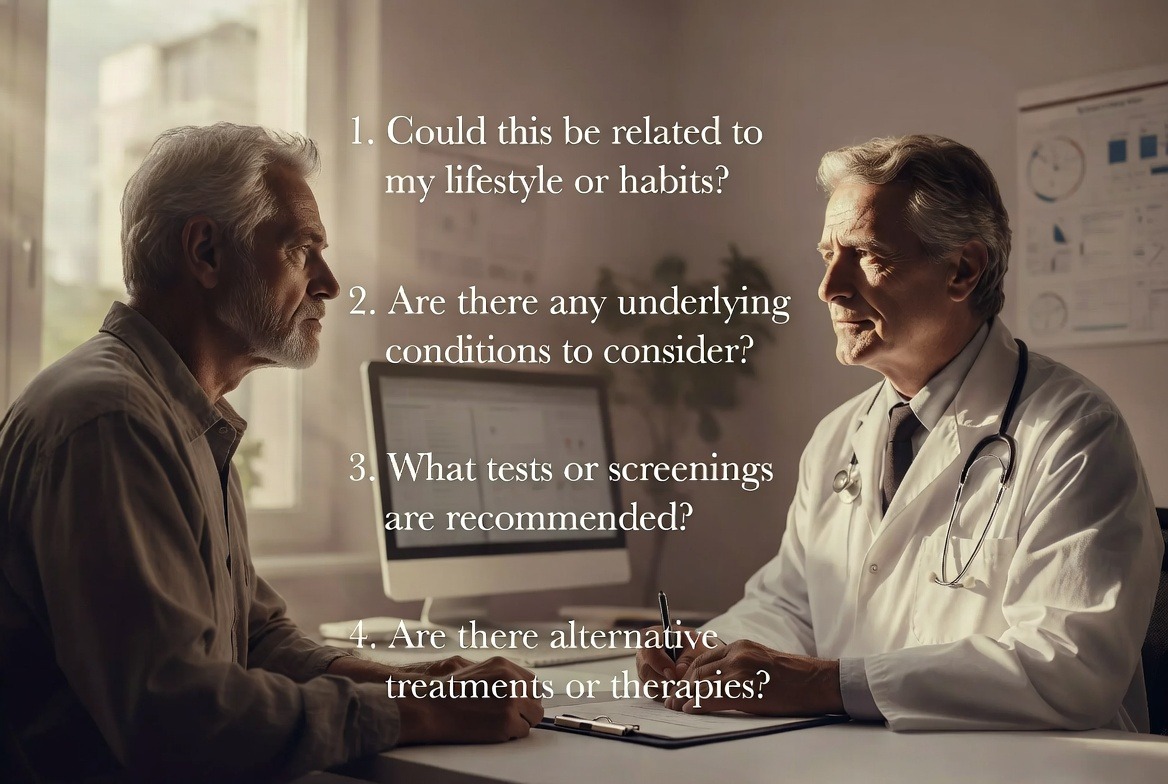
You now know more about the treatable causes of fatigue than the average GP has time to consider in a fifteen-minute appointment. That knowledge is power, but only if you use it. And using it means walking into your next GP appointment prepared to advocate for yourself.
Here are the four questions every Australian over fifty-five should ask their GP when they hear “it’s just age.”
This is the simplest question on the list, and it’s the one most likely to uncover something treatable. A full blood count (FBC) measures your haemoglobin, red blood cell count, white blood cell count, and platelet count. Iron studies measure your ferritin (stored iron), serum iron, and transferrin saturation. B12 and folate are essential vitamins for red blood cell production and neurological function.
Why this question matters: Anaemia is common in older adults, but it is not normal. If your haemoglobin is low, the next question is why. Iron deficiency is the most common cause, but it could also be B12 deficiency, folate deficiency, anaemia of chronic disease, or something more serious. The point is not to diagnose yourself. The point is to start the investigation.
What to say: “I’ve been feeling really tired, and I’d like to rule out anaemia as a cause. Could you order a full blood count, iron studies, B12, and folate?”
Hypothyroidism is so common in older women—and sufficiently common in older men—that it should be on every fatigue workup. The test is simple: a blood draw measuring thyroid-stimulating hormone (TSH) and free T4. If TSH is high and free T4 is low, you have hypothyroidism. Treatment is a daily pill. Improvement is often dramatic.
What to say: “I’d also like to rule out thyroid problems. Can you check my TSH and free T4?”
Obstructive sleep apnoea is the most common undiagnosed condition in older Australians, and the only way to diagnose it is with a sleep study. Home sleep studies are now widely available—you don’t necessarily need to spend a night in a hospital sleep lab. The device records your oxygen saturation, heart rate, breathing effort, and body position while you sleep in your own bed.
What to say: “I’m worried I might have sleep apnoea. I snore, I wake up tired, and I sometimes wake up gasping. Could you refer me for a sleep study?”
Atrial fibrillation and early heart failure are both common causes of fatigue in older adults, and both are detectable with non-invasive cardiac testing. An ECG (electrocardiogram) takes thirty seconds and can detect AF if it’s present at that moment. An echocardiogram (ultrasound of the heart) takes twenty minutes and can detect structural heart disease, including heart failure with preserved ejection fraction.
The challenge is that AF is often intermittent. A single ECG in the GP’s office might miss it entirely. That’s where longer-term monitoring comes in. If your symptoms are intermittent, ask about ambulatory monitoring—a Holter monitor for twenty-four to forty-eight hours, or a longer-term patch monitor for up to fourteen days. Learn how continuous monitoring can catch arrhythmias that office visits miss.
What to say: “Given my fatigue and my age, I’d like to rule out heart problems. Can we do an ECG and an echocardiogram? And if the ECG is normal but my symptoms continue, could we consider longer-term monitoring?”
Let’s be realistic: Walking into a GP’s office and demanding four tests could come across as confrontational. That’s not the goal. The goal is partnership. Most GPs want to help. They’re just time-poor and working within a system that doesn’t reward exhaustive fatigue workups.
Try this framing instead: “Doctor, I know you’re busy, and I appreciate everything you do for me. I’ve been doing some reading about fatigue in older adults, and I’ve learned that a lot of treatable conditions get blamed on age. I’d really like to rule out some of the common ones—anaemia, thyroid problems, sleep apnoea, and heart issues. Could we start with some blood work and go from there?”
Most GPs will respond well to this. You’re not telling them how to do their job. You’re asking for their help in ruling out specific conditions. You’re being proactive, not demanding. And you’re bringing them evidence—this article, if nothing else—that supports your request.
If your GP refuses to order basic tests or refer you for a sleep study, you have options. You can ask them to document their refusal in your medical record. Sometimes that alone changes the calculus. You can seek a second opinion from another GP. You can see a different doctor within the same practice. Or you can use a private telehealth service that specialises in preventive health.
But here’s the most important thing: Don’t accept “it’s just age” as a final answer. It is not a diagnosis. It is a dismissal. And you deserve better.
You’ve read the research. You know the conditions. You have the questions for your GP. Now let’s talk about what you can do yourself—starting tonight, without a prescription, without a referral, without anyone’s permission.
The thesis of this article is simple: Most fatigue in older Australians is caused by treatable conditions, not by age itself. But you can’t treat what you don’t measure. And the Australian healthcare system is not set up to measure the things that matter most for fatigue. GPs see you for fifteen minutes a year. Your body sends signals twenty-four hours a day. That mismatch is the problem.
Closing that gap requires a different approach—one that puts continuous, passive monitoring in your hands. Here’s a framework for doing that.
Resting Heart Rate: Track your average resting heart rate over seven-day periods. Look for trends, not single measurements. A gradual increase of five to ten beats per minute over six months warrants investigation.
Heart Rate Variability: Track your average nighttime HRV. A smart ring or wrist-worn device that measures HRV during sleep is ideal because the measurements are consistent and unaffected by daytime stressors. Look for your seven-day average. A sustained drop of twenty percent or more from your baseline warrants attention.
Sleep Duration and Efficiency: Track how long you’re in bed and how long you’re actually sleeping. Sleep efficiency below eighty percent—meaning more than ninety minutes awake during an eight-hour sleep period—is a red flag.
Overnight Oxygen Saturation: Track your lowest oxygen saturation and the percentage of time you spend below ninety percent. Repeated drops below ninety percent suggest sleep apnoea.
Respiratory Rate: Track your resting respiratory rate during sleep. A rate consistently above twenty breaths per minute—or a rate that has increased significantly over time—warrants investigation.
Activity Levels: Track your daily step count and active minutes. A gradual decline in activity over months often precedes—and may partially cause—fatigue. The question is whether you’re tired because you’re inactive or inactive because you’re tired. Either way, the data helps.
The goal is not to obsess over daily numbers. The goal is to identify meaningful trends. Review your data weekly for obvious anomalies. Review monthly averages for longer-term trends. Bring three to six months of data to your GP appointment. A GP who sees a six-month trend of declining HRV and increasing resting heart rate is far more likely to take your fatigue seriously than a GP who hears “I feel tired.”
When you see a concerning trend, you have two options. First, you can try a lifestyle intervention and see if the data improves. Increase your exercise. Improve your sleep hygiene. Reduce alcohol—read what alcohol actually does to your HRV. Manage stress. If the data improves, you’ve confirmed that lifestyle factors were contributing. If the data doesn’t improve, it’s time to see your GP.
Second, you can take the data directly to your GP. Print out your seven-day average resting heart rate and HRV for each of the past three months. Show them the trend. Say: “This is my objective data. Something is changing. Can we figure out what?”
You don’t need a wearable to implement this framework. A simple log of your energy levels, sleep quality, and exercise would be better than nothing. But the evidence is clear: Passive, continuous monitoring produces better data than active logging. People forget to log. They underestimate how tired they were. They misremember their sleep quality. The data from a device is imperfect, but it is far less imperfect than human memory.
If you choose to use a wearable, look for one that measures HRV during sleep, tracks overnight oxygen saturation, and provides raw data that you can share with your GP. Visit our main storefront to explore options designed specifically for this use case.
You are not supposed to feel terrible. You are not supposed to be exhausted all the time. You are not supposed to accept decline as inevitable. The evidence is overwhelming: Most fatigue in Australians over fifty-five is caused by treatable conditions that have been misattributed to age. And the first step toward treatment is measurement.
Start tonight. Track your sleep. Look at your numbers. And when you see something that doesn’t look right, ask the question that too few Australians over fifty-five ask: What if this isn’t age? What if this is something I can fix?
Because the answer, more often than not, is yes. Yes, you can fix it. Yes, you can feel better. Yes, you can stop apologising for your fatigue and start living your life again. Not because you’re twenty-five. Not because you’re denying the reality of getting older. But because you’ve finally stopped believing the lie that feeling terrible is just part of the deal.
It isn’t. And now you know how to prove it.
Find out if what you’re feeling is age — or something else entirely. Your data has the answer. It’s time to listen.

Let’s talk about a pattern that every GP in Australia has seen but few have studied systematically. A husband and wife in their mid-sixties sit in the consultation room. The wife has been on thyroid medication for a decade. She had her iron checked last year. She did a sleep study when her snoring started affecting her husband’s sleep. She sees the cardiologist every two years because her father died of a heart attack at sixty-eight.
The husband has not seen a doctor in four years. He doesn't have a regular GP. He came today because his wife made the appointment. His chief complaint is "just tired, but that's normal at my age, isn't it?"
It is not normal. But the likelihood that this man will receive the same diagnostic workup as his wife is remarkably low. And the reasons are not medical. They are cultural.
Data from the Australian Institute of Health and Welfare tells a stark story. Women over fifty-five are three times more likely than men to be treated for hypothyroidism. They are twice as likely to have a documented iron study in the past five years. They are 1.7 times more likely to have undergone a sleep study. They are 1.5 times more likely to have had an echocardiogram in the past three years.
There are legitimate biological reasons for some of these differences. Hypothyroidism is genuinely more common in women. Iron deficiency anaemia is more common in premenopausal women due to menstrual blood loss, though this difference narrows after menopause. But the magnitude of the gap—particularly for sleep studies and cardiac imaging—far exceeds what biology alone can explain.
What explains the gap is something else entirely: the cultural expectation that men do not complain, do not see doctors, and do not acknowledge physical vulnerability unless forced to do so. The "she'll be right" attitude that Australians celebrate in our national mythology becomes, in the context of health after fifty-five, a death sentence.
Consider Brian, a sixty-seven-year-old former truck driver from Newcastle. His wife Margaret—yes, the same Margaret from our introduction—noticed his fatigue years before he did. He fell asleep in his chair every night by 8:00 PM. He stopped wanting to go out in the evenings. He told her he was fine. He told his doctor he was fine. He was not fine.
It took a cardiac event—a bout of atrial fibrillation that landed him in the emergency department—to force the investigation that should have happened years earlier. The workup revealed severe obstructive sleep apnoea (AHI of fifty-four), previously undiagnosed hypertension, and early heart failure with preserved ejection fraction. Three conditions. All treatable. All missed because Brian had internalised the same message as Margaret, but with an added layer of masculine stoicism that made him even less likely to seek help.
Within a year of starting CPAP, blood pressure medication, and a supervised exercise programme, Brian had lost twelve kilograms, stopped falling asleep in his chair, and started walking the dog every morning. He is not twenty-five. He is not even sixty-seven anymore—he is sixty-eight, and he is in better health than he was at sixty-five. Because the problem was never his age. The problem was the undiagnosed conditions that had been hiding behind his age.
If you are the adult child of an ageing parent—particularly an ageing father—you are in a unique position to intervene. Your parent may not listen to their own body. They may not listen to their GP. They may not even listen to their spouse. But many will listen to their children.
The question is not whether your parent is "complaining" about fatigue. The question is whether they are functioning at a level that is consistent with healthy ageing. Can they walk four hundred metres without stopping? Can they climb a flight of stairs without chest pain or severe breathlessness? Can they stay awake through a two-hour movie? If the answer to any of these questions is no, something is wrong. And that something is probably treatable.
Here is what you can do: Offer to attend a GP appointment with your parent. Frame it as support, not surveillance. "Dad, I know you've been feeling tired lately. I'd like to come with you to the doctor so we can both understand what's going on." Bring a list of the five conditions we discussed earlier. Ask the questions we outlined in the previous section. And do not accept "it's just age" as an answer.
The research on family-mediated health advocacy is clear: Older adults who attend medical appointments with a family member receive more diagnostic testing, more treatment recommendations, and better outcomes than those who attend alone. Your presence changes the dynamic. Use it.
Read about the FIFO workers whose hearts are ageing faster than their birthdays — a different population, but the same principle: measurable biometric age versus chronological age.
We have focused primarily on organic disease—OSA, anaemia, hypothyroidism, AF, heart failure. But there is another category of fatigue that is equally real, equally treatable, and equally misattributed to age: chronic stress.
The word "stress" has become so overused that it has almost lost its meaning. But what we are talking about here is not the ordinary tension of a busy life. We are talking about chronic, low-grade, all-day sympathetic nervous system activation. The kind that keeps your heart rate elevated from the moment you wake up until the moment you (try to) fall asleep. The kind that makes you feel tired but wired—exhausted but unable to rest.
Your autonomic nervous system has two gears. Parasympathetic (rest and digest) is the default. It is the gear your body should be in when you are sitting at your desk, watching television, or lying in bed. Sympathetic (fight or flight) is the emergency gear. It is designed for short bursts—running from a predator, slamming on the brakes, giving a presentation.
Chronic stress keeps you in sympathetic gear even when no emergency exists. Your body behaves as though you are constantly being chased, even though you are sitting perfectly still. And this has measurable, predictable effects on your biometric data.
A stressed sixty-two-year-old sitting at a desk will often have a resting heart rate of eighty-five to ninety-five beats per minute—the same heart rate as a healthy person who just finished a light jog. Their heart rate variability will be low, often below fifteen milliseconds, because the sympathetic nervous system has suppressed the parasympathetic brake. Their respiratory rate will be elevated, often above twenty breaths per minute. Their sleep will be fragmented, with reduced deep sleep and REM sleep. And they will wake up exhausted, because sleep cannot be restorative when the nervous system never truly powers down.
Australia has a stress problem that we do not talk about enough. The 2023 Australian Psychological Society Stress and Wellbeing Survey found that Australians over fifty-five reported higher average stress levels than any other age group except young adults. The sources of stress were not what you might expect. Financial concerns ranked first. Health concerns ranked second. Concerns about ageing parents (for those in their fifties and early sixties) and concerns about being a burden on adult children (for those in their late sixties and beyond) ranked third and fourth.
There is a particular flavour of Australian stress that does not translate well to other cultures. It is the stress of the "sandwich generation"—Australians in their fifties and early sixties who are simultaneously caring for ageing parents, supporting adult children who cannot afford to leave home, and worrying about their own retirement savings. It is the stress of the "ageing quietly" generation—Australians in their late sixties and beyond who have been told their whole lives not to make a fuss, not to complain, not to take up space, and who are now suffering in silence.
And it is the stress of unrecognised grief—the grief of losing physical capacity, of watching friends die, of confronting mortality in a culture that does not know how to talk about death. That grief has a biometric signature. It shows up in your heart rate, your HRV, your sleep. And it is not ageing. It is a normal response to abnormal circumstances. But it is also treatable.
The link between chronic stress and fatigue is so strong that some researchers have proposed "stress-related exhaustion disorder" as a formal diagnosis. The biometric profile is distinctive: elevated resting heart rate (typically eighty-five to one hundred), very low HRV (often below ten milliseconds), elevated respiratory rate (twenty to twenty-four breaths per minute), reduced heart rate recovery after exercise (the heart stays elevated for too long), and a flattened overnight heart rate dip (the heart rate does not drop as much as it should during sleep).
A 2021 study from the Black Dog Institute followed 450 Australians aged fifty-five to seventy-five with chronic stress and fatigue. The researchers measured HRV and cortisol levels (a stress hormone) at baseline and after a twelve-week stress management programme. The findings: Participants with the lowest HRV at baseline had the highest cortisol levels and the most severe fatigue. After twelve weeks of intervention—a combination of cognitive behavioural therapy, mindfulness, and lifestyle modification—HRV increased by an average of eighteen percent, and fatigue scores improved by forty percent.
The takeaway is not that stress is "all in your head." The takeaway is that stress is in your body, it is measurable, and it is treatable. Learn how stressed Australians have the heart rate of someone who just ran a sprint while sitting still at their desk — and what to do about it.
If your fatigue is driven by chronic stress rather than organic disease, the treatment is different. You still need the diagnostic workup—OSA, anaemia, thyroid, AF, heart failure must be ruled out. But once those are excluded, the focus shifts to nervous system regulation.
The most effective interventions for stress-related fatigue in older adults are not medications. They are behavioural. Heart rate variability biofeedback—using a device that shows you your HRV in real time while you practice slow, diaphragmatic breathing—has the strongest evidence base. A 2019 meta-analysis found that HRV biofeedback reduced fatigue by an average of thirty-five percent in older adults with stress-related exhaustion.
Other evidence-based interventions include: mindfulness-based stress reduction (eight weeks, two hours per week, shown to increase HRV by twelve to fifteen percent in older adults), regular aerobic exercise (the LEAF trial data applies here as well), and sleep hygiene (consistent bedtimes, no screens before bed, cool dark room). Social connection matters more than most people realise—loneliness is a potent driver of sympathetic activation, and regular social engagement has been shown to increase HRV by eight to ten percent in older adults.
The common thread is this: Your nervous system learned to be stuck in sympathetic gear. It can learn to come back to parasympathetic. But learning takes practice. And practice requires measurement. You cannot change what you do not track.
We have covered five major conditions misattributed to age. Here is a sixth that deserves its own attention, not because it is less important, but because it is so common and so frequently missed: prediabetes and undiagnosed type 2 diabetes.
The statistics are staggering. According to the Australian Bureau of Statistics, approximately 3.3 million Australians have prediabetes—defined as blood glucose levels that are higher than normal but not yet high enough to be diagnosed as diabetes. Of those 3.3 million, the vast majority do not know they have it. And the most common symptom of prediabetes? Fatigue.
To understand why prediabetes makes you tired, you need to understand what insulin does. Insulin is the hormone that moves glucose (sugar) from your bloodstream into your cells, where it is used for energy. In prediabetes, your cells become resistant to insulin. They stop responding to the signal. Your pancreas responds by producing more insulin to force the glucose into the cells. For a while, this works. Your blood glucose remains normal, but your insulin levels are high.
The problem is that high insulin levels are themselves metabolically disruptive. They promote inflammation, which causes fatigue. They disrupt mitochondrial function—the energy-producing factories inside your cells—which causes fatigue. They interfere with sleep quality, which causes fatigue. And they create a vicious cycle: fatigue makes you less active, less activity worsens insulin resistance, worse insulin resistance causes more fatigue.
By the time your blood glucose rises enough to be diagnosed as diabetes, you have often been living with fatigue for years. The fatigue is not the diabetes. The fatigue is the insulin resistance that precedes the diabetes by five to ten years. And that insulin resistance is detectable with a simple blood test that most GPs do not order routinely.
The standard screening test for diabetes is the fasting blood glucose or the HbA1c (a measure of average blood glucose over three months). These tests are useful, but they miss early insulin resistance. By the time fasting glucose is elevated, your insulin resistance has been present for years.
The better test—the one that catches prediabetes early—is the fasting insulin level combined with the HOMA-IR score (a calculation that estimates insulin resistance from fasting glucose and fasting insulin). A high fasting insulin with normal glucose is the signature of early insulin resistance. It is the signal that your pancreas is working overtime to keep your blood sugar normal. And it is the moment when lifestyle intervention—diet and exercise—can reverse the trajectory entirely.
Ask your GP for a fasting insulin and HOMA-IR. Most will order it without argument if you explain why. If they refuse, ask them to document the refusal. Then find a GP who will order it.
Insulin resistance has a distinctive biometric signature that continuous monitoring can detect before blood tests become abnormal. The most reliable signal is heart rate variability. Insulin resistance is an inflammatory condition, and chronic inflammation suppresses HRV. A person with significant insulin resistance will often have an HRV that is ten to fifteen milliseconds lower than expected for their age, even when all other blood markers are normal.
Other biometric signals include: elevated resting heart rate (insulin resistance increases sympathetic tone), reduced heart rate recovery after exercise (the heart takes longer to slow down), and fragmented sleep with reduced deep sleep (insulin resistance disrupts the normal sleep architecture).
A 2022 study from the Baker Heart and Diabetes Institute in Melbourne followed 850 Australians aged fifty-five to seventy-five with normal fasting glucose but elevated fasting insulin. The participants who used continuous glucose monitors (CGMs) and wearable heart rate monitors were able to see, in real time, how their diet and activity affected their glucose and HRV. Those who used the devices reduced their insulin resistance by twenty-five percent over six months—simply by seeing the data and adjusting their behaviour accordingly.
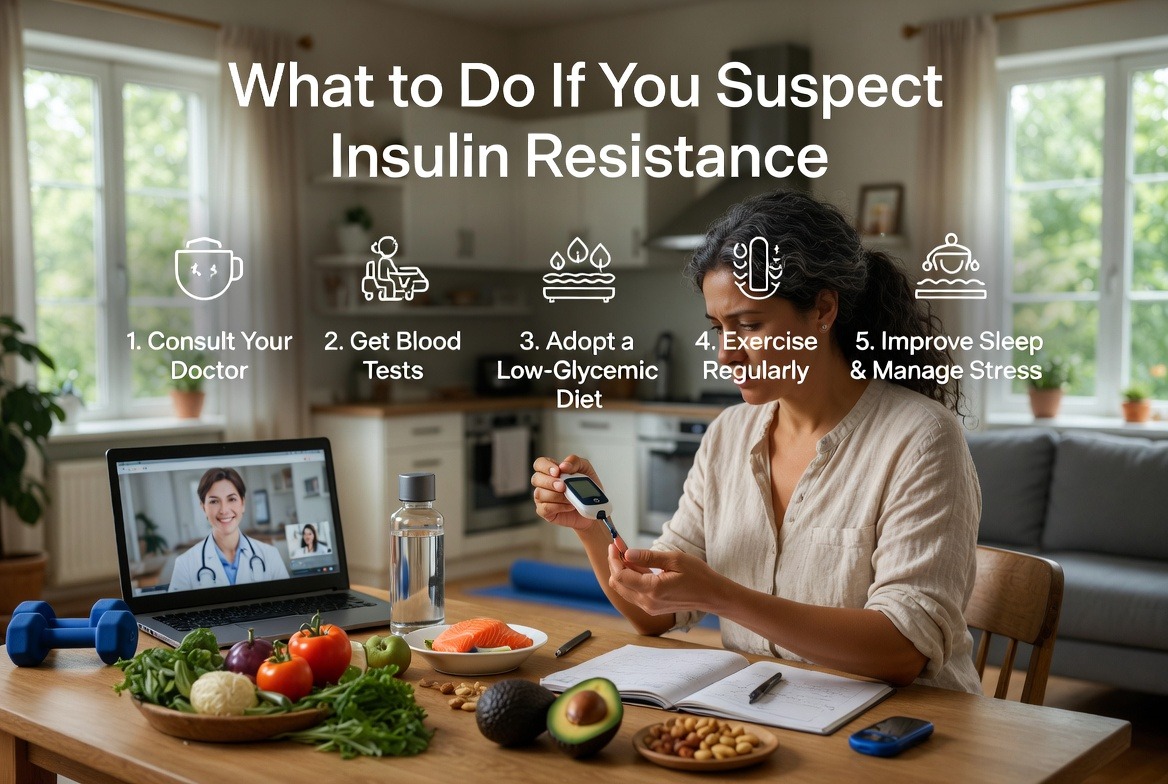
If you have fatigue, especially fatigue that worsens after meals or in the mid-afternoon, and especially if you carry excess weight around your abdomen, suspect insulin resistance. The diagnostic pathway is clear: ask your GP for fasting glucose, fasting insulin, and HbA1c. If fasting insulin is above ten mIU/L (the optimal range is below eight), you have insulin resistance regardless of what your glucose shows.
The treatment for insulin resistance is not medication—not yet. The treatment is lifestyle. Reduce refined carbohydrates and added sugars. Increase protein and fibre. Exercise after meals, when glucose spikes are highest. And track your data. A smart ring that measures HRV and sleep quality can show you, within weeks, whether your interventions are working. HRV will increase. Resting heart rate will drop. Sleep quality will improve. And the fatigue will lift.
Discover whether you might be one of the 3.3 million Australians with prediabetes — and how to find out tonight.
Here is a cruel irony that few doctors mention and fewer patients consider: Some of the medications prescribed to older Australians for otherwise manageable conditions cause fatigue as a primary side effect. The patient takes a medication for high blood pressure, high cholesterol, or depression. The medication works for its intended purpose. But the patient feels exhausted. The exhaustion is attributed to age. And no one thinks to question whether the medication itself is the cause.
Several classes of medications are well-documented causes of fatigue in older adults. Beta-blockers (medications ending in "-lol," such as metoprolol, atenolol, and propranolol) lower heart rate and blood pressure by blocking the effects of adrenaline. This is exactly what they are supposed to do. But for many patients, the reduction in heart rate is accompanied by a profound sense of fatigue, particularly during exercise. The heart simply cannot speed up enough to meet the demands of physical activity.
Statins (atorvastatin, rosuvastatin, simvastatin) lower cholesterol by inhibiting an enzyme in the liver. They are among the most prescribed medications in Australia. And they cause fatigue in approximately ten to fifteen percent of users, usually through their effect on muscle energy production. The patient feels tired, their muscles feel weak, and they attribute it to age—because no one told them that statins can cause these symptoms.
Antidepressants, particularly SSRIs (fluoxetine, sertraline, escitalopram), are prescribed to older adults for depression, anxiety, and sometimes for sleep. They are effective. But they also suppress REM sleep and can cause daytime sedation. The patient sleeps eight hours but wakes up exhausted because their sleep architecture has been flattened by medication.
Antihistamines, particularly first-generation antihistamines (diphenhydramine, promethazine, doxylamine), are often used as sleep aids. They are sedating by design. But they also reduce deep sleep and REM sleep, leaving the patient with sleep that feels long but is not restorative. The patient thinks they are sleeping well because they are unconscious. They are not sleeping well. Their sleep quality is poor. And they wake up exhausted.
If you are over fifty-five and taking any medication daily—prescription or over-the-counter—you need a formal medication review. This is not a conversation where you ask your GP "is this medication necessary?" and they say "yes" and you move on. This is a systematic review of every medication you take, including dose, timing, and potential side effects.
The best time for this review is when you are experiencing fatigue that has been attributed to age. The question is not whether the medication is necessary. The question is whether the medication is contributing to your fatigue, and if so, whether there are alternatives.
Beta-blockers can sometimes be switched to alternative blood pressure medications (ACE inhibitors, ARBs, calcium channel blockers) that do not cause fatigue. Statin-induced fatigue can sometimes be managed by switching to a different statin (pravastatin and fluvastatin are less likely to cause fatigue than atorvastatin or rosuvastatin) or by reducing the dose. SSRI-induced fatigue can sometimes be managed by switching to a different antidepressant (bupropion is not sedating, though it is not first-line in older adults) or by taking the SSRI at night instead of in the morning.
The key is that none of these conversations happen if you accept "it's just age" as the explanation for your fatigue. You have to ask. You have to advocate. And you have to bring data—your biometric data, your symptom log, your timeline—to the conversation.
There is a growing movement in geriatric medicine called "deprescribing"—the systematic reduction or elimination of medications that are no longer necessary or that are causing more harm than benefit. The evidence for deprescribing is strong. A 2020 systematic review found that deprescribing interventions reduced fatigue by an average of twenty percent in older adults taking four or more daily medications.
The challenge is that deprescribing requires time and attention that most GP appointments do not allow. It requires a conversation, not a prescription renewal. It requires a GP who is willing to say "let's try stopping this medication and see what happens" rather than "let's add another medication to manage the side effects of the first one."
If your GP is not willing to have that conversation, find a GP who is. The Royal Australian College of General Practitioners maintains a list of practices with a special interest in medication management and deprescribing. Use it. Your fatigue may be treatable not by adding something, but by taking something away.
We have mentioned sleep quality repeatedly throughout this article. Now let us be specific about what good sleep looks like in biometric data—and what poor sleep looks like in the same data. Because most Australians over fifty-five have never seen their own sleep architecture. They know whether they slept for eight hours. They do not know what happened during those eight hours. And the difference is everything.
Sleep is not a single state. It is a cycling through four distinct stages, each with its own physiological signature and restorative function.
Stage 1 is light sleep, the transition between wakefulness and sleep. It accounts for about five percent of total sleep in healthy adults. Your heart rate slows. Your muscles relax. You can be awakened easily.
Stage 2 is deeper light sleep, accounting for about fifty percent of total sleep. Your heart rate slows further. Your body temperature drops. Your brain produces sleep spindles—bursts of activity that are thought to play a role in memory consolidation.
Stage 3 is deep sleep, also called slow-wave sleep. This is the most restorative stage. Your heart rate and blood pressure drop to their lowest levels. Your body releases growth hormone. Your immune system is activated. Your brain clears metabolic waste products, including the beta-amyloid protein associated with Alzheimer's disease. Deep sleep accounts for about fifteen to twenty-five percent of total sleep in young adults, declining to five to ten percent in healthy older adults.
REM (rapid eye movement) sleep is the stage associated with dreaming. Your heart rate and blood pressure become irregular, similar to waking levels. Your brain is highly active, processing emotions and consolidating memories. REM sleep accounts for about twenty percent of total sleep.
As you age, several changes occur in sleep architecture that are genuinely normal. Deep sleep declines. You spend less time in stage 3 and more time in stage 1 and stage 2. You wake up more often during the night, and these awakenings become longer. Your circadian rhythm shifts earlier—you get tired earlier in the evening and wake up earlier in the morning.
These changes are real. They are part of healthy ageing. But they are modest. A healthy sixty-five-year-old should still get sixty to ninety minutes of deep sleep per night. They should still have sleep efficiency above eighty percent. They should still spend about twenty percent of their sleep in REM.
What is not normal is the complete absence of deep sleep. What is not normal is sleep efficiency below seventy percent. What is not normal is spending more than thirty percent of the night awake. What is not normal is having no REM sleep or REM sleep that is severely fragmented.
If you are wearing a device that tracks sleep stages, here is what you are looking for. Deep sleep below five percent of total sleep time is a red flag. REM sleep below fifteen percent of total sleep time is a red flag. Sleep efficiency below eighty percent is a red flag. More than three awakenings per hour (an arousal index above three) is a red flag.
But the most important metric for most older adults with fatigue is not deep sleep or REM sleep. It is the overnight heart rate pattern. In healthy sleep, your heart rate drops significantly when you enter deep sleep—often by ten to twenty beats per minute below your waking resting heart rate. It then rises slightly during REM sleep, but not back to waking levels. In poor sleep—whether from OSA, stress, or medication—your heart rate stays elevated all night. It never drops into the deep sleep zone. Your body never gets the restorative signal that it is safe to rest.
You can feel this even if you cannot see it. You wake up tired because your nervous system never powered down. You feel like you ran a marathon in your sleep because, in a physiological sense, you did. Your heart was working all night. Your sympathetic nervous system was activated all night. You were never truly at rest.
The treatment depends on the cause. If overnight oxygen drops are the problem, the treatment is a sleep study and likely CPAP. If the problem is stress and sympathetic activation, the treatment is HRV biofeedback, mindfulness, and sleep hygiene. If the problem is medication, the treatment is a medication review and deprescribing. If the problem is alcohol—and alcohol severely disrupts deep sleep and REM sleep even in small amounts—the treatment is reducing or eliminating alcohol, particularly in the hours before bed.
Read about what alcohol actually does to your HRV, sleep, and recovery — the data will change how you think about that evening glass of wine.
The common thread is measurement. You cannot fix what you cannot see. And you cannot see your sleep architecture without a device that measures it. A smart ring that tracks sleep stages, heart rate, HRV, and oxygen saturation is not a luxury for Australians over fifty-five. It is a necessity. Because without it, you are flying blind. And flying blind is how you end up believing that feeling terrible is just part of getting older.
This section is for the adult children reading this article—the ones who have watched their parents shrink, slow down, and accept decline as inevitable. You are in a difficult position. You cannot force your parent to see a doctor. You cannot force them to wear a device. You cannot make them care about their health if they have decided that decline is just part of the deal.
But you can have a conversation. And how you have that conversation matters more than anything else.
Before you can change your parent's mind, you need to understand why they believe what they believe. Your parent grew up in a generation that did not talk about health the way we do now. They were taught not to complain, not to be a burden, not to take up space in the healthcare system unless something was obviously broken. They have watched their own parents and older friends decline and die, and they have drawn the reasonable conclusion that decline and death are inevitable.
Your parent also has something you do not have: decades of experience watching the medical system fail the people they love. They have seen friends undergo aggressive treatments that did not work. They have watched acquaintances spend their last years shuttling between specialists. They have internalised a deep skepticism about whether "doing something" is actually better than "doing nothing."
When your parent says "it's just age," they are not making a medical statement. They are making an existential statement. They are saying: I have made my peace with decline. I do not want to spend my remaining years chasing treatments and seeing doctors. I would rather accept my limitations than fight a battle I am not sure I can win.
You cannot argue with that. It is not a logical position. It is an emotional position. And you will not change it with data or evidence or articles like this one.
Instead of trying to convince your parent that they are wrong about their own body, try a different approach. Do not argue. Do not correct. Do not lecture. Instead, ask questions. Genuine, curious, non-judgmental questions.
"Dad, when you say you're tired, what does that actually feel like? Is it a physical tiredness, like your muscles are heavy? Or is it a mental tiredness, like you can't concentrate?"
"Mom, do you remember a time when you had more energy? What was different then?"
"Dad, if there was something that could help you feel better—not cure you, not make you twenty-five again, just help you feel a bit better—would you want to know about it?"
The goal of these questions is not to win an argument. The goal is to open a door. To create a crack in the "it's just age" narrative through which a different possibility might enter.
If your parent is open to the conversation, the most powerful tool you have is not persuasion. It is data. Not your data—their data. And not data that you present as proof that they are wrong. Data that you present as a neutral observation about what is happening in their body.
If you can get your parent to wear a device that tracks sleep, heart rate, and HRV for even a week, you will have objective information that neither of you can argue with. You can say: "Dad, your device shows that your oxygen level drops below ninety percent thirty times every night. That's not an opinion. That's a measurement. And there are treatments for that."
The device becomes the messenger, not you. You are no longer the child telling the parent what to do. You are the ally helping the parent interpret data that belongs to them.
Ultimately, you cannot make your parent change. You can only make offers. Here is the offer that many adult children have found their parents can accept:
"Dad, I'm not asking you to do anything drastic. I'm not asking you to see five specialists or change your whole life. I'm asking you to let me come with you to one GP appointment. One hour. We'll tell the doctor that you've been tired, and we'll ask them to run some basic tests. If the tests are all normal, we'll drop it. I'll never mention it again. But if something comes back abnormal, we'll talk about what to do next. That's all I'm asking. One appointment."
Most parents can accept this offer. It is low stakes. It has an off-ramp. It respects their autonomy. And it gives you the opportunity to ask the four questions from earlier in this article.
Read about the statistic that should change how every Australian parent thinks about their kids' sleep — the reverse perspective, but the same principle: data changes minds.
It would be easy to end this article with a simple villain: the GP who says "it's just age." But that would be inaccurate and unfair. Most Australian GPs are overworked, underpaid, and doing their best in a system that actively discourages the kind of comprehensive fatigue workup we have described.
Understanding the constraints your GP is working under will help you work with them more effectively—and know when to seek care elsewhere.
The average Australian GP appointment lasts fifteen minutes. In that time, the GP must: greet you, review your history, ask about your presenting complaint, perform a physical examination if indicated, order tests or make referrals, document everything in your medical record, prescribe medications if needed, and answer your questions.
Fifteen minutes is not enough time to work up fatigue. Fatigue is a non-specific symptom that could be caused by dozens of conditions. A proper fatigue workup requires a detailed history (when did it start? what makes it worse? what makes it better? how does it affect your daily function?), a review of medications, a physical examination, and usually multiple tests.
In fifteen minutes, a GP cannot do all of that. So they do what the system incentivises them to do: they triage. If you are over fifty-five and you mention fatigue without any red flags (weight loss, night sweats, blood in your stool, chest pain), the path of least resistance is to say "it's probably just age" and move on to the next patient.
This is not malice. This is the predictable outcome of a system that pays GPs per patient seen, not per problem solved.
Medicare does not pay for comprehensive fatigue workups. It does not pay for the thirty-minute appointment that would allow a GP to take a proper history. It does not pay for the care coordination required to manage a patient with OSA, anaemia, and hypothyroidism simultaneously. It does not pay for the phone call to the sleep specialist to expedite a referral. It does not pay for the time spent reviewing home sleep study data.
The system pays for volume. So GPs produce volume. And volume means fifteen-minute appointments. And fifteen-minute appointments mean "it's just age."
Knowing all of this, here is how you get the care you need despite the system.
First, book a long appointment. Most GP practices offer extended appointments of twenty to thirty minutes for an additional fee. Pay it. The out-of-pocket cost is worth the diagnostic yield.
Second, come prepared. Bring a written list of your symptoms, when they started, and how they affect your life. Bring a list of your medications. Bring a list of the tests you want to discuss. Bring the four questions from earlier in this article. The more prepared you are, the more efficient the appointment will be.
Third, consider a private GP practice that offers membership or concierge models. These practices charge higher fees but offer longer appointments, better access, and more comprehensive care. For patients with complex or chronic conditions, the additional cost is often worth it.
Fourth, use technology. A smart ring that tracks your biometrics generates data that your GP can review in seconds. A seven-day summary of your HRV, resting heart rate, and oxygen saturation takes less than a minute to interpret. That data replaces the fifteen-minute history that the GP does not have time to take.
If your GP has ruled out the common causes of fatigue—or if your GP is unwilling to do the workup—consider seeing a specialist directly. You do not need a referral to see a private sleep specialist, cardiologist, or endocrinologist in Australia, though you will pay more without a referral and Medicare rebate.
A sleep physician can order a home sleep study and interpret the results. A cardiologist can order an echocardiogram and longer-term rhythm monitoring. An endocrinologist can order the full thyroid and metabolic workup. A geriatrician—a doctor specialising in the health of older adults—can coordinate all of it.
The cost of a private specialist appointment is significant, typically $200 to $400 after the Medicare rebate. But compared to years of unnecessary fatigue and decline, it is a bargain.
Visit our FAQ page for answers to common questions about using biometric data in the Australian healthcare system, including how to share your data with your GP and when to seek a second opinion.
You have read nearly nine thousand words. You know the conditions, the tests, the questions, the data. Now let us put it all together into a practical, six-month plan for the Australian over fifty-five who refuses to accept decline.
Start by measuring what you can measure without a doctor. If you do not already have a device that tracks sleep, heart rate, HRV, and oxygen saturation, get one. Wear it every night for thirty days. Do not change anything about your behaviour. Just collect data.
At the end of thirty days, review your data. What is your average resting heart rate? Your average HRV? Your sleep efficiency? Your overnight oxygen saturation? Write these numbers down. They are your baseline.
If your device shows red flags—resting heart rate above eighty, HRV below fifteen milliseconds, sleep efficiency below seventy percent, oxygen drops below ninety percent—you have objective evidence that something is wrong. You are not guessing. You are not complaining. You have data.
Book a long appointment with your GP. Bring your data. Bring the four questions. Ask for the tests: full blood count, iron studies, B12, folate, TSH, free T4, fasting glucose, fasting insulin, HbA1c. Ask for a referral for a sleep study and an echocardiogram.
If your GP orders the tests, great. If they refuse, ask them to document the refusal. Then find a GP who will order them.
By the end of month three, you should have results from your blood work, your sleep study, and your echocardiogram. You may have a diagnosis. You may have multiple diagnoses. You may have no diagnosis—all tests normal, but you still feel terrible.
If you have a diagnosis, you have a treatment pathway. OSA gets CPAP or an oral appliance. Anaemia gets iron or B12. Hypothyroidism gets levothyroxine. AF gets rate control or rhythm control. Heart failure gets diuretics and blood pressure medications. Prediabetes gets lifestyle intervention. Stress gets HRV biofeedback and mindfulness.
Your Trusted Sleep Advocate (Sleep Foundation — https://www.sleepfoundation.org/)
Discover a digital archive of scholarly articles (NIH — https://www.ncbi.nlm.nih.gov/
39 million citations for biomedical literature (PubMed — https://pubmed.ncbi.nlm.nih.gov/)
experts at Harvard Health Publishing covering a variety of health topics — https://www.health.harvard.edu/blog/)
Every life deserves world class care (Cleveland Clinic -
https://my.clevelandclinic.org/health)
Wearable technology and the future of predictive health monitoring. (MIT Technology Review — https://www.technologyreview.com/)
Dedicated to the well-being of all people and guided by science (World Health Organization — https://www.who.int/news-room/)
Psychological science and knowledge to benefit society and improve lives. (APA — https://www.apa.org/monitor/)
Cutting-edge insights on human longevity and peak performance
(Lifespan Research — https://www.lifespan.io/)
Global authority on exercise physiology, sports performance, and human recovery
(American College of Sports Medicine — https://www.acsm.org/)
Neuroscience-driven guidance for better focus, sleep, and mental clarity
(Stanford Human Performance Lab — https://humanperformance.stanford.edu/)
Evidence-based psychology and mind–body wellness resources
(Mayo Clinic — https://www.mayoclinic.org/healthy-lifestyle/)
Data-backed research on emotional wellbeing, stress biology, and resilience
(American Institute of Stress — https://www.stress.org/)


