


The Complete Beginner-Friendly Guide to Cellular Vitality: Ring Health Indicators
Cellular vitality as indicated by various health metrics on your ring.
Cellular vitality as indicated by various health metrics on your ring.
%402x.svg)
For decades, health has been a story told in retrospect. A story written in the language of diagnoses, after the fact. We visit the doctor, get a snapshot of our cholesterol, our blood pressure, our weight—a single data point in time, often compared against a broad, population-wide average. This reactive model tells us where we’ve been, not where we’re going. It’s like trying to navigate a complex journey by only looking in the rearview mirror.
But what if you could see the subtle, daily shifts in your body’s fundamental vitality? Not just if you’re sick, but how well you are thriving at the most basic, cellular level? This is the promise of cellular vitality—a proactive, dynamic, and deeply personal understanding of health. It’s the difference between merely avoiding disease and actively cultivating resilience, energy, and longevity.
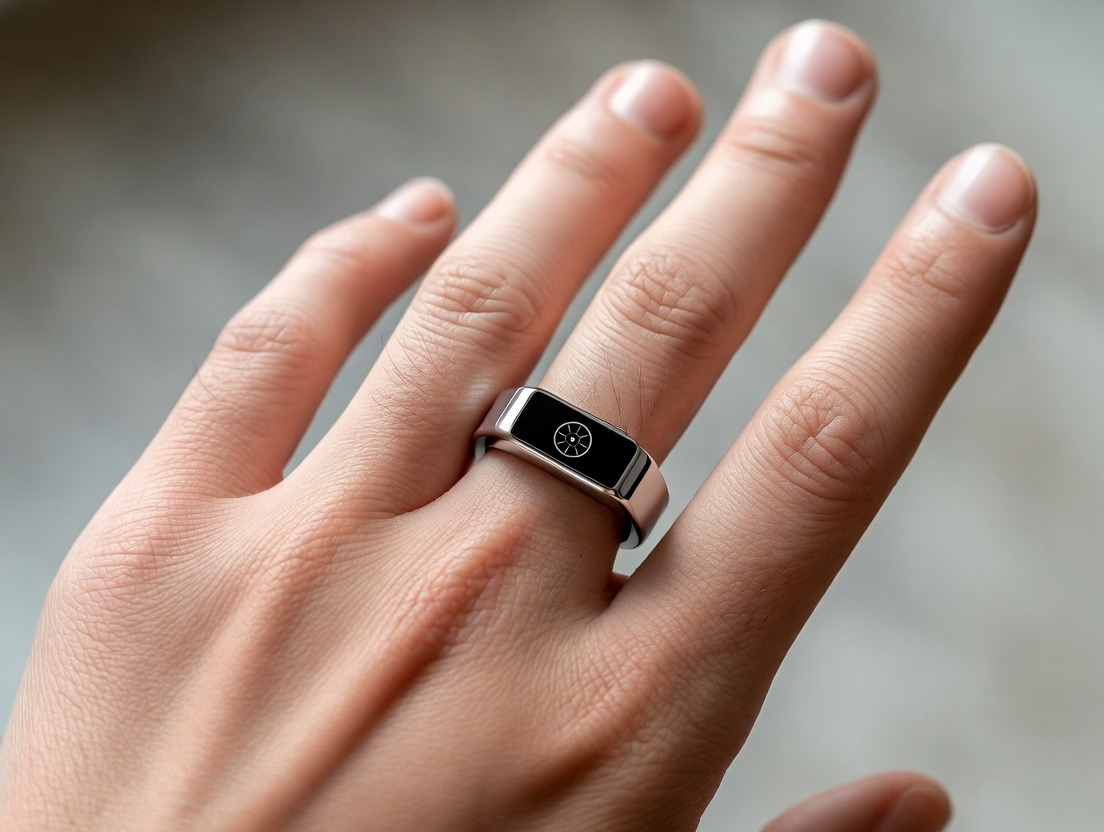
Enter the modern wellness smart ring. This unassuming piece of wearable technology is revolutionizing how we engage with our own biology. Unlike a smartwatch that shouts for attention from your wrist, a smart ring works quietly in the background, gathering a continuous, intimate stream of physiological data while you sleep, work, and live. It translates the silent language of your autonomic nervous system—your heart’s subtle rhythms, your body’s temperature fluctuations, your oxygen saturation—into a clear dashboard of your inner well-being.
This guide is your map to that new frontier. We will move beyond simply tracking steps or sleep hours. We will decode the core health indicators that your smart ring provides, transforming them from abstract numbers into a coherent narrative of your cellular vitality. This is about learning to listen to your body’s whispers, so you never have to hear its screams. It’s the first step toward a future where you are the CEO of your own health, empowered with data to make informed, daily choices that compound into a lifetime of wellness. Let’s begin.

Cellular vitality is the cornerstone of true wellness. It’s not a single metric you can find on a lab report, but rather the emergent property of trillions of individual cells functioning at their optimal capacity. Think of your body as a vast, interconnected city. Cellular vitality isn’t just about whether the buildings are standing; it’s about the efficiency of the power grids, the cleanliness of the water supply, the smooth flow of traffic, and the timely removal of waste. When these systems hum along in harmony, the city thrives. When they falter, dysfunction spreads.
At its core, cellular vitality encompasses:
Why does this microscopic view matter for your life? Because the gradual decline of cellular vitality is the primary driver of aging and the precursor to chronic disease. Fatigue, brain fog, slow recovery from exercise, persistent inflammation, and poor sleep are often the first audible signals of a system operating below its vital potential.
Traditionally, we’ve lacked the tools to measure this in real-time. We wait for symptoms to become severe enough to show up in an annual physical. A wellness smart ring changes this paradigm. By providing continuous, non-invasive monitoring of key physiological signals, it acts as a window into your cellular environment. It allows you to see how your daily choices—a night of poor sleep, a period of intense work stress, a new exercise regimen, a change in diet—directly impact your foundational health metrics.
This shift from episodic to continuous monitoring is foundational for proactive health. It enables you to connect cause and effect in your own life’s laboratory. For a deeper exploration of how this data-driven approach enables proactive, lifelong health management, consider reading about how a wellness ring enables proactive lifelong health. Understanding your cellular vitality isn't about chasing an arbitrary score; it’s about building a resilient system that supports your goals, whether that’s playing with your grandchildren, achieving peak performance, or simply enjoying each day with sustained energy and clarity.
The wearable health tech revolution began on the wrist. Smartwatches brought heart rate monitoring and step counting to the masses. But for those seeking clinical-grade insights into their autonomic nervous system and recovery status, the wrist has inherent limitations. The smart ring’s migration to the finger isn’t just a fashion choice; it’s a fundamental upgrade in data fidelity and user experience, driven by biology and physics.
The key lies in the vascular anatomy of the finger. The palmar digital arteries in your finger are richer and closer to the skin’s surface compared to the radial artery in your wrist. This provides a stronger, cleaner photoplethysmogram (PPG) signal—the optical measurement of blood volume changes that is the foundation for most health metrics. A stronger signal means less noise, fewer motion artifacts, and more reliable data, especially for delicate measurements like Heart Rate Variability (HRV).
Furthermore, the finger is a relatively stable platform. A watch on your wrist is in constant motion as you type, gesture, and move your hands. This creates "noise" that algorithms must filter out. A ring on your finger, particularly during the critical period of sleep when you are still, experiences far less disruptive motion, leading to pristine data capture. This is why sleep data—a cornerstone of recovery assessment—is often significantly more accurate from a ring.
Beyond accuracy, the form factor drives consistency, which is everything in trend analysis. A ring is:
This combination of superior signal acquisition, reduced noise, and consistent wear makes the smart ring a uniquely powerful tool for the continuous monitoring required to assess cellular vitality. It moves health tracking from periodic check-ins to a seamless, always-on background process. To understand exactly what this powerful device on your finger is measuring, you can dive into our detailed resource on health metrics explained: what a smart ring actually measures.
Your smart ring’s app presents a dashboard, but to the uninitiated, it can look like a pilot’s cockpit—full of dials and numbers whose meaning isn’t immediately clear. Let’s demystify these core indicators. Think of them not as isolated numbers, but as interconnected gauges on your body’s dashboard, each telling part of the story of your cellular vitality.
These indicators generally fall into three foundational categories:
1. The Cardiovascular & Nervous System Gauges:
2. The Sleep & Recovery Monitors:
3. The Activity & Readiness Metrics:
Understanding what each metric represents is the first step. The true power, however, lies in learning their interconnected language. For instance, a high HRV with a low RHR and efficient deep sleep paints a picture of superb recovery. Conversely, a plummeting HRV, a rising RHR, and a elevated skin temperature might be your body’s early warning system that you’re fighting off a virus or are deeply overtrained. To become fluent in this language, we recommend our complete guide to understanding wellness ring health metrics. This dashboard is your direct line to your physiology—let’s learn how to read it.
Your resting heart rate is one of the most accessible yet profound biomarkers you can track. Measured in beats per minute (BPM), it is exactly what it sounds like: the number of times your heart beats per minute when you are completely at rest—typically during sleep or upon first waking. But this simple number is a dynamic report card on your cardiovascular fitness, autonomic nervous system state, and overall recovery status.
What a Healthy RHR Tells You:
For most adults, a RHR between 60 and 100 BPM is considered "normal." However, within that range, lower is generally better, indicating a more efficient heart. A well-conditioned athlete might have a RHR in the 40s or 50s. Each beat of your heart pushes oxygen-rich blood to your tissues. A stronger heart muscle can eject more blood per beat (higher stroke volume), meaning it doesn’t need to beat as often to meet your body’s resting demands. Therefore, a gradual decline in your RHR over months of consistent cardio training is a clear sign of improving cardiovascular health.
RHR as a Stress and Recovery Indicator:
Day-to-day, your RHR is exquisitely sensitive to your state of recovery and stress. This is where continuous ring tracking becomes invaluable.
The Critical Importance of Your Personal Baseline:
This is the most crucial concept. Comparing your RHR to a population average is meaningless. The magic is in knowing your normal. Your smart ring establishes this baseline over weeks of data collection. Once you know that your personal healthy RHR is, say, 58 BPM, you can instantly see when you spike to 68 BPM and investigate why. Was it that late-night alcohol? The intense workout yesterday? The looming work deadline?
Tracking RHR trends over time provides unparalleled insight into your lifestyle’s impact. It offers concrete feedback that a new meditation practice is calming your system, or that you need an extra rest day. For a comprehensive look at what your resting heart rate is really telling you, explore our dedicated article on resting heart rate and what it means. By paying attention to this fundamental gauge, you move from guessing about your state to knowing it.
If you learn only one metric from your smart ring, let it be Heart Rate Variability. HRV is the measure of the slight variations in time between consecutive heartbeats, measured in milliseconds. Contrary to what one might assume, a healthy heart is not a metronome. It is a dynamic, responsive system. When you inhale, your heart rate speeds up slightly; when you exhale, it slows down. This is mediated by the constant tug-of-war between the two branches of your autonomic nervous system: the sympathetic ("fight-or-flight") and the parasympathetic ("rest-and-digest").
HRV as a Mirror of Your Nervous System:
A higher HRV indicates a heart that is responsive and adaptable. It means your parasympathetic nervous system is strong, allowing for effective recovery, and that your body can smoothly transition between states of stress and relaxation. It is a key marker of resilience—your ability to withstand and bounce back from physical, mental, and emotional challenges.
A lower HRV indicates a dominant sympathetic tone. Your body is in a state of heightened alertness, with less capacity for restoration. Chronically low HRV is associated with stress, burnout, fatigue, overtraining, and increased risk for numerous health conditions.
How to Interpret Your HRV Numbers:
Like RHR, HRV is deeply personal. A "good" number for one person might be "low" for another. Age, genetics, fitness level, and gender all influence it. Generally, HRV tends to decrease with age. The absolute number is less important than the trend and the context.
Using HRV to Guide Daily Decisions:
This is where HRV transitions from a fascinating metric to a practical decision-making tool. Many who track HRV use it to inform their daily "readiness." A high HRV (relative to your baseline) might mean you’re primed for a high-intensity workout or a demanding workday. A low HRV might guide you to choose a gentle walk, yoga, or an early bedtime instead of crushing a personal record at the gym.
Understanding this number can be transformative for managing energy and preventing the cycle of boom-and-bust. To truly demystify this critical metric, we have a resource that breaks down understanding HRV numbers simply. By learning the language of HRV, you gain a direct line to your body’s most fundamental capacity to adapt and thrive.

For too long, sleep has been judged by a single, blunt metric: duration. "I got 8 hours" is the common refrain. But just as a meal is more than its calories, sleep is infinitely more than its duration. Sleep architecture refers to the cyclical structure of your night—the progression through different stages of sleep, each with distinct physiological functions. Your smart ring, through its combination of heart rate, movement, and sometimes temperature data, provides a detailed map of this architecture.
The Four Stages of Sleep:
A healthy sleep cycle repeats these stages every 90-120 minutes, with deep sleep dominating the first half of the night and REM sleep increasing in duration in the second half.
Key Quality Metrics Your Ring Tracks:
Connecting Sleep to Cellular Vitality:
Poor or fragmented sleep is a direct assault on cellular vitality. It elevates cortisol, disrupts glucose metabolism, impairs immune function, and hinders the critical repair processes of deep sleep. Your smart ring data allows you to move from feeling "tired" to understanding why. Did you get 8 hours of low-efficiency, light-dominant sleep? Or 6.5 hours of highly efficient, deep-sleep-rich sleep? The latter may leave you feeling more restored.
By analyzing your sleep architecture, you can identify patterns. Does alcohol before bed crush your REM sleep? Does a late workout delay sleep onset? Does stress show up as frequent early-morning awakenings? For a deep dive into what your sleep data reveals, read our explanation of sleep stages and quality scores. This knowledge empowers you to make targeted changes that transform your sleep from a passive state into an active tool for cellular repair and rejuvenation.
Your body temperature is not a fixed number. It is a dynamic, rhythmically fluctuating signal that follows your 24-hour circadian clock and responds to a host of internal and external factors. While a fever is the obvious extreme, subtle, continuous temperature tracking—especially core body temperature and skin temperature—provides a wealth of information about your metabolic health, hormonal status, and immune function that was previously inaccessible outside a clinical setting.
Core Temperature vs. Skin Temperature:
What Temperature Trends Reveal:
By monitoring temperature continuously, you move from a static "98.6°F" mindset to understanding your body’s unique thermal fingerprint. Seeing a nightly temperature spike can explain why you woke up feeling unrefreshed, or why your HRV was low. It connects external events—a stressful day, a hard workout, exposure to a virus—to an internal, physiological response. To learn more about this silent signal, explore our article on body temperature and health signals. In the quest for cellular vitality, temperature is a non-negotiable vital sign.
Of all the core vital signs—heart rate, blood pressure, temperature—respiratory rate (RR) is perhaps the most neglected in daily health monitoring, yet it is profoundly informative. Measured in breaths per minute, it is the number of times you inhale and exhale in 60 seconds. Your smart ring typically calculates this by detecting the subtle, rhythmic changes in your heart rate associated with breathing (known as respiratory sinus arrhythmia).
Why Your Breathing Rate Matters:
Every breath you take is intimately tied to your autonomic nervous system and your metabolic state. It’s not just about getting oxygen in; it’s about how efficiently your body is managing its gas exchange and pH balance.
Interpreting Your Ring’s Respiratory Data:
Learning to pay attention to your breath through data is a powerful bridge between the conscious and autonomic. It provides concrete evidence that your breathing exercises are working (showing a lower RR) or that you need to manage your stress response. By bringing awareness to this automatic process, you gain a lever to directly influence your nervous system state. For a focused look at this critical metric, see our explanation of respiration rate and health. It’s a reminder that sometimes, the most fundamental processes hold the deepest insights.
Blood Oxygen Saturation, or SpO2, is a measure of the percentage of hemoglobin in your blood that is carrying oxygen. It’s a direct reflection of how effectively your respiratory and circulatory systems are working together to deliver this essential element to your tissues. While a clinical pulse oximeter clips onto your finger, modern smart rings use similar PPG technology to provide estimates of your SpO2, particularly during the stable conditions of sleep.
Understanding SpO2 Values:
The Primary Use Case: Sleep Apnea Screening
This is where nocturnal SpO2 tracking shines. Obstructive Sleep Apnea (OSA) causes repeated pauses in breathing (apneas) or shallow breaths (hypopneas). These events cause blood oxygen levels to drop, triggering a micro-arousal from sleep to restart breathing. This cycle can happen dozens or hundreds of times a night, severely fragmenting sleep and straining the cardiovascular system, even if the person has no memory of waking up.
A smart ring’s SpO2 report can show you:
Seeing a pattern of frequent, sawtooth-like dips in your SpO2 graph is a strong, data-driven reason to consult a sleep specialist. It turns subjective feelings of "unrefreshing sleep" and daytime fatigue into an objective metric that can lead to diagnosis and treatment, which is a massive win for long-term cardiovascular and cellular health.
Beyond Sleep Apnea: Other Insights
It’s important to note that ring-based SpO2 is typically for wellness insights and screening, not for medical diagnosis. However, as a continuous, nightly monitor, it is an incredibly powerful tool for uncovering hidden disruptors of sleep quality and cellular oxygen delivery. To understand the broader connection of this metric to your overall wellness, you can read about the blood oxygen wellness connection. In the economy of the body, oxygen is the primary currency—tracking its flow is essential.
Step counting is the legacy of the first digital pedometers. While steps provide a basic measure of general movement, they are a crude and incomplete picture of how your activity impacts your cellular vitality. Ten thousand slow, shuffling steps have a vastly different physiological effect than 5,000 steps that include sprints, heavy lifting, or hiking hills. Your smart ring uses accelerometers and heart rate data to move beyond steps into the realm of strain and intensity.
Measuring Movement Intensity:
Modern algorithms categorize your movement into intensity zones, often based on heart rate or metabolic equivalents (METs):
Tracking time in these zones gives you a far more accurate picture of your cardiovascular load and calorie expenditure than steps alone. It answers the question: "Was my activity today sufficient to provide a stimulus for positive adaptation?"
The Concept of "Strain" or "Activity Score":
Many rings synthesize your daily movement data into a single "Activity Score" or "Strain" number. This composite metric considers the duration and intensity of your movement to quantify the total physiological stress placed on your body from activity. It allows you to balance activity with recovery. A high strain day should, in an ideal world, be followed by a day of lower strain and higher recovery focus. Watching the relationship between your activity score and your recovery/readiness score is the essence of sustainable training.
Non-Exercise Activity Thermogenesis (NEAT):
This is the energy you burn for everything that is not sleeping, eating, or sports-like exercise. It includes fidgeting, standing, walking to your car, typing—all the incidental movement of daily life. NEAT can vary by hundreds of calories per day between individuals and is a major factor in metabolic health. A smart ring that tracks all-day movement helps you become aware of your NEAT. Seeing a day of extremely low movement (common with desk jobs) can motivate you to take standing breaks, walk calls, or add an evening stroll.
Connecting Activity to Cellular Vitality:
Appropriate physical activity is a potent stimulator of cellular vitality. It improves mitochondrial function, enhances insulin sensitivity, reduces inflammation, and strengthens the cardiovascular system. However, inappropriate activity—too much, too intense, without recovery—becomes a destructive stressor, lowering HRV, elevating RHR, and impairing immune function.
Your ring’s activity data helps you find your personal sweet spot. It provides objective feedback: "That two-hour intense workout pushed my strain score to 18, and my HRV crashed the next day. Maybe 90 minutes at a slightly lower intensity is more sustainable." This is the path to consistent, progress without burnout. For more on how your ring breaks down your movement, see our article on activity and movement tracking. It transforms movement from a vague concept of "being active" into a precise, dose-dependent tool for health optimization.
You now understand the individual gauges on your dashboard—HRV, RHR, sleep, temperature, and activity. The Recovery Score (sometimes called a Readiness Score) is the master algorithm that synthesizes all of these inputs into a single, actionable number, typically on a scale of 0-100. Think of it as your chief wellness officer, analyzing all the overnight data and giving you a personalized recommendation for the day ahead. It answers the fundamental question: "Based on how well my body recovered last night, how much stress can I productively handle today?"
How is a Recovery Score Calculated?
While each brand uses its own proprietary algorithm, the core components are remarkably consistent. The score is primarily derived from your nocturnal physiological data, as sleep is when your body does its deepest repair work. Key inputs include:
The algorithm compares last night's data against your own multi-week baseline, not a population average. A score of 85 doesn't mean you're in the 85th percentile of all people; it means you recovered to 85% of your optimal, well-rested capacity.
Interpreting the Score and Taking Action:
The true power of the Recovery Score is behavioral. It provides an objective, non-negotiable piece of feedback that can override our often-flawed subjective perceptions. You might feel okay to train, but if your score is 45, the data suggests your nervous system is still frayed, and training hard risks digging a deeper hole. Adhering to these recommendations is how you avoid the boom-bust cycle and build sustainable, long-term progress. For a detailed breakdown of the inputs behind this critical number, explore our resource on the metrics behind readiness scores.
This is arguably the most important lesson in using any health-tracking device: Never overreact to a single data point. A single day's low HRV, high RHR, or poor sleep score is noise. The profound insights—and the true picture of your cellular vitality—are found in the trends.
Imagine the stock market. Watching a single, minute-by-minute ticker is a recipe for anxiety and poor decisions. Smart investors look at weekly, monthly, and yearly charts to understand the underlying direction. Your physiology is no different. Daily fluctuations are normal and expected. Your goal is to discern the meaningful signal from the natural noise.
Why Trends Matter:
How to Analyze Trends on Your Dashboard:
The Pitfall of "Good" and "Bad" Days:
Chasing a perfect score every day is not the goal and is a path to obsession. The human body is not a machine; it's a dynamic, adaptive system that requires stress (followed by recovery) to grow stronger. A low recovery score after a deliberately hard training block is not "bad"—it's expected and shows the system was challenged. The "bad" scenario would be if your score never rebounded.
By shifting your mindset from daily score-chasing to long-term trend analysis, you empower yourself to make calm, rational decisions for your health. You learn the rhythm of your own body. To deepen this understanding, read our explanation on understanding trends vs. single points. This is the wisdom that transforms data into knowledge.
You cannot navigate a journey without knowing your starting point. In the context of cellular vitality, your personal health baselines are that starting point. They are the unique, dynamic averages of your core physiological metrics when you are in a state of relative equilibrium—well-rested, not sick, and not under acute unusual stress. Establishing these baselines is the foundational act of personalized health.
The Process: The Initial 30-Day "Listen-Only" Phase
When you first get your smart ring, resist the urge to immediately change your lifestyle or obsess over daily numbers. Your primary goal for the first month should be consistent data collection under your normal conditions. Wear the ring 24/7 (removing only for charging or intense water exposure). Live your typical life. This period allows the algorithms to learn you.
After this period, you will have a statistically significant dataset that defines your normal. This is infinitely more valuable than any population average.
Key Baselines to Identify:
The Living Baseline: It Evolves With You
Crucially, your baseline is not static. As you get fitter, manage stress better, or improve your sleep, your baselines should improve—a higher average HRV, a lower average RHR. Conversely, periods of chronic stress, aging, or detraining may shift them. The smart ring’s algorithms often use a rolling average (e.g., the last 60 days) to account for this. This means your "100% recovery" target is always relative to your recent potential, not your potential from six months ago.
Using Your Baseline for Powerful Comparisons:
Once established, every new day's data can be compared against your baseline. The app will often show this as a positive or negative percentage change (e.g., "HRV is 12% below your baseline"). This is your actionable insight.
This personal framework eliminates guesswork. You're no longer wondering, "Is an HRV of 45 good?" Instead, you know, "My HRV is 45, which is 30% below my personal baseline of 65. Something is stressing my system." This clarity is the first step toward targeted, effective intervention. For a deeper look at this foundational concept, see our article on understanding baseline vs. current data.
Data in a vacuum is merely trivia. The transformative power of a wellness ring is unlocked when you connect the dots between your physiological metrics and your daily life choices. This is where you become the scientist of your own well-being, running n-of-1 experiments to discover what truly moves the needle for your cellular vitality. The tool for this is correlation, and the method is simple journaling.
How to Build Your Cause-and-Effect Journal:
You don't need a separate notebook. Use the tagging or note features within your ring's app, or simply keep a note on your phone. The goal is to log potential influencers alongside your daily scores.
Categories to Log:
Analyzing the Correlations:
After a few weeks of consistent logging, patterns will emerge. Look back at days with exceptionally high or low recovery scores.
From Observation to Experimentation:
Once you suspect a correlation (e.g., "Screen time after 10 PM hurts my sleep latency"), you can run a deliberate experiment. For one week, institute a strict digital sunset at 9:30 PM. Compare your sleep latency and recovery scores that week to your baseline week. This turns anecdote into evidence.
This practice of correlation moves you from passive tracking to active discovery. It answers the question, "What works for ME?" It’s the process that turns generic health advice into a personalized, lifelong wellness blueprint. For insights on how to balance the discipline of tracking with the flexibility needed for a sustainable life, you might explore strategies for balance between discipline and flexibility. Your data journal is the bridge between the life you live and the vitality you experience.
By now, you are familiar with the individual characters in this story: HRV, RHR, Sleep, and the others. But the true narrative of your cellular vitality emerges not from any single metric, but from the dynamic interplay between them all. They exist in a constant state of conversation, a physiological symphony where each instrument influences the others. Learning to hear this symphony—to see the connections—is where you graduate from reading numbers to understanding your body’s holistic state.
The Fundamental Feedback Loops:
Your core metrics are linked through shared regulatory systems, primarily the autonomic nervous system (ANS) and the hypothalamic-pituitary-adrenal (HPA) axis. A stressor in one area ripples through the entire network.
Example 1: The Overtraining Cascade
Let’s trace a common scenario:
Example 2: The Stress-Illness Nexus
Positive Feedback Loops: The Virtuous Cycle
This interconnectedness works powerfully for good, too. Prioritizing sleep improves HRV and lowers RHR. A higher HRV and lower RHR then lead to more efficient, restorative sleep. This improved recovery raises your Activity tolerance, allowing you to get more benefit from exercise, which in turn, when balanced with rest, further improves your sleep and nervous system resilience. You create a virtuous, upward spiral of vitality.
How to Read the Interconnected Dashboard:
Don’t just look at metrics in isolation. Each morning, ask:
Mastering this holistic view allows you to stop chasing isolated numbers and start managing your system’s overall state. For a dedicated exploration of how these metrics work in concert, see our article on the connection between all metrics. It is the ultimate step in learning to read your body’s complete story.
Armed with an understanding of your baselines and the interconnected nature of your metrics, your smart ring transforms from a monitoring device into a coaching platform. It provides the objective feedback loop necessary to set meaningful goals and build sustainable habits that directly enhance cellular vitality. This moves you from "I should sleep more" to "My goal is to increase my average weekly sleep duration from 6.5 to 7.25 hours, which my data shows correlates with a 15% higher average HRV."
Principles of Data-Informed Goal Setting:
The Habit Feedback Loop:
This is where the magic happens. The ring closes the feedback loop that most habits lack.
Case Study: Using the Ring to Optimize a New Workout Routine
This method turns guesswork into a guided, adaptive process. For a practical guide on applying this, read about how to use wellness ring health metrics for goal setting. By letting your body's signals guide your progression, you achieve goals in a sustainable, health-affirming way.
A fundamental truth of health optimization is that your "normal" is a moving target. The physiological benchmarks for a 25-year-old are not the same for a 55-year-old. One of the most valuable applications of long-term ring data is observing and gracefully adapting to these natural changes. This isn't about fighting aging; it's about optimizing vitality within each life stage and making strategic choices to preserve function for decades to come.
Expected Age-Related Trends in Core Metrics:
Strategic Implications for Your Data Interpretation:
By tracking these changes objectively, you can have informed conversations with healthcare providers and make lifestyle adjustments that directly target healthspan—the number of years you live in good health. For a profound look at using this long-view data, explore how to use a smart ring for multi-decade health planning. Understanding age-related changes allows you to move with grace and intelligence, using data not to turn back the clock, but to ensure the clock ticks as vibrantly as possible for as long as possible.
Your wellness smart ring is a powerful tool for health insight and optimization, but it is not a medical device for diagnosis. Its supreme value in the clinical realm is as a screening and communication tool. It can detect persistent deviations from your norm that may warrant professional investigation, and it provides concrete, longitudinal data you can bring to your doctor, moving the conversation from "I feel tired" to "For the past three weeks, my nocturnal heart rate has been elevated by an average of 12 bpm, my heart rate variability has dropped 30%, and my temperature shows a sustained elevation."
Potential Red Flags in Your Data:
How to Prepare for a Doctor's Visit with Your Ring Data:
This data empowers you to be a proactive participant in your healthcare. It can help identify issues like atrial fibrillation (noted as irregular heart rhythms), sleep disorders, or the early stages of metabolic syndrome long before they cause serious damage. For guidance on how to effectively present this information, read our article on how to share smart ring health metrics with doctors. Your ring becomes a bridge between daily life and the clinical world, providing a continuous narrative that fills the vast gaps between annual checkups.
Life is not a controlled laboratory. Your cellular vitality is constantly being shaped by real-world phases: a demanding work project, a vacation across time zones, a dedicated marathon training block, or the joyous chaos of a new baby. During these phases, your health metrics will fluctuate—sometimes dramatically. The key is not to avoid these fluctuations, but to interpret them correctly and use the data to navigate these phases with greater resilience and minimal collateral damage.
Phase 1: Travel and Jet Lag
Phase 2: Periods of High Mental or Emotional Stress
Phase 3: Focused Training or Performance Blocks
By contextualizing your data within these life phases, you avoid unnecessary alarm and make smarter choices. You learn that a low score during travel is normal, but the same low score during a period of routine life is a signal. This phase-aware interpretation is the essence of precision wellness enabled by smart ring health metrics. It allows you to live a full, demanding life while staying intimately connected to your body's needs.
While core metrics provide a top-level view, their combination and patterns can offer profound insights into the function of specific bodily systems. Think of this as moving from general vitality to system-specific diagnostics. This is where your ring transitions from a wellness tracker to a deeply insightful bio-monitor.
1. Metabolic Health & Insulin Sensitivity:
Metabolic health is about how efficiently your body processes energy. Poor metabolic health is a root cause of numerous chronic diseases.
2. Cardiovascular System Resilience:
This is about the health and efficiency of your heart and blood vessels.
3. Immune System Function & Response:
Your immune system's vigilance and strength are reflected in your physiological state.
4. Autonomic Nervous System (ANS) Balance:
The ANS governs all automatic functions—heartbeat, digestion, breathing. Its balance is central to stress response and recovery.
By learning these advanced patterns, you deepen your conversation with your body. You're not just seeing a number; you're understanding which system is speaking and what it's trying to say. This knowledge empowers you to take targeted action, whether it's adjusting your diet for metabolic health, prioritizing sleep for immune function, or practicing breathing for ANS balance.
Your Trusted Sleep Advocate: Sleep Foundation — https://www.sleepfoundation.org
Discover a digital archive of scholarly articles: NIH — https://www.ncbi.nlm.nih.gov/
39 million citations for biomedical literature :PubMed — https://pubmed.ncbi.nlm.nih.gov/
Experts at Harvard Health Publishing covering a variety of health topics — https://www.health.harvard.edu/blog/
Every life deserves world class care :Cleveland Clinic - https://my.clevelandclinic.org/health
Wearable technology and the future of predictive health monitoring :MIT Technology Review — https://www.technologyreview.com/
Dedicated to the well-being of all people and guided by science :World Health Organization — https://www.who.int/news-room/
Psychological science and knowledge to benefit society and improve lives. :APA — https://www.apa.org/monitor/
Cutting-edge insights on human longevity and peak performance:
Lifespan Research — https://www.lifespan.io/
Global authority on exercise physiology, sports performance, and human recovery:
American College of Sports Medicine — https://www.acsm.org/
Neuroscience-driven guidance for better focus, sleep, and mental clarity:
Stanford Human Performance Lab — https://humanperformance.stanford.edu/
Evidence-based psychology and mind–body wellness resources:
Mayo Clinic — https://www.mayoclinic.org/healthy-lifestyle/
Data-backed research on emotional wellbeing, stress biology, and resilience:
American Institute of Stress — https://www.stress.org/


