The Complete Beginner-Friendly Guide to Your Health Data Journey: From Raw Numbers to Action
A complete beginner's guide from seeing raw data to taking action.
The Complete Beginner-Friendly Guide to Your Health Data Journey: From Raw Numbers to Action
In an age where we can track everything from our daily steps to our heart's every beat, we have more health data at our fingertips than any generation before us. Yet, for many of us, this flood of information feels less like a map and more like a tidal wave. We’re left staring at charts and graphs on our screens, wondering: What does this all mean for me? How do I translate this sea of numbers into a better night's sleep, more energy, or lasting well-being?
This disconnect between data and daily life is the modern wellness paradox. You’ve likely felt it. You wear a device, it buzzes with notifications—"10,000 steps achieved!" or "Low resting heart rate detected"—but the path from that notification to a tangible change in how you feel can seem murky and undefined. The data remains abstract, a foreign language you haven't been taught to speak.
This guide is your translation manual. It’s a beginner-friendly roadmap designed to transform you from a passive collector of health metrics into an active, informed architect of your own well-being. We will move beyond simply observing your biometrics and into the empowering realm of understanding and acting upon them. This journey is not about achieving perfection or chasing arbitrary scores; it’s about cultivating a meaningful, informed relationship with your body's signals.
The ultimate destination is a state of actionable insight. This is where raw data—like Heart Rate Variability (HRV), sleep stages, or body temperature—ceases to be just a number and becomes a clear, personalized prompt. It’s the difference between seeing a "low readiness score" and knowing that it means you should prioritize a gentle yoga session over a high-intensity workout. It’s the shift from noticing poor sleep to identifying the late-afternoon coffee habit that caused it.
Our journey will be comprehensive. We’ll start by laying a foundational understanding of why this data matters and how modern tools, like the sophisticated sensors in a smart ring, collect it seamlessly. We'll then delve into the core metrics that form the pillars of your physiological dashboard, teaching you not just what they are, but what they mean in the context of your unique life. From there, we’ll build your personal framework for interpretation, helping you connect the dots between lifestyle choices and bodily responses.
The goal is to equip you with the knowledge and confidence to move from confusion to clarity, from data to decisive, positive action. Let’s begin.
Understanding the "Why": The Transformative Power of Personal Health Data
Before we dive into the "what" and "how" of health metrics, it's essential to ground ourselves in the profound "why." Why embark on this journey of self-quantification? The answer lies in a fundamental shift from reactive healthcare to proactive, empowered wellness.
For decades, our primary interaction with health data occurred in a doctor's office, often in response to a problem. We got a snapshot—blood pressure at one moment, cholesterol from a single draw. This episodic data, while valuable, tells a fragmented story. It misses the rich, continuous narrative of how your body functions in its natural habitat: during your workday, throughout your sleep cycle, under stress, and in moments of recovery.
Personal health data from wearable technology fills this critical gap. It provides a longitudinal, 24/7 narrative of your physiology. This shift is akin to the difference between watching a single photograph versus a full-length film of your health. The continuous stream of data reveals patterns, trends, and correlations that are otherwise invisible.
The Core Promise: From Guesswork to Guided Insight
Objective Feedback Over Subjective Feeling: We often rely on how we "feel," but our perception can be clouded by habit, stress, or a lack of a comparative baseline. You might feel you slept okay, but your sleep data could reveal significant restlessness and a lack of deep sleep. This objective feedback removes the guesswork, providing a truth-teller for your body's actual state. It's crucial for understanding the true impact of your lifestyle, a topic explored in depth in our article on how smart ring benefits make health data actionable.
Personalized Baselines Are Everything: Health is not one-size-fits-all. The "normal" range for a metric like resting heart rate is vast. What matters infinitely more is your normal. Is your resting heart rate typically 58 or 68? Continuous tracking establishes your personal baseline. Once this is known, deviations from your norm become meaningful signals, far more significant than how you compare to a population average. This personalization is a key advantage discussed in our guide on how smart ring benefits personalize to your unique biology.
The Compound Effect of Micro-Adjustments: Lasting health is rarely about grand, overnight transformations. It's about the compound effect of small, consistent, positive choices. Health data illuminates the cause-and-effect of these micro-choices. Did that 15-minute meditation before bed actually improve your deep sleep percentage? Did skipping the late-night snack correlate with a more stable heart rate overnight? This feedback loop turns wellness from a vague concept into a series of validated, effective experiments.
The Psychological Shift: Empowerment and Ownership
Engaging with your health data fosters a powerful psychological shift: a sense of ownership and agency. You are no longer a passive passenger in your health journey but an active pilot with an instrument panel. This empowerment is profound. It can reduce anxiety by replacing fear of the unknown with informed awareness. It can increase motivation by providing tangible evidence that your efforts—be it better sleep hygiene, regular exercise, or stress management—are working.
This journey fundamentally changes your relationship with your body. You begin to listen to its signals with more nuance and respect. You start to see it as a complex, responsive system that communicates with you constantly. The data is the language. Learning to speak it is the first, most transformative step toward sustainable well-being.
Your Data-Gathering Toolkit: From Smartwatches to the Smart Ring Revolution
To embark on your health data journey, you need a reliable tool to gather the information. The wearable technology landscape has exploded, offering a range of devices, each with its own strengths. Understanding this toolkit is key to choosing the right companion for your journey.
The Evolution of Wearables
The journey began with simple pedometers, evolved into wrist-worn fitness trackers, and then sophisticated smartwatches. Today, we stand at the forefront of a new category: the smart ring. Each iteration has brought improvements in sensor technology, battery life, and user experience.
Smartwatches: The versatile powerhouse. They offer comprehensive tracking, GPS, notifications, and often ECG capabilities. Their screen-based interface is familiar and interactive. However, their size and weight can be intrusive, especially during sleep, and daily charging is a common requirement.
Fitness Bands: The lightweight workhorses. Focused on core metrics like steps, heart rate, and sleep, they offer longer battery life than most smartwatches but with fewer features and a simpler interface.
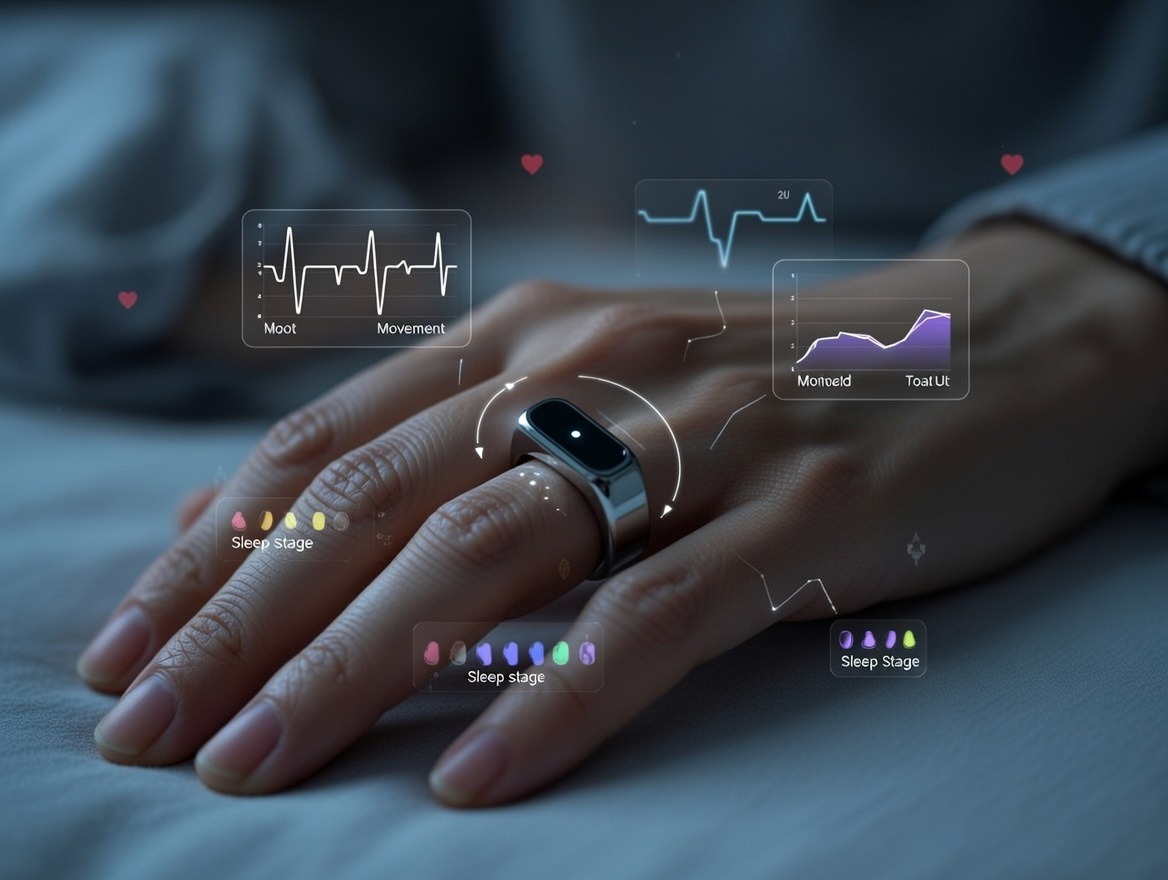
Smart Rings: The discreet, continuous bio-sensor. This is where the paradigm shifts. A device like the Oura Ring or similar is designed not for constant interaction, but for seamless, 24/7 data collection. Worn on the finger, it leverages the rich vascularity of the palm to capture highly accurate heart rate, HRV, and temperature data. Its greatest strength is its form factor: it’s so comfortable and unobtrusive that you forget you’re wearing it, leading to superior compliance and more complete data sets, especially for sleep. For a detailed comparison of how this form factor changes the game, see our analysis of how smart ring benefits make traditional fitness trackers obsolete.
Why the Form Factor is a Game-Changer for Data Quality
The choice of device isn't just about features; it's about which tool will provide the most consistent, high-fidelity data with the least friction in your life.
The Consistency Advantage: The best health insights come from longitudinal data—weeks, months, and years of continuous tracking. Any device you take off breaks that continuity. The discreet, comfortable design of a smart ring, as highlighted in our piece on smart ring benefits for comfort and long-term adherence, means you're far more likely to wear it 24/7, through sleep, showers, workouts, and work. This results in an unbroken data stream, which is pure gold for detecting meaningful trends.
Optimal Sensor Placement: The finger provides a strong, consistent pulse signal (photoplethysmography or PPG) that can be less prone to motion artifacts during certain activities compared to the wrist. This placement is particularly advantageous for overnight tracking, leading to the kind of detailed sleep stage analysis that provides an overnight advantage in sleep quality insights.
Passive, Unobtrusive Monitoring: The ideal wearable works in the background of your life. You shouldn't have to think about it, charge it constantly, or be distracted by its notifications. A ring excels here. It collects data passively, enabling truly continuous tracking that beats periodic check-ups. This allows you to live your life fully while it gathers the narrative of your physiology.
Choosing Your Primary Device
Your choice should align with your primary goals and lifestyle.
If your focus is on comprehensive sleep and recovery metrics with maximal comfort, a smart ring is a premier choice.
If you need GPS for outdoor runs and want a screen for notifications during the day, a smartwatch may be a better primary device.
Many enthusiasts use both: a ring for continuous biometrics and a watch for activity tracking and GPS.
Regardless of your choice, the principle is the same: select a tool you will wear consistently. The most advanced sensor is useless if it's sitting on your nightstand. For a broader look at the entire ecosystem, our complete wearable health tech guide for 2025 offers a comprehensive overview.
Demystifying Your Core Metrics: A Beginner's Guide to the Vital Signs of Daily Life
Now that you have your data-gathering tool, you’ll be confronted with a dashboard of metrics. Let’s demystify the most important ones. Think of these not as isolated numbers, but as interconnected vital signs telling the story of your body’s systems.
Heart Rate Variability (HRV): Your Body's "Resilience Score"
What it is: HRV measures the tiny, millisecond variations in the time intervals between your heartbeats. Contrary to what you might think, a healthy heart is not a metronome; it has a dynamic, responsive rhythm.
Why it matters: HRV is considered one of the best single metrics for assessing your autonomic nervous system (ANS) balance—the interplay between your "gas pedal" (sympathetic, fight-or-flight) and "brake pedal" (parasympathetic, rest-and-digest). A higher HRV generally indicates better stress resilience, recovery, and overall fitness. A lower-than-normal HRV can signal that your body is under strain from stress, illness, poor sleep, or overtraining.
How to interpret it: Always compare your HRV to your own personal baseline, not others'. A dip for a day or two is normal. A sustained downward trend is a key signal from your body to prioritize rest, manage stress, and check your sleep habits. For a deeper dive into optimizing this crucial metric, explore our resource on how to improve HRV over time with smart ring insights.
Resting Heart Rate (RHR): Your Metabolic Idle Speed
What it is: Your heart rate when you are fully at rest, typically measured during sleep or first thing in the morning.
Why it matters: RHR is a fundamental indicator of cardiovascular fitness and metabolic health. A lower RHR generally means your heart muscle is more efficient, pumping more blood with fewer beats. Like HRV, your personal baseline is key. A sudden, sustained increase in your RHR can be an early sign of dehydration, the onset of illness, overtraining, or chronic stress.
How to interpret it: Track its trend over time. Celebrate a gradual lowering as a sign of improving fitness. Be alert to unexplained spikes and use them as a cue to assess your overall load.
Sleep: The Non-Negotiable Foundation
Sleep data moves beyond just duration. Modern wearables break sleep into stages:
Deep Sleep: Critical for physical restoration, immune function, and memory consolidation.
REM Sleep: Essential for emotional processing, creativity, and cognitive function.
Light Sleep: Acts as a transition zone between deep/REM and wakefulness.
Sleep Latency: How long it takes you to fall asleep.
Restlessness/Wakefulness: Measures of sleep continuity.
Why it matters: Quality sleep is the bedrock of all other health metrics. Poor sleep will depress HRV, elevate RHR, impair recovery, and skew other data. Tracking sleep stages helps you understand not just if you slept, but how well you restored your systems. This is where the detailed analysis from a device worn on the finger truly shines, offering insights that can help you sleep better tonight.
Body Temperature: The Subtle Systemic Signal
What it is: Wearables track your peripheral body temperature (often from the finger or wrist), noting deviations from your personal baseline.
Why it matters: Your core body temperature follows a circadian rhythm, dipping at night and rising during the day. Disruptions in this rhythm can signal circadian misalignment (like jet lag) or the onset of illness (like a fever). For women, tracking basal body temperature (BBT) trends is also crucial for hormonal cycle insights, a key benefit outlined in our article on smart ring benefits for women's cycle tracking.
How to interpret it: A elevated nighttime temperature or a blunted circadian rhythm can be linked to poor sleep quality or inflammatory responses.
Respiratory Rate: The Quiet Indicator of Stress and Load
What it is: The number of breaths you take per minute, typically measured during sleep for consistency.
Why it matters: Respiratory rate is a stable vital sign that can increase with physical exertion, stress, illness, or at high altitudes. An elevated respiratory rate during sleep can sometimes indicate respiratory issues or that your body is working harder than it should be to recover.
How to interpret it: Look for consistency. A stable rate is a good sign. Note any significant increases that correlate with other signs of strain.
These metrics form your core dashboard. In the next section, we'll learn how to establish what "normal" looks like specifically for you.
Establishing Your Normal: The Critical 30-Day Baseline Period
With an understanding of what you're tracking, the most important step begins: establishing what is normal for you. This is the process of creating your personal biometric fingerprint. Without this baseline, data is just noise—a number without context. Is an HRV of 45 good? It depends entirely on whether your baseline is 40 or 70.
Why Your Baseline is Your Most Valuable Asset
Your baseline represents your body's "set point" under your typical life conditions—your regular sleep schedule, stress levels, diet, and activity. It is the reference point against which all future changes are measured. This personalized context transforms data from generic to genuinely insightful.
How to Run Your Baseline Period: A Step-by-Step Guide
Aim for a minimum of 30 days of consistent wear. This timeframe captures a full hormonal cycle for many and averages out the natural fluctuations caused by individual stressful days or exceptional nights of sleep.
Wear Your Device Consistently: This is non-negotiable. Wear it 24/7, only removing it for charging. The goal is to capture your body's complete daily and weekly rhythm. The advantage of a device designed for this, like a smart ring, is that it makes health tracking effortless and thus more accurate for this baseline phase.
Live Your Regular Life: Do not try to "perform" or live an idealized healthy life during this period. The goal is to capture an honest snapshot of your current normal. If you typically have a glass of wine with dinner, have it. If you stay up late on weekends, do so. Authentic data is useful data.
Minimize Major Disruptions (If Possible): While living normally, try to avoid introducing huge new variables—like starting an extreme new diet, taking a transcontinental flight, or running your first marathon—unless that is part of your typical pattern. We want to find your steady state.
Observe, Don't Judge: During this phase, practice being a curious scientist, not a critical coach. Look at the numbers with detachment. Note the patterns: "My HRV tends to be highest on Sunday mornings after a quiet Saturday." "My resting heart rate is always 3-4 BPM higher on Monday mornings." This observational mindset is key.
What to Look For As Your Baseline Emerges
After 2-3 weeks, patterns will start to solidify. Use your app's trends view (usually a weekly or monthly graph) to identify:
Your Average Ranges: What is your typical HRV range (e.g., 50-65 ms)? What is your common RHR (e.g., 54-58 bpm)?
Your Weekly Rhythm: Do your numbers improve (more recovery) on weekends? Do they dip mid-week under work stress?
Your Sleep Averages: What is your typical sleep duration? What's your normal proportion of deep and REM sleep?
Your Daily Patterns: When does your body temperature typically peak and trough? How does your daytime heart rate respond to your usual routine?
The Power of the Personalized Benchmark
Once established, this baseline becomes your superpower. Now, when you see a metric deviate—for example, your HRV drops below your normal range for three days in a row—it's a meaningful signal, not just a random low number. It tells you, "Your system is under more strain than your normal." This allows you to investigate causes specific to your life: Was work more intense? Did sleep suffer? Are you fighting off a bug?
This personalized feedback loop is the essence of moving from generic health advice to personalized, actionable health intelligence. Your baseline is the stable ground from which you can confidently experiment and evolve.
The Art of Interpretation: Connecting Dots Between Lifestyle and Data
With your personal baseline established, you graduate from simply reading numbers to interpreting a living story. This is the art of connecting the dots between your life inputs (lifestyle choices) and your body's outputs (biometric data). You become a detective, using data as clues to understand your body's unique language.
Moving Beyond Isolated Metrics: The Holistic View
The first rule of interpretation is to never look at a single metric in isolation. Your body is a complex, interconnected system. A low HRV score might be concerning, but if it's accompanied by a significantly elevated resting heart rate, poorer sleep efficiency, and a higher respiratory rate, it paints a much clearer picture of a body under significant systemic stress—what some apps might label as a "high load" or "low readiness" state.
Conversely, an isolated "bad" number might not be alarming. If your deep sleep was low one night but your HRV and RHR remained stable, it could simply be a normal nightly variation. Context is everything.
The Lifestyle Log: Your Crucial Companion Tool
To master interpretation, you must pair your biometric data with a record of your daily life. This doesn't need to be an exhaustive journal. Simply note the key variables that most influence your physiology:
Sleep Log: Bedtime, wake time, perceived quality. Note any disruptions.
Nutrition & Alcohol: Heavier meals, unusual foods, or alcohol consumption (a major disruptor of sleep architecture and HRV).
Exercise & Activity: Type, duration, and intensity of workouts. Also note days of complete rest.
Stress & Mood: High-stress workdays, arguments, relaxing activities, or meditation.
Illness & Medication: Any signs of getting sick or new medications.
After 1-2 weeks of logging alongside your data, start looking for correlations. Use the "check the timeline" feature in your app. For example:
See a spike in resting heart rate? Scroll back to the previous day. Did you have a late, intense workout? Consume alcohol?
Notice a dip in HRV for two days? What was your sleep like? Was work mentally taxing?
See a record-high deep sleep percentage? Did you go to bed exceptionally early? Were you physically exhausted from a hike?
Common Correlation Patterns Every Beginner Should Know
Alcohol: Perhaps the most consistent disruptor. It typically increases resting heart rate, decreases HRV, suppresses REM sleep early in the night, and causes sleep fragmentation in the second half. Seeing this data pattern can be a powerful motivator for mindful consumption.
Late/Energetic Exercise: Working out too close to bedtime can elevate your core temperature and sympathetic nervous system activity, leading to longer sleep latency and reduced sleep quality.
Mental Stress: A difficult day at work might not raise your step count, but it can manifest as a lower HRV and higher RHR that evening and overnight, even if you sleep a full 8 hours.
Overtraining: When exercise load exceeds your body's recovery capacity, you'll see a sustained downward trend in HRV, an upward creep in RHR, and often a decline in sleep quality. This data is critical for transforming your training with recovery insights.
Travel & Time Zones: Jet lag vividly displays in your data: a flattened body temperature rhythm, disrupted sleep stages, and depressed HRV as your circadian system struggles to realign.
By practicing this detective work, you move from seeing data as a report card to seeing it as a dynamic feedback system. It answers the question, "How did that choice affect this body?" This is the foundation of truly personalized, intelligent self-care.
Sleep: Your Foundational Metric – How to Decode Your Nightly Data
Of all the metrics you track, sleep is the cornerstone. It is the primary time for physical repair, cognitive consolidation, and nervous system reset. Poor or insufficient sleep will undermine every other aspect of your health and skew your daytime data. Therefore, learning to decode your sleep data is a priority.
Beyond Hours: The Architecture of Quality Sleep
Modern wearables estimate your sleep stages using movement and heart rate patterns. Understanding what each stage represents helps you interpret the quality of your rest.
Deep Sleep (Slow-Wave Sleep): This is the most physically restorative phase. It's when tissue growth and repair occur, energy is restored, and the immune system is strengthened. It's dominant in the first half of the night. If you are physically exhausted or in heavy training, your body will prioritize deep sleep.
REM (Rapid Eye Movement) Sleep: This is the mentally restorative phase, crucial for memory consolidation, learning, and emotional processing. REM periods become longer in the second half of the night. Deprivation of REM can impact mood and cognitive function.
Light Sleep: This acts as a transition zone between deep, REM, and wakefulness. It's important and makes up about 50% of the night, but imbalances (too much, often at the expense of deep/REM) can indicate fragmented sleep.
Awake/Restless Time: Zero awake time is unrealistic (brief micro-awakenings are normal). However, excessive restlessness or long awake periods fragment your sleep architecture, reducing its restorative power.
Key Sleep Metrics and What They Mean
Sleep Latency: The time it takes you to fall asleep. Ideally, this is under 20 minutes. Consistently long latency can point to circadian misalignment, pre-sleep stress, or poor sleep hygiene (e.g., screen use too late).
Sleep Efficiency: The percentage of time in bed you were actually asleep. Above 85% is good; above 90% is excellent. Low efficiency means you're spending too much time tossing and turning.
Total Sleep Time: Self-explanatory, but remember: 7 hours of high-efficiency sleep is often better than 8.5 hours of fragmented sleep.
Timing: Your bedtime and wake time. Consistency is king here. Going to bed and waking up at roughly the same time every day (even weekends) stabilizes your circadian rhythm, leading to better overall data.
Using Data to Diagnose Common Sleep Problems
Problem: "I sleep 8 hours but wake up tired."
Data Check: Look at your sleep stages. You might be getting insufficient deep or REM sleep due to fragmentation (high restlessness) or environmental disruptions (noise, temperature). Alcohol is a common culprit that suppresses REM early on.
Problem: "It takes me forever to fall asleep."
Data Check: Note your sleep latency. Then, correlate with your evening: late screen time, late meals, stressful work before bed, or a late caffeine intake can all be visible in a long latency period.
Problem: "I always wake up at 3 AM and can't get back to sleep."
Data Check: Look for a temperature spike or a heart rate increase at that time. This could be related to blood sugar fluctuations, stress hormones (cortisol), or a too-warm sleep environment.
Actionable Steps from Sleep Insights
Your sleep data should directly inform your evening and bedtime routine. If you see a pattern of low deep sleep, prioritize activities that promote physical relaxation. If REM is low, focus on stress management and mental wind-down. The granular insights from a device capable of capturing this detail can be the key to unlocking better rest, as discussed in the context of gaining an overnight advantage in sleep quality.
Sleep is not a passive activity; it's an active physiological process that you can positively influence. Your data provides the blueprint.
Stress and Recovery: Reading Your Body's Readiness Signals
In our always-on world, the balance between stress (load) and recovery is perhaps the most critical dynamic for long-term health. Your wearable device acts as a continuous stress-and-recovery barometer, moving far beyond how you "feel" to show you how your nervous system is actually coping.
The Autonomic Nervous System (ANS) Dashboard
Your core metrics—HRV, RHR, and sleep—are direct outputs of your ANS. Think of them as gauges:
HRV: The master gauge of resilience and recovery. High HRV suggests a flexible, adaptable system with strong parasympathetic (rest-and-digest) tone.
RHR: A gauge of metabolic and sympathetic load. A lower RHR suggests efficiency and calm; a heightened RHR suggests your system is being asked to work harder.
Sleep Quality: The gauge of systemic restoration. Good sleep replenishes your ANS's capacity to handle stress.
What is "Readiness" or "Recovery Score"?
Many apps synthesize these core metrics (and sometimes body temperature and activity) into a single daily "Readiness" or "Recovery" score. This is not a grade, but a recommendation.
A High Score suggests your body has recovered well and is primed to handle physical, mental, and immune challenges. It's a green light to engage fully in training, demanding work, or social activities.
A Low Score is a yellow or red light. It indicates your resources are depleted. It’s a recommendation from your body to prioritize recovery: opt for gentle movement over intense training, incorporate more rest, manage stress, and double down on sleep hygiene.
Ignoring a low readiness score and pushing through intense activity is like ignoring a low fuel light in your car. It increases your risk of burnout, injury, or illness. Learning to respect this signal is a cornerstone of sustainable wellness and is a major benefit of 24/7 health monitoring without the bulk of other devices.
Identifying Different Types of "Load"
Your data can help you distinguish between different kinds of stress:
Physical Load: From exercise. A hard workout will naturally lower HRV and raise RHR that night. This is a positive, acute stress if followed by adequate recovery.
Mental/Emotional Load: From work deadlines, arguments, or anxiety. This can create a similar biometric signature to physical stress (lower HRV, higher RHR) but without the positive fitness adaptation. It's pure drain on the system.
Immunological Load: Your body fighting an impending illness. This often shows up as an elevated resting heart rate and body temperature before you feel symptoms, along with a plummeting HRV. It's one of the most powerful examples of how this technology can detect health issues early.
The Art of Productive Recovery
Recovery isn't just passive rest; it's any activity that promotes parasympathetic nervous system activity. Your data can help you identify what works best for you:
Does a 20-minute meditation in the afternoon improve that night's HRV?
Does a gentle walk in nature lower your daytime heart rate more than scrolling on your phone?
Does disconnecting from work emails by 6 PM lead to better sleep latency?
By tracking these interventions against your recovery metrics, you build a personalized toolkit for down-regulating your nervous system. This turns the vague advice to "reduce stress" into a set of specific, validated practices that work for your unique physiology, contributing significantly to long-term preventive healthcare.
Activity and Exercise: Optimizing Workouts with Biometric Feedback
For decades, exercise was guided by external metrics: distance, speed, weight lifted, and perceived exertion. While valuable, this misses the internal dimension: How is this workout affecting my system? Your health data closes this loop, allowing you to optimize not just your performance, but more importantly, your recovery and long-term adaptation.
From External Load to Internal Response
The key principle is that the same external workout (e.g., a 5km run at a 8-minute/mile pace) can create vastly different internal stress depending on your readiness. If you run it fully recovered, it's a positive stimulus. If you run it while already stressed or under-recovered, it becomes a strain that can set you back.
Your pre-workout biometrics provide the context to adjust your plan intelligently.
Using "Readiness" to Guide Your Training Day
High Readiness Score: Your body is saying "I'm ready!" This is the day to go for that personal record, complete a high-intensity interval session, or tackle a long, challenging workout. You'll likely get more benefit from the session with lower risk.
Moderate Readiness Score: A yellow light. Consider sticking to your planned moderate workout, or perhaps reducing the volume or intensity slightly. Focus on good form and listening to your body during the session.
Low Readiness Score: A clear recovery day. Swap the intense workout for gentle movement like walking, yoga, or mobility work—or take a complete rest day. "Pushing through" on a low readiness day is a prime way to induce overtraining, increase injury risk, and hinder progress. This data-driven autoregulation is what allows athletes to make the switch to smarter training.
Post-Workout Recovery Tracking
The workout itself is just the stimulus; the adaptation happens during recovery. Your nighttime data is the best report card on how well you recovered from the day's activity.
Positive Response: A challenging workout might cause a temporary dip in HRV and rise in RHR that night, but these metrics should rebound to baseline or higher within 1-2 nights, often accompanied by increased deep sleep. This signals good adaptation.
Negative/Strained Response: If your metrics remain depressed (low HRV, high RHR) for several days after a workout, and sleep quality suffers, it's a sign the load was too high for your current state. This is crucial feedback to scale back next time.
Finding Your Optimal Workout Timing
Your daily biometric rhythm can also suggest your ideal workout window. Some people see better recovery from morning workouts, while others thrive in the afternoon when core body temperature and hormone levels are peak. Experiment and note the correlation:
Do evening workouts disrupt your sleep latency or reduce deep sleep?
Do morning workouts lead to better daytime energy and stable HRV?
The Big Picture: Avoiding Overtraining
Overtraining syndrome (OTS) is a state of prolonged fatigue and performance decline caused by an imbalance between training and recovery. Your wearable is an early-warning system. Signs in your data may include:
A sustained, multi-week downward trend in HRV.
A chronic elevation in resting heart rate.
Consistently poor sleep scores despite fatigue.
Increased incidence of illness (shown by temperature and RHR spikes).
Spotting this pattern early allows you to intervene with a deload week or complete rest, preventing weeks or months of lost progress. This proactive approach transforms how you manage fitness, making it more sustainable and effective. For those focused on performance, these recovery insights can truly transform training.
Nutrition and Hydration: Seeing the Direct Impact on Your Physiology
What you eat and drink is potent fuel—or a significant stressor—for your body's systems. While wearables don't directly measure calorie intake or micronutrients, they are exceptionally good at showing you the systemic physiological impact of your nutritional choices. This biofeedback can be more powerful than any diet plan.
The Clear Signal of Alcohol
As mentioned, alcohol provides the most dramatic and consistent data lesson. Even one or two drinks can:
Increase Resting Heart Rate: Your heart has to work harder to metabolize the alcohol and deal with its dehydrating effects.
Suppress HRV: Indicates a significant stress on your nervous system.
Disrupt Sleep Architecture: It often suppresses early REM sleep and leads to increased wakefulness and restlessness in the second half of the night as your body processes the alcohol.
Elevate Nighttime Body Temperature: As your body works to metabolize it.
Seeing this objective impact on your recovery metrics can be a profound motivator for more mindful consumption, helping you make choices aligned with your wellness goals rather than just habit.
Heavy Meals and Late-Night Eating
Eating a large, rich, or heavy meal close to bedtime forces your digestive system to work overnight. This can manifest in your data as:
Elevated resting heart rate during sleep, as your metabolism stays active.
Reduced HRV due to the physiological load of digestion.
More restless sleep and potentially less deep sleep.
Experiment by having your last meal 2-3 hours before bed and note if your sleep efficiency and morning readiness scores improve.
Hydration: The Invisible Foundation
Dehydration is a common, silent stressor. Even mild dehydration can:
Increase your resting heart rate, as your heart pumps faster to maintain blood pressure with reduced blood volume.
Lower your HRV.
Impair thermoregulation, potentially affecting your body temperature rhythm.
If you see an unexplained spike in your daytime or sleeping RHR, your first question should be: "Did I drink enough water today?" Tracking this correlation makes proper hydration a data-driven priority.
Caffeine and Its Long Tail
Caffeine's half-life is 5-6 hours, meaning it can affect you long after your last sip. Late-afternoon caffeine can:
Increase sleep latency (time to fall asleep).
Reduce sleep efficiency and potentially suppress deep sleep.
If you struggle with falling asleep, check your caffeine cutoff time. Your sleep latency data will give you clear feedback on whether you need to move your last coffee or tea earlier in the day.
Using Data for Personalized Nutrition Experiments
You can use this biofeedback for gentle, informative experiments:
Experiment: Try a week of no alcohol.
Observe: Do your average HRV and sleep scores improve?
Experiment: Move your dinner 1 hour earlier.
Observe: Does your nighttime heart rate lower and sleep become less restless?
Experiment: Increase your daily water intake by 30%.
Observe: Does your average daytime RHR decrease?
This turns nutrition from a set of rigid rules into a personalized exploration. You learn which foods and timing make your body feel and perform at its best, as evidenced by its own signals. This journey of self-discovery through data is a powerful step toward empowering your health data ownership.
Women's Health: Leveraging Data for Cycle Syncing and Hormonal Insight
For women, the cyclical nature of hormones adds a powerful, often overlooked, layer to biometric data. Hormones like estrogen and progesterone don't just regulate reproduction; they influence core body temperature, heart rate, sleep architecture, metabolism, and recovery capacity. Tracking your data across your cycle isn't just about fertility—it's about understanding your body's natural rhythm and optimizing your life to work with it, not against it.
The Biometric Signature of Your Cycle
A typical menstrual cycle has two main phases, each with distinct physiological patterns visible in wearable data:
Follicular Phase (Day 1 of menstruation to ovulation): Estrogen rises.
Body Temperature: Basal body temperature (BBT) is at its lower set point.
Recovery & Performance: Many women find their HRV is higher, RHR is lower, and recovery is stronger in this phase. Energy, strength, and pain tolerance often increase, making it an ideal time for intense training and demanding cognitive work.
Sleep: May be more stable.
Luteal Phase (After ovulation to menstruation): Progesterone rises and then falls.
Body Temperature: BBT rises significantly after ovulation (by about 0.5-1.0°F) and stays elevated until menstruation begins. This is one of the clearest wearable signals.
Recovery & Performance: Progesterone has a calming, sedating effect but can also raise core temperature and metabolic rate. HRV may trend lower, and RHR may be 3-5 BPM higher on average. The body is working harder, so recovery can be slower. This is a natural time to scale back intense exercise and prioritize gentler movement, strength maintenance, and recovery.
Sleep: May be more disturbed in the late luteal phase (premenstrually) due to temperature changes and hormonal fluctuations.
Actionable Insights from Cycle-Aware Tracking
Predicting Your Cycle: The sustained rise in BBT is a clear, objective confirmation that ovulation has occurred. For those not using hormonal contraception, this data can help predict the timing of menstruation (typically ~12-14 days after the temperature shift).
Optimizing Training (Cycle Syncing): Instead of forcing the same workout intensity every week, you can align your activities with your energy.
Follicular & Ovulatory: Go hard. PRs are more likely here.
Luteal: Focus on maintenance, technique, yoga, and walking. Be kind to yourself if performance dips—it's hormonal, not a lack of willpower.
Understanding PMS and Premenstrual Symptoms: Data can validate your experience. You may see correlations between mood changes, bloating, and specific data patterns like elevated RHR, poorer sleep, or a faster drop in progesterone (and thus temperature) pre-menstrually. This knowledge alone can reduce anxiety.
Identifying Potential Irregularities: An unusually long cycle, lack of a clear temperature shift, or significant deviations from your normal pattern can be early data points to discuss with a healthcare provider.
A Tool for Empowerment, Not Surveillance
The goal of cycle tracking with wearables is empowerment and understanding, not another source of pressure. It reveals that your changing energy, appetite, and recovery are not "flaws" but intelligent, predictable features of your biology. By syncing your lifestyle to this rhythm, you can work smarter, reduce injury risk, and improve overall well-being. This is a profound example of how technology can provide hormonal insights and cycle tracking benefits that were previously inaccessible outside a clinical setting.
Identifying Red Flags and When to See a Doctor: Becoming an Informed Partner in Your Care
One of the most significant—and sometimes daunting—powers of continuous health monitoring is its ability to highlight deviations that may signal underlying issues. It’s crucial to approach this aspect with a balanced mindset: your wearable is a sophisticated tool for awareness, not a diagnostic device. Its primary role is to alert you to meaningful changes in your baseline, empowering you to seek professional medical advice with timely, objective information.
The Philosophy: Awareness, Not Alarmism
The goal is not to self-diagnose or spiral into anxiety over every data blip. It’s to cultivate an informed awareness of your body’s patterns so you can recognize when something is persistently and significantly “off.” This transforms you from a passive patient into an active, prepared partner in your healthcare. You move from describing vague symptoms like “I just haven’t felt right” to providing a data-supported narrative: “My resting heart rate has been elevated by an average of 10 BPM for the past five days, and my sleep efficiency has dropped 20% despite no change in routine.”
Key Red Flag Patterns to Watch For
While variations are normal, the following sustained patterns warrant closer attention and may justify a conversation with a healthcare provider:
A Sustained, Unexplained Elevation in Resting Heart Rate: If your RHR remains 7-10+ BPM above your personal baseline for 5-7 days, and you cannot attribute it to obvious causes like intense training, dehydration, alcohol, or acute stress, it’s a clear signal from your body. This can be an early indicator of various issues, including infection, inflammation, thyroid dysfunction, or cardiovascular strain. This early detection capability is a cornerstone of how modern wearables can support preventive healthcare.
A Persistent, Unexplained Drop in Heart Rate Variability: Similar to RHR, a multi-day downturn in HRV outside your normal range, without a clear cause like heavy exercise or a known stressful event, suggests your nervous system is under chronic strain. This can be related to overtraining, chronic stress, poor metabolic health, or the onset of illness.
Significant and Persistent Sleep Disruption: If your sleep efficiency, duration, or architecture (deep/REM sleep) takes a dramatic and lasting turn for the worse without an obvious lifestyle trigger (new job, newborn baby, etc.), it can be a symptom of sleep disorders like sleep apnea, insomnia, or other health conditions affecting sleep.
Abnormal Body Temperature Trends: A consistently elevated nighttime temperature outside your norm could indicate low-grade inflammation or other metabolic issues. The ability to track this subtle signal is a key advantage of 24/7 health monitoring, as it captures trends a single thermometer reading would miss.
A Pattern of Extreme Tachycardia or Bradycardia During Sleep: While brief fluctuations are normal, regularly seeing your sleeping heart rate spike very high or drop extremely low (according to your baseline) could be worth mentioning to a doctor.
How to Responsibly Use Data in a Clinical Conversation
When you do decide to consult a professional, your data is your most valuable asset. Here’s how to prepare:
Document the Trend: Don’t walk in with a single day’s screenshot. Use your app’s trend feature to show the deviation over a period of 1-2 weeks or more. Note when the change began.
Correlate with Symptoms: Pair the data with your subjective experience. “Here’s a graph of my elevated RHR for the past two weeks. This correlates exactly with when I started experiencing unusual fatigue and shortness of breath when climbing stairs.”
Provide Context: Share relevant lifestyle factors. “I’ve ruled out common causes—my training load is normal, I’m hydrated, and my stress levels are manageable.”
Ask Informed Questions: Use your data to ask specific questions. “Given this sustained elevation in my resting heart rate, could we explore checking for thyroid issues or anemia?”
Respect the Limits: Understand and communicate that this is consumer data, not medical-grade ECG or diagnostic testing. Its value is in showing trends and patterns. A doctor will appreciate the objective longitudinal data, which they can then use to decide on appropriate clinical tests. This collaborative approach is exactly why a doctor will appreciate you bringing this information to your visit.
What Your Data is NOT Meant For
It is not for diagnosing heart arrhythmias, sleep apnea, or other medical conditions. Only a medical professional with proper diagnostic tools can do that.
It is not for ignoring professional advice. Never dismiss a doctor’s recommendation because your wearable data seems “okay.”
It is not for creating health anxiety. If you find yourself obsessively checking your data and feeling anxious, it’s time to take a step back. The tool should serve you, not the other way around.
Used wisely, this awareness makes you a proactive guardian of your health, catching potential issues in their earliest stages and enabling more productive partnerships with healthcare providers.
Building Your Personal Health Data Action Framework: The Bridge from Insight to Change
Accumulating insights is only half the journey. The true transformation happens when you build a systematic, personal framework to translate those insights into consistent, sustainable action. This is your Health Data Action Framework—a simple, flexible system that turns awareness into habit.
The Core Loop: Observe, Interpret, Experiment, Evaluate
This four-step loop is the engine of your framework. It turns passive tracking into active self-experimentation.
OBSERVE: Start with a specific data point or trend. “I’ve noticed my sleep latency is over 30 minutes on weeknights.”
INTERPRET: Form a hypothesis about the cause. Connect the dots with your lifestyle log. “I think it’s because I’m on my laptop doing work until 15 minutes before bed. The blue light and mental stimulation might be keeping me awake.”
EXPERIMENT: Design a small, manageable change to test your hypothesis. *“For the next five weeknights, I will implement a strict 60-minute ‘digital sunset’ with no screens before bed. I’ll read a book instead.”*
EVALUATE: After the experiment period, review the data. Did your sleep latency improve? Did other metrics like HRV or resting heart rate also shift? “My average sleep latency dropped to 15 minutes, and my deep sleep increased by 10%. The experiment was a success.”
Designing Effective Self-Experiments
To make this process fruitful, keep your experiments:
Focused: Test one change at a time. If you change your diet, exercise, and sleep routine simultaneously, you won’t know which one drove the result.
Measurable: Have a clear primary metric to evaluate (e.g., sleep latency, average HRV).
Realistic: The change should be small enough to stick with for at least 1-2 weeks. Drastic overhauls are rarely sustainable.
Curious, Not Judgmental: Frame it as “Let’s see what happens,” not “I must fix this.” This reduces pressure and makes the process engaging.
Creating Your Personal "If-Then" Action Rules
As you run experiments, you’ll discover what works for you. Codify these discoveries into simple, personalized rules. These are your body’s instruction manual.
Recovery Rules:
“IF my readiness score is below [your personal threshold], THEN my workout will be gentle yoga or a walk, not HIIT.”
“IF my HRV is in the bottom 25% of my range for two days, THEN I will prioritize an extra 30 minutes of sleep and schedule a meditation session.”
Sleep Rules:
“IF I have an important day tomorrow, THEN I will enforce my digital sunset without exception.”
*“IF my sleep data shows high restlessness, THEN I will check my bedroom temperature and ensure it’s between 65-68°F.”*
Nutrition Rules:
“IF I want to optimize my sleep score, THEN I will not have alcohol within 3 hours of bedtime.”
“IF my resting heart rate is elevated midday, THEN I will drink a large glass of water before considering caffeine.”
Integrating Insights into Your Routine: The Habit Stack
The easiest way to build new actions is to “stack” them onto existing habits—a concept popularized by James Clear.
Current Habit: I brush my teeth before bed.
New Action: After I brush my teeth, I will place my phone on its charger across the room (to start my digital sunset).
Stack: Brush teeth → Charge phone away from bed.
Use your data to decide which habit stacks are most valuable. If your data shows poor recovery, your morning stack could be: Wake up → Check readiness score → Drink a glass of water (instead of immediately checking email). This turns data into a seamless, automatic prompt for positive behavior, helping you create better health habits for the long term.
The Role of Technology in Your Framework
Your wearable and its app are the central hubs of this framework. Use features like:
Tagging/Custom Metrics: Log your experiments directly in the app (e.g., tag days with “No Alcohol” or “Digital Sunset”).
Trends View: This is your evaluation dashboard. Look at the weeks of your experiment compared to previous weeks.
Journal Integration: Some apps allow brief journal entries. Note how you felt subjectively alongside the objective data.
This framework transforms you from being data-rich but action-poor to being strategically responsive. Your body gives feedback; you now have a systematic way to listen and respond. This closes the loop, making the entire process of health optimization feel less like technology and more like intuitive wellness.
The Long Game: From Short-Term Experiments to Lifelong Habits
The initial phase of health data exploration is often marked by excitement, rapid discovery, and noticeable changes. But what happens after the novelty wears off? The ultimate success of this journey is measured not in weeks, but in years—in your ability to integrate this knowledge into the fabric of your life to support lifelong well-being. This is the shift from performing experiments to living a data-informed life.
The Danger of Burnout: Avoiding Data Fatigue
It’s common to start with intense daily scrutiny of every metric, only to feel overwhelmed and eventually abandon the device entirely. This is data fatigue. To play the long game, you must evolve your relationship with the data.
From Daily Score-Chasing to Trend-Watching: In the beginning, you might obsess over each day’s “readiness” number. With time, learn to see the weekly and monthly trends. A single low score is meaningless noise; a two-week downward trend is meaningful signal. Shift your focus from the daily snapshot to the longitudinal movie.
Establish a "Check-In" Rhythm, Not Constant Monitoring: You don’t need to open the app 10 times a day. Establish a sustainable rhythm. For many, a brief morning check-in (to view readiness and plan the day) and a weekly review (10 minutes on Sunday to look at trends) is more than sufficient. Let the device work in the background. This is the true power of passive tracking that works better than active logging.
Embrace Seasons and Cycles: Your baseline is not static. It will and should change with the seasons of your life. A period of intense career focus, having a newborn, training for a marathon, or going through menopause will all create new, temporary baselines. The long game is about adapting gracefully to these seasons, using your data to navigate them with self-compassion rather than fighting to maintain an old “normal.”
Cementing Data-Informed Habits
As your “if-then” rules prove effective, they gradually cease to be conscious rules and become automatic habits. You no longer need to check your readiness score to know you need a gentle day after poor sleep; you just feel it and act on it. The data has trained your intuition. This is the compound effect in action: small, consistent, informed choices made over years lead to profound differences in health outcomes, resilience, and vitality. This is the essence of how the benefits of this approach compound over time for long-term value.
Using Data to Celebrate Progress and Maintain Motivation
On a long journey, motivation wanes. Your data becomes a powerful tool for maintaining momentum.
Look Back to See How Far You’ve Come: When you feel stuck, scroll back 6 months or a year in your app. Can you see a higher average HRV? A lower resting heart rate? Better sleep consistency? This objective proof of progress is incredibly validating and motivating. It provides the validation for your wellness efforts that subjective feeling often can’t.
Focus on Stability, Not Just Performance: As you mature in your journey, you may find that your greatest success is not a spectacularly high HRV, but a remarkably stable one—a system that is resilient to life’s ups and downs. Celebrate that stability as a major victory.
Expand Your "Why": Initially, your “why” might be to sleep better or get fitter. Over time, connect your data to bigger life goals: having the energy to play with your grandchildren, maintaining cognitive sharpness in your career, or supporting healthy aging and longevity. Your data is the daily proof you’re investing in those goals.
Adapting Your Framework as Your Life Evolves
Your Health Data Action Framework is a living document. At different life stages, your priorities and available leverage points will change.
In Your 20s/30s: Focus might be on optimizing performance, managing social stress (alcohol, late nights), and establishing foundational sleep habits.
As a New Parent: The framework shifts entirely to survival and recovery. The goal is not optimization, but damage control—using data to grab moments of rest when possible and understand the immense load on your system. This specific challenge is addressed in our look at smart ring benefits for new parents.
In Midlife & Beyond: The focus often shifts to metabolic health, stress management, sleep quality, and monitoring for early signs of age-related changes. Data becomes a tool for proactive preservation.
Playing the long game means letting go of perfection and embracing informed, adaptive progress. It’s about building a durable, flexible partnership with technology that supports a lifetime of well-being.
Integrating Data into Your Healthcare Conversations: A Practical Guide
You’ve identified a concerning trend, run your self-experiments, and decided it’s time to consult a professional. How do you move from being a person with a smart ring to being a prepared patient who has a productive, collaborative conversation with their doctor? This integration is the final, crucial step in claiming full ownership of your health journey.
Shifting the Dynamic: From Passive to Prepared
Historically, the patient-provider dynamic has been one-directional: the doctor asks questions, runs tests, and delivers advice. Bringing your personal health data prepares you to engage in a two-way, data-informed dialogue. You are bringing a novel piece of evidence to the table: a continuous, longitudinal record of your physiology in your real-world environment.
Before the Appointment: How to Prepare Your Data
Identify the Key Trend: Don’t bring 6 months of raw data. Isolate the most relevant 2-4 week period that shows the deviation you’re concerned about (e.g., a sustained RHR elevation, a period of terrible sleep).
Take Clear Screenshots/Exports: Use your app’s trend view. Capture graphs of the specific metrics. A visual is far more powerful than you saying “my heart rate has been high.” Many apps allow you to export PDF summaries—use this feature if available.
Write a Brief, Factual Narrative: On a single sheet of paper or in a notes app, create a timeline:
“April 10: Noticed feeling more fatigued than usual.”
*“April 12-30: Resting heart rate consistently 12-15 BPM above my normal baseline of 58. (See Graph 1).”*
“Corresponding sleep data shows efficiency dropped from average of 92% to 85%. (See Graph 2).”
“Relevant context: No change in exercise, diet, or stress that I can identify. Increased water intake did not resolve it.”
Formulate Your Questions: Based on the data, what do you want to know?
“Given this persistent elevation, what are the most likely causes we should rule out?”
“Could this pattern be consistent with a thyroid issue or anemia?”
“What diagnostic tests would you recommend based on this?”
During the Appointment: How to Present Your Findings
Set the Stage: Start by briefly explaining your tool. “I use a wearable ring that tracks basic physiology like heart rate and sleep. I’ve brought some data because I’ve noticed a persistent change that correlates with how I’ve been feeling.”
Present Your Narrative: Offer your one-page summary and graphs. Let the doctor look them over. Your prepared narrative guides them through it.
Lead with Curiosity, Not Certainty: Use phrases like “I was wondering if this could be related to…” or “My data made me think we should explore…” This positions you as a collaborative partner, not a self-diagnosing adversary.
Bridge to Clinical Context: Acknowledge the limits. “I know this is consumer data, but the trend seemed significant to me and prompted me to make this appointment. I’m hoping we can use it as a starting point for any clinical tests you think are appropriate.”
What You Can Expect: A New Type of Visit
An increasing number of forward-thinking providers welcome this information. It can:
Accelerate Diagnosis: Instead of starting from zero, they have clues. A pattern of elevated nighttime heart rate and poor sleep might quickly point them toward investigating sleep apnea or hyperthyroidism.
Inform Treatment Plans: For conditions like hypertension or insomnia, your continuous data can show how your body responds to medication or behavioral interventions in real-time, far more effectively than sporadic office checks.
Enhance Preventive Strategies: Discussing your declining HRV trend might lead to a fruitful conversation about stress management techniques before it manifests as a more serious condition.
This collaborative model is the future of proactive healthcare. By bringing organized, relevant data, you help your doctor help you more effectively. It demonstrates that you are engaged, invested, and observant—qualities every good provider appreciates. This is the ultimate realization of how this technology can empower your health data ownership in a meaningful, real-world context.
The Future of Personal Health Data: Where We're Headed Next
The journey we've outlined—from raw numbers to personalized action—represents the current state of the art in consumer health technology. But this field is evolving at a breathtaking pace. Looking ahead, the convergence of better sensors, smarter algorithms, and deeper integration with medical systems promises to make the health data journey even more seamless, predictive, and powerful. Understanding this trajectory helps you appreciate the tool you have today and anticipate the even more sophisticated insights tomorrow may bring.
The Sensor Revolution: Moving Beyond the Finger and Wrist
Today's wearables primarily rely on optical heart rate sensors (PPG) and accelerometers. The future lies in multi-sensor fusion and new sensing modalities:
Non-Invasive Blood Glucose Monitoring: This is the "holy grail" for metabolic health tracking. Several companies are developing optical and spectroscopic sensors that could estimate glucose trends without a finger prick. This would revolutionize wellness for diabetics, pre-diabetics, and anyone interested in their metabolic flexibility.
Continuous Blood Pressure Monitoring: Using PPG signals and advanced pulse wave analysis algorithms, future wearables may provide cuffless, continuous blood pressure estimates, catching hypertension patterns that occur outside the doctor's office.
Electrodermal Activity (EDA) & Stress: Already present in some devices, EDA sensors measure tiny changes in skin sweat, a direct indicator of sympathetic nervous system arousal. This provides a second, complementary signal to HRV for understanding real-time stress responses.
Advanced Biomarkers in Sweat and Interstitial Fluid: Research is ongoing into sensors that can detect electrolytes (like sodium and potassium), cortisol (the stress hormone), lactate, and other biomarkers from sweat or interstitial fluid, providing a chemical window into your body's state.
The AI & Personalization Leap: Your Digital Health Twin
Raw data is useless without interpretation. The next frontier is artificial intelligence that doesn't just show you data, but acts as a personalized health coach.
Hyper-Personalized Baselines: AI will move beyond comparing you to population averages or even your own past. It will model your unique responses to thousands of variables—how you specifically react to caffeine, late meals, specific types of exercise, or pollen counts.
Predictive, Not Just Reactive: Instead of telling you you're stressed or recovered, future systems will predict your readiness for tomorrow based on today's data and planned activities. It might suggest, "Based on your current load and forecasted poor sleep due to your travel schedule, consider rescheduling your intense Friday workout to Sunday."
Causal Inference: Advanced algorithms will get better at suggesting not just correlations, but likely causes. It could analyze a month of data and propose: "The strongest predictor of your low HRV scores is your alcohol consumption, followed by sleep duration. Focusing on these two levers will likely yield the greatest improvement in resilience."
The "Digital Twin" Concept: This is the creation of a sophisticated computer model of your physiology that can simulate outcomes. Doctors could one day use your digital twin to model how you might respond to a medication or a lifestyle intervention before you try it in the real world.
This level of personalization represents the ultimate fulfillment of the promise that health tech should personalize to your unique biology.
Integration with the Healthcare Ecosystem: Closing the Loop
For true impact, personal health data must flow securely and meaningfully into the formal healthcare system.
Provider Dashboards: Imagine your primary care physician having a secure, curated dashboard view of your longitudinal wearable data—trends in RHR, HRV, sleep, and activity—right alongside your electronic health record. This provides context that a yearly physical cannot.
Remote Patient Monitoring (RPM): For chronic conditions like heart failure, hypertension, or COPD, wearables are already being used to monitor patients at home. A sustained elevation in resting heart rate or respiratory rate can trigger an alert to a care team for early intervention, preventing hospitalizations. This is wearable tech enabling true preventive healthcare.
Clinical-Grade Validation: The line between consumer wellness devices and approved medical devices will continue to blur. We will see more wearables receiving FDA clearance or CE marking for specific indications, like atrial fibrillation detection or sleep apnea screening, lending greater weight to their data in clinical settings.
With great power comes great responsibility. The future of health data must be built on a foundation of trust.
Data Sovereignty & Privacy: Users must have clear, transparent control over their most sensitive data—where it is stored, who can access it, and for what purpose. Robust privacy and data security will be non-negotiable.
Algorithmic Bias & Equity: AI models are only as good as the data they're trained on. Ensuring these systems work equally well for all ethnicities, genders, and body types is a critical challenge to avoid perpetuating health disparities.
The Access Gap: As technology becomes more powerful, we must ensure it does not widen the health equity gap. Making these insights accessible and affordable to diverse populations will be a societal imperative.
The future is not about more data for data's sake. It's about smarter, more integrated, and more ethically managed systems that turn data into deeply personalized, proactive, and accessible pathways to well-being for everyone. This evolution promises to make the health data journey we've described even more intuitive and impactful.



%402x.svg)